Churches, chapels, gardens, machine-shops, embroidery class, theatre, music shows, news room: not the usual spaces or activities one thinks of when considering prisons.

Adi Tudose went out of his way – and went to four Romanian prisons (Craiova Prison; Bucharest-Rahova Prison; Bucharest-Jilava Prison; Giurgiu Prison) – to document the men engaged in what we can presume are edifying activities.

The title is Prisons of Romania, not “some prisons” or “worthwhile prisons”, but the prisons of the nation. To me, the title “Prisons of Romania” infers that Tudose wants these images of self-improvement and – dare I say it – redemption, to be the dominant visual of incarceration in Romania. Tudose may want to show that all is not lost and that there is even space in prisons for initiative. This might be over-reading the images on my part, or if I am close to guessing the Tudose’s motivations, it could as easily be propaganda on his part?

I mainly wanted to share these images because after interviewing Ioana Cârlig, I realised I knew nothing about Romania or the photo communities therein. I’ve since submitted follow-up questions to Ioana about the life of a young photographer in Eastern Europe. In the meantime, we can meditate on Tudose’s images.

Tudose visited the four prisons between August and October of 2011.

I’ve never seen a photo festival try to Kickstart operations costs, but Photoville seems to be breaking conventions at will.

I’ve been reluctant to plug Photoville’s Kickstarter because it seems weird to raise cash that goes into the bigger pot of cash for a festival that is happening anyway.

I also have an ambivalent relationship to Kickstarter, despite my own personal massive benefit from the platform. Add to that fact, that Photoville is exhibiting my co-curated show Cruel and Unusual, you can confidently peg me in the “conflicted and making-no-sense” hole.

I hope you and Photoville appreciate my honesty, here. I think Sam and the team at Photoville will because they’ve been positive, rays of sunshine throughout the organisation of Cruel and Unusual. I think we’re solid.

Enough confessional.

You’ve got six hours to throw your money in the big pot.

Ioana Cârlig in Târgşor Prison

When I learnt of Ioana Cârlig‘s work in Romania, the name Târgşor Prison rang a bell. Indeed, Târgşor (alternative spelling, Tirgsor) was the site of photographer Cosmin Bumbuţ’s six camera workshop I wrote about two years ago.

I thought the chances of two photography events happening in the same Romanian prison were pretty slim, until I discovered that Târgşor is one of the few – if not the only – women’s prison in Romania.

From these two examples, I was assuming the Romanian prison authorities were progressive when it came to arts, access and rehabilitation. This may or not be the case. For a more informed view, I was excited to speak with Ioana Cârlig (25) who kindly agreed to talk about her approach and very recent experience photographing in Târgşor Prison.

Q&A

Can you describe your project?

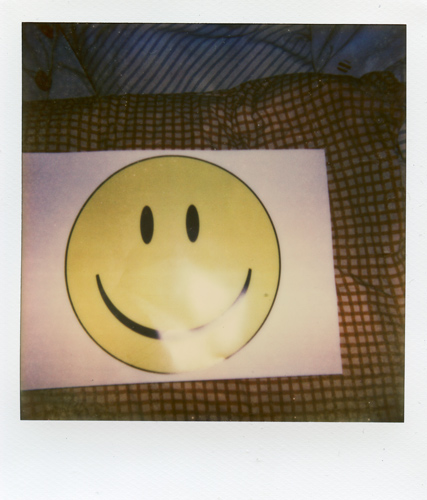
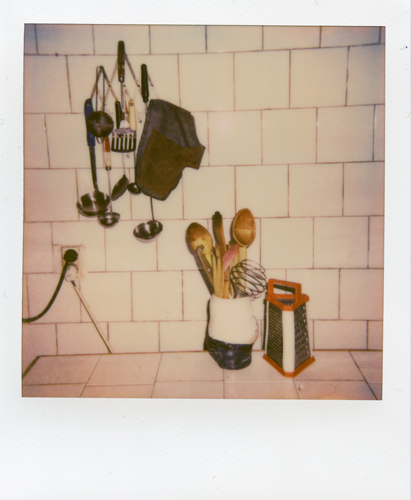
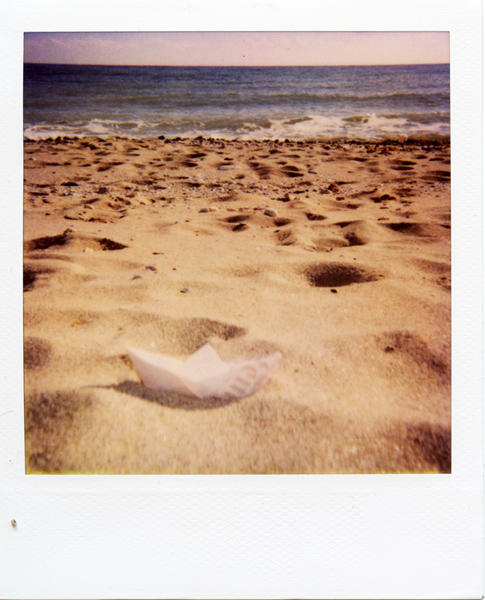
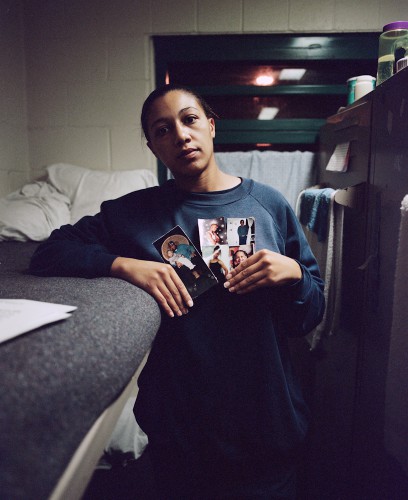
The project at Târgşor women’s prison is a collection of portraits and Polaroids. I wanted to find out what they think about the stuff they can’t do while they’re inside – what they miss, especially ask about the little things like taking a walk in the park, or having a beer on a terrace, or dressing up to go out on a date. Basically, I took a Polaroid of one of the things they said they miss. I show the Polaroids next to the portrait.

The goal was to show a person, a woman and not a spectacular bad-girl who is fascinating to the public because she looks dangerous.

Can you describe Târgşor Prison, in which you’ve been making these photographs?

The first thing I thought about Târgşor is that it’s so much cleaner and nicer and better smelling than a men’s prison. They have pink bed linen, stuffed animals neatly organized on the beds, all kinds of objects that are of no use other than being nice and making their rooms feel more home-like. I became very attached to the place and to some of the girls, even though I didn’t have as much time as I had hoped.

You ask the women what they miss. Why?

I think what people miss when they don’t have access to their normal routine is what is in fact essential to their spirit, their life. All the women said they miss their family and friends. That’s the first, probably most painful layer.

Then, they think about something smaller that was probably part of their everyday life, like sitting all Sunday in bed or going out for dinner or going dancing. I don’t know if the answers are memorable, they’re just normal stuff. A lot of the women said they missed taking care of their homes or going to the seaside with their family or cooking a certain dish. The younger ones said the missed going out dancing or on dates or hanging out with their friends.

What do the women think of your project?

Some thought it was interesting, some didn’t really understand what I was going on about, some thought it was fun to talk to me and get their picture taken, it helped pass the time I think. All of them were really happy that they were getting pictures to send home. Every Wednesday, I went there with an envelope full of printed pictures.

What do the staff think of your project?

The staff was nice enough. I initially had approved access for four months, but ended up with two, which meant 2-3 hours every Wednesday. I went there 9 times and got “guarded” by different people, they were nice and helpful, but probably my activity was disruptive to their usual routine so the people in charge decided to cut it short. Maybe I’ll try again after some time passes and they forget about me.

What does the prison administration think of your photography?

I’m not sure what they think. I know they don’t understand why I’m doing it and they probably think it’s kind of silly. They’re also probably happy it stopped.

What negotiations did you go through with the administration to get approval for the project?

First, I got a signed approval from A.N.P, which is the Nation Prison’s Association. Then I went to Târgşor and spoke to one of the people in charge, who spoke to one of the people even more in charge and so on. I was granted a few hours every Wednesday. It wasn’t what I had hoped for but I knew from the beginning there were slim chances of getting a lot of time.

Why the two different processes (square portraits and Polaroids)?

I used Polaroids to take a picture of one of the things every woman said she missed, just as a symbol. I thought the picture would have a more personal effect. I use squares for the portraits because I love shooting portraits on medium format film.

Do you have a particular view on prisons and/or their worth?

I think society relies to much on just imprisonment to make everything bad go away. In Romania, we have serious problems with education and social services. We have serious problems with lots of things, as I’m sure most societies do, but I think just creating a functional prison system in not enough. And a lot of people seem to be convinced it is, even though they may not admit to it. A lot of the people incarcerated come from poor families and bad entourages and after a few years most of them will be back on the streets doing the same things.

In Romania, what is the general public’s attitudes towards prisons, crime and punishment?

The general public attitude is that bad people should be locked up and taken off our streets and prisons are the quick solution.

A few people have asked me why take pictures of prisoners and not poor children or some other socially disadvantaged group; why photograph these women who kill, steal and deal drugs? I suppose it’s easier to have everyone categorised, but I try not to.

And, in Romania, what is the general public’s attitudes towards female prisoners in Romania?

I think women prisoners are seen as something a bit more exotic because a pretty woman with long hair wearing a flowery dress doesn’t go well with the stereotype we have for the criminal.

What are you thinking about when you are making photographs? How are you conducting yourself with your subjects?

I tried to talk to them as much as I could in the little time I had. Once I start photographing, I try to say things to make the person as comfortable as possible. With some people it’s very easy. While I’m taking to pictures I’m just focusing on the changes in the person’s face and body posture and try to get connected to the atmosphere and the moment. To me photographing is a magical experience, as cheesy as that might sound.

Is this work complete? Is it long-term? What are your goals with it?

Last week, before I left Târgşor, I was informed that I cannot continue, so for now I’m done photographing there. I hope to go back and maybe expand the project to other prisons in the future. After I finish scanning all the film I will make a selection and upload it on my blog and on the website that I hope to have ready soon. I also hope to have an exhibition in the near future.

Are people surprised that you’re going into prisons and working with a population that many consider dangerous?

My family and non-photographer friends are a little worried I think, but by now they have probably got used to my unconventional passion.

Your friend and supporter Constantin Nimigean introduced me to your work and suggested it needed a helping hand. What sort of support do you need?

I organized some crowdfunding to help me go through with this project. Money is always an issue; documentary photography isn’t exactly a gold mine! Between my job and my freelance work that help me save up for my personal projects, there’s not much time left to apply for grant and funding opportunities and work on the self-promotion part.

Right now I have to focus on getting the money to fund an exhibition with these pictures.

All Images: Ioana Cirlig

© Sye Williams. Gertha Griffin is serving time for assault with a deadly weapon. She shares her poem, “Waking up in a Cold, Dark Room.”

Friend of the blog and former PPOTR interviewee, Sye Williams has launched a new website. The images from his Women in Prison series are crisper and there’s a few images – such as the one above – that he had not published before.

There’s a new photo festival on the scene. It’s called Photoville and it is in New York. Specifically, it is in Brooklyn Bridge Park. Photographs will be displayed in 30 shipping containers. Public submissions will hang on a big fence.

Hester Keijser, my co-curator, and I are honoured that Noorderlicht selected Cruel and Unusual as the exhibition to represent them on these American soils.

We’ll have two containers to fill. Cruel and Unusual showcases 11 photographers work in the main part of the exhibition. I shall be installing a wall with the images of 20+ more photographers that I met during Prison Photography on the Road.

PANEL DISCUSSION

Yesterday, Photoville announced its schedule of talks and events.

Included is a panel discussion that I’ll be moderating titled “Cruel and Unusual: The Prisons, the Photography or Both?” Panelists include the hyper-talented Deborah Luster, Brenda Ann Kenneally, Lori Waselchuk and Yana Payusova.

Photoville literature describes a talk by me “about documentary, institutional, vernacular and legal photography and the political uses of images by media, activists and families” but this is in fact going to be a very brief introduction by way of explaining my interests. The majority of the time will be exploring the stories behind the Luster, Kenneally, Waselchuk and Payusova’s images (sampled below).

The panel discussion “Cruel and Unusual: The Prisons, the Photography or Both?” is from 3:30pm – 4:30pm, on Saturday, 23rd June. It would be great to see you there.

Stick around for Michael Shaw/BagNewsNotes‘ discussion about “The State of the News Photo” immediately after. I’m looking forward to that.

BITTERSWEET MOMENTS

This welcome opportunity for the photographers, Hester and I at Photoville comes at a worrying time. Well-documented is the threat of Noorderlicht’s closure (here, here, here, here and here) after being refused 500,000 Euros of funding from the Dutch government for the years 2013-2016.

Ironically, the Dutch Advisory Board to the Cultural Council thinks that Noorderlicht doesn’t engage enough with other global organisations. This is false. Cruel and Unusual at Photoville is a typical example of Noorderlicht – a pioneering institution of international scope and influence – collaborating with an equally pioneering organisation.

PHOTOVILLE

Photoville director, Sam Barzilay, used to work with the New York Photo Festival (NYPH). He doesn’t any more. If it is a schism, or a parting of ways, a clash of ideologies or just new opportunities being seized I don’t know.

I do know NYPH had come under some criticism for poor prints, a certain lack of organisation and even elitism. I should say I have never attended NYPH; these are things I’ve read or heard. I have not heard how this years NYPH (last month) went either.

Given that Photoville runs over nine days with six days of viewing, given that it is free, given that they’re involved the public’s photographs, given that there’s a beer garden and a dog park and it is in a park, I suspect Photoville with be quite different in character to many photo festivals, NYPH included. I’m imagining something quite free and easy, welcoming and fun, underpinned by serious photography. It wouldn’t surprise me if I end up juggling a hacky-sack while discussing the merits of the documentary tradition!?

I digress.

On the talks and events schedule alone there is Ed Kashi, Janelle Lynch, Ben Lowy, Michael Itkoff, Taj Forer, ICP, Adriana Teresa, Wyatt Gallery, Elinor Carucci, Lori Grinker, Glenn Ruga, Lomography, Mediastorm, ASMP, En Foco, Michael Foley, Ariel Shanberg, CFAP, Jennifer Schwatrz and Camera Club of New York.

I’m intrigued by the ‘Activism & Photography’ panel, but the panelists are yet to be announced. It’s the mystery card, so to speak. There’s a stack of socially engaged photographers I’d like to hear speak. We’ll have to wait and see.

The exhibition containers will showcase an impressive line up of which you should just read through.

PANELISTS

© Deborah Luster

© Yana Payusova
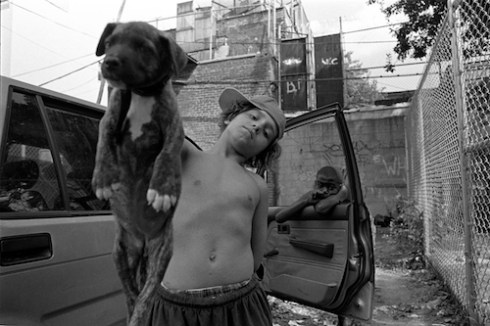
© Brenda Ann Kenneally

© Lori Waslechuk

MORE ON PHOTOVILLE

Running from June 22nd – July 1st, 2012, Photoville is a new Brooklyn-based photo destination; “a veritable village of 30 freight containers transformed into temporary exhibition spaces.”

Occupying more than 60,000 sq. feet in the heart of Brooklyn Bridge Park, Photoville includes exhibitions, lectures, hands-on workshops, nighttime projections, a photo dog run, a camera greenhouse, and a summer beer-garden with food trucks to “create a photography destination like no other.”

Photoville will be located on the uplands of Pier 3, along the Brooklyn Waterfront between DUMBO and Atlantic Avenue.

It is a project by United Photo Industries.

NOORDERLICHT

In operation since 1980, Noorderlicht is a many-faceted and international platform, originally only for documentary photography, but now for any photographer who has a good story to tell. It has a sharp eye for new developments, but averse to trends and hype.

Noorderlicht organizes an annual photography festival, mounts exhibitions in its photo gallery, organizes photographic commissions and arranges discussions, lectures and masterclasses. Noorderlicht publishes exceptional catalogues and photo books.

With its distinctive, cutting-edge programming and outstanding publications, Noorderlicht has built up an international reputation as an institution that is able to couple engagement with visual beauty. Noorderlicht productions are imaginative and compelling, enthusiastic and critical, personal and socially committed.

Noorderlicht is headquartered in Gronignen, The Netherlands.

CRUEL AND UNUSUAL

The title of the exhibition refers to the English Bill of Rights from 1689 and the Eighth Amendment to the America constitution, which stipulates that citizens must not be subject to  ‘cruel and unusual punishment.’ But when is punishment cruel and unusual? To assist in the public discussion of this issue, photography helps by providing insight into the various facets play a role in the question.

Cruel and Unusual looks at how the prison system is presented in images, and how these images are created, distributed and consumed. How do citizens – tax payers and empathetic humans – come to an understanding of life in prisons on the basis of the information – politicized or not – which they receive? 

Photographers Alyse Emdur, Amy Elkins, Araminta de Clermont, Brenda Ann Kenneally, Christiane Feser, Jane Lindsay, Natalie Mohadjer, Deborah Luster, Lizzie Sadin, Yana Payusova and Lori Waselchuk, each use their own strategies, materials and techniques. Given the extent of access to prisons, they work with amateur photography, alternative processes, texts, painted images, digital manipulation or traditional black and white documentary photography.

Cruel and Unusual takes a startling and sometimes disconcerting look behind prison walls around the world. It asks: how do current practices of mass incarceration reflect our changing sense of decency and justice?

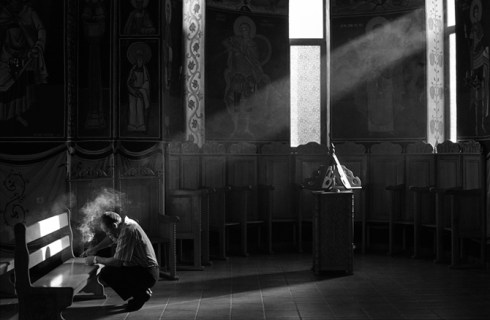
As many of you will be aware, Noorderlicht Photo Gallery and Photo Festival are threatened with closure if the Dutch government decides to go ahead with advice – by the Dutch National Advisory Board for Culture – to cut €500,000 in funding. That amount represents 50% of Noorderlicht’s annual budget.

As many of you will also be aware, I have been a public champion of Noorderlicht. Last month I described my delight with working with the professionals at Noorderlicht; the post covers all the reasons I believe Noorderlicht is unique, principled and vitally important to the documentary tradition, as well as to all discourses within photography.

I won’t repeat myself here then in this post. Instead, I’d like to look at some of the language used by both the Dutch National Advisory Board for Culture (or the The Cultural Council of The Netherlands, as it is alternatively known) and Noorderlicht.

CONTEXT

Noorderlicht has operated since 1980. It’s history and growth is impressive. There can be no mistake, Noorderlicht is of international importance. This is a fact, I think, the Dutch National Advisory Board for Culture has paid least attention to. The Dutch are known for their exception book design, but in Noorderlicht they have an international pioneer in the genre of socially engaged documentary.

Unfortunately, that is part of the problem. The Dutch National Advisory Board for Culture characterises Noorderlicht as having to heavy a focus on documentary work and not enough participation in “the art discourse,  theoretical reflection and experimental development.”

Noorderlicht has publicly responded to the recommendations twice (one, two).

Up front and to the point, Noorderlicht quotes the Dutch National Advisory Board for Culture, listing the most direct of criticisms:

‘The figures for fund raising and sponsoring give evidence of limited insight.’ ‘Disappointing income of their own.’ ‘Because of the complex character it draws only a small audience.’ ‘Conveyance of information by discourse appears to weigh more heavily than visual qualities.’ ‘The number of visitors was very low.’ ‘Concrete plans in the area of education and an outreach to a wider public are lacking.’ ‘There is a concern that the peripheral programming with debates and publications is being privileged at the expense of appealing presentations.’

Noorderlicht does this in order to respond square on:

“Noorderlicht reaches a wider public than institutions that did receive a positive recommendation, has remained critical and self-critical, has generated great enthusiasm and earned an international reputation that the whole of The Netherlands can be proud of. That must not be allowed to be lost.”

Noorderlicht’s overall rebuttal goes into details of how it has “met all criteria.”

Ton Broekhuis, Noorderlicht director, wrote in an open letter to Joop Daalmeijer, president of the Dutch National Advisory Board for Culture:

“I dare to say that the Cultural Council’s final verdict on Noorderlicht was made on the wrong grounds; by this I mean purely theoretical, and certainly in terms of the interpretation of our quantitative data. You advise some whose requests were accepted to generate larger audiences and work on their business model. Noorderlicht has already accomplished these things. And yes, that was at the expense of the elitist, hothouse art debate.”

The politics of funding must also be examined. Noorderlicht argue regional inequalities and bias are at play:

Of the thirteen Northern institutions that several years ago were still financed wholly or in part by national disbursements, only four remain. Certainly in Groningen, where for instance all dance and all visual art is being scrapped, the clear fell is complete. A region where 17% of the country’s population lives is being palmed off with a disproportionately small share in national subsidies. The Council has clearly chosen for the Randstad (the conglomerate of big cities in the west of the Netherlands) and for a number of big players. In itself, this is not surprising: when only 10% of all the advisors come from outside the Randstad, a certain Randstad myopia is built into the process.

Dutch National Advisory Board for Culture also criticised Noorderlicht for not collaborating enough across the Netherlands. Noorderlicht’s response:

Why should Noorderlicht, as an autonomous institution which has set itself the task of operating internationally from the North of The Netherlands, have to show how it works with other institutions in the country? Are institutions in the Randstad also asked how they work together with national institutions in the region? How often do Randstad institutions present their products in Groningen?

Noorderlicht concludes with its view on the recommendation to cease funding:

“[…] The council is making a clear first move in a debate that has become urgently necessary. For whom is art? What is the role of art in society? In any case, Noorderlicht has a less narrow view on this than the Council does.”

This is all very punchy stuff and part of what is now undeniably a noteworthy, frank and public debate.

HAVE YOUR SAY

Noorderlicht has asked supporters to record video messages of support Send the file to Noorderlicht and they’ll post it on the Noorderlicht Youtube page. You have a spare minute?

Ed Kashi, on Noorderlicht Photo Gallery and Photo Festival: “National Jewel […] It is unthinkable to think that Noorderlicht would disappear.”

Other ways to support.

SEE ALSO

– Joerg Colberg’s Open letter in support of Noorderlicht: “Noorderlicht [has been] an important member of the photographic community for many years, a community that extends beyond regional or national borders.”

Noorderlicht Photofestival faces closure, British Journal of Photography, 22 May 2012.

PRISON MAP

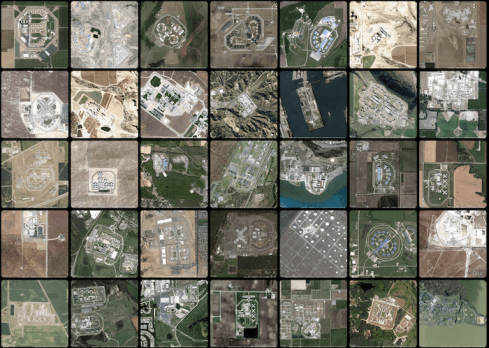
Prison Map is the most complete visualisation project of America’s prison system that I’ve come across. No surprise that it takes the form of satellite imagery and no surprise it was made with the aid of computer code.

Prison Map is the work of Josh Begley, an Interactive Telecommunications graduate student at NYU. He developed the project as part of Jer Thorp‘s Data Representation class.

The title is a little misleading. “It’s not a map,” says Begley, “It’s a snapshot of the earth’s surface, taken at various points throughout the United States. It begins from the premise that mapping the contours of the carceral state is important.”

A premise I can agree with. In my meagre attempts to comprehend the size and impact of contemporary prison construction, I’ve compared state-commissioned aerial photography with the fine art photography of David Maisel. I’ve also admired the Incarceration Nation project by non-profit Thousand Kites using roving Google Earth imagery to describe penal architectures (although the manual labour behind Incarceration Nation always seemed to big and ultimately wasteful; an irony not lost for a project commenting on the wasteful prison industrial complex.)

Begley had made cursory use of the CDCr’s own aerial photographs for his earlier Prison Count, but that project is shallow by comparison to Prison Map.

SIGNIFICANCE

Prison Map both orders and exposes the sprawl of prisons in our society; Begley was motivated by the frustration that words and figures often fall short. Again, it is a premise I’m very sympathetic to. What difference does it make if the figure you use to describe an invisible problem has an extra zero or not?

“When discussing the idea of mass incarceration, we often trot out numbers and dates and charts to explain the growth of imprisonment as both a historical phenomenon and a present-day reality,” says Begley. “But what does the geography of incarceration in the US actually look like? What does it mean to have 5,000 or 6,000 people locked up in the same place? What do these carceral spaces look like? How do they transform (or get transformed by) the landscape around them?”

TOOLS

Begley used the Correctional Facility Locator, a project of the Prison Policy Initiative (PPI)*, as his primary tool. The Correctional Facility Locator database includes the hard-to-locate latitude and longitude coordinates of every carceral facility counted in the 2010 US census.

Begley notes that the Correctional Facility Locator is the first and only database to include state and federal prisons alongside local jails, detention centers, and privately-run facilities. 4,916 facilities in total. It is the only such database of which I’m aware.

Using the Google Maps API and the Static Maps service, Begley and Thorp wrote a simple processing sketch that grabbed image tiles at specified latitudes and longitudes, saving each as a JPEG file. The processing sketch cycled through 4,916 facilities.

Some of the captured images were more confusing than instructive – and dealing with nearly five thousand images proved unwieldy – so Begley selected “only” 700 (14%) of the best photos. If you want to see Begley’s entire data set, you can do so here.

USES

The question that this project raises is what can be done with this visualised data to effect change and propel social justice? Artist Paul Rucker used maps created by Rose Heyer (also of PPI) to compose Proliferation. Begley has culled the images; what digital collaging, comparative analysis and collaborations can be constructed with the images?

Perhaps information is more important than images? Toward the end of his TEDxVancouver Talk, Jer Thorp (Begley’s NYU professor) talks about how data represents real life events and their associated emotions. Movements mapped to, fro and between prisons may begin to describe the mass movement within mass incarceration. Specifically dealing with New York State, the Spatial Information Design Lab at Columbia University investigated these types of visualisation with its Million Dollar Blocks project.

An App about the forced migrations within the prison industrial complex is waiting to be built. The first stumbling block is access to data. The prison system is not renowned for being open with its information.

– – – – – – – –

If you’d like to know more, Josh Begley can be contacted at josh.begley[at]nyu.edu

– – – – – – – –

Thanks to Sameer Padania for the tip.

– – – – – – – –

*PPI is one of the most imaginative research groups illuminating the dark recesses of our carceral landscape. PPI Director, Peter Wagner, was a PPOTR interviewee last year offering passion and intelligent analysis of the prison industrial complex. I’ve been aware – and made use – of many PPI resources in the past, but until now was unaware of the Correctional Facility Locator. Kudos to PPI.

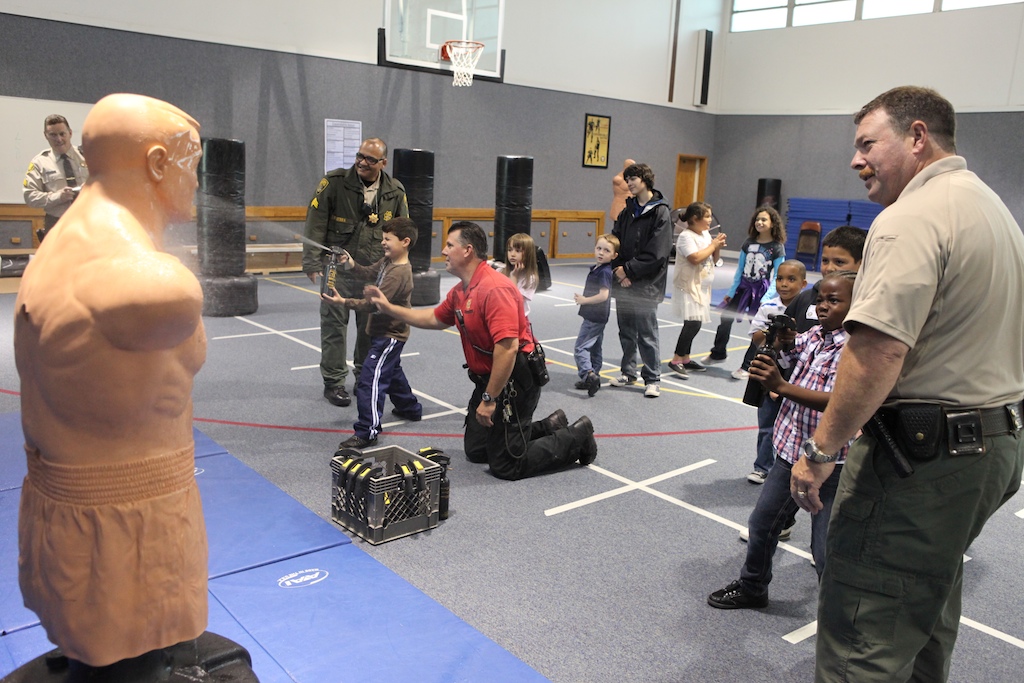
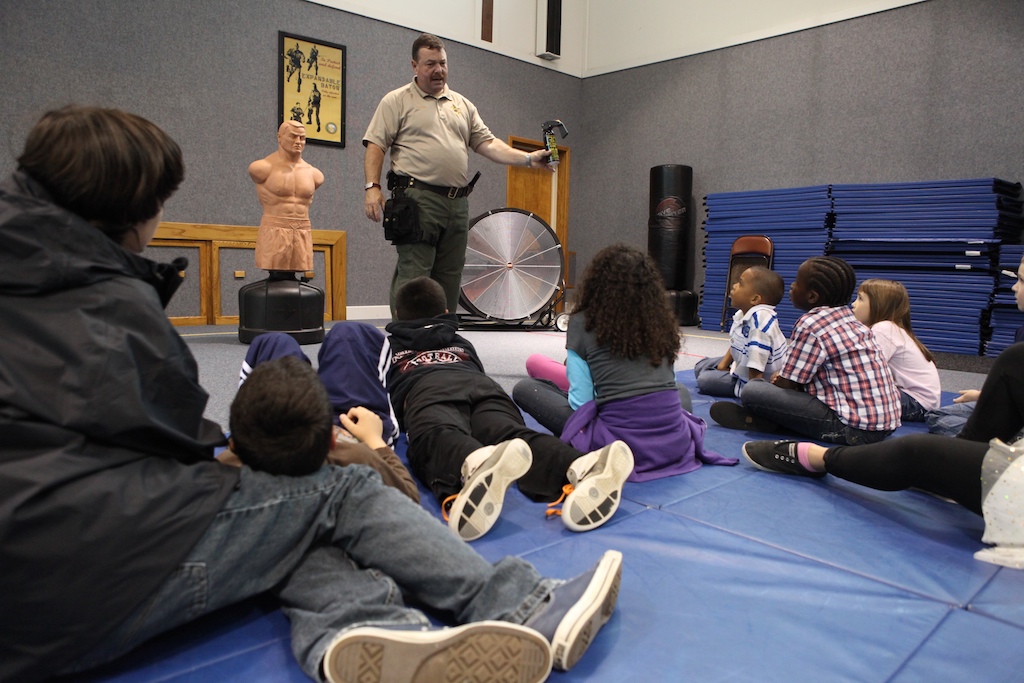
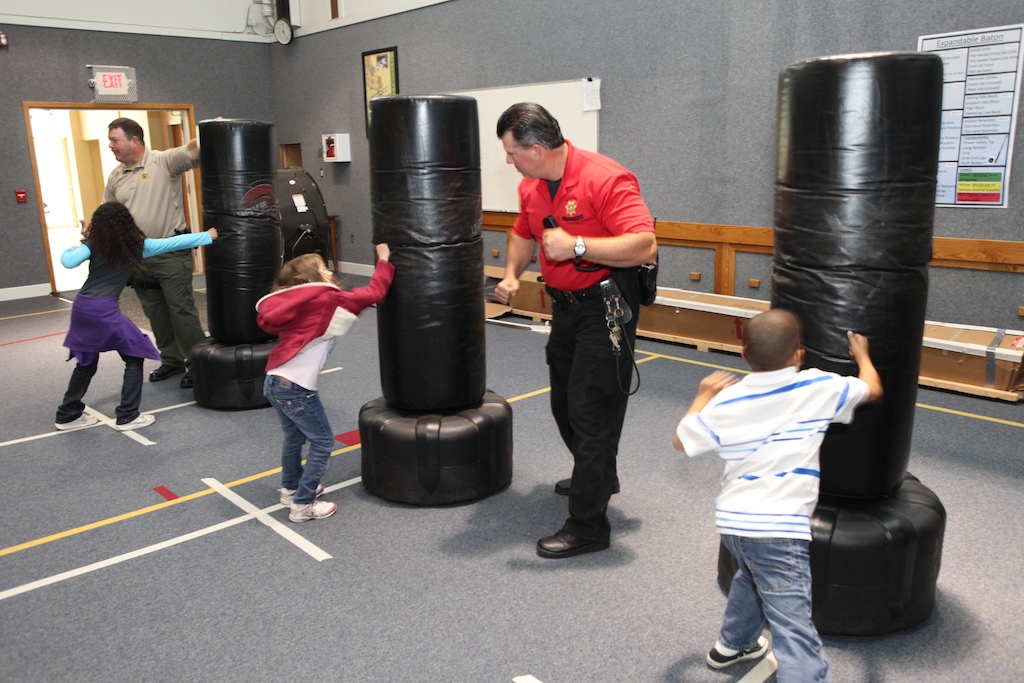
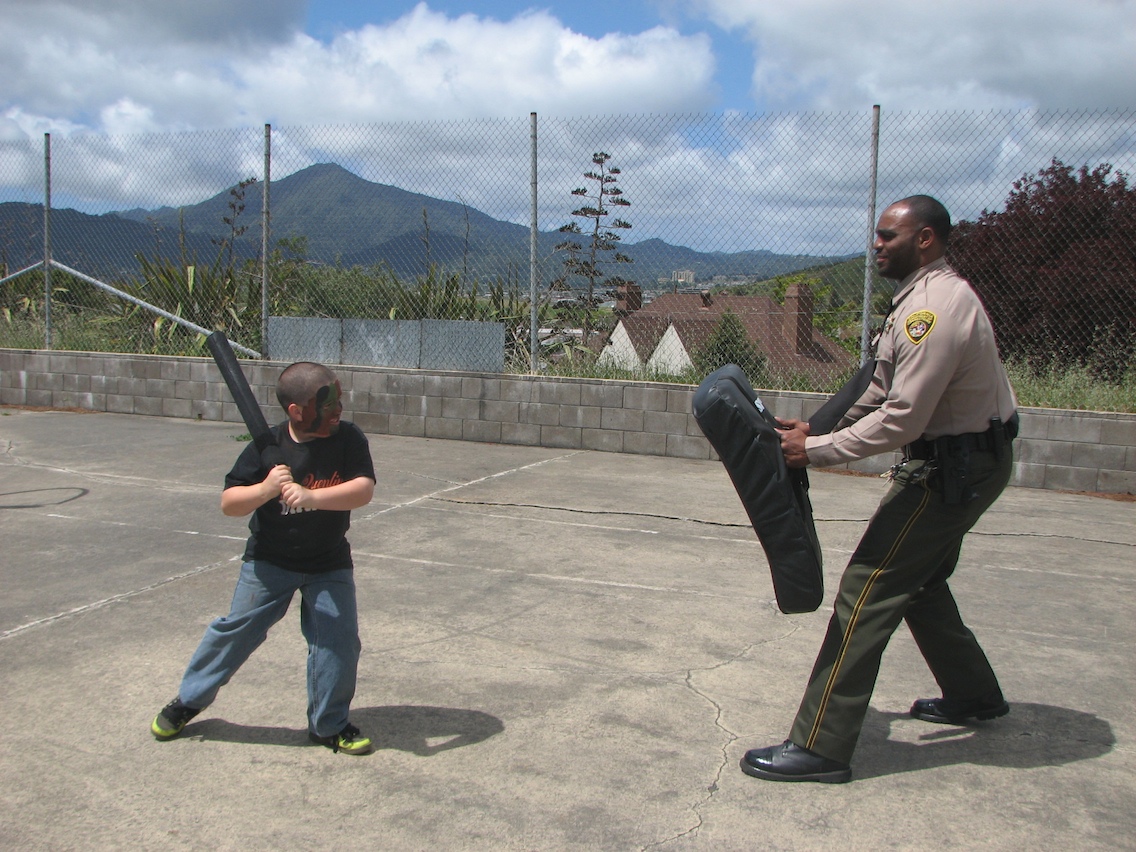
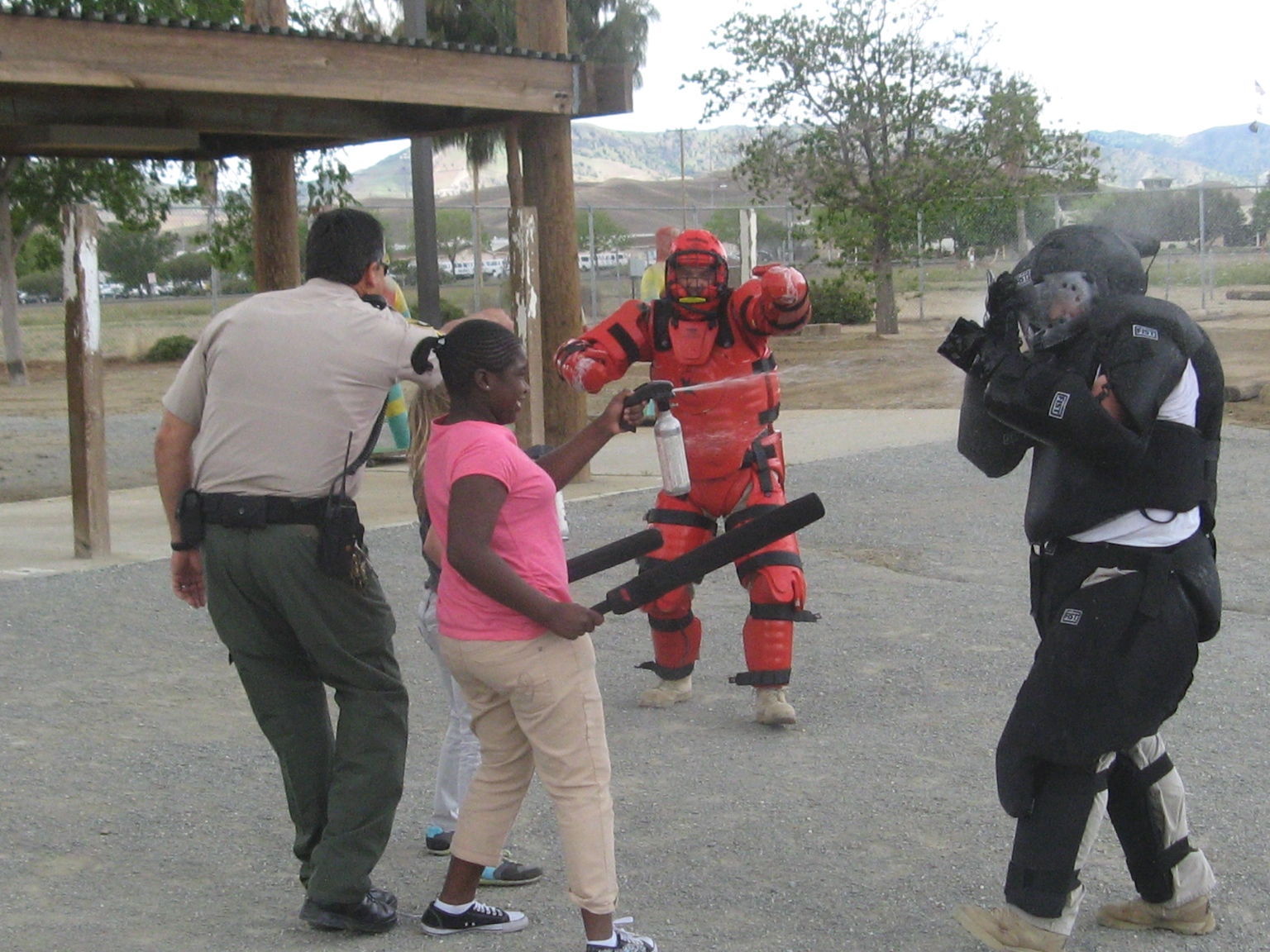
I stumbled across the California Department of Corrections‘ Flickr stream tonight. There are lots of sets to explore including some photo-galleries from various prisons of Bring Your Kids To Work Day.

Click on any image to see it larger.

I have always wondered if the prison system took part in Bring Your Kids To Work Day, and if so, how? Thanks to these clumsy attempts at community PR (clumsiness quite typical of large state agencies, I would say) we now know.

Children practicing fire abatement at California Correctional Centre; learning CPR at California Institute for Women; doing first aid at North Kern State Prison; riding the bus at Deuel Vocational Institute; and dressing up with the SERT team at Folsom.

Most of the photographs I have featured are from the Correctional Training Center, Galt, CA. Here’s head count – Hands Up Kids!

Third from bottom is a single image from San Quentin Prison’s Bring Your Kids To Work Day, and the final two images are from Avenal State Prison.

I’m a little speechless. You?

All images: Courtesy of the California Department of Corrections

EMAIL

prisonphotography [at] gmail [dot] com

Prison Photography Archives

Post Categories