
You are currently browsing the yearly archive for 2011.
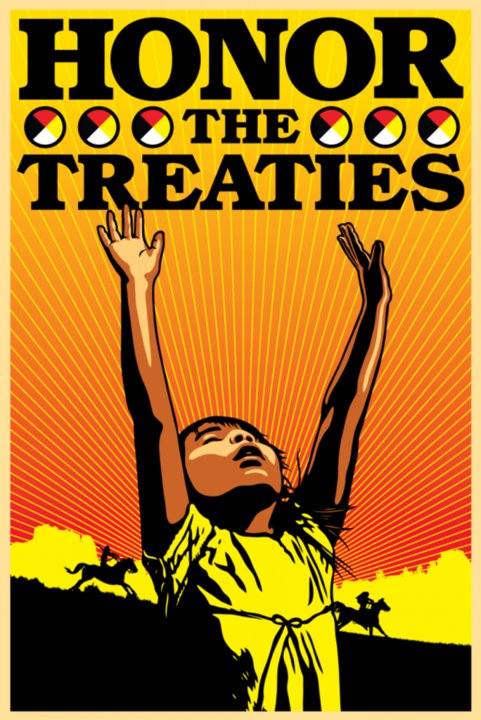
Late last year, Aaron Huey and I met at his favourite coffee shop in Seattle (the only coffee shop in the city without WiFi, as far as I know). During our chat, his phone was buzzing; on the line was Emphas.is finalising the details of his Pine Ridge Billboard Project pitch.
PINE RIDGE RESERVATION
Ever since Huey’s powerful and viral TED talk last year, he’s been inundated with inquiries from people wanting to get involved and contribute. Huey admitted to being conflicted by his unexpected propulsion into the centre of a nebulous political energy, partly because he doesn’t have all the answers and partly because his work still doesn’t sit well with some of the Lakota community. Understandably, some Lakota don’t want images of broken homes and broken bodies to be consumed by white America. Still, Huey has the faith of the majority within the Lakota people.
With a story so large and important – and solutions so complex – Huey was unsettled with the status and future of his Pine Ridge documentary work; he had not pushed the political issue as far as it warranted. From his Emphas.is pitch:
I have been documenting the Pine Ridge Indian Reservation for the past six years. Recently I have realized how inappropriate it is for this project to end with another book or a gallery show. […] Your involvement will help raise the visibility of these images by taking them straight to the public—to the sides of buses, subway tunnels, and billboards. I want people to think about prisoner of war camps in America on their commute to work. I want the message to be so loud that it cannot be ignored.
Emphas.is has given Huey, the Lakota people and us the opportunity to see and react to the work in unmissable public locations. It puts it in the face of D.C. politicians. Huey has enlisted the help of Shepard Fairey and artist and activist Ernesto Yerena who created visuals for the Alto Arizona campaign.

Source: http://www.webpages.uidaho.edu/~rfrey/329treaties_and_executive_orders.htm
PRISONER OF WAR CAMP #344
Huey’s photographs depict high unemployment, broken families, alcohol abuse and life expectancy lower than that in Afghanistan. The statistics are shocking.
But more than that, Huey’s photographs show the legacy of the lies and broken treaties of the US government stretching back over a century. If the Treaty of Fort Laramie (1868) had been observed, then the Lakota and associated Sioux tribes would own land stretching across five states.
To refer to the Pine Ridge Indian Reservation as a prisoner of war camp may seem incendiary to some, but this is how many of the Lakota see their existence. The Black Hills have been stolen and the Lakota live on the most infertile land fenced in on all sides by an encroaching dominant culture that they’ve predominantly experienced as oppressing and damaging. The solutions are not simple, but awareness and a will to action is.
Pine Ridge Indian Reservation is prisoner of war camp #344.
EMPHAS.IS
I have offered what support I can to the new crowd-funding platform Emphas.is with articles here on Prison Photography and for Wired.com. Three of the online critics I respect most (Colin, David and Joerg) have also put their weight behind it. I am chuffed to see Aaron’s proposal off the ground and I’d ask you seriously to consider funding the Pine Ridge Billboard Project.

Mock-up of a wall installation using 24x 26″ posters, proposed Pine Ridge Billboard Project
OUTLETS FOR ACTION: Throughout the campaign a website honorthetreaties.org will be formed. Aaron will build the site as a point of reference for those who want to know more about the history and the (broken) treaties of the Sioux and other tribes. There will be direct links to assist grassroots Native non-profits in places like Pine Ridge.The first partner is Owe Aku.
More on Aaron’s blog here.
Buy a 18×24 print signed by Shepard Fairey and Aaron Huey to support the project!

“Tim’s New Office”
Following the Christchurch earthquake of February 22nd, severed and compromised sewer pipes cannot be relied upon. As a result outside toilets, or ‘Long Drops’ have been constructed. A new community website ShowUsYourLongDrop showcases all the creative pooping-pits built in the back-gardens of Christchurch.
From the ShowUsYourLongDrop website:
The earthquake disaster has been a testing time for us Cantabrians and we feel for people who have lost loved ones or property. Our thoughts are with you. During these tough times it is important to be with friends and family and still be able to have a good laugh. Hence the reason for this website. A bit of toilet humour is bound to put a smile on your face even if your having a crappy day!

“The Woodshet”

“The Magic House Long Drop”
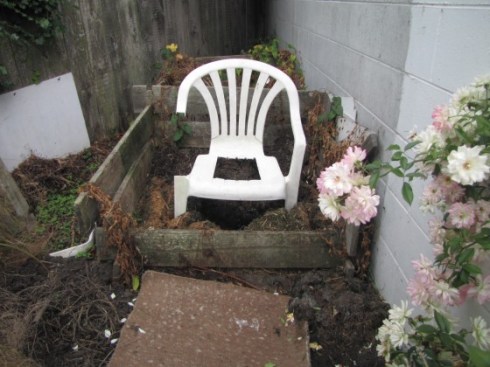
“The Self Composting”

“The Outdoor Beach Special”

“Danger: Poo Below”

“The Lighting Special”
– – – – – – –
Readers. I realise this is again a post off the topic of prisons. I am working on a couple of lengthy pieces so those important politics will return. And besides, one-off and resilient photo communities such as ShowUsYourLongDrop deserve a warm clap and recognition for their humor in the face of great inconvenience.

Joerg‘s been on a collage kick recently and even opened up a new Collage Art category for his blog. I came across the work of John Beech this week (I can’t remember where) and I like what I see. Beech uses recycled/discarded materials in his sculpture and mixed media works, so why not play on the idea in his photo-collage also?
Check out Beech’s Hybrid Dumpster Drawings.
Collage is a deceptively tricky discipline. It seems to me that the best collages are often the ones that exist at the extreme ends of the spectrum. At one end of that spectrum are collages that incorporate fragments too numerous; visual orgies that have the head spinning, for example Neil Chowdury’s photo-montages.
At the other end of the spectrum are those that incorporate the barest elements; John Beech’s use of only two images would be good examples of that, and of course the least an artist can do to qualify their work as collage.
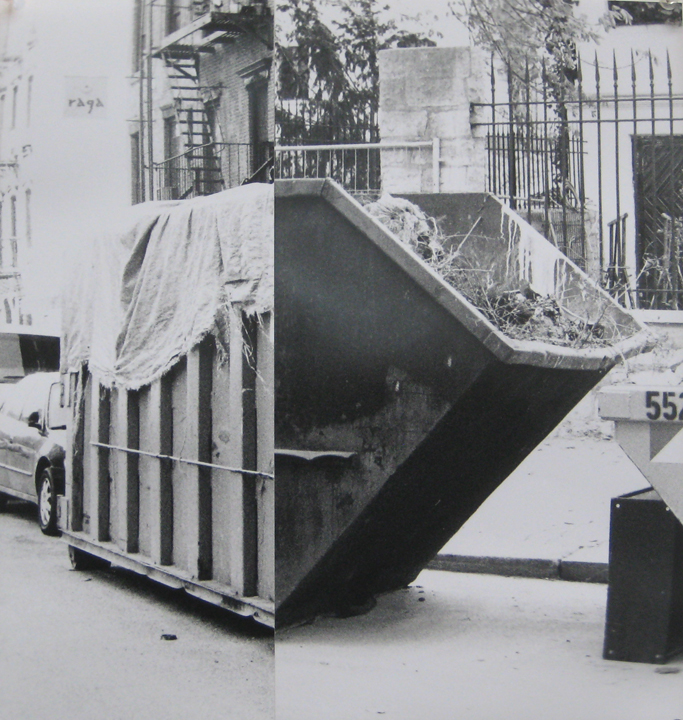
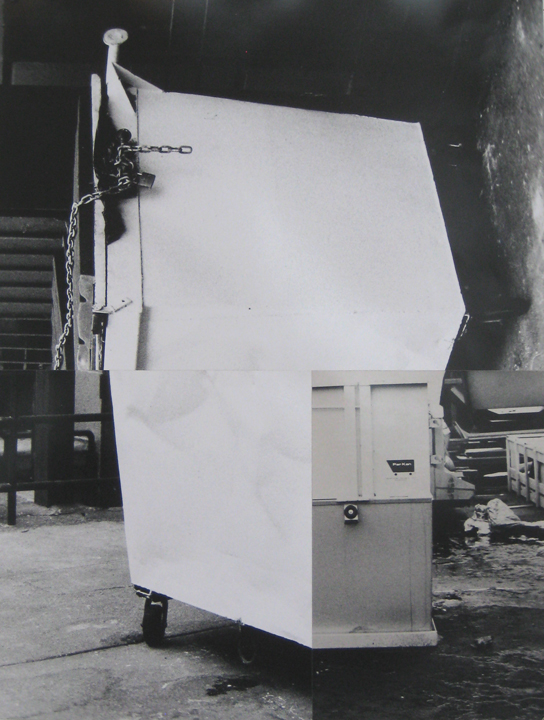
Beech also plays around with metallic tape atop of prints to obscure subjects.


John Beech’s The State of Things is on show at Peter Blum Gallery, 526 West 29th Street, New York, NY 10001
I have a lot of reasons for opposing America’s prison industrial complex, but zealously guarding infirm, hospitalised prisoners (and the wasted money) seems like one we reason should all understand.
This, from the Los Angeles Times:
A degenerative nerve disease has left 57-year-old California inmate Edward Ortiz semi-paralyzed in a private Bay Area hospital for the last year. The breathing tube in his throat tethers him to a ventilator at one end of the bed; steel bracelets shackle his ankles to safety rails at the other.
Still, California taxpayers are shelling out roughly $800,000 a year to prevent his escape. The guards watching Ortiz one day last week said department policy requires one corrections officer at the foot of his bed around the clock and another guard at the door. A sergeant also has to be there, to supervise.

The nine minutes of grainy video footage George Holliday captured of Los Angeles police beating Rodney King 20 years ago helped to spur dramatic reforms in a department that many felt operated with impunity. (George Holliday)
Twenty years ago yesterday, Rodney King got the living shit kicked out of him in Los Angeles.
Amazing as it may seem, those 9 minutes of grainy footage, shot by George Holliday on his clunky Sony Handycam, may never have existed.
At the time, Holliday obviously didn’t know the significance of what he was filming, nor that it would change the consciousness of Black America, the trajectory of the Los Angeles Police Department and race relations in the City of Angels.
This, from the Los Angeles Times:
The simple existence of the video was something unusual in itself. Relatively few people then had video cameras, Holliday did — and had the wherewithal to turn it on.
“It was just coincidence,” Holliday reflected in an interview a decade ago. “Or luck.”
Today, things are far different and the tape that so tainted the LAPD has a clear legacy in how officers think about their jobs. Police now work in a YouTube world in which cellphones double as cameras, news helicopters transmit close-up footage of unfolding police pursuits, and surveillance cameras capture arrests or shootings. Police officials are increasingly recording their officers.
When I can find the time, Lebbeus Woods‘ blog is always a treat to dip into.

© Ross Racine
On Ross Racine‘s digital drawings, Woods says:
Artists and poets have struggled over the centuries to make works that startle us with their originality and, in effect, wake us up to depth of human feelings in our own uniqueness and individuality. The artist’s and the poet’s originality connects with our own, invoking the feeling that to be human is to be unique. The artist is a mirror of ourselves, inspiring us not to be artists but individuals […] But the raw fact is, most of us are not so unique. Our lives, except for the smallest details, pretty much resemble the lives of others, particularly those in our social group, whatever it might be, defined by economic class, race, educational background and many others. The truth is that we are intensely social creatures and our social context often overwhelms our individual traits and aspirations. This would seem to be the message imbedded in Ross Racine’s drawings of suburbs.
View Ross Racine’s work here.
– – – –
Woods’ post on Libya is also rather rousing. It discusses (not in any related way) the push for another type of individual recognition.
I include the map below, because despite my web-surfing it was new to me and it may be to you also.

(Click to view large)
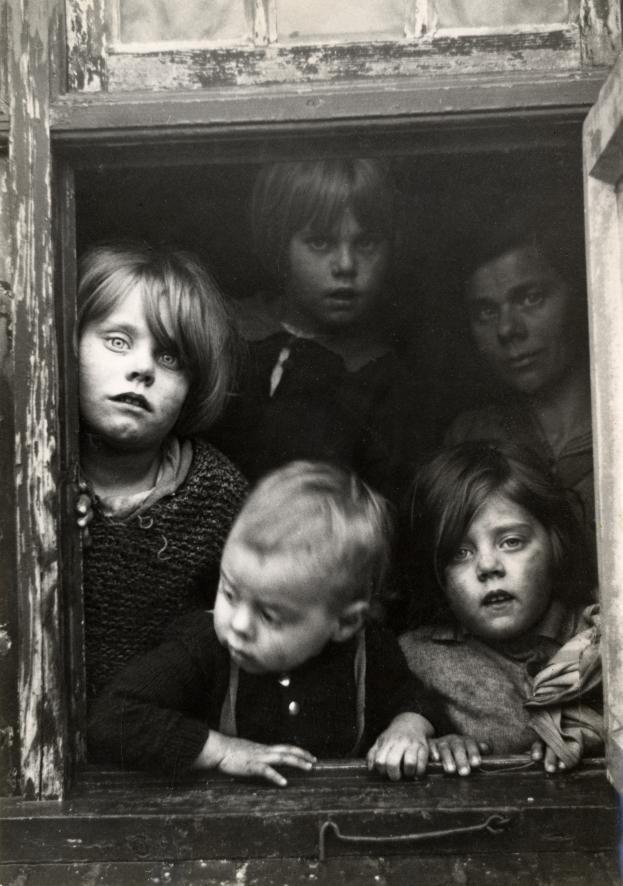
Children of the family Raaymakers, hit by the crisis, getting help thanks to an action of magazine Het Leven. Best, The Netherlands, 1936.
The National Archive in The Netherlands just published a 30 image set on the theme of poverty.
The strength of some of the images blew me away. (Click any image for a larger view) The set spans nationals and eras so this isn’t a photo essay, just a moment to reflect. Through history, photography has indulged the upper classes, but how has it treated the impoverished? I don’t have the answers, just a meandering of a visual train of thought.
Children with scars and with gazes that cut through time …

Irish tinkers: mother and child in front of improvised tent, 1946
… and children slowly erased by time.
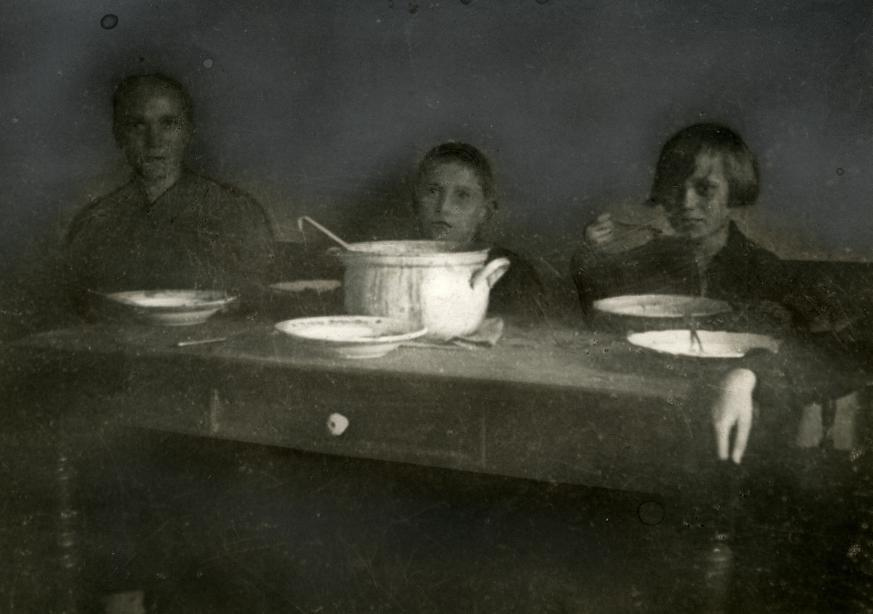
Poor German miners’ families eating at a soup kitchen, 1931
Jobs programs that have adults digging dirt like children digging beach sand …
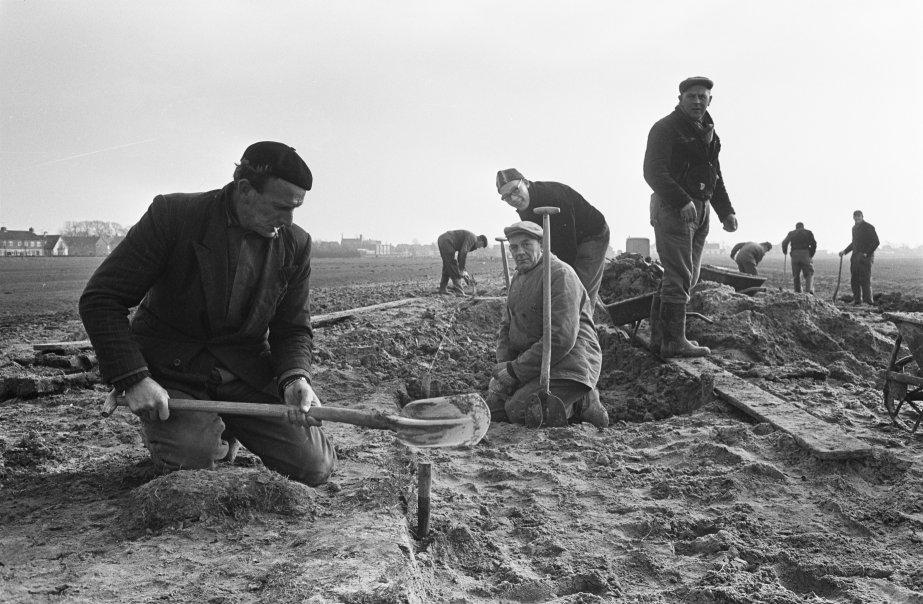
Unemployment relief program in Schagen, Netherlands, 1967
… then, poor people who have carted each other across cobbles …

Woman transported on a hand-cart, Amsterdam, 1934
… and those that sleep beneath them.
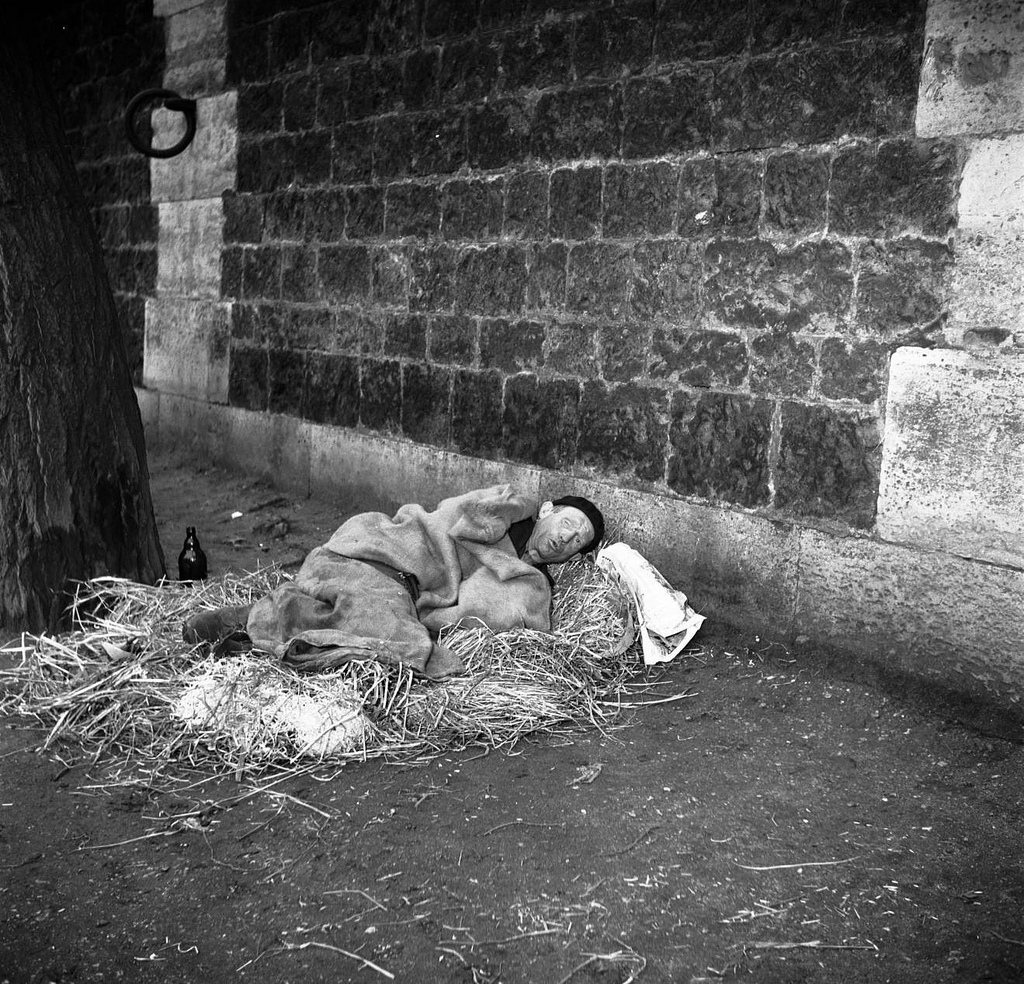
French man spending a night under a bridge, catches a glimpse of photographer Willem van de Poll, date unknown.
Men have begged for the charity of the richest …
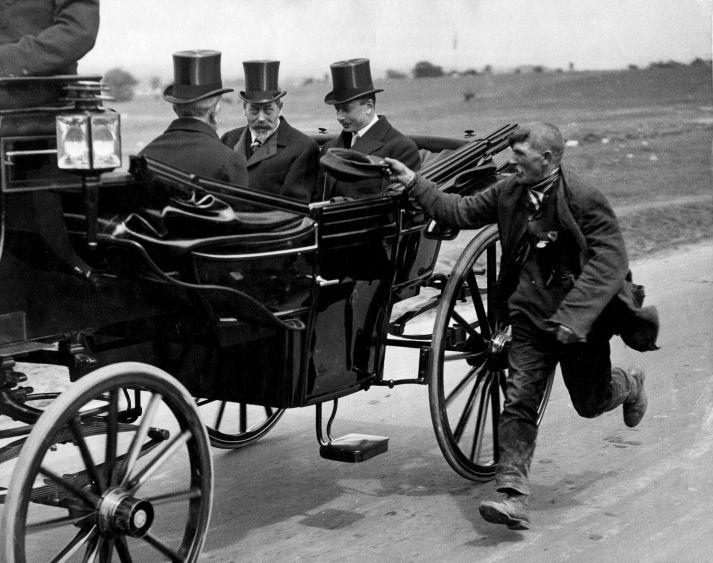
Man begs for money from George V (1865-1936), Epsom Downs, Derby Day, 1920.
…but usually received from the humblest.

Soup kitchen, Rotterdam, The Netherlands, 1917
Poor people have been asked to rent dentures …

Man bites down on available dentures for hire, United States, 1940.
… and they have been made into leaders …

Dutch tramp who became a politician, Amsterdam, 1921
… and in so much as the poor man is the worker, they’ve seen it all.
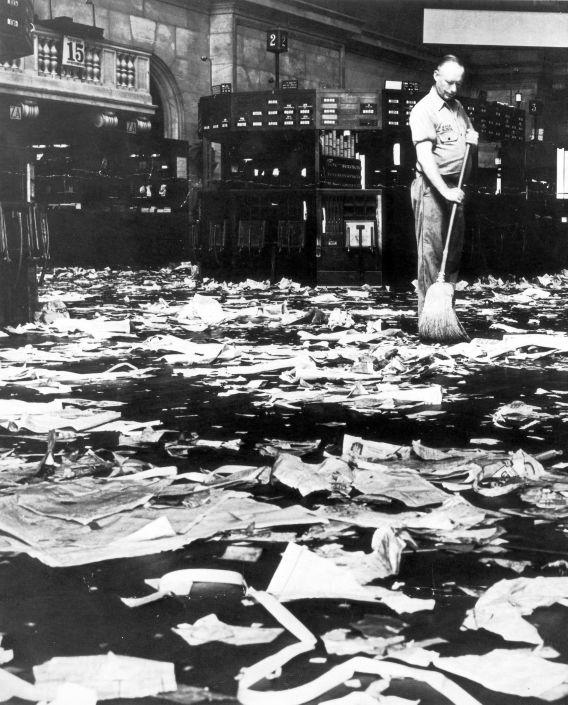
Worker sweeps the floor in the New York Stock Exchange following the Wall Street Crash, 1929.
More images can be seen within the Collectie Spaarnestad: www.spaarnestadphoto.nl

Bettina von Kameke‘s series Wormwood Scrubs is a reflective look at the communal life of prisoners inside one of Britain’s most notorious prisons.
Wormwood Scrubs (Her Majesty’s Prison) is well known in Britain through both popular culture and sporadic news stories about the latest infamous prisoner. It is a institution everyone has heard, some would claim to know about, but in fact only a few truly know. Those few would be the staff and prisoners.
Von Kameke says:
“I was surprised at how respectful the interaction between staff and prisoners was. Of course I was aware that there is drug-dealing inside and it is a hard prison. I could feel the intensity and harshness of the energy… I reflected it in the sadness, heaviness, anger and frustration through the expressions on their faces. But the objective is to show the humanity in the system.”
I am impressed by von Kameke’s awareness (and depiction) of communal living.
“I question and explore the interior and exterior conditions, means and forces, which make a communal life sustainable. My photographs disclose the aesthetics of an enclosed community, which I carefully observe through the viewfinder of the camera.” (Source)
Prison jobs and recreational time are what make incarceration sustainable, and by that I mean as free from waste and repetition as possible.
Prisoners never make direct eye contact with von Kameke’s lens; she shoots as if she is not there. This, I suspect, has a lot to do with the amount of time she spent in Wormwood Scrubs; she spent over six months on the prison wings.*
She and the prisoners probably did have relationships, but they are not the subject of von Kameke’s photography; attentions are elsewhere … apparently.
Between von Kameke and her subjects is acceptance and restraint, almost to the point of collaboration. It cannot be overstated how difficult this is to achieve in a prison environment when everyone potentially has something to pursue and gain through interactions.


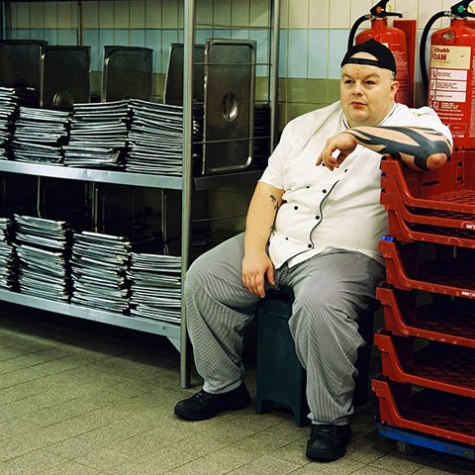
One final thing to note is the overlap in atmosphere between Wormwood Scrubs and von Kameke’s earlier series Tyburn Tree, which depicts the Benedictine Nuns of the Tyburn Tree Convent, London. Communal living within total institutions can be both enforced and voluntary.
Wormwood Scrubs is on show at Great Western Studios, 65 Alfred Road, London W2 5EU until March 11th.
More images at the Guardian.

 Prison Photography