
You are currently browsing the monthly archive for February 2015.

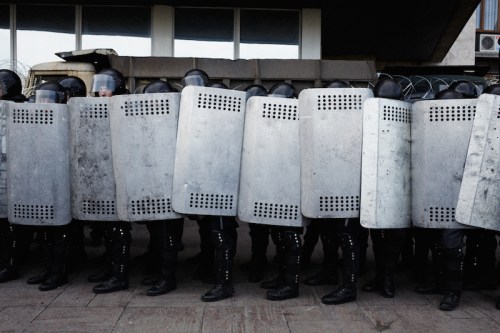
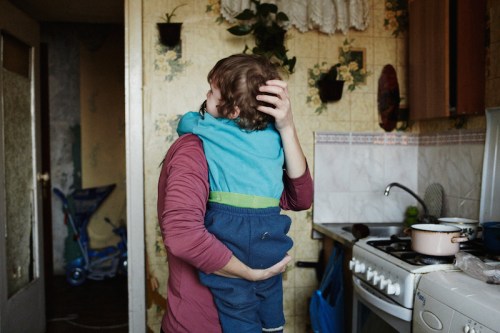
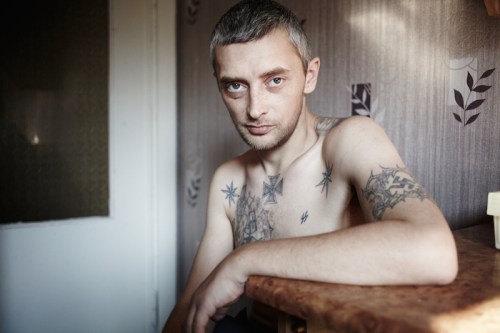
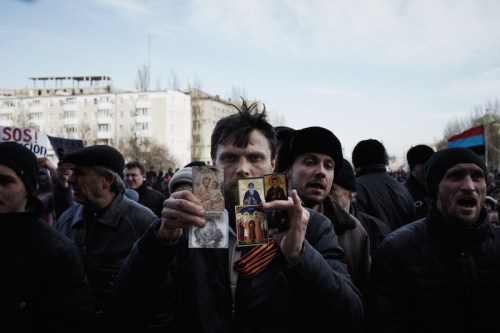
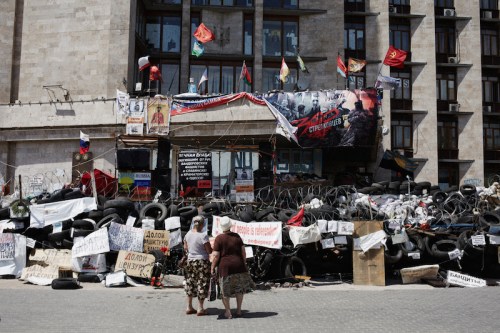
I wrote a piece about Chris Nunn‘s photographs in Ukraine, for Vantage.
Read Accidentally Photographing War In Ukraine.
Nunn, an Englishman, has been hopping flights to Ukraine since 2006 — first with a Ukrainian a girl he dated at uni, and later to trace his roots.
In early 2013 and without a jot of the language he went in search of a connection to the country and its people.
To quote me:
“He had no idea that he was about to be wrapped up in a regional conflict that would draw the world’s attention. His photography became less a personal journey and more an accidental documentary of a nation in steady decline toward war.”
Nunn even ended up in camp with Ukrainian Army conscripts. His mix of portraits and environmental shots is quite poignant. I received an email from Nunn this morning:
“Donetsk. I had no idea at the time that I’d probably never be able to return there, as a normal civilian, [when I made the photos]. Maybe, now, only possibly with special press permission? It’s a mix of good and bad memories … which is true for Ukraine, in general, I think.”
Who knows what to think? With ceasefires crumbling, who knows what comes next?



MEETING THE PRISONER CLASS IN POLAND
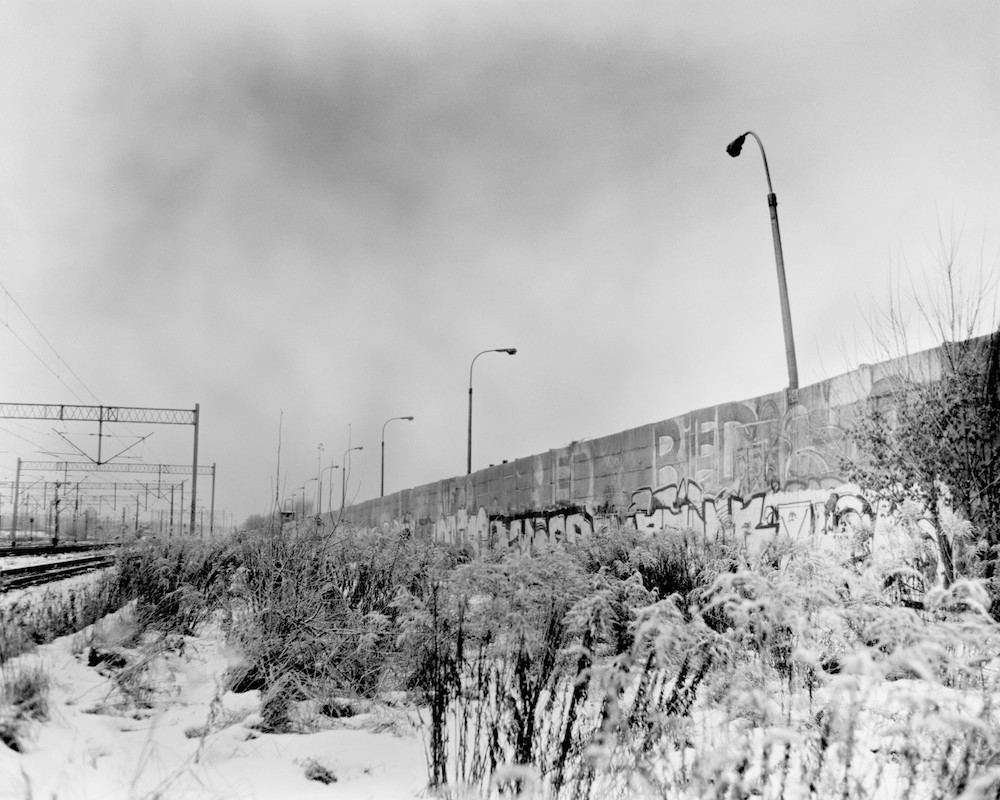
One might argue that, in the world, there are as many reasons for making an image as there are images. Polish photographer Kamil Śleszyński was curious about how prisoners thought about freedom and “why many prisoners couldn’t live outside [of prison] and would come back again.”
Carrying a camera along with you in these inquiries may or may not help you find answers, but in any case you’ve some images to reflect upon, to lean on, and to mold toward some sort of conclusion.
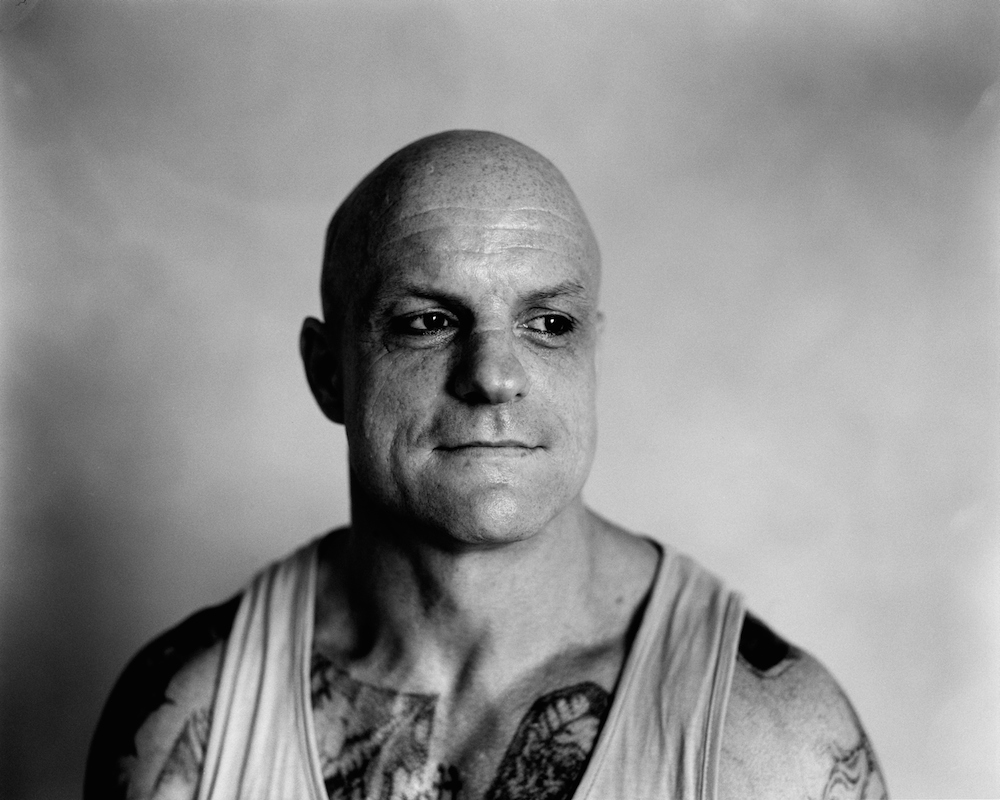
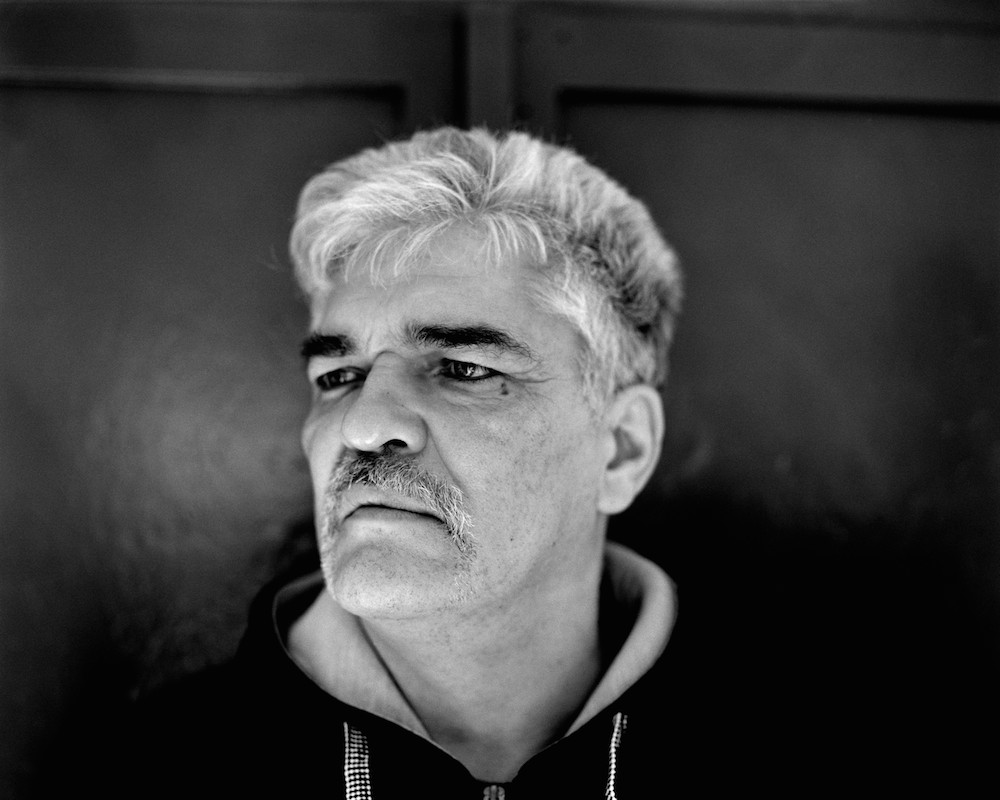
Śleszyński reached out to me and shared his project Input/Output, which consists of photographs made within a prison and in a re-entry centre that supports ex-prisoners. Both facilities are in the city of Bialystok. The images were made between September 2014 and February 2015.
Using a limited number of sheets of 4×5 film forced Śleszyński to be selective with his exposures. The majority are posed portraits. I wanted to find out what he discovered during the project.
Scroll down for our Q&A.
Click any image to see it larger.
Q & A
Prison Photography (PP): In the intro text to Input/Output you suggest that prisoners are institutionalized and are bound by what they learn in prison. Can you explain this more?
Kamil Śleszyński (KS): The man who goes to prison needs to adjust to the rules prevailing there. On the one hand, the rules are created by the Polish prison system, on the other hand by the prisoners themselves.
For example, Grypsera is a prison subculture. Those prisoners who adhere it rules are known as Grypsera too. They have own language which is based on polish language. Grypsera was created in the past century and determined the tough rules, hierarchy and standards. Today, these rules have loosened somewhat but many of them are still alive.
The prison environment is permanently stigmatising. This is perfectly illustrated by words from the book “The Walls of Hebron” written by Andrzej Stasiuk: “To the prison you go only one time. This first. After that, there is no prison. There is no freedom too. All things are the same.”
Polish prisoners are not taught independence because it is not technically possible within their reality. Resocialization is a key issue, but most progams toward it are not enough. Therefore, freed prisoners cannot deal with freedom itself. It is easier to get back behind bars where everything is either black or white.
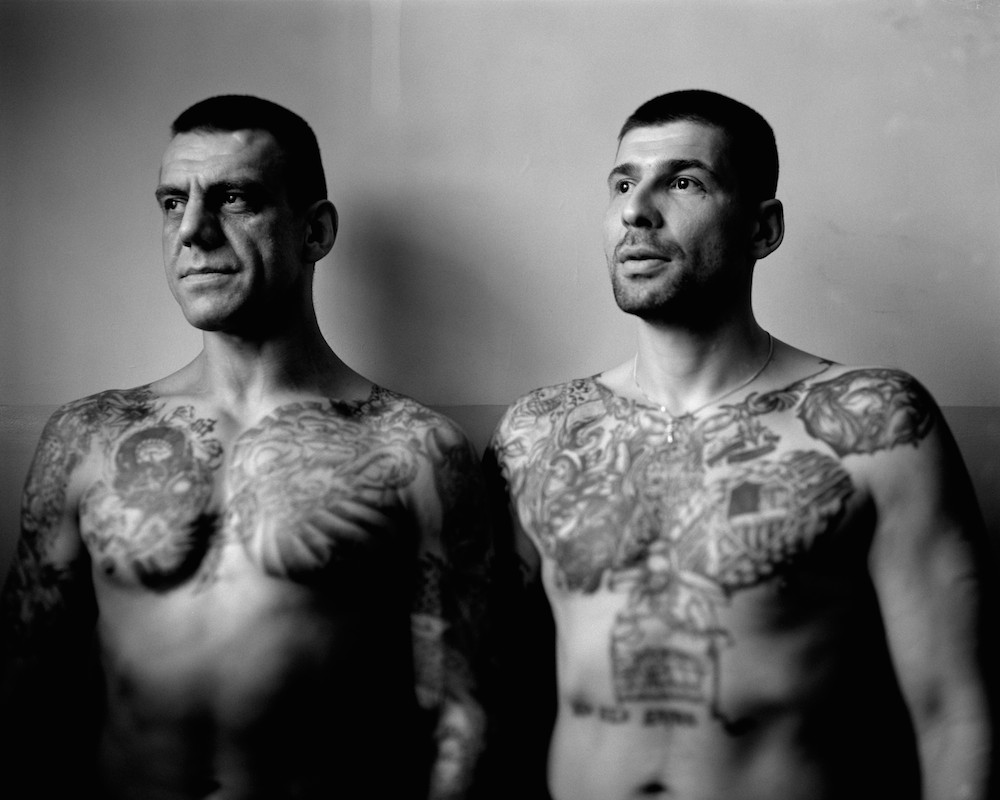
PP: Many of your subjects have tattoos. Are tattoos important in Polish prisons?
KS: Tattoos were an important element of prison subculture. Tattoos on their faces and hands allowed quickly define the criminal profession. Military ranks tattooed on their arms, define the length of the sentence. There were a lot of different types of tattoos. Only deserving criminals could have it.
Today, these rules are loosened. Tattoos do not always have the prison symbolism, sometimes are associated with religion.
PP: You shot in a prison in Bialystok. What is its reputation?
KS: The closed wards were the worst, because prisoners are spending 23 hours a day in a cell. Prisoners can be a little crazy as a result.

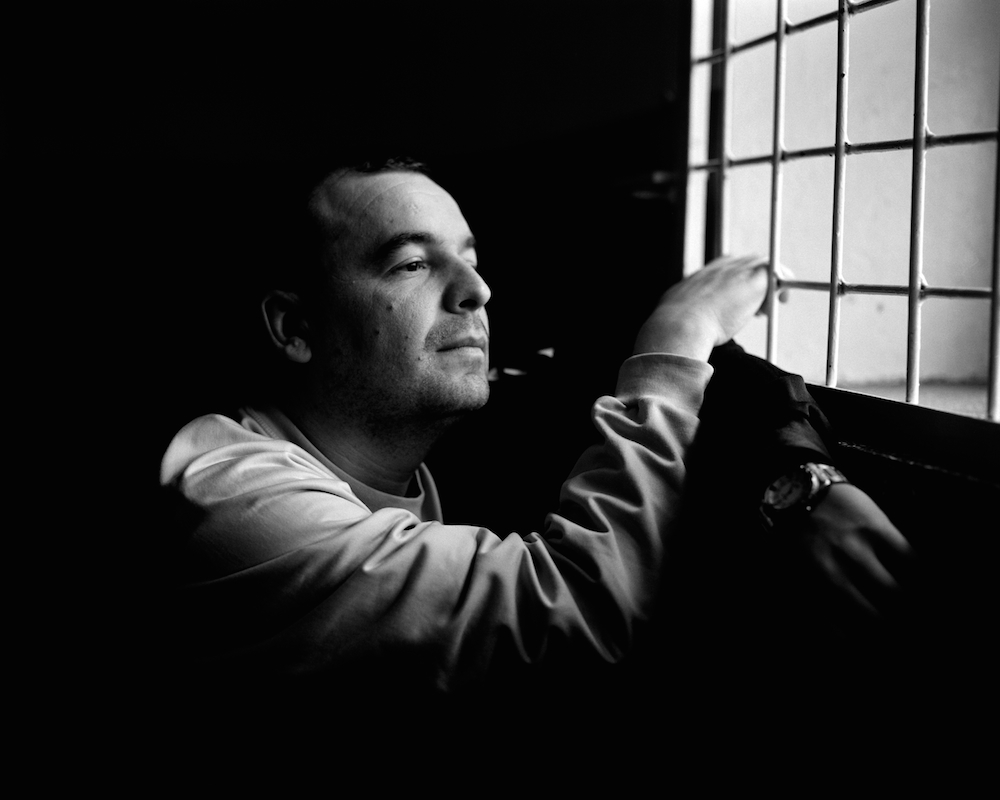
PP: Why did you want to photograph inside?
KS: I grew up in the neighborhood of the prison. Often I was walking near by the prison walls and watching prisoners. They were standing in the windows bathing in the sun. I was wondering why they were behind the walls. This curiosity stayed with me.
PP: How did you get access?
KS: The year ago I met director and journalist Dariusz Szada-Borzyszkowski. He was working with a prisoners. He cast them in performances. He put me in touch with the right people and gave valuable hints. His help greatly accelerated my work.
PP: What were the reactions of the staff?
KS: Prisoner chiefs had a positive attitude to the project. In one of the prison facilities I had a lot of creative freedom.

PP: What were the reactions of the prisoners?
KS: Gaining the confidence of prisoners takes a long time, and this was a key issue for the project. Prisoners are understandably distrustful — they’re afraid that someone from the outside can deceive or ridicule them.
One of the prisoners told me that he don’t want to work with me because prisoners are not monkeys in a cage. I spent a lot of time to convince him that I wouldn’t misrepresent him. In the end, he was involved in the project so much that he convinced other prisoners to cooperation with me.
I was shooting with an old camera 4×5. Many of prisoners were interested in my shooting technique because they had never seen such equipment. It was a new experience for them.
PP: Did the prisoners have an opportunity to have their photograph taken at other times?
KS: Prisoners are photographed by the staff upon entry into the prison and at the time of their departure. During imprisonment is not possible to be photographed … unless they are involved in a project like mine.

PP: Did prisoners have photographs in their cells?
KS: Sometimes prisoners have photos of their loved ones in their cells. This helps to survive in isolation.
PP: Did you give prisoners copies of your images?
KS: Prisoners are collaborating when it is profitable. The photos were a reward for participating in the project. Many of them sent photos to their loved ones.
PP: What do people in Poland think about the prison system? And of think prisoners?
KS: People don’t know much about prisons and prisoners, and guided by stereotypes. They want to know how it is inside, but do not want to have anything to do with the prisoners. They are afraid of them.
I hope that such projects like mine, will help to change those points of view. I got scholarship from the Marshal of Podlaskie region for the preparation of a draft photo book about the prisoners. It wasn’t easy, but the scholarship suggests to me that views are slowly changing.
PP: Overall, is the Polish prison system working or not? Does it keep people safe, or rehabilitate, for example?
KS: The polish prison system puts too little emphasis on resocialization.
PP: Thanks, Kamil.
KS: Thank you, Pete.

© Richard Ross
I never thought I’d see a trans prison guard. I didn’t think transgender persons worked in the corrections industry and — given the culture of prisons — I did not expect that a trans person would ever want to.
However, she exists and her name is Mandi Camille Hauwert.
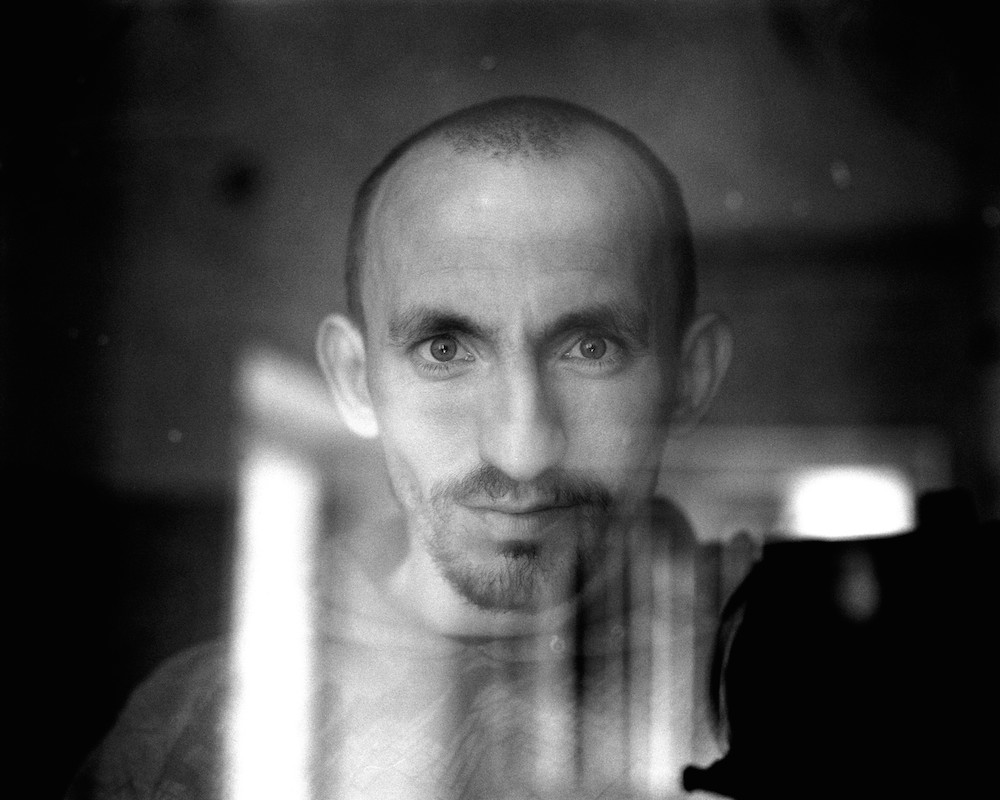
The Marshall Project continues to uncover surprising and new angles on this nation’s prisons. Their profile of Hauwert Call Me Mandi: The Life of a Transgender Corrections Officer is no exception. It is a story with which Richard Ross, a well-traveled photographer of prisons, approached them. Alongside the photographs are Ross’ own words.
Hauwert began work at San Quentin as a male, but transitioned in the job and has been taking hormones for 3 years. She faces hostility from fellow staff.
It’s worth noting how dangerous prison systems are to transgender folk. A few weeks back, I attended Bringing To Light a conference in San Francisco, at which I learnt the routine brutalisation of LGBQIT persons at the hands of the prison system — threats of rape, the use of solitary “for protection” and all its associated deprivations, the denial of prescribed hormones, and many other daily humiliations.
Janetta Johnson spoke about surviving a 3-year federal sentence in a men’s prison. She and her colleagues at the Transgender Gender Variant Intersex Justice Project (TGIJP) now help trans folk deal with trauma and reentry following release.
Unwittingly and without buy-in, transgender prisoners swiftly expose the oppressive logic and total inflexibility of the prison industrial complex. Follow TGIJP‘s work and that of the other organisations that presented at Bringing To Light. Their work often goes unrecognised in the larger fight for reforms and abolition, but it precisely the prisons’ adherence to patriarchy and outdated constructs of gender that establishes the tension and abuses.
Ross’ Call Me Mandi: The Life of a Transgender Corrections Officer is a brief but illuminating feature. Read it.

THE VISUAL CULTURE OF PRISON RESISTANCE
Liz Pelly‘s conversation with Josh MacPhee in The Media is a wonderful read. It coincided with MacPhee and his cohort’s incredible exhibition of prisoner made protest materials going all the way back to the early seventies.
MacPhee urges us to dismantle the idea that prisons are separate from outside society. Crucially, he’s not making, in the first instance, a moral point about how we’re all the same, prisoners and all. MacPhee makes an observation of the structural characteristics of the prison system.
“It’s getting harder and harder to hold up the pretense that prison is somehow distinct from the rest of society,” says MacPhee. “When there’s this many people going in and out all of the time, there’s no way that our lives out here don’t leak into there, and that their lives in there don’t leak out into the rest of society. The idea that these are completely separate realms needs to be dismantled.”
Of course, once the structural facts of the system are revealed, the moral point that we are all one-and-the-same, prisoners and all, is indisputable.
I contacted Pelly and asked if I could republish the conversation. It originally appeared as Inside/Out: On Prison Justice, Art of the Incarcerated, and Interference Archive’s New Show in Issue #44 of The Media (October 10, 2014). It is a privilege to feature Pelly and MacPhee’s interview in full here on the blog.
A LITTLE BACKGROUND
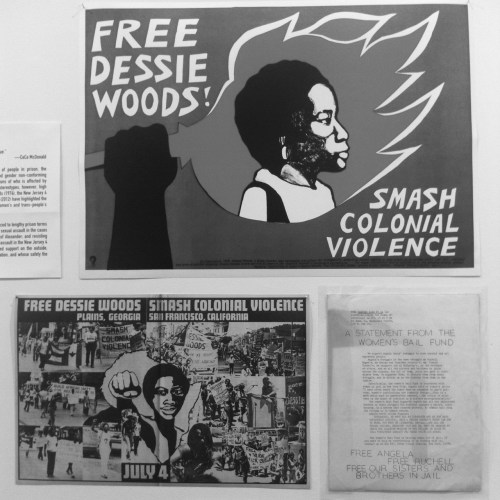
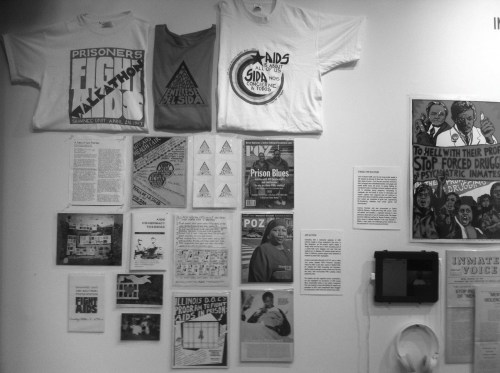
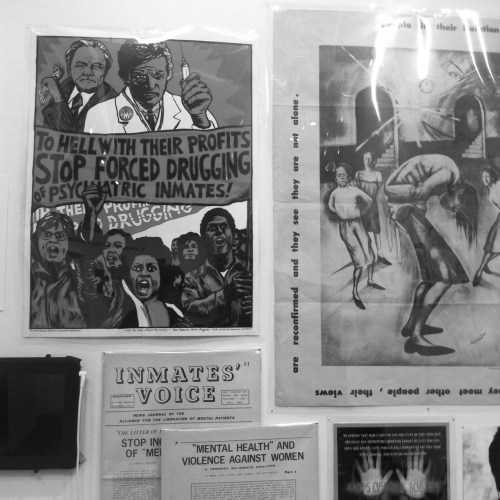
Between September 11th and November 16, 2014, Interference Archive exhibited, Self-Determination Inside/Out: Prison Movements Reshaping Society a look back at the visual and material culture of prisoner-led political movements.
Organized by Molly Fair, Josh MacPhee, Anika Paris, Laura Whitehorn, and Ryan Wong, Self-Determination Inside/Out includes sections on the work of incarcerated AIDS educators, the experiences of women and queer prisoners, prison and control unit prisons. The exhibition features prison newsletters, pamphlets, video and audio interviews, prints, photography (!!!) and magazine covers — starting with materials created during the 1971 Attica Rebellion, a massive prisoner uprising in upstate New York, and concluding with work made by current political prisoners, the show highlights moments of self-organization within the prison industrial complex.
You can buy a booklet and a poster for the exhibition.
Interference Archive is a volunteer-run archive in Gowanus, Brooklyn, dedicated to preserving cultural ephemera related to social movements.

Inside/Out: On Prison Justice, Art of the Incarcerated, and Interference Archive’s New Show
Liz Pelly (LP): What initially inspired the creation of Interference Archive, which mostly houses ephemeral material like posters, t-shirts, and newsletters?
Josh MacPhee (JM): For the different people involved, there are different answers of course. For me, I grew up making this stuff through DIY music, cultural stuff, politics. Through the act of doing, I started collecting it. Flyers, t-shirts, buttons, the ephemera that gets produced by people who are organizing. It was a combination of wanting to understand the history of what I was doing and then at the same time, I was getting really interested in this idea of how people make art and culture in the context of trying to their lives. It’s distinct from art that’s produced purely in the realm of self expression, and the art that tends circulate within the contemporary art world.
This kind of material gets lost. It’s often not clearly authored. Institutions that deal with art don’t quite know what to do with it. Since it’s so political, places like history museums don’t know what to do with it either. It sort of falls through the cracks. But we can see during times like Occupy, or Tahrir Square in Egypt, or with the Maidan in the Ukraine, that this is the stuff of life, [created] when transformation starts to happen. When people have their arms shoulder deep into the constructions of representations of a new world, and the way they want things to be articulated.
For me, doing an archive was a way to say, “just because these moments come and go, and movements have ebbs and flows, doesn’t mean that once the peak has been reached that this material isn’t still valuable to us, to where we’ve come from and therefore where we are going.”
LP: That said, how do you think this sort of exhibit in particular shines light on the experiences of prisoners?
JM: There were five of us who organized this exhibition, and most of us have been engaged with issues around prisons in different ways, whether having been formerly incarcerated, or working with prison activism programs. As far as I know, nothing like this has ever been done before.
We live in a moment where over two million people are in prison. It’s getting harder and harder to hold up the pretense that prison is somehow distinct from the rest of society. When there’s this many people going in and out all of the time, there’s no way that our lives out here don’t leak into there, and that their lives in there don’t leak out into the rest of society. The idea that these are completely separate realms needs to be dismantled.
We thought it was important to marshal primary source material to show that people aren’t just objects of repression or study or someone else’s activism. But they have done immense amounts of organizing inside themselves. Often times that organizing takes place at the same time, or sometimes even ahead of, what people were doing on the outside. Some of the focus we have on organizing around AIDS and AIDS education in prison was really fascinating and important because it shows how people that had the least access to medical care were doing in some cases the most organizing in order to try to deal with a problem that at the time the government was not even acknowledging existed.
LP: Can you tell me more about your own experiences with prison reform activism?
JM: I first learned about how the prison system functions in the early 1990s. It just sort of blew my mind that there was a whole world of people who largely because of race and class were basically being warehoused. And that, at the time, it was completely absent from the radar of public In the 90s, the only thing discussed in relationship to prisons and criminal justice was this sort of “tough on crime” thing. There was no acknowledgment that a massive increase of the prison population going on, and that it wasn’t actually working. And that the system that decided who went in and out was so manifestly unjust, random often.
That sent me on a path of doing organizing around prison issues. I started in Ohio, and then did some work in Colorado, and then in Chicago. A lot of the organizing I did was around Control Unit Prisons, basically trying to stop solitary confinement. [Organizing around] these men and women who were spending twenty-three-and-a-half or twenty-four hours a day alone in their cells, and the psychological damage that causes and how it basically goes against international conventions of torture, yet it’s completely commonplace in this country.
LP: Over the past year, there has been lot of in the news about the racist criminal justice system. It’s an apt time for Self-Determination Inside/Out: Prison Movements Reshaping Society. But obviously there is a lot of history of racism in the criminal justice system that this brings to light. Were you inspired to put this together because of recent events, or has this exhibit been in the works longer?
JM: We worked on the exhibition for 6 months. As a space, as an institution, one of our goals is to take this material that’s perceived as marginal and present it in ways that will allow it to be in its own context, but also to actually show that it’s not marginal. Our primary audience is not people who already necessarily agree with everything that would be in this exhibition. We are conscious of, and trying to take advantage of, a moment.
The question becomes, how do we push [the discussion] farther? If we say mass incarceration is not okay, at what point is incarceration okay? If 2 million people in cages is not acceptable, is 1.9 million people in acceptable? Or 1.8? Once you start asking those questions it opens up the space to say, “this whole system is just absolutely corrupt.”
Mass incarceration accomplishes a number of things, none of which are its stated goals. It accomplishes deeply suppressing working class communities of color. That’s never been articulated as what the prison system is supposed to do. It’s just clear that that’s what it does. It clearly is completely ineffectual at actually dealing with crime.
LP: What are some underreported sides to the prison industrial complex that you hope this exhibit brings to light?
JM: The fastest growing portion of the prison population for years now has been women.
Increasingly there is a real gendered aspect of being able to look at how the criminal justice system works. Increasingly it’s used to enforce gender binaries. It’s a brutal system for queer and trans people that get sucked up into it. People are doing a lot of organizing around it now, but until recently, it was assumed if you were gender non-conforming, they have to choose where to put you, and then once they chose a men or a women’s prison, then almost immediately you’d get sent to solitary confinement. You’d do your sentence out in solitary confinement, in complete isolation, because the system is not prepared to deal with gender non-conformity. You are being punished because your very existence challenges the bureaucratic way the system works.
It’s really clear that women who refuse to be abused, who fight back against abusers, almost always get pulled into the criminal justice system. So we have things like Trayvon Martin being shot, and Zimmerman getting off. But any woman that stops an attack from an abuser is inevitably going to do time because that’s just absolutely taboo.

LP: What were the biggest challenges to getting this exhibit together?
JM: Each exhibition has unique challenges and obstacles, and then there are ones that are sort of similar across the board. For this exhibition, was just that cultural material produced by incarcerated people is hard to access. A lot of it is made in prison and then just never leaves prison.
In general, one of the challenges for all of the exhibitions, is that unless we do something that’s very focused, inevitably there’s so much stuff it’s hard to know when to say “okay we’ve got enough” or to know when to draw the lines. It’s hard to know when to accept that you’re never going to have all of the stuff that you wish you could, that you’re never going to be able to tell the whole story, that maybe even the idea that you’re going to tell some sort of master narrative is questionable in its own right.
When you’re representing things that are so deeply underrepresented, people get attached to wanting their part of the story told, because it’s been marginal or silenced for so long. It makes it really hard to make those choices, because you don’t want anyone else to continue to feel [that way].
We are collecting material from movements that are marginal. Even though they often have extremely deep impacts, rarely is that impact known or visible when they’re most active. It’s kind of like an extra kick in the face when your ideas become commonplace 10 or 20 years later and you’re still written out of the history even though you’re the ones who came up with the ideas.
LP: What do you hope, in general, visitors learn from Self-Determination: Inside/Out?
JM: On the one hand, I hope this contributes to a shift [towards] the idea that prisons are maybe not the answer to the problems that they claim to be. And that locking people in cages is not actually accomplishing what we’re being told it is.
On another level, that incarcerated people are not just objects. They’re loved ones and family members and neighbors and community members. The thing that primarily defines someone as a human being is not whether or not they’re in prison. That people that happen to find themselves in prison, many for reasons that are and then also at the same time many for doing reprehensible things, doesn’t make them not human. It doesn’t mean they don’t have the same desires, life goals, and relationships that everyone else has. And as such, the way that they conceive themselves and their world is part of, needs to be part of, any movement for social transformation.
THE PEOPLE
The Interference Archive is a collection of posters, flyers, publications, photographs, books, t-shirts, buttons, moving images, audio recordings, and other materials, made by participants of social movements throughout past decades. It is an archive “from below” — collectively run space, powered by people, and with open stacks accessible to all. The Interference Archive explores the relationship between cultural production and social movements. It provides public exhibitions, a study and social center, talks, screenings, publications, workshops, and an online presence, with an aim to preserve and honor histories and material culture that are often marginalized in mainstream institutions. It is at 131 8th Street, #4 , Brooklyn, NY 11215 (2 blocks from F/G/R trains at 4th Ave/9th Street).
Josh MacPhee is an artist, curator and activist living in Brooklyn, NY. MacPhee is one of the founder of the Just Seeds Artists’ Cooperative, which organizes, creates and distributes radical art. MacPhee is the author of Stencil Pirates: A Global Study of the Street Stencil, which is dedicated to stencil street art. He co-edited Realizing the Impossible: Art Against Authority, Reproduce and Revolt and the upcoming Paper Politics: Socially Engaged Printmaking Today. In 2001 he co-organized the Department of Space and Land Reclamation in Chicago with Emily Forman and Nato Thompson. In 2008 he co-curated the exhibition Signs of Change: Social Movement Cultures 1960’s to Now with Dara Greenwald.
Liz Pelly is a freelance writer and editor based in Brooklyn, NY. I lives and works at the all-ages collectively-run art space The Silent Barn, where she books (and sometimes plays) shows. She and her friends run the ad-free bi-weekly online newspaper The Media.
The Media is a webpaper covering alternative arts, culture, music, news, and grassroots activism. With contributors often embedded in the communities they cover, The Media aims to bridge the gap between underground presses and mainstream media. Crucially, it is AD-FREE and simply designed. “At a moment marked by short attention spans, decentralized click-bait articles, and newspapers in flux, rethinking the aesthetics of our news websites feels just as crucial as re-imagining their content,” says The Media. “We want our content to resonate on its own merit, free of frivolity and flash, and grounded by a homepage that’s striking in its radical simplicity.”

 Prison Photography