
You are currently browsing petebrook’s articles.

A public flogging in Delaware in the early 1900s. Ullstein Bild, The Granger Collection.
For the Chronicle of Higher Education, Peter Moskos justifies the title of his new book, and explains why In Defense of Flogging is really about our bloated failed prison system:
The opening gambit of the book is surprisingly simple: If you were sentenced to five years in prison but had the option of receiving lashes instead, what would you choose? You would probably pick flogging. Wouldn’t we all?
My defense of flogging […] is meant to be provocative, but only because something extreme is needed to shatter the status quo. We are in denial about the brutality of the uniquely American invention of mass incarceration. In 1970, before the war on drugs and a plethora of get-tough laws increased sentence lengths and the number of nonviolent offenders in prison, 338,000 Americans were incarcerated. There was even hope that prisons would simply fade into the dustbin of history. That didn’t happen.
Some time in the past few decades we’ve lost the concept of justice in a free society. Historically, even though great efforts were made to keep “outsiders” and the “undeserving” poor off public welfare rolls, society’s undesirables—the destitute, the disabled, the insane, and of course criminals—were still considered part of the community. The proverbial village idiot may have been mocked, beat up, and abused, but there was no doubt he was the village’s idiot. Some combination of religious charity, public duty, and family obligation provided (certainly not always adequately) for society’s least wanted. Exile was a punishment of last resort, and a severe one at that. To be banished from the community was in some ways the ultimate punishment. And prisons, whether or not this was our intention, brought back banishment and exile, effectively creating a disposable class of people to be locked away and discarded. True evil happens in secret, when the masses of “decent” folks can’t or don’t want to see it happen.
(My bolding)
Particularly with the last paragraph, I couldn’t agree more.

© Walter Iooss for Sports Illustrated
With over 300 Sports Illustrated covers under his belt, Walter Iooss is no slouch. Check this out! and this.
But still, I had to laugh when I read the last paragraph of his bio, describing his specialisation in SI swimsuit specials later in his career:
“Walter matured with his swimsuit work. Ah, the Sports Illustrated swimsuit issues for which the Iooss lens has born fruit, all the riper for the backgrounds. As in the action shots, the portraits of SI’s swimsuit issues reveal an uncanny graphics sense and Rembrandt-like reverence for light and shadow. He sought and found more control in his swimsuit photographs, especially in the early days traveling light with only cameras and beautiful women, without the interference of art directors.”
More power to him.
BTW, check out the Sports Illustrated Vault Twitter Feed for smile-worthy images of past sportsmen and sportswomen (but mostly sportsmen) doing goofy stuff.

When I met Robbie Kaye at Photolucida last month, she showed me an image she’d made only two weeks prior. This is a live and lively pursuit.
Robbie has a few nice portraits in Beauty and Wisdom. This sentiment from Robbie’s statement really rang true for me:
“Beauty and Wisdom explores the grace and courage in which these women age in a society so heavily focused on the beauty of youth. Ironically, these are the women who opened doors for future generations and now they are part of an overlooked generation.“
It’s a question I’m asked time and time again. I have many reasons. I’ve said before I think prisons in the United States are a human rights abuse. That statement could launch a thousand debates.
Ultimately, I come back to the stats. Mass incarceration is a man made problem. It is more about bad laws and bad policy than it was ever about crime.

Source: Wikipedia

The funeral of Horacio Bau a montonero militant from Trelew in the Argentine patagonia. He disappeared in La Plata in November 1977. His remains were found and buried nearly 30 years after. © João Pina
About this time last year, LENS blog featured João Pina’s ongoing project Operation Condor (since renamed Shadow of the Condor). Daniel J. Wakin wrote, “Operation Condor was a collusion among right-wing dictators in Latin America during the 1970s to eliminate their leftist opponents. The countries involved were Brazil, Argentina, Chile, Paraguay, Uruguay and Bolivia.”
João Pina has broken up those six countires into three segments and is currently raising funds via Emphas.is to complete the first focusing on Brazil.
Pina has already interviewed victims and families in Brazil:
In Recife in northeastern Brazil I interviewed and photographed Elzita Santa Cruz, a mother of ten who is now 97 years old. In 1964, when Brazil’s military dictatorship began, several of her children were arrested for political reasons on different occasions. In 1974, one of them, her son Fernando, became Brazil’s first politically “disappeared” person. Since then, Elzita has been demanding that the Brazilian authorities open their archives and explain what happened to Fernando and the other victims of the twenty-one-year dictatorship.
Having worked across South America for six years already, Pina will, as he intends, be able to create a “visual memory”, but as for making evidence for “use by a number of human rights organizations which are still trying to bring those responsible for Operation Condor’s repression to justice,” well, that’s an ambitious goal. Nevertheless, as a documentary project the subject is ranging and imperative. Good luck to him. I’ve stumped up some cash, so should you.
See the Emphas.is project page for Shadow of the Condor and see Pina’s video pitch.

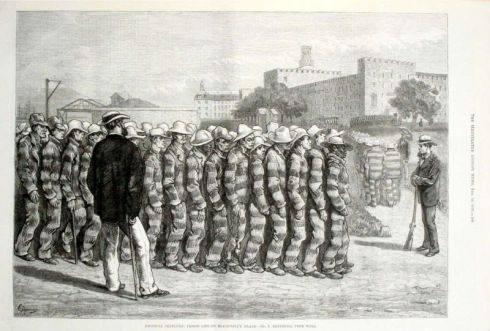
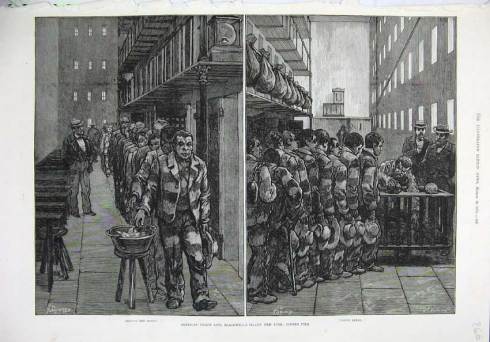
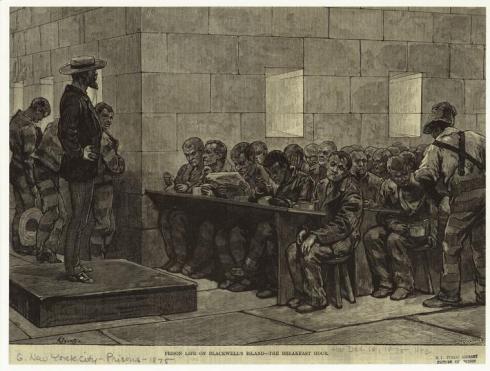
Earlier today, I posted House of the Dead (or How We See and Expect Tropes in Photographs of Russian Prisons) with images of blighted prisoners from art history. Regimented and downtrodden, the subjects of these historical works seem to me like precursors for the B&W grey photographs of Russian prisons, even today.
It was a set-up of sorts.
I used a selection of Sebastian Lister‘s photographs to illustrate my point, but I didn’t show you the majority of Lister’s portfolio, nor did I tell you why he had visited Prison Colony 29, Perm in Russia. (Sebastian, I hope you don’t mind my chicanery!)
Elsewhere in Sebastian’s portfolio are unexpected images of costume, make-up, curtain calls, cross-dressing, pressured script-reading, nervous rehearsals and opening night applause.
Sebastian joined Alex Dower, director, actor, musician and artistic director of Creating Freedom, an international production company working in prisons. For more information, click here and then on the ‘prisons’ tab. Russia Today produced a wonderful half-hour documentary about Dower’s project.
Prison theatre is a common mode of arts rehabilitation in Russia, and Sebastian Lister’s documentary photographs are valuable insight into the “movement”. Perm Colony’s players are diligent creatives and their activities allow for more positive representations of prisoners in the Great Bear nation.
If you’d like to see more, Sebastian has posted more images on his Facebook page.
Scroll down to read my Q&A with Sebastian.
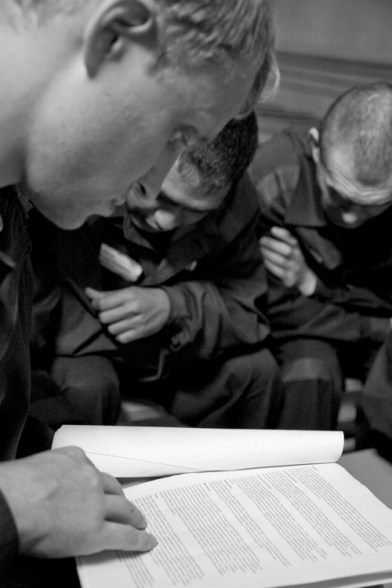
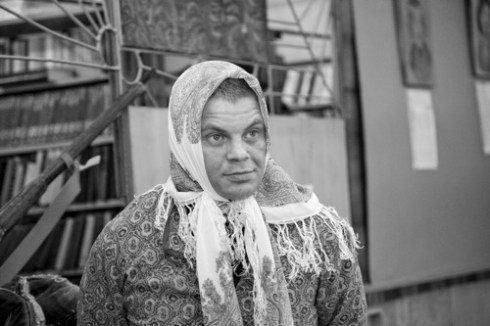

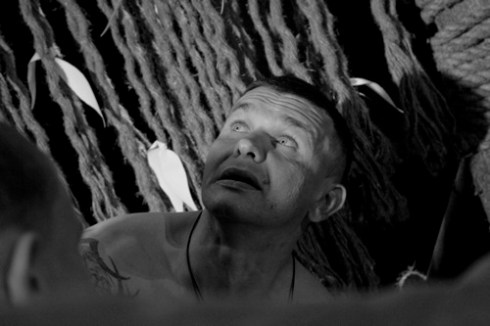



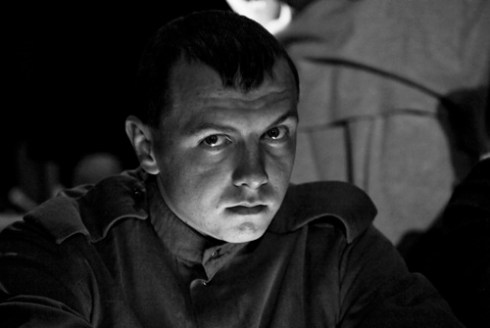
How did you get involved?
I became involved with Theatre in Prison: Territory Festival 2009 having studied acting & directing with Alex Dower. We were trained in the science of acting by the Russian Sam Kogan in London. It seemed fitting to be taking Kogan’s system ‘back home’. It is a rigorous, research based approach which appeals to those with a strong work ethic. For the most part the prisoners relished the opportunity and thrived under Dower’s leadership.
Tell us about Alex Dower’s work in Russian prison theatre.
Dower is a pioneer in that his project was the first high-profile prison theatre project in Russia. It caught the eye of the authorities, some of whom now regard theatre (and perhaps the arts in general) as having a role in rehabilitation. The media interest was aided by the fact that Alex and I are British. Arrangements were complex – we didn’t have the go-ahead until a month or so before. The show was beamed onto a big screen in Perm during the Territory Festival 2009. Crucially, I would say Dower nurtures the prisoners as artists in their own right without any hint of condescension.
How seriously did they take the acting?
As a group the prisoners set about their job with a high degree of diligence. There were some stand-out levels of commitment. In fact, Igor, one of the cast of Chekhov’s “The Burbot” has been offered a job in the professional theatre. And ironically a former neo-nazi murderer played the Jewish lead in “My First Goose” by Babel, a story for which the main theme are fear and courage.
Why does prison theatre prosper? What is the psychology behind it?
I think prison theatre prospers because it is an opportunity for inmates to learn from the characters they play, to exercise their imaginations and to acquire a sense of freedom on stage, thus escaping from the confines and drudgery of their daily lives. There is also the thrill of an audience – including inmates and parents – witnessing this transformation. It is an occasion for them.
One negative aspect of the experience was the come-down the prisoners felt after the show. Future projects should take this into account.
How many of the prisoners would have attended theatres before imprisonment?
I don’t know the exact figures but I would say that barely any of the prisoners had been to the theatre before imprisonment. Most prisons (I’m not sure about the high security ones) have a theatre of some kind.
What are the motivations for the actors?
The motivations for the actors come from the challenges of the characters in the stories – Chekhov’s “The Burbot”, Babel’s “My First Goose” and “Butterfly” written by Albertik Sadrutdinov, one of the prisoners. Characters were discussed and interpreted in the first week of rehearsal. Tanja Arno, an actress from Moscow was the only member of the cast not from the prison.
What other activities are available to them at Colony 29, Perm?
Albertik Sadrutdinov (now free) gained a qualification in building fireplaces whilst in the colony. He also spent time running, meditating, working out in the gym, reading, and playing in a band. On our first day, during quite a media scramble, I saw prisoners in class learning geometry. There is also a “working zone” with a timber yard and metal working shop.
Do either you or Dower plan more prison theatre coverage?
Dower plans to direct in a prison in Kazan, Russia in November 2011, and in Columbia in February 2012. Whether I accompany him or not depends on the funding available.
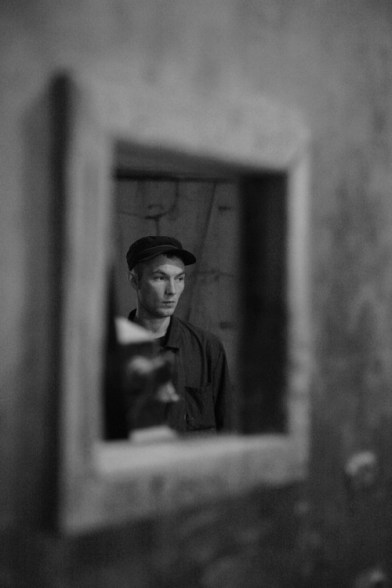


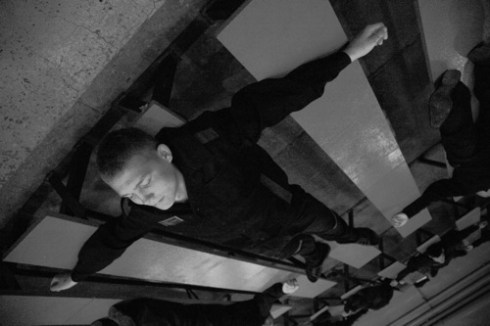
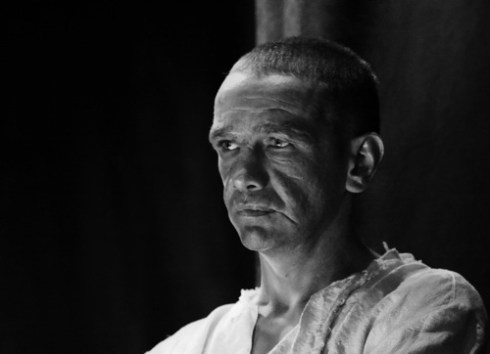
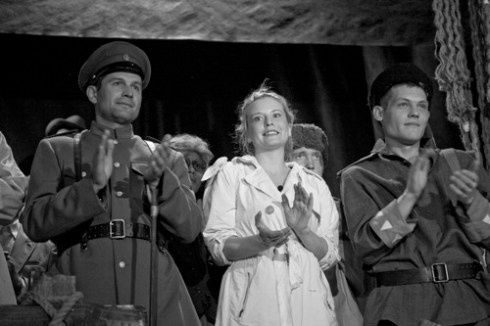
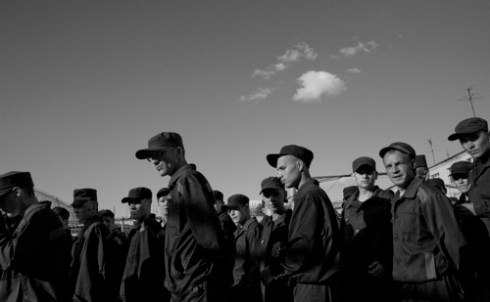
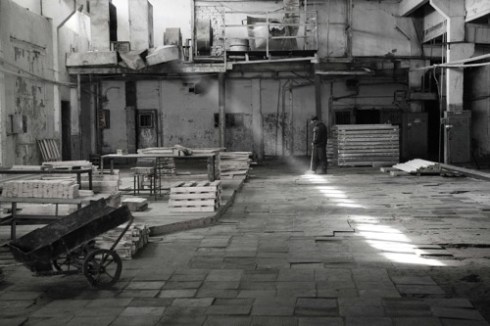
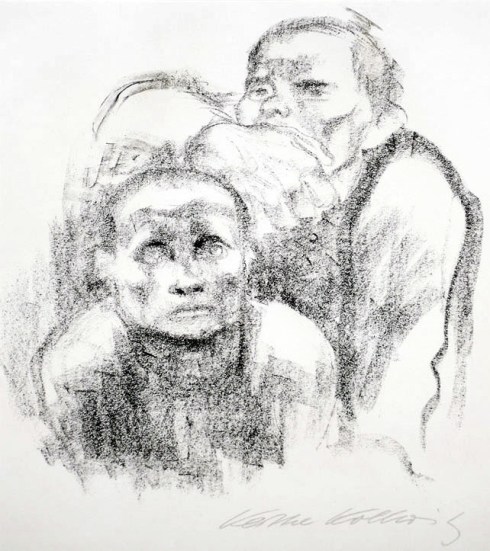
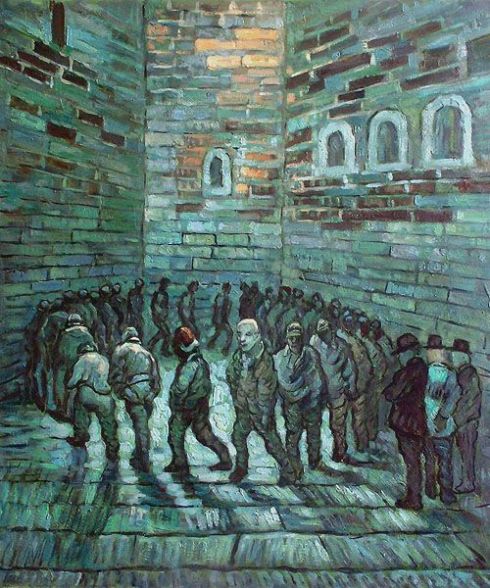
The title for this post comes from Dostoevsky’s famous 1862 novel House of the Dead. The book is full of imagery of malnourished, edgy prisoners who are corralled through the harsh drudgery of the Siberian prison camp. For me, it is almost impossible not to think of Dostoevsky’s bleak interment when looking at photographs from Russian prisons. Much of the imagery I’ve seen from the former Soviet bloc (Als, Alvarez, Atwood, Krauss, Nachtwey, Vasiliev, Payusova) has depicted cold, hardened wretches. This may or may not reflect reality, but here I want to emphasise the prevalence of this type of imagery.
All photographs here in this post are by Sebastian Lister. I’ve taken the liberty to feature a small portion of his images and I’ve peppered them between famous etchings and paintings from art history to illustrate the persistence of marching, ordering, misery and boredom in prison imagery. America, Germany and England all feature in the historical images so we can acknowledge that this type of treatment and mood has existed in prison systems across the world.
Could it be that Russian prisons are persistently depicted as backward, brutal and stuck in the past? Is this the reality?
If you’ve not guessed, I’m setting something up here. I posit that, sometimes, these types of photographs are what we expect. Tune in on the blog later today to see a contrasting view.











© David Maisel, from the series Library of Dust
A new database should help infamous cremated remains find their way back into the possession of family members.
David Maisel‘s Library of Dust is well-known by now. Maisel got early access to a basement of decaying copper cans that hold the cremains of nearly 3,500 former mental institution patients who lived and died – and remained unknown and/or unclaimed – at Oregon State Psychiatric Hospital.
Maisel’s images reflected the keen interest the story garnered across the US (see Oregon’s Forgotten Hospital, Oregonian and Long-forgotten Remains of Oregon’s Mentally Ill, New York Times).
I placed Maisel’s work in the context of a longer visual history of the institution.
Last month, Oregon authorities – pushed by a committed volunteer Don Whetsell – announced a new venture to locate surviving families. The Los Angeles Times reports:
“Officials now hope that the launch this year of an online database detailing the 3,476 canisters yet to be claimed will help other relatives reunite, or unite for the first time.”

 Prison Photography