
You are currently browsing petebrook’s articles.
Dawoud Bey suggested during his address to the Society for Photographic Education 2010 Conference audience, Saturday night that ‘diversity’ had become not an ideal but a political mantra of art institutions that papered cracks and contributed nothing to long-term involvement of people of colour.
Bey argued the word ‘diversity’ has been appropriated, misused and redefined. Bey does not foresee a reclamation of the word but calls for an abandonment of the institutional practices the word has come to stand for.
Bey wants ‘inclusivity’, a firm shared understanding of the term, and relevant action instead. Bey distinguishes:
Diversity to me implies that there is still some normative paradigm at the center that we are seeking to destabilize rather than doing away with it in favor of something quite different. It suggests that institutions have an inherently white and male identity that needs to be added to. To operate out of this paradigm is, of course, a kind of tokenism by yet another name and seeks to trade on the momentary (but always empty and short lived) self-congratulatory excitement of seeing a new color in still unexpected places. It would seem to me that by now we should be approaching a point where anyone should be expected to be anywhere.
I think it’s time to turn away from “diversity” as an operative objective and turn instead towards the more meaningful and substantial goal of making institutional spaces ever more inclusive and embrace the goal of inclusivity, in which everyone’s identity is central to the whole. One way to accomplish this is to consider how in fact the institution’s identity can be meaningfully transformed and expanded conceptually by this enhanced inclusiveness in a way to deeply transforms the very nature of that institution. Inclusivity implies a desire to actually change through institutional expansion, while diversity implies to me that those being brought in have to simply fit into the normative and dominant existing paradigms and simply add “color” to it.
[My bolding]

The full lecture which Bey transcribed to his blog is essential reading as it sums up with authority the history of localised art movements, the legacy of protest among minority communities against silenced or non-represented voices (even in shows dedicated to the work of African American artists for instance!)
Bey recounts the protests against the “Harlem On My Mind” exhibition at the Metropolitan Museum of Art in 1969. Bey reminds us that Roy DeCarava carried a sign outside reading, “The White Folks Show the Real Nitty Gritty.”
Bey traces many of his own successes not to umbrella changes in culture or industries but to committed artist actions doing the leg work for themselves. He is the inheritor of community spirit so to speak.
Bey drives the point home exquisitely by pointing to one of New York’s favourite and largest art love-ins:
And then along comes the Whitney Biennial 2010 to remind us just how little some things have changed … In an exhibition that ironically uses an image of Barack Obama on the catalogue cover, we find among other things absolutely no Latino artists and a total of three black artists among fifty-five artists in the exhibition. What is your response to that? What would the response have been in 1969? I can’t imagine that this kind of situation would have been tolerated at that moment.
[My bolding]
CONCLUSION
Again, cold hard figures don’t lie, and I think Bey has shown that history doesn’t lie. We’ve got a lot to do.

With the PG&E power plant in the background, from left, Terry Phillips, Jusuw a May-Loto, Meritiana Loto and Justice Phillips relax on their porch on Harbor Row in Hunters Point. Residents successfully lobbied to shut down the pollution power plant in 2005, the single largest stationary source of air pollution in the city at the time. © Alex Welsh
THE DOCUMENTS OF A PHOTOJOURNALIST
Last April, San Francisco’s Superior Court played host to legal wrangling between the San Francisco Police Department and a young aspiring photojournalist. The ignition to court battle was the gang murder of Norris Bennett in the marginalized Hunter’s Point neighbourhood.
A young (then unnamed) photojournalism student had photographed at the murder scene of Bennett. The SFPD issued a warrant for the images and seized them during a search of Welsh’s domicile.
The photojournalist invoked California’s shield law to regain possession of his images and have them withdrawn as evidence. In July, at the time of the ruling, my colleague, Brendan Seibel, wrote a splendid piece about it for Wired’s Raw File.
THE DEFINITION OF JOURNALIST
A shield law is legislation designed to provide a news reporter with the right to refuse to testify as to information and/or sources of information obtained during the newsgathering and dissemination process.
What is interesting is that the ruling soon became involved in determining whether or not the young photojournalist was “a journalist”. Seibel explains:
The warrant was overturned and the student won the case. First amendment activists and free press advocates celebrated the ruling.
THE COMPETITION OUTING OF A PHOTOJOURNALIST
Fast forward to November 2009 and Alex Welsh (San Francisco State University) wins Gold in the Documentary category at CPoY for the portfolio Hunters Point, ‘We Out Here’.
Welsh is the anonymous photographer.
The final photograph of Welsh’s winning portfolio is of an SFPD officer administering CPR to Norris Bennett’s body, with the added tragic caption that Norris was the second brother of the same family to be murdered.
I must say I was well aware of Welsh’s work at the time of its win. I posted it on my auxiliary blog Photography Prison, linked to Dvafoto’s respect and noted Welsh’s interview with NPPA … but I never put the pieces together.
That was until this week when I read The SF Weekly’s S.F. State student who invoked Shield Law reveals murder scene photo in national contest by Peter Jamison:
Legally, this is a very interesting story and ethically it is quite troublesome. Obviously, we don’t know the exact nature of Welsh’s digital files from Friday April 17th. We don’t know if his images held information pertinent to the case. Whether he did or not is of no consequence if you look at this case from only a legal argument position.
NORRIS BENNETT
If one searches Norris Bennett’s name on the internet, the returns are hundreds of articles about the shield law case, none about him, his murder or the investigation since. I don’t know if his murderers have been identified or how his family has coped in the aftermath.
To discuss this case without a curiosity for news on how his community and family fares would not be right. So while we may mull and judge the behaviour of Welsh, the SFPD and San Francisco’s Superior Court we should also think about the behaviour of mainstream media to forsake the emotional and familial stories following Norris Bennett’s murder.
Bennett was young. Welsh wanted to document the “strength, perseverance and hope of youth”. You can decide through Welsh’s images if he does them – and Bennett – justice.

ESMA, Buenos Aires, Argentina © Pete Brook
You may have noticed that I switched out the banner image for Prison Photography. I didn’t want to say goodbye without mentioning again the photograph’s origin.
The original banner was a non-descriptive crop, abstracting the top of a stairwell.
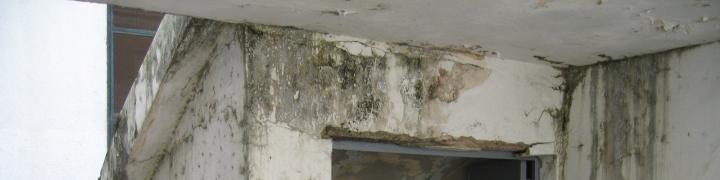
Exterior stairwell, ESMA, Buenos Aires, Argentina. © Pete Brook
ESMA & THE DIRTY WAR
The exterior stairwell led to the basement of the Naval School of Mechanics in Buenos Aires (Escuela de Mecánica de la Armada). In Argentina it is commonly known by its abbreviation ESMA.
ESMA, particularly its basement, was the main site of illegal detention and torture during the Dirty War (1976 to 1983). The Dirty War was a state-sponsored program of violence against Argentine citizenry carried out primarily by Jorge Rafael Videla‘s military government. There were hundreds more sites like it across the country. There were scores of illegal detention sites in Buenos Aires alone.
ESMA is now a museum and memorial.
MEMORY
The horrors of the Dirty War are still fresh in the collective memory and, as such, problems exist with its interpretation in contemporary Argentine society. The surveillance and by-night kidnappings affected every Argentine’s life. 30,000 persons were ‘disappeared’; they are known as the Desaparecidos.

Photomontage of Desaparecidos, Memory Museum, Cordoba, Argentina © Pete Brook
PHOTOGRAPHY
I am aware of a handful of photographers who have made central to their work the prisons and politics of the Dirty War.
I should like to write and post about these photographers in the coming months.
RESOURCES
For more info on the Desaparecidos; more on the establishment of the museum/memorial; more on the continuing peace & justice efforts; and more on the national archives.
Sin Olvido is a MUST VISIT. It is a very poignant archive of photographs and descriptions of 3,400 victims from the Dirty War.

Ingenious magazine campaign by ASTI
Acid Survivors Trust International (ASTI) contacted me following my post on photojournalists’ portraits of women subject to assault.
I thought it was worth reposting here:
Acid Survivors Trust International is an organisation founded to combat this violence. We have been campaigning for over 10 years to get countries to recognise this – change their laws and help rebuild the lives. We call them not victims but survivors – their dignity and resilience is testament in their survivor stories. Help us help survivors.
A Miserable Old Git has launched CREEP with the following words
It’s been said before but, but Colin Jacobson‘s words carry a bit more weight because the WPP were, “foolhardy enough to invite [Colin] to be chair of the jury on two occasions back in the primordial mists of the 1980’s.”
And, because Jacobson is now the curmudgeon-in-residence over at Foto8.
Found via Peter Marshall.

Qamar Jan,18, an Afghan refugee from Peshawar poses at the Ali Medical clinic in Islamabad, June 14, 2007. © Paula Bronstein
In my last post, I suggested the repetition of subject matter in photography is inevitable.
Equally, I’d like to stress that our constant exposure to (predominantly web-based) imagery may likely result in more frequent associations and recall (partial, total, overlapping) between photographers and their works.
Here, I’d like to argue that the gravity of some photography – or rather the gravity of the story it bears witness to – means that ultimately the name of the photographer is inconsequential.
MOTIF, MEME, PERSISTENT THEME
In my last post, I also challenged the notion of plagiarism and inserted the notion of ‘meme’. I was hasty. I used the term ‘meme‘ because meme evolution within host populations can occur without any awareness of said host population; I wanted to infer that repetition, mimicry, copying, mirroring mustn’t always be accorded a conscious origin. Conscious origin is precedent, is ownership, is lawsuit. And I want to live in a world where not everything is subject to ownership and contest.
That said, I want to back-track on the term ‘meme’. Meme is more appropriate for discussing larger shifts, whereas I am really discussing trends. Instead of ‘meme’ I’d prefer to use the term ‘persistent theme’.
FINE ART vs PHOTOJOURNALISM
In Burdeny’s work, the use of a persistent theme (including the minutiae of another artists’ motifs, style) just looks bad. Simply, Burdeny is a prat, but if you want to get uppity you’d argue he has debased artistic notions of respect, brevity and creative integrity.
In the light of Burdeny’s antics (1, 2, 3, 4, 5 & 6), any number criticisms are understandable BUT would anyone level criticisms at photographers in journalism repeating the work of others if it that work pertained to a story that perhaps has not been told enough?

Memona Karachi. 20 years old. Over 30 operations. Attacked by a boy on her way to school. © Izabella Demavlys
ACID ATTACKS: A CRUDE CRIME OF MODERN TIMES
Shouldn’t ‘persistent themes’ in the photography of journalism be judged on different criteria?
Joerg’s post on Izabella Demavlys today recalled the work of Paula Bronstein, Q. Sakamaki, Diego Ibarra, Katherine Kiviat and Emilio Morenatti. (Stan was impassioned by Morenatti’s work recently)
An acid attack is a heinous crime, but made all the worse by lack of awareness, empathy or rehabilitative service. Of course, photography plays second-fiddle to medical intervention in the aftermath of acid attacks, but that is not to say it can’t play its part.
Or are these portraits exploitative? Personally, I don’t think they are. The recurring ‘exploitation’ argument doesn’t develop a discussion – it merely demands you accept or decline the notion of ever-unequal power relations between the operator and subject of a camera. It becomes a discussion about photography and not about the reason the photographer and subject shared a space in the first place.
Personally, again, I don’t think we understand enough about the motives or consequences of these types of brutal attack, and I think portraiture and caption have their role in informing interested parties.
Fortunately, the reports alongside these images describe accessible medical treatment for victims (one woman has had 30 surgeries). More than physical healing though, many of the women have a resolve and psychological determination beyond words. (Read Nick Kristof’s NYT article).

A victim of acid attack stays in the hospital of the Acid Survivors' Foundation. In 2002 Bangladesh introduced very tough laws to try to stop acid throwing, including the death penalty in the most serious cases. However, acid attack is still common in the country -- more than 260 cases in 2005, since "The law is just like a dead law," according to Salma Ali of the Bangladesh National Women Lawyers' Association. Dhaka, Bangladesh, July 12 2006. © Q. Sakamaki
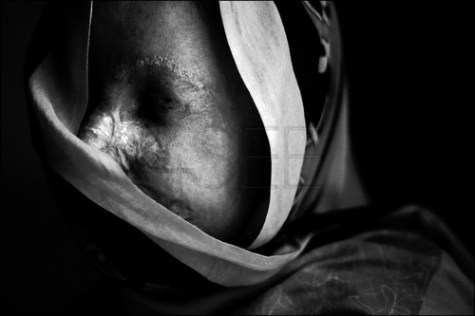
© Diego Ibarra. Portrait of a woman attacked by acid. The consequences of the attacks are for life. Islamabad. Pakistan, May 2009
Saira Liaquat
Both Kiviat and Morenatti photographed Saira Liaquat in the space of a year (the captions for her age must be inaccurate) but opprobrium will never be dealt Kiviat or Morenatti for their repetition.
Saira bears witness to her injustice and both photojournalists help her advocate.
Saira’s name and her story matter, the photographers names really don’t.

Saira Liaquat, 22 yrs, burn victim and survivor, holding an old photograph of herself before she was burned with acid by her husband. Photographed at Saira's parents' home in Lahore, Pakistan on February 7, 2009. Saira is presently working as beautician at the Depilex beauty salon in Lahore, Pakistan. There are presently over 300 cases of burn victims registered in Pakistan. Most victims are between the ages of 14 - 25 years old. Motives vary, but are most frequently obsession, jealousy, suspected infidelity, husband wanting to re-marry, sexual non-cooperation. The face and genitalia are the areas most generally targeted, those guaranteeing complete disfiguration. © Katherine Kiviat/Redux
REPETITION IS DIFFERENT TO PLAGIARISM
I just posted on Christopher Sims’ series Hearts and Minds. It recalled the work of Todd Deutsch, Philip Toledano, Robbie Cooper, Adriaan van der Ploeg and Shuana Frischkorn who have all pointed their lenses at engrossed computer-gamers.
Joerg, Harlan and Hey, Hot Shot! have all mentioned this obvious repetition of subject before. The gamer-portrait-meme is so recognisable/memorable that accusations of plagiarism are foolhardy. None of these photographers are trying to pass off the idea as their own nor obscure the work of other artists.
ON BURDENY
Burdeny, on the other hand, tried to hoodwink his audience and pass off the idea of the work as his own. That is the difference.
Burdeny shows a deliberate interest in replicating exactly on at least half a dozen occasions the work of a single artist’s work – Sze Tsung Leong’s work. Did Burdeny research Leong’s GPS coordinates?
I must presume Burdeny is a provocateur and that he manufactured this stunt to either get away with it, OR – worst case scenario – become the talk of the town. All publicity is …
To me, Burdeny will always be the bloke that ripped of that other photographer. Terrible decision making and a tough reputation to push back against. What a prat. It’s just bad form. People have repeated to me many times that the photography world is small. If that is indeed true then Burdeny might struggle from here on in?
NB. The repeated assertion that the photography world is small may or may not be true, it might be a meme. It’s definitely not plagiarism.
GAMERS IN PHOTOGRAPHY


- © Philip Toledano

- © Shauna Frischkorn


- © Todd Deutsch
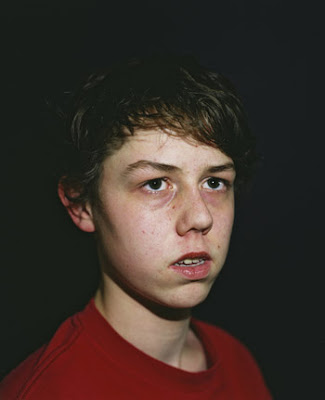
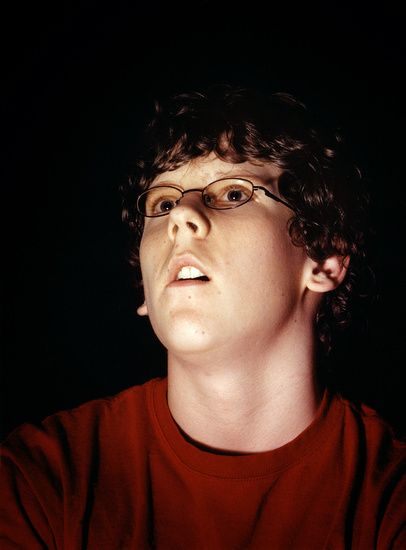
- © Adriaan van der Ploeg
A link between violent video games and actual bodily harm perpetrated by gamers has never been substantiated. Sure it’d be nice to not have games where you can pick up prostitutes before beating their pimps to death, but they exist so we must acknowledge and intelligently challenge such platforms of “entertainment”.
We should be quick to challenge all forms of manipulation and abuse as they occur within the infrastructure of gaming culture which, let’s face it, is pretty much exclusively aimed at youth.

Air Power Over Hampton Roads air show, Hampton Roads, Virginia #2 by Christopher Sims
US military recruitment relying on the allure of gaming seems like such an abuse.
Sims’ Hearts and Minds is a sharp view at a nation’s collective hopes for a significant body of its (male) youth.
Christopher Sims operates a lot like Paul Shambroom in that both their photographies prod at our military-infused society without ever showing us real blood or even real warriors. To this extent, Sims has even stalked fake blood.
Hearts and Minds should be exhibited in the future in parallel with the results of Alyse Emdur‘s project Photograph a Recruiter that asks high school students to submit their own photos of military recruitment drives. As captivating as Sims’ work is we should not be fooled into thinking that we are privileged witnesses to an unusual or rarefied event; young people are routinely manipulated by institutions.
Emdur’s project acts is the compliment to Sims’ endeavour and both would prosper in mutual visual dialogue.

 Prison Photography