
You are currently browsing petebrook’s articles.
Last night, a rogue bunch of characters descended on the Cornerhouse, in fair Manchester, to confirm that they were really people and more than just the phenomenal pixels they’d previously transmitted to the world.
Before the third beer, discussion had included environmental destruction in China, the rise of the newsprint for photo self-pubs, Polish Liverpool fans, Google Earth, Roma and Romania, photobooks, the power of Duckrabbit, why U.S. prisons are so bad, Sikhism, M.A. distinctions, hierarchies of needs, hierarchies of power within the photoworld, and freeing yourself of all of it.
Here’s the line up.




In 2005, Alyse Emdur unearthed a photograph (above) of her visiting her older brother in prison. She recalls, even as a 5 year old, her confusion and discomfit with the tropical beach scene to her back.
To Alyse, these garishly coloured corners of the prison visiting rooms are analogous with commercial photo portrait studios, “If you weren’t familiar with prisons, you might think these were prom photos or made in community centres. They’re very ambiguous,” says Alyse.

Fascinated by the obscure and closeted mural works in prisons across the U.S., Alyse meditated upon them in her MFA grad show (she even commissioned a prison artist to paint a mural on parachute canvas). She is now bringing hundreds of authentic American prison visiting room portraits from her Prison Landscapes project together in a book to be released later this year.
Alyse contacted over 300 prisoners via prison penpal and dating websites. Just over 150 agreed to be part of the project.
In the past, I’ve argued that visiting room portraits may constitute the largest type of American vernacular photography not seen by the majority public. I’ve also noted how companies will manipulate these portraits and, at the request of the owner, photoshop out the prison environment. Photoshop “services” such as these are the post-production equivalent of the denial existent in the original works.
If these idyllic landscapes are about escape it might not just be in an emotional sense, “They are a security feature,” says Alyse. “The backdrops are there to control the type of imagery that is being exported out of the institution. To be specific, the administration doesn’t want images of the inside of the prison to circulate outside of the prison because the thinking is that those images could help an inmate escape. That’s what makes these images slippery and interesting; they also create an escape for the poser and for the [family member] who receives the photo.”
How or why does this discussion matter? Well, essentially these are images about control. Cameras are considered a security hazard by prison authorities. Prisoners have no opportunity to self-represent (bar some very exceptional prison photo workshops). After their mugshot, these visiting room portraits are the only chance America’s 2.3 million prisoners have to achieve something that approximates self-representation. These are highly mediated images and they are often a performance that belies the hardship of prison life.
Alyse and I talk about the regionalism of the backdrop murals; the dearth of research on this quirky and hidden aspect of American visual culture; and Alyse notes how the artistry of mural painting is disappearing as acrylic and enamel paint is replaced by large photo-printed screens.
LISTEN TO OUR DISCUSSION ON THE PRISON PHOTOGRAPHY PODBEAN PAGE


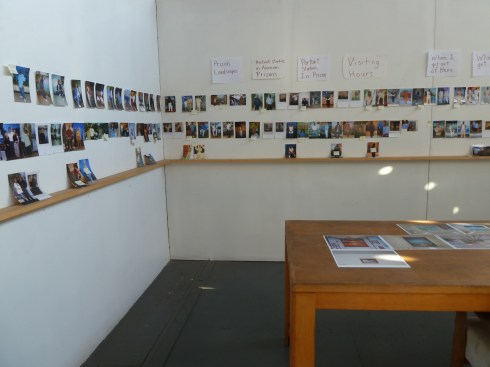

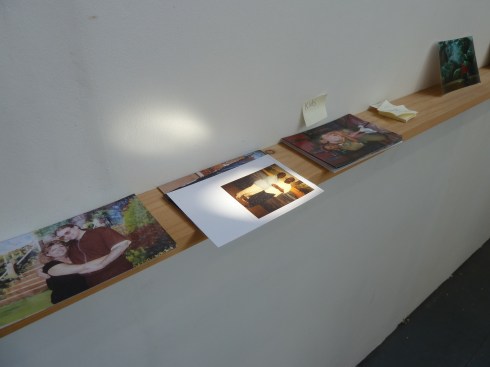
Alyse Emdur (b. NJ, USA 1983) works with photography, video, research, social engagement, and drawing. Her work has been exhibited at Printed Matter and the Lambent Foundation in New York; the University of Texas Visual Arts Center in Austin; Bezalel University in Tel Aviv, Israel; the Lab in San Francisco; La Montagne Gallery in Boston; Laura Bartlett Gallery in London, England; Spacibar in Oslo, Norway; In Situ in Paris, France, and Kunststichting Artis in Hertogenbosch, Netherlands.
In Spring 2012, a book of her project Prison Landscapes will be published by Four Corners Books (London).
Download an interview with Niels Van Tomme published in the Fall 2011 Issue of Art Papers Magazine, here (PDF)
Download an excerpt of Prison Landscapes published in Issue 37 of Cabinet Magazine, here (PDF)
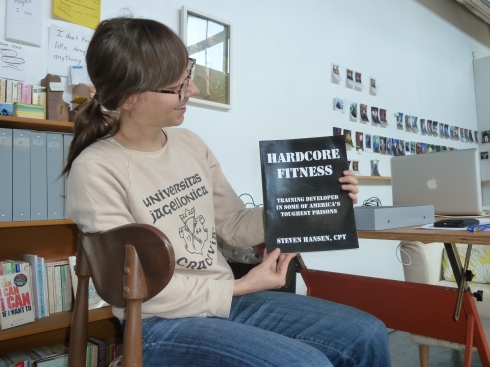
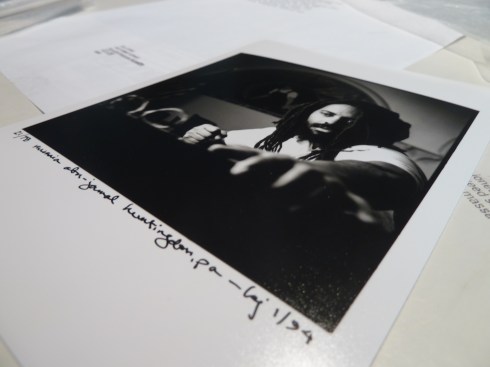
Print of Mumia Abu-Jamal portrait by Lou Jones. During the PPOTR interview at his Boston studio, Jones said when he made the portrait it was the first time in 5 years that Mumia had been photographed without shackles on his wrists.
Prison Photography on the Road concluded at approximately 11pm, December 20th.
I’m hugely privileged to have had the opportunity to hit the road and throw myself, an audio recorder, and a sleeping bag at my intellectual passion.
On the 21st December, I hopped aboard a flight bound for holiday cheer, cask ale, mince pies, friends and family in the UK. With Christmas in Yorkshire and New Year in Scotland, I’ve enjoyed an extended period of down-time and in many ways needed that time to digest all that was achieved during PPOTR. And, now, I must responsibly and efficiently share what was learned and gained.
I anticipate 2012 to be a year of flux. I’ll be experimenting with new ways of sharing information. I don’t want to disclose too much at this point as many projects remain in planning stages. Still, expect a shake up here at Prison Photography.
Whilst I get to work, I thought you’d be interested in some figures that in some small ways indicate the parameters and spirit of the trip.
RUNNING THE NUMBERS
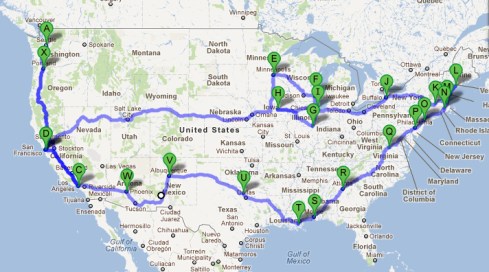
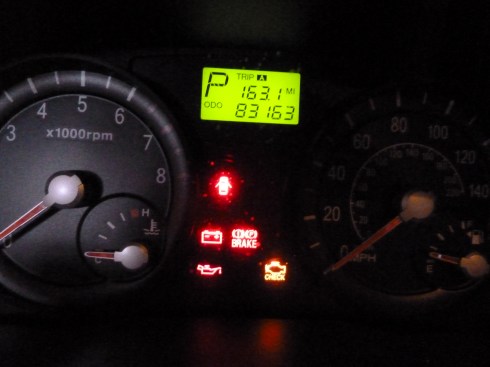
12,333 miles total
1,443 image files made with the Lumix digital camera
762 miles – longest drive in a single day (Salt Lake City, Utah to Kearney, Nebraska)
500+ people I spoke with and exchanged ideas
374 gallons of petrol
155 CDs played on car stereo
120 cups of coffee
103 different wi-fi connections
100 postcards sent (at time of writing, number set to increase)
90 days and nights
78 showers
71 pet cats and pet dogs I met
67 interviews (3 interviews every 4 days)
46 destination cities
39 photographers
31 states
28 criminal justice reform experts/advocates
18 ruby Texas grapefruit
16 batteries spent
6 lectures delivered
4 oil changes
3 prisons visited
2 hotels
2 nights sleeping in the car (New York; Arizona)
2 parking tickets (Milwaukee; San Francisco)
1 night camping (in an Iowa thunderstorm)
1 Occupy Movement protest march (Philadelphia)
1 speeding ticket
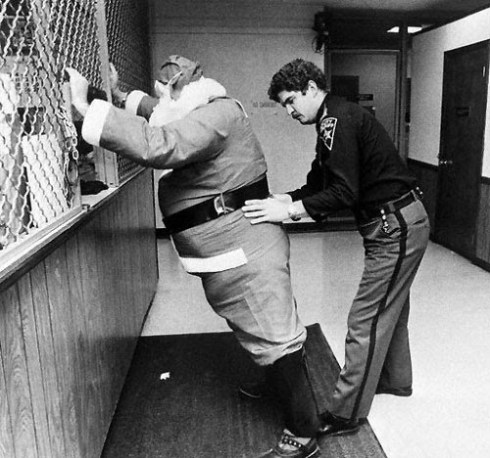
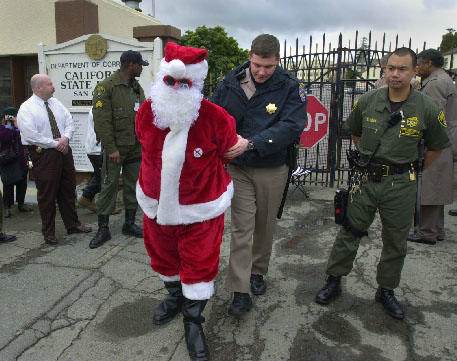
1 arrest
0 car problems














As many of you will know, a little piece of Prison Photography has been wrapped up in my monotone voice, roadtrip b-roll a bit of car-singing.
Tim Matsui (who helped film the PPOTR Kickstarter video) thought my PPOTR trip was unusual enough that he was willing to put his time and money behind a week-long commitment to follow me over the mid-point of the PPOTR trip. Read Tim’s summary of the experience.
Most importantly the voices of prisoners from Sing Sing Prison in New York State are represented in this film. The prison only allowed us to video two prisoners talking to the camera; their insightful and reasoned positions are representative of all 13 students in that workshop back in November.
I also captured audio and written response to specific photographs from all the men in the workshop. That content will be simmered into something beautiful in the new year. (On production management, I’m astonished at how quick Tim turns projects around.)
Watch the Prison Photography on the Road documentary short
Tim wanted to help clarify my mission and explain it to a wider audience. Uncomfortable being in front of the camera, I was a septic skeptic and an unwilling subject at times. But Tim knows what he’s up to and I should have just trusted him 100% instead of being so precious.
The feedback already has been very positive and encouraging; many emails and Facebook loving. My buddies at DVAFOTO, LPV Magazine, PHONAR and DEVELOP Tube have also helped spread the word.
I’m now nearly at the end of the trip. I’m in San Francisco after 12,500 miles. Four days and two interviews remain.
I’ve made 63 audio interviews so far and published ten. I have to let go of the fact that I can’t share all this material instantly and instead embrace the size of the task to edit the audio, share the images and distill the essentials to do justice to each all of the amazing work and advocacy my interviewees have done and continue to do.
So, PPOTR will bleed into 2012.
For Prison Photography, next year is going to look different and involve a handful of projects that continue still to extend the project beyond the boundaries of the typed word. Stay tuned and thanks for your continued interest.
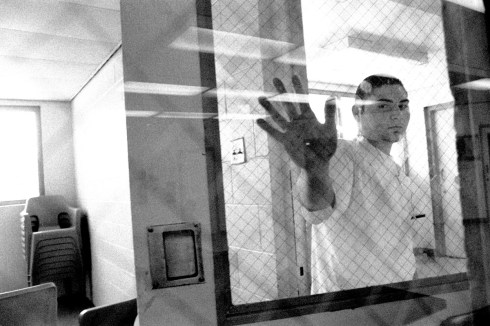
When Ara Oshagan was invited to shoot b-roll for a documentary film in the Los Angeles Central Juvenile Hall, he didn’t hesitate.
“I had lunch with Leslie [Neale, the filmmaker] on Monday, and on Tuesday I was inside with my camera,” says Oshagan. The film was Juvies.
As an Armenian emigre living in Los Angeles, Oshagan was aware of California’s bloated prison and jail systems, but had not thought about how he’d operate as a photographer within them. Previously, his approach was to spend years on his documentary projects often wandering and discovering. In Los Angeles Central Juvenile Hall, time was not a luxury … and neither was space. “I had to keep the film crew out the frame.”
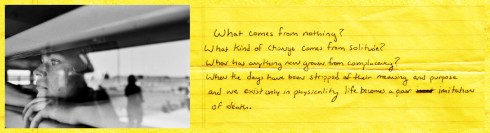
Over the 3 years of the project, Oshagan identified shortcomings in the ability of his photographs alone to describe the experience of the children. His solution? To pair images with poetry and prose of the six children he followed.
When the kids got bumped up into the adult system he followed them there too. “I wanted this work to be about this passage. The adult system is a complete change in culture,” says Oshagan. “The whole culture will take advantage of the younger kids coming in.”
Oshagan witnessed teenagers he knew as small boys, bulk-up in their first six months in the adult system. They told him how the first thing they learnt was how to make weapons to protect themselves.
What surprised both he and his subjects was the length of sentences children are routinely given. And, after they move up through the system, their chances of a secure, violent-free life diminish.
The real kicker? Oshagan concludes his own kids are not too dissimilar to those he photographed in lock up. It’s not too difficult to imagine one poor decision and a life taken over by years of incarceration.
Why does this matter? Well, not only are sentence-lengths for juveniles growing, in recent years many states (40 in total) have introduced laws to allow the trial of juveniles as adults.
How is our society poised for the conversation on the culpability of under-18s and our shared capacity to manage and then forgive?
To help the conversation, Oshagan is to shortly publish the photobook A Poor Imitation of Death. The title comes from one of the kids’ description of imprisonment.
LISTEN TO OUR CONVERSATION AT THE PRISON PHOTOGRAPHY PODBEAN PAGE
All images © Ara Oshagan




I hadn’t planned to interrupt my PPOTR coverage, but when something this important arises then to hell with convention.
You may be familiar with the name Jeffrey Stockbridge, and you’re probably well aware of his Taylor Wessing Portrait Prize shortlisted double-portrait of Tic Tac and Tootise.
Stockbridge has been photographing in Philadelphia for years with a focus on the Kensington Avenue neighbourhood, which Stockbridge describes:
Kensington Avenue is a hot spot for drugs and prostitution located in North Philadelphia. Populated by cheap bars, pawnshops, and check cashing businesses, the Avenue is also the major business corridor in the neighborhood.
Kensington Blues is not just another dip-your-toe-in-poverty photo project; Stockbridge has spent considerable time befriending many of his subjects. He gives them dignity, and with his designated website Kensington Blues, Stockbridge – through audio and transcription – gives each subject a voice.
I am quickly coming to value any photographer’s approach that, above all else, connects the subject to the photographer … and thus the subject to ourselves. Stockbridge’s Kensington Blues pays that attention to human connection.
BIOGRAPHY
Jeffrey Stockbridge is a photographer based in Philadelphia, Pennsylvania. In 2005, he placed runner up in the New York Times Magazine “Capture the Times” college photography contest. Stockbridge is well known for his projects documenting drugs, prostitution and urban blight in Philadelphia for which he has received several grants and awards. Stockbridge is a recipient of a Pennsylvania Council on the Arts Grant, Independence Foundation Fellowship in the Arts Grant and a Center For Emerging Visual Artists Fellowship. His work has been widely exhibited nationally and internationally. Selected exhibitions include The National Portrait Gallery in London, The Philadelphia Museum of Art, The Fleisher Art Memorial, The Delaware Art Museum, The Delaware Center for the Contemporary Arts and J. Cacciola Gallery. Stockbridge was recently awarded 3rd Prize in the 2010 Taylor-Wessing Photographic Portrait Prize at The National Portrait Gallery in London. Upcoming exhibitions include Galerie Huit Photography Open Salon 2011 in Arles, France and a solo exhibition of Stockbridge’s work is scheduled for July 2011 at The Wapping Project Bankside in London. (Source)

16 year old boy in King County Juvenile Detention Center, Seattle.
With a stack of cash and a full paid year of leave what choices would a photographer make?
Richard Ross decided to use his award-winning photography skills and decades of access-negotiating experience to visit and document America’s juvenile detention facilities. Now, by giving his images away for free, he’s passing on his good fortune and helping decision-makers build better policy.
Thanks to a years sabbatical from the University of California and the award of a Guggenheim fellowship, Ross was freed of time and money pressures and over a five-year period, visit more than 350 facilities in 30+ states and interviewed approximately 1,000 children. He hopes Juvenile-In-Justice will change the national debate.
Ross has partnered with the Anne E. Casey Foundation, but it’s not an exclusive relationship; he is open and willing to share his archive with any group working to improve transparency in the system and improve the confinement conditions for our nations incarcerated youth.
In our interview, Ross talks about some of the differences in management he observed across counties and states; describes the trauma experienced by many detained children; explains that sometimes the simplest solutions are best; and expounds on how we are quick to give-up on children who have – for the most part – not seen any benefits of our perceived social contract.
LISTEN TO OUR CONVERSATION ON THE PRISON PHOTOGRAPHY PODBEAN PAGE.
Visit the dedicated website Juvenile-In-Justice for regular updates and transcribed interviews with many of the children in Ross’ photographs.
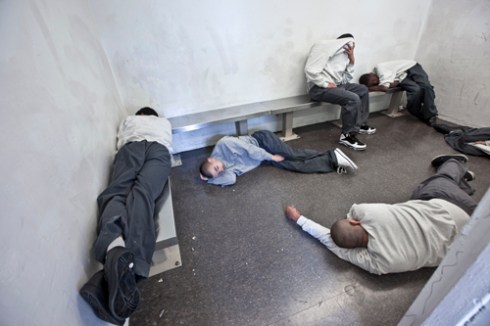
Los Padrinos Juvenile Hall. Downey, California.
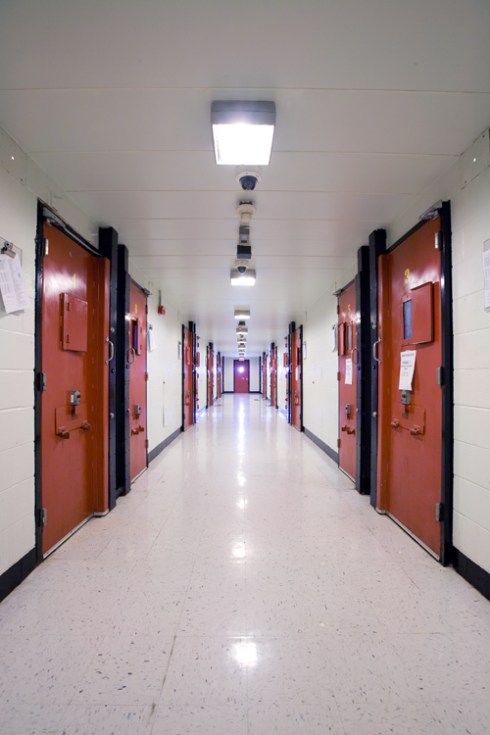
Giddings State School, Giddings, TX. Maximum security. Pictured: hallway of isolation cells, essentially maximum security within maximum security.

Orleans Parish Prison (OPP), New Orleans, Louisiana. The air-conditioning was not working when Ross visited and there was a fight the previous night. As a result T.V., cards and dominoes privilege have been taken away. The OPP, managed by Sheriff Marlin Gusman, houses about 23 juvenile boys. They live two to each cell. The cells at their narrowest measure 6-feet in width.
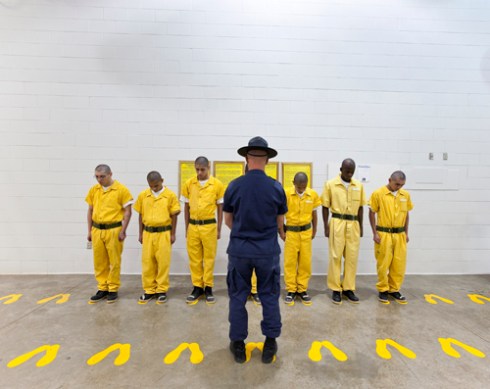
Orientation Training Phase (OTP), part of Youth Offender System (YOS) Facility in Pueblo, Colorado. OTP performs intake and assessment of convicted children. OTP operates like a boot camp. All of the children at OTP have juvenile sentences with adult sentences hanging, meaning that if they fail in the eyes of the authority they will have to serve their adult sentence. For example, a child could be there serving a two year juvenile sentence with 15 years hanging.

A twelve-year old in his cell where the window has been boarded up from the outside, at the Harrison County Juvenile Detention Center in Biloxi, Mississippi. The facility is operated by Mississippi Security Police, a private company. In 1982, a fire killed 27 prisoners. There is currently a lawsuit against the authorities which forced them to reduce their population. They must now maintain an 8:1 inmate to staff ratio.

Dorm room six of the Hale Ho’omalu Juvenile Hall in Honolulu, Hawaii. Built in the 1950s, the facility was under federal indictment until a replacement facility could be constructed and occupied in early 2010. This boy who has been in and out of foster care all his life, has been here at Hale Ho’omalu for one week. He committed residential burglary in 7th grade and has since repeatedly violated with petty actions like missing meetings or truancy. His father was deported to the Philippines and his mother is a drug-user. The only person who visits him is his YMCA drug counselor.
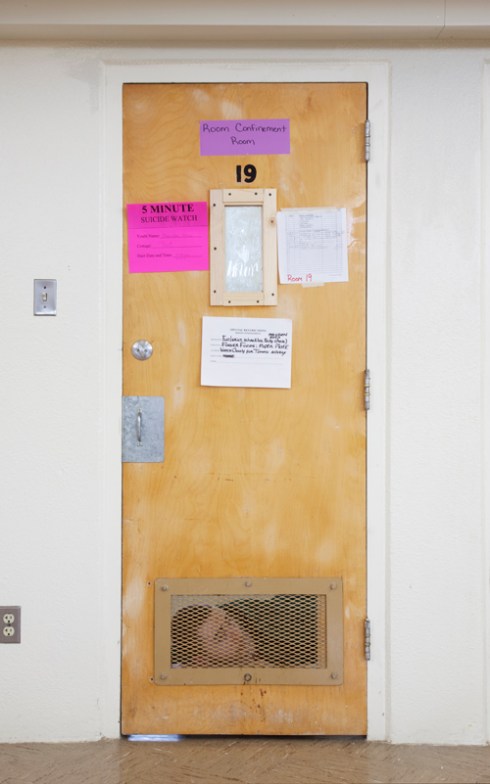

The Caldwell Southwest Idaho Juvenile Detention Center detains children between the ages of 11-17 years old. When Ross visited, six girls were in detention for the following offenses – two for runaway/curfew violations; lewd and licivious conduct, molestation abuse; controlled substance; trafficking methamphetamine; burglary and marijuana
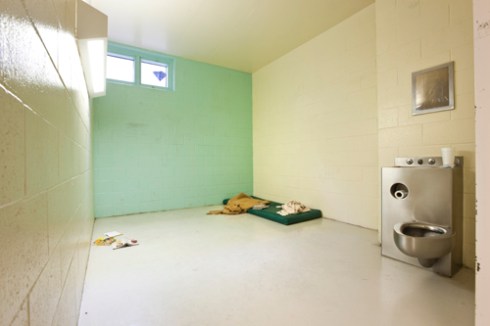
Under 24-hour observation, this 15 year old boy on the mental health wing of the King County Juvenile Detention Center, Seattle, WA is checked on every 15 minutes.

Restraint chair for self-abusive juveniles at the Mendota Juvenile Treatment Center in Madison, WI houses 29 children and is usually always at full capacity. The average stay for the emotionally and mentally disturbed juveniles, some of which are self-abusive or suicidal, is eight months. Children must be released at age 18, sometimes with no transition options available to them.

View of camera monitoring the isolation room at the St. Louis Detention Center, St. Louis, MO. The facility is run by the Department of Youth Services. When Ross visited only 35 of the 137 beds were occupied. The population had decreased significantly because of the embrace of the principles of the Juvenile Detention Alternatives Initiative and the leadership of Judge Edwards.

All images © Richard Ross

 Prison Photography