
You are currently browsing the category archive for the ‘Activist Art’ category.

Green has strong emotional correspondence with safety. Green is the most restful color for the human eye; it can improve vision. Green suggests stability and endurance. Green is used to indicate safety when advertising drugs and medical products. Dull, darker green is commonly associated with money, the financial world, banking, and Wall Street. Dark green is associated with, greed, and jealousy. Aqua green is associated with emotional healing and protection.
Source
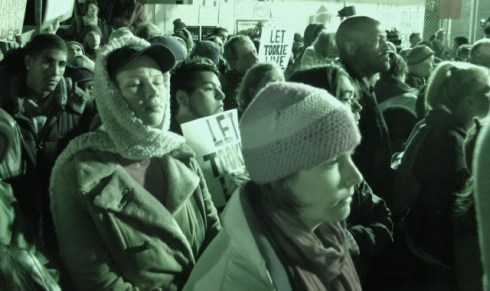
I was looking over the following images of the protest/vigil outside San Quentin Prison on the night of Stanley ‘Tookie’ Williams’ murder by the state of California.
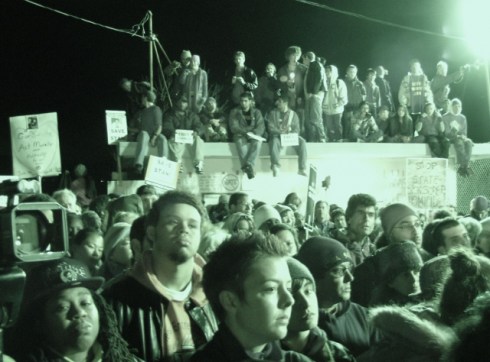

The verdant tones of green dominate and they reminded me – like some ironic twist of a krypto-knife – of California’s death-chamber itself. San Quentin has since constructed itself a new fan-dangled killing suite … and it needed to. The Golden State had taken to injecting people with poison within its old hexagonal gas chamber.
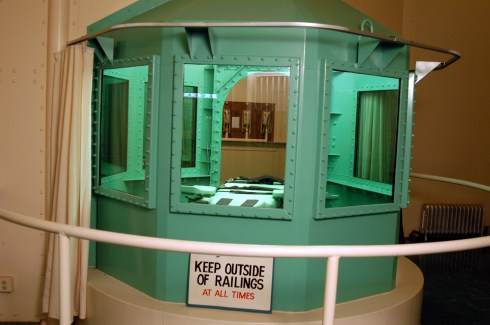
The site became an insult to the escalating industry of death, out of sync with the newest sterile modes of person-erasure. The heavy air-locked lantern no longer suitable for the clinical 21st century methods of snuff so developed by scientists, physicians and judges.

The pea green pod that transports, transforms and accelerates passage to elsewheres; An echo of an echo-death-chamber..
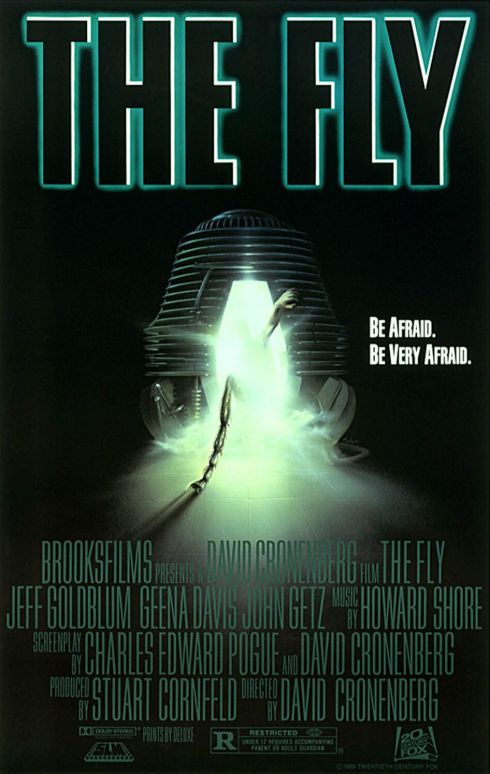
One switch, one injection, one mistake, one outcome.
Two switches, two injections, two mistakes (original crime vs. retaliatory murder), two outcomes (original verdict vs. appeals all boiled in a single decision-cauldron).

A theatre reenactment. Perfect palette.
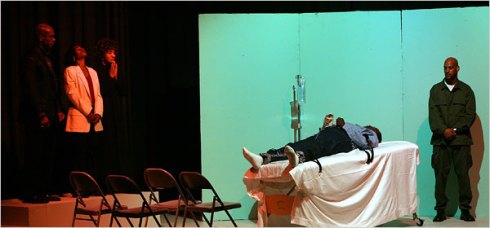
Source
Back in San Quentin, the gurney straps itself to itself.

Source
As a ten year old, I remember the same night time visions of green tinted destruction. John Major was in power and war seemed just.
I’ve seen them again recently …
Different century, same annihilation.

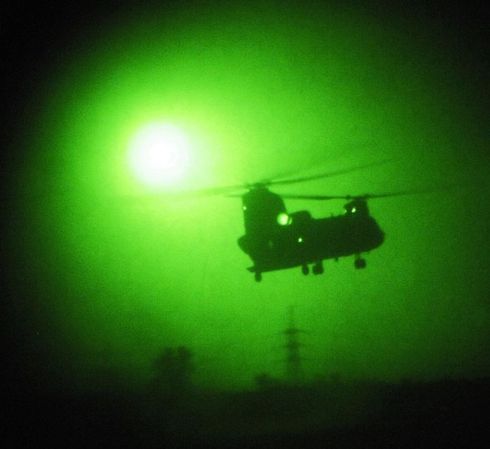
People will disintegrate, body parts will fall off, limbs will be poisoned and charred.
Democracy will teleport itself for its own arrogance, implicating a dictatorship and a sorry hybrid shall limp to an uncertain future.
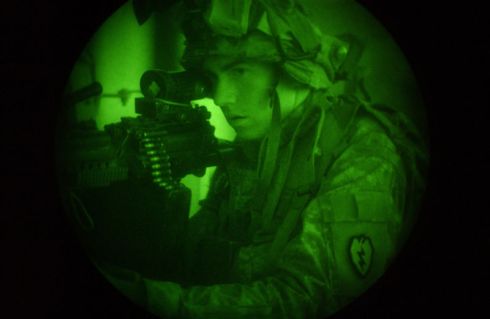
And the toll shall be personal, unsuspected, for the love of the state and its rhetoric.
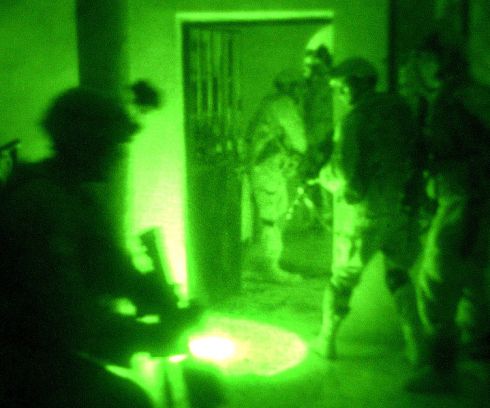
And the children will be the unhindered beneficiaries of a world not of their own, but the world of their violent predecessors, their decisions, amalgamations, actions and murders.

Kids become sad reminders that nostalgia, film photography and wildlife cinematics were forsaken before they could be rightfully demanded back. A new sterile age sports no death cells, no faces, no conscience, no history.
Immunology becomes the new high stakes industry …
…
…
By the way, have you ever noticed that the beat in Boards’ Kid for Today is the clickclack of a slide projector carousel?
UPDATED
Since going to press, University Behind Bars has changed its name to University Beyond Bars. The new website for UBB can be found at http://www.universitybeyondbars.org/.
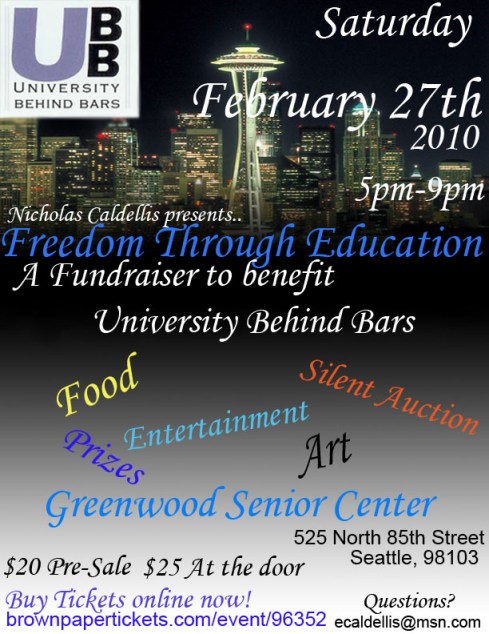
FREEDOM THROUGH EDUCATION
The Prisoners Education Network is hosting FREEDOM THROUGH EDUCATION, a fundraiser for its main program, University Behind Bars.
Greenwood Senior Center is the venue for an evening of music, fine foods and silent art auction. Many students from my art class have donated paintings and other from outside the class have made crafts for auction. Local families and a local church group have pooled resources to make this happen. If you want to know why so many different people are invested, I think it is because they share PEN’s values and mission.
Buy tickets at Brown Paper Tickets
Freedom Through Education on Facebook
BACKGROUND
The Prisoners Education Network (PEN) is five years old. I have been with PEN for nine months now. In this current quarter, the University Behind Bars (UBB) offered is widest selection of courses – including Art, Business Law, Child Development/Psychology, English Composition, Human Geography, Intro to Math, Music Theory and Sociology.
PEN is the only organisation in Washington State providing college level education and credits to prisoners.
PEN is currently expanding its UBB program to preserve its widened curriculum. All teachers are volunteers and 98% of donations go directly toward tuition fees and books. Our teachers are passionate professionals, but our students are the heart of the program. Via the correspondence course set-up, students receive credit from Ohio University. Beyond matters of credit, the students are building a shared community of learning within Washington State Reformatory at Monroe Correctional Complex.
This is the first big fundraiser of the year. It would be great to see you there, but if you can’t attend because you are in another state or on another continent, please consider donating to PEN via the website.
Thank You
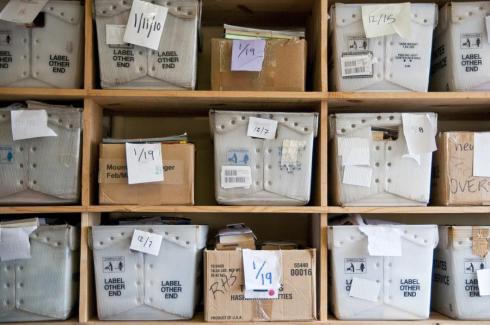
Photo by Sang Cho.
I volunteer with the Seattle organisation Books to Prisoners. It’s a pretty awesome initiative; in 2009 it mailed 12,000 packages to prisoners across the US.
Seattle is helped by satellite groups in Bellingham and Olympia in Washington, and Portland in Oregon.
Books to Prisoners has just been presented with a generous 2:1 matching grant by a local family foundation. That means if you donate $20 it is actually a $60 donation.
If there was ever a time to donate it is now!
Books to Prisoners engages volunteers from all walks of life and has lasting relationships with student volunteers from Mercer Island High School, Seattle University, Shoreline Community College and the University of Washington.
The UW Daily just published this article – quoting my buddies Andy and Kerensa – which explains a little more about the BTP community.
The tasks are simple, the impact huge.
Books to Prisoners is a very slim and simple operation; all donations go directly to operating costs (postage, wrapping paper, tape, and occasionally purchasing dictionaries). It is an all-volunteer staff, so no money goes to salaries, staffing or admin.
There are 2.3 million prisoners in the US, a quarter of the world’s prison population. Ignoring them doesn’t make a society safer, engaging their minds does. 95% of prisoners in the US will be released at some point. It is in all our interests to treat them with dignity and provide simple tools for them to aide their own rehabilitation.
Thank you


Rendition. Photographer Unknown
Last week, Eliza Gregory at PhotoPhilanthropy got knee-deep in speculations about prison photography.

Eliza was spurred by NPR’s On the Media which “did a story about a series of images that the International Committee of the Red Cross made of the prisoners at Guantánamo Bay. The ICRC made pictures of the prisoners to send to their families, and allowed each prisoner to choose which particular image would be sent. Naturally, the images the prisoners collaborated in making are very different from the images we’ve seen of them in the news.”

Eliza contacted me and asked me to leave some comments.
I rounded off my comments with a question I think is very important: Could an American photographer complete a project with the access, familiarity and story-telling-verve as Mikhael Subotzky did in South Africa for his project Die Vier Hoeke?
Not wanting to funnel my diatribe down just one web avenue, I copy my comments here …
Eliza,
I’d like to talk about two issues that you point to in your post. First, the general absence of prison imagery in contemporary media and secondly the urge to judge the subjects of the imagery that does crop up.
I doubt highly that Guantanamo would’ve been closed if more photographs had come out of there. While there is no question visuals out of Gitmo were controlled stringently, the MoD had proven itself impermeable to even the most reasonable requests by human rights advocates and legal watchdogs.
The point you make about smiling detainees instantly changing ones perception could be applied to all prison populations. Phillippe Bazin, Luigi Gariglio and Dread Scott have each used straight portraiture to cause audiences think about the individual character of prisoners.
I recommend books by Douglas Hall Kent, Morrie Camhi, Bruce Jackson, Jane Evelyn Atwood and Ken Light. I recommend work by Carl de Keyzer, Joseph Rodriguez, Steve Liss and Andrew Lichtenstein for imagery of prisons beyond the press shots of tiered-cells and orange jump-suits.
More than any of these though I recommend photography of self-representation. I have speculated on it before, and it has been done by Deborah Luster in Louisiana, and by the inmates of Medellin prison, Bogota, Colombia.
All of these photographic interventions are inspiring but barely make it into the mindshare of media consumers. I believe the unforgiven monster who deserves no thought is the predominant version of “the prisoner” in the minds of most Americans and many others in the Western world.
Of course, the invisibility of prisons is a collective tactic. We are molly-coddled by zealous enforcement agencies to whom we’ve outsourced management of transgressors. We have no interest in dealing with the difficult issues surrounding mistakes, mental health, inequalities and human frailty … this is where the “lock ’em up” mentality comes from.
Prisons and prisoners are not scary places because they are threatening and violent, they are scary places because they are wasteful, boring, soul-sapping warehouses. This is the document we never see. America’s prisons are a human-rights abuse.
Photography will play its part, but it’ll take a monumental cultural and media shift to change sentencing and prison policies in the West.
In the meantime, It’d be interesting to see if a long-term project similar to Mikhael Subotzky’s could ever be completed in an American prison?

© Mikhael Subotzky, from the 'Die Vier Hoeke' series.
Source
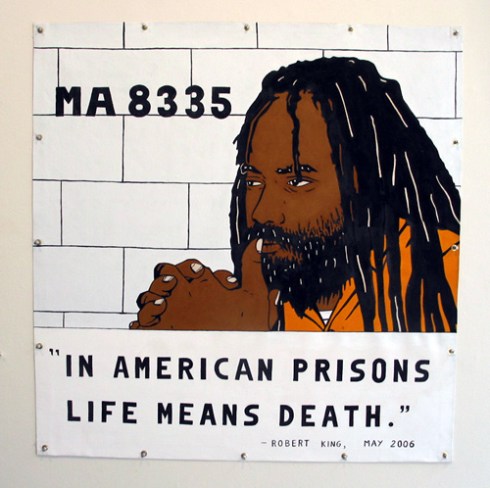
I just came across one of Rigo‘s works in a book about prisons, but I can’t find it online so I wanted to share that which I could find.
I wondered if Rigo had done anything else. Turns out he has and he’s passionate about criminal justice abuses. Aside of his piece above in support of Mumia Abu Jamal*, Rigo has done works to rally support for America’s other most famous political prisoner, Leonard Peltier*.
Rigo also painted TRUTH (2002), an epic mural on Market Street in San Francisco, which I used to cycle past most days a without knowing its reason for being. It commemorates the 2001 quashed conviction of Robert H. King, one of the Angola 3, after 32 years of incarceration, 29 of which were spent in solitary confinement.

(Source)
* Yes, I know I could have chosen from thousands of links for Mumia and Peltier, but I chose their Twitter profiles with my eyes open to how bizarre it is. I have wondered if we live in a post-revolutionary world in which our radicals are reduced to blips of 140 characters, but then I figure the famous and infamous of the past have always survived on soundbites. I guess I ask that you use Mumia’s and Peltier’s Twitter feeds as one of many starting points for learning about their cases.
Last month, spurred by Michael David Murphy‘s summary opinion piece I started writing about photographers rights.
I have talked before (and here and here) about the diminished freedoms for photographers in the UK. While the National Union of Journalists (NUJ) led many of the actions, it is the support of the whole photographic community that has driven the issue.
The half-penned piece was rendered redundant by last weekend’s “I’m A Photographer, Not a Terrorist” demonstration in Trafalgar Square, London last weekend. The event looked like a hoot (see here, here, here and here)! Nevertheless, I want to throw down a few thoughts and some links.
ONGOING CONFUSIONS
In November 2009, the UK police issued a memorandum retracting some of the misguidance it had issued; bobbies on the beat were reminded that it wasn’t illegal to take photos. Seemingly, this was more a PR exercise or simply the rank and file didn’t get the memo. Harassment continued.
This situation has totally degraded. The level of trust between the photographic community and police authorities is at an all time low (more here and here). Granted, the Guardian is my sole source here, but it covers the issue so well.
Outside of Britain, incidents have occurred in Los Angeles and elsewhere in the US. Some might say there is a certain amount of baiting employed by some journalists’ tactics (Paul Lewis outside the Gherkin in London springs to mind), but they are merely testing the communication and enforceability of new directives immediately after they’ve been announced by police authorities (in Lewis’ case, directives from New Scotland Yard).
In 2010, I hope to see less harassment of photographers. But, if hassle does continue I hope (and expect) to see its continued reporting to keep the pressure on police chiefs and politicians … particularly in the UK.
And with that I have a site recommendation. Photography is Not a Crime is a good one-stop shop for the unfortunate new genre of photog/authority face-off stories.

The watchdog is compiled by Carlos Miller a Miami multimedia journalist arrested by Miami police after photographing them against their wishes. He goes into his case at length and I still don’t think it is resolved.

Regardless of his motives, Miller’s coverage is comprehensive. As a silo for moments of confrontation and antagonism, the Photography is Not a Crime blog can be a repeated depressing look at abuses of authority.
More than the individual stories – which warrant extended consideration in themselves – it is the cumulative weight and significance of collected incidents that makes Miller’s site a cultural mirror.
Photography is Not a Crime is a must-read for photographers and other media journalists.
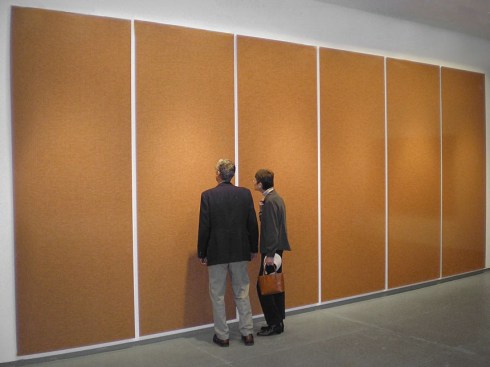
Chris Jordan. Prison Uniforms, 2007. Installed at the Von Lintel Gallery, NY, June 2007.
Chris Jordan‘s populist brand of socio-enviro-photography deserves our respect. The skills necessary to direct (what I presume) is a team to composite his images, is small fries compared to his ability to sell his brand. He brings to surface issues as varied as breast augmentation for teenagers, deaths by smoking, prescription drug overdoses and airline plastic cup wastage.
Jordan argues that all these issues are tied together by our collective denial and connected by our search for a global view obscured by the massive numbers (billions, trillions) which we cannot realistically fathom. Jordan reckons his illustrations help us feel, and thus have us consider and alter own behaviours.
Critics would say that Jordan plucks issues at will, and given their variance, he might just be a fraud. Aren’t we supposed to specialise in our advocacy? Don’t we pick one topic?
I’d be sympathetic to this view if I thought Jordan was picking the latest cause célèbre, but he isn’t. Jordan represented the 2.3million US prisoners with 2.3million prison uniforms (I discussed this before).
Prison reform has never been sexy. Prisoners rights are rarely considered and that is because many of us suspend our emotions toward those put behind bars. Heck, even rape is considered humorous when it is put in a prison setting.
Whatever your take on Jordan’s craft and motives, his research and discussion of issues is passionately informed. For me, most of the time Jordan trumps my cynical view that he’s just selling a cute visual idea.

The closing two minutes of this well-circulated TEDtalk is convincing enough. Yet, I’d forgive people who thought of him as a sellout.
Jordan’s assertion that US citizens are in denial about their prison system is dead on.
Thanks to Stephen Sidlo for the reminder of Jordan’s work.


 Prison Photography