
You are currently browsing the category archive for the ‘Activist Art’ category.
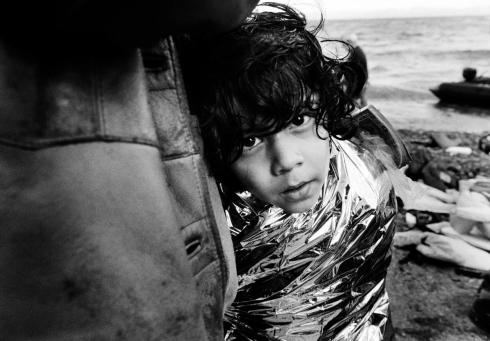
A boy from Afghanistan tries to keep warm after a cold and wet crossing from Turkey. Cases of hypothermia are on the increase as the weather deteriorates across the eastern Mediterranean.
In an image saturated world it’s difficult to define and measure the effects of photographs. We know advertising works, but those are images intended to sell us stuff. What if the purpose of a photograph is to “sell” us of a moral or political point? What if a photograph wants us to shift our emotional and practical response to far away events?
Giles Duley’s work Lesvos: Crossing To Safety made in Greece last October are intended, firstly, to bear witness and, secondly, to provoke action to help the hundreds of thousands of migrants. That’s why he didn’t simply make images and send them to the wires, but he courted the support of the United Nations so that he might extend the distribution of his images — and the refugees’ stories — far into global, humanitarian dialogue channels. (This UN-produced feature on Duley’s career and motivations is very thorough.)
Not content with only traditional distribution channels, Duley looked for alternative ways of launching his images into an unorthodox space; a Massive Attack gig.
“The scenes were overwhelming,” Duley said to the UNHCR. “In all the time I’ve worked, I’ve never seen such emotion and humanity laid so bare as I witnessed on the beaches of Lesvos. One of the first emails I sent was to the guys in Massive Attack. Seeing such events, I felt so powerless, I needed to do something. At that stage I had no idea how the collaboration would work, but I knew the band would want to act.”


Stills of Giles Duley’s photos on screen behind the stage of Massive Attack. Courtesy: Massive Attack.
A founding element of the era-defining Trip Hop genre, Massive Attack are known for taking forthright stances on political and governmental behaviours. Saturday Come Slow, their collaboration with released British Guantanamo detainees, Broomberg & Chanarin and Damon Albarn was poignant, crafted and clever, I thought.
Furthermore, as Alexis Petridis wrote for the Guardian, “Massive Attack have worked with the Stop the War coalition and visited refugee camps in Lebanon, while in 2011, Del Naja and Radiohead’s Thom Yorke threw a party for Occupy protesters who had taken over a UBS bank building in London.”
It’s not surprise Massive Attack are lending their support to Duley and shocking their euphoric crowds with thumping reality. Duley’s images loop throughout the gig, but they get their biggest showing at the close of the show, when the music ends and the band leaves the stage. For minutes — in silence — the crowd is shown a mammoth slideshow of Syrians and other migrants landing in boats, hungry, tired and terrified. A far cry from the revelry of a gig. But people stayed. This Channel 4News segment is well worth the watch:
History has taught us that photos can certainly alter the mood of entire populations. Practice has also taught us that earnest, targeted messaging can help photos land. I hope more artists can lend a hand to serve the messages of humanitarian photographers. Usually, professionals commission images to be made to meet their own messaging needs so it’s great to see artists, citizens and successful public figures provide space within their platforms to amplify photographer’s voice.
Included here are Giles Duley’s images from Lesvos, Greece, made in October 2015.

An overcrowded boat carrying Syrian refugees heads to shore. One Syrian man had fallen from the boat into cold water. He was later rescued by volunteer Spanish lifeguards. Despite the approach of winter and worsening weather, refugees are continuing to arrive on the island at a rate of more than 3,200 per day. As of mid-November, at least 64 people have drowned this year in 11 shipwrecks off Lesvos.

Boat after boat lands on the coast of Lesvos between Eftalou and Skala Sykaminia. Over 45 per cent of the 836,088 refugees and migrants who have arrived in Europe so far in 2015 have landed on this Greek island, which is separated from Turkey by a 10-kilometre channel.

An Afghan mother holds her child moments after landing on the beach near Skala Sykaminia. UNHCR and its partners work to prevent family separations and create safe areas for women and children who are particularly vulnerable.

An Afghan family of several generations disembark from an overcrowded boat. Almost 40 per cent of refugees currently arriving on Lesvos are from Afghanistan.
–
UNHCR is working around the clock with other agencies and aid groups, stockpiling and distributing winter aid items to keep vulnerable people, both in camps and urban settings, protected and warm. Donate money to the UNCHR (United Nations High Commission for Refugees) here.
• The distribution of winter survival kits including high thermal blankets, sleeping bags, winter clothes, heating stoves, and gas supplies.
• The provision of emergency shelters including family tents, refugee housing units and emergency reception facilities.
• Improvement of reception and transit centers and preparing and supporting families for winter conditions.
You can help make a difference. Donate money to the UNCHR (United Nations High Commission for Refugees) here.
–
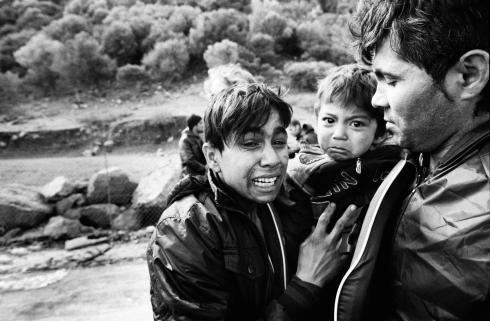
A relieved Afghan family, clearly still suffering from the trauma of a rough sea crossing at the hands of people smugglers, disembarks from a flimsy vessel onto a Lesvos beach.

An Afghan mother hugs her child and cries with relief after arriving on Lesvos.

Survivors struggle ashore after their boat has capsized. In the background a Spanish lifeguard, one of the many volunteers working on the beach, swims out to help other survivors.

A Syrian father, his two children now safely wrapped in thermal blankets, looks to the heavens in thanks after landing safely on the beach.
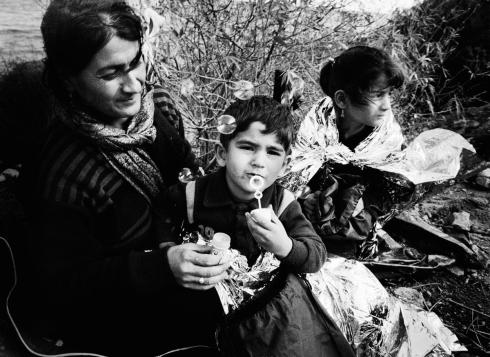
A young Afghan boy with his aunt. His mother is receiving emergency medical treatment after she collapsed upon landing. Since August UNHCR, in close cooperation with the Greek authorities and other humanitarian actors, has considerably stepped up its activities to respond to the increasing needs. This is even more imperative with the onset of winter.

Volunteers prepare to wrap a young girl in an emergency blanket to protect her from the cold wind.
–
Follow UNHCR on Instagram, Twitter and Facebook. Donate money to the UNCHR (United Nations High Commission for Refugees) here.
Read ‘War Survivor Focuses Lens on Refugees‘ about Duley’s work in Greece. Reacquaint yourself with the ‘Lesvos: Crossing to Safety‘ feature. Read a review ‘How Many Stories Can You Tell In One Second?‘ of Duley’s new book One Second of Light.
Connect with Giles Duley on Facebook, Twitter, Linked In and EW Agency.
Tomorrow evening there’s an intriguing discussion happening at the Mechanics Institute in San Francisco. On the panel for Incarceration and the Path to Reform are author and educator Baz Dreisinger. She is the Academic Director for the Prison-to-College Pipeline program, coordinated by John Jay College, NYC, that offers college courses to incarcerated men. San Francisco District Attorney George Gascón alongside Jacques Verduin of Insight-Out and GRIP, and former inmate and GRIP graduate Terrell Merritt make up the rest of the group.
Can’t wait.
It’s at Wednesday, February 17, 2016 from 6pm onwards.
Mechanics Institute, 57 Post Street, 4th Floor Meeting Room, San Francisco, CA 94104
Call staffer Pam Troy on 415-393-0116 for more info.
Tickets for the public are $15. SIGN UP HERE.
THE BLURB
“Fiscal and physical challenges to our penal systems as well as changing attitudes about prison reform are happening locally, nationally, and internationally. […] See how San Francisco is modeling a new paradigm for rehabilitation and issues of human rights for those incarcerated. With President Obama’s December 18th commutation of 95 non-violent drug offenders to the recent “vote- down” of funding the new jail in San Francisco, there is much to talk about.”
Dr. Baz Dreisinger
 Dresinger journeyed to Jamaica to visit a prison music program, to Singapore to learn about approaches to prisoner reentry, to Australia to grapple with the bottom line of private prisons, to a federal supermax in Brazil to confront the horrors of solitary confinement, and finally to the so-called model prisons of Norway. This jarring and poignant trek invites us to rethink one of America’s most devastating exports, the modern prison system. With Oscar-nominated filmmaker Peter Spirer, Dreisinger produced and wrote the documentaries Black & Blue: Legends of the Hip-Hop Cop, and Rhyme & Punishment. Her book Near Black: White to Black Passing in American Culture was published in 2008 by University of Massachusetts Press.
Jacques Verduin
 Verduin has worked in prisons for 20 years, designing and running innovative rehabilitation programs. He is a subject matter expert on mindfulness, restorative justice, emotional intelligence, and transforming violence. He directs the non-profit “Insight-Out” which helps prisoners and challenged youth create the personal and systemic change to transform violence and suffering into opportunities for learning and healing. The Guiding Rage into Power (GRIP) Program at San Quentin is a year-long transformative program that provides the tools that enable prisoners to “turn the stigma of being a violent offender into a badge of being a non-violent Peacekeeper.” A former inmate and graduate of this program will be on the panel.
Terrell Merritt

Merritt is from Gary, Indiana. After high school he enlisted in the Navy and was stationed in San Diego, CA. After leaving the Navy, he spend 20 years in prison for 2nd degree murder. During that time, he began to soul search and incorporate practices into his life that promote nonviolence. These include nonviolence communication, Zen Buddhism, and the GRIP Program; a yearlong transformational program that he became a facilitator of. On November 10th 2015, he was paroled after serving 20 years and 8 months in prison. He is currently working to reestablish himself into the community and to give back where he can.
George Gascón

Gascón is the District Attorney for the City and County of San Francisco. He has earned a national reputation as a criminal justice visionary that uses evidence based practices to lower crime and make communities safer. He is the first Latino to hold the office in San Francisco and is the nation’s first police chief to become District Attorney. Looking to find alternatives to incarceration for low-level offenders, DA Gascón created the nation’s first Alternative Sentencing Program to support prosecutors in assessing risk and determine the most appropriate course of action for each case. The goal is to protect victims and the community by addressing offenders’ risk factors in order to break the cycle of crime and reduce recidivism.
DETAILS
February 17, 2016 from 6pm onwards.
Mechanics Institute, 57 Post Street, 4th Floor Meeting Room, San Francisco, CA 94104
Call staffer Pam Troy on 415-393-0116 for more info.
Tickets for the public are $15. SIGN UP HERE.
HERE NOW: Digital Stories from the San Francisco
In December, I was a guest at San Bruno Jail, near San Francisco, for morning of screenings of HERE NOW: Digital Stories from the San Francisco Jails. The 18 film-shorts were made inside San Bruno Jail drawing on both the drama therapy expertise of the University of San Francisco’s Performing Arts and Social Justice Department and the community media skills of the Bay Area Video Coalition (BAVC).
The Resolve to Stop the Violence Project (RSVP)—a longstanding collaboration Community Works and the San Francisco Sheriff’s Department with programs inside the numerous San Francisco County Jail system–hosted the 12-week course and that inaugural screening.
Tomorrow, January 27th, a screening of HERE NOW will be held for the public. It’ll be at Noh Space which is in the Potrero Hill neighbourhood of San Francisco, specifically at 2840 Mariposa St (b/t Florida St & Alabama St), SF, CA 94110. The screening will include a panel discussion with restorative justice practitioners and members of the project.
Full details about the HERE NOW screening event.

Full details about the HERE NOW screening event.
Within the confines of one of San Bruno’s jail pods, the 20-or-so prisoners made use of every space, surface and angle to visualise their stories. The “digital stories” they developed include percussion, spoken word, movement, writing, and visual imagery. There’s some large leaps of faith to be made here. Firstly, the men must be comfortable sharing personal tales, then they must be willing to process them with a group, firstly and for a general public audience latterly.
“The men came in with strong visual concepts and artistic choices and we followed them as they were the directors for each of their stories. I approached each production as a camera operator and followed their carefully crafted shot list,” says Kristian Melom, one of the facilitators with BAVC and HERE NOW.
Furthermore, not being experts, the prisoners handed over some control of the editing and sequencing. At least those bits that they couldn’t master on their successful, short and steep learning curves!
“In the editing process, the students from each of the classes worked together and essentially learned digital film editing as they collaboratively made these pieces. It was really inspiring to see how much can happen in the edit when you have very little recording time allowed and lots of improvisation is needed,” says Melom. “We had a blast.”
Full details about the HERE NOW screening event.
MY FAVOURITES
In advance of tomorrow screening, I wanted to share a handful of notable videos.
In Motivation Through Life’s Struggles, J. Howard organizes the loneliest dinner party. One at which photographs of his loved ones substitute for the persons themselves. A lone 4×6 print on each seat.
–
You don’t even see Delon Barker’s face in Where I Grew Up, which is a clever tool because it makes his powerful story–about knowing where a hidden gun was and using it at the age of 5–all the more powerful.
“Where I grew up, I was taught to be bad and fight everyone.”
–
JDJ’s ode to his daughter simultaneously shares his joyful memories of her earliest words but also the pain of being apart. All this plays out to a video track composed of dozens of portraits of her.
–
June’s Baby Skee is the comic turn of the bunch. June recounts the first time he was charged with changing a diaper.
–
Testimony Of A Moth is Jack MacLennan’s space to reflect upon, and reenact, a moment he was the victim of gun violence. But also in that moment he reflexively protected those close to him, by literally putting his body on the line. How conflicting to find pride amidst violence. This is a reconciliation of those contradicting emotional memories.
–
I Kill Time is a bittersweet look back at, well … it’s your guess. Is this a clear metaphor for drug selling? Or is that a presumption? Either way, Vinnie was adamant from the very start that the 2 minutes would be played backward, meaning that action were acted out in reverse. Killing time? He’s playing with time. Very effective and a little disconcerting. Great soundtrack too.
–
The participants made four short interludes to sit in the middle and at each end of HERE NOW. These four shorts make use of the most expansive cinematography, song and percussion. They’re also the moment that most participants are actors in a single reel.
–
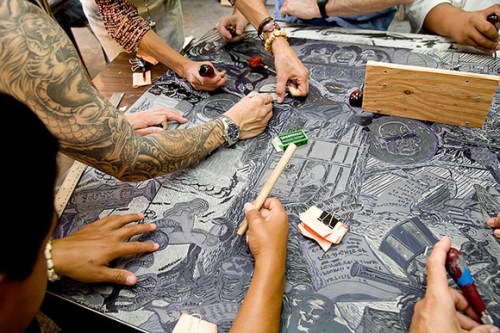
Carving a linoleum block, printmaking class, San Quentin State Prison, California. Photo: Peter Merts.
Do you work in prison arts? Have you got thoughts, advice and problem-solving or teaching techniques you’d like to share?
The William James Association alongside The Prison Arts Coalition and a host of other partners have launched the National Prison Arts Survey to crowdsource all the knowledge and strategies that exists out there in all of your heads and teaching manuals.
CLICK HERE for the National Prison Arts Survey
There is talk about whether to form a national organization of prison arts organizations and your input it crucial at this early stage.
Over recent years, the William James Association and California Lawyers for the Arts has been committed to research into effective prison arts teaching. Most notably they put out the paper Art Practice and Its Impact in California Prisons, by Larry Brewster.
It is thought that a national organization could offer the following to members:
Raise awareness of programmatic efficacy
Host national or regional conferences
Share best practices
Foster community
Support, collect and disseminate relevant research
Offer professional development opportunities
The 5-minute survey is designed to help better understand the need for a national prison arts association and how it might serve potential members like you.
CLICK HERE for the National Prison Arts Survey
The survey was developed with input by prison arts advocates and practitioners, including:
Cynthia Gutierrez – Barrios Unidos Prison Project
Ella Turenne – Artist, Activist, Educator; Occidental College
Freddy Gutierrez – Community Worker, Performing Artist
Illya Kowalchuk – Pop Culture Classroom
Jonathan Blanco – Oregon State Penitentiary Hobby Shop
Laurie Brooks – William James Association
Lesley Currier – Marin Shakespeare Company
Nate Henry-Silva – Imagine Bus Project
Nathalie Costa Thill – Adirondack Center for Writing
Treacy Ziegler – An Open Window
Victoria Sammartino – Voices UnBroken
Wendy Jason – Prison Arts Coalition
Alma Robinson – California Lawyers for the Arts
Weston Dombroski – California Lawyers for the Arts
CLICK HERE for the National Prison Arts Survey
Responses are kindly requested by January 29th.

© Kate Peters
Here we are at the end of the first week of 2016. How’s it going so far? I spent the holidays lying in, reading stuff and watching my team Liverpool at silly hours of the morning. When at my desk, I was putting together a series of year end proclamations for Vantage.
It was a marathon, and by marathon I mean a six-parter. Still, that was more than 10,000 words and scores of images.
Part 1: The Best Nature Photos of 2015
Part 2: The Best Photobooks of 2015
Part 3: The Best San Francisco Street Photographer of 2015
Part 4: The Best Portraiture of 2015
Part 5: The Best GIFs of 2015
Part 6: The Best Photography Exhibition of 2015
Are these actually the best of the year? Are these the most watertight objective statements? Of course not, and I admit as much in the pieces. What they are though is my strongest arguments as to why these projects and ideas are more relevant, caring (even), fruitful and connecting.
Put your feet up. Have a glance.
© Thomas Roma

© Alan Powdrill

© Troy Holden

© Suzanne Opton

© Thomas Roma

© Vicente Paredes

Book cover of Vicente Paredes’ Pony Congo

© Brandon Tauszik

© Sara Terry + Mariam X
© Troy Holden

Michael Ireland – Springfield, MO
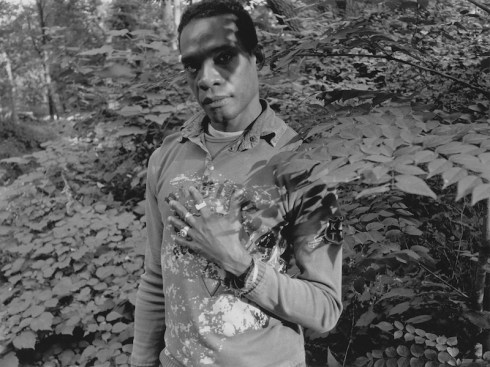
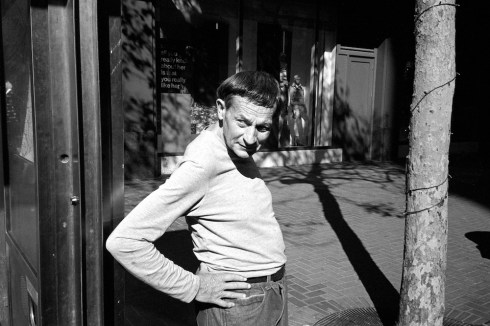
“A cookie-cut subdivision, a mall parking lot, a rural country road. Linking these unremarkable pockets of America, and hundreds of places just as ordinary, is the fact that they’ve all been sites where people were killed by U.S. police officers.”
In my first piece for TIME, I write about Josh Begley‘s project Officer Involved.
Like many of Begley’s previous works, he makes use of third party (activist/research/journalism) data to image a geographically-disparate but nationally-important issue. For Officer Involved he used The Guardian’s data from The Counted.
In 2016, there were 1,138 deaths in which a U.S. law enforcement officers was involved.
Read: Visualizing ‘Officer-Involved’ Deaths Across America

Talbot Schroeder – Old Bridge Township, NJ
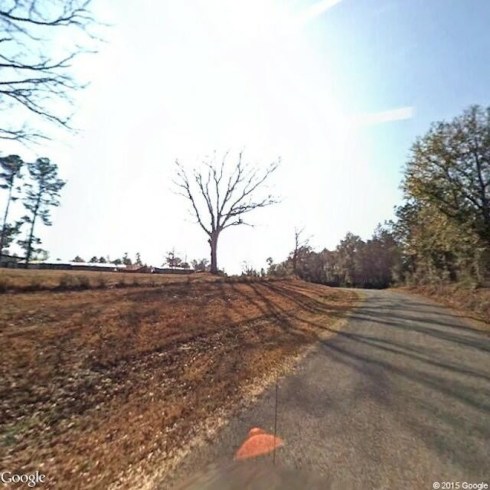
Donald Matkins – Lucedale, MS

Alice Brown – San Francisco, CA

Anthony Purvis – Douglas, GA

Omarr Jackson – New Orleans, LA

Ricky Hall – Fort Meade, MD

Brian Fritze – Glenwood Springs, CO

Aaron Rutledge – Pineville, LA
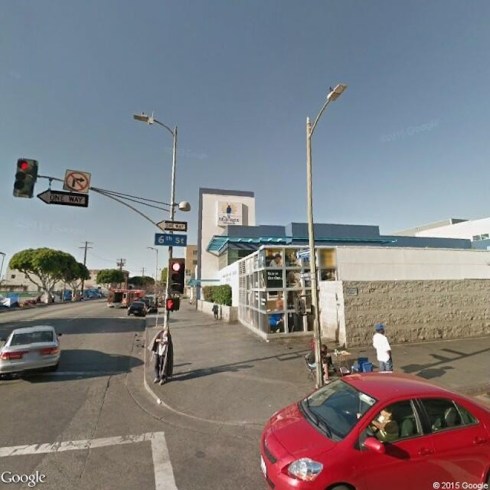
Charly ‘Africa’ Keunang – Los Angeles, CA

Lionel Young – Landover, MD

Alonso Castillo is a freelance photographer based in the state of Sonora in northwestern Mexico. Predominantly, he works as a stringer for Reuters. Most of his work focuses on the border and he is a specialist in reporting on migration and social issues. He has instructed workshops in the past, is a college teacher and, since 2009, has worked as an editor at www.numerof.org.
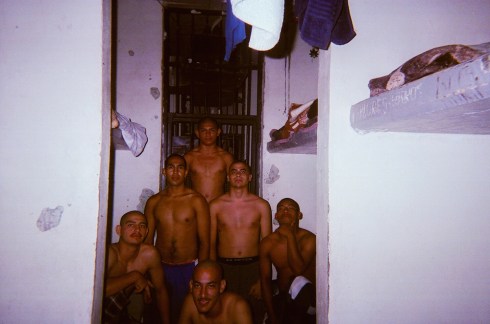
Mauricio Palos, a mutual friend of Castillo and I, contacted me to tell me of Castillo’s 2013 photography workshop in a local youth prison, the Instituto de Tratamiento y de Aplicación de Medidas para Adolescentes (ITAMA) which is in the city of Hermosillo, in Sonora, northwestern México.
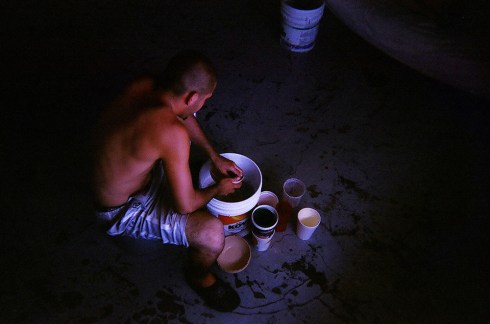
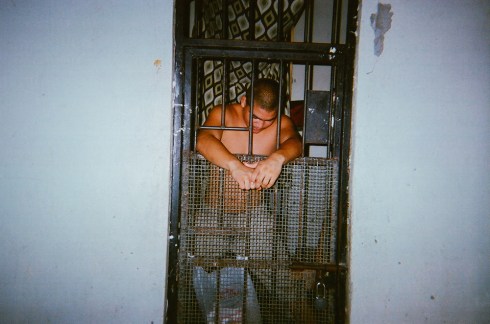
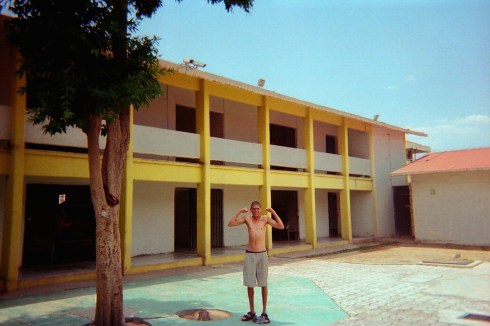
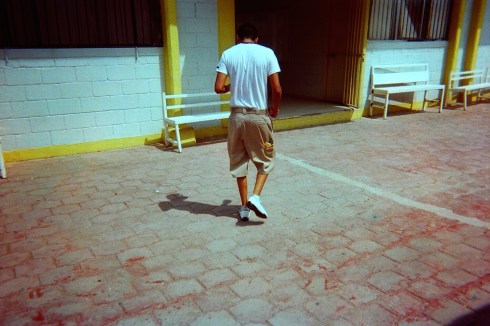
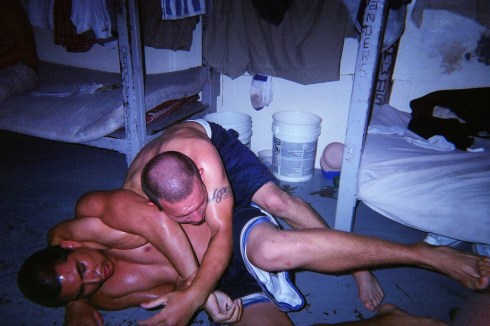
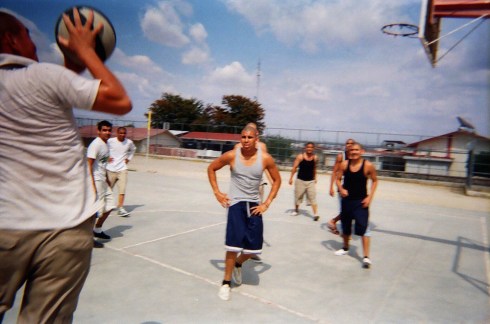
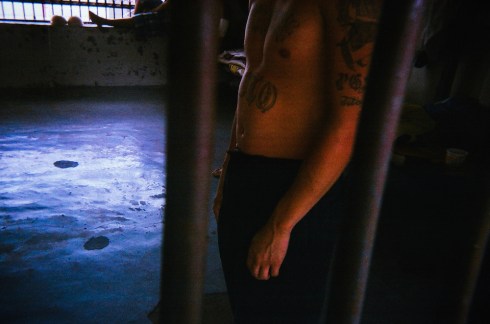
ITAMA houses approximately 450 boys and men. All the prisoners were convicted as juveniles but currently 70% of the prisoners are adults as they’ve turned 18 during their incarceration. Castillo led a photography workshop with 10 boys aged between 15 and 21. When he sent me the photographs I was floored by how sparse and rudimentary the environment for these kids appeared. I wondered if this was a case in which, more so than others, the camera didn’t lie?
All these photographs were made by the 10 participants. Castillo and his colleagues only made technical recommendations in order for the boys to take advantage of available light and framing. “The boys decided how to work and what to photograph,” says Castillo.
Kindly, Castillo answered some questions about the project to accompany this exclusive showing of the juvenile prisoners’ photographs.


Q & A
Prison Photography (PP): Did you find prisons/social justice first? Or did you find photography first?
Alonso Castillo (AC): It is hard to say, I come first of photojournalism but this area is combined with social justice; that is, I do believe that our work is for the other. In this case this two territories are combined with an equal third one that is working with young people who have committed crimes.
Anyway, due to my job, I suppose I found photography first.

Alonso Castillo and his students in the middle of a workshop session.
PP: What gave you the idea to do a workshop in the prison?
AC: I’ve taught, and participated in, workshops before—in Mexico, Cuba, El Salvador, Ecuador and Colombia. I try to make workshops part of broader and more complete projects of research into specific topics, or provide media training, or instruct on the practices of street journalism.
I knew a writer, Carlos Sanchez, who taught literature and creative writing at ITAMA. Together, we planned to work with young prisoners and teach photography. Carlos usually facilitates writing workshops so this was the first in which we worked with photography. For me, as a journalist and teacher, it was also a means to research and observe [the prison]. And the way things worked out, it was a very enjoyable observation.


PP: How did you get access?
AC: The workshop was organized in conjunction with Fotoseptiembre an annual photography festival which recently celebrated its 25th year anniversary. Although Fotoseptembiere no longer takes place in all countries, it still exists in the city where I live. The festival served as a pretext to get authorization and work with these guys as part of a program that also included an exhibition to show the end results.


PP: How long was the course?
AC: It lasted about 40 hours but we sometimes relaxed the formal schedule to adjust to the schedule of the boys or what was needed to complete the exercises. It is more accurate to say that we worked during the months of July and August 2013, and mounted a small exhibition in September. First we worked in the classroom with classes on theory; we saw some portfolios and documentary photography and we talked with the group and watched movies about photography. Later, disposable film cameras were given to each participant.
Participants were ten young people from five cities in central, northern and southern Sonora. Some of them came from the border municipalities for drug trafficking and murder.
The first exercise was carried out, then the cameras were processed and together we reviewed the work they had done. Then they were given yet another camera and had a chance to improve the ways they were seeing.
Much of the discussion topic was “everyday life”—their daily lives within ITAMA.


PP: What was the aim of the course?
AC: We wanted to share with them tools and skills to help with their rehabilitation and reintegration; they could acquire knowledge and then approach a job when they finished their detention. We also wanted to give them occupational therapy during their time inside the ITAMA.
As we move forward in the activities it became a very human exchange of experiences between us and them, in which analyzed and talked topics of art, history, music, cultural references and social problems.
The photography and talk about photographs was as a part of healing.

PP: Did you achieve the aims?
AC: It is difficult to know if what we did at that time will serve for something when they came out, which was an important part. With what happened in the classroom, yes, I am satisfied.
While in detention because they committed crimes (and some of them very serious), it was very emotional to reveal their “other faces”, the other sides to these young people.


AC: Although criminals, they remain children. This plain fact is something that the system ignores or cannot sufficiently deal with. All these boys are in the middle of a long learning process and maturation; they experience the same intangible fears as any of us. It is a matter of influencing the values and beliefs they have, rather than corrective measures and punishments.
There are also other related matters. The environment has a very strong and decisive weight. These facilities provide for the operation of organized crime on the streets and in the offices of government. Rehabilitation doesn’t work if the institution operates in the midst of corruption. The Mexican political system besides not favoring conditions for social security and education, seems to be working to do otherwise.

PP: Any unexpected surprises?
AC: They showed huge interest in the workshop, which very often does not happen when you’re outside teaching boys in the regular education system and even in college. It is sad but sometimes you find more resistance in a student who had better educational opportunities. With this group, everything happened in an easy way.
There was a boy with a natural look, he made some of the best photos of the workshop; he had a sophisticated way of seeing that gave the images a very contemporary look.
That happens sometimes in the workshops: anyone can worry so much about making a picture look easy and then someone comes in and just do it.
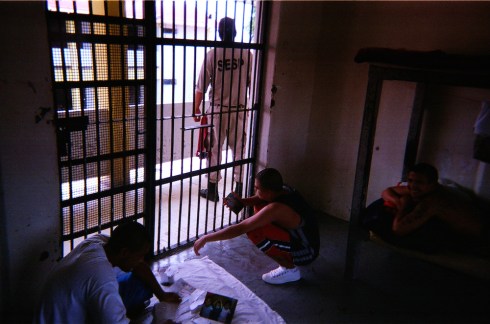
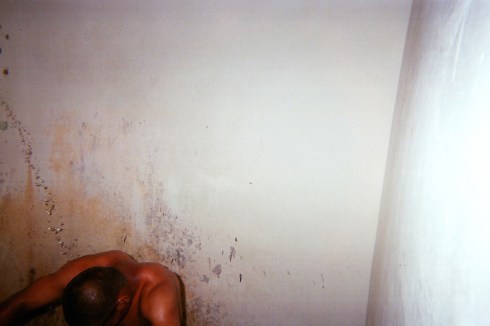

PP: Anything you’d want to do differently if you wanted to/could teach another prison photography workshop?
AC: Of course. Working on more personalized projects. The conditions are limited but we could work with them in a better recognition of the environment. Projects could be designed for collective or personal response — online journals, a newspaper produced by themselves, and so on.
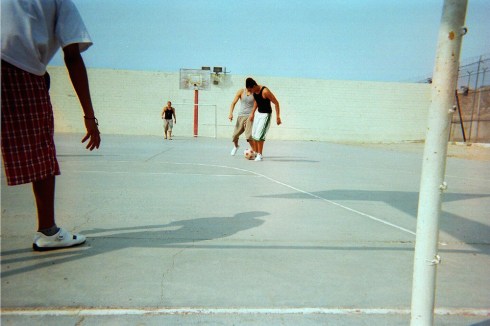
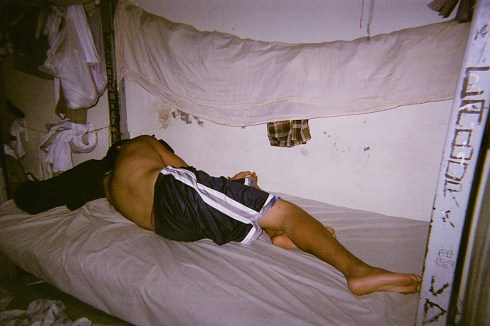
PP: Why did the prison authorities let you in?
AC: I think they did not take us seriously to consider us as a threat, except for us to fulfill the security conditions such as the introduction of dangerous objects or not allowed.
PP: Had you been in a prison before? What did you expect to find? What did you find?
AC: Yes, I had been before taking pictures for a story. The access we now had was restricted only to the area to teach the workshop, so we only saw facilities from afar … and in photographs!

PP: What were the boys’ reactions? How did they work?
AC: The first reaction kept at a distance but then it broke. There were different profiles and even some involving more than others, empathy was virtually total. Then we work with maximum freedom. Sure, they are young and at some point they laughed at us but at no time was any kind of rejection or problem.

AC: After the workshop we had a very modest exhibition in the courtyards of ITAMA, with some family and other visitors. When we worked on that, we processed some film close to the date and we found a picture of the soles of the boys feet. As the exhibition was to be called Desde Adentro (From Within), the boys did a special photo for that—they sat on the floor and wrote the name of the exhibition on the soles of the feet. That was something we were not expecting.
In 2014, a selection of work from the boys won an honorable mention in a local photo competition.
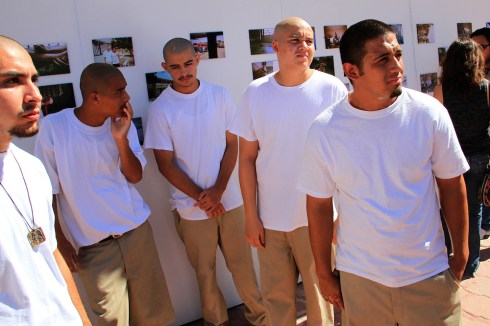
PP: What was the staff’s reactions to the boys walking around with cameras?
AC: We did not know of any reaction. You know, reading the photograph depends on the social construction and context. It is that possible for them and the staff of the detention center, there was no threat from outside, were themselves taking pictures around. We did not go as journalists and we weren’t there to make a report or complaint or observation of human rights in the prison.
In a subtle way, these photographs depict these young people for whom we have used the prison to delete their presence and hide them … and we’ve done so only for our own convenience. These photographs confront us with facts that lay counter to our simplistic thinking.
PP: Do prisons work?
AC: Prisons serve as a reflection of human behavior in which the administration of justice becomes confused with revenge.
We want justice but don’t think very deeply about its application. People go to prison for many different types of crime but when they’re inside we make no distinctions. Initially, justice is operational and later it is a process that becomes bureaucratic, expensive and exhausting for those who experience it. The legal part of the system is a mess; it is much harder to get out even with the law in your favor. Prisons may be where all traffic comes to a dead end.

PP: Can photography heal social ills?
AC: Yes. It is an effective tool to communicate, to visualize and generate impact to social problems. Although it’s not a massively used tool for educational purposes, I think no efforts are small and everything we do is important.
In the near future, I want to train groups of people to jump-start local journalism projects involving vulnerable sectors of population and minorities (native groups, sexual minorities, neighborhoods, and others.
PP: So reach is a big factor too.
AC: Yes. César Holm, who works on a project for the professionalization of photographers in Mexico, in a conversation we had recently, mentioned the need to get an audience for photography and the promotion of a profile for teaching. I agree with him.
I say it is not a massive tool because although photojournalism represents a broad global distribution circuit, I have the impression that we are producing for ourselves. This phrase I heard a few years ago and I still like it, “only photographers know photographers”. We like to publish books that we read, there are contests and scholarships for specialized circle of consumers, who are we and our friends.
I think we could expand that circle.


Rajeshree Roy with Carolyn Miller, a close friend, on a visit at Central California Women’s Facility (CCWF).
IN SOLIDARITY
Something very significant is brewing in California right now. Female prisoners in the Yuba County Jail are organising in solidarity with immigrants in detention.
Yesterday (Monday 14th December) a group of women began a hunger strike, joining hundreds of other detainees taking part in hunger strikes at facilities across the country.
You may or may not have heard about the fasting and hunger strikes going on in immigrant detention facilities across the country. Up and down the country–in the Hutto Immigrant Detention Center in Texas; in an immigrant detention center in the high desert city of Adelanto, California; in the Krome Service Processing Center in Florida; and in Alabama, in El Paso, Texas and in Lasalle, Louisiana, too.
Vikki Law has covered these as a trend. And they are. Collectively, the strikes are known as the #FreedomGiving Strikes and they were launched on Thanksgiving by hundreds of South Asian and African detainees at three separate facilities. The movement has grown.
Never before (to my knowledge) has the political resistance of detained immigrants run in cohort with the political action of citizens in county or state facilities. The Yuba County Jail rents space to Immigration and Customs Enforcement (ICE) to detain people. For the first time, women in criminal custody are fasting with detainees in immigration custody as an act of solidarity. Phenomenal. Principled. Inspiring.
The Yuba Co. Jail hunger strike is led by, and in support of, Rajashree Roy (above). You can read a longer detailed account of Roy’s journey here.
To be brief, Roy faces deportation back to Fiji where she has not lived since she was 8-years-old. As a child, Roy suffered sexual abuse and upon relocation to the United States never received counseling or help. By the time she was in her teens she was both attempting suicide and robbing and beating people. She was very troubled and the undelrying causes had never been addressed.
Sentenced as an adult at age 16, Rajashree spent 17-years at Central California Women’s Facility (CCWF). Nine years later, struggling to survive and feed her children while in an abusive relationship, she stole a garden hosepipe from a store, a misdemeanor petty theft.
Due to her priors, the District Attorney set bail at $1million and offered a 25-to-life sentence. In 2011, Roy accepted a plea bargain of seven years. In November 2014, she qualified for release under Prop 47. When Rajashree Roy stepped foot out of CCWF, she was picked up by ICE and slated for deportation back to Fiji, away from her children.
After years of silence due to shame and stigma as an abuse survivor and ‘criminal’, Rajashree Roy has gained confidence through peer and advocacy support and decided to be public with her story and fight for herself and others.
“We are locked up together and refuse to be divided into immigrants and citizens. None of us belong in this cage separated from our families. We join the brave immigrant hunger strikers across the country in fasting to force recognition of our humanity,” says the staement of Roy and her fellow hunger strikers at Yuba County Jail.
WHAT TO DO
- Join community organizers at ASPIRE, the nation’s first pan-Asian undocumented youth-led group, at a fast in solidarity outside Yuba County Jail.
- Support the #FreedomGiving strikers by signing the petition.
- Help raise funds for Rajashree’s $10,000 bond.
- Write letters of support to the women on hunger strike:
Rajeshree Roy
Booking No. 229860
Yuba County Jail
P.O. Box 1031
Marysville, California 95901
Jessica Bullock
Booking No. 235161
Yuba County Jail
P.O. Box 1031
Marysville, California 95901
Tisha Sartor
Booking No. 233892
Yuba County Jail
P.O. Box 1031
Marysville, California 95901
Kyra Beckles
Booking No. 234664
Yuba County Jail
P.O. Box 1031
Marysville, California 95901
Juanita Thomas
Booking No. 235553
Yuba County Jail
P.O. Box 1031
Marysville, California 95901
Ana Marquez
Booking No. 235550
Yuba County Jail
P.O. Box 1031
Marysville, California 95901

 Prison Photography