
You are currently browsing the category archive for the ‘Amateur’ category.

I Heart Gordon Stettinius’ humour. Especially in light of the horrendous Olympian portraits, this work seems like a good time to reflect on why and how we make (bad) portraits.
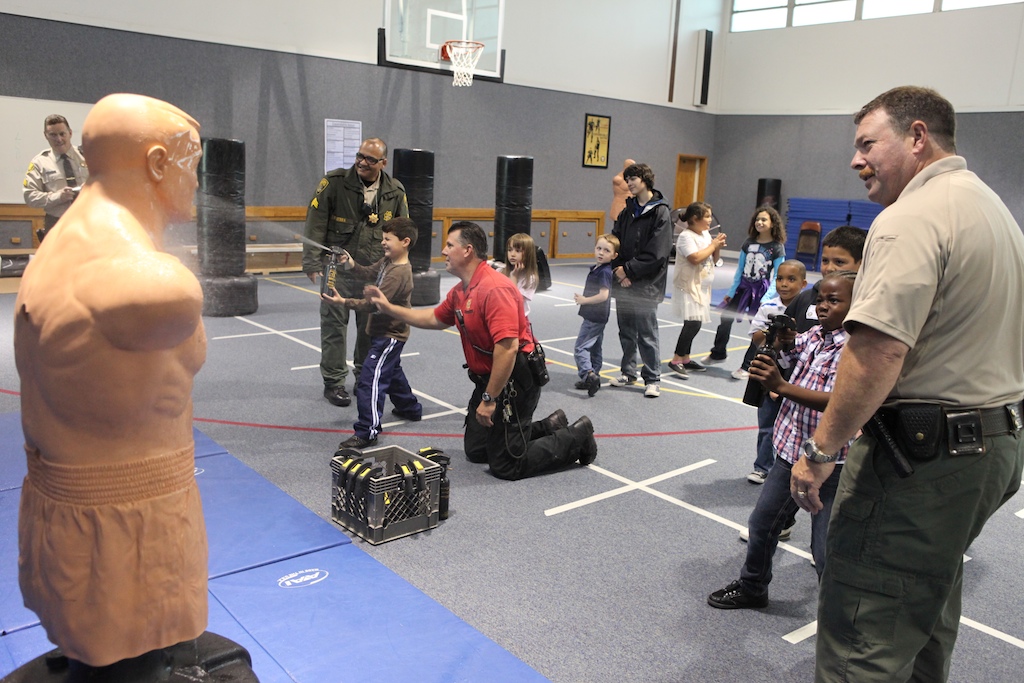
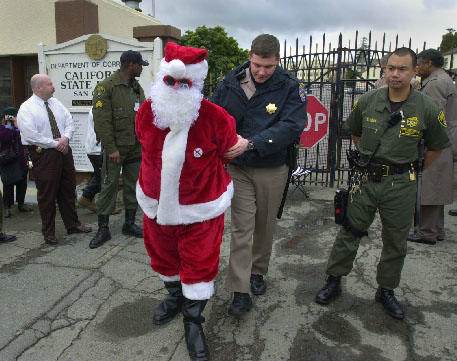
I stumbled across the California Department of Corrections‘ Flickr stream tonight. There are lots of sets to explore including some photo-galleries from various prisons of Bring Your Kids To Work Day.
Click on any image to see it larger.
I have always wondered if the prison system took part in Bring Your Kids To Work Day, and if so, how? Thanks to these clumsy attempts at community PR (clumsiness quite typical of large state agencies, I would say) we now know.
Children practicing fire abatement at California Correctional Centre; learning CPR at California Institute for Women; doing first aid at North Kern State Prison; riding the bus at Deuel Vocational Institute; and dressing up with the SERT team at Folsom.
Most of the photographs I have featured are from the Correctional Training Center, Galt, CA. Here’s head count – Hands Up Kids!
Third from bottom is a single image from San Quentin Prison’s Bring Your Kids To Work Day, and the final two images are from Avenal State Prison.
I’m a little speechless. You?
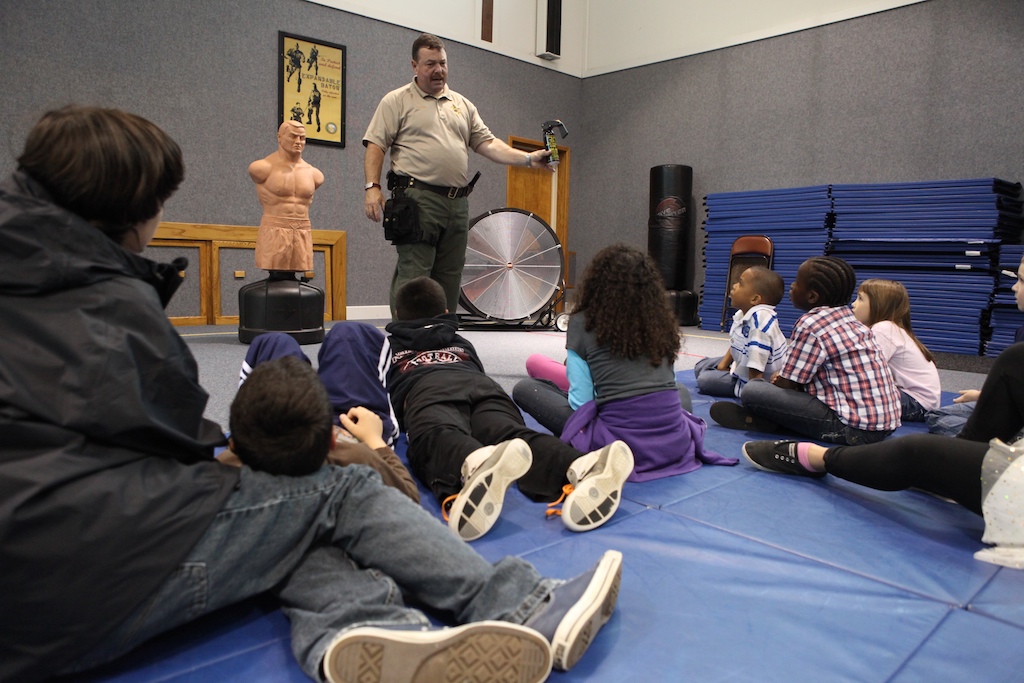

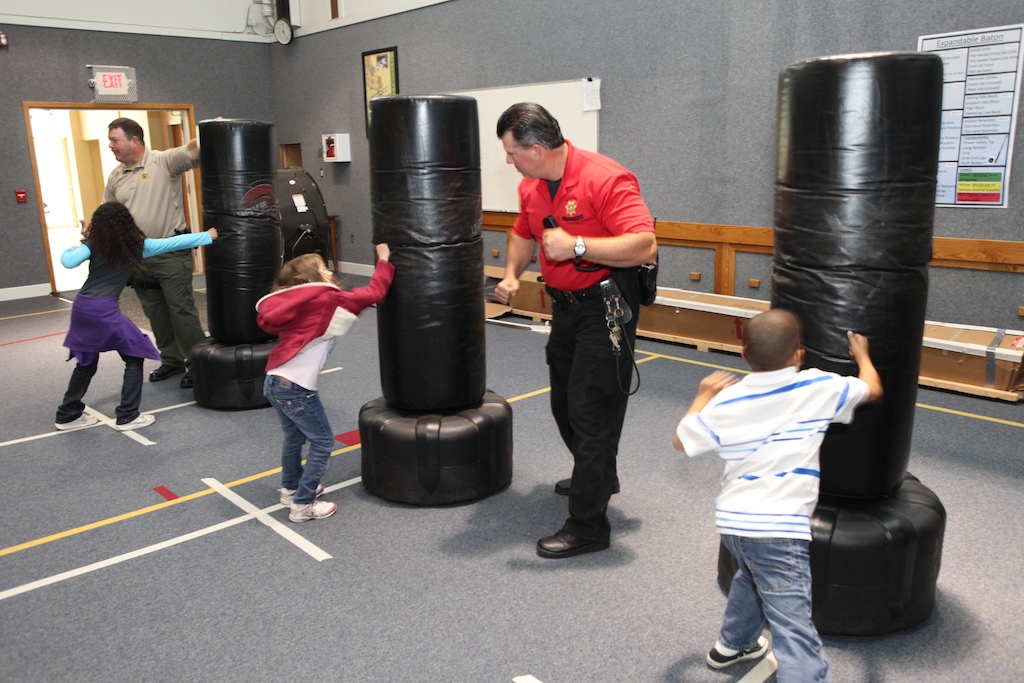




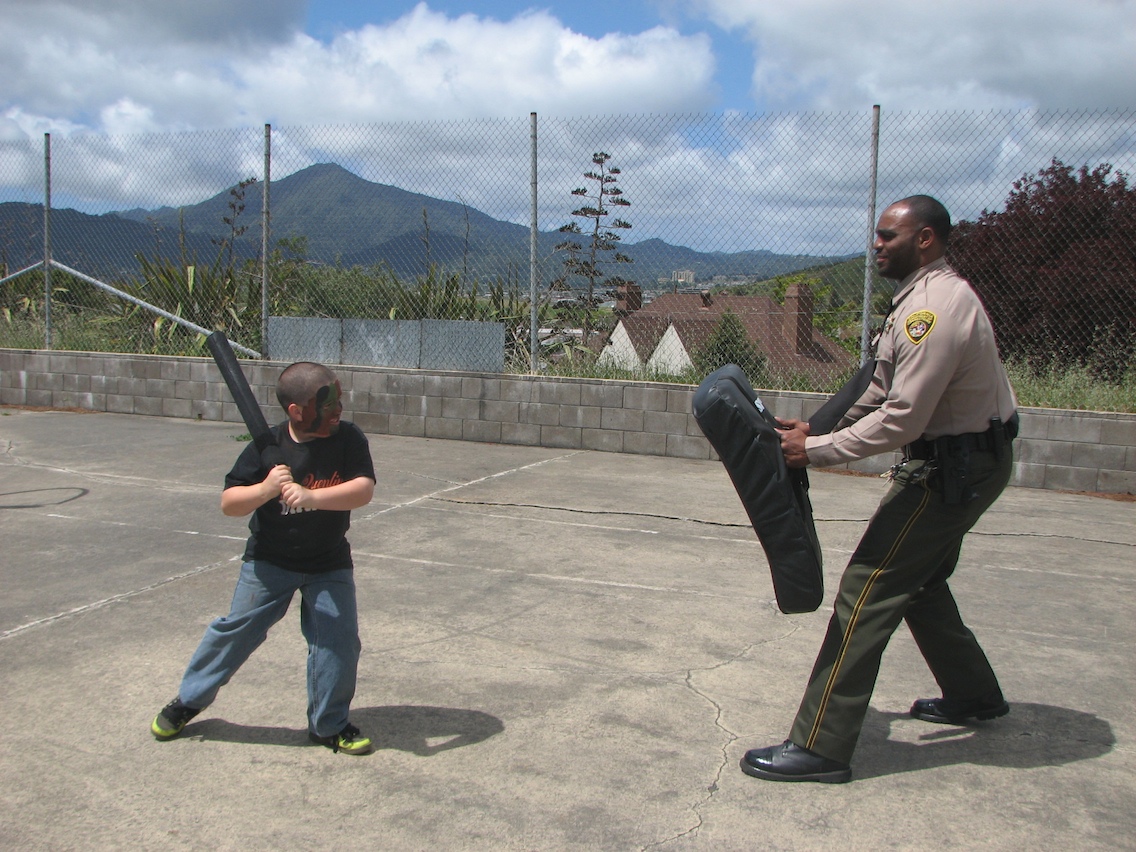
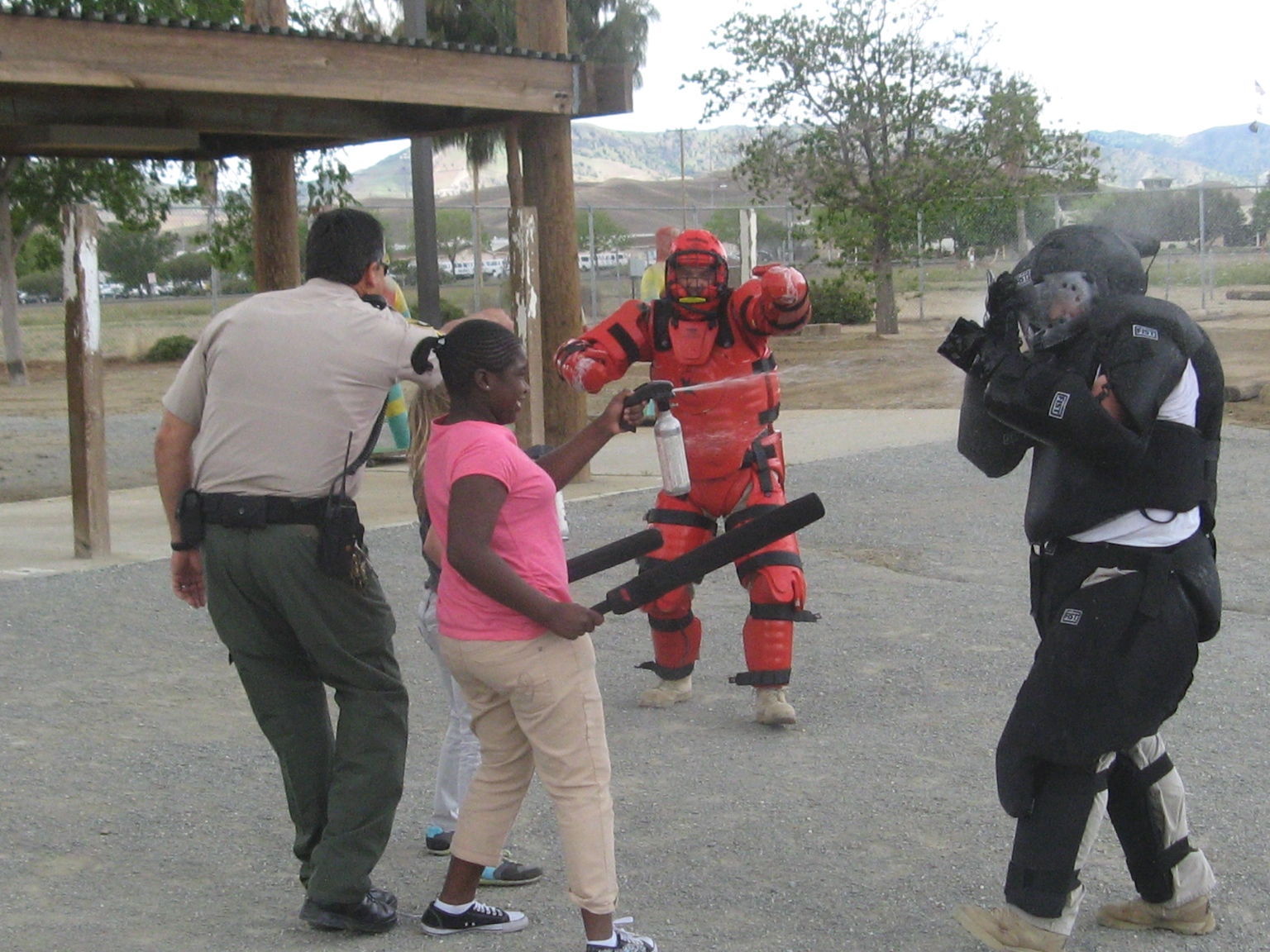

All images: Courtesy of the California Department of Corrections
Yesterday, we were talking about Google Street View. So, the segue to today’s topic is pretty seamless.
There’s been plenty of reporting on the prison robots designed and now being trialled in South Korea. This simple breakdown of info on these over-sized dehumidifiers is as good of a place to start than anywhere.
Lets be honest, these storm-trooping bread-makers are weird but they’re a pretty clumsy use of technology. Yesterday, I deleted my Linked In account, at the weekend I was talking about nuclear war initiated by software viruses (a la Stuxnet). I mean to say that, if we’re thinking about technologies, digital footprints and code-based (non-physical) manifestations of monitoring and interaction are far more pervasive, instant, destabilising and effective ways to intervene in – and disrupt – the world. These stupid, pearly-white ionisers on wheels deserve nothing but mockery.
No matter how good their 3-D cameras and behaviour analysis softwares are, the damn thing still turns its back like a human prison guard. Why doesn’t it employ 360 degrees imaging?
The thing looks ridiculous. It will never work. Prisoners will take the first opportunity to kick the shit out of it … and so they should. In such a scenario, would disciplinary sanctions against a prisoner for vandalising a robot be dealt with in the same way the authority might punish a prisoner for an assault on a prison guard?
The isolation of solitary confinement destroys people; the threat and the psychological isolation of prisoners damages people; unhealthy and inhumane relations with gang-affiliated prisoners and/or stressed, possibly abusive or indifferent, officers damages people. If we expect prisoners to rehabilitate themselves we need to prepare them for reentry into majority society, not subject them to sci-fi distopia surveillance for the sake of saving a buck.
This is market economics gone mad. A product with a cost and with a projected cost-saving. At nearly a million bones a pop I hope they’re dismantled very rapidly by any prisoner class that encounters them. It wouldn’t be vandalism it’d be a service to humanity.
Source: 225 Baton Rouge
Well, I thought I’d seen it all. But no.*
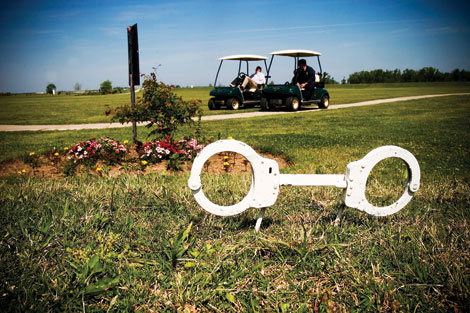
Prisonview Golf Course is a 9-hole, par 72, 6000 yard course, on the grounds of Louisiana State Penitentiary.
This isn’t golf for the prisoners, but amateurs who fancy a punt on one of America’s most ethically dubious courses. Could the disparity between the have and have-nots be played out in a more brazen manner in a more bizarre location? Many golf courses already invite criticism given their over-use of water and the cultivation of monocultures. In the case of Prisonview Golf Course, to those concerns, we might as well add cynical social attitudes.
Rules
– All guests must provide personal information (date of birth, drivers license number, social security number, etc.) for complete background check before play. (48 hours in advance)
– No tee times will be scheduled prior to completed background check.
– Convicted felons and individuals listed on any inmates visiting list will not be allowed access.
– All golfers must present valid, state issued identification upon arrival.
– Play may be suspended at any time, due to institutional need or at the Warden’s discretion.
– Tee times may be cancelled without notice.
– Absolutely NO firearms, drugs, alcohol or other contraband items (such as, but not limited to, cameras, knives, etc.) are allowed on the premises.
– Persons entering Louisiana State Penitentiary must consent to a search of their vehicle, belongings and/or person at any time, while on institutional grounds.
I wonder if golfers are allowed to take photographs, unhindered?
– – – – – –
* When I visited Louisiana State Penitentiary in December, I did not see the golf course.

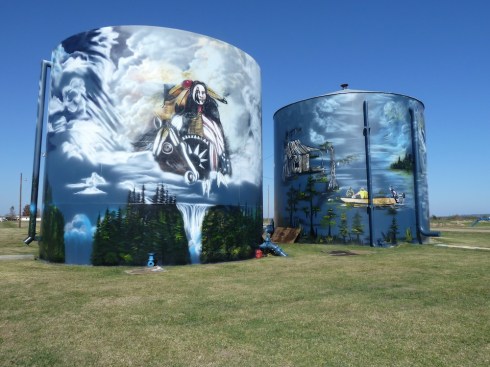
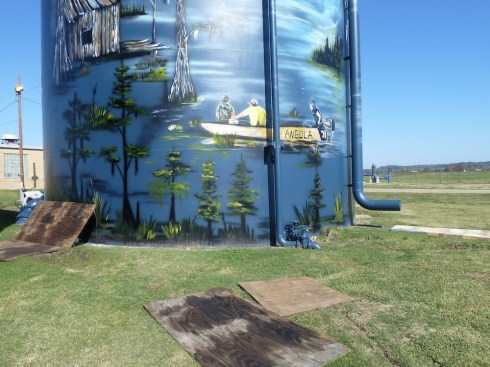
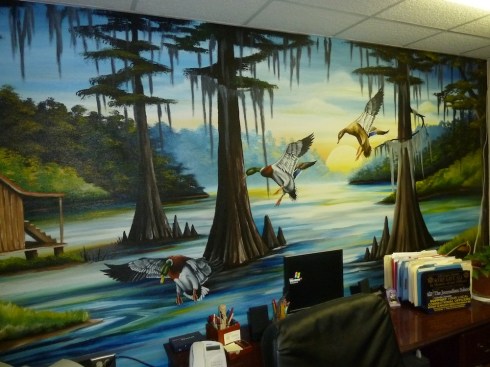
I wanted to share some PPOTR snapshots with you. Angola Prison (Louisiana State Penitentiary) is the state’s maximum security prison. An 18,000 acre former slave plantation, Angola is the size of Manhattan. At the time of my visit, Angola was “home” to 5,400 men, over 4,500 of whom will die within its razor wire.
Angola is a strange place. Burl Cain, warden since 1994, has blurred the lines between church and state by implementing a regime of “moral rehabilitation”. Of the six interfaith chapels on prison grounds, four have been constructed under his watch.
As well as providing God, Cain also provides as many programmes as possible to keep the prisoners active. From harvesting tonnes of crops (“We never open a can of food in our kitchens,” said prison spokesperson Gary Young), to refurbing wheelchairs for charitable use; from the twice annual rodeo season to the dog-training facility; from the horse breeding programme to the prison hospice; and from the prison newspaper – The Angolite – to the prison’s own TV station, prisoners who tow the line are kept busy.
Of course, on my media tour, I wondered what I didn’t see: the death row, the solitary confinement cells, the staff quarters.
I did see worklines in the fields guarded by armed correctional officers on horseback. I was also provided a meal of beans, rice and fried chicken at the Warden’s Ranch House. I visited shortly after Thanksgiving so the Christmas decorations were going up.
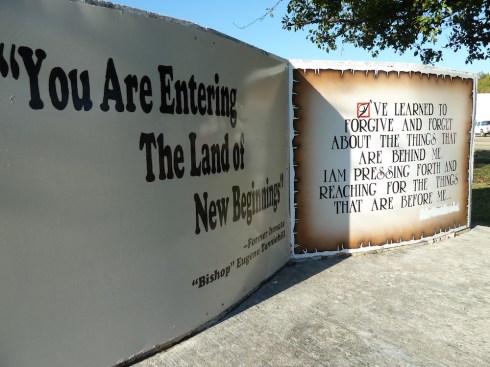
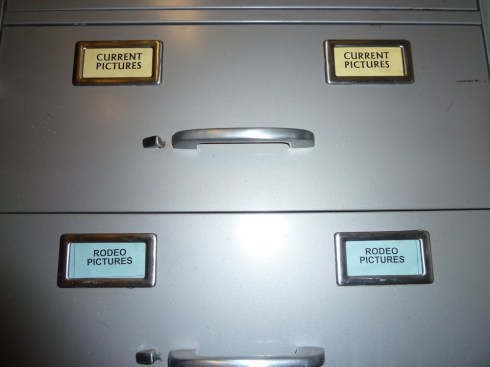
All in all, on that sunny late autumn day, I was driven through what outwardly appeared to be a pastoral idyll. I focused my lens at the signage, the murals, the markings of the regime. I present this little snapshot not in an ironic way, but that it may confound some viewers and we might wonder what lies behind these very surface-level illustrations.








PRINTED MATTERS
For the upcoming Cruel and Unusual exhibition, Hester Keijser and I opted for a newsprint catalogue. We did this for several reasons.
Firstly, the message behind the exhibition is one that calls for political thought and hopefully political change. Shifts in attitudes come about through public education; it made sense to distribute information as far and wide as was possible. Not everyone can afford a photobook/catalogue, but 4,000 free copies of a newspaper nullifies the issue. Some might call the newspaper medium democratic, but I just call the solution common sense. 
Secondly, we had a lot of photographers to feature. 32 pages of a tabloid-sized newspaper is a sizable amount of column inches with which to fairly deal with the many issues in the photographers’ works.
And third, Hester and I wanted to bring attention to the fact that [photo]bloggers continue to shape, react to, and distort new media economies. As we say in our curatorial statement:
“Cruel and Unusual looks at the utility of freelance online publishing. As bloggers with academic backgrounds, we happily invest time and intellectual capital in our research and writing. Our blogs and those of colleagues have become resources – almost contemporary libraries – that others utilize and perhaps even capitalise upon. For a host of reasons, printed journalism is in decline. Simultaneously, bloggers refine their messages unhindered. Related, but not necessarily causal, we want to acknowledge these two trends and the disruption at hand.”
We aren’t particularly worried about not knowing what the future holds, because for now we are propelled by opportunities to create things in the present.
SOME OTHER NEWSPRINT PHOTO PUBLICATIONS
Most people are probably aware of Alec Soth’s Last Days of W. President Bush was a constant source of partisan news stories, and Op-Ed’s on Bush were divided and divisive. Given that Bush was a leader who orbited world events without necessarily controlling them and given that he was a Commander-in-Chief whose war cabinet tried to warp media to its own message, Soth’s use of a newspaper is ironic and appropriate. Jeff Ladd noted that Soth’s subjects look worn out and exhausted as if reflecting the American psyche after eight years of Bush. A newspaper will soon yellow and show aging – perhaps Soth hoped his newspaper would be short lived like the memory of Bush and the reparations required following his presidency?
Recently, Harry Hardie at HERE has collaborated on two newsprint photo publications.
CAIRO DIVIDED (32 pages) sequences the photos of Jason Larkin with an authoritative essay (in both English and Arabic) by Jack Shenker about suburbanization around Egypt’s capital. Since January 25th of 2011, Egypt has not been out the news, and yet this project is not about revolution. It is however about poverty, wealth and class stratification and as such provides a good context for the revolution in Egypt. Excellent design with eye-opening photographs. Highly recommended. More info here.
Guy Martin’s The Missing is borne of a collaboration between Panos Pictures, HERE and Martin’s alma mater The University of Falmouth. Each of its 48 pages has a large image of a missing poster photographed by Guy Martin. The posters “adorned the walls of the courthouse and justice rooms on Benghazi’s seafront.” Martin estimates that in Libya, 30,000 men are missing after the 8 month conflict. As such, the quasi-legal vernacular documents he re-photographed in-situ were the making of “communal place of memory and mourning.” The newspaper acts as a bulletin existing somewhere between the makeshift and the permanent; between memory and knowing; and – as with those pictured – in ambiguous flux with time. More info here.
Shifting gears, Portrait Salon 11 is not about political events. It is, however, a political stand against institutional exclusion. In the tradition of the 1863 French Salon des Refuses, the London-based Portrait Salon is a curated showcase of photographs that were submitted but not selected for the prestigious Taylor Wessing Photographic Portrait Prize. The use of a newspaper is a mischievous challenge to the immobility of a gallery exhibition that chose 60 works from 6,000 submissions; the newspaper can move cheaply and in large quantities beyond gallery walls. Furthermore, the accompanying Portrait Salon exhibition projected portraits in order to include more photography and not be limited by physical space. The exhibition and newspaper were organised by Miranda Gavin, Wayne Ford and others. For purchase.
I’ve highlighted these projects and in each case tried to justify why the choice of newsprint was appropriate and theoretically consistent. I believe that the Cruel and Unusual newspaper is those things too.
CRUEL AND UNUSUAL: AVAILABLE ONLINE
A non-printable, non-downloadable, non-alterable screen-preview version is available online.
Starting February 18, the newspaper is also available for free in the Noorderlicht Photogallery and for sale in the webshop.
The exhibition is split into two sections: 1, a traditional presentation of 11 photographers, and 2, a heady mayhemic wall of work-prints, background material contact sheets from Prison Photography on the Road (PPOTR).
Similarly, the newspaper is divided into two sections. A 20 page PPOTR pullout is enveloped in 12 pages of descriptions of the photographers in the main part of the exhibition.
Below are the opening page and the back page of the PPOTR pullout. The portrait on the opening page was made by Tim Matsui who documented my workshop at Sing Sing Prison.

The back page is a list of 32 of our favourite international photography blogs with QR codes linking to their websites. This was our cheeky riff on the classifieds section of newspapers!

And below are two pairings of PDF pages and Hester’s photographs of the actual printed object. The paper is really beautiful … so Hester tells me; I’ve not held one yet! I would like to thank the designer Pierre Derks who worked with Hester and I. He has expertise, patience and put in some hard graft.


In the past when I have discussed prison Polaroids, I have said they are perhaps one of the more significant subsets of American vernacular photography, and that they are not easily found online and that, due to their absence, our perception of prisons and prison life continues to be skewed.
Well, times change and that position now deserves correction. I have noticed a few collections coming online recently. Not least the Polaroids from Susanville Prison on the These Americans website. (Also, check out the new PRISON subsection of the site.)
Online, I have identified some increase in the number of contemporary prison visiting room portraits and, as in the case of These Americans, collections of older, scanned images.
I would suppose that many Facebook users have scanned visiting room portraits and added them to profiles but, only visible to friends, those social network image files have not been reproduced for public consumption or commentary. We might think of Facebook photos and albums as digital versions of the mantlepiece, i.e. seen only by close friends and family.
ONGOING FOCUS
“Prisoner-complicit” portraits (for want of a better term) are taking up a lot of my thoughts currently.
Yesterday, I had a workshop with the #PICBOD students at Coventry University, in which I assigned readings on Alyse Emdur’s visiting room portrait collection, prison cell phones as contraband, prison cell phone imagery as cultural product, a new Tumblr In Duplo that compares publicly available mugshots with publicly available Facebook profile pictures, and the racket that underpins the posting and removal of mugshots to the searchable web.
Particularly with cell-block-cell-phone images, we should anticipate a glut of prisoner-complicit photos in which prisoners – to a greater degree – self represent.
We should realise that this is the first time in modern history that prisoners have presented themselves to the internet and thus permanently to the digital networks of the globe. My hunch is that this may be significant, but really, it’s too early to tell.
We can note that in this video, most of the images seem to originate from the same cell phone camera in the same prison. We might surmise there is no epidemic of illicit and smuggled images yet. To further this inquiry, I hope to get some information from the maker of said video.
In the mean time, I’ve been in touch with Doug Rickard who administers These Americans as well as the wonder-site American Suburb X. I asked him about his recently published Susanville Prison Polaroids:
Any idea who took them? (any marks/prison-stamps on verso?)
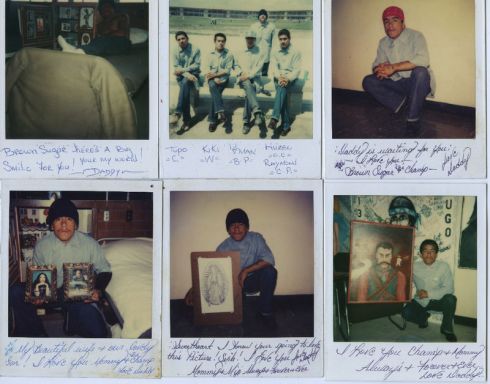
Probably a visitor or another inmate? I have a set (10 or so) of the main inmate (“Johnny”) that you see in many of the “Susanville” single poses, posed with “Brown Sugar” (his girlfriend/wife) and his son “Champ”, a boy that grows from 1-3 years old in the various pictures (see below).
What years do you think they span?
I can only find one date, 10-24-80. You would think that they were 90’s, but for sure, it says 80.
What makes this collection so fascinating to me is that the operator(s) appears to have had free reign of cells, tiers and the yard to make these single and group portraits. One of the PICBOD students at Coventry today wondered where their supply of Polaroid film came and then to where the images were eventually dispersed outside the prison.
We could only conclude that this prisoner and his group of friends had special privileges and access. From all of my research into (vernacular) prison photography – specifically prisoner-made photography – this sort of arrangement/privilege does not exist in American prisons today.
MORE ON THESE AMERICANS
http://www.theseamericans.com/media/minnesota-mugshots/
http://www.theseamericans.com/prison/last-prisoners-leave-alcatraz-1963/
http://www.theseamericans.com/prison/visiting-hours/
http://www.theseamericans.com/prison/prison-collection-%e2%80%9cjoliet-state-prison%e2%80%9d-1963/
http://www.theseamericans.com/prison/florida-collection-jack-spottswood-sunbeam-prison-camp-1950/
http://www.theseamericans.com/prison/california-collection-san-quentin-prison-1925-1935/
http://www.theseamericans.com/prison/polaroid-collection-mcneil-island-prison-wa-1970s/
– – – – – – – – – – – – –
Thanks to Peg Amison for the tip.












 Prison Photography