
You are currently browsing the category archive for the ‘Amateur’ category.
Name that toll booth?
Two weeks in, eleven interviews down, three published and eight in the can.
I can only anticipate getting more and more busy. My discombobulation may be interrupted by episodic bouts of fear, exhilaration and self-doubt.
Fortunately, technology will offer consistency.
All audio interviews will be hosted on Podbean at http://prisonphotography.podbean.com.
If you so desire, sign up for the ‘Prison Photography’ on the Road Podbean RSS feed.
‘Prison Photography’ on the Road is licensed under a Creative Commons Attribution-NoDerivs 3.0 Unported License, making all the audio published at http://www.prisonphotography.podbean.com available to the prison reform and photography communities free of charge. Please download and share responsibly.
All audio interviews will be linked to here on Prison Photography, sometimes with little juicy behind the scenes extras, and often with phenomenal galleries of work by the photographers I meet.
As ever, I’m throwing out tweets at @brookpete. Furthermore, I’m using the hashtag handle #PPOTR to let you know about the all the incidentals.
Come ride with me.

A Meeting of the Harvard Corporation, which invests Harvard’s endowment, guarded by police. © Gregory Halpern
As a resident alien, much of the American revelry is lost on me. But Labour Day? That’s a national holiday dedicated to the social and economic achievements of American workers. That’s something I can celebrate.
Today then, I point you in the direction of Gregory Halpern‘s neatly edged project Harvard Works Because We Do (it has a beginning, a middle and an end) about the service workers employed by Harvard University. From portraits to playful presentation (above) to messy colour film shots of a student sit-in to a successful outcome securing over $10 million in pay and benefits for the more than 1,000 service workers on campus.
Harvard Works Because We Do is a project full of character and a clear voice. Halpern was one of the sitting students. From his portfolio:
“Between 1994 and 2001, the endowment of Harvard University tripled, making the school the wealthiest non-profit in the world, second only to the Vatican. In the same years, Harvard heavily outsourced many service jobs to lower-paying companies, thus resulting in average wage cuts of 30% for the schools’ custodians, food-workers and security guards. In response, I got involved with a student group called the Harvard Living Wage Campaign and I began this project. My goal was to publicize the situation, to share the stories of a number of service-workers I had come to know, and to raise questions about the prevailing class-structure at Harvard and on college campuses in general.”
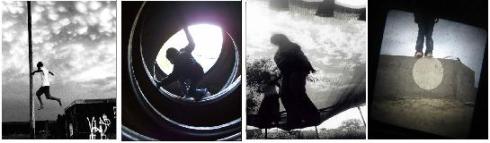
Founded in 2005 by by Emily Schiffer, a Magnum Foundation Emergency Fund grantee, My Viewpoint on South Dakota’s Cheyenne River Reservation, is a youth photography initiative “invested in young people’s inherent visual curiosity.” The images from Seeing is Fun are captivating.
The program has students (ages 6-20) apprentice with professional photographers, working in both analog and digital photography and printing their images in an onsite darkroom
My Viewpoint is run through the Sioux YMCA in Dupree, SD, and in partnership with Daylight Community Arts Foundation.
From the Daylight Magazine blog:
Shipping and Receiving: Photographs and Letters Between Venice, CA and Dupree, SD
August 6–September 30, 2011
Venice Arts Gallery in Venice, California
Opening Reception: Saturday, August 6, 5-8 p.m.
This exhibit features the photographs taken by students in the My Viewpoint photography program, and highlights a collaborative photographic exchange between the youth in the My Viewpoint program and youth at Venice Arts, conducted over 2010 and 2011.
Children of the Cheyenne River
July 23–September 4, 2011
Fovea Exhibitions in Beacon, New York
Opening Reception: Saturday, July 23, 5–7 p.m.
Artist Reception & Talk with Emily Schiffer: Second Saturday August 13, 5–9 p.m.
This exhibit is comprised of medium format black & white photographs of the students in the My Viewpoint photography program by the program’s founder Emily Schiffer, accompanied by a narrative text that explores Schiffer’s perspective on her evolving relationship with them, as well as photographs and text from the students.


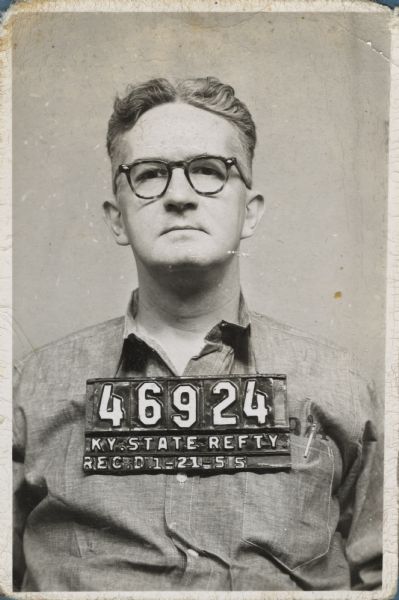
CARL BRADEN
I was surfing through the Wisconsin Historical Archives, like you do, and came across the above image of Carl Braden.
Braden and his wife Anne Braden were journalists-turned-activists who were part of the union movements and later the radical interracial left of the 40s and 50s. The Braden’s bought a house on behalf of the Wade family, their African American friends in suburban Louisville, Kentucky. When neighbours found out a Black family had moved in they burnt a cross outside the house and went after the Braden’s. Carl was charged with sedition in what is known as the Wade Case. Carl was sentenced to 15 years and served 8 months, eventually paying $40,000 to get out.
The Anne Braden Institute (ABI) now operates out of the University of Louisville. The ABI has a Flickr stream of scenes from her full life.
KARL BADEN
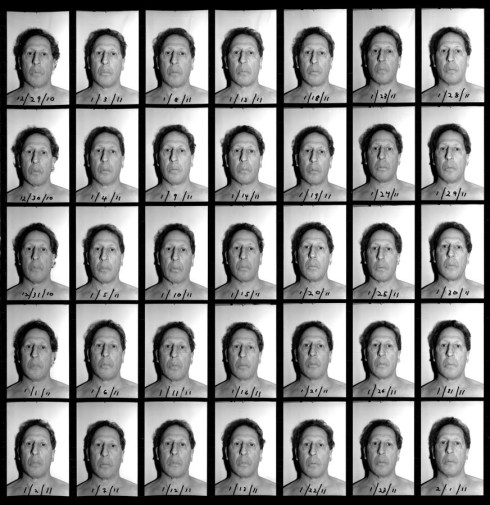
Karl Baden has chosen to put himself in the picture everyday for 24 years. Somewhere he has set up a self-imposed mugshot identification room. All these can be seen at his website Every Day.
It’s worth noting that Baden and Noah Kalina are the original and best for these vaguely masturbatory, mirrored versions of themselves in time-lapse. Others include a girl with a nice set of scarves, two dudes (one and two) with beard-growing missions, a guy with an 800 day commitment and Homer Simpson.
There is also Diego Goldberg who self-documents he and his family once a year, every year on the 17th June.
Baden has established a unique set of data for a limited case study in visual anthropology. The date runs like an I.D. number at the bottom of his shots.
As Baden describes the project, he removes emotion and variables from the photography, just as police or criminal justice photographers do for mugshots:
Every Day is performed within a set of guidelines. […] Reserved exclusively for this procedure are a single camera, tripod, strobe and white backdrop. […] I use the same type of high-resolution film (Kodak Technical Pan until it was discontinued in 2007, Ilford Pan F since then) and the same strobe lighting. The camera is always set and focused at the same distance. When taking the picture, I try to center myself in the frame, maintain a neutral expression and look straight into the lens.
Baden lists the key tenets of Every Day to be mortality; incremental change; obsession (its relation to both the psyche and art-making); and the difference between attempting to be perfect, and being human. I’ll grant him those things, but I also wonder is does the project not feel like a sentence?
And my question to you, readers, is what should we make of this type of project? It could be just inventive fun or it might be one of the most present-minded approaches to photography there is? I can’t decide.
© Dane Jones/Center for Employment Opportunities
What happens after incarceration? What does life look like; how does one operate? More to the point what does the world look like?
With the development of Released the Center for Employment Opportunities (CEO) in New York has tackled these queries with a multi-media-headed-hydra of photography and narrative.
Released “produced to offer a rarely seen perspective of those returning home from prison or jail” was set in motion by Cara Shih, Marketing Director at CEO. It consists of two parallel projects.
Firstly – to describe what life looks like – she contracted three young photographers to capture, produce and tell the stories of CEO’s clients as they left prison and built new lives.
Secondly – to describe what the world looks like – Shih enlisted CEO clients to self-document their re-assimilation into society.
The result are two very different sets of valuable works.

© Dane Jones/Center for Employment Opportunities
© Darryl Allen/Center for Employment Opportunities
© Darryl Allen/Center for Employment Opportunities
The main body of work for Released is the collection of nine slideshows of nine individuals (youtube/embeddable) by photographers Jeyhoun Allebaugh, Michael Scott Berman and Bryan Tarnowski. There’s no narration but the subjects’ own, and that’s everything that’s needed. These are real characters. Kudos to Allebaugh, Berman and Tarnowski for getting out the way of the stories.
It was Allebaugh who first contacted me about the project and so I fired him back a few questions. Before that, let me mention the second element of Released.
As you know though I have high expectations of prison arts education and the prospect of self-rehabilitation through photography, so when Allebaugh explained the ‘Snapshot Project’ within the Released project I knew I wanted images made by the six former prisoners on disposable cameras to feature here on Prison Photography. Allebaugh understood.
I speak more on ‘Snapshot Project’ after the Q&A.
JEYHOUN ALLEBAUGH Q&A
PP: How did you come across this project?
JA: Released was the brainchild of Cara Shih. She wanted to create an honest and genuine portrayal of the experience of her participants in a creative and artistic way.
PP: Had prison improved or set back the lives of the nine subjects you followed?
JA: Hmm. That is a difficult and complex question. While incarcerated, one of my subjects, Revond Cox, had to attend his son’s funeral in shackles and a DOC jumpsuit while his other young son sat graveside. I’m not sure any person should have to go through something like that. To call it a “setback” would certainly fall short. However, in his piece on the site, he says, “[prison] saved me from death because the way I was running, it was just a matter of time.” He clearly has his head on very straight about the type of father he wants to be and I do think some of that epiphany is directly related to his very difficult time in prison.
PP: Do you think the systems for employment, reintegration are fair for those formerly incarcerated?
JA: Life is extremely difficult for formerly incarcerated people coming home. The line between a new life and their old lives is razor thin and just as sharp. It is often much more complex than just coming home and doing right. Coming back to families and the stigma of finding a job as an ex-con make it very difficult. That said, I think organizations like the Center for Employment Opportunity are a very effective way to balance these things out, but many go without services such as these.
PP: What’s your biggest take away from the project?
JA: When we started this project, one of the key ideas behind Released was to show that when the formerly incarcerated come back home, it is often not to the “clean slate” that many of us imagine it to be. We wanted to show that there are new and different obstacles these people must face and I believe the project highlighted these well, showing some of the areas where the aid of an organization like CEO is imperative.
I believe what ended up being great about the project, however, was that more than the differences, the similarities between what the subjects and normal people go through on a day to day basis was what was most evident. I think this is what was really special about seeing photographs taken by the subjects themselves in addition to the ones we took as professional photographers.
The nine individuals we documented over three months are some of the best human spirits I have come across; absolutely amazing people. I hope you’ll spend a couple minutes getting to know them by watching the short videos on the site.
I’ve very much enjoyed staying in touch with these great people since the project. Listening to them talk about the continual triumphs and struggles of this great life we are given has truly been a gift and is a great inspiration to me.
© Jose L Padilla/Center for Employment Opportunities
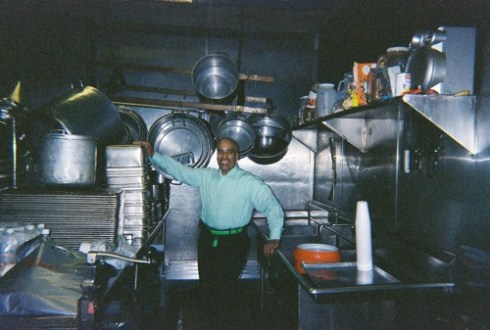
© Jose L Padilla/Center for Employment Opportunities

© Jose L Padilla/Center for Employment Opportunities
‘SNAPSHOT PROJECT’, RELEASED, CEO
The snapshots are the daily details, daily grind and efforts and situations that don’t make it onto an outsider’s camera or off the cutting room floor. If Allebaugh et al. provided the over-arching narratives of empowerment and improvement, these are the chapters, pages and phrases.
As Allebaugh stated, the snapshots show off the same foibles we all have – Jose Padilla‘s fashion savvy, big smile and willingness to perform for the camera; Dane Jones‘ wonder with the street and his omission of self; Lewis Epps‘ focus on the activities, training and environments to keep him on track; Dwayne Allen‘s tourist shots of Manhattan’s Financial District; Chester Boston‘s preoccupation with portraiture and the family; and Michael Hunt‘s meanderings about his new or old neighbourhood.
Too often we can get caught behind the idea – and support of – a large goal without stopping to think about the many tiny, terrifying steps needed to achieve the goal. These images reveal those steps. Due purely to the equipment, the ‘Snapshot Project‘ is overlaid with naivety. But there is also good intentions, massively important small victories and the promise of networks that will help these men achieve a life outside prison permanently.

© Lewis Epps/Center for Employment Opportunities
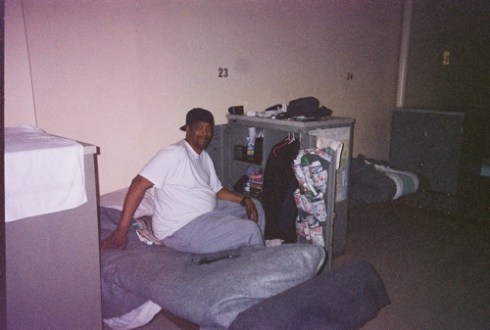
© Lewis Epps/Center for Employment Opportunities
LEWIS EPPS ON LIVING IN A SHELTER, PHOTOGRAPHY, AND HIS MOTHER
If you want to know more about Lewis Epps, CEO has published a Q&A with Epps on their blog. Here’s my choice of quotes:
I was happy that I was doing [The Snapshot Project] and engaging in a project that would reflect my life. You know how you want to leave a legacy? I want people to say, “Yeah, Lewis he’s a good guy.” You know, I was doing something good to help me, and to help others, and also to be thankful to CEO for the opportunity.
I feel like I am ashamed to be in a shelter, I have never been in one my entire life. I had no place to live, so they released me to the shelter.
I have a tight, helpful family and we’re all very close. I lived in the Bronx, that’s where my criminal activities came from. My mother is elderly and I don’t want to bring that back to her … My family is very supportive. I go every Saturday to my mother’s to do painting, backyard, do work for her. Sundays I go to church.
I’m about to move from a shelter into a room of my own. I save my checks. I hide my money when I cash my checks, so I’m not tempted to spend it. I’ve been saving for three months since I started working and I’m almost ready. I also have family support. Finding a suitable place is tough. I can’t afford a room yet but I’m doing better than I’ve been in the past. I need a permanent job so I can retain my income and keep being able to afford a place of my own.
It stays in front of me, being re-incarcerated. Once I stop being good, I could be back. I’m too old to go back, I’ve got to move forward and think positive. CEO is helping me strive, and I know I’ve got to keep my focus. Once I don’t keep focus that could be it. One mess-up, that’s all it takes. I’m not going to do that again. I’m going to stay around people who are trying to help me.
Shih informs me a similar Q&A with Jose Padilla is next.
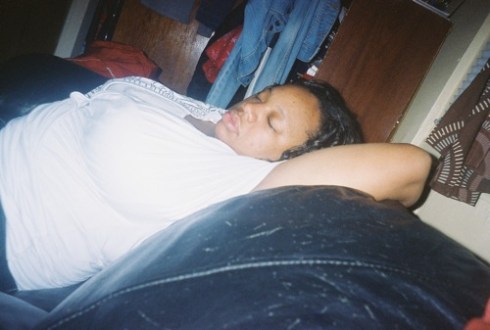
© Chester Boston/Center for Employment Opportunities

© Chester Boston/Center for Employment Opportunities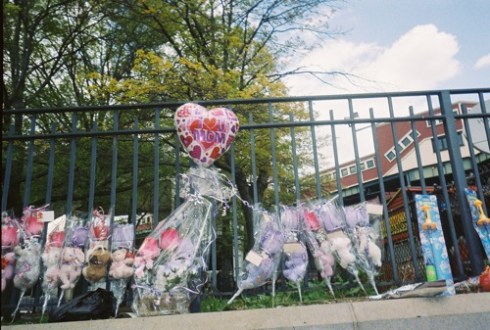
© Michael Hunt/Center for Employment Opportunities
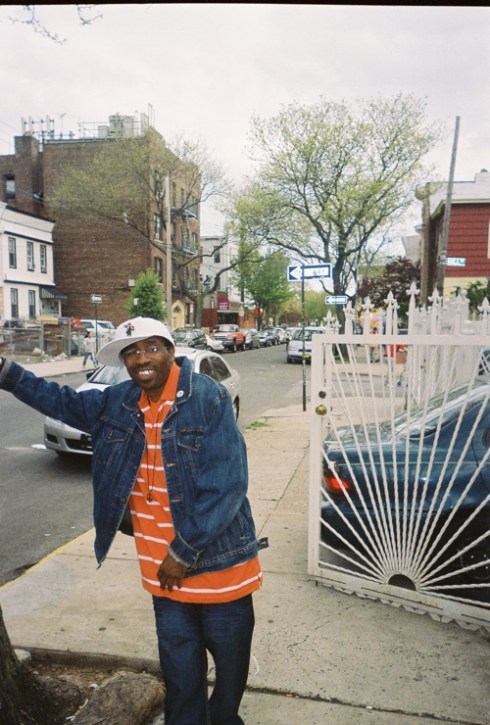
© Michael Hunt/Center for Employment Opportunities
SNAPSHOT PROJECT PARTICIPANT-PHOTOGRAPHERS
Dane Jones, 26, lives in the Bronx with roommates. His challenges to re-entry include obtaining employment, education, financial management and housing. When asked what is the most challenging part of his daily life, he says “fitting in and conforming to the norms of society.”
Lewis Epps, 49, resides in a shelter. Currently he works on the transitional job sites while searching for permanent employment. His biggest challenges to re-entry are obtaining full-time work and permanent housing. He has a very supportive family who is helping him succeed in the re-entry process.
Darryl Allen, 46, lives in Queens with his father, brother and nephews. He has three daughters (including a pair of twins), and his eldest daughter is a lawyer. His biggest challenge to re-entry is obtaining employment. Darryl says the most challenging part of his daily life is “being a friend and father to my children.”
Chester Boston, 34, lives in Queens with his uncle. His biggest challenge to re-entry is obtaining employment. He has a five year old daughter, whom he named after his mother. He says fighting for custody is a daily challenge and not seeing her is very hard.
Jose L. Padilla, 47, lives in Brooklyn. After completing Life Skills Education and becoming Job Start Ready, he landed a full-time job and now comes to CEO for retention services. To him staying punctual is the most challenging part of his day. He has a certificate in construction.
Michael Hunt, 48, lives in Brooklyn. His biggest challenge to re-entry is finding stability in his life, and “being able to be myself and become employed at the same time.” His certificates include carpentry, electrical technician, fire guard and maintenance.
If you would like to hire CEO participants please contact Mary Bedeau at 212 422 4430 x345.
‘RELEASED’ PHOTOGRAPHERS BIOGRAPHIES
Jeyhoun Allebaugh is a freelance photographer who specializes in documentary, sports and portraiture photography. He is based in New York City and North Carolina. As a Turkish-American and avid fan of Hip-Hop and Bluegrass music who has spent his college years in the mountains of North Carolina as well as South Africa, Jeyhoun brings a diversity of taste to all aspects of his life. His work has appeared in GQ, PDN Emerging Photographer, USA Today, UK Guardian, SLAM Magazine, HOOP Magazine, The Durham Herald-Sun, The Durham Independent Weekly, NBA.com and SI.com.
Michael Scott Berman is a photographer specializing in food and portraits. His past clients include the New York Daily News, the Guardian, PNC Bank, and the AARP. He was the recipient of two grants from the Brooklyn Arts Council and has exhibited his work at the Leica Gallery in Manhattan and at Brooklyn Borough Hall. He earned a Bachelor of Arts in English from New York University and a Master of Business Administration from Georgetown University. Besides taking pictures, Michael also produces video and writes stories for his food blog, pizzacentric.com.
Bryan Tarnowski grew up in North Carolina and moved up to New York City to pursue photography in 2008. He assists with a number of the best fashion, commercial and portrait photographers in the world and has worked on shoots for top magazines and worldwide ad campaigns. Focusing on social documentary subjects of a wide variety, he likes to shoot what interests him, often to learn more about a subject and to quench his thirst for greater knowledge of the world. His work has appeared in The Wall Street Journal, Vibe Magazine, PDNedu among others.
Last month, Allebaugh, Berman and Tarnowski exhibited their work at the CultureFix Gallery on the Lower East Side. CEO has a Flickr set of the opening.

Sometimes it’s associated with a British band, and sometimes it associated with people who are banned.

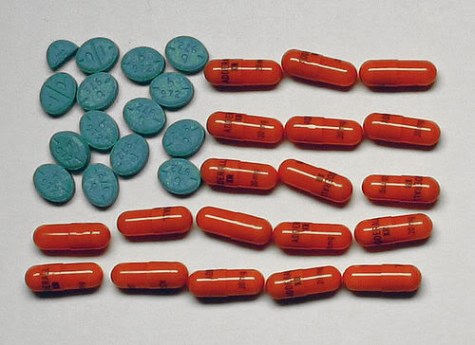
It’s about pills, madness and control. It’s about healing.

It’s about awesome fashions and it’s about bad accessories.


It’s about poor decisions by presidents.

It’s about corporate control and corporate profits.


It’s about death to ours and death to theirs.


Sometimes, it’s about imperialism.

It’s about religious freedom and freedom of religion.


It’s about fake sportspersons and real sportspersons.
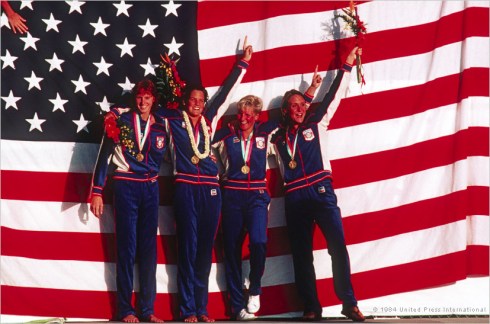

It’s about God and it’s about children.
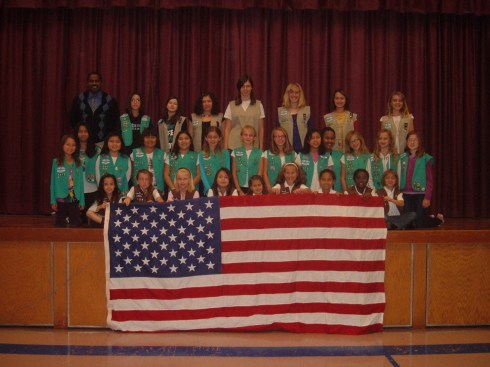

It’s about we the people, not them the people.

It’s about bigotry and it’s about a permanent underclass.


It’s about cold beer, cupcakes and weed.
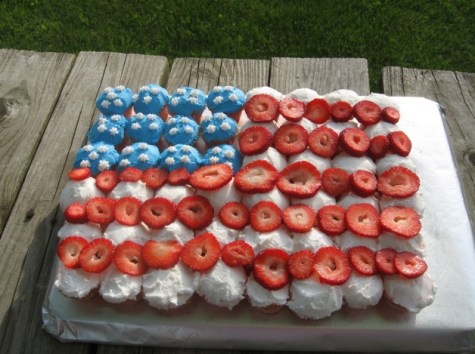
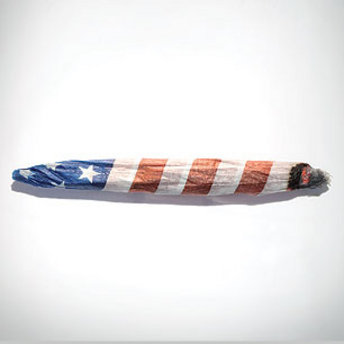
Images sources: Rolling Stones lips; Prison bars, from Teen in Jail; American flag of pills, by Talia Marisa; Heels, Fashion Munster; Spectacles, Linda Lovelock wears American flag sunglasses during the 2010 Tax Day Tea Party April 15, 2010 in Pleasanton, California. Tea Parties were held across the United States to denounce tax day. More than a thousand people attended the Tax Day Tea Party at the Alameda County Fairgrounds. (April 14, 2010 – Photo by Justin Sullivan/Getty Images North America); Bush family; Corporation flag; ISBN flag, via Adbusters; Coffin at night, Sudanese men look at the flag-draped coffin of U.S. diplomat John Granville, 33, who worked for the USAID, as it is received by U.S. officials in Khartoum, Jan. 3, 2008. (AP); US flag bomb graphic, via Daily Bleed; Imperialism flag, Christian cross, on eBay; Star-spangled burqa; Rocky Balboa shorts; Olympic winners, via Astropix (Teammates in the USA women’s 4 x 100 meter relay swim team stop in front of a giant American flag to wave to fans after winning the gold medal and setting a world record in the finals of the event during the 1984 Olympics in Los Angeles. From left are Jenna Johnson, Dara Torres, Carrie Steinseifer, and Nancy Hogshead.); Child’s drawing, via Fire Andrea Mitchell; School class photo, via Valley Community Newspaper (The Girl Scouts who meet for troop activities at Martin Luther King Jr. Elementary School had an American flag flown over the nation’s capitol on Dec. 6 to honor the school. Photo Credit: Unknown); Immigration wall graphic, by Luis Boix; “Does my fag offend you?” bumper sticker; Immigrant labour graphic, by La Mustia; Supermarket beers, via Corks and Kegs; Cupcakes, The Cupcake blog; Spliff, from Rolling Stone via The War on Drugs is a War on Me.
THE BACKGROUND
In one of modern politics’ most outrageous adoptions of Doublespeak, Governor Arnold Schwarzenegger – in 2004 – renamed the California Department of Corrections the California Department of Corrections and Rehabilitation.* You can see videos – here and here and here – of the press conference announcing not only a change in name, but a supposed change in the management philosophy of the CDCr.
At that time, legal challenges were being made over the adequacy of healthcare. Following the 2004 criticisms and despite the 2004 promises, consistent constitutional healthcare was not provided to the prison population of California.
The CDCr failed to deliver on both medical care and meaningful rehabilitation. To prove the emptiness of the rhetoric we can look to John Gramlich’s report for the PEW Center’s Stateline last month. Gramlich made the point, that shortly after Schwarzenegger’s rebranding the “administration cut funding for prison rehabilitation programs by about 40 percent.”
THE PUSHBACK
It’s just as well for you and I, a diligent group of California citizens have for 17 years challenged the claim on the CDC acronym and since 2004 reclaimed entirely the discarded California Department of Corrections name. The CDC works to put right misleading messages, empty words and muddy communication.

Founded in 1994, the California Department of Corrections (CDC) describes itself as “a private correctional facility that protects the public through the secure management, discipline, and rehabilitation of California’s advertising.”
Above is the CDC’s latest correction of fact and assault on complacency. From their website:
The California Department of Corrections (CDC) has unveiled a new campaign of bus shelter ads to celebrate America’s assassination of Osama bin Laden.
Released prior to July 4th, a total of ten ads in MUNI bus shelters throughout San Francisco were apprehended, rehabilitated and discharged without incident. The ten liberated ads represent each year in the long decade spanning the declaration of the War on Terror by President Bush and the eventual demise of al-Qaeda’s elusive leader.
Joining in celebration with millions of US civilians after the demise of bin Laden, the red, white and blue advertisements not only pay patriotic tribute to our country, but also celebrate the unsung history of American assassinations.
The rehabilitated advertisements are currently at liberty and seem to have successfully readjusted to public life. However, these ads will remain under surveillance by department staff to prevent recidivism and any potential lapse into prior criminal behavior.
You gotta love direct action. View more works here.
* You may have noticed I always refer to the Golden State’s prison system as CDCr; using a lowercase “r” is an simple text-based slight but it makes the point.
(Via the ever-wonderful Just Seeds Blog.)

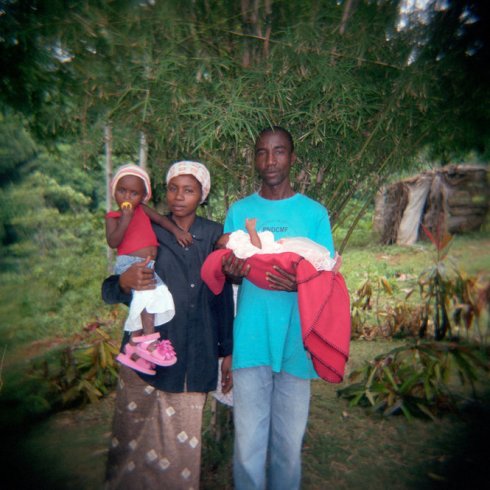
© Marjorie Jean-Baptiste/Fotokonbit
After my extended commentaries on photography in Haiti after the January 2010 earthquake, I’d like to bring attention to a non-profit producing and teaching photography workshops and putting cameras in the hands of Haitians.
FotoKonbit is a non-profit organization “created to empower Haitians to tell their own stories through photography. […] Inspired by the Creole word “konbit” which can be defined as the coming together of similar talents in an effort towards a common goal, we use our skills as photographers, educators, and artists to make a positive difference, through photography. By partnering with established Haitian organizations, FotoKonbit is uniquely positioned to inspire hope through creative expression and provide Haitians with the opportunity to document their reality and share it with the largest possible audience.”
The FotoKonbit team is made up of Frederic Dupoux, Ralph Dupoux, Maggie Steber, Marie Arago, Noelle Theard, Tatiana Mora Liautaud and Edwidge Danticat.
As TIME notes:
One of the most innovative uses for the photographs has been as documentary evidence for aid organizations. During three recent workshops for teenagers and younger adults living in tent communities, participants were asked to photograph aid efforts that they thought were successful, and to demonstrate needs that had not yet been met. Fotokonbit’s partnership with the American Embassy helped to get the work seen by the international aid community in Haiti.
In addition to these laudable humanitarian uses of Haitians photographs, is the simple fact that these images represent something distinctly different to the majority of Western media. How often have we seen naked, entranced worshipers prostrate in the waterfalls of Saut d’Eau? And how often are photographs from Haiti wrought with some outsider hyperbole or gratuitous pain? I don’t want to vilify photographers, especially as many such as Jonas Bendiksen and Louis Quail are committed to nuanced story telling.
Just to say that perhaps the mundane serenity of the landscape photograph below probably would not appear in our mainstream media.
And the market shot is just beautiful.


More images at TIME LightBox.

 Prison Photography