
You are currently browsing the category archive for the ‘Documentary’ category.
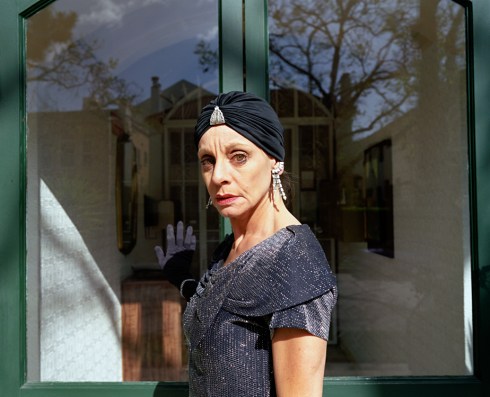
Sharon at the front door. Simone Lueck
CRITICAL MASS: 593 entrants, over 200 jurors, 181 shortlisted photographers, 50 finalists, 6 contenders, 2 eventual book deals.
For months, the Critical Mass jurors nudge and judge portfolio across the internet casting their opinions by way of prescribed digits – NO (0), YES (1), MEGA-YES (3), WOW (7). It’s numbers-gymnastics.
The 36,000 scores are then thrown into a big statistics cauldron and Shawn Records, one of CM’s organisers informed us back in November that the difference between the “lowest score on the list and the highest one that didn’t make the cut was just 0.01314411684.”
Down at the Photographic Center Northwest, Seattle the scores and calibration tables are forgotten as each of the Top50 winners is represented by a singe print chosen by juror Andy Adams of FlakPhoto.
RUNNERS AND RIDERS
The Top50 have been online for three months now. The names in the show are likely familiar, but the chosen prints possibly not. In some cases the anointed print on show didn’t satisfactorily deputize for the complete portfolio, and in other cases the strength of a single print was spur for a second glance at a portfolio.
Simone Lueck’s Sharon at the front door was a stand-out print, as garish and perky as the subject’s make-up. Sharon holds your stare as the direct sunlight degrades her skin by the second. “Let me help you with that door” I urged, worried for the integrity of the l’Oreal face-goop.
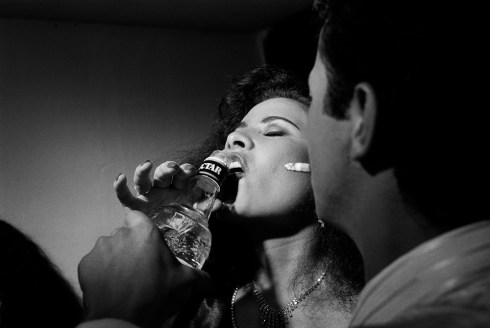
Aguardiente shots backstage at the beginning of the Miss Light pageant, Mesitas del Colegio, Colombia. Carl Bower
Women and the politics of appearance featured strongly throughout. Carl Bower’s project Chica Barbie examines the beauty pageant phenomenon of Colombia placing the contests within the context of the country’s pervasive violence; pageantry as escapism.
Bower’s work compresses pride, anxiety, routines, achievement and exploitation, but never casts aspersions upon this particular cultural more. Bower’s even-handedness presumably stems from his photojournalist background.
Bradley Peters’ print was banished to the stairwell, yet his work is strong enough to endure. Earlier on the night of opening, PCNW gallery director Ann Pallesen described juror Andy Adam’s FlakPhoto project as “off-kilter” – Peters is perhaps the best proponent of that look. Peters constructs scenes that so flauntingly blur art and documentary the viewer is hooked. I was befuddled last year when Peters came on the scene.
I liken Peters to Crewdson but without the six-figure budget; perhaps Crewdson on Valium. Peters also won the Conscientious Portfolio Competition, 2009.

© Bradley Peters

Ponce. Ellen Rennard
Also on the stairs, Ellen Rennard. Let me tell you, I generally don’t care for pictures of aninals but Rennard is the type of special talent to get my stubborn eyes seeing again. The runners and riders in the stables are partners, total equals. Respect runs through this series from photographer to subject, man to mammal. Rennard’s work is as compelling as any documentary portrait project I’ve seen in the past two years.
Dead dogs anyone? No, how about dead cats then? Mary Shannon Johnstone cares deeply enough about animal welfare and responsible stewardship that she went inside a North Carolina euthanasia clinic. Breeding Ignorance is a view we’ve not seen before and it may not be one you want to see again such is the visceral rendering of matted fur, stiff eyelids and garbage-headed biomass.

Cats Disposed. Mary Shannon Johnstone

Tree, Boston Public Garden, 2009. Pelle Cass
Talking about fur, Pelle Cass specializes in composite images of frantic activity, human and animal. The print from Selected People chosen for this show depicts a tree covered in scores of pudgy, russet squirrels surrounded by less fat humans and a flutter of birds in various stages of take off and perch. Cass’ work made me laugh, which is always a good sign.
Jane Fulton Alt’s portfolio Burn series is delicate but underwhelming if isolated. Fortunately, it is not isolated in that Fulton Alt has followed up on previous work with great intelligence. In 2005, Fulton Alt worked as a social worker in the aftermath of Hurricane Katrina. At dusk she’d document the ruined city. Burn series continues the same washed out grey of her Katrina series Look and Leave, only here it is smoke and not the “toxic, metallic air” of New Orleans. Fulton Alt observed upper respiratory problems among post-Katrina survivors and it as if this work is a lingering acknowledgement of legacy complications after the fact. Disasters are never just natural or man made but always a spiteful conflagration of the two … the air needs to clear … the dust needs to settle … the poisons sometimes burn slow.

Burn No. 81. Jane Fulton Alt
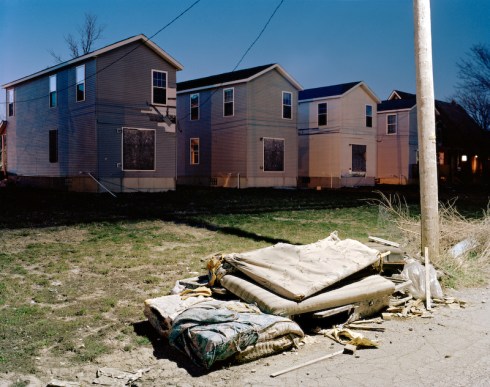
Alley Behind Ferris St. © Will Steacy
I really enjoy Will Steacy’s politic (his blog rants are a breath of fresh air) and he seems to be one of the hardest working photographers out there. The chosen print was luminous. However, I get the impression that Steacy only cares about these streets in as much as the debilitating effect they have on their inhabitants and itinerants. I’d have like to have seen one of his figure studies.
Manuel Capurso and Samar Jodha both pierced the darkness with portrait studies. Capurso’s chiaroscuro isolates his subjects and communicates the loneliness of life’s latter stages. Jodha literally spotlights the Phaneng people with whom he has lived for four years; they are a people on the verge of extinction and he has photographed every member of the 1,500 deep tribe. Both artists were effective.
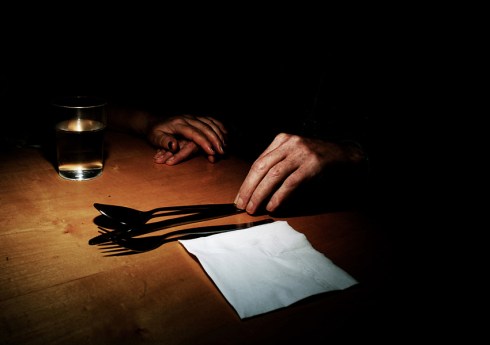
Untitled. © Manuel Capurso

Phaneng 1. Samar Jodha
Alejandro Cartagena was one of the two book award winners this year and I wouldn’t argue with the selection; he is doing immensely important work about mass-suburbanisation/social-housing projects in Mexico. However, I would argue for the case of half a dozen prints from his portfolio before the one chosen for this show.
David Taylor and Victor Cobo are also engaged in important inquiries both probing issues of immigration and policing, family and place. In each case though, the print did neither of their theses any favours. Cobo’s print was bright and with humour but, without context, it receded quickly from memory. Taylor’s print was large and empty but perhaps that was the point to suggest the illegal immigrants as helpless, lost and losing agency?
Definitely spend time with Cartagena, Taylor and Cobo’s online portfolios as I think they are three vital political thinkers in photography. Perhaps that was the problem, my hopes for the print were too high ?…

Mi Abuela, México, 2003 © Victor Cobo

Untitled © Ed Freeman
Up until last Friday, Joni Sternbach had single-handedly carried the genre of surf photography. She now has Ed Freeman to help her with the load. Generally, I dislike pictures of surf (bar the odd Friedkin print) as much as I dislike pictures of animals, but Ed Freeman’s print really stood out. His online portfolio is as balanced too. Definitely the surprise of the evening.
Finally, leaving the best to the last, Andrea Camuto’s print romped home with the win in the ‘gut-punching-and-my-world-is-better-informed-for-seeing-this’ category.
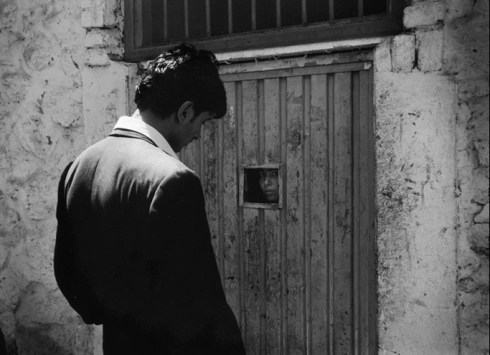
Visitation, Waleyat woman's prison, Afghanistan © Andrea Camuto
Camuto is interested in the needs of families to survive as they have migrated in and out of Afghanistan and in and out of the capitol Kabul in bids to find livings.
From Camuto’s statement, “Feeling great compassion for their struggles, I was compelled to return several times, most recently in 2009. As my ties with these families deepened, I followed them into such places as the women’s hospital and the women’s prison. Each trip furthered my understanding of the political and social complexities of Afghan culture. Entrenched attitudes, coupled with rampant illiteracy, create the oppressive conditions under which Afghan women are forced to live. In these photographs I call attention to these ordinary Afghans, who go unnoticed and unrecorded in the larger narrative of the conflict in Afghanistan today.”
While the chosen print is a literal depiction of enclosure, the house arrests and claustrophobic hardships of rural life as portrayed in Camuto’s work bring a heavier weight to bear on the viewer. Camuto’s is the latest in a slew of projects I’ve seen recently coming out of the AfPak region that don’t depict military engagement. These personal struggles, significantly, are dictated by larger political and infrastructural battles currently being fought in Afghanistan.
The helplessness served up in Camuto’s work is bitter blow and one that lasts.
– – – – –
EXPOSED: CRITICAL MASS will be on show at the Photographic Center Northwest, 900 12th Avenue, Seattle, WA 98122 until the 18th May.
There is a place in the US where two men have been held in solitary confinement for 37 years. It is Angola Prison, Louisiana.
Robert H. King, one of the Angola 3 was released when his wrongful conviction was overturned in 2001. Herman Wallace and Albert Woodfox remain.
The length of their stays in solitary are due to the seriousness of the crime for which they were charged – the murder of a prison guard. They have always maintained they were framed for the jailhouse murder. Interestingly, in the In The Land Of The Free trailer the correctional officer’s widow doesn’t believe Wallace or Woodfox were the killers.
MENTAL HEALTH IN SOLITARY
For the most visceral and psychological description of solitary confinement upon the mental and physical health of a human read Atul Gawande‘s vital New Yorker article HELLHOLE (March 2009).
Every wondered what effect isolation has on the human psyche?
What a crazy world with inexplicable institutions.
‘IN THE LAND OF THE FREE’ STILLS
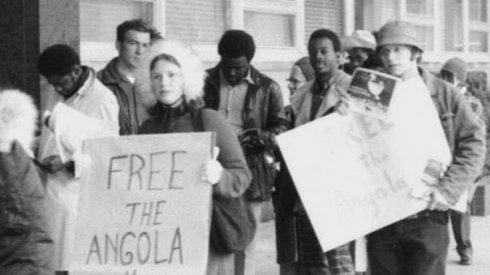

Solitary cell

Herman Wallace (left) and Albert Woodfox (right) with Angola prison in the 1970s (background)
Photos from the In The Land Of The Free facebook page.
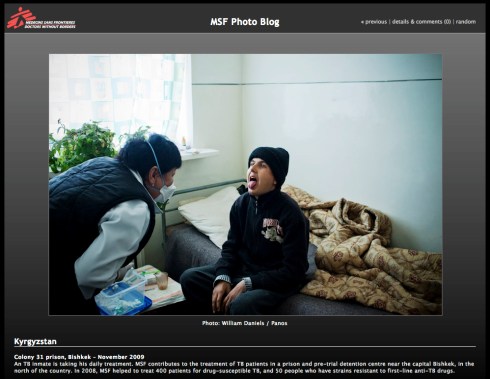
Medecins Sans Frontieres photoblog is a poke in the eye to remind us of the urgent humanitarian needs beyond the front pages of our daily news-web-papers.
WILLIAM DANIELS
Today William Daniels‘ photograph reminded us of ongoing medical efforts against Extremely-Drug-Resistant Tuberculosis (XDR-TB) in the Kyrgyzstan and the former Soviet Union, particularly in prison colonies.
Prisoners of the colonies in the former USSR received treatment under the Soviet regime, but when the Russian empire collapsed, drug treatment was abandoned and even more severe strains of TB developed.*
I highly recommend Daniel’s Faded Tulips project.
– – –
Which reminds me …
CAROLYN DRAKE
It seems to me that generally the central Asia territories are simply unknown to many in the West. Carolyn Drake supports this notion with her commentary about environmental and river politics in the five provinces established after the fall of the U.S.S.R. (Orion Magazine)
– – –
* I have talked about James Nachtwey‘s work in Siberian prison colonies previously on Prison Photography.
[This is part two of a three part series on prisons in Africa. Part one featured Julie Remy’s photography in Guinea.]

Muyinga prison
Nathalie Mohadjer and I sat down and talked about her vital photographic series The Dungeon.
Click on any image for its larger version. Please note, the four images of Gitega prison are not part of The Dungeon series, but were included because they related to our conversation.
– – –
PB: Can you explain how you came to work in Burundi and how you gained access to the detention jails?
NM: I was looking for organizations I could work with during the summer. International Bridges to Justice (IBJ) were searching for photographers and journalists. There was work being done in Burundi so I contacted the office. I was there for two months. I worked with the writer, Laura Gabriella Dix.
Through IBJ, Laura and I got to go out with local NGOs, particularly the Association for the Protection of Human Rights (APRODH) – the biggest local NGO. APRODH is very powerful and is one of the few Burundi NGOs with the ability to get people out of the detention cells straight away. With them we could get into the detention cells. We made appointments through them.
We worked together with them and later with another NGO, the Association of Burundi for the Defence of Prisoners Rights (ABDP) whose staff are all Burundians. Both groups were great, they knew who to talk to, and they knew all the detention jails that were hidden.
International NGO’s usually have no idea that the jails exist. There are detention jails all over Burundi – almost one in every small village. Also there exist detention jails that are illegal. People just get thrown in there when the police don’t know what to do with them. Prisoners have not been legally recognized, which is madness.
But local NGO’s know where the jails are because they have contact people.
[My visit] was not very planned; the NGOs don’t tell the police before they arrive. They arrive in the town and tell the administrator they expect to see the jail cells within half an hour, “We want to know who is there; how long they’ve been held; why they’re being held.”
If there is anything improper then prisoners can be set free straight away – at least in the case of APRODH – which was effective in releasing people immediately. That was amazing.

Muyinga prison

Muyinga prison
PB: ‘The Dungeon’? Tell us about the title of your series.
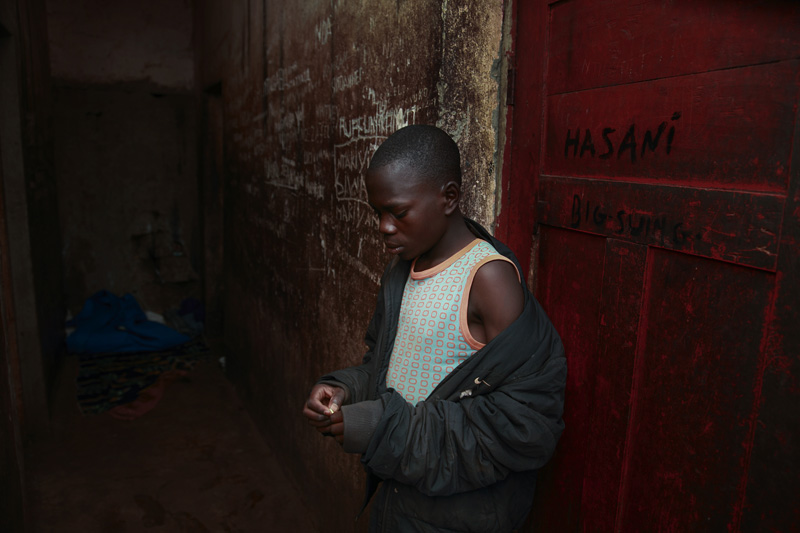
NM: I tried to find the most appropriate word. If you think of the word dungeon, you think of history, dark walls and holes. Dungeons are hidden and there is no light. It felt exactly like that. You can be in the centre of a village and people shall walk you around the back of houses and [show you] behind locked doors. The rooms are full of people just looking back at you. The walls are red and black, scratched with names of people who have been there. You almost feel like you’re witnessing a place of hell.
PB: Do the local communities sanction this mode of justice?
NM: For most, it is just the common practice. One of the problems is that Burundi is over-populated. There is no real law system; it has so many faults, they don’t know where to put these people.
In Giterany, there was a man in the jail who was a practitioner of witchcraft. The local people wanted to kill him. The police did not know what to do with him, so they put him in the jail [for his own protection]. It’s out of control. It’s not that people are aware or unaware, it is that they don’t know what else to do.
Of course, you’ve lots of people in the bigger towns and cities who protest [the situation] and make calls for a proper legal system. So people in Burundi realize [a need for reform], but they also realise it takes ages to establish this.
In December, there was a riot in Mpimba, the biggest prison in Burundi because it is so overpopulated.

Insight the detention cell of Cibitoke, where 38 man and children are captured. Most prisoners are held there up to 2 Years. By law the prisoners have to be judged after being captured for max. 14 days.
PB: According to Human Rights in African Prisons (ed. Jeremy Sarkin), Burundi’s prison system is operating at 230% of its designed capacity. This is among the worst prison overcrowding on the African continent. Burundi also has an incredible amount of pretrial detainees.
NM: Exactly, it was pretrial detainees in the jails who have not stood trial that I photographed. Sometimes it will be a year, or perhaps two before they see a judge.
In one image (above) the prisoners look directly into the camera. This is in Cibitoke, two hours away from the capitol Bujumbura. Prisoners there said they’d been incarcerated for two years.
Officially, it is illegal [to hold someone] after 14 days. Staying two years in a single room with 30 or 40 other persons is crazy. There are kids in there too. And kids have died in there.
The prisoners were so keen to tell us about the jail. They were well aware of why we wanted to show this [to the outside world]. My colleague Laura was writing everything down. The armed policeman told me I had one shot, but I took more discretely.
The prisoners who were held would go between me and the policeman to talk to him, so that I could take more pictures. They were helping me. I was more afraid of police than the guys inside.

14 year old Jamila (front) has been in Muyinga prison for four days. She helped her friend steal money from her landlord. Women sleep in the corridor. The Policeman say that there is no contact between the men and the women.
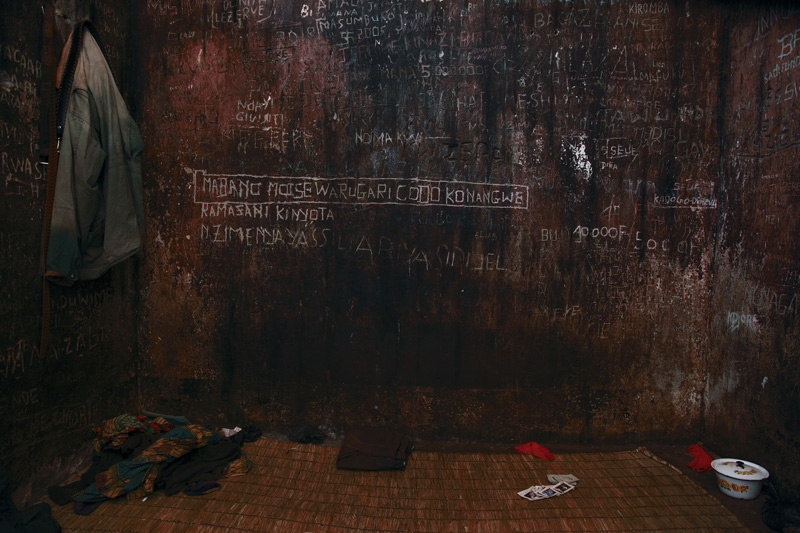
Muyinga prison

Jamila in Muyinga prison
PB: Lets talk about shared cell spaces.
NM: Males and females were separated in Cibitoke.
Buhinjuza, near Muyinga, was a site where you have girls mixed in the prison population. Muyinga is close to the Tanzania border. I show images of Jamila and her friend behind.
PB: This seems extremely problematic.
NM: Very. I was so shocked. They were 14 years old and the boys were grabbing them everywhere. But, when we were there it was an exciting moment for them, you know, 14-year-old girls …
In the image (below) of 11-year-old Marie scratching something on the wall, do you see the blue blanket behind? And the second picture? This is where the girls sleep. On the right hand side is a red door and that is the toilet. Behind the blue door to the left, is where the guys are held.
We asked the police if there was any contact. And he said “No contact, no contact”, grabbing the girl as he said that. Disgusting.
Every time the guys needed to use the toilet they’d cross this space. So we asked the prisoners for clarification, “Every time you use the toilet you have to ask the guard to unlock it?” and they responded, “No sometimes the door is open.” Which of course mean that there is contact.
In the detention cells that was the only site where boys and girls were mixed in.

11 Year old Marie who is captured since 3 weeks after stealing the cell phone of Muyinga Administrator.
Muyinga prison
NM: In Burundi’s main Mpimba prison, in the capital Bujumbura, men and women are separated by a wall with holes in it. They have sexual contact through these holes. While I was in Mpimba I even saw women walking around in the men’s area. In Mpimba, there are babies born there. Relationships aren’t only among prisoners but of course between the guards and the women.
PB: But you took no photographs in Mpimba prison?
NM: No, it was not permitted.
Gitega prison
Gitega prison
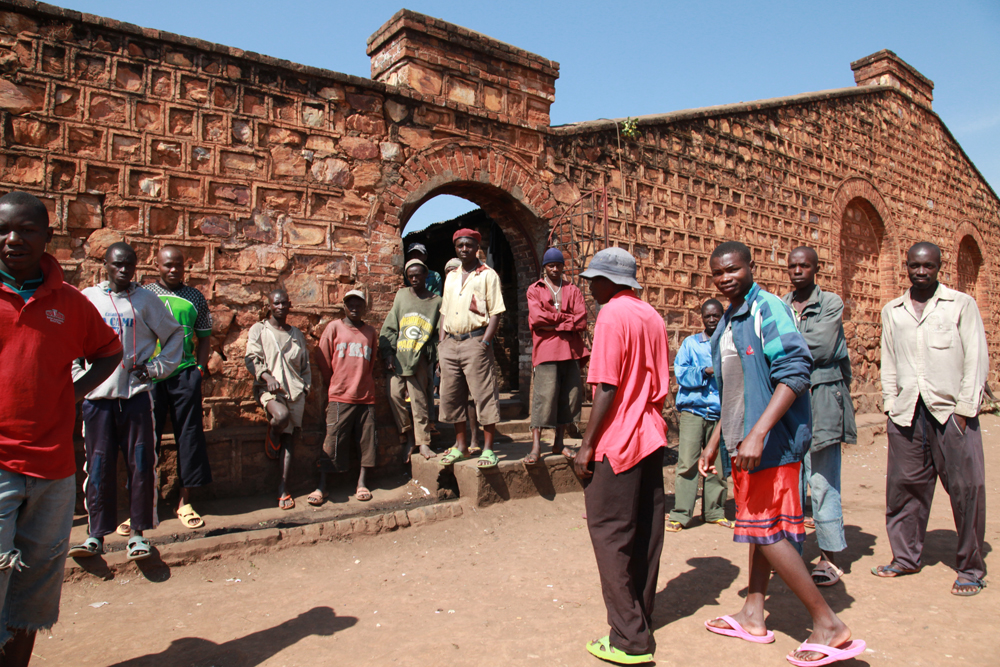
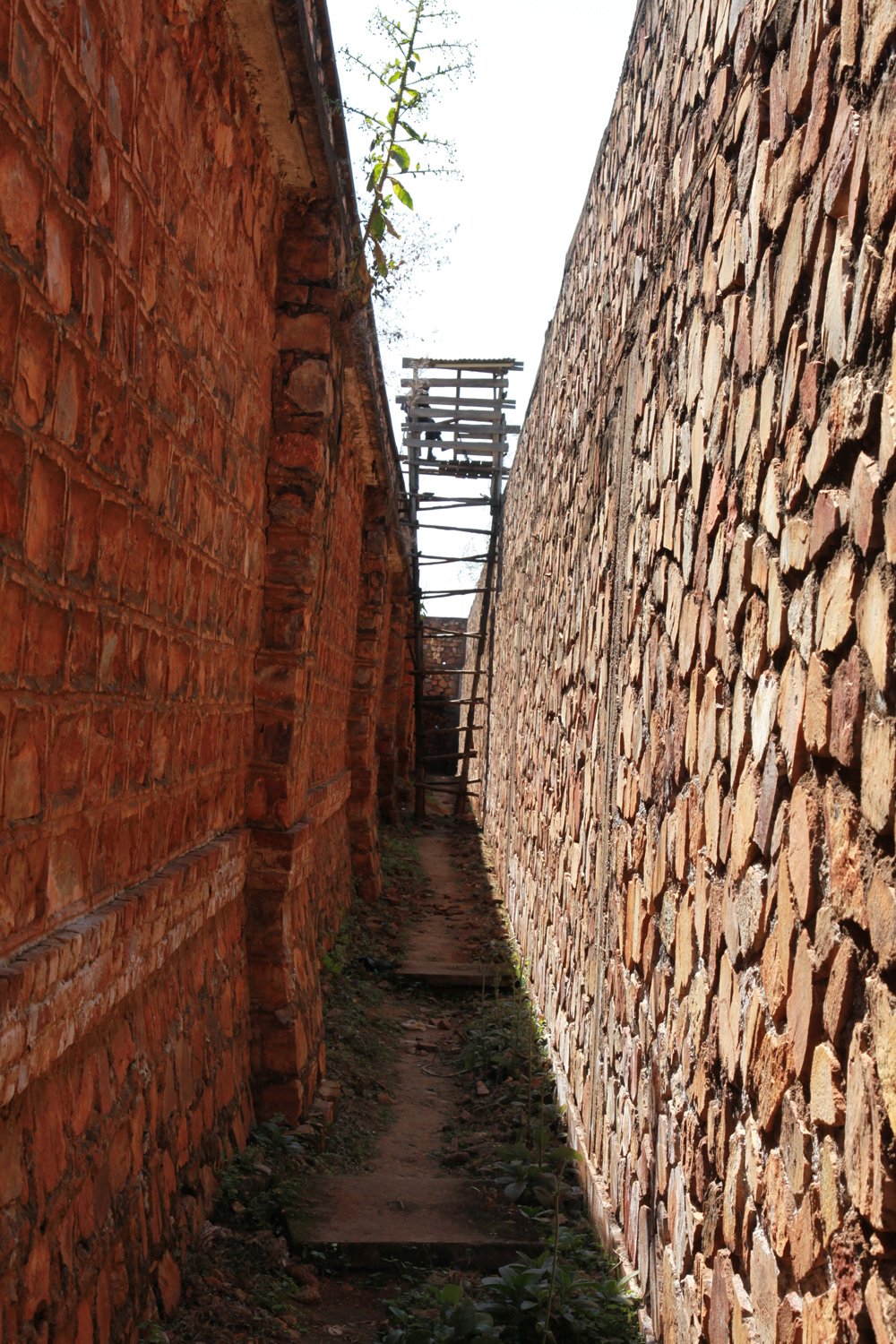
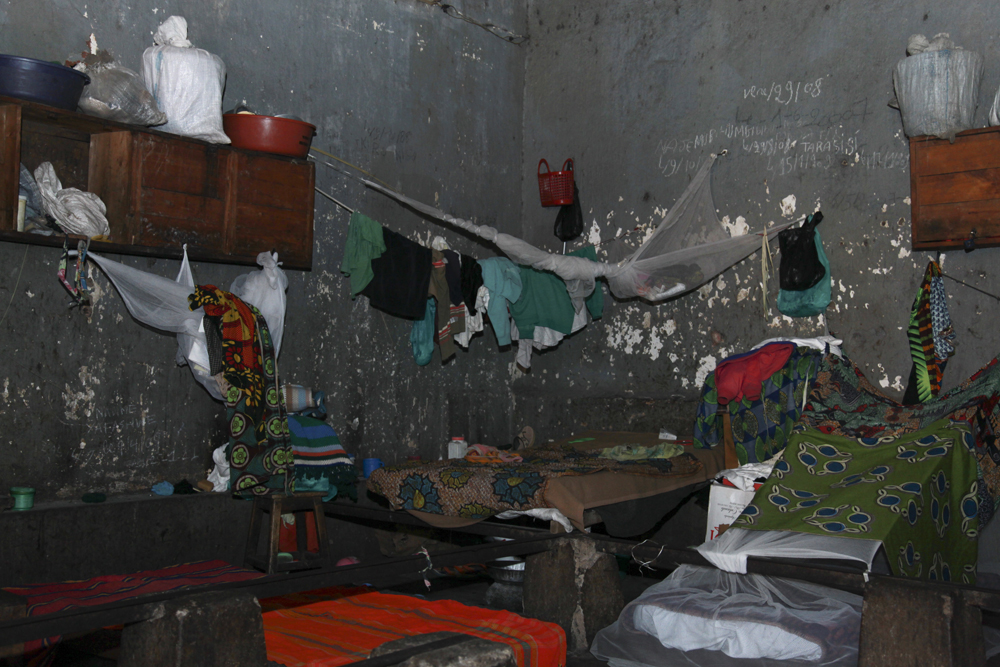
PB: Tell us about these images (two above, two below) of Gitega prison and its women’s quarters.
NM: Gitega is a mixed prison. It is interesting because it is an old structure.
PB: It looks like a fortress.
NM: There is an outside wall and then just inside is the exterior wall of the building so you have an open-air corridor which circles the prison.
The director was naïve. I told him I was taking pictures only of the walls and not of the people. I must say that otherwise I would not be allowed to take pictures.
In this outside corridor there were condoms on the floor. There are male guards who go into the women’s area and have sexual contact. It’s horrifying.
PB: Are there any women’s only prisons or jails in Burundi?
NM: Ngozi is the only female prison that exists in Burundi.

Women’s quarters, Gitega prison
Women’s quarters, Gitega prison
PB: I read there are ethnic inequalities among the populations held in Burundi’s jails; that there are disproportionate number of Hutus in Burundi jails. Most people think only about Rwanda when they think of Hutu’s and Tutsis.
NM: Rwanda and Burundi used to be the same country,Ruanda-Urundi, so of course they have similar issues [and common conflicts].
After the revolution in the sixties Burundi established its own state and separated from the Belgian colonies. The difference [with Rwanda] is that in Burundi they stopped marking down who was Hutu and who was Tutsi in the Burundi passport. In Rwanda they still made the distinction.
As in Rwanda, the Tutsis were the more “sophisticated” because the Belgians had assigned them the higher race. Of course, there is no difference. Historically, ‘Tutsi’ means ‘owner of cattle’. That is all it means.
The Belgian authorities saw the Tutsis as taller, skinnier and looking “more European” … which is total bullshit. Consequently, Tutsis had higher standards [of living], more opportunities and more education and all services. [Tutsis] were more privileged. Even now if you talk to a lawyer he is probably Tutsi. They hold higher qualifications.
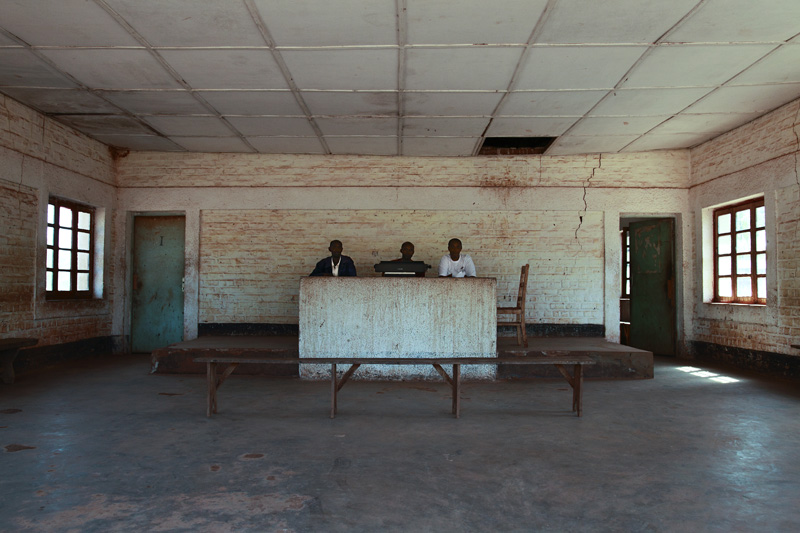
Judges waiting in Buhinjuza, near the city Muyinga.
NM: In 1972, there was a huge war in Burundi. It is not recognized as genocide but the Tutsi military went out and killed many Hutus. Hundreds of thousands of Hutus fled to Rwanda, to Congo and to Tanzania.
In 1993 the war actually began in Burundi when the Hutus started killing the Tutsi population.
PB: This aggression spilled over into Rwanda, I presume,
Laura and I met Hutu child soldiers who were recruited into the Hutu-led Palipehutu-National Liberation Forces (NLF) and started fighting because they had no food and they were angry about the situation. The Hutus are definitely the less privileged, the poorer people in Burundi.
NLF military forces still existed when we were there [Summer 2009]. They were out in the woods, not really active anymore. We went to some dissident camps; now demobilization camps.

Insight the detention cell of Cibitoke, where 38 man and children are captured. Most prisoners are held there up to 2 Years. By law the prisoners have to be judged after being captured for max. 14 days.

Cibitoke prison
PB: Would you say the Hutus are disproportionately represented in Burundi’s jails because of a typical class structure? Simply because, in current circumstances, they are a disempowered lower class?
NM: I would say so, I don’t really know the full reasons why there are more Hutus [in the jails]. I know Hutu fighters are now outlaws.
Generally, I think there are more Hutus living in Burundi than Tutsis, but I don’t know the percentages.
The National Council for the Defense of Democracy-Forces for the Defense of Democracy (CNDD-FDD) is the political party of the president Pierre Nkurunziza, and he is half Tutsi/half Hutu. The military used to be predominantly Tutsi. Now it’s a mix. The president had progressed the mix. Very few NLF dissidents still operate in remote areas.
PB: Explain more about over-population and the returning refugees.
NM: Burundi is very over-populated. Recently, Tanzania has been closing all its [refugee] camps. The Tanzanian government would say refugees could stay two more months, for example, and then they’d need to leave. You’d have 200,000 refugees coming back into the country. There have been 800,000 refugees since 1972.
These are Hutu refugees and now they must come back. There are so many Hutus who have never lived in Burundi, who were born outside of its borders. And now they must go back. They try to find the places they come from to get their old land back and of course others are now living on the land. Land conflict is the biggest issue in Burundi.
PB: Has Burundi had an influx of refugees from Congo these past few years? Is it a significant pressure?
NM: It is not significant. Congo has its own internally displaced people. The rural parts of Congo next to Burundi are where the war is and then other parts of Congo far away from Burundi are peaceful.
Rwanda, Burundi and Congo got all mixed up in the same war; it started in Burundi, went to Rwanda and now continues in Congo. Hutus killing Tutsis, Tutsis killing Hutus.

Prisoners in Citiboke receive no food by the government. Family members outside have to bring it to them. Some prisoners have no food for weeks and they beg the others for the left-overs.
PB: Moving back to the detention cells, what tensions existed in these small jails?
Laura wrote a good piece about how the system works when one is imprisoned in a detention cell. They ask you to buy a candle. The candle costs 20,000 Burundi franc – which is 20 Euros approximately – which is the equivalent of three months wage. If you can’t afford the candle, then you don’t get any food and you don’t get a place to sleep and you stand in the shit corner, where people shit.
PB: Have you photographs had much circulation? Can you measure the effect in the six months since you did the work?
NM: I have hope that people will want to know more about the jails. The images are important to for the NGOs because they are evidence of conditions and of kids being held.
Let’s face it, Burundi is just not important for the world.
I was talking to so many newspapers and they’re not interested. Maybe they’ll be interested when the presidential elections are held in Spring this year … but maybe they’ll only be interested if something bad happens?
Most magazines said The Dungeon is too specific, too dark, and it is not part of a war.
I am not getting any money from it, I don’t expect to, but the issue is getting out there. People can actually see it and ask questions. The most important thing is that the organizations can use the images.
The Dungeon will show at Visa pour l’Image, Perpignan 2010.
I’ve never worked on the topic of prisons or jails before, but I have worked – most of the time with NGOs – in refugee camps before (Buhomba, Burundi, Tuzla, Bosnia-Herzegovina 2005, Tuzla, Bosnia-Herzegovina, 2007). It was important speaking to the people in the jails. I’d tell them I’d try to get the story out and create some awareness.
PB: Thank you Nathalie
NM: Thanks Pete

Muyinga prison

Louie Palu, a photographer I much admire because of his past photographic exploits has just secured the Alexia Foundation Grant for Professionals. The $15,000 award will allow Palu to continue his project Kandahar.
NPPA quotes Palu:
I don’t think we will, not in today’s media climate that has swung full circle back to great emphasis on the politics of the nine year old conflict.
See Palu’s full proposal and portfolio at the Alexia Foundation website, and view his video work at the Atlantic.
– – –
Juliette Lynch won the Alexia Foundation Grant for Students.
And despite all her amazing work, I just had to post this image (not from her portfolio) of her celebrating the win! I think it deserves an award itself.

Photo by Andrew Maclean. Bruce Strong and Juliette Lynch rejoice as Lynch is named winner of the 2010 Alexia Student Competition. SOURCE
Well done Juliette.
– – –
The Alexia Foundation for World Peace was established by the family of Alexia Tsairis, an honors photojournalism student at the S.I. Newhouse School of Public Communications at Syracuse University who was a victim of the terrorist bombing of Pan Am flight #103 over Lockerbie, Scotland, on December 21, 1988. She was returning home for the Christmas holidays after spending a semester at the Syracuse University London Centre.
Edmund Clark who I’ve mentioned before here, here and here, was named in the Photolucida 2009 Critical Mass Top 50.
Statement:
“I am trying to see through the eyes of these men to look for images in their surroundings in Guantanamo and their post-prison homes … which explore themes of imprisonment or entrapment, and which contrast the humanity of domestic life with the demonised representations of them that were used to justify their treatment.”
and
“The narrative is confused and unsettled as the viewer is asked to jump from prison camp detail to domestic still life to naval base and back again … [and] to explore the legacy of disturbance such an experience has in the minds and memories of these men.”
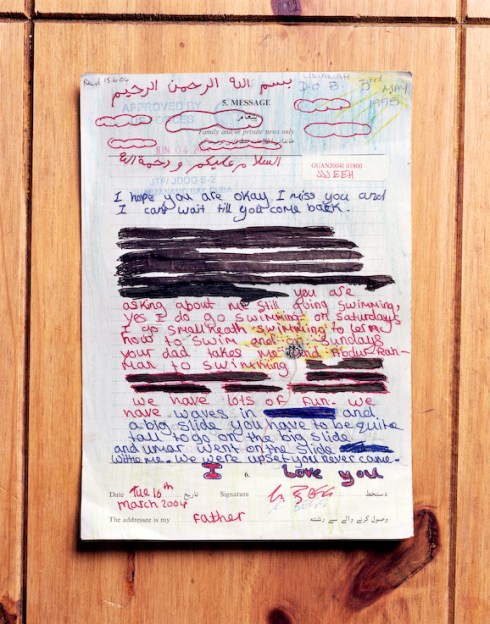
© Edmund Clark. Ex-Prisoner Home: Censored letter from daughter brought back from Guantanamo.

In November, Daniel Shea published the first offerings of his Baltimore series. As subjects go, the people and objects within America’s industrial-urban cities are common, but Shea’s edit had enough variance that I took note.
By studying people writ large and small in their environments, photographers such as Mark Steinmetz and Paul Graham have produced monographs in the past year that tread this familiar territory without repeating past sentiment.
Shea has prevailed in a tough domain; the two most common elements of photography being people and the street, it is difficult to create something that is novel to the viewer AND faithful to the subject.
My problem with much contemporary American photography is that it is rarely geographically anchored. Of course the monotony of elements within the great American conurbation is an identified problem many photographers have paid particular attention to – mainly through the adoption of typology.
Shea was thinking differently. He thought of his subject in terms of the tableaux and when you see the bent telegraph pole you can’t help but think of Hogarth’s upturned chiars.
Despite Shea’s uncertainty. I think he has created something unique, whether it is something Baltimore is yours to debate.
Q & A
Outside of its own region, Baltimore is one of the least well-known and least-recognised American cities … and now it is the least well-known American city to feature in The Wire. My first question, why Baltimore?
I lived in Baltimore for five years, four years going to school, and one year teaching. A few months before I moved to Chicago, it occurred to me that I had never done an extensive photography project about Baltimore.
This project started with a very simple premise. I wanted to apply the loose narrative style I was developing in other bodies of work to Baltimore. However, originally I was interested in removing all overt political undertones and topical-driven readings to create images that clearly demonstrated the process. The process was also simple, walk around, talk to strangers, find objects and situations that presented themselves as interesting and/or sublime, etc. In other words, one of the most basic ways photography is used.
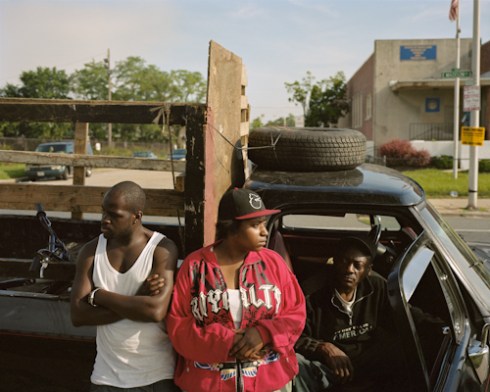
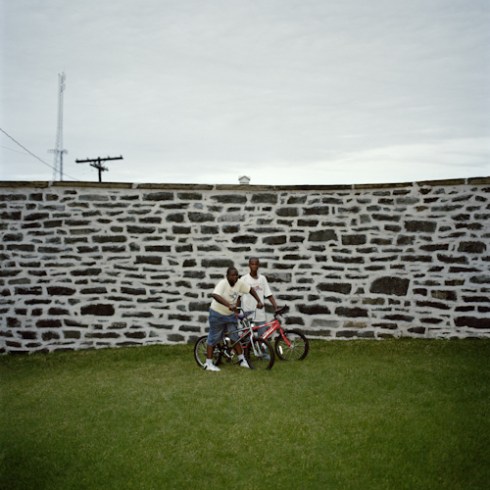
Why is the project ongoing?
Before moving, I worked on this for about three months. At that point I had an edit that felt too rushed and too simple. I realized Baltimore had many interesting elements that needed to be considered more carefully. In the summer of 2009, I revisited the city, this time shooting large format and considering the landscape as a tableaux. Additionally, I was shooting on the fly, continuing to interact with people and following my instincts. With a new edit after that trip, I feel like I’m finally comfortable with the narrative that I’m developing. In the next month (March, 2010) I’m headed back to photograph again.
What sort of reactions did you get from your subjects?
The interaction normally begins with my quick line – what I’m working on and why I’m interested in photographing people. Sometimes I just talk to people about the same everyday shit we all talk about. When I feel it’s appropriate, I’ll simply take someone’s photograph without asking. People are overwhelmingly willing to participate. I end up talking to a lot of people about their history in Baltimore.
How do you hope your narrative of Baltimore will crystallize over time?
I don’t have strict political intentions. There are people much more suited for delivering a guided narrative of Baltimore to the public, like David Simon and the writers of The Wire.
That being said, I am interested in saying something specific, and I’m on the verge of figuring out what that is exactly. It feels much more philosophical than political.

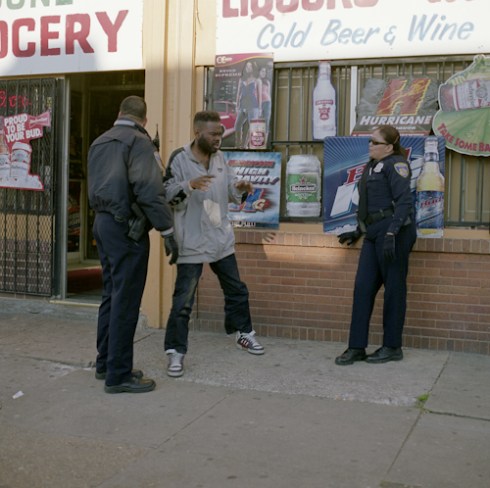
Could you be taking photos like these in any American urban area?
This is a great question and something I ask myself every time I’m out shooting or editing these photographs. I strongly believe in the responsibility of authorship, especially when people are paying attention to what you are doing.
Here’s the problem with this series: the photographs feel place-specific to me, and I don’t know if these details are effectively rendered. Baltimore subtly expresses its character in ways that I hope to capture in the images, but I don’t know if that will translate to a larger audience.
Lately I’ve been photographing impoverished, underserved, etc areas of Chicago for a much more politically driven project about food, and when I was showing some of my friends the images, they jokingly suggested that I slipped some of them in the Baltimore series.
By focusing wholly on the decaying element of an urban environment (which, as a side note, caters so nicely to my misanthropy), it’s easy to see the work as commentary on the social infrastructure of inner city America. That’s why the people are important in this series. The people in the series are nurtured by Baltimore. And some of the landscapes have really conflicting elements, and that too feels very specific. People who look at a lot of photography will understand that this is about Baltimore because I made it, but I still have to account for a larger audience.
Is this a project about poverty?
By default, of course. I think about poverty constantly. I’ve worked in several inner city schools, and as an outsider, I understand the perverse effects of living in poverty. It’s profound stuff. In terms of fixating causes to oppressions, we can quantify poverty as the most crippling and baseline element. Baltimore is at large a city affected by poverty, and it would be impossible for me to avoid taking pictures that reference poverty’s long-standing determination.
The other side to this is of course the fact that poverty doesn’t need to be the defining element in a project about inner-city America, a pitfall that sometimes feels hard to avoid.
[My underlining]

Just a quickie. All of these names can be found on my list The Talent, but I figured they can get lost in there and I’d push them up to the surface for you all.
Scan the names and see if you’re missing out on the important/irrelevant bleatings of these notable camera-lords and camera-ladies.
| StephenVoss | ||||
| Steven Voss, Washington, DC | ||||
| andrewcutraro | ||||
| Andrew Cutraro, Washington, DC | ||||
| edkashi | ||||
| Ed Kashi | ||||
| heislerphoto | ||||
| Todd Heisler | ||||
| rspencerreed | ||||
| Ryan Spencer Reed | ||||
| JasonEskenazi | ||||
| Jason Eskenazi | ||||
| AlanSChin | ||||
| Alan Chin, Brooklyn, NY | ||||
| davidb383 | ||||
| David Burnett, Washington DC | ||||
| stevebloomphoto | ||||
| Steve Bloom, England | ||||
| dpeveto | ||||
| Daryl Peveto | ||||
| evanvucci | ||||
| Evan Vucci | ||||
| jmott78 | ||||
| Justin Mott, Hanoi, Vietnam | ||||
| StrazzPOY | ||||
| Scott Strazzante, Yorkville, IL | ||||
| jonkgoering | ||||
| Jon Goering, Lawrence, KS | ||||
| sinclair_photo | ||||
| Mike Sinclair, Kansas City | ||||
| PhotoPhilan | ||||
| PhotoPhilanthropy, California | ||||
| radical_images | ||||
| Radical Images, East Midlands UK | ||||
| Kastenskov | ||||
| Henrik Kastenskov, Vejle | ||||
| maisiecrow | ||||
| Maisie Crow, New York | ||||
| jturnley | ||||
| James Turnley | ||||
| juansierraphoto | ||||
| Juan Sierra, Germany | ||||
| OLOLtoo | ||||
| Kendrick Brinson, Atlanta, GA | ||||
| AaronJoelSantos | ||||
| Aaron Joel Santos, Hanoi, Vietnam | ||||
| jeffcurto | ||||
| Jeff Curto, Chicago, IL | ||||
| martincregg | ||||
| Martin Cregg, Dublin | ||||
| consumptive | ||||
| James Luckett, Ohio | ||||
| jesshurdphoto | ||||
| Jess Hurd, London | ||||
| VizJournalist | ||||
| John Waskey, Portland, OR | ||||
| tomtveitan | ||||
| Tom Tveitan, Norway | ||||
| fotofugitive | ||||
| Tim Humble, Noosa, Sunshine Coast | ||||
| photomorel | ||||
| Daniel Morel, Haiti | ||||
| davidalanharvey | ||||
| David Alan Harvey, NYC, Outer Banks | ||||
| FredoDupoux | ||||
| Frederic Dupoux | ||||
| wemarijnissen | ||||
| Wendy Marijnissen, Islamabad, Pakistan | ||||
| dascruggs | ||||
| Daniella Scruggs, D.C. Metro Area | ||||
| themexican | ||||
| Raul Gutierrez | ||||
| sheimages | ||||
| Sheila Pree Bright | ||||
|
||||
|
||||
| jeffantebi | ||||
| Jeff Antebi | ||||
| mattshonfeld | ||||
| Matt Shonfeld, Bath, UK | ||||
| jonsnyder | ||||
| Jon Snyder, San Francisco | ||||
| americanyouth | ||||
| American youth book, NYC | ||||
| douglaslowell | ||||
| Douglas Lowell, Portland, OR | ||||
| imaclellan | ||||
| Ian MacLellan, Lincoln, MA | ||||
| EmilyShur | ||||
| Emily Shur | ||||
| JaneFultonAlt | ||||
| Jane Fulton Alt, Chicago | ||||
| brazil_photos | ||||
| Ricardo Funari, Rio de Janeiro, Brazil | ||||
|
||||
|
||||
| adamvlau | ||||
| Adam Lau, San Francisco | ||||
|
||||
| DannyGhitis | ||||
| Danny Ghitis, Brooklyn, NY | ||||
| pangeaphoto | ||||
| Pangea Photo | ||||
| prospektphoto | ||||
| Prospekt, Milan, Italy | ||||
| terakopian | ||||
| Edmond Terakopian, UK | ||||
| NoBarriersPhoto | ||||
| No Barriers Photogrphy, Vancouver, BC | ||||
| CollegePhotog | ||||
| CPOY, Columbia, MO | ||||
| dsheaphoto | ||||
| Daniel Shea, Chicago | ||||
| dominicnahr | ||||
| Dominic Nahr, Kenya | ||||
| mrubee | ||||
| Michael Rubenstein | ||||
| greglutze | ||||
| Greg Lutze, Pacific Northwest | ||||
| reduxpictures | ||||
| Redux Pictures | ||||
| johnkeatley | ||||
| John Keatley, Seattle, WA | ||||
| hillerphoto | ||||
| Geoffrey Hiller, Dhaka, Bangladesh | ||||
| ChrisHondros | ||||
| Chris Hondros, New York, NY | ||||
| tammydavid | ||||
| Tammy David, Manila, Philippines | ||||
| vigbalasingam | ||||
| Vignes Balasingam, Kuala Lumpur, Malaysia | ||||
| timmatsuiphoto | ||||
| Tim Matsui, Seattle, WA | ||||
| coreyfishes | ||||
| Corey Arnold, Portland, OR | ||||
| jimbourg | ||||
| Jim Bourg, Washington, DC | ||||
| stupilkington | ||||
| Stuart Pilkington, High Wycombe, UK | ||||
| Donaldverger | ||||
| Donald Verger, Portland, Maine | ||||
| NickTurpin | ||||
| Nick Turpin, France | ||||
| noahkalina | ||||
| Noah Kalina, Brooklyn, NY | ||||
| terukuwayama | ||||
| Teru Kuwayama | ||||
| benrobertsphoto | ||||
| Ben Roberts, Bournemouth, UK | ||||
| alvarezphoto | ||||
| Stephen Alvarez, Charlotte, NC | ||||
| davidsolomons | ||||
| David Solomons, London | ||||
| erikborst | ||||
| Erik Borst, Amsterdam, Holland | ||||
| squarerootof9 | ||||
| Trey Hill, Dallas, TX | ||||
| quesofrito | ||||
| Emiliano Granado, NYC | ||||
| 50statesproject | ||||
| 50 States Project, USA | ||||
| RachelPapo | ||||
| Rachel Papo, Brooklyn, New York | ||||
| alphabetproject | ||||
| Alphabet Project | ||||
| danielemattioli | ||||
| Daniele Mattioli, Shanghai | ||||
| shawnrocco | ||||
| Shawn Rocco, Raleigh, North Carolina | ||||
| jaredsoares | ||||
| Jared Soares, Roanoke, Virginia | ||||
| yingang | ||||
| Ying Ang, Melbourne, Australia | ||||
| jennyjimenez | ||||
| Jenny Jimenez, Seattle, WA | ||||
| hinius | ||||
| Hin Chua, London | ||||
| photogjack | ||||
| Jack Kurtz, Phoenix, AZ | ||||
| renaudphilippe | ||||
| Renaud Philippe, Québec | ||||
| thetravelphotog | ||||
| Tewfic El- Sawy, NYC/London | ||||
| A_Jax | ||||
| Andrew Jackson, Birmingham, UK | ||||
| alvarezmontero | ||||
| Carlos Alvarez Montero | ||||
| Peter_Marshall | ||||
| London | ||||
| mellyvanilla | ||||
| Melanie McWhorter | ||||
| ptrbkr | ||||
| Peter Baker | ||||
| dellicson | ||||
| Davin Ellicson, Bucharest, Romania | ||||
| OlivierLaude | ||||
| Olivier Laude, San Francisco | ||||
| matgrandjean | ||||
| Mathieu Grandjean, Los Angeles | ||||
| noahbeil | ||||
| Noah Beil, Oakland, California | ||||
| demotix | ||||
| Global | ||||
| claytoncubitt | ||||
| Clayton Cubitt, New York |
||||
| benblood | ||||
| Ben Blood, Seattle, WA | ||||
| ianvancoller | ||||
| Ian van Coller, Bozeman, MT | ||||
| natelarson | ||||
| Nate Larson, Baltimore, MD | ||||
| mrthibs18 | ||||
| Brandon Thibodeaux | ||||
| gracegelder | ||||
| Grace Gelder | ||||
| andrewquerner | ||||
| Andrew Querner, Alberta | ||||
| jonfeinstein | ||||
| Jon Feinstein, NYC | ||||
| hellenvanmeene | ||||
| Hellen van Meene, Heiloo, Holland | ||||
| bendrum | ||||
| Benjamin Drummond, Seattle, WA | ||||
| tonystamolis | ||||
| Tony Stamolis | ||||
| liankevich | ||||
| Andrei Liankevich | ||||
| davewyatt | ||||
| Dave Wyatt, Somerset, UK | ||||
| coombskj | ||||
| Kevin Coombs | ||||
| miketsangphoto | ||||
| Mike Tsang, London | ||||
| lgreen66 | ||||
| Lauren Greenfield | ||||
| KatharinaHesse | ||||
| Katharina Hesse, Beijing | ||||
| aphotostudent | ||||
| James Pomerantz, New York | ||||
| NadavKander | ||||
| Nadav Kander, London | ||||
| visualjourn | ||||
| Brent Foster, Delhi, India | ||||
| balazsgardi | ||||
| Balazs Gardi | ||||
| rogercremers | ||||
| Roger Cremers, Amsterdam | ||||
| shahidul | ||||
| Shahidul Alam, Dhaka. Bangladesh | ||||
| chrisdebode | ||||
| Chris Debode, Amsterdam | ||||
| abbiets | ||||
| Abbie Trayler-Smith | ||||
| foreilly | ||||
| Finbar O’Reilly, Dakar, Senegal | ||||
| rasermus | ||||
| Espen Rasmussen | ||||
| stevesimon | ||||
| Steve Simon, NYC | ||||
| borutpeterlin | ||||
| Borut Peterlin, Slovenia | ||||
| moooose | ||||
| Mustafah Abdulaziz, Philadelphia | ||||
| oeilpublic | ||||
| Oeil Public, Paris, France (Now out of business) | ||||
| gallagher_photo | ||||
| Sean Gallagher, Beijing, China | ||||
| jennackerman | ||||
| Jenn Ackerman, New York | ||||
| Amivee | ||||
| Ami Vitale, Miami | ||||
|
||||
| luceo | ||||
| Luceo Images, US, Southeast Asia, Mexico | ||||
| mattlutton | ||||
| Matt Lutton, Belgrade, Serbia | ||||
| Nathan_Armes | ||||
| Nathan Armes, Denver, CO | ||||
| timgruber | ||||
| Tim Gruber, New York | ||||
| timhussin | ||||
| Tim Hussin, Washington D.C. | ||||
| alan_w_george | ||||
| Alan W George, San Francisco | ||||
| MrToledano | ||||
| Phillip Toledano, New York | ||||
| mattslaby | ||||
| Matt Slaby, Denver | ||||
| wearemjr | ||||
| MJR, Brooklyn, New York | ||||
| caryconover | ||||
| Cary Conover, Lower East Side, NYC | ||||
| robot_operator | ||||
| Dalton Rooney, Brooklyn, NY | ||||
| loujones2008 | ||||
| Lou Jones, Boston, MA | ||||
| gerik | ||||
| Gerik Parmele, Columbia, MO | ||||
| benlowy | ||||
| Benjamin Lowy, Brooklyn, NY | ||||
| tom_leininger | ||||
| Tom Leininger, Texas | ||||
| tomasvh | ||||
| Tomas van Houtryve | ||||
|
||||

 Prison Photography