
You are currently browsing the category archive for the ‘Fine Art’ category.

Untitled by Derrick Quintero and Ann Catherine Carter. From the “Surrogate Project”
WHAT
This week, apexart announced the three winners of its Unsolicited Proposal Program. One of the selected projects was Life After Death and Elsewhere, organized by Tom Williams and Robin Paris.
WHO
Artist and educators, Paris and Williams coordinate the best prison arts program I’ve never written about.
They work in tandem with prisoners on death row in Tennessee. The Riverbend Maximum Security Institution imprisons 79 people on death row. Eleven prisoners — Abu Ali Abdur’Rahman, G’dongalay Berry, Tyrone Chalmers, Gary Cone, John Freeland, Kennath Artez Henderson, Nikolaus Johnson, Donald Middlebrooks, Harold Wayne Nichols, and Derrick Quintero among them — have worked with Paris and Williams on a few projects. I have admired their practice for a long time.
I’d be embarrassed about bringing their work to you when they are already so far down their creative paths if I didn’t think they still had long and beautiful journeys planned out.
You can see a lot of their work, stretching back 18-months, on the R.E.A.C.H. Coalition blog.
WHERE
Earlier this year, in Nashville TN, in collaboration with artists from Watkins College of Art they produced the exhibition Unit 2 (part 1) from which several of the images included herein originated. Recently, they completed Unit 2 (part 3). In both cases they partnered with small local galleries to put on the events.
PHOTOGRAPHY’S USE
Photos feature heavily in the collaborations between the condemned men and outside artists. For the series “Add-Ons” an outside artist would provide a prompt in the form of a drawing or piece of writing but often an image. The prisoner would then add to it by either drawing or writing directly on the print, or riffing off of it in words and sketches to create a second companion piece.
For the series “Surrogate” a prisoner would make a request for someone on the outside to do something for them by proxy — to enjoy a library full of books, to eat a hearty breakfast prepared to precise specifications, or to make a family portrait. In many cases the evidence and *shared experience* was documentation usually in the form of a photo.
AN ADVOCATE’S MESSAGE
While the process in producing these works is necessarily personal and intimate, the sharing of the artwork and the political urgency needn’t be. Paris, Williams et al. want to use exhibitions as moments for discussion and public education. Namely, they want to contribute to the anti-death penalty movement. As Paris told Hyperallergic, “The system of legal defense for capital cases is shoddy and poorly funded at best; there are no rich people, to my knowledge, on death row. We incarcerate more of our population than any other country. I could go on and on. It’s shameful. It’s not who we think we are as a country.”
PROPOSAL
This isn’t prison fetishism. The men on death row alongside the artists and students corralled by Paris and Williams are collaborators in the fullest sense. I think it is significant that the winning proposal was written by the prisoners; I think it may have been a deciding factor for the judges on the quality, intent and pedagogy of the art.
The prisoner-artists’ proposal reads:
During the past year, the state of Tennessee has staged a nearly unprecedented offensive against those individuals it has sentenced to die. A state that has executed only six people since 1960 has recently scheduled ten executions. As prisoners on death row, and imminent victims of that state-sponsored violence, we represent the “bare life” described so powerfully by historians and philosophers. During the past two years, however, through an unusual partnership with artists, writers, and educators in Nashville, we have endeavored to make our circumstances visible to those beyond the walls of prison. Through published writings and art exhibitions, we have addressed a public that knows as little of our lives as they do of the indignities of belly chains or the menacing shimmer of razor wire.
Our past exhibitions have often included collaborations with artists and art students on the outside. We have created “add-on” drawings (exquisite corpses, more or less) with people beyond the prison, and we have started sketchbooks before sending them out for strangers to finish. We have composed “surrogate” assignments for outsiders to realize (photographs of the stars, for instance, which some of us haven’t seen in 25 years, or the libraries in cities that we will never visit). We have made gifts of our art works and offered them to visitors to the opening of an exhibition in exchange for their photographic portraits. In one show, we exhibited a diorama that traces the all-too-common path from poverty to prison, and in other, we exhibited our personal snapshots and family photos to offer the world a glimpse of our social lives and to show that we are more than prisoners and men condemned to death
In response to your call, we propose an exhibition that will feature designs for our own memorials alongside our representations of the lives we would pursue if we were free. We have all been condemned to death, and the state of Tennessee intends to kill us, but some of are innocent, and we all hope to demonstrate that we are more than the sum of our worst deeds—or that we might be.
The works we will submit will include drawings, paintings, photographs, models, and text-based pieces. Some of us will submit statements outlining reasons for refusing to design their own memorials.
Kudos to them and all involved. Hope to be in NYC when it shows! Robin Paris and I are currently in conversation and I hope to share that back-and-forth with you in the future, but until then, I’d like to use this recent success as an excuse to share some images of the prisoners’ work.
Images courtesy of Guardian, Hyperallergic, Solitary Watch.
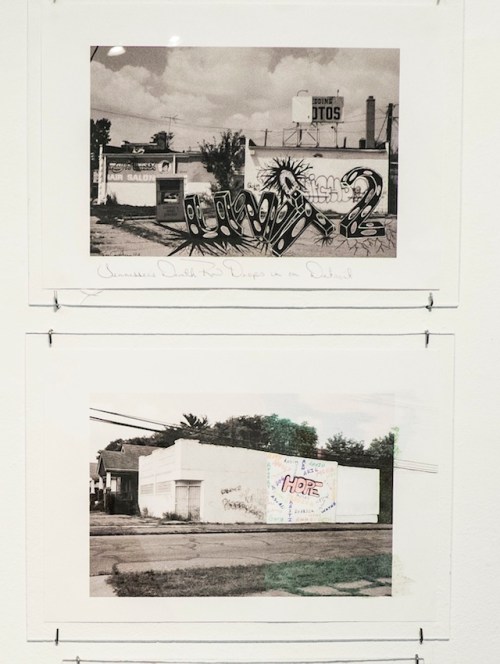
Upreyl Mitchell and Harold Wayne Nichols, “Untitled” (add-on artwork), acrylic and colored pencil on photograph, 13″ x 9″ in (photo courtesy Robin Paris)
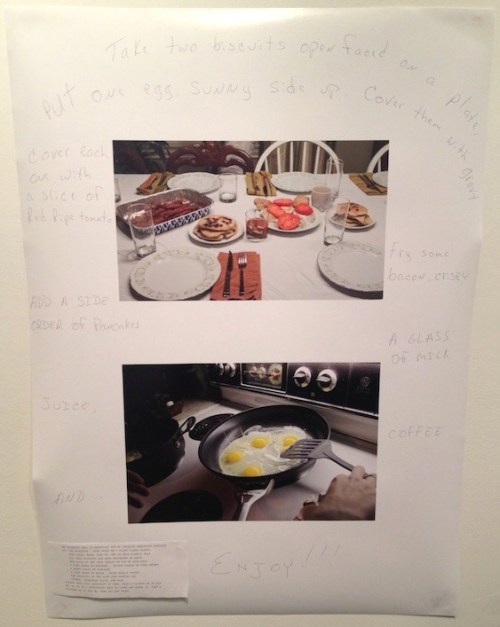
Mika Agari, Jessica Clay, Amy Clutter, Robert Grand, Kristi Hargrove, Robin Paris, Sharon Stewart, Tom Williams, Weng Tze Yang, and Barbara Yontz, “Surrogate Project for Harold Wayne Nichols: Breakfast for Dinner,” photograph.

Donald Middlebrooks, ‘Silence is Compliance’ (acrylic on canvas board)
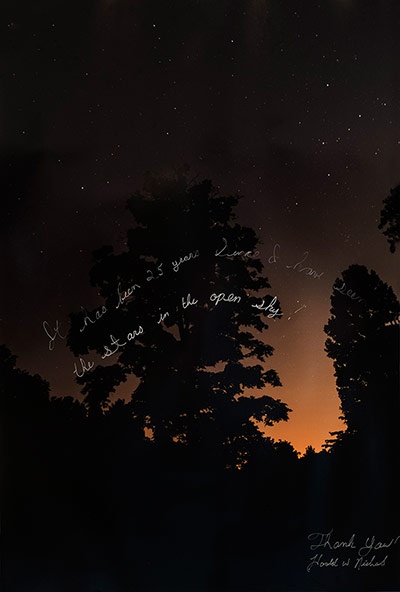
‘The Night Sky’ by Robin Paris and Tom Williams with writing by Gary Cone, Harold Wayne Nichols, and Donald Middlebrooks. From the Surrogate Project
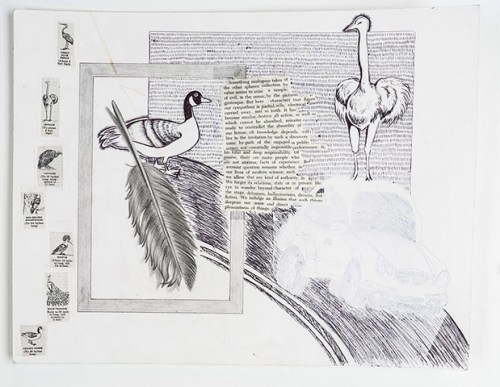
Nickolus Johnson and Zack Rafuls, “Untitled” (add-on drawing), mixed media on paper, 14 x 11 in.
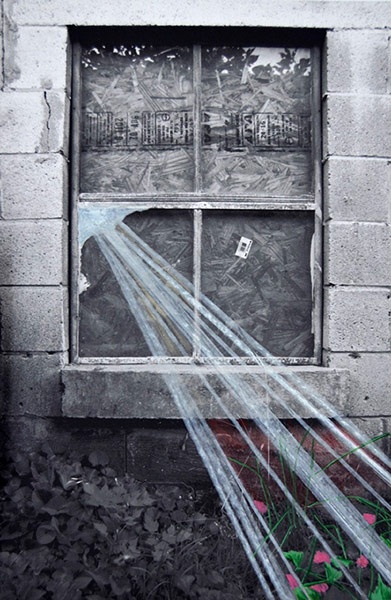
Photograph and drawing, by Upreyl Mitchell and Kennath Artez Henderson. From the Surrogate Project.
ARTISTS
Robin Paris is associate professor and chair of the Department of Photography at Watkins College of Art, Design & Film in Nashville, Tennessee. She is a graduate of The Evergreen State College in Olympia, Washington, and the Savannah College of Art and Design, and she has taught at Belmont University and The University of the South, Sewanee. Her work has appeared in exhibitions throughout the country. She has been co-facilitating the art workshop in Unit 2 (the Death Row unit) of the Riverbend Maximum Security Institution since 2013. Her recent work has involved collaborations with its residents.
Tom Williams is assistant professor of art history at Watkins College of Art, Design & Film in Nashville, Tennessee. He is a graduate of Stony Brook University and the Whitney Museum Independent Study Program, and he has taught at the School of Visual Arts, the Museum of Modern Art, New York University, and Vanderbilt University. His writings have appeared in Art in America, Grey Room, and other publications. He has been co-facilitating the art workshop in Unit 2 (the Death Row unit) of the Riverbend Maximum Security Institution since 2013.
APEXART
apexart is a non-profit arts organization in Lower Manhattan that was conceived to offer opportunities to independent curators and emerging and established artists, as well as to challenge ideas about art, its practice and curation. apex art is at 291 Church Street, New York, NY 10013 USA and it puts on exhibitions, Fellowship Program, publications, and public programs. It is free. Contact is 212 431 5270 or info@apexart.org. Hours are Tues – Sat 11am-6pm.
UNSOLICITED PROPOSAL PROGRAM
Anyone, from anywhere, may submit an idea-based exhibition to the Unsolicited Proposal Program. Each annum, three winning proposals are presented at apexart as part of its year-long calendar. Proposals remain anonymous and judged by an international group of 100+ artists, curators, writers and arts professionals. Each juror reads at least 50 proposals, in randomized order. Each proposal receives as many as 25 votes.
“We believe it is the most objective and fair process of evaluation that we have found,” says apexart. “Submissions are reviewed anonymously and solely on the strength of their idea. Previous curatorial experience is in no way required. Supplemental materials are not accepted to further level the playing field.”
The eventual ranking of proposals is made available online to all applicants.
THE PREAMBLE
As some of you might be aware, I recently moved down the west coast from Portland to San Francisco. Just as I focused on local artists back then, so too I’ll be peppering Prison Photography with features of local Bay Area photographers.
Kirk Crippens is a long time friend. I saw his latest show on opening night and I thought it was responsible and heartfelt. I have never been to Bayview Hunters Point which is the focus of Crippens’ series The Point. I am curious but as with many of the outlying SF neighbourhoods, I’ve never had a reason arise to visit. Which says a lot in itself of boundaries within even the same city. Bayview is home to one of my favourite newspapers. The SF Bayview reports on prison issues when virtually no one else is seeing the abuses occurring in our prison system. That’s an aside; on to the article proper
THE POINT
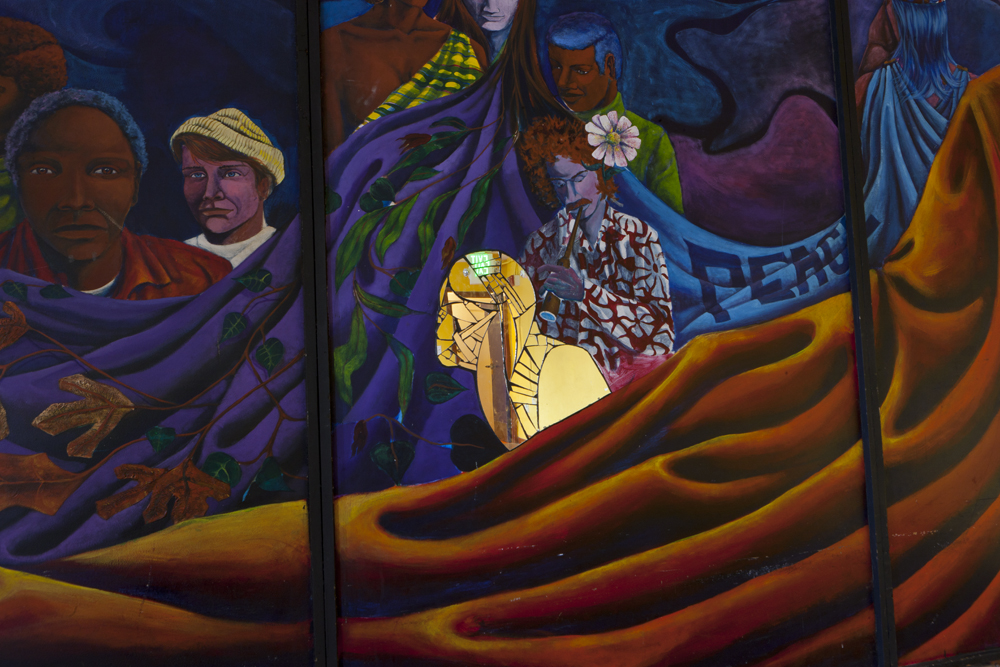
While reflecting on the African-American community of San Francisco, James Baldwin once said, “This is the San Francisco that Americans pretend does not exist.” The Bayview-Hunters Point district is a predominantly Black neighbourhood and, for years, has been isolated from the rest of the city and cited as a significant example of urban marginalization.
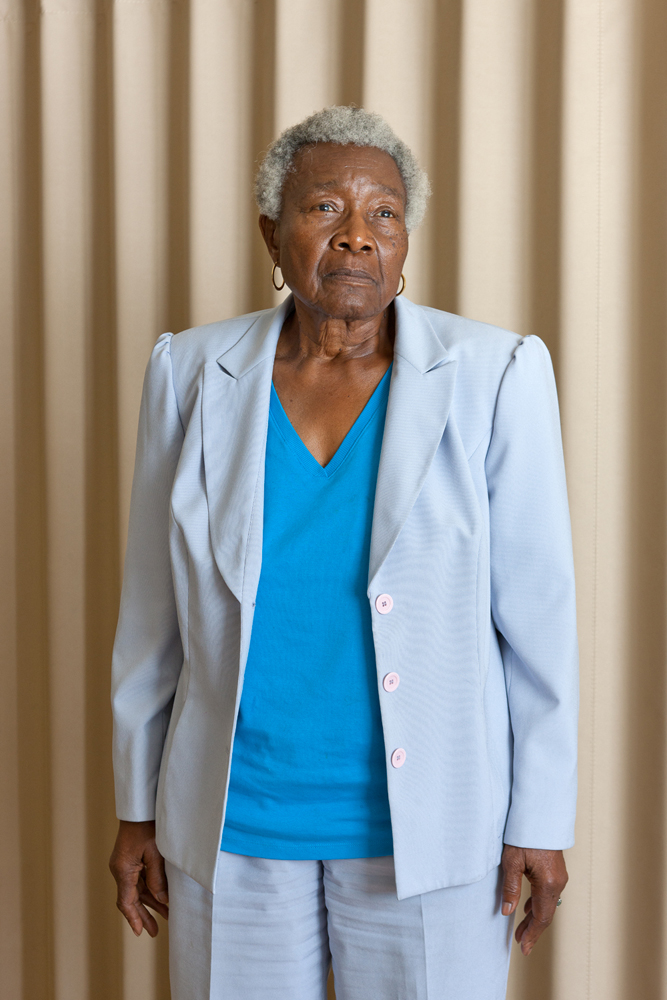
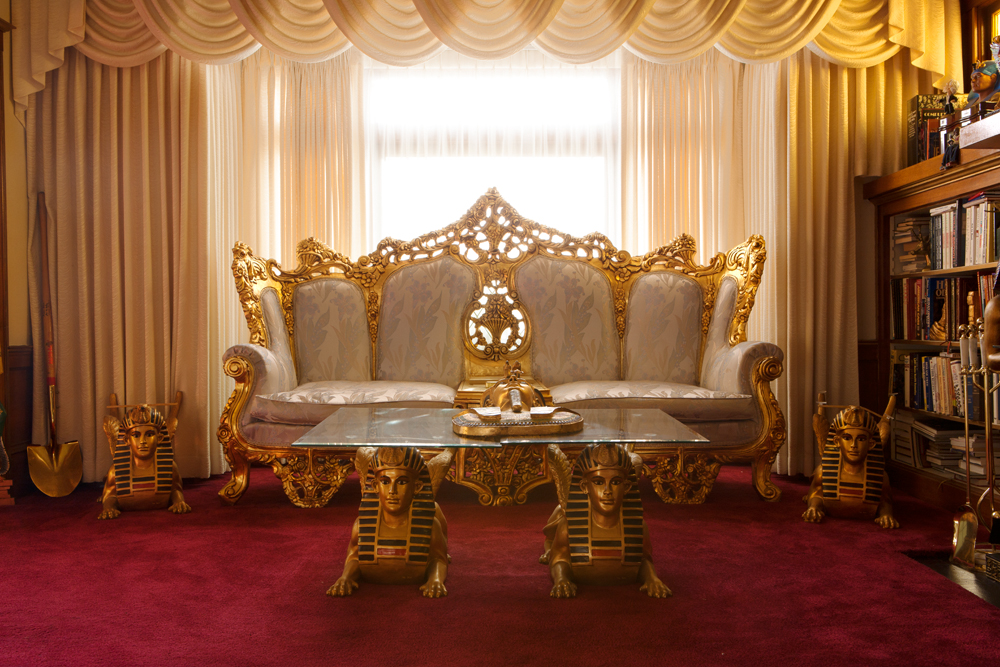
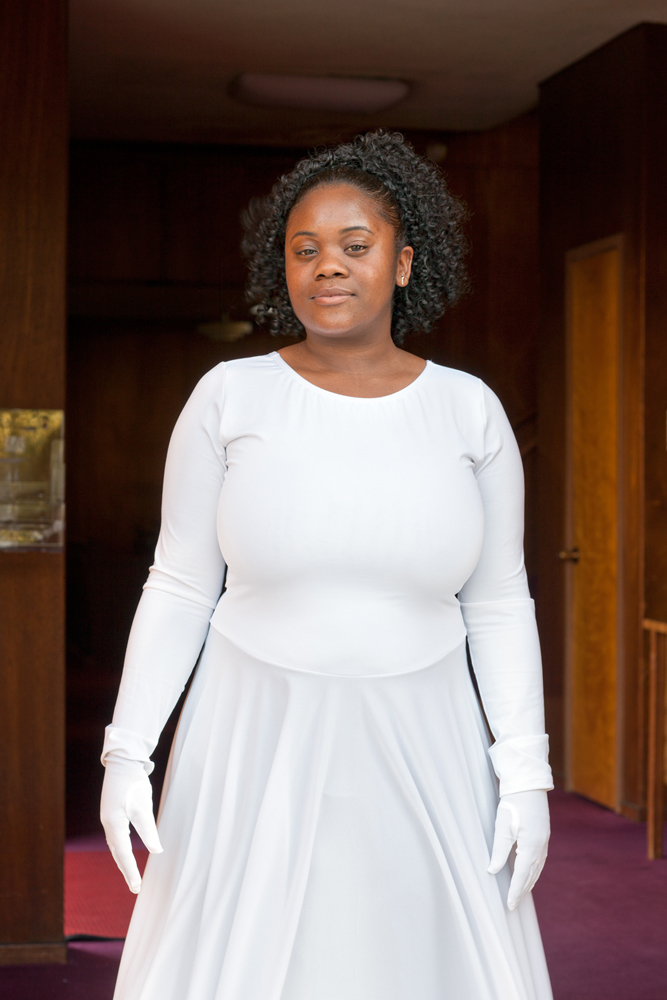
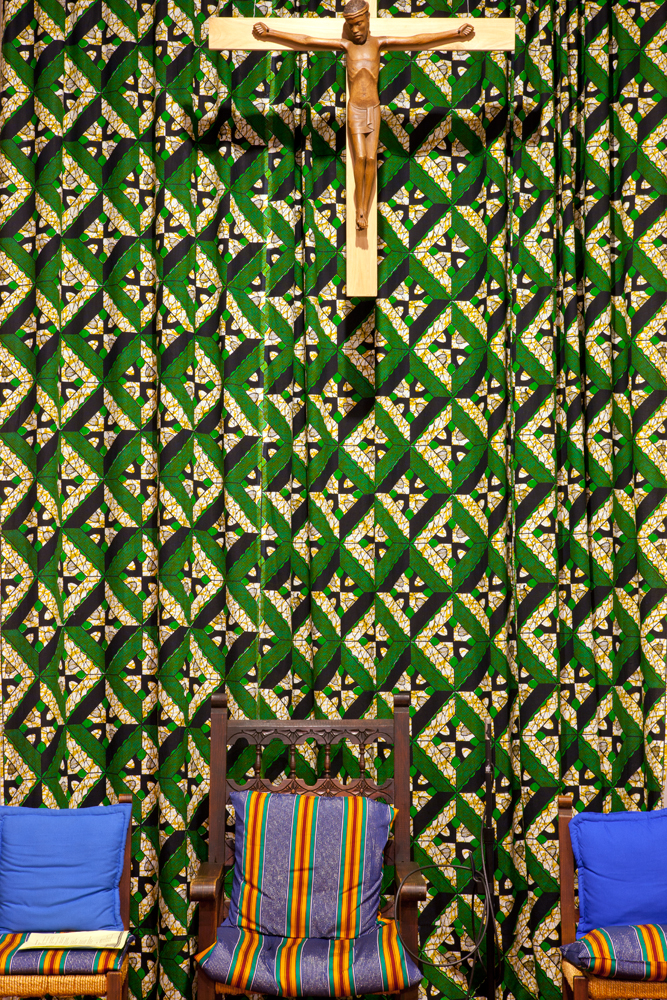
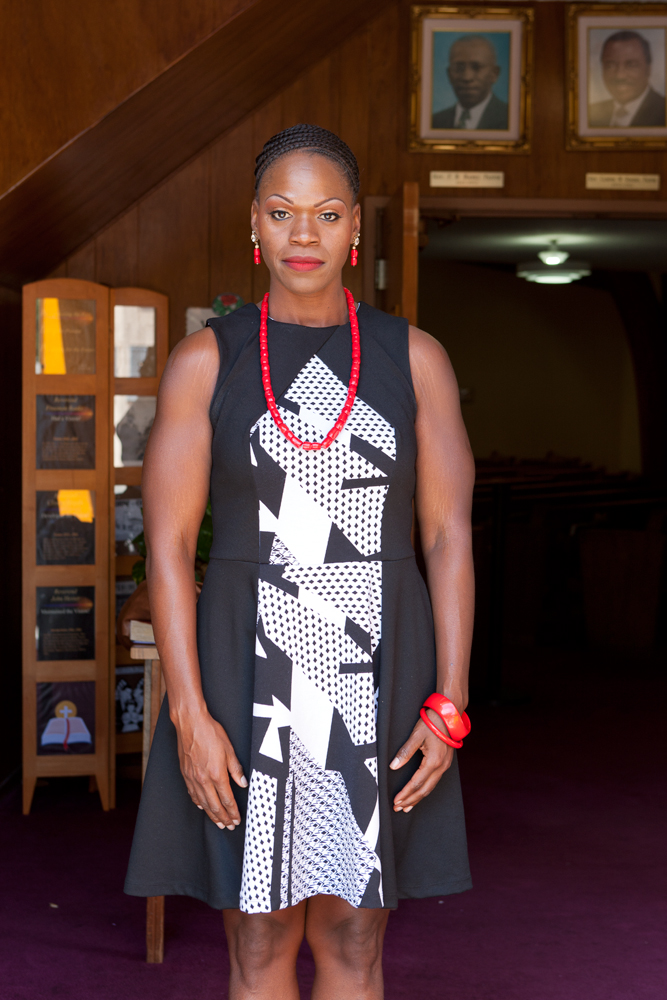
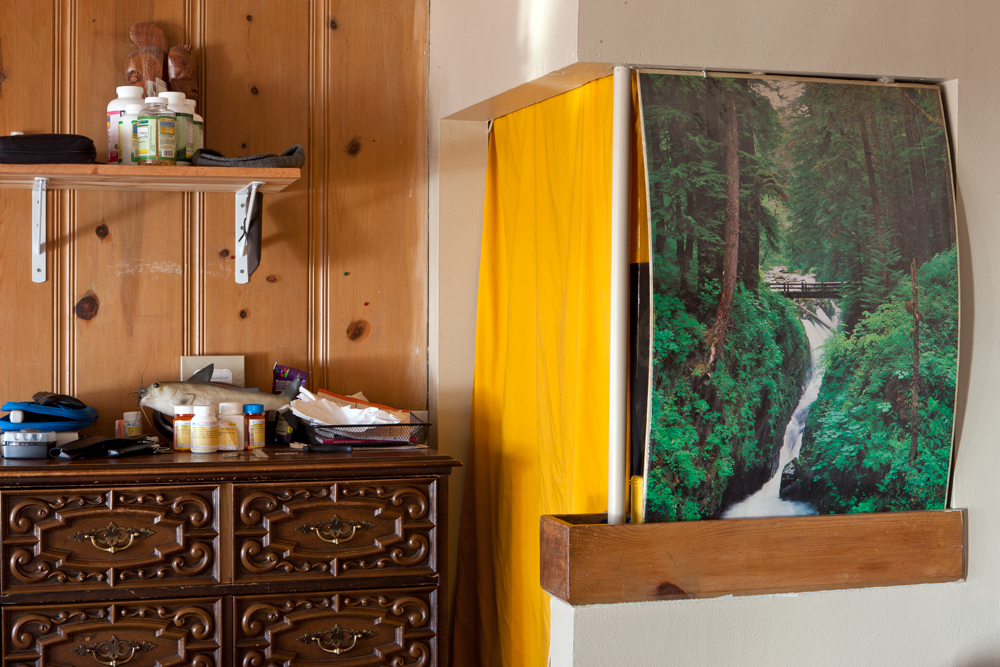
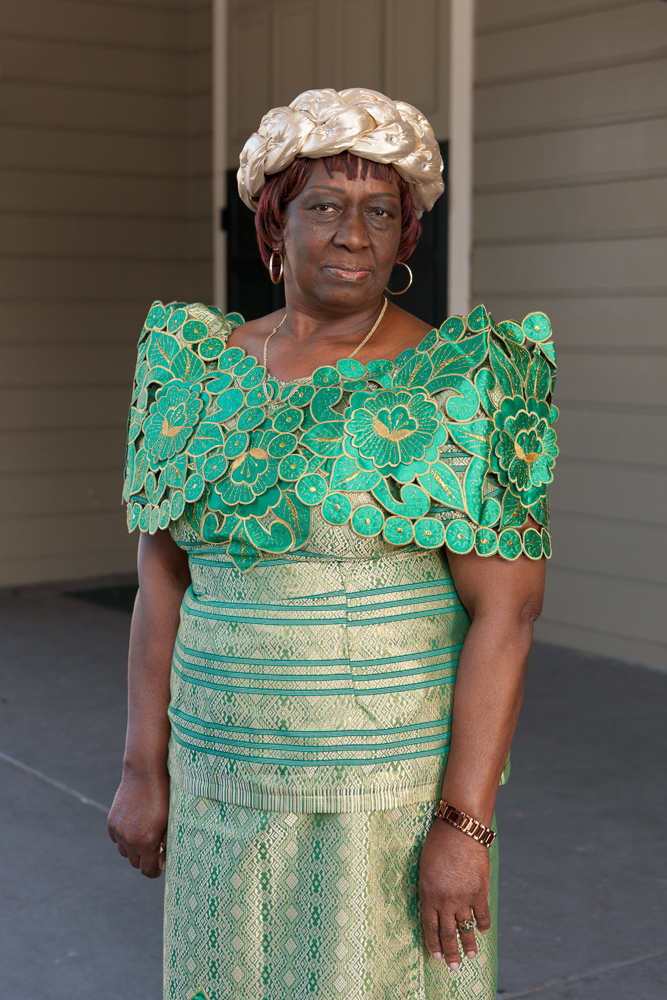
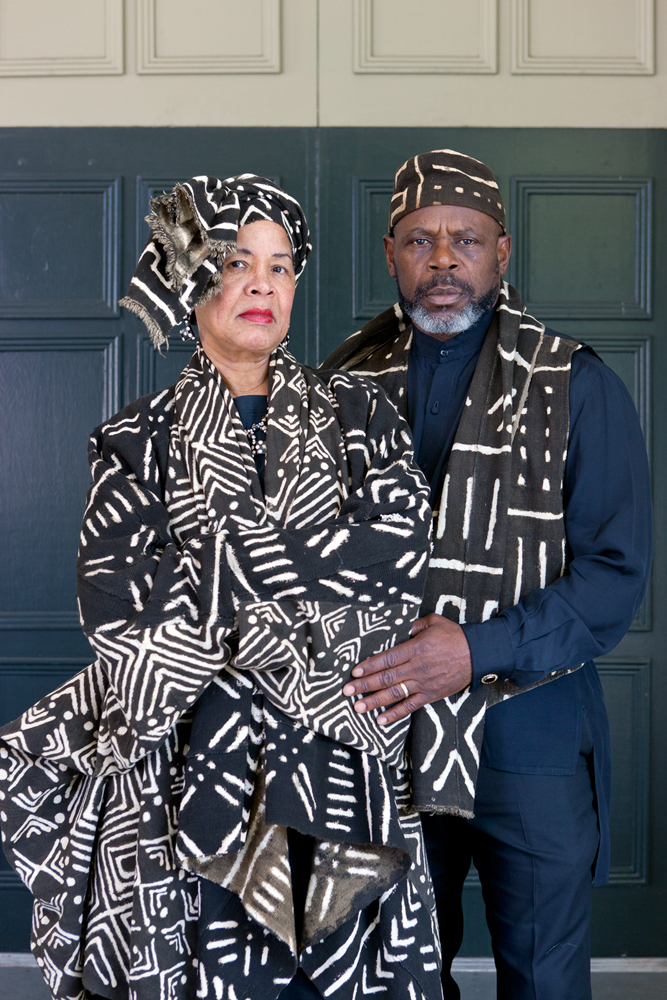
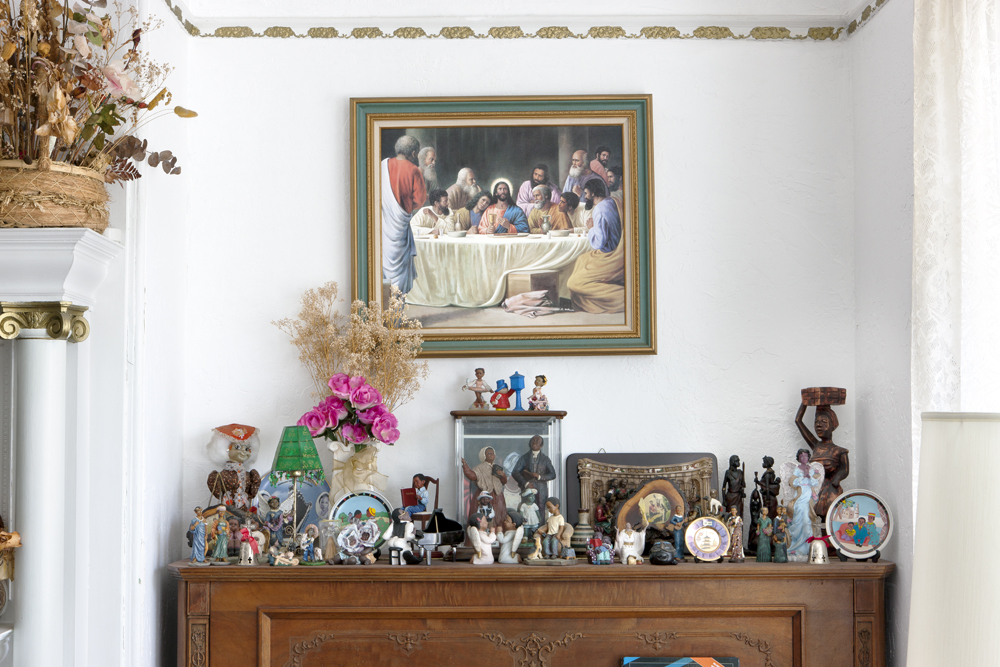
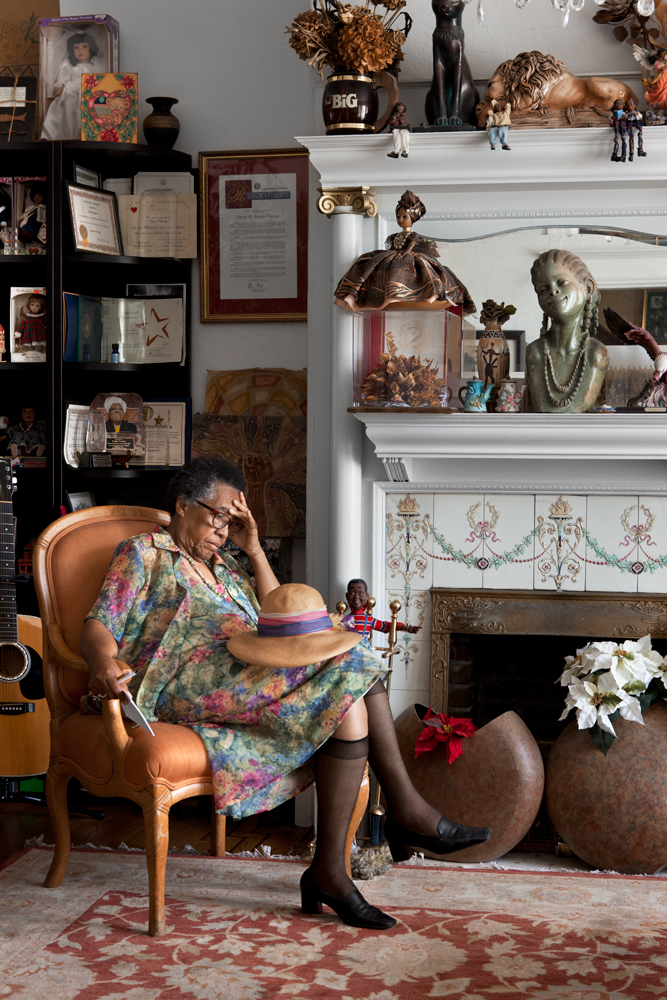
While other photography projects focus on the tougher, negative aspects of Bayview-Hunters Point, photographer Kirk Crippens took a slower and more reflexive approach to his interactions with a neighbourhood he admittedly knew next-to-nothing about prior to working on The Point which is a collection of portraits and interior domestic scenes.
The Point is currently on show at San Francisco City Hall. It includes not only dozens of portraits and interior shots made by Crippens but also family photographs to those in his portraits. It’s a lovely balance and a special production for this exhibition The Point: Kirk Crippens in collaboration with the Bayview-Hunters Point Community (Nov 15th – Feb 27th, 2015).
The Point celebrates the generations who have called Bayview home — “the kings and queens of Bayview-Hunters Point” as Crippens describes them.
THE BEGINNINGS
In early 2011, Crippens walked into the Providence Baptist Church, established in Bayview in the early 1940s. The congregation welcomed him, shook his hand, remembered his name. Crippens described his task of photographing the community to the pastor. Subsequently, meetings were set up with respected individuals of the community who worked with Crippens to realise a shared vision.
“At a time when San Francisco continues to grapple with the distressing trend of the out-migration of the African-American community, it’s more important than ever that we bring this exhibit to City Hall,” says Tom DeCaigny, San Francisco Director of Cultural Affairs.
THE CONTEXT
Located at the southeastern corner of San Francisco, the Bayview-Hunters Point neighborhood was considered to be one of the last remaining San Francisco neighborhood left untouched by developers. However, with the completion of the Muni Metro T Third Street line in 2007, the first new light-rail line in San Francisco in more than half a century, and other plans on the horizon, Bayview-Hunters Point has recently become a focal point for recent redevelopment projects.
“Gentrification” is the word on everyone’s lips.
I wanted to find out a bit more, so I asked Kirk a few questions.
Scroll down for our Q&A.


THE QUESTIONS
Prison Photography (PP): What did you know of Bayview-Hunters Point before photographing?
Kirk Crippens (KC): Not much. Not until late 2010, when an email invitation to work on a project in the community arrived. I had an intuition I should accept the project. I began exploring the neighborhood, but my first photographs reflected my perspective of an outsider. I was wandering the perimeter of a community.
PP: What do you know now?
KC: I know ways to connect with a community. I needed to connect in a significant way in order for the project to assume some power and relevance. In early 2011, I walked into Providence Baptist Church. My life changed that Sunday morning; the Church became the lens through which I learned about and connected with the community.
I know about the beauty and solidity of the multi-generational bonds that run through the neighborhood.
Bayview-Hunters Point is the focus of redevelopment projects. The Hunters Point Naval Shipyard, a superfund site requiring years of radioactive pollution cleanup, is being targeted for 10,500 new homes and close to 4 million square feet of commercial and retail space. The Point is on its way to becoming another coveted San Francisco zip code. While the African-American community watches its neighborhood transform, gentrification threatens to undermine its way of life. Displacement is underway in this historic African-American district.
PP: The church was your entry point into the community. Do you think the people and homes that access point provided allowed you to make a representative portrait of the neighborhood?
KC: It would be hard for someone to make a representative portrait of any neighborhood, so I’ll answer no. What I have done is reflect a vibrant segment of the community. Is it representative, probably not? Is it significant, yes — this aspect of the Bayview-Hunters Point neighborhood is not often celebrated or recognized.
Other photography projects focus on the gritty, troubled aspects that come from oppression and economic struggle, The Point is a collaboration with the Bayview-Hunters Point community.

PP: How has the work been received in San Francisco?
KC: I’m honored to say well. The exhibition opened at RayKo Gallery in September and was immediately booked by the San Francisco Arts Commission for a 3-and-a-half month exhibition at San Francisco City Hall.
PP: Your current exhibit at San Francisco City Hall features (beautifully framed) family pictures form the albums of the folks in your formal portraits. Why did you decide to pair the two types of image?
KC: A desire to connect further with the community. The director of the San Francisco Arts Commission Galleries, Meg Shiffler and I had a meeting to discuss ways to enlarge the exhibition. We took inspiration from a previous exhibition at the SF Library that featured family photographs from Bayview. We then asked my friends and contacts if they had historic and family photos for the exhibition.
We were overwhelmed by the generosity and interest that came from the community. In the end we added 60+ historic and family photos and interspersed them with large 36 pieces from my work. It changed the project into a collaboration.
PP: Change is afoot in Bayview Hunters Point, as it is in all of San Francisco. What do you think the future has in store for the community there?
KC: The future of The Point is being created during these transformative years of redevelopment. I suspect the community will look quite different in 20-30 years, and not all for the best. I don’t want to speculate on what will or might be, and I certainly don’t want the friends and adopted family I’ve found in Bayview to see their community displaced, but I see mighty changes underway and everyone is bracing for them.
PP: Thanks, Kirk.
KC: Thank you, Pete.

KIRK CRIPPENS
Kirk Crippens is an American artist living in the San Francisco Bay Area. He had an early start with photography, inspired by his grandfather who kept a darkroom in his closet. Based in San Francisco since 2000, he began exhibiting in 2008. He was named a Top 50 Photographer in Critical Mass in 2010 and 2011, nominated for the Eureka Fellowship Program, invited to speak during PhotoAlliance’s Spring Lecture series at the San Francisco Art Institute, and was a finalist for Photolucida’s book prize.
Crippens has been an artist-in-residence at both RayKo Photo Center in San Francisco and Newspace Center for Photography in Portland, Oregon. His portfolio Foreclosure, USA was recently acquired by the Crystal Bridges Museum of American Art in Bentonville, Arkansas and can be seen in their current exhibition State of the Art, Discovering American Art Now.
He currently serves on an arts board in Bayview Hunters Point. Providence Baptist Church has become his home away from home.
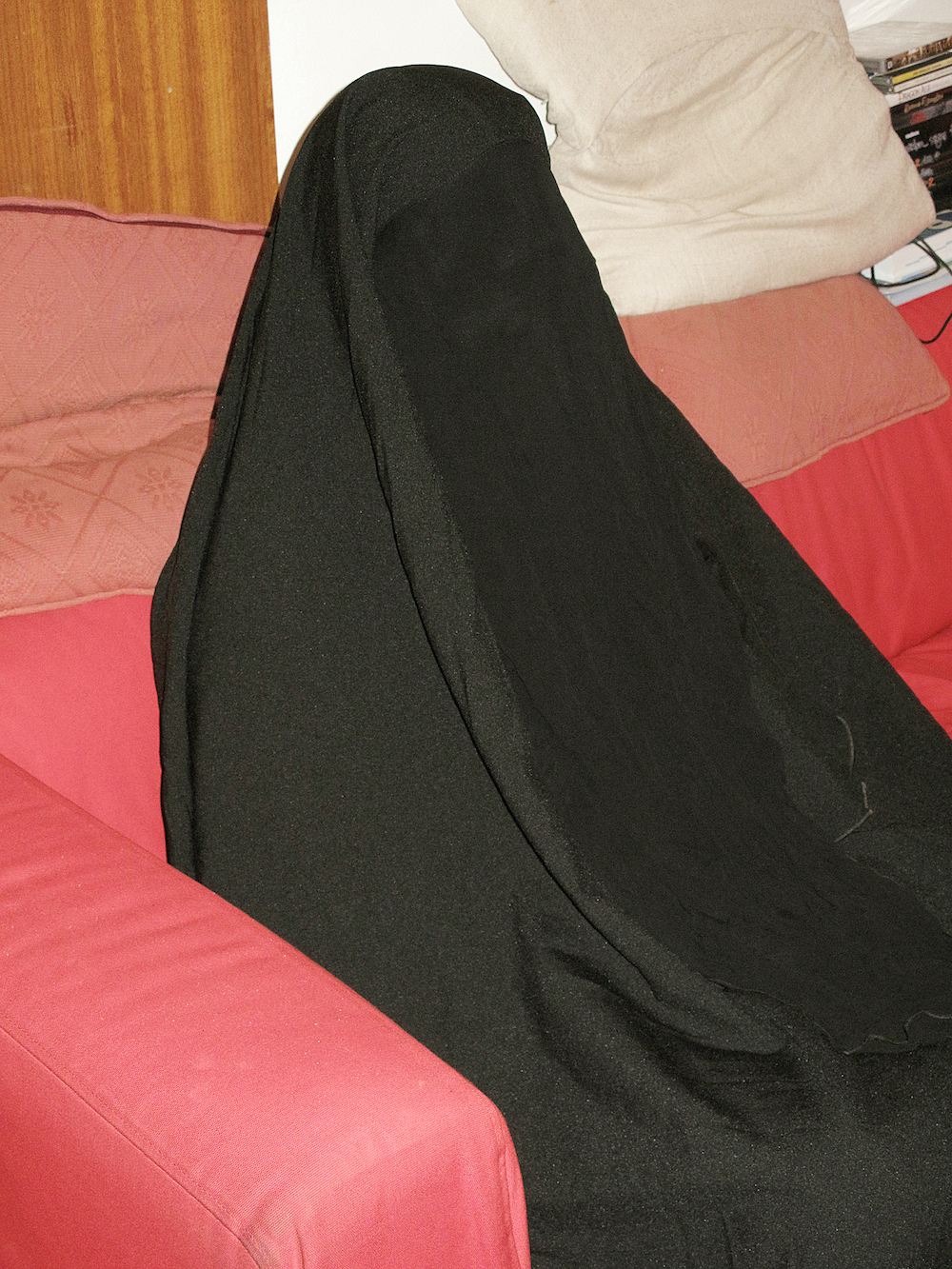
2041
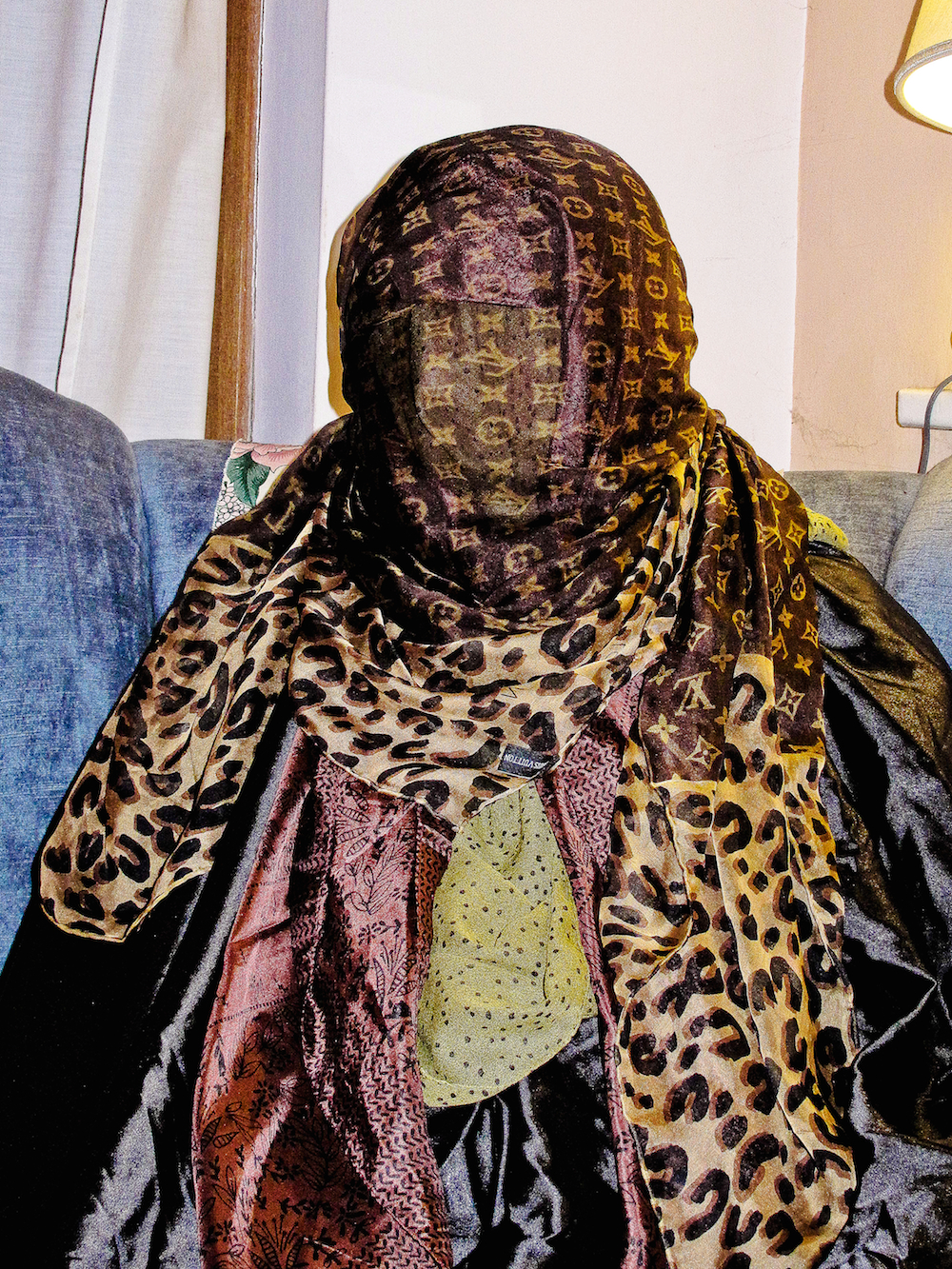
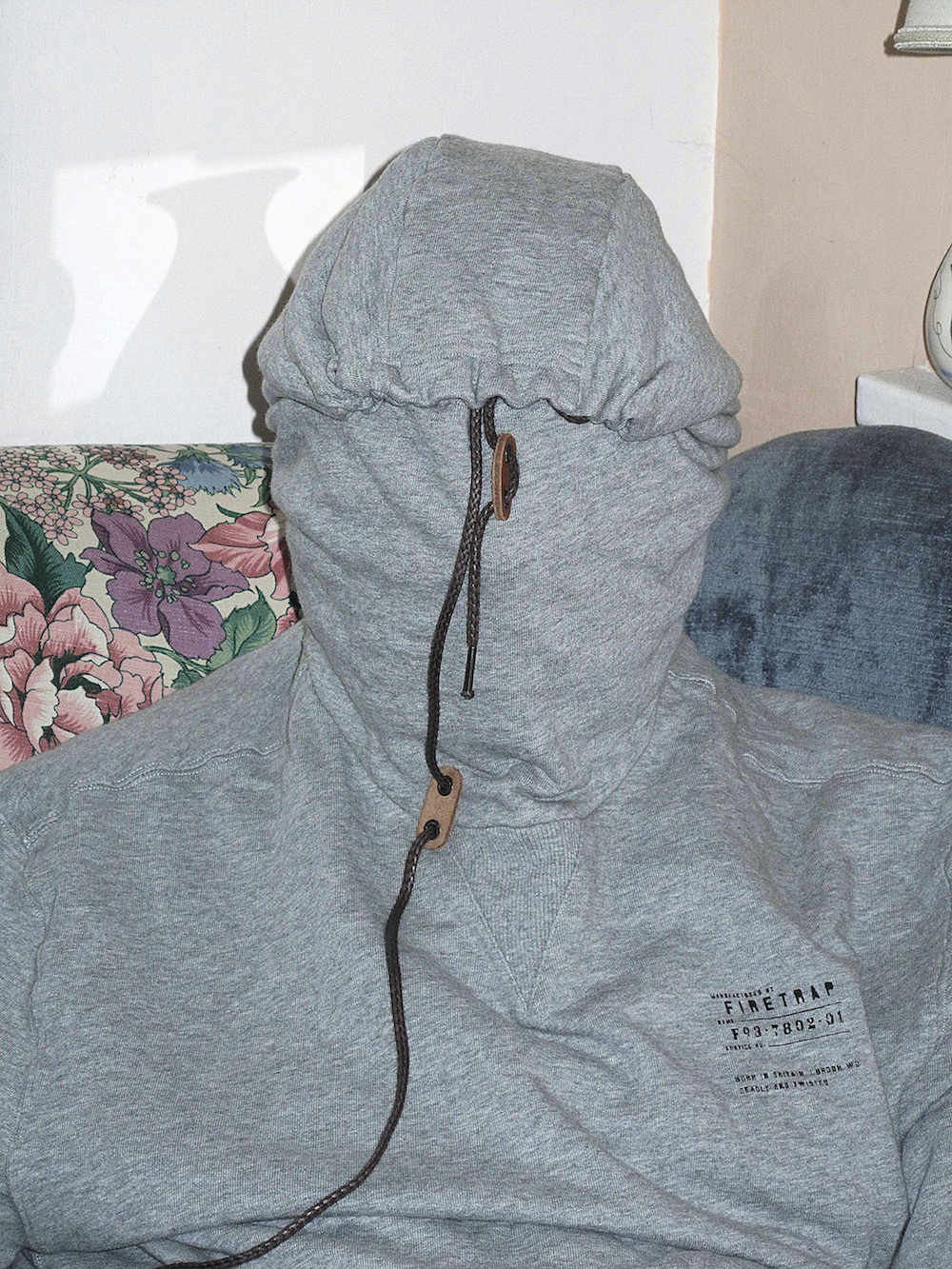
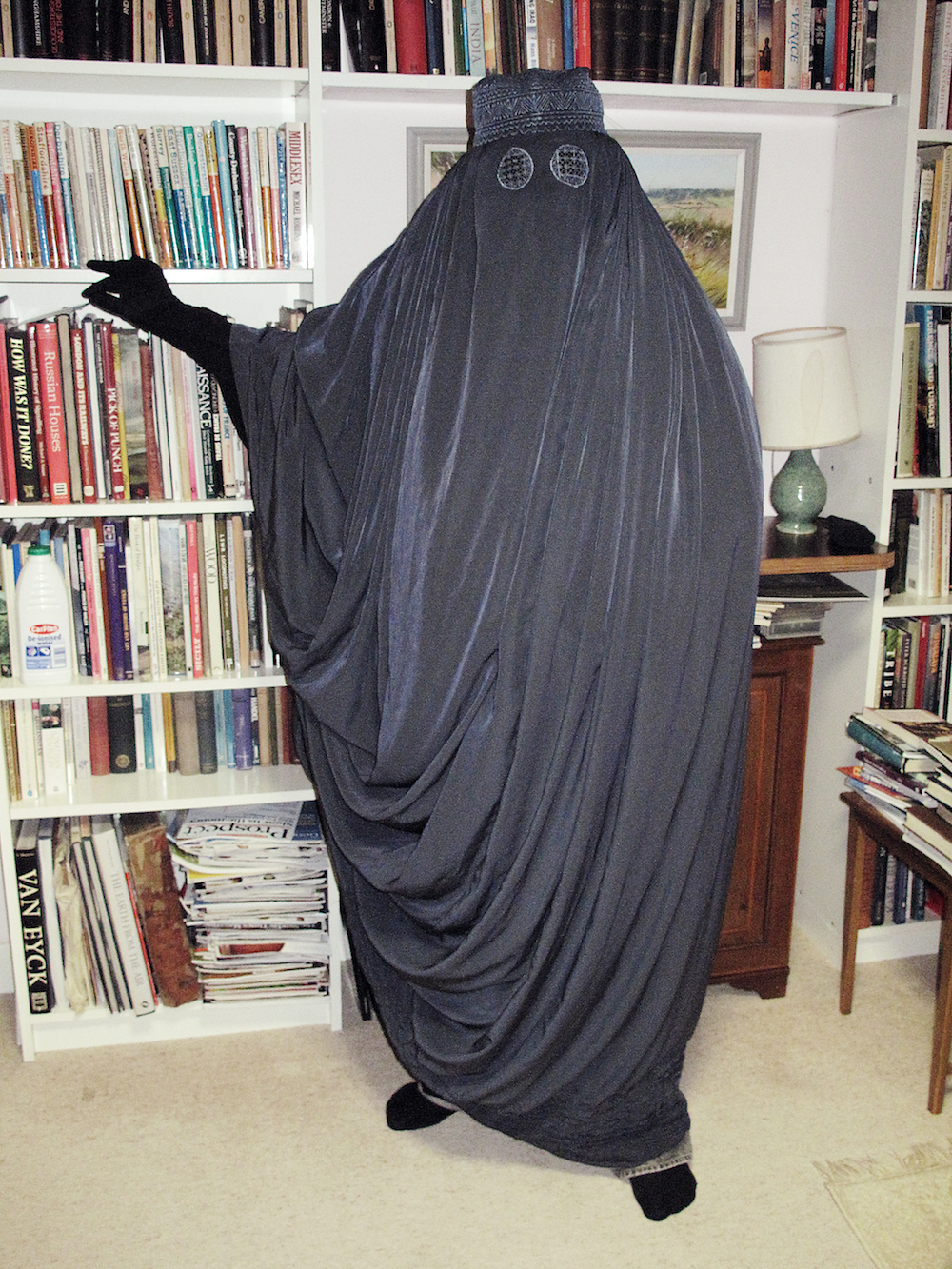
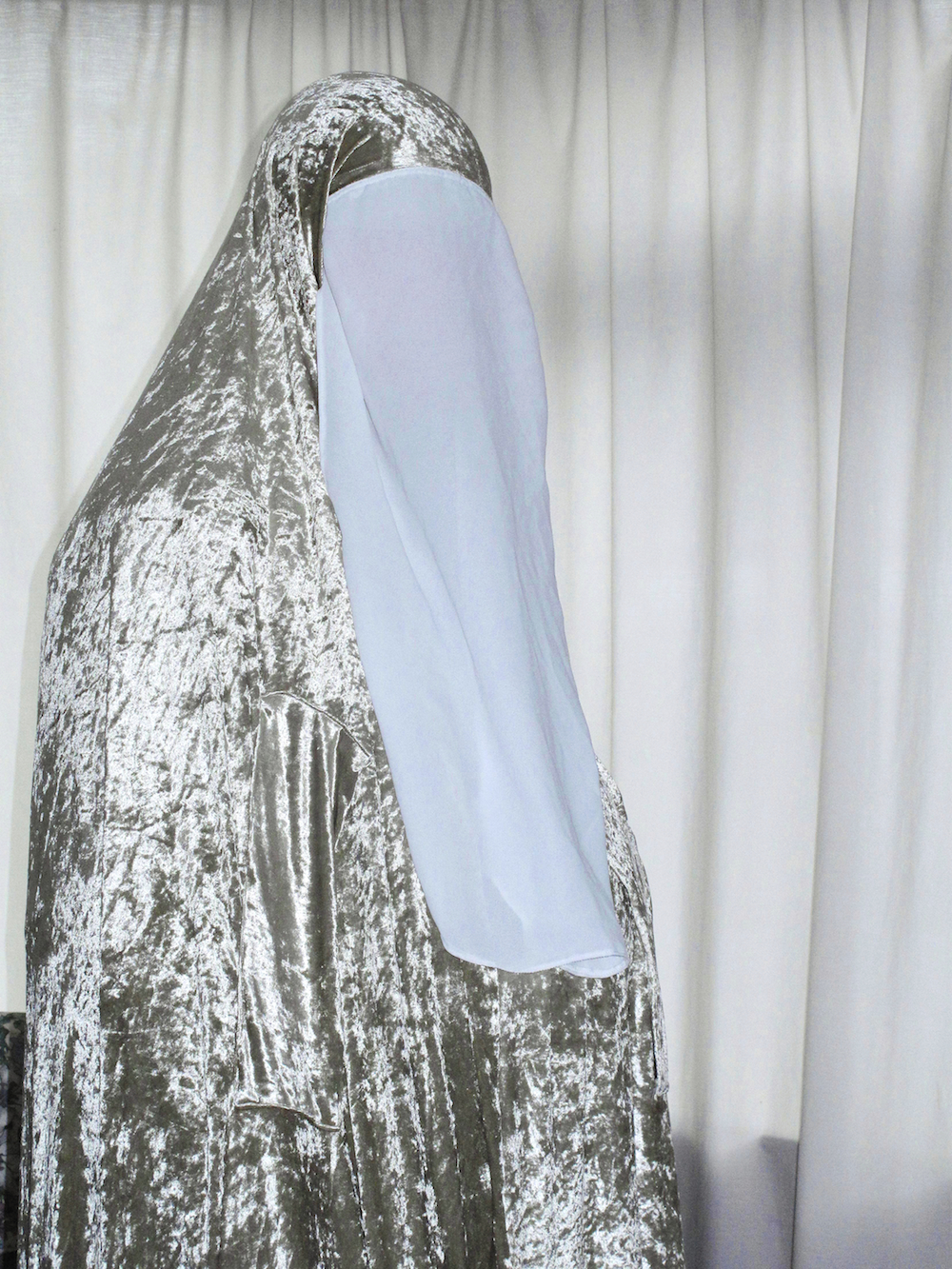
HERE PRESS has done it again; it has produced a book that allows us an irresistible glimpse into foreign space and psychology. 2041 is a collection of self-portraits, made by a man, donning makeshift burqas and niqabs, in his home in England.
The title 2041 refers to the name by which the man is known. “2041” made thousands of images with the express intent to share them online with fellow full-coverage enthusiasts.

“Using the camera to articulate a passion he has secretly indulged for decades, the artist appears dozens of times without ever disclosing his image or identity,” says the HERE press release. “Long before 2041 bought his first real burqa online, he began crafting his own versions from draped and folded fabrics in a rich array of textures and colours … ranging from the traditional to the theatrical.”
2041 is part of a connected online community of men and women from across Western Europe and the Gulf States. They are Christians, Muslims and without religion.

This is a gripping book and look into a world that cannot be fully known, nor can be fully verified. What is interesting, therefore, is that without identifiable subjects, the veracity of photography collapses. Or, at the least, we have to completely shift our expectations about what photography provides. The book 2041 is working on, and with, many levels. There’s a motivation by HERE to celebrate photography by revealing its limits and capacity. Despite a reliance on images to connect themselves, 2041 and his cohorts are inhabiting the unphotographable.
As such, 2041 is a playful but earnest exposé of the photographic medium as much as it is this small web of like-minded folks.
A similar type of mood persists in previous titles by HERE. Harry Hardie and Ben Weaver skirt the outer territories of our photo-landscape and delineate the edges. Edmund Clark’s Control Order House took us inside the ordinary domestic spaces of a terror suspect under house arrest. Power was described precisely by what was not photographed. Jason Lazarus’ Nirvana took us into grunge-infused personal histories; the photographs were just a foil to get subjects feting up about beautiful and traumatic pasts.
I, for one, am getting quite excited by HERE’s growing catalogue of ever-so-slightly-disconcerting photobooks.
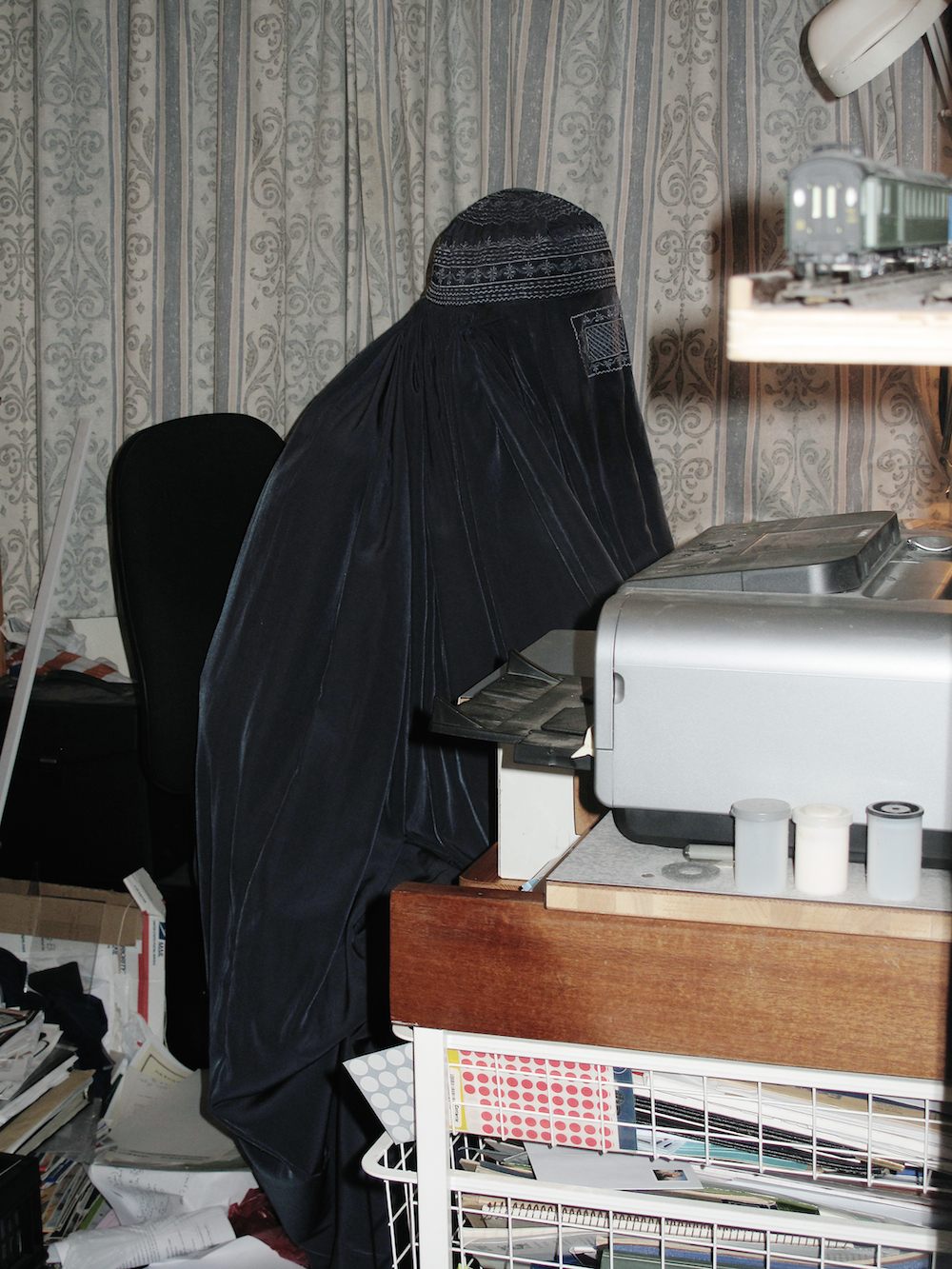
Between the internet and the veil 2041’s anonymity folds and billows. He remembers the enveloping cassocks and cottas he wore as a choirboy. As an adult, he moved toward total covering. In the early millennium, 2041 his bought his first computer and plugged into an online community that shared his passion.
“What almost all [of the people covering themselves] seem to crave is transcendence of the physical self – or at least being judged on the physical – coupled with the excitement of observing the world unseen, safely cocooned in luxuriant fabrics,” says HERE. “This is the burqa seen in a celebratory light.”
Naturally, I have lots of questions so I dropped Harry at HERE PRESS a line. He put me in touch with Lewis Chaplin who is co-founder of Fourteen Nineteen, but more importantly co-editor of 2041.
Scroll down for our Q&A


Q&A
Prison Photography (PP): Where did you first see and hear about 2041’s photographs?
Lewis Chaplin (LC): I first found these images almost four years ago, while researching emergent subcultures of fetishists/obsessives who were finding community and likemindedness through the internet. Many of these people use Flickr in particular to indulge in their private desires, and it was here that I found 2041’s images. I was struck by the rigidity, flatness and compositional skills that his images had. Compared to most who used the image more as a byproduct or vehicle to access their fetishes, 2041’s images seemed more like the images were performed for the camera and the camera only, for the sake of documentation, rather than for anything else.
PP: Is the book 2041 made in collaboration with the subject? If so, how did you make contact, build trust, ensure discretion?
LC: Yes, it is fully collaborative. Contact was made initially by Harry Hardie , who introduced himself as a publisher, and then I was bought into the conversation. I began a regular correspondence with him, which culminated in a face-to-face meeting and then visits to his house, where we collaborated and photographed each other, and I went through his image archives.
PP: Have all the pictures been verified? Can we know it is the same person under the burqas and niqabs in all the pictures? Does verification matter? Is not knowing something in absolute certainty one of the facets of the images and their use?
LC: I can verify 90% of them through their EXIF data, as we have had access to raw camera files. However, it is not necessarily the same person concealed. I think it is this lack of verification that is the titilating point of these images. Beneath the veil, your physical identity shrinks into a few gestures and outlines, and you can take on the form and countenance of another.
Even now there are images which Ben Weaver (HERE PRESS) and I cannot decide whether they depict our protagonist or others. To be certain though – this form of image-making is a firmly social practice, one based around solid online and offline networks. A few images in the book give this away, and were you to find 2041 online you would find images of me concealed, for example.


PP: Why did you want to make this book?
LC: Because I think that unlike many of the images made by people with strange interests on the internet, these images say something very complex about photography. What I like about these images is that there is that they are purely performative gestures – but yet they give nothing away. They reveal the presence of an individual, but not their likeness, or an accurate representation. Something about the concealment of desire, or the hiding of the true likeness of an object in these images actually feels like a very nuanced statement on photography, that at no stage in the process ever actually tries to use the camera to bear any details, or describe anything accurately.
PP: How many potential subjects and/or images did you have to choose from in making the book? What makes 2041’s images special — some aspects of aesthetics, or merely their availability?
LC: It wasn’t so much a matter of choice, more that these images asked for some kind of sequencing and exploring. There is definitely an aesthetic dimension of these images that is appealing – the composition and contrast between flatness and texture, the shapes are unlike others I have seen – and there is also a lot of time and effort that has gone into these. 2041 is also an actor, and a painter. You can see the influence of classical painting on some of his poses and crops. He is also akin to humour and self-deprecation, you can see it sometimes.
PP: 2041 wishes to remain anonymous. Obviously, as the editor, you’re a legitimate proxy to whom I can talk. I want to ask what 2041 thinks of the book?
LC: Let’s ask him once he has seen it!


PP: What do members of the online burqa fetish community think? What do you think they might think?
LC: I don’t think it has made its way through to these channels, but I would hope that what they see here is that we are not trying to ridicule or pass judgement through our scrutiny. This book I hope comes off as a sincere tribute to photography being used in a genuinely interesting way that talks about self-perception, the way images are used on the internet and so many other things, through the prism of a very personal, domestic and specific application of the camera.
PP: Do we understand what the burqa is and what it does?
LC: In these images the burqa, niqab or any other Muslim garment is a means to an end in some way. You can see in some of 2041’s experimentations that it is just about complete coverage through any means. He is not wearing a burqa in most images, in fact. The removal of physical presence is the goal here – it is never about using the burqa in a subversive or political way.
PP: Thanks, Lewis.
LC: Thank you, Pete.

2041, the book
170 x 240mm, 120pp + 6pp insert
72 photographs + 1 illustration
Offset lithoprint on coated & uncoated paper Sewn in sections with loose dust jacket
Foil title
Choice of 3 cover ‘photo insert’ cards
Text, illustration & photographs by 2041
Edited & designed by Lewis Chaplin & Ben Weaver Edition of 500.

© Ronnie Goodman
ARTS AND RECIDIVISM
“Evidence suggests that arts-in-prisons programs lower recidivism (returning to prisons) by 27% and reduce disciplinary actions by 75%,” reads the press release for the prison art exhibition The Cell and the Sanctuary: Art and Incarceration currently on show at the Santa Cruz Museum of Art & History (SCMAH).
That’s a bold claim.
One of the great difficulties with justifying arts and/or liberal arts education is the difficulty in measuring its direct (positive) effects. Evaluation in budget-constrained prison systems is especially demanding and cynical. First and foremost, people want to know if any type of program steers a prisoner away from anti-social behaviour. If the answer is complex, partly elusive or complicated by other criteria then doubt descends, the enterprise is labeled as airy-fairy, and premise is dismissed.
In brief, prison arts programs wanting to prove themselves have a tough audience.
The effects of arts and education is difficult to track because many benefits such as relative thinking, critical engagement outside of institutional narratives, cumulative learning, etc. take years. Education is a slow build. Benefits are for years down the line; for a lifetime. Also, many prisoners are on long sentences and the primary criteria corrections departments and researchers look to – recidivism – can only be measured once a prisoner is released. The intangibles of a liberal arts education aren’t necessarily contributing to a measurable impact the next hour.
A general aura of skepticism surrounding arts and liberal arts education is compounded by the fact that research money often goes toward other prison programming (vocational, prison industries) and other evaluation first. We saw this was the case when the State of California stripped the DOC of its Arts-In-Corrections funding 7-years ago. In times of crisis, arts funding is first on the chopping block.
Despite no state funding, groups such as the William James Association continued, driven by volunteer efforts. The recent California budget has put millions back into the coffers earmarked for Arts-In-Corrections. The William James Association has returned to work in 11 state prisons.
The return was helped by the convincing results of a study, California Prison Arts Evaluation 2014, that was commissioned jointly by the William James Association and the California Lawyers for the Arts. You can download it here.
Here’s the results of the study and reason for bold claims.
The California Prison Arts Evaluation 2014 was a one-year study in four prisons revealing that arts programs improve prisoners’ behavior and their attitudes about themselves.
“A significant majority of inmates attribute their greater confidence and self-discipline to pursue other academic and vocational opportunities to their participation in arts programs, signaling a pathway for overall personal growth,” says the William James Association.
A BRIEF HISTORY OF RESEARCH
The author was Dr. Lawrence Brewster of the University of San Francisco who had, in 2012, completed a Qualitative Study of the California Arts In Corrections Program.
Prior to these two studies, there had been little research since a cost-benefit study in 1983, An Evaluation of the Arts-in-Corrections Program of the California Department of Corrections (also conducted by Brewster), which posited that society and the institutions benefited by reduced disciplinary actions, community service and beautification of the prisons.
It was high time someone brought the research up to date and dampened down naysayers and skeptics. Hopefully, the California Prison Arts Evaluation 2014 might spur other states to make a return to arts programming.
“Arts-in-prisons programs improve relationships between people within the prison as well as with guards and supervisory staff,” says the William James Association.” Prisoners exposed to arts programs are more likely to adjust to life outside prison and are less likely to become repeat offenders.”

‘Blind Curve’ (2010) © Felix Lucero

‘Lower Yard, San Quentin’ @ Ronnie Goodman

‘Baseball at Old Folsom Prison’ @ Ronnie Goodman

© Justus Evans
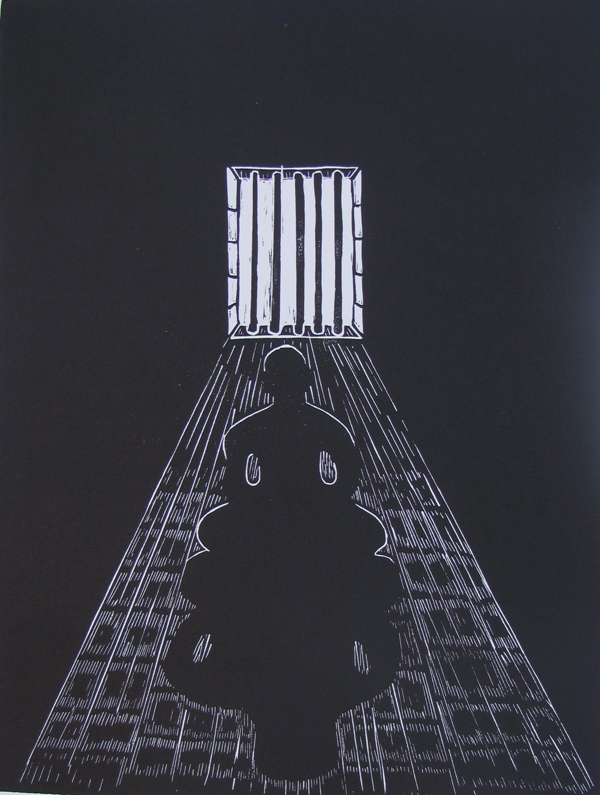
‘Obscuring Self’ © Rolf Kissman

‘Jazz In San Quentin’ @ Ronnie Goodman

‘Uphill Struggle’ @ Ronnie Goodman
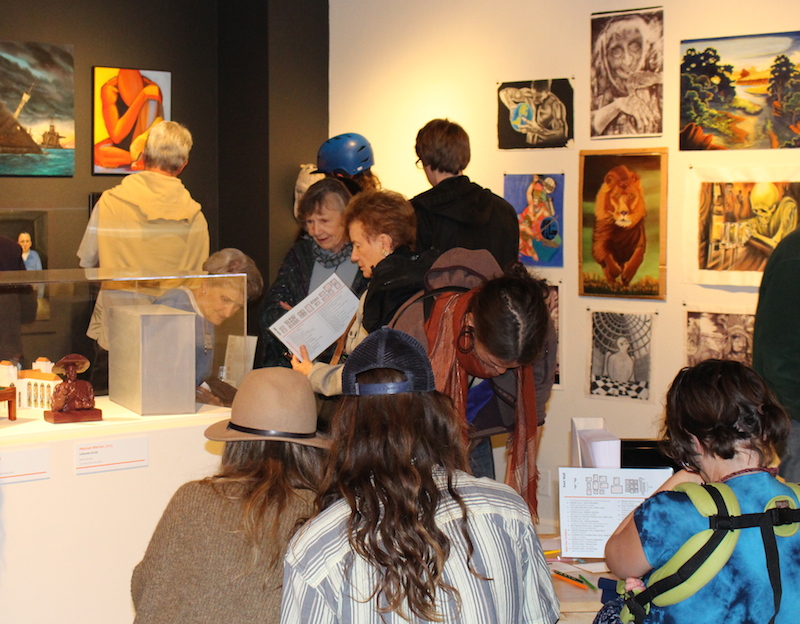
The Cell & The Sanctuary opening, Santa Cruz Museum of Art & History, November 7th, 2014. Photo: Laurie Brooks / William James Association

‘Prison Boots’ @ Ronnie Goodman

Installation view of The Cell & The Sanctuary, Santa Cruz Museum of Art & History. Photo: Laurie Brooks / William James Association

THE CELL AND THE SANCTUARY
The Cell and The Sanctuary features paintings, drawings, sculptures and writings by teachers, artists and organizations who are “working together within the prison system to provide a direct link between incarcerated individuals and something larger than their dehumanizing cells,” says SCMAH.
Artists including Ronnie Goodman, Justus Evans, Felix Lucero and Rolf Kissman (whose works are included in this post) are in the exhibition, as well as Ned Axthelm, Peter Bergne, Guillermo Willie, Stan Bey, Khalifah Christensen, Dennis Crookes, Isiah Daniels, Bruce Fowler, Henry Frank, Roy Gilstrap, Thomas Grider, Gary Harrell, Amy M. Ho, John Hoskings, David Johnson, Ben Jones, Richard Kamler, Chung Kao, Darryl Kennedy, Katya McCollah, Pat Messy, Omid Mokri, Gerald Morgan, Carol Newborg, Stan Newborg, James Norton, Eric “Phil” Phillips, Anthony Marco Ramirez, Adrienne Skye Roberts, Mark Stanley, Fred Tinsley, Tan Tran, Kurt Von Staden, Geno Washington, Michael Williams, Thomas Winfrey, and Noah Wright
The Cell and the Sanctuary: Art and Incarceration is produced in collaboration with Barrios Unidos and the William James Association (also on Facebook)
It is on show November 7, 2014 – February 22, 2015

Senseless © Felix Lucero
Photo: Spike Aston
Photography is often best kept simple. Likewise, the description of photography is, also, best kept simple. So let’s do that.
Disposable is a photography project that puts cameras in the hands of a dozen or so homeless men and women in London, England. Very straightforward. Disposable garners images that have given – in their production – moments to create and reflect, and – in their viewing – moments for reflection upon creative practices toward a more equal society. Right? What use is this post, and what use the participants’ efforts, and what use the program coordination efforts of Adele Watts if we’re not to reflect on the issues of poverty and homelessness in our society?
Disposable began in 2012. Disposable is grassroots. The men and women involved consider themselves a collective.
Watts worked closely with homeless artists over the period of a year and developed a body of original photographs.
“Without a brief, each participant took single-use cameras away, returning them a couple of weeks later to be developed and to look though the work and discuss it together,” explains Watts.
“Photography is a science of seeing. I like to see ordinary things too because they can tell you a lot about where you are if you don’t know. You can discover many beautiful and interesting worlds that don’t seem like worlds without photography,” says participant Spike Aston.
In the past 18 months, Disposable has mounted three exhibitions — at a Central London outreach venue in April 2013, and later at Four Corners Gallery, Bethnal Green in October 2013 and Ziferblat, Shoreditch in August 2014.
“Disposable allows us to view homelessness from the rich and insightful perspective of those experiencing it, but does so with refreshing subtlety. This is achieved through a belief in cultivating authorial voice and expression without exception, which is truly at the heart of the project and all those who have brought it to life,” says Claire Hewitt who provides texts for the Disposable newsprint publication. “I was overwhelmed by the ways in which they had each nurtured their own visual languages.”
A collection of photographic works by Bill Wood, R.O.L and Spike Aston, Disposable’s most devoted members — has now been brought together in a 16-page newspaper publication.
The Disposable newsprint publication is available as an insert to the latest issue of Uncertain States a lens-based broadsheet. It is distributed through and available at: Brighton Photo Biennial 2014, V&A London, Tate Britain, Four Corners Gallery, Ikon Gallery & Library of Birmingham, Flowers East, Turner Contemporary, Margate.
Keep in touch with the project via Adele Watts’ website and Twitter, and the Disposable Tumblr.
Photo: Bill Wood
Photo: Bill Wood
Photo: R.O.L.
Photo: R.O.L.
Photo: R.O.L.
Photo: Spike Aston
Photo: Spike Aston
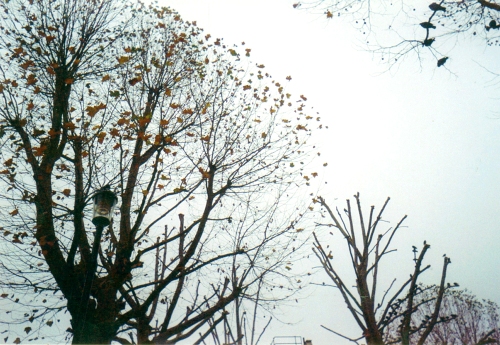
Photo: Spike Aston
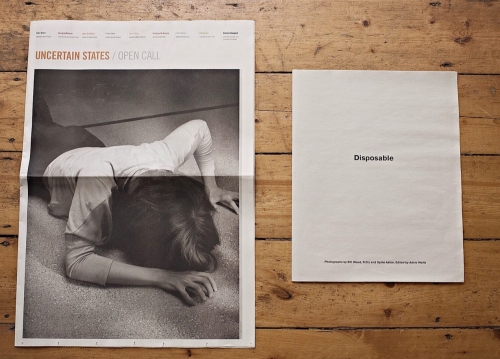
Disposable Insert. Uncertain States. Open Call. Issue 20
Disposable
Edition of 5000 copies
290mm x 370mm
16 pages printed full colour on 52gsm recycled newsprint. Inserted into Uncertain States Issue 20, a lens-based broadsheet.
Photographic works by Bill Wood, R.O.L & Spike Aston.
Texts by Clare Hewitt & Jenna Roberts.
Edited by Adele Watts.
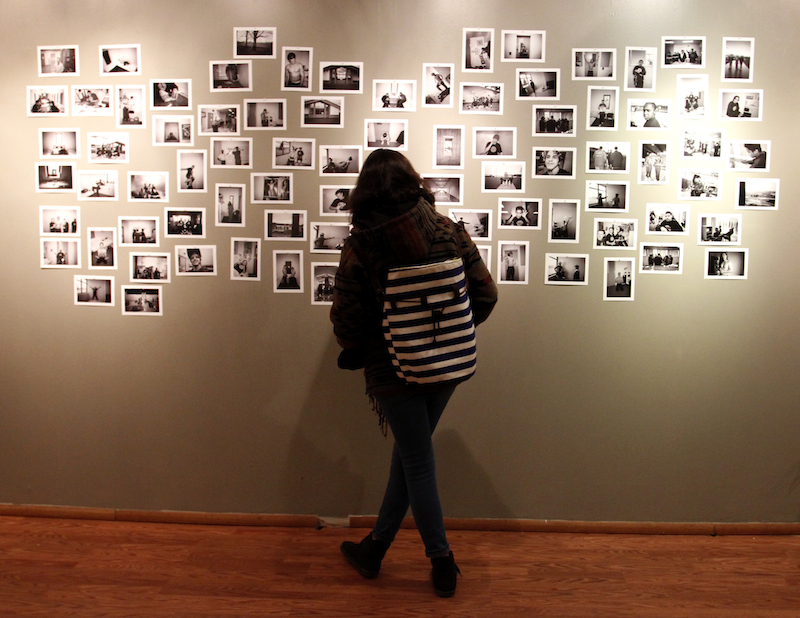
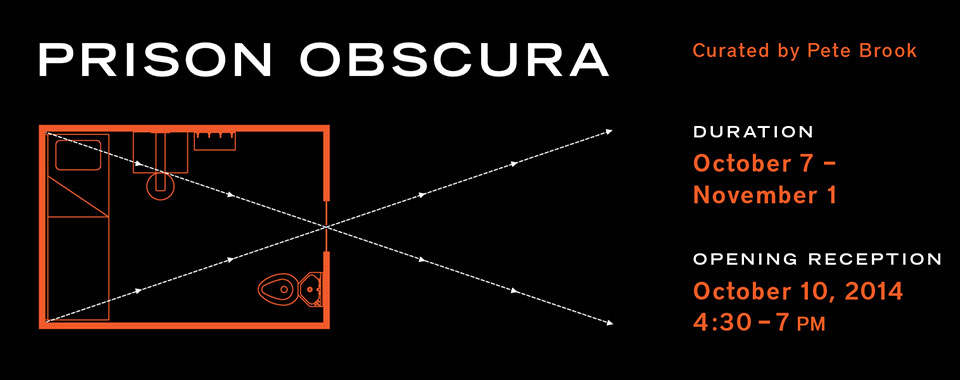
Prison Obscura continues to travel. If you’re in or around New Jersey then you should know a version (a tighter edit) of Prison Obscura is currently on show at Alfa Arts Gallery in downtown New Brunswick. The show runs until November 1st.
The official opening was last Friday (10th) and coincided with the Marking Time: Prison Arts & Activism Conference at Rutgers University and hosted by the Institute for Research on Women (IRW). To give you a taster of the presentation, below are some snaps taken by staff at Alfa Arts Gallery. But not before a few notes of thanks …
GRATITUDE
I’d like to thank Alfa Art Gallery-owners Chris Kourtev and the entire Kourtev family for generously giving over their space for three weeks to house the show. Thanks to Nicole Fleetwood, Sarah Tobias and all the staff at IRW involved in bringing Prison Obscura to NJ. Thanks for a wonderful conference too!
I’d also like to extend my thanks once more to Matthew Callinan, Associate Director of Cantor Fitzgerald Gallery at Haverford. Matthew continues to make sure the logistics for each venue are taken care of and, in this case, gave up an entire Sunday to drive from Philadelphia and install the show. Thanks to the staff at John B. Hurford Center for Arts & Humanities at Haverford, who continue to support the exhibition.
For more information about the exhibition, visit the Prison Obscura website.


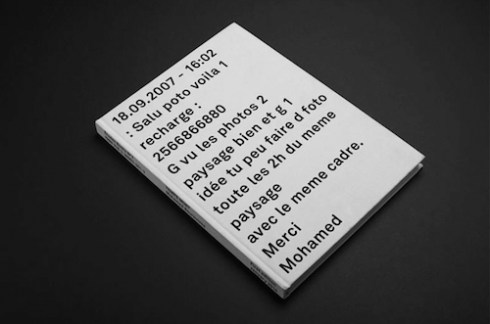
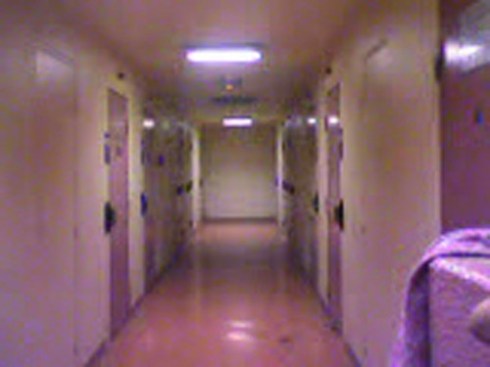
Ever since I came across the work Temps Mort it has haunted me. Haunted me in a good way; it has stayed with me. It resonates because of the power delivered by Mohamed Bourouissa and his collaborator’s low-res images. It resonates, also, because this is the only project made by an artist and prisoner with contraband cell-phones that I know of. Surely, there are exchanges like this happening all the time, but this is the only published example. And it was made with the express intentioned to make art.
So I was pleased to discover, recently, that Temps Mort is now a book.
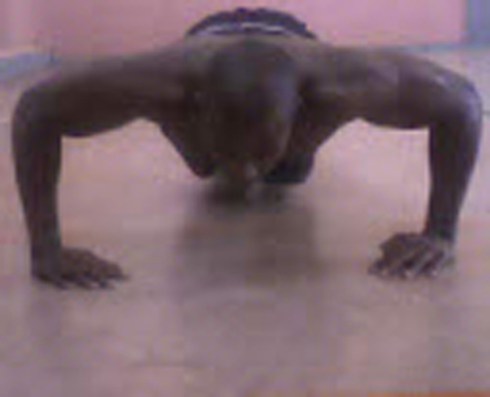
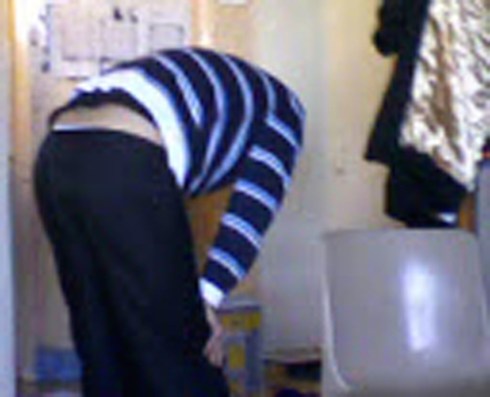
Methodologically, Bourouissa is way ahead of the game. As well as asking for images made according to description and sketches, he asked for videos. Bourouissa would send example videos and his collaborator (whom we know only as Al) would mimic. Throughout the project, Bourrouissa is clearly thinking about how the work will look to secondary and tertiary audiences. We are asked to make sense of seemingly random glimpses of an institution’s innards.
In exchange for composed views of the inside, Bourouissa sent short videos of the Paris streets. The simplest gestures become impressive. Even the txtspk language that is reproduced in the book is touching. In prisons, cellphones are illegal, valuable and a scarce resource, but the two use the tool with abandon and they repeatedly text to make sure they’re adequately fulfilling one another’s requests for footage.
This is not a photobook heavy on photos, yet everything inside depends on the discussions about images between Bourouissa and Al. There’s a lot of white space. The texts ensure we know the timeline and the white space ensures we know — and sense — the slow passing of time.
Temps Mort is over 5 years old now and the book feels a little like a memorial to that audacious moment when an artist dared and a prisoner dreamed. The book is a document that will last longer than the exhibitions and the interest in cellphone videos that declare a moment in Parisian jail operations. This blog post is many more steps removed from the original gifts between Bourouissa and Al. This blog post has no audio/visual jacks nor 9-foot white cube walls. This blog post lags behind the thrill of the original creation of the works and behind the recent exhibitions Bourouissa has mounted. My humble hope, here, is to impress how impressed I am. There’s nothing like this project.
There’s been many projects made in collaboration with prisoners from Virginia to Tennessee, and from Louisiana to Illinois, artists have communicated with prisoners to conjure something beyond the limits of the cell. And yet, none of those efforts have used the illegally smuggled mobile phone as their tool. There’s a subtle two fingers to the man in Temps Mort that we shouldn’t deny. I’m inclined to celebrate it.
Here’s some images and videos appropriated without permission from the web. Enjoy.







© Ruddy Roye
PDX Design Week wrapped up last weekend. Before I moved out of the city, I was asked to do a guest post for the PDXDW blog. I don’t know much about design, so I wrote about photographers that are making good use of emerging technologies or commenting on our brave new world dominated by emerging and automated technologies.
Thanks to Taryn Cowart for her assistance getting it published.
With some line-editing, I crosspost the listicle below.

PHOTOGRAPHY’S BEST
Good photography is good vibes. Often, even bad photography is good vibes. The world needs Seflies, SnapChat cheekiness, cat GIFs, and Doge bombs. However, sometimes, we have to search out the good stuff. We need to look around and ask what’s at stake. Frankly, there’s not a lot resting on your cellphone pictures — they’re not changing the world. When the technologies and file formats with which they were made are obsolete, no-one will care if your phone snaps are lost forever. Least of all you?
When we talk about art, journalism and photography we should be able to single projects out and to define worth. Some creative endeavors are world-changing. I want to give a nod to photographers and artists working with images who inform us about the world and some of its urgent issues. As users and consumers, I want to believe we can leverage rapid publishing and sharing for political and social improvement.
BEST USE OF INSTAGRAM
Ruddy Roye was the first photographer to really stake his style on the meaningful caption. He ditched the hashtags and asked real people some real questions. Based in New York most of his portraits are of people in his neighborhood and jollies around the Big Apple. His feed drips with humanity and reveals stories you couldn’t imagine. This is the REAL Humans OF New York! Also, I like to credit Roye for landing the fatal blow to the snarky #TLDR hashtag.

© EverydayAfrica
SECOND BEST USE OF INSTAGRAM
Peter DiCampo and fellow journalist Austin Merrill (both white American) set up the Everyday Africa after years of reporting from the continent and witnessing nothing but sensational and scary images of war, tragedy and the like. What about the normal everyday stuff? In an attempt to make the most of boring daily things, DiCampo and a wide cadre of collaborator quickly put together a simple, illuminating, sometimes colorful, and intimate Instagram feed. It’s political but not difficult. Okay, so it’s a free-for-all that promotes aesthetically ordinary pictures, but I’ll take neoliberal relativism over neocolonialist manipulation every day of the week.
EverydayAfrica spurned dozens of loose collective of photographers who set up EverydayMiddleEast, EverydayAsia, EverydayIran and even EverydayBronx. Instagram sponsored an Everyday “Summit” at the 2014 Photoville Festival and ponied up cash to fly in contributors from all corners of the globe. These guys are much better IG-movement than the creepy Christians making VSCO lifestyle shots to pair with their #blessed affirmations and bible quotes.
Watch out though: EverydayUSA has some of the best photojournalists under it’s belt. Photo-industry-folk reckon EverydayUSA will soon eclipse all the other accounts, at which point the whole Everyday movement may have announced its death. Get on this young movement while it’s still fresh and focused on countries other than the one you live in.

© Mishka Henner
BEST USE OF GOOGLE EARTH
If there’s a controversial topic Mishka Henner hasn’t produced a body of work on, he’s probably in his studio, right now, making it. From censorship, to prostitution in the Mediterranean, from military bases to big-ag food production, from war to big oil, Henner doesn’t shy away from tough topics. His skill is to do so without really leaving his studio. Henner is one of the cleverest, canniest and hardest working artists dealing with Google and the machine age of image-making.
He winds people up with his methods that are anathema to photo-purists but what else is there to do with available imagery if not to capture, ‘shop and frame it in political terms. Google is the all seeing eye that doesn’t care.
© Tomas Van Houtryve
BEST USE OF PERSONAL DRONES
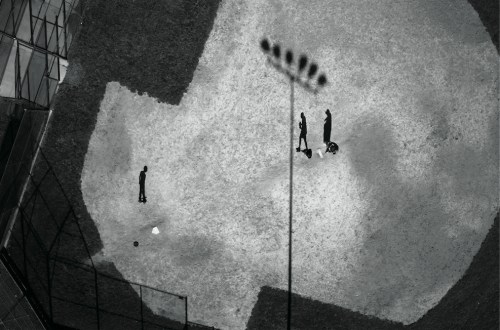
The Bureau of Investigative Journalism estimates American operated drones have killed between 2,296 and 3,718 people, as many as 957 of them civilians. That’s a whole lot of killing.
The program of U.S. airstrikes which began in 2002, but was only publicly acknowledged in 2012 is a remote war driven by a remote technology. Belgian photographer Tomas Van Houtryve decided the best way to grab Americans’ attention to the issue was to show them how drone attacks would appear in America.
There’s no shortage of projects about drones to get us thinking about the issue. John Vigg has his Google surveilled drone research labs and airports; Jamie Bridle traced a drone shadow in Washington D.C. last year and launched Dronestagram to populate social media sites with satellite views of drone strike sites; Trevor Paglen has photographed drones at distance; and Raphaella Dallaporta took a drone to Afghanistan under the guise of an archaeological survey.
Most recently Not A Bug Splat made a splash. Cheeky and powerful the project installed massive portraits of children in regions subject to U.S. drone strikes, with the intent of pricking the conscience of remote U.S. drone operators stationed in Nevada about to bring the hammer of destruction down on that Waziristan village.

Screenshot of Josh Begley’s Prison Map
BEST USE OF SURVEILLANCE IMAGERY AGAINST THE SYSTEM
Data artist Josh Begley specializing in scraping images from publicly available sources. He then creates App and websites to publish the info and produce push notifications you can’t avoid.
For his project Prison Map, Begley took the GPS coordinates of every prison, jail and immigration detention center in America and fed them into a Google Maps API code he had modified. He ran the script and it spat out more than 5,300 satellite images — one for every locked facility in the U.S. The prison population in this country has grown 500% in the past 30 years. One in every one hundred adults is behind bars and most of them are poor people. The recurrent patterns of brutally functional architecture within Prison Map are staggering. We’ve been building prisons in high desert and rural backwaters. Begley makes the Prison Industrial Complex (PIC) visible once more.
Likewise, for his project Profiling Is, Begley snagged the NYPD’s surveillance shots of business and residences in the NY boroughs which were under monitoring.
He doesn’t stop there. Begley’s App MetaData alerts users to U.S. drone strikes in Pakistan, Yemen, Afghanistan and elsewhere. This didn’t happen until the conclusion of a merrigoround of negotiation with the “apolitical” Apple. Begley finally got his drone strike App approved when he removed all mention the word drone! Now, you can get next-day updates of Obama’s largely-ignored drone war on Afghanistan, Pakistan, and Yemen straight to your smartphone.

© Mari Bastashevski
BEST USE OF PHOTOGRAPHY, MUCK-RAKING AND INVESTIGATIVE NOUS
Mari Bastashevski skirts a fine line between journalist, artist, researcher, photographer and tourist to dig up the personalities and money makers in the international arms trade. Here’s the feature I did for WIRED a while back. Her ongoing project State Business is devastating inasmuch it reveals how pervasive and complicit most nations are in making billions on the slaughter of humans.The US, the UK, Croatia, Azerbaijan, Georgia; Bastashevski’s following of the money takes us all over the place … sometimes even to the carport on the Facebook pages of international arms dealers.

BEST MAKING SENSE OF SURVEILLANCE
If you can’t beat ‘em join ‘em. In 2002, after Hasan Elahi was mistaken for someone on the terror watch list and detained for hours at Detroit airport, he decided he’d save the authorities the bother and monitor himself. Caustic, direct, creepy and amusing, Elahi photographed everything he did, ate, shit, saw and worked on. He also GPS tracked his every move on a live web map. The project is titled Tracking Transcience. One of the by-products of the self-monitoring is the creation of a typology of toilets. Taking sousveillance to another level and entertaining thousands while he does it. Brill.

© MigraZoom. A migrant on a cargo train traveling from Arriaga, Chiapas to Ixtepec, Oaxaca. After crossing the Mexican-Guatemalan border and traveling to Arriaga, migrants hitch a ride on top of cargo trains to Ixtepec. This trip takes about 12 hours. In addition to the risk of falling off the train (amputations and death are common), gangs frequently extort migrants, charging them $100 to ride. They face threats of being thrown off the train, kidnapped, raped or trafficked if they do not pay.
REALEST VIEWS OF IMMIGRATION
There’s some great fine art projects out there about the U.S./Mexican border. Probably, the stand out is David Taylor’s Working The Line, which documents the militarization of the border. But it can be criticised for being to distant and tends to rest on the creaking aesthetic mores of American landscape photography. If we want to see what is really going on during the tough journey’s into North America, we should pay attention to MigraZoom, a project by Spanish-born photographer Encarni Pindado which puts disposable cameras in the hands of economic migrants during their perilous treks northward.

© David Taylor
Another beautifully shot and more unexpected treatment of new arrivals is Gabriele Stabile’s Refugee Hotel which documents approved asylum seekers’ first nights in America at four hotels adjacent to four hub airports through which new refugee migrants arrive. Respectful documentation that is pregnant with uncertainty.
Taylor’s work is currently on show at the amazing ‘Covert Operations’ at Scottsdale Museum of Contemporary Art.
BEST USE OF INTERNET FOR DISCUSSION
Photographer Hank Willis Thomas is a prolific force. One of his most recent projects Question Bridge is a platform for black males to ask other black males questions about black identity. Participants do so through video and provide answers similarly. Access is easy, involvement free, connections priceless and it works well in exhibition format too. The murder of Michael Brown in Ferguson is the latest incident to demonstrate to the entire nation our shared need to face racial inequality int he country. Willis Thomas is doing his bit.
© Lindsay Lochman and Barbara Ciurej
BEST COMMENTARY ON MECHANICAL AGE FOOD PRODUCTION
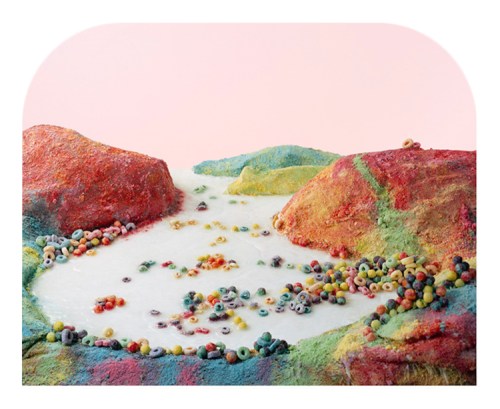
With Ag Gag laws becoming ever more common, clever responses to imaging industrial food production must be inventive. Lindsay Lochman & Barbara Ciurej rip on the much-mythologized West and specifically on the hero-worship of Carleton Watkins by constructing sugar-coated and corn-fed diorama reconstruction of Watkins’ landscapes with shitty foodstuffs.
Will Potter ain’t a photographer but he’s putting imagery to good ends. Potter, a TED Fellow, has been reporting on the crack down on environmental activists under homeland security legislation that was designed to tackle terrorist. Instead of chasing bombchuckers, our law enforcement is going after tree huggers. The title of Potter’s book, Green Is The New Red, say its all. Routinely, it has been eco-activists who’ve brought us the shocking footage from inside factory farms. Potter, continuing the tradition of expose, wants to fly drones over feedlots and take advantage of laws being slow to be written. Again, we seeing the convergence of technologies and activist peel back the layers of obscurity purposefully put over our shady business practices in years past.
© Donna Ferrato
VIOLENCE AGAINST WOMEN
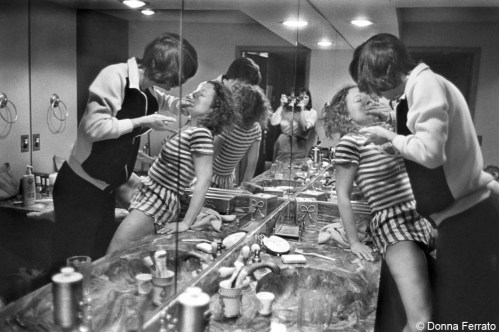
The greatest photography work being done to reveal the entrapped, terrorized lives of those victim to domestic violence, is done — perhaps not unsurprisingly by female photographers. Donna Ferrato has trained a lens on the topic for decades. Recently, young gun Sara Naomi Lewkowicz captured similar images to Ferrato as an intimate witness to partner abuse. The parallels were saddening proving that this is a strand of violent psychology we just are not dealing with effectively. To be frank, the issue isn’t being imaged enough; intimate partner abuse remains hidden behind closed doors.
Paula Bronstein was one of the earliest and most direct photographers to document the survivors of acid attacks in Asia. If we’re to mention women’s rights abroad we have to look at the work of Stephanie Sinclair, whose multiyear project Too Young To Wed is pitch perfect. Quiet, weighty, tragic and polychrome portraits of child brides throughout the world. Sinclair’s had help from all the major distributors and grant makers to cast the net of her survey far and wide. The transmedia project is about as good as it gets in terms of audience engagement tactics too.
© Jim Goldberg
BEST COMMENTS ON WEALTH INEQUALITY
It’s difficult to name a stand out photographer who has taken on the wealth gap in a resonant way. It sounds strange to say but maybe cash is difficult to shoot? This apparent lack is consistent with other art forms though. If Occupy taught us one thing, some issues are designed for public performance, demonstration, walking and protest signs. Think of music, for comparison. In the sixties musicians such as Joe Strummer and Nina Simone emerged with brilliant anger toward social injustice. Despite public disgust made visible in anti-Iraq-war protests and Occupy, there’s not a protest song from the 21st century of note. Perhaps music isn’t the format for anger or the wealth gap either?
Don’t worry, I’m not being a pessimist here. Violent dismay certainly exists. I’m just not convinced art is the realm where we see the most direct political action. Gone are the days of the great labor photographers such as Lewis Hine and Jacob Riis. Inequality was laid bare in the photojournalism of the civil rights era (Ernest Cole, Charles Moore, Danny Lyon) and while those reportages were about money and opportunity they weren’t primarily about the markets. Check out the work of Gregory Halpern for your modern day Milton Rogovin.
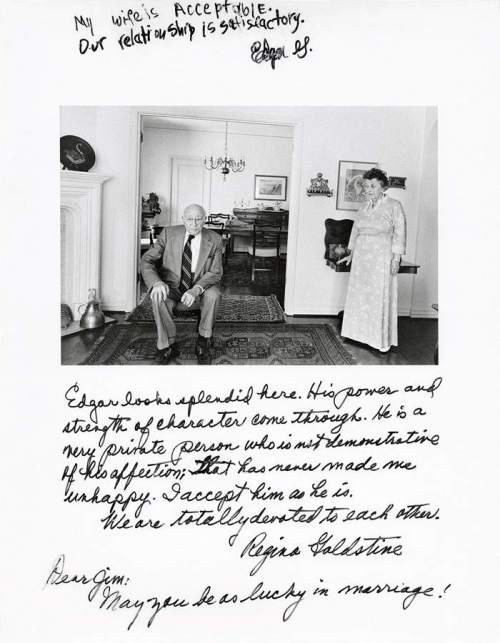
The most indelible and forthright description of wealth inequality is Jim Goldberg’s Rich and Poor, which remains the high point and the tone at which aspiring photographers should aim.
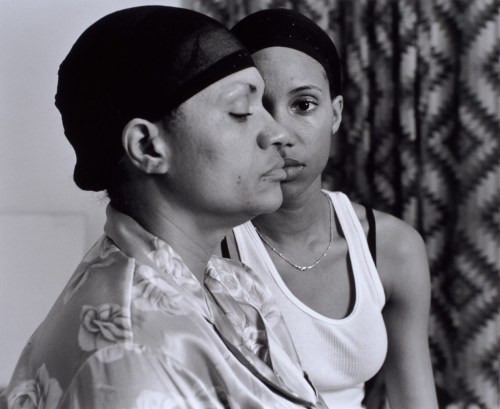
Dang, that’s been a lot of men’s names. I think it right to end with LaToya Ruby Frazier’s name then. She, better than anyone currently making work, ties together class, race, income, post-industrial America, public health, personal health, family and environmental hazard with her generational survey of the women in her family and her home town of Braddock, PA, in The Notion OF Family.
© La Toya Ruby Frazier

 Prison Photography