
You are currently browsing the category archive for the ‘Fine Art’ category.
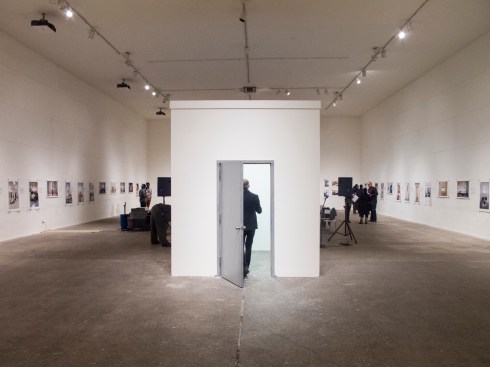

Richard Ross’ Juvenile-In-Justice project of photography and advocacy just keeps on rolling. And it does so with an experimental spirit and real world change.
Juvenile-In-Justice is currently on show at the Ice Box Project Space, part of Crane Arts in Philadelphia. Ice Box — which is in Kensington, one of Philadelphia’s poorest neighbourhoods — will host a free juvenile record expungement clinic on December 3rd.
The expungement clinic — which will be the first of its kind in Pennsylvania — expects to help 150 youth but there is no cut off. “We are going to take all we can and make sure no one is turned away,” says Ross.
Expungement is feasibly open to all youth but the expensive bureaucracy often prevents their ability to move into adulthood without criminal record they acquired as juveniles.
“If not expunged, a juvenile record is often a significant roadblock to employment and other opportunities for these young people. Even when someone takes action to expunge their record, hiring a private lawyer can cost thousands of dollars,” says Ross.
The show demonstrates a laudable cohesion of art and social practice.
“So often art that speaks to social justice issues is simply looked at, provoking brief contemplation among the audience,” says Ross. “While awareness is certainly great, we are turning the gallery into a laboratory for social change: photographic evidence of a problem hangs on the walls, while the people among the art work to alleviate it.”

The expungement clinic is particularly needed in Pennsylvania, state which is bucking the national and effective trends of youth decarceration.
“Pennsylvania is one of only two states in which the incarcerated juvenile population is actually growing,” says Ross.
Ross is quick to point out that this bold project comes about through the efforts of many partner organizations fighting for youth justice in the Philadelphia area, not least inLiquid Art + Design. “Their work, from inception to impact, is truly admirable,” says Ross.
Why should we care about juvenile incarceration? Check out my WIRED article about Ross’ work for some answers. Below, are a few more of Ross’ photographs from Juvenile-In-Justice.

Restraint chair for self-abusive juveniles at the Mendota Juvenile Treatment Center in Madison, WI houses 29 children and is usually at full capacity. The average stay for the emotionally and mentally disturbed juveniles, some of which are self-abusive or suicidal, is eight months. Children must be released at age 18, sometimes with no transition options available to them.
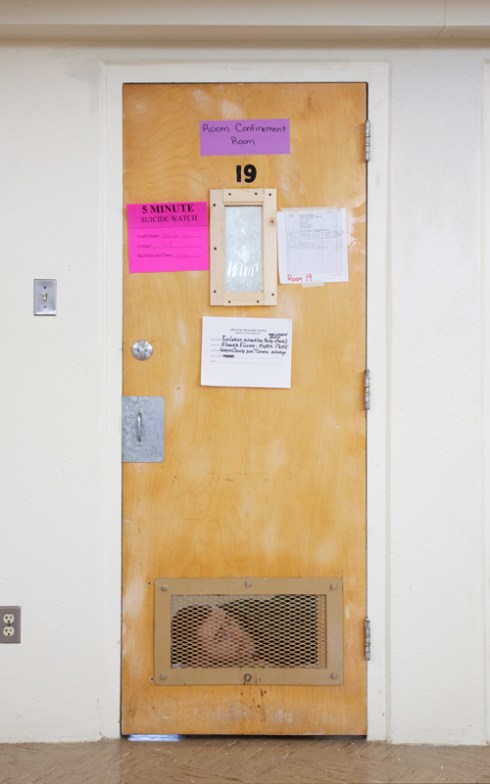
Nevada Youth Training Facility, Elko, NV.

“Time out room” at the South Bend Juvenile Correctional Facility, South Bend, IN.
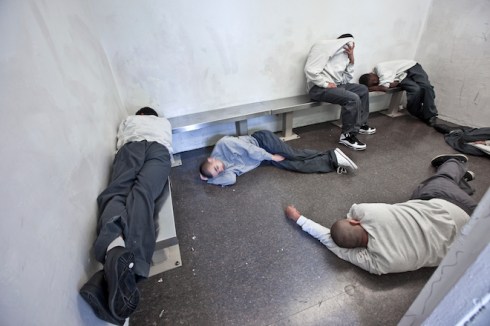
“I photographed intake moments before a director of Los Padrinos Juvenile Hall, Downey, CA, had the juveniles sit in erect and proper on the benches – an unnatural positions. This is one of three major centers of the Los Angeles Juvenile confinement system, collectively the largest in the country. The great majority here is populated by Hispanic and African-American juveniles,” says Ross.
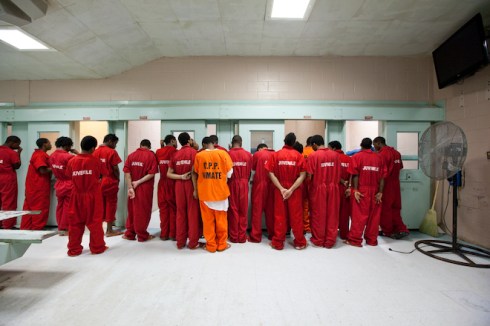
The air-conditioning was not working when Ross visited the Orleans Parish Prison (OPP) in New Orleans. There had also been a fight the previous night and as a result, TV, cards and dominoes privileges had been taken away. The OPP, managed by Sheriff Marlin Gusman, houses about 23 juvenile boys. They live two to each cell. The cells at their narrowest measure six feet in width.

Challenge Program, El Paso, TX. “They come in once a day and do a search of my room,” says the 14 Year old girl. “Everything I have in there, EVERYTHING, goes out–including the inside of the mattress and a body search–once a day. It happens anytime. Random. I was arrested for assault against a 13-year-old girl. It’s sort of all right, but it also really sucks. I’m here for Violation of Probation. I was at home with an ankle bracelet. I got mad at my mother and started throwing chairs and cut my ankle bracelet. My Mother works for Rody One industries; my Father lives in Juarez. I just finished starting 8th grade. It’s boring but I like to write poems, and listen to music. One day I might want to work as a Corrections Officer in a prison.”

A 12-year-old in his cell at the Harrison County Juvenile Detention Center in Biloxi, Mississippi. The window has been boarded up from the outside. The facility is operated by Mississippi Security Police, a private company. In 1982, a fire killed 27 prisoners and an ensuing lawsuit against the authorities forced them to reduce their population to maintain an 8:1 inmate to staff ratio.
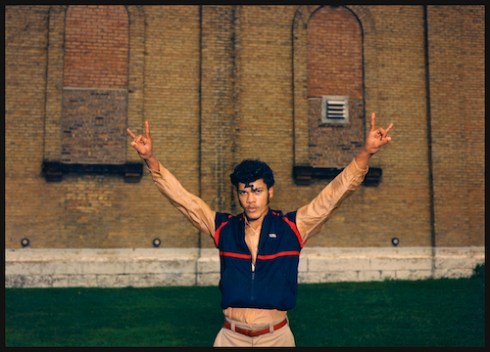
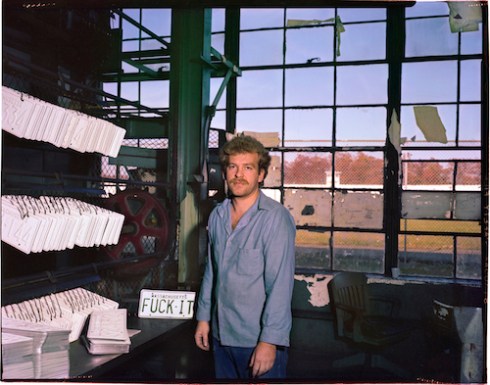
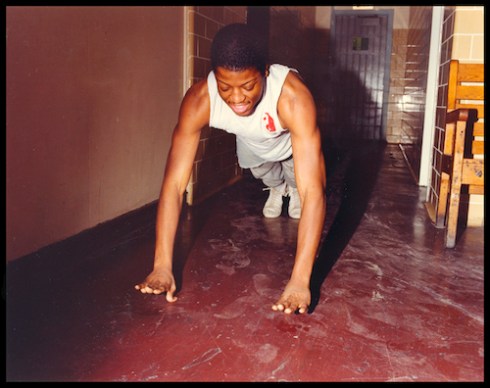
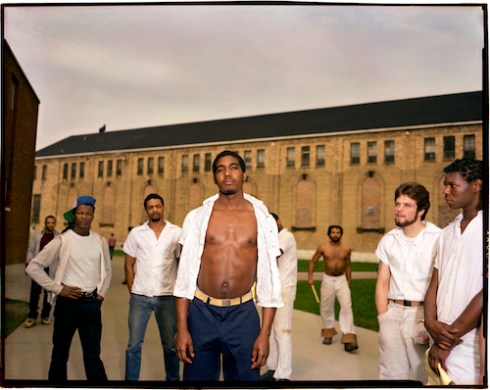
I’ve been stumbling across some mind-blowingly novel prison photographs recently. This incredible Facebook Album by Steve Milanowski fell on my radar and the colour is something special.
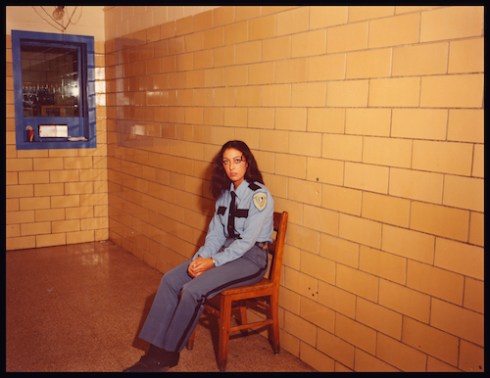
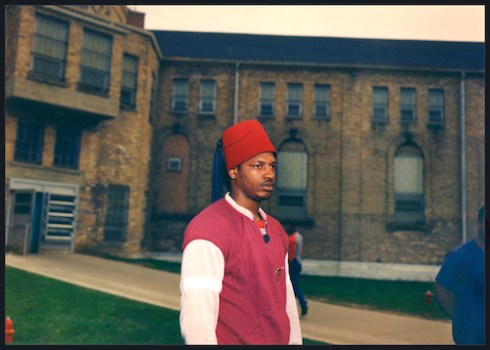
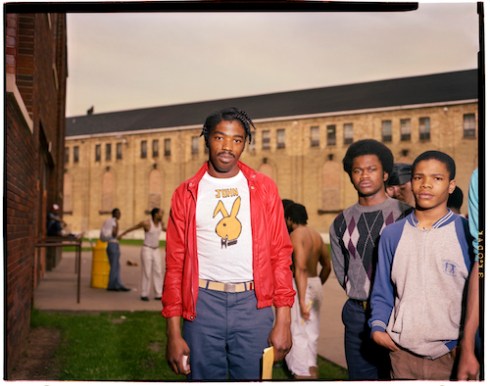
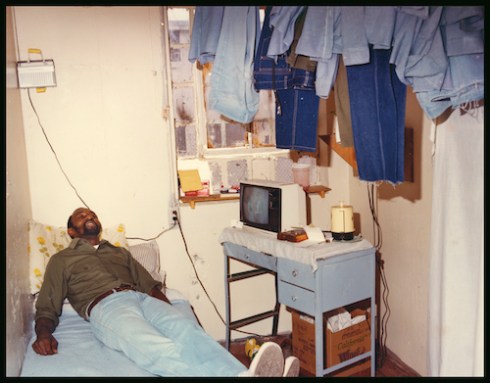
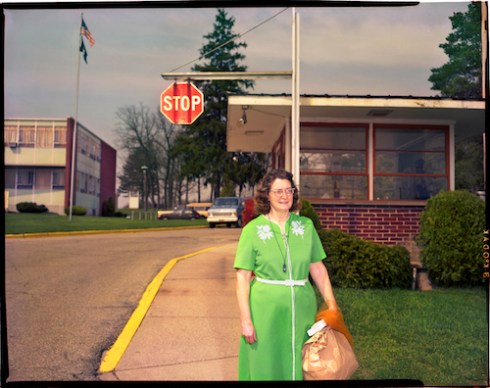
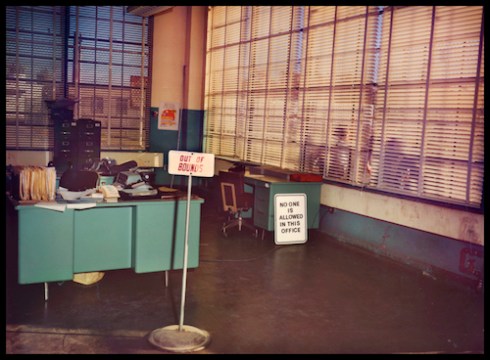
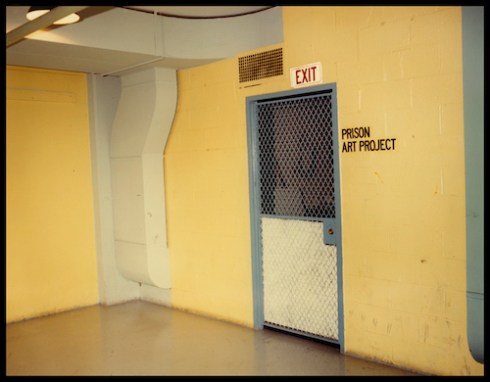
Milanowski photographed at three prisons during the eighties — Walpole, Massachusetts (1981, 1982); Ionia, Michigan (1984); and Jackson, Michigan (1985). In 2012, he began shooting the outside of Waupun Correctional Institution in Wisconsin. In each case, Milanowski was working independently and not on assignment.
As colourful and characterful as these images are it’s worth bearing in mind that prisons of this era were beginning to creek. Dangerous overcrowding existed in Michigan prisons in the early eighties, and Jackson in particularly was renowned as a tough prison with gangs and enforced convict codes.
These prison photographs have, up to this point, only had limited circulation. Some feature in Milanowski’s book Duplicity, others on his website. A few photographs have appeared in museum exhibitions around the country. I wanted to know more, so I dropped Steve a line with some questions.
Scroll down for our Q&A.
Prison Photography (PP): Where did your interest in prisons come from?
Steve Milanowski (SM): It dates back to my childhood: my dad was an attorney in Michigan and very occasionally had clients that he had to visit in prison. When I was in 5th and 6th grades, maybe twice, he took me along (taking me out of classes) on the prison/client visits. For a 6th grader, these visits were absolutely unforgettable. Indelible. This was an environment that was utterly foreign to my existence. It was almost as if my eyes weren’t fast enough to take it all in. To a kid, nothing in the world looks like a prison.
PP: What was the purpose of your visits the these four prisons?
SM: Simply to make new photographs in places that have mostly been, in the past, photographed with visual cliche and with the perceived grittiness of black and white films.
PP: How did you gain access?
SM: My first permission was with Walpole in Massachusetts. I sent a letter to the Walpole warden; it was written on MIT stationary. I was a graduate student at MIT and I think the name helped in getting me access. I found that once one gets permission to photograph in a prison — that permission leads to more permission. I used the Walpole photographs in gaining access to Jackson and Ionia prisons. No negotiations were needed; they all gave me fairly easy access. Initially, I only asked for single-visit access.
PP: How would you characterize the atmosphere of the prisons?
SM: The atmosphere was taut, tough and difficult at most turns — very regimented and formal. In some instances, I was assigned a female escort which made my shooting more difficult because the inmates had no hesitation in shouting out awful, obscene things; and, the female escorts seemed bent on proving that they were not bothered or intimidated by these nasty shout-outs.
PP: How does this body of work relate to your other projects and your philosophy/approach to photography generally?
SM: I consider my work to be the work of a portraitist. My prison portraits are stylistically in line with the portrait work that I pursue “out in public” at public demonstrations, holiday parades, festivals, fairs, and competitions.

PP: What were the reactions of the staff to your photography?
SM: I never really sought out their reactions. My photographs did seem to always successfully get me more access though.
PP: What were the reactions of the prisoners?
SM: Never really got reactions, per se. But with each portrait, I offered a free print if they wrote me a request and visually described themselves; some inmates wrote back and praised the images. Some seemed to want to start a pen pal relationship, just because, it seemed, some inmates had few contacts with the outside world.
PP: What is your personal opinion of prisons? Have they changed since you visited in the eighties?
SM: Prisons, then and now, in America, seem to continue to be warehouses; I think most Americans are aware of the fact that we, as a nation, have one of the largest prison populations in the world — and that we incarcerate at a level that far exceeds almost all other nations.
Have prisons changed? One change I’ve noticed with great concern is the concept and use of Supermax prisons which seems to be uniquely American. With older prisons as well as Supermax prisons, we seem to never be willing to spend much money on reducing recidivism.
The conservative right loves to convey the idea that they are tough on crime — tough prisons, tough sentencing, and the idea of “throw away the key.” So, our prison populations grow, and we build more prisons than any other nation. We’ve seen the expansion. And the Democrats? They do their best to avoid being tagged as “soft on crime.”
PP: What are Americans’ feeling toward crime and punishment?
SM: Americans very much ignore prisons and prison life — unless they live near a prison where the prison is the source of some level of local employment. Americans seem to only take notice of prisons when there is a problem, an escape, a prison disturbance (that receives national media attention), or when there is some breakdown in the system.
There seems to be a real void in political or community leadership especially in the realm of education as a path to reducing crime and reducing prison populations; the idea gets plenty of lip service.
PP: What role has photography in telling publics about prisons? Is it an effective tool?
SM: I think photography can help — and be an effective tool in informing the public about prisons and who inhabits American prisons; but, I’m not sure at all that our society wants to look at prisons and prison life … its too easy to ignore.
PP: What camera and film did you use?
SM: 4×5 Linhof and 4×5 Kodak and Fuji color negative. Sometimes a Pentax 6×7 with Fuji and Kodak color negative film. And, always combining flash with ambient light.
PP: The color you introduce is unusual for prison photographs. From looking at your other work, it is clear you revel in colour portraits. Were you aware that you were making unique images; splashing color all over these darkened corners of US society?
SM: Unique images? Well you have hit on something that was a primary intention: I wanted to make photographs that told you something new. Pictures you hadn’t seen before. Prison photography is rife with cliches. I thought if I were given access to prisons, I’d make different photographs. I was not arrogant about this — just determined to make images that had not been seen before.
I was determined, self-directed and wanted to get as many photographs as I could accomplish in, typically, a 1 to 2 hour visit. I limited my talk and conversations — I was on a mission.
BIOGRAPHY
Steve Milanowski is a photographer and, with Bob Tarte, co-author of Duplicity, a monograph of his own portraits. Milanowski earned his BFA from The Cranbrook Academy of Art and his MS from The Creative Photography Laboratory at the Massachusetts Institute of Technology. His photographs are part of the permanent collections of The Museum of Modern Art, National Gallery of Art, The Houstin Museum of Fine Arts, The High Museum of Art, and The Polaroid Collection and numerous public collections. MoMA published his work in Celebrations and Animals; his work was also included in MoMA’s recent survey of late 20th century photography in the newly reinstalled Edward Steichen galleries.


Photo: Karen Ruckman/PhotoChange
In 1981, freelance photographer Karen Ruckman stepped inside the notorious medium-security Lorton Prison to teach prisoners photography. Lorton was a sprawling barrack-like institution nestled in a rural pocket of the Virginia suburbs. Lorton, a Federal facility, closed in 2001. For decades it was where Washington D.C. sent its convicted felons. Initially, the administration didn’t think the program would last more than a few sessions and the students were cautious. Ruckman successfully won grants, donations from Kodak, cash from private donors, and support from then Mayor’s wife Effi Barry to support the photography workshops. Ruckman taught at Lorton until 1988.
When I recently learnt about Ruckman’s work, I was floored. For the longest time I have said that photography workshops inside of American mens prisons ended in the late seventies and mass incarceration had precluded the mere chance. Ruckman’s work at Lorton has forced me to reevaluate my timeline. I hope Ruckman’s work also brings you encouragement.
In 1985, Ruckman invited cameraman Gary Keith Griffin to film the class at work. Now, she and Griffin are working on a documentary about this unique moment in prison arts education. Ruckman and Griffin have followed some of the men since their release and the film, tentatively titled InsideOut, is slated for release in 2015 — the 30 years after Gary made those first reels.
Ruckman has routinely worked with populations considered to have less of a voice in our society – battered women, the poor, and at -risk youth for example. She also taught photography in the D.C. women’s jail, but that single summer program doesn’t feature in the film.
Karen Ruckman and I spoke about her access, the program’s successes and obstacles, the need for diverse image-makers in criminal justice and the lessons the project contains for us all three decades on.
Scroll down for our Q&A.

Photo: Calvin Gorman. © Karen Ruckman/PhotoChange + Calvin Gorham
Q&A
Prison Photography (PP): I wasn’t aware of any prison photography workshop programs after the 70’s and so to find your work at Lorton is a revelation. It’s 25 years since the program ended, so let’s start with the basics, how did you get involved? Where did the idea come from?
Karen Ruckman (KR): I was doing work for the Volunteer Clearinghouse here in D.C. and they sent me to the prison to photograph volunteers who were tutoring inmates. I went to Lorton with George Strawn, the head of volunteer services and he asked if I’d be interested in teaching a class. I hadn’t really thought about it, but it happened to coincide with the funding for proposals coming in to the D.C. Arts Commission and I applied for a career development grant and I got it, much to my surprise.
I went down once a week and taught photography with a focus on career development. I approached it as a basic photography class and I brought in guest speakers, photographers from various newspapers, friends of mine in the community who were photographers. It went very well. The men worked hard, so after that I applied for another grant. Actually, D.C. had a category called ‘Arts in Prison’ during the 80s. I got my later funding through that grant category.
PP: Which photographers visited the class?
KR: Craig Herndon, from the Washington Post; Bernie Boston, from The Los Angeles Times, Gary Keith Griffin who works primarily in video and is working with me on the feature documentary now. I had executives from NBC who came in too, as well as local artists and fine arts photographers.
PP: What other arts program were being taught in D.C. prisons at the time?
KR: There were several theater programs and a woman who taught painting. That’s pretty much it.

Photo: Bernard Seaborn. © Karen Ruckman/PhotoChange + Bernard Seaborn
PP: How did the program develop over the 8 years? Did the funding, scope or size of the class change?
KR: I had a cap on how many students I could have but I ended up doing two classes. Prisoners who had been in the earlier classes then became mentors to the new guys. Over time, I became more of a facilitator: bringing in supplies, bringing in expertise, working with them, training them and then they took on the job of mentoring each other.
They also ran the dark room when I wasn’t there. We built a dark room in a closet that was in the prison school where classes took place. I had a teaching assistant, Chuck Kennedy, who came with me from the community but I also had a prisoner who was a teaching assistant so the guys could work during the week. The program grew with more men participating, more prisoners developed skills. The inmates took on more of a teaching role; it was always my goal that they would.
PP: How many students would you say you taught over the seven years?
KR: I tried to figure this out once some years ago! More than 100 but less than 200. We had new intakes for each class and some guys stayed in year after year. They’d been charged for felonies in D.C. Some had written bad checks, others had been charged for murder.
PP: Lorton is now closed?
KR: It was closed in 2001. It was a rather controversial move. The prison was actually located in Virginia on hundreds of acres of land. There were different facilities there including two youth centers, Central, the medium security facility where I taught, and maximum. Virginia had been wanting that land for quite some time.
Lorton’s buildings needed a lot of work, and rather than renovate, they closed it. The Federal government transferred the land to Virginia and now D.C. prisoners are farmed out across all of the country.
PP: Ouch! That can’t be good for rehabilitation.
KR: It’s terrible, yes. And so there’s no programing, and they’re in federal facilities all over the country.

Photo: Sidney Davis. © Karen Ruckman/PhotoChange + Sidney Davis
PP: What was the reaction and the response from the prison authority? Today, of course, these programs don’t exist and often the language-of-security is used to deny all sorts of things within prisons, and the camera in particular is quickly labelled as a security hazard. What was the feelings of the Lorton authorities at that time?
KR: I had to take on the job of educator. Many didn’t understood the need for the men to go outside the classroom to photograph, and the usefulness of exhibitions. They understood the photo class but part of that, part of each class was doing a show. We always did one in the community and one in the prison — it was a massive job of educating staff about how we could go about producing the program successfully.
I was very fortunate because Effi Barry, the mayor’s wife, had just opened an art gallery and I had her support. I always went top down. It took me a lot of time to go through the necessary channels and to get the permissions. The administrator at Central Facility, Salanda Whitfield, was a really nice guy who supported the program. He died some years ago.
Mr. Whitfield let the program come in, he let us break the rules, because of course cameras weren’t allowed, and of course inmates were not allowed to take photographs. Even with his backing I still had lots of paperwork to do in order to make the classes function well.
I found some resistance from the guards who felt like the inmates were getting something that was too nice, that wasn’t fair, that they shouldn’t get. So, my real problem when I had problems was always from the guards.

Photo: Michael Moses El. © Karen Ruckman/PhotoChange + Michael Moses El

Photo: Calvin Gorman. © Karen Ruckman/PhotoChange + Calvin Gorham
PP: Before you began the project, did you consider yourself an activist in that field of criminal justice?
KR: No, I was an activist generally but not particularly in prison reform.
PP: Did you ever have visitors that were inspired by the program and wanted to replicate it elsewhere? Or were you working in a bubble?
KR: I guess I worked in a bubble. I mean, I had visitors and help from others. I had photographers come in, other artists as well, but, no, I didn’t have anyone that wanted to replicate it.
PP: Did you understand at the time that you were doing something very pioneering?
KR: I don’t think so. I mean it was a really interesting time. Many of us were doing things in the community and were trying to think sideways, and I felt like it was something exciting. I had a passion about taking the camera to people who couldn’t normally tell their stories. By giving the men in my program this powerful communication tool, it was an opportunity for them to tell people who they were, it was a humanizing agent.
For the documentary, and since 2001, we’ve followed up with two of the men who were in Lorton and the program.
Michael Moses El had a fascination with guns. He found that when he came into the program that he was able to transfer this fascination with guns to the camera. It was a very exciting thing for him.
Calvin Gorham is an artist. He’s a singer; a soulful person and he used photography as an artistic tool to communicate how he felt. He said he saw a lot of dark things in the prison and he photographed to express that.
PP: And so there’s no doubt in your mind that photography is a rehabilitative tool?
KR: It’s a powerful rehabilitative tool. There are so many levels one could do with it as a storytelling device. Now, with digital imaging, possibilities are unlimited. Yes, absolutely. I worked with other groups in the city. In 1988, I also worked with women at D.C. Jail, then in the 90s with women at a pre-release halfway house. Also, women in various shelters and at-risk kids.
PP: And so tell us about the documentary, it’s been thirty years since you’ve been doing this work, how and why did you decide a documentary was necessary?
KR: In 1985, Gary Griffin, a friend and colleague, bought his first TV camera. Gary thought it would be valuable if we could do video about the program. So I got permission again, days of paperwork, but we went in with a crew for a week in 1985.
Some of the footage in the trailer is from ’85. We never were quite sure what it was going to be. We did put together a fundraising piece because I was always having to raise money.
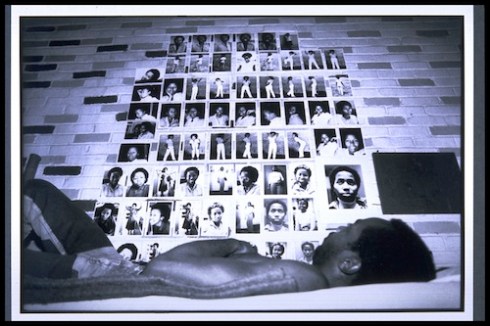
Photo: Michael Moses El. © Karen Ruckman/PhotoChange + Michael Moses El
PP: Right, you were constantly communicating with free society how important your work was and asking for help?
KR: To do the programing, I had to constantly write proposals and fundraise. I was somewhat burnt out by the end of the 80s. The funding for the prison program became very difficult to get. I went on to work with other groups and do different things. The guys would stay in touch with me, they had my business phone and they’d call me when they got out of prison and tell me what they were up to.
But, I still have the wonderful images. I was at a workshop in Santa Fe in the late 90s and showed some of the images to National Geographic photographer Sam Abell. I also had an audio tape from one of the graduations that I put with the images and it was a very powerful slideshow (of sorts) — one of the men at one of the graduations gave a marvelous speech about photography.
Sam was excited by the images and very supportive. He said. “You’ve got to do something with this.”
I decided along with my video production friends to do a reunion. We knew Lorton was closing. I tracked down as many of the guys as I could. We had about 20-25 at the reunion. Gary documented the reunion and then we documented some of the men periodically. We later settled on following Michael and Calvin.

Photo: Calvin Gorman. © Karen Ruckman/PhotoChange + Calvin Gorham
PP: Why Michael and Calvin?
KR: Number 1, they were interested in participating. Number 2, they’re very interesting people — Michael is business-oriented, very focused about his life. Calvin’s a musician, we have a lot of footage of him singing. We’ve seen them almost every year since 2001. Gary and I think 30 years is a good amount of time. When we get this feature documentary completed by 2015 it will have been 30 years since Gary began filming.
PP: The documentary is a few things, it seems? A record of a moment; the on-going stories of Michael and Calvin; and a call to action asking people to think about photography’s relationship to educational and rehabilitation?
KR: It is. It’s a character study that presents the power of photography, the power of art, and how important both can be in changing lives.
Only a few of the men now make pictures professionally, but they all make pictures still. The documentary is about the program and how the learning experience has stayed with the participants throughout their lives; how it continues to resonate and define their world view in a positive and powerful way.
The discipline required working in the dark room was critical. For example, one participant, David, spent two years learning how to make a good print. And he ultimately made beautiful prints. Two years. It was very impactful.

Photo: David Mitchell El. © Karen Ruckman/PhotoChange + David Mitchell El
PP: Can you give us your thoughts of storytelling, self-representation and empowerment?
KR: It was always their story to tell. I came in, I gave them cameras. I didn’t take a lot of pictures. I was there as a facilitator. I gave them the tool to tell their stories. I think that’s enormously important.
During that period — and even now — there’s something that is bothersome to me when people go in and take pictures of powerless people. It’s important for people to tell their own story; that doesn’t just shift the viewer, it shifts the person telling the story.
PP: It does seem obvious that if one puts a camera into the hands of someone in the community that you’re trying to bring new information about and to the wider world, but there’s still so many people in the photo world who reject that.
KR: Yes. This is off topic, but probably the most amazing experience I had when I took exhibitions to the community was when I hung a show by women at a shelter for victim’s of domestic violence. We did a show of their work at the D.C. library, in the mid-90s. Visitors would ask me who took the photographs, and when I explained the women photographers were survivors of domestic violence, people would just stop and walk out of the room.
How do we relate to issues that we’re uncomfortable about? Do we not want to see these individuals?
PP: Well, what were attitudes like then about crime? What was the reputation of Lorton? What was the general community’s view of Lorton prison?
KR: Lorton and the D.C. community were very connected in the eighties. So many people from the city were incarcerated there that Lorton was just like a subset of the community. So, there wasn’t as much stigma with prisoners as I encountered among other groups that I worked with, at least in D.C. at that time.
Lorton was considered a very dangerous place. The facilities were old even when I was there. The men lived in dorms and there was one guard per dorm at night so you can imagine that there was some violence. I personally, I didn’t get too involved in that. I tried to go in and do my program with them without judgement.

Photo: Karen Ruckman/PhotoChange
PP: And then tell me about the dark room? Were there any issues with taking chemicals and other apparatus in?
KR: The dark room was fabulous! I brought the supplies and the men ran the dark room. Kodak gave me film and photographic paper. I bought chemicals. We had lots of applicants, but I could only take so many, so it was considered a reward for someone to get into the photography program.
PP: On what criteria did you decide admission?
KR: They had to have good behavior to be allowed in the program. When it started out I only admitted men that were within three years of parole because the lessons were about career development; it was my hope to actually help guys get jobs once they got out. After a while, we relaxed that rule and a few guys still had a lot of time to serve.
PP: And could students be removed from the program at the whim of the warden or the staff?
KR: Well, I lost a few people because they misbehaved in prison and were sent to the hole (solitary confinement), or to another prison. That happened.
PP: When you release the documentary have you got any plans for distribution. How do you plan to reach audiences?
KR: I’m taking that a step at a time. We are going to finish a 30-minute short this winter that we’ll take to film festivals. A local organization, Docs In Progress, is hosting a showing of the trailer. I’ll contact our local PBS station, but with the feature-length film I have to plan a more structured distribution plan. It’s very important to get it out. I’ve stayed in connection with people in the D.C. community, people like Marc Mauer at the Sentencing Project and others who care about the issue.
PP: What’s your personal position on prisons? What role does incarceration play in our society?
KR: There are people who commit violent crimes and they belong in prison. Some of the men that I worked with said that being in prison gave them an opportunity to really look at themselves and take a timeout and to correct their behavior. There is a role for prison if they have rehabilitation programs.
Of course, we all know that there are way too many people that are incarcerated and there are people that are incarcerated that just shouldn’t be there, so it’s very frustrating. Things haven’t changed all that much since the eighties except we’ve incarcerated more people.
D.C. incarcerates an enormous number of people. With the poverty and lack of good public education here. That’s the story of the documentary. Calvin’s son went to prison and Michael’s son went to prison. So, we talk about that story, it’s that legacy that’s just, it should be broken. Marian Wright Edelman‘s work with the Children’s Defense Fund deals with this issue, and has a program called the Cradle to Prison Pipeline.

Photo: Karen Ruckman/PhotoChange
PP: Do you think the American public gets reliable information on prisons?
It’s my sense that most people aren’t interested in prisons. When I tried to raise money for the program it was very hard. There’s little compassion. Around drugs and drug culture there’s some alternative sentencing programs happening but by and large, I don’t think people are interested. I mean, now, we have for-profit prisons which is even more atrocious because now we have to maintain the population so that profit lines can be maintained.
PP: I ask because, to my mind, if there were more photography programs like yours occurring in our prisons today, there would exist a more nuanced view of prisons; prisoners’ views. We’d all be in a better place in terms of being informed.
KR: Yes, absolutely. The program had a humanizing effect, both on the participants and in how they were viewed by the community. It provided a bridge, and it didn’t cost the tax payers much. I secured small grants and fundraised and so it was for tax payers a really good deal. That’s true of most arts programming.
PP: Often program funding is based on measurable impacts but a lot of time with prisons you can’t measure those so easily because some people are not getting out for ten or twenty years. You can’t correlate arts rehabilitation with recidivism because the prisoners don’t get out in any short space of time. So, what stories do you have about your students? Any stand out stories that convince you of the efficacy of a photography program?
KR: The men would be the ones to tell you. Sadly, a lot of the guys die; they don’t make it. Some of them die soon after they get out.
I think about Calvin and Michael — the program gave them discipline and an opportunity to evolve productively. Michael told us about a time soon after his release when he was very tempted to commit a violent act against another man. Something stopped him. It was, he said, it was the discipline and working relationships that he had developed during the program. He didn’t want to end up back at Lorton.
A couple of the guys do a lot of professional photography. It’s very hard to answer that question because people want to ask, “Okay, well how many guys got a job as a photographer?”
PP: How many people generally get jobs as photographers!
KR: Actually, Michael was hired by US News and World Report to shoot a cover story on poverty, and he took some amazing pictures. They were going to use one of his photos for the cover but when they found out he was an ex-offender they wouldn’t run his photo. He’s still very bitter about that.
PP: What’s his past history got to do with the suitability of a photograph?
KR: It was many years ago; it was the late 80s.
PP: But that’s complete discrimination.
KR: I was told by several photographers at the Post that they would be uncomfortable to have ex-offenders there because they would be afraid that they would steal equipment. These are the attitudes that make it really tough for ex-offenders to get jobs in fields other than construction or the food industry, though a few of them do get jobs driving Metro buses.
PP: Is there anything I’ve missed?
KR: I appreciate you finding and highlighting the work. We’re excited about finishing the film. The project has ended up — without me realizing it — a life work.
FOLLOW
You can follow Karen and Gary’s development of the film via the InsideOut website, on its Facebook page, Tumblr page and via Karen’s Twitter.
TRAILER
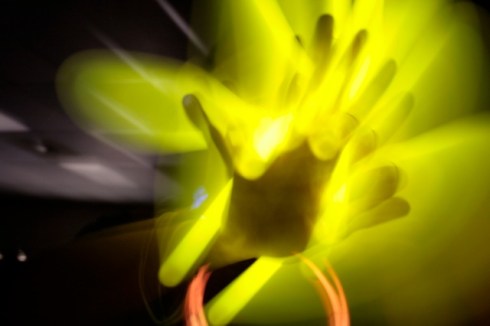
Yellow Hand With Orange Glow. Courtesy: Fresh Eyes Project
The potential for photography to change the lives of the incarcerated, particularly the young prisoners, is significant. Photography education provides all the therapeutic tenets of arts programming, but also develops new skills; visual literacy, computer and digital-darkroom skills, and (of course) the not-too-simple task of mastering the settings on a camera. Photography workshops flex different muscles than painting or writing workshops may. Photography allows storytelling beyond the pen and the paintbrush.
NOTE: I discuss many photography programs in this article, but all the images are by incarcerated children in New Mexico who’ve participated in the Fresh Eyes Project workshops.
THE FRESH EYES PROJECT
The Fresh Eyes Project in New Mexico is two years old. It delivers 10-week classes, twice a year in two New Mexico facilities – the Youth Diagnostic and Development Center (YDDC) in Albuquerque and the adjacent Camino Nuevo Correctional Center.
The planning, structure and accountability reported on the Fresh Eyes Project website is impressive.
Volunteer programs, cameras or not, must be water-tight, well-designed and directed. The Fresh Eyes Project clearly states its scope of work, it’s objectives, its internal assessment and feedback opportunities for students. I very much appreciate programs that share curriculum and lesson plans. Very valuable.
“Our purpose is to help the youngsters to see themselves and the community into which they would be released with fresh eyes as and for the community to see the youngsters with fresh eyes not as ‘the Other’ but as ‘our own,'” says the Fresh Eyes Project founder, Cecilia Lewis.
SCARCITY OF PROGRAMS INSIDE JUVENILE DETENTION
Sadly, projects like the Fresh Eyes Project are rare. In America, inside locked facilities there have been some occasional photography workshops but few consistent ones. I’ve mentioned many times Steve Davis’ workshops (there’s still so many photographs that remain unpublished). Fatima Donaldson recently led a digital photography workshop at Fort Bend Juvenile Detention Center, Texas (info and video).
Probably the best and most consistent provider of photography workshops to incarcerated youth is AS220 in Providence, Rhode Island. AS220 delivers education, including photography training, at the Rhode Island Training School (RITS), the State’s only juvenile detention facility. Classes are delivered as part of AS220’s Youth Photography Program which also works out of a downtown location and in local schools too.*
The Fresh Eyes Project and AS220’s work are the only year-on-year prison photography programs delivered in the U.S. that I know of. Please, contact me if there’s current programs of which I should know.

Fear. Courtesy: Fresh Eyes Project

Ghost Hand. Courtesy: Fresh Eyes Project
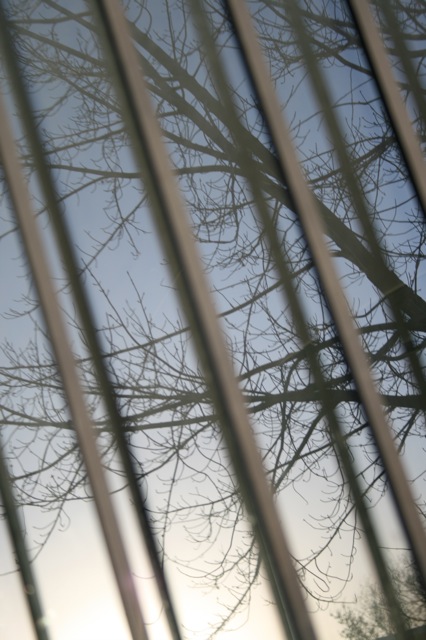
These Bars Keep Me In. Courtesy: Fresh Eyes Project
PHOTOGRAPHY FOR YOUTH STORYTELLING
Can a teen do without their phone? Is a phone ever without camera these days? Can that commonplace visual communication be leveraged to spark interest in other forms of image making? In other cameras? In film photography? I’d say so.
Thanks largely to the work of Wendy Ewald, literacy and personal development through photography is a familiar notion. Youth storytelling photo programs include Youth in Focus, Seattle: Focus on Youth, Portland; Critical Exposure, Washington DC; First Exposures, San Francisco; The In-Sight Photography Project, Vermont; Leave Out ViolencE (LOVE), Nova Scotia; Inner City Light, Chicago; My Story, Portland, OR; Picture Me at the MoCP, Chicago; and Eye on the Third Ward, Houston; and Emily Schiffer’s My Viewpoint Photo Initiative.
This summer, at Photoville, I saw an exhibit Perspectives featuring the photographs of teens from Red Hook, Brooklyn. Perspectives came out of a specific PhotoVoice program, that itself is part of the ongoing JustArts Photography Program (formerly the Red Hook Photo Project)
The JustArts Photography Program (more here and here) is run through the Red Hook Community Justice Center (RHCJC) in cooperation with New York Juvenile Justice Corps and the Brooklyn Arts Council. As with all the RHCJC projects, the photography program exists to improve the lives of teens within the geographically and socially isolated Red Hook neighbourhood.
PHOTOGRAPHY AS INTERVENTION
Whereas JustArts uses photography as inspiration, working with kids from less advantaged communities to envision great futures, Young New Yorkers actually uses photography (as well as video, illustration and design) as intervention in the cogs of the youth justice system.
“Young New Yorkers a restorative justice, arts program for 16- and 17-year-olds who have open criminal cases. The criminal court gives eligible defendants the option to participate in Young New Yorkers rather than do jail time, community service and have a lifelong criminal record. The curriculum is uniquely tailored to develop the emotional and behavioral skills of the young participants while facilitating responsible and creative self-expression.”
Young New Yorkers (YNY) is remarkable. More to come on Prison Photography about their successes. This little shout out is the least YNY deserve.
If you want to support YNY’s work right now, their Second Annual Silent Art Auction is on October 16, 6-10pm, at Allegra La Viola Gallery, 179 East Broadway, New York, NY 10002. You can bid online, if you’re not in New York.
So much good work being done across the country. These kids are our future.
Fin.

Shadow Portrait. Courtesy: Fresh Eyes Project
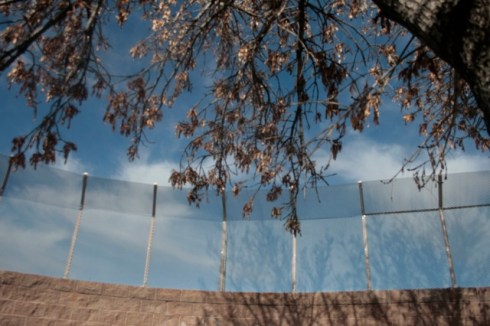
On The Outside. Courtesy: Fresh Eyes Project
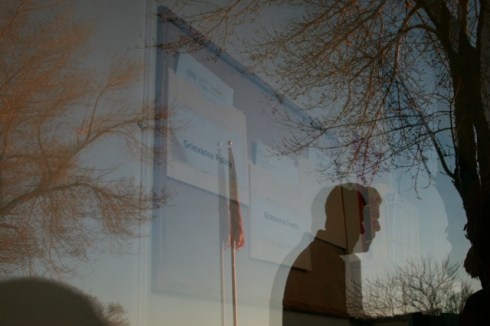
Portrait Of My Teacher. Courtesy: Fresh Eyes Project
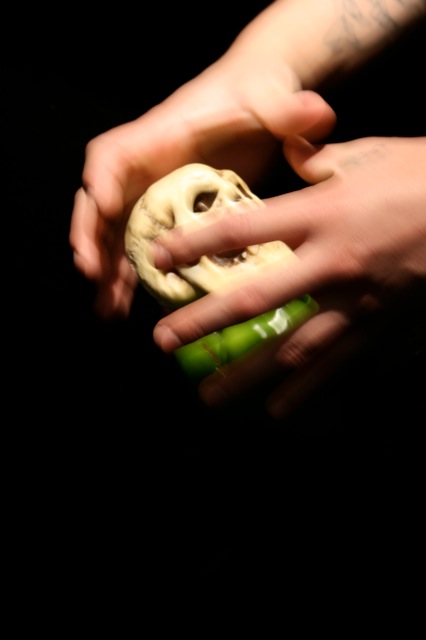
Scary Hands. Courtesy: Fresh Eyes Project

Mighty Me. Courtesy: Fresh Eyes Project
———————————————————
* A couple of years ago, I interviewed the director of AS220 youth programs, two of the photography instructors and a few kids. They also gifted me a portfolio of work and I’m long overdue to scan and present that material here on the blog. Please, stay tuned.
———————————————————
I came across the work of the Fresh Eyes Project thanks to an article Capturing Captivity From The Inside, by Katy McCarthy for the Bokeh Blog on the Juvenile Justice Information Exchange.

Brandon Tauszik moved to Oakland from San Diego three years ago. He’s got a day job. Some of his images are a little raw — check his Instagram feed @BE_DIZZLE. Tauszik was for a while assistant to the legendary Jim Goldberg. He’s also a big fan of TBW Books the small publisher just down the road run by Paul Schiek. I haven’t asked Tauszik but I reckon he’s probably a fan of the Hamburger Eyes folks too.
Tauszik is making the Bay Area his home and the aesthetic of his work makes obvious sense amid the prevalent scratched-up, banged-up, gritty, kids-street-realism typical of California. Less obvious though are the motives, goals and choices within Tauszik’s latest body of work White Wax.
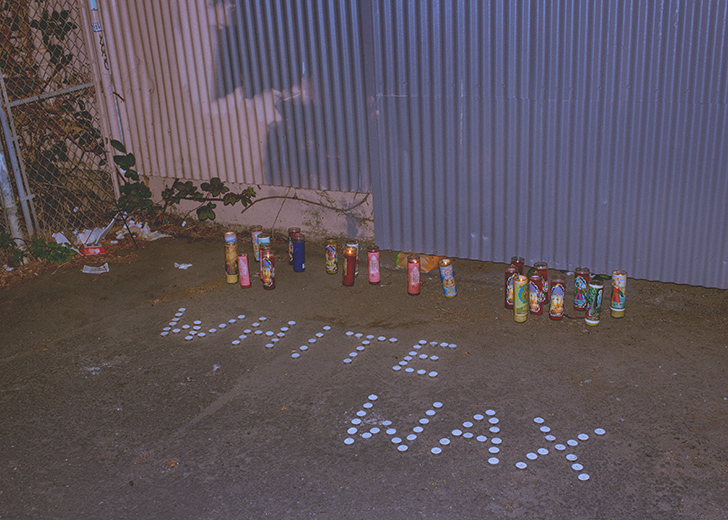
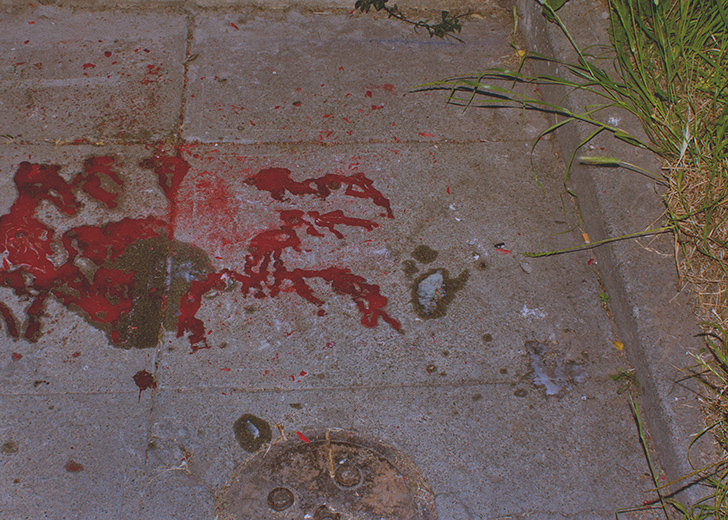
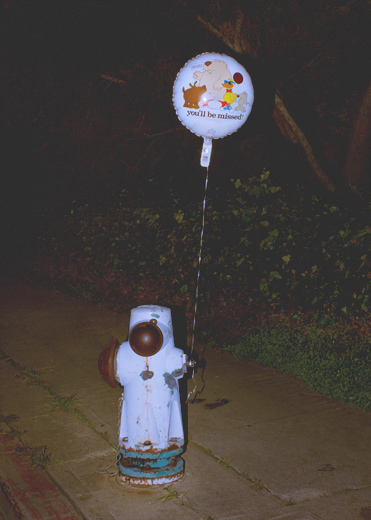
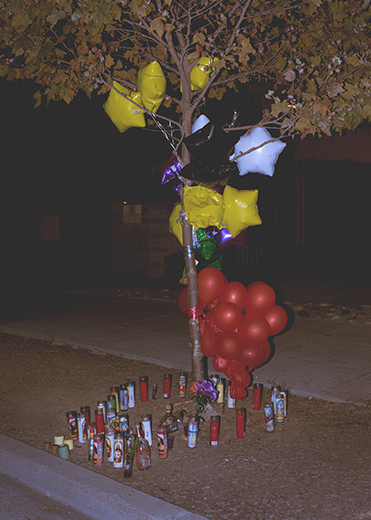
White Wax is a year-long visual document of memorials to homicide victims on the streets of Oakland. Tauszik says in his artist statement that his photos are to serve as a medium for self-examination. He thinks America is in the middle of a collective re-examination of its criminal justice policy, gun culture and post-racial credo.
White Wax is also,I suspect, a means by which Tauszik can remain connected to the place he lives. Unfortunately, for most people, murders are pretty easy to ignore; they just have to stay off the wrong streets. Some Oaklanders don’t have that luxury though.
“Why has the ecology of the American inner city long enabled it’s own self-destruction?” asks Tauszik. “Is it possible to shift our tired narrative of another young black man memorialized with white wax?”
SCROLL DOWN FOR OUR Q&A


Q&A
Prison Photography (PP): Why take on this project?
Brandon Tauszik (BT): Oakland is a violent city, but America is a violent country. Its inner cities particularly so. There is already a great deal of photography approaching this subject with a kind of coarse imagery. We’ve all seen it over and over. I asked myself, ‘How can I photograph gun violence without showing any guns? How can I create an emotional project without showing victims or mourners? How can I approach a politically charged subject, yet leave cops and politicians out of it?’ I hope that with these images I am able to communicate something beyond just melted wax on the sidewalk.
PP: I used to live in San Francisco and there was a bizarre media obsession about the annual homicide rate, as if people were waiting for it to meet or surpass the previous year’s figure. Oakland was always the depressing counterpoint to SF figures as it suffered 2 to 3 times the number of murders. Briefly, can you describe your experience of information, conversation, attitudes about murder? Surely, beyond figures there’s talk of interventions and solutions? Basically, what should Oaklanders do?
BT: That’s a loaded question! There is a lot of social inequality in the Bay Area and particularly here in Oakland. Having been largely de-industrialized over the past few decades, Oakland is currently in the midst of a strong wave of gentrification. Despite this new influx of higher income residents, the crime rate has barely shifted in the past decade. It’s currently the most dangerous city on the west coast and has the highest robbery rate in the whole country. People blame this on the understaffed police department, the economy, the gangs, the guns, whatever.
It’s uncomfortable to address, but ultimately this isn’t about “What should Oakland do?” but instead “What should America do?” In New York City, Memphis, Chicago, Baltimore, Los Angeles (the list goes on and on) young men of color kill and are killed more than any other demographic. We’ve ignored violence in our country because the victims don’t look like us. As one African American mother told me at a memorial, “We have been living a daily Sandy Hook and it’s time for the nation to know.”
There are some very strong local organizations (SAVE, Khadafy Foundation, RJOY) that do amazingly important work, but ultimately this is about a flawed national mindset in regards to prisons, guns and race relations.
SCROLL DOWN TO CONTINUE Q&A



PP: Is White Wax a memorial? A study of vernacular action? Other? Both?
BT: It’s more a study in the unique and visually distinct way that my neighbors mourn the loss of their loved ones. Or in your words, a study of vernacular action.
PP: Was it important to commit to this for one year?
BT: Every big city has their yearly homicide count which is obsessed over and analyzed as strictly data. I wanted to see what that data would look like in context of the shrines, which are a direct result of that count.
PP: White Wax images are taken at night. Was this a deliberate choice? If so, why?
BT: I wanted to capture these scenes as naturalistically as possible. The majority of these murders take place under the cover of darkness, so while this makes my work more difficult and dangerous, nighttime is one of the threads I use to tie the images together.
PP: I know you use Shine In Peace, Google Alerts and word of mouth to discover homicides. Do you fear White Wax has omitted some homicides just as the local news often misses/overlooks these murders? If you have missed some what does that mean?
BT: I’ve definitely missed some, due to a few reasons:
1. These memorials are, by nature, ephemeral and are displayed for anywhere from one day to many weeks. Sometimes I find a site I’ve missed where there are still traces of wax, but the shrine has been removed.
2. The given victim’s family and friends sometimes don’t erect a shrine. If the murder took place in a particular neighborhood where the victim was not welcome, that will usually apply to the victim’s family and acquaintances as well.
3. Many of these murders get little to no media exposure. For example, here is an example of a web-only murder story from last year. I rely on Oakland’s news outlets to report on (or at least tweet on) each murder. However there is low motivation to do so due to the very limited readership on these stories.
There are usually a few murders a week here, so unfortunately it can be hard for me to keep up.
SCROLL DOWN TO CONTINUE Q&A
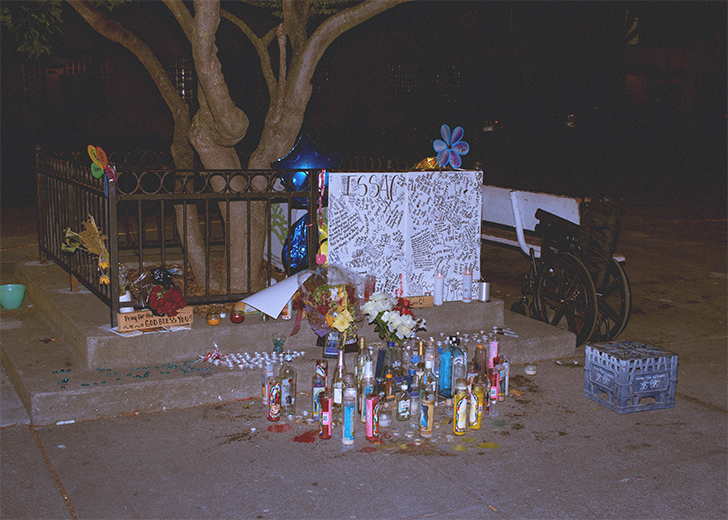


PP: What about captions? Is there a need (from you or audience) to include information about the homicide?
BT: I have the name/age/race/sex/location information for most of these murders. However, captions have a didactic manner of reducing a photograph down to data and information, which is what I am trying to avoid. A recent study showed that Americans assume black people feel less pain than white people. This is deeply frightening. I want the viewer to ponder these images and wonder, ‘Was this person someone who looked like me?’
PP: What’s been the reaction from folks in Oakland to White Wax?
BT: I have been sitting on this project until very recently. I wanted to give it time to fill in and for the thesis to take shape. The local people I’ve showed it to so far seem to think it’s strong and thoughtful. I would love to arrange an exhibition towards the end of the year in Oakland.
PP: Which photographers are working in ways that you admire and value?
BT: When I first moved to the Bay Area, I assisted Jim Goldberg for a while. That was a pivotal time for me which pulled me away from strict photojournalism toward longer, in-depth projects. Lately though I’ve been into Harry Griffin, Yoshi Kametani, and Viviane Sassen.
PP: What’s the purpose of photography? What should we be trying to do?
BT: We have ears to hear, but also eyes to see. The spoken word can only accomplish so much. You can sometimes say so much without using your mouth … a gesture, a glance.
For me, photography acts as a medium to illuminate ideas and questions on all aspects life.
END


Biography
Brandon Tauszik is a photographer and filmmaker based in Oakland, California. He creates visual media at Sprinkle Lab while pursuing personal photography projects.


At Photoville this year, you’ll find me and a team of pen-pushers in a container amassing The Depository Of Unwanted Photographs a crowdsourced archive of images and stories. We need your help and we need your submissions.
What is The Depository Of Unwanted Photographs?
The Depository Of Unwanted Photographs (TDOUP) is a few things: part social engagement, part fun, part an investigation of quality but mostly an opportunity to share our thoughts on how and what we think about our own photographs.
CURATORIAL STATEMENT
My explanation lifted straight from the The Depository Of Unwanted Photographs sparkly website of why I have conceived of TDOUP:
When asked to pick out a single image they absolutely treasure, people generally don’t hesitate. A snap of their children, a Polaroid of their parents, a formal pose from precious life event, or perhaps even a photograph with the prescribed artistic balance of composition, contrast and exposure. Whether the choice is dictated by emotional memory or technical concerns, the question “What is your best photo?” is not an unusual one.
But what about the question, “What is your worst photo?” To put it another way, what photograph of yours is obsolete, worthless, old news or just plain bad? Which single photograph of yours would you like to officially state on the record as unwanted?
During Photoville, submissions will be rotated in and out of display for public viewing. When the festival ends, the Photoville team will compile the images and create a reference book of “Unwanted Photographs”. The debate about what is good and bad in photography is as old as the medium itself, but what are the debate’s current touchstones? If we’re looking for good photography, we’ll find plenty of suitors in photobooks, galleries and publication, but where do we find a legitimate and well-researched presentation of bad photography? Does our discussion of what is good not also rely on a shared knowledge of what is bad, unwanted and unloved? Images do not exist in a vacuum, but emerge from contexts and histories. We think that your photos and stories are as relevant as the stories in news-photo exclusives and famous documentary images — your stories are central to discussions about how we consume and use photography. Therefore, we ask that each submitted image is accompanied by 50+ words on why it is not wanted by you, and not needed in the world.
We create and circulate millions of images every week. Many of these never exist beyond digital formats; stuck in our phones or transferred to computers on their way to social media sites. We are constantly employing choices, consciously and subconsciously, to share or overlook images. If we accept the mantra that ‘we are all photographers’ then aren’t we all photo-editors too?
There might be many of your images that you could trash, but by asking you to choose only one, we hope you’ll take the opportunity to think about the proliferation of images in society and your relationship to the ever-increasing number. Photoville will officially recognize your image as Unwanted with a numbered certificate and unique catalogue code. One-by-one, as the images interrelate and build the Depository, new meanings will emerge. The arbitrary definitions brought to the project by you the public will amount to a unique view. The Depository Of Unwanted Photographs is an unpredictable interrogation of quality that crucially is made by the public, not by the dominant voices of those in the media or culture industries.
HOW TO SUBMIT YOUR UNWANTED PHOTOGRAPH
During Photoville, you may make walk-in submissions at the TDOUP container which will be equipped with a scanner and computer to download, copy and catalogue your printed photographs and digital files.
For those of you who are unable to attend the event:
– Download the form (PDF)
– Attach a photograph and fill out the form
– Return the form for processing. You may either:
A. Scan the form and email it to receivables@unwantedphotographs.org
B. Place it in an envelope and mail it to 111 Front Street, Suite 204 – Brooklyn, NY 11201, USA
SHARING IS GOOD: #TDOUP
Please share the project and the www.unwantedphotographs.org URL far and wide. Please send us your jpeg and share your story.
Please use Facebook, Twitter and Instagram to hashtag your thoughts, observations and photos. We are #TDOUP
See you in NYC on Thursday!


A single wall representing the meals of men and women executed in Texas, part of Julie Green’s The Last Supper: 500 Plates exhibited at Marylhurst University, Oregon (April 16 – May 17, 2013). Photo: Pete Brook.
In The Make — a new(ish) website that celebrates artists in their crafty environments with dedicated studio visits and conversations — has a smashing feature on my friend and fellow Oregonian Julie Green. It sure beats the 2011 write-up of my visit to Julie’s studio!
I’ve been thinking a lot about productivity and it’s obstacles recently and I think Julie maintains an incredible output. Part of that is the security of teaching for her but mostly it is passion and commitment to connections and getting the work seen. What use is studio time if the products are not then widely shared?
Julie’s The Last Supper which is now 552 plates deep, is broad and grasps solidly the size of the issue it takes on. Bravo to Julie for leveraging the agency she has as an artist.
Pop over to In The Make and read what makes Julie tick. Here’s a snippet:
Shipping and installation of fragile ceramics is quite an undertaking. I am looking for a library or a university or a museum- in Texas would be great—to donate the project on a ten-year loan. The Last Supper is not for sale.
I plan to continue adding fifty plates a year until capital punishment is abolished. A poet asked if I ever get tired of painting lumpy blue food. No, I don’t.
Oklahoma has higher per capita executions than Texas. I taught there, and that is how I came to read final meal requests in the morning paper. Requests provide clues on region, race, and economic background.
Why is this important? It is because the death penalty is applied unequally depending on the race of the defendant and the victim, not to mention access to adequate counsel, jury bias, prosecutorial misconduct and a whole plethora of factors that make wrongful convictions too frequent to dismiss. End the death penalty and we’ll end the murder of innocent people. As Bryan Stevenson brilliantly puts it, the question isn’t so much does a person deserve to die, it is do we deserve to kill?
ELSEWHERES
I’ve previously talked about Julie’s work here, here and here.
Coincidentally, I edited a story for Wired about the work of Klea McKenna who is editor of In The Make. Check out Crumpled and Abused Photo Paper Makes for New Landscape Photography
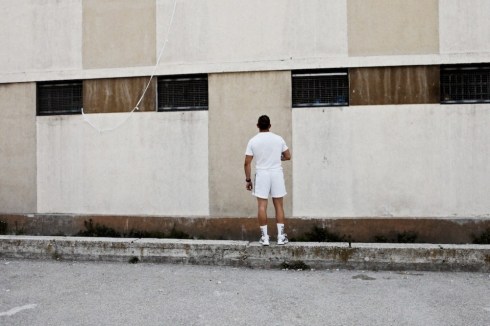
Prison by Christophe Negrel is shot in French prisons and focuses on the physical regimes kept by prisoners. Some great studies of moment in the portfolio.

 Prison Photography