
You are currently browsing the category archive for the ‘Fine Art’ category.

When friends call and ask if you’d like to mount a show in a brewery, there’s only one answer.
University Beyond Bars was putting on a prison art fundraiser at Machine House Brewery in Georgetown, Seattle. I was invited to curate some prison photography. I selected five photographers from Washington State that have made work in Washington State prisons and juvenile detention centers.
The only issue with the space was that IT IS A BREWERY. A beer-making space is set up for a different type of cultures.
The UBB students’ prison art (paintings and illustrations) went up front of house. The space for the photographs was the warehouse. Upon arrival on Friday afternoon, the ground floor and mezzanine boasted fork lift truck, pallets of malt and barley, industrial fridges, old lockers, busted furniture, spare fixtures, lamps, chairs, bikes and other inconvenient objects.
So I went to work. And I loved it. Painting and drilling is a nice tonic to desk-laptopping.
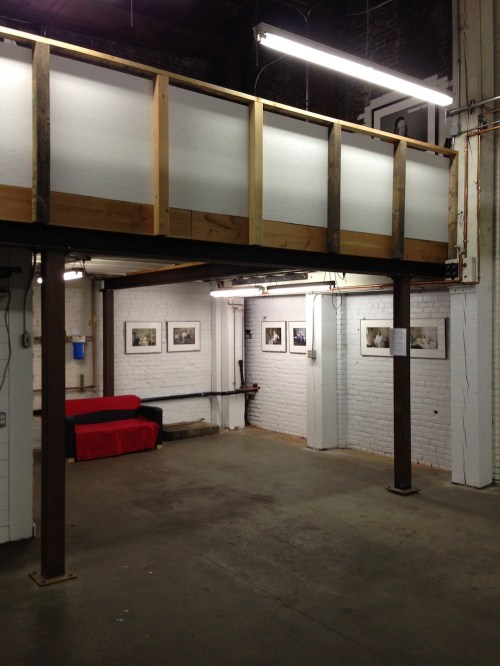
This is pretty much what the space looked like when we finished. (Note the clear floorspace.) When I say we, I mean me and some amazing peeps who swept, nailed, primed, sweat and hung prints and frames. Big thanks to Bill the Brewer, UBB‘s very own Stacey Reeh, and Joe.
Uber-thanks to Bettina Hansen who went without a shower and worked right through until the doors opened on Saturday night to get everything spiffy.

Here’s Cheryl Hanna-Truscott’s work Protective Custody.

These are the first two prints of 16 in Cheryl’s series.

Three of the five photographers’ work was mounted straight onto boards that doubled as screens to hide all the junk alongside the walk-in refrigerator.
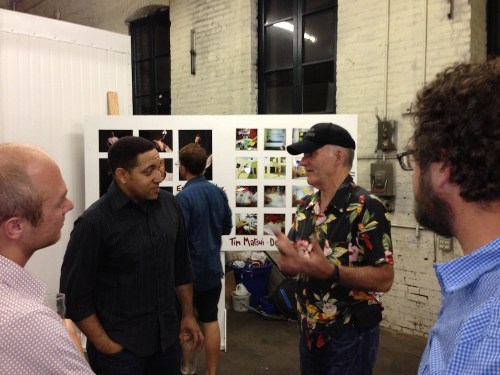
That beard on the right is Matt Mills McKnight.
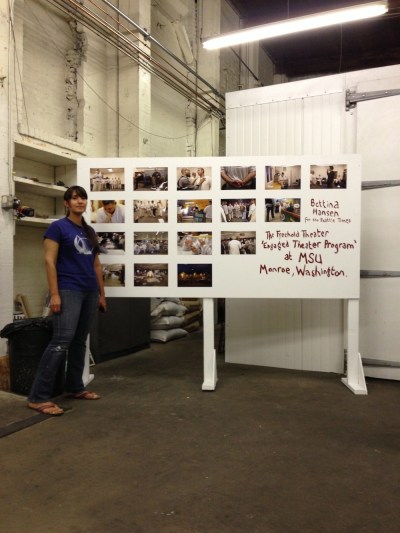
Bettina sporting the DIY-casual fashions, next to the photographs she made for the Seattle Times of The Freehold Theater’s Engaged Theater Program at MSU, Monroe, Washington.
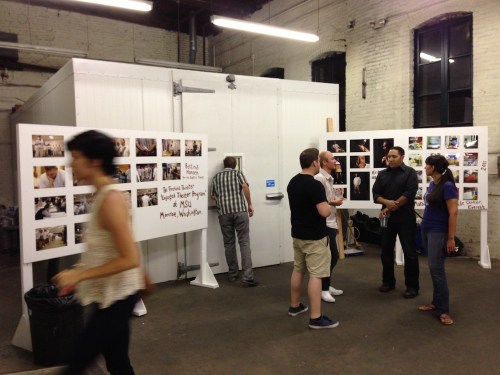
Steve Davis peeking into the walk-in.
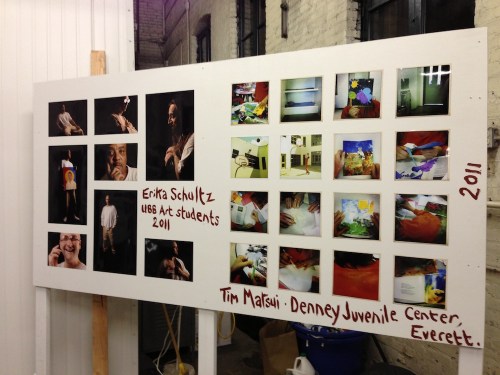
Erika Schultz and Tim Matsui.
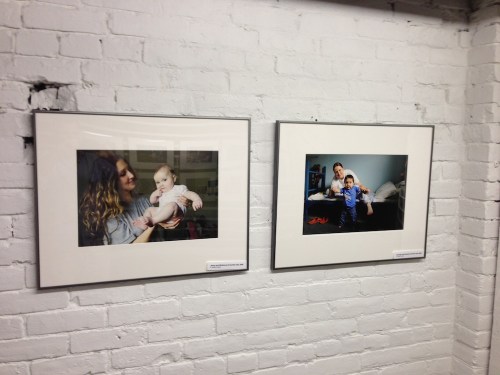
More of Cheryl‘s.

Intern Sam, Kat and I.
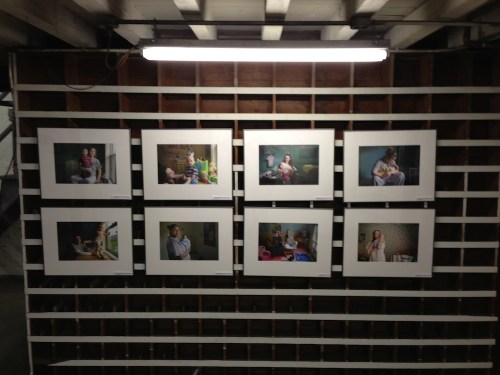
Images 9-16 of Cheryl’s work.
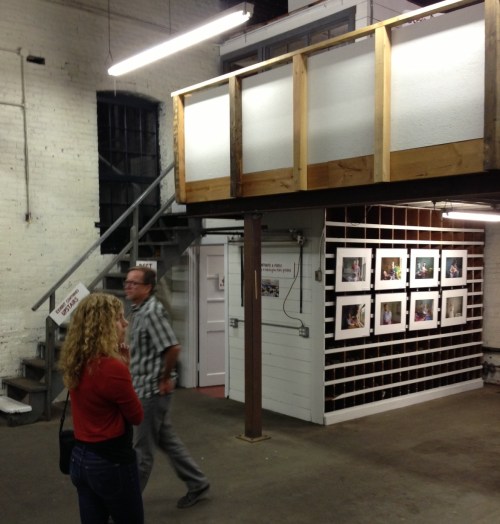
I even painted the bathroom door.

Signs were made. Bottom steps were marked.

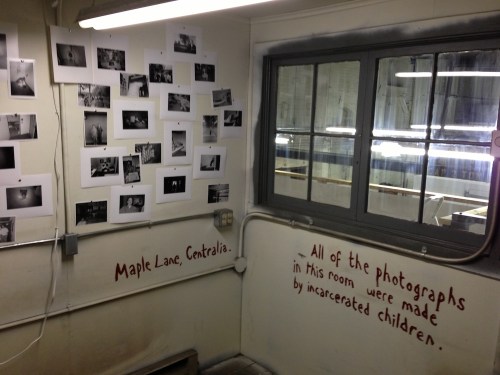
On Thursday, Steve Davis had given me some work prints to look over for a future project we are planning. They images were made by boys at Maple Lane juvenile detention center and have never been published. Strong, haunting and expressive. I decided to tack them up on a single wall in the old, emptied-out machine-house office.

Looking in to the office from the gantry at the top of the stairs.
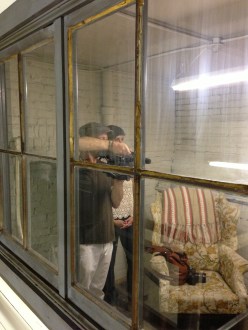

UBB co-founder, Gary Idleburg, speaks to a video crew making a piece about perceptions of prisoners and the importance of art as communication.
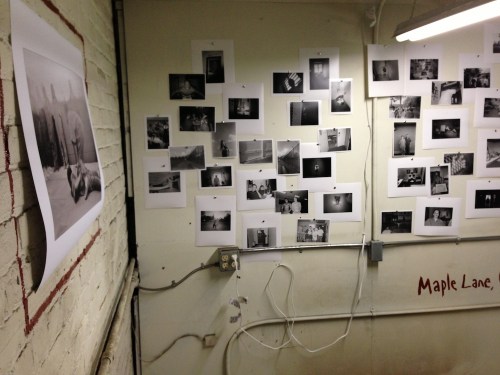
One large print from Remann Hall (left) and work prints made by boys incarcerated at Maple Lane, Centralia, WA in the early 2000s.
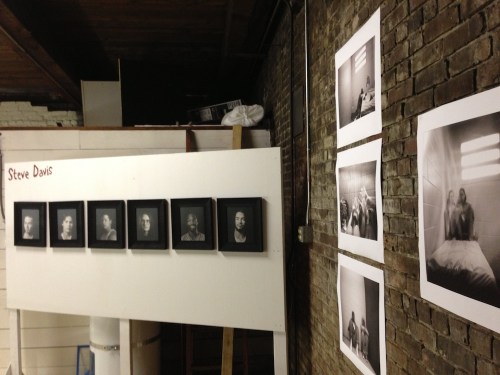
On the mezzanine level, six portraits from 1998 by Steve Davis.

Large prints of pinhole photographs made by the girls of Remann Hall, Tacoma, WA.

A frame …

… for a frame.

The fluorescent lights were actually pretty good for showing off the work.
Portraits & Pixels: Photography in Washington State Prisons remains open for three more weekends. Until August 10th. The brewery is only open Friday 3-7pm, and Saturday and Sundays 12-7pm.

Student of Univeristy Beyond Bars, Monroe Correctional Complex, 2011 © Erika Schultz
IF YOU ARE IN SEATTLE …
Opening on Saturday, 20th July is Prison Art an art auction fundraiser for University Beyond Bars (UBB), the prison education I worked with from 2009-2011.
Accompanying Prison Art is a photography component I was invited to curate. Titled Portraits and Pixels: Photography in Washington State Prisons the exhibition features five photographers working in Washington State and making images of Washington State lockdowns.
AND IT’S IN A BREWERY!
ART BEYOND BARS
At Washington State Reformatory, students in a Studio Art class, sponsored by the nonprofit organization University Beyond Bars and led by long-term prisoner-artist Gary Thomas, have created oil, acrylic, and gouache paintings as well as pencil and ink drawings in styles that range from the political to the retro, from the kitsch to the abstract.
You can see a local KING 5 newschannel spot on Gary and the class, here. (Turn the sound down to avoid the over-zealous sound-editing use of cliche clanging doors and locks!)
80 pieces feature in the Prison Art show ranging from nearly pocket-sized to large triptych paintings. All are for sale and proceeds go toward paying for the college education of UBB students. The silent auction lasts two weeks.
‘Portraits and Pixels: Photography in Washington State Prisons’
Young mothers, critical thinkers and children making powerful art may not be the first types of people we’d expect to find behind bars, but Portraits and Pixels challenges our notions of who is behind bars in the Evergreen State.
Portraits and Pixels: Photography in Washington State Prisons brings together images by five established local photographers to provide an overview of arts, rehabilitation and security in Washington State’s lockdowns.
Bettina Hansen, a Seattle Times photojournalist since 2012, photographed the theater productions at Monroe Correctional Complex. In 2011, Erika Schultz, also of the Seattle Times, volunteered her skills and made portraits of students in the UBB art program at Monroe. Tim Matsui, a Seattle-based multimedia journalist, casts a light on the Youth Art Program at the Denney Juvenile Detention Center in Everett. In the early 2000s, Steve Davis led workshops in four Washington State juvenile detention centers producing pinhole camera photographs and narrative-rich images with the children. Davis also made formal portraits of the boys and girls. Nurse-midwife, Cheryl Hanna-Truscott has made dignified and quiet double-portraits of incarcerated mothers with their newborns at the Residential Parenting Program at the Washington Corrections Center for Women in Gig Harbor. The pioneering program is nationally recognized for its commitment to maintain ties between mother and baby by means of rigorous administration, family and volunteer efforts.
The exhibition will be open to the public from July 21 until August 10 during the brewery hours: Fri-Sun 3-7 pm.
OPENING NIGHT, July 20th, 7:30 – 10 pm
Prison Art is hosted by Machine House Brewery, at 5840 Airport Way S in Georgetown, just south of Seattle.
Tickets are available here. Tickets are $15 each, or two for $25.
There will be live music by singer-songwriter Lori Dreier, cellist Ed Tellman, and keyboard artist and former prisoner Dan Pens.
Facebook event page here.
IMAGES

© Steve Davis
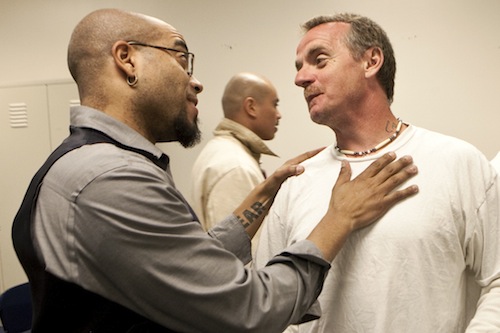
Daemond Arrindell, teaching artist for Freehold Theatre’s Engaged Theatre program, gives words of encouragement to inmate Ted Cherry after a rehearsal at Monroe Correctional Complex April 17, 2013. “They are the most appreciative population we’ve ever worked with,” said Arrindell, who is a local poet and community organizer known for running various writing and performance workshops and the Seattle Poetry Slam. “They recognize what limited opportunities they have.” © Bettina Hansen/Seattle Times
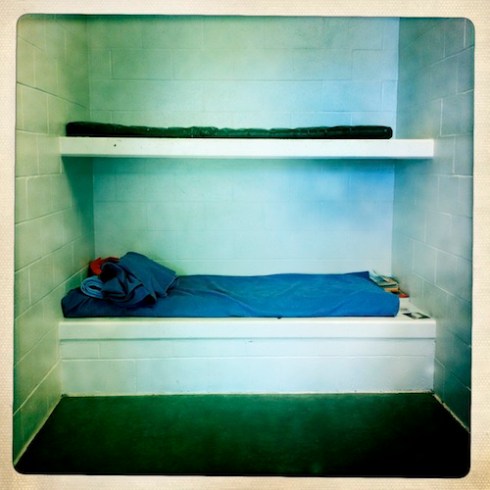
Cell Denney Juvenile Detention Center in Everett. © Tim Matsui

Mother and child in the Residential Parenting Program at the Washington Corrections Center for Women. © Cheryl Hanna-Truscott


Prisoner Ustinova (2005)
Olga Chagaoutdinova‘s The Zone/Prisoners (2005 – 2007) is a series of psychological portraits taken in a women’s prison in the far eastern reaches of Russia.
“The intent of the project was to observe human existence in a panoptic and punishing environment,” says Chagaoutdinova. “Extended interviews with the prisoners allowed me to investigate the notion of personal identity, virtually extinguished under the pressure and rules of the penal system. Gender issues and the official suppression of sexuality within the penitentiary system constituted a further aspect of my study.”

AN EMAIL FROM POLAND
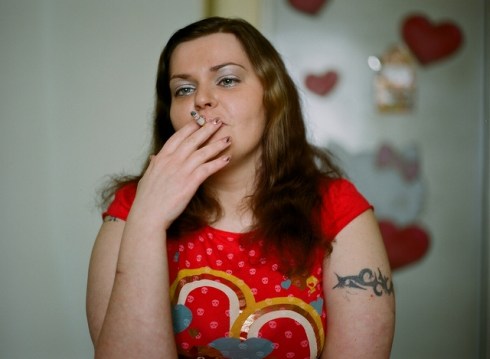
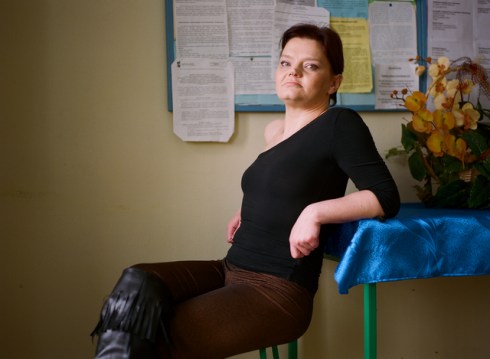
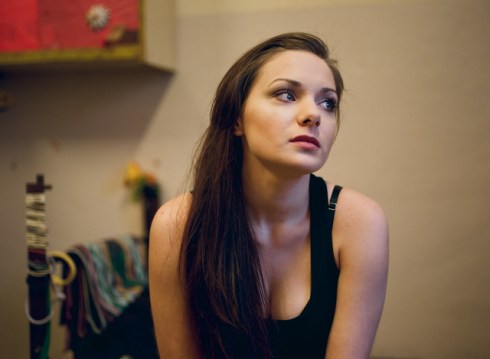
“The women have different histories but they all have one thing in common — they all just wanted to have nice portraits,” read the email from Edyta Ganc.
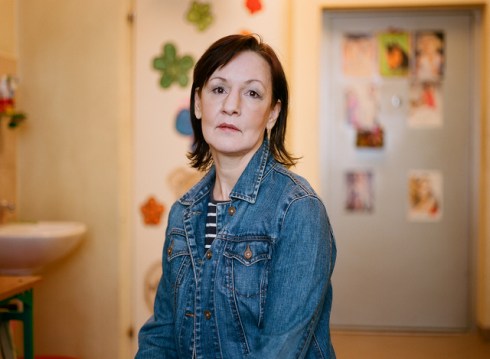
Well, Edyta nailed it. Ganc’s portraits are nice. But, they’re much more than nice; they’re rather formidable. They emerge from a straightforward approach to the prison by Ganc and the simplest of aims. The variety among the portraits is impressive. I immediately emailed Ganc insistent that I share the series, titled Borderline, here, with you.
“I helped them to look attractive by inviting a professional make-up artist,” continued the email. “I also prepared clothes for them … mainly from my private wardrobe.”
Ganc has succeeded twice over; for the women prisoners, she has made beautiful portraits, and for us, she has made poignant portraits to mull over. Ganc’s moments are noticeably heavy and to capture that is a rare skill. These portraits prick my curiosity. Whatever the histories of these women are, I am eager to know.
[Scroll down for our brief Q&A]


QUESTIONS AND ANSWERS
PP: Why did you want to make portraits of the women?
Edyta Ganc (EG): I was always interested in histories of people that are somewhere else, beyond “normal” circle of society. And are considered: outsiders, freaks, strangers. I was to them as I wanted to show their humanity and normality.
PP: What is the full name of the prison?
EG: Areszt Śledczy Warszawa Grochów, which translates as ‘Warsaw Grochow Investigation Arrest.’ Grochów is a district of Warsaw.
PP: How did you gain access?
EG: I made a phone call to the press officer and talked to him about the aim of the project: to photograph the women in the ways they wanted to be presented — nicely dressed and with professional make up. I invited my friend, who is a make-up artist and she agreed to help me. When I got approval, I just had to write a statement about the project and my aims and gained access easily.
PP: How often did you visit?
EG: I started in January and finished in April 2013. My friend Kasia and I visited Areszt once, twice a week.
PP: What did the women do during the days in the prison? Are they involved in programs, work, education and/or other rehabilitation?
EG: I heard a lot of complaints that they could not leave the prison cell and do something interesting. They had some regular meetings with one cultural foundation but they weren’t really interested. The told me they would prefer career or craft courses. Something practical they could learn and gain the professional background – and use when they are free.
PP: What sort of crimes are these women in your photographs imprisoned for? Are they Polish citizens or from other countries?
EG: They are all Polish. Imprisoned mainly for robbery. Most of them were drug addicts and started to steal to have money for drugs. Some of them didnt tell me what was the reason. I wasn’t asking.
PP: You mentioned they all have individual stories. I expect they’ve had tough lives. Do you see them as perpetrators or victims or a mix of both?
EG: I see them as real women who had some problems with their life and now try to fix it. Some of them want to have better future and need to change. Whereas some don’t care and won’t change anything.
[Continue reading below]


PP: How many prints were you able to give each woman. What did they use them for?
EG: They asked for prints to send them to their relatives. I printed 3 copies for each of them but now i think it is not enough. I am going to send more.
PP: Are photographs rare in the prison? Are there any other opportunities for the women to have their photograph taken?
EG: Not really. It is rather rare thing.
PP: What did the guards at the prison think of your project and you visiting with your camera?
EG: They were really helpful. Of course, there were some situations I felt they wanted me to finish, leave and no longer disturb things, but I pretended I didnt notice it.
PP: Are Polish women’s prisons safe, sanitary places?
EG: Rather, yes. There are two types of cells. Closed — for women inprisoned several times, and half closed — for women imprisoned for the first time. The seconed ones have toilets with showers. First ones have only toilets and basins.
PP: Can Polish prisons improve or are they doing a good job?
EG: They could improve with their provision of education, courses, therapies, but generally I can’t complain.
PP: How do Polish people generally think about prisons and prisoners?
EG: They are afraid. They dont want to socialize with these people.
PP: Anything else you’d like to say?
EG: I hope these women will take part in vernissage. It will be the occasion to go out.
– fin –


BIOGRAPHY
Edyta Ganc based in Warsaw, Poland has a Masters Degree in Theater from the Jagiellonian University and later graduated from Camerimage Film School, Academy of Photography and Laboratory of Reportage, at the University of Warsaw. She is drawn to social justice and has led many photography workshops for children and teenagers. Ganc is co-founder of the Polish photography collective Spoldzielnia Dokumentalna.
WOMEN IN PRISON, IN PHOTOGRAPHY, ACROSS THE GLOBE
Spain: International Womens Day Body-Paint Festivity Photos Belie Barcelona Prisoners’ Daily Hardships
Israel: Tomer Ifrah Inside Neve Tirza, Israel’s Only Women’s Prison
United Kingdom: Adrian Clarke: “All the women have wanted to be identified by their own names.”
Romania: In Women’s Prison, Ioana Cârlig Asks, “What Do You Miss?”
Albania: Annaleen Louwes as Artist in Residence at Ali Demi Women’s Prison in Tirana
USA: Sye Williams at Valley State Prison for Women, Chowchilla, California
USA: ‘Maggots in My Sweet Potatoes: Women Doing Time’ by Susan Madden Lankford
Italy: Melania Comoretto and Women Prisoners
Globally: Jane Evelyn Atwood’s ‘Too Much Time’

Refuge by Joanne Mullin “explores the nature of domestic conflict by examining shelters across Northern Ireland. It is a contemplative observation of a temporary place that allows for women and children to have a period of transition.”
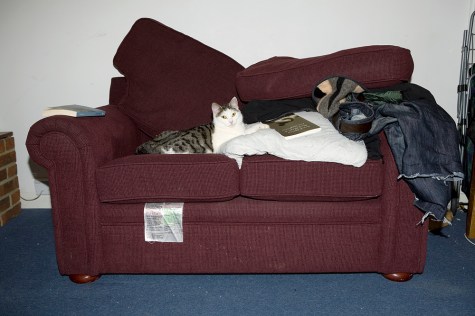
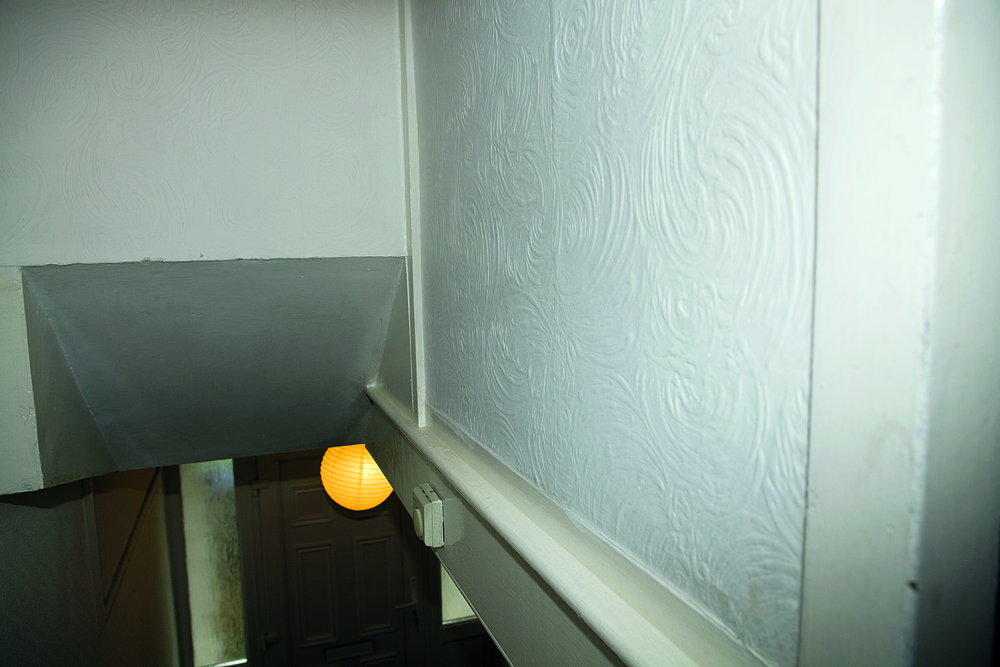
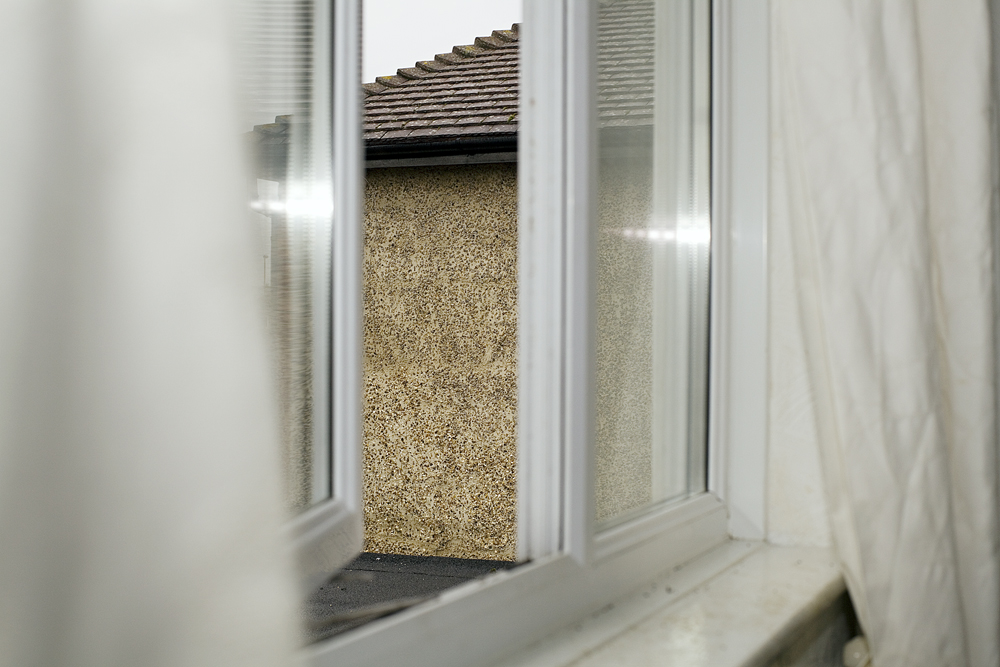
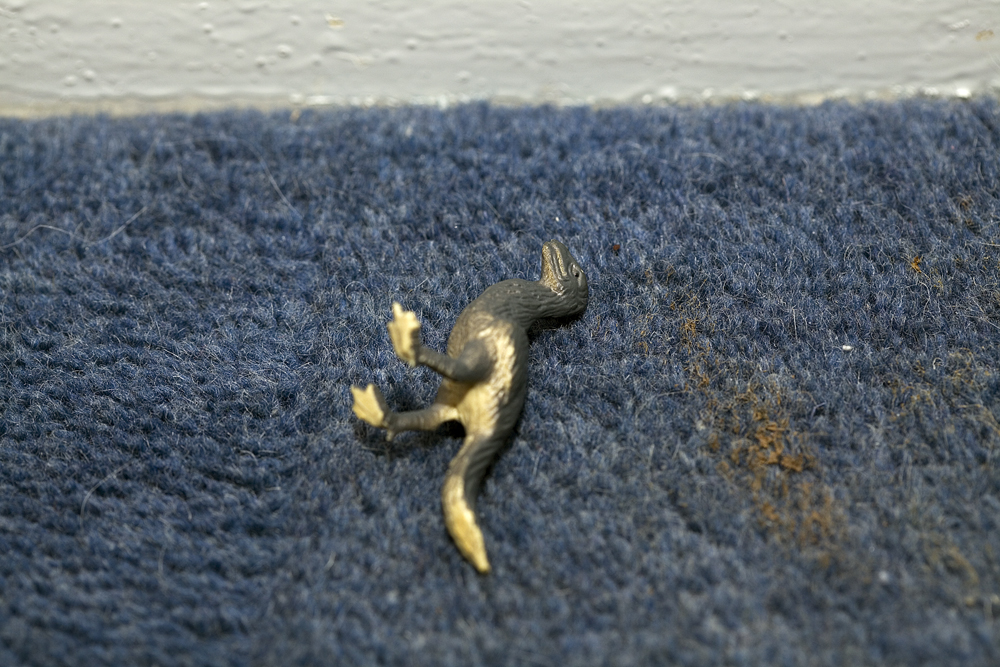
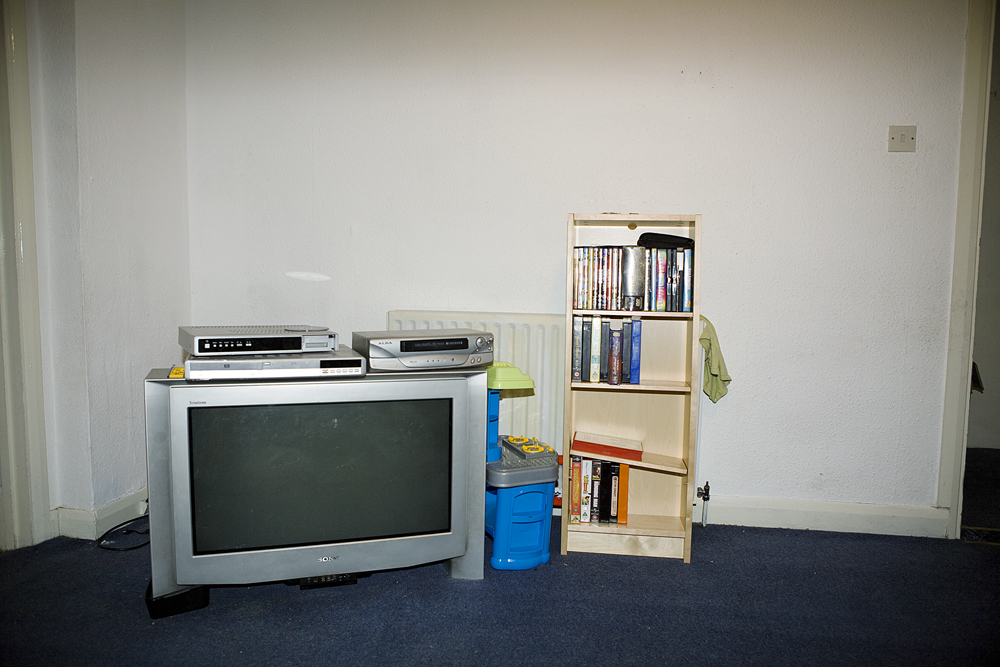
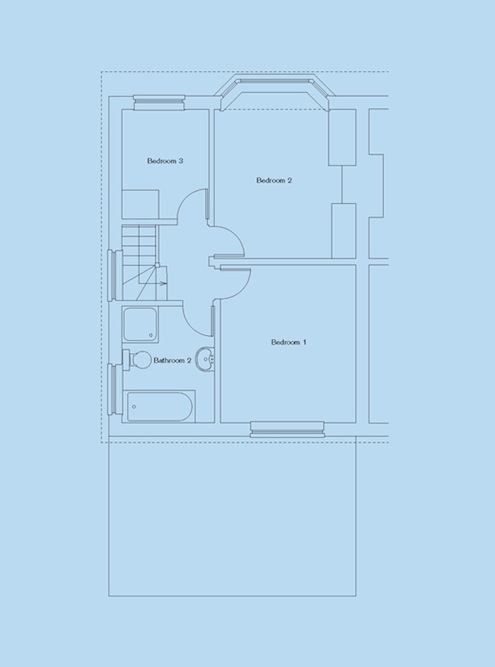
A few weeks ago I wrote, for Wired, a piece about Edmund Clark‘s latest body of work Control Order House. The piece carried the irreverent title This Incredibly Boring House Is a U.K. Terror Suspect’s Lockdown but the details of the project it gets into – two years of negotiating access, Clark’s process which riffs on surveillance and forensic photography, Clark’s the decision to present every photograph he took in the order he took them, etc. are important, mildly complex and worth getting one’s head around.
The house Clark documented belonged to a pre-trail UK terror suspect, under house arrested, referred to in legal documents as CE.

I wrote:
Control Order House is the only existing photographic study of a residence occupied by a person under a UK control order. It is not an exposé, however. Given the legal sensitivities, every image was vetted by UK government officials. Clark was not allowed to reveal the identity of the terror suspect — referred to in legal documents as “CE” — nor his location.
“To reveal CE’s identity would be an offence and in breach of the court-imposed anonymity order,” says Clark. “All the photographs I took or the documents I wanted to use had to be screened by the Home Office.”
For Clark, the project is best appreciated in its book form. Control Order House was published by HERE Press and released May 2nd.
Clark refers to the book as an “object of control” because at a point, he accepted that, with so many attached limitations, his photography was almost an extension of the state power he was documenting. All of his equipment had to be itemized and registered with the UK Home Office before his three visits.
Wired created a Scribd document (that has no URL, but is embedded in the article) with six pages of Clark’s correspondence with both the terror suspect and the UK Home Office employees.
“Even CE’s lawyers made it clear to me that the I had to careful about what I spoke to him about because the house was (very probably) bugged and that my telephone communication with him would be monitored,” explains Clark. “All my material, even my words here [in this interview] could become part of CE’s case.”

Control Order House is a finely balanced project. It is hampered by so many obstacles to unfettered depiction that our traditional notions of what photography is supposed to do are frustrated. It is not exposé; it is completely descriptive of its own limitations. It’s these limitations from which we must depart in thinking about photography in highly policed spaces. Control Order House should kick-start considerations of lesser seen photographs from the Global War On Terror (GWOT), namely, images of drone strike aftermath, Aesthetics of Terror (as, in this case, distilled by artists), redacted images in magazines distributed at Guantanamo (scroll down), Kill Team trophy photos, American personnel’s own vernacular war photography, and Jihad suicide posters.
Control Order House is about the act of photography. It’s self-referential as kids’ MFA work that deconstructs photographic process, but — unlike those studio experiments — it has roots in a clearly identifiable political territory. It shows us more than we knew but not as much as we would like to know. In so doing it reminds us of all the operations, violence and war crimes carried out on our tax dollar that we never see, never know.





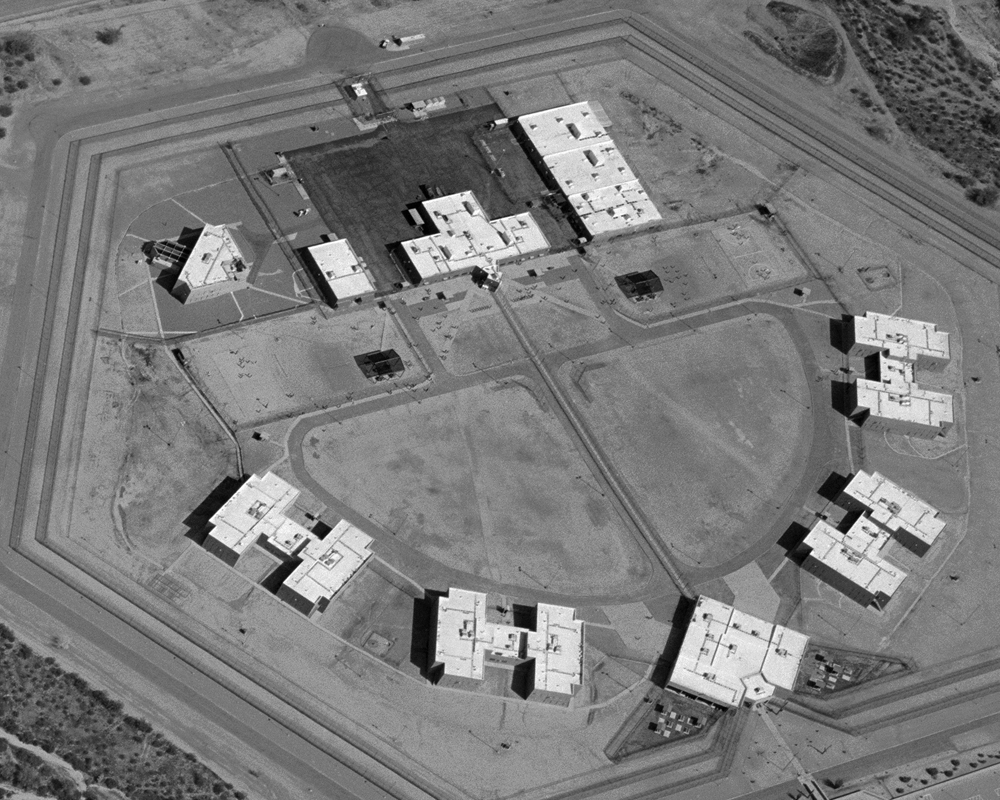
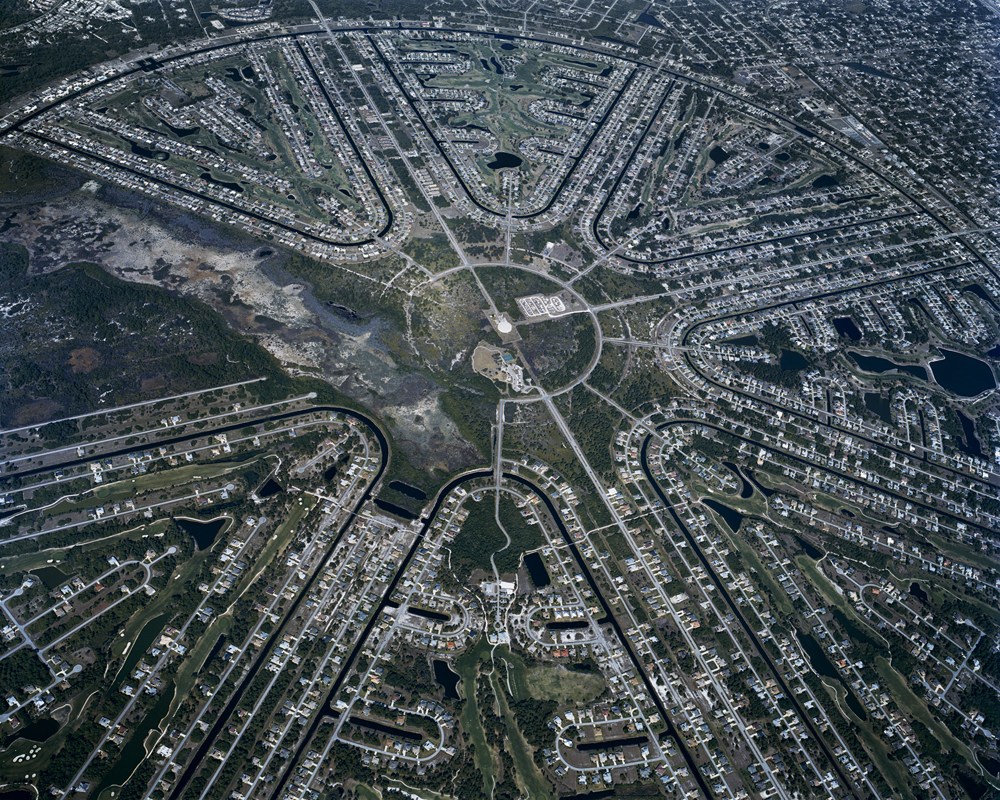
Christoph Gielen, a photographer known for his aerial views of American suburbs has chosen as his next subject super-maximum security prisons — the most controlled spaces in American prison industrial complex. Supermaxes are of particular interest as they are designed specifically for solitary confinement.
As I wrote for Wired.com, today, America has an unusual thirst for putting people in total lockdown.
In consideration of “the severe mental pain or suffering” it can cause, Juan Mendez, United Nations Special Rapporteur on torture, said that solitary confinement amounts to cruel, inhuman and degrading treatment. Mendez recommended that prisoners never be confined in solitary for more than 15 days.
However, in US prisons, stints in the hole can be longer. Much longer. The California Department of Corrections self-reports the average stay on an inmate in the Pelican Bay State Prison Secure Housing Unit (SHU) is six-and-a-half-years. Many have been in the SHU for a decade or more. In Louisiana, Herman Wallace and Albert Woodfox of the Angola 3 have been in solitary for over 30 years.
I’ve also written previously about how images of solitary confinement – despite its widespread use – are difficult to come by.
“The opportunity to visually examine these restricted locations is significant, especially at a time when journalists access is increasingly curtailed,” says Gielen.
Gielen noticed concentric patterns of equivalent interest in the Supermax prisons of Arizona whiel working on his suburbs photo series Ciphers.
American Prison Perspectives is a simple and effective presentation of these design forms. Are gated communities and caged facilities are our preferred housing solutions for the late 20th and early 21st centuries?
With 1 in 100 adults behind bars, America incarcerates more people than any other modern society. Of the 2.3 million men, women and children locked up in the U.S., 80,000 prisoners are in solitary. That number includes hundreds of children.
The rapid adoption of solitary by prison authorities as a means to discipline and segregate has led Jeremy Travis, president of John Jay College of Criminal Justice, to call it one of the “greatest social experiments of our time.” For some sociologists, the parallels that Gielen drew between housing and prisons go beyond visual similarity. Columbia University’s Spatial Information Design Lab goes so far to ask, “Have prisons and jails become the mass housing of our time?”


The debate on solitary confinement is timely. To quote myself, again:
The Illinois campaign spurred Senator Dick Durbin (D-IL) to chair the first-ever congressional hearing on solitary confinement last summer. Durbin showed up on Capitol Hill with an actual-size solitary-cell replica.
While for many, the discussion of prisons and segregation can revolve around human rights and legal justice, the issue is particularly relevant today for its economic implications. There was a successful grass-roots campaign to shutdown Illinois’ Tamms Correctional Facility, due largely to the fact that it costs more than $60,000 a year to house a prisoner in solitary confinement in Tamms, compared to an average of $22,000 for inmates in other Illinois prisons. The closure is currently stalled — held up in court following opposition from the AFSCME labor union with prison guards in its ranks.
“In America, particularly, the long view is hardly ever considered. Fiscal views are considered for on a yearly basis,” says Gielen. “Economically, the widespread use of solitary is unsustainable.”

American Prison Perspectives doesn’t end with the images. In 2014, Gielen plans launch a website devoted to the series and host a public online forums. Furthermore, Gielen foresees symposia across the U.S. with former prisoners, prison architects, legal experts, activists, correctional officer union-reps and prison administrators, along with firsthand accounts of solitary confinement and the perspectives of mental health experts on the effects of isolation.
American Prison Perspectives will illustrate how prison design and architecture reflect political discourse, economic priorities, cultural sentiments, and social insecurities, and how, in turn, these constructed environments also become statements about a society.
American Prison Perspectives is supported by Blue Earth Alliance, the Fund For Investigative Journalism and Creative Time Reports and others. You too can help spread the potential reach of the work with your own donation.
I wish Christoph the very best in this ambitious project.

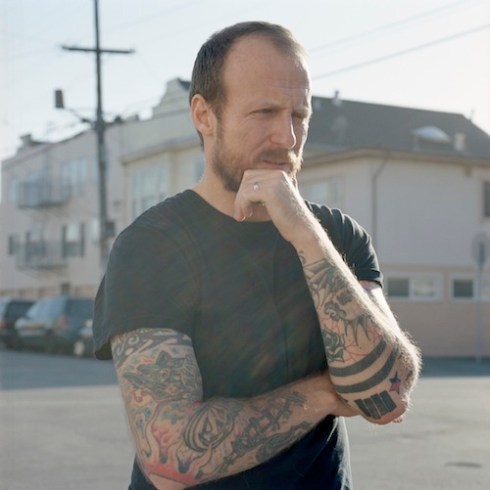
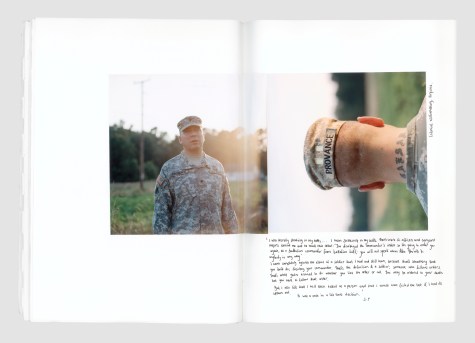
What happens when you’re a soldier and you are asked to fight in a war your conscience tells you is immoral?
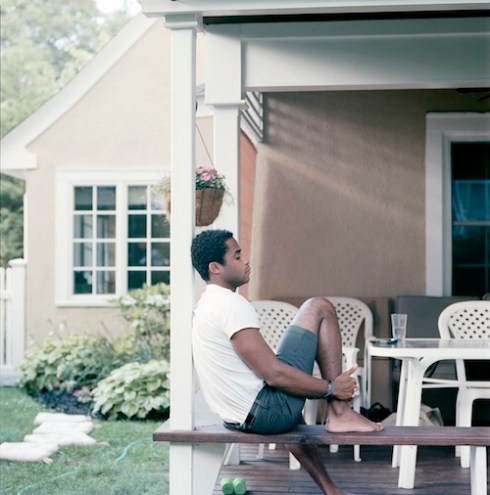
Jo Metson Scott‘s series The Grey Line and accompanying book interrogates this conundrum and those that lived – and continue to live – it.
I’m not from a military background and I always opposed the Iraq War, so it was a stretch for me to empathise with Jo’s struggling subjects who, to me, simply made – and continue to justify – rational assessments. How difficult or taxing can common sense be? To get me out my own head, I called on Jo to explain this emotional minefield of a topic.
Scroll down to read our Q&A.

Q&A
Prison Photography (PP): Where does the title come from?
JMS: The title is to try and explain the difficult position so many of the soldiers found themselves in. Nothing is ever black and white, nothing is ever as simple as right or wrong, and these people were having to make a decision between what they were contractually obliged to do and what they felt was the right thing to do. I felt The Grey Line was a way of explaining the difficult line they were choosing to walk.
PP: You say some of the soldiers were imprisoned for their views?
JMS: Actually, none of the soldiers were imprisoned for speaking out against the Iraq war. Some of the soldiers refused to fight in the Iraq war and were imprisoned for going AWOL, but not for speaking out.
Each person’s story is very different, so I’m always nervous about generalizing. So instead, I’ll give an example. Kevin Benderman was one of the older and higher rank soldiers I interviewed and he was very opposed to the Iraq war. He was deployed to Iraq for a short period. Over there his opinions really became clear and he felt strongly that being in Iraq was the wrong thing to do. When he came back he applied for Conscientious Objector status but it was denied. So he refused to go back. He was court martialed and given a 15 month prison sentence.
Kevin said he always knew that he would get a prison sentence. It was fascinating to hear how his morals were so strong he was compelled to go against the military and risk his career. It wasn’t that he was a pacifist, or had found God, he just strongly believed that what America was doing in Iraq was wrong. That’s what really impressed me about some of the people I interviewed, they really stayed true to how they felt. Kevin knew if he spoke out and refused to fight, his career would be ruined, he’d be accused of being a coward and he faced imprisonment, but he still refused to go to Iraq.
It’s like another person I met who refused to deploy to Iraq. He was openly gay, and could easily have got out through the ‘Don’t Ask Don’t Tell’ Policy, but he felt if he wanted to leave for moral reasons it would be wrong as he would see it as taking the easy option. Instead, he applied for Conscientious Objector status, which was denied, so was then imprisoned for refusing to be deployed.
Kevin Benderman can explain his situation so much more clearly that I ever will. He said to me:
“Have you heard the term, “I cannot in good conscience do that…?” Well, that’s how it was for me.
I took a look around when I got over there. We weren’t fighting an army, there were no weapons of mass destruction. None of that stuff was there. We were just bullying the civilians. We weren’t fighting soldiers; we were just kicking doors down of civilians’ houses and taking them out and that’s not what I joined the army to do. I mean, if there had been a soldier over there I would have fought a soldier, but that’s not what we were doing… not at all[…]
There was no doubt in my mind that I’d go to prison. I had to be made an example out of. I mean, I was an NCO for one. I wasn’t a young kid and they knew that if I was able to do what I was trying to do it would only strengthen my argument. They had to make an example out of me so that no one else would try it.
With all the charges they were trying to give me I could have got seventeen years. They tried to charge me with larceny, desertion, missing movement. I knew it was a bunch of bullshit. I knew they weren’t gonna be able to stick all that stuff on me. I was convicted of missing movement by design, which carried a fifteen month sentence. It was a dishonourable discharge but it was upgraded to bad conduct. But that still isn’t very good. I mean you can’t really do a whole lot with a bad conduct discharge.
I know I did the right thing but it just didn’t really change anything, you know? I invested twelve years of my life in the military. I gave that away. I gave away my retirement. I lost my home, my wife … I can’t really find a … well, I’m stuck here driving a truck.
I had more trouble with my family – sisters, brothers and brother-in-law – than with people in general.
My family didn’t even want to hear my reasons for doing what I was doing and they still don’t. Most of the ones who have openly criticised me have never served and don’t know what they’re talking about. More soldiers and veterans agree with me than my own family do. But I’m not really concerned about their opinion and that makes them mad. You know, that was part of the stress; my own family chose George Bush and his stupid ass doing something illegal over defending me, and they wouldn’t even hear my reasons why. […]
There’s still people who say I’m a hero. Well no, I’m not a hero. I was just doing what I thought was right and I really thought that people who made noises about the constitution and the law would stand up for that instead of just wanting someone to be a figurehead for them. […]
A few years ago I took a job in Afghanistan as a civilian contractor. I wanted to go back was because I know I’m a good mechanic and there’re still soldiers over there and I figured they deserved somebody who was conscientious about the work. I had given them the best vehicles that they possibly had. I didn’t leave the military to abandon the people that I served with, but I knew that it didn’t matter. Whether or not it was right to be there […] I’m a good mechanic and they’re still over there. They’re not coming back and we’re not prosecuting Bush and I wanted to make sure that they had the best possible vehicles. Should we be there? No. Are we there? Yes.


PP: Benderman’s is one story of how many? What was the number of soldiers you met?
JMS: Over the space of 5 years I met in total 45 soldiers. 29 are in the book.
PP: Has the story of conscientious objectors been adequately told?
JMS: Before I started the project, I had only associated the term Conscientious Objector to the first and second world war – to times of conscription. So I was intrigued to know why someone would need to apply for conscientious objectors status when they had willing signed up. Meeting with the veterans and doing this project made me realise that of course people who are in the military can have a change of morals and principles just like any ones else does, and some people also realise that they no longer want to be a part of war.
But not all of the people I met with were conscientious objectors. Many of them didn’t even know that the process existed. I was interested in meeting people who had moral doubts about their involvement in the Iraq war, not all were conscientious objectors.
Some people choose to whistle blow and speak out to the media about their experiences, others simply refused to fight and went AWOL. Others chose to keep quiet until they left the military and then spoke out. Speaking out from within the military is a very difficult thing to do. The quote below is from a veteran called Ryan. He was in the Marine Corp and was deployed for 7 months to Iraq. After he was honourably discharged from the military, he decided to speak out about his experiences in the military and about what he came to see as atrocities that he and his colleagues committed in Iraq.
After I made my public testimony, my brother disowned me on Facebook for everyone to see. He said I was a traitor and I wasn’t his brother anymore, that I wasn’t even a man.
Every single person that I served with in the war found out about my testimony and have publicly said that I’m a liar, a bitch, that I’m full of shit, that I’m a fucking American flag-burning, troop-hating, communist.
I understand why a lot of these guys did what they did; they’re not ready to accept that what we did was wrong … because it’s hard. It’s hard to accept that what you believed in was wrong. And not just wrong like two plus two is five, but wrong like you fucking killed somebody and that’s something you have to live with for the rest of your life. Some people just aren’t ready to live with that yet.

PP: What do you hope to communicate with The Grey Line?
JMS: Many of the people I spoke to were very torn between their duty, the bond with the people they fought with and their own belief that what they were doing was wrong. Several soldiers talked about being ordered to do things that they felt very uncomfortable about doing, but that they knew were legal.
I spoke to one soldier who had been a military Intelligence officer in Abu Ghraib. He had absolute faith in the military, but was feeling very uncomfortable with what he was being asked to do. In the quote below, he talks about his experiences of interrogating a young detainee.
He was 16; just a kid, scared to death, and skinny as a rail. We went out to get him from the ‘general population’ [prisoners who aren’t in solitary confinement] area to interrogate him. The general population area was right next to the questioning booth, but they still wanted me to put one of those sacks over his head to transport him. It wasn’t like a normal sack, it was like a plastic sand bag with sand all over it. It barely fit on his head and he was shaking as I put it over him. We used it so he couldn’t see where we were taking him, even though we could see the booth from where we were standing. We had to cuff him too, but his wrists were so skinny you couldn’t put the handcuffs on him. So he just kind of carried them instead. I felt so rotten.
The weirdest thing was when we were in the room with the kid and an MI guy came in and gave the interrogating officer a handful of Jolly Ranchers. It was meant to be put on the table like, if you talk we’ll give you some apple Jolly Ranchers, you know? The kid knew nothing. He was just this guy’s son. Originally we were supposed to interrogate his father, a general in Saddam’s regime, which was why I had agreed to be a part of it. It sounded interesting. But then when we got there, they told us that he had already been ‘broken’ and as a sort of consolation we were told we could interrogate his son.
I only found out afterwards what they had done to break his father. His son had been doused in cold water, driven around in a truck in the freezing cold night, and covered in mud. I guess, at the same time his father was being interrogated somewhere else and from what I understand they told him that they’d take a break from the interrogation and let him see his son.
So the general’s thinking he’s gonna see his son and have some kind of a reunion with him, but instead they just allowed him to see his son naked, shivering, and covered in mud.
A lot of people will probably wonder why I didn’t say something publicly right away, but it would have been pointless. Even though I thought what was happening was wrong, doesn’t mean that it was illegal anyway.

PP: What are your thoughts on the Iraq and Afghanistan wars, Jo? Was it wrong, justified, legal or illegal? Is your opinion of importance? Does it come through in the work? Or need to come through?
JMS: I was shocked when Tony Blair took my country to war. I couldn’t believe that he could go against the majority of the country’s wishes. I was shocked that he didn’t listen to the advice of the UN. Maybe it was naive of me, but that is how I felt. I think that is why I became interested in the soldiers stories. I had really believed in Tony Blair when he had come to power. I never would have dreamt he would have taken us into a war like Iraq. And that’s why I wondered how some soldiers must have felt. Many people join the military having complete faith in their government, so what happens if then the government goes into wars you think are wrong? As a soldier you have no choice.
People will always say. “You can’t have military that questions every order their given,” but on the flip side what if it was you? If it was you being asked to do something you felt in the bottom of you stomach was wrong? Something you felt went against everything you been taught? Do you ignore that feeling and carry out your contractual obligation or do you listen to your conscience?
In the end I didn’t particularly want to look at the politics of the Iraq war (though a lot of issues are raised in the book). What I wanted to explore was how an individual deals with the doubts they have in times of war. I wanted to look at the more complicated issues affecting a soldier’s decision. There are so many other things that affect one ability to make a decision – commitments to colleagues, expectations of family, financial implications, confusions of loyalty and legality. The aim of the book was to explore the complexity of their situation. There wasn’t a right way or a wrong way of doing things.
PP: How does The Grey Line fit in with your other work? You’ve recently been in Sri Lanka, you hang out with Beth Orton. I mean, to me, all your work is gentle, warm and purposeful so I’m not asking about the style or aesthetics in The Grey Line, I’m asking about its purpose for you as an artist.
JMS: I love doing commercial work and the challenges and opportunities it brings. But my approach and my purpose in doing commercial work is different to my personal work, and its difficult to compare them.
I am interested in people and because I have a camera it allows me to enter their lives in a unique way. I like to tell other peoples stories through my photographs.
For a long time now the theme of morality is something that I have questioned and explored – my own sense of morality and other people’s sense of morality, and how that affects their decisions… I think that I was unintentionally looking for way of exploring this theme with my photography, and when I first met Robert, something clicked.
PP: Can you imagine not having explored this issue? Can you imagine not having made this statement to the world?
JMS: It doesn’t really feel like I made a statement, or at least it wasn’t my statement to make. The men and women that were in the military and had the courage to question are the people making a statement.
PP: Thanks Jo.
JMS: Thank you, Pete

BOOK LAUNCH
On 20th March (6.30 -10pm) The Grey Line, published by Dewi Lewis, is having a book launch at Fishbar Gallery, 176 Dalston Lane, E8 1NG.
[Right click on the images below to view them larger.]


BIOGRAPHY
Jo Metson Scott is a portrait and documentary photographer whose work highlights the relationship between people and their communities. She has been commissioned by organisations including The New York Times, The Telegraph and The Photographer’s Gallery and her work has been exhibited in both the UK and Europe, including Arles Photography Festival, Nottingham Castle Art Gallery, Hereford Photography Festival and the Venice Biennale Fringe. She is repped by Webber Represents. Jo lives and works in London.

 Prison Photography