
You are currently browsing the category archive for the ‘Fine Art’ category.
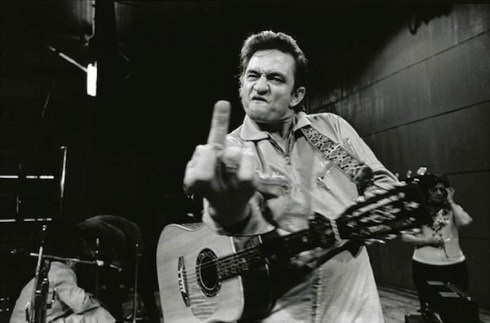
Collectors Weekly looks back at Johnny Cash’s famous performances in Folsom and San Quentin, as photographed by legendary music photographer Jim Marshall:
The most famous image from the day, though, is unquestionably the candid shot of Cash taken during a rehearsal before the show. […] Marshall recalls the origins of what he believed was “probably the most ripped off photograph in the history of the world. […] I said ‘John, let’s do a shot for the warden.’” Apparently, that’s all the prompting Cash needed to look straight into Marshall’s lens and flip him the bird.
PAUL RUCKER
In May of 2009, Paul Rucker partook of a two week residency at the Blue Mountain Center. The theme: Prison Issues.
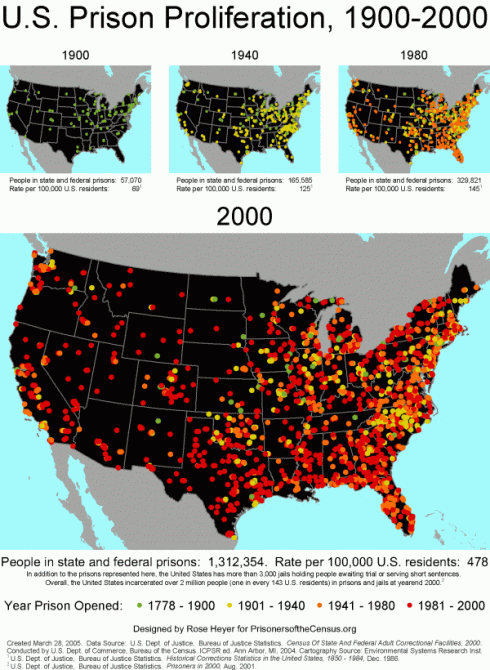
During his research he happened upon some pioneer GIS maps by Rose Heyer which modeled the growth of the US prison system. With the information he composed an original score. A note to accompany each carceral outpost to blink into existence in the “Land of the Free.”
232 years in 10 minutes and 45 seconds.
ROSE HEYER
Incidentally, Rose Heyer is a wonderful thinker. She developed the GIS methodology for the Prisoners of the Census project, enabling quick calculations of how Census Bureau’s prison miscount distorts representative democracy.
Heyer produced the map U.S. Prison Proliferation, 1900-2000 and she co-authored Too big to ignore: How counting people in prisons distorted Census 2000, Importing Constituents: Prisoners and Political Clout in Massachusetts Importing Constituents: Prisoners and Political Clout in Texas, Importing Constituents: Prisoners and Political Clout in Ohio, and Thirty-Two Years After Attica: Many More Blacks in Prison but not as Guards. Rose is now GIS and CAD consultant in California.
(Source)
Following up on my post about Julie Green’s The Last Supper, I think it is necessary to make an overview of the photography and painting projects that consider America’s death penalty by meals of depicting last meals and last meal requests.
Celia A. Shapiro
Shapiro’s recreations of last meals in lurid colour are possibly the best known within this subject matter. She made the series Last Supper in 2001. Of Shapiro’s work, critic Fred Ritchin said it proves the US only executes poor people. Ritchin’s position might be true, but as Julie Green reminded me most inmates, particularly in Southern states are limited to food from the prison kitchen and usually to a budget of $20. States that rarely employ the death penalty offer a generous $50 or no limit at all.
In all their garishness, Shapiro’s works are reminiscent of Martin Parr’s work. Parr too photographed the food of the poor; fish and chips, cupcakes, bangers and mash and trays of tea. Whatever Parr claims about objectivity there is a snide judgement in his work. Indeed it is his strength that his pictures show us the true absurdity of many of our dietary mores.
Shapiro’s work disgusts me. It disgust me in a good way. It angers me. Each of Shapiro’s images represent a life extinguished … gassed, cooked, fried. It’s hard to stomach. Good art evokes strong response.

John William Rook, age 27, executed by North Carolina, 9/19/86. © Celia A. Shapiro
James Reynolds
James Reynolds‘ Last Suppers was well received in 2009 but the interest in his birds-eye view still-lives seemed short-lived. I suspect they were appreciated more for their unorthodox view of a infrequently seen subject and for their role as conversation starter, than they were as lasting pieces of art.
The visual discipline of the institutional orange trays of containing in most cases a bizarre allocations of food, fairly reflects the irrationality of a state killing a citizen.
There is something maddening and suffocating about Reynolds’ ordered still-lifes. The demarcated space of the foodstuffs reminds me of aeroplane meals. For the executed it all comes down to a tightly presented meal, and this is meal is absurd.

© James Reynolds
Jonathon Kambouris
Jonathon Kambouris‘ efforts with The Last Meals Project is roughly contemporary with Reynolds (completed over 2009/2010). Judging by the shadows to the chicken legs, cups of coffee, Kambouris places food items ontop of a blown-up mugshot of a (infamous) inmate mugshot and makes the photograph from directly above, looking down.
Kambouris is tying his desire for a debate about the death penalty to the most renowned and media-coveted men and women. I am not convinced this is a good tactic as (whipped up) emotions about serial killers is not the place to begin a rational discussion on the symbolic foolishness of the death penalty. I think a better place to start a progressive debate – at least within the framework of art – would be Taryn Simon’s The Innocents or the painter Dan Bolick’s Resurrected. The existence of innocence on America’s death rows is a powerful argument working in favour of death penalty abolition.
One footnote to add is my astonishment at Kambouris’ statement at Feature Shoot: “In 2010 this photo essay traveled to Singapore to be shown in the Singapore Fringe Festival: Art and the Law. Ironically, Singapore has an extremely strict death penalty stance and I was informed that it is part of school curriculum to watch an execution take place.” Kids spectating murder? Can that be true?
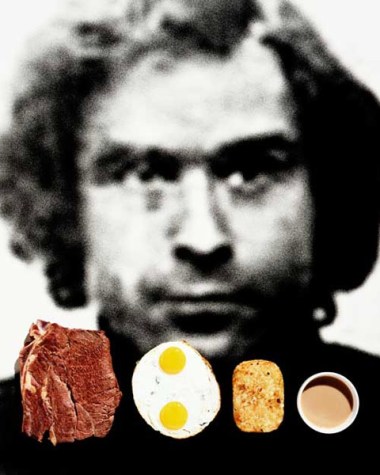
Name: Ted Bundy; Last meal: Steak, eggs, hash browns, coffee; Sentence: Death by electric chair; Executed: January 24, 1989, 7:16am; State: Florida. © Jonathon Kambouris
Mat Collishaw
Mat Collishaw goes all Flemish Master on his last meals. Except it isn’t the girl with the pearl earring chomping down on that lettuce it was Karla Faye Tucker a few hours before she was lethally injected by the State of Texas in 1988. Flemish still lives were part allegories of life, death and cycles of nature but frequently used items of trade as story telling devices. Knowledgable viewers would identify flowers or precious metals from across the globe brought by the Dutch merchants that dominated sea-trade in the 16th and 17th centuries.
In the age of supermarkets and year round strawberries, the global food trade and who runs is of little significance. The inference in Collisaw’s work is that America trades in sublime murder.
Found via Art Most Fierce.

Karla Faye Tucker (2010). C-Print, 73 x 60 com (29 x 24 inches) © Mat Collishaw
Jacquelyn C. Black
Black’s … last meal … (Courage Press, 2003) is a curious little publication. It is clearly an act of conscience. The studio photography is very literal without the interpretation we see in other artists’ works. I cannot be sure Black’s prints have ever gone on exhibition. Black pairs images of last meals with text of last statements.
When one is looking at photography in order to draw critical conclusion, it is often the absence if photography (or more precisely, the presence of something unexpected) that can provide the Eureka! moment. I am somewhat desensitised to the issue of state violence; I suspect the emotive response Black and her peers expect of the viewer, I do not deliver. It was therefore, an absent image and text in its place that caught my attention and really drove home the spiteful retribution of execution:
ASKED THAT HIS FINAL MEAL BE GIVEN TO A HOMELESS PERSON
(REQUEST DENIED)
… last meal … includes valuable auxiliary material – on the history of capital punishments; on statements made in landmark legislation; and on US death penalty statistics. Black also lists political resources for anti-death penalty activism.

Name: Anthony Ray Westley
Executed:May 13, 1997
Education: 8 years
Occupation: Laborer
© Jacquelyn C. Black
Barbara Caveng & Ralf Grömminger
Glowing like fast food menu boards but with the deliberateness of illustrations in a noodle bar, Grömminger’s photographs mounted in lightboxes for Caveng’s Final Meals installation are a bit pop. Any illusion of vitality is deflated by the procedural details of the eater’s execution.

Detail from ‘Final Meals’, installation by Barbara Caveng, 2000. Backlit boxes: Steelcases (40 x 40 x 18cm) with a pane on one side to pull, showing the execution protocol. Two audiostations with final statements. Meals photographed by Ralf Grömminger
Kate MacDonald
“The leftover table scraps relate the humanity of the condemned to our own ordinary experience,” says Kate MacDonald of her painted Last Meals series. That’s a bit poetic for me. More powerful is the fact these plates are empty. The remnants of sauce and chicken bone are primordial and bloody. Just as these items were devoured, so too will be the body that consumed them. Despite the polystyrene cup and plastic cutlery there is something very animalistic about MacDonald’s oil paintings.
Last Meals featured in the Texas Moratorium Network’s exhibit Justice For All? Artists Reflect on the Death Penalty, in which MacDonald and peers considered the injustices embedded within the death penalty; “Mental health and lack of advocacy, racial discrimination, poverty, and at the issue’s most basic argument, the possible innocence of the executed.”
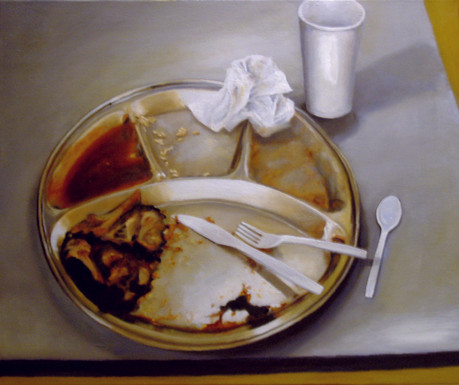
The last meal of Ruben Cantu, believed to be wrongfully convicted and executed in Texas. (24 x 20 inches), oil on canvas. © Kate MacDonald
As of May 2009, there had been 1165 U.S. state-sanctioned executions since 1976.
– – – – – – – – – – – – – – –
UPDATE: August 19th 2012
Two more projects.
Helen Grace Ventura Thompson
Ventura Thompson’s website. Her work in The Guardian. My thoughts.

© Helen Grace Ventura Thompson
and
Julia Ziegler-Haynes
Ziegler-Haynes’ website. Her work.

© Julia Ziegler-Haynes
– – – – – – – – – – – – – – –
UPDATE: December 14th, 2012
Henry Hargreaves
Hargreaves‘ No Seconds is a series of 10 stark photographs that re-create last meals alongside the name, age and conviction of the murdered individual. See more of his work on Raw File, Wired.com

© Henry Hargreaves
– – – – – – – – – – – – – – –
UPDATE: January 29th, 2013
Patrick Guns
For My Last Meals, 2007-2009, Guns asked 54 chefs to interpret 54 last meals.
“From this list of last meals, I asked renowned chefs to choose a meal according to their affinity for cooking and to recreate these last wills without any fear of asserting their own Humanism. As a tribute to a deceased man, their creations are more concerned about Man than about the Cook,” writes Guns.
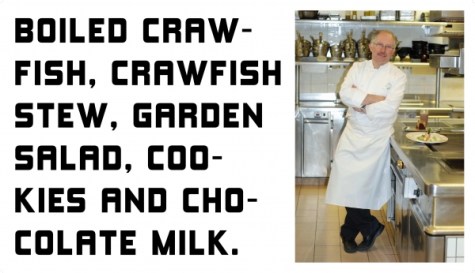
© Patrick Guns
– – – – – – – – – – – – – – –
If you have any other projects that need adding to the list, please get in touch.
– – – – – – – – – – – – – – –
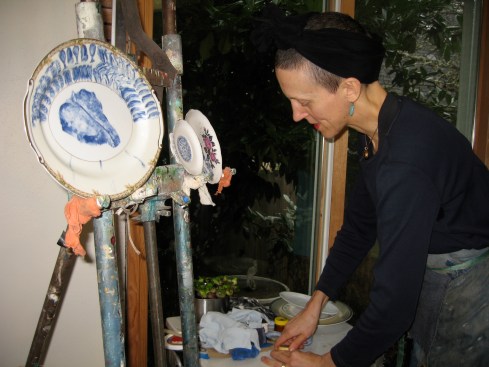
Julie Green in her studio. Photo Credit: Pete Brook
I recently visited Julie Green at her studio in Corvalis, Oregon. For the past twelve years, between her responsibilities as Professor of Art at Oregon State University, Green has been painting plates. Each plate quietly marks the life of a man or woman executed in the US and each depicts their final meal request.
Green’s The Last Supper has steadily grown down the years. There are now approximately 450 plates in the series and, when exhibited, they come together in a ghostly feast of absent eaters. I imagine a toast to the fury and retribution of US society.
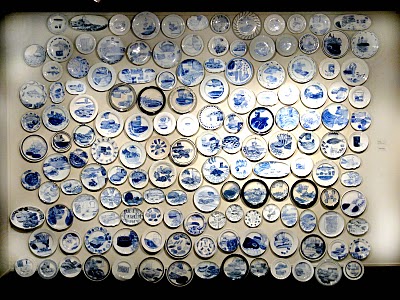
The Last Supper exhibited at Oregon State University (OSU). Photo credit: Doug Russell
Green acquires all her plates from thrift stores and bargain barns. Her preference is plain white plates, but she’ll tolerate flashes of navy or gold. The plates showing the last meals of female prisoners are occasionally a little more elaborate and may include floral decorations.
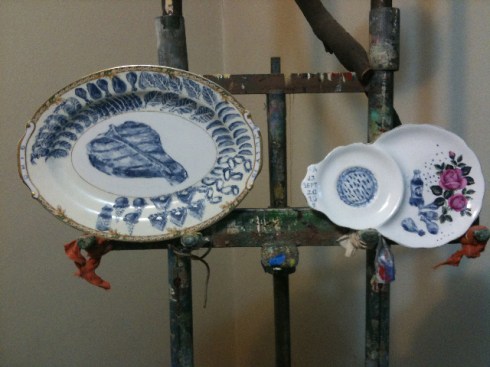
Two plates partially complete, for The Last Supper series, Julie Green’s studio, Corvalis, Oregon. Photo Credit: Julie Green
In some instances, last meals were refused and a statement was offered instead. Although, Green withholds the identity of the inmates, cursory internet sleuthing can pair meals with murdered prisoners. Writes Kelly Klaasmeyer for Houston Press:
Odell Barnes, Jr. [was] a Texas death row inmate. Barnes’s case caught international attention and caused Pope John Paul II to urge then governor, and presidential candidate, George W. Bush to show “compassion.” Barnes was executed, and Green has painted his last request on a gold-rimmed oval plate: “Justice, equality, peace.”
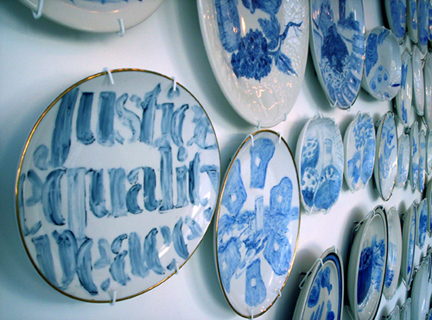
The Last Supper exhibited with Odell Barnes Jr.’s ‘Justice Equality Peace’ plate in the foreground. Photo credit: Aswin Subanthore

Mineral paint and Julie’s hand. Photo credit: Pete Brook
Green uses mineral paint, sometimes called porcelain paint. “I often add cobalt blue pigment to the mineral paint. Sometimes Nassau blue,” says Green. The paint slides across the reused plates and the effect is one of translucent foodstuffs. To fix the paint, Technical advisor Toni Acock kiln-fires each plate at 1,400 degrees Fahrenheit.

Kiln firing plates, January 2011. Photo credit: Deborah Gangwer
Finding out the last meal requests from across the States is not complicated work. As a matter of process, the last meal is usually included in media coverage. Until 2003, the Texas Department of Criminal Justice published its own online record of last meal requests. Green will also write to state authorities; the information is public record and always forthcoming. The fact that the details of last meals secured as part of procedure, and as part of the service of information to the wider public, is both significant and perplexing to Green. Why our fascination?
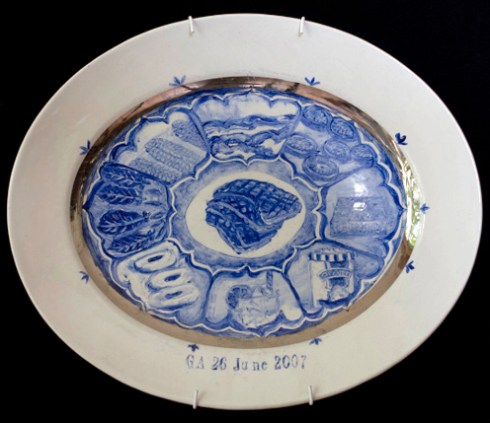
The Last Supper: Georgia 26th June 2007. Four fried pork chops, collard greens with boiled okra and “boiling meat”, fried corn, fried fatback, fried green tomatoes, cornbread, lemonade, one pint of strawberry ice cream and three glazed donuts. Mineral paint fired on to porcelain, 9″ x 15″
In keeping with her other projects, The Last Supper is an act of meditation. (Green was diligently painting shells on sheets with fabric paint before, during and after the Gulf oil spill of 2010.) Through the act of painting, Green takes on a critical awareness that – unfortunately – many of us choose to ignore. The Last Supper is both a remarkable dedication to mindful art practice and, for Green, an unsettling focus on violence.
“I think about food, choice, and whether inmates are able to eat the food they order,” says Green. “Specific food requests, often-local specialties, provide clues on region, race, and economic level.”
I don’t think Julie would mind me calling her a foodie (she made some hearty organic soup and bread for us to share), and so to her it is logical that the connection between the body, health and living intertwine with circumstance of education, socialisation and (potential) institutionalisation.
Aware of “the heinous crimes committed, the victims, the individuals executed, the large number of minorities on death row, and the margin for error in judicial process” Green is undoubtedly invested in the politics of prisons and anti-death penalty. And yet her response as an artist is apt, personal and all the more powerful for it. If she is angry, it is quiet anger.
Many photographers have chosen last meals as their subject. Possibly the best known is Celia Shapiro. Critic Fred Ritchin has referred frequently to Shapiro’s work saying that its power lies in the food choices of men and women clearly of lower economic status, but Green corrected this view; often a choice is not ‘choice’. Prisoners in most states have a budget of $20. “Inmates in some states are limited to food available in the prison kitchen,” says Green “There is a great deal of red meat but few lobsters, no sushi, and no Godiva chocolate.” The chocolate is usually Hershey’s.

Julie Green’s self-made reference book of food images. Photo credit: Julie Green

Plate from The Last Supper series waiting to be fired. Firing seals and dries the mineral paint. Photo credit: Pete Brook
The Last Supper plates were first displayed at University of Liverpool Art Museum, UK in 2000.
Later they have been on show at the University of California at Santa Cruz; Copia American Center of Food, Wine and the Arts, Napa, CA; Oregon State University, Corvalis; The Wing Luke Asian Museum, Seattle; The Hunter Museum of American Art, Tennessee; Living Arts, Oklahoma; Fort Collins MOCA, Colorado; The Spencer Museum of Art, University of Kansas; The Mulvane University Museum of Art, Kansas; Reed College, Portland, OR; and DiverseWorks, Texas.
Awaiting their next outing, the plates are numbered, ordered and locked in Green’s basement. I found some irony in that.
And when is The Last Supper project complete? “I’ll stop painting plates when the US ceases with the death penalty,” says Green.
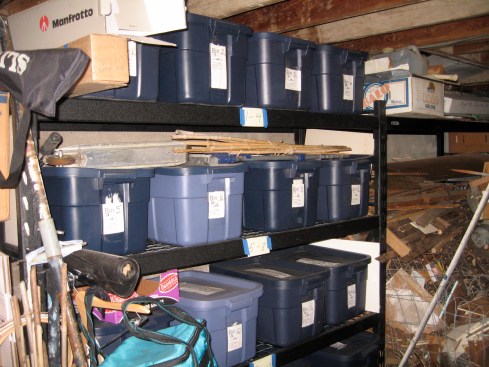
Between exhibitions, Green stores the plates in her basement. These sixteen tubs contain approximately half of the collection. Photo credit: Pete Brook
In 2003, Green was interviewed about The Last Supper on the NPR program The Splendid Table.
In 2008, The Last Supper was shown as part of the San Francisco State University show Criminal along with artists such as William Pope. L and Deborah Luster. Green’s work was included in the follow up book PRISON/CULTURE, (Ed. Bliss, Sharon E., Kevin B. Chen, Steve Dickison, Mark Dean Johnson & Rebeka Rodriguez) and published by City Lights. In 2010, I reviewed PRISON/CULTURE as “simultaneously a consolidation of achievement, a fortification of resources and celebration of resistance. PRISON/CULTURE may be a book with a Californian focus, but it has national and international relevance. Succinct, well researched, egalitarian and lively. For me, PRISON/CULTURE is the best collection of works by any US prison reform art community up until this point in history.”
FURTHER READING: FOOD AND DEATH
Cabinet Magazine: Debt, Guilt, and Hungry Ghosts: A Foucauldian Perspective on Bigert’s and Bergström’s Last Supper
Famous Last Meals blog
Dead Man Eating blog
Food in the Arts: The da Vinci Mode: Last Suppers, Old & New
THE DEATH PENALTY ON PRISON PHOTOGRAPHY
Media and the Aftermath of an Execution: Poring Over the Apparatus of Death
Louisiana Sues Its Own Death Row Prisoners
Photographer Scott Langley talks about the Death Penalty
STATISTICS
On her website, Green provides the following statistics.
As of May 2009, there had been 1165 U.S. state-sanctioned executions since 1976:
438 Texas
103 Virginia
90 Oklahoma
67 Missouri
67 Florida
43 North Carolina
45 Georgia
42 South Carolina
42 Alabama
27 Louisiana
27 Arkansas
28 Ohio
23 Arizona
19 Indiana
14 Delaware
13 California
12 Nevada
12 Illinois
10 Mississippi
6 Utah
5 Maryland
4 Washington
3 Montana
3 Nebraska
3 Pennsylvania
3 Kentucky
2 Oregon
5 Tennessee
1 Connecticut
1 Colorado
1 Idaho
1 Wyoming
1 South Dakota
0 New Hampshire
0 Kansas
3 U.S Federal Government
States without the death penalty: Alaska, Hawaii, Iowa, Maine, Massachusetts, Michigan, Minnesota, New Jersey, New Mexico, New York, North Dakota, Rhode Island, Vermont, West Virginia, Wisconsin, and Washington D.C.

Joerg‘s been on a collage kick recently and even opened up a new Collage Art category for his blog. I came across the work of John Beech this week (I can’t remember where) and I like what I see. Beech uses recycled/discarded materials in his sculpture and mixed media works, so why not play on the idea in his photo-collage also?
Check out Beech’s Hybrid Dumpster Drawings.
Collage is a deceptively tricky discipline. It seems to me that the best collages are often the ones that exist at the extreme ends of the spectrum. At one end of that spectrum are collages that incorporate fragments too numerous; visual orgies that have the head spinning, for example Neil Chowdury’s photo-montages.
At the other end of the spectrum are those that incorporate the barest elements; John Beech’s use of only two images would be good examples of that, and of course the least an artist can do to qualify their work as collage.
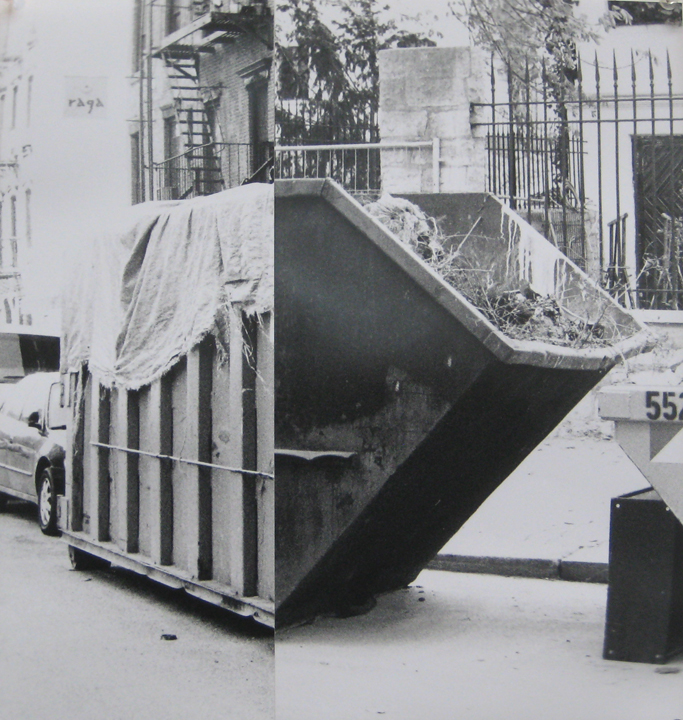
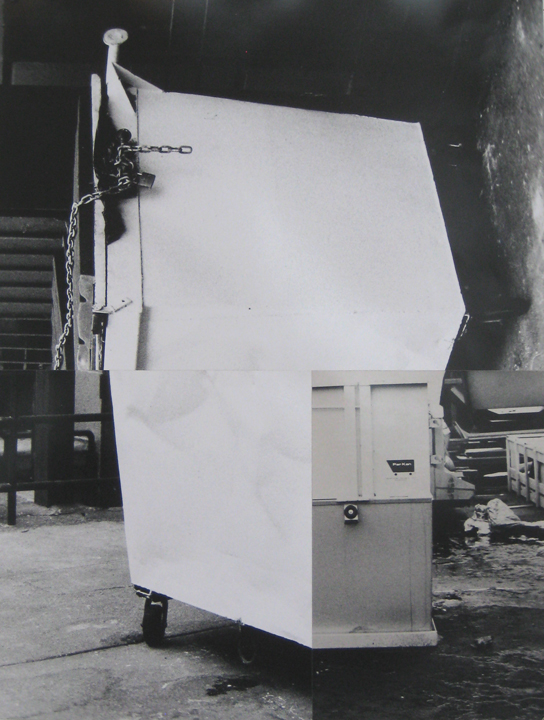
Beech also plays around with metallic tape atop of prints to obscure subjects.


John Beech’s The State of Things is on show at Peter Blum Gallery, 526 West 29th Street, New York, NY 10001

Bettina von Kameke‘s series Wormwood Scrubs is a reflective look at the communal life of prisoners inside one of Britain’s most notorious prisons.
Wormwood Scrubs (Her Majesty’s Prison) is well known in Britain through both popular culture and sporadic news stories about the latest infamous prisoner. It is a institution everyone has heard, some would claim to know about, but in fact only a few truly know. Those few would be the staff and prisoners.
Von Kameke says:
“I was surprised at how respectful the interaction between staff and prisoners was. Of course I was aware that there is drug-dealing inside and it is a hard prison. I could feel the intensity and harshness of the energy… I reflected it in the sadness, heaviness, anger and frustration through the expressions on their faces. But the objective is to show the humanity in the system.”
I am impressed by von Kameke’s awareness (and depiction) of communal living.
“I question and explore the interior and exterior conditions, means and forces, which make a communal life sustainable. My photographs disclose the aesthetics of an enclosed community, which I carefully observe through the viewfinder of the camera.” (Source)
Prison jobs and recreational time are what make incarceration sustainable, and by that I mean as free from waste and repetition as possible.
Prisoners never make direct eye contact with von Kameke’s lens; she shoots as if she is not there. This, I suspect, has a lot to do with the amount of time she spent in Wormwood Scrubs; she spent over six months on the prison wings.*
She and the prisoners probably did have relationships, but they are not the subject of von Kameke’s photography; attentions are elsewhere … apparently.
Between von Kameke and her subjects is acceptance and restraint, almost to the point of collaboration. It cannot be overstated how difficult this is to achieve in a prison environment when everyone potentially has something to pursue and gain through interactions.


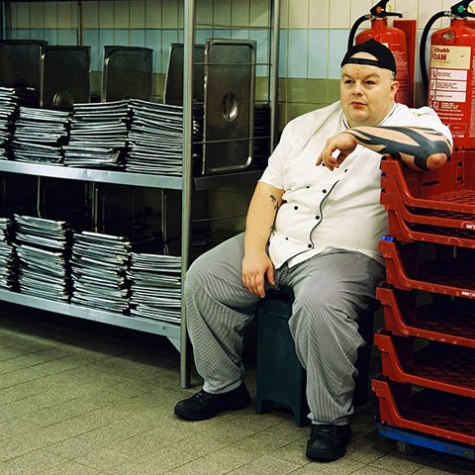
One final thing to note is the overlap in atmosphere between Wormwood Scrubs and von Kameke’s earlier series Tyburn Tree, which depicts the Benedictine Nuns of the Tyburn Tree Convent, London. Communal living within total institutions can be both enforced and voluntary.
Wormwood Scrubs is on show at Great Western Studios, 65 Alfred Road, London W2 5EU until March 11th.
More images at the Guardian.
* I always contend that the best prison photography projects result from a long term engagement with the subject. Von Kameke’s Wormwood Scrubs bears out this thesis oncemore.
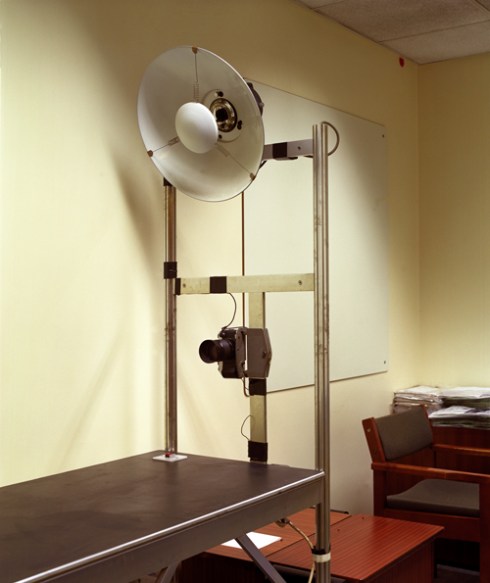
Photography and fingerprinting room.
David Moore has an uncanny knack of gaining access to sites most photographers might think are beyond reach.
In the Summer of 2009, Moore took advantage of a short-window of time during which the cells inside Paddington Green Police Station sat empty. The survey Moore completed – a series entitled 28 Days – was the first foray into this infamous jail. Prison Photography is proud to publish these images for the very first time.
[Keep reading below]

Chair.

Forensic pod.
Paddington Green Police Station is structurally banal. Constructed in the late sixties, its functionalism is belied somewhat by a concrete-lovers facade. For Britons, Paddington Green means one thing: Terrorism. Built into and underneath the station are sixteen cells and a purpose built custody suite; extraordinary hardware for a police station, but not for the interrogation of high-level terror suspects.
In the 1970’s many IRA suspects were incarcerated at Paddington Green prior to appearing in court. At that time, the period of initial detention was up to 48 hours, this could be extended by a maximum of five additional days by the Home Secretary. (Prevention of Terrorism Act, Northern Ireland, 1974). British terror legislation was not renewed until the Millennium.
The Terrorism Act of 2006 increased the limit of pre-charge detention for terrorist suspects to 28-days, hence Moore’s title for the work.
Originally, the Labour Government and Prime Minister Tony Blair, had pushed for a 90-day detention period, but following a rebellion by Labour MPs, it was reduced to 28-days after a vote in the House of Commons.
[Keep reading below]

Control room.

Chair, police interview room.

Holding cell.
In 2005, Lord Carlile (a hero of photographers, as a key person in reversing abused UK police stop-and-search procedures) was appointed independent reviewer for the government’s anti-terrorism legislation. His team visited Paddington Green in May, 2007 and issued a damning report on its inadequacy as a modern facility for the detention of humans for such extended periods.
The facilities […] were designed when the station was built in the late 1960s in order to deal with terrorism suspects from Northern Ireland – a far different threat from that faced from international terrorism today, in terms of scale and complexity. The main deficiencies of Paddington Green are as follows:
* there are only 16 cells. Over 20 people at a time were arrested during individual terrorism investigations in both 2005 and 2006 and some had to be sent to Belgravia police station, which is not set up to deal with terrorism suspects. In addition, the normal day-to-day work of Paddington Green police station, which serves the local neighbourhood, was severely disrupted.
* there are no dedicated facilities for forensic examination of suspects on arrival. Cells have to be to specially prepared for this purpose, which is time consuming and further exacerbates the lack of accommodation.
* there is no dedicated space for exercise. Part of the car park can be cleared to provide a small exercise yard but this takes time to arrange and the car park is overlooked. This is likely to reduce considerably opportunities for exercise.[48]
* only one room is provided for suspects to discuss their cases in confidence with a solicitor.
* there are no facilities on site for the forensic examination of equipment such as computer hard drives.
* the videoconferencing room is too small to accommodate judicial hearings on the extension of the period of detention. Such hearings are usually now held in the entrance lobby, which is itself cramped, is a thoroughfare into the custody suite, and opens into the staff toilets at the back. It is clearly an inappropriate location for such a crucial part of the detention process.
(Source)
And so it was, shortly after the completed £490,000 refurbishment of Paddington Green Police Station, Moore photographed to the smell of fresh paint.
[Keep reading below]

CCTV camera with courtesy screening over toilet, holding cell D

Holding cell D.
28 Days is a continuation of Moore’s preoccupation with sites of state apparatus, but this was not always his interest. During the nineties, Moore worked in New York as a commercial photographer, Upon his return to his Britain, he spent three years piecing together The Velvet Arena (1994), a look at the textures, couture and gestures of high society, openings and schmoozing … canapes and all.
From here Moore, still concerned with the dark weight of the familiar made photographs of the House of Commons. He describes The Commons (2004) as a forensic view. “British people know what the House of Commons looks like,” said Moore via Skype interview. His response was to get close and change the view; he focused on corners, carpets, perched flies, scratches in the wood and banisters.
The Commons was pivotal in Moore’s development. He argues that photography has always been entangled in politics, specifically the British Empire. Following the destruction by fire of the existing Houses of Parliament on 16 October 1834, Barry and Pugin designed the new houses for British law with Gothic-Revivalist importance. They were completed in 1847. Photography’s earliest manifestation came about in 1839 with the daguerreotype.
Law, reason, progress, conquest, taxonomy and technology drove the British Empire through the end of the 19th century. Photography, with its will to objectivity, played its part in stifling cultural relativism; it disciplined both colonialist and colonised. Against this history, The Commons, for Moore, was “born of political frustration.”
“It was important for me to break it down. I am probably most influenced by Malcolm McLaren than anyone else,” says Moore.
[Keep reading below]

Solicitors’ consultation room

Virtual courtroom.
“My volition as a photographer goes back to the want to use it as a democratic tool. Looking at state apparatus and panoptic sites, I see my work as an act of visual democracy. Any small chip I can make.”
In 2008, Moore made quite a large chip. For The Last Things, he negotiated access to the Ministry of Defence’s crisis command centre deep beneath the streets of Whitehall, London. Moore got the pictures no other photographer ever had, or ever will. Read my article for Wired.com about Moore’s experience working in the subterranean complex that – to this day – officially “does not exist.”
The Last Things more than any other portfolio, opened the door for Moore to work at Paddington Green. It was a body of work with which he could show he could be trusted. Besides the Police Station was vacant. “It was relatively low security,” explains Moore.
“Paddington Green was very different to the MoD crisis command center. Paddington Green is imbued with a history and a trajectory of history. I know about [IRA] terrorism and about interview techniques and who’d been held in there over the years.”
For Moore, 28 Days is a contrast of the old and the new. An old building with new fixtures. Old procedures replaced by new codes of conduct. “There were definitely some opinions from older police officers: ‘These are terrorists, what does it matter if a cell is painted or not?’ and there was a mix of young and old police officers. The architecture reflected the changing Metropolitan police,” says Moore.
Moore’s work at Paddington Green is a glimpse of an institution in transition; in a moment and not in use. It could be said the stakes were low for London’s Metropolitan Police; that the risk was minimal. It is likely Paddington Green Police Station will cease to operate as the first stop for terrorist suspects. Plans are afoot for a new purpose-built facility. For the authorities, Moore’s work is transparency, for us it is curiosity sated, and for the photographer it is a small victory for “visual democracy”.
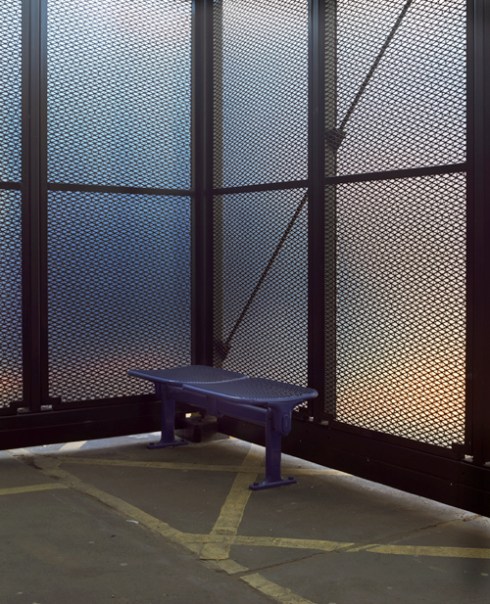
Exercise area.
All Images Courtesy of David Moore
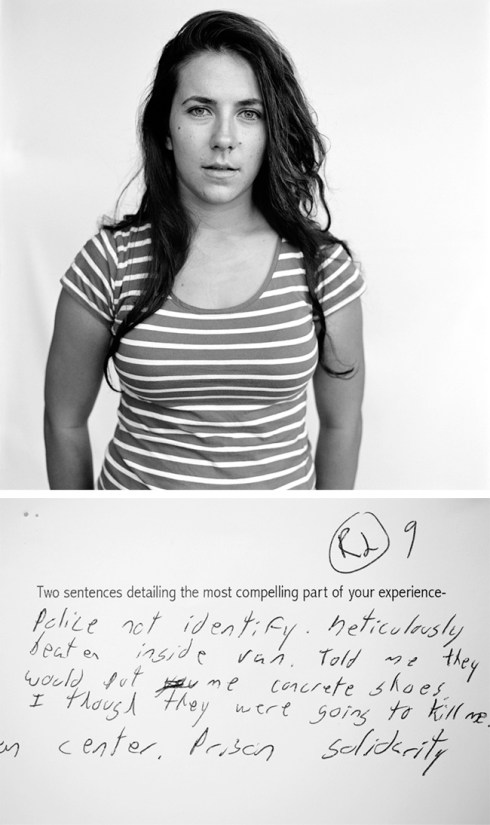
National Post photographer, Brett Gundlock was one of the 304 protestors arrested during the G20 protests in Toronto, last June.
Since last Summer, and dissatisfied generally with the representation of the protests, Gundlock has tracked down many of those also taken into custody. He has asked each of them to provide a (very) short statement on the experience of being processed through protest-policing and city jail.
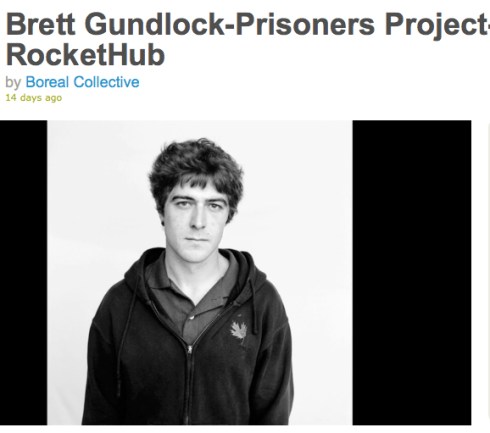
In March, Gundlock will mount a show for the portraits and accompanying testimonies. For this he has already crowdfunded the $1,500 necessary via RocketHub. You can read more about the project here or you can watch Gundlock’s video intro.
Picturing Victimhood
Gundlock’s portraits are rather austere, which probably fairly reflects the seriousness with which many protestors take to their direct actions. In formal arrangement, they echo the look of two very famous photographers before him.
Marc Garanger, a young French soldier was pressed into a fortnight of taking 2000 identity pictures of Algierian women. Garanger considered himself – as military man and photographer – as an aggressor. His female subjects as victims. Although, as Fred Ritchin describes, when Garanger returned to Algeria decades later he was warmly received by the sitters and their families. And thus squashing the simplistic presumptions of the Western audience.
Richard Avedon’s In The American West was the work of a fascinated, brave yet perverse outsider. Perhaps the most amazing aspect of In The American West was that Avedon – under the guise of fine art – used his camera to adopt an outsider engagement with his subject akin to ethnographic research. In 20th century America, no less.
Whatever we might think of Avedon’s awe and reverence to his cowboys and oil-workers, they are set up as victims by means of their exclusion from the comfortable predictability of majority America.
Photographically, one end of the spectrum (Garanger, Avedon, Gundlock) depicts victims quiet and silent, while the other has them wailing in grief and duress. I’d suggest in this visual environment, Gundlock has made the right decision to ask for written recollections of the moment from his subjects.
Brett Gundlock is part of Boreal Collective.
Found via drool

 Prison Photography