
You are currently browsing the category archive for the ‘Institutional’ category.
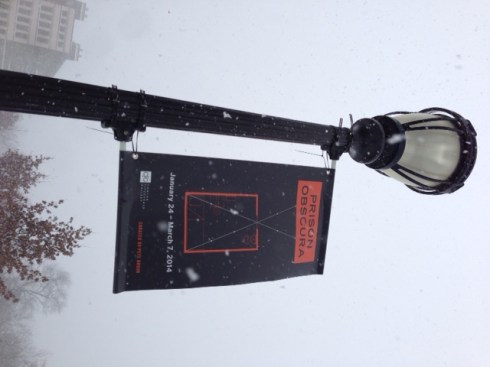
Just a quick post to say …
It happened. Prison Obscura opened. With a fantastic turnout. Gallery was crammed for the curator’s talk and people said many nice things. I pulled my usual trick, clocking silly hours until the early hours most of last week during install. Matthew Seamus Callinan, the Associate Director of Cantor Fitzgerald Gallery and Campus Exhibitions at Haverford College did the same. I cannot thank Matthew enough for his support throughout the creation of the show. Legend. More thanks to so many people.
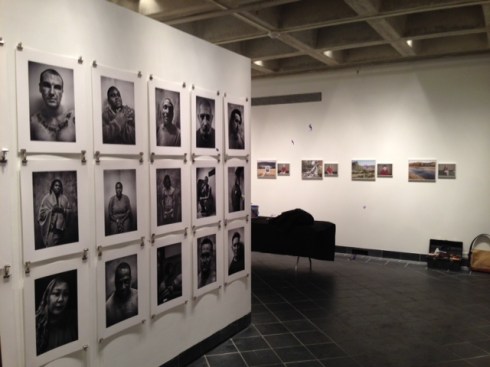
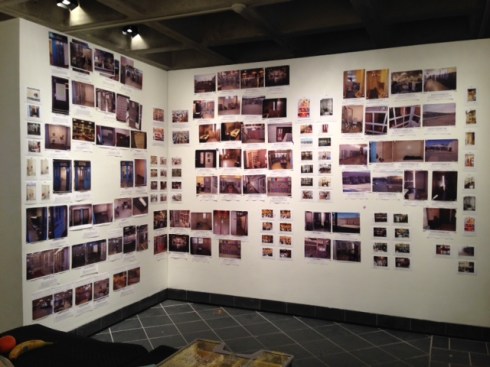
I haven’t any pictures of the opening because my head was spinning. There’s some on Facebook. I’m sure others have some too (send ‘em over!) but I wanted to do a quick post with some installation shots. Taken at different points during the week during install and may not reflect exactly the final layout. (Buckets and hardware not part of the show).
Prison Obscura is up until March 7th at the Cantor Fitzgerald Gallery at Haverford College, just outside Philadelphia, PA. All you need to know about the exhibit is here.






It is with giddy, air-punching pride and mammoth-sized gratitude for those that helped me along the way that I announce the imminent opening of Prison Obscura.
This exhibition is my first solo-curating gig and reflects my thinking right now about images of and from American prisons. Prison Obscura includes works, approaches and genres that — after 5-years of looking at prison photographs — I consider most informative, responsible, challenging and useful.
Prison Obscura is on show at Haverford College’s Cantor Fitzgerald Gallery from January 24 through March 7. The CantorFitz built a remarkable Prison Obscura website to accompany the exhibition, at which you can find a lengthy 5,000-word essay as to why I have shied away from traditional documentary work and focused instead on surveillance, code, vernacular snaps, prisoner-made photographs and rarely-seen evidentiary images.
I posit that certain images can more accurately speak to political realities in America’s prison industrial complex. I also celebrate photographs that were made through processes of collaboration with prisoners and with intention to socially engage the subjects and educate audiences. I want you to wonder why you — a tax-paying, prison-funding citizen — rarely gets the chance to see inside prisons, and I want us to think about what roles existing pictures serve for those who live and work within the system.
Scroll down to learn more about the Prison Obscura artists.

Photographer Unknown. Clinical contact holding cage, Administrative Segregation Unit (ASU), C-Yard, Building 12, Mule Creek State Prison, California. August 1st, 2008. Used by law firms representing imprisoned plaintiffs in class action lawsuit against the State of California in the Plata/Coleman vs. Brown cases.

Photographer Unknown. Group holding cages, C-Yard, Building 13, Administrative Segregation Unit, Mule Creek State Prison, August 1st, 2008. Used by law firms representing imprisoned plaintiffs in class action lawsuit against the State of California in the Plata/Coleman vs. Brown cases.

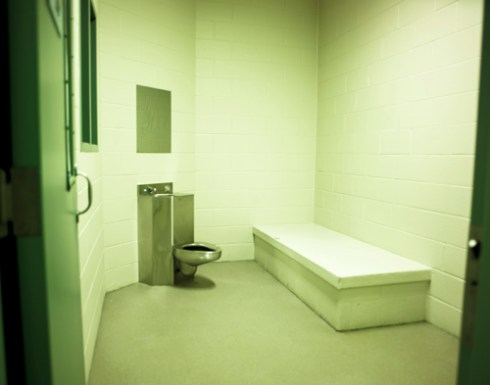
Suicide watch cell, Building 6A, Facility D, Wasco State Prison, California (August 1st, 2008). This photograph document was submitted as evidence in the Brown vs. Plata class action lawsuit (Supreme Court of the United States, May 2011). Photo: Anonymous, courtesy of Rosen Bien Galvan & Grunfeld LLP.

Photographer Unknown. Reception Center Visiting / Clinician Office Space, North Kern State Prison, July, 2008. Used by law firms representing imprisoned plaintiffs in class action lawsuit against the State of California in the Plata/Coleman vs. Brown cases.
PRISON OBSCURA ARTISTS
Alyse Emdur’s collected letters and prison visiting room portraits as well as Robert Gumpert’s recorded audio stories from within the San Francisco jail system provide an opportunity to see, read, and listen to subjects in the contexts of their incarceration.
Juvenile and adult prisoners in different workshops led by Steve Davis, Mark Strandquist, and Kristen S. Wilkins perform for the camera, reflect on their past, describe their memories, and self-represent through photographs.
Prison Obscura will also feature work made in partnership with the City of Philadelphia Mural Arts Program. Men from Graterford Prison who are affiliated with both its own Restorative Justice Program and Mural Arts’ Restorative Justice Group are collaborating to create a mural for the exhibition.
The exhibit moves between these intimate portrayals of life within the prison system to more expansive views of legal and spatial surveillance in works like Josh Begley’s manipulated Google Maps’ API code and Paul Rucker’s animated videos, which offer a “celestial” view of the growth of the prison system.
Prison Obscura builds the case that Americans must come face to face with these images to grasp the proliferation of the U.S. prison system and to connect with those it confines.
Scroll down for media, details and events.
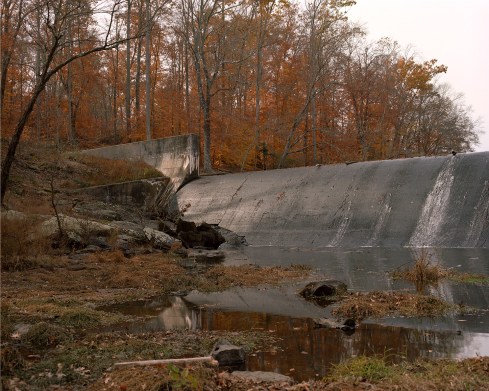
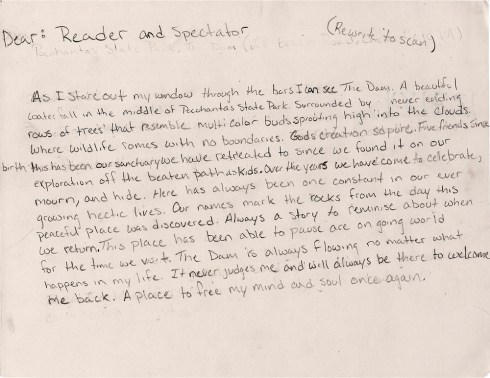
Mark Strandquist. Pocahontas State Park, Picture of the Dam. One Hundred and Thirty Days (top); text describing the scene written by a Virginia prisoner (bottom). From the series Some Other Places We’ve Missed.
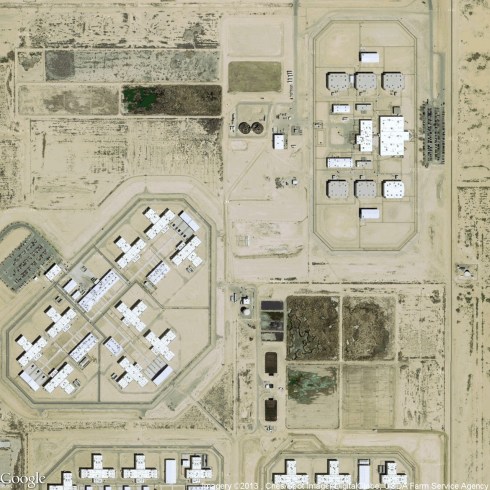
Josh Begley Facility 237. From the series Prison Map.

50 of the 5,393 facilities imaged by Prison Map, a data art project which automatically “photographs” every locked facility in the U.S. by gleaning files from Google Maps with use of code modified from the Google API code by artist Josh Begley.
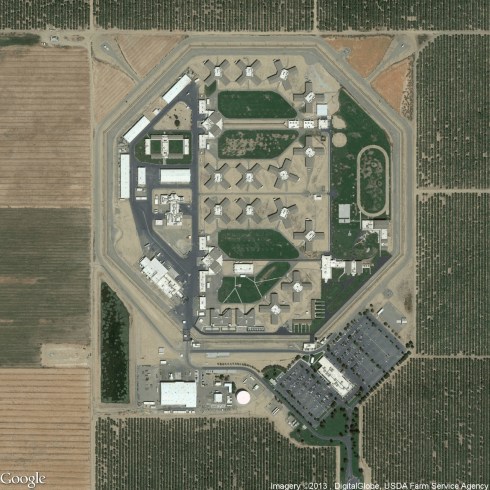
Josh Begley Facility 492 From the series Prison Map.

Photographer unknown. Incarcerated girls at Remann Hall, Tacoma, Washington, reenact restraint techniques in a pinhole camera workshop, 2002. Photo: Courtesy of Steve Davis.
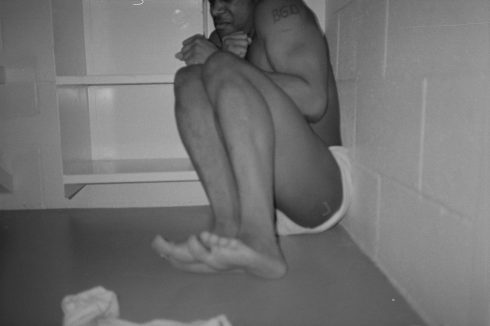
Photographer unknown: Untitled, Green Hill School, Chehalis, WA. Photo: Courtesy of Steve Davis.

Photographer unknown: Steve Davis Untitled, Green Hill School, Chehalis, WA. Photo: Courtesy of Steve Davis.

David Wells, Thumb Correctional Facility, Lapeer, Michigan. From the series ‘Prison Landscapes (2005-2011).’ Photo: Courtesy of Alyse Emdur.

Alyse Emdur. Anonymous Backdrop Painted in Woodbourne Correctional Facility, New York. From the series ‘Prison Landcapes’ (2005- 2011)

Robert Gumpert. Tameika Smith, 9 July 2012, San Francisco, CA. From the series ‘Take A Picture, Tell A Story.’

Robert Gumpert. Michael Johnson, 15 August, 2009, San Francisco County Jail 5, San Bruno, CA. From the series ‘Take A Picture, Tell A Story.’

Kristen S. Wilkins. Supplication #17 (diptych). “It might be hard to find, but it’s called Trapper Peak near the Bitterroot Valley.” From the series ‘Supplication.’

Kristen S. Wilkins. Supplication #17 (diptych). “It might be hard to find, but it’s called Trapper Peak near the Bitterroot Valley.” From the series ‘Supplication.’
EVENTS
I’ll be giving a curator’s talk in the gallery on Friday, January 24, 2014, 4:30-5:30pm, followed by the opening reception 5:30–7:30pm.
Additionally, poet C.D. Wright will be on campus for a Tri-College Mellon Creative Residency in conjunction with the exhibit, and on January 31, at 12 noon in the Cantor Fitzgerald Gallery, Wright and I will host a dialogue about Prison Obscura.
DETAILS
Prison Obscura is presented by Haverford College’s John B. Hurford ’60 Center for the Arts and Humanities with support from the City of Philadelphia Mural Arts Program.
Part of the John B. Hurford ’60 Center for the Arts and Humanities and located in Whitehead Campus Center, the Cantor Fitzgerald Gallery is open Monday through Friday 11 a.m. to 5 p.m., Saturdays and Sundays 12 p.m. to 5 p.m., and Wednesdays until 8 p.m.
Haverford College is located at 370 Lancaster Avenue, Haverford, PA, 19041.
SPREADING THE WORD
View and download press images here. For interviews or variant images contact me. Here’s a big postcard.
For more information, please contact myself or Matthew Callinan, associate director of the Cantor Fitzgerald Gallery and campus exhibitions, at (610) 896-1287 or mcallina@haverford.edu
Cantor Fitzgerald Gallery on Facebook (including installation) and Twitter.
Haverford College on Twitter.
Hurford Center for the Arts on Twitter.
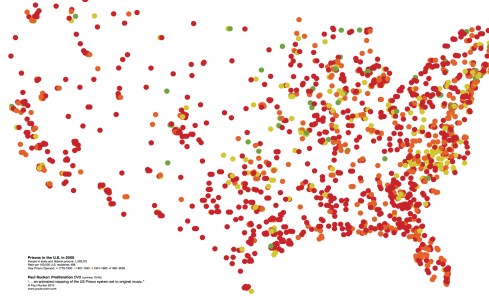
Poster showing the statistics and aesthetic of ‘Proliferation’ an animated video of prison construction in the United States (1776-2010). Image: Courtesy of Paul Rucker.
Graphic design for Prison Obscura by Ellen Gould.
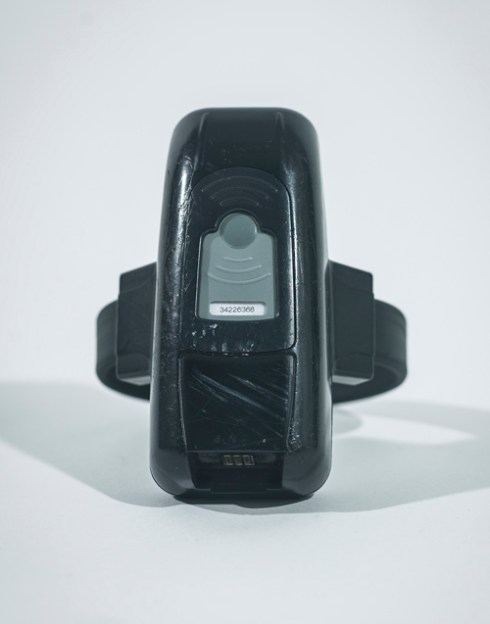
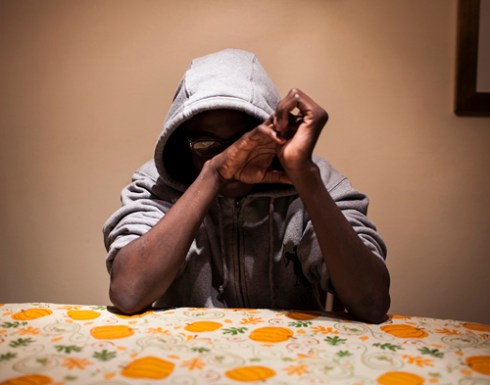
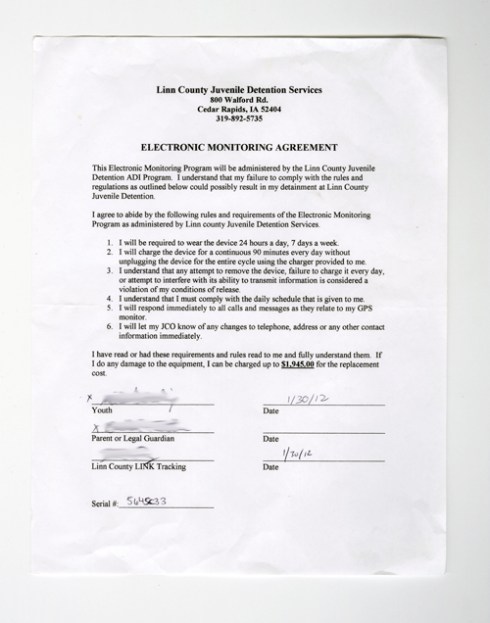
“I want this thing off today … this fucking thing is an invasion of privacy, and goes against my well-being,” said the young boy about his ankle bracelet. He was speaking to Zora Murff, a BFA photography student at the University of Iowa and also a Juvenile Tracker for the Juvenile Detention and Diversion Services (JDDS) of Linn County, Iowa.
It was only when Murff heard this complaint that he began to wonder if he and his camera could interrogate the issue of control.
“He was angry,” recalls Murff. “The more I thought about his anger, the more I pondered the concepts of privacy and control in the juvenile corrections system and the role that I play inside of those concepts. I interact with these youths at a critical point in their lives where control is an integral part of the day-to-day. My job is to be a consequence, to insert myself into their lives […] while the adolescents themselves are struggling to exert control over their development.”
Linn County JDDS provides monitoring and rehabilitation services to youths on probation. Murff has been in the job eighteen months. In mid-2013 he began to photograph his employment and construct a project for submission as part of his studies.
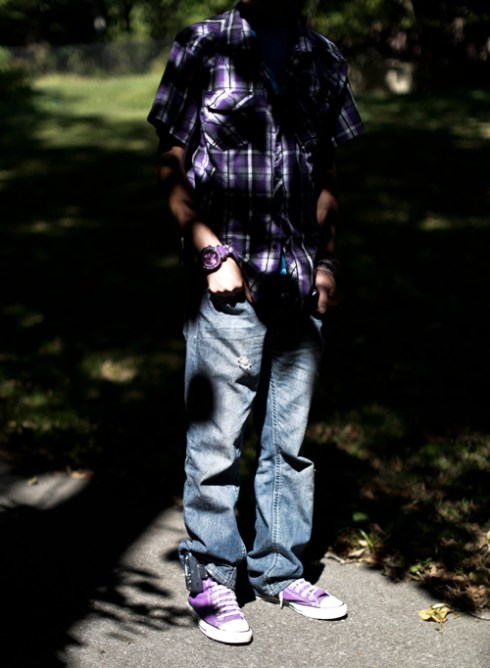
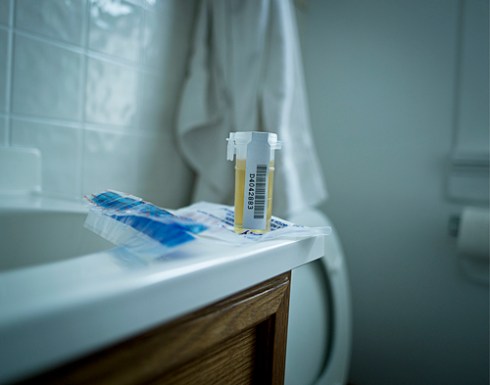
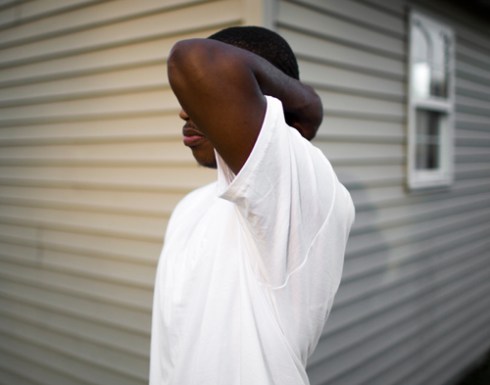
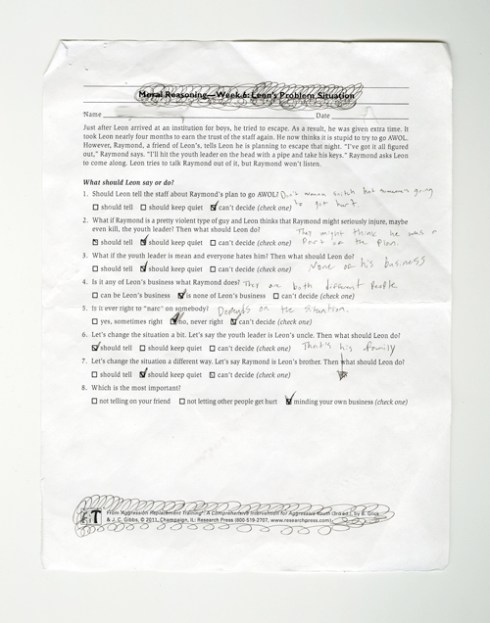
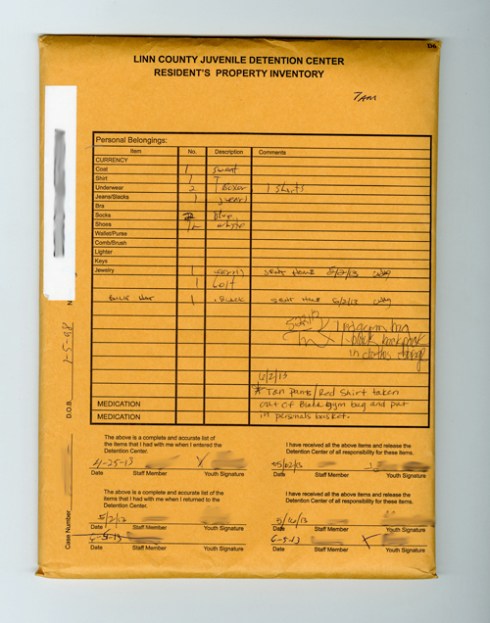
The resulting series Corrections is made up of: photographs of locations of interaction with accompanying narratives about the transgression that took place there (images below with captions); anonymous portraits of the youths; handwritten reflections of the youths; and official paperwork and service documents.
Murff published his notes during the series on the Corrections Tumblr. He has self-published a limited edition book (Murff welcomes interest from publishers to do a larger run). Murff is taking a temporary hiatus from the project. Last week, my Wired colleague Jakob Schiller wrote about Corrections in the piece Peering Into the Digitally Tracked Lives of Youths on Probation. I wanted to do a bit more digging and ask Murff about the logistics, motivations and relationships inherent to the work.
Scroll down for our Q&A.
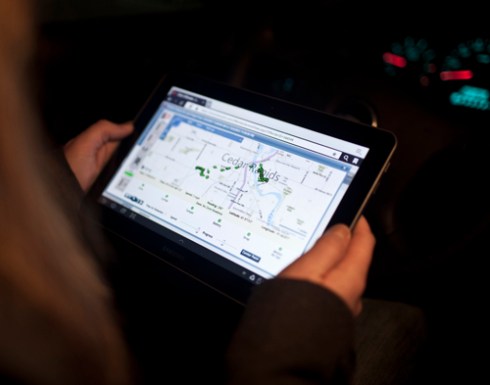

Three youths broke into an abandoned home on the northeast side of Cedar Rapids. When Cedar Rapids Police responded to the scene, two of the youths surrendered themselves, while the third attempted to hide in the basement. Officers sent in a K-9 to retrieve him. Each youth was charged with criminal trespassing and disorderly conduct.
Q&A
Prison Photography (PP): Can you start by describing your work?
Zora Murff (ZM): Tracking is one of the diversion programs that JDDS offers. Diversion refers to the youth being able to stay in the community, rather than being placed in detention or in a different type of placement like residential treatment. My primary responsibility is monitoring youths on probation. I have face-to-face contact with youths on a regular basis to ensure that they are complying with the expectations of their probation. This may entail electronic monitoring, urinalysis, school follow-up, transportation to therapies (substance abuse, sexual offense, anger-replacement), and other things like completing community service hours. My caseload fluctuates – I believe the lowest number I had was nine youths and I have had up to twenty-one.
PP: Would you have managed to gain access if it weren’t for your job?
ZM: When I pitched the idea to my supervisor, she was very intrigued, but being an insider definitely gave me a leg up, and I was very lucky to have that level of access. My supervisor had a few specific guidelines, but gave me free reign, so I had a wide creative space to work with. I think there was a level of trust there, which made Corrections possible.
PP: How did you come to be studying photography if you’re also a probation service employee?
ZM: I started my degree in psychology. My professional background in human services started when I replied to an ad on a campus bus. I needed a job. I started in disability services working with a wide population of people. Those experience helped me get a job with juvenile criminal justice. I didn’t necessarily have a desire to work in this specific area, but it has been a great experience to watch the youths grow throughout the probation process.
I love my work but I have always felt I was missing out on a need to create, a desire to teach, and a love of the photograph. That is where my education in photography comes into play.
PP: Juveniles under the control of the state are vulnerable young adults. What sort of assurances did you have to provide for your employer, the children and the parents/guardians?
ZM: I have noticed that when working with any population in human services, it all comes down to trust. The real question is how do you build that trust with the people that you serve. I think that this can vary with any worker, but I usually broach this by being available and consistent. Having trusting relationships with the youths that I photographed was key to working on this project.
The biggest assurance that I had to provide was anonymity. It was also important to explain my project to them, which isn’t always easy to do, especially when I was starting out because I wasn’t sure where the project was taking me.


PP: Is Corrections about delinquency or about control; about youth or about state?
ZM: All of the above. The youths do delinquent things that warrant some type of intervention and I wanted to document their experiences once they become a part of the juvenile corrections system. Youths are attempting to control their lives while workers are trying to exert some sort of control over it for them. There’s a dynamic at play between the two.
The use of narratives and documents add context to the project. I felt that portraits of the youths, while the most important component of Corrections, would have told an entirely different story if they were to stand alone.
PP: Is Corrections a voice for you or for your subjects?
ZM: I wouldn’t say that Corrections is my voice personally. The youths are allowing me to show them through their portraits and through some of their writing. My intent was to approach it from an ‘anthropological’ standpoint if you will, almost as if I am a recording device. I felt that it was important to provide a window into this world without editorializing, even though I am embedded in the system.
I feel that when it comes to children on probation a lot of stereotypes are thrown around and it would have been easy to fall into tropes. I want viewers to see inside of the system and draw their own conclusions.
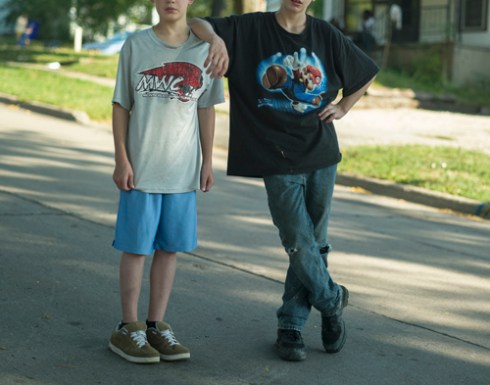


While hanging out with friends, a youth started verbally harassing a peer walking home from school. The youth started to follow the peer and punched him from behind in the side of the face. The youth continued to assault his victim until a car pulled up in the alley. While fleeing the scene, the youth kicked his victim in the head. The youth decided to turn himself in when the story aired on the local evening news, and told Cedar Rapids Police that he had no justification for the assault, that he was just, “mad at the world.” The victim was hospitalized for two days with a broken jaw, two teeth knocked out, and a severed facial nerve. The youth was convicted of felony charges and placed at the Eldora State Training School.
PP: How has the project effected your relationships?
ZM: In human services, the work is about the person that you’re serving, not about you, and typically sharing personal information is discouraged. However, I feel that opening up about my passion for and education in photography bought me a little more trust with some of the clients. It was kind of odd, really. The kids were either totally interested and invested in the project, or completely indifferent. When I walk through the detention center, one or two kids will ask if I’m still working on the project or what was my grade in my photo class. I have also earned the moniker, “that guy with the camera.”
PP: Any particular stumbling blocks?
ZM: My biggest barrier was not being able to photograph faces – I didn’t want to blur out faces or put bars over them. It almost became a game figuring out how to make faces unidentifiable and have the photographs be meaningful.
PP: Any pleasant surprises?
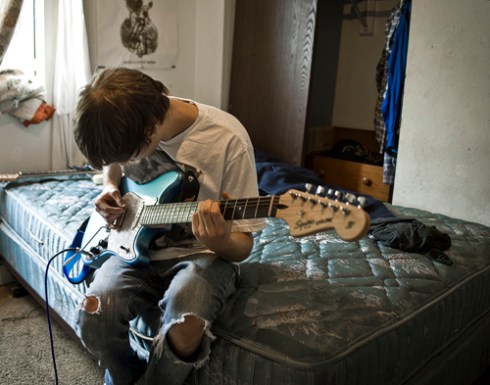
ZM: A number of the compositions happened by accident – a kid blocking the sun from his eyes, or deciding to sit in a certain spot. There is one photograph of a youth playing guitar in his bedroom. While we were taking the photograph, the youth’s friend came to the bedroom window and had a perplexed look on his face when he noticed me with the camera. The youth told his friend that he had just been signed to a record label and that I was from Rolling Stone Magazine. We all had a good laugh about that – and it was a welcome change from the more difficult interactions that I have.
PP: What has been the reaction so far to the work?
ZM: So far, reactions have all been pretty positive. I was part a group exhibition for the class Corrections was completed for, and a number of people drew some sort of sentiment from the photographs. I also had a portfolio review at Midwest SPE last year, and the project was received well. However, I understand that working with a vulnerable population, specifically youths, can be a contentious territory so I have been a pretty hard critic on myself about the work.



PP: Do you plan to continue photography and/or work in criminal justice?
ZM: I would like to teach photography as a means of creative expression to youths at the detention center, but that is just a lofty idea at this point.
PP: It would be wonderful if you could achieve those types of workshops.
ZM: There are definitely some barriers. The biggest obstacles would be finding the time to teach a course, funding for materials, developing a curriculum, and figuring out when it would work into the residents’ schedule as their day at the detention center is very structured.
PP: What makes you think photography is useful for the youths? What skills does it teach? What can be achieved with photographic education, particularly to at-risk youth?
ZM: Any creative outlet is useful to children. I remember having a drawing journal when I was a teenager, and the amount of things I was able to work through by drawing.
Photography could be a good outlet for youths in the detention center as I feel that visually investigating their surroundings would allow them to build a sense of self-awareness, getting them to really consider where they are in life and where they would like to go.
Also, with the concept of control again, a number of the interactions that I have are usually based upon the youth feeling that they don’t have a say with what is going on in their lives and they are being told all of the things that they cannot do, the places that they cannot go, the people that they cannot hang out with. My hope is that by introducing them to photography this will provide them with a chance of self-expression – they can decide what they want to photograph and how they want to photograph it, getting some semblance of control back.
PP: What else are you up to?
ZM: I’ll continue Corrections until I reach a place where I feel that it is as complete as possible, but I am taking a break from it for the time being. I have an idea for a more intimate project, a case study of sorts, following the story of one individual on probation. I’m gearing up to start shooting for this project in the next few months, and have a youth interested in being a part of it, so I’m ironing out details.
PP: Is the camera a security device or an artistic tool?
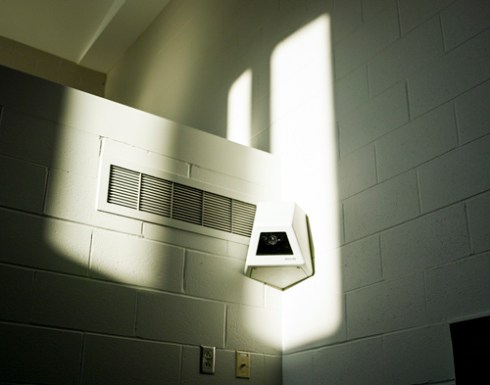
ZM: Part of my statement for Corrections is how I, as a Tracker, am required to impose on these youths. This was problematic for me at times because by pointing my camera at them I was imposing upon them in an additional way, but it is important to understand the difference. The cameras that we use to surveil youths are all there in a reactionary capacity in order to provide some sort of control. With my camera, I too am recording, but my camera is there in a collaborative capacity – I feel that the youths have taken back a level of control as they have allowed me to portray them and document their experiences.
PP: Thanks Zora.
ZM: Thank you.


From ‘Assisted Self-Portraits’ (2002-2005) by Anthony Luvera.
PHOTOGRAPHY’S NOT JUST DEPICTION!
There’s a fascinating discussion to be had at Aperture Gallery this Saturday December 7th. Collaboration – Revisiting the History of Photography curated by Ariella Azoulay, Wendy Ewald, and Susan Meiselas is an effort to draft the first ever timeline of collaborative photographic projects. Items on the timeline have been submitted either by members of the public or uncovered during research by Azoulay, Ewald, Meiselas and grad students from Brown University and RISD.
“The timeline includes close to 100 projects assembled in different clusters,” says the press release. “Each of these projects address a different aspect of collaboration: 1. the intimate “face to face” encounter between photographer and photographed person; 2. collaborations recognized over time; 3. collaboration as the production of alternative and common histories; 4. as a means of creating new potentialities in given political regimes of violence; 5. as a framework for collecting, preserving and studying existing images as a basis for establishing civil archives for unrecognized, endangered or oppressed communities; 6. as a vantage point to reflect on relations of co-laboring that are hidden, denied, compelled, imagined or fake.
Within the gallery space, Ewald and co. will discuss the projects and move images, quotes and archival documents belonging to the projects about the wall “as a large modular desktop.”
The day will create the first iteration of the timeline which will continue to be added to.
“In this project we seek to reconstruct the material, practical and political conditions of collaboration through photography — and of photography — through collaboration,” continues the press release. “We seek ways to foreground – and create – the tension between the collaborative process and the photographic product by reconstructing the participation of others, usually the more *silent* participants. We try to do this through the presentation of a large repertoire of types of collaborations, those which take place at the moment when a photograph is taken, or others that are understood as collaboration only later, when a photograph is reproduced and disseminated, juxtaposed to another, read by others, investigated, explored, preserved, and accumulated in an archive to create a new database.”
I applaud this revisioning of photo-practice; I only wish I was in NYC to join the discussion.
As you know, I celebrate photographers and activists who involve prisoners in the design and production of work. And I’m generally interested in photographers who have long-form discussions with their subjects … to the extent that they are no longer subjects but collaborators instead.
Photographic artists Mark Menjivar, Eliza Gregory, Gemma-Rose Turnbull and Mark Strandquist are just a few socially engaged practitioners/artists who are keen on making connections with people through image-making. They’ve also included me in their recent discussions about community engagement across the medium. I feel there’s a lot of thought currently going into finding practical responses to the old (and boring) dismissals of detached documentary photography, and into finding new methodologies for creating images.
At this point, this post is not much more than a “watch-this-space-post” so just to say, over the coming weeks, it will be interesting to see the first results from the lab. If you’re free Saturday, and in New York, this is a schedule you should pay attention to:
1:00-2:00 – Visit the open-lab + short presentations by Azoulay, Ewald and Meiselas.
2:00-2:45 – Discussion groups, one on each cluster with the participation of one of the research assistant.
2:45-4:00 – Groups’ presenting their thoughts on each grouping.
4:00-4:30 – Coffee!
4:30-6:00 – Open discussion.
6:00 – Reception.
If any of you make it down there and have the chance, please let me know what you think and thought of the day.

Screengrab from the San Mateo County Sheriff’s webcam of jail construction.
I always say that I’m open to looking at all types of prison imagery, so I guess I’m obliged to mention the 24-hour coverage of a prison that does not yet exist. (It’s a first for Prison Photography.)
The San Mateo County Sheriff’s Department in California has set up a webcam to track construction of the county’s new jail. Why? Maybe the Sheriff was buoyed by the popularity of Panda Cam at the San Diego Zoo, Condor Cam in California, or Portland’s Osprey Cam?
The live feed is “an innovative and exciting way to involve the public,” said Sheriff’s Office spokeswoman Rebecca Rosenblatt said.
Slated for a 2015 opening, tax payers can watch the construction of Maple Street Correctional Center in Redwood City. I suppose if you’re forking out $165 million for a jail, you want to see your money being spent?
The truth is this webcam is pitiful reminder of California’s budget woes and political battles over prison management and spending.
There’s an argument that a new jail is necessary due to California’s ongoing “Realignment” — a court-mandated program whereby state prisoners are being transferred to county jails in order to comply with federal orders to reduce the state prison system by approximately 32,000 prisoners.
That decision came about after a decade long legal battle — that went all the way to the Supreme Court of the United States — ruled that the overcrowding in the California state prison system led to inadequate physical and mental health care and an estimated one preventable death every 10 days. As a result the prison system was deemed “cruel and unusual” in its punishment and is in violation of every single California prisoner’s constitutional rights.
Unfortunately, Governor Brown refused to look at strategic release programs for non-violent offenders, at compassionate release for elderly and terminally ill prisoners or at drug treatment programs to ease overcrowding. Instead, Brown raided the state’s budget surplus — to the tune of $315 million — and will start paying private prison corporations to warehouse prisoners.
Money pouring into new jail construction. The indubitable Californians United for a Responsible Budget (CURB) report:
“In addition to AB109 realignment money, Sacramento has offered two funding streams that encourage county jail expansion and has refused to offer incentives for thoughtful decarceration. AB 900 authorized $1.2 billion in lease revenue bonds for the construction or expansion of jails, and SB 1022 authorized $500 million for jail expansion. If realignment is to be successful, the state must support counties to reduce their jail populations, rather than making plans to grow them.”
In time, the San Mateo Sheriff’s Office plans to release a time-lapse video of the creation of the 280,000-square-foot jail grow from start to finish.
via the usually useless SF Examiner
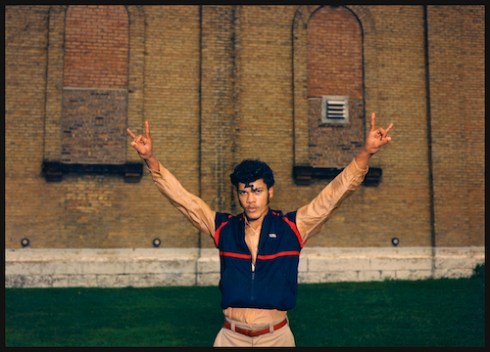
I’ve been stumbling across some mind-blowingly novel prison photographs recently. This incredible Facebook Album by Steve Milanowski fell on my radar and the colour is something special.
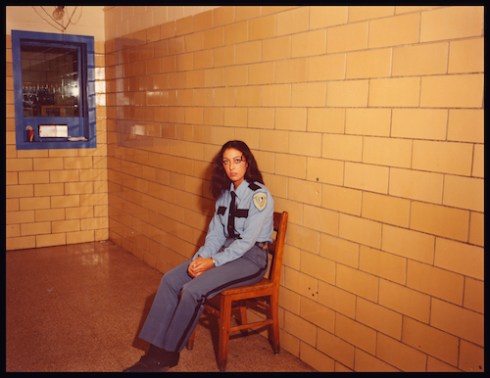
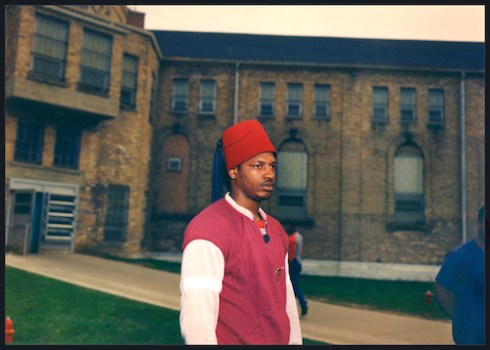
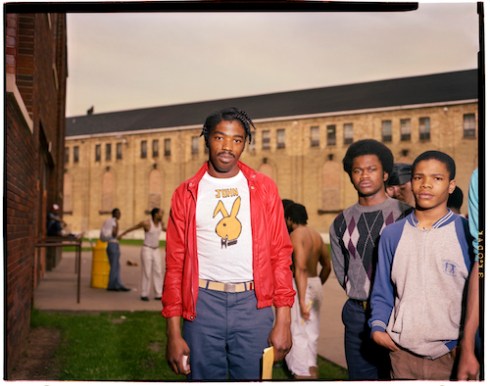
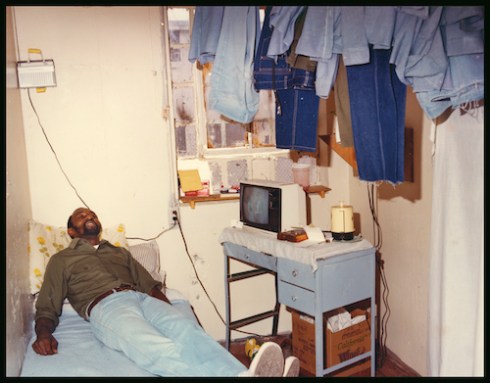
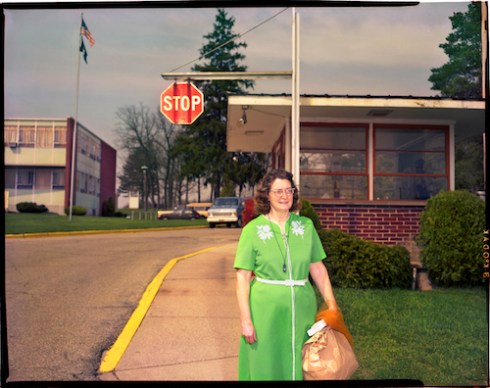
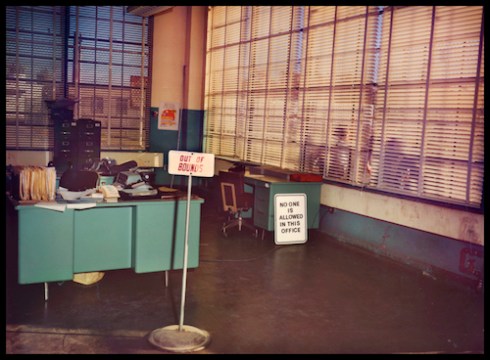
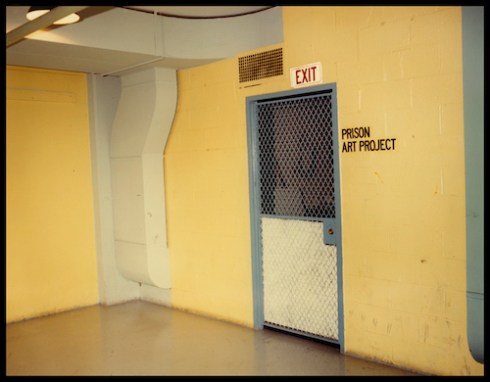
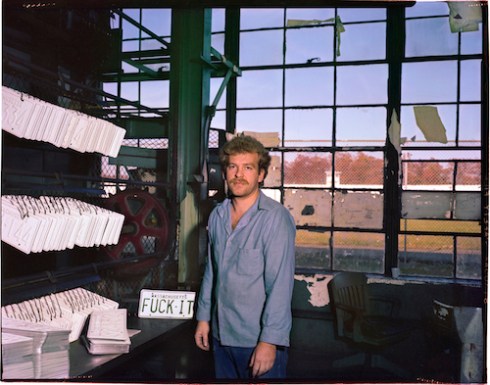
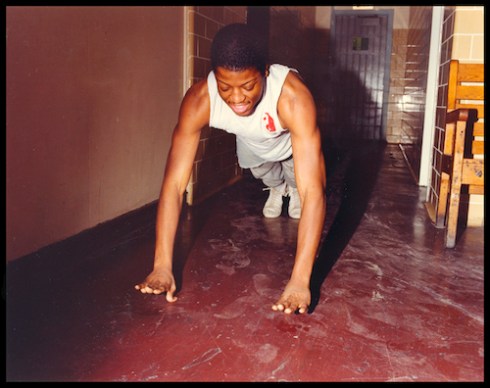
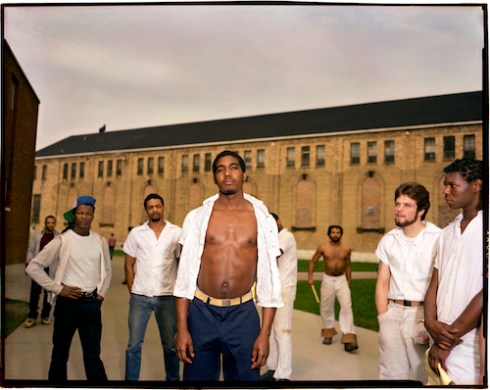
Milanowski photographed at three prisons during the eighties — Walpole, Massachusetts (1981, 1982); Ionia, Michigan (1984); and Jackson, Michigan (1985). In 2012, he began shooting the outside of Waupun Correctional Institution in Wisconsin. In each case, Milanowski was working independently and not on assignment.
As colourful and characterful as these images are it’s worth bearing in mind that prisons of this era were beginning to creek. Dangerous overcrowding existed in Michigan prisons in the early eighties, and Jackson in particularly was renowned as a tough prison with gangs and enforced convict codes.
These prison photographs have, up to this point, only had limited circulation. Some feature in Milanowski’s book Duplicity, others on his website. A few photographs have appeared in museum exhibitions around the country. I wanted to know more, so I dropped Steve a line with some questions.
Scroll down for our Q&A.
Prison Photography (PP): Where did your interest in prisons come from?
Steve Milanowski (SM): It dates back to my childhood: my dad was an attorney in Michigan and very occasionally had clients that he had to visit in prison. When I was in 5th and 6th grades, maybe twice, he took me along (taking me out of classes) on the prison/client visits. For a 6th grader, these visits were absolutely unforgettable. Indelible. This was an environment that was utterly foreign to my existence. It was almost as if my eyes weren’t fast enough to take it all in. To a kid, nothing in the world looks like a prison.
PP: What was the purpose of your visits the these four prisons?
SM: Simply to make new photographs in places that have mostly been, in the past, photographed with visual cliche and with the perceived grittiness of black and white films.
PP: How did you gain access?
SM: My first permission was with Walpole in Massachusetts. I sent a letter to the Walpole warden; it was written on MIT stationary. I was a graduate student at MIT and I think the name helped in getting me access. I found that once one gets permission to photograph in a prison — that permission leads to more permission. I used the Walpole photographs in gaining access to Jackson and Ionia prisons. No negotiations were needed; they all gave me fairly easy access. Initially, I only asked for single-visit access.
PP: How would you characterize the atmosphere of the prisons?
SM: The atmosphere was taut, tough and difficult at most turns — very regimented and formal. In some instances, I was assigned a female escort which made my shooting more difficult because the inmates had no hesitation in shouting out awful, obscene things; and, the female escorts seemed bent on proving that they were not bothered or intimidated by these nasty shout-outs.
PP: How does this body of work relate to your other projects and your philosophy/approach to photography generally?
SM: I consider my work to be the work of a portraitist. My prison portraits are stylistically in line with the portrait work that I pursue “out in public” at public demonstrations, holiday parades, festivals, fairs, and competitions.

PP: What were the reactions of the staff to your photography?
SM: I never really sought out their reactions. My photographs did seem to always successfully get me more access though.
PP: What were the reactions of the prisoners?
SM: Never really got reactions, per se. But with each portrait, I offered a free print if they wrote me a request and visually described themselves; some inmates wrote back and praised the images. Some seemed to want to start a pen pal relationship, just because, it seemed, some inmates had few contacts with the outside world.
PP: What is your personal opinion of prisons? Have they changed since you visited in the eighties?
SM: Prisons, then and now, in America, seem to continue to be warehouses; I think most Americans are aware of the fact that we, as a nation, have one of the largest prison populations in the world — and that we incarcerate at a level that far exceeds almost all other nations.
Have prisons changed? One change I’ve noticed with great concern is the concept and use of Supermax prisons which seems to be uniquely American. With older prisons as well as Supermax prisons, we seem to never be willing to spend much money on reducing recidivism.
The conservative right loves to convey the idea that they are tough on crime — tough prisons, tough sentencing, and the idea of “throw away the key.” So, our prison populations grow, and we build more prisons than any other nation. We’ve seen the expansion. And the Democrats? They do their best to avoid being tagged as “soft on crime.”
PP: What are Americans’ feeling toward crime and punishment?
SM: Americans very much ignore prisons and prison life — unless they live near a prison where the prison is the source of some level of local employment. Americans seem to only take notice of prisons when there is a problem, an escape, a prison disturbance (that receives national media attention), or when there is some breakdown in the system.
There seems to be a real void in political or community leadership especially in the realm of education as a path to reducing crime and reducing prison populations; the idea gets plenty of lip service.
PP: What role has photography in telling publics about prisons? Is it an effective tool?
SM: I think photography can help — and be an effective tool in informing the public about prisons and who inhabits American prisons; but, I’m not sure at all that our society wants to look at prisons and prison life … its too easy to ignore.
PP: What camera and film did you use?
SM: 4×5 Linhof and 4×5 Kodak and Fuji color negative. Sometimes a Pentax 6×7 with Fuji and Kodak color negative film. And, always combining flash with ambient light.
PP: The color you introduce is unusual for prison photographs. From looking at your other work, it is clear you revel in colour portraits. Were you aware that you were making unique images; splashing color all over these darkened corners of US society?
SM: Unique images? Well you have hit on something that was a primary intention: I wanted to make photographs that told you something new. Pictures you hadn’t seen before. Prison photography is rife with cliches. I thought if I were given access to prisons, I’d make different photographs. I was not arrogant about this — just determined to make images that had not been seen before.
I was determined, self-directed and wanted to get as many photographs as I could accomplish in, typically, a 1 to 2 hour visit. I limited my talk and conversations — I was on a mission.
BIOGRAPHY
Steve Milanowski is a photographer and, with Bob Tarte, co-author of Duplicity, a monograph of his own portraits. Milanowski earned his BFA from The Cranbrook Academy of Art and his MS from The Creative Photography Laboratory at the Massachusetts Institute of Technology. His photographs are part of the permanent collections of The Museum of Modern Art, National Gallery of Art, The Houstin Museum of Fine Arts, The High Museum of Art, and The Polaroid Collection and numerous public collections. MoMA published his work in Celebrations and Animals; his work was also included in MoMA’s recent survey of late 20th century photography in the newly reinstalled Edward Steichen galleries.


“The U.S holds more prisoners and employs more prison staff than any other nation on earth. But there is no central location where the public, policy makers, students or researchers can benefit from the many years of first-hand experience of prisoners and prison workers,” read the email that landed in my inbox last week.
The American Prison Writing Archive (APWA) is an in-progress, internet-based, digital archive of non-fiction essays recently established by the Digital Humanities Initiative at Hamilton College, Clinton, New York.
APWA addresses a need and it could be of immeasurable value. It’s early days; the archive has yet to fill. Digital storage provides an almost limitless potential for growth. The accumulation of material is also without deadline.
Sure, there are many great places such as the PEN American Center, The Beat Within, Prison Legal News, The Angolite, San Quentin News, Prison Writing blog, where one can find expert prison writing, but how much of this is searchable by key terms? On what page of a Google search does it land? There’s so much good but untapped writing on prisons out there that to have a feasible search tool (designed by library-scientists) is very exciting.
FROM THE SOURCE
“We seek authors who write with the authority that only first-person experience can bring,” says APWA about it’s one parameter for submissions. I think that insistence gives the project weight and legitimacy.
While the APWA is open to all styles, they encourage first hand accounts from prisoners, prison employees, and prison volunteers of life and work conditions within American prisons.
Often prisoners and prison employees are in opposition, but with submissions from both groups who knows what cross-pollination of perspectives might emerge?
From here, I’ll leave you with APWA’s own description of the project:
All topics are of interest, including descriptions of sources of stress, ways of coping, health care, causes of violence and ways to reduce violence, material conditions, education, employment conditions and the challenges these conditions present, the environment for volunteers, the aging prison population, visions of a better way to operate (personally, politically, institutionally, etc.), reflections on the work of dealing with time inside (for workers as well as prisoners), the challenges of physical and psychological survival, public perception and popular depictions of prisoners and prison workers, the politics and economics of mass incarceration, what works and why it works, and what doesn’t work and why it doesn’t work (i.e. practical views on reform), etc. We are open to any testimony about the issues that matter to prison staff, administrators, corrections officers, teachers, volunteers, and prisoners.
We value writing that takes thoughtful, constructive positions even on passionately felt ideas.
The APWA is intended for researchers and for the general public, to help them understand American prison conditions and the prison’s practical effects and place in society. All the work in the APWA will be accessible to anyone, anywhere in the world with access to the Internet. The APWA will open the American prison to public observation, and showcase the thinking and writing being produced inside.
Once included in the APWA, work will be retained indefinitely. Contributors can write under pseudonyms or anonymously. We reserve the right to edit or reject work that advocates violence, names names in ongoing legal cases, or libels named individuals. The APWA is not currently accepting poetry or fiction.
We accept art (on a single 8.5×11 page) only if accompanied by an essay. A signed permission sheet must be included to post work on the APWA. By signing on the signature line below, you are granting us permission to include your work in the APWA. The questionnaire information will be used to offer researchers points of reference (for example, to study the specific concerns of staff who are veterans, or of Black and Latino men in maximum-security facilities).
There is no deadline. We seek the widest possible gathering of American prison writing, and we will read, scan, and transcribe essays into the APWA on a continuing basis. Previously published work is acceptable if authors retain copyright. Please let us know where and when your essay appeared in print.
Non-fiction essays, based on first-hand experience, should be limited to 5,000 words (15 double-spaced pages). Clearly hand-written pages are welcome. We charge no fees. We will read all writing submitted.
There is a PDF form to submit with your essay. It includes the usual stuff — name, age, address, date, prison facility. It also includes an optional questionnaire to help the archivists digitally tag and organise essays.
Please share the project, the link, and the address below far and wide.
Mail essays to: APWA, 198 College Hill Road, Clinton, NY 13323.

Prison guards in Norway train for two-years in a special program which includes seminars on human rights, ethics and law. Warden Heidal oversees between 250 and 340 prisoners.
This week the University of Oslo admitted mass-murderer Anders Breivik into their Political Science program. It caused astonishment and chagrin for people across the globe. Understandably so. But, equally understandable is the decision, as explained by Ole Petter Ottersen, rector University of Oslo:
The fact that his application is dealt with in accordance with extant rules and regulations does not imply that Norwegians lack passion or that anger and vengefulness are absent. What it demonstrates is that our values are fundamentally different from his. […]
Having been admitted to study political science, Breivik will have to read about democracy and justice, and about how pluralism and respect for individual human rights, protection of minorities and fundamental freedoms have been instrumental for the historical development of modern Europe. Under no circumstances will Breivik be admitted to campus. But in his cell he will be given ample possibilities to reflect on his atrocities and misconceptions.
I have written before about Halden Prison — in which Breivik is held — that time leaning on the photographs of Fin Serck-Hanssen. I still hold that a prison should never alter or lower its operations to equal the depraved levels of its most infamous and criminal prisoners. As institutions, Halden Prison and the University of Oslo are both conducting themselves in ways fitting for a resolute and lawful society.
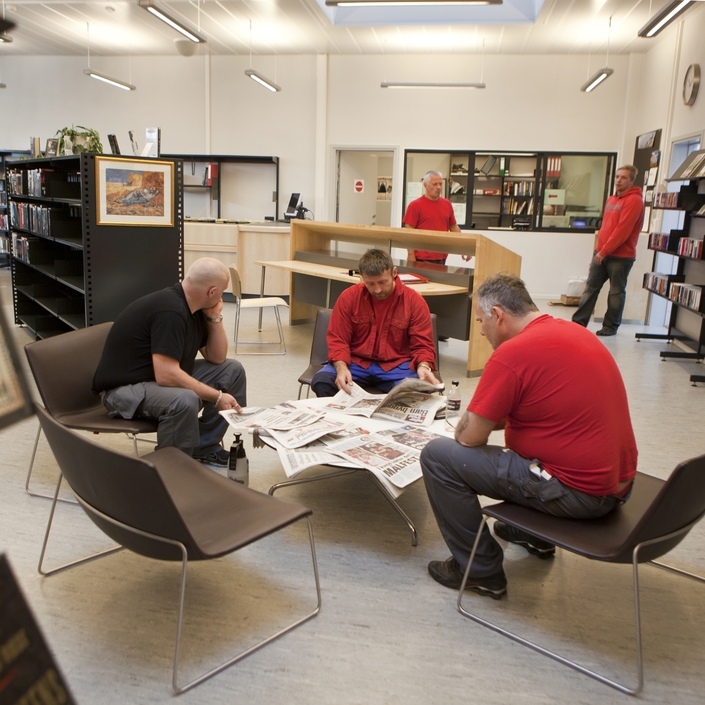
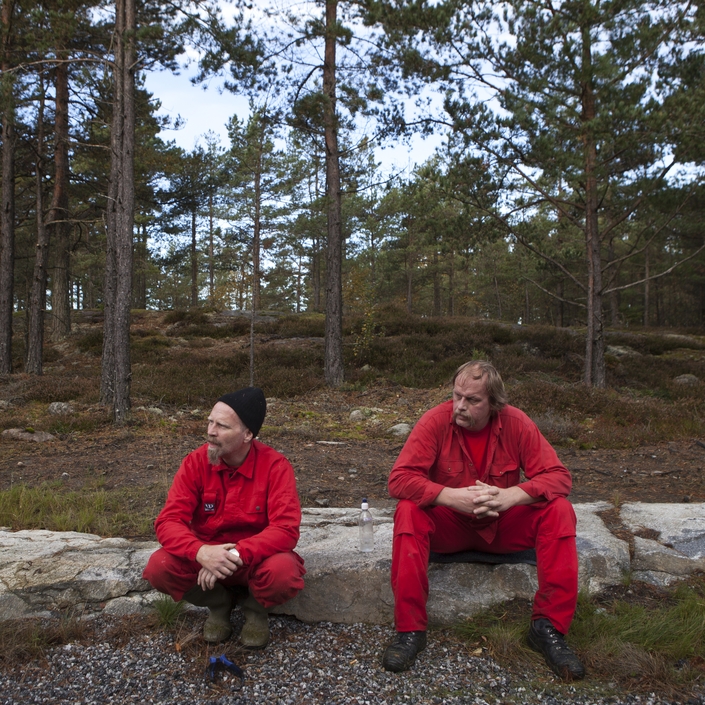
Gughi Fassino‘s photographs from Halden show us the very contemporary facilities and programs available to prisoners.
I am not interested in famous prisoners; they are famous because their crimes were extraordinary. The disproportionate amount of press coverage they get distorts the debate and distorts our impressions of what a prisoner is. I am more interested in the non-violent prisoners (a category that is proportionally much higher in the U.S.) that wallow in overcrowded prisons and don’t have access to meaningful programs.
Rehabilitation, education and vocational activities REDUCE recidivism and in turn REDUCE the financial burden to society. Men released from Halden Prison succeed at a much higher rate as compared to those released from other prisons in Norway, released from other prisons in Europe and by a distance compared to those released from U.S. prisons. Only 20% of Halden prisoners reoffend in the three years after release. The figure in the U.S. is 65-70%.
Roughly 90% of U.S. prisoners will eventually be released; they need help readjusting after years looked up and they need reason to buy into our society. We don’t need cycles of crime to persist and to pretend prison conditions aren’t the largest factor in that equation is a refusal to deal with the issue. WE deserve better prisons.
So as we look over Fassino’s photographs, let us not think about what these facilities mean for Breivik but what similar facilities could mean for the 2.3 million American prisoners and society as a whole.
View more of Fassino’s photographs here.

Prisoners are allowed to shop in the prison supermarket once a week. Beef tenderloin is $60/kg.
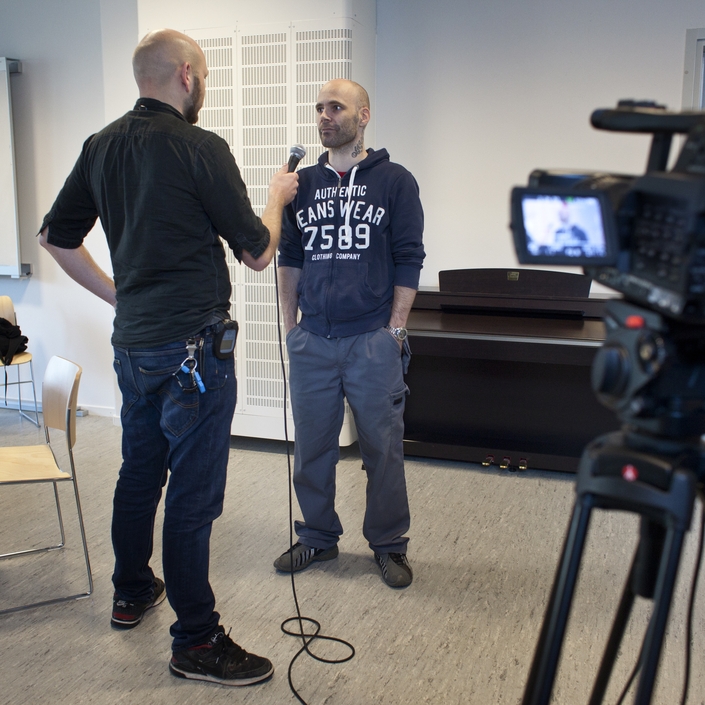
Communication with the outside world is limited. The prisoners are permitted three conversations a week with their family and weekly visits from their families. Here they produce a radio show for broadcast within the prison.
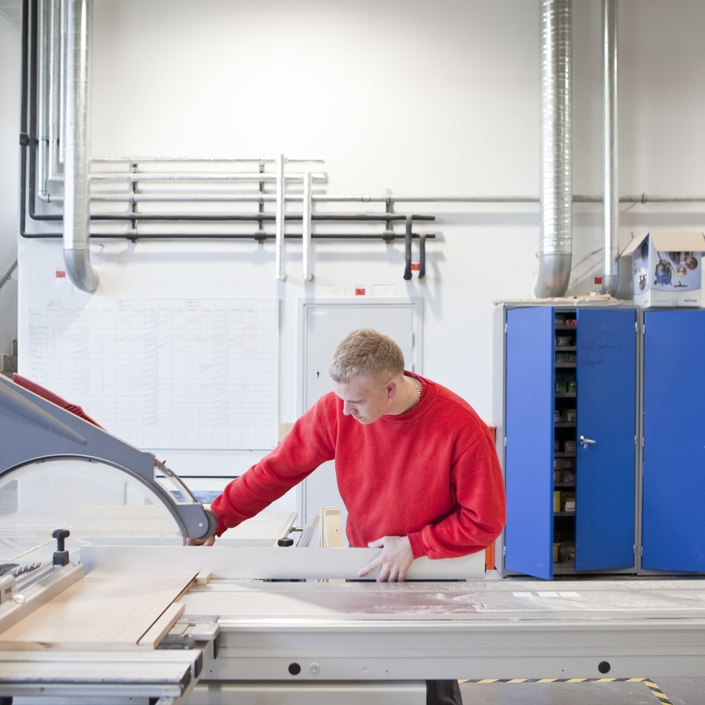
Prisoners are paid $9/day for their work.

 Prison Photography