
You are currently browsing the category archive for the ‘Opinion’ category.
We are all agreed: Michael Jackson’s death is a sad event. Firstly because he was young, secondly because he runs through our cultural DNA and thirdly because we never really managed to fully understand him.
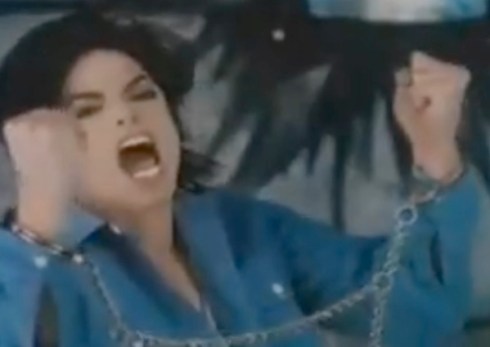
Jackson’s life and work were wrapped up in the confuddling of race and the obliteration of its prerequisites for discussion. I am not talking only about his self-manipulated skin colour. I am talking about the fact he was accused of antisemitism for contested lyrics in the 1996 release They Don’t Really Care About Us and the fact he was accused of exploiting the poor of Rio de Janeiro for its music video.
This song is only one time Jackson was simultaneously cast as victim and perpetrator by the media and public all making use of his eccentricity to grind their own agendas.
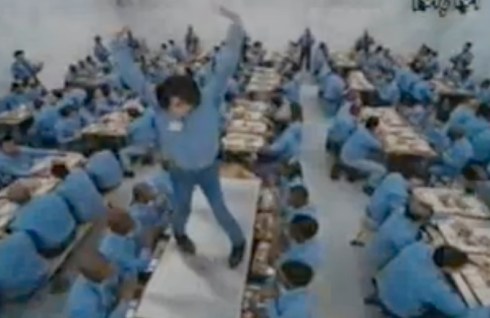
The controversy led Jackson (for the only time in his career) to film a second video for one of his songs, taking his crotch grabs off the favela streets and into the prison chow hall. One or both of the versions was banned by MTV – I am not quite sure, but it doesn’t matter.
Jackson threw enough contorted imagery at these two videos to satisfy a life’s worth of political action. The prison version is a montage of famous photojournalist and media images; death, natural disaster, street brutality, Vietnam napalm, hate crimes, Rodney King, African pestilence, riots, nuclear detonation and the Ku Klux Klan?
I am undecided as to how Jackson’s convolution of imagery helps an informed debate on inequality in society. How much does a famine of the 80s in an unnamed African nation have to do with US urban riots?
It should be said, that for his manic prison tableaux, Jackson did accurately reflect reality in the casting of a disproportion number of men of colour.



Reading the Goethe-Institut Fashion Scene article about Haeftling designers in Berlin, I thought it was an Onion style send up. “Prisoner chic” sounds like something straight out of satire, but I guess I was snoozing when this hit the news wires in 2003.
Haeftling (translated as ‘Prisoner’) employs inmates across Europe to manufacture clothing and housewares inspired (they say) by prison life, “The garments are highly functional and have a classic and timeless cut. Only high-grade, rugged fabrics are used in manufacturing.”
Well, whatever you say. I actually don’t mind how they market it, I am just pleased they support prison reform, the abolition of the death penalty, political prisoners rights and a philosophy of rehabilitative justice.
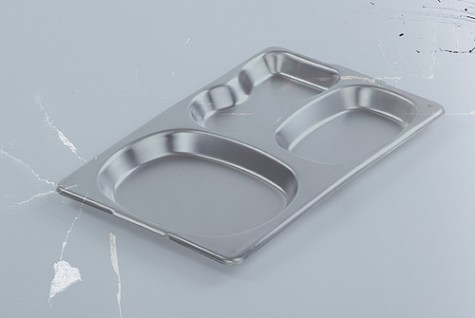
Haeftling Tray
But let’s not kid ourselves. This project was borne of commercial interests. “It began in the JVA (Justizvollzugsanstalt/prison) Tegel and developed into an international undertaking. More and more prisons have joined and today production is even taking place elsewhere in Europe. One Bavarian prison supplies honey from its own two colonies of bees; a prison in Switzerland even has its own vineyard and exports its own red (Pinot Noir) and white wine (Müller Turgau).” (source)
Karola Schoewe, Haeftling’s PR & communications manager says, “On the whole, the prisons are all very helpful,” says “There are some prisons that have very good production capacities for making homeware.”
Schoewe then marries the business speak to social responsibility speak, “Through its production, Haeftling is creating measures that help to support rehabilitation processes.”

Haeftling Espresso
Without seeing Haeftling’s account-books or sitting in on a board meeting, I have no way to tell if resources and profits are divvied up in a way that benefits prisoners more then in the state run prison industries. This was the situation in July 2003
(Author’s Note: €12.50 is substantial pay compared to American prisons.)
Prison industries are a divisive issue. For some they are the perfect use of prisoners’ time and energies developing job skills, work community & self-esteem. To others prison industries are a modern slave labor exploiting societies’ self-created incarcerated class.
Both viewpoints have legitimacy, but the first makes a prior assumption that could be misleading – that work programs are the only means to provide skills, community or self-worth. Education does this too.
But educating someone instead of putting them to work is going to cost a prison authority rather than generate it wealth.

Generally, I am unnerved by the disconnect between the reality of incarceration and its representation to consumers,
Then again, Klaus-Dieter Blank, of Berlin’s Tegel Prison states the success of the label’s online store has meant that people are beginning to understand “what goes on behind the walls”. Haeftling features on the Tegel Prison website.
Is there too much space here for consumers to create their own version of prison life? What is included and/or played down in the minds of consumers? Are they being coerced and sold a disingenuous view along with that ‘rugged’ product?

"Justiz 82" Scratchy Blanket. Haeftling Product
We can assess this a number of ways – rehabilitative worth, public awareness worth, benefits to state finances, tax-payer savings, external benefits of development in social entrepreneurship.
But essentially, we must ask, “Does this enterprise help reduce prison populations by reducing recidivism? It MUST be compared to other rehabilitative programs. The purpose of prisons the world over should be to create societies where prisons are no longer necessary.
How do you judge this type of enterprise?
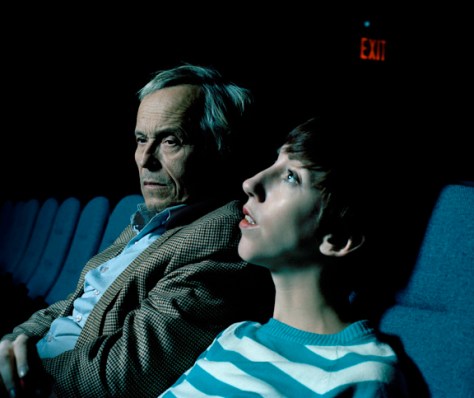
Tina Schula, from the 'Ratline' series
Harlan Erskine contacted me this weekend.
At the moment there are some MFA exhibitions at the blockbuster schools. Before you read this look over Daniel Shea’s neat run down of SVA, Columbia & Yale photography grads.
As concerns Harlan’s graduating class at the SVA, here’s five picks:
Carlos Alvarez Montero for his street portraits, but more so for his meld of youth, friends & skating.
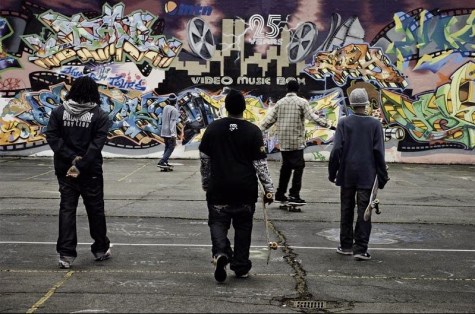
Carlos Alvarez Montero, from the 'Harlem Shuffle' series
Maureen R. Drennan for her sophisticated restraint down at a marijuana farm.

Maureen R. Drennan
Jessica Bruah because I think she takes a lot of shots and edits well. You don’t just “come across” the subjects Bruah photographs.

Jessica Bruah
Scott Houston for a harsh, harsh and close view of meth and people … together. And for proof in the argument that captions are essential; providing caring and careful context for image.

Scott Houston
Tina Schula gets a double shout out for two weird series. Ratlines (very top) is creepy & suspenseful. Oskar’s Sister (below) is playful, offensive & menacing.
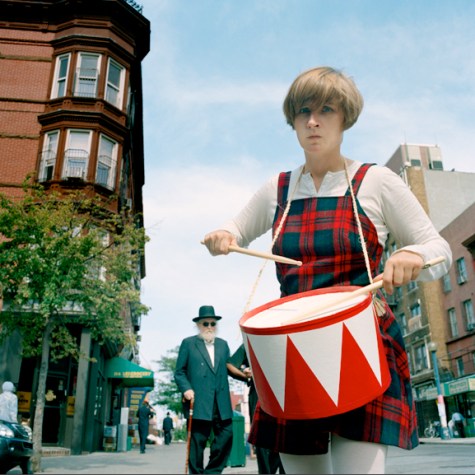
Tina Schula, from the 'Oskar's Sister' series
I don’t envy Chris Parks. If, according to him, he was never in the military (which I believe), then he got a pretty rough ride when stepping back on US soil. This week, the busiest and best free newspaper about went with The Accidental AWOL, a story on Chris Parks.

Chris Parks by Kelly O. in the Stranger
The interesting thing about Parks’ story is his processing through multiple legal stages and sites. He was held by other state agencies until he could be accommodated at Fort Knox military base and was then just dumped into the daily military procedures that keep recruits actively docile. And he’s in that until the military realise they’ve lost much of the pertinent information to the case.
In italics below I have quoted author Jonah Spangenthal-Lee directly, but added my own subheaders.
Charlotte Douglas International Airport, NC (Time Detained: “Several Hours”)
Parks had been heading back to Seattle after a trip through Central America with a group of friends. As he passed through customs at Charlotte Douglas International Airport in North Carolina, agents from the Department of Homeland Security, pulled Parks out of line, handcuffed him, and detained him for several hours before taking him to the Mecklenburg County Jail without a word as to why.
Mecklenburg County Jail (One Week)
Parks spent a week in the county jail. After two days, he found out why: At customs, a computerized database had flagged Parks as an AWOL U.S. Army soldier who’d been missing since 2002. Because of his “fugitive” status, he would eventually be transferred to the personnel control facility at Fort Knox. The problem: Parks says he was never in the army.
“Years ago, I signed up to enlist in the army,” Parks said. “Before I actually flew out to basic training, I talked to my recruiter and explained to him I didn’t want to go.” He was just out of Freeman High School in Rockford, Washington—a suburb of Spokane—at the time and had been drawn in by the offer of a $10,000 signing bonus. But ultimately, he says, “All I wanted to do was just snowboard and screw around and be a kid for a while.”
Fort Knox’s personnel control facility (Two Weeks)
Parks was sent to Fort Knox’s personnel control facility, where his head was shaved and he was issued fatigues and a blanket, given a bunk, and instructed not to talk to any of the women in the facility or other soldiers on the base. “I basically had to play army,” Parks says. “You have to fall in and stand in line. I had no idea what the hell I was doing.”
After a total of three weeks, Parks was released with little explanation. And after three weeks of procedural but unjust detention due to bureaucratic failings, the military are still going to send Parks the bill for his flightfrom Charlotte to Fort Knox! And his head was shaved …
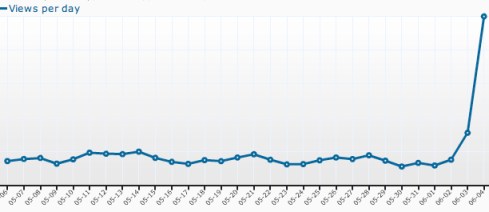
This week, Metafilter – among others – threw a stats-bomb at my wordpress account. The lure? Uncredited, amateur, pinhole photographs. No name … no logo.
The photography was by Girls in the Remann Hall Juvenile Detention Center, Tacoma, WA during a 2002 Steve Davis arts workshop.
These pictures really struck a chord. I am left to wonder what sort of interpretations are being made by viewers?
One thing I know is that a big CV, a big camera and fancy digijournalist turns may not be enough to secure soul-grabbing images. In fact, I’d argue it probably isn’t possible to compete with those nameless girls of Remann Hall.
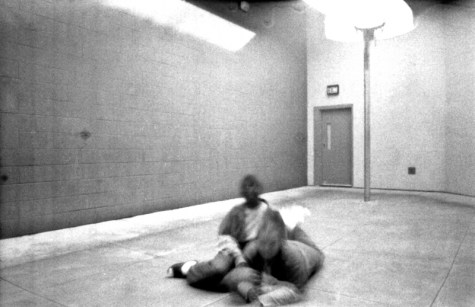
Remann Hall girls 2002. Image created as part of a Steve Davis workshop. Pinhole camera.
Please contact Steve Davis for inquiries about image use and reproduction.
Photography in prisons and jails isn’t always edgy nor riven with fraught emotion. Sometimes it can be quite ordinary. In fact, given the utter boredom of most prison facilities it would be good to see a photo essay that communicated effectively vacuous time and psychological space.
…but, I digress. Hetherington, over at the venerable What’s The Jackanory?, indulged in some “shameless self promotion” of his magazine work at North Branch Correctional Institution. Within the Wired article, Prisoners Run Gangs, Plan Escapes and Even Order Hits With Smuggled Cellphones, Hetherington’s images include a cell-tableaux, sniffing dog and bagged phone. I am more interested in the non-published images Hetherington provides in his post; they’re crisp, pared down images of inmate and interior.
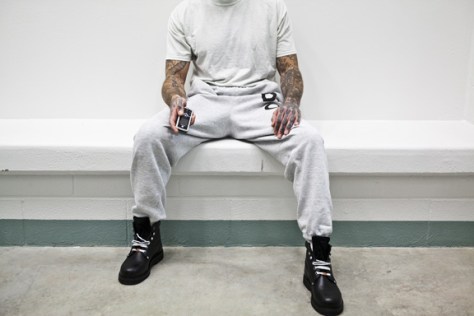
Andrew Hetherington for Wired
It got me thinking about how the environmental fabric – along with the representation – of American prisons has changed.
When (documentary) photographers first began accessing prisons – Danny Lyon, Conversations with the Dead (1971), Jacob Holdt; Taro Yamasaki, Inside Jackson Prison (1981) – the conditions were poor. And prisons were only one response to criminal behaviour and social contract.
Even latterly, Ken Light shot the black & white, in-your-face and sweaty Texas Death Row (1994) and in doing so romanticised historicised American prisons as definitively dirty sites of “the other”. By the 1990s, though, the US had implemented long term custodial sentences as the primary “solution” to crime. The phase-out of Federal parole beginning with Reagan and culminating with Clinton bloated the Federal Bureau of Prison (BOP) population, alone, from 40,000 to 200,000.
So two trends intersected: Prison populations swelled resulting in overcrowding and economically efficient facilities were rapidly being built. The mass construction of new warehouses prisons altered the spatial experience of confinement and the nature of interpersonal interaction within. Cell tiers were replaced by AdSeg wings.
The BOP has a reputation for housing the hardened criminal and specialises in high security facilities. Additionally, from the late 1980s states were building their own new high security and supermax prisons. This new penological architecture replaced 40 foot brick walls and watch towers with razor wire and motion sensors.
Prison environments are sparse. Problems with dark corners & damp have been replaced with the psychotrauma of constant fluorescent light. Problems with stashed contraband have been replaced with an absence of surfaces to set down objects. Denim uniforms have been replaced by sweat outfits. The penological management of gangs & group violence has been replaced with the pharmacological management of locked-up basket cases.
One former inmate of the Federal Supermax facility in Florence, Arizona (ADX) has described it as the “Perfection of Isolation.”

Correctional Officer Jose Sandoval inspects one of the more than 2,000 cell phones confiscated from inmates at Calfornia State Prison in Vacaville, California. Rich Pedroncelli / AP
Telephoning a way out Isolation
“Cell phones,” says James Gondles, executive director of the American Correctional Association, “are now one of our top security threats.” (Wired, July, 2009)
I posited in the past that cell phones were just one part of the prison economy and their commodity status was in direct reaction to the cost of corporate-managed prison payphone systems – in essence a racket in response to a racket. However. having read the Wired article it is clear how much of a serious security threat cell phones pose to prison authorities.
The majority of tactics for isolation, perfected over the past 30 years by prison administrations, are rendered immediately obsolete,
With a wireless handset, an inmate can slip through walls and locked doors at will and maintain a digital presence in the outside world. Prisoners are using voice calls, text messages, email, and handheld Web browsers to taunt their victims, intimidate witnesses, run gangs, and organize escapes—including at least one incident in Tennessee in which a guard was killed. An Indiana inmate doing 40 years for arson made harassing calls to a 23-year-old woman he’d never met and phoned in bomb threats to the state fair for extra laughs.
So what’s the answer? Debate exists over the value and legality of jamming all signals around prisons but a High School in Spokane, WA proved localised signal-jamming a bad idea when it interfered with the local Sheriff’s radio signals.
We should also bear in mind that ‘The 1934 Communications Act prohibits anyone except the federal government from interfering with radio transmissions, which now include cell calls.’ (Wired)
Criminalize Smuggling but Not Talking
TIME does a good job of breaking down the stats and describing the evolution of the problem. It is obvious that authorities are going to make strategic response to a growing trend but prison authorities must not compromise the already limited opportunities for inmates to talk with friends and family. Close family ties and contact are key to reducing recidivism and giving former prisoners the best means to integrate back into society.
And of course, inmates aren’t the only ones caught up in the illicit trade of cell phones in prisons. One California prison guard admittedly to making over $100,000 in a year through smuggling and selling cell phones!
On that note, I offer you a CDCR sanctioned news VT.
As so very often, the spark of thought was ignited by the Change.org Criminal Justice blog.

Prison Chess Portrait #14. Oliver Fluck
Oliver Fluck’s series of Prisoner Chess Portraits is an interesting counterpoint to other prisoner portraiture. It is unfussy, neutral, quiet. Fluck is experimenting with the figure and I would like to see him in the future settle with a preferred vantage point in relation to his sitter. For example, I like the portraits of the Prison Chess Champ and of Christopher Serrone. Fluck is headed in the right direction.
Prison Chess Portrait #14 (above) is a very strong shot also taking advantage of particularly high contrast light conditions.
Is photographing stationary silent chess-playing sitters simple or difficult? On the one hand, the sitter is still for you, but on the other, it’s difficult to spark rapport with a man concentrating on the game.
Text with Image
An integral part of the project is Fluck’s drafted questionnaire which secured answers to standard questions from as many competitors as possible.
Inmate quotes such as, “Having been incarcerated since age 15 and never getting out, it is helpful and healthy to know that not all of society lacks interest or willingness to become productively involved” keep reality checked. As do sobering statistics such as 50+ years or 66-year prison-terms.
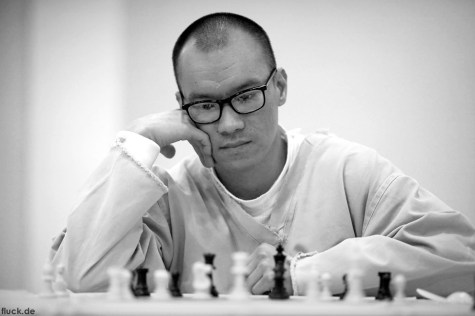
J. Zhu. Oliver Fluck

Christopher Serrone. Oliver Fluck
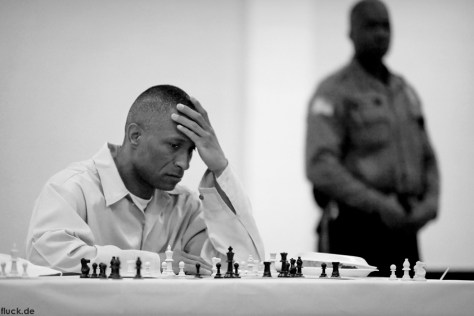
Prison Chess Champ. Oliver Fluck
Q&A with Oliver Fluck
How and why you came to this topic?
I enjoy playing chess, which is why I’m in touch with the local university chess club here in Princeton. The students got the opportunity to play against inmates of a maximum security prison, and when I heard about it, I proposed to photograph the event and volunteer as a driver for the students.
What are your hopes for the project as a whole?
Very frankly, from a photographer’s point of view, I would like to see it exhibited, and provoke some thought.
What is your message with the portraits?
I can talk about one thing that I am not trying to do: I’m not trying to propagate any kind of standpoint about how one should deal with criminals, and whether or not they should have the right to enjoy chess. I’m like most other viewers, I stumbled upon this project and got curious … Curious on an unprejudiced level from human to human. Start from there if you are looking for a message.
Anything else that you’d like to add and feel is important.
I would like to thank John Marshall for this experience, and David Wang for constructive feedback regarding the prisoner questionnaire.
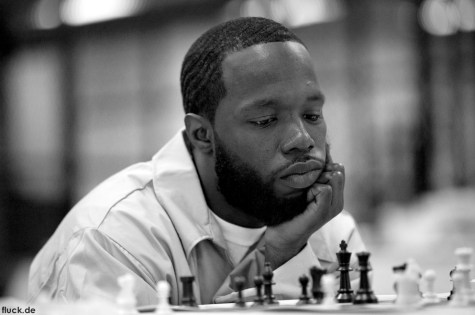
Competitor with Unknown Name. Oliver Fluck

Prison Chess Portrait #4. Oliver Fluck
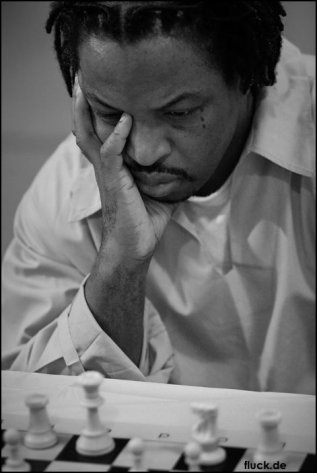
Prison Chess Portrait # 21. Oliver Fluck
Original Links to portraits 1, 2, 3, 4, 5, 6 and 7.
Oliver Fluck’s Flickr
Watch this youtube clip of a local news report from the prison during the tournament.
A few things emerging today to which I’d like to doff my cap.
Lenscratch
Aline Smithson at Lenscratch, rumoured to be in Santa Fe (Good Luck, Aline), celebrated all Lori Waselchuk’s documentary work; Waterlines, one project of many projects wrapped up in Louisiana, and Grace Before Dying community portrait of the Prison Hospice at the Louisiana State Penitentiary (Angola).

Lock Down Visit. Lori Waselchuk
Lori, a member of the New Orleans Photo Alliance, launched her project Grace Before Dying April 3rd at the Louisiana State Prison Museum in conjunction with the Louisiana-Mississippi Hospice and Palliative Care Organization (LMHPCO), the Louisiana State Prison Museum, and helped along with a Distribution Grant from the Documentary Photography Project of the Open Society Institute and Moonshine Studio.
The issues of age and health in prisons – together and in isolation – have been reasonably well covered. But, Waselchuk succeeds where so many others fail (with the exception of Edmund Clark) in really communicating the infirmity and vulnerability of the inmates
Fraction offered a good summary, as does Waselchuk’s Alma Mater. Critical Mass has the best gallery of Grace Before Dying
Bint PhotoBooks on Internet
Bint PhotoBooks on Internet got to grips with Martin Roemers‘ Relics of the Cold War which includes a Valencia orange room within a Stasi Prison. Roemers goes tête-à-tête with the Fuchs brothers in the communist-archaeology-photo genre.

Germany, East Berlin. Visitor-room in former Stasi prison Hohenschoenhausen. Political prisoners were held in this prison. Martin Roemers
Unrelated to prisons, I am also a fan of Roemers’ Lourdes Pilgrims series.
Subjectify
Subjectify grapples with the latent appropriation of images since the 2004 release of Abu Ghraib photographs.
much has been written about the ways in which war photography often echoes iconic religious imagery. but i have been wondering how, in turn, the iconography of the new war and torture photography is also influencing fine art photographers today?
Subjectify offers Jessica Somer‘s work ‘Origin’ from the Bend So Not to Break series as a case in point. I drew some interest along with disbelief and derision when I skirted the issue regarding Ballen and the torture aesthetic.

Origin. Jessica Somers
I believe artists biggest problem is to work away from viewers natural tendency to superimpose meaning so easily. I think Somers is safe. She’s got a style that stands on its own – it doesn’t get drowned out by media noise or green gloves.
AN Other
Yusuf Sayman‘s work on individuals going through Re-entry programs after long term prison sentences presented itself in the Independent‘s bizarre and confused “Britain’s Best Crime Photography” competition.
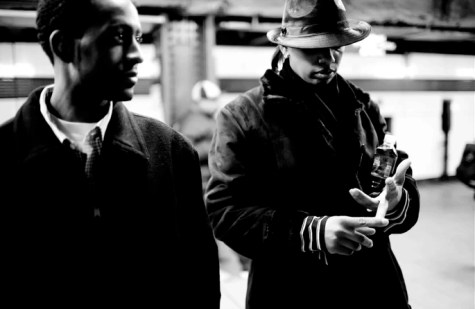
Starlene from the Free Again: Starlene series. Yusuf Sayman
Starlene Patterson is one of three former prisoners, Sayman has collaborated with after prison release for the Free Again series. Starlene is at college to qualify as a Social worker. “People need help.”
Starlene has written a book, Up Against the Wall. She says, “My book has a message. There’s a lot of young people who need guidance and they my not have that. If my book can help one [of those children] than I’ve achieved.”
Non-prison related I like Sayman’s Henry’s World series.

 Prison Photography