
You are currently browsing the category archive for the ‘Opinion’ category.
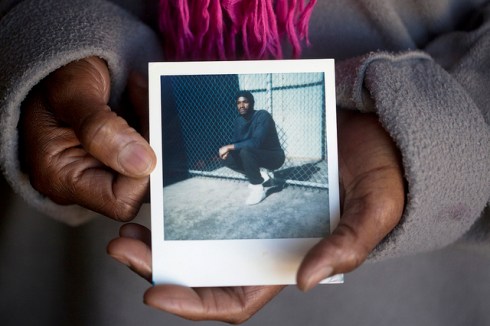
Marie Levin holds a photo of her brother, Ronnie Dewberry, taken at San Quentin State Prison in 1988. Until recently, it was the last photograph he’d had taken. Photo credit: Adithya Sambamurthy/The Center for Investigative Reporting
STARVED OF THEIR OWN IMAGE
We are now into the second week of the California Prisoners Hunger Strike. It is difficult to get firm figures on the number of participating prisoners. The Los Angeles Times reports 30,000; CNN reports 12,000 and Yahoo reports 7,000+.
I’m inclined to trust the figures sourced by Solitary Watch:
The hunger strike began on July 8th with participation of approximately 30,000 people in two-thirds of California’s prisons, as well as several out-of-state facilities holding California prisoners. In the first days of the hunger strike, approximately 3,200 others also refused to attend work or education classes as a form of protest in support of the hunger strike. As of Sunday, there are an estimated 4,487 still on hunger strike.
Still, formidable numbers.
INVISIBLE AND UNPHOTOGRAPHED PEOPLE
Last week, in conjunction with the initiation of the mass peaceful protect, Michael Montgomery for the Center for Investigative Reporting published an excellent article California Prisons’ Photo Ban Leaves Legacy of Blurred Identities about the ban on portrait photographs of prisoners held in solitary confinement.
Accompanying the article is the interactive Solitary Lives feature and a Flickr gallery.
The ban resulted from a tension between what a photograph meant or could mean.
For families, a photograph is a tangible connection to their loved one behind bars, but for staff of the four maximum security prisons that upheld the ban, photographs were potential calling cards — circulated by prison gang leaders — both to advise other members that they’re still in charge and to pass on orders.
The ban was lifted in 2011, following the last California prison hunger strike. Montgomery quotes Sean Kernan, the former Under-Secretary of the CDCR
“I think we were wrong, and I think (that) to this day,” he said. “How right is it to have an offender who is behaving … (and) to not be able to take a photo to send to his loved ones for 20 years?” Kernan directed prison staff to ease the restrictions for inmates who were free of any disciplinary violations.
The ban in the four Californian prisons was extraordinary.
“I have never heard of any other prison system or individual prison in America imposing a long-term ban of this kind,” said David Fathi, director of the American Civil Liberties Union’s National Prison Project.
As I have stated frequently on Prison Photography, prison (visiting-room) portraiture is one of the most prevalent types of American vernacular photography.
Until artists such as Alyse Emdur and David Adler began to draw focus to this disparate, decentralised, emotion-laden, and high-stake vernacular sub-genre, prison portraits were kept in wallets, on mantles and in side tables. There’s tens of millions of them out there.
And yet, for over 20 years, thousands of men in California were not allowed images of themselves. The additional ban of mirrors in solitary units meant that many men often did not see images of themselves for years on end. Again, to quote Montgomery’s article:
“I have asked my husband, ‘Do you even know what you look like?’ And he says, ‘Kind of, sort of,’ ” said Irene Huerta, whose husband, Gabriel, 54, has been detained at Pelican Bay for 23 years.
THE PHOTOGRAPH AS AN OBJECT OF DEPLOYMENT
In the free world, photographs are ubiquitous, easily created, shared and possessed. The fact that these seemingly innocuous objects were caught in the tussle of control between prison authorities and prisoners is astonishing, and speaks to the power struggle (real and imagined) between the kept and the keepers.
Michael Rushford, president of the Criminal Justice Legal Foundation, said easing the restrictions on prisoner photographs raised no major security concerns, so long as inmates had to earn them. “It’s not as if there’s been an epidemic of inmate photos on the street,” he said.
I am not sure how Rushford would measure this, or even it would significantly alter the lives of prisoners, specifically now during the hunger strike, and especially now when proven or alleged gang affiliations have been put aside by prisoners in solidarity for improved conditions for all.
In light of recent art market fetishism, it would seem the primary reason anyone would want to gather prison portraits would be to repeat Harper’s Books’ $45,000 hustle and cash in on the images?
As for the families (following the ban lift) the value of newly acquired images is not in any doubt:
Seeing an image of their incarcerated relative for the first time in years has sparked renewed hope and revived dormant family connections. For others, the photographs are a shocking reminder of the length of time some inmates have been held in isolation.
CENTER FOR INVESTIGATIVE REPORTING LINKS
Michael Montgomery’s California Prisons’ Photo Ban Leaves Legacy of Blurred Identities
Interactive Solitary Lives feature.
A BRIEF NOTE ABOUT THE SOLITARY WATCH WEBSITE
I cannot emphasize enough how important the website Solitary Watch is as a resource. Jean Casella, James Ridgeway, and their team of reporters produce high quality journalism — not only for their website but for other news outlets including The Guardian, Mother Jones, Al Jazeera, Columbia Journalism Review and The Nation.
Solitary Watch is an independent media and advocacy project, funded by grants and donations. It is a project of the Community Futures Collective, a 501(c)(3) non-profit. You can support the project here.
I don’t hesitate to say that Solitary Watch has driven much of the critical and visible public discourse about solitary confinement in U.S. prisons and jails.
As Solitary Watch describes, “Solitary confinement is one of the nation’s most pressing domestic human rights issues — and also one of the most invisible,” which is why I have a vested interest in their work; we’re each interested in making solitary and other egregious aspects of the U.S. prison system more visible.

Found photo of an unknown prison cell.
Last week, I was interviewed twice – firstly, for DVAFOTO and secondly, for HERE BE MONSTERS – about Prison Photography On The Road and my activities since.
The DVAFOTO interview opens with my account of my arrest and 9 hours in jail in late 2011. The HBM podcast is about a workshop I delivered in Sing Sing State Prison, New York.
It may be ironic that I’d get locked-up during a research trip that is questioning incarceration, but it’s not funny and it’s no badge of honour. My actions were foolhardy and the police officer’s actions were over-zealous.
I’ve been thinking beyond what I think about the experience (It was stupid, bureaucratic and inconvenient), and more about how I think of the experience (What insight did I gain? What interactions did I have? Who did I meet?)
Inside the release-tank were about 15 men. They were there for different reasons. One young man faced a significant bail amount for a significant possession offense while another was brought in for cycling drunk in the wrong direction of the cycle path on a quiet road. Some men were in for DUI’s and in some cases not their first DUI. Two or three slept through the hours. Others were quiet and some told stories. The younger ones were more talkative and boastful. Several tried using the phone but only one succeeded. When they found out I was in for peeing on a tree and not answering questions they thought it was lame. Lame offense, lame arrest.
A tray of peanut butter sandwiches was brought in, but not enough. Some jumped on them, others weren’t interested. I think one person got two sandwiches.
Of the men with DUIs, I had little sympathy. They didn’t seem to acknowledge that their actions were potentially lethal. For a couple of them, cash-fines, points on their licenses and driving bans didn’t seem to be much deterrent.
A few men seemed contrite. Others seemed beaten down with either addiction or repeated arrogance.
I had huge sympathy for the drunk cyclist. Maybe in this fifties. Grey hair. He thought he was getting out until the administration realised he was a parolee. The bike-ride proved a violation and he was to be automatically rearrested and jailed for a fixed term. He had a job and children. Because of a night of excess, he was to lose those things again. Sure, his behaviour could have been better, but I think the authority’s response was of excess.
I didn’t ask what they did and they didn’t ask me. It was a small space. It was very dirty but not quite filthy. We only moved our place when others left and they did so in groups of 3 and 4 throughout the hours.
Part of me wishes I’d taken the opportunity to ask some questions, tap some opinions (I may have met a great conversationalist who’d improve my thinking as much as I hoped I might improve his). The other part of me knows only an intrusive nerd would be ask out-of-the-blue questions about personal circumstance and attitudes; especially in a temporarily-occupied cell at an unpredictable time.
No clocks.
Two weeks later: No court appearance. No charges brought.
Why is this relevant? The arrest and dismissal of charges — actually, the incomplete documentation of the arrest and dismissal — almost jeopardised my visit to Sing Sing to carry out a workshop with attentive, challenging, respectful and curious students of the education program there.
An arrest will always feature on a record, whether or not a conviction is brought, so-told me a law enforcement employee over the phone. New York Dept. Of Corrections which administers Sing Sing knew I’d been arrested but the information ceased there. I had to scramble for paperwork (that had not been given to me) to prove I had no criminal record. I wonder how much inefficiency and potential mistakes contribute to unfair and/or heightened levels of control. Frustration must be infinite in the prison industrial complex.
All in all, I’m glad I was able to teach and learn in Sing Sing and doubly happy that Jeff Emtman was able to craft a fine podcast splicing together audio of prisoners speaking, myself speaking, music and sound. Jeff conceived of the podcast titled The Other One Percent, to broadly challenge listeners to think about prisons and solutions.
The class, as a whole, discussed many images but specifically in the HBM audio, Robert Rose, Dennis Martinez, Deshawn Smalls and Jermaine Archer talk about these six images.
The first image mentioned is the one below by Brian Moss …

“Fear, I think people would think fear,” says Sing Sing prisoner, Robert Rose. “They can’t see what goes on in here, just as we can’t see much of what goes on out there.”
… then the three below by Alyse Emdur …
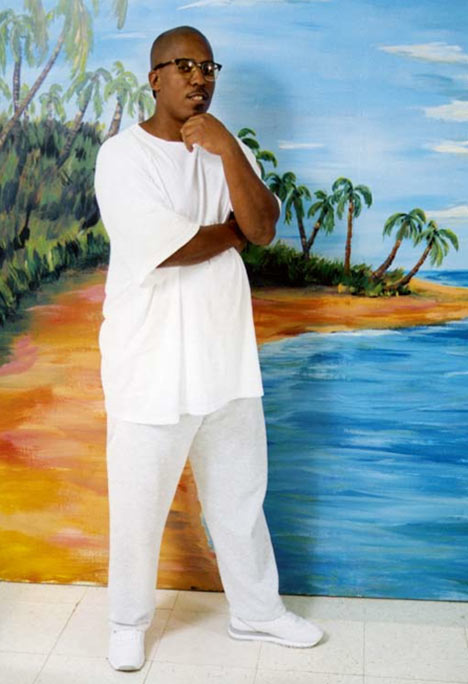

“Something needs to be said about the families who also do time. They are part of the narrative of mass incarceration, but they’re not talked about. They end up carrying the burden,” says Deshawn Smalls, Sing Sing prisoner.

… and finally, the two images below by Richard Ross of juvenile facilities.
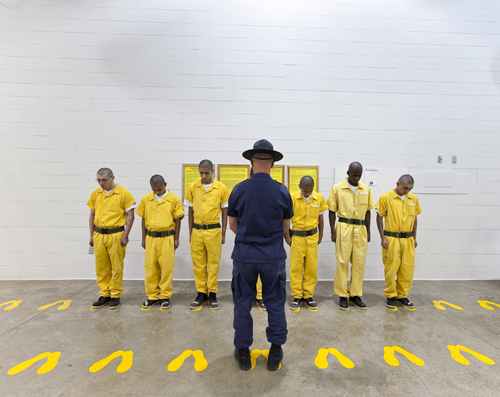
Sing Sing prisoner, Jeremy says, “You may have a man who refused [to adhere to regulations] and this is him in this picture. You probably won’t see the man at first, but he is there.”

HERE BE MONSTERS (HBM) is a podcast audio series about fear and the unknown, by Jeff Emtman, a 2012 Soundcloud Community Fellow.
HBM has previously covered Juggalo culture; placenta medicine; train-hopping; the disillusion and resignation of a favored NPR correspondent; a children’s book about a hallucinogenic trip; and the mind-made images created by the human brain when the body and the eyes experience total darkness – a condition known as ‘Prisoners Cinema.’
I like what Jeff is doing. I’m happy to share my experiences with him.
If you’re still interested in what I’m up to, I cover my immediate plans in the DVAFOTO interview. We also talk about what bloggers can do and do do.
LINKS
The Other One Percent (Here Be Monsters podcast)
Interview: Pete Brook On The Road (DVAFOTO)

Barack Obama is TIME’s Person Of The Year. The accolade is less interesting than Obama’s words in the TIME interview. The President of the United States talks about criminal justice and prison reform. Obama says,
“There’s a big chunk of that prison population, a great huge chunk of our criminal-justice system, that is involved in nonviolent crimes. I think we have to figure out what are we doing right to make sure that that downward trend in violence continues, but also, there are millions of lives out there that are being destroyed or distorted because we haven’t fully thought through our process.”
Granted it takes until the fifth page (of five) until we get to criminal justice issues. But, still. I’m going to say ‘wow’.
In November, I half-wrote a blog post about the complete absence of talk about criminal justice policy during the presidential debates. It never published; the details were more depressing than the simple fact. These words by Obama in some way make up for that. Watch this space. Watch Obama’s team.
via Prison Policy Initiative.
Prison Photography (PP): You use Twitter.
Ashley Gilbertson (AG): I initially got on Twitter because I found Facebook pretty boring. It was turning into people’s family photo albums, which is fine, but …
Twitter was a place that I was getting breaking news from. Not always correct but sources on the ground. That for me was very effective in terms of looking at primary sources and things as they developed. I still go to a few news sites, but I am getting my breaking news from Twitter. It sounds ridiculous, but I do.
I use Twitter for conversations and ideas too. I come across stories. Somebody can tweet something that sets the wheels turning in my head that can turn into a story idea. If I don’t want to cover it then I’ll retweet it and say this is potentially a good story idea. I try to share in this creative process.
PP: You use Instagram.
AG: I joined Instagram because VII started an account and I thought I’d be a team player. I keep trying but it’s not really my thing. My digital photographs suck and so therefore my iPhone photographs are freaking terrible.
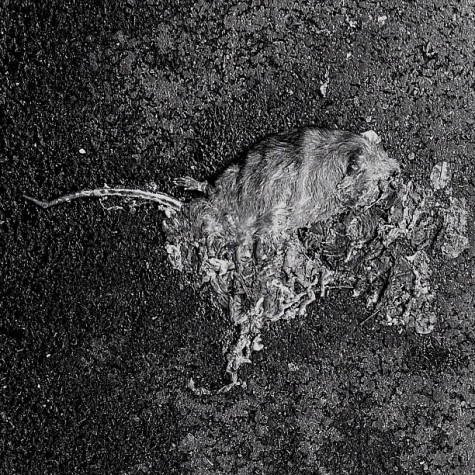
I took a picture of a dead rat I came across on the street, posted it and suggested I might do a series on roadkill and make a book. I’m trying to take the piss a little bit but no-one really gets it. Someone contacted me and said, “I hate to tell you Ash, but someone has already done that.”
I present certain photographs to the world that are very carefully edited and all of a sudden I’m making photographs on the fly and they’re bad! That’s got to hurt my reputation!
I love taking pictures of my wife and son but they are for me.
PP: I don’t want to know about your heroes, I want to know about how you think is making good work right now.
AG: I think Seamus Murphy is doing some really great stuff with multimedia – he takes unusual approaches that I thoroughly enjoy.
I love Peter van Agtmael. Peter’s a thinker. His work is very emotional, really textural, really beautiful and I think Peter is turning into one of the best photographs that we have out there working today. I have a lot of respect for his approach.
Todd Heisler. Reading the New York Times, his pictures just stand on their own. I like being able to look at a paper and know who the photographer is – “It’s Todd. He nailed it again.”
I like Mishka Henner‘s approach to the medium, I like his execution of ideas, and I like his defense of the work. That to me is the complete package. I’ve argued about Henner’s work without him in the room. One person was calling him a photographer, I was calling him a curator, and we realized it didn’t matter. Call him what you fucking want. Henner’s just interesting. Period.
I like people who are pushing the medium. While I have a hell of a lot of respect for traditional photography, I don’t see the need for ten photographers to all shoot the same scene in this reportage manner. I’d rather see three photographers, say from the New York Times, LA Times and Wall Street Journal [do straight shooting] and see the other seven trying to connect with an audience in a different manner.
PP: Cell phones?
The iPhone debate has legs. Cell phone photography is not that boring. It’s the first time photojournalists have ever let themselves go, stylistically. We’re not confined to having to reproduce colours in exactly the way that we see them or not add certain elements of light, sun-flares or whatever it is.
The problem with the conversation [about style and filters] is that it is so often talked about in a defensive manner.
PP: People start by defending the ethics of cell phone photography?
AG: Yes. And, of course it’s totally ethical. Rather they should start with, “Obviously, it is very different to how I shoot on a Canon 5D; it’s a totally different approach with a totally different understanding.”
It doesn’t bother me that photojournalism is loosening up.
PP: For the longest time, a mythos has surrounded anointed photojournalists. They’ve been treated as gods, if you like. But, with the rise Instagram – which is, paradoxically, considered a platform for navel gazing narcissism – famous photojournalists have become more familiar, less godlike.
AG: We’re from a new generation. The photographers I knew growing up were either dead or very mysterious. I remember picking through magazines and trying to find little scraps of information about Ron Haviv or James Nachtwey and these giants in the industry. They were so mysterious it was almost part of the allure. They’re not the story; they’re behind the camera and they are not there to talk about themselves, they were there to talk about their subjects and that to me was very effective.
But now, I realize that to reach the widest possible audience you often have to engage yourself in the production of the story. I need to explain how it was meeting hundreds of families who had lost a son or a daughter to the war. I think that adds to the story and to people’s compassion for the subject. But, it doesn’t sit well with me. It might look like it does because I am so open to it, but still I wonder if I should shut my mouth, close down all my social media, and just get on with photography.
– – – – – – – – – – – – – – – – – – – – –
Image by Ash Gilbertson, from his Instagram feed, a rat I think, sometime in late Summer, somewhere, accompanied by the caption, ‘Tyre Tracks!’

As you know, I’m a great admirer of photography programs and mentorships for youth. Expression in the arts gives children their voice. I’ve even wondered if the empowerment provided through self-representation could benefit prisoners.
There exist dozens of important non-profits and volunteer programs helping youth of all backgrounds, including at-risk youth, to tell their stories through photography.
Organisations such as Youth in Focus, Seattle; AS220 Youth Photography Program, Providence, RI; New Urban Arts, Providence; First Exposures by SF Camerawork in San Francisco; The In-Sight Photography Project, Vermont; Leave Out ViolencE (LOVE), Nova Scotia; Inner City Light, Chicago; Focus on Youth and My Story in Portland, OR; Picture Me at the MoCP, Chicago; Eye on the Third Ward, Houston; The Bridge, Charlottesville, VA; the Red Hook Photography Project, New York; and Emily Schiffer’s My Viewpoint Photo Initiative are exemplars of youth empowerment through photography.
One of the leading participatory photography bodies is Photovoice in the UK. It has 50 programs in 23 countries.
This holiday season, Critical Exposure in Washington DC, a youth photo workshop organisation is raising money.
Simply and brilliantly, Critical Exposure – which was founded in 2004 – gives centre stage to Samera, one of the students. Watch it and celebrate the resilience and thoughtfulness of youth. It’s uncomplicated and effective storytelling, and you will be convinced of the undoubted value of these photography programs.
Samera is a compelling voice. After describing her own situation, she makes quite a simple request. She asks that schools within the same metropolitan area have better communication. She identified a fault in the system and she asked that it be fixed so others wouldn’t have to go through the same clumsy and disappointing mal-communications between Washington school district and a charter school. It’s a fair request.
Communities we shape for better, engender growth. Youths’ enthusiasm to be raised in an encouraging environment should not be neglected.
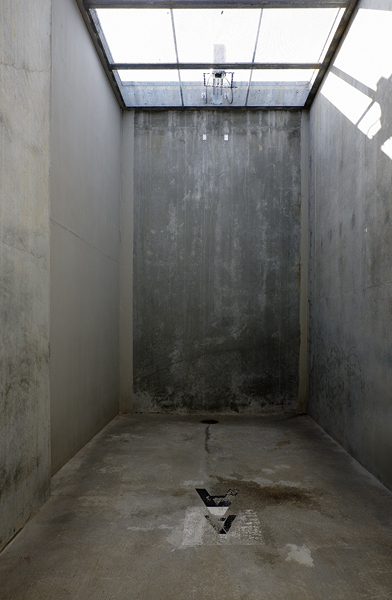
Isolation exercise yard, Security Housing Unit, Pelican Bay, Crescent City, California, a supermax-type control, high security facility said to house California’s most dangerous prisoners. © Richard Ross
Solitary confinement is in the news … for lots of reasons – a lawsuit brought by prisoners against the Federal Bureau of Prisons; a lawsuit brought by 10 prisoners in solitary against the state of California; a June Senate hearing on the psychological and human rights implications of solitary confinement in U.S. prisons (which included the fabrication of a replica sized AdSeg cell in the courtroom); an ACLU report pegging solitary as human rights abuse; a NYCLU report showing arbitrary use of solitary, a NYT Op-Ed by Lisa Guenther; the rising use of solitary at immigration detention centres; and the United Nations’ announcement that solitary is torture.
Recently, journalists from across America have contacted me looking for photographs of solitary confinement to accompany their article. I could only think of three photographers – one of whom wishes to remain anonymous; another, Stefan Ruiz is not releasing his images yet; which leaves Richard Ross‘ work which is well known.
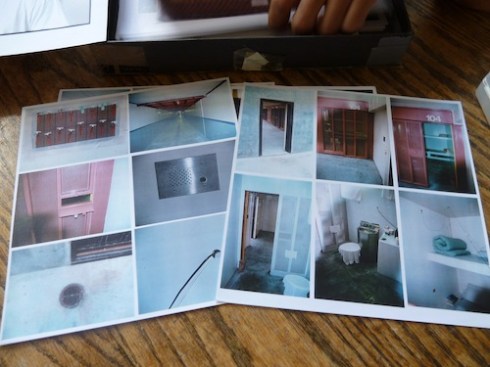
Stefan Ruiz’ photographs of Pelican Bay State Prison, CA made in 1995 for use as court evidence. (See full Prison Photography interview with Ruiz here.)
With a seeming paucity, I went in search of other images. I found an image of a “therapy session” by Lucy Nicholson from her Reuters photo essay Inside San Quentin. A scene that has been taken to task by psychologist and political image blogger Michael Shaw.
Shane Bauer took a camera inside Pelican Bay for his recent Mother Jones report on solitary confinement.
Rich Pedroncelli for the San Francisco Chronicle.
Pelican Bay has been hosting media tours and welcoming journalists in the past year – partly due to public pressure and partly through a strategic shift by the CDCR to appear to be responding to public outcry. Maybe the courts have had a say, too?

© Lucy Nicholson / Reuters. Prisoners of San Quentin’s AdSeg unit in group therapy. (Source)
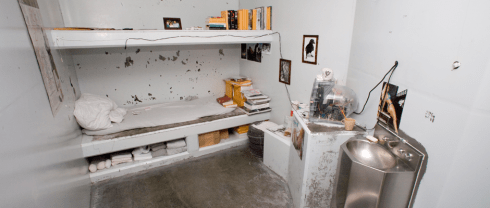
© Shane Bauer. Pelican Bay SHU cell. (Source)

© Shane Bauer. CA CDCR employees show investigative journalist Shane Bauer the Pelcian Bay SHU “Dog run.” (Source)

Correctional Officer Lt. Christopher Acosta is seen in the exercise area in the Secure Housing Unit at the Pelican Bay State Prison near Crescent City, Calif., Wednesday, Aug. 17, 2011. State prison officials allowed the media to tour Pelican’ Bay’s secure housing unit, known as the SHU, where inmates are isolated for 22 1/2 hours a day in windowless, soundproofed cells to counter allegations of mistreatment made during an inmate hunger strike last month. Photo: Rich Pedroncelli, AP/SF (Source)
The amount of visual evidence still seems limited. It’s not that reporting on solitary confinement is lax or missing. To the contrary, I’ve listed at the foot of this piece some excellent recent journalism on the issue form the past year. We lack images.
Look Inside A Supermax a piece done with text and not images is typical of the invisibility of these sites. National Geographic tried a couple of years to bring solitary confinement to a screen near you. ABC News journalist Dan Harris spent the “two worst days of his life” in solitary to report the issue.
Why do we need to see these super-locked facilities? Well, depending on your sources there are between 15,000 and 80,000 people held in isolation daily (definitions of isolation differ). My conservative estimate is that 20,000 men, women and children are held in single occupancy cells 23 hours a day.
Gabriel Reyes, prisoner at Pelican Bay SHU writes about his experience for the San Francisco Chronicle:
“For the past 16 years, I have spent at least 22 1/2 hours of every day completely isolated within a tiny, windowless cell. […] The circumstances of my case are not unique; in fact, about a third of Pelican Bay’s 3,400 prisoners are in solitary confinement; more than 500 have been there for 10 years, including 78 who have been here for more than 20 years.”
Solitary confinement is a “living death”; an isolating “gray box” and “life in a black hole.” Imagine locking yourself in a space the size of your bathroom for 23 hours a day. As James Ridgeway, currently the most prolific and reliable reporter on American solitary confinement, writes:
“A growing body of academic research suggests that solitary confinement can cause severe psychological damage, and may in fact increase both violent behavior and suicide rates among prisoners. In recent years, criminal justice reformers and human rights and civil liberties advocates have increasingly questioned the widespread and routine use of solitary confinement in America’s prisons and jails, and states from Maine to Mississippi have taken steps to reduce the number of inmates they hold in isolation.”
The over zealous and under regulated use of solitary confinement to control risk and populations within U.S. prisons is a cancer within already broken corrections systems. I’m posting a few more image that Google images afforded me – but I urge caution – these are just a glimpse and may not be indicative of solitary/SHU conditions. Windows are a rarity in solitary despite three images below showing them.
The main reason I’m posting here is to ask for your help in sourcing all the photography of U.S. solitary confinement we can. Please post links in the comments section and I’ll add them to the article as time goes on.
SELECT IMAGES

© Alice Lynd. Front view of cell D1-119. Todd Ashker has been in a Security Housing Unit (SHU) for more than 25 years, since August 1986, and in the Pelican Bay SHU nearly 22 years, since May 2, 1990. “The locked tray slot is where I get my food trays, mail.” (Source)
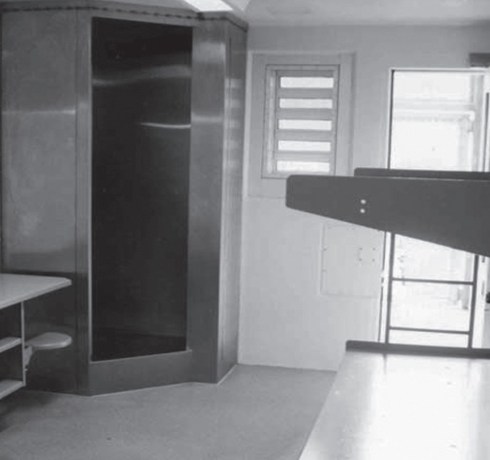
A typical special housing unit (SHU) cell for two prisoners, in use at Upstate Correctional Facility and SHU 20.0.s in New York. Photo: Unknown. (Source)

Bunk in Secure Housing Unit cell, Pelican Bay, California © Rina Palta/KALW. (Source)

Solitary Confinement at the Carter Youth Facility. Since the arrival of the girls’ program at Carter, the administration has created a new seclusion cell. This cell contains no pillow, sheet, pillow case or blanket. In fact, there is nothing in the cell other than a mattress, which was added after numerous requests from the monitor. Girls are routinely placed in this room for “time out.” Photo: Maryland Juvenile Justice Monitoring Unit. (Source)

© Rina Palta, KALW. “More than 3,000 prisoners in California endure inhuman conditions in solitary confinement.” This photo, taken in August 2011 of a corridor inside the Security Housing Unit (SHU) at Pelican Bay State Prison, illustrated Amnesty’s report. (Source)

© National Geographic. In Colorado State Penitentiary 756 inmates are held in “administrative segregation” alone in their cells for 23 hours a day. 5 times a week they are allowed into the rec room where they can exercise and breath fresh air through a grated window. (Source)
FURTHER READING
Eddie Griffin, prisoner in s Supermax prison in Marion, IL writes about “Breaking Men’s Minds” [PDF.]
Boxed In NYCLU campaign and report with resources and video against use of solitary confinement. HIGHLY RECOMMENDED
The Gray Box, an investigative journalism series and film about solitary across the U.S., by Susan Greene. (Dart Society) HIGHLY RECOMMENDED
ACLU – Stop Solitary Confinement – Resources – HIGHLY RECOMMENDED
ACLU _ State specific reports on solitary confinement
Andrew Cohen’s three part series on “The American Gulag” (Atlantic)
Atul Gawande’s take on the psychological impacts of solitary confinement (New Yorker)
Sharon Shalev, author of Supermax: Controlling Risk Through Solitary Confinement, here writes about conditions. (New Humanist)
The shocking abuse of solitary confinement in U.S. prisons (Amnesty)
SOLITARY ELSEWHERE ON PRISON PHOTOGRAPHY
Interview with Isaac Ontiveros, Director of Communications with Critical Resistance, about Pelican Bay solitary and community activism.
The invention of solitary confinement.
RIGO 23, Michelle Vignes, the Black Panthers and Leonard Peltier
Chilean Miners, Russian Cosmonauts and 20,000 American Prisoners
Robert King, of the Angola 3, writes for the Guardian

Photo: Timothy Briner, from It’s A Helluva Town, in Businessweek.
THE BEST SHOT
Timothy Briner is doing the most different stuff. Whether being different will distinguish it from the crowd, we’ll see.
I was disappointed with early coverage of the Hurricane. Given the superstorm conditions photographers were getting many more misses than hits.
The biggest miss was TIME’s first dispatch of Instagram images the day after Sandy hit. Only Michael Christopher Brown of the five photographers – Kashi, Quilty, Lowy, Wilkes and Brown – had some successful frames. TIME has continued adding to its gallery of Sandy images so the older photos (31 – 57) are toward the end.

Photo: Michael Christopher Brown/TIME. Con Edison workers clean a manhole on 7th Avenue and 22nd Street in Manhattan. Source
BUT, photographers were not at fault. It was editors’ mistakes to publish below par images. Half of the photographers images I saw in the first 36 hours were from assigned photographers carrying smartphones. In low light, blustery weather the smartphones fell way short of the test.
THE MONEY SHOT
Kenneth Jarecke lays into TIME for their use of Instagram photos. Okay he references Gene Smith where there is perhaps little relevance and lists all sorts of other reasons such as Instagram getting rich of millions off other peoples’ content, but those are not the core of his burning anger. Jarecke is angry because the pictures are poor, and I can’t disagree with him. Of TIME, Jarecke says:
It’s shameful and you should be embarrassed. Not to say these shots weren’t well seen (which is the hardest part), just that they were poorly executed. Which is to say they fail as photographs.
What was weird was that in a Forbes article largely defending TIME mag’s use of Instagram images there was little discussion of the images qualities, more an emphasis on stats and page views.
Time’s photography blog, was “one of the most popular galleries we’ve ever done,” says [Photo Editor, Kira] Pollack, and it was responsible for 13% of all the site’s traffic during a week when Time.com had its fourth-biggest day ever. Time’s Instagram account attracted 12,000 new followers during a 48-hour period.
Pollack’s description of Lowy’s bland, color-field image of a wave chosen for the print magazine’s front cover as “painterly” due to its low res sums it all up; the TIME cover is known to favor photo-illustrations over straight photographs.
THE CHEAP SHOT
Sometimes articles are written as if it is still some surprise that amateur photographs shape our media and consciousness. American Photo describes the lifecycle of a viral photo.
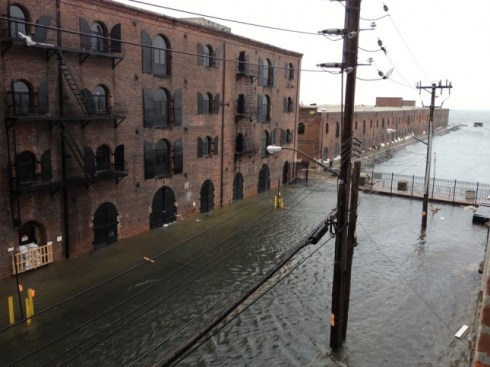
Photo: Nick Cope. Rising flood waters as seen from the window of his Red Hook, Brooklyn apartment.
When we’re all hungry for information and we’re all sharing everything we can get a peek at then an amateur snap, if it is informative enough, will find it’s way to us very quickly.
I admire that American Photo quoted fully from this dude who got that photo.
“It was hard to track [the photo’s path to “viral”] — I was also preparing for a hurricane at the time! And for a good part of the morning I was at a cafe in the neighborhood, chatting with the owner who was mixing up Bloody Marys, and so it was a combination of hanging out with folks in the neighborhood and getting prepared for the storm. And then I start getting all these calls.”
THE TRUSTED SHOT
As ever, Damon Winter makes a bloody good fist of it for the New York Times.
The BIG Atlantic In Focus delivers with a typically epic selection off the wires. Crushed cars, boats on boats, burnt embers, friends hugging/crying, aerial shots of devastation, gas lines, strewn debris (homes), rescued old english sheepdog, destroyed pier and amusement rides, phones charging, pitch black streets, canoe in a living room, downed bridge and then this incredible picture by Seth Wenig of food being dumped.
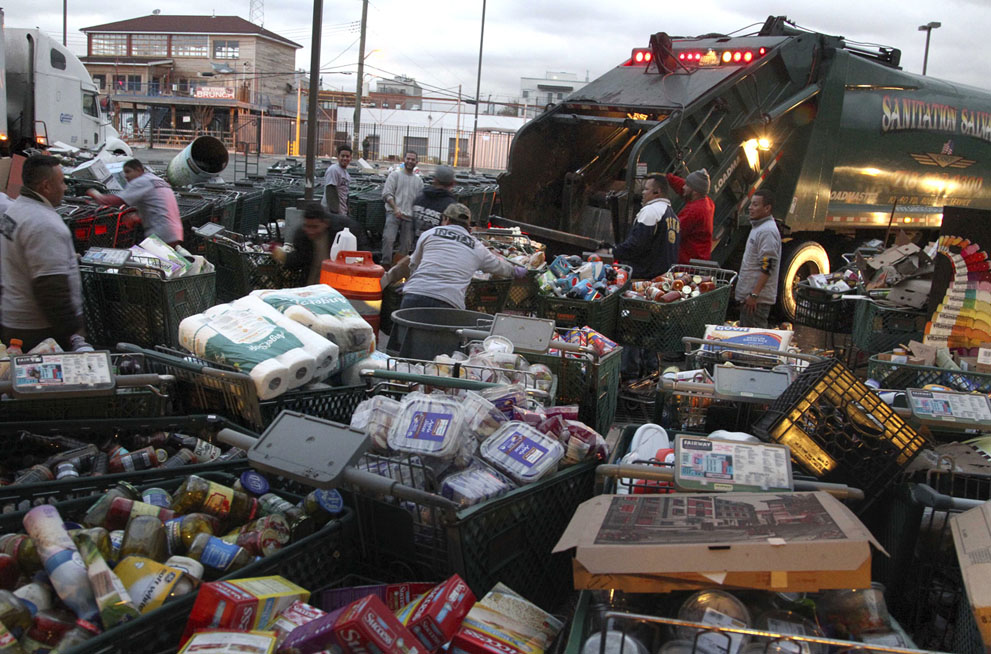
Men dispose of shopping carts full of food damaged by Hurricane Sandy at the Fairway supermarket in the Red Hook section of Brooklyn in New York, on October 31, 2012. The food was contaminated by flood waters that rose to approximately four feet in the store during the storm. (AP Photo/Seth Wenig)
THE HORROR SHOT
Gilles Peress‘ very personal letter in which he appears to be having a breakdown is shared with the world.
“I have to say that in twelve years, to have shot pictures at 9/11 downtown, and again downtown in 2008 when the financial system collapsed, and now, is intense: big city, big tragedies, and a sense of having entered into a different period of history.”
I really want to know who CK and GH, the letters recipients, are.
Peress talks about homelessness and the poor being forgotten in the delivery of aid and services. Michael Shaw at BagNewsNotes wrote about the homeless being forgotten in the coverage.
Back to In Focus. Today, another good edit by Alan Taylor’s team. These two images stood out.
John De Guzman photographs a massive pile of mucky, busted furniture and appliances.

Photo: John De Guzman. A street lined with water-damaged debris in Staten Island.
John Minchillo photographed a lady who is better camouflaged than the national guardsmen beside her. I wonder what she bought at Whole Foods?
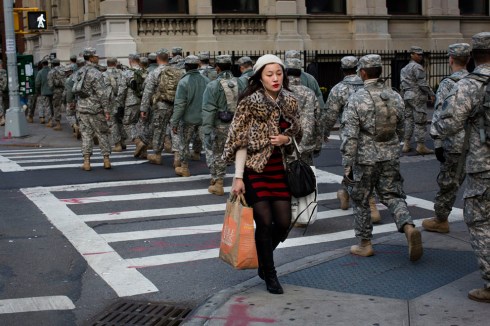
Photo: AP Photo/John Minchillo. A woman passes a group of National Guardsmen as they march up 1st Avenue towards the 69th Regiment Armory, on November 3, 2012, in New York. National Guardsmen remain in Manhattan as the city begins to move towards normalcy following Superstorm Sandy earlier in the week.
THE EVERYTHING SHOT
Everybody’s been very excited about the New York Magazine’s cover aerial photograph of a lightless Lower Manhattan.
It’s only fitting to finish these thoughts with a nod to two perhaps lesser feted Instagram photographers – after all, Instagram had record number of hashtaggles for #Sandy #HurricaneSandy and #Frankenstorm.
Wyatt Gallery has been following clean-up closely.
Clayton Cubitt is a bit more wry in his approach including this GSV comparison which is typical of Cubitt’s sideways thinking on most things visual. Good stuff.

Photo: Clayton Cubitt. Posted on Instagram, “One day you’re living the American dream. The next…”
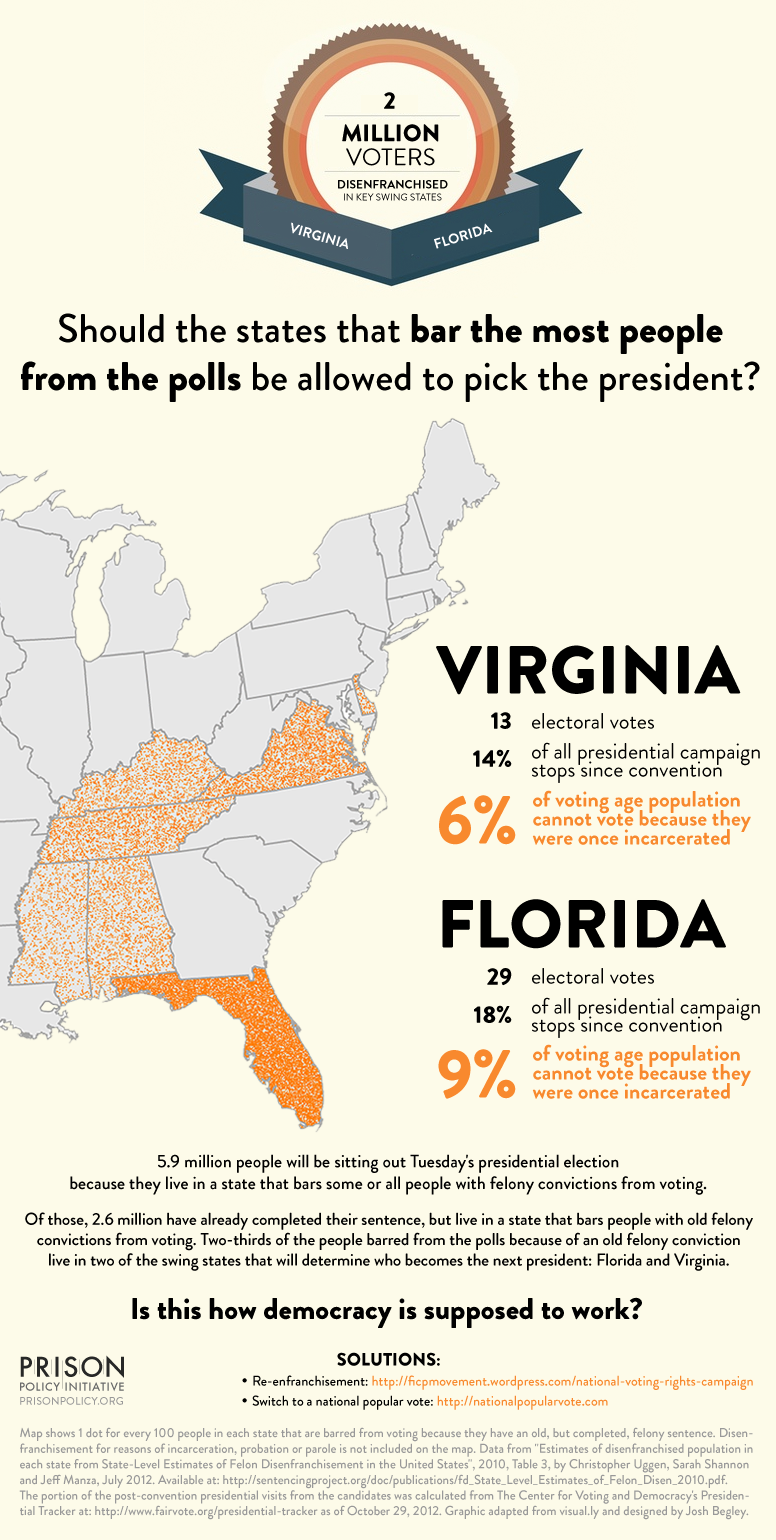
Two million voters disenfranchised in key swing states. Something to think on this week and next.

 Prison Photography