
You are currently browsing the category archive for the ‘Photography: Non-Prison’ category.
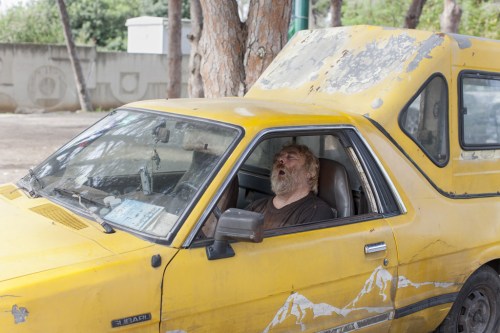
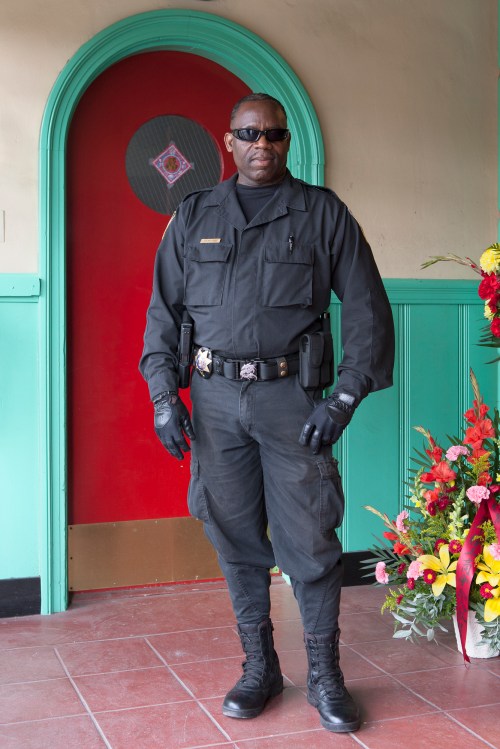
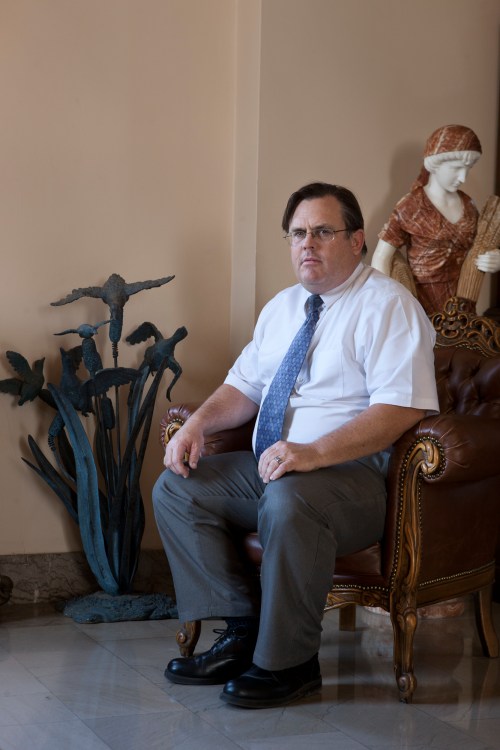
You gotta love Martin Kollar. He just won the 2015 Prix Elysée. I was cheering for Mari Bastashevski, but I can’t complain with the ultimate choice of Kollar. His work is dark and hilarious. Kollar freezes awkward. In his world, military men are less heroic, stunt men are suicide cases, and practice makes imperfect. Is this shit even real?
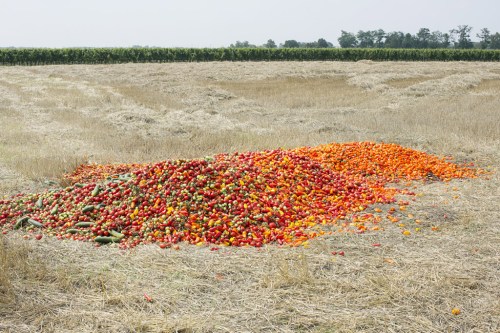
Kollar travels through research labs, checkpoints, sports events, training scenarios, parliaments, dentists, barrios and wheat fields. He isolates people from context and time to create solitary and uncanny moments. The list of photographers interested in documenting simulation and facade is long — Lisa Barnard, Paul Shambroom, Yann Mingard, Richard Barnes, Max Pinckers, An-My Lê to name a few — so it is a little surprising Kollar’s work stands out for me and truly strikes a chord. I reckon this is because his work is consistently good. And by good, I mean convincing. I am convinced he has looked really hard to find these scenes. I am convinced he is a good editor, or has good editors around him. I am convinced of his skill because it’s hard to make this look so easy. Check out his notebooks.
Photography is “an intermediary stage, a kind of transitional memory between two times” says Kollar who, according to the Prix Elysée, “belongs to the temporary generation, moving from job to job, from apartment to apartment, relationship to relationship.”


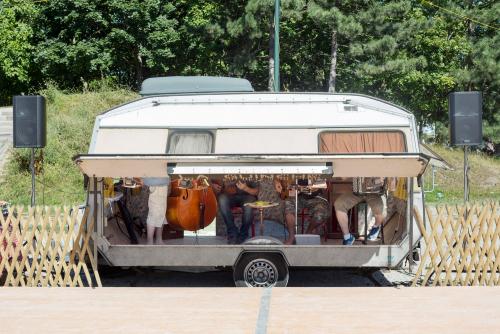
Originally from Slovakia, Kollar’s projects build upon ideas from the previous. He constructs huge stepping stones and jumps from one to the next when he feels he’s considered the ideas central to each project from all angles. “Then the next idea comes, which usually corrects the previous one,” he says. “My projects are generally linked to limited territories and spaces, whether it be Eastern Europe, the European Parliament or Israel.”
Kollar’s photographs evoke a certain amount of wandering and wondering. For Prix Elysée, Kollar took a geographically unspecific overview.
“Provisional Arrangement, conceived in the spirit of a road movie, aims to capture those moments when the permanent becomes provisional,” says Prix Elysée.
Again, not an easy task. To locate and understand the gaps you’ve got to have a good grasp on what the formed and formal landscape of knowledge is for a places … or in Kollar’s cases many (unidentified) places.
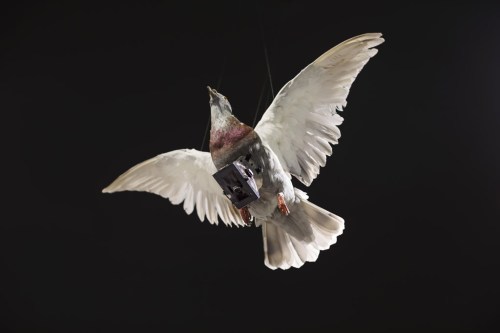
In the Museum of Military History in Dresden, he photographed an installation showing pigeons wearing tiny cameras during the Second World War.
“They evoke today’s drones. In this case, photography is an intermediary stage, a kind of transitional memory between two times. That’s what I want to work on, filling the void, building something in the interstices,” says Kollar. “I wanted to do work that isn’t linked to any place, which revolves around temporality and provisionality.”
In winning the Prix Elysée, Martin Kollar won 80,000 Swiss Francs. He has one year to make an exhibition and a book which extends Provisional Arrangement. It’ll go on show at at Museum Elysée in Lausanne, Switzerland in September 2016. We already know he has a wit when it comes to installation.
Good luck Martin.
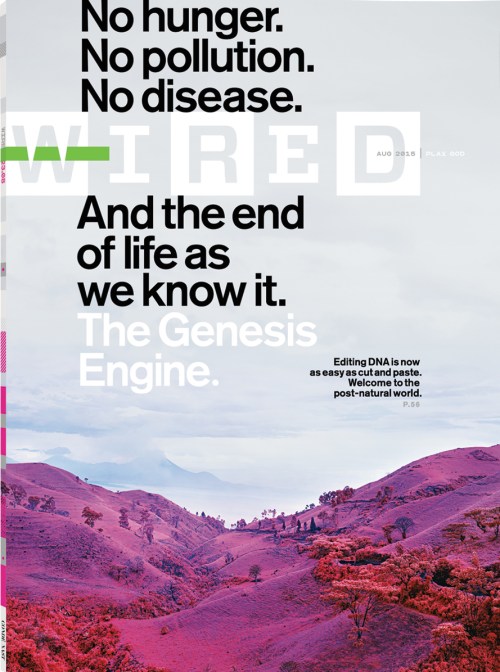
I just published What’s a War-Torn African Nation Got To Do with Editing DNA?, a piece on Vantage about Wired Magazine’s choice of a Richard Mosse photograph Myths Of The Near Future (2012) for the cover of its August issue.
The photograph was made as part of Mosse’s series Infra about the ongoing civil wars in the Democratic Republic of Congo, but the story is about the science behind– and the copyright battles over–Crispr-Cas9 a genetic engineering technique. The gulf between the original subject matter and the nature of the story raised some questions for me.
I must mention that, in light of 5.4 million deaths in DRC, the line “And the end of life as we know it” emblazoned in 48-font on the front cover, seems a little clumsy, but I’m too clueless about the magazine world for that to be my line of main inquiry. Someone else can muse over those loose words if they think there’s anything more in them than a disconnect between packaging and content typical of the marketplace.
[…]
Perhaps I am so discomfited because Mosse’s work makes so much more visual sense being bent ever-so-slightly for this futuristic narrative, than it does for its original intended political purpose?

Mosse pitched in on Twitter with the following three comments, they’re part of a longer back-and-forth with a couple of threads between Ed Brydon and I. Chase those threads if you can.
@brookpete @WIRED @WIREDPhoto Myths of the Near Future shows an active volcano and has a pre-Anthropocene element, relevant to the story.
— Richard Mosse (@richard_mosse) August 4, 2015
@edbrydon @vantagephotos @WIRED @amymaxmen A photo can have numerous meanings / interpretations and sustain multiple contexts? Head explodes
— Richard Mosse (@richard_mosse) August 4, 2015
@vantagephotos @edbrydon @amymaxmen Crispr's manipulation of reality. Turning tragedy to utopia. Many reasons I felt it's a good fit
— Richard Mosse (@richard_mosse) August 4, 2015
Read the full piece and see what you think.

Social Justice and Environmental Justice Intersect
Any links between mass incarceration and environmental abuse might not be immediately obvious. But they exist and the Prison Legal News, the Human Rights Defense Center and Nation Inside are combining resources to talk to this unlikely but potent and dangerous intersection of issues.
The Prison Ecology Project is creating tools to dismantle toxic prisons.
Ask people in Appalachia who have watched prisons such as FCI McDowell built on exhausted mountain-top removal mining sites. Ask folks out west who’ve watched prisons plonked down upon fragile desert ecosystems. Ask those in the rust belt, who’ve seen prisons brought to town for the sake of jobs after heavy industry and mineral extraction have left town. When one would think regions couldn’t be stripped and abused anymore, the rape of communities follows that of the environment. In Pennsylvania, a prison built on a toxic coal ash dump is crippling those locked up inside.
Prisons, historically, have gone up where desperation for employment has meant little-to-no oversight, public discussion or even opposition. No one forecast problems because they didn’t want to imagine them; prisons provided an answer to your uncle Frank’s four years of unemployment.
“The prison industry has a long history of ecological violence. Rikers Island prison in New York City was literally built on a trash heap, and evidence suggests a high incidence of cancer among guards and prisoners,” writes the HRDC. “In California and Texas prisoners have little recourse but to drink arsenic-laced water. In Alabama, an overpopulated prison habitually dumps sewage into a river where people fish and swim. In Kentucky, construction of a new prison is poised to clear 700 acres of endangered species habitat. Stories like these are too common. The issues impact millions of people in and around prisons across the US but are largely ignored.”
GIVE ‘EM YOUR MONEY
The Prison Ecology Project is raising $15,000 on IndieGogo to boost its capacity to research and analyse data. They are uncovering abuses and amassing a clearinghouse of information on over 5,000 prisons nationwide which we can all use to fight poisonous prisons!
HRDC’s work in this chronically understudied area will “keep pressure on an industry notorious for its lack of transparency.”
They’ve got the chops. HRDC is the publisher of Prison Legal News which has exposed environmental problems and covered stories of whistleblower litigation in prisons for over 20 years.
The first target of HRDC is a federal prison planned for Letcher County, Kentucky. Its construction would demolish 700 acres of endangered species habitat in Appalachia while imprisoning people hundreds of miles from their families.
WHY THE WORK?
“Incarcerated people are some of the most vulnerable and uniquely over-burdened demographics in our nation,” explains HRDC. “Almost all of the prison population is low-income, and people of color are disproportionately represented by wide margins in every state. Most people whose lives have been impacted by the criminal justice system have not engaged with the environmental movement up to the present time.”
The Prison Ecology Project changes that dynamic.
Operating prisons stresses the environment. Recognising that provides yet another reason to fight the toxic philosophical underpinnings and racism of a broken and out of control system. Decarceration is good for your lungs!
It’s not so much as convincing players in one political action to adopt another, as it is exercising closer bonds between movements of the left that operate in opposition counter to the abuse and social exclusion of lower income groups. It’s about recognising new allies and being collectively stronger. I love this type of imagination.
IN THE PRESS
- Federal Agencies Ignore Environmental Health Risks for Millions of Prisoners, by Mike Ludwig, Truthout, July 2015
- Ninety-Three Organizations Challenge EPA to Consider Prisoners in Environmental Justice Plan, by HRDC, Nation Inside
- In the Face of Drought, California Prisons Are Restricting Inmates’ Shower and Toilet Use, by Jessica Pishko Vice, July 2015
- Proposed Letcher County federal Prison brings opposition by Ryan Adams, WYMT, March 2015
- New Federal Prison Proposed on MTR Coal Mine Site in Eastern Kentucky by Nick Szuberla, Earth First Newswire, March 2015
- Panel Explores Prisons, Ecology And Police by Camilla Mortensen, Eugene Weekly, March 2015
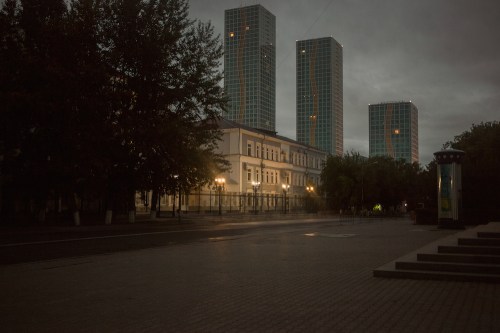
Verint Israel and NICE System Monitoring Center, Astana, Kazakhstan 2014.
Much of my weekend was spent putting a final editing-touches on the latest Vantage article Panopticon For Sale. The piece, details trade between authoritarian regimes (such as Uzbekistan, Kazakhstan, Azerbaijan, Bahrain and others) and corporations that manufacture and maintain cyber-surveillance.
The author, Mari Bastashevski, spent 12 months researching this shady industry — trailing paper work, filing FOIA requests, interviewing and protecting sources, and corroborating statements. Many previously unreported (but commonly suspected) business relations uncovered by Bastashevski have been confirmed by information included in the July 5th hack of Hacking Team (a company that manufactures surveillance technologies) when the identities of its clients were posted online.
As Bastashevski writes in her closing statements:
Companies like NICE, Gamma Group, Verint, and Hacking Team, who sell this power to governments for which “watched a YouTube protests video” constitutes criminal behaviour become co-arbiters of what is and isn’t a “wrong act”. Yet for the companies, much like for their clients, their own secrecy remains absolute and proprietary: not something for press consumption, researchers, or advocates.
Private corporations are facilitating the unfettered surveillance of citizens by paranoid rulers.

NICE Systems HQ, Ra’anana, Israel 2014.
The comparatively unregulated republics in the post-Soviet region are proving grounds for the shit that the power hungry can get away with.
I’ll stop yelling now, encourage you to read Bastashevski’s #longread, and leave you with an my editor’s foreword to further convince you to take in Bastashevki’s text and images.
This is a narrative built upon information that’s incredibly difficult to verify. Outside of the community of privacy advocates and cyber-surveillance researchers, no-one really saw this story, or necessarily knew what it was or why it mattered. That’s because everything that Bastashevski was looking at — or looking for — is invisible, confidential or both.
When Hacking Team was itself hacked, Bastashevski felt vindicated. Not only did the hack confirm the presence of Hacking Team in countries she investigated, it also confirmed the presence of other companies she knew were providing surveillance to those countries. The lies and questionable dealings of a catastrophic industry were laid bare.
“To photograph or to look at what exists on the verge of catastrophe,” critic Ariella Azoulay once wrote, “the photographer must first assume she has a reason to be in the place of the nonevent or event that never was, which no one has designated as the arena of an event in any meaningful way. She, or those who dispatch her, must suspend the concerns of the owners of the mass media regarding the ratings of the finished product and with her camera begin to sketch a new outline capable of framing the nonevent. Photographing what exists the verge of catastrophe thus is an act that suspends the logic of newsworthiness.”
By virtue of hackers’ actions, and not the logic of the news industry, I find myself in a position to publish Bastashevski’s remarkable findings. A condensed version of this work was exhibited at Musee de Elysee and published in the Prix Elysee catalogue (Musee de Elysee, December 2014). It has since been expanded to include a review of targets and surveillance in Azerbaijan, and cross references of the recent evidence obtained through Hacking Team leak.
This is not a photo essay but rather an essay with photos. Bastashevki makes photographs, in many ways, to show her stories cannot be photographed. These images are way-markers along roads of discovery.
–
Read the full piece Panopticon For Sale and see more large images.
–

Ministry of Communication Tashkent, Uzbekistan, 2014.
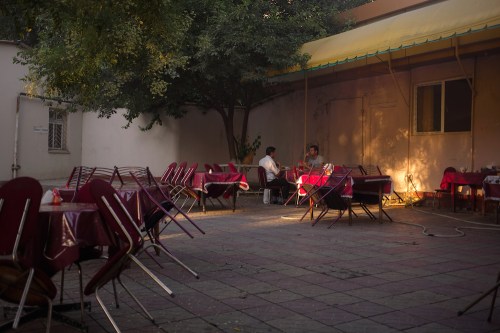
SNB lunch spot, secure Gazalkent district, Tashkent Uzbekistan. 2014.

Monitoring centre (roof) -Tashkent, Uzbekistan. 2014. Location where data obtained with Hacking Team, Nice Systems, and Verint Technologies is analysed and processed.
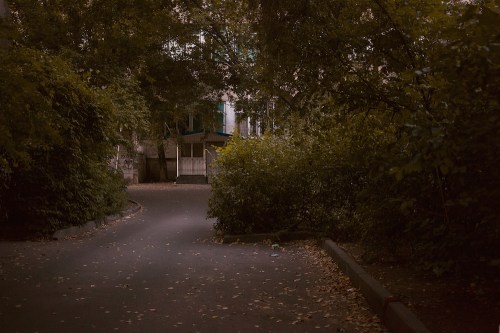
PU-data collection point Kazakhtelecom-Almaty, Kazakhstan, 2014.

Presidential Palace and MNS HQ, Baku, Azerbaijan 2013.
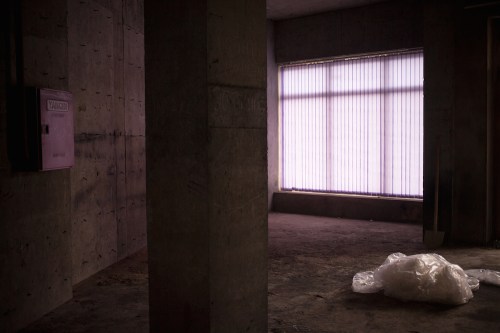

Inside Verint Israel HQ, Herzliya Pituach, Israel 2014.

Transaction — Dedeman Silk Road Radisson Blu, Tashkent ,Uzbekistan. 2014.
–
All images: Mari Bastashevski
COLLECTIVES, YES
Photo collectives are to be admired.
More about network than net worth; more about camaraderie than competition; and more about group-strength than groupthink, I reckon collectives are the best. Being in one doesn’t guarantee an endless flow of fat-paying assignments, but it does guarantee a endless suuply of expertise, friends and feedback. If was a photographer I’d totally be in one.
Imagine my double-bliss when Boreal Collective invited me to the Boreal Bash which is itself is all about collectives.


Two pictures of Boreal Bash 2014.
BOREAL BASH 2015
The 2015 Boreal Bash is in Toronto from August 14-16th. What is it? It’s portfolio reviews, presentations by guest speakers, an exhibition, a thought experiment, and an important workshop. It is “a place where photographers can come together, learn from each other, drink and be merry,” they say.
And, if you can get yourself there, it is FREE.
Photo collectives MJR, Prime and Dysturb will be there.
DOLLARS, CANADIAN DOLLARS
Here’s the thing though, Boreal needs to cover overheads. I donated a sketch but that Kickstarter incentive was already snagged, so I can’t tempt you with that. Head over to the Boreal Bash Kickstarter page and let them convince you. Below are a bunch of prints, postcards and newspapers to get you revved up.
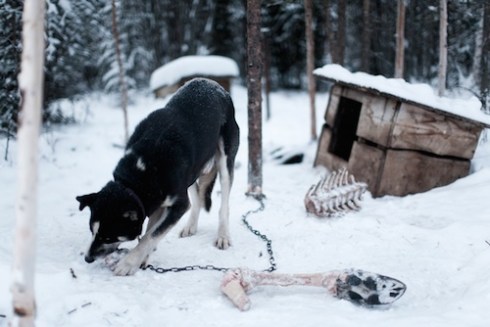
Sled dog eats moose leg. 12×8″ Rafal Gerszak. Yukon, Canada. 2015
WORKSHOP
New to this bash is the workshop. For this, Boreal Collective’s first ever documentary photography workshop THE ART OF BEING AN INDEPENDENT STORYTELLER you get two days (Fri Aug 14th – Sat Aug 15th) of intensive workshopping. They’re going to let you in on the secrets to make it as an independent photographer. They want you to have a project in progress — something for y’all to get your chops into. If I was a photographer, I’d totally be signing up.
WORKSHOP SCHOLARSHIP
The workshop ain’t free. But it can be. If you’re young and hungry and have the time to submit your work, there’s a scholarship spot up for grabs. I’ve got word from the inside that submissions have been slow (blame LOOK3) so statistically, your chances are good. Get on it. You’re one email from hobnobbing/editing with very talented photographers. One email from certain fame and glory.
Deadline is Midnight EST on Friday June 19th
BOREAL
Boreal are “united by a desire to document humanity and its intricate realities in our rapidly evolving world. […] At a time when the photographic industry is being dismantled, Boreal seeks to rise to the challenge of taking an active role in its redefinition.”
They are Laurence Butet-Roch, Aaron Vincent Elkaim, Rafal Gerszak, Brett Gundlock, Johan Hallberg-Campbell, Matt Lutton, Eamon Mac Mahon, Mauricio Palos, Jonathan Taggart and Ian Willms.
KICKSTARTER IINCENTIVES
Could be yours:
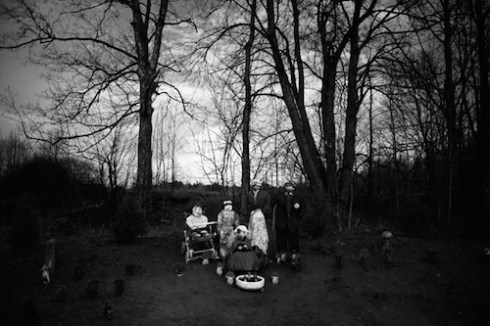
Ian Wilms. Scarecrow Family, Poland (2012) From the series Why We Walk Framed, 12×18 Giclée Print on Fine Art Baryta Paper, mounted on archival foam. Edition 1/12.

A Boreal 4×6″ postcard

Sleeping vigilante fighter. Brett Gundlock. 2013. 8×8″ Digital C-Print.
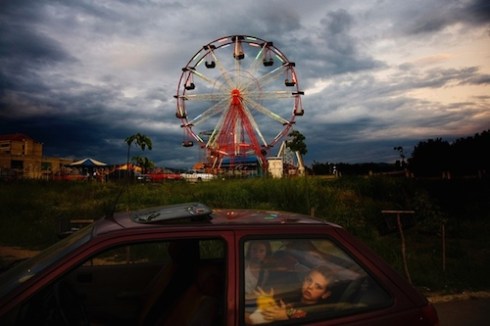
Amusement park in Prishtina, Kosovo. Matt Lutton. 2008. 11×14″ Digital C-Print.

Christmas Tree, Alligator. Mississippi. Brandon Thibodeaux. 2012 – 6×6 Gelatin Silver Selenium Toned Print ed. 20
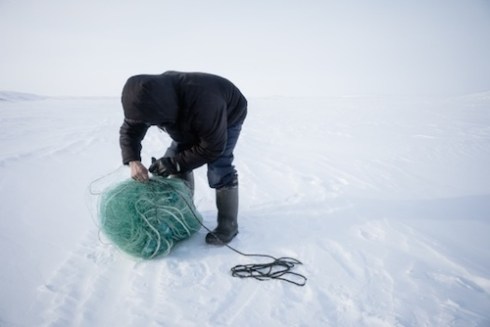
Niviaqsi and net ball, Iqalugaaqjuk, Nunavut. Jonathan Taggart. 2013. 8×12″ Digital C-Print.
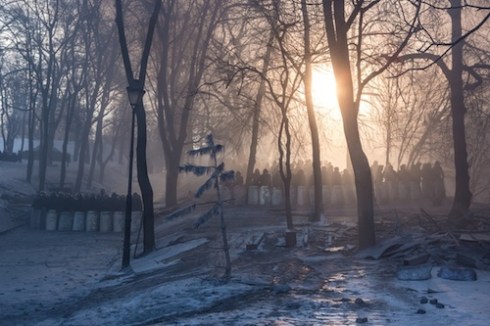
Berkut in Mariinskiy. Kyiv, Ukraine. Brendan Hoffman. 2014. 11×14″ Edition: 1 of 10
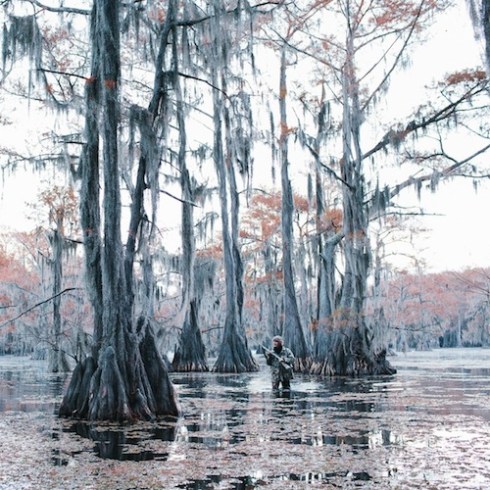
Hunter at Caddo Lake, Texas. Lance Rosenfield. 2014. 8″x8″ Digital C-print
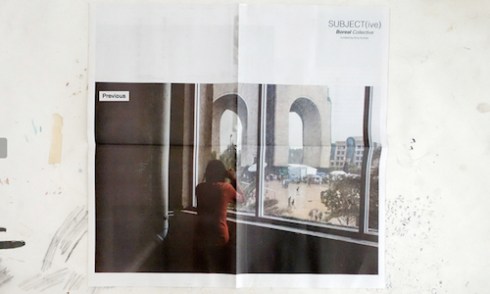
Boreal SUBJECT(ive) newsprint. 12 pages full colour.
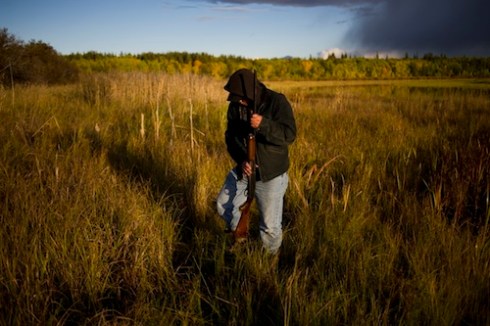
Métis Hunter at Big Point, Fort Chipewyan, Alberta (2010). Ian Willms. 8×12 Chromogenic Print.
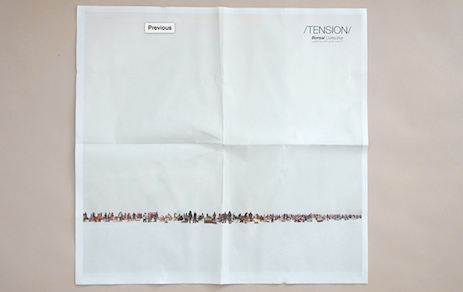
Boreal TENSION newsprint. 12 pages full colour.

View of the open air pit from the lookout. Thetford Mines, Quebec. Laurence Butet-Roch. 2009. 11×14″. Archival pigment print.
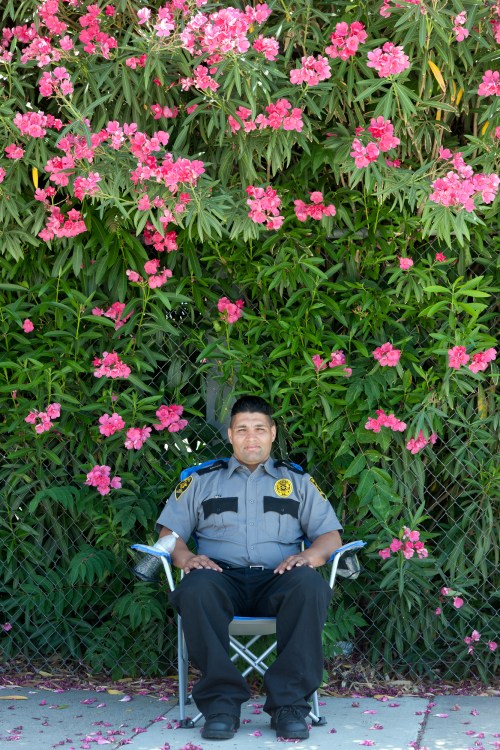
My latest for Vantage:
When Stockton filed for bankruptcy in 2012, it was the largest city in US history to do so. Kirk Crippens has spent the past three years photographing its residents.
It seems unlikely Kirk Crippens’ portraits are really going to affect the lives of the residents of Stockton, California. It is their portraits that make up his series Bank Rupture. Rather, it will be food banks, loan relief, and Stockton’s fiscal restructuring that will deliver much more direct — negative and positive — effects.
Grand statements and big claims aren’t Crippens’ style. Modest and curious, Crippens uses image-making to investigate and connect with the world. He photographs to establish relationships beyond his immediate working and daily experience. It might sound trite, but Crippens employs photography to show he cares. Having interviewed Crippens numerous times I’m confident in the claim.
“I served as witness. I immersed myself for a time and took some photographs along the way,” says Crippens.
Read the full piece and see a larger selection of images larger.




AS220 Youth
There are very few organizations like AS220 Youth.
Sure, there’s lots of teen-focused arts organizations across the country but few have achieved the long-lasting and diverse roster of programming and results that AS220 boasts. AS220, similarly to many orgs use arts to connect and empower youth. Very few organizations, however, go into juvenile prisons to deliver photography education. AS220 does.

Very few organisations go into juvenile lock-ups to begin programming in order that they may continue it upon release of the teen with whom they work . AS220 does.
Such continuum is practical AND hopeful. It says ‘We are with you, wherever you are. We share your goal to live free once more.’

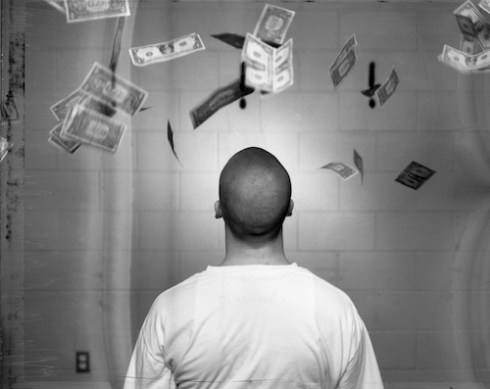
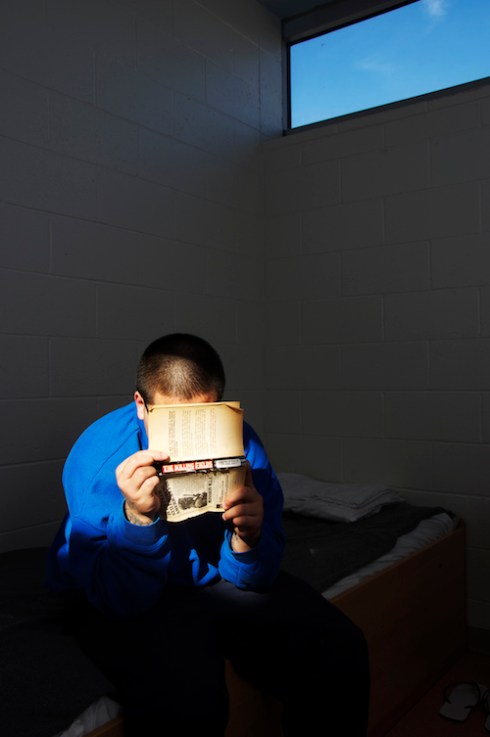
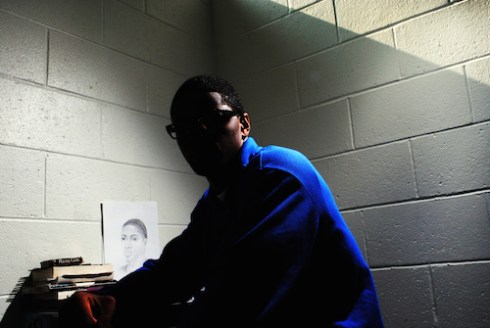
AS220 Youth, based in Providence, Rhode Island, gave me the warmest welcome a few years ago. They opened the door so that I could do a workshop with their incarcerated students. I gave a public lecture on my developing ideas about prison imagery. I interviewed the staff and helped students with portfolio reviews. My eyes were open to what a community can be.
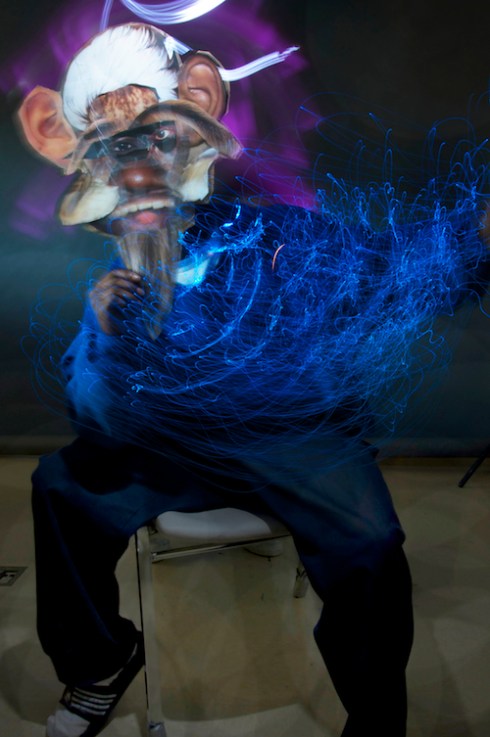
Not only did the people stay in my thoughts, the work did too. In late 2013, I included light-paintings made by youth incarcerated at the Rhode Island Training School in Seen But Not Heard (Belgrade, Serbia) a photography exhibition about U.S. juvenile detention. If AS220 Youth did not exist we wouldn’t see these views of the world created by kids who are locked up.



I’ve written about AS220’s youth programs before. I have noted how rare it is that photo programs are inside juvenile detention facilities. AS220 is doing things no-one else can do, or have the imagination to do. You’ve no reason not to help them out.
For the first time in AS220 Youth’s 15-year history, it is conducting a individual giving campaign. They’ve turned to IndieGoGo to push alternative revenue streams having seen public money dry up. AS220 Youth has about half the staff this time last year, and yet it is serving more students than this time last year.
“Since I have been working at AS220 Youth,” says Youth Photography Coordinator, Scott Lapham, “five of my students have been accepted and have gone to or are going to RISD, one to Hampshire, one to the School of Visual Arts, one to Savannah College of Art and Design and one to Mass Art. All of these students are from poor/poverty backgrounds and all but one are students of color. While I couldn’t be prouder of those stats an equally ambitious and important accomplishment is working with students from what we have termed Post Risk backgrounds to achieve emotional and economic stability as adults.”
Bravo to Lapham, his colleagues and the AS220 students.

MONEY, MOVIES, PHOTOS
Help them continue their valuable work: visit the AS220 Youth Futureworlds IndieGoGo page.
Check out more about AS220 Youth program Photo Mem. See the students’ portfolios.
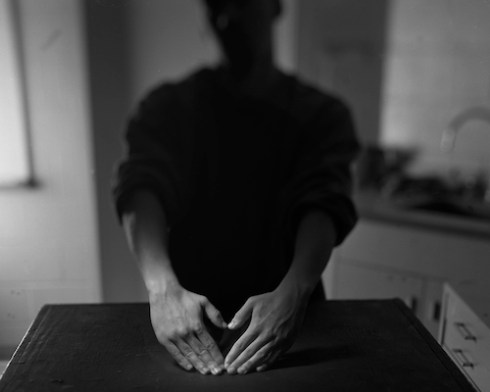
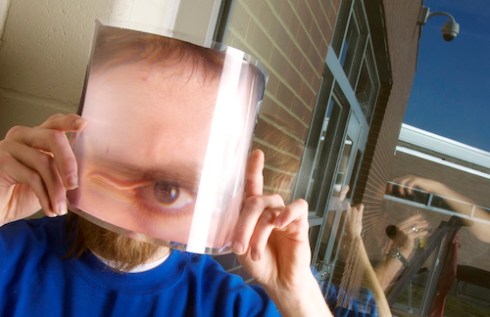
Above is a video about a public art project AS220 Youth made. Throughout this post are images made by youth incarcerated at the Rhode Island Training School.
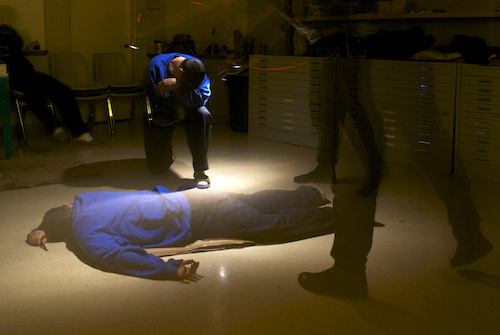

Photo: Meghann Riepenhoff
I’m one of five jurors for this years annual juried show at SF Camerawork. Y’all should enter. Here’s the blurb …
CALL FOR ENTRIES: HEAT
This summer, SF Camerawork teams up with LensCulture to host our Annual Juried Exhibition. The theme this year is HEAT.
HEAT registers the volatility and restlessness that comes with long hot summers: violent crime rates increase, leases expire and people seek new homes, global weather changes signal an alarm, and warm summer days bring adults and children alike into the streets, parks, and beaches.
SF Camerawork invites artists to submit work that responds to HEAT: the social, political, and climatic conditions of rapidly changing environments. Following the lead of social and political advocates around the world, SF Camerawork asks artists working at all levels in photography to participate.
Art is politics. Particularly in the realistic forms of photography and filmmaking, what gets assigned, shown or sold reflects political considerations. […] Politics is in the air. All you need to do to get the message is breathe. – Danny Lyon.

Photo: David Butow
DETAILS
Deadline: Monday, June 15, 2015, 5pm PST.
Notification: Finalists will be contacted on July 1st.
Exhibition Dates: July 23 – August 22, 2015.
Opening Reception: Thursday, July 23, 6-8pm.
Application Fee: $50 application fee for up to 15 images.
ENTER NOW ON LENSCULTURE AND CREATE AN ACCOUNT TO UPLOAD YOUR APPLICATION
AWARDS/BENEFITS
EXHIBITION AT SF CAMERAWORK: 2-5 finalists will have a 4-week exhibition at SF Camerawork.
LIVE ONLINE REVIEW SESSION: Finalists will receive a one-on-one review with a juror through this innovative platform hosted by LensCulture.
20 JUROR SELECTIONS FEATURED: 20 juror selections will be exhibited on interactive screens at SF Camerawork as part of the exhibition.
FEATURE ARTICLE ON LENSCULTURE: Finalists will be featured in an article on LensCulture.
ONE YEAR MEMBERSHIP: All entrants will receive a one-year membership to SF Camerawork.
HEAT 2015 JURY
Pete Brook, Writer and Curator, Founder: Prison Photography
Jim Casper, Editor and Publisher, LensCulture
Seth Curcio, Associate Director, Pier 24 Photography
Janet Delaney, Artist and Educator
Heather Snider, Executive Director, SF Camerawork
QUESTIONS?
Please email info@sfcamerawork with “Call for Entries” in the subject line.
SF CAMERAWORK
Founded in 1974, SF Camerawork‘s mission is to encourage and support emerging artists to explore new directions and ideas in the photographic arts. Through exhibitions, publications, and educational programs, we strive to create an engaging platform for artistic exploration as well as community involvement and inquiry.
SF Camerawork is a membership-based organization.
1011 Market St., 2nd Floor
San Francisco, CA 94103
Gallery hours: 12:00 – 6:00 pm
Tuesday – Saturday (also by appointment)
415.487.1011

 Prison Photography