
You are currently browsing the category archive for the ‘Press’ category.
The San Jose Mercury News which, for as long as I can remember, has been the standard bearer for Bay Area reporting on prison issues produced a short multimedia piece on Monday.
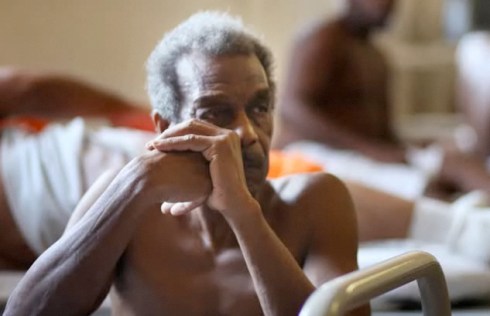
The presentation is mainly a prison official’s description of the conditions, needs and startling figures at California Institute for Men, Chino. This facility was the scene of riots in August. It is also the CDCr Reception Center for Southern California, which means all new men processed into the system will first go here, before given security classification and shipped elsewhere. Of course, the mix of over-population, diverse and historically antagonistic groups, and non-permanence leads to a tense institution.
My main problem with the piece however is that I – unlike the California Correctional Peace Officers Association (CCPOA) – cannot ignore recent history, lobbying, political action committee millions and the resultant harsh sentencing.
Since the 1980s, the CCPOA – the prison guards union – bolstered its membership from 2,600 to over 45,000, drew in union fees to swell its coffers and began hurling them at victims rights groups, tough on crime politicians and public fear campaigns.
The CCPOA grew year-on-year as well as any corporation. It’s shareholders however were not a disparate public, but a 30,000 strong (comparatively) homogeneous group within a burgeoning prison industry and a Napoleon-complex.
Prior to the mid 80s the CCPOA had virtually no political capital. They were a small union in a small state sector … and they were largely ignored. By 1992 the CCPOA operated the state’s second largest PAC. By the year 2000 the CCPOA was the pariah of the union community in California. The CCPOA bankrolled and won ballot initiatives that meant increased prison funding and construction. Other unions, particularly the teachers, were not blind to this boom in incarceration … all the while public education funds dwindled.
All of this is very difficult for me to forget.
When Arnold Schwarzenegger tried to legislate to put a cap on union spending during his first year in office, he was in fact only interested in controlling the rampant CCPOA. It wasn’t a classic anti-labour Republican maneuver but rather the absolute necessary move if California was to reign in prison spending. In some respects it was the politics of a progressive! Schwarzenegger failed doubly. The initiative was heavily defeated and he forced the CCPOA and other unions closer together by virtue of a shared enemy.
The CCPOA took advantage of the situation and stepped back into line with the agendas of other unions. For years it had unilaterally forced its agenda through. But the CCPOA could see the ‘good times’ were coming to an end. No new prisons have been built in California since 1998. That figure explains the overcrowding, but also reflects recent political and public rejection of yet more warehousing without rehabilitation (as has been the norm).
So while we can all share in a dismay, even disgust in the failure of government to provide adequate housing or programs for those it takes into custody, we should all be sharing in the knowledge of how this situation came about. Don’t let anyone tell you otherwise; the CCPOA are guilty as hell – the rank and file change, the leadership less so, but the organisation remains the same.
This is what I think of when I see correctional officers under stress and duress … I think that their union sold them out a long time ago.
The CCPOA made it’s bed.
UC Berkeley’s Dept. of Governmental Studies provides this brief but comprehensive history of the CCPOA.
The San Jose Mercury News has its own Photoblog.
Marvin Heiferman pointed me in the direction Tim Padgett’s Time article about news outlets’ adoption of Mug-shot galleries. Padgett remarks, “Mugshot galleries are increasingly popular features on newspaper websites, which are on a crusade for more page views and the advertising revenue that accompanies additional eyeballs.”
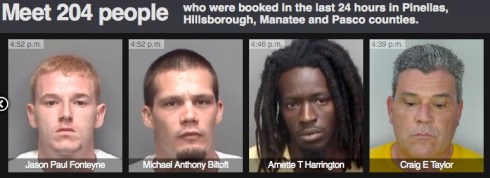
The example offered is that of Mugshots at TampaBay.com of the St. Petersburg Times. The site even breaks down the prior sixty days of bookings into the age, height, weight and eye colour statistics of those arrested.
This exercise is as artless as one would think. The laziness of the filtering of information via an automated platform is matched by the disclaimer regarding mugshots’ accompanying text.
The news group has recognised this and produced these ridiculous FAQ‘s in advance of those booked being disappointed … or worse, misrepresented.
I was arrested but cannot find my mug shot. What gives? Our goal is to provide a complete profile for individuals booked into jail in Pinellas, Hillsborough, Manatee and Pasco counties. A complete profile on Mug Shots constitutes: name, photograph, booking ID, height, weight, age, gender, eye color, birth date, booking date and booking charge.
The majority of arrest records from the county sheriff’s sites have no problems, and we store them and make them available. However, on rare occasions, the photo we receive from the sheriff’s office is flawed, or sometimes the site does not make a photo available. We skip the records that do not have photos attached. You can always search for an individual on the sheriff’s site, but just because you were booked doesn’t mean you’ll necessarily show up on Mug Shots.
I was released and my record was cleared. Will you take down my mug shot? A sheriff’s office Web site maintains publicly accessible arrest records regardless of the disposition of any particular case.One principle behind Mug Shots is to mirror the sheriff’s office Web site policies closely. We provide links from every individual’s profile page to the detail page at the corresponding sheriff’s office site, which contains instructions about how to follow up on any particular case. Much like a county sheriff’s office, there are very few instances in which we would remove a mug shot from the Web site.
Will you fix incorrect biographical information? What if the sheriff does? One guiding principle is to mirror the collective sheriff’s office sites closely. However, sometimes the sheriff’s office site contains a typo or another form of incorrect data. We don’t alter the information that we gather. We do provide links from individual’s profile page directly to their detail page at the corresponding sheriff’s office site.
Continually-updated mugshot galleries continue a long tradition of crime-obsessed media and publics. They are the latest step toward the eradication-of-reason when interfacing with social transgression.
Internet “news” mugshot galleries now dominate a new, middle-ground of visual consumption; that wasteland lies somewhere between the dark pathology (and allure) of Weegee‘s world and the instant digital delivery of crime related stats (think Comp-Stat and the Sex Offenders Registry). They are bland.
These galleries are continuous, and unnecessary, visual feeds of societies’ constructed “bogey-man”.
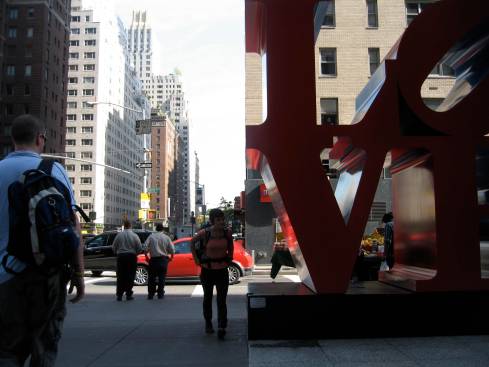
Had a fun time in New York last week. Stayed with Jack and Marisa. Below is not Jack. Below is Chris by Jack.
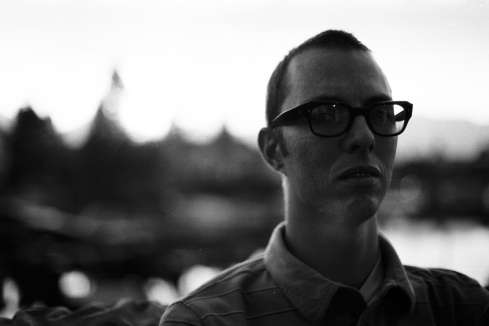
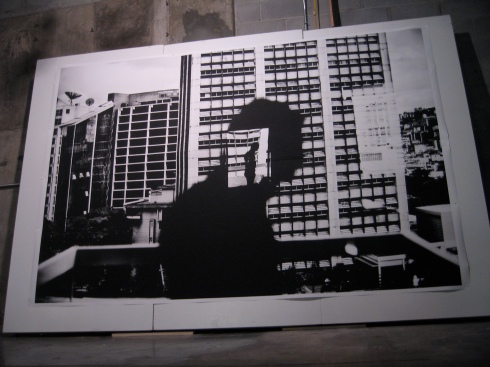
We went to Christopher Anderson’s book launch for Capitolio. It was great to see it after recent reviews, heated debates (check out comments) questions and wot not. I don’t think the selection of the images was the best.
At the Metropolitan, Surface Tension: Photographs from the Permanent Collection was a pleasant whimsy into some mesmerizing works, notably Adam Fuss’ UNTITLED (1997) made by the metronome shimmers of snakes upon black dust upon white dust. Image Source: Cheim & Read
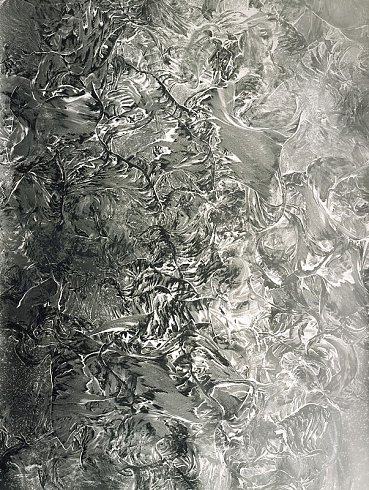
The Met’s photography department was putting together the final touches on Robert Frank’s The Americans which opened this week. It was all hands to the pump as evidenced by besuited Malcolm Daniel – who I spied carrying large, heavy object (post?) behind a partition and into the exhibition space.
Egg and Cheese Bagel.
Over at the Museum of Modern Art, I was pleased to see Russell Lee‘s work Bulletin Board in Post Office Showing a Large Collection of “Wanted Men” Signs, Ames, Iowa (1936). Who doesn’t love a mug shot?


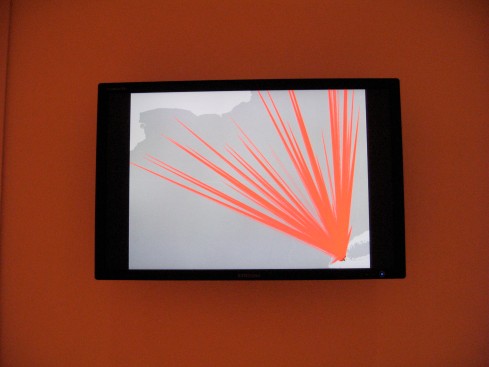
Bringing the practice of mapping of transgressions into the 21st century, the Spatial Design Lab from the Graduate School of Architecture, Planning and Preservation at Columbia University exhibited its Million Dollar Blocks Project (2006).

On Monday night I sat with Andrew Lichtenstein. We talked. Andrew recommended Brennan Linsley‘s work and was quite emphatic about the book ‘Concrete Mama‘. He also spoke highly of Max Kenner and the work at the Bard Prison Initiative
Tuesday, I met Emiliano Granado. We were first in contact over his San Quentin Giants pictures. We talked about many things including Trevor Paglen, Argentina, the Burke Gilman, and the Horticultural Society of New York, which recently lost Barbara Margolis who was an inspiring leader. Emiliano recommended Alessandra Sanguinetti‘s work.
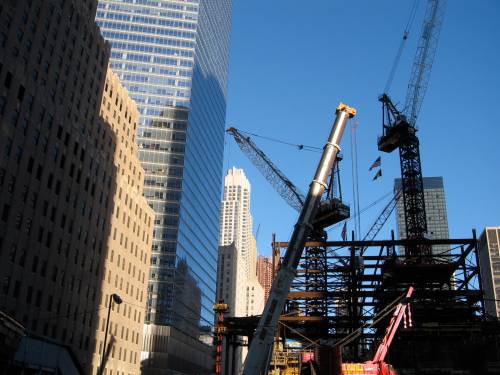
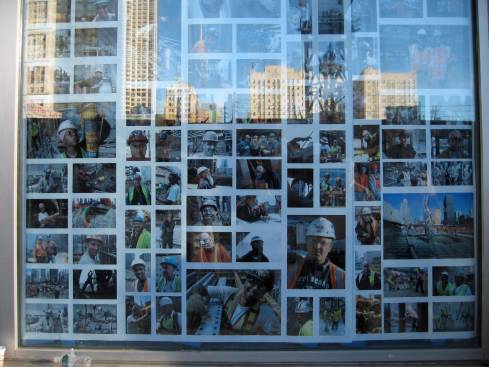
On Sunday, I’d been at the WTC construction site. There was some portraiture on display in a window. The space behind the window was closed but would usually be open. The photographs were easy on the eye.
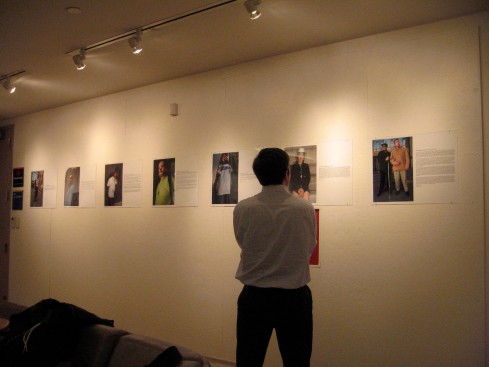
On my last night I checked out Steven Hirsch’s Courthouse Confessions.
That’s Matt Kelley looking at Steven’s work. He’s coordinator for Change.org Criminal Justice, online communications for the Innocence Project and all together nice bloke. Matt’s double identity is twittered and can be followed here and here.
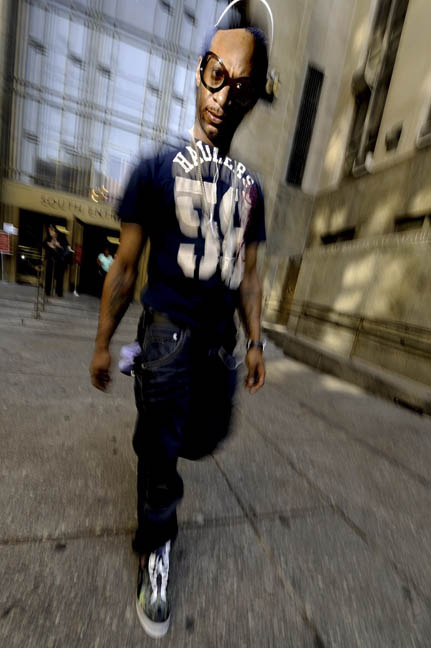
Hirsch takes street portraits of folk going to court, secures (in some ironic twist) a non-binding statement and then transcribes it verbatim to go with the portrait. Constantly moving the camera, Hirsch uses hard flash and distorted angles/zoom to depict these individuals as shape shifters; as anomalies. The fact Hirsch’s subjects (in most cases) seem alien to the logic of the courts – that any lessons arising from their cases are unlikely to effect sentencing laws in the future – should but be a source of disquiet for us as an audience.
One last thing. On Saturday, I saw John Baldessari sat outside a Grennwich Village coffeehouse, but I bottled saying anything. I’ve learnt that famous people abound in Manhattan and you see ’em everywhere.
Thanks to everyone who altered their orbits a little to coincide with mine.

AP Photographer, Brennan Linsley has visited Guantanamo twelve times in the past four years. Why? “My goal is to come back from each trip with a couple of shots that will allow me to paint more of a picture of this place'” says Linsley.
A journalist’s visit to Guantanamo is a frustrating experience – newsmen have a constant escort on a preplanned itinerary and must read and follow the fifteen pages of ground rules provided by the US military.
To offset these limitations Linsley chose repeated visits as a a tactic. In an attempt to humanise the detainees, he has weaved a photo-essay in-spite of Guantanamo’s milieu which is counter to all notions of free speech, experience and objective fact-gathering.
The British Journal of Photography has a brief but interesting interview with Linsley about his project.
This sequence of interactions between a Chinese detainee and photographers (described by Linsley) exemplifies the minutiae with which the US military must control the flow of information out of Guantanamo.
Just to get the juices flowing, Linsley closes the interview with this position, “The Golden Age of photography has been over for a long time. It died somewhere between the Vietnam War and the Gulf War.”
Discuss.
_______________________________________________________________
BJP’s interview coincides with Linsley’s work showing at the 2009 Visa pour l’Image at Perpignan.
For more images and links on Guantanamo see Prison Photography‘s Directory of Visual Sources.
People ask how photojournalists and documentary makers get access to prisons, so I ask the photographers I meet. For every photographer, circumstances and events are unique.

The Society of Professional Journalists details media prison access policy, contacts, visitation rules, forms and permitted equipment state-by-state. There is no home page for the data, so I’ll link you to the Virginia Dept. of Corrections guidelines.
Prisoners in Virgina will be needing more visits to fill their time as their right to receive books via charities has just been withdrawn. The feeble reasoning by the Virginia DoC:
Because Quest [the Books Behind Bars program organiser] sent books directly to offenders and utilized volunteers to send these books, there was nothing in place to stop someone from attempting to introduce contraband to an offender by secreting it in a book.
This is plainly an excuse. It is also an embarrassment. If a prison system cannot provide efficient (and secure) passage of educational materials to its wards, then is it a system we should have any respect for or trust in?
These broken systems should be in our view.
His family claim he was 12 when he was taken into US custody. The pentagon claim he was 17. Whichever the case, the treatment remained the same.
Video from the Guardian.


Puppies Behind Bars, Photo: Joyce Dopkeen/The New York Times
NPR’s Fresh Air featured the Puppies Behind Bars project yesterday. They train young dogs for two primary purposes – seeing-eye/guide dogs and bomb-sniffing canines.
Here’s a New York Times article and photo essay from June 2008.
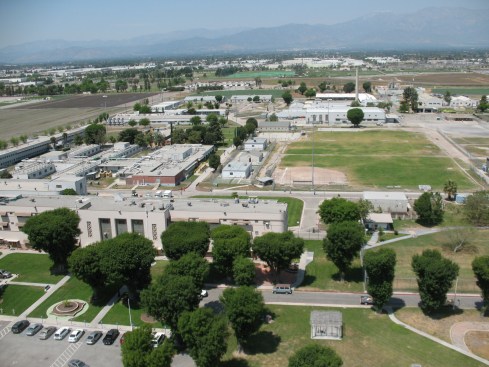
California Institute for Men at Chino, 2008 (Prior to Riot). Photo Credit: CDCR
Michael Shaw over at the excellent BAGnewsNotes pointed out a rather bizarre anomaly in our image-saturated world. There exist barely any photographs of the prison riot at the California Institute for Men at Chino that occurred this weekend.
Given that Shaw has his hand firmly on the newswire pulse of America I’ll take him at his word … photojournalist coverage of this significant riot was is scant.
I even think that the image Shaw presents is a concession; a still from film footage.
Today, the Los Angeles Times published this image showing the aftermath of the riot.

Photo: A view from outside the fence after weekend rioting at the California Institute for Men at Chino shows a dorm with a hole burned through its roof and a yard littered with mattresses and other debris. Credit: Allen J. Schaben / Los Angeles Times
The BBC was quick to cover the riot. Most news sources framed the riot as a result of racial tension, but in truth those tensions only came to surface due to inexcusable and acknowledged overcrowding. In 2007, Doyle Wayne Scott, a former Texas corrections chief consulting on California prison security reported that overcrowding at the California Institute for Men at Chino created “a serious disturbance waiting to happen.”
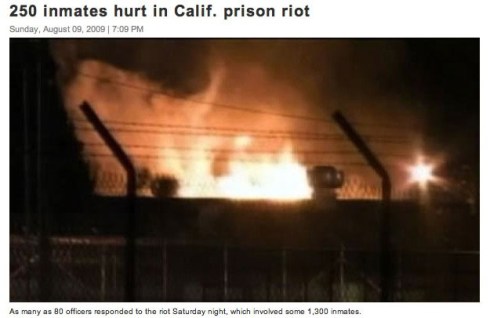
Overcrowding is a problem that ignites other problems, and represents a serious issue that has no easy answers. Some prison reform activists would be wiling to see new (temporary) facilities built to ease the tensions, but this is an unlikely scenario as trust between they and the legislature, Governor’s office, CDCr and CCPOA is low. Recent history has taught us that when new prisons are built, they are filled and calls for more prisons follow. The solution is to change the laws that over the past two decades have warehoused increasing numbers of non-violent offenders.
One of the other depressing aspects to this story is that the racial tensions are apparently the result, partly, of enforced desegregation at Chino. Prison populations operate on strict codes and it would seem that top-down-enforcement of an anti-racist policy doesn’t change the attitudes of the men only agitates their existing prejudices, distrust and expected antagonisms toward one another.
My humble suggestion to work against these deep-seated hatreds would be to operate smaller facilities with immediate access to education programs. Sociological models taught as part of a basic curricula are revelatory for many prisoners. Many inmates, given the tools and the logic to explain their oppositions will identify other ways of seeing race.
It is true that some prisoners don’t want to rehabilitate, but they are in the minority. Often it is simply the case that race for this population has never been discussed in complex or nuanced terms.
Here’s some video of the aftermath.
Thanks to Scott Ortner and Stan Banos for the tips on this story.

 Prison Photography