
You are currently browsing the category archive for the ‘Prison Non-Photography’ category.

If you’re in NYC make like a bandit down to the Queens Museum which is hosting the first ever East Coast performance of State of Incarceration (2010-ongoing) by the activist collective Los Angeles Poverty Department (LAPD).
I’ve been thinking a lot about how gallery spaces can work to induct audiences into a topic as fraught as prisons. Partly because talking about prisons is a two-part process. First, one must explain clearly what problems exist, how deep they run and from where they originated. Second — and usually because the first part is so overwhelming — you need to provide audiences an immediate stimulus to care. (I don’t worry about action at this early stage; if you succeed in getting someone to care, then action will follow later if it is to at all).
Normally, for the second part, a description of deplorable conditions will offend audiences and have them ready to care. But, for me, that’s not enough. It presumes the answer might be the eradication of bad conditions. I don’t want better prisons. I want fewer prisons.
State of Incarceration does an excellent job in jolting people because it describes the tortuous power relations and the dire psychological conditions within prisons. Shouting, noise and continual face-offs between characters amp up the negative energy. There’s no escape and audiences are put literally inside and on top of it all from among the “prison” bunks, and confronted by the illogic of the prison system in the form of maddening cacophony and maneuver.

I’m not usually one for understanding theatre but this direct performance makes sense. It’s made in California, which runs a prison system that makes less sense.
State of Incarceration is a performance space filled wall-to-wall with 60 triple-bunked beds, performers and audience share overcrowded conditions akin to a California state prison. One-third of the state’s parolees settle in the 55 square blocks of Los Angeles known as Skid Row, and State of Incarceration—developed collaboratively by LAPD’s Skid Row artists and in dialogue with organizers and recent parolees—powerfully examines the consequences of California’s penal system on individuals, families and communities. Outlining a ritual of incarceration from entry to release and re-integration, State of Incarceration constructs a complex challenge to the societal perceptions and fear-based policies of a nation with the highest rate of incarceration in the world.
It’s FREE with no reservations necessary!
Performances:
Friday, January 31st, 7:30pm
Saturday, February 1, 7:30pm
Sunday, February 2, 5pm
Curator and artists’ gallery talk:
Sunday, February 2, 3pm
A free shuttlebus will be making loops between under the 7train CitiField/Willets Point stop and the museum from 2-8pm.
State of Incarceration is staged as part of Do You Want the Cosmetic Version or the Real Deal?: Los Angeles Poverty Department, 1985 – 2014, an exhibition on view at the Queens Museum through May 11.

I’m not the only one putting up a show (Prison Obscura) of imagery made in and about prisons. The Laband Gallery at Loyola Marymount University in Los Angeles opens its Voices Of Incarceration exhibition on Saturday 25th January.
It’s an interesting line up of artists that includes artists who are imprisoned and individuals on the outside who are making art about prisons. Laband says:
“Both groups bring to light the emotional costs and injustices of the Prison Industrial Complex. Voices of Incarceration also explores the rehabilitative arts programs in California prisons and the expression of the imprisoned artists’ strength and individuality through the creative process.”
KPCC, the Los Angeles NPR-affiliate has done a couple of programs recently about the small but important attempts to reintroudce arts education into California prisons:
Efforts Emerging to Bring Arts Back to California Prisons
If you’re in L.A., go check it out. It’s open until the 16th March. One last note — it’s great to see in the mix Prison Photography favourites Alyse Emdur, Richard Ross, Michal Chelbin and Sheila Pinkel.


Screengrab from the San Mateo County Sheriff’s webcam of jail construction.
I always say that I’m open to looking at all types of prison imagery, so I guess I’m obliged to mention the 24-hour coverage of a prison that does not yet exist. (It’s a first for Prison Photography.)
The San Mateo County Sheriff’s Department in California has set up a webcam to track construction of the county’s new jail. Why? Maybe the Sheriff was buoyed by the popularity of Panda Cam at the San Diego Zoo, Condor Cam in California, or Portland’s Osprey Cam?
The live feed is “an innovative and exciting way to involve the public,” said Sheriff’s Office spokeswoman Rebecca Rosenblatt said.
Slated for a 2015 opening, tax payers can watch the construction of Maple Street Correctional Center in Redwood City. I suppose if you’re forking out $165 million for a jail, you want to see your money being spent?
The truth is this webcam is pitiful reminder of California’s budget woes and political battles over prison management and spending.
There’s an argument that a new jail is necessary due to California’s ongoing “Realignment” — a court-mandated program whereby state prisoners are being transferred to county jails in order to comply with federal orders to reduce the state prison system by approximately 32,000 prisoners.
That decision came about after a decade long legal battle — that went all the way to the Supreme Court of the United States — ruled that the overcrowding in the California state prison system led to inadequate physical and mental health care and an estimated one preventable death every 10 days. As a result the prison system was deemed “cruel and unusual” in its punishment and is in violation of every single California prisoner’s constitutional rights.
Unfortunately, Governor Brown refused to look at strategic release programs for non-violent offenders, at compassionate release for elderly and terminally ill prisoners or at drug treatment programs to ease overcrowding. Instead, Brown raided the state’s budget surplus — to the tune of $315 million — and will start paying private prison corporations to warehouse prisoners.
Money pouring into new jail construction. The indubitable Californians United for a Responsible Budget (CURB) report:
“In addition to AB109 realignment money, Sacramento has offered two funding streams that encourage county jail expansion and has refused to offer incentives for thoughtful decarceration. AB 900 authorized $1.2 billion in lease revenue bonds for the construction or expansion of jails, and SB 1022 authorized $500 million for jail expansion. If realignment is to be successful, the state must support counties to reduce their jail populations, rather than making plans to grow them.”
In time, the San Mateo Sheriff’s Office plans to release a time-lapse video of the creation of the 280,000-square-foot jail grow from start to finish.
via the usually useless SF Examiner
IVY LEAGUE LAW GRADS MAKING FILMS?
Following up on Monday’s post The 20 Best American Prison Documentaries, I wanted to highlight the Visual Law Project out of Yale University.
The project runs “a year-long practicum at the Information Society Project at Yale Law School that trains law students in the art of visual advocacy — making effective arguments through film.”
I’d think being a law graduate and then a real world lawyer would be enough; one expects visual journalists or documentarians to have this sort of territory covered. Perhaps not? Never too many advocates or concerned observers, right?
There’s more answers on the FAQ page:
Q: Why should law students learn visual advocacy?
A: Visual and digital technologies have transformed the practice of law. Lawyers are using videos to present evidence, closing arguments, and victim-impact statements; advocates are making viral videos to advance public education campaigns; and scholars are debating ideas in a multimedia blogosphere. Everyone’s doing it. But no one is really teaching it — or reflecting upon it. We see training in visual advocacy — effectively evaluating and making arguments through videos and images — as a vital part of our legal education.
Of the films the VLP has produced The Worst Of The Worst is of particular interest to me. One can be lax and think that solitary confinement is a brutal practice prevalent only in California, New York, Illinois and other large states, but every state has at least one SuperMax including the seemingly genteel Connecticut.
The Worst of the Worst takes us inside Northern Correctional Institution, CT’s sole supermax prison, and includes interviews with a range of experts and administrators are interwoven with the stories of inmates and correctional officers who spend their days within the walls of Northern.
From the trailer, the treatment of the correctional officers and prisoners seems sympathetic. This gives me hope; it suggests the problem is the fabric of the facility which prohibits rehabilitation, rather than a presumption of fault or inadequacy. Prisons are toxic and often inflexible enough to capitalise on the potential of people who are caged and work within.
Check out the fledgling (est. 2011) student run Visual Law Project.
More here.
Thanks to Larissa Leclair for the tip!

Screengrab from LOCK EM UP! Juvenile Injustice at Rikers Island Prison
Often, people don’t want to read an article, seek out a book, or even browse photographs about American prisons. Myself included, at times. Often, you just want to crawl up on the sofa and watch real life difficult issues on screen.
Often, I am asked if I have seen a famous prison film. Often one of the ones on this list. Often, I have and more often I am at pains to say that dramatisations — no matter how they refer to real life events — are not real life events. I like to refer people to documentaries about American prisons that have been made in the past forty years. Most on this list have been made in the past decade. Together they paint a picture very different to that in the (Hollywood) movies. There’s no WWII Germans, no mid-20th-century tyrant wardens, no Sly Stallone or Pelé.
In this list you’ll find petty grievances, coercive tactics, routine frustration, difficult truths, repeated lose-lose scenarios, intractable prison violence in overcrowded facilities and the constant games of submission, power and suspicion.
I’ve included them with annotated links because hopefully these videos — just as I hope with photographs — may offer you entry into these daily and virtually-invisible abuses.
THE LIST (IN NO PARTICULAR ORDER)
ONE
Nick Broomfield’s Tattooed Tears (1979: 85 minutes) remains an uncomfortable classic. It was filmed in the early days of youth lock up in California. The California Youth Authority (CYA) made the mistake of treating its juvenile detention facilities as adult prisons and its wards as incorrigible criminals. Since the film was made the youth prison population bloated to over 11,000 and 10 facilities before the courts ruled the system needed to be completely restructured. The system has been renamed the California Division of Juvenile Justice (DJJ) and now runs only three facilities for about 1,200 boys. The shrinkage was the largest single system process of decarceration in U.S. history. Criticism of the long hours of lockdown, suicide and violence continue.
The “soundtrack” to Tattooed Tears is the constant hooping and hollering and banging of heavy doors and furniture. There’s a dispute between staff (in remarkably casual dress) and a young man about food. One prisoner refuses to be subjected to a search and so is taken to an x-ray machine for a rectum-scan in another building. The exchange is cagey and about not losing face. The x-ray shows the prisoner had no concealed weapons and the question is why would he go through all that dark theater? Well, what else was he going to do that night? The protracted exchange was about refusal to cede the power over ones own body – the little power one retains as a prisoner.
There are so many pointed observations about the perversity of institutionalized life; the military boot-camp style training in the yard seems facile, the parole board hearing will have you crying; the bro-down restraint technique training among the staff is strangely light-hearted, the exchange between a female counsellor and a boy about his hallucinations is tense and sad. The closing scene of a yelling preacher is madness embodied.
Broomfield filmed for 14 weeks. He and his small staff slept in the adjoining hospital. The juvenile prison “got to him” and the constant racket left him feeling it was a space in which “nothing sensitive can happen.”
TWO
LOCK EM UP! Juvenile Injustice at Rikers Island Prison (2011: 15 minutes) is a examination of violence among youth in the notorious Rikers Island. Two thirds of the near 5,000 Rikers prisoners are juveniles. Violence at Rikers has been widely reported including, in 2012, staff of the NYDOC leaking photographs of gruesome injuries, in an attempt to tell the outside world of the escalating violence.
UPDATE: Video no longer available online.
While LOCK EM UP! Juvenile Injustice at Rikers Island Prison makes very questionable use of footage of violence in adult facilities that confuses — and perhaps manipulates — the viewer, it presents one of the most recent and serious cases of institutional failure. The film covers the physical lay-out of the dormitories, interviews with young men who’ve been locked up and focuses on the horrendous 2008 death of Christopher Robinson. Robinson was a beaten to death because he reportedly did not fall in line with “The Program” an alleged gang structure that the Rikers’ authorities failed to address.
Tragically, Robinson was only inside Rikers because he had stayed at work too late, broke curfew and was in violation of his probation. It’s a stand out case of a needless death. The film ends with 4 minutes of statistics outlining the disproportionate number of minorities in the NY juvenile detention system.
THREE
Here’s a “two-fer.” Spaced six years apart, Louis Theroux has made a couple of documentaries about two highly-populated and highly-pressurised institutions. In Behind Bars, a documentary about San Quentin Prison, Theroux speaks to guards, trouble makers, white racists, and a transgendered prisoner called Deborah Lee Worledge (who Robert Gumpert photographed in the San Francisco Jails shortly before her death in 2008).
Despite the clickbait title, MegaJail (2011, 120 minutes) is a lesson in how a facility should not be run. Miami’s main jail has many pretrial detainees and a high turn over of prisoner. With overcrowding comes violence and coercion.
In both documentaries, Theroux interviews perpetrators and potential victims of violence and prison staff. He does so with his usual slightly-bumbling and disarming demeanour. At times, the attitudes he encounters are almost unbelievable.
FOUR
Within the five fold increase of the U.S. prison population over the past 35 years, the number of women in prison has increased eightfold. This is due to longer sentencing and many women being sentenced for conspiracy or possession under extended War On Drugs legislation.
Mothers Of Bedford looks at the support offered through the Children’s Center at Bedford Hills Prison, which is New York State’s maximum security women’s facility.
In the U.S. there are 1.5 million children with an incarcerated parent (PDF).
FIVE
The House I Live In, the much publicised and toured film about the economic and moral failure of the War on Drugs by director Eugene Jarecki (Why We Fight, The Trials of Henry Kissinger, Reagan, Freakonomics) is a punch in the gut for those that think racial inequality is a small problem in America’s criminal justice systems. The War on Drugs has been a war on poor people and mostly a war on minority communities.
The House I Live In is a documentary fusion of the ideas forwarded by Michelle Alexander scholarship and David Simon’s dramatizations. Simon appears in the film and describes the assault on poor communities of colour as a “holocaust in slow motion.”
SIX
Brought to you by Al Jazeera’s excellent documentary series ‘Fault Lines’, Women Behind Bars ventures into the Central California Women’s Facility (CCWF) which is the largest women’s prison in the world. The population at the prison fluctuates northward of 4,000, nearly twice the prison design capacity. The problems are innumerable at CCWF but include overcrowding, inadequate health care, scant personal care essentials such as sanitary towels (rationed to 5 pads per month), and most appallingly, 148 non-consented sterilizations.
Of all activist groups, I recommend plugging yourselves into those of Californians United for a Responsible Budget and California Coalition for Women Prisoners — two groups that offer solidarity, direct services and advocacy to California female prisoners and visits CCWF.
Finally, hats of to Al Jazeera for putting together this excellent primer on the California womens prison crisis.
SEVEN
Herman Wallace died on October 4th, 2013. Against the state’s wishes, a judge ordered his release on compassionate grounds 3 days prior to his death from cancer. One of the Angola 3 and one of America’s most well-known political prisoners, Wallace lived in solitary confinement for 41 years.
Despite the brutalization of body and mind, Wallace somehow stayed sane and fought for a retrial with allies inside and out. From his 6×9 cell, he was asked by artist Jackie Summell to imagine his dream house. Herman’s House (and here) documents Wallace’s and Summell’s longterm collaboration and through this one story shines a light on the issue of widespread and abusive use of solitary confinement in the U.S.
EIGHT
In The Land Of The Free, narrated by Samuel L. Jackson, tells the story of the Angola 3.
A family member of a prison guard — whose murder was controversially pegged on Herman Wallace, Albert Woodfox and Robert King — states in the film that she doesn’t think they are guilty. It’s an opinion that has long been held by the activists and legal scholars who’ve looked at the inadequate process that sent the three men into longterm solitary confinement.
NINE
Another film invested in describing forgiveness in difficult circumstances, Unlikely Friends goes inside San Quentin Prison to explore how families of crime victims and prisoners can build a positive future out of very unfortunate circumstances.
Often the idea of forgiveness is the reserve of religion, but its embrace must be central to social justice if we are to progress from medieval retribution within our criminal justice systems. This is a film designed to challenge all your preconceptions.
Filmmaker Leslie Neale shared some of her still photographs from within San Quentin with Prison Photography recently.
TEN
Wrongful conviction brings persistent shame upon any criminal justice system which makes claim to effective and neutral application of the law. Mistakes and injustices occur and they are most grave in cases of death sentences. The film-series One For Ten derives its name from the statistic that 1 in 10 death penalty sentences are passed down on innocent persons.
Over five weeks in April and May of 2013, a team of four traveled the width of the US and interviewed ten individuals who had been freed from death row. Each film profiles a major issue in wrongful convictions highlighted through an individual case.
You can check out all the first hand testimonies of exonerees here. Above, I’ve embedded John Thompson’s film. Thompson was a victim of prosecutorial misconduct in which the prosecutor illegally withheld evidence from the court that would’ve proved Thompson’s innocence. Since his release after serving 14 years, Thompson has gone on to found Resurrection After Exoneration, been a Open Society Fellow and campaigned for accountability among state prosecutors.
ELEVEN
Director Matthew Pillischer began Broken On All Sides as a way to explore, educate about, and advocate change around the overcrowding of the Philadelphia county jail system. The documentary fast became an analysis of mass incarceration across the nation and the intersection of race and poverty within criminal justice.
Broken On All Sides centers around the theory that mass incarceration has become “The New Jim Crow.” That is, since the rise of the drug war and the explosion of the prison population, and because discretion within the system allows for arrest and prosecution of people of color at alarmingly higher rates than whites, prisons and criminal penalties have become a new version of Jim Crow. People of color have been targeted at significantly higher rates for stops, searches, arrests, prosecution, and harsher sentences. So, where does this leave criminal justice?
The feature-length documentary is available for activists and educators to use in order to raise consciousness and organize for change. If your school, workplace or organization wants to host a screening, you can contact the director.
TWELVE
Originally aired in , the UK Channel 4’s Torture: America’s Brutal Prisons is a convincing argument to say that Abu Ghraib was not just an outlying aberration on foreign soil. Rather the Abu Ghraib abuses were the logically outcome of carceral philosophies grown here in the U.S. Two of the senior guards at Abu Ghraib, Ivan L. (Chip) Frederick II and Charles Graner, had careers in Utah as correctional officers.
We were “fortunate” to witness and condemn the Abu Ghraib abuses, but perhaps our analysis didn’t go far enough. Imperialism exists here at home.
While we’re on the topic of U.S. abuses at Abu Ghraib we should note two other films: HBO’s Ghosts Of Abu Ghraib and Errol Morris’ Standard Operating Procedure.
THIRTEEN
Conceived by photojournalist Susan Madden Lankford (on Prison Photography here) of Humane Exposures and directed by award-winning director Alan Swyer, It’s More Expensive to Do Nothing features interviews with more than 25 experts in the fields of law enforcement, law, politics, life training, addiction treatment, and childhood development. Nonviolent offenders who have turned their lives around after successfully completing remediation and literacy programs are featured as well.
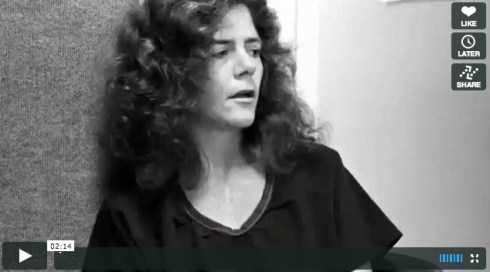
The film ushers the audience through facilities with proven track records for changing the lives of both juvenile and adult offenders. The film asks why funding for multiagency complex solutions to feasible reentry programs are so difficult to put in place by California’s legislature. The question is even more pressing given the state’s overcrowded prisons and the proven reduction in recidivism well-designed reentry programs deliver.
More video excerpts by Lankford here.
FOURTEEN
The emergence of prison yoga and prison transcendental meditation programs may point to a trend for eastern philosophy in U.S. prisons. Dhamma Brothers documents the first extended Vipassana retreat in a North American maximum-security prison.
The Vipassana retreat is an emotionally and physically demanding program of silent meditation lasting ten days and requiring 100 hours of meditation.
FIFTEEN
Produced by Oprah Winfrey and narrated by Forest Whitaker, Serving Life documents Angola Prison’s hospice in which prisoners care for dying fellow prisoners. Louisiana has ridiculously harsh, long sentences and far too many Life Without Parole sentences. As a result, 85-90% of the men imprisoned at Angola will die there. Imprisoning the elderly is an expensive and foolish proposition — in all states, the average age of the prisoner is increasing.
In photography, this is an institution that Lori Waselchuk expertly documented in her project Grace Before Dying, which incorporated an education program, traveling exhibition and excellent book.
SIXTEEN
Edgar Barens (who also made a documentary about the Angola prison hospice) is currently shortlisted for an Oscar for Prison Terminal: The Last Days of Private Jack Hall
Shot over a six-month period in Iowa State Penitentiary, Prison Terminal tells the story of the final months in the life of a terminally ill prisoner, Jack Hall and the hospice volunteers, they themselves prisoners, who care for him. It provides a poignant account of how the hospice experience can profoundly touch even the forgotten and often maligned lives of prisoners.
Read an interview with Barens.
SEVENTEEN
Certainly one of the most unexpected narratives in the list, Sweethearts Of The Prison Rodeo tells of female prisoners preparations and competing in an Oklahoma prison rodeo, in 2007.
Since 1940, the Oklahoma State Penitentiary has held an annual ‘Prison Rodeo.’ In 2006, female prisoners were allowed to participate for the first time. Oklahaoma has the highest female incarceration rate in the country. The women share common experiences such as broken homes, drug abuse and alienation from their children.
Prison Rodeo’s used to be common. One still exists at Angola Prison in Louisiana. They are exploitative gladiatorial spectacles. Some prisoners and prison officials will say it brings variety, money-earning potential, momentary hero-worship to prisoners lives, but I’d argue esteem and productivity can be earned in ways other than placing men and women at serious physical risk.
I admire this statement from the filmmakers:
There remains a strange irony in the romantic intrigue we have with a population of people that we’ve systematically closed off from society and largely ignored. Before making this documentary, we were mostly informed by the cultural lore of prison through film and music such as Cool Hand Luke, Stir Crazy, and Folsom Prison Blues. […] A gained sense of humanity for the offenders became a guiding theme in telling their stories. […] We’d like to use this documentary to help recognize the lives of prisoners and those re-integrating into society. Through prison and public screenings, community forums and an outreach plan, we’d like to create grassroots dialogue to improve awareness of issues and create opportunities. In addition, Sweethearts of the Prison Rodeo is establishing a Scholarship for inmates attending college while incarcerated.
EIGHTEEN
The Mural Arts Program in Philadelphia has been working tirelessly for three decades to unite the city’s many constituencies. One of the taller orders is to unite the prison population with the outside world, but in Concrete, Steel & Paint we see just how that is possible — specifically the bringing together of prisoners (people who’ve been convicted of crime) with victims of crime.
The Mural Arts Program is about restorative justice. In other words, by expanding the scope of activities beyond mere punishment and by opening up unlikely conversations and shared activities, every individual effected by a (violent) crime can find a voice, be heard and hopefully find some closure, or at least new means to move on with life. The stakes are high but the rewards potentially huge. But, it takes courage. See what happens when you bring victims and perpetrators of crime together to explore healing, social justice and even forgiveness.
NINETEEN
What I Want My Words To Do To You follows the four years that Eve Ensler worked with women from Bedford Hills Prison, NY, on creative writing.
Ensler staged performances of their writing in the free world, but crucially took the performance into Bedford Hills. Ensler enlisted superstars Glenn Close, Marisa Tomei, Rosie Perez and others, but the real stars of the program are the women who give so much of themselves to each other, to their writing and to us the audience. Very emotional.
TWENTY
The 1980 rebellion at New Mexico State Penitentiary was not defined by politics as prison uprisings before or since. It has been defined as unadulterated violence as New Mexico Penitentiary describes.
The institution was a powder keg and its overcrowded conditions deplorable. On the night the 36-hour riot began, only 12 guards watched over more than 1,100+ prisoners. It was relatively straight forward for the prisoners to take the prison. During the day-and-a-half they had control, retribution torture and killings were carried out on prisoners identified as informants. The last 20 minutes of this documentary explain graphically what went on. Interviews with former guards, captured guards and prisoners involved in the riot make this an authoritative account.
TWENTY ONE
Of course a Herzog-treatment of Texas, the death penalty and questions of existence and humanity would make the list: Into The Abyss.
The thousands of men and women who have been executed by the U.S. have likely grappled with the strange confluence of justice, self, healing, vengeance, correction and murder that factor into their execution. None, until now, had Werner Herzog to connect the dots for them.
TWENTY TWO
There are many tragic abuses dispatched in the US prison industrial complex. The inability to care for old people behind bars is one of the more awful ones. Al Jazeera’s Dying Inside: Elderly In Prison reveals how patients suffer and die and the system limps along. Our moral standing as a society disintegrates with it.
It is morally repugnant that we neglect infirm people, especially when it is frequently the obscenely long sentences we’ve handed down that mean pensioners
TWENTY THREE
How were five children convicted of gang rape when there were no witnesses, alibis in place, and zero DNA evidence? Racism that’s how.
Ken Burns’ Central Park Five delves into the public hysteria, the baiting for so-called-justice, widespread prosecutorial misconduct and the inability of the courts, the press and the public to see they were collectively framing these young teens. Even more relevant today sadly, with Trump as the bully-in-chief. If he had had his way, these five (now free) men would all have been killed years ago.
BONUS MATERIAL
I’m a lover of primary source material so C-SPAN’s unedited reel from filming at Sing Sing Prison, NY, in 1997 is a rare treat. Multiple people who live and work at Sing Sing are interviewed including the prison chaplain says, “prison religion is one piece of the survival kit.” What an interesting turn of phrase? Religion as a tactic rather than a spiritual choice. Or at best, religion as a coping mechanism. Religion — which is treated with much skepticism in liberal America — as a naive bandaid.
IF YOU DO PREFER DRAMATISATIONS
Seek out Un Prophete (about French prison) and Carandiru (about the infamous, now-demolished Brazilian prison of the same name).
WHAT DID I MISS?
Any other documentaries about U.S. prisons you recommend? Leave them in the comments section below.
Last year, I congratulated Edgar Barens on his devotion to a story about a terminally-ill prisoner in Iowa.
That devotion is paying off. This week, Barens’ film titled Prison Terminal: The Last Days of Private Jack Hall has been nominated for Best Documentary Short Film for the 2014 Oscars.
Follow Prison Terminal on Facebook, Twitter and on the blogging.
Between the California Prisoners Hunger Strike and battles over prison spending as part of the state budget there’s been an incredible amount going on in California these past few months and I want to hold my hands up by saying I’ve not done my part in bringing you timely updates. The battles in California are in some ways a bellwether for the country. Victories against California’s prison industrial complex indicate some movement toward fiscal and moral responsibility. More to come on this.
If you’ve been overwhelmed as I have, or if you want a refresher on where we are at now as regards public information this video made by Lucas Guilkey for the Prisoner Hunger Strike Solidarity group gets straight to the point.
Guilkey’s video shows former prisoners — who were held in solitary — and family members making their pleas to politicians to end the psychological torture, telling of their family members slowly losing their minds, and themselves succumbing to emotion and sobbing through their words.
On September 4th, following a meeting between organisers and prison officials in a small prison law library, and after 60 days of striking and one death, prisoners suspended the strike, and California legislators committed to hold public hearings.
After all the words, news articles, claims and counter-claims, Guilkey’s video cuts to the heart of the matter. The use of solitary confinement is not about public safety; and the eradication of solitary confinement is all about decent human values.
“The U.S holds more prisoners and employs more prison staff than any other nation on earth. But there is no central location where the public, policy makers, students or researchers can benefit from the many years of first-hand experience of prisoners and prison workers,” read the email that landed in my inbox last week.
The American Prison Writing Archive (APWA) is an in-progress, internet-based, digital archive of non-fiction essays recently established by the Digital Humanities Initiative at Hamilton College, Clinton, New York.
APWA addresses a need and it could be of immeasurable value. It’s early days; the archive has yet to fill. Digital storage provides an almost limitless potential for growth. The accumulation of material is also without deadline.
Sure, there are many great places such as the PEN American Center, The Beat Within, Prison Legal News, The Angolite, San Quentin News, Prison Writing blog, where one can find expert prison writing, but how much of this is searchable by key terms? On what page of a Google search does it land? There’s so much good but untapped writing on prisons out there that to have a feasible search tool (designed by library-scientists) is very exciting.
FROM THE SOURCE
“We seek authors who write with the authority that only first-person experience can bring,” says APWA about it’s one parameter for submissions. I think that insistence gives the project weight and legitimacy.
While the APWA is open to all styles, they encourage first hand accounts from prisoners, prison employees, and prison volunteers of life and work conditions within American prisons.
Often prisoners and prison employees are in opposition, but with submissions from both groups who knows what cross-pollination of perspectives might emerge?
From here, I’ll leave you with APWA’s own description of the project:
All topics are of interest, including descriptions of sources of stress, ways of coping, health care, causes of violence and ways to reduce violence, material conditions, education, employment conditions and the challenges these conditions present, the environment for volunteers, the aging prison population, visions of a better way to operate (personally, politically, institutionally, etc.), reflections on the work of dealing with time inside (for workers as well as prisoners), the challenges of physical and psychological survival, public perception and popular depictions of prisoners and prison workers, the politics and economics of mass incarceration, what works and why it works, and what doesn’t work and why it doesn’t work (i.e. practical views on reform), etc. We are open to any testimony about the issues that matter to prison staff, administrators, corrections officers, teachers, volunteers, and prisoners.
We value writing that takes thoughtful, constructive positions even on passionately felt ideas.
The APWA is intended for researchers and for the general public, to help them understand American prison conditions and the prison’s practical effects and place in society. All the work in the APWA will be accessible to anyone, anywhere in the world with access to the Internet. The APWA will open the American prison to public observation, and showcase the thinking and writing being produced inside.
Once included in the APWA, work will be retained indefinitely. Contributors can write under pseudonyms or anonymously. We reserve the right to edit or reject work that advocates violence, names names in ongoing legal cases, or libels named individuals. The APWA is not currently accepting poetry or fiction.
We accept art (on a single 8.5×11 page) only if accompanied by an essay. A signed permission sheet must be included to post work on the APWA. By signing on the signature line below, you are granting us permission to include your work in the APWA. The questionnaire information will be used to offer researchers points of reference (for example, to study the specific concerns of staff who are veterans, or of Black and Latino men in maximum-security facilities).
There is no deadline. We seek the widest possible gathering of American prison writing, and we will read, scan, and transcribe essays into the APWA on a continuing basis. Previously published work is acceptable if authors retain copyright. Please let us know where and when your essay appeared in print.
Non-fiction essays, based on first-hand experience, should be limited to 5,000 words (15 double-spaced pages). Clearly hand-written pages are welcome. We charge no fees. We will read all writing submitted.
There is a PDF form to submit with your essay. It includes the usual stuff — name, age, address, date, prison facility. It also includes an optional questionnaire to help the archivists digitally tag and organise essays.
Please share the project, the link, and the address below far and wide.
Mail essays to: APWA, 198 College Hill Road, Clinton, NY 13323.

 Prison Photography