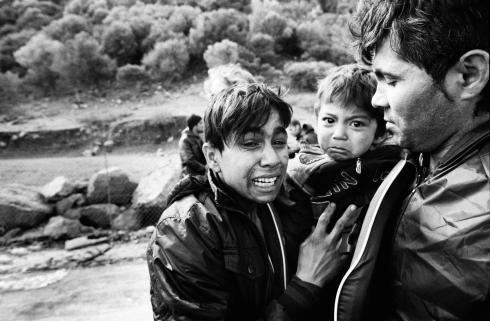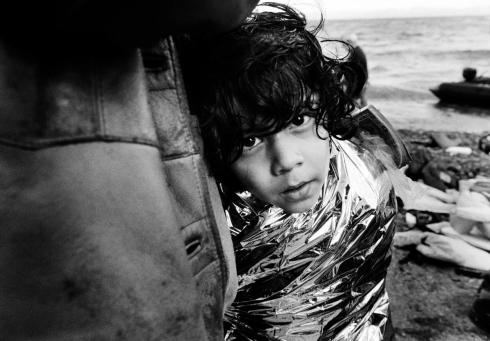
A boy from Afghanistan tries to keep warm after a cold and wet crossing from Turkey. Cases of hypothermia are on the increase as the weather deteriorates across the eastern Mediterranean.

In an image saturated world it’s difficult to define and measure the effects of photographs. We know advertising works, but those are images intended to sell us stuff. What if the purpose of a photograph is to “sell” us of a moral or political point? What if a photograph wants us to shift our emotional and practical response to far away events?

Giles Duley’s work Lesvos: Crossing To Safety made in Greece last October are intended, firstly, to bear witness and, secondly, to provoke action to help the hundreds of thousands of migrants. That’s why he didn’t simply make images and send them to the wires, but he courted the support of the United Nations so that he might extend the distribution of his imagesand the refugees’ storiesfar into global, humanitarian dialogue channels. (This UN-produced feature on Duley’s career and motivations is very thorough.)

Not content with only traditional distribution channels, Duley looked for alternative ways of launching his images into an unorthodox space; a Massive Attack gig.

“The scenes were overwhelming,” Duley said to the UNHCR. “In all the time I’ve worked, I’ve never seen such emotion and humanity laid so bare as I witnessed on the beaches of Lesvos. One of the first emails I sent was to the guys in Massive Attack. Seeing such events, I felt so powerless, I needed to do something. At that stage I had no idea how the collaboration would work, but I knew the band would want to act.”

1

2

Stills of Giles Duley’s photos on screen behind the stage of Massive Attack. Courtesy: Massive Attack.

A founding element of the era-defining Trip Hop genre, Massive Attack are known for taking forthright stances on political and governmental behaviours. Saturday Come Slow, their collaboration with released British Guantanamo detainees, Broomberg & Chanarin and Damon Albarn was poignant, crafted and clever, I thought.

Furthermore, as Alexis Petridis wrote for the Guardian, “Massive Attack have worked with the Stop the War coalition and visited refugee camps in Lebanon, while in 2011, Del Naja and Radiohead’s Thom Yorke threw a party for Occupy protesters who had taken over a UBS bank building in London.”

It’s not surprise Massive Attack are lending their support to Duley and shocking their euphoric crowds with thumping reality. Duley’s images loop throughout the gig, but they get their biggest showing at the close of the show, when the music ends and the band leaves the stage. For minutesin silencethe crowd is shown a mammoth slideshow of Syrians and other migrants landing in boats, hungry, tired and terrified. A far cry from the revelry of a gig. But people stayed. This Channel 4News segment is well worth the watch:

History has taught us that photos can certainly alter the mood of entire populations. Practice has also taught us that earnest, targeted messaging can help photos land. I hope more artists can lend a hand to serve the messages of humanitarian photographers. Usually, professionals commission images to be made to meet their own messaging needs so it’s great to see artists, citizens and successful public figures provide space within their platforms to amplify photographer’s voice.

Included here are Giles Duley’s images from Lesvos, Greece, made in October 2015.

An overcrowded boat carrying Syrian refugees heads to shore. One Syrian man had fallen from the boat into cold water. He was later rescued by volunteer Spanish lifeguards. Despite the approach of winter and worsening weather, refugees are continuing to arrive on the island at a rate of more than 3,200 per day. As of mid-November, at least 64 people have drowned this year in 11 shipwrecks off Lesvos.


Boat after boat lands on the coast of Lesvos between Eftalou and Skala Sykaminia. Over 45 per cent of the 836,088 refugees and migrants who have arrived in Europe so far in 2015 have landed on this Greek island, which is separated from Turkey by a 10-kilometre channel.


An Afghan mother holds her child moments after landing on the beach near Skala Sykaminia. UNHCR and its partners work to prevent family separations and create safe areas for women and children who are particularly vulnerable.

An Afghan family of several generations disembark from an overcrowded boat. Almost 40 per cent of refugees currently arriving on Lesvos are from Afghanistan.

UNHCR is working around the clock with other agencies and aid groups, stockpiling and distributing winter aid items to keep vulnerable people, both in camps and urban settings, protected and warm. Donate money to the UNCHR (United Nations High Commission for Refugees) here.

• The distribution of winter survival kits including high thermal blankets, sleeping bags, winter clothes, heating stoves, and gas supplies.
• The provision of emergency shelters including family tents, refugee housing units and emergency reception facilities.
• Improvement of reception and transit centers and preparing and supporting families for winter conditions.

You can help make a difference. Donate money to the UNCHR (United Nations High Commission for Refugees) here.

A relieved Afghan family, clearly still suffering from the trauma of a rough sea crossing at the hands of people smugglers, disembarks from a flimsy vessel onto a Lesvos beach.

An Afghan mother hugs her child and cries with relief after arriving on Lesvos.

Survivors struggle ashore after their boat has capsized. In the background a Spanish lifeguard, one of the many volunteers working on the beach, swims out to help other survivors.

A Syrian father, his two children now safely wrapped in thermal blankets, looks to the heavens in thanks after landing safely on the beach.
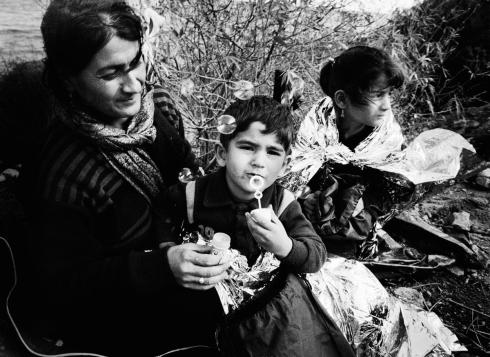
A young Afghan boy with his aunt. His mother is receiving emergency medical treatment after she collapsed upon landing. Since August UNHCR, in close cooperation with the Greek authorities and other humanitarian actors, has considerably stepped up its activities to respond to the increasing needs. This is even more imperative with the onset of winter.

Volunteers prepare to wrap a young girl in an emergency blanket to protect her from the cold wind.

Follow UNHCR on Instagram, Twitter and Facebook. Donate money to the UNCHR (United Nations High Commission for Refugees) here.

Read ‘War Survivor Focuses Lens on Refugees about Duley’s work in Greece. Reacquaint yourself with the ‘Lesvos: Crossing to Safety feature. Read a review ‘How Many Stories Can You Tell In One Second? of Duley’s new book One Second of Light.

Connect with Giles Duley on Facebook, Twitter, Linked In and EW Agency.

 

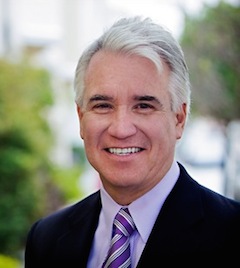
Tomorrow evening there’s an intriguing discussion happening at the Mechanics Institute in San Francisco. On the panel for Incarceration and the Path to Reform are author and educator Baz Dreisinger. She is the Academic Director for the Prison-to-College Pipeline program, coordinated by John Jay College, NYC, that offers college courses to incarcerated men. San Francisco District Attorney George Gascón alongside Jacques Verduin of Insight-Out and GRIP, and former inmate and GRIP graduate Terrell Merritt make up the rest of the group.

Can’t wait.

It’s at Wednesday, February 17, 2016 from 6pm onwards.

Mechanics Institute, 57 Post Street, 4th Floor Meeting Room, San Francisco, CA 94104

Call staffer Pam Troy on 415-393-0116 for more info.

Tickets for the public are $15SIGN UP HERE.

THE BLURB

“Fiscal and physical challenges to our penal systems as well as changing attitudes about prison reform are happening locally, nationally, and internationally. […] See how San Francisco is modeling a new paradigm for rehabilitation and issues of human rights for those incarcerated. With President Obama’s December 18th commutation of 95 non-violent drug offenders to the recent “vote- down” of funding the new jail in San Francisco, there is much to talk about.”

Dr. Baz Dreisinger

Dresinger journeyed to Jamaica to visit a prison music program, to Singapore to learn about approaches to prisoner reentry, to Australia to grapple with the bottom line of private prisons, to a federal supermax in Brazil to confront the horrors of solitary confinement, and finally to the so-called model prisons of Norway. This jarring and poignant trek invites us to rethink one of America’s most devastating exports, the modern prison system. With Oscar-nominated filmmaker Peter Spirer, Dreisinger produced and wrote the documentaries Black & Blue: Legends of the Hip-Hop Cop, and Rhyme & Punishment. Her book Near Black: White to Black Passing in American Culture was published in 2008 by University of Massachusetts Press.

Jacques Verduin

Verduin has worked in prisons for 20 years, designing and running innovative rehabilitation programs. He is a subject matter expert on mindfulness, restorative justice, emotional intelligence, and transforming violence. He directs the non-profit “Insight-Out” which helps prisoners and challenged youth create the personal and systemic change to transform violence and suffering into opportunities for learning and healing. The Guiding Rage into Power (GRIP) Program at San Quentin is a year-long transformative program that provides the tools that enable prisoners to “turn the stigma of being a violent offender into a badge of being a non-violent Peacekeeper.” A former inmate and graduate of this program will be on the panel.

Terrell Merritt

Merritt is from Gary, Indiana. After high school he enlisted in the Navy and was stationed in San Diego, CA. After leaving the Navy, he spend 20 years in prison for 2nd degree murder. During that time, he began to soul search and incorporate practices into his life that promote nonviolence. These include nonviolence communication, Zen Buddhism, and the GRIP Program; a yearlong transformational program that he became a facilitator of. On November 10th 2015, he was paroled after serving 20 years and 8 months in prison. He is currently working to reestablish himself into the community and to give back where he can.

George Gascón

Gascón is the District Attorney for the City and County of San Francisco. He has earned a national reputation as a criminal justice visionary that uses evidence based practices to lower crime and make communities safer. He is the first Latino to hold the office in San Francisco and is the nation’s first police chief to become District Attorney. Looking to find alternatives to incarceration for low-level offenders, DA Gascón created the nation’s first Alternative Sentencing Program to support prosecutors in assessing risk and determine the most appropriate course of action for each case. The goal is to protect victims and the community by addressing offenders’ risk factors in order to break the cycle of crime and reduce recidivism.

DETAILS

February 17, 2016 from 6pm onwards.

Mechanics Institute, 57 Post Street, 4th Floor Meeting Room, San Francisco, CA 94104

Call staffer Pam Troy on 415-393-0116 for more info.

Tickets for the public are $15SIGN UP HERE.

© Glenna Gordon

The quiet violence of an arranged marriage – a bride is taken by her female relatives to her husband’s home on the outskirts of Kano on April 13, 2013.

Unfortunately, the majority of news stories coming out of Northern Nigeria in recent years have been about the Islamic terrorist group Boko Haram (whose name translates as “western education is forbidden”) but of course there’s much more complexity and tolerance within the society than Boko Haram’s perverse and hardline view of earthly existence. Centered in the city of Kano, there’s a small but significant contingent of hijab wearing ladies writing subversive romance novels.

These women, their lives, aspirations and works are the focus of a new–and somewhat unorthodox–photobook by Glenna Gordon who met dozens of authors. They write in Hausa, a Chadic language spoken by 50 million people, but their work rarely gets beyond the regions borders. Some translations of the novels appear in English for the first time in Gordon’s book. It is called Diagram of the Heart, published by Red Hook Editions and hits the shelves on February 11th.

I reviewed the book for Time Lightbox in a piece titled Anatomy of a Photobook: Diagram of the Heart, by Glenna Gordon.

“What if a photo of a woman writing a book was as important as a photo of a man fighting a war?” asks Gordon. “What would our foreign policy objectives be? How would we understand and conceptualize places and people we haven’t personally encountered? It often seems to me that fear is one of the driving forces behind the way America interacts with the rest of the world, especially the Muslim world. What if we filled those blank spaces onto which we project stereotypes with visualizations of the specific textures, colors and nuances of a life that is lived on terms different than our own?”

Read the piece in full: Anatomy of a Photobook: Diagram of the Heart, by Glenna Gordon

© Glenna Gordon

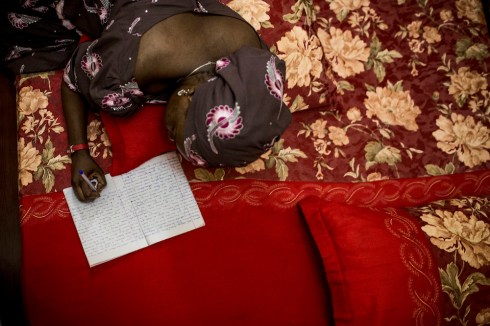
Khadija Gudaji works on her novel while laying in bed at her home in Kano, Northern Nigeria on September 29, 2013.
© Glenna Gordon
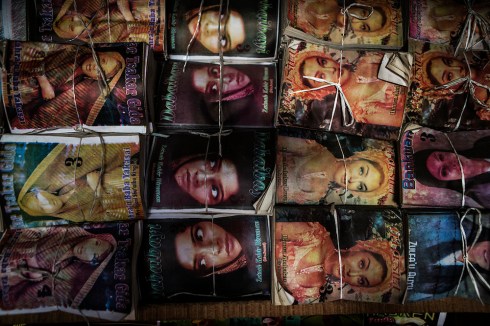
Books are tied up and packaged at the local market in Kano, Northern Nigeria on October 4, 2013. While Northern Nigeria is best known for Boko Haram, an Islamic terrorist group whose name means ‘Western Education is sinful,’ there’s a small but significant contingent of hijab wearing ladies writing subversive romance novels.
© Glenna Gordon
Rabi Tale, a popular novelist, in the courtyard of her office at the Ministry of Information on October 3 in Kano, Northern Nigeria. She is one of the few novelists who has a “day job” in an office. Many men allow their wives to write because they can do so without leaving the house.
© Glenna Gordon
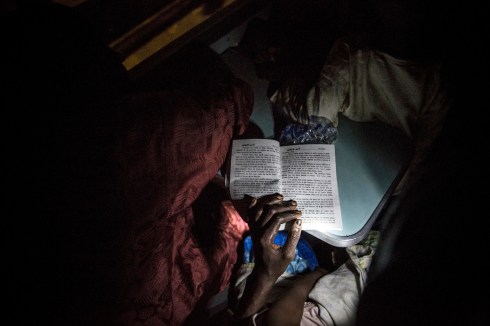
A woman reads a Hausa romance novel using the flashlight on her cell phone on a train crossing Nigeria on August 21, 2015.
© Glenna Gordon
The wedding Fatiah, or party, of Maryan Nazifi, in Dawakin Tofa, another small town outside of Kano on November 8, 2014. Most of the time, men and women live very separate lives in Northern Nigeria and marriages are the main point of interaction.
© Glenna Gordon
Ahmed Adama, age 35, had wanted to marry Jamaila Lawan, 22, for more than a year when he heard about the mass wedding program organized by the Hisbah, the Islamic morality police in Northern Nigeria, who also censor the novels. They pose for a portrait at their home in Kano, Northern Nigeria, on October 7, 2013.
© Glenna Gordon
A woman poses for a portrait at the Office of Enlightenment at the Hisbah, the Islamic morality police, on August 17, 2015.
© Glenna Gordon
Firdausy El-yakub reads a romance novel in her bedroom in Kano, Northern Nigeria on March 21, 2013. Her university has been on strike for weeks, so she spends most of her days reading and dreams of one day becoming a novelist too. Her father allows her to go to the market and buy new books often.
© Glenna Gordon
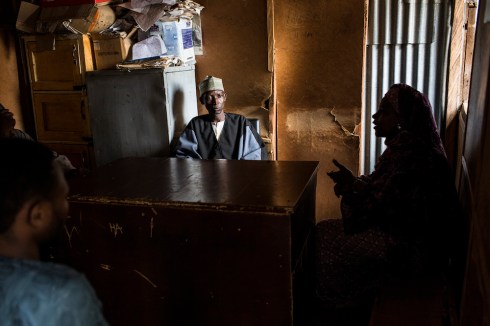
An officer of the Hisbah, the Islamic morality police, adjudicates a family dispute in Kano, Northern Nigeria, on August 17, 2015.
© Glenna Gordon
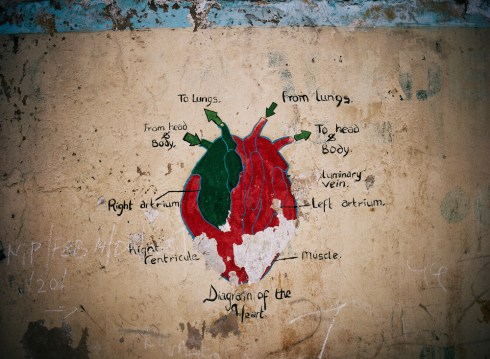
The diagram of a heart drawn on the outside of a school in Kano, Northern Nigeria on February 26, 2014.
© Glenna Gordon
Farida Ado, 27, is a romance novelist living in conflicted and rapidly Islamicizing Northern Nigeria. She’s one of a small but significant contingent of women in Northern Nigeria writing books called Littattafan soyayya, Hausa for “love literature.” She poses for a portrait at her home in Kano on April 15, 2013.


Mitch Epstein 1

Liquidation Sale VII, 2000. Mitch Epstein New Orleans Museum of Art, Louisiana II, 2005. Mitch Epstein

After six months of media pantomime and make-America-proud electioneering, the U.S. presidential scrap finally kicked off last night. At last, we got to the beginning of the start of the business end of choosing the candidates who are to duke it out in November.

The Iowa Caucuses threw up some winners and some losers, but I was most interested in how the billionaire Trump bombed and how avowed Socialist Bernie Sanders went toe-to-toe with the SuperPAC-fuelled Hillary machine.

Strangely, early in the races, news commentary threw Trump and Sanders in together as outsiders and insurgents. They both represented challenges to political orthodoxy. Bernie adheres to the principles of leftie politics; he’s almost by-the-book socialist. A pure version of the left. (Whether Trump is the pure version of rightwing politics, I’ll leave to others to debate. He does seems to have taken conservatives’ hatred to it’s extreme.)

Presidential campaigns invariably come down to economics and 2016 has proved no different. The United States is more than seven years on from the Great Recession and yet still wealth disparity is at the forefront of political debate. Either we (oil) barrel our way out of economic malaise hoping that everyone wins a piece of the wealth-pie or we seek to tax the United States’ gradually growing economy to redistribute the wealth.

Iowa was fascinating because it was the first taste of how voters think about daring approaches to national fiscal management. Trump, an anti-establishment bully of capitalism, lost out in the Hawkeye State whereas Sanders, the optimistic, social program-loving senator held his own.

In this moment, we must remember that the term “The 1%” did not exist in public lexicon before the Occupy Movement. Sanders resonated because he faces the economic facts. We know the economic gap is larger than ever before. What’s this got to do with photography? Well, depicting economic forces and inequality is no easy task. Not one image can do it, but perhaps a collection can. No collection does it better than Myles Little’s 1%: Privilege in a Time of Global Inequality.

In a follow up to my article Photos of the 1% and the Interests They Protect and to mark the occasion of Lyttle’s exhibition making it to book, I have shared Geoff Dyer’s introductory essay on Vantage.

Geoff Dyer on Globalization, Inequality and Photography

This resilience [as read in Lange and Evans’ photographs] was easily incorporated into the ideology of ceaseless endeavour that continues to underpin the system of exploitation that condemned them to destitution in the first place. It’s just that now, instead of loading up your jalopy and heading for California, you take a second, badly paid job; The Grapes of Wrath has turned into Nickel and Dimed. The iconic photographs of the Great Depression, meanwhile, have acquired a kind of stonewashed glamour.

Read the piece in full: Geoff Dyer on Globalization, Inequality and Photography

Jorg Brueggemann 2

Refugees arriving on Kos, Greece, in August 2015. Jörg Brüggemann—OSTKREUZ 
Untitled #5, from Hedge. 2010. Nina Berman—NOOR
Opéra de Monte-Carlo, Monte Carlo, Monaco 2009 David Leventi
Opéra de Monte-Carlo, Monte Carlo, Monaco. 2009. David Leventi
untitled # IV, mine security, north mara mine, tanzania-from the
Untitled #IV, Mine Security, North Mara Gold Mine, Tanzania. 2011. David Chancellor
Floto+Warner
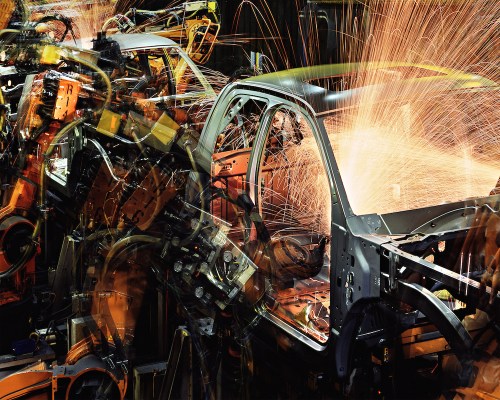
Chrysler 300. 2007. Floto+Warner 
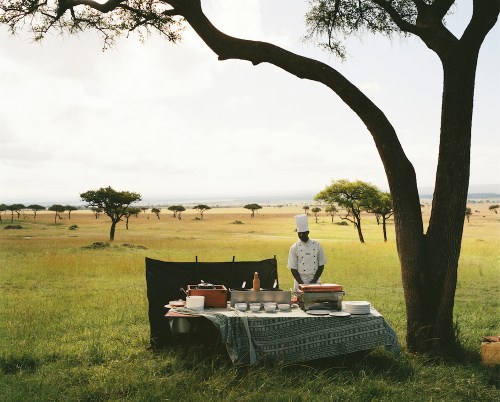
A chef from a nearby luxury lodge waits for his guests to arrive from a hot air balloon excursion before serving them champagne in the middle of the Maasai Mara National Reserve, Kenya. 2012 Guillaume Bonn
A chef from a nearby luxury lodge waits for his guests to arrive from a hot air balloon excursion before serving them champagne in the middle of the Maasai Mara National Reserve, Kenya. 2012. Guillaume Bonn—INSTITUTE
Princess Studio, a wedding photo studio in Shanghai. China. Tong (29) posing for her wedding pictures.
Tong, aged twenty-nine, poses for her wedding pictures at Princess Studio, a wedding photo studio in Shanghai, China. 2013. Guillaume Herbaut—INSTITUTE 
Jeff Koons, Stedelijk Museum, Amsterdam 2012 Henk Wildschut
Jeff Koons, Stedelijk Museum, Amsterdam. 2012. Henk Wildschut
Cole Haan, Chicago, IL, 2013. Brian Ulrich
Michael Light 2
Looking East Over Unbuilt “Ascaya” Lots, Black Mountain Beyond, Henderson, NV. 2010. Michael Light
Marchand Meffre
Rivoli Theater, Berkeley, CA, 2013. Opened as a cinema and performance space in 1925, closed in the nineteen-fifties. Subsequently used by various supermarkets. Yves Marchand and Romain Meffre 
A twenty-five-year-old British man in London undergoes surgery to reduce the size of his nose. 2011. Zed Nelson
Mikhael Subotzky
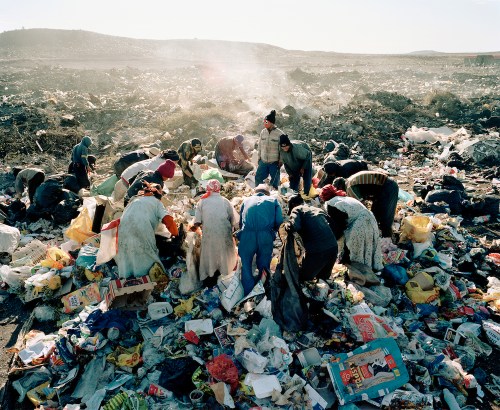
Residents, Vaalkoppies (Beaufort West Rubbish Dump), 2006. Mikhael Subotzky, courtesy Goodman Gallery

amyelkins

Image: Amy Elkins, from the series Black Is The Day, Black Is The Night

Before my celebration, last week, of Arthur Longworth‘s CLO Conference presentation, I had no idea his work was to be featured once more on The Marshall Project. As part of TMP’s ongoing Life Inside series, Longworth wrote about being moved between cells. This excerpt stood out:

Now I’m loading up my pictures. Here’s one of the former warden and his wife, who have visited me over the years, welcomed me into their family, and spoken out for my release.

There is so little solidity in prison, so little to depend on, that a picture like this — or a cell that’s mine, that’s home, that I can always return to — is a treasure.

Longworth’s appreciation for a former-warden’s support is thrilling, clever and effective. Longworth gently turns over our preconceived notions of friend and foe. A man of uniform has welcomed a prisoner into his family? If our stereotypes of law enforcement dissolve then what of our stereotypes of prisoners? Well, just read Arthur Longworth’s words. And those of thousands of other prison writers, for that matter.

HERE NOW: Digital Stories from the San Francisco

In December, I was a guest at San Bruno Jail, near San Francisco, for morning of screenings of HERE NOW: Digital Stories from the San Francisco Jails. The 18 film-shorts were made inside San Bruno Jail drawing on both the drama therapy expertise of  the University of San Francisco’s Performing Arts and Social Justice Department and the community media skills of the Bay Area Video Coalition (BAVC).

The Resolve to Stop the Violence Project (RSVP)a longstanding collaboration Community Works and the San Francisco Sheriff’s Department with programs inside the numerous San Francisco County Jail system–hosted the 12-week course and that inaugural  screening.

Tomorrow, January 27th, a screening of HERE NOW will be held for the public. It’ll be at Noh Space which is in the Potrero Hill neighbourhood of San Francisco, specifically at 2840 Mariposa St (b/t Florida St & Alabama St), SF, CA 94110. The screening will include a panel discussion with restorative justice practitioners and members of the project.

Full details about the HERE NOW screening event.

bavc

Full details about the HERE NOW screening event.

Within the confines of one of San Bruno’s jail pods, the 20-or-so prisoners made use of every space, surface and angle to visualise their stories. The “digital stories” they developed include percussion, spoken word, movement, writing, and visual imagery. There’s some large leaps of faith to be made here. Firstly, the men must be comfortable sharing personal tales, then they must be willing to process them with a group, firstly and for a general public audience latterly.

“The men came in with strong visual concepts and artistic choices and we followed them as they were the directors for each of their stories. I approached each production as a camera operator and followed their carefully crafted shot list,” says Kristian Melom, one of the facilitators with BAVC and HERE NOW.

Furthermore, not being experts, the prisoners handed over some control of the editing and sequencing. At least those bits that they couldn’t master on their successful, short and steep learning curves!

“In the editing process, the students from each of the classes worked together and essentially learned digital film editing as they collaboratively made these pieces. It was really inspiring to see how much can happen in the edit when you have very little recording time allowed and lots of improvisation is needed,” says Melom. “We had a blast.”

Full details about the HERE NOW screening event.

MY FAVOURITES

In advance of tomorrow screening, I wanted to share a handful of notable videos.

In Motivation Through Life’s Struggles, J. Howard organizes the loneliest dinner party. One at which photographs of his loved ones substitute for the persons themselves. A lone 4×6 print on each seat.

You don’t even see Delon Barker’s face in Where I Grew Up, which is a clever tool because it makes his powerful story–about knowing where a hidden gun was and using it at the age of 5–all the more powerful.

“Where I grew up, I was taught to be bad and fight everyone.”

JDJ’s ode to his daughter simultaneously shares his joyful memories of her earliest words but also the pain of being apart. All this plays out to a video track composed of dozens of portraits of her.

June’s Baby Skee is the comic turn of the bunch. June recounts the first time he was charged with changing a diaper.

Testimony Of A Moth is Jack MacLennan’s space to reflect upon, and reenact, a moment he was the victim of gun violence. But also in that moment he reflexively protected those close to him, by literally putting his body on the line. How conflicting to find pride amidst violence. This is a reconciliation of those contradicting emotional memories.

I Kill Time is a bittersweet look back at, well … it’s your guess. Is this a clear metaphor for drug selling? Or is that a presumption? Either way, Vinnie was adamant from the very start that the 2 minutes would be played backward, meaning that action were acted out in reverse. Killing time? He’s playing with time. Very effective and a little disconcerting. Great soundtrack too.

The participants made four short interludes to sit in the middle and at each end of HERE NOW. These four shorts make use of the most expansive cinematography, song and percussion. They’re also the moment that most participants are actors in a single reel.

Full details about the HERE NOW screening event.

I spent last Friday inside the walls of San Quentin State Prison watching the presentations of TEDxSan Quentin. Most talks were by prisoners and almost all were moving, reasoned, hard-hitting. It reminded me, once more, of the incredible intellect of men, women and children inside America’s prisons. It made me think again of how foolish we are as a society to waste talent, ignore positive contributions and crush lives through our addiction to incarceration.

Arthur Longworth was not at that TEDx; he is imprisoned not at San Quentin, but at Monroe Correctional Complex near Seattle. Nor did Longworth make the presentation (above) at a TED event. While Monroe has had its own TEDx event, the prisoners own Concerned Lifers Organization (CLO) has been hosting an annual conference for longer.

Longworth’s talk Mass Drownings at the 2015 CLO Conference is an eloquent, 18-minute-long metaphor of the prison industrial complex as the ocean. Longworth was sentenced to Life Without Parole (LWOP) meaning he has for the past 30-some-years lived behind bars knowing he’d never get out from them. This is a special-type of torture reserved for he and tens of thousands of other Americans. Longworth has witnessed more and more people tossed into the ocean and describes the cruelty of hope.

“This news that people outside of the ocean are actually talking about what’s happening in it spreads across the water in the form of hope. A piece of which you reach out and grab on to. Your instinct isn’t to hold on because by this time you’ve been in the water so long and you don’t know what hope is. But when you try to let go you discover that you can’t bring yourself to do it because this thing you’ve grabbed on to is warm and buoyant. For the first time since you were put into the ocean you cease to shiver and you feel like there might be something to swim toward.”

It’s here that our relationship with those on the inside comes into sharp focus. Politicized prisoners know that there’s a major shift in public attitudes. They are working, too, to help in the balanced and restorative debate we have ackowledged we need. Recognising there’s a problem is the easy part; we need to find the solutions. We need to meet these mens’ hopes. We need to replace a bloated and cruel, cruel system with humanity.

I watched this video for the first time in the wee hours of Thursday, 14th January. I was due that afternoon to open Prison Obscura at Evergreen State College. I have presented so many times on Prison Obscura and the ideas around it that it’s hard not to feel jaded at times. Sometimes, I go into auto-pilot. But, just because I have communicated things multiple times doesn’t make the human rights abuses to which they respond any less urgent.

I had the pleasure of speaking with Longworth several times during my role as a teacher with the University Beyond Bars at Monroe (2009-2011). We never spent any time in the classroom together. He had no use for the art classes I taught and it was not feasible for me to take his Spanish lessons! Arthur Longworth is a brilliant mind and an inspired leader. From within a system that has abandoned its moral compass he has maintained his own. Somehow.

Longworth bristles with controlled fury and a nailed-on sense of injustice. He can’t fathom why a society might throw people away so readily. Then he recalls the monarchy system from which the United States emerged. Kings used to condemn men by decree without ever seeing their faces. Only high and mighty arrogance could enact such disregard.

Mass Drownings reduced me to tears. I also felt shame; shame that I’d got lazy, on occasion, with the presentation of Prison Obscura. The show remains on the walls of Evergreen State College through March 2nd, but I am inclined to tell Washingtonians to watch Arthur Longworth before they seek out any online video about Prison Obscura. Longworth’s argument, grace and dignity are why the fight against mass incarceration must continue. His words carry more meaning and weight than any I, or any other outside activist for that matter, could ever.

Of course, to people familiar with prison literature, this is no surprise. Longworth won the PEN Center ‘Best Prison Memoir’ Prize in 2010. Pulitzer-winning novelist Junot Diaz read Longworth’s Walla Walla IMU, a story about ants in solitary confinement, on stage to a New York crowd. College students nationwide are assigned his works. Last year, The Marshall Project published an essay of his. Longworth has been the feature of Seattle Times and KUOW pieces about LWOP.

Listen to Longworth. Simply put, he’s one of the few remaining persons who talks any sense about a maddening system that condemns hundreds of thousands of men, women and children without ever seeing their faces.

Ryan Richardson of Evergreen State College put together this lil’ promo video of Prison Obscura.

Install shots here. The larger Kept Out/Kept In program at Evergreen.

EMAIL

prisonphotography [at] gmail [dot] com

Prison Photography Archives

Post Categories