Photographer Glenna Gordon provided the image (below) to accompany Liberia’s inclusion on a recent Foreign Policy (FP) listing of failed states. She was not impressed by the piece – this is what she had to say:

“A couple of weeks ago, Foreign Policy ran one of those not-all-that-informed lists they called Postcards from Hell: Images from the World’s Most Failed States. In my book, a list that includes Yemen and Somalia alongside Ivory Coast and Liberia isn’t going to tell us that much […] Thanks FP, for often providing great news and analysis, and every now and then providing crappy link bait.”


I think it is fair to say that the average Westerner’s understanding of the ethnic conflicts in Southern Kyrgyzstan is small to non existent. And I’d include myself in that.

I would have remained distant and uninformed if it wasn’t for Ikuru Kuwajima in Kyrgyzstan’s coverage. Kuwajima worked with Save the Children. He says, “About 2000 people were thought to be killed in the recent clashes in the southern Kyrgyzstan. A number of people, especially ethnic Uzbeks lost houses due to arsons and looting, and hundreds, or thousands, of IDPs still don’t know where to move.”

For some reason, Kuwajima’s work distinguished itself above and beyond other B&W dispatches from the caucuses/Middle-East/Far East that run the risk of getting lumped together in Westerns viewers’ minds.

I am not exactly sure why Kuwajima’s work made such an impression? It just a delicately edited collection of images.

Frida (forsythia), 35″x35″, c-print

As much as I respect the portraiture genre within photography, it just isn’t my thing. Perhaps I am not confident enough sifting the very good from the good? Nevertheless, I was really taken by Meera Margaret Singh‘s work – there is something very gripping about her series Harbinger. One of the subjects is her mother, others are strangers.

“Previously when I had worked with strangers, the awkwardness sometimes fueled the work. Now I’m being a bit more discriminate about whom I photograph and at what stage in our encounter.” (Source: Nymphoto interview, 04/02/09)

“The surveillance system, dubbed Sigard, has been installed in Dutch city centers, government offices and prisons, and a recent test-run of the technology in Coventry, England, has British civil rights experts worried that the right to privacy will disappear in efforts to fight street crime. The system’s manufacturer, Sound Intelligence, says it works by detecting aggression in speech patterns.”Story

via Boogie

Image: Privacy And Control, by Michael Pickard, Creative Commons: Attribution 2.0.

Happy Birthday America.

Precisely because “The Land of the Free” is a term now inseparable from rhetoric and politicking from any and all quarters, I’ll keep this brief.

America, like every nation on this earth, is and continues to be a work in progress. “Freedom” is a relative term, and if photographers in America do some things well, one of them is to remind us that by law (until very recently) some were freer than others.

I am always happy to promote socially-conscious photography that deals with racial injustices of the past and our need to address those injustices still. Furthermore, there are many good photographers who are working on inequalities today, based not in law, but in attitudes. Again, we are all works in progress, right?

WENDEL WHITE

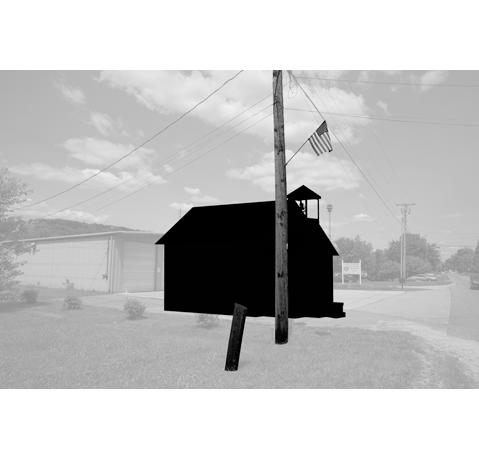
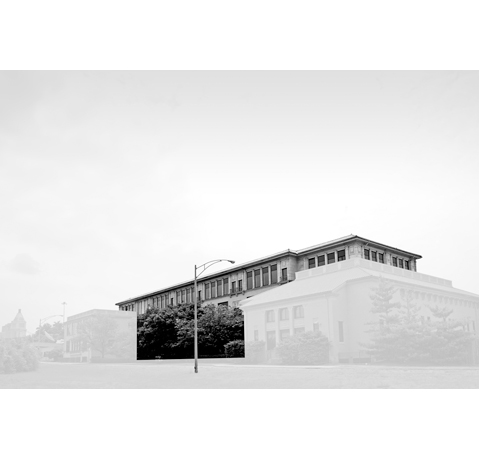
Wendel White‘s Schools For The Colored depicts the landscape and architecture of historically segregated schools in northern states.

Texas Prison Rodeo, Huntsville, 1964. © Garry Winogrand

In 1964, with the support of a Guggenheim fellowship, Garry Winogrand traveled over four months to fourteen states and recorded an America in transition.

The result was WINOGRAND 1964. Here’s a review by Ned Higgins.

– – – – – –

AmericanSuburbX has republished Carl Chiarenza‘s “Standing on the Corner – Reflections Upon Garry Winogrand’s Photographic Gaze – Mirror of Self or World? Pt. I” (1991) originally in IMAGE Magazine: Journal of Photography and Motion Pictures of the International Museum of Photography at George Eastman House, Volume 34, Number 3–4, Fall–Winter, 1991.

Including this statement: “The 1964 Guggenheim Fellowship was awarded to Winogrand to provide him with time to make “photographic studies of American life.” This fact inevitably recalls Robert Frank’s Guggenheim odyssey of a decade earlier. Something to think about—one wants to make comparisons. One wishes there were a Winogrand book comparable to Frank’s The Americans. But there is no such book.”

Think on.

Fonografia: “Money and press coverage started to arrive. Women organizers in Port-au-Prince camps spoke openly about the rapes and began raising money to move the victims into a new home, but as Bell says, “the visibility and funding have come with a price. Seeing all the ‘blan’ (human rights workers, gender advocates, journalists, delegations) troop to the women’s tents in Port-au-Prince, and knowing that ‘blan’ equals money, last week a man came to the KOFAVIV headquarters (a tarp in the middle of a camp) with a gun to kidnap one of the coordinators and to extract ransom from the coordinator. Fortunately, the plot failed. But (it) highlighted the utter danger that women and children face in the camps each day.”

Without apportioning blame, let’s all admit that we barely consider Haiti today. We all poured over the story, the ruin, the coverage – myself included. We took the opportunity to express our politics but we are too distant and too engaged elsewhere to sustain an informed, daily consciousness.

News media can be an empowering tool but it is also distorts our true commitment to its subjects. A flood soon becomes a trickle.

Last week, as part of that trickle, Deborah Sontag reported for the New York Times on the sexual violence threatening Haitian women.

Follow Beverly Bell’s writings on the issue of rape in Port-au-Prince since the earthquake, and consider supporting KOFAVIV’s efforts by making a donation and spreading the word.

Note: The Fonografia Collective have, as an exception to my point, been consistently committed to reporting on developments in Haiti.

Richard Renaldi has translated Freddy Langer’s review of Allison Davies’ Outerland which ran in The Frankfurter Allgemeine Zeitung, July 1, 2010. Richard and his partner Seth Boyd founded Charles Lane Press which published Outerland.

Renaldi: “The story Allison Davies tells us in Outerland is derived from those end-time allegories that have supplied modern American art with dramatic material for novels, movies, and ballads sad and cruel. It may well be a story fueled by fear of weapons of mass destruction after the terrorist attacks of September 11. Or a meditation on an impending climate catastrophe. But Outerland goes deeper. It asks the question: On the first day after the end of mankind, what will remain?”

This isn’t the first time Outerland has gotten some love. Joerg Colberg, theHulin, WIPNYC and James Danziger have all reviewed it. It’s fair to presume the book is a stonking good, memorable object.

Buy the book.

EMAIL

prisonphotography [at] gmail [dot] com

Prison Photography Archives

Post Categories