Time is of the essence today, so why not a quick look at a mugshot archive?

All these images are from HIDDEN FROM HISTORY. UNKNOWN NEW ORLEANIANS:

“The people grouped here may have had nothing in common except that their lives intersected with the municipality at least once. This exhibit brings them together in part to show how the city classified them. The documents and photographs here are therefore not representative of those New Orleanians who lived their lives quietly and within the law; they are necessarily skewed toward those who erred or strayed, who got caught or got in trouble, or, conversely, those who actively sought assistance from the city.”

The images were selected from the Louisiana Division/City Archives. My favourites here are those photographs in which intriguing, strong(?) communication persists.

– – –

The exhibit was curated by Emily Epstein Landau and funded in part by the Sexuality Research Fellowship Program (1999), a program of the Social Science Research Council, with funding from the Ford Foundation. Dr. Landau received her doctorate from Yale University in 2005. Her dissertation, “Spectacular Wickedness”: New Orleans, Prostitution, and the Politics of Sex, 1897-1917, is a history of Storyville, the famous red-light district. She will be teaching New Orleans history this Spring, as a visiting lecturer at the University of Maryland, College Park. She lives in Washington, DC.

I have talked in the past about the politicisation of immigrants, their reduction to visual cliche and indeed there is a lot more to be said on Tent City, Maricopa, AZ particularly.

I even began this blog way-back-when with musings on physical & psychological borders and unseen landscapes that define flux, unknowns and action.

AIDING IMMIGRANT PASSAGE: The Transborder Immigrant Tool

I just received an email from Bryan Finoki about some unpleasant political muscling down in San Diego.

I am proud to support Ricardo Dominguez and to add my signature to the petition to save Professor Dominguez’s tenure:

Target: UC President Mark Yudof, UCSD Chancellor Marye Anne Fox, UCSD SVC Paul Drake

Sponsored by: UC Multi-Campus Research Group in Internationalism and Performance
Ricardo Dominguez (Associate Professor, Visual Arts, UCSD) is currently being threatened with criminal action and the revocation of his tenure by UCOP and several UCSD senior administrators. This is a long, rapidly-developing story.  Time is of the essence. Please sign now!

UC Office of the President has reportedly been upset over Ricardo’s involvement in the Transborder Immigrant Tool – these are recycled cell phones loaded with software that points border-crossers to caches of fresh water in the desert, obviously saving lives. It’s a controversial project, to say the least; and Ricardo has received death threats from people in the SD community and beyond. The project was picked up by the national and international presses, and CNN named Ricardo one of its “Most Interesting People” of 2009 because of the project. Several Republican congressmen also recently sent a letter to UCSD demanding that the project be ceased and Ricardo be censured. In response to this, the university has been scrambling to find a way to shut it down. Importantly: the project has been included in every one of Ricardo’s professional reviews over the last few years, all of which have gone successfully (and have been signed off on by this very SVC); in addition, the project has been FUNDED by UCSD (and yet again, signed off on by this SVC). Now that the controversy has gotten attention in DC, they’re reversing course.

More recently, as part of the March 4 actions, Ricardo’s bang.lab created a virtual sit-in on the UCOP web site. A virtual sit-in works in this way: participants go to a specified web page, which continuously “refreshes” connections to the target web page (in this case, ucop.edu). This obviously increases traffic to that site — much like a live sit-in at a specified locale — with the potential effect of making it too busy to accept new incoming connections. It is similar, in form, to what’s called a “Distributed Denial of Service Attack” (DDOS). There are several critical difference between a virtual sit-in and a DDOS:  a DDOS is prolonged and unending, used by various governmental groups to censor a wide variety of free speech groups, activist groups, etc, and non-transparent (the creators of the DDOS set up virtual robots to blast a given site with millions of hits, and hide the creators behind various firewalls and filters. A virtual sit-in is open, does not use such “robots,” and the creators are identified freely).

SIGN THE PETITION

Please sign the petition below to protect academic freedom and tenure from politically-motivated attacks.

http://www.thepetitionsite.com/1/stop-the-de-tenuring-of-ricardo-dominguez

THE RESEARCH

Click on the sheet below for a larger version.

Etching from Goya’s series “The Disasters of War:”

Lebbeus Woods posted some interesting thoughts today about Francisco Goya’s meditations on war.

My reading and interpretation of Woods’ words is based on the presumption that photography is the visual “raw material” of a war and art can be something distinctly different – as Woods argues something more transformative and powerful. I am knowingly playing devil’s advocate.

Woods:

“Instead of creating propagandistic art, extolling glorious military heroism, Goya focused on the atrocities of the armies, committed against ordinary people. He knew that when soldiers get into a killing craze, they murder and rape indiscriminately, often just for the hell of it.

If there were an Iraqi or Afghan Goya working today, he or she would not make journalistic photos of the slaughter of people who just happen to be there, but would draw and paint it, becoming selective, ‘aestheticizing’ the atrocities, in order to elevate them to a serious level of reflection.

The artist does not merely present us with raw material, which is always difficult to confront and understand—indeed, it is easier to dismiss it with only a shudder—but instead creates indelible images, which cannot be gotten out of the mind.”

It seems to me that Woods’ may have a point – that general publics may be turned off to the photojournalist product and more shocked when the depicted horror has come from the end of paint brush or lithography set, and thus by the way of a fellow human’s imagination.

What says you?

Jake and Dinos Chapman, 'Disasters of War' (1993)

Incidentally, a couple of friends and I went to see Goya’s Disasters of War etchings exhibited alongside Jake and Dinos Chapman’s sculptures of homage of the same title. It was simple … and singularly the best art exhibit I’ve seen in a long time.

Democracy Now! reports:

Journalists from the investigative team in Iceland that released the now-infamous US military video on WikiLeaks traveled to Baghdad recently to meet with the family members of some of the twelve people killed in the 2007 attack.

Ahlam Abdelhussain, the widow of Saleh Mutashar who was killed when the gunship opened fire on a van, asks, “Why was he shot with his children in the car? They did nothing wrong. He was helping a journalist. What was his crime? What was the crime of our children who are left with no father and no support?”


Democracy Now! introduces the piece with footage from the attack on the van. Material about Mutashar begins at 15.27

Saleh Mutashar was taking his 6 and 9 year old children to school when he passed the aftermath of the attack and choose to help a wounded man.

– – –

Also from Democracy Now! “This is How These Soldiers Were Trained to Act”

“It is easier to build strong children than to repair broken men.”

Frederick Douglas

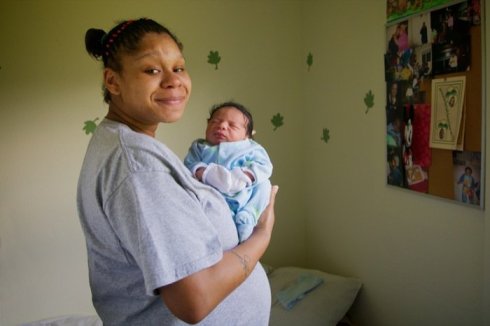
Mandi and Gabriel

Mandi and Gabriel (3 days old), 2008 © Cheryl Hanna-Truscott

Cheryl Hanna-Truscott is a registered nurse and midwife who attests to the importance of healthy, timely infant-mother attachment. Equally she recognises that the women in her portraits are the beneficiaries of an unfortunately rare approach to motherhood in US sites of incarceration.

Protective Custody: Within a Prison Nursery is a portrait series about pregnant inmates who qualify for The Residential Parenting Program, at Washington Corrections Center for Women (WCCW). The program began in 1999 allowing selected pregnant inmates with sentences less than thirty months to maintain custody of their babies after giving birth.

MEET THE MOTHERS AND BABIES

I was reminded of Hanna-Truscott’s work today with its inclusion in 100Eyes newest issue Dependence.

prison nursery 3

“I’m looking for specific leads you might have in California for the following:

-Condors
-Sleepwalkers (specific individuals would be best)
-Punk hangouts
-Self-mutilation/flagellation, scarring
-Horror film (in progress….otherwise horror makeup artist)
-Star Wars iconography / Star Wars collectors
-Dolores Huerta / United Farmworkers
-Bats
-Hare Krishnas
-Metal detector enthusiasts
-Hang Gliders
-Frankenstein
-Emo’s in Tijuana or Mexicali
-anything else that fits this stream of thinking”

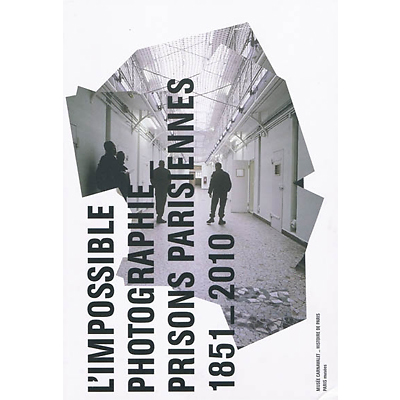
You should know by now that I am obsessed with the l’Impossible Photographie exhibition in Paris (here, here, here and here).

There is a paucity of information about the full line-up of photographers in the show, compounded by very few online  images of those we do know about.

Brendan Seibel, the author of this review, and I have been exchanging emails and he has been filling me in.

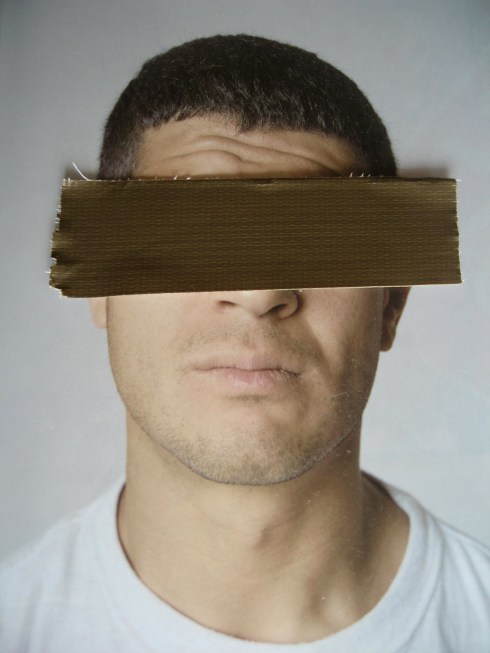
First of all, many of the photographs from contemporary shooters had faces intentionally covered. This is due to French privacy laws.

There were shots of juvenile detention for which the photographer intentionally obscured faces through shutter drag or by means of scratched glass or the people covering their faces.

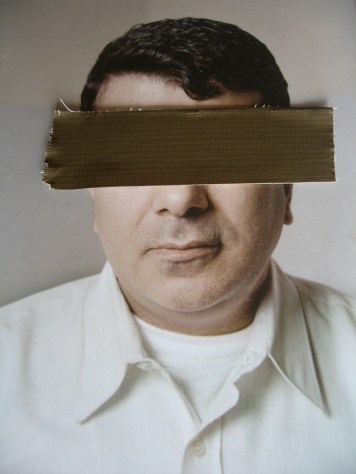
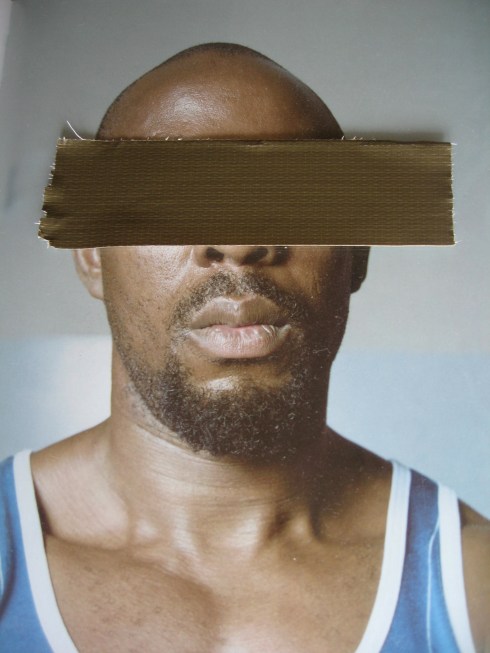
Other photographers shooting adults had either empty rooms, shots of people from behind, or the photos were displayed with marking tape covering the faces. Marc Feustel of Eye Curious thought it was funny, or interesting at least- I found it pretty inexcusable, particularly given the subject matter of the exhibition. Impossible Photography indeed.

I am gobsmacked! I asked Brendan to clarify. He did:

When I say tape on the pictures I mean the glass pane, not the prints themselves. Which is why I assume there’s some gallery work behind this manner of obstruction.

What!? Art-handlers and/or curators took the decision to use gaffer tape to make anonymous the portrait sitters!? Why bother using the photographs at all if you plan to deface them?

To apply tape after the fact is either a fantastic dada-turn (by artist, curator or the two in partnership) or it is the most ham-fisted exhibiting practice in recent history.

You might as well stop caring which way is UP^. What would the Art Handling Olympians say?

The three images above are not prints from the show.

They are illustrations I put together in my front room using a pane of glass, some gaffer tape and three portraits from Luigi Gariglio’s excellent book Portraits in Prisons.

Gariglio was not in the l’Impossible Photographie show.

PART FIFTEEN IN A SERIES OF POSTS DISCUSSING PHOTOGRAPHERS’ ACTIONS AND RESPONSES TO THE KILLING OF FABIENNE CHERISMA IN PORT-AU-PRINCE, HAITI ON THE 19TH JANUARY 2010.

The aftermath of the Haiti earthquake was zealously covered by the media and American networks particularly.

Several factors likely fed the saturation of disaster over the wires – Haiti’s geographic proximity; Haiti’s diaspora and cultural ties within the US; fresh memories of the controversial, US-backed coup and removal of Jean-Bertrand Aristide; and collective guilt over (or, alternatively, the collective amnesia of) the US’ corporate involvement in Haiti.

The US was going in full-yield again.

News Feature - Photographie de reportage d'actualité

The lifeless body of fifteen-year-old Fabienne Cherisma lies on the roof of a fallen building in downtown Port-au-Prince while looters file down the street on January 19, 2010. The young girl was carrying three ornamental mirrors when she was hit by a random shot from Haitian police as she walked with looters on the street. Photo by Lucas Oleniuk / Toronto Star.

WHY ONE IMAGE?

The still Fabienne Cherisma surrounded by the bustle of opportunists jolted me from my image-stupor for long enough to realise it was time to voluntarily step off the media-photo-treadmill and pay attention to a single image, a single person, a single story.

It occurred to me that this was barely a risk. If the majority of the imagery had stopped informing then I really had nothing to lose by redirecting my energies and time elsewhere.

(Please, don’t misunderstand me: I appreciate the purpose for a lot of media images, and I believe that they deliver immediate messages which catalyse reaction, donations and aid. That said, emoting a response in an audience is a distinct function to that of informing an audience.)

WHY FABIENNE?

In all honesty, I may have never have seen that image and with that in mind, I may have paid particular attention to another single victim of the earthquake. Chance? Compulsion? My “small contribution”? I don’t know. I don’t want to minimise my analysis of Fabeinne Cherisma’s death in photographs, but nor do I know exactly what it is yet …

Now, after some time, two unique things about the image of the dead Fabienne Cherisma still stand out.

In other pictures bodies were either buried, dusted, pulverised or piled high with other corpses. If they lay in the streets they were circled by onlookers. Fabienne’s body was isolated. Secondly, unlike 230,000 of her compatriots, it wasn’t the violent instability of concrete in the physical environment that killed Fabienne, it was the violent fallibility of human decision making that killed her; a bullet, from a gun, in a hand.

MAN-MADE NATURAL DISASTER

It has been said that no natural disaster is simply that, but that every disaster comprises natural and man-made factors. Man-made corruption, political instability and resultant poverty led to inadequate (if any) building codes. Just as human decisions prior to the quake cost lives, so they would after the quake.

The rainy season is about to begin in Haiti and the quality of aid, community solidarity, flood and disease abatement measures will determine how many people succumb to this second wave of elemental assault.

Fabienne, to me, was one of the first victims to fall to poor human decision-making following the earthquake. Others have perished since and unfortunately, thousands more are likely to die. (I read an estimated 5,000 people may die in the predicted mudslides, but I don’t know on which this is based – the cold calculation makes me quite uncomfortable).

Fabienne’s death was not in the earthquake but in its aftermath.

VISUAL FORENSICS

The day after seeing Garcia Rawlin‘s photograph for Reuters, I found a virtually identical image by Jan Grarup, except Fabienne’s body was positioned differently. Suddenly, time and timing was brought to bear upon Fabienne’s demise. Two photographers. Soon after, I saw the work of Olivier Laban-Mattei, whose photographs followed the family down the street as they carried the body. Three photographers.

Once I had launched my inquiry, the full picture developed quickly. An interview with Michael Mullady. Four photographers. Shortly after, Edward Linsmier discussed his experiences at the same locations. He was with Nathan Weber. Six photographers.

At this point I was already in contact with Grarup and Mullady. Garcia-Rawlins and Laban-Mattei did not respond to inquiries and have not until this day (I cannot be certain they received my inquiries). Grarup’s response mentioned Paul Hansen and Jan Dago. Eight photographers.

( Jan Dago did not respond to my inquiries. His images of Fabienne are here and this slideshow references looting in its title but actually has little of visual evidence to contribute to my inquiry.)

Hansen was also accompanied by Michael Winarski, US correspondent for Dagens Nyheter. Eight photographers, one reporter.

The next photojournalist to surface was James Oatway. Ten journalists – nine photographers, one reporter. Oatway mentioned Alon Skuy, who in turn mentioned the delayed arrival of Felix Dlangamandla upon the scene. Eleven photographers.

Meanwhile, I stumbled upon Nick Kozak‘s work and upon contacting him learnt of two other Canadian photographers present – Lucas Oleniuk and Matt Levitch (Tranbleman De Te). Fourteen photographers.

Soon thereafter, a reader alerted me to Frederic Sautereau‘s portfolio containing graphic images of disorder, skirmishes, police and Fabienne’s corpse. Fifteen photographers.

CONCLUSIONS

1.) There may well have been more photographers on the scene. It wouldn’t surprise me to learn so.

2.) A couple of photographers mentioned giving others space and trying not to get in others’ shots and avoiding getting photographers in their frames. Why? If a situation is chaotic and journalists are part of that chaos, what does it matter if photographers or journalists are in the scene?

oleniuk

Jan Grarup photographs police beating a looter in downtown Port-au-Prince Tuesday afternoon. © Lucas Oleniuk/Toronto Star.

Tuesday, January 19th. Photo: Jan Grarup/NOOR Images

As a small step, this mutual refusal to depict fellow professionals in the field, can be understood as the first step toward a manipulated in front of a distant audience.

The erasure of fellow media from a scene is a paradox. Journalists are required to record events as they are, but if a photographer depicts them as if he or she is working in isolation – as if from a unique one-off viewpoint – then what is delivered is not an objective, neutral description but a construction.

3.) I am not criticising the photographers who have kindly given their time, thoughts and (often) emotions to this inquiry, but I am questioning the decisions at the photodesks of mass media. I usually only see images that implicate media/photographers when the story becomes about them, when they get injured or kidnapped. Photojournalists are either the directors of a scene or the embattled hero of a scene; they are never bit-part players.

4.) I am convinced, CONVINCED, that enough evidence exists in the digital files of these fifteen photographers to identify and prosecute the policeman who fired the fatal shot.

© Alon Skuy

– – –

ALSO IN THE ‘PHOTOGRAPHING FABIENNE’ SERIES

Part One: Fabienne Cherisma (Initial inquiries, Jan Grarup, Olivier Laban Mattei)
Part Two: More on Fabienne Cherisma (Carlos Garcia Rawlins)
Part Three: Furthermore on Fabienne Cherisma (Michael Mullady)
Part Four: Yet more on Fabienne Cherisma (Linsmier, Nathan Weber)
Part Five: Interview with Edward Linsmier
Part Six: Interview with Jan Grarup
Part Seven: Interview with Paul Hansen
Part Eight: Interview with Michael Winiarski
Part Nine: Interview with Nathan Weber
Part Ten: Interview with James Oatway
Part Eleven: Interview with Nick Kozak
Part Twelve: Two Months On (Winiarski/Hansen)
Reporter Rory Carroll Clarifies Some Details
Part Fourteen: Interview with Alon Skuy

Part Sixteen: Fabienne Cherisma’s Corpse Features at Perpignan (Frederic Sautereau)
Part Seventeen: Brouhaha in Sweden following Award to Paul Hansen for his Image of Fabienne Cherisma (Paul Hansen, Olivier Laban Mattei, James Oatway)
Part Eighteen: A Photo of Fabienne Cherisma by Another Photographer Wins Another Award (Lucas Oleniuk)

EMAIL

prisonphotography [at] gmail [dot] com

Prison Photography Archives

Post Categories