contact_sheet0048

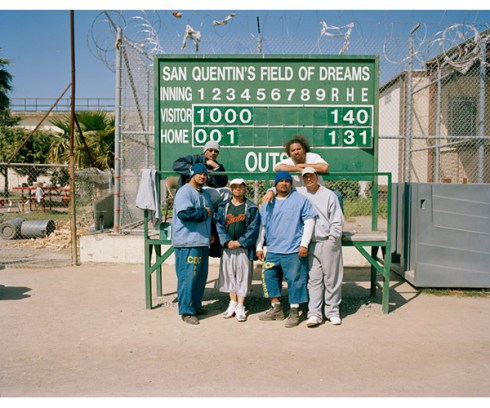
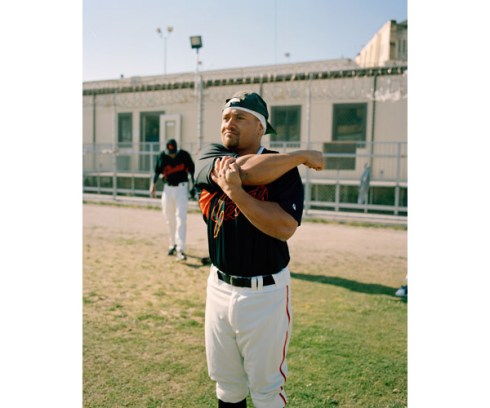
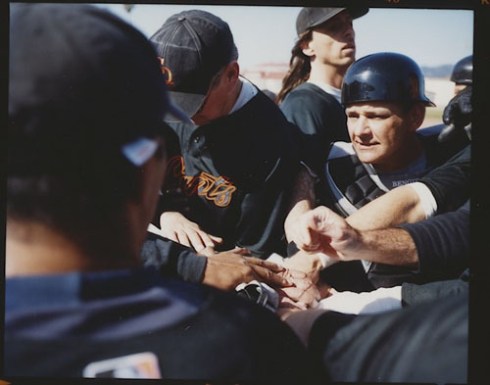
Last week, I threw up a quick post featuring Emiliano Granado’s website images of his photographs of the San Quentin Giants. Here, Granado shares previously unpublished contact sheet images, his experiences and lasting thoughts from working within one of America’s most notorious prisons.

contact_sheet0078

contact_sheet0080

What compelled you to travel across the US to photograph the story at San Quentin?
This was actually a magazine assignment for Mass Appeal Magazine.  However, the TOTAL budget was $300, so it really turns out to be a personal project after the film, travel expenses, etc. So, the simple answer to the question is that I’m a photographer. I’m curious by nature. Part of the reason I’m a photographer is to study the world around me. I like to think of myself as a social scientist, except I don’t have any scientific method of measuring things, just a photograph as a document.

With that in mind, it would be crazy of me to NOT go to San Quentin! I’d never been in a correctional institution but I’ve always been fascinated by them.  If you look through my Tivo, you’ll see shows like COPS, Locked Up, Gangland, etc. I was also a Psychology major in college and remember being blown away by Zimbardo’s prison experiment and other studies. Basically, it was an opportunity to see in real life a lot of what I’d seen on TV or read in books. And as a bonus, I was allowed to photograph.

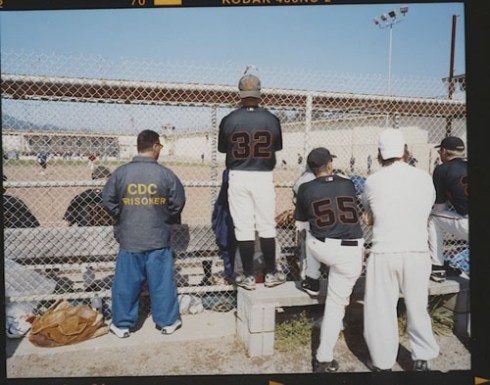
contact_sheet0008

contact_sheet0039

What procedures did you need to go through in order to gain access?
I was amazed at the lack of procedure. The writer for the story had been in touch with the San Quentin public relations people, but that was it. There was plenty of other media there that day. It was opening day of the season, so I guess it made for a minor local news story.

I’m pretty sure SQ prides itself in being so open and showcasing what a different approach to “reform” looks like.

It is my opinion that San Quentin is one of the best-equipped prisons in California to deal with a variety of visitors. Did you find this the case?
Definitely.  Access was very easy. They barely searched my equipment!  Parking was easy. I was really surprised at how easy and smooth the process was. Not to mention there were many other visitors that day (an entire baseball team, more media, local residents playing tennis with inmates, etc).
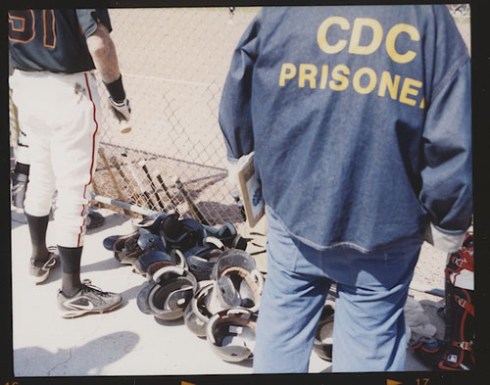
contact_sheet0013

contact_sheet0035

Did your preparation or process differ due to the unique location?
Definitely. I usually work with a photo assistant and that couldn’t be coordinated, so I was by myself. I packed as lightly as I could and prepared myself for a fast, chaotic shoot. Some shoots are slow and methodical, and others are pure chaos. I knew this would be the latter.

One thing I didn’t think about was my outfit. SQ inmates dress in denim, so visitors aren’t allowed to wear denim. Of course, I was wearing jeans. The officers gave me a pair of green pajama pants. I’m glad they are ready for that kind of situation.
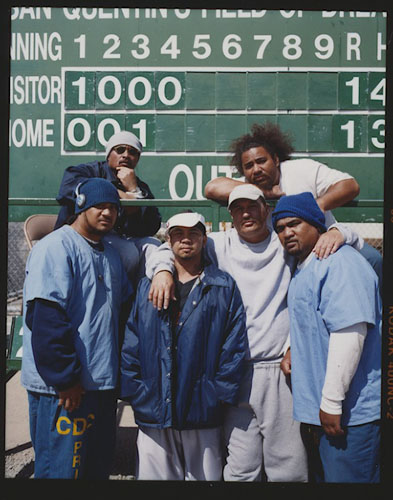
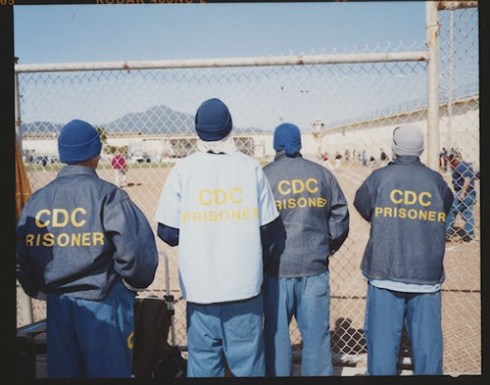
contact_sheet0017

contact_sheet0040

You are not a sports shooter per se. You took portraits of the players and spectators of inmate-spectators. How did you choose when to frame a shot and release the shutter?
Correct. I’m definitely not what most people would consider a sports photographer. I don’t own any of those huge, long lenses. However, I photograph lots of sporting events. I think of them as a microcosm of our society. There are lots of very interesting things happening at events like this.  Fanaticism, idolatry, community, etc.  Not to mention lots of alcohol and partying  – see my Nascar images!

Hitting the shutter isn’t entirely a conscious decision. That decision is informed by years of looking at successful and unsuccessful images.  It’s basically a gut instinct. There are times that I search for a particular image in my head, but mostly, it’s about having the camera ready and pointed in the right direction.  When something interesting happens you snap.

There are photographers that come to a shoot with the shots in their head already. They produce the images – set people up, set up lighting, etc.  Then there are photographers that are working with certain themes or ideas and they come to the location ready to find something that informs those ideas. I’m definitely the latter. There is a looseness and discovery process that I really enjoy when photographing like this. It’s like the scientist crunching numbers and coming to some new discovery.

contact_sheet0024

contact_sheet0062

A lot of photo editors say the story makes the story, not the images. Finding the story is key. Do you think there are many more stories within sites of incarceration waiting to be told?
I’m not sure I agree with that. I always say that a photograph can be made anywhere. Even if there is no story, per se. I definitely agree that a powerful image along with a powerful story is better, but a photograph can be devoid of a story, but be powerful anyway.

Every person, every place, everything has a story.  So yes, there are millions of untold stories within sites of incarceration.  Hopefully, I’ll be able to tell some of them.

Having had your experience at San Quentin, what other photo essays would you like to see produced that would confirm or extend your impressions of America’s prisons?
Man, there are millions of photos waiting to be made! I’m currently trying to gain access to a local NYC prison to continue my work and discover a bit more about what “Prison” means. Personally, I’d love to see long-term projects about inmates. Something like portraits as new inmates are processed, images while incarcerated, and then see what their life is like after prison.  Their families, their victims, etc.  And of course, if any photo editor wants to assign something like that, I’d love to shoot it!

contact_sheet00831

Anything you’d like to add to help the reader as they view your San Quentin Baseball photographs?
Yes. When I walked in to the yard, I didn’t know what reaction I would get from the inmates. Everyone was super friendly and willing to be photographed. Everyone wanted to tell me their story. I’m not sure how different their reaction would have been to me if I didn’t have a camera, but I was pleasantly surprised.  At first, I felt like an outsider and fearful, but after an hour or so, I felt comfortable and welcome.  It was a weird experience to think the guy next to me could be a murderer (and there were, in fact, murderers on the baseball team), and not be afraid. There was this moral relativism thing going on in my head. These people were “bad,” yet they were just normal guys that had made very big mistakes. I left SQ thinking that pretty much any one of us could have ended up like them. Given a different set of circumstances or lack of access to social resources (e.g. education, money, parenting, etc) I could very easily see how my own life could have mirrored their life.

And finally, can you remember the opposition?
I don’t remember who they were playing, but I do remember that their pitcher had played in the Majors and even pitched in a World Series. I believe the article that finally ran in Death + Taxes magazine mentions the opposition.
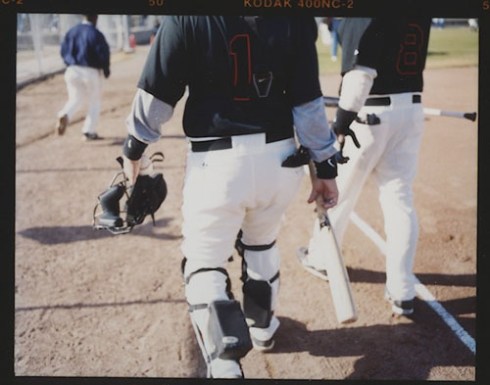
contact_sheet0077

ALL IMAGES © 2009 EMILIANO GRANADO

Authors note: Huge thanks to Emiliano Granado for his thoughtful responses and honest reflections. It was a pleasure working with you E!

Housekeeping. At the end of my previous post on Emiliano’s work, I postured when San Quentin would get more sports teams for the integration of prisoners and civilians. Emiliano has answered that for me in this interview. He observed locals playing tennis and also states San Quentin also has a basketball team.

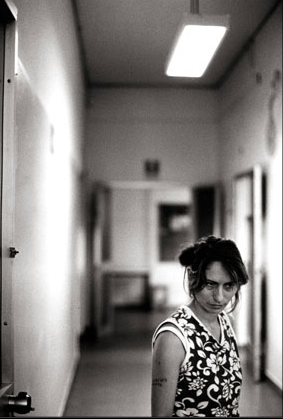
Ettore Scalambra © 2009 Luca Ferrari

Ettore Scalambra © 2009 Luca Ferrari

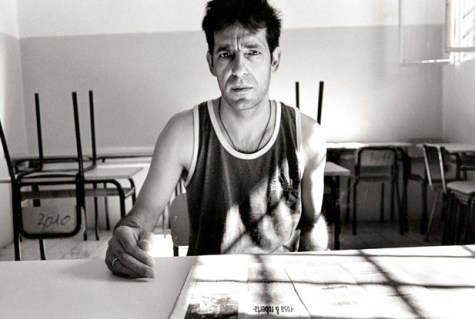
Luca Ferrari is a young documentary photographer who graduated recently from The University of Wales, Newport. In 2001, he gained a scholarship in Rome and chose to document the lives of inmates in his native Italy at Rebibbia Prison.

© 2009 Luca Ferrari

© 2009 Luca Ferrari

I have chosen seven of his most striking works. Ferrari’s portraits are accompanied by words spoken by the prisoners. I have only included a single testimony here and I encourage you all to take the time to visit his site to understand the subjects more. Ferrari offers the caveat, “I apologise if some of the text is long for internet reading, but they are an essential part of my work.” No apology needed. The necessity for the text is obvious; I would argue crucial.

I have included the words of one inmate discussing the experience of another at the end of this post. The words are hard to read. I jostled with the decision to include them or not. In the end, I decided if anything should come from an analysis of Ferrari’s work it should be to convey the real gravity of his subjects’ lives.

I also firmly believe that in the work of any documentary photographer, if the sitters and subjects stories stay in the audience’s mind longer than the photographer’s name then the photographer has succeeded.

Pierluigi Concutelli © 2009 Luca Ferrari

Pierluigi Concutelli © 2009 Luca Ferrari

The Mass © 2009 Luca Ferrari

The Mass © 2009 Luca Ferrari

Giovanni Iacone © 2009 Luca Ferrari

Giovanni Iacone © 2009 Luca Ferrari

______________________________________________

Alessia and Lucia

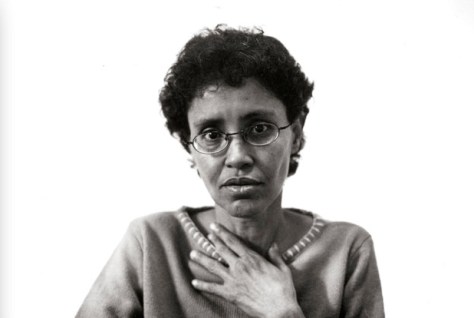
Ferrari interviewed inmate Alessia on September 10th 2003. She spoke of Lucia’s traumatic experiences and suffered injustice.

Alessia © 2009 Luca Ferrari

Alessia © 2009 Luca Ferrari

She is 42 years old. She comes from Ethiopia. She lives on the street – in the park at Piazza Indipendenza. She says she will go [be released] on the 22nd. She has a father and mother. They live her in Rome. Her parents have tried to help her but she cannot see a male person because five Italian guys have raped her. She was in the boarding school of Villa Pamphili and during the weekend she would go home. While she was at the bus stop waiting for the bus to go home, a car arrived and kidnapped her. They probably took her to a secluded place. It happened in the cell as well.

In fact, when they lock us up, she opens the water tap and fill sup the buckets, then she empties them on the floor. She then takes the toilet paper and puts it on the television screen. She does this to have the cell unlocked.

She has not been sane since she was raped. They did not only rape her they gave her a good thrashing. One of the guys made her pregnant and nobody knows the whereabouts of the kid. The social services gave him to another family.

Her parents took her to the hospital. She escaped and has never gone back. They attempted many times to help her, but nothing. She has been in a psychiatric hospital, where they bombarded her with electroshock. After this she was worse.

Lucia © 2009 Luca Ferrari

Lucia © 2009 Luca Ferrari

______________________________________________

Brief Q & A

When did you photograph the Rebibbia series and how many times did you visit?
I did the series during August 2001 and the summer of 2003. I can’t count the times, but almost every day for a month in 2001 and daily for one month in 2003.

Describe Rebibbia prison.
Rebibbia is a prison in Rome which holds 352 women and 1927 men. Within the womens’ ward there is also a special section for mothers with children under 5 years old.

What first got you interested in the subject of prisons?
I won a scholarship in Rome in 2001 to produce a exhibition on the theme of “Memory”. From that I showed my pictures to a publisher who was interested in making a book on Rebibbia. In 2003 I continued the work.

Why Rebibbia prison?
At that time I was living in Rome. Moreover, Rebibbia is one of the biggest and most important prisons in Italy.

What arrangements did you need to make to gain access to the prison (phone calls, letters, recommendations)?
I needed a letter of commission from the scholarship/publisher and also the permission of the prison authority.

Describe your interactions with the prison inmates/subjects and also the prison staff.
The permission I had was very restricted. I could not going everywhere, so I decided to add text to my pictures. The texts are not official interviews but chats I recorded in my notebooks. Sometimes the inmates gave me letters from their relatives or text written by themselves.

I tried to be as informal as possible with the texts. The prison institution is already very formal; As Erving Goffman described in Asylums it is a total institution. The status of a prisoner “is backed by the solid buildings of the world, while our sense of personal identity often resides in the cracks.”

I just tried to be a crack.

Today, March 11th 2009, marks the twentieth anniversary of the first COPS episode. Producer, John Langley, and his cohorts celebrated the when the first show of the twentieth season aired at the back end of last year. Allow me to reflect also.

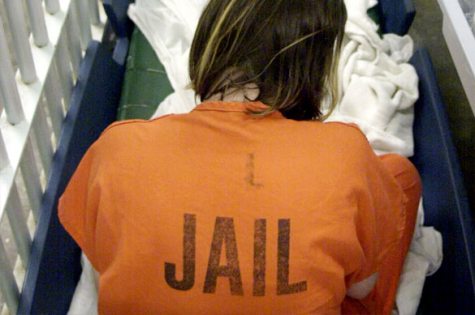
At overcrowded jails, like this one in Marion County, IN, inmates must sleep in portable containers. Credit: Inside America, Jail

At overcrowded jails, like this one in Marion County, IN, inmates must sleep in portable containers. Credit: Inside American Jail

This is not really a day of celebration. Personally, I loathe the show. It is lazy, cheap and exploitative. In that regard, it paved the way for all the reality TV on the box today. Off my soap box.

It is worth noting that the 1988 television writers strike gave rise to COPS airing on screens. A desperate Fox Channel signed up after Langley had tried and failed pedaling the format for over six years. Lucky for him. But he was no slouch and worked the opportunity when it arose. Langley struggled early in his career. My guess is his PhD in Aesthetics took his thinking outside of the rote and predictable circles of Hollywoodthink. But TVland came round eventually and Langley has since distinguished himself as a true pioneer of America’s most-loved lowbrow art form.

Inmates in this Utah jail aren't digging an escape tunnel. They're learning to garden. Credit: Inside America, Jail

Inmates in this Utah jail aren't digging an escape tunnel. They're learning to garden. Credit: Inside American Jail

Three years ago, Langley Productions introduced a spin off show that went off the streets and into the jails. Inside American Jail has ventured into sites of incarceration across the nation including the circus-like Maricopa County Tent City. The show won high ratings when the Las Vegas County Sheriff detained O.J.Simpson.

A sign at a Maricopa County jail reads "Vacancy." The rates are good but the atmosphere is lacking. Credit: Inside America, Jail

A sign at a Maricopa County jail reads "Vacancy." The rates are good but the atmosphere is lacking. Credit: Inside American Jail

In many cases the TV cameras show the true harsh realities of institution after institution with stretched resources warehousing troubled folk with few opportunities for rehabilitation. This doesn’t stop them from hamming up the quirks of jail time as evidenced by the promotional images and campy captions (shown within this article) drawn from the show’s website.

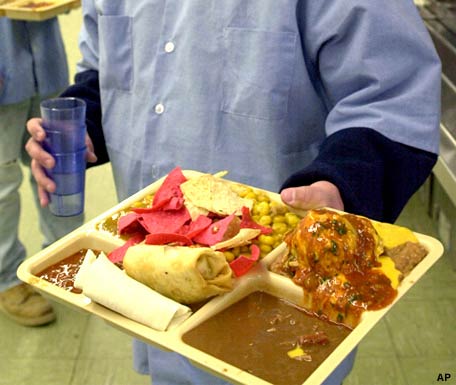
Mmm-mmm-good. An Iowa State Penitentiary inmate shows us what lunch in jail looks like. Credit: Inside America, Jail

Mmm-mmm-good. An Iowa State Penitentiary inmate shows us what lunch in jail looks like. Credit: Inside American Jail

With most debates, nothing is cut and dried and an insightful article in the New York Times shows a vaguely compassionate point of view from Langley – who, let’s be honest has made his fortune of the back of America’s criminal justice exploits.

Having seen America’s prison population soar to more than 2.2 million, and with widespread prison overcrowding in California, Mr. Langley says he now believes the nation should be reconsidering which crimes should be punishable by imprisonment. “A lot of our attention is dedicated to arresting people who have drug problems,” he said, “when the real solution may be to rehabilitate them.”

And for your viewing pleasure here’s the ridiculous promo for Inside American Jail

This interview allows Langley to describe where Inside American Jail fits into the larger television ecosystem.

111

With Emiliano‘s permission I have lifted these images straight from his website. We are working together on an interview for a second post on his work (scheduled for next week). It will include previously unpublished and untouched images from his contact sheets. Please stay tuned for that. Meanwhile enjoy my personal selection of six preferred prints.

5

03

2

06

10

ALL IMAGES © 2009 EMILIANO GRANADO

_____________________________________________

The San Quentin Giants are well known in the San Francisco Bay Area. I have met a couple of guys in the past who’ve played inside the walls during regular season – it is not unusual.

In an ideal world, the to and fro of public in and out of prison would be without restriction, threat or security protocol. This way, society could fear inmates less and inmates would not be institutionalised to the extent they are today.

I realise this is pie-in-the-sky thinking as the minority of seriously dangerous prisoners necessarily dictate the need for stringent controls. Still it doesn’t mean that increasingly trusted and regular contact between inmate and no-inmate populations cannot be our ideal to shoot for. Smaller and purposefully designed institutions would certainly be the first step in this sea change.

The scheduled games for the San Quentin Giants baseball team are the closest approximation to genuine & normalised interaction between inmate and non-inmate populations. When will San Quentin get a basketball team? Or any other teams for that matter?

____________________________________________

Check out these sources for further information on the San Quentin Giants. Press Enterprise – Long Article and Audio, Mother Jones article – Featuring Granado’s photography, California Connected – Video, Christian Science Monitor – Long article and video, NPR Feature – Audio.

And, if you are really engrossed you can always purchase Bad Boys of Summer, a recent documentary from Loren Mendell and Tiller Russell.

Inmate Jeff Curbow, 40, says he improved a watering system for the moss after others built a special hut for it at Cedar Creek Corrections Center in Littlerock, Thurston County. © Ken Lambert for The Seattle Times.

Inmate Jeff Curbow, 40, says he improved a watering system for the moss after others built a special hut for it at Cedar Creek Corrections Center in Littlerock, Thurston County. Credit: Ken Lambert / The Seattle Times.

Prison Photography always looks to visual sources that represent incarcerated peoples from a different perspective. Some of the best opportunities to do this is with images of prisoners employing their time in job placements, self-growth programmes and/or restorative justice & community education projects.

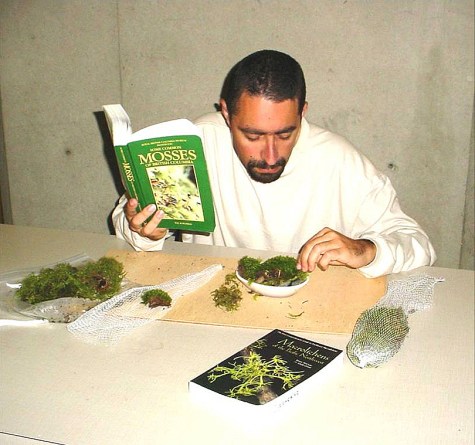
A Cedar Creek inmate and researcher in the Prison Moss Project studies mosses. Credit: Nalini Nadkarni

A Cedar Creek inmate and researcher in the Prison Moss Project studies mosses. Credit: Nalini Nadkarni of Evergreen State College

The Prison Moss Project, part of the Washington Department of Correctionssustainability efforts uses prisoners time for the benefit of multiple causes. The project studies the growth of different mosses, cultivates the fastest growing species and sells them commercially as an alternative to mosses stripped from America’s temperate rain forests. Harvested mosses constitute a $265 million/year business. 90% of mosses come from Pacific Northwest forests. The majority of mosses are used for short lived floral-arrangement. Moss can take between 20 to 40 years to regrow even a small patch of a few square feet.

The beauty of this model based on simple scientific observation and applied methods is that it is replicable the world over. And, the business that results makes sense too.

A Cedar Creek inmate and researcher in the Moss-in-Prisons project tends the garden. Credit: Nalini Nadkarni

A Cedar Creek inmate and researcher in the Moss-in-Prisons project tends the garden. Credit: Nalini Nadkarni

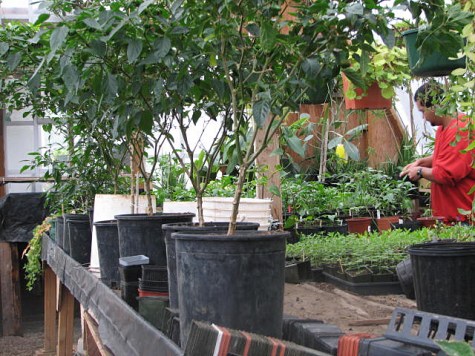
So, the benefits? First and foremost, the inmates at Cedar Creek, a minimum security facility in the rural southwest of Washington enjoy daily active learning. Prison staff have described the facility as one without idle time among its inmate population. Engaging the bodies and minds of frequently docile populations is the first step in combating recidivism.

Concurrently, tax-payers (economically-efficient prisons), tourists (untouched old growth forests) and global citizens (robust ecological legacies) all benefit too. Finally, all this pales in comparison to the rewards for the Pacific Northwest old growth forests, which in future will not suffer unsustainable tree-stripping and moss harvesting.

A Cedar Creek inmate and researcher in the Prison Moss Project in the purpose built greenhouses. Credit: Nalini Nadkarni of Evergreen State College

A Cedar Creek inmate and researcher in the Prison Moss Project in the purpose built greenhouses. Credit: Nalini Nadkarni

How did all this start? Two convergent forces came together. The first was a general move by the Washington Department of Corrections to improve its carbon footprint, sustainability and opportunities for its inmates. This involved composting, recycling, organic farming, beekeeping at selected facilities. This green awakening fell into step with Nalini Nadkarni‘s need for extended and immediate research into moss varietal growth patterns.

Nadkarni has been called the “Queen of the Forest Canopies”. I am not one for personality worship, but let’s just say her work is socially – as well as environmentally – responsible, she knows how to work media channels, her message is imperative and the Evergreen State College in Olympia is very lucky to have her on faculty. She co-founded the Research Ambassador Program at Evergreen, which seeks to combine academic and non-academic practitioners to widen the reach of environmental dialogue and deliver relevant forms of communication to different groups; from inner city youth, to business CEOs.

It’s all about respectful communication, and it’s all for the benefit of our environmental futures.

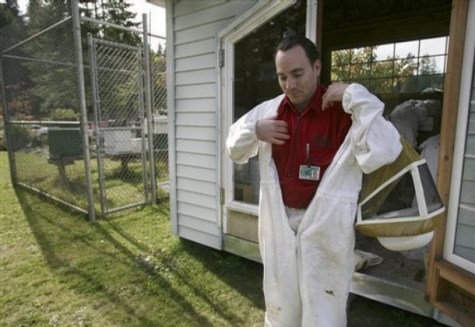
Daniel Travatte, 36, suits up to check on the Italian honey bees he cares for at the Cedar Creek Corrections Center in rural southwest, Wash. on Friday, Oct. 17, 2008. The bees are part of a program to help the prison be more environmentally green. Credit: John Froschauer/AP

Daniel Travatte, 36, suits up to check on the Italian honey bees he cares for at the Cedar Creek Corrections Center in rural southwest, Wash. on Friday, Oct. 17, 2008. The bees are part of a program to help the prison be more environmentally green. Credit: John Froschauer/AP

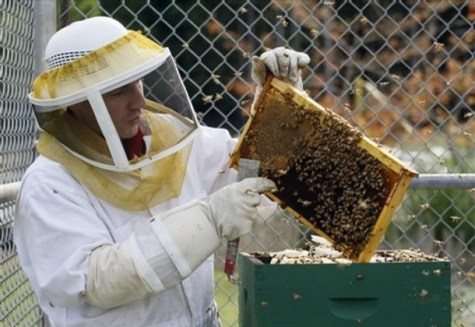
Inmate, Daniel Travatte, tends the Italian honey bees he cares for at the Cedar Creek Corrections Center in rural southwest, WA Credit: John Froschauer/AP

Inmate, Daniel Travatte, tends the Italian honey bees he cares for at the Cedar Creek Corrections Center in rural southwest, WA. Credit: John Froschauer/AP

The media coverage of this programme has often focused on the story of a young inmate who, since release, secured a biochemistry PhD full ride scholarship at the University of Nevada, Reno. He was imprisoned after accidentally killing his friend with his sports rifle in his student apartment. Four years later, he has continued the exceptional academic track he seemed destined to follow. It is a testament to the Washington Department of Corrections and Nalini Nadkarni (his mentor during time served) that his life has been delayed rather than destroyed.

But, he surely is an atypical case and it is a case that obscures the facts about the sustainable projects in operation at Cedar Creek. Not every inmate is a PhD candidate, but every inmate is a willing recipient of education – especially environmental education which, in many cases, is totally novel. Environmental education carries an almost redemptive message in that your actions can directly benefit everyone in modest but crucial ways. Actions based upon this new learning can be very therapeutic. Responsibility for oneself and other human beings is not separate from responsibility for our shared environment.

Inmates Robert Day (left) and Brian Deboer (right) check on plants in one of the organic gardens at the Cedar Creek Corrections Center in rural southwest, Washington, on Friday. The minimum-security prison has adopted many environmental and cost saving practices. Credit: AP/John Froschauer

Inmates Robert Day (left) and Brian Deboer (right) check on plants in one of the organic gardens at the Cedar Creek Corrections Center in rural southwest, Washington, on Friday. The minimum-security prison has adopted many environmental and cost saving practices. Credit: John Froschauer/AP

I have discussed sustainability efforts in California’s prison system before. In closing I’d like to repeat the sentiments of Cedar Creek superintendents who, in attempts to convince the public of the utility of this program, talk of the direct reduction in operating costs at the facility. If commentators such as myself want to espouse the rehabilitative value also then so be it. Doubters now have firm fiscal, quantitative evidence – in addition to qualitative inmate testimonies – to shape their support for sustainability programmes in prisons. WDC senior staff are adamant Cedar Creek is the correctional model to follow in the 21st century.

Inmate Robert Knowles pitches plant stalks into a compost pile Oct. 17 at the Cedar Creek Corrections Center in rural southwest Washington. The minimum-security prison has adopted many environmental and cost-saving practices. Credit: John Froschauer/AP Photo.

Inmate Robert Knowles pitches plant stalks into a compost pile Oct. 17 at the Cedar Creek Corrections Center in rural southwest Washington. The minimum-security prison has adopted many environmental and cost-saving practices. Credit: John Froschauer/AP

There are many resources out there on the Prison Moss Project and Nalini Nadkarni‘s ongoing evangelism. I personally would recommend in this order … Nalini Nadkarni’s recent TED presentation about the opportunities for academic & non-academic communities to unite for greater good; this extended video from KCTS (9 minutes); this interview with Nadkarni; a recent Mother Jones summary of her projects and two media reports (1), (2).

Woman in cell, playing solitaire. ca. 1950. Nickolas Muray. Transparency, chromogenic development (Kodachrome) process. George Eastman House Collection - Accession # 1983:0567:0151

Woman in cell, playing solitaire. ca. 1950. Nickolas Muray. Transparency, chromogenic development (Kodachrome) process. George Eastman House Collection - Accession # 1983:0567:0151

I was blown away last month when the indicommons feed landed Nickolas Muray’s colour commercial photography on my desktop. Muray’s commercial work is fresh, witty, a sock in the eye and an all round feast of fun. The fact I haven’t any knowledge ofi the advertised products makes my enjoyment all the more visuocentric and naive. And that’s okay … every so often.

Pop music sprouted in the fifties, right about when this image was taken. I have Alma Cogan playing in my mind as I browse Muray’s commercial kodachrome prints. Visually, Woman in Cell, Playing Solitaire is an alterworld mash-up of Jehad Nga and Edward Hopper. Don’t you just dig those colours? None of the psychological edge though; the lady, despite being locked up, hardly looks harassed or without hope. Rather, she looks bored.

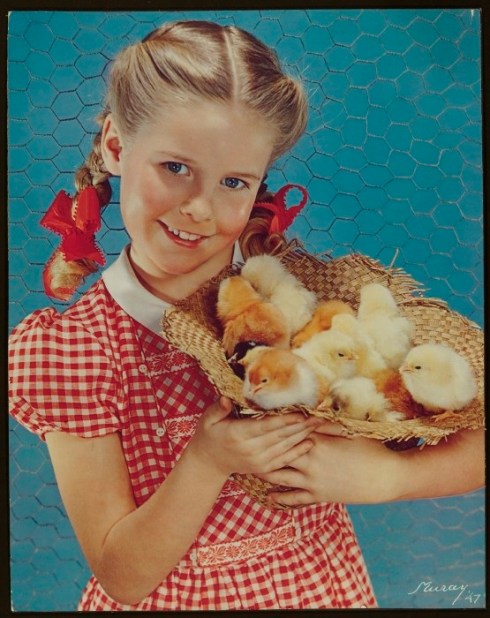
To continue the fest of technicolour, let me include the image below. Admittedly, it stretches the theoretical parameters of this blog but I would argue the subject is relevant. Depicted is the harsh subjugation of fowl to sites of incarceration – evidenced by the chicken wire and possibly even the girl’s well-disguised, maniacal grasp of the hat!

American Cyanamid Girl with Straw Hat Full of Chicks, 1947. Nickolas Muray. Color print, Assembly (Carbro) Process. George Eastman House. Accession # 1971:0048:0017.

American Cyanamid Girl with Straw Hat Full of Chicks, 1947. Nickolas Muray. Color print, Assembly (Carbro) Process. George Eastman House. Accession # 1971:0048:0017.

To end on a serious note, I knew of the exceptional George Eastman House collection, but was frequently frustrated by the archaic platform of its website. Browsing was not fun. To GEH’s credit they recognised this enfeeblement and avidly committed important works to the Flickr Commons project. Kudos to them. We are all the better for it! I am just happy an image came along with vaguely carceral imagery, providing me an excuse to share.

_________________________________________

Nickolas Muray (American, b. Hungary, 1892-1965) immigrated to the United States in 1913, working first as a printer and then opening a photographic portrait studio in Greenwich Village in 1920. He became well known for his celebrity portraits, publishing them regularly in Harper’s Bazaar, Vanity Fair, Vogue, Ladies’ Home Journal, and The New York Times. After 1930, Muray turned away from celebrity and theatrical portraiture, and became a pioneering commercial photographer, famous for establishing many of the conventions of color advertising. He is considered the master of the three-color carbro process. Muray’s portraits of Frida Kahlo are well known and well-loved.

While not related to the work of a single photographer or project, the lines of argument proffered by Subtopia are so resonant that Prison Photograph Blog feels the diversion justified. Through summary of the four chosen articles, we can gaze upon the complexity and omnipotence of incarceration in our frantic, contested global society. Subtopia’s images will knock you on your arse!

The analysis of Bryan Finoki at Subtopia consistently join the dots between geopolitics & biopolitics; movement & paralysis; spatial theory and spatial reality. Unsurprisingly, for a writer in the 21st century, his interest in the production of structures & networks, often leads him to theories of militarised space.

I am in awe of Subtopia’s output. From lengthy and comprehensive issue-based summaries; to purposed surveys; from fine image-editing; to diverse links and sources in each post. Finoki serves up rigorous analysis, or entertainment, but usually both.

© 2009 Subtopia/Brian Finoki

© 2009 Subtopia/Brian Finoki

Over the past couple of years Finoki has submitted a few pieces on “The Prison”. Subtopia’s preoccupation with power and spatial production means carceral sites/archipelagos are referenced frequently. Finoki has been keen to unravel the mysteries of the Global War on Terror (GWOT), its structures and its legacies – this always means dealing with detention, rendition, and construction (that can be visible, but more often invisible.)

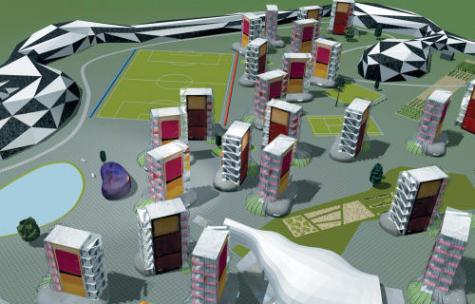
Article OneFantasy Prison is a meditation on potential prison architectures spurred by the 2007 Creative Prison project a collaboration between architect Will Alsop prisoners at HMP Gartree to redesign corrective and rehabilitative space. Two things struck me about the suggestions made by prisoners. 1) They were most afraid of attack from other inmates, and therefore an option to lock themselves IN was a shared high priority, and 2) They wanted to include a designated photo-room within the visitors center to allow for photography and variant backgrounds. I have posted before about manifestly curious prison-polaroid aesthetic. This article also threw up the crucial social responsibilities of architects & designers in a time of prison expansion, most notably the Prison Design Boycott launched in 2004 by the group Architects/Designers/Planners for Social Responsibility (ADPSR).

A rendering of Will Alsop’s new corrections landscape, developed in collaboration with prisoners, resembles a cross between Communist-era housing blocs and a series of South Beach condos. Courtesy Alsop Architects

A rendering of Will Alsop’s new corrections landscape, developed in collaboration with prisoners, resembles a cross between Communist-era housing blocs and a series of South Beach condos. Courtesy Alsop Architects

I have been a fan of Alsop’s work since his 2005 hypothetical SuperCity project which would subsume my hometown in the North.

Article TwoFloating Prisons is a historical survey of sea-faring, carceral solutions by warring and colonising nations. Finoki maps the use of prison ships from 18th & 19th century economic necessity to transport human cargo to contemporary manoeuvrings in avoidance of international law. He makes reference to the convenience use of islands as sites of detention, the use of ships as temporary housing in leiu of land locked sites, and the dubious experiments in swapping refugees held in off-shore camps. The summary was to say that new legal definitions and controls are creeping in giving one the sense, “refugees and migrants are just an excess of biomass to be herded around on prison islands or in prison vessels, traded like geo-economic commodities, removed and disposed of like capitalist human waste, reinforcing the state of exception that goes on re-organizing the architectural spheres of global migration.” Phenomenal.

The Vernon C. Bain is a prison barge operated by the City of New York, and houses some 800 prisoners in a medium and maximum security facility. She was built in 1992 at a cost of $ 161 Million, which as usual, means it would have been cheaper to send the inmates to Harvard instead.

The Vernon C. Bain is a prison barge operated by the City of New York, housing 800 prisoners in a medium and maximum security facility. Built in 1992 at a cost of $ 161 Million means it would have been cheaper to send the inmates to Harvard instead. (Source)

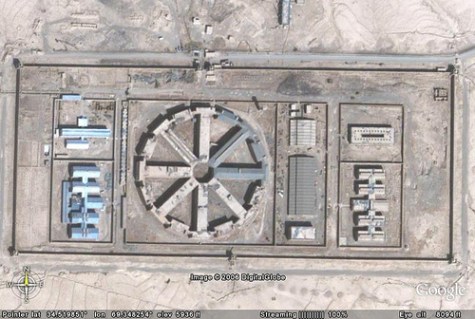
Article Three“Block D” enters the Pantheon of GWOT Space is a meditation on the totality of restricted space across the globe – in multiple nations – in order to sustain military operations. The point of the survey (which includes previously known sites such as Guantanamo, Baghdad’s ‘Green Zone’, Bagram Theater Internment Facility, US homeland immigrant detention facilities, and Taxi networks for rendition) is to add another site to the list: “Block D” in Pul-e-Charki Prison just east of Kabul, Afghanistan.

With persistent references to journalists’ work for the BBC, New York Times and Washington Post, Finoki summarises, ” ‘Block D’ or ‘Block 4’ as it is also apparently known: a newly built detention facility [is] quickly becoming understood as the Asian corollary of Guantánamo Bay. No matter, it is another utterly disturbing black hole in the universe of legally suspect and secret space.” Finoki doesn’t focus on the conditions of detention but rather America’s self-created legal imbroglio.

Nearly a year after writing, this analysis seems prophetic now, as the American public is slowly coming to realise that Obama’s closure of Gitmo doesn’t necessarily magic away the human rights issues … only shifts them somewhere slightly more obscured. As with Gitmo, one expects Block D to focus the new rounds of jousting between the same ideological stakeholders.

Pul-e-Charkhi prison, Kabul, Afghanistan. Construction began in the 1970s by order of then-president Mohammed Daoud Khan and was completed during the Soviet invasion (1979-89). The prison was notorious for torture and abuses under the control of Afghanistan's communist government following the invasion by the Soviet Union.

Pul-e-Charkhi prison, Kabul, Afghanistan. Construction began in the 1970s by order of then-president Mohammed Daoud Khan and was completed during the Soviet invasion (1979-89). The prison was notorious for torture and abuses under the control of Afghanistan's communist government following the invasion by the Soviet Union. (Source)

Article FourThe Spatial Instrumentality of Torture is a stomach-pounding dose of reality in the form of an interview with Tom Hilde, Research Professor in the School of Public Policy at the University of Maryland. I will not offer a synopsis, just encourage you to read through it. The interview is illustrated in part by Prison Photography‘s favourite Richard Ross.

Hilde ends with the sobering words, “The secrecy of much of the US torture program, its physical spaces, and its extent has certainly kept public debate rather subdued. But I think the dualistic moral framework has been even more corrosive of a public understanding of torture in general and the consequences of American torture in particular. When a majority of Americans say that torture is acceptable for some purposes, I think they have the fantasy of the ticking timebomb, and likely racism in many cases, in the backs of their minds.”

Camp X-Ray, Guantanamo, Cuba. The facility has not been used since early 2002, and recent heavy rains at Guantánamo Bay have brought about overgrowth. Credit: Kathleen T. Rhem

Camp X-Ray, Guantánamo, Cuba. The facility has not been used since early 2002, and recent heavy rains at Guantánamo Bay have brought about overgrowth. Credit: Kathleen T. Rhem

Kevin Van Aelst for The New York Times

Kevin Van Aelst for The New York Times

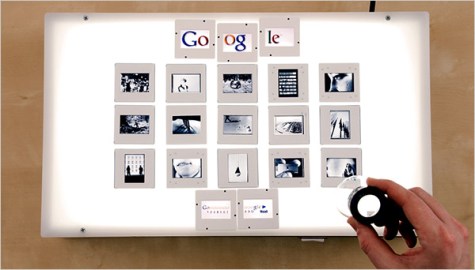
I posted about Google’s collaboration with LIFE Magazine a few months ago. I – like many folk – were excited to dig in, ferret about and generally enjoy the visual culture of decades past. It seems the novelty has worn off for some. An excellent diatribe, Photo Negative, in the New York Times last week made the point succinctly.

“When Google first announced on its blog that the Life archive was up, it seemed like another Google good deed: rescuing the name of Life magazine and the glorious 20th-century tradition of still photojournalism. But Google has failed to recognize that it can’t publish content under its imprint without also creating content of some kind: smart, reported captions; new and good-looking slide-show software; interstitial material that connects disparate photos; robust thematic and topical organization. All this stuff is content, and it requires writers, reporters, designers and curators. Instead, the company’s curatorial imperative, as usual, is merely ‘make it available’.”

Prisoners watching baptism of repentant killer, in Harris County jail, TX, US. March 1954. Credit: John Dominis. ©2008 Google

Prisoners watching baptism of repentant killer, in Harris County jail, TX, US. March 1954. Credit: John Dominis. ©2008 Google

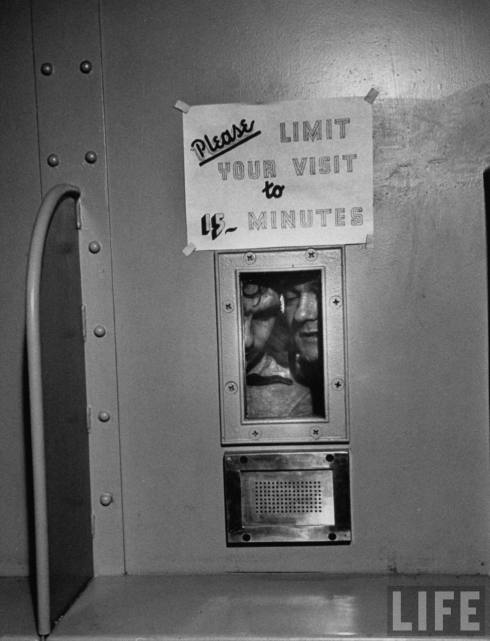
With little in the platform or functionality to inspire users, Google could find visitors’ perusal time shrinking. Users might face unavoidable limits to their search time and patience. 15 minutes?


EMAIL

prisonphotography [at] gmail [dot] com

Prison Photography Archives

Post Categories