6a02eefd3013dce54a128e1873c84929_large

In the final two days of fundraising, Echoes Of Incarceration is a long term project that helps children of incarcerated parents to make documentary films about the effects of America’s prison industrial complex — on society, on us, on families, on communities, and mostly on children without one or both parents behind bars.

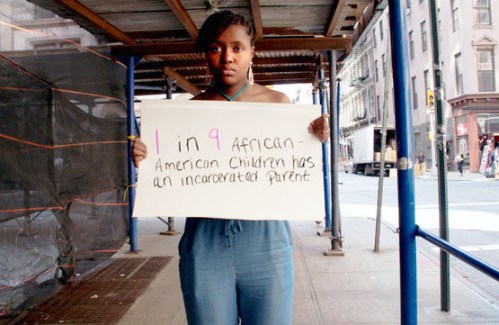
There are an estimated 2.7 million children in America with one or both parents in prison or jail. Mass incarceration has created fundamental weaknesses in society. Mass incarceration as easily impacts individuals as it does vulnerable groups (the poor, the under-educated, the discriminated against) and often we perceive the effects as lasting only years, or being contained within the experience of one identified moment, lifetime or geographical space. We neglect to recognise that mass incarceration is piling pressures on top of problems on top of expectations on top of America’s young, developing citizens.

We live in a society in which vast numbers of youth must negotiate formative years without parental support. The prison industrial complex has burdened our youth with an almost inconceivable set of problems that they did not ask for, and they do not deserve.

Echoes Of Incarceration brings much needed scrutiny to the issue of mass incarceration and crucially it does it through the lens of the innocent people who have inherited a broken, brutalising system we made. Their latest productions deal specifically with the Bill of Rights of Children with Incarcerated Parents.

Please, fund this important project.

Below is a 2009 production made by Echoes Of Incarceration

424f5143723015bd18527740bc32c593_large

52d6b990-f57c-4e4b-895f-5e0a8c5864ff

Art For Justice has a new exhibition opening in Philadelphia.

Free Library of Philadelphia, 
1901 Vine Street, Philadelphia, PA 19103. (Between 19th and 20th Streets on the Benjamin Franklin Parkway)

Jan. 12 – Feb. 15, 2015

FERGUSON, THE ZINE

David Butow is raising cash on Kickstarter to fund the printing of a zine of his images made in Ferguson over the past 3 months. The images have been made, the edit done and the sequencing finalised. I’ve seen a PDF of Ferguson and it is a zine that is taut and emotional. It is also quite different from other projects I’ve seen coming out of Ferguson. Many of the scenes framed by Butow have multiple vignettes playing out in them all at once. They’re considered and crafted images. It’s both a photographers’ photography project and a statement relevant to all. It works as art and as political marker. It is relevant to documentarians and also, I think, will stand up to the test of time. Butow travelled to Ferguson twice — once after Michael Brown’s death and once after the grand jury decision not to indict Darren Wilson. As well as 34 photographs, Ferguson also includes raw interview transcripts used in the grand jury deliberations. One offers a nuanced view of the neighborhood where the shooting took place and of Michael Brown himself. “The work goes beyond the violence to offer an intimate and emotional portrait of the community’s reaction – from conflict to prayer – and puts the meaning of what occurred in Ferguson in historical context,” says Butow. 1

——-

FUNDRAISING, KICKSTARTING

Please consider backing this timely, no-nonsense, self-starting publication. Printed in California, using recycled paper and inks. 64 pages, 34 original B&W photographs. 8.5″ x 11″

redaction

I was astounded when a press release (copied below) hit my inbox. Currently, private prison corporations have no legal requirement to provide the same types and amount of information that the public and journalists can demand of state and federal prisons!

A new law looks to correct this disparity.

Last week, U.S. Representative Sheila Jackson Lee (D-TX) reintroduced the Private Prison Information Act (PPIA) in Congress. The bill, HR 5838, requires non-federal correctional and detention facilities that house federal prisoners to comply with the Freedom of Information Act (FOIA).

The Human Rights Defense Center made the following press release last week:

Private Prison Information Act Reintroduced in Congress, to Ensure Public Accountability at Privately-Operated Prisons

Currently, private companies such as Corrections Corporation of America (CCA) and the GEO Group are not required to comply with FOIA requests even when they operate facilities that hold federal prisoners through contracts with federal agencies, and are paid with public taxpayer funds. This includes privately-operated facilities that house immigration detainees.

Alex Friedmann, associate director of the Human Rights Defense Center, and Christopher Petrella, a doctoral student at UC Berkeley, have worked closely with Rep. Jackson Lee’s staff over the past two years to reintroduce the PPIA during the 113th Congress.

Various versions of the PPIA have been introduced since 2005; however, private prison firms and their supporters have lobbied against the bills. For example, CCA’s federal lobbying disclosure statements have specifically referenced lobbying related to the PPIA.

Friedmann and Petrella argue that because private prison corporations rely almost entirely on taxpayer funds, and perform the inherently governmental function of incarceration, the public has a right to obtain information pertaining to private prison operations. In short, the government should not be able to contract away the public’s right to know through FOIA requests.

Friedmann testified before the House Subcommittee on Crime, Terrorism and Homeland Security in June 2008 in support of a previous version of the Private Prison Information Act.

A coalition of 34 criminal justice, civil rights and public interest organizations submitted a joint letter to Rep. Jackson Lee in December 2012, followed by a renewed letter on June 11, 2014, expressing support for the PPIA and encouraging her to reintroduce the bill.

The letter noted that “If private prison companies like CCA and GEO would like to continue to enjoy taxpayer-funded federal contracts, then they must be required to adhere to the same disclosure laws applicable to their public counterparts, including FOIA.”

The signatories to the joint letter included the Center for Constitutional Rights, Center for Media Justice, Ella Baker Center for Human Rights, Florida Justice Institute, Grassroots Leadership, Enlace, In the Public Interest, National CURE and FedCURE, Justice Policy Institute, Justice Strategies, Prison Policy Initiative, Private Corrections Institute, Southern Center for Human Rights, The Sentencing Project, Southern Poverty Law Center and Texas Civil Rights Project. The NAACP has also voiced support for the PPIA.

“This bill is about public accountability – to ensure that for-profit prison corporations, which assume the role of the government when incarcerating federal prisoners, must comply with the same Freedom of Information Act obligations as federal agencies such as the Bureau of Prisons,” said Friedmann. “That is only fair and reasonable, but private prison companies will most likely object to the bill, as they favor secrecy over fairness.”

“The introduction of the Private Prison Information Act constitutes just the first step in bringing transparency and accountability to an industry that’s funded almost entirely by your and my tax dollars,” Petrella added. “We’ll continue to work tirelessly until this bill is brought to fruition.”

For more information:

Visit the Private Prison Information Act website.

Alex Friedmann
Associate Director, Human Rights Defense Center
(615) 495-6568
afriedmann@prisonlegalnews.org

Christopher Petrella
(860) 341-1684
christopherfrancispetrella@gmail.com

Pigs' Disco by Stuart Griffiths

———

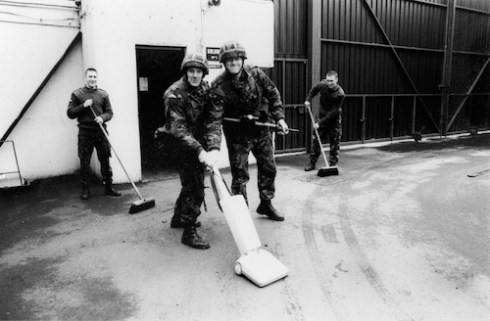
Stuart Griffiths was a kid when he went to Northern Ireland, in 1988, as a fresh recruit of the British Army. His first Christmas as an adult was spent on base. He dropped a tab of acid.

In the book Pigs’ Disco, Griffiths details his time serving for queen and country, his fear, boredom and struggle see what could possibly follow. I wrote about the body of work for Vantage, the new photography “collection’ published by Medium.

“At the turn of the nineties, Britain reveled in rave culture. From Bognor to Bangor, loved-up youth danced until dawn in clubs and beyond. A decade before cell phones, pill-popping kids were convening mass-raves in farmers’ fields and empty warehouses by word of mouth.

If there was one place you’d think this euphoric wave could not breach, it’d be the barracks of the British Army. But you’d be wrong. Pigs’ Disco details Griffiths’ drug addled misadventures from 1988 to 1993 while stationed, for the most part, in Northern Ireland as a paratrooper with Her Majesty’s finest.”

Read the full story: Tripping On Acid While In Her Majesty’s Service (Medium)

———

Stuart Griffiths - Pigs' Disco

Stuart Griffiths - Pigs' Disco

Pigs' Disco by Stuart Griffiths

Stuart Griffiths - Pigs' Disco

Pigs' Disco by Stuart Griffiths

Letters To Bill

Pigs' Disco by Stuart Griffiths

Pigs' Disco by Stuart Griffiths

——–

The book Pigs’ Disco, by Stuart Griffiths is published by Ditto Press.

Pigs' Disco by Stuart Griffiths


David_Levi_Strauss_words_not_spent_today


TORTURE REVELATIONS

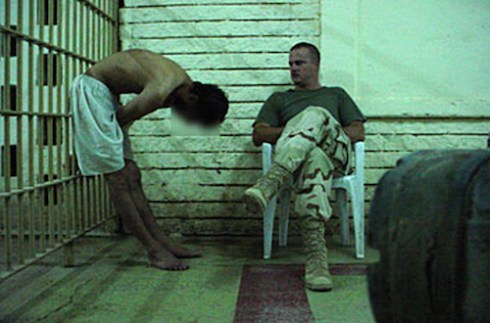
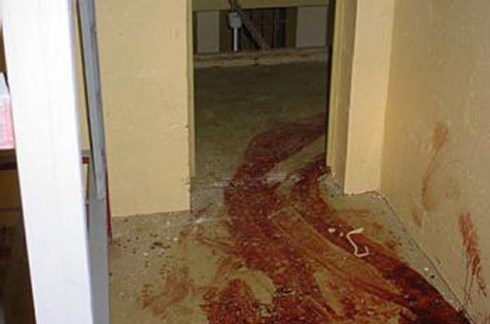
It was a double whammy this week. Everyone noticed the 6,000 page report into CIA torture. Many won’t know that today was the day that Justice Department attorneys presented the Obama administrations rationale for suppressing over 2,100 photos and videos of torture by American military personnel in Iraq, and Afghanistan.

Since 2009, the Obama administration has argued that releasing them would inflame anti-American sentiment abroad and place Americans at risk. Federal Judge Alvin Hellerstein of the United States District Court for the Southern District of New York is not so easily convinced and wants the government to explain, photograph by photograph, how each might pose a threat to national security. The fight to release these photos dates to 2004, when the American Civil Liberties Union filed a Freedom of Information Act request.

David Levi Strauss has tracked these developments from the very beginning. Several chapters in his new book is Words Not Spent Today Buy Smaller Images Tomorrow (Aperture, 2014) deal directly with the war over control of torture photos.

CONVERSATION

Strauss and I, for WIRED talked about state secrets, how the brain is wired, the political power of images and whether or not photos of Osama Bin Laden’s corpse actually exist.

WIRED: Why has the release of 2,000-plus remaining images and videos made by US military personnel in Abu Ghraib not been resolved?

Strauss: Because of the effectiveness of the images. They became the symbol of the change in US policy to include torture. Images are very powerful. That’s why the US government has become very afraid of the effects of these images worldwide.

The other amazing thing about the Abu Ghraib images was that they crossed the boundary between private and public. That is unusual. It changed things for photojournalism, for the military, certainly, and for the public at large. Prior to the release of the Abu Ghraib images, the military was handing out cameras to soldiers so that they could use photos to stay in touch with their families, and to be used operationally.

Read the full conversation: The War Over the US Government’s Unreleased Torture Pictures.

[All images for this Prison Photography post via Salon]

1

6

3

5

4

2

abughraib

Untitled-by-Derrick-Quint-005

Untitled by Derrick Quintero and Ann Catherine Carter. From the “Surrogate Project”

WHAT

This week, apexart announced the three winners of its Unsolicited Proposal Program. One of the selected projects was Life After Death and Elsewhere, organized by Tom Williams and Robin Paris.

WHO

Artist and educators, Paris and Williams coordinate the best prison arts program I’ve never written about.

They work in tandem with prisoners on death row in Tennessee. The Riverbend Maximum Security Institution imprisons 79 people on death row. Eleven prisoners — Abu Ali Abdur’Rahman, G’dongalay Berry, Tyrone Chalmers, Gary Cone, John Freeland, Kennath Artez Henderson, Nikolaus Johnson, Donald Middlebrooks, Harold Wayne Nichols, and Derrick Quintero among them — have worked with Paris and Williams on a few projects. I have admired their practice for a long time.

I’d be embarrassed about bringing their work to you when they are already so far down their creative paths if I didn’t think they still had long and beautiful journeys planned out.

You can see a lot of their work, stretching back 18-months, on the R.E.A.C.H. Coalition blog.

WHERE

Earlier this year, in Nashville TN, in collaboration with artists from Watkins College of Art they produced the exhibition Unit 2 (part 1) from which several of the images included herein originated. Recently, they completed Unit 2 (part 3). In both cases they partnered with small local galleries to put on the events.

PHOTOGRAPHY’S USE

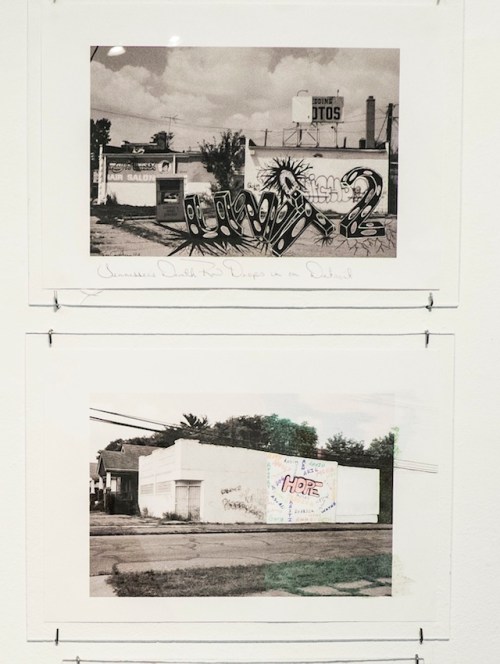
Photos feature heavily in the collaborations between the condemned men and outside artists. For the series “Add-Ons” an outside artist would provide a prompt in the form of a drawing or piece of writing but often an image. The prisoner would then add to it by either drawing or writing directly on the print, or riffing off of it in words and sketches to create a second companion piece.

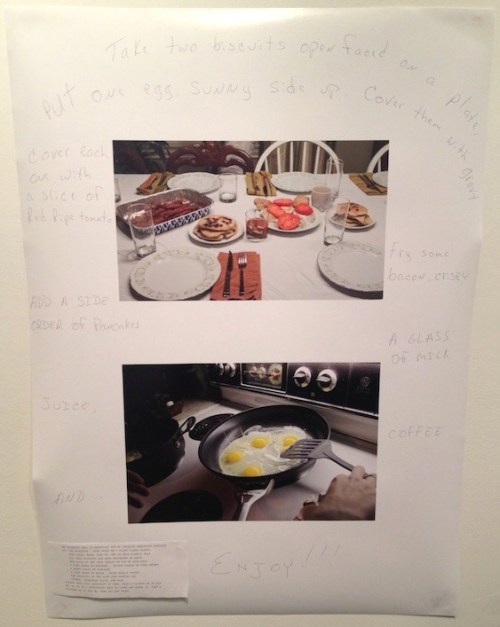
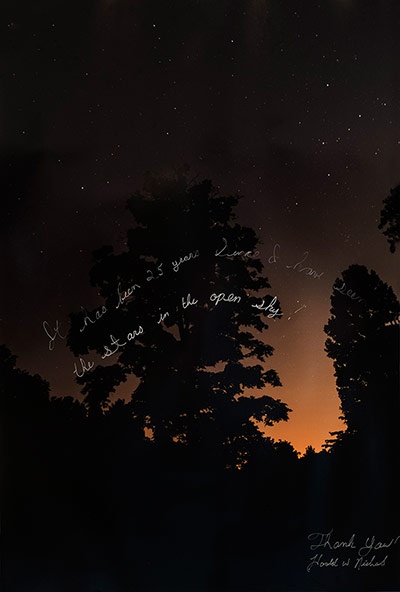
For the series “Surrogate” a prisoner would make a request for someone on the outside to do something for them by proxy — to enjoy a library full of books, to eat a hearty breakfast prepared to precise specifications, or to make a family portrait. In many cases the evidence and *shared experience* was documentation usually in the form of a photo.

AN ADVOCATE’S MESSAGE

While the process in producing these works is necessarily personal and intimate, the sharing of the artwork and the political urgency needn’t be. Paris, Williams et al. want to use exhibitions as moments for discussion and public education. Namely, they want to contribute to the anti-death penalty movement. As Paris told Hyperallergic, “The system of legal defense for capital cases is shoddy and poorly funded at best; there are no rich people, to my knowledge, on death row. We incarcerate more of our population than any other country. I could go on and on. It’s shameful. It’s not who we think we are as a country.”

PROPOSAL

This isn’t prison fetishism. The men on death row alongside the artists and students corralled by Paris and Williams are collaborators in the fullest sense. I think it is significant that the winning proposal was written by the prisoners; I think it may have been a deciding factor for the judges on the quality, intent and pedagogy of the art.

The prisoner-artists’ proposal reads:

During the past year, the state of Tennessee has staged a nearly unprecedented offensive against those individuals it has sentenced to die. A state that has executed only six people since 1960 has recently scheduled ten executions. As prisoners on death row, and imminent victims of that state-sponsored violence, we represent the “bare life” described so powerfully by historians and philosophers. During the past two years, however, through an unusual partnership with artists, writers, and educators in Nashville, we have endeavored to make our circumstances visible to those beyond the walls of prison. Through published writings and art exhibitions, we have addressed a public that knows as little of our lives as they do of the indignities of belly chains or the menacing shimmer of razor wire.

Our past exhibitions have often included collaborations with artists and art students on the outside. We have created “add-on” drawings (exquisite corpses, more or less) with people beyond the prison, and we have started sketchbooks before sending them out for strangers to finish. We have composed “surrogate” assignments for outsiders to realize (photographs of the stars, for instance, which some of us haven’t seen in 25 years, or the libraries in cities that we will never visit). We have made gifts of our art works and offered them to visitors to the opening of an exhibition in exchange for their photographic portraits. In one show, we exhibited a diorama that traces the all-too-common path from poverty to prison, and in other, we exhibited our personal snapshots and family photos to offer the world a glimpse of our social lives and to show that we are more than prisoners and men condemned to death

In response to your call, we propose an exhibition that will feature designs for our own memorials alongside our representations of the lives we would pursue if we were free. We have all been condemned to death, and the state of Tennessee intends to kill us, but some of are innocent, and we all hope to demonstrate that we are more than the sum of our worst deeds—or that we might be.

The works we will submit will include drawings, paintings, photographs, models, and text-based pieces. Some of us will submit statements outlining reasons for refusing to design their own memorials.

Kudos to them and all involved. Hope to be in NYC when it shows! Robin Paris and I are currently in conversation and I hope to share that back-and-forth with you in the future, but until then, I’d like to use this recent success as an excuse to share some images of the prisoners’ work.

Images courtesy of Guardian, Hyperallergic, Solitary Watch.
photo_with_drawing
Upreyl Mitchell and Harold Wayne Nichols, “Untitled” (add-on artwork), acrylic and colored pencil on photograph, 13″ x 9″ in (photo courtesy Robin Paris)
Coop1
Mika Agari, Jessica Clay, Amy Clutter, Robert Grand, Kristi Hargrove, Robin Paris, Sharon Stewart, Tom Williams, Weng Tze Yang, and Barbara Yontz, “Surrogate Project for Harold Wayne Nichols: Breakfast for Dinner,” photograph.
photo-67
Donald Middlebrooks, ‘Silence is Compliance’ (acrylic on canvas board)
The-Night-Sky-001
‘The Night Sky’ by Robin Paris and Tom Williams with writing by Gary Cone, Harold Wayne Nichols, and Donald Middlebrooks. From the Surrogate Project
Untitled-by-Nickolus-John-002
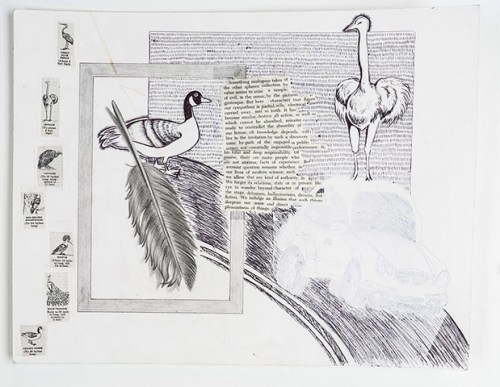
Nickolus Johnson and Zack Rafuls, “Untitled” (add-on drawing), mixed media on paper, 14 x 11 in.
Photograph-and-drawing-by-004
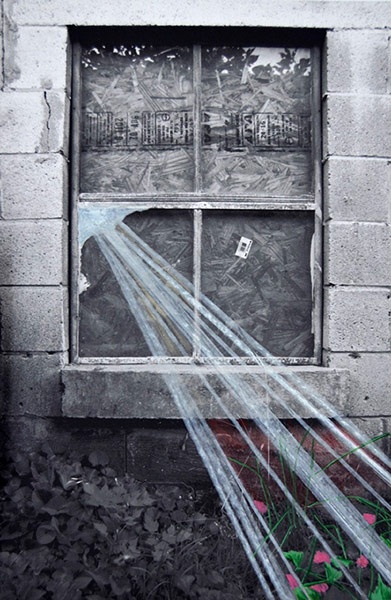
Photograph and drawing, by Upreyl Mitchell and Kennath Artez Henderson. From the Surrogate Project.

ARTISTS

Robin Paris is associate professor and chair of the Department of Photography at Watkins College of Art, Design & Film in Nashville, Tennessee. She is a graduate of The Evergreen State College in Olympia, Washington, and the Savannah College of Art and Design, and she has taught at Belmont University and The University of the South, Sewanee. Her work has appeared in exhibitions throughout the country. She has been co-facilitating the art workshop in Unit 2 (the Death Row unit) of the Riverbend Maximum Security Institution since 2013. Her recent work has involved collaborations with its residents.

Tom Williams is assistant professor of art history at Watkins College of Art, Design & Film in Nashville, Tennessee. He is a graduate of Stony Brook University and the Whitney Museum Independent Study Program, and he has taught at the School of Visual Arts, the Museum of Modern Art, New York University, and Vanderbilt University. His writings have appeared in Art in America, Grey Room, and other publications. He has been co-facilitating the art workshop in Unit 2 (the Death Row unit) of the Riverbend Maximum Security Institution since 2013.

APEXART

apexart is a non-profit arts organization in Lower Manhattan that was conceived to offer opportunities to independent curators and emerging and established artists, as well as to challenge ideas about art, its practice and curation. apex art is at  291 Church Street, New York, NY 10013 USA and it puts on exhibitions, Fellowship Program, publications, and public programs. It is free. Contact is 212 431 5270 or info@apexart.org. Hours are Tues – Sat 11am-6pm.

UNSOLICITED PROPOSAL PROGRAM

Anyone, from anywhere, may submit an idea-based exhibition to the Unsolicited Proposal Program. Each annum, three winning proposals are presented at apexart as part of its year-long calendar. Proposals remain anonymous and judged by an international group of 100+ artists, curators, writers and arts professionals. Each juror reads at least 50 proposals, in randomized order. Each proposal receives as many as 25 votes.

“We believe it is the most objective and fair process of evaluation that we have found,” says apexart. “Submissions are reviewed anonymously and solely on the strength of their idea. Previous curatorial experience is in no way required. Supplemental materials are not accepted to further level the playing field.”

The eventual ranking of proposals is made available online to all applicants.

ZoraMurff

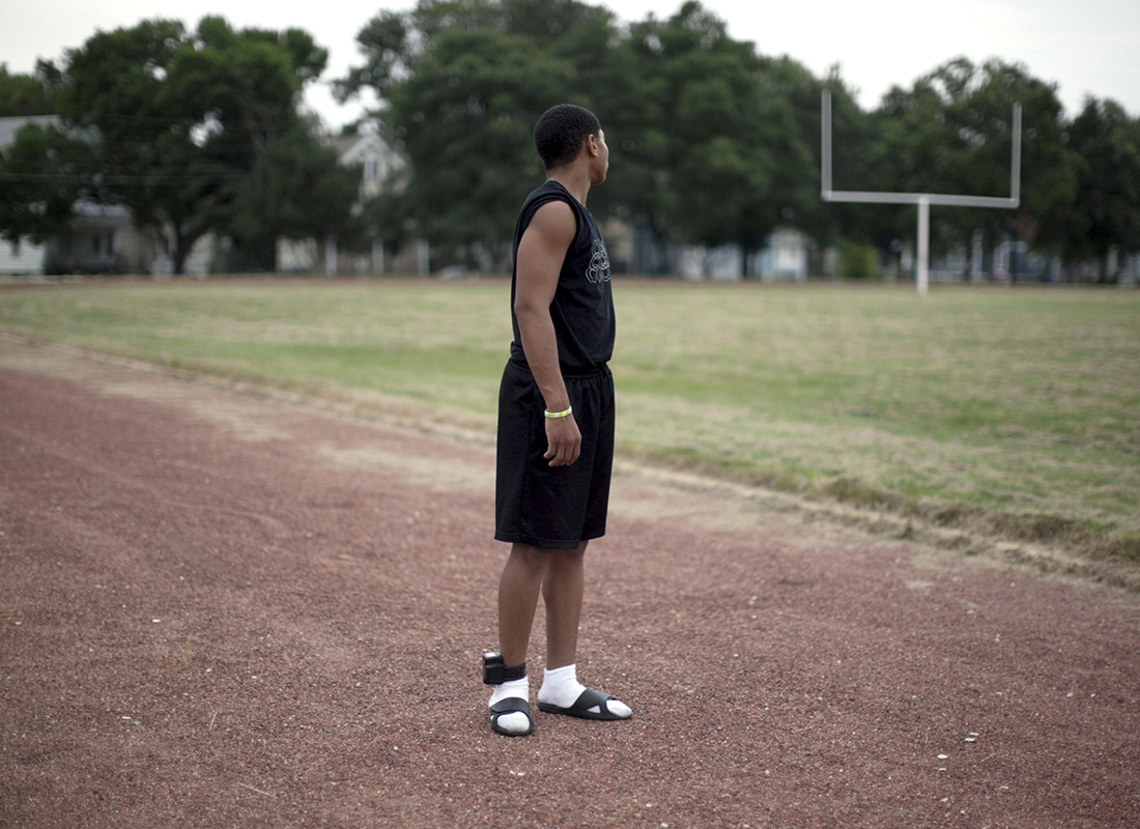
Jerome at 15. © Zora Murff

Hey y’all. You might have heard about the launch of The Marshall Project, a nonprofit, nonpartisan news organization covering America’s criminal justice system. You might also recall that I was excited by the launch.

Excited because I think we’ll all benefit from having focused, smart and quirky analysis of America’s carceral, criminal and correctional territories. But, excited also, because I’ll be contributing features of photographers’ work.

OPENING GAMBIT

My first piece about Zora Murff, Tracked: A Photographer Reveals What It’s Like To Be A Kid In The System was published this week.

Here’s an excerpt.

In addition to slinging his camera, Murff works as a “tracker” for a program that provides low-risk juveniles alternatives to incarceration. He coordinates transportation to therapy and counseling sessions, contacts schools to make sure that the juveniles are attending classes, collects urine samples for drug tests, and monitors the juveniles’ locations through data from their ankle bracelets.

“My job is to be a consequence, to insert myself into their lives while the adolescents themselves are struggling to exert control over their development,” says Murff who wanted to capture how juveniles in the system are supervised and monitored, and how the resulting lack of privacy can impact their development.

“Cameras are typically used by the state to surveil,” he says. “I too am recording, but my camera is there in a collaborative capacity. I feel that the people I’m photographing have taken back a level of control.”

Read and see more at The Marshall Project

If you want to learn more about Zora Murff’s work you might be interested in this long interview I did with Murff on Prison Photography in January, 2014.

OPENING STATEMENT

I really can’t recommend enough the daily newsletter of criminal justice news put together by The Marshall Project’s Andrew Cohen. It’s called Opening Statement and it brings together the best links and most pressing stories. Indispensable. Get it!

EMAIL

prisonphotography [at] gmail [dot] com

Prison Photography Archives

Post Categories