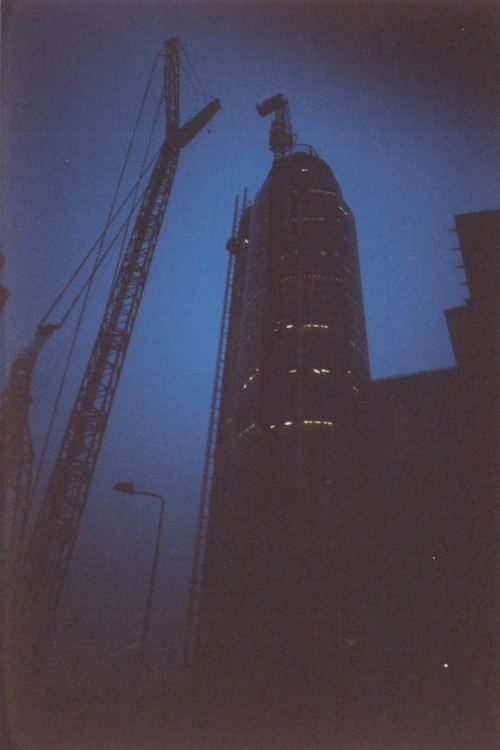
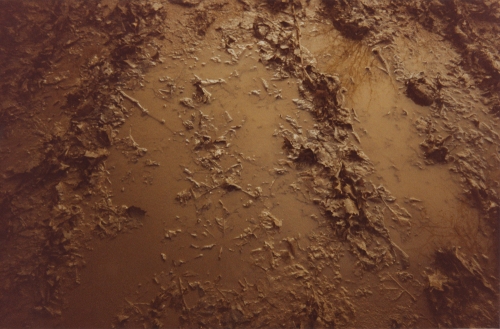
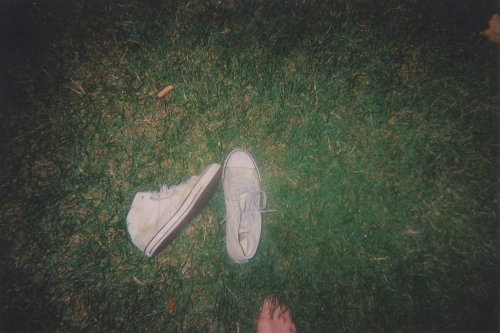
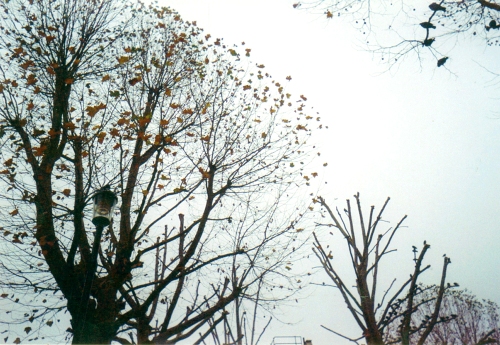
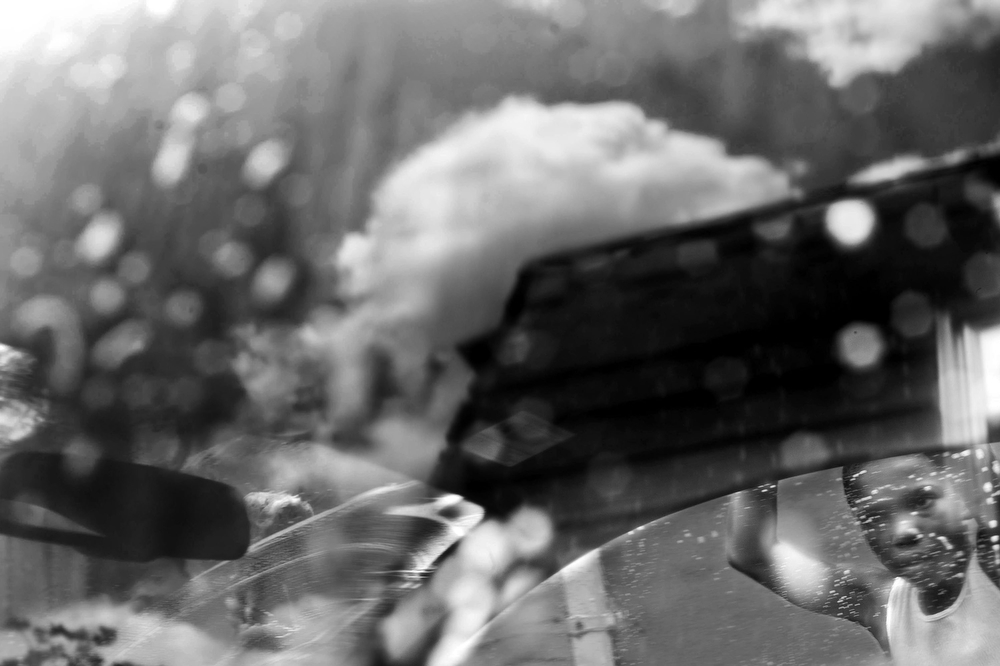
Spike Aston
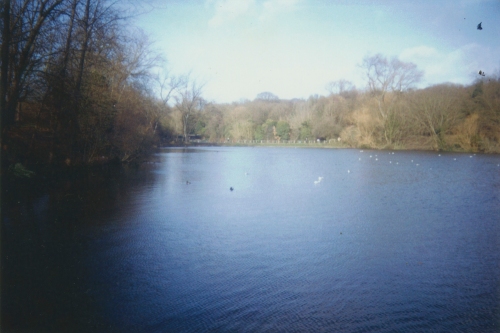
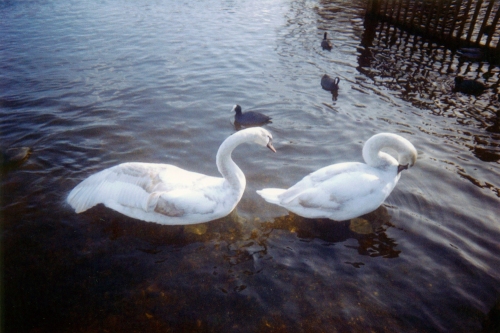
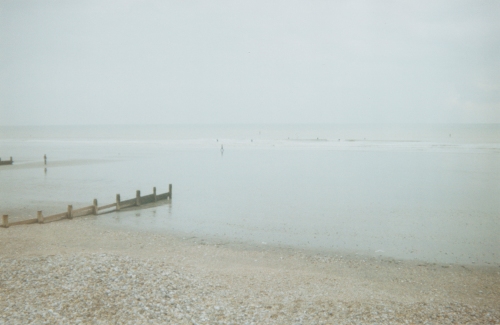
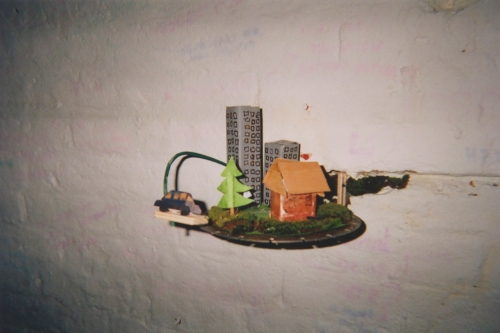
Photo: Spike Aston

Photography is often best kept simple. Likewise, the description of photography is, also, best kept simple. So let’s do that.

Disposable is a photography project that puts cameras in the hands of a dozen or so homeless men and women in London, England. Very straightforward. Disposable garners images that have given – in their production – moments to create and reflect, and – in their viewing – moments for reflection upon creative practices toward a more equal society. Right? What use is this post, and what use the participants’ efforts, and what use the program coordination efforts of Adele Watts if we’re not to reflect on the issues of poverty and homelessness in our society?

Disposable began in 2012. Disposable is grassroots. The men and women involved consider themselves a collective.

Watts worked closely with homeless artists over the period of a year and developed a body of original photographs.

“Without a brief, each participant took single-use cameras away, returning them a couple of weeks later to be developed and to look though the work and discuss it together,” explains Watts.

“Photography is a science of seeing. I like to see ordinary things too because they can tell you a lot about where you are if you don’t know. You can discover many beautiful and interesting worlds that don’t seem like worlds without photography,” says participant Spike Aston.

In the past 18 months, Disposable has mounted three exhibitions — at a Central London outreach venue in April 2013, and later at Four Corners Gallery, Bethnal Green in October 2013 and Ziferblat, Shoreditch in August 2014.

Disposable allows us to view homelessness from the rich and insightful perspective of those experiencing it, but does so with refreshing subtlety. This is achieved through a belief in cultivating authorial voice and expression without exception, which is truly at the heart of the project and all those who have brought it to life,” says Claire Hewitt who provides texts for the Disposable newsprint publication. “I was overwhelmed by the ways in which they had each nurtured their own visual languages.”

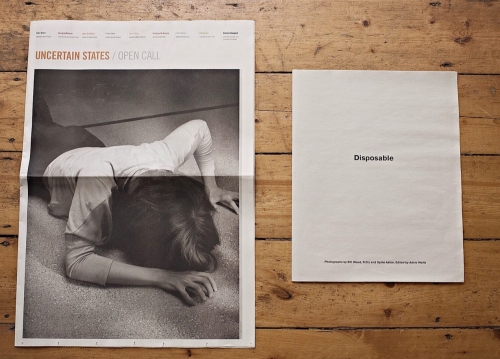
A collection of photographic works by Bill Wood, R.O.L and Spike Aston, Disposable’s most devoted members — has now been brought together in a 16-page newspaper publication.

The Disposable newsprint publication is available as an insert to the latest issue of Uncertain States a lens-based broadsheet. It is distributed through and available at: Brighton Photo Biennial 2014, V&A London, Tate Britain, Four Corners Gallery, Ikon Gallery & Library of Birmingham, Flowers East, Turner Contemporary, Margate.

Keep in touch with the project via Adele Watts’ website and Twitter, and the Disposable Tumblr.

Bill Wood

Photo: Bill Wood
Bill Wood
Photo: Bill Wood
R.O.L.
Photo: R.O.L.
R.O.L.
Photo: R.O.L.
R.O.L.
Photo: R.O.L.
Spike Aston
Photo: Spike Aston
Spike Aston
Photo: Spike Aston
Spike Aston
Photo: Spike Aston
Disposable Newsprint
Disposable Insert. ​Uncertain States. Open Call. Issue 20

Disposable
Edition of 5000 copies
290mm x 370mm
16 pages printed full colour on 52gsm recycled newsprint. Inserted into Uncertain States Issue 20, a lens-based broadsheet.
Photographic works by Bill Wood, R.O.L & Spike Aston.
Texts by Clare Hewitt & Jenna Roberts.
Edited by Adele Watts.

0d207adddc00dd5e-haunted_NDaCosta_015

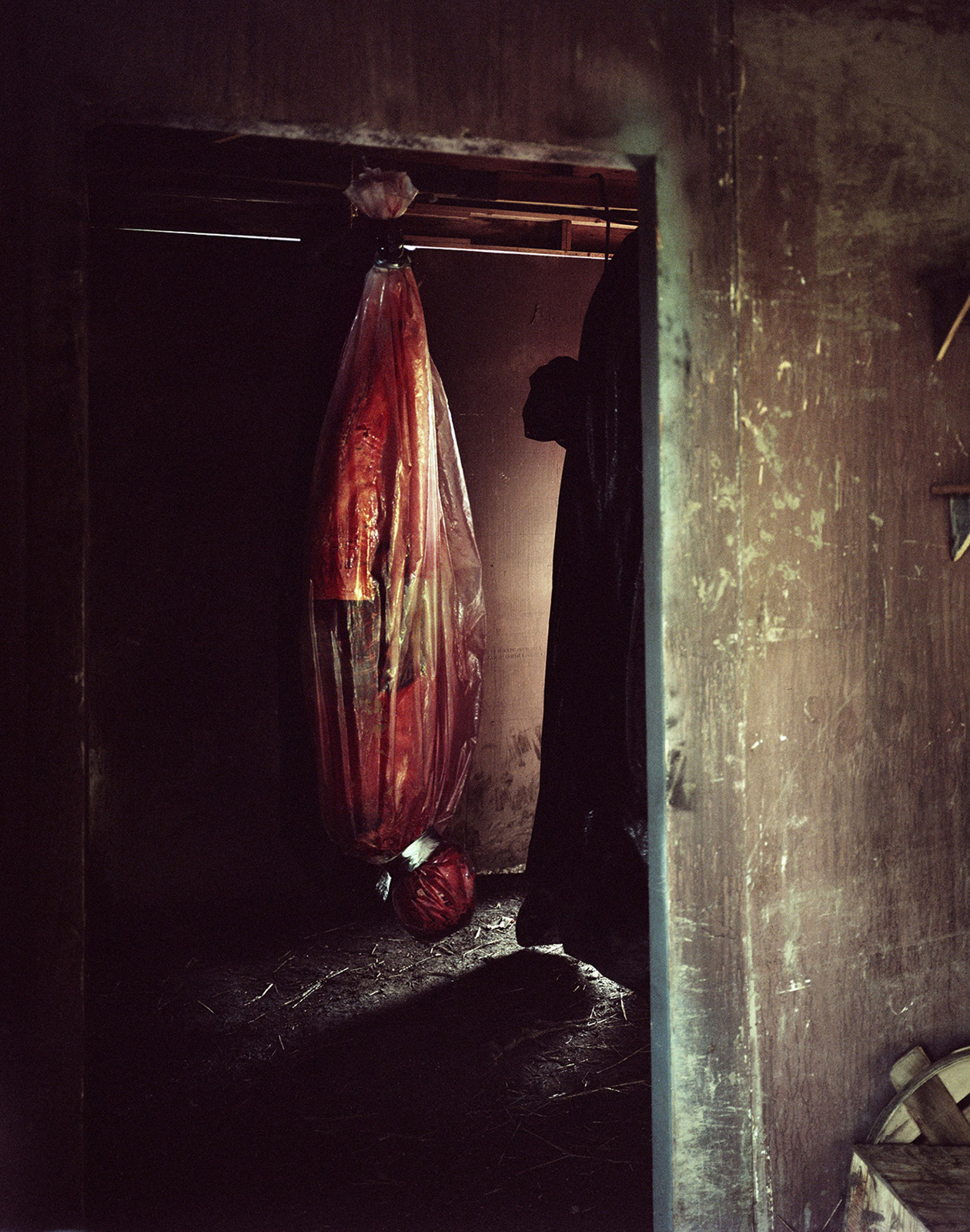
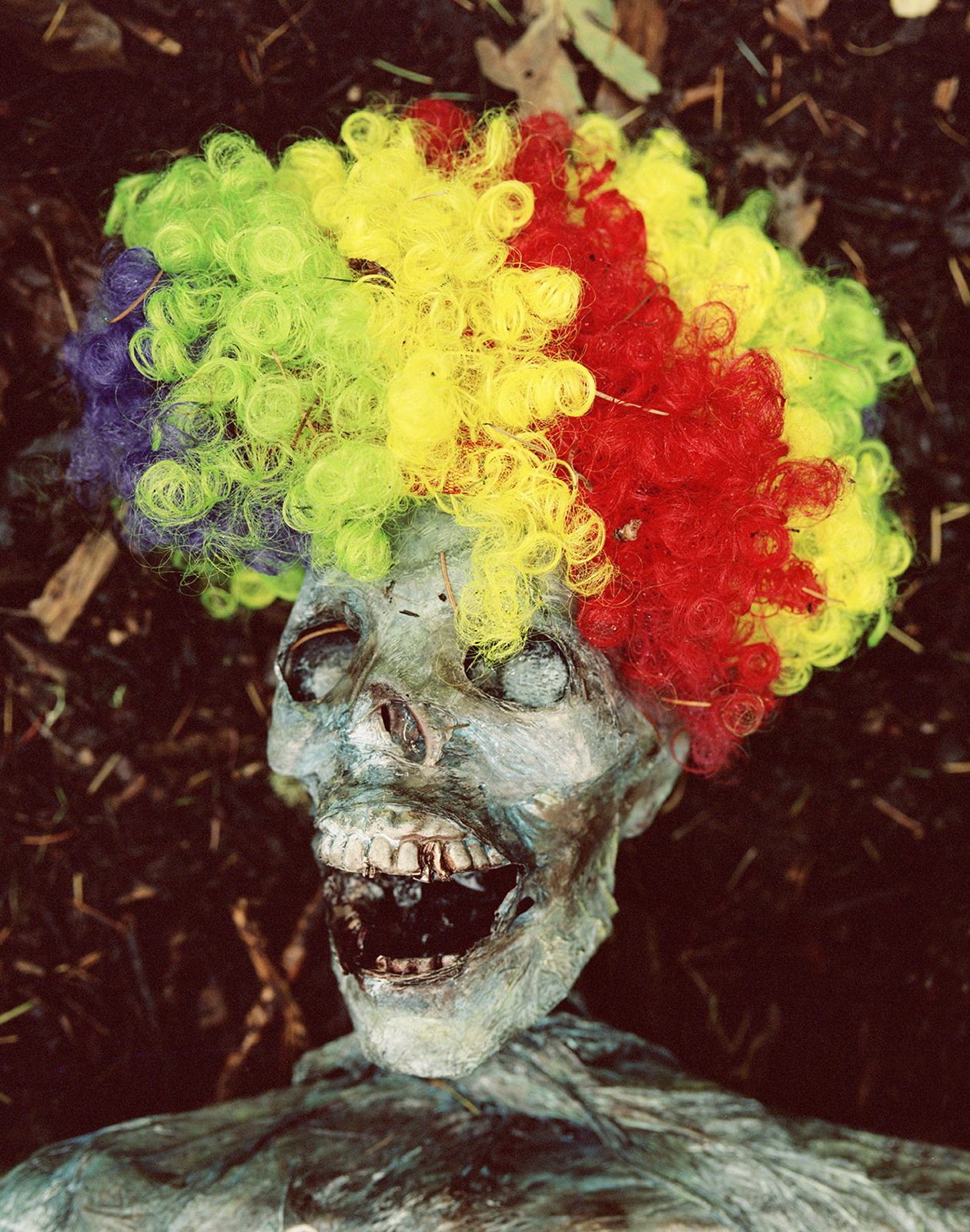
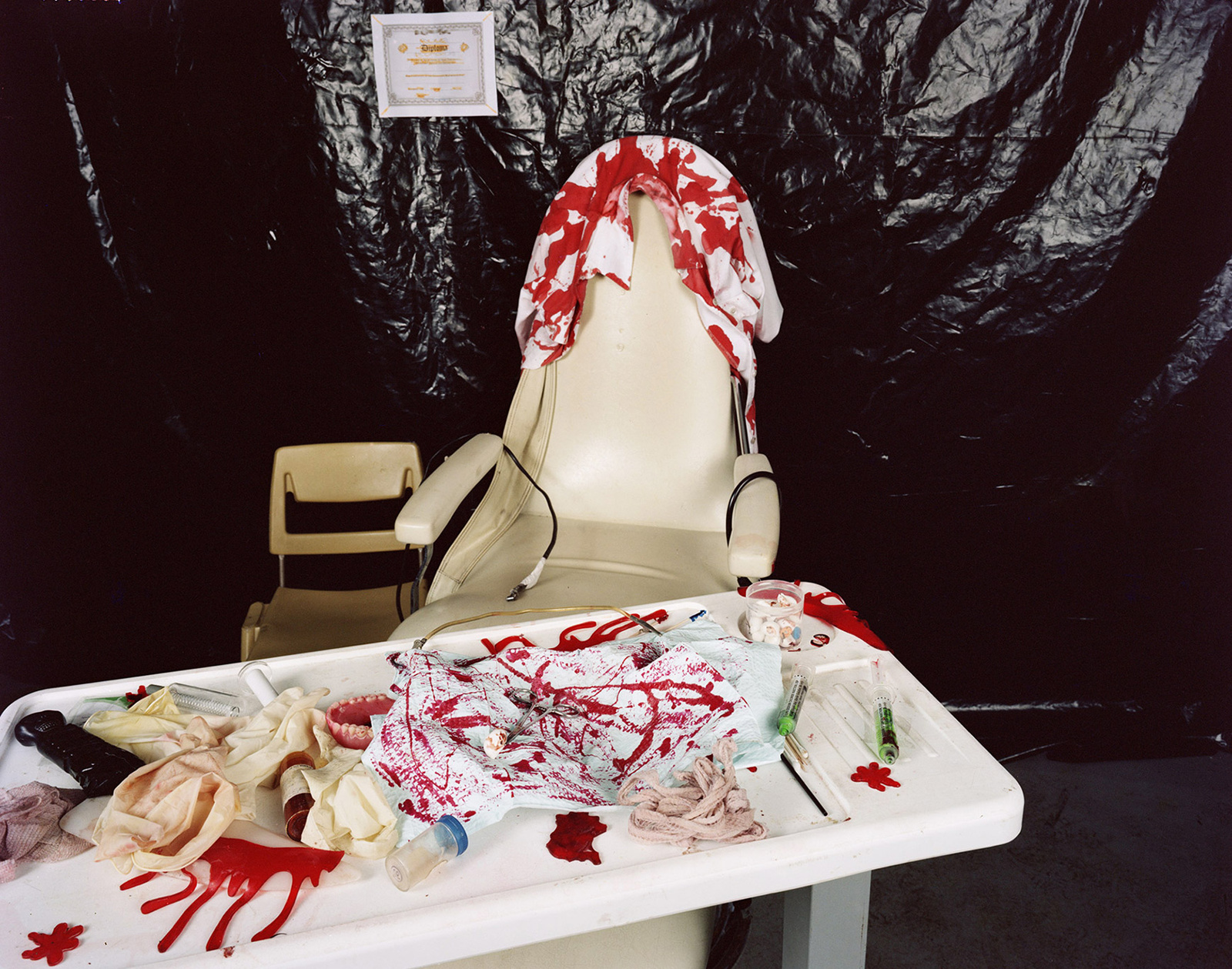
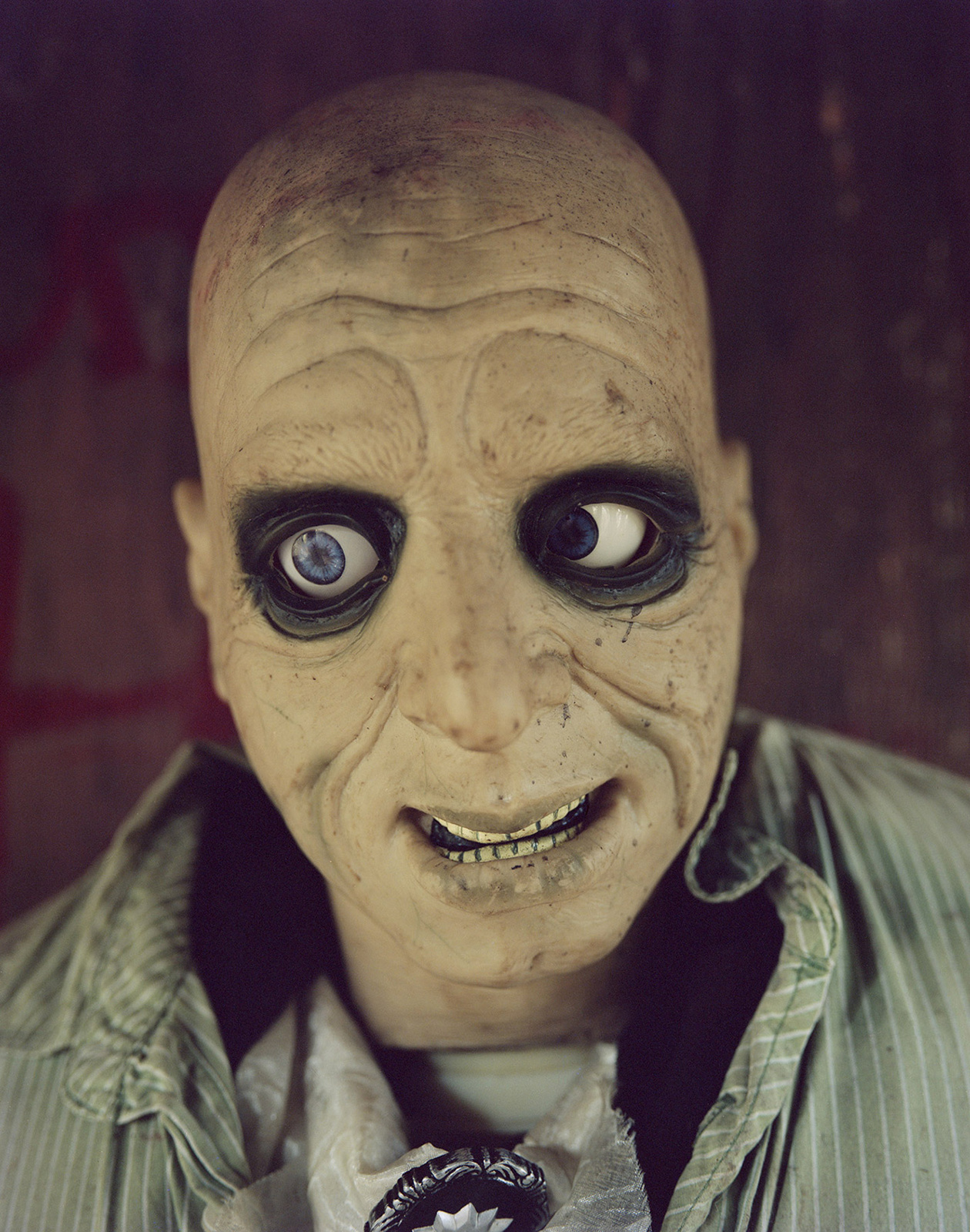
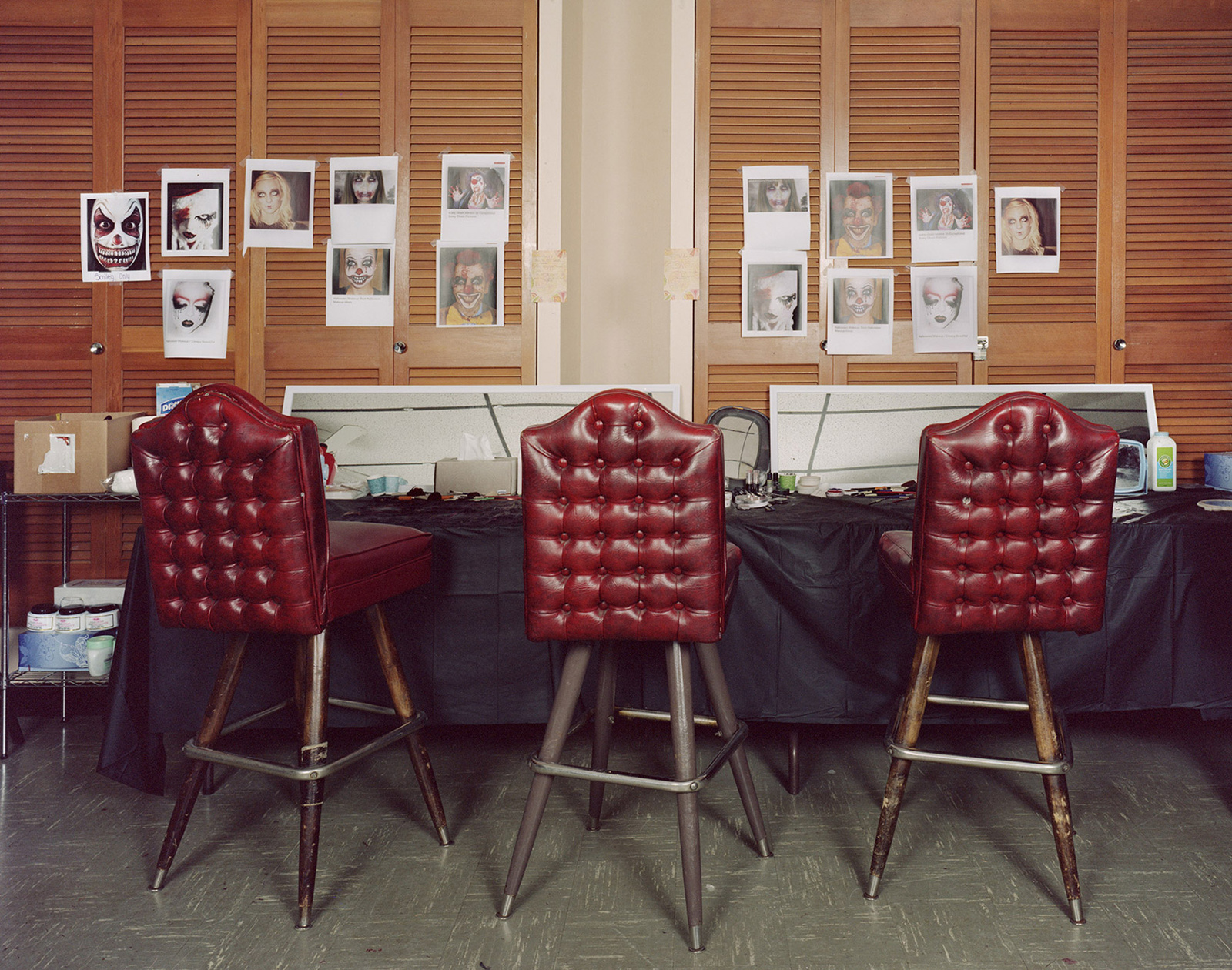
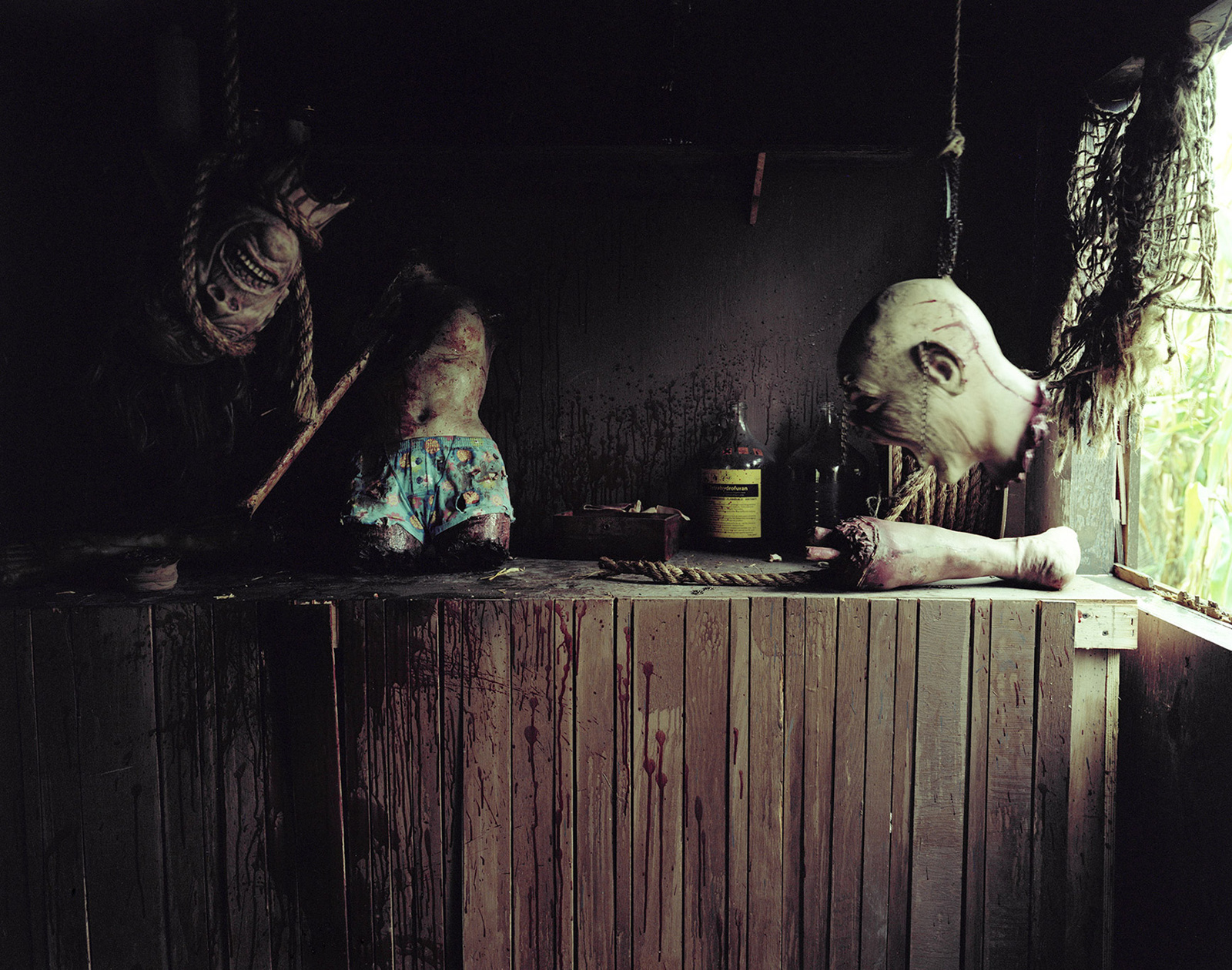
Happy Halloween, folks. Here’s a fun series. Photographer Neil DaCosta went to Oregon’s kookiest Halloween attractions during daylight closing hours. However, the scenes he discovered and shot on color film ended up looking as sinister as they appear when shrouded in darkness and staged for the frightened masses.

Week to week, DaCosta works long hours as a commercial and editorial photographer. But that doesn’t stop him throwing his camera gear in the car and heading out on his free weekends to shoot personal projects. Shooting stuff to scratch his creative itch is what has kept him sane. At least that was the case until last weekend when his excursions to into haunted houses, forests and corn mazes may have just driven him over the edge.

The ghastly result is a series called With The Lights On.

It all started harmlessly enough. DaCosta stumbled across a haunted trail walking his dog and reasoned that photographing halloween attractions during daylight hours would make for interesting pictures.

“When I was younger, I use to volunteer at a similar haunted trail and remembered how spooky it was even during the day,” he says.

Despite his ghoulish memories of younger experience, DaCosta thought a throughly mature and deliberate diurnal examination of the sites would reveal them for the low-budget, facade dependent constructions they are. DaCosta thought his images would draw back the curtain.

And, so, DaCosta trudged with his 4×5 camera to the West Linn Haunted Trail, the Fear Asylum, and The Haunted Maize — tourist spots all within half-an-hour of his hometown, Portland.

“I captured them empty, during off hours, with the lights on,” explains DaCosta. “But the dark humor I was envisioning, ended up being just more dark than humorous. Goes to show that some of our fears don’t rely on the dark to manifest.”

Photographing on site was eerie. Dead dummies swung and tarps billowed in the dank air. DaCosta got the jitters which were not helped by joggers in the forests who crept up while he was under the dark cloth of his medium format camera.

Those that operated the attractions were welcoming. “Everyone was in to it. Owners put a lot of work into these haunts and they are only seasonal. They are excited someone wants to photograph their hard work,” says DaCosta.

Like all good Halloween antics, DaCosta’s unsettling images jangle the nerves and provide relief and laughter.

Being a procrastinator, DaCosta has yet to decide on his costume for tonight, but he’ll be channelling photographer Joel Peter Witkin, who is his favorite macabre showman.

Happy Halloween folks! Enjoy these pics and then get out there, Trick ‘o’ Treat, and spook some people!

04a0cc0636216336-haunted_NDaCosta_007 6cca520fb7637632-haunted_NDaCosta_009 9c92527e1e283f61-haunted_NDaCosta_021 067a7b72159a430a-haunted_NDaCosta_005 82b2f0f2f671562f-haunted_NDaCosta_013 90e285455e7aaf18-haunted_NDaCosta_012 535b7e374e13201d-haunted_NDaCosta_001 2800a3468762fa9f-haunted_NDaCosta_014 6767d61808489f57-haunted_NDaCosta_024 abe535cd93f62999-haunted_NDaCosta_003 b6b7e37dbc4f09f1-haunted_NDaCosta_011 eae127a6cef22170-haunted_NDaCosta_008 ef16ef2e0425e795-haunted_NDaCosta_006 f2b820a6f92abcca-haunted_NDaCosta_025 f083fc0f78ca5fa4-haunted_NDaCosta_002 f6870842cfccbb0c-haunted_NDaCosta_020

BR3

Pursuant to my recent conversation with Beth Nakamura, I feel it necessary to focus on particular aspect of Oregon’s prison system on which she and Bryan Denson reported. The Blue Room.

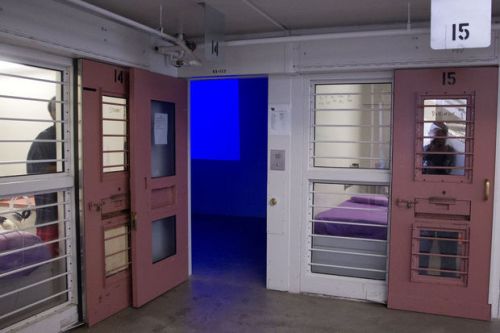
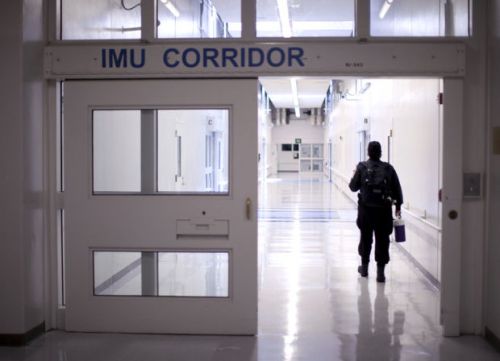
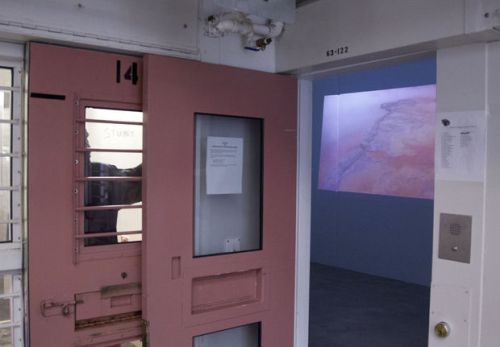
Inside the Intensive Management Unit (IMU) at Oregon’s Snake River Correctional Institution, Nakamura photographed the Blue Room, a space in which prisoners watch videos of nature. Nakamura’s photographs and Denson’s words is the first news reporting on this fringe behavioural management method.

Firstly, why does the Blue Room exist? Prisoners in solitary are completely deprived of nature. In the IMU at Snake River, they are locked in their cell for 23 hours and 20 minutes every day. Prisoners’ only time outside of their windowless cell is 40 minutes in a concrete pen with high walls and a metal grate between they and the sky. IMU, the hole, SHU, the cooler, the box, solitary, call it what you like, extreme isolation makes men mad. Solitary is psychological torture. Neuroscience proves as much. Solitary is deprivation made physical.

The working hypothesis of the Blue Room is that exposure to video recorded scenes of nature will calm prisoners. It began operation in April 2013.

Let’s just pause right there and consider what  is happening here. Let’s consider the carceral logic and policies from which the Blue Room has emerged. The state has decided to isolate prisoners in bare cells, with only artificial light, in a state of near total sensory deprivation, for 23 in every 24 hours. Let’s not speculate why prisoners are isolated; I’m less interested in what behaviours land a prisoner in the harshest custody conditions, and more interested in if and how those custody conditions improve or exacerbate existing problems and/or create new problems.

There are many employees of the state — such as Capt. Randy Gilbertson, who oversees the IMU at Snake River — who acknowledge that solitary destroys one’s sense of self. In his article, Denson quotes Gilbertson:

“I’ve seen over the years how an inmate will come into the facility, and they’ll almost appear to be completely normal,” Gilbertson said. “After a phase of isolation, those guys – especially those guys with mental health issues – tend to decompensate. They break down and go a different route. And it brings out a whole different person in them.”

Nearly two-thirds of the 200+ men in Snake River’s IMU suffer moderate to severe mental illness. Solitary makes them more prone to violence.

In the past 25 years, states across the U.S. have built, staffed and populated Supermax prisons that specialise in abuse. Once in operation, even well-meaning employees and mental health care-givers can’t change the structure therein; their primary function is to limit the damage of the rigid, brutalising environment.

If we really wanted to provide prisoners with some nature, we could open a gate and let them go sit out in the yard for the afternoon! Put a window in their cell?! Give them exercise options beyond the standard “dog-pen.” But no. From within a carceral logic that says controlled bodies stay within the walls, ludicrous makeshift responses such as the Blue Room emerge.

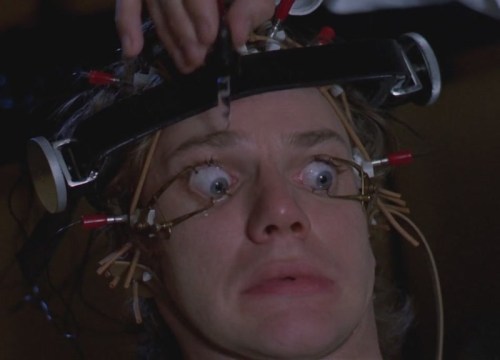
When I first learned of the Blue Room’s existence, I immediately thought to the scene from the film A Clockwork Orange in which the character Alex has his eyes pinned open and is forced to view “scenes of ultra-violence.” The notion that psychological ills can be rectified by the sights and sounds of projected montages, for me, is the domain of fiction. What would Stanley Kubrick make of this private screening room? Or Anthony Burgess, for that matter? Would they conclude that Snake River prison is as dystopic as the near-future-Britain they created in novel and cinema?

1

Film still, from A Clockwork Orange (1971), by Stanley Kubrick.

My first question about the Blue Room is not does it work? Rather, I have to wonder, why does it need to exist? What conditions of social order and disciplinary regime give rise to its “need” and justification?

The Blue Room is a pilot program drawing upon lesser-tested theories in eco-psychology. Denson explains that it came into being through a series of conversations.

In a 2010 TED talk, biologist Nalini Nadkarni talked generally about how nature can be used to rehabilitate and prisoners with jobs skills. At the time, I thought Nadkarni’s implementation of programs to identify moss species and raise endangered frogs as part of the Prison Sustainability Project was fantastic. I still do. Laudable initiatives. (I’ve talked about Nadkarni-started projects here and here on the blog before).

During her TED talk, Nadkarni mentioned she was thinking about installing large-scale murals of nature in the Supermax facilities of Washington. The Washington DOC was supportive but the correctional officers were opposed and the idea was shelved. Then, in late 2012, a Snake River corrections officer named Kevin Karpati watched the TED talk. Karpati emailed the link to Mark Nooth, the prison’s superintendent. Nooth, in turn, emailed the link to Capt. Randy Gilbertson, who oversees the IMU. Gilbertson contacted Nadkarni and asked if it could work.

This is where I wish to acknowledge that the people involved in instituting the Blue Room are making — from within a very restrictive law enforcement environment — efforts to improve the lot of prisoners. They have initiated the Blue Room as a response to severe deficiencies in the system. They cannot change the penal codes and administrative laws, but they can change the available practices within the walls. The Blue Room is an attempt to restore positive sensory input within a facility that routinely denies such inputs.

Nadkarni said she hoped it would work but had no evidence. All agreed that the only way to know was to test the hypothesis. An interior exercise room was converted to a screening room with projector and two chairs.

Nadkarni, along with National Gepgraphic documentary-maker Tierney Thys sourced nature videos. Many came from the NatGeo archives: Big Sur, New Zealand, Costa Rica, mountains, rivers, forest, tropical beaches, underwater reefs, roaring fires and a couple dozen other videos.

[Previously, I’ve written about bibliotherapy (the calculated use of reading lists to spur prisoners’ self-directed correction of “deviance”) in San Quentin Prison in the 1950s. The videotherapy at play in the Blue Room could be interpreted as a modern day equivalent. Words replaced by images?]

BR1

BR6

BR7

BR10

BR8

Denson reports that early anecdotes and observations suggest that the Blue Room can have a calming effect. “Lance Schnacker, a researcher for the Oregon Youth Authority, studied the disciplinary records of Snake River’s IMU inmates in the year before, and the year after, the Blue Room opened,” writes Denson. “He calculated that those who didn’t get the unique therapy posted more referrals for disciplinary infractions, while those allowed to use the Blue Room showed a slight dip. Schnacker cautioned that these data were preliminary, but promising.”

Should we be surprised? Give prisoners any small amount of added agency and the opportunity to take-in stimulus that breaks the norm and the monotony then, I’d argue, we would observe a change in behaviour. And most likely, toward the positive. Again, I am left to wonder why prison administrations are initiating small-scale projects such as the Blue Room, instead of taking a step back and recognising that the institutional logic which returns to solitary time-and-time again is the more fundamental issue to address.

Nadkarni, Thys, Schnacker and eco-psychologist Patricia H. Hasbach are set work with Snake River staffers to observe prisoners, conduct surveys and correlate results to existing mental health files. They hope to be able to determine to what degree exactly the Blue Room calms prisoners.

However, determining whether the Blue Room does or does not reduce suicidal or violent tendencies is a red herring. The study misses the point. Whether prisoners see 20-minute long reels of guppy fish and seaweed, or not, doesn’t alter the fact that solitary confinement makes people lose their minds. Why are we interested in mitigating the effects of a barbarous facility when we should be dismantling the walls of the facility altogether?

BR9

BR2

BR5

All images: Beth Nakamura

2015 HR CALL OUT-2

The Magnum Foundation Photography & Human Rights Fellowship is an all expenses-paid scholarship for non-western, regional photographers and activists to attend the Photography & Human Rights summer program at New York University.

Over the past 5 years, 21 fellows from 15 different countries have participated in the program.

Applicants must be:
– Emerging and professional students, photographers, activists, and journalists.
– Born and live outside of North America and Western Europe.
– Proficient in speaking, reading, and writing in English.
– Demonstrated a commitment to addressing/documenting human rights issues within their home country.

APPLY HERE

For more into contact Alexis Lambrou at alexis@magnumfoundation.org or 212-219-1248

Follow Magnum Emergency Fund on Tumblr and Twitter.

This is the embarrassing shit — the unconstitutional and serious shit — that politicians get up to when they are driven by fear, assume constituents are docile, and think no-one will call them out.

Well, I and many other good people in the Quaker State are calling them out.

This brouhaha began last month when people were up in arms at political prisoner Mumia Abu-Jamal delivering the commencement speech for students at Goddard College. Abu-Jamal attended Goddard via correspondence course while imprisoned. Many of the Pennsylvania legislators have admitted they had not heard or read Abu-Jamal’s speech and yet voted unanimously to introduce into law procedures that prevented Americans from exercising their 1st amendment right. This debacle is politically motivated; by signing the so-called “Revictimization Relief Act” into law Governor Corbett and the lazy lawmakers around him are attempting to not look soft in the face of Abu-Jamal’s continued and bare logic. They want him silent and they want all like him silent.

The Abolitionist Law Center say this:

Pennsylvania Governor Tom Corbett’s scheduled signing of what the Harrisburg Patriot referred to as the “Muzzle Mumia Law” today allows those who have been victims of a personal-injury crime to sue an offender for conduct that causes the victim “mental anguish.” The statute is so devoid of definition or standards that the Harrisburg Patriot wrote: “Some victims of terrible crimes will be in a ‘state of mental anguish’ as long as the person who did it to them is alive and breathing. Does ‘breathing’ qualify as ‘conduct’ that’s now subject to court action?”

Things in the prisons of Pennsylvania are desperate; the activist group DecarceratePA are at the forefront of exposing the repeated arrogance of politicians and the Fraternal Order of Police, who some believe are the driving force behind this law to silence prisoners.

Many prisoners in Pennsylvania are smart and many know what is going on. They know that their state disallows journalists’ visits with cameras and now the State of Pennsylvania is prohibiting prisoners to read their own writings. It’s a scandal. In the final two minutes of the Democracy Now! clip (above) journalist Noelle Hanrahan puts into great context the continued silencing and attacks on prisoners’ agency over the past few decades in Pennsylvania.

Fortunately, immediate legal response is in swing. More from the Abolitionist Law Center:

Prison Radio and imprisoned intellectual and journalist Mumia Abu-Jamal have retained the Abolitionist Law Center (ALC) to provide legal representation for them in response to Pennsylvania General Assembly’s passage of a bill intended to subvert the First Amendment of the U.S. Constitution and repress their free speech rights. The Abolitionist Law Center is working with the attorneys Kris Henderson and Nikki Grant of the Philadelphia-based Amistad Law Project on this matter as well. Amistad Law Project is a public interest law center that advocates for the human rights of all people and currently focuses its work on those inside Pennsylvania’s prisons. ALC, along with the Amistad Law Project, are representing Robert Saleem Holbrook, an imprisoned activist, writer, and member of the Human Rights Coalition.

The law was passed in response to Mumia Abu-Jamal’s selection as a commencement speaker to Goddard College students at his alma mater in Vermont. Leading up to and in the wake of this speech, the Fraternal Order of Police, Governor Corbett, Department of Corrections Secretary John Wetzel, Philadelphia District Attorney Seth Williams, and a number of legislators staged a media campaign designed to whip up a frenzy of support for depriving Abu-Jamal, and any other person convicted of a crime, of their constitutional right to free speech. The law also permits the District Attorney where the criminal conviction was obtained, or the state’s Attorney General, to use their public offices and taxpayer funds to file the lawsuit, raising the possibility that Mumia will be sued for his speech by politicians and government officials who have made a habit of attacking him in order to win the support of the FOP for their election campaigns.

On October 17, Mumia Abu-Jamal issued a statement (broadcast at Prison Radio) from the State Correctional Institution (SCI) Mahanoy where he is serving a sentence of life-without-parole after being framed for the killing of a Philadelphia police officer:

I welcome Governor Corbett’s signature on an unconstitutional bill that proves that the government of Pennsylvania, the executive and the legislature, don’t give one wit about their own constitution of the Commonwealth of Pennsylvania, nor the United States Constitution. I welcome that because it proves that they are the outlaws.

Abu-Jamal has spent 33 years in prison, 30 of which were in solitary confinement on death row, after being convicted at a 1982 trial that, according to Amnesty International, “failed to meet minimum international standards safeguarding the fairness of legal proceedings.” (see Manufacturing Guilt to learn more about the case) By continuing his journalism as well as maintaining his innocence and attracting a massive international movement of supporters, Mumia has long been targeted by the Fraternal Order of Police and their political counterparts. “Having failed to kill Mumia on the street in 1981, and having failed to execute him during his over 30 years on death row, the FOP and the government of Pennsylvania continues to try to silence him, this time by extinguishing his speech,” said Noelle Hanrahan of Prison Radio.

Abu-Jamal has given three other commencement addresses in the past: Goddard in 2008, Antioch College in 2000, and Evergreen College in 1999. He has recorded more than 3,000 essays, published seven books in nine languages, with two more books set for publication in 2015, and has been the subject of three major broadcast and theatrical movies. The latest film, Mumia: Long Distance Revolutionary, is currently airing on the Starz network, sold out theatres coast to coast, and has sold more than 20,000 DVDs.

“The ‘Silence Mumia Law’ should be understood as part of a reaction against recent criticisms of the prison and criminal legal systems. In the wake of the Ferguson rebellion, race and class-based mass incarceration, and the role of police in enforcing it with arbitrary arrests, frame-ups, and extrajudicial killings, is being questioned more than ever. The Fraternal Order of Police and the government are scrambling to silence those questions, disingenuously using the language of ‘victims rights’ to re-establish the lie that police forces and other institutions of state violence are righteous protectors of public safety that are beyond question. This illegal attack on our clients’ constitutional and human rights will be fiercely challenged in the streets and the courts,” said ALC Legal Director Bret Grote.

For more information contact Noelle Hanrahan on globalaudiopi@gmail.com or 415-706-5222. Alternatively, contact Bret Grote on bretgrote@abolitionistlawcenter.org or 412-654-9070

Sign the petition against the bill.

1justice_undone_01

Xavier Randolph dances with his father Frank Randolph during a Hope House summer camp program for youth with imprison fathers at the North Branch Correctional Institution in Cumberland, MD.

RAYMOND THOMPSON JR.

Raymond Thompson Jr. is a photographer, video journalist, educator and father.

In his Justice Undone Project, Thompson Jr. documents the leaching and negative effects of mass incarceration. He shows us how the poor are criminalised by society and kept down. He’s trying to get past stereotypes of Black America and does so by photographing the families and the communities outside of prison. So far, chapters of Justice Undone include A Dream Denied and The Browns.

Prisons touch nearly everyone in America’s poorest communities. One person’s imprisonment effects many others’ lives. The knock-on effects are profound. Locked up, exiled parents can mean extended family members are the primary care givers. Young children can lack a mother or a father or both for long periods. A child’s emotional and social development can be hampered and the incarceration of a parent vastly increases a child’s chances of being locked up later in life. The cycle continues.

In film, print and photography, America has a history of demonising young black men. In response, Thompson Jr. works to image all generations and races from America’s lower classes in an attempt to build empathy in his audience. So far, Thompson Jr.’s work has focused on African American communities but soon he is to venture into poor white communities in the Midwest, and to demonstrate that our broken criminal justice policies impact the poor. Prisons are a class issue just as much as they are a race issue.

The closer you look at the prison industrial complex, the better you understand society. Thompson Jr. is holding up a mirror in which we are all reflected. He was kind enough to answer a few questions I had about his photography.

[Click on any image to view it larger]

Q & A

Prison Photography (PP): It seems your work on issues surrounding community, the war on drugs and incarceration is an ongoing endeavour. Is this the case? If so, tell us what you’re up to and what you’re working on now.

Raymond Thompson Jr. (RTJ): My project Justice Undone started as my master thesis while I was in graduate school in Austin, Texas. I originally intended only to do a story about the long term effects of incarceration on families and communities in East Austin, which is a predominantly African American and Latino part of the city.  After I received a grant from the Alexia Foundation to continue the project, I expanded the project to Washington D.C and New Orleans.

In the 18 months since then, my wife and I  had our first child and I took a job working as a video producer for West Virginia University. So, most of the last 18 months have been consumed with adjusting to life as a parent. The sleep deprived nights are decreasing. So, I’m slowly moving into the next stage of this project.

Even though I have never been incarcerated and my immediate family has not been directly affected by mass incarceration, I still feel a deep connection to the issue. I saw myself in the faces of the men, women and children navigating the prison system. Now with the birth of my son, I feel it is even more important.

There are several story angles in my project that still need covering. I’m currently in the process of researching and planning local Justice Undone stories for trip this fall and a trip to the midwest in the early spring. I’m currently based in West Virginia, which offers a chance to approach this work from beyond the lens of race and move it more towards class.

2justice_undone_16

A boy stares though a window during a Friends and Family of Incarcerated People (FFOIP) car wash fundraiser in Southeast Washington, D.C. Friends and Family of Incarcerated People, a non-profit based in Washington D.C., offers a summer camp for children of incarcerated parents and other children whose parents are absent.
5justice_undone_03

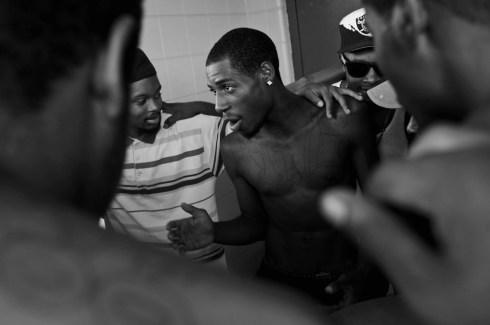
Members of ‘Mix Emotion’ go-go band pray before a performance at a community gardening event in the Lincoln Heights area of Northeast Washington D.C. Lincoln Heights is a crime plagued area and has a large number of low-income residents.

3justice_undone_05

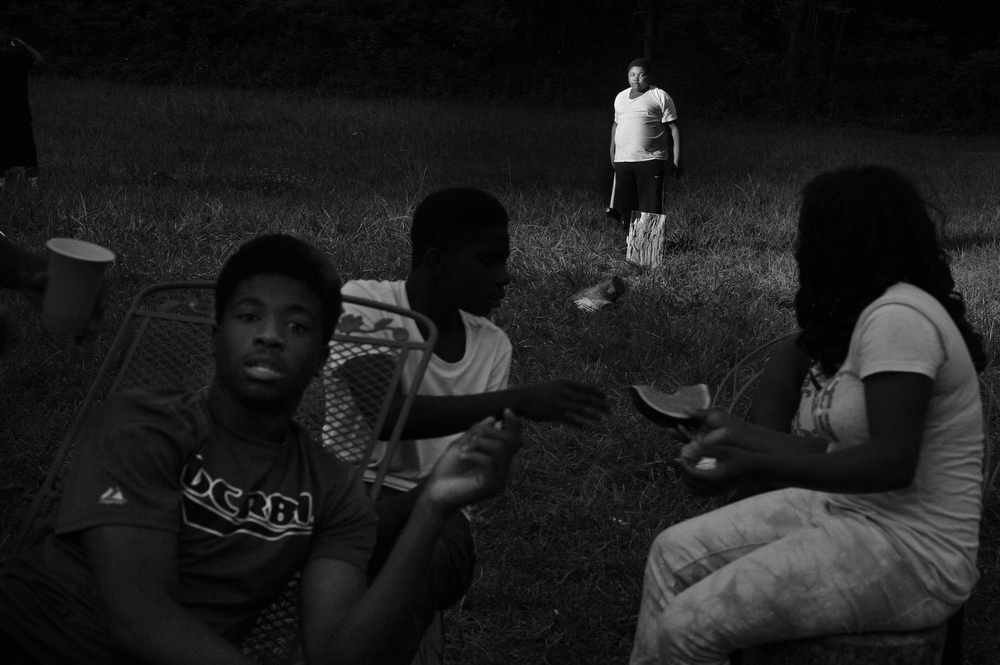
Several D.C. teenagers relax and socialize during the Friends and Families of Incarcerate People annual retreat in outside Charlottesville, VA. The goal of the retreat is to give youth a chance to experience life outside of their depressed D.C. neighborhoods.

WVU Men's Basketball

A child looks at a car that had been broken into the night before a Friends and Family of Incarcerated People (FFOIP) summer camp in Southeast Washington, D.C.

PP: When and how did you move toward your current political conscience?

RTJ: In the 1990s, I was a teenager living in the suburbs of Virginia outside of Washington D.C. I watched the War on Drugs rage on my television screen. It was in these moments that I started to feel something was wrong. But I was not equipped with the knowledge or maturity to understand what I was seeing.  On my television screen, I watched images of black men and boys dead or being led away in handcuffs. These visual images negatively affected how I felt about myself and other African Americans. Part of the reason for working on Justice Undone is to heal myself and to start to reclaim the visual history of African Americans in the United States.

My political awareness stemmed from my undergraduate studies. I was an American Studies major with a concentration in human rights. In my course work, which spans from American literature and history to sociology, I learned to recognize the complex weave of racial, economic, and  political threads that form the social blanket of America. But, what really set me on this path was a senior seminar on the American Prison Industrial Complex. That class expanded my thinking on the subject, which later became my intellectual basis for the project.

PP: How did you decide on strategies to talk about these issues with your photography?

RTJ: There have been so many images about prisons and about the War on Drugs. A lot of the pictures work to reinforce stereotypes about minorities as “The Other.” In the first part of this project, I focused on children and families left behind in mass incarceration’s wake. I felt I had to avoid images of black men in the beginning because I did not want viewers from outside of these communities to immediately write the project off. I needed those viewers to move beyond the stereotypes and to have a empathetic reaction, without relying too heavily on people being portrayed as victims.  In the next stages, I will focus more on the men, who are actually directly affected by prison.

Many of the great documentary photographers of the past three decades have produced work that is great but also problematic because they reinforce stereotypical images of urban black life. One of those photography books I have on my bookshelves in Eugene Richard’s Cocaine Blue, Cocaine True. It is an important work, but if you don’t dive into Richard’s words that were published along with the images you can come away with a skewed meaning. It is this decontextualization that worries me.

My strategy to combat this decontextualization is to create images of black life that focuses on the everyday. By searching for images that show African Americans in the mundane ritual of daily life, I hope that people not directly affected by mass incarceration will be able to see themselves in the pictures the way I do, as an antidote to years of self-hate and willful ignorance.

WVU Men's Basketball

The Booker T. Washington Public Housing complex, in Austin, Texas, is plagued by a revolving door of single-parent households and incarceration.
7justice_undone_06

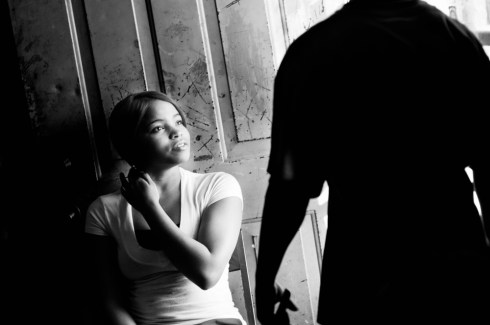
Nicholas Brown, 19, speaks with his girlfriend before leaving. He has a stained relationship with his mother Vicky who has spent the majority of his childhood away in prison and drug treatment institutions.
8justice_undone_08

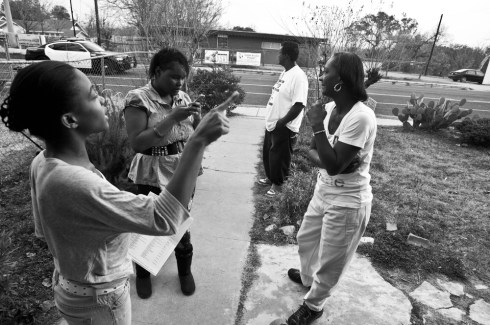
Marquis, 18, BB and Leroy Brown hangout on the front porch of Beverly Brown’s house in Austin.
9justice_undone_09

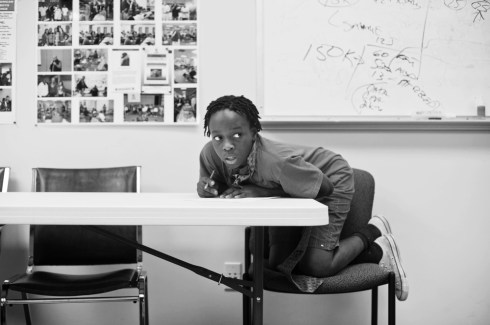
Tyler Pippillion works on a math puzzle during a skills class at the African American Men and Boys Harvest Foundation, a non-profit in Austin, TX that works with at-risk minority youth.

PP: What are the main points you want to communicate in your work?

RTJ: The first thing I hope my audience gain from this project is that U.S. laws have been unequally enforced in poor minority communities. Second, I wanted to make understood that the  large numbers of men and women cycling in and out of prison has an immeasurably negative effect on their communities. Finally, I want the audience to realize that the impact of incarceration is falling on small geographic areas within cities, because a large portion of these men and women are being taken from identified communities.

PP: Can you explain the title ‘Justice Undone’?

RTJ: I think that justice and fairness are central to the American ideology. If you follow the rules you will be rewarded. If you break them then you will be punished. For African Americans, The Civil Rights Act of 1964,  was “justice” for generations of discrimination and abuse. But, the gains of the 1960’s were essentially rolled back by the War on Drugs, the tough-on-crime movement, three strikes laws, and drug sentencing laws, which unfairly fell on the shoulders of African American communities.

So the title is meant to reflect the havoc of three decades of drug policies and the resulting explosion of the U.S. prison population that has played a big role on the agency and self esteem of African Americans in the United States.

I wanted the title to reflect critically on the U.S. justice system, which has failed to protect its most vulnerable members. While I was writing and reporting for my masters thesis, I was inspired by the hip-hop song Tip The Scale from the Roots’ album Undun.

Lot of niggas go to prison
How many come out Malcolm X?
I know I’m not
Shit, can’t even talk about the rest
Famous last words: “You under arrest”
Will I get popped tonight? It’s anybody’s guess
I guess a nigga need to stay cunning
I guess when the cops comin’ need to start runnin’
I won’t make the same mistakes from my last run in
You either done doing crime now or you done in
I got a brother on the run and one in
Wrote me a letter, he said when you comin’
Shit man, I thought the goal’s to stay out
Back against the wall, then shoot your way out
Gettin’ money’s a style that never plays out
‘Til you end up boxin’ your stash, money’s paid out
The scales of justice ain’t equally weighed out
Only two ways out, digging tunnels or digging graves out

Through the lyrics of this song, I felt the frustration of many black men who have limited choices, but still must navigate the challenges of being a black male in the United States.
10justice_undone_12

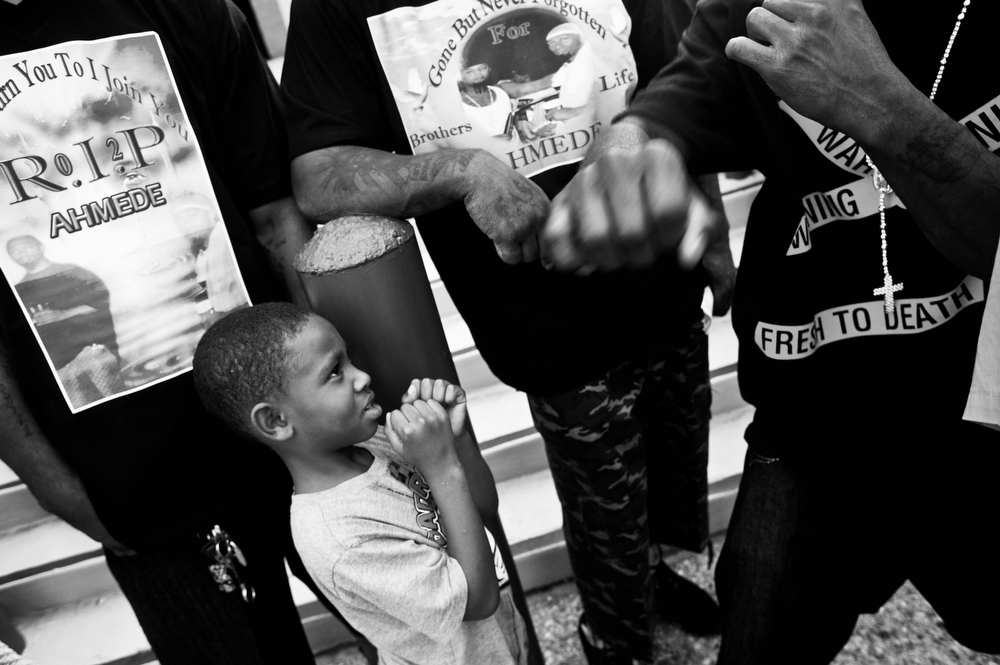
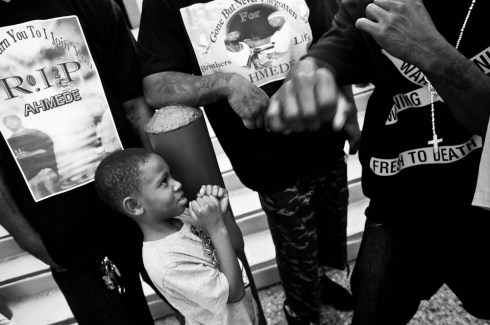
A boys listen to instructions on keeping a proper boxing guard during a rally to protest the shooting death of Almeded Bradley by an Austin Police Officer.

11justice_undone_10

Boys play a game of basketball in the Booker T. Washington public housing complex, Austin, Texas.

12justice_undone_04

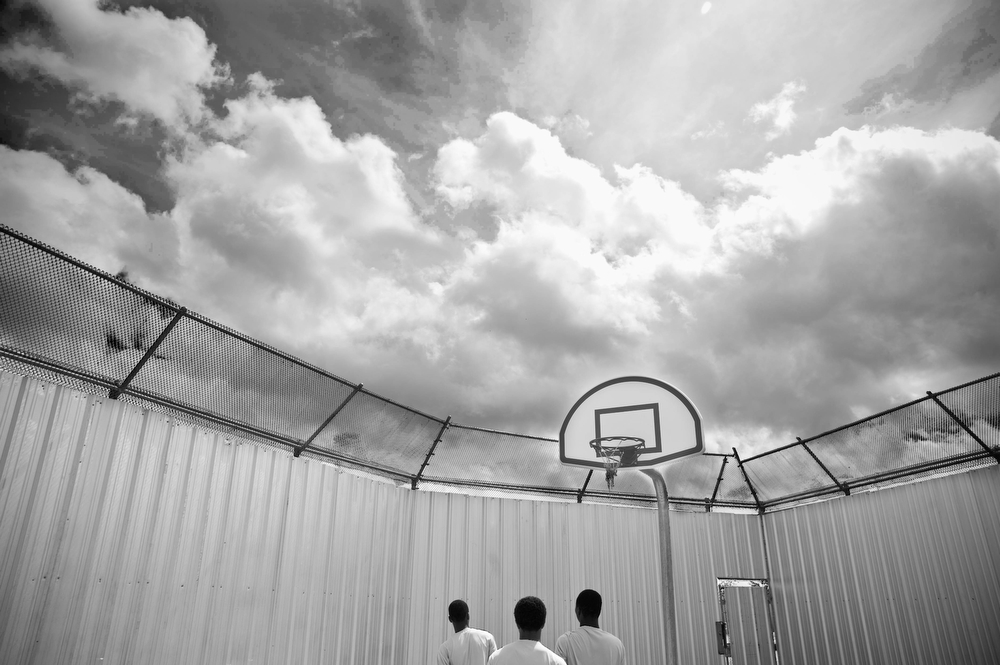
Teenage boys play basketball at the Youth Study Center juvenile detention facility in New Orleans, Louisiana.

13justice_undone_11

Chelsea Shorts set up a studio in a shed in the backyard of her east Austin home. She uses the space to make clothes, draw and paint. The shed is a refuge from the crowded house that she shares with her parents, grandparents, cousins and one sibling. Chelsea biological father was incarcerated for most of her life.

14justice_undone_07

Beverly Brown covers her eyes as she rest in her living room. Members of three different generation of her family have been incarcerated or had problems with drug addiction.

PP: Is there an easy way to describe the massive effect harsher sentencing and imprisonment has had on communities you’ve documented. How, in other words, do we put it into words?

RTJ:There is no simple way to discuss the topic because it is so complex.

A lot has been put in words, but I don’t know if we have reached the same level of understanding in the visual. Part of my goal is to reimagine the image of African Americans in Americans’ visual memory. These days there is always public outcry at any sort of overt racial discrimination in words, written or verbal. There is a bit of a lag in the public’s response to visual stereotypes of minorities. Responding to these stereotypes and creating what bell hooks, calls the “oppositional black aesthetic,” is a way that image makers can help challenge mainstream biases.

PP: What can we do as audiences to photography and as citizens to improve the situation?

RTJ: The next time they see a newspaper article or a television news report about a drug arrest or a drug sentencing I hope they start a conversation with a friend of family member about what is happening in their name as taxpayers. I want people to see beyond the individual situation and start to see the overarching pattern of crime, punishment, drugs, and incarceration in America.

PP: How do you describe photography’s role in relation to social justice?

RTJ: I don’t know if social justice can happen in a visual vacuum.

Photography’s first purpose is to pass information about an issue to an audience. Its second purpose is to move the social conversation past exposition. There are details in the everyday that offer unique paths to understanding.

PP: And empathy.

RTJ: From the expression of someone’s eyes, to the color of a summer dress, to the chaos of a kitchen before serving Thanksgiving dinner. It is in those common areas that we as human beings find ways to related to each other. Photography as a quasi universal medium is perfectly suited for this task.

PP: Thanks, Raymond. And thank you for your work and conscience.

RTJ: Thank you, Pete.

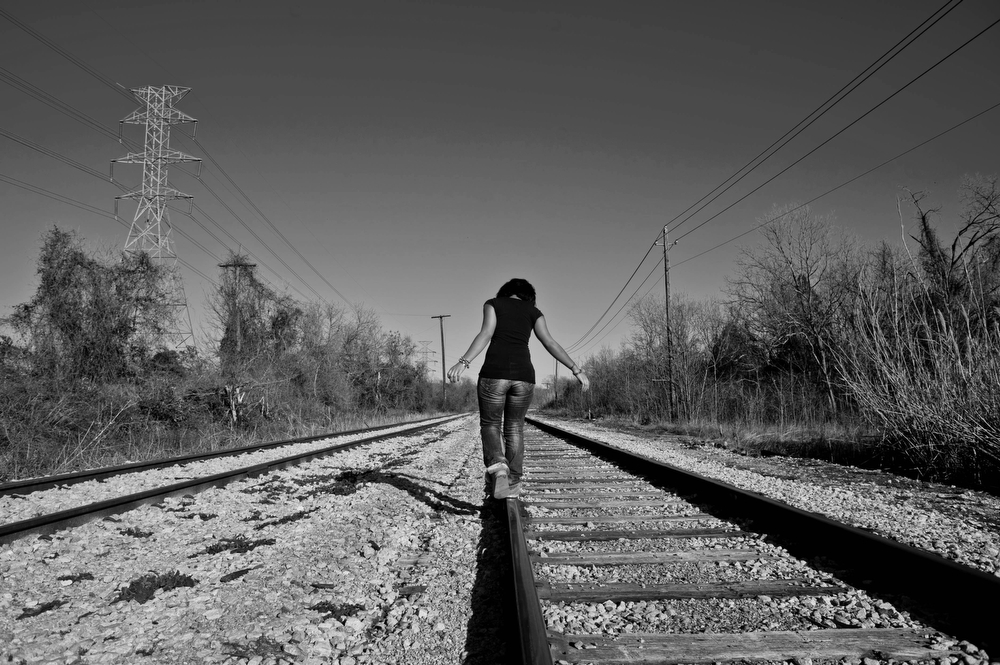
Chelsea Shorts walks along the railroad tracks near her home in East Austin.

Chelsea Shorts walks alone railroad tracks in Austin, Texas. Shorts father was incarcerated for most of her life.

BIOGRAPHY

Raymond Thompson Jr. is a freelance photographer and multimedia producer based in Morgantown, WV. He currently works as a Multimedia Producer at West Virginia University. He received his Masters degree from the University of Texas at Austin in journalism and graduated from the University of Mary Washington with a BA is American Studies. He has worked as a multimedia photojournalist for the Door County Advocate, the Times of Northwest Indiana, the Kane County Chronicle, Times Community Newspapers and the Washington Times.

You can follow his activities on his blog, on the Twitter and on Instagram.

16justice_undone_02

Children’s graffiti covers the walls of a cell at the Youth Study Center juvenile detention center in New Orleans, LA. The center serves as the pre-trial detention for youths charge with committing a delinquent offense.

PrisonObscura_05

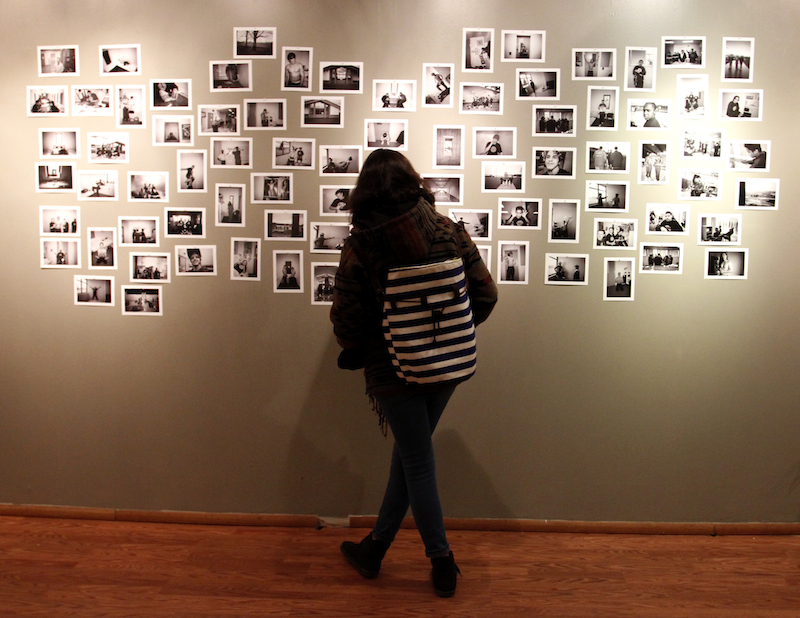
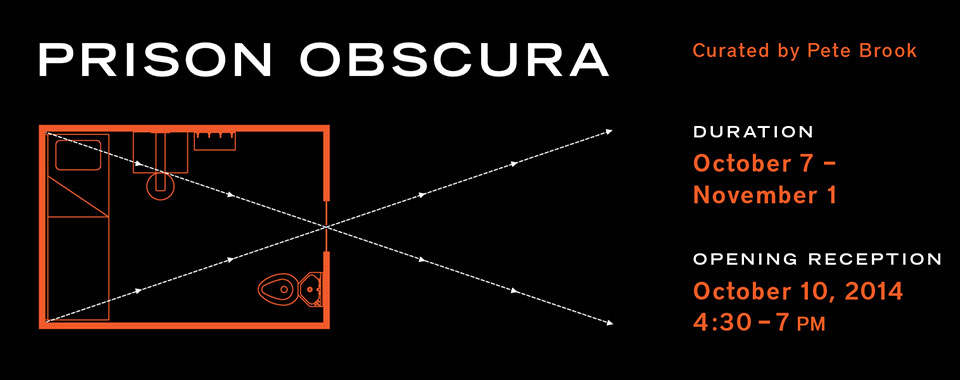
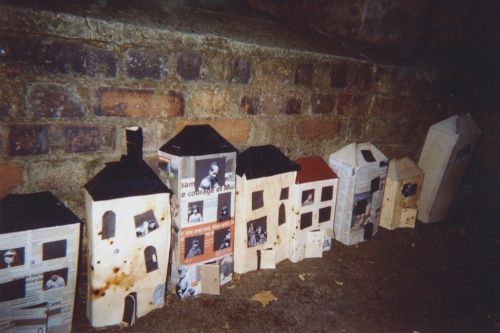
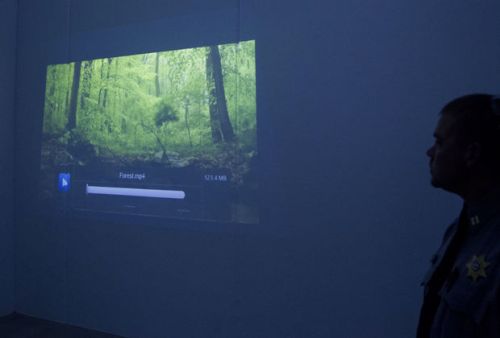
Prison Obscura continues to travel. If you’re in or around New Jersey then you should know a version (a tighter edit) of Prison Obscura is currently on show at Alfa Arts Gallery in downtown New Brunswick. The show runs until November 1st.

The official opening was last Friday (10th) and coincided with the Marking Time: Prison Arts & Activism Conference at Rutgers University and hosted by the Institute for Research on Women (IRW). To give you a taster of the presentation, below are some snaps taken by staff at Alfa Arts Gallery. But not before a few notes of thanks …

GRATITUDE

I’d like to thank Alfa Art Gallery-owners Chris Kourtev and the entire Kourtev family for generously giving over their space for three weeks to house the show. Thanks to Nicole Fleetwood, Sarah Tobias and all the staff at IRW involved in bringing Prison Obscura to NJ. Thanks for a wonderful conference too!

I’d also like to extend my thanks once more to Matthew Callinan, Associate Director of Cantor Fitzgerald Gallery at Haverford. Matthew continues to make sure the logistics for each venue are taken care of and, in this case, gave up an entire Sunday to drive from Philadelphia and install the show. Thanks to the staff at John B. Hurford Center for Arts & Humanities at Haverford, who continue to support the exhibition.

For more information about the exhibition, visit the Prison Obscura website.
PrisonObscura_14

PrisonObscura_04

PrisonObscura_09

PrisonObscura_06

IMG_5080

PrisonObscura_08

PrisonObscura_03

IMG_5064

PrisonObscura_01

PrisonObscura_Alfa-banner3

13

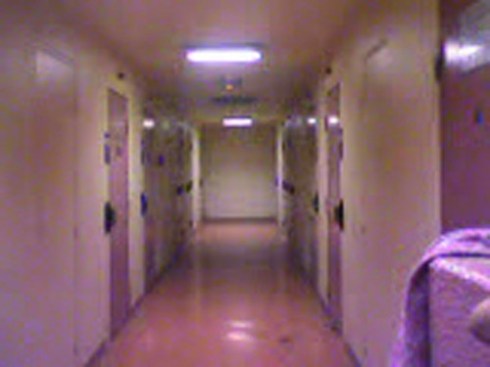
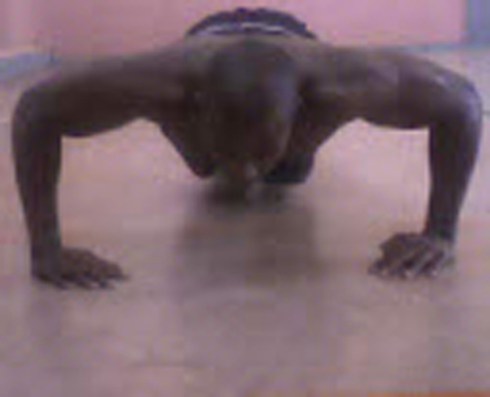
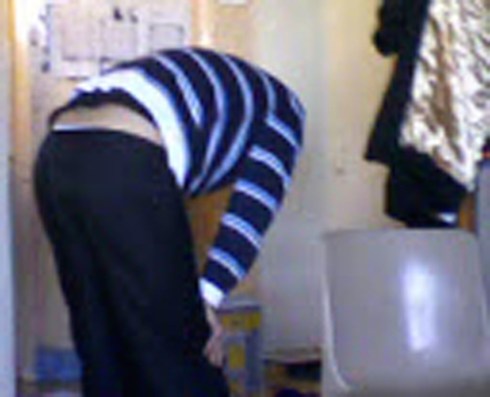
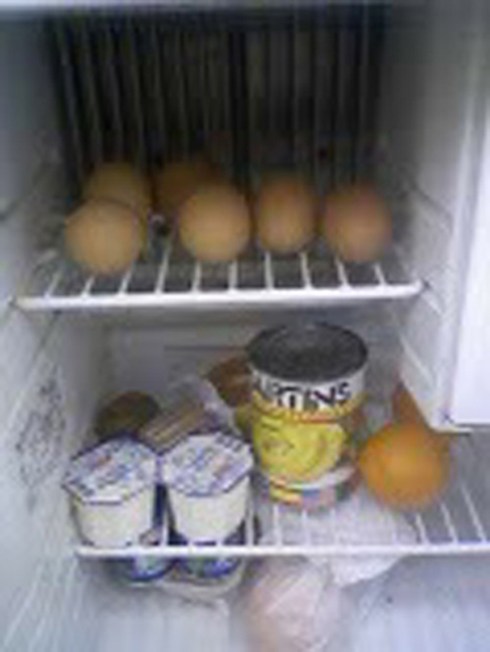
Ever since I came across the work Temps Mort it has haunted me. Haunted me in a good way; it has stayed with me. It resonates because of the power delivered by Mohamed Bourouissa and his collaborator’s low-res images. It resonates, also, because this is the only project made by an artist and prisoner with contraband cell-phones that I know of. Surely, there are exchanges like this happening all the time, but this is the only published example. And it was made with the express intentioned to make art.

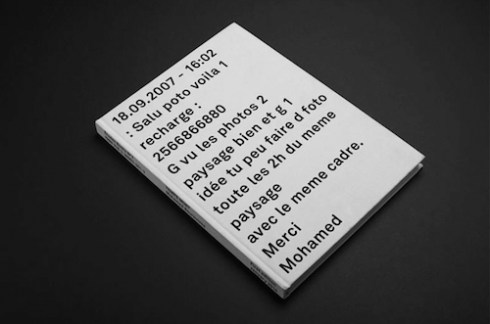
So I was pleased to discover, recently, that Temps Mort is now a book.

Methodologically, Bourouissa is way ahead of the game. As well as asking for images made according to description and sketches, he asked for videos. Bourouissa would send example videos and his collaborator (whom we know only as Al) would mimic. Throughout the project, Bourrouissa is clearly thinking about how the work will look to secondary and tertiary audiences. We are asked to make sense of seemingly random glimpses of an institution’s innards.

In exchange for composed views of the inside, Bourouissa sent short videos of the Paris streets. The simplest gestures become impressive. Even the txtspk language that is reproduced in the book is touching. In prisons, cellphones are illegal, valuable and a scarce resource, but the two use the tool with abandon and they repeatedly text to make sure they’re adequately fulfilling one another’s requests for footage.

This is not a photobook heavy on photos, yet everything inside depends on the discussions about images between Bourouissa and Al. There’s a lot of white space. The texts ensure we know the timeline and the white space ensures we know — and sense — the slow passing of time.

Temps Mort is over 5 years old now and the book feels a little like a memorial to that audacious moment when an artist dared and a prisoner dreamed. The book is a document that will last longer than the exhibitions and the interest in cellphone videos that declare a moment in Parisian jail operations. This blog post is many more steps removed from the original gifts between Bourouissa and Al. This blog post has no audio/visual jacks nor 9-foot white cube walls. This blog post lags behind the thrill of the original creation of the works and behind the recent exhibitions Bourouissa has mounted. My humble hope, here, is to impress how impressed I am. There’s nothing like this project.

There’s been many projects made in collaboration with prisoners from Virginia to Tennessee, and from Louisiana to Illinois, artists have communicated with prisoners to conjure something beyond the limits of the cell. And yet, none of those efforts have used the illegally smuggled mobile phone as their tool. There’s a subtle two fingers to the man in Temps Mort that we shouldn’t deny. I’m inclined to celebrate it.

Here’s some images and videos appropriated without permission from the web. Enjoy.

http://vimeo.com/63764961

2

18

4

6

14

7

5

3

15

11

16

17

8

9

12


EMAIL

prisonphotography [at] gmail [dot] com

Prison Photography Archives

Post Categories