Marking Time

A few months ago, I shared an announcement for the ‘Marking Time’ Prison Arts and Activism Conference, organised by the Institute for Research on Women (IRW) at Rutgers University.

Earlier this week, IRW announced the schedule for the October 8the -10th conference. On it are some inspiring artists whose work I’ve long admired from distance. Great line up.

I’m also pleased to mention that I’ll be moderating a panel, the proposal for which, for your informations, I have copy&pasted below.

Panel: Imagery and Prisons: Engaging and Persuading Audiences

We produce and consume an enormous quantity of images each day (350 million photos are uploaded daily to Facebook alone and the average person sees 5,000 advertisements per day). While images often reify stereotypes and social causality, many artists are creating and distributing photographs or disrupting dominant visual culture in hopes of supporting or instigating prison activism and reform. By looking at three practitioners with distinct approaches, audiences and strategies, this panel will explore the power, limitations, and corresponding ethics of visual activism. What images do citizens have access to? Who controls cliche and motif? What new images of prisons and prisoners need to be made? How can collaborative modes of producing and understanding images be catalysts for collective action? How can photography get past its role as mere documentation of prisons to help create visions for alternatives to incarceration?

Across New York City, Lorenzo Steele Jr. exhibits photographs he made during his work as a correctional officer deep in Rikers Island. At church groups, in parking lots, in schools, and during summer community days, Steele brings graphic imagery directly to multiple generations within the catchment area of Rikers. Steele’s presentations are accompanied by a number of workshops on conflict reconciliation, criminal justice and community.

Gregory Sale has produced longterm large scale projects that with significant institutional support have managed to bring together many disparate constituencies orbiting the criminal justice world. Sale’s “It’s Not All Black & White” made a conscious effort to wrestle the visual motifs and cliche of crime (striped jumpsuits, pink underwear and even brown skin) that Arizona’s infamous Sheriff Joe Arpaio has manipulated for his own political advantage.

Mark Strandquist works with communities to create photographs requested by prisoners (“If you could have a window in your cell, what place from your past would it look out to?”). After sending images to the corresponding prisoners, the photographs are exhibited and expanded upon through extensive public programing that brings students, policy makers, former prisoners, and many others together to engage with the causes, effects, and alternatives to mass incarceration.

Moderator, Pete Brook will ask the panelists which approaches have worked and which have not. What presentations of material have engaged and persuaded audiences? What different expectations and needs do audiences have which we as artists and activists must consider?

BIOGRAPHIES

Gregory Sale is multidisciplinary, socially-engaged artist, whose work investigates issues of incarceration, citizenship, visual culture and emotional territories. In 2011, Sale orchestrated It’s Not All Black & White, a three-month residency exhibition at ASU Art Museum in Tempe, AZ. 52 programmed events brought together a wide array of constituencies including incarcerated persons, their families, parolees, ex-convicts, correctional officers, elected officials, government employees, members of the community, media representatives, artists, and researchers. It considered the cultural, social and personal issues at stake in the day-to-day workings of the criminal justice system in Arizona. Sale’s most recent project, Sleepover grapples with the challenges of individuals reentering society after periods of incarceration.

Sale is the recipient of a Creative Capital Grant in Emerging Fields (2013) and an Art Matters Grant (2014) . In summer 2012, as a resident artist at Yaddo in Saratoga Springs, NY, and at VCCA in Amherst, VA, Sale’s work has appeared in museums nationwide including the Ackland Art Museum, UNC-Chapel Hill and the Cheekwood Museum of Art, Nashville. Sale is Assistant Professor of Intermedia and Public Practice at Arizona State University in Tempe, AZ. Before that he served as the Visual Arts Director for Arizona Commission on the Arts, the Curator of Education at ASU Art Museum, and as a public art project manager for the Phoenix Office of Arts and Culture.

Lorenzo Steele Jr. is a former New York City Correction Officer. He worked for 12 years at Rikers Island, considered by some as the most violent adolescent prison America.

In 2001, Steele founded Future Leaders, a non profit youth that provides workshops, training, education and consultation to children, parents and educators about incarceration and the criminal justice system. Steele has worked as a New York City Board of Education vendor and assisted organizations — such as The Administration for Children’s Services (ACS), United Federation of Teachers (UFT) and the Nassau/Suffolk (BOCES) school district — with workshops on conflict resolution, bullying and literacy. He has also worked with the Brooklyn District Attorneys office providing gang and prison awareness to at-risk youth. He has lectured at college across the New York area. Steele is the recipient of awards from Congressional, Senate, and State Assemblymen for services to the community and to children’s development.

Mark Strandquist is an artist, educator, and organizer. His projects facilitate interactions that incorporate viewers as direct participants and present alternative models for the civic and artistic ways in which we engage the world around us. Each interactive installation functions not as a culmination but as a starting point and catalyst for dialogue, exchange, and community action. While photography is often used, the visual aesthetics and technical mastery of the medium become secondary to the social process through which the images are created, and the social interactions that each exhibition produces.

The ongoing project Some Other Places We’ve Missed: Windows From Prison was awarded the 2014 Society for Photographic Educators’ National Conference Image Maker Award, a Photowings/Ashoka Foundation Insights Changemaker Award, and the VCU Art’s Dean’s Award by juror Lisa Frieman. Strandquist’s projects have been exhibited and presented in museums, film festivals, conferences, print and online magazines, and independent galleries. The project Write Home Soon was exhibited in the 2012-13 international showcase of Socially Engaged Art at the Art Museum of Americas, Washington, DC. The ongoing project, The People’s Library is part of the permanent collection at the Main Branch of the Richmond Public Library and was presented by Strandquist and Courtney Bowles at the 2013 Open Engagement Conference. Strandquist is an adjunct faculty member at the Corcoran College of Art, a teaching artist with the University of Richmond’s Partners in the Arts, a Professional Fellow at the Virginia Museum of Fine Arts, and a Capital Fellow at Provisions Library.

OnstottC-Still-04

Christopher Onstott is a freelance photojournalist, photo editor, and videographer working out of his native Portland, Oregon. Before he turned to image-making, he bounced around in various jobs — most of the sales. He was once high-interest loan officer, pizza delivery boy and used-car salesman. At the age of 24, he took a leap of faith and signed up for a college photo program.

I may have left Portland, but I still have friends there and interviews in the can, so here is Christopher and I talking about PDX, rural Oregon, disaster kits, the grounding effect of portraiture, setting up a business, and specifically setting up a business with your love.

In summer of last year, Christopher went inside Oregon State Penitentiary (OSP) as part of the Oregon Project Dayshoot+30. Our discussion begins there. The two images (above and directly below) are from inside OSP. Other images included are from Christopher’s portfolio.

Q & A

Prison Photography (PP): Tell us about your decision to shoot in Oregon State Penitentiary (OSP).

CO: It was with Oregon Project Dayshoot+30 which was the 30 year anniversary of a day of photographing Oregon by 90 photographers back in 1983. I own the original book One Average Day and the images that stood out to me were the penitentiary photos. In between the usual ‘day in the life’ shots, vineyards, cattle and farmer photos were photographs of a guy in his cell smoking cigarettes.

PP: What was the intrigue?

CO: Prisoners are the under-represented group in Oregon. If you think of Oregonians, you don’t think of prisoners. But they’re residents here.

PP: There’s 14 or 15 thousand people in Oregon’s state prisons these days. Thousands more in county jails.

CO: The Oregon Project Dayshoot+30 was a good reason to get access to OSP which I wouldn’t usually get access to.

I contacted the public liaison office, told them about the project, sent them to the site, sent them a couple of photos of the book that I’d taken on my phone. “Here’s what they did 30 years ago, can I come and shoot?” essentially. They did a security background check and we set up a time. I had only an hour window to shoot. The rest of the day I photographed around Salem.

OnstottC-Still-05

CO: When I got to the prison, the gentleman I’d been emailing with was not the man I met. The man I’d been in communication with was off work sick. So, immediately there was this disconnect between what I’d asked for and what was being presented to me.

It wasn’t a good experience.

PP: How so?

CO: I wanted to photograph the residents of OSP with a documentary approach, in the vein of the original project. But, my escort’s perception was I wanted take an updated version of the photo from 30-years-ago!

He asked, “So, you want to take this picture?” as he pointed at a print-off of a camera-phone picture of a image in a book! He walked me to a cell, there were two prisoners. He told me I could only photograph one and he gave me 3 minutes. [Laughs]

PP: You had your own art director!

CO: “The image your holding is an example,” I said. “But let’s look at the whole penitentiary.” He said we were not cleared for that, because all the prisoners were about to move for count. There was no flexibility. My escort was accountable to his boss and he didn’t know what had been said before.

PP: What did the subject think about you photographing?

CO: He was totally okay with it. He thought it was cool. I got the impression he knew he was going to be photographed. He was on LWOP (Life Without Parole). Pretty docile.

PP: You think he’s seen the photograph?

CO: I don’t know. I emailed the prison a copy of the photograph in a thank you email.

PP: when you were in OSP, did you cover your tattoos up?

CO: I wore short sleeves. I don’t really think of myself as being tattooed.

PP: Believe me, the prisoners and staff noticed! Do you think there was more to be seen at OSP?

CO: Definitely, just walking in we passed so many people. There was activity and work details everywhere. I was eyeing pictures everywhere but I couldn’t take them. It’s an entire town in there, right? A cultural complex. There’s a million photographs to be made. But I was only to capture a very slim sliver of life.

Still it’s important that there’s at least a representation of prisoners as residents of Oregon 30 years from now.

Tire Swing, Alberta Steet, hipsters, portland, summer,

L1008421

0x700 (4)

PP: Shifting gears. You grew up in Oregon.

CO: Grew up in Portland, spent a year in Texas, went to college in Washington State, spent a year in Texas, worked for 4 years at the Spectrum and Daily News in St George, Utah. I couldn’t imagine living anywhere else. The weather sucks five months out of the year.

PP: There’s lots of buzz about Portland, right now.

CO: Oregon really is two different states of mind.

You’ve got the Willamette Valley and the city of Portland and then you’ve got the rest of the state. The one area that doesn’t get attention is Southeastern Oregon. Not a lot of roads, no freeways, hardly a population density. Very rural.

PP: How do you characterize the Portland photo scene?

CO: I think it’s really supportive. We’ve got ASMP Oregon and Newspace. Photographers will move work back and forth and offer one another help. But, on the otherhand, there’s a lot of photographers, so it can be competitive at the same time.

PP: Journalism, editorial?

CO: Magazines. There’s a lot of international attention on the city so we’ve people coming here asking for images. Those stories tend to lean the way of food, style travel; not hardcore news stories. There’s no tornadoes or hurricanes here!

PP: Maybe an earthquake?

CO: I’ve got my 72-hr disaster kit and spare film ready [laughs].

PP: Have you always been a photographer?

CO: No. I’ve been pizza delivery driver. Worked in my dad’s automotive shop. I was a used car sales man for four years. I’ve been a high interest loan officer. I was a bartender for two years. When my father passed away in 2001, I inherited his camera and I was left with “What do I do now?”

My father always told me to be a salesman. But I couldn’t stomach earning a living by getting one over on people. I’d never been to college, so after he died. I decided to go back to college. I was a freshman at 24-years-old! I did Photojournalism at Olympic College in Bremerton, Washington.

I took a picture of a girl’s basketball game and they ran it big in the paper and that was me hooked. [laughs]

PP: What’s easier to sell? Photographs or used cars?

CO: They’re both really hard!

nineblock-003

L1000100

street-BW-029

PP: How do you feel about photography. Is it as bad as it’s often made out? Are you a glass half full or a glass half empty thinker.

CO: I think the glass is awesome. The fact you can wake in the morning, pick up a camera and go make a living. I don’t care if your shooting fashion or street photography or using your iPhone, you just have to make pictures. We’re a society that is devouring images.

PP: But a photographer still has to package and shape stories. Can’t just churn them out!?

CO: You still gotta be good. My degree was in visual rhetoric; saying something with an image. Manage that and you’ve accomplished something as a photographer. If you’re a one trick pony, then you’re not gonna last.

street-BW-002

0x700 (2)A

PP: I recently met Randy Olson and Melissa Farlow recently.

CO: Randy was my mentor at Missouri Photo Workshop last year.

PP: They’re a couple. There’s a few photo couples out there.

CO: Jenn Ackerman and Tim Gruber.

PP: Two great photographers. Yourself and Leah Nash are a couple. Is there any element of professional competition between you two?

CO: The secret to being in a relationship with another photographer is to be open to criticism and not to take it personally. If you want to grow, take honest feedback from someone who knows you really well and how you operate.

Leah and I edit one another’s work and we don’t take it personally. There’s no relationship argument to be had over photographs.

We’ve agreed not be chasing the same jobs. We’ve formed a separate company, NashCO (Leah Nash & C. Onstott) outside of our own work stylistically that’s focused on corporate and commercial work.

L1000118

PP: What you working on now?

CO: Street photography. I’m carrying my camera everyday capturing people in moments.

I’ve been working on a personal project of portraits for 5-years now. Using my Hasselblad. It’s slower. Because when I was at the newspaper I was running around photographing people but not really meeting them, you know? I was encountering into people who … I wouldn’t say were marginalized … but they were people who wouldn’t normally be paid attention to by the news. I wanted to slow down.

MiddleAmerica-002

CO: In news you’re photographing people in the highest points of achievement in their life, or at the lowest points of their life. The big award, the win at the big race, or the battle with cancer. Most of the time, we’re overlooking the median, the mean of existence.

people-008

CO: I want to give those everyday people and experiences some attention. In Nevada, New York, Utah, Washington, Oregon, California. Any time I travel, I try to make portraits.

Pick out the person who is trying not to be photographed and ask their name and their story. Often they reply, “Why me?” and my response is “Because you’re interesting.”

I’ve been the only photographer at some of the newspapers I’ve worked at. I was shooting car accidents, house fires and high school sports. My way to decompress from that is to take pictures that I wasn’t taking on the job.

PP: Instagram?

CO: Used to Instagram a lot. When I got my [digital] Leica I stopped posting on Instagram so much. I try to follow people who are making good pictures because I want to be inspired. I don’t want to see pictures of peoples kids.

PP: Where do you shoot?

CO: I’ve been shooting a lot around my neighborhood, the Alberta neighborhood, because it is a gentrified ghetto. There’s a lot of collision. Walk up Alberta or Killingsworth Streets and there’s a photograph every 10 metres. But here’s the hub of Portland’s gentrification.

PP: What else keeps your eye busy?

CO: Portland Squared. It’s a project that Leah started a couple of years ago. 50 photographers. one square mile divided up into fifty squares and you spend the day shooting a square and ASMP event. Last year, they did a bigger square. 2 x 2 miles and 70 photographers. for 24 hours.

PP: Whose work do you admire here in town?

Thom Boyd, Natalie Behring.

Jason Langer’s work blows my mind. Chris Hornbecker who did the Timbers billboards.

Beth Nakamura’s stuff is awesome; she’s just a kick-ass daily newspaper photographer. Her blog is great too.

PP: Anything else to add?

CO: Don’t move to Portland! There’s too many photographers here! [Laughs]

PP: Ha! Thanks, Christopher.

CO: Thank you, Pete.

people-023

SOCIALS

Keep up with Christopher Onstott through his website, Instagram, Twitter and Facebook.

Follow NashCO on Facebook, Vimeo and web and blog.

EYE ON PDX

Eye On PDX is an ongoing series of profiles of photographers based in Portland, Oregon. See past Eye On PDX profiles here and here.

selfie

Final Words, launched today, is a sprawling documentary project that focuses on the humanity at center of the death penalty in America. It is the brainchild of photographer Marc Asnin known for his brick of a book Uncle Charlie. Well, this project takes Asnin from the personal to the political, but it is no less massive. Asnin’s got form.

Asnin is asking photographers and non-photographers alike to submit selfies as statements against the death penalty. I’ll get to that in a moment but first the project and the cause.

FINAL WORDS

Final Words is a book and traveling exhibition, featuring the final statements of the 515 prisoners executed by the state of Texas since 1982Final Words will shape and deliver curricula to American high-schoolers. If we can get the youngest generation talking then perhaps we can engineer a future without the barbaric death penalty?

The project statement explains that more than one person every month for thirty-one years has been executed by the Lone Star State:

Just before the execution is completed, each prisoner is given the opportunity to share their final thoughts. […] It is their words, their final words in this life, that allow the reader to experience the underlining humanity central to the death penalty debate. […] Final Words comprises a part of the legacy that will live on beyond us and it will stand as a testament to the kind of society we were—who our criminals were and how we implemented our idea of justice. Final Words interrogates our presuppositions about the death penalty. […] While this book is a document of death—the death of both the guilty and innocent, the criminals and the victims—it attempts to create a dialogue about life.

All this takes a movement. And money. An IndieGogo campaign will launch in a months time.

The editioned Final Words books will cost a pretty penny. Their sales will help raise money to pump simpler versions of the content and curricula into the bloodstream of the education system.

Each page of the book features a prisoner’s mug shot, their age both at the time of the crime and when they were put to death, a description of the crime for which they stand convicted, and their final words.

Photographers Selfie Against the Death Penalty

In other efforts to corral some cash, Neverland Publications (cofounded by Asnin) and VII Association are collaborating on Photographers Selfie Against the Death Penalty, an international photo campaign to call for an end to executions in America. Highflying pixelmakers & imagershakers will submitting alongside us flailing Instagram plebs.

Note that the word “selfie” is used as a verb. I like that. Jury’s out as to how much a collection of selfies can effect entrenched moral politics, but it’s worth a try. Social media does nothing if not surprise regularly. And besides, all this just gets people talking ahead of Final Words‘ big fundraising campaign that ignites in October.

As the 501c3 sponsor of the project, VII Photo has asked all its photographers to participate in the selfie campaign. Get yourself in there too:

1. Make a selfie, save it to your computer.
2a. Upload selfie to http://www.final-words.org
2b. Fill out form (name, age, email address, location, how you heard about Photographers Selfies Against the Death Penalty, your preferred photography genre)
2c. Personalize your statement against the death penalty, by completing the following “I stand against the death penalty because …” in 140 characters or less.

Go on, selfie against the machine!

[Oh, if you’re wondering how and why Asnin and his colleagues have the last statements of 515 men and women, it is because for some reason the state of Texas keeps a public online database of them. Weird, no?!]

PROTEST

The 15th Annual March to Abolish the Death Penalty takes place in Houston, Texas on Saturday October 25th at 2pm. Details on the exact location in Houston will be announced later.


b

I moved from Portland, Oregon to San Francisco, California this past weekend.

Blake Andrews — everyone’s favourite photoblogger and Oregon resident — wanted answers.

1

Aug 12 – dbtvcampaign: #IfTheyGunnedMeDown which pic would they use? Thank you @underserverillance for Helping @dbtv13 shine light on the tragic shooting of 18yr old UNARMED Mike Brown, shot and killed by a St. Louis County police officer, show support by posting your photos! | Join in this movement. #DBTV #JPA #JusticeforMikeBrown #IFTHEYGUNNEDMEDOWN (Instagram)

“America. How do you think we look when the world can see you can’t come up with a police report, but you can find a video?”

— Rev. Al Sharpton, speaking at Michael Brown’s funeral, Friendly Temple Missionary Baptist Church, St. Louis, August 25th, 2014.

POLICING, IMAGING AND REIMAGINING POLICING

In the wake of Michael Brown’s killing by a police officer, the United States has been asked to look at itself in a grave and deep way, once more.

The Brown family, the Ferguson community and America generally must figure out how to turn a tragedy into a movement. The Brown family shouldn’t have to do this; they should be living normal lives, but once that police officer shot six bullets into Michael, their lives took an uncontrollable turn. Strength to them and to their ability to carry a movement born of circumstances no parent would want to endure.

Racial profiling is a national problem — the New York Police Department’s Stop & Frisk policy being the most overt example. Police abuse exists and minorities suffer the brunt of that abuse. The extent to which reports of mistreatment have declined among forces who adopted lapel-cameras for their officers is eye-opening. In Rialto, California — the city widely cited as the earliest pilot program of police officer body cams — had all 70 of it’s officer wear one. Between February 2012 and February 2013, public complaints against officers plunged 88% compared with the previous 12 months. Officers’ use of force fell by 60%.

4

Aug 14 – djuantrent: #ForThoseWhoHaveBeenGunnedDown “…because our souls cannot rest at the hands of injustice.” More on Djuan Trent’s blog)

Following Ferguson, a renewed call to look at policing rings loud. The figures from Rialto and other pilots like it prove problems exist. We must remember that these figures are merely late confirmation of what poor communities have known and experienced for decades — that they receive a particular and disproportionate amount of scrutiny.

[Ferguson police have started to wear body cameras, albeit 50 cameras donated by two private companies.]

Thinking about these convergences of issues, it’s surprising how much of the conversation comes back to sight: What is the nature of watching a police search? How do we see our society? How do we see class and race? How do people see the police force? How does the state see, monitor and discipline the citizenry? How are images and imaging technologies used to put forth a case when accounts conflict and versions stand to convict or acquit?

How bad does it look when police roll in military armored vehicles in the face of peaceful protest?

These preoccupations over perceptions and narrative were never more in evidence than when the Ferguson police, who unable and/or unwilling to present an officer’s name or autopsy report to the enraged public, were able to publish a corner-store CCTV camera showing Michael Brown push the store owner. Quite how some unrelated grainy footage impacts the facts of a cold-blooded murder is beyond any of us. In the early scramble to win over the public during what quickly developed as a cops v. community narrative, the police turned to video. Desperate and insulting.

3

Aug 13 – phoenixpsyd: If I were killed by police today, which picture would they use? #IfTheyGunnedMeDown #WhichPictureWouldTheyUse #IFTHEYGUNNEDMEDOWN (Instagram)

WHICH PICTURE WOULD THEY USE?

As awkward and insulting the police’s use of imagery was in the wake of Brown’s murder, the visual strategies employed by protestors was subtle, simple, subversive and hard hitting. On the streets, protestors walked with their arms in the air. Across the nation, the Tumblr Which Picture Would They Use gave young black Americans the opportunity to simultaneously show their support for the Ferguson protestors, skewer the media, and critique the duplicitous versions of character cast open them by wider society.

I am so impressed by Which Picture Would They Use. Its question is so simple and its rhetorical strategy so strong.

People of colour are subtly vilified daily, and young people of colour more so. Selfies are the snap of choice for many youngsters and Which Picture Would They Use is populated with dozens. This Tumblr shows that young millennials are savvy, canny, funny and more visually literate than us older folk. It shows that they’re totally hip to the media’s rating games. It’s a political engaged use of selfies and Tumblr’s “Like-culture.”

Which Picture Would They Use is a off-the-cuff (off-the-camera) stick in the eye to an ambivalent media. It doesn’t take much time, but the crowdsourced results are striking. Some might say youth might have been primed for this discussion (and controlled anger) following the politics surrounding the images of Trayvon Martin and George Zimmerman used in the media. But that would be glib. I would say each of the Which Picture Would They Use contributors are responding to years of experience and observations.

Which Picture Would They Use puts to bed the “conversations” about hoodies and the associated issues — race; presentation of the self; perceived dis/respect for adult America; generation gaps; and popular culture.

Hoodie or not, sports team colours or not, cross-dressing, swimwear or military fatigues, it doesn’t matter. Which Picture Would They Use demonstrates that we’re all combinations of many different traits and our personalities are not fixed. It is ludicrous to reduce a person to a single reading based upon the appearance of a dominant (most widely-circulated) image.

The young black Americans submitting to Which Picture Would They Use know Michael Brown had already been judged by a portion of America and know the remainder would judge (even if unconsciously) based upon the media’s choice of images.

2

Aug 12 – dbtvcampaign: #IfTheyGunnedMeDown which pic would they use? Thank you @labeledmisfit_ for Helping @dbtv13 shine light on the tragic shooting of 18yr old UNARMED Mike Brown, shot and killed by a Ferguson police officer. (Instagram)

P1080104

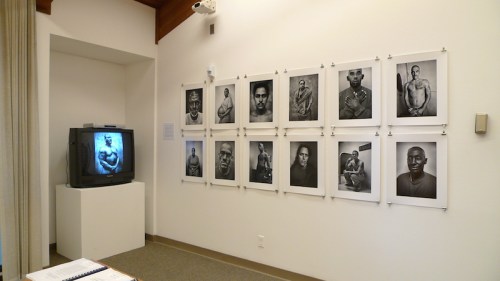
^^ That’s me ^^, last Tuesday, after two days of installation.

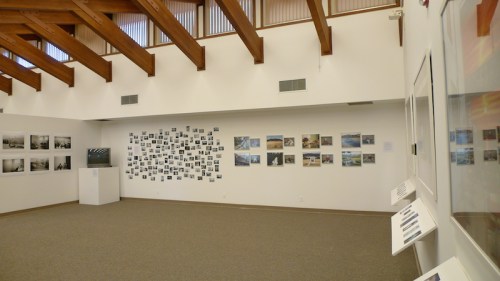
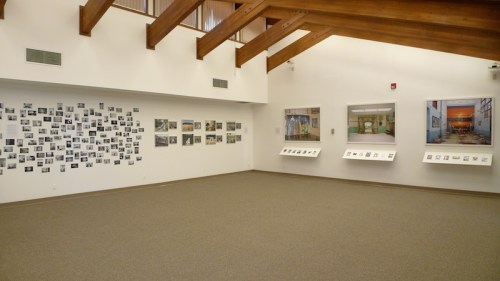
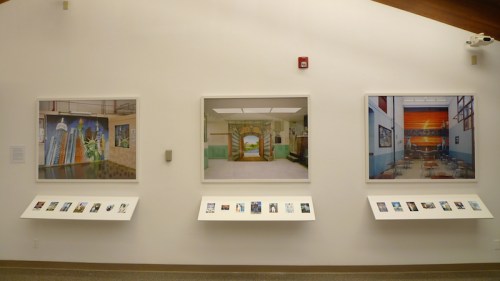
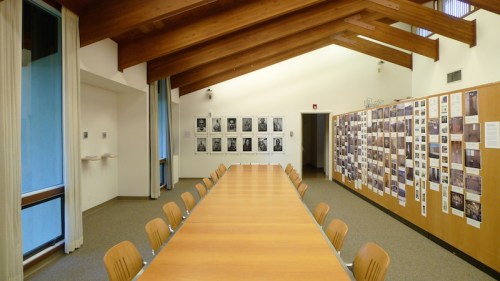
Today, Prison Obscura officially opened in the Clark Humanities Museum at Scripps College in Claremont, just east of Los Angeles. If you’re in the area pop by and have a peek. I’ll also be down there on the 2nd October to deliver a lecture ‘Prison Silences and to attend the opening reception.

Thanks to Kirk, T, Amy, Linda, Juliet and the staff at the Humanities Institute for their welcome, work and support.

P1080098

P1080083

P1080099

P1080082

P1080100

P1080078

P1080102

P1080085

P1080088

P1080087

P1080094

P1080093

All photos: Matthew Seamus Callinan

500 Prison Obscura

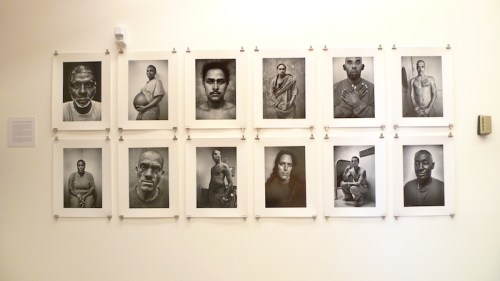
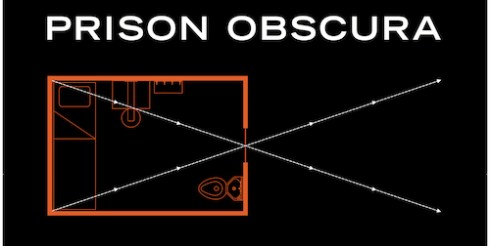
Prison Obscura, an exhibition I curated and first showed earlier this year is making its second appearance. I’m proud to tell you it’ll be on show at Scripps College in Claremont. Specifically it’s at the Clark Humanities Museum and coordinated by the Humanities Institute. From the east coast to the west coast.

In the interests of brevity, I’ll simply reissue Scripps’ press release below. Anything you need to know about the show, the artist, the works and the curating motive you can find at the dedicated Haverford Prison Obscura website.

THE PRESS RELEASE

Prison Obscura at the Clark Humanities Museum Sheds Light on Incarceration

No country in the world incarcerates a higher percentage of its population than the United States. In fact, more than 2.2 million people are currently locked up in the U.S.—a number that has more than quadrupled since 1980. But the lives lived behind bars are often invisible to those on the outside. Prison Obscura sheds light on their experiences and the prison-industrial complex as a whole by showcasing rarely seen surveillance, evidentiary, and prisoner-made photographs.

Prison Obscura, which comes to Scripps following its successful run at the Cantor Fitzgerald Gallery at Haverford College last spring, builds the case that Americans must face these images to grasp the proliferation of the U.S. prison system and to connect with those it confines. It encourages visitors to ask why tax-paying, prison-funding citizens rarely get the chance to see such images and to consider what roles such pictures play for those within the system.

Alyse Emdur’s collected letters and prison visiting- room portraits from across the nation and Robert Gumpert’s recorded audio stories from within the San Francisco jail system provide an opportunity to see, read and listen to subjects in the contexts of their incarceration. Juvenile and adult prisoners in different workshops led by Steve Davis, Mark Strandquist and Kristen S. Wilkins perform for the camera, reflect on their past, describe their memories, and represent themselves through photography. Prison Obscura moves from these intimate portrayals of life within the prison system to more expansive views of legal and spatial surveillance in such works as Josh Begley’s manipulated Google Maps’ API code and Paul Rucker’s animated videos, which offer a “celestial” view of the growth of the prison system.

THE PROGRAMME

Brought to Scripps College by the Humanities Institute as part of a semester of programming this fall on the theme of Silence and offered in collaboration with the Core Curriculum in Interdisciplinary Humanities, the exhibition is on view at the Clark Humanities Museum from Sept. 2 through Oct. 17.

Brook will present “Prison Silences,” a public lecture for the Humanities Institute on Oct. 2 at 4:15 p.m. in Garrison Theater at the Scripps College Performing Arts Center. A reception will follow from 5:30 to 7 p.m. inside the exhibition in the Clark Humanities Museum in the Bette Cree Edwards Humanities Building at Scripps College.

Scripps_College_Logo

THE DETAILS, THE CONTACTS

The Clark Humanities Museum is open Monday through Friday, 9-5. For more information on Prison Obscura, please contact Amy Emmert on (909) 621-8237, email humanitiesInstitute@scrippscollege.edu or visit scrippscollege.edu/hi.

Prison Obscura is a traveling exhibition curated by Pete Brook and made possible with the support of the John B. Hurford ’60 Center for the Arts and Humanities, the Cantor Fitzgerald Gallery at Haverford College, PA, and the Core Curriculum in Interdisciplinary Humanities at Scripps College, CA.

Founded in 1986, the Humanities Institute at Scripps College presents lectures, films, exhibitions, conferences, and other events each semester on a thematic topic related to the humanities. A distinctive aspect of Scripps’ program is that a select group of students participates each semester as Junior Fellows, attending events and taking part in a seminar that hosts prominent scholars, activists, and artists who contribute to the Institute’s programming. In Fall 2014, under the direction of art history professor Juliet Koss, the Humanities Institute will explore the theory and practice of silence: voluntary and coerced, solitary and communal, literal and metaphoric. In addition to Prison Obscura, public lectures, seminars, films, and performances will take place in connection with the theme of Silence and in collaboration with such signature campus programs and spaces as the Core Curriculum in Interdisciplinary Humanities, the Scripps College Academy, the Ruth Chandler Williamson Gallery, and the Claremont Colleges Library.

Scripps College was founded in 1926 by Ellen Browning Scripps, a pioneering philanthropist and influential figure in the worlds of education, publishing, and women’s rights. Today, Scripps is a nationally top-ranked liberal arts college and women’s college with approximately 950 students, and is a member of The Claremont Colleges in Southern California. The mission of Scripps College is to educate women to develop their intellects and talents through active participation in a community of scholars, so that as graduates they may contribute to society through public and private lives of leadership, service, integrity, and creativity. 

IMG_3762

PREAMBLE: PHOTOGRAPHING FROM WITHIN

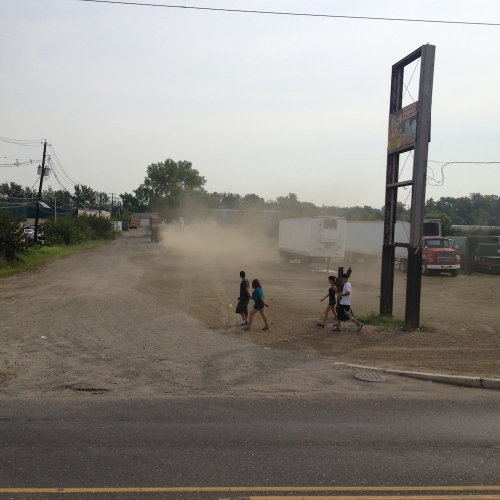
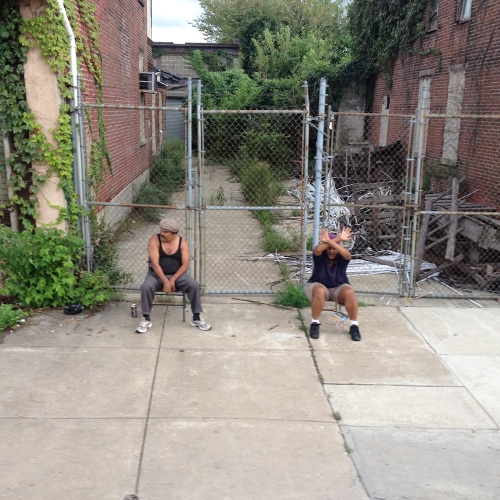
One of the most interesting street photographers in America right now is Gabe Angemi. He shoots daily and prolifically. He makes pictures with an iPhone, mostly, but on other cameras too. Angemi is a firefighter in Camden, New Jersey. His profession allows him to get close.

Elevated angles of passing moments in some of Angemi’s photos are reminiscent of images in the many curated Google Street View (GSV) projects. GSV projects tend to divide people. You love them or you hate them. Doug Rickard’s A New American Picture was one of the earliest, one of the best promoted and most divisive of the GSV projects. Why am I mentioning this? Well, Rickard got some flak because he drove-by shot America’s poorest neighbourhoods from behind his computer screen.He didn’t hit the streets himself, but drifted past scenes from the up-high vantage point of a 15-eyed Google car camera rig.

In his look at inequality in America, Rickard *travelled* the streets of Camden. Some of Angemi’s images may look similar but the intent and engagement is vastly different. I’m somehow reassured to know that Angemi is getting down of his rig, chatting with locals, watching the ebb and flow of energies, and shaping the city. He’s also responding to emergencies, securing vacants and putting out fires.

Angemi’s diaristic portrait of the city is raw. But it reflects a place in which 40+% of the population live below the poverty line; a city hall from which three past mayors have been convicted of corruption; a city which can’t support its own schools; and a city in which police misconduct was so rife that law enforcement was placed in the receivership of state forces.

Camden has one of the highest crime rates in the U.S. and is often described as the most violent city in America. In 2012, Camden had 2,566 violent crimes per 100,000 people which is five times the national average. Camden is a rough town, but it is more than its poverty. Angemi consistently puts the hardships and everyday events into a wider context.

Whereas Rickard simply restated that poverty exists in America, and in Camden in particular, Angemi is seeing and sharing it daily. He’s mapping change in Camden and he’s also trying to make it a safer place. That makes him one of the most interesting street photographers in the country.

Angemi pushes his stuff out on a popular but private Instagram account, @ANGE_261.

Scroll down for our Q&A
IMG_3402

01020025

IMG_0297 copy

Q&A

Prison Photography (PP): Are you always using an iPhone? Are you always shooting on the job? Or do you use other cameras and venture out other times?

Gabe Angemi (GA): Not always. But the iPhone is just always there you know? It’s super easy. Occasionally though, it sucks. I also use a 35mm Olympus camera I got from Clint Woodside at Dead Beat Club, and a couple of Polaroid cameras. I’ve been using a Fuji X100 mostly as of late.

Recently, I gave Bruce Gilden and some friends from Magnum a tour of Camden, for a few hours on back-to-back days. I can’t shoot like that; the big cameras and the assistant will never suite me. I love that it’s out there and artists like Bruce are killing it, but I’ll keep making it work with what I got. I suppose that points to why the iPhone works so well for me, it’s just easiest. My photography is more timing, perspective and place than anything else. I suppose I just never had the money to buy a camera that’s *serious*. One day I’ll get a legit one I suppose.

PP: How long have you been a Camden firefighter?

GA: I’ll have been on the job in CMD for 16 years come December. I was recently promoted out of the Rescue Company to Engine Co. 11 in the city’s Cramer Hill section.

PP: How do you take pictures while you’re on call?

GA: I take my job very seriously. Being Johnny on the spot at a fire scene doesn’t jive well with making good photos. I’ve started making photos more and more off duty. The access though — it was invaluable to get me where I could be making interesting photos.

When I was shooting at work years ago, I needed quick and easy so it never interfered with my duty or performance. Hence, the iPhone. Clearly, I can’t have a big ass camera around my neck while I’m fighting fire!

IMG_1751

IMG_4841

GA: I rarely shoot on the job these days, it is illegal per department policy now. If I take a photo on duty it is with the intent of using it for a training presentation or a PowerPoint.

PP: Because you train other firefighters in fire abatement, right?

GA: Right. And nothing but harmless stuff goes on my social media. Ethical considerations are a big factor. Problems are to be avoided. I had to talk to an attorney about it extensively a few years back.

PP: When did you decide to start shooting in the city?

GA: I started shooting the day I was hired, using an old film camera. Maybe even before that, when I’d stop in a firehouse to see my dad.

Initially, I was just shooting and documenting “us.” Somewhere along the line, I turned the camera towards the city, the issues, the people, the good, the bad. It all seems so normal now but its surely not. Camden’s a fascinating place. I like to be involved in friction, and trying to solve it. I shoot the friction in places that used to be what America was all about, and still is, but for entirely different reasons.

01020013

PP: Camden is a tough town. Lots of surveillance, lots of blocks where tensions between citizens and cops are high. How do you and your uniform and your camera fit into that?

GA: I think that collectively, the fire department is looked upon endearingly. The residents have family and friends on the job. The locals know we are not there to break their balls or be indignant. We’re just there to help.

It’s funny how most of the outsiders are the ones who confuse us with the police while were on the street. I mean, I get it, it’s a dark blue uniform, but we are clearly not the police; we do not carry weapons.

Anyone who sees us — from the corner boys to the politicians — should know we don’t judge, assume or push buttons that aggravate anything. We mind our own business, we just want to help.

I’m not dumb though, I’m not always going to fit in, and clearly I’m not going to try to fit me and my camera into a spot that isn’t going to work out. ‘Round pegs, round holes,’ as one of our Deputy Chiefs always said. It carries over from my career to my art.

Tensions are indeed high, and yes, the city is heavily surveilled. The municipality and county had acquired some state of the art detection and monitoring equipment by way of federal grants. The whole city sometimes feels like a prison. Cameras are everywhere, and there’s now a shot detection system that can pinpoint gunfire down to a city block.

IMG_9405

IMG_0006

IMG_3536

GA: Tensions aren’t necessarily a consistent thing, but more like an ebb and flow depending on what’s going on in a particular part of town. Some spots are always hot, others rise and fall. I’m no authority mind you, and I won’t claim to be an aficionado on the vibe on the street between citizens and the law. I pay close attention, but I’m not in any position to really know anything about the police and their plight. It’s not my job. All I really know about them is they have a tough job, and it’s damn dangerous. So is ours.

PP: What’s the reactions of the locals?

GA: My camera gets me smiles, waves, fun poses, friends, conversations and past barriers or preconceived notions. It also gets me dirty looks, threats and projectiles. Obviously, I prefer the former, but just like my job, I take the good with the bad.

IMG_3869

IMG_7371

PP: What’s your approach?

GA: I ask sometimes to shoot, sometimes I don’t. I build relationships with people I meet on the street when I’m working and try to create a bond or trust so that I can go to their space and photograph them. Sometimes it takes time, other times it can go down right away. Personalities abound; it’s very cool.

PP: Is Camden been talked about, written about, and/or depicted in the right ways?

GA: No.
IMG_4645

IMG_1868

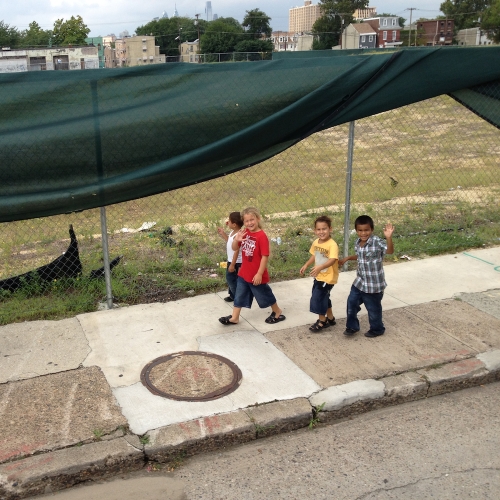
PP: You’ve a professional experience of the poverty, disrepair, vacancy and the destruction/burning of houses. Can you describe what you’ve witnessed in your work and how you’ve secured and watched properties burn never to be replaced? It seems your job — in real time — has tracked the decline of Camden.

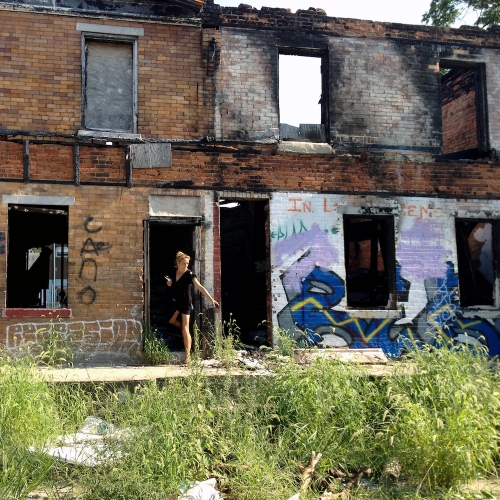
GA: Many of the buildings I was shooting initially for teaching purposes are no longer standing. Anyone that does what I do for any length of time should start to inadvertently become aware of the developing issues and predict whats coming or whats soon to happen. I’ve watched the city disappear over the last 16 years. When you drive around and see vacant lots, you become aware that it was once a thriving community, with street lights and brick and mortar row homes lining the sidewalk. People lived here.

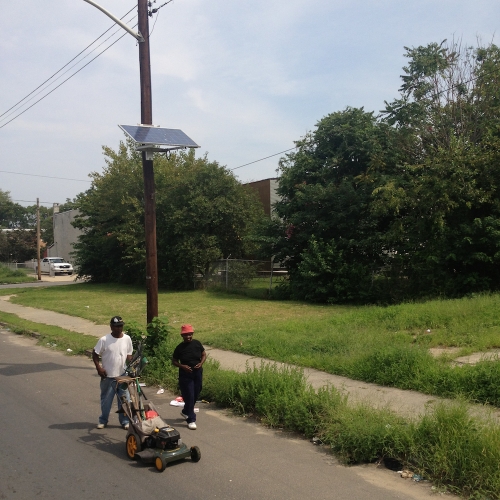
Now, whole stretches of fenced in empty lots do not even have the fences anymore, they have been torn out and cashed in at one of the many local scrap yards. You can hear huge sections of fence being dragged through the street — day or night. The sound of hammers and improvised hacksaws emanate from behind rows of boarded up windows, working to remove any type of metal with a high price per pound. One can often smell gas leaking from stolen basement pipes in vacant buildings, thieves are disinterested in even turning the gas petcock off. Used tires are everywhere, lining the streets like weeds. Plastic bags from the bodegas blow like urban tumbleweeds.

PP: Extreme poverty.

GA: At work, When we are out preplanning vacant row homes, we see needles, used condoms, the insides of ball point pens, lighters, baggies, piles of clothes, stacked mattresses, tinfoil “sculptures,” shit buckets, piles of feces in corners, the carcasses of what would have been a pet in the suburbs … I could go on with this list for a half hour.
IMG_4199 copy

01030011

We speak to the neighbors, the mail man, the utility provider, squatters, prostitutes, everyone. We just assume the time is coming, you can just sense when a particular spot is going to burn. Then you’d catch the house, or the block, or the building, you turn the corner in the rig at 3am and the street is lit up like your on the surface of the sun.

Its always astonishes me, how it works. Not all of my peers are as tuned in I suppose, or they just prefer to ignore it. That would go for fireman working in any socioeconomically challenged urban city…

But, I think my artistic tendencies and growing up on a skateboard led me to observe closer. I can sorta relate a bit better, growing up in counter-culture mindset. I used to skate, bike, walk or drive around Philadelphia looking at everything from a skateboarding perspective. How could I creatively use the landscape to have fun on my skateboard? Now, I do the exact same thing, but in terms of forcing my way in and out of structures, in terms of understanding who or how many people might be living in a building that is supposed to have no one living in it. I’m constantly training myself to get a better understanding of how poverty affects people out here.

Where are they at? What are they willing to do or endure. I feel that everyone [in precarious or vacant houses] are my responsibility regardless of their job, tax bracket, or societal position. So I pay real fucking close attention and decide what I can and can’t do to make a difference. It’s best to see things up close so you know what you can safely do in the dead of night, maybe half asleep, when you need to be up on your game. We don’t get to warm up. We go full throttle, from a stand still-ice cold position.

The work kills our bodies. We might as well be the buildings were in and out of, becoming more and more structurally unsound over time. I mean fuck, I want to see my girls the next day too, so theres always this friction. I’m not sure exactly how to articulate what I see there, but its fascinating. Its also predictable and above anything else, a travesty. Sitting back is bullshit.
IMG_0322

IMG_7712

IMG_2434

GA: I always say that Camden should have been Philadelphia. A lot of things and people have conspired both consciously and subconsciously over time, both with premeditation and without, to make this place what it is today. There’s so many issues its overwhelming.

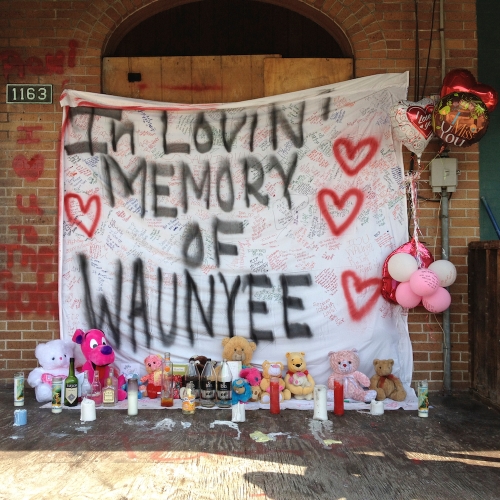
I talk to the folks next door or nearby to where we are operating. It’s heartbreaking. Hearing a woman tell me she’s got kids in her house three doors down from where we just put a fire out. They knew it was coming, they saw squatters in and out, they saw addicts using the houses to get high and shelter themselves. They have perpetual anxiety about not if but when [their place might burn down].

There’s a documentary film called Burn, and one of the featured guys in it has a great quote, “I wish my head could forget what my eyes have seen during 30 years of firefighting in Detroit.” That poor bastard has seen some terrible things. I wish I could say I, or any of the guys I work with, were any different. This job can mess your life up, I watched it do it to friends, both mentally and physically. It’s a battle for sanity. We’re getting kicked from all angles, BUT I owe everything I have to the City of Camden Fire Department, and I try to earn that shit every time I go to work, and every time I take, or teach a class. We work hard for what we get, we do a great job, and I’m proud of the work we do.

Camden civilians see more fires than most fire departments.

PP: Fire is a symptom of poverty, right?

GA: I believe so. Our workload is indicative of that. It’s the same in other depressed communities — Detroit; Gary, IN; Flint, MI; Jackson, MS; Stockton, CA; East St. Louis; Bluefield, WV; Baltimore; as well as sections of Philadelphia, Chicago, Oakland, New Orleans. There are so many places dealing with poverty. It would be hard to argue that fire isn’t tied into a cycle of poverty.

PP: What do you colleagues think of your photography?

GA: I’m not really sure! I struggle to keep it separate, and I struggle to combine it. I have a lot of support from guys I spent years of my life with — they support me and it, even if they don’t get it. I’m sure there are guys who don’t know me too well who are not feeling it or very receptive. Some guys have talked to me about it and now understand. All I can do is keep on being me. I’m not looking to hurt, upset, take advantage or manipulate anyone. I want to throw-up when some one says I’m exploiting people. I’m far more invested in this town and its people.
IMG_3456

PP: What’s next?

GA: I’d like to make a book, Pete. One of these days, I hope to put together a book dummy.

I would also like to do shooting elsewhere. I’d love to find a grant that would allow me to do what I do in Camden, in other cities. I could go hook up with friends in other fire departments and make photos.

But honestly, I’m trying to adjust to a new role in my job. And be a father to my young daughter. My wife is soon to give birth to a second daughter, so time and energy are harder and harder to come by!

Hopefully next year, I’m going to find myself sitting on the co-op board for Camden FireWorks, a great South Camden artistic endeavor. Those involved hope to start some revitalization on South Broadway out of the old CFD Engine Co. 3 fire house. Heart of Camden acquired it and put a ton of time, energy and grant money into refurbishing it into artist studio spaces, gallery and printing press with a program of lectures and classes.

IMG_0436

PP: Anything else you want to add?

GA: I hope that no one ever interprets my opinions, intentions or photography as negative toward Camden. I’m invested here. My father was a CMD fireman for 33 years and busted his ass through two riots and decades of a fire-load that would make most of today’s firefighters quit. I feel that the city looks like it does now by some twisted and fateful design. I give back in my own ways, and try to make Camden a better place.

I can’t get by with out my family, they are the best ever! Thanks Nicole, Maria, Lillian, and Lucia. You allow me to make art, make photos and constantly deal with my obsessive nature and all that comes with it.

I owe a ton more to too many of my friends and influences to write here but they know who they are. ARTNOWNY and the Philadelphia art scene are awesome.

Oh, and firefighters rule! We are here for you.

PP: Cheers, Gabe.

GA: Thank you, Pete.

IMG_6833

EMAIL

prisonphotography [at] gmail [dot] com

Prison Photography Archives

Post Categories