Fault Lines Chasing Bail 5.24.14

It’s an open secret that the bail and bail bond systems — like other aspects in the criminal justice infrastructure — take a different toll on individuals depending on their ability to pay. When the poor can’t afford bail, the poor stay locked up. Making this point, a few years back Laura Sullivan for NPR made a phenomenal three-part series that skewered the bail bond system.

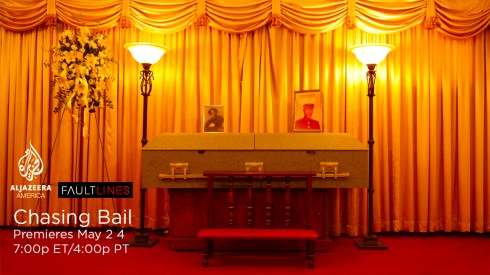
CHASING BAIL

We have a more recent view at the lives and fortunes at stake in a criminal justice system influenced by market rules. Al Jazeera’s Fault Lines series has a pedigree when it comes to criminal justice reporting, so I eagerly anticipate Chasing Bail which examines America’s multi-billion dollar bail bond industry. Two of  approximately 15,000 bounty hunters are featured in the show, also.

In the show, reporter Sebastian Walker meets the family of 56-year old Jerome Murdough, who was found dead in a 101-degree Rikers Island  jail cell, NY. Murdough was unable to make his $2,500 bail and awaiting trial at the time of his death. He was jailed for a misdemeanor trespassing charge.

The program makers also go to Prince George’s County Detention Center, Baltimore, MD — a region with one of the highest arrest rates in the country — and interviews prisoners incarcerated on bails of less than $3,000. People, the program explains, who are incarcerated pre-trial are far more likely to plead guilty.

The program also follows Rob Dick, a bounty hunters in Sacramento, CA — a county in which courts set over $16 million in bail money each month.

Al Jazeera writes:

The U.S. is one of only two countries (along with the Philippines) that allows companies to bail people out of jail at a profit. In all but 4 states, bail bondsmen are allowed to take almost any legal measure necessary to capture fugitives, including crossing state lines and breaking into homes. It’s a dangerous business for almost everyone involved, with few rules and little oversight.

In a nation where, on any given day, nearly 70% of the jailed population is awaiting judgment – how does money affect who goes free and who stays behind bars?

————-

Fault Lines’ Chasing Bail airs at 7pm ET/4pm PT, Saturday, May 24th. Find out how to tune in near you.

Christina Riley 'Back To Me'

It is, unfortunately, rare that we see photography about mental illness in which the protagonist is also the creator. Christina Riley’s Back To Me bucks the trend.

Back To Me is a visual dip into a disorienting episode Riley experienced when she briefly absconded from her medication routine. She was without anchor and the photographs trace her imperiled, but thankfully not fatal, journey before returning to a mental state she could claim as her own; before she found a way back to herself.

Simultaneously, Riley experienced euphoria and suicidal thoughts. Freewheeling brain chemistry forced her into an escape and explore mode, but the exhilaration was not something she could control. She describes being outside of herself and of living another person’s experience.

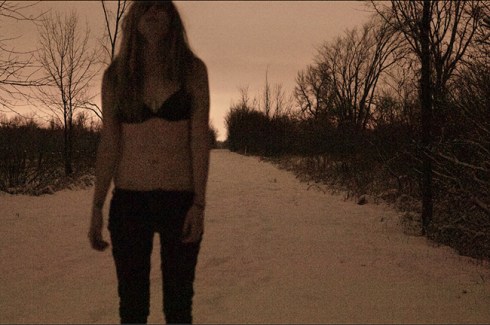
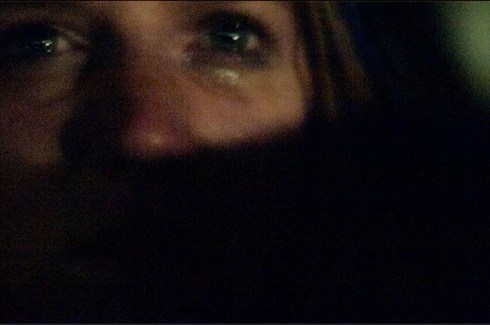
The facts of the episode are not immediately apparent from the grainy images alone. There’s a looming threat but as the images vacillate between self-portraits and landscapes of unidentified places, it’s difficult to figure out the source of the threat. Perhaps the two are one and the same?

Clearly something is not right, but it is only a brief text on the book’s penultimate page that contextualises Riley’s solitary portraits amid the dark, between the light snow and at the side of unknown roads.

Riley writes:

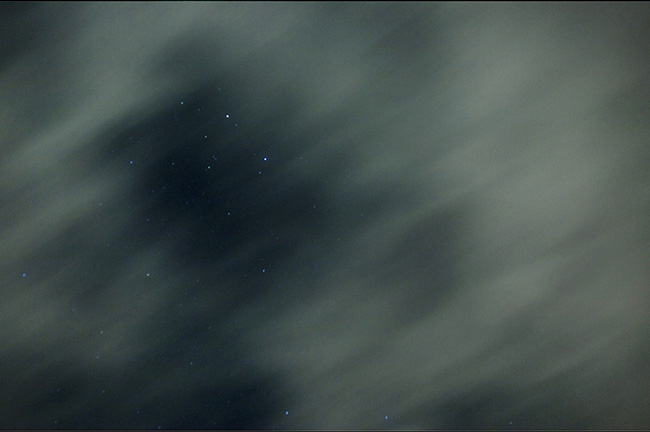
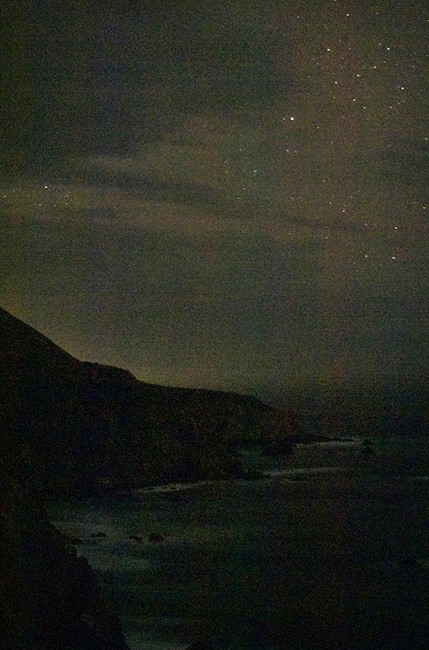
I remember driving down Highway 1 south feeling almost certain I wouldn’t return. The bottle of wine I planned to drink before jumping was sitting in the cup-holder alongside a bottle of Ativan and my camera. I cried the whole way to the bridge feeling guilt already for what I hadn’t yet done. I stepped out of my car to a cold, foggy blowing sky. But through all that, stars. I stood there in the darkness and they spoke to me. They were just for me and their message was clear.

It would kill him.

Riley somehow in the swirl of illogic and depression Riley saw the effect her suicide would have on a loved one. She didn’t jump, she turned back. What part did photographs play in the decision? Any at all? Are these photographs saving therapy? Or are they mere documentation? That this remains unclear is one of the strengths of this unique book.

Tony Fouhse, publisher at Straylight Press, says, “One way she grounded herself during this period of madness was by taking photos of herself and the strange world of mania and depression, euphoria and delusion, she found herself in.”

So, Back To Me is part memoir, part self-warning but mostly self-love. Riley came through it and a significant part of understanding and healing has been the sequencing and production of the book. She has found use — a secondary audience, if you will — for images and moments that at the time of making were only for her.

I wanted to ask Riley about that time and the times since, so I emailed a few questions.

Scroll down for the Q&A

Christina Riley 'Back To Me'

Q&A

Prison Photography (PP): Describe your life and thoughts leading up to this episode of instability.

Christina Riley (CR): Throughout my life I have struggled with a mood disorder. At ten-years-old I started behaving extremely unpredictably. It came out of nowhere. My parents had no idea what was going on, until after attempting suicide twice, I was hospitalized for a year. I walked out of there at age 14 with a diagnosis of bipolar disorder.

Leading up to the most recent episode shown in Back To Me I was feeling pretty level (so I thought). It lead me to believe I was misdiagnosed, so I took it upon myself to go off of my medication. I remember my mind racing with ideas. I had endless energy. The world revolved around me. My self-confidence and sexuality was inflated. Things couldn’t get better. Then suddenly I was convinced I was in love with someone else. Then there was no stopping me. I thought my behavior was coming from a genuine place. I didn’t know I was sick.

I was launched into the world you see in Back To Me.

PP: Between which dates do you identify the episode? And between which dates were you making photographs.

CR: It’s all such a haze but I think the episode began in November 2011 and got very serious pretty quick. It feels like it was an eternity and somehow a dream. Time did not exist. I would say that the entire episode — including the slow transition into my “normal” self — lasted a year-and-a-half or something.
Christina Riley 'Back To Me'

I began taking the pictures around December 2011 as things were becoming more intense and I was losing control. I really had an overwhelming feeling that it had to be photographed, like it felt somehow crucial to my existence. I would be in those moments of living in that other world, and there was no question. I stopped photographing it pretty much when I came around to seeing that I was better – that things were better. I could see it in the pictures and knew it was done.

PP: How, with what, and/or why did you come out the other side of the episode?

CR: It took a lot of will power, medication, therapy and support from family and friends to get here. Everything comes to an end, so it was inevitable one way or another. I’m just happy I didn’t kill myself. I came out of this a better, more secure person.

PP: You’ve said it was like someone else taking photographs.

CR: It’s so hard to explain. It was kind of a compulsion, so I guess it sort of feels like the illness took the pictures. But at the same time, looking back, I know it was part of me too, which makes sense considering the illness will always be a part of me, healthy or not. I just wasn’t with it enough to know what was really happening or to make logical decisions which makes me feel like it was completely out of my control.

PP: Do words (in this interview) or images (in the book) manage to reflect the emotion and psychology of the time?

CR: I don’t think it would be possible for me to convey what it felt like any better than with the photographs in the book.

The photographs in Back To Me are a true moment captured in an unreal time. I’ve never expressed myself or the illness in such a pure way. Even though there was stuff you don’t see happening in the time surrounding the pictures, I believe that each one encompasses how it felt as a whole.
Christina Riley 'Back To Me'

PP: You say you’re grateful for the episode. It seems like it was a learning experience. Is this a fair characterization? Are the photographs key to that? In other words, are the photographs a valuable product from a less than ideal time? Would your view of that time be different if you had made no photographs and you had no book?

CR: Photographing this time in my life helped me more than anything else. I can’t imagine living through that without visual proof of it. It all felt so unreal that I wouldn’t know what to believe without them. I would feel so lost. It’s hard sometimes for me to look at the book because I can feel everything again. But it’s good for me. I know I don’t want to go there again because of it. I’m thankful because in the end, the pictures really have brought me to a better, more stable and aware place.

The book Back To Me is one of the most important things I have ever done. It is proof that I have an illness that I have to take care of. It is proof that I can get through it. It is a definite end to a crazy chapter in my life.

PP: Anything else you’d like to add?

CR: Many people think mental illness is a relentless hard slog against challenges that are unrewarding. But to the contrary, I feel that bipolar disorder has brought more positivity to my life than negativity. It has been hard, but it has made me a stronger, more accepting and maybe a more interesting person.

Without Straylight Press / Tony Fouhse, I feel my voice – my experience, which I believe so many people can relate to, would be lost.

PP: Thanks Christina.

CR: Thank you, Pete.

Christina Riley 'Back To Me'

REVIEWS ELSEWHERE

Colin Pantall says, “Straylight, a publisher which makes direct books with direct themes. Straylight is kind of rough and ready but it hits the spot and is much more than a decorative publisher. It makes books about things that matter. And it publishes people who don’t get published elsewhere.”

Timothy Archibald says, “A quiet story, told in your ear. Not sad, not tragic at first glance. No high drama. It feels like introspection. Just the data, shared by the storyteller as if it happened to someone else. Rich with color, rich with grain, warm and tangible- not like you are drugged, but just like you are very tired, but your senses are working overtime.”

GO HERE!

Christina Riley is a Canadian photographer living in California. She makes music with Burnt Palms.

Back To Me is available through Straylight Press.

Audience/participants reading the 4-page PHOTOGRAPHY AND SOCIAL PRACTICE broadsheet, a PDF of which will be uploaded to asocialpractice.com shortly.

On Friday, I was part of the Photo-Based Social Practice panel alongside Eliza GregoryGemma-Rose Turnbull, Mark Strandquist and Wendy Ewald.

The event was hosted by Aperture Foundation and Open Engagement. As introduction, we discussed our own practices and priorities, followed by break-out groups to develop the conversation and canvas audience members’ views.

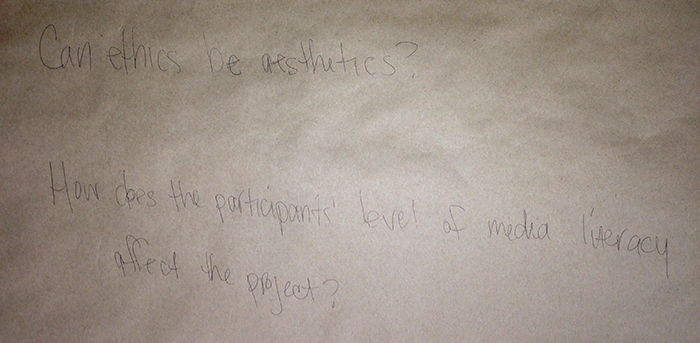
These conversations will influence our ongoing practices and be expanded upon in articles on the website Photography As A Social Practice throughout the summer, but for now here are some snaps of the ideas we noted during each group.

A_IMG_2946

A_IMG_2944

A_IMG_2952

A_IMG_2954

A_IMG_2959

A_IMG_2969

A_IMG_2965

A_IMG_2964

A_IMG_2960

Cross-posted from Photography As A Social Practice

Update 05.11.2014: The Eventbrite registration page has been closed after 80 sign-ups. But, there’s space for walk-ins and allcomers. We don’t want to turn anyone away!

Email info@asocialpractice.com to extend your interest. Thanks.

A BIG PUBLIC CHAT

Next Friday, May 16th, as part of the Open Engagement conference, I’ll be part of a conversation about photography based art and social practice.

OE_logo1

The Photo-Based Social Practice panel and group brainstorming is at the Aperture Gallery in New York, 10am – 12 noon.

Moderator Eliza Gregory along with panelists Gemma-Rose Turnbull, Mark Strandquist, Wendy Ewald and I will be discussing socially engaged, transdisciplinary, and expanded practices in contemporary photography.

Highfalutin, huh? Not really. The language is big, but the query is simple. Can photography build community and empower subjects? How can photography be nice?

It’s free, but preregistration is required. Do that HERE (6th option on the list).

We’re only going to do the briefest of introductions to our work before breaking into groups to tackle a host of questions that deal with audience, relevance and good design. It only makes sense that we collaborate to tackle answers to these issues.

7116681_300x300

We hope that the panel will follow nicely on from December’s Collaboration: Revisiting the History of Photography event that crowdsourced a new timeline of photo-history by focusing on projects with communities and groups as creators. I love the ideas involved in that.

While the Collaboration: Revisiting the History of Photography event gave new recognition to old projects and while it presented a new timeline and framework, it didn’t tackle best practices. From the projects it unearthed we can surmise the nature of some socially responsible projects, methodologies and motivations. In our discussion next week we hope to extend the conversation further and start to define common language, and potentially best practices, for socially engaged photography projects.

Please join us and help us along!

LOCATION, DATE, TIME

Aperture Gallery and Bookstore
547 West 27th Street, New York
10:00 am – 12:00 pm, Friday, May 16th.
FREE WITH REGISTRATION

NEW VENTURE! ‘PHOTOGRAPHY AS A SOCIAL PRACTICE’

Now is a good time to mention a joint venture recently started by my fellow panelists, Eliza Gregory, Gemma-Rose Turnbull and Mark Strandquist.

Photography As A Social Practice is a website for reference tools, teaching tools, and conversation about the intersection of social practice and photography. I’ll be contributing every so often and chatting on the phone about content. You can suggest resources by emailing info[at]asocialpractice[dot]com

SPONSORS

The panel is offered in conjunction with the Magnum Foundation and the Aperture Foundation who combined to publish Documentary, Expanded, the Spring Issue (#214) of Aperture Magazine as part of the Photography, Expanded initiative. Support also comes from the Open Society Documentary Photography ProjectThe School of Journalism and Communication (University of Queensland) and Portland State University‘s Art and Social Practice Program.

OPEN ENGAGEMENT, 2014

The Photo-Based Social Practice panel is part of Open Engagement, an international conference that sets out to explore various perspectives on art and social practice, and expand the dialogue around socially engaged art-making. This year, the conference addresses the theme of Life/Work. It is 2 days of programming (Sat, May 17 – Sun, May 18) at the Queens Museum, plus 1 day of pre-conference events on Fri 16th at different locations around the New York boroughs.

rashedloresj


Rashed, 14, leaves the camp to buy furniture from Jordanian merchants and comes back to sell it, much as his family once did back home.

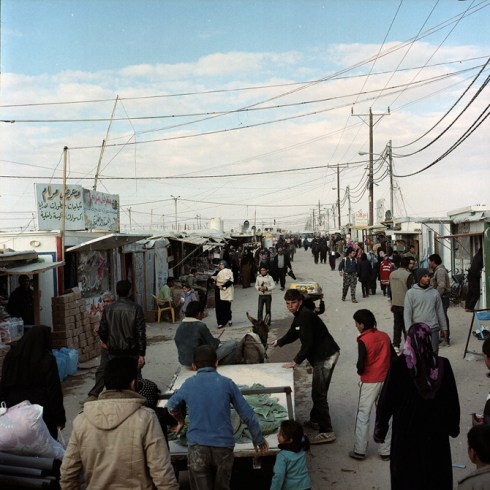
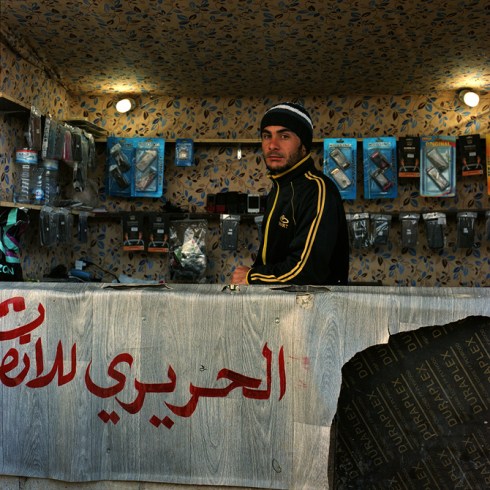
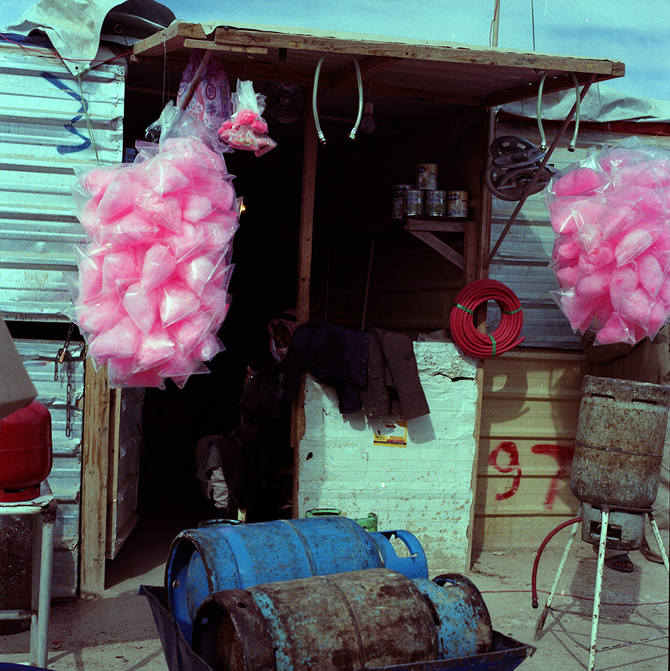
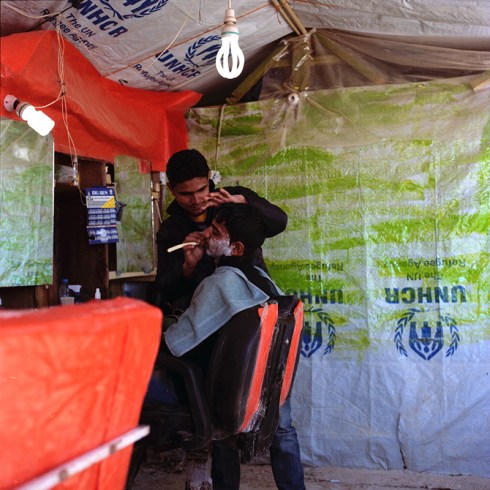
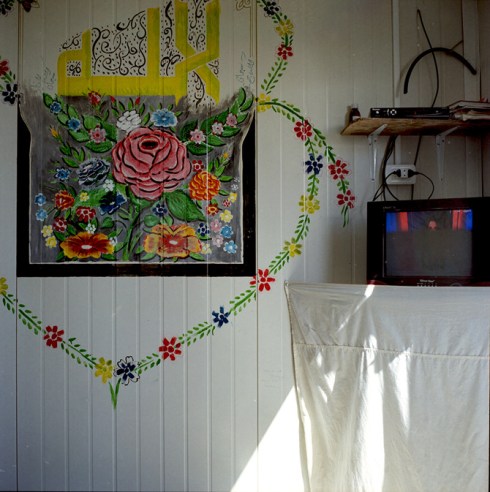
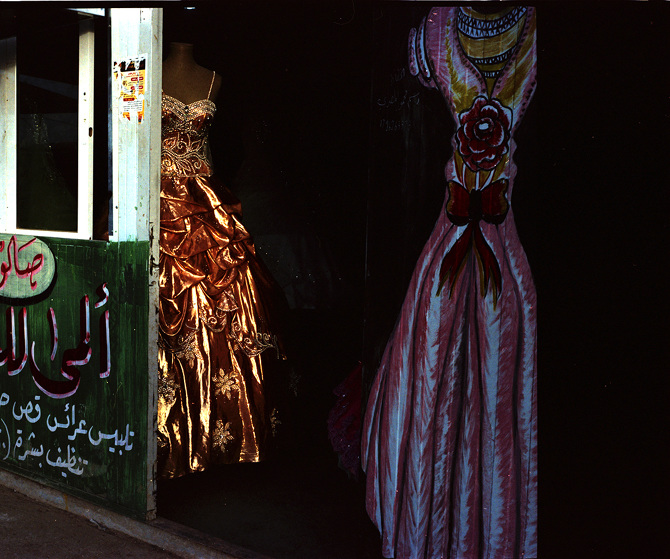
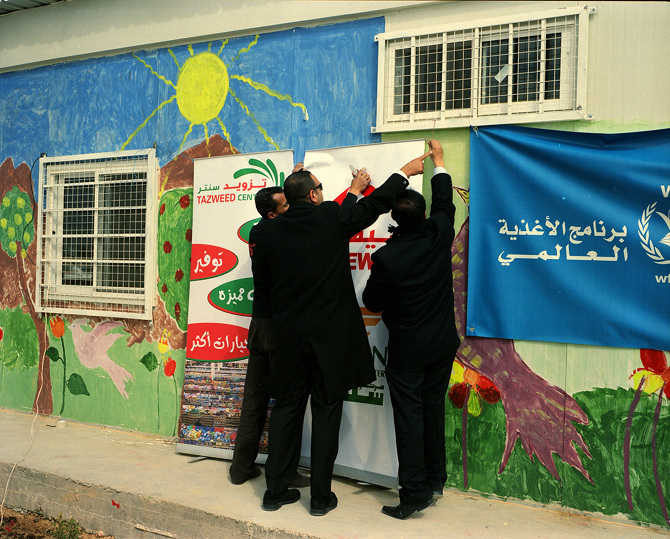
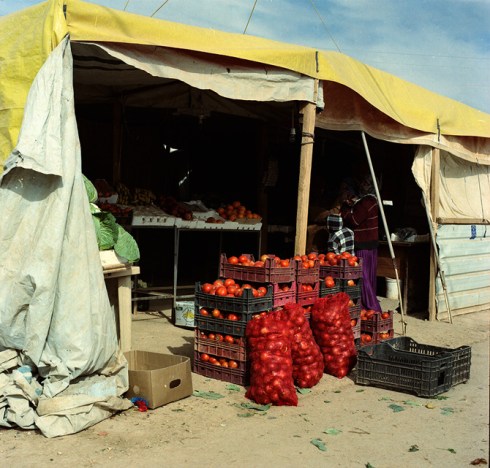
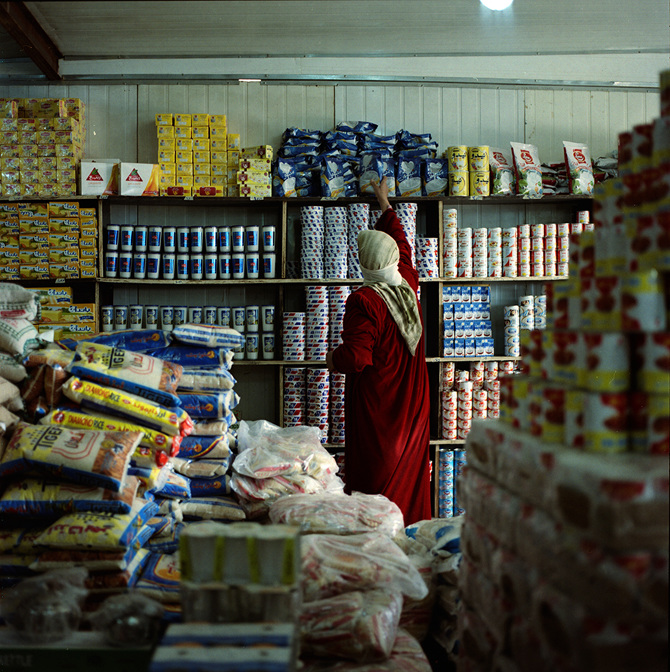
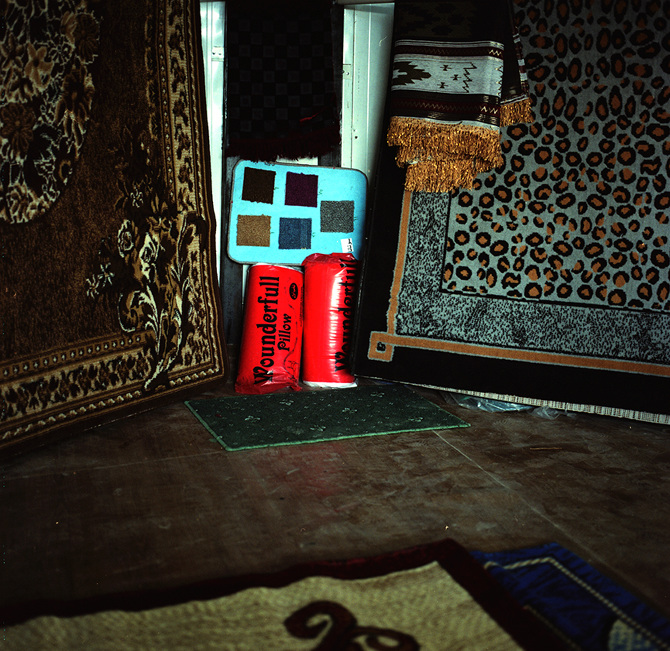
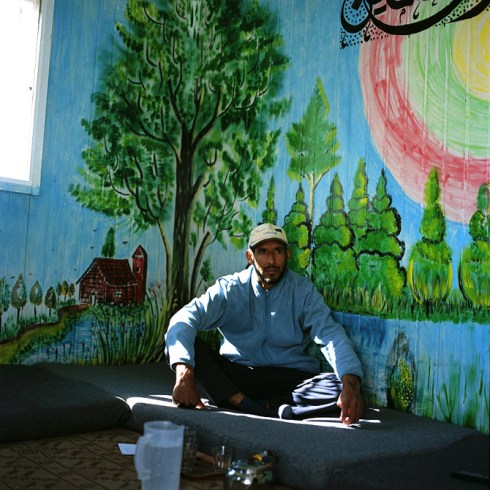
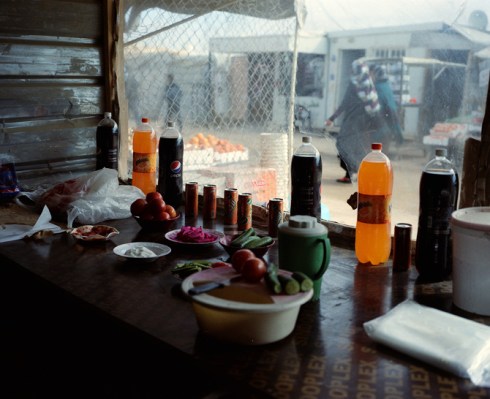
Toufic Beyhum‘s photographs of the Za’atari refugee camp in Jordan provide a look into the makeshift pastimes and work as well as the daily mundane activities of Syrian refugees. His series Champs Elysées focuses on the retail and food stands along the central road in Za’atari nicknamed Champs Elysées by French aid workers.

This body of work is more interesting than many others emerging from the Syrian conflict. There are no bombs here, but there is trauma. That trauma though isn’t immediately apparent. We’ve got to dig deep into Beyhum’s photographs.

Beyhum’s focus on small-scale trade is instantly connective; there’s no society in the world that doesn’t move about the continuous modest commercial negotiations. Beyhum shows us the less fraught but no-less-important side of the Syrian conflict and the refugee resettlement.

wide-streetloresj_25

How do cities, wanted or not, develop? How do humans resettle? And what happens if that resettlement is involuntary? Refugee camps are a hive of struggle and psychological trauma, but they are also a hive of survival and continuing on. Of course, the degree to how much refugees want to live on, move on, accommodate and adapt in camps differs hugely. In Western Sahara, for example, refugee camps have housed Sahwaris who fled war over 38 years and the definitions of “home” are under great assault.

One hopes that Za-atari and Syria’s other refugee camps won’t be the “home” for repeated generations. Za’atari is home to an estimated 130,000 Syrians. It is only 3 years old. It is now the 4th largest city in Jordan. It’s an extraordinary place for all the wrong reasons.

The world tends to think of refugee camps as a necessary inconvenience — as better than war, and as the most stable iteration of displacement. Refugees, on the other hand, are daily reminded of lost goods, careers, projects and anchoring points of pride from their former lives (a French psychologist talks about this very well in this VICE feature, Syria: Ground Zero shot by Robert King).

Beyhum’s series, I think, expertly patrols those gaps between subject and audience’s perceptions.

PHOTOGRAPHY’S ROLE

Before digging a little deeper into Beyhum’s work I want make a nod to work made by NOOR photographers at the turn of the year that simultaneously documented the camp and provided opportunities for refugees to make new family portraits. VICE:

Nina Berman, Andrea Bruce, Alixandra Fazzina, and Stanley Greene — supported by the UN Refugee Agency (UNHCR) and Japan Emergency NGOs (JEN) — turned a large tent into a photo booth where refugees could come and have their portraits made. Refugees were asked to bring an object they cherished or, if they didn’t have anything, to bring a person they loved. A boy came wrapped in his blanket. A man brought his shisha pipe. A mother posed with her five children. In all, about 300 portraits were printed on the spot and given to people to keep.

Beyhum‘s series  Champs Elysées strikes me as a worthy project for attention. He used film. He self-funded. He partnered with writer Nadim Dimechkie, whose words appear below in italics.

There are common attributes to all refugee camps (devastating stories of different degrees) but Beyhum identified one of the defining characteristics of Za’atari — the extraordinary growth of independent businesses. According to UNHCR’s Andreas Needham, is the growth has been “impressive compared with other refugee camps.”

Eighteen months after the camp’s establishment there were 2,500 shops, and 700 on the Champs-Elysées alone.

So while I’d argue that photography’s role is to give subjects a voice, gift or benefit (e.g. NOOR’s portrait studio) its role is also to usher audiences into the psychological territory of the subjects. The shops and shop-owners in Beyhum’s series are perfect vehicles in explaining to us far-away and comfortable consumers that the Za-atari refugee camp is a place of making do.

Beyhum’s images must remind us however that survival is only partly related to the aid-organisations’ food and shelter that provide physical security. Survival has as much to do with forging ones own spaces, purpose, pride and as a result psychological health.

What a refreshing foil to the photographs of desperate handout and sacks of rice being thrown from atop aid-trucks that we so often see in the media.

Please scroll down to read Dimechkie’s original text that accompanies these images. It provides important context.

pileofrice2loresj

pink-weddingloresj

mobilephoneshoploresj

‘CHAMPS ELYSEES’ by NADIM DIMECHKIE

The salesman on the Champs-Elysées displays the shiny black shoes in neat, even rows. Each time the wind picks up, each time a truck roars past, they are drowned in billows of fine desert sand. And each time, the salesman dusts the sand off each shoe, wipes it down and places it back in line. Another cloud of sand may come along any moment, but the shoes will stay clean.

130,000 refugees are trying to make a living somewhere they do not wish to live. Most have left their homes, trades, families, and material possessions behind and they want to go back now. But until they do, they must manage with what they have left.

Father-son traditions fostered in the souks of Damascus and Aleppo, and preserved by the protectionism of successive Assad governments, are so ingrained they are almost instinctive. By one reckoning, 80% of the shops hark back to skills honed at home.

Where tradition fails, resourcefulness steps in. There are no cars here, and law and order is the preserve of the UN. So Abdul Mansoor, once a policeman in Syria, now makes phenomenal falafels. Omar was a car mechanic; now he sells second-hand clothes. Mounib established an impressive perfume shop — which he insists is nowhere near as good as the one his family ran in Syria for generations.

   candyflossloresj

barberloresj

muralinsideloresj

goldendressloresj_7 hanging-safewayloresj

counter-babyloresj

Some jobs have been invented before anyone’s come up with a name for them. What do you call the kids who use wheelbarrows to help people with their shopping for tips, or to resell UNHCR blankets and tents so they can buy what they really need? What do you call the welder-joiners who fuse impossible things from impossible combinations of materials, or the makers of custom-made flat-bed trolleys designed to shift shipping-container homes between buyers and sellers?

Small gardens grow in infertile ground. Bottled water is still sold even though water filtration units have been closed down. Recently, someone stuck a whole police station on wheels and dropped it off somewhere they felt was more appropriate.

The ‘Mayor of Za’atari’, UN Special Field Coordinator Kilian Kleinschmidt, appreciates their entrepreneurial nature. Refugees are building their own amenities, like showers and toilets and kitchens. Even if this is sometimes using illicit materials, Kleinschmidt prefers to see refugees build facilities proactively than wait to receive them. Elements of their success are also down to other factors: there are 193 NGOs here, including UNHCR who provide blankets for warmth, containers for homes and security for business to thrive.

tomatoesloresj

Opening-bakerloresj    reaching-supermarketloresj

bakerattallahalhariri2loresj

Atallah revived the family bakery from Syria and set up shop in Za’atari.

trolleysloresj

Some business-owners benefited from existing ties with Jordanian pre-war business partners and set up an enormous supermarket in the centre of Za’atari.

  wounderfullloresj

Of course, not all of the attributes brought by the empty-handed are good ones. Fear has also followed them—of government informers, of ISIS informers, of the mafia. Criminality, which characterized the town of Dara’a from which many of the refugees fled, has followed many of them too.

A combination of good governance and the opportunity for dignity has quelled many of these less desirable elements, while providing opportunities for the better instincts to grow. For some, there is even excitement here—in the relative law and order, in the electricity (which some Syrian villagers had never had on tap before), in the entrepreneurial opportunities. But nobody wants to be here.

For all their ability to survive the present moment, no one can build lasting happiness here, for that would mean accepting their fate. Still, there is enough tradition and resourcefulness to make life bearable.

And there is always pride — another resource from within. Pride keeps the streets tidy and the wedding dresses moving. Pride keeps the homes orderly, the teenaged boys groomed and fragrant, the barbershops busy. Pride keeps the shoe salesman in business.
mahmoudloresj_5

unhcrofficeloresj

fantacokeloresj

All images: Toufic Beyhum
Introduction: Pete Brook
Text: Nadim Dimechkie

7Playground

W. simply asked for a picture of his daughter playing near her mother’s house. “I used to take a lot of pictures of her myself.”

When Dutch photographer, Desiree Van Hoek visited Leuven Prison in Belgium, her intention was to photograph the pictures on prisoners’ cell walls. To look at prisoners’ use of — and values placed within — photographs would have been an anthropological study of sorts. Alas, as with many a proposed prison photography project, the administration would not allow it. Her plans for a camera workshop were also nixed. Undeterred, Van Hoek conceived of another way to use photography to connect with the prisoners.

“I was visiting a very outdated prison, and noticed that there were only very small windows. There was nothing to see for the prisoners but a wall, some mud and an old goat,” explains Van Hoek. “This seemed very depressing to me, so I asked the prisoners if there was an image they would like me to photograph for them. Something that would make them feel better.”

The resulting series, titled Leuven Centraal, is essentially a pen-pal project, but making use of pictures not words to forge connection. After successfully getting approval for the project at Leuven, Van Hoek repeated the formula at Turnhout and Hoogstraten prisons, also in Belgium.

The methodology of Van Hoek’s project is akin to Mark Strandquist’s Some Other Places We Have Missed and the Tamms Year Ten project Photo Requests From Solitary. Both these projects I’ve applauded in the past (here and here). In the same spirit, I wanted to ask Van Hoek about the outcomes and motives for her project.

Scroll down for Q&A

6BlueSky

D. gave me a blue piece of paper ripped out of a magazine. He wanted a picture of a blue sky with soft white clouds. “Sun and a light breeze keep depression away.”

Q&A

Prison Photography (PP): Describe the types of requests.

Desiree Van Hoek (DVH): It could be anything, as long as it wasn’t related to their crimes. The men came up with all kinds of ideas: family members, cars, dogs, their favorite soccer team, sunsets, etc. I also asked them to write down why they wanted these particular images.

PP: How did you come up with the idea?

DVH: I wanted to do a photography project and a workshop with prisoners. During an earlier project in the streets of Los Angeles, I had met several ex-prisoners who got their life back together thanks to (among other things) painting and photography. This had inspired me, and I had an appointment in the Leuven prison to see what was possible. The office of the person I was visiting was right in the middle of the prison.

PP: What was your initial interest?

DVH: I’ve always been interested in the way people live under different circumstances, and what they do with their homes. My work always has a social component.

8Doberman

K. spent 13 years breeding and training Dobermans. Prison management wouldn’t allow a picture of a big dog, so he chose a puppy. “Dobermans are sweet dogs, although most people think they are not.”

PP: What is the state of criminal justice in Belgium right now?

DVH: From a Dutch perspective, many Belgian prisons are old and outdated. There are often uprisings. Prisoners with psychological problems are mixed with other prisoners. Many prisoners told me they would rather be in a Dutch prison. They had heard good stories about the living conditions and the food (french fries once a week).

PP: How are prisoners perceived in Belgium?

DVH: That is hard for me to say. But I think the Belgians in general don’t perceive them as victims of society, but really as criminals who should be put away. In Holland, this used to be different, but nowadays more and more people seem to have the same view.

PP: Did any of the requests surprise or touch you?

DVH: What I found touching was that they were all very polite. Only one guy asked for a picture of a sexy girl, which was okay with me, but the prison wouldn’t allow it. Also touching: one guy asked for picture of me (this wasn’t allowed either).

What I found surprising and painful was that they didn’t ask for more people. I expected them to ask pictures of their family, but most of them asked for nature, animals or objects. This was because, they said, they had no one.

9BMW

L. asked for a picture of the latest model BMW, Audi or Mercedes, taken in a showroom. “I’ve always loved beautiful cars.”

PP: What were the reactions of prisoners?

DVH: Very positive. The staff later sent me letters with their reactions. One prisoner who hadn’t participated said he regretted it seeing the results. A father who had asked for a picture of his daughter started to cry in front of all the other men, and everybody was touched by this.

PP: What were the reactions of staff?

DVH: Also very positive. I financed the projects in Leuven and Hoogstraten myself, and then got an offer to do another one in Turnhout for which I got paid. Staff was very cooperative, and one of the directors sent me a thank you letter to say he was grateful.

PP: Would you like to do any more work with prisoners or in prisons?

DVH: I would really like to repeat the project with female prisoners. But I’m back in Holland now, and it’s much harder here to get into prisons.


10Muntplein

 S. wanted a picture of Muntplein, the only legal graffiti spot in Antwerp. ‘This is where I would hang out with my friends.”


Kilgore

There’s an ugly scene unfolding in Illinois right now. The local paper in Champaign-Urbana, The News Gazette, published three attack pieces on James Kilgore, each one calling into question his character and the wisdom of the University of Illinois Champaign-Urbana (UICU) to hire Kilgore as a lecturer.

Kilgore is a respected researcher, writer, educator and criminal justice activist. He is also a former political insurgent who took up arms against federal authorities.

In the early seventies, Kilgore was part of the Symbionese Liberation Army (SLA) (of Patty Hearst infamy). He has been open about having felony convictions resulting from his political activities. Kilgore was on the run from 1975, living in Australia, Zimbabwe and South Africa until his arrest in 2002 in Cape Town. He saved the Feds the troublesome extradition process by voluntarily returning to the U.S., making a plea bargain, and pleading guilty to charges pertaining to the possession of explosives (in 1975) and passport fraud. Kilgore served 6 years in a California prison and upon his release in 2009 moved to Illinois to be with his wife, who is on the faculty of UICU. Since 2010, Kilgore has been a temporary faculty member at UIUC, teaching classes in Global Studies, Urban Planning and the College of Fine and Applied Arts.

These are the facts of the case. Jim Dey writing for The News Gazette in a Feb 9th OpEd piece In Plain Sight covers these facts. Dey’s tone is one of passive wonderment as to what UI might be thinking. The opinion piece is peppered with accounts of SLA violence from before Kilgore’s involvement. In Dey’s estimation, all the ideological mistakes of the fringe (and, yes, very damaging) SLA movement are all Kilgore. If only Dey had spent the same amount of time looking into Kilgore’s contributions in the interim four decades. It’s as if Dey and The News Gazette do not believe in change or maturation. If this is the case, then I call into question the commitment of author and outlet to the complexity of reporting and to journalism neutrality.

Kilgore is much more than his past indiscretions. As an aside, I know a person who used to be on the FBI most wanted list. This person’s charges were trumped up and when this person came out of living underground for 13 years faced no prison time. This person is one of the most politically aware, active and socially critical individuals I know.

There’s much more to Kilgore’s story than the character assassination as laid out by Dey. I believe it is motivated by a will to limit Kilgore’s very effective activism against a proposed new jail in Champaign-Urbana. Kilgore has proven himself a very adept strategist and activist leader in the town. Kilgore was instrumental in the fight. He has shared the successful tactics of the campaign with anti-prison groups across the nation.

News Gazette publisher John Foreman clearly has Kilgore in his sights. In the second OpEd piece (Feb 16th), Foreman perhaps a little miffed that Dey’s piece hadn’t wildly inflamed opinion enough) threw a hissy fit about the silence of Kilgore and UICU. What did Foreman expect? Answering to bully-boy tactics is not what Kilgore needed to do here. After all, The News Gazette had seemingly made up its mind about Kilgore a long time ago.

In his attempt to discredit UICU and question its priorities, Foreman opens his opinion piece by brushing aside a case of gross racism and sexism launched by a small (and troubled) group of students upon UICU Chancellor Phyllis Wise. Foreman mocks UICU’s attempts to deal with sexism and racism proving he’s more interested in cranking his newspaper’s controversy-du-jour than he is in taking a balanced view at all issues effecting his hometown community.

One week later, on the 23rd February, Foreman gave a platform to Dennis A. Kimme, the president of Kimme & Associates Inc., the firm that was trying to win the bid to build Champaign-Urbana’s new jail. Kimme is bitter about Kilgore’s attitude and expresses dismay that Kilgore would question the ability of Kimme’s company to assess the need for prison beds while trying to win a multimillion dollar contract to build those same beds! Of course, Kilgore and those opposed to a new jail would question motives.

Kimme’s contract bid failed on its own merits.

As if The News Gazette hadn’t already staked out its patently political position in text, it sent Jim Dey onto a talk show with it’s affiliate radio station to “discuss” the matter. Don’t bother listening to it. Host Jim Turpin is in cahoots with Dey as they proudly salute one another for their moral outrage.

I find it interesting that the UICU student newspaper has responded to this *controversy* with the statement: “The Daily Illini chose not to report on Kilgore’s status as a former felon because we did not believe that his status was news. Kilgore’s status as an instructor was no different than any other instructor.”

On April 9, the University Provost, in a private meeting, informed Kilgore that UICU would not approve any future contracts to employ him and declined to give him any explanation whatsoever as to why, how and by whom this decision had been made.

Fortunately, there is a community in Champaign-Urbana that sees the issue as more nuanced and is willing to look at the Kilgore of 2014 as well as the Kilgore of the early 1970’s.

A petition to UICU Chancellor Phyllis Wise has been circulated and already received the goal of 1,000 signatures. It reads:

We the undersigned scholars, legal professionals, activists and concerned individuals believe that the University of Illinois gave in to political pressure and refused to approve future employment contracts for James Kilgore on the basis of his background and sensationalist media coverage, rather than on his job performance.

Kilgore does not shy away from his past. He has answered to the full extent of the law his past acts and he has served time for them.

The SLA was committed to the overthrow of the federal government with planned attacks on police and federal buildings. They were of an era; one in which the violence of insurgency paled in insignificance compared to the violence waged in Vietnam. The SLA funded themselves largely through bank heists. SLA tactics were extreme, there is no doubt. The SLA cause achieved little. The SLA made grave mistakes. The SLA wasn’t the only homegrown group devoted to insurgency within U.S. borders.

Of all these activities, Kilgore was involved in one that led to a fatality. On April 28, 1975, SLA members including Kilgore robbed the Crocker National Bank in Carmichael, California. Myrna Opsahl, a bank customer was shot add killed during the robbery. Kilgore’s comrade fired the shot. Kilgore, it is reported, was furious that a gun was discharged. There’s talk of a light trigger, but still, take a gun into a bank and you should only predict unpredictability.

In a March 22 Chicago Sun-Times article, the university responded to UICU’s unceremonious dumping of Kilgore with a supportive statement from Associate Provost Robin Kaler:

He does a great job. He’s very well-respected among students. He served his time in prison. He is very remorseful. He didn’t do the shooting. He is a good example of someone who has been rehabilitated, if you believe in second chances and redemption, he’s someone who helps prove that’s the human thing to do. A child of the victim said he has served his time and should be allowed to go on with his life.

The American Association of University Professors echoed Kaler’s thoughts in their own official statement on the matter.

The News Gazette‘s OpEd series misses the point. It’s none-to-subtle rightwing attack against the classic bogeyman, against the non-patriot, argues that academia provides a profitable hiding ground for those that enacted political direct actions many decades ago. Think of the kids!?

What is at stake here is academic freedom.

More-so, we must ask do we want to believe in the ability for individuals, ANY INDIVIDUAL, to change, to improve, to educate and give back? The wording of the petition in support of Kilgore frames this perfectly:

Refusing to approve Kilgore’s employment contracts has serious implications for the 15 million Americans who have felony convictions and face a constant battle to access employment.

 Get angry. Sign the petition. Follow James’ valuable work. Don’t let the boo-boys scare you.

Image: PM Press

1

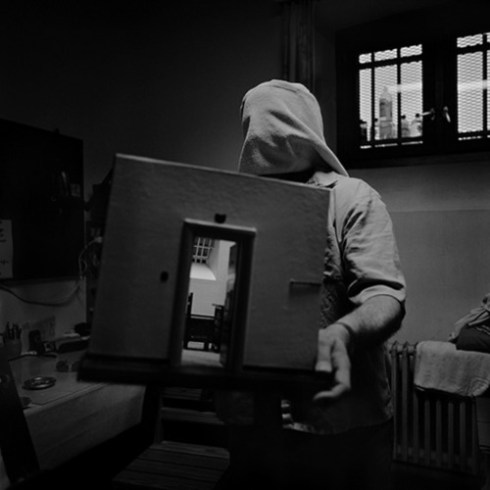
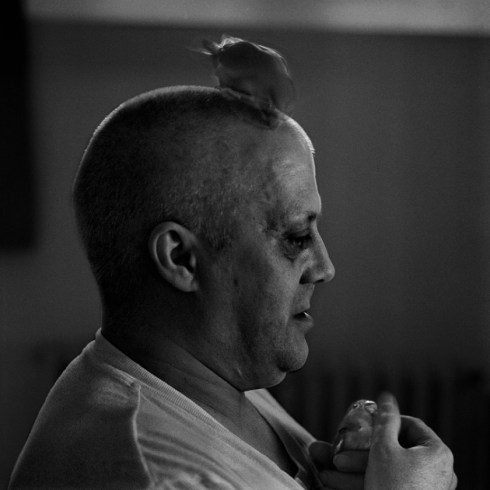
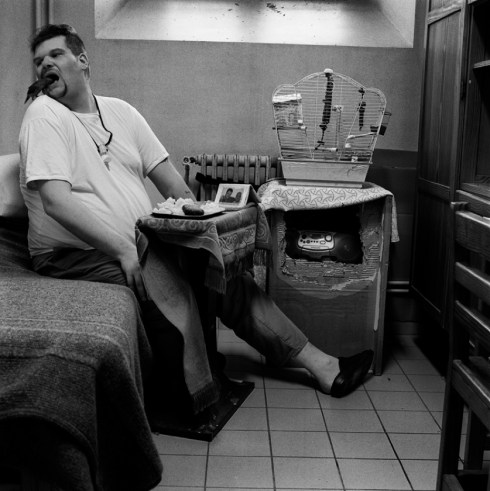
It’s rare one gets such a fine art look at incarceration. Lieven Nollet‘s images of Belgian prisons are contemplative set ups. The majority of his 50+ strong portfolio focuses on the fabric, wall textures, light and shadow of prison. Here I’ve selected three of his portraits, which I think hold attention the longest.

The same disquiet and still of Nollet’s interior studies continues in his shots of people. This isn’t quite Roger Ballen or David Lynch territory but Nollet’s photographs edge toward dark-chamber otherworldliness.
2

Generally, anonymity reigns too, so I’m being a contrarian by selecting Nollet’s portraits. Crafted to seem outside of our reality and certainly outside of time, Nollet’s photography doesn’t give us a social justice narrative to latch on to, but they may provide an emotional response that has us decrying shady, forgotten corners of prisons. Some of Nollet’s frames resemble hospital and morgue interiors and I’m certainly left with a feeling that these spots off the map are reserved for quarantine and/or civil death.

For the sake of positioning the work, I’d say it has elements of Jean Gaumy‘s tight European jail photographs, the spiritual element of Danilo Murru‘s photographs of Sicilian prisons and, to a degree, the cool observances of Donovan Wylie.

One of the few humanising components of the work is the presence of birds. A few years back, I was speaking with a prisoner in Washington State who spoke of a sparrow that had lived in the rafters of his old cell block for months. The sparrow had not gone unnoticed by any prisoner and all were concerned for its wellbeing. At once anthropomorphised, the sparrow was seen as another victim of lockdown. The bird brought a slice of life to the cell tier, but no prisoner didn’t wish for its eventual escape.

When we see animals behind bars these days, it is usually down to a dog-training program news story. Such stories are gold for a local paper, but the dogs and the photographers are groomed for a neatly packaged tale. Before the economics of the prison industrial complex took a grip, many prisons operated their own farms and many with pasture, cows and milking parlors. Prisoners in Louisiana’s Angola Prison still today breed horses for the New Orleans Police Department. In dank and crumbling prisons, complaints about rodents are common; mice and rats about the ankles are a reminder of the hole prisoners are in, whereas birds becomes a symbols of, and connection to, the great beyond.

With phrases such as jailbird and “the caged bird sings,” avifauna metaphors may seem cliche to us on the outside, but I understand why a lot of prisoners’ creative writing turns to freedom as embodied by flight and birds. And I understand why they nurture them.

3

All images: Lieven Nollet. See more at De Zwarte Panter


EMAIL

prisonphotography [at] gmail [dot] com

Prison Photography Archives

Post Categories