Call for Papers, Art, Workshops, and Presentations:

Marking Time: Prison Arts and Activism Conference

Rutgers University October 8-10, 2014

CALL

We invite proposals for papers, panels, workshops, and artwork for Marking Time: Prison Arts and Activism Conference at Rutgers University on October 8-10, 2014. This conference aims to provide national and international perspectives on art created inside prison and in response to mass incarceration.

The conference has three primary objectives: 1) to facilitate the development of networks and support for prisoners, artists, scholars, and organizations working in the field; 2) to promote the importance of prison artistic practices as vital components of contemporary culture and vernacular arts traditions; and 3) to provide a forum to examine the impact of prison systems on culture and specific populations. We hope that the conference will appeal to a broad audience, ranging from students to arts educators, and from legal scholars to prison reform activists.

The conference organizers are the Institute for Research on Women (IRW) and the Department of American Studies at Rutgers University, New Brunswick, with the participation of several other academic units including the Mountainview Program. Additional conference partners include nonprofit organizations, such as the William James Association’s Prison Arts Project and the American Friends Service Committee’s Prison Watch Project, as well as professional curators and artists such as documentarian and curator David Adler.

Some of the thematic areas for critical inquiry, creative engagement and activism include, but are not limited to:
Connections between nonprofit organizations and the prison industrial complex

– Political art and posters
– Gender identity and testimony
– Aesthetic influences of prison on everyday cultures
– Prison theater projects
– History of prison writings
– Spoken word and rap traditions
– Vernacular art and photography
– Documentation of prison interiors
– Folk and outsider art traditions
– Prison architecture and landscape
– Censorship in/out of prison
– Collecting and the art market
– Ethics and politics of socially engaged art
– Surveillance technologies and visuality
– Issues of consent Institutional archives and issues of access

SUBMISSION GUIDELINES

Download forms here.

To submit individual papers or artwork as well as proposals for workshops or group sessions, please send the following information to rutgersprisonarts@gmail.com

Or mail it to: Institute for Research on Women, Rutgers, The State University of New Jersey, 160 Ryders Lane, New Brunswick, NJ 08901.

Name
Affiliation (independent scholar, artist, educator, activist)
Mailing address
Office and cell phone numbers
Email address
Equipment needs
Biography (50 words)
Title of Presentation
Abstract (250-300 words)

Travel assistance may be available, contingent on funding.

Deadline for submissions is March 15th, 2014.

LeonCollin

© Leon Collin

EARLY 20TH CENTURY CRIMINAL EXILE

Some enchanting photographs among the collection of Dr. Léon Collin. The problem is that not all are benign and not all were intended to be enchanting. Some were meant to outrage. The photographs of Dr. Collin recently surfaced after decades in the dusty attic of the Collin family home in Saône-et-Loire, France.

The visual difference and the enjoyment allowed by this historical (detached?) collection reminds me of those well-loved Australian police mugshots portraits. Beautiful character studies from absolutely abject circumstances.

PHOTOS AGAINST ABUSE

Between 1906 and 1911, Dr. Léon Collin made thousands of glass plates and manuscripts depicting the life of prisoners — from their departure from (outpost island) Île de Ré to their imprisonment in French Guiana or New Caledonia penal colonies.

Most of his photographs he made during crossings of the ocean, but Collin also made certain to make pictures on land, in the penal colonies. He was outraged by the harsh living conditions and, once, anonymously submitted his photographs to Le Petit Journal Illustré to denounce and expose awful conditions.

What an inspiring early political use of imagery. Although, I doubt they had much change-making effect. The intent was there.

HOW DID THEY GET TO THIS SCREEN?

Collin’s grandson Philippe Collin discovered the boxes. The Musée Nicéphore Niépce de Châlon-sur-Saône digitize them. Philippe Collin sold the rights to the city of Saint-Laurent. In anticipation of an upcoming exhibition at the future Centre d’interprétation de l’Architecture et du Patrimoine (CIAP). So far, nearly 150 photographs of Guyana prison camps have been brought together for the CIAP show. CIAP is built on the site of a former transit camp. Today, they photos landed on l’Oeil de la Photographie which has a dozen examples and I couldn’t help myself.

Thanks to Hester for the tip.

5-10590

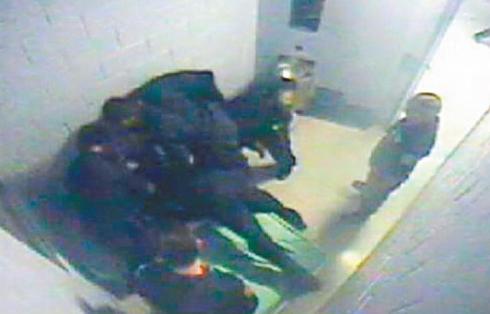
May 4th, 2009. 9:19pm: Guards pushed down on Messier’s back, pressing his chest toward his knees, “suitcasing” him, a dangerous tactic banned in prisons. Image courtesy of Boston Globe.

The title of this post makes it sound like I’ll be making a habit of recording these stories of abuse. I will not — there are too many.

The title of this post is also the slightest of variations on the title of a post I published yesterday. Again, I want to reiterate that episodes of abuse (particularly behind closed prison gates) are not irregular. I simply don’t have the time to catalogue them all.

This week, two particularly glaring cases of state violence inside prisons were reported. The first is a return to a 2009 murder by Massachusetts prison guards. The second, a prison doctor in California sterilising female prisoners without consent.

GUARDS RESTRAIN PRISONER, STAND NEXT TO HIM WHILE HE DIES

The murder of Joshua Messier is a murder that, in terms of legal language, is no longer. Guards killed Messier with rough restraint techniques. The medical examiner called it homicide, but later changed that verdict saying Messier’s initial violent outburst (due to his schizophrenic attack) meant he was to blame for his own death.

Prison guards put Messier into restraints and “suitcased” him meaning two officers put all their weight on Messier’s back while he was in a kneeling position. It is illegal control technique because of the risk of suffocation. Messier never moved when he came out of restraint. The guards stood idly around for 10 minutes. Messier stopped breathing, his face turned blue and he died in front of them. It took a nurse to notice something wrong before medical aid and CPR was delivered but by that time it was to late.

Multiple shocking aspects stack up in this case. Bridgewater State Hospital is the only facility in Massachusetts designated to hold mentally-ill patients, and yet no guards have specialised psychiatric training. Bridgewater imprisons mentally-ill men with behavioural issues alongside convicted violent criminals. Messier, like others mentally-ill in Bridgewater, had not been charged with a crime — he had assaulted staff in a hospital during a earlier schizophrenic episode and was placed in prison as a result.

Criminal charges should be brought against the officers involved. For the sake of justice and for the sake of trust in a system that seems, right now, to care more about covering its own ass than protecting the vulnerable.

Excellent reporting by the Boston Globe:

Yet, nearly five years after his death, no one at Bridgewater State Hospital has been prosecuted or even punished, and all but one of the guards still works for the Department of Correction. Officially, the department maintains that no excessive force was used and that everything the guards and nurses did that night was “done in accordance with standard procedure.”

See photos from the case.

My thoughts to Joshua Messier’s family.

FEMALE PRISONERS IN CALIFORNIA STERILISED WITHOUT CONSENT

For those who pay particular attention to the invisible abuse behind American prison walls, the story of Dr. Joseph Heinrich’s abuse of California female prisoners will not be entirely new. In July, Corey G. Johnson, reporting for the Center for Investigative Reporting broke the story that California Department of Corrections (CDC) doctor Heinrich and his staff had carried out at least 132 unauthorised tube ligation (tube-tying) procedures.

Between 2006 and 2010, doctors under contract with the CDC, sterilized women without the required state oversight and approval. These vulnerable women were basically misinformed or bullied into sterilisation. The women were signed up for the surgery while they were pregnant and housed at either the California Institution for Women in Corona or Valley State Prison for Women in Chowchilla, which is now a men’s prison. 

Based on information in state documents and interviews, Johnson suggested in July that perhaps there were 100 or more similar cases — and victims — dating back to the late 1990s.
ligation

Female patients have accused Dr. James Heinrich, shown in 2007 at Valley State Prison, not just of trying to dictate their reproductive decisions, but also of unsanitary practices and botched surgeries that injured them and their infants. Credit: National Geographic. Source: Fresno Bee.

Johnson returned this week reporting on Heinrich’s history of unsanitary practice and a catalogue of complaints against him, including but not limited to, eating popcorn during examination of patients.

Heinrich arranged an unusually high number of other sterilization procedures including hysterectomies, removal of ovaries and endometrial ablations. In total, 378 procedures at Valley State Prison between  2006 and 2012. These figures alarmed federal authorities, which are now in oversight of the entire medical care system in California prisons.

In 2006 alone, Heinrich arranged for 23 inmates to have their tubes tied – the most ever for a California women’s prison in a single year since sterilization records began being kept in 1997.

Despite his history of accusations of unsanitary practices and botched surgeries that injured women and their infants, Heinrich was not only hired by the prison system, but also kept on after the federal receiver was appointed to bring to the prison’s medical system into compliance with constitutional rights. Johnson reports:

“Heinrich retired from Valley State Prison for Women in 2011 after six years, during which his total annual pay reached a high of nearly $237,000. Federal authorities rehired Heinrich as a contract physician, and he continued treating inmates at Valley State though December 2012. Since then, he has not worked at the prison.”

I repeatedly complain that events behind prison walls go unnoticed and that abuses go unreported. Corollary to that is the fact that abusive staff seem to be able to act with impunity, for years, as compared to practitioners on the outside. I do not know what the solutions would be. But I have a suggestion that would be a move in the right direction: Give tax-payers the right to visit prisons and “oversee” their tax dollars at work.

Ralph Nader (a long-time proponent for sensible discussion on U.S. prisons) wrote last month, that American tax-payers should be allowed access to the prisons. This is not a ridiculous suggestion. Prisons are safe places to visit. Public visitation would not only keep authorities accountable, but would tackle stereotypes among the public, educate the public and by virtue of more porous movement improve transparency and procedures. Some prisons, such as San Quentin in California, regularly gives public tours to media professionals, academics, students and law enforcement cadets. Nader’s proposal was based upon the practices of independent monitors in U.K. prisons.

Of course, it would be wholly inappropriate to sit in on a doctors visit inside or outside of prison. Prison hospitals are within walls within walls. Rogue doctors must not find protection inside already unsafe institutions. The California Department of Corrections must be held accountable for the extended hire of Heinrich, a man who one patient says treated her “like a cow.” The details provided by others formerly under his care are shocking. Heinrich is currently under official federal investigation, the details of which are unknown.

Okay, the title to this post makes it sound like I’ll be making a habit of recording these stories of abuse. I will not. That isn’t because these episodes aren’t regular (unfortunately, they are quite regular), it is because I don’t have the time most weeks to adequately collect the many stories of misconduct from across this America.

So, why this week? Well, I came across two particularly disgusting and glaring examples of abuse. In both cases, they are presented with great clarity. The first is courtroom video footage. The second is a diaristic, written account.

COURTROOM BEATING

Above, we see a video from September 2012, in which Denver Sheriff Deputy Brad Lovingier slams a handcuffed prisoner into wall. Face first. Totally unprovoked.

Following the judge’s ruling, the defendant Anthony Waller requested clarification. At which point he is grabbed, from behind, by the handcuffs secured by behind his back, spun around, and flung into the wall. Waller falls to his knees after the impact and is then dragged out of the courtroom and into a holding cell. In the video Lovingier can be heard saying, “You don’t turn on me,” as the only explanation for his actions.

Madness. Ordinarily, a citizen guilty of such an assault would face a 6-month jail term. Lovingier was suspended for 30 days. And he’s appealing that.

SOLITARY CELL FOR GOOD SAMARITAN

The story is as simple as its logic is baffling and its behaviours are brutal.

Man witnesses a bike accident. Calls 9-1-1. Is handcuffed by police for unknown reasons. Taken to jail. Asks legitimate questions. Faces retribution from deputies. Stripped. Thrown in a shit-stained solitary cell.

You just have to read it to believe it: Good Samaritan Backfire or How I Ended Up in Solitary After Calling 911 for Help

This kid —  Paretz Partensky — is a young, educated, white, computer programmer. His abuse is likely no different (it might be less egregious?) than abuse meted out to people in San Francisco far more vulnerable than he. But Partensky gets on hot-new-story-telling-platform Medium and tells the story of his 12 hours of detention.

Partensky

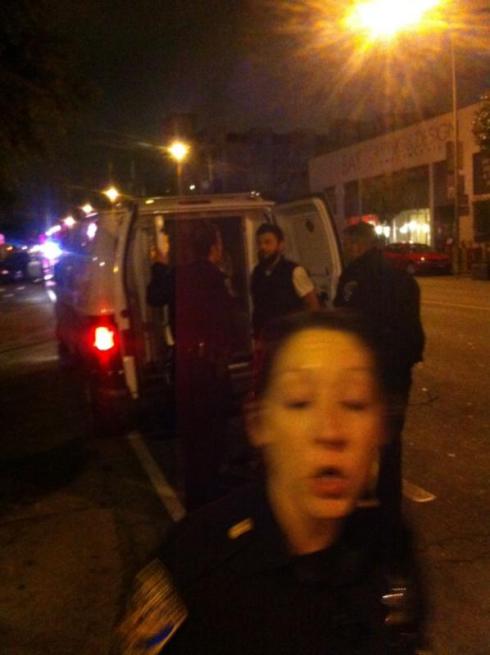
Officer Durkin, in the foreground, is telling Ben that he cannot take this photo. According to Attorney Krages, you are allowed to take photos in public places. http://www.krages.com/ThePhotographersRight.pdf Officer Durkin’s reprimand is in violation of Ben’s rights.

Partensky’s account is nuanced — he provides necessary details; he gives benefit of doubt to most of the characters involved; he tries to put himself in the position of others throughout the ordeal; he is aware of his white privilege; he ponders what different outcomes may have arisen had he and others interacted differently. In short, it is a compelling read.

Let’s not be churlish and say this is a young, comfy, SF-coder-class entrepreneur using an online platform to have a whinge. Let’s be civic and responsible and say no-one should be subject to arbitrary and vengeful treatment from law enforcement. Let us not allow our uncomfortable relationship to racial and income inequality, nor our relationship to white privilege be an excuse to dismiss Partensky’s story. Let us be shocked. Let us be angry. Let us thank Partensky for bringing his account to light.

visitation

Bearing Witness is a one-day symposium hosted by SFMOMA assessing the ways in which photography matters now more than ever. Loosely, the theme is connections. I will be presenting and I’m toying with some ideas surrounding the emergent trend in video visitation. Maybe. Possibly, I’ll retread safe ground and present the ideas that informed the recent Prison Obscura exhibition.

I’m on stage in the morning, I have been told. Bearing Witness is for one day only – Sunday 16th March. Speakers include David Guttenfelder, chief photographer in Asia for the Associated Press; Susan Meiselas, photographer, Magnum Photos; Margaret Olin, senior research scholar, Yale University; Doug Rickard, artist and founder of AMERICANSUBURBX; Kathy Ryan, director of photography, The New York Times Magazine; and Zoe Strauss, artist, Magnum Photos.

Organisers Erin O’Toole, SFMOMA associate curator of photography and Dominic Willsdon, SFMOMA Curator of Education and Public Programs, have posed these questions for the symposium:

Given the power and pervasiveness of photography in both art and everyday life, what is the significance of the rapid and fundamental changes that the field is undergoing? How have social media, digital cameras, and amateur photojournalism altered the way photographs capture the everyday, define current events, and steer social and political movements? How have photographers responded to these shifting conditions, as well as to the new ways in which images are understood, shared, and consumed? How have our expectations of photography changed? 

Bearing Witness is preceded on March 14 and 15 by Visual Activism, a two-day symposium that explores relationships between visual culture and activist practices. Zanele Muholi is presenting at that, so not to be missed either.

DATE + TIME + LOCATION

10:00 a.m. – 5:00 p.m. Sunday, March 16, 2014
Yerba Buena Center for the Arts, 701 Mission Street San Francisco, CA 94103

MAP

TICKETS

Admission for both events is free, but it’s wise to register. The 500 spots for Bearing Witness have gone, but that’s always the case with over-zealous free-to-register-symposium-photo-enthusiasts isn’t it? Sign up for the waitlist and you’ll probably get in. I hope.

Image source: Toledo Blade

serco

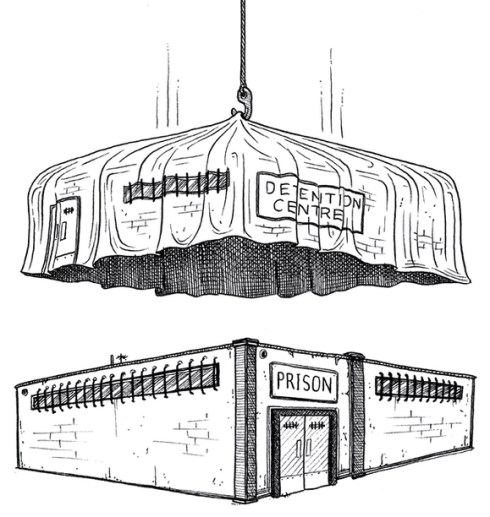
There’s a beguiling animated feature up on the website of Australia’s Global Mail. Illustrated by Sam Wallman, the piece tells the story of a former worker at an immigrant detention facility and how he — along with those locked up — slowly lost his mind. The detention center (we should all just call it a prison) was, and is, a incubator for illogic and for cruelty. An atmosphere that only rewards dehumanisation persists.

The facility is operated by the Serco Group, a British-based multinational corporation with interests and operations in logistics, security, government contracts across the world . It seems detention facilities are a boom sector for a company like Serco which operates all of Australia’s detention facilities. Serco hit the headlines late last year in Britain when it faced allegations of covering up extensive sexual predation and abuse at Yarl’s Wood, the UK’s largest immigration detention center for women.

As I’ve noted before, Australian’s are worried about Serco’s practices.

Not photography, but in this case, more powerful than a photograph. Maybe it’s the human touch within a pen stroke?

Thanks to Gemma Rose-Turnbull (an Australian) for the tip.

Civl Rights Portfolio (01)-web

Memories of the Southern Civil Rights Movement

2014 is the 50th anniversary of the passage of The Civil Rights Act, the landmark legislation that prohibits discrimination on the basis of race, color, religion, sex or national origin.

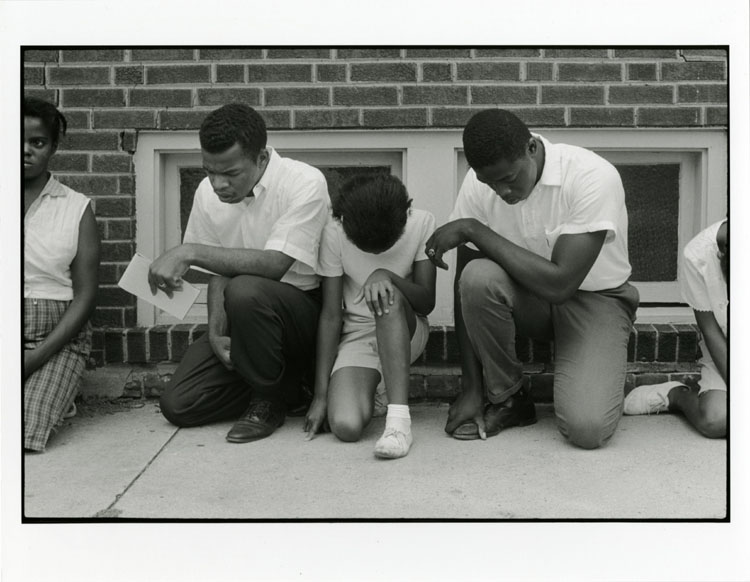
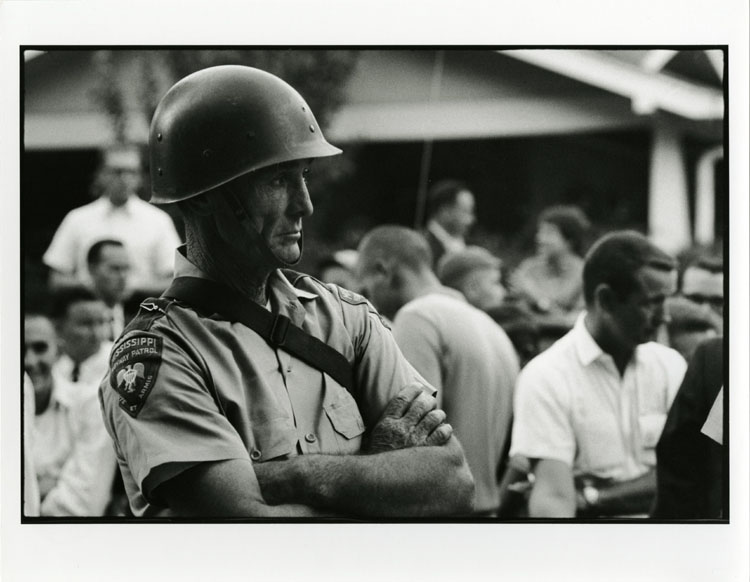
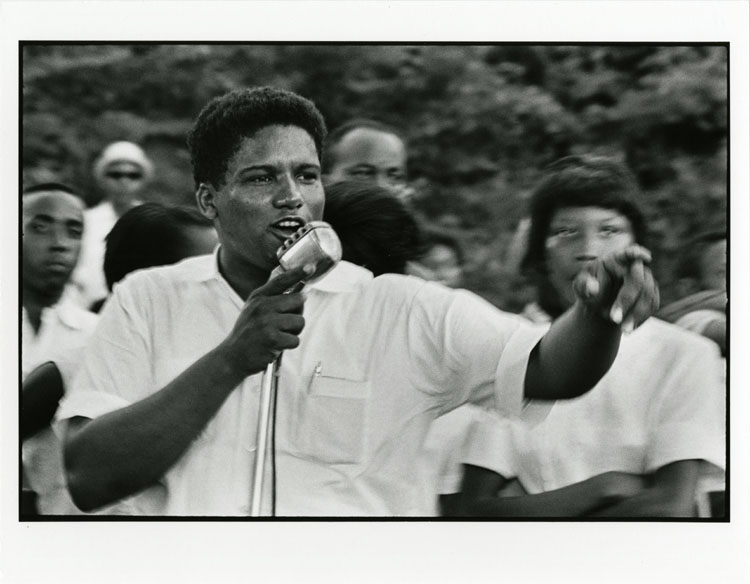
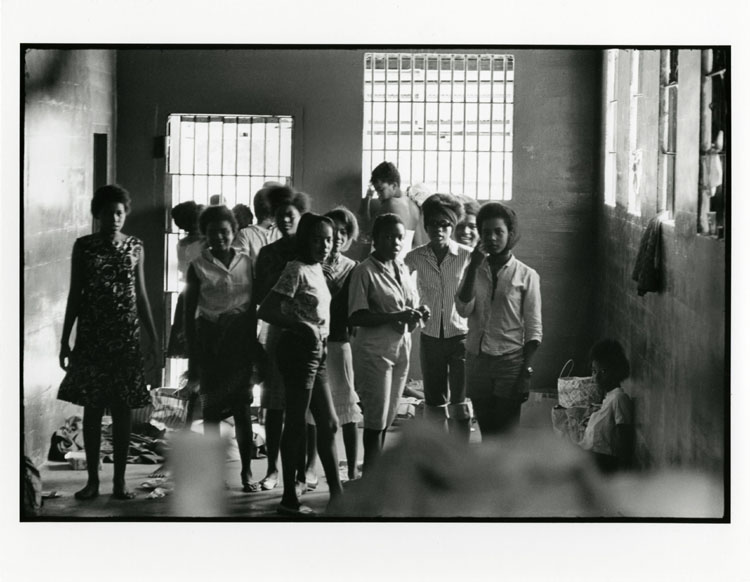
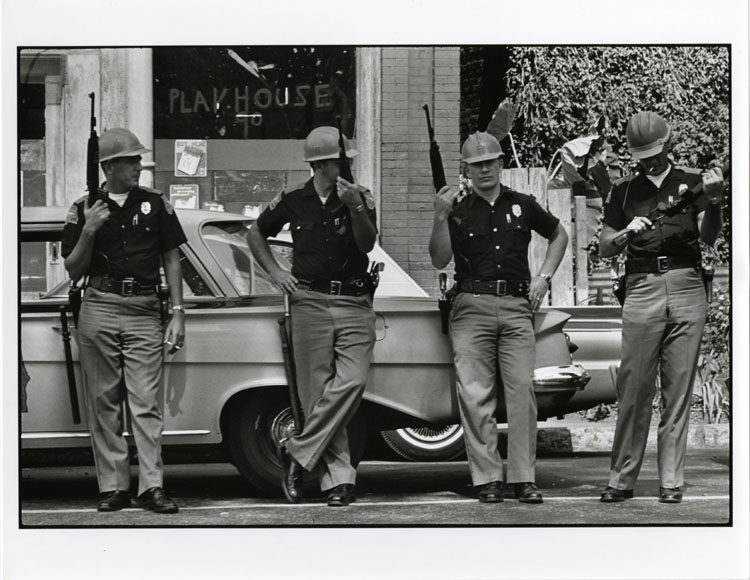
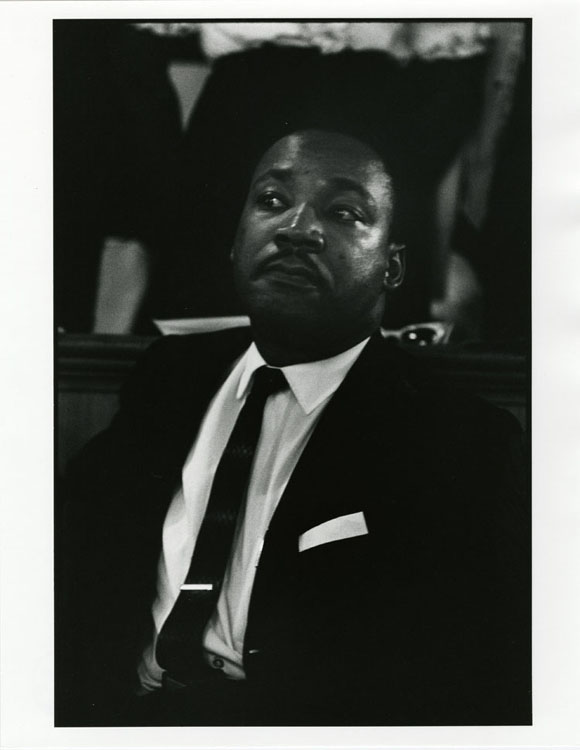
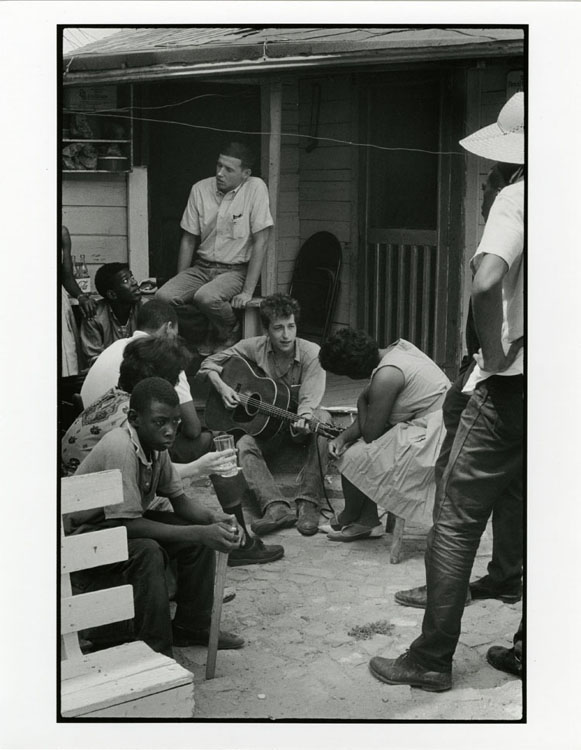
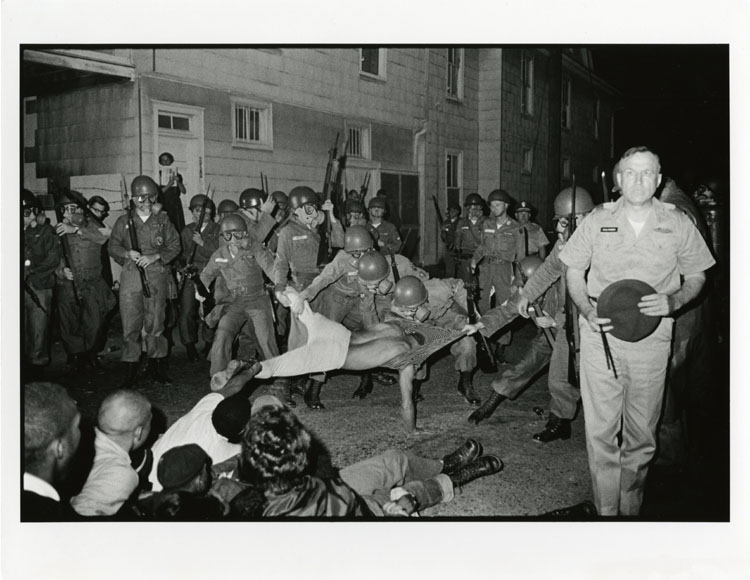
Danny Lyon was the first staff photographer — between 1962 and 1964 — for the Student Non-Violent Coordinating Committee (SNCC). Lyon would go on to make some of the most important bodies of work about the American condition (The Bikeriders; Conversations With The Dead) and as such his very early work as a very young man is often overlooked.

The Etherton Gallery’s exhibition ‘Danny Lyon: Memories of the Southern Civil Rights Movement’ opened on Saturday and shows 50 silver gelatin prints from Selma, Birmingham, and Montgomery, Alabama; Albany, Georgia; and Danville, Virginia. We see images of student protests and mobilization against racism,  lunch counter sit-ins, student beatings, tear gassings, the jailing of Martin Luther King Jr., and the unscheduled visit of a young Bob Dylan to SNCC headquarters in Greenwood, Mississippi. Lyon, was harassed, beaten and jailed during his two years as a staff photographer.

SOME THOUGHTS ON AZ

Where better to look back on an era in which society treated people with different coloured skin than in modern day Arizona? The passing of SB1070 in 2010 was a legislative bill that essentially permitted veiled racism and racial profiling. In activism, folks are always on the look out for new allies and for audiences who really need to hear the message. A message of anti-racism message and some historical perspective is vital for residents of Arizona currently. I’m not saying that people of Arizona are inherently racist; I am saying the services and institutions that claim to serve them have procedures that result in racist acts.

There are some fine activists in Arizona (they’ve necessarily and wonderfully organised) and this is particularly true of Tucson and some clever geographer-activist-academics. May Lyon’s photographs play their part in making Arizonans and us angry. Lyon would want nothing more than his show to leave us rageful at our society of inequality.

DETAILS

Etherton Gallery, 135 S. 6th Ave, Tucson, AZ 85701 Tel: 520.624.7370. Email: info@ethertongallery.com.

Danny Lyon: Memories of the Southern Civil Rights Movement’ runs through March 15, 2014.

Civl Rights Portfolio (3)-web Civl Rights Portfolio (6)-web Civl Rights Portfolio (8)-web Civl Rights Portfolio (10)-web Civl Rights Portfolio (11)-web Civl Rights Portfolio (13)-web Civl Rights Portfolio (14)-web Civl Rights Portfolio (17)-web Civl Rights Portfolio (19)-web Civl Rights Portfolio (20)-web Civl Rights Portfolio (25)-web Civl Rights Portfolio (27)-web Civl Rights Portfolio (29)-web Civl Rights Portfolio (30)-web Civl Rights Portfolio (32)-web

All photos: Danny Lyon © Dektol.wordpress.com. Courtesy of the Etherton Gallery

AmyElkinsPartingWords

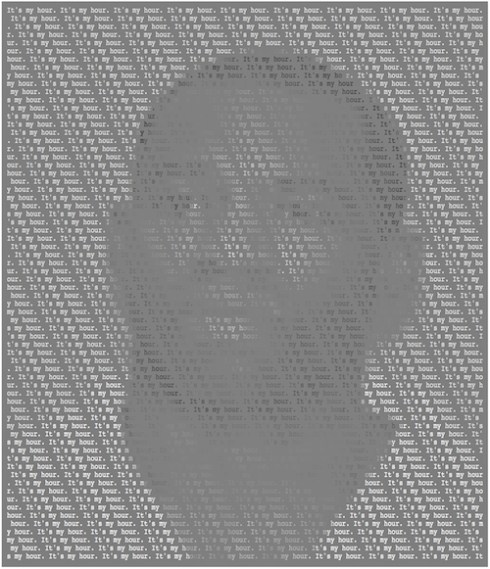
Amy Elkins‘ latest body of work Parting Words is a visual representation of every execution in the state of Texas since the ban on capital punishment was overturned in 1976.

Parting Words was just featured on the Huffington Post, for which I wrote a few hundred words. That didn’t seem enough, so I asked Amy some questions about the project to gain a fuller picture.

Q&A

Prison Photography (PP): You made Black is the Day, Black is the Night (BITDBITN). Now Parting Words. Both are about the harshest imprisonments and sentences in America. Do overlaps between the projects exist? Are the overlaps visible? If so, is the overlap in your personal politics, in the project, or in both?

Amy Elkins (AE): I started the two projects in 2009 and am still wrapping up final details with each. Black is the Day, Black is the Night came first. Through the execution of the first man I wrote with for that project, I stumbled into Parting Words.

Parting Words has taken me a few years to complete and, even now, it remains a work in progress — currently the project has 506 images but it is updated yearly, growing with each execution.

The research behind it all, especially while writing to men on death row (two of which were executed during our time of correspondence) made reading and pulling quotes from the roster of those who had been executed in the state of Texas a dark, taxing experience. Not only was I reading through all of their statements, but detouring into description after description of violent crimes that land one on death row. Honestly, it felt too heavy at times.

PP: What was the impulse then?

AE: I was intrigued that the state of Texas documented and kept such a tidy online archive for anyone to explore. As a photographer (like many, doubling as a voyeur) I already had my own connection to the subject matter through BITDBITN, and I suppose I allowed my obsessive side to surface in order to create a visual archive. It was an important story to tell.

AmyElkinsPartingWords AmyElkinsPartingWords AmyElkinsPartingWords

PP: What are your thoughts on American prisons and the criminal justice system?

AE: Over several years of correspondence with five men serving death row sentences and two men serving life sentences who went in as juveniles, I have learned a great deal from the inside about what it is like to exist in the conditions of maximum security and death row units; what those units provide; and what they deny.

A system that uses long-term solitary confinement and capital punishment is broken. Housing someone in infinite isolation has been proven to be hugely damaging to one’s psychological and physical state. This type of isolation breeds behavioral and emotional imbalances that are bound to cause most to remain in a perpetual state of anxiety, depression and anger. Which means they are set up for failure. There is absolutely no way to rehabilitate in such conditions.  But clearly rehabilitation isn’t what they have in mind.

I have written with one man in particular who has served 20 years in solitary confinement as part of a Life Without Parole (LWOP) sentence for a non-murder related crime he committed aged 16. He has written about going years talking through concrete walls without ever seeing the men he holds daily conversations with. He spends nearly 23 hours a day in a small cell by himself and when he is let out, he is shackled and permitted to exercise in a slightly larger room by himself for an hour. How he’s gone 20 years in these conditions and not gone completely mad is mind blowing.

That said, most men that I wrote with serving death row sentences were in fairly similar conditions, some having served onward of 16 years in solitary confinement while waiting for their execution. Two of the men I have written with have been executed and through the experience of writing letters to them and in some cases reaching out to family members leading up to such events, I have seen how capital punishment seems to create a continuous cycle of violence, pain and loss within our society. It leaves not one open wound, but several. If there’s closure for anyone, it’s temporary. And unfortunately the loss that the victims family originally endured remains. But now there is a new set of mourners in the mix. The system seems so incredibly flawed and barbaric.

PP: Do archives for last words exist for those killed in other states?

AE: I have yet to come across an archive as in-depth and publicly accessible as the one compiled by the state of Texas.

AmyElkinsPartingWords AmyElkinsPartingWords AmyElkinsPartingWords

PP: Are you afraid of death?

AE: I think I’m more afraid of the physical pain associated with dying.

PP: Where do we go when our time is up?

AE: Sounds cheesy, but I think we stick around and linger in some capacity with those who love us the most.

PP: Given the images “read” very differently if the viewer is close or far away, what’s the ideal size for these works?

AE: Ideally I would like to show these images on a smaller scale but include all of them.  This forces an intimacy that I want, where the viewer has to get close to each image in order to experience the depth of the project.

PPAnything else you’d like to add?

AE: In both projects, I always remained neutral. I refrained from projecting my own feelings into whether I felt those I worked with or made work about were guilty of the crimes for which they had been convicted. Making BITDBITN, I was more interested in hearing stories from those within prison systems in America, about the psychological state they might be in while in such conditions, while potentially facing their own death. I was interested in discussing with them what it was like to be removed from the world most of us take for granted, to lose memory by being removed from the source of memory, to not always have a strong sense of self-identity. I felt I hadn’t enough information to warrant my own judgment, and so, if I had projected any, neither project would have manifested.

PP: Thanks, Amy.

AE: Thank you, Pete.

AmyElkinsPartingWords

ELKINS ELSEWHERE

In December 2013, Daylight Digital published a presentation of Black Is The Day, Black Is The Night with an accompanying essay by yours truly. The 1,500 words were built upon a conversation Elkins and I began in late 2011.

EMAIL

prisonphotography [at] gmail [dot] com

Prison Photography Archives

Post Categories