
You are currently browsing petebrook’s articles.
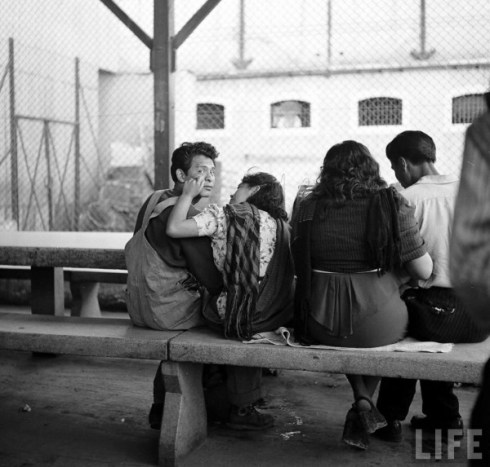
Frank Schershel. Photos licensed for personal non-commercial use only by LIFE
I was made aware of this set of photographs last week (sorry I forget the source!). They’re an interesting document of a bustling metropolis’ prison with an open program of movement, activity and an array of inmates.
The number of visitors and family members involved in many of the images leads me to think of this prison as an institution where people remained until the peculiarities of their situation could be agreed upon and then communicated to ensure release.
The social engagement of inmates with those from outside suggests to me (with an acknowledgement of harsh lockdown-modern-prisons) that the authorities of 1950s Mexico City either weren’t convinced of prisoners guilt, could be convinced otherwise, or simply didn’t map the denial of family-involvement on to the landscape of criminal punishment.
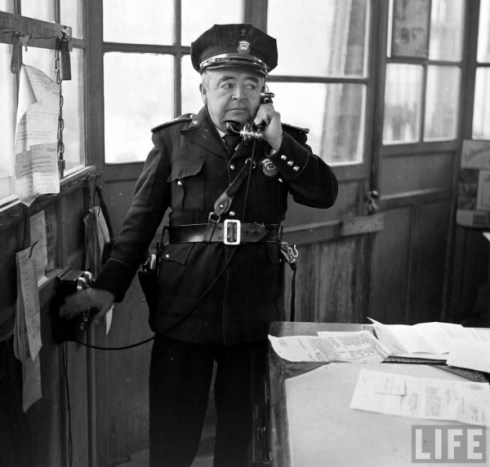
Frank Schershel. Photos licensed for personal non-commercial use only by LIFE
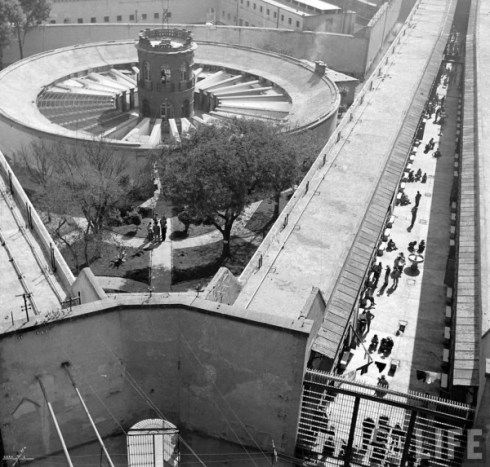
Frank Schershel. Photos licensed for personal non-commercial use only by LIFE
Schershel’s photographs recalled Richard Ross‘ image from Architecture of Authority. Schershel’s images doubled my visual knowledge of Mexican prisons, and so know I find myself in the unacceptable position that Mexican penitentiaries are – in my mind (at least temporarily) – the Palacio de Lecumberri … which means I have to do more research to get away from that inadequate knowledge base.

Palacio de Lecumberri (former prison) Mexico City, Mexico 2006. © Richard Ross
Until Schershel’s photo set, I had thought that Ross’ picture depicted a tower in the centre of a modestly-sized jail, but Schershel’s image puts the tower and rotunda into its larger setting (top left octant).
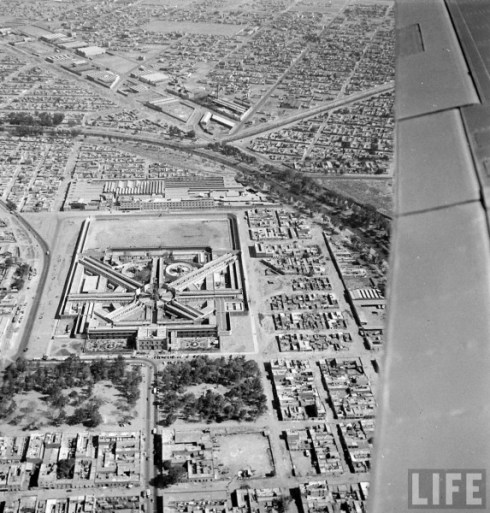
Frank Schershel. Photos licensed for personal non-commercial use only by LIFE

Charles Moore. (American, born 1931). Martin Luther King, Jr. Arrested. 1958. Gelatin silver print. 8 3/8 x 12 3/16" (21.3 x 31 cm). The Museum of Modern Art, New York. Gift of Harriette and Noel Levine.
Infrastructure: labor, land, financing, and the general organizational capacity to combine these things in order to make other things, in general, easier to make. While not always public, it is the form of most public wealth.
Prisons are a monumental aspect of the ghastly public infrastructure underlying a chain of people, ideas, places, and practices that produce premature death the way other commodity chains crank-out shoes or cotton or computers.
Why don’t our heads burst into flames at the thought? Why is the prison-industrial complex so hard to see? The many structures that make carceral geographies disappear (which is to say, become ordinary) depend, for their productive capacity, on the infrastructure of feeling.
To affect what lies beneath these structures, wherever it might be in space and time, requires radical revision. By turning what becomes ordinary towards the extraordinary, our expressive (and explanatory) figurative works cause what disappears to be visible, palpable, present here and now.
– Ruth Wilson Gilmore
When I read Ruth Wilson Gilmore’s introduction to Prison Culture, I was struck by the common requisite of feeling to bring about change.
Photography is ever amidst a debate about whether it can bring about change, and I think a lot of that rests on whether photographers are presenting – with the right mix of emotion and political message – images that help, nay compel, the audience to see the disappeared.
This can be a tired notion to those who have toyed with it for years, but one only need to listen to Charles Moore speak about his images to be reminded how powerful photography can be. I cried when Moore described his disgust for violence and the oppression of civil rights.
As Moore believes (and I agree), his images had a profound affect on the people of America, allowing them to see the “disappeared” and see the “ordinary” hatred that welled in the Southern states in the 1960s.
It is my contention that the visual narratives of prisons in the US have still many avenues to explore in order to transform public thought and catalyse public action.
That, partly, is why I write on Prison Photography.

Vernell Crittendon and an inmate talk as they cross the yard at San Quentin. © Darcy Padilla
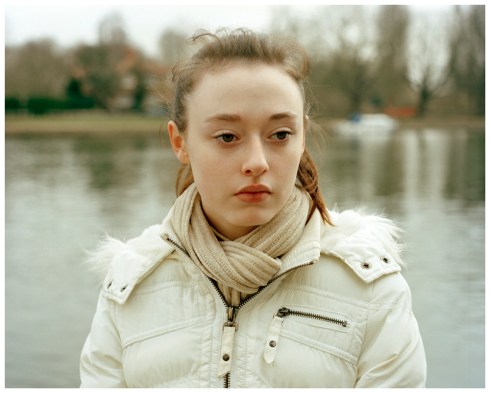
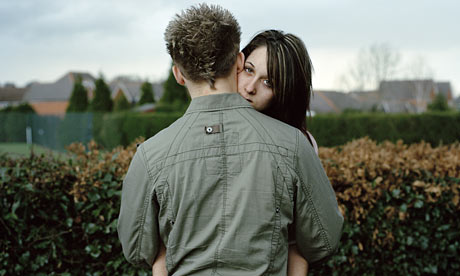
© Laura Pannack
Laura Pannack is based in the UK and Lydia Panas in the US.
Pannack deals with the awkwardness and the concealed emotions of adolescence, Panas deals with the small gestures between family which may or may not infer awkwardness and concealed emotions.
The bare back, the turned back, the turned head, the caught glimpse and the avoided glance are all enticing props for a charged portrait.
Through their eye contact, both Pannack and Panas’ subjects foolishly ask us questions. Foolish because, let’s be honest, what do we know about childhood or teenage conundrums?
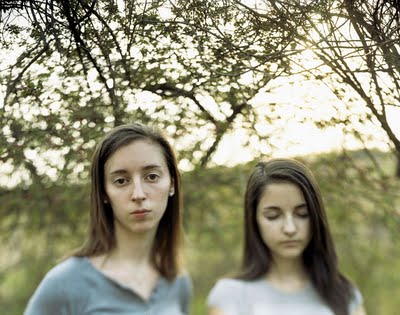
© Lydia Panas
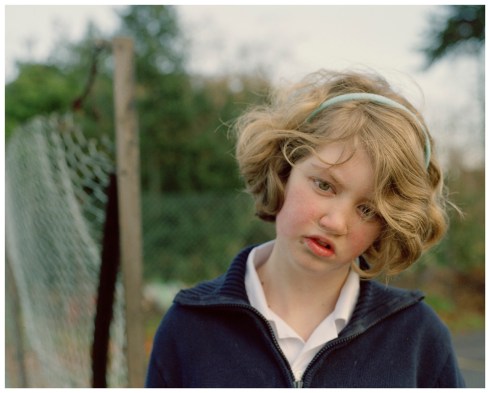
© Laura Pannack

@ Lydia Panas
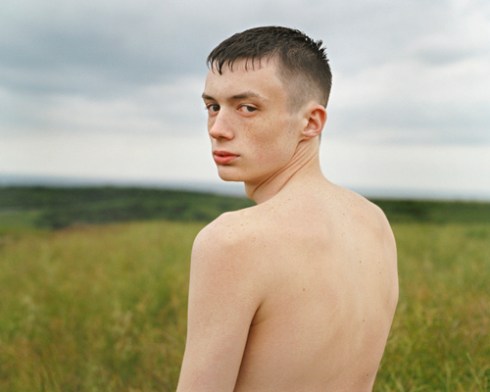
© Laura Pannack

© Lydia Panas
© Laura Pannack

© Lydia Panas
How often when a teenager does something totally awesome does it get acknowledged? Not often enough?
This is awesome.
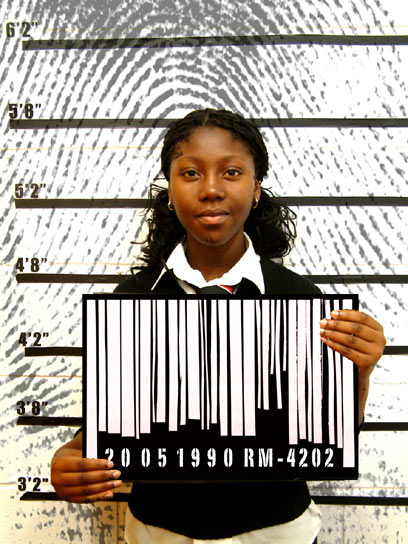
"Prison" by Siever Karim, 2005. As part of the Image & Identity Young People’s Conference at the V&A.
Siever’s Statement:
‘My ideas were based on conformity, and the suppression of cultures and personal individuality by being a number, wearing a uniform, being trapped in the cages of the social machine. I created my own police height chart and got my classmates to stand in front of it. I also made digital barcodes to symbolise the gathering of information which can be accessed so easily today.’
Image & Identity Artwork Project, Victoria & Albert Museum, 2006

Alphonse Bertillon was born on April 24th, 1853. I call him “The Godfather of all things Criminally Photographic”.
Bertillon was the French criminologist and anthropologist who created the first system of physical measurements, photography, and record-keeping that police could use to identify recidivist criminals. Before Bertillon, suspects could only be identified through eyewitness accounts and unorganized files of photographs.
In 1883, the Parisian police adopted his anthropometric system, called signaletics or bertillonage. Bertillon identified individuals by measurements of the head and body, shape formations of the ear, eyebrow, mouth, eye, etc., individual markings such as tattoos and scars, and personality characteristics.
The measurements were made into a formula that referred to a single unique individual, and recorded onto cards which also bore a photographic frontal and profile portrait of the suspect – the “mug shot”. The cards were then systematically filed and cross-indexed, so they could be easily retrieved. In 1884, Bertillon used his method to identify 241 multiple offenders, and after this demonstration, bertillonage was adopted by police forces in Great Britain, Europe, and the Americas.
One of Bertillon’s most important contributions to forensics was the systematic use of photography to document crime scenes and evidence. He devised a method of photographing crime scenes with a camera mounted on a high tripod, to document and survey the scene before it was disturbed by investigators. He also developed “metric photography“, which used measured grids to document the dimensions of a particular space and the objects in it.


Anthropometric photography of a convict at his arrival in prison. Basse Normandie. Calvados. Caen. Prison. 1976. Photo: Jean Gaumy / Magnum Photos

Backstage, Miss Light, Mesitas del Colegio. © Carl Bower
Last month, at the Critical Mass Top Fifty exhibition at Photographic Center Northwest I found myself transfixed by Carl Bower‘s Backstage, Miss Light, Mesitas del Colegio.
I presumed it was shot on a nocturnal, hedonist jaunt to which photographers (Antoine D’Agata, David Alan Harvey, Kohei Yoshiyuki, Clayton Cubbitt) often turn.
Or possibly an indifferent Larry Finkesque look at glamour?
The image was noir enough that I placed it simultaneously in different eras. It echoed Erwitt but without the sentimentality.
For me, it was the stand-out print of the exhibition and I told Carl as much. With a touch of class I insisted on qualifying my flattery, “I don’t bullshit people.”
BEYOND THE SURFACE
When I got home unable to shake the threatening image nor the fool of a comment I delivered its creator I checked out Bower’s Critical Mass portfolio.
Bower’s sumptuous, dangerous image of surface and tease was – is – to my surprise part of an important look at collective escapism, denial and dreams.
I have talked about Colombian beauty pageants before, but in the context of prison contests! I hadn’t appreciated at that time of writing that the prison pageant merely reflected the appetite for swimsuits and tiaras in wider Colombian society. Carl’s artist statement is remarkable:
What is perhaps most remarkable is that Bower’s work is void of any sense of judgement. Every crowd is matched with a lonely figure. Every smile parried by a sideways glance. Every opportunity for scorn mollified by a capture of genuine emotion. This balance is admirable and may stem from Bower’s journalist background.
It has been said (although I don’t know enough about it) that meditation programs in prisons seriously reduce the violence of an institution. More than that, they can catalyse sea changes in the culture of an institution. Like I said, that opinion is anecdotal and I would assume the calming of any facility is due to many factors one of which may be the teachings of Buddha.
The movie has it’s own website – The Dhamma Brothers
– – –
I found this trailer on the blog of The Center for Documentary Studies. It was screened as part of Duke’s Ethics Film Series: “Control and Resistance.”

 Prison Photography