
You are currently browsing the category archive for the ‘Activist Art’ category.
Good news arrived today for Think Ten Media, producers of the innovative web series The wHole: funding has been secured to continue production. Producer Jennifer Fischer tweeted, “Big News! The wHOLE got the greenlight. Episode 2 is a go.”
@LoudGreenBird @brookpete Big News! “The wHOLE” got the greenlight. Episode 2 is a go. 2 days to hit 100% http://t.co/6wtUlKHACp #JFDI
— Jennifer Fischer (@IndieJenFischer) May 5, 2015
$$$ ONWARD $$$
But the fundraising and the efforts are not over. If you’ve got any money to throw in the pot. I know Fischer and writer & director Ramon Hamilton would love to push toward the 100% funding. (At the time of writing, they are at 80%). You can view the pilot episode here, and if you like what you see, then donate.
If you need a little more convincing about why to support a web series about this issue then read this conversation about “The Truth Behind Solitary” — hosted by ACLU — between Amy Fettig, senior counsel at the National Prison Project at the ACLU; Jeff Deskovic, advocate and exoneree who was released after 16 years in prison; and Hamilton.
The wHole was filmed at the empty and never-used Wapato Jail in Portland, Oregon. When they were working on the pilot last year, I argued that it was the only good thing to come out of the vacant jail.
We Comin #SLAVEHOLDERS pic.twitter.com/6z5TCiaRhD
— The Dream Defenders (@Dreamdefenders) April 29, 2015
SHAREHOLDERS? SLAVEHOLDERS!
Last week, shareholders in the private prison firm GEO group attended the evil corporation’s AGM. The swarm of conniving, money-grabbing devil sperms were shocked to be joined by some protestors. Shareholders thought they’d encounter only other children of satan at the annual horn-sharpening ceremony.
Across the Boca Resort in Florida, the venue for the GEO AGM, the hell-obsessed portfolio-owners struggled repeatedly to engage with the protestors who appeared to have colorful irises and not the green dollar signs to which they were accustomed. Instead of a glassy stare, the protestors could hold lasting eye-contact and emote.
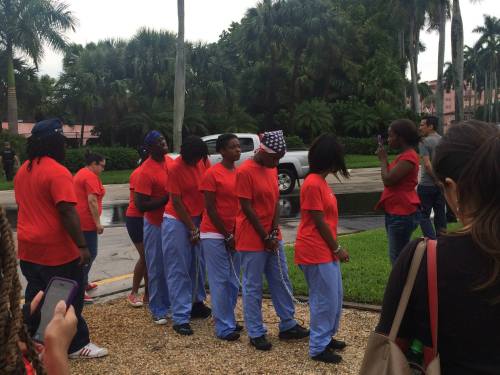
Some shareholders referred to the protestors as shape-shifters who employed behaviour that suggested confidence, faith, principle, civic duty, anger and nuanced reasoning — all emotions and motives that belonged to a long-lost group known as humanity, but alien to beelzebub’s GEO breed.
If the appearance of the protestors was confusing, it wasn’t a patch on the foreign language they used.
“Opportunities for Black and Brown communities have been intentionally thwarted through intergenerationally maintained oppression. What drives this? The same institution that has fueled this country since its birth—slavery,” says civil rights group Dream Defenders. “Through the proliferation of prisons for profit, the United States is a slaveholder, and private prisons are the cruel overseers who go through extreme means, including documented physical and sexual abuse, lobbying for increased mandatory minimums and fraudulent reporting, to maximize profit.”
Irene, a proud third generation GEO stock holder, mistook some of the protesters in red shirts as valets, at first.
“Then I realized they were trouble makers and just wanted to hurt others with signs. I couldn’t understand a word they were saying. Something about disadvantaged classes being heard and having a seat at a political forum not manipulated by big money. I dunno, I wasn’t paying attention,” said Irene as she rushed off to make a 4:15 tee-off time.
Okay, seriously now, it didn’t quite go down like that in Florida, last week. It was a 4:25 tee-off! No, no, really seriously. It wasn’t like that; above is just the story I wanted to write. Nothing like that. GEO shareholders are not the kin of lucifer. GEO shareholders are, each, lucifer incarnate. Let’s not dilute responsibility here.
Okay, okay, really, seriously, now.
We live in a society that allows the haves to make cash from the exploitation, hardships and warehousing of the haven-nots. What is wrong with us?
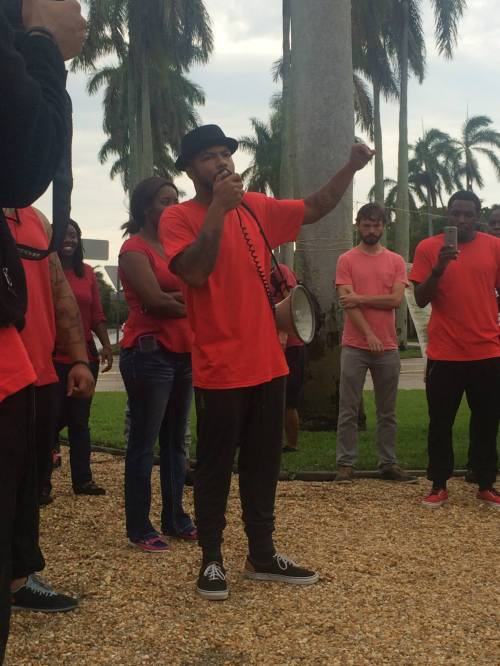
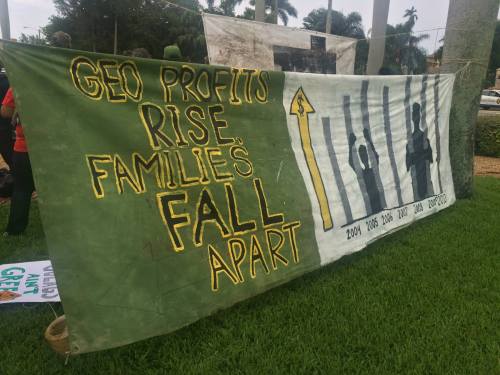
Mama Mama… #SLAVEHOLDERS dream http://t.co/wfIJEcBDqK pic.twitter.com/8s3p1NNSHs
— The Dream Defenders (@Dreamdefenders) April 29, 2015
THE NEED FOR PROTEST
The protest organized by Dream Defenders, Prison Legal News, Grassroots Leadership, SEIU Florida and other groups adopted the slogan to “Expose the Slaveholders” for the protest.
GEO Group is the country’s second-largest for-profit prison operator, reports Nadia Prupis. GEO owns Karnes County Detention Center in Texas, which holds immigrant families and is the site of an ongoing hunger strike by detained mothers, as well as Reeves County Detention Center, currently the subject of a Department of Justice investigation.
Concerning Karnes, a Prison Legal News press release said:
Human Rights Defense Center associate director Alex Friedmann, an activist shareholder who owns a small number of shares of GEO Group stock, attended the meeting. When he asked about recent reports of hunger strikes by immigrant women held at the GEO Group-operated Karnes County Family Detention Center in Texas, he was informed by a GEO executive that there was no hunger strike; rather, it was a “boycott of dining facilities” at the detention facility.

As state budgets dried up, the private prison industry moved its attentions to Homeland Security $$$ and fought to win new build and operate ICE facilities. Which is weird because I don’t think it was a bevy of Latina mothers who flew those planes into the World Trade Center. GEO currently receives 42% of its revenue from contracts with federal agencies, including the Department of Homeland Security/Immigration and Customs Enforcement and the Bureau of Prisons. In 2013, 67% of all federal criminal convictions were for immigration-related crime.
What’s confusing to me is why the arguments for prison reform have been decoupled from those for fewer immigration prisons. Maybe it’s built into the DNA of the United States that the free folks can only fight for the rights of an oppressed group, if there’s another group in line to abused and brutalized? Why have we got bi-partisan support for criminal justice reform, but nothing close to such consensus about immigration reform? Why are politicians making efforts to reduce the number of people in the broken, expensive, abusive state and county prisons, but we don’t apply that same enlightenment to people who don’t carry a bit of U.S.A. paper?
Kudos to these protestors who are going after the private prison firms. Private prisons are where all the worst shit happens and the protestors know it. Private prisons are where the architecture and economic logic of cages is perfected. GEO and their equally sadist competitor CCA account for less than 10% of prisons in the U.S. but they are the growth sector.
“We know that GEO Group and other private prison companies thrive when they are able to obscure the truth about their business practices and what happens inside of their facilities,” said Kymberlie Quong Charles, Grassroots Leadership’s Director of Criminal Justice Programs.
Politicians have decoupled zealous policing and mass incarceration from ever more draconian treatment of migrants. The ICE archipelago of dentition facilities are the latest additions to the Prison Industrial Complex. Politicians hope we won’t notice. Politicians are congratulating themselves for having a civil discussion about criminal justice but they do so, now, because it is safe ground. Where were they for the past 35 years?
While state legislators tweak corrections budgets, the private prison industry will be throwing migrants into boxes at will.
Don’t think that politicians are going to lead on the private prison issue. They won’t. Look to the activists, with boots on the ground, who know what is happening. Hillary Clinton has hopped on the criminal justice reform bandwagon tapping the issue du jour for her presidential run. That other guy with designs on the White House, the Republican Senator Marco Rubio, loves GEO Group
“While Rubio was leading the House, GEO was awarded a state government contract for a $110 million prison soon after Rubio hired an economic consultant who had been a trustee for a GEO real estate trust,” writes Michael Cohen in The Washington Post. “Over his career, Rubio has received nearly $40,000 in campaign donations from GEO, making him the Senate’s top career recipient of contributions from the company.”
Short story: GEO and CCA are evil. Stakeholders have evil in their blood. Politicians are mostly clueless. Activists are without career or money ties to the issue and will speak truth to power.

All images: Courtesy of Grassroots Leadership.

In the past, I have sung the praises of both Jesse Krimes’ huge 39 cloth-panel mural Apokaluptein:16389067 and the programming at Eastern State Penitentiary.
Last night, the two joined forces to insert Krimes’ otherwise massive flat mural into one of the cells at ESP.
The wrap around, judging from the photo (above) looks very effective. I’m guessing they’ve reproduced the mural on paper and pasted it up on those damp, crumbling ESP walls. If I wasn’t 3,000 miles away I’d pay a visit and immerse myself in this work.
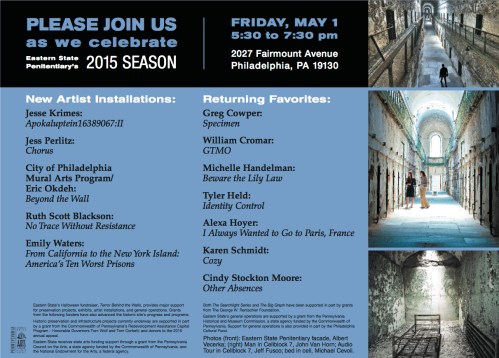
Krimes’ work is part of a new season of art installations at ESP (see the flyer below) in which Emily Waters’ fantastic “commemorative” plates of the 10 worst prisons in the United States is also featured. More on Waters’ project here.
NO BARS, NO GUARDS, NO LOCKS
Tattered lace curtains, taped family photos, patterned carpets, plastic flowers and snappy fabrics. Gabriela Maj’s portraits from the series Almond Garden have all the chirpy, easy-to-patronize details of portraiture from a former Soviet controlled region. Lost you already? Think of Sergey Poteryaev’s portraits, Rafal Milach’s Winners in Belarus, Olya Ivanova’s portraits of young girls in rural Russia or anything by Sasha Rudensky. More directly consider the backdrops photographed by Lucia Ganieva.
(As much as I hate top-loading an article with links to a host of other photographers, I must because before we can understand how special and different Maj’s work is, we must appreciate the en vogue photo practices from which it emerges and above which it must rise.)

For the moderately trained eye, Maj’s work is obviously anchored within a super-region that still carries the visual culture of its immediate past. No matter how hard former Soviet countries try, nor how quick they build, photographers still seem to be able to isolate the details that’ll whiplash people back in time. The problem I outline here is twice as tricky because we, in the west, think that all changes in the former USSR since the end of the Cold War must at least be headed in the right direction.
The framework I am trying to set up here, basically, is that in which Soviets — and all those formerly-ruled by them — are ‘Othered’ and misunderstood by most viewers looking at photographs made in the region. I offer a word of caution before you step into Maj’s portraits. The stories burdened by the women in Maj’s Almond Garden are devastating and the worst thing we can do with Maj’s work is to lump it in with all that work of the knackered Russian empire.

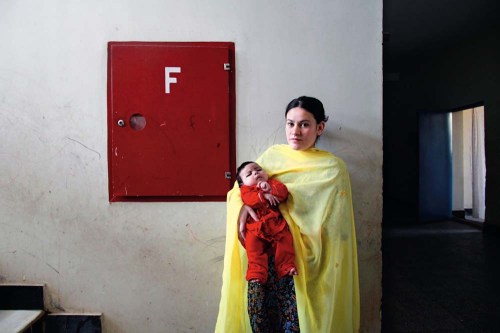


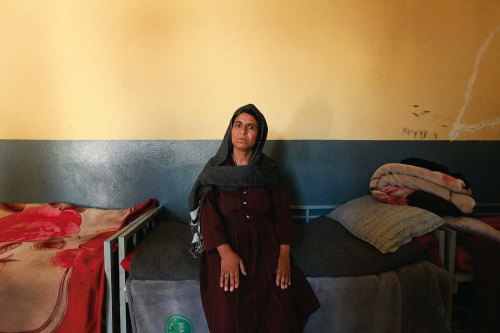
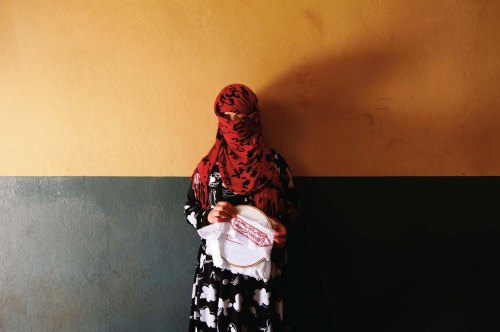
Over the course of four years (2010 – 2014), Polish Canadian photographer Gabriela Maj travelled throughout Afghanistan to collect portraits and stories from inside the country’s women’s prisons. She visited with many of her subjects on multiple occasions.
Maj actually believes that being of Polish origin helped her to gain relatively unhampered access. Poland and Afghanistan shared a history of Soviet oppression.
It also helped being a woman. In fact, her mode and ability of movement revealed the so very twisted logic of a prison system that brutalised women.
“As a solitary female photographer, accompanied only by an Afghan interpreter, I was frequently left alone in the prisons once our guard escort tired of monitoring me. My sense was that unaccompanied by any security, a woman, albeit a foreign one, was not considered a threat,” she writes in an essay featured in the book. “Being overlooked in this way became a strategy that ultimately exposed the context within which I was working, one where women’s narratives were considered irrelevant to the power dynamics that ran the country.”
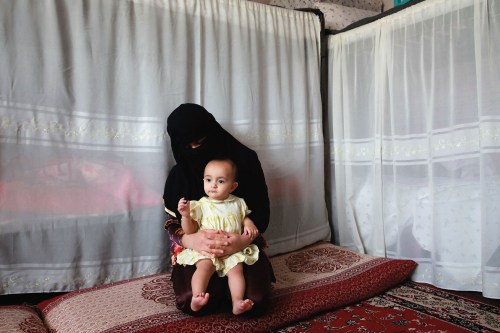
Maj went the extra mile and then some. The least we can do it get there with her. The majority of the prisoners Maj documented were incarcerated for what are known in Afghanistan as “moral crimes,” a term used to condemn those who’ve had sex outside of marriage, or run away from any number of abuses — forced marriages, being sold into prostitution, domestic slavery, physical violence generally conducted by their husbands, and rape and involuntary pregnancy.
Indeed, the portraits are powerful but it is the relentless injustice of the testimonies of the women that delivers the power and absolute necessity of Almond Garden. Maj has changed the names of the women to protect their privacy. She goes a step further and moves the stories to the back of the book.
“Separating the portraits from the stories has allowed for a record of the experiences of this group without any one woman being defined by the crime she was accused of,” explains the press release.
Each entry leads with the offense that the woman is accused with, her age and the length of her sentence.
I haven’t been so effected by a project pairing portraits of women with their transcribed words since, strange as it might be to offer, Malcolm Venville’s The Women of Casa X, which features portraits of aging sex-workers in Mexico. But, then again, perhaps not so strange? Both the women in Melville’s work and the prisoners in Maj’s work have been categorized, judged, ostracized and maligned by dominant patriarchal culture. In both cases, if the photographer hadn’t shown up, these stories would be buried (which is the culture’s intent, right?)
“Often times rejected by their families, these women’s situations can become grave after they are released,” says the Almond Garden‘s blurb. “Without the protection of their relatives that spurned them, they are often in very real danger of being killed or tortured unless they are able to seek refuge in a women’s shelter.”
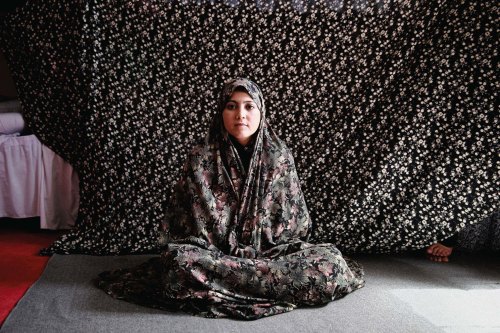
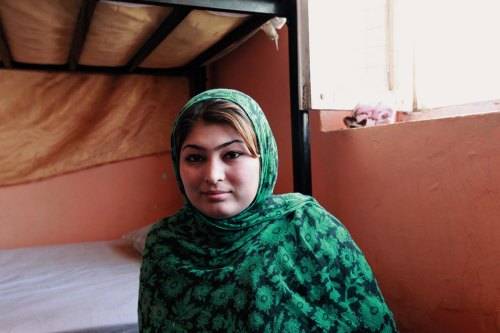
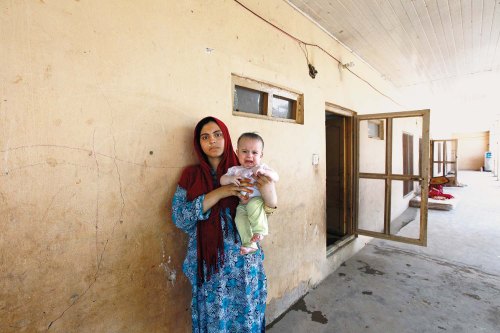
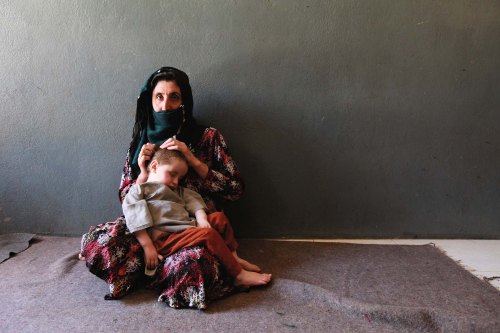
It is bittersweet to think of these tortured moments in prison might be, for some women, where emotional and physical trauma exists least. That said, there is no psychological treatment or therapy available within the prisons Maj visited.
The title of the book Almond Garden is a play and is incongruous. It is the English translation of Badam Bagh, the name of Afghanistan’s most notorious penitentiary for women, located on the outskirts of Kabul.
Almond Garden publishers, Daylight Books, say that Maj’s project is the “largest record documenting the experiences of incarcerated women in Afghanistan produced to date.”
It’s stunning. It works in waves as all good photography should. I’ve been drawing important lessons from Almond Garden each time I’ve returned to it. Aesthetically, it’s as good as Michal Chelbin’s Swans and Sailboats, portraits from Ukraine and Russia. Ethically, I think it surpasses it as Chelbin is evasive about the details of her access.
BOOK TOUR, NOW!
Maj is currently on book tour.
Los Angeles tonight! If you’re in San Francisco, hit up one of her two events next week. On May 5th, at Modern Times Bookstore, or on May 6th at The Women’s Building.
BUY THE BOOK
Here, for $45.00.
DATES ON THE ALMOND GARDEN BOOK TOUR
May 1st, Exhibition and book signing with Daylight Books at the Leica Gallery in West Hollywood, CA.
May 5th, Presentation and book signing at Modern Times Bookstore in San Francisco, CA.
May 6th, Presentation and book signing at the Women’s Building,7:30-9:00, San Francisco, CA.
May 9th, Presentation and book signing at Apostrophe Books, 5:00-7:00pm, Long Beach, CA.
May 22nd, Presentation and book signing hosted by the Vermont Professional Photographers Association and the Peace and Justice Center, 6;00-8:00, Burlington, VT.
July 31st, Exhibition opening and book signing at Daylight Project Space , Hillsborough, NC.
August 8th, Book signing at Author’s Night 2015, East Hampton, NY.

GIVING POWER TO THE PEOPLE
Sol Aramendi is an absolute force. Community smarts, a big heart and bloody hardwork makes her THE instigator for photography and inquiry among the immigrants living in New York city. Project Luz, an organization she founded, delivers photography workshops. Most are conducted with residents of Queens — the most ethnically diverse urban area in the world.
The workshops function as cultural orientation and serve to empower immigrants who might be hesitant to explore beyond their new neighborhoods. Aramendi helps them out of their shell, onto the subway and into the boroughs. Photography is an excuse to engage with the world.
Aramendi’s moved toward teaching photography workshops after taking inspiring courses herself with Sergio Larrain (2004) and Adriana Lestido in Argentina. Aramendi also campaigns to promote breastfeeding among immigrant women, facilitates community discussion groups about domestic abuse, and provides a space for children with autism to scratch records. She is developing an App for day laborers to report workplace employer abuses.
I am fascinated by Aramendi’s emphasis on the social aesthetic above and beyond any image aesthetic, and so it was great to catch Aramendi between her many commitments and pose a few questions about her background, motivations and relationships.
Scroll down for our Q&A

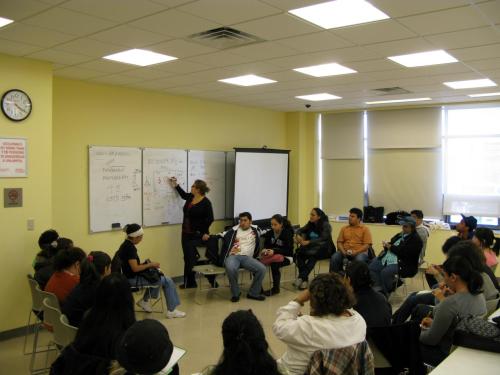

Project Luz workshops in the field.
Q & A
Prison Photography (PP): How did you get to be here in New York teaching photography and roaming the streets with cameras?
Sol Aramendi (SA): I moved from my hometown in Argentina to Rosario to Buenos Aires where I studied furniture design, film school. Later I trained and worked as an architect. At that time I was interested in black and white photography and sign dup for workshops taught by Adriana Lestido. There was a shanty town in Buenos Aires and I was interested in the many people who lived off garbage — sourcing, salvaging, reselling, recycling.
Simultaneously, I was taking people around the city to photograph architecture. I had a photo-lab in my house and taught from home. This was 1999. There was a financial crisis. Another one! I’d been working as an architect for 10 years and I felt I wanted something different.
I had a continued relationship with one family who survived from working with garbage. I traveled with them on the train to the dumps. It was called tram blanco – the ghost train — because most people never even saw it or knew it existed. It was invisible. Worse still, the operators charged more money than a regular ticket … just to go to work with garbage.
PP: It sounds like you relocated to New York relatively recently?
SA: Yes, and I knew I wanted to continue the work. It had to be for the local community. I wrote to all the museums — MoMA, Queens Museum, and so on — asking for free tours in Spanish for immigrants.
Queens Museum immediately called me back. They had just received a half-a-million dollar grant for community engagement. The museum was empty. It was a huge building, but immigrants using the park thought it was abandoned.
We did a class. On the final day and closing presentation of my course, there were 100 people. Afterward, the Queens Museum gave me the position of that person I had been asking for! I began guiding tours in Spanish at the weekends.
PP: Since, you’ve also been contracted by MoMA, also.
SA: MoMA has 20 community partners. I am one of them. It’s only 30 hours a year, but you can get a lot done in that time. Our project—inspired by Carrie Mae Weems—is about family.
PP: What do you do in your workshops?
SA: I bring people to the museum. We look at images. We make images. Color, black and white, then film, now digital. I’ve learnt how to engage the community, about how to listen; that is the most important thing. I was teaching them basic things but always relating it to art. Everyone can have an opinion about art.


Various workshops from down the years. Sol has been involved in programs for everything from street photography, to studio portraiture, to lighting, to post production to classes on theory and photo history.
PP: What’s your approach?
SA: We learn through art but mostly we’re getting to know the city. The photography is an excuse!
Immigrants come here and they live in an imaginary space. They want to come here, but they don’t “arrive” here. They are in limbo. Through storytelling, I help them to imagine a more *real* place and being. I want them to feel a belonging to the city and to the spaces.
I had a woman who had lived here for 8 years but she did not know Manhattan. Migrants travel all this way, across borders, and then they are paralyzed in the place that they are. They don’t know more than 10 blocks around. Little by little they discover their own potential. After our MoMA visit, one student asked “Do we have another VIP tour, this week?”
People change themselves. We open a door and from there, they walk themselves. Many of them live subject to stereotypes. Understandably, some of them are embarrassed but they can know their community and space by describing it.
PP: What is the outcome of your workshops?
SA: We make publications in both Spanish and English. One for each workshop series. We’ve made 25 publications.
PP: Wow!

SA: The format is set, so it is just a case of inputting the photographs and text we create. It’s newsprint. Together, we pick the subject of the publication and always relate it to immigration and place. We made one with union workers, one with day laborers, we encouraged a conversation between those two groups.
We made a newspaper with the New York Public Library. Some publications are in Mandarin. I encourage participants to distribute. We print many and I give participants a lot to share at public events.
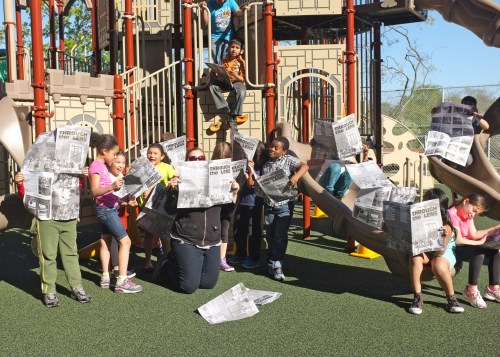
Aramendi (center) with children from one of her ‘Through the Lens’ workshops pose for a group photo.
PP: You seem to share everything you make?
SA: I do a lot of portrait projects. If there’s a community event, I set-up an outside studio, make portraits, upload them on Flickr. People can download for free.

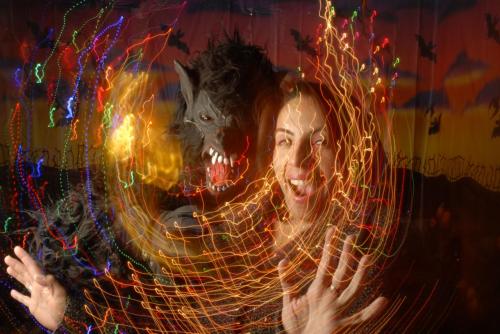
Christmas portrait studio (top); “Spooky Halloween” portraits studio (bottom).
SA: Project Luz teaches classes on social media and encourage immigrants to use it to communicate. They make virtual “tour guides” for their families back home. So when we visit a place, we’re thinking how to describe it visually and later publish online.
PP: These are all immediate benefits for participants. What is the secondary audience for their photographs? Here in NYC or further afield?
SA: I made an installation inside an old bank vault which included 300 portraits of migrants at work. It was about money and security and labor. After seeing those pictures people said they realized just how many jobs around them are completed by migrants — bus driver, delivery, everything we eat and drink — from morning to night, it goes through immigrant hands.




Portraits made by Sol and her team during a Migrant Day Open House.
PP: What are the main issues that immigrants face?
SA: Access. I do a lot of work for people to go to a museum, but that work can end at the front desk … because of the way staff look at them. It can be enough to make them stop. After they cross that barrier — it is a lot, but really nothing — they realize they can do a lot of other things.
We talk about society, domestic violence, and I also teach them about the law of what they can photograph. I tell them to photograph at all the train stops. I tell them they can photograph the police. We cannot take pictures in the school. But everything else we can do. We look at the lawsuit between Philip Lorca DiCorcia and the Hasidic Jewish man who objected to his image being made on the street.
I ask students always to discuss and to defend photos or issues. Maybe they can later do the same at their work-place. Maybe they can tell their boss, “No, I only have to work 8 hours, not 12.” I let them know that it is okay to have healthy doubt and to question.
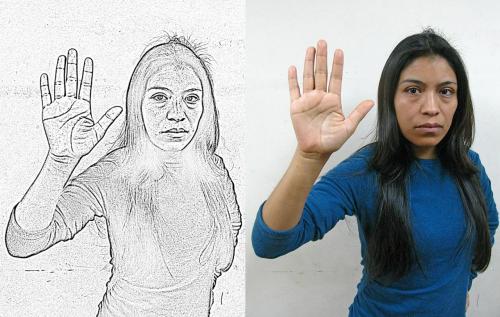
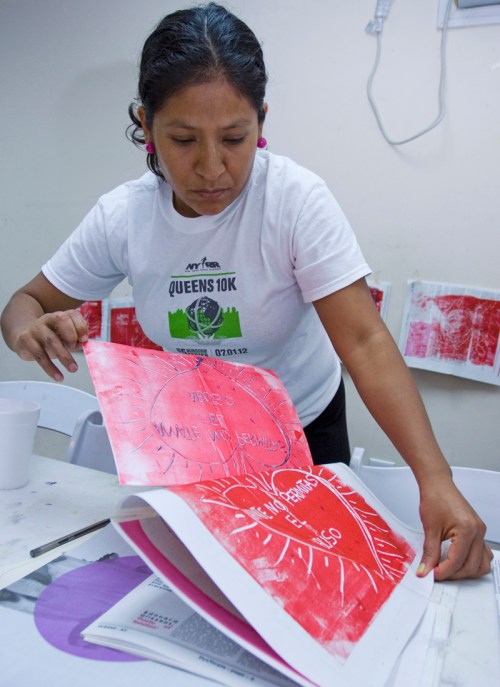
Sol has led workshops for printmaking for women.
PP: What are immigrants’ relationship with law enforcement in Queens like?
SA: This is their city – they’re living, working and contributing so they can use the public transport, public spaces, art spaces. But it’s not always so easy. For example, the park around the Queens Museum is frequently used by migrants for celebrations such as Cinquo de Mayo. Two years ago, the police started doing raids. May 2nd, 3rd, 4th; they started in Queens, so on the 5th people didn’t come out. We all know where the immigrants live.
Immigrants are convenient for the economy but they are also required to keep quiet — to stand in the corner and to look down. No.
PP: How many of your students are legally documented?
SA: I don’t ask. It is not my preoccupation. But I would guess 80%. There’s 12 million undocumented immigrants in America so there are many in New York.
A lot of the students work as photographers at the weekends photographing the community events. There’s many events and parties. One group from Project Luz created another group called Latinos En Foco so they’re getting together and learning more lighting. They’re students teaching new students.
PP: Latino communities have a lot of events. Does photography play a ritual role?
SA: They’re taking photographs all the time. It used to be you only had a photographed mad once a year in the main house, with the man with the donkey. So there is clothing and performance in photography that is very ritualistic. Photography gives the ability to communicate it immediately with the family back in the home country.
PP: Is photography ever a threat for undocumented individuals?
SA: We talk about it the first day. I go with them the first time they go out in Corona. People on the street think you’re from Immigration, but we talk about how ICE works. ICE is not going out on the street to take your photo; they know where you are.


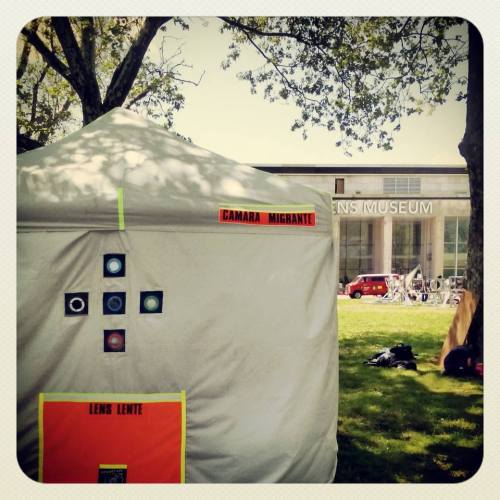
Images from a weekend of Migrant Camera workshops at the 2014 Open Engagement conference at Queens Museum, NY.
PP: Can you measure the benefits of Project Luz’s workshops?
SA: It’s difficult. How many of them are empowered? What is empowerment? For sure, they know more about photography. Can talk about themselves and express their opinion? This, for me, it is the most important thing. I can agree or not, but at least they are expressing themselves.
PP: I’m presuming Project Luz serves people from all Central and South American countries as they are all present in Queens?
SA: In Queens, it is mostly Mexican and Columbian. Some Ecuadorian and other nationalities less.
PP: How did this all begin?
SA: I started the social practice program that Tom Finkelpearl (former Queens Museum director) did with Greg Sholette. I know I wanted to do something that gave frame to Project Luz. I am one of five social practice artists in residence and I teach on Saturdays. I have a partnership projects with United Photo Industries in Brooklyn, and with Prerana Reddy at the Queens Museum.

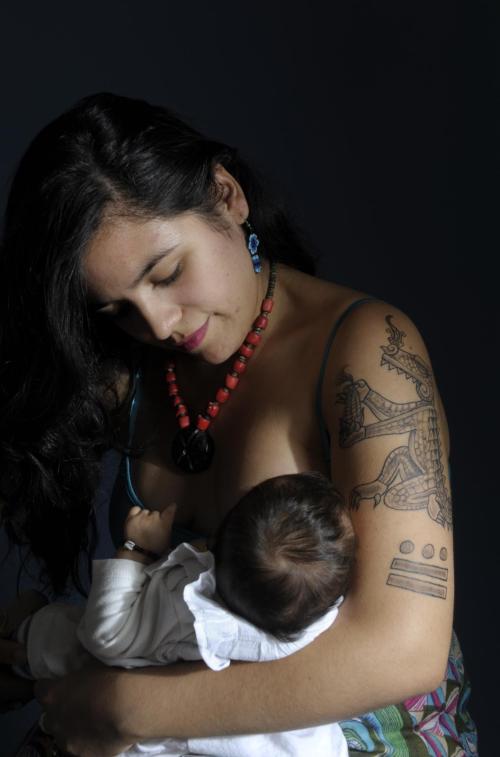
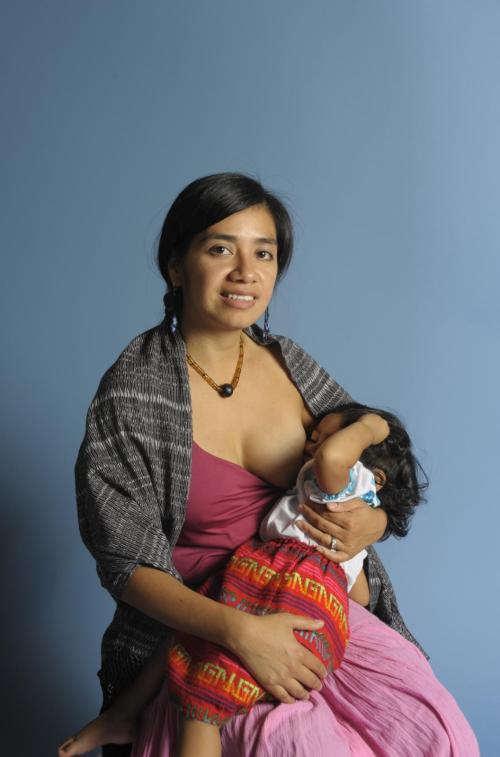
Photographs from Sol Aramendi’s portrait project promoting positive images of immigrant women breastfeeding.
PP: What did you think of the Open Engagement (2014) conference. What do you think of the art and social practice ecosystem?
SA: I worry about diversity, that Social Practice is too white.
Community arts have been going on since the sixties and now we’ve white students coming to the communities with credentials and think they know [how to construct a project]. There has been this debate. But not everything is like that. I understand that everyone was talking about diversity. It is a preoccupation. I would like it to be more diverse.
I worry because some artists go to immigrant communities and they use them. Tokenism. It can seem like it collaboration but it is not. There were several projects that came to Queens that proposed to make portraits of immigrants, and of “the American Dream.” Several … so that makes me nervous.
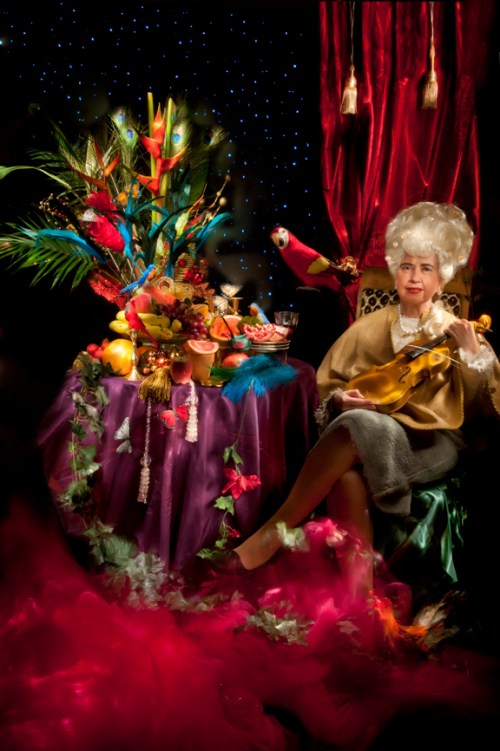
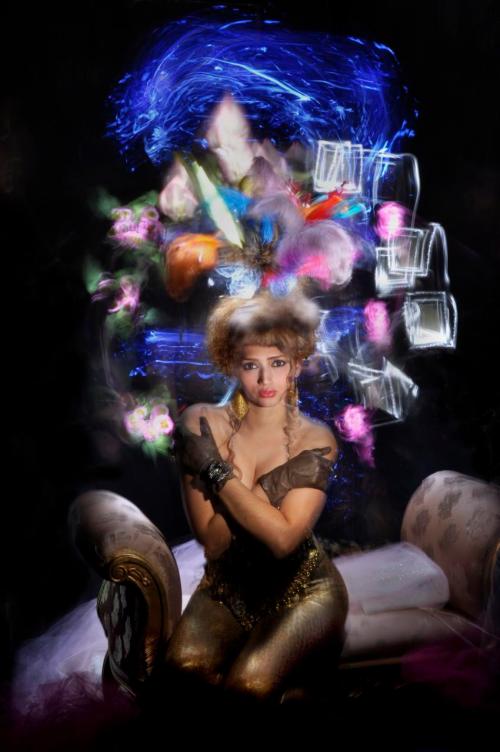

Images from Project Luz’s “Seeing With Light” workshop at El Barrio, NY.
PP: Is a long term project necessarily a better project?
SA: In my experience, things take a long time. You make mistakes and it takes a long time to get to know a community. Are we listening? This is the question I ask of myself all the time. Are they doing what I want or are they doing freely what they want? For me, long duration is good. Create leadership and then let the community go; let it build its owns groups and make their own mistakes.
It’s tricky to judge using time as criteria; results depend on the project, the teacher, the conversations, the student. Two months could be good. Two years is very good.
I worked for just two weeks in Turkey on a project and it worked. I didn’t speak the language but I could communicate.
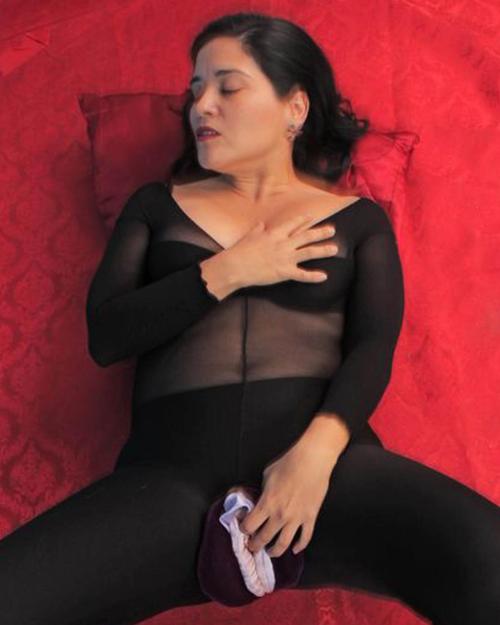
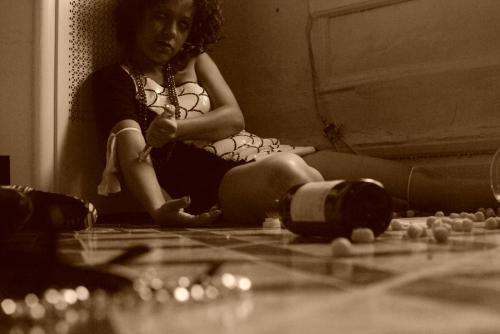


In 2012, a workshop led by Sol visited the Cindy Sherman show at MoMA and later made images of their own based upon ideas of identity, costume and image circulation.
LABOUR ORGANISING
PP: You’re working on a new App. It sounds like true political and activist art.
SA: From a day of discussions with day laborers and NY NICE, one student suggested making an App to report issues in the building trade. NICE was also working on a App for wage theft. My role is pedagogical. I create the questions.
PP: So that employers can’t take advantage of non-documented workers?
SA: Yes. The App includes messaging, a fact-checked and filtered ‘Hall of Shame’ of bad contractors. We presented it to 11 organizations with day laborers to secure feedback as we developed it.
This App is to inform laborers and to ostracize disreputable employers. The fines are low for wage theft, so it happens often. Instead of paying $7/hour, some contractors pay $4. A laborer says they’ll complain, the employer threatens to report them. There’s also a lot of agencies that don’t pay immigrants. A business that has an immigrant worker already saves hugely on their [taxes, insurance] costs.
We have funding and it is in the development stages.
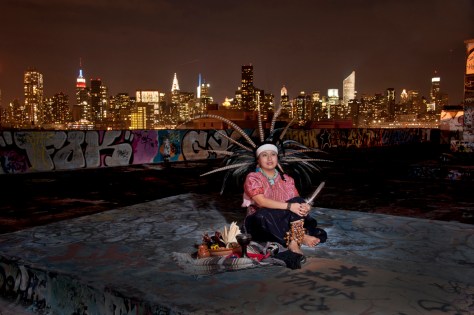
© Sol Aramendi. Meyolotzin Mexica, 2011.

© Sol Aramendi. Welcome to my hood, 2011.

© Sol Aramendi. Dancing with myself, 2011.
In her own work Sol constructs elaborate sets to write one page visual allegories.
INFLUENCES
PP: Which photographers are relevant? Which do you show your students?
SA: Latin American photographers. Sometimes we are embarrassed of our heritage, so I introduce photographers to make them proud. Manuel Álvarez Bravo, Gabriele Stabile, Miguel Rio Branco from Brazil, Adriana Lestido, from Mexico, came and gave a lecture in Spanish.
Students also have to find photographers. I ask them to research five names and bring them in. We look at contemporary photographers such as Hank Willis Thomas. We’re going to look at Carrie Mae Weems and talk about Latin American culture around the kitchen table as Weems did with her series Kitchen Table.
PP: Paula Luttringer?
SA: I admired Slaughterhouse greatly.
PP: The first project of Luttringer’s I discovered was Wailing of the Walls.
SA: Allesandro Sanguenetti. I always share her work with students. And Esteban Pastorino Diaz who made the longest exposure. Literally! The longest physical negative. Over 30 meters. He makes landscapes look like models. He’s fascinating.
Alejandro Chaskielberg from Argentina, too.
The first exhibition I worked on was ABC DF — a huge exhibition of Mexican photographers.
Daniela Rossell did Ricas y Famosas / Rich and Famous (1994-2002) which I thought was showy and tacky.
SA: I was a student of Lestido. She goes into projects 100% and with her heart. I learnt a lot from her about teaching. As a photographer, I admire Francesca Woodman’s life and work.
PP: And which organisations you admire? That may or may not include those working in photography or the arts.
SA: Organizations that DO something! For example El Puente in south Williamsburg, Immigrants Movement International (IMI) and Tania Bruguera’s projects. I like projects that don’t necessary rely on a strict idea and allow flexibility. It is a mistake to intervene in a community with your own “final” idea. Process is vital — it is important to be able to change through dialogue and engagement. The result almost doesn’t matter; the process is where connections are made.
I look to political groups such as Tucumán Arde, which was a group of previously mainstream artists in the north of Argentina who jointly denounced the Argentine’s military action. Never again has something so radical happened in Argentina.
You have to CHANGE something. You have to DO something that is useful. Life is short so better use time working on something that’s of use.
PP: Is photo central?
SA: It has been, but I am not sure it always will be.
PP: Wendy Ewald says it does none any favors if you give someone the ability to make a bad photograph. You can’t just dump cameras in the hands of people. You empower people by teaching them about photography and enabling them to make a good photograph.
SA: The goal of my work is not to make a good photo. If they can realize a good photo that is good, but the goal is for them to have access, social mobility and they can make their own decisions and they can take leadership.
PP: Long may you continue. Thanks Sol
SA: Thank you , Pete.
–
Follow Project Luz, Sol’s main work, on the web, on Facebook and on Flickr.

If you’re in L.A. this week, get yourselves down to the Billy Wilder Theater at The Hammer Museum, on Wednesday, 29th April for 7:30pm.
Under the ominous title “Human Faces in the American Juvenile Justice Gulag”, Peter Sellars and Richard Ross will be discussing juvenile detention and courts in the United States.
Broadly, they’ll be using Ross’ ongoing project Juvenile In Justice as an entry point to the topic. Ross documents “the placement and treatment of American juveniles sentenced to facilities that punish, treat, confine, assist, and occasionally harm them.”
Tickets are required and available at the Box Office one hour before the program. One ticket per person; first come, first served. Early arrival is recommended. It’s at 10899 Wilshire Blvd., Los Angeles, CA 90024. For more information, telephone (310) 443-7000, or email info@hammer.ucla.edu

Site Unseen: Incarceration flyer. Featuring the work of Jack L. Morris, a California prisoner who has been in solitary confinement for almost 25 years.
Do artworks made on opposite sides of prison walls work together in a gallery space?
Yesterday, at the Los Angeles Valley College, in Valley Glen, CA the exhibition Site Unseen: Incarceration came down form the walls. It was an exhibition bringing together prisoner-made art with artworks made by outside artists about prisons. (Catalogue in PDF, here)
Some artists I knew — Alyse Emdur, Anthony Friedkin, Los Angeles Poverty Department, Sheila Pinkel, Richard Ross, Mark Strandquist, and Margaret Stratton. Others are new to me — Robert V. Montenegro, Jack L. Morris, Brendan Murdock, Gabriel Ramirez, Gabriel Reyes, Robert Stockton and David Earl Williams.
Shamefully, all those names with which I am unfamiliar I quickly learnt are prisoners. Why shame? Well, it’s all about consistency. I value activism that is built upon close alliance with, and information, from prisoners. There are no better experts on the system than those subject to it. At the very least, I should know and support the leading Prison Artists.
However, when it comes to painting and illustration, I have adopted lazy double standards. Without examination, I have demoted prisoner made art — commonly referred to by the catch all “Prison Art” — to an inferior status. I have prejudged most Prison Art. For my own comfort, I have bracketed Prison Art as naive and limited. I’ve conveniently focused on scarcity of supplies inside prison of prison to cursorily explain the lo-fi aesthetic of Prison Art.
My “logic” blinded me to the invention, resourcefulness and resistance inherent to almost all prison art. Hell, we’ve got prisoners making work out of M&Ms.
Site Unseen: Incarceration, therefore, is a nice kick back in the right direction. If we don’t have prisoners’ own artwork upon which to meditate then we lose site of the issues fast. As much as I have championed the work of Emdur, Ross, Strandquist and the Los Angeles Poverty Department, I want to now celebrate the works of Jack L. Morris, Brendan Murdock, Gabriel Ramirez, Gabriel Reyes and David Earl Williams.
I wish also to applaud Sheila Pinkel for bringing together inside and outside, and for committing the oppressed and their allies to one another upon gallery walls.

Sheila Pinkel. Site Unseen: U.S. Incarceration (2014). 7’ x 14’ Archival ink jet prints. Pinkel remarks, “Site Unseen: U.S. Incarceration includes the major laws that have resulted in the expansion of the prison system, the Sentencing Reform Act (1984), Mandatory Minimum Sentencing Law (1986) and Three Strikes Law (1994). It is important to note that in the 1960s, during the civil rights era, rate of incarceration was declining as people adopted the ‘rehabilitation not incarceration’ attitude. However, after the Rockefeller Drug Laws took hold, incarceration in the United States began to grow exponentially. Also included is demographic information about the high rate of incarceration of non-white people and women, the great number of people being held in solitary confinement and the massive amounts of money being made by investors in the prison industrial complex. The backdrop for the graph is a set of images from U.S. history taken in the 19th and 20th centuries that reflect the treatment of minorities and prisoners. The poor, non-white and uneducated make up the majority of incarcerated today.
Origins of the Show
In 2004, Pinkel exhibited for the first time her mammoth work Site Unseen: U.S. Incarceration (above). While the shared title between this catalyst work and the exhibition confuses matters a little, it demonstrates the degree to which Pinkel is bound to prison reform. Passion + politics is usually a good recipe for art.
Pinkel’s motivations for mounting the show are many — concerns for Mumia Abu-Jamal’s case; an awareness of slavery (past and present); the doctrines of ownership and manifest destiny; sensitivity to the quiet traditions of aboriginal people; a raised consciousness toward the unparalleled use of torturous solitary confinement; and the profit making industries of the prison industrial complex; and more besides.
The urgent issues within the reform and abolitionist movements are so great that often they can drown each other out, or obscure one another. Perhaps, that is where silent 2D artworks come to play their part. Perhaps, a gallery space in which viewers can mediate their own responses is a hushed but vital contribution to the reform debate?

David Earl Williams. Parrots (1996). 22” x 28” Ball point pen.
It is helpful for me to interrogate the idea that gallery shows and art have an effect upon political realities. I make a conscious effort to justify my workand others’ and to continually ask if analysing images and creative output from prisons changes the daily experience of the United States’ 2.3 million prisoners.
I conclude, often, that conscientious and intellectually honest analysis of images from prisons plays its role in the wider discussion needed to drag us out of this prison crisis.
Prison Sketches in the Absence of Prison Photos
Undoubtedly, in the past few years, solitary confinement has emerged as one of the main, digestible and terrifying issues behind which reformers could win arguments, gain traction and mindshare. The public now know that 80,000 people on any given day are subject to psychological torture within our prisons.
Many of the photographs of Supermax and solitary units — and there are not many — have come about because of court ordered entry to facilities. With the exception of Social Practice make-believe, artists and photographers have, for the most part, failed to image these dark, hidden spaces for the public. I’m apportioning no blame here, just pointing out fact. With that understanding, then, it is significant that the majority of prison artists in Site Unseen are either in solitary or on death row.

Brendan Murdock. Tower (2012). 9” x 12” Linoleum cut print.
One of the artists in Site Unseen is Jack L. Morris, a creative spirit with whom Pinkel has had a lasting personal and professional relationship. In 2011, Pinkel began corresponding with Morris. At that point, he’d been incarcerated for 31 years. In 1978, aged 18, Morris was sentenced to a 15 years to life for being an accomplice to a murder. When the California Department of Corrections (CDCr) opened Pelican Bay Sate Prison (the first state-run Supermax in the nation) in 1989, Morris was transferred. He’s been in solitary confinement since.
“During this time he has not seen sunlight or touched another person,” says Pinkel.

Jack L. Morris. Turtle (2012). Dimensions: 12” x 12” Medium: pen, pencil, peanut butter oil, pastel color.
Pinkel points out that the decision-making power to place someone in solitary is solely in the hands of the correctional officers. Checks and balances against abuse in this ‘Us vs. Them’ equation are largely absent. Pinkel believes that Morris, like many prisoners in the SHU, is subject to a Kafkaesque situation in which solitary is inescapable. While policies are shifting after attention from Sacramento politicians, it remains incredibly difficult to get out of the SHU if CDCr has classed you as a gang member.
“Jack has not been involved in gang activity and has had no ability to be involved in it since he has been in solitary. However, he is repeatedly denied release from solitary and has had his designation increased to active gang affiliation,” says Pinkel. “At the moment, there is no legal way for him to get out and, to my mind, there is no good being served by his continued incarceration, either in solitary or in prison at all.”

Alyse Emdur. Anonymous backdrop painted in New York State Correctional Facility Woodburn (2012). Dimensions:42” x 52” Inkjet print.
Clearly, Pinkel has an affiliation. Put that aside though and consider Morris for his work and you can’t help but be impressed. In order to prevent himself “losing his mind”, Morris created poems, drawing and letters. Pinkel published them in the book The World of Jack L. Morris: From the SHU.
“Together,” says Pinkel, “they form a complex picture of a talented person who believed most of his life that he was not intelligent.”
And so we arrive here. At Morris’ and other art from inside. To be mesmerised by the intricacy of the work is understandable, but more-so we should be quietly and slowly scrutinising the work and using it as a gateway to a psychology we must surely hope we, or any of our loved ones, ever come to know.
Prison illustrations work very similarly to photographs in some ways, in that tropes recur and we find ourselves glossing over them. We presume that the system gives rise to them same type of images of flora, fauna, cars, tattoo-inspired designs, versions of women, motorcycles, sad clowns, tears and blood. These things are prevalent, but individual touches exist in the gaps and it is there we may identify the individual artist.
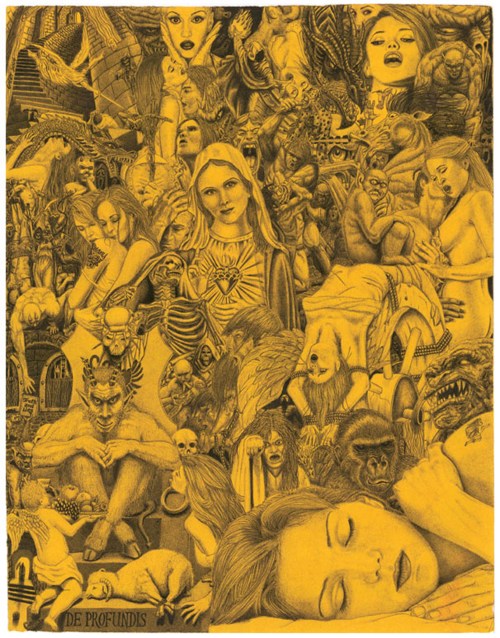
Gabriel Ramirez. De Profundis … Dreams (Before 2007). 11.5” x 15” Medium: Pencil on manilla envelope.
The worst thing prison art and photography, alike, can be is misunderstood as aesthetic cliche and used as excuse to bypass the social conditions from which they arise. Prisoner art from solitary is the most reliable source of imagery on which we can rely to learn about extreme confinement. We just need to give it space to percolate. A gallery can do that.
There’s a perverse clash of time appreciation at work in order for prison art to have an effect. The artist labors for days and weeks on a single piece and goes to great lengths to deliver it outside the institution. On the outside, we’re spoilt for images and it’s almost luck or strange happenstance for us to spend more than a few seconds with an image. But, it is possible and a gallery can do that.

Mark Strandquist. Windows From Prison (2014). Banners 5’ x 11’. Digital prints on vinyl.
Strange Brew
As might evident, I am largely in support of Site Unseen. However, looking over the catalogue, I am a bit skeptical toward the mix of works. Does Mark Strandquist’s work (above) that relies heavily on public education and engagement work when he cannot transform the gallery into a workshop space or collaborate with local reform groups? Are we getting to the point that a prison show cannot exist without the work of Richard Ross!? (I’m friends with Richard and had breakfast with him this morning; he won’t mind the snark). It just seems Ross might be an easy option.
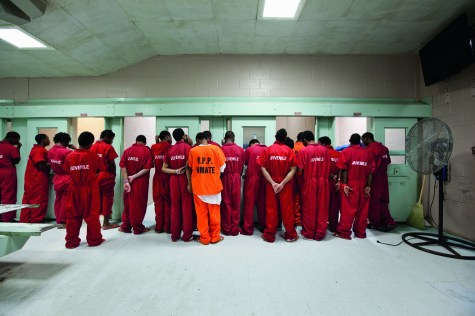
Is Site Unseen a prison art show supported by outside sympathisers, some of whom happen to be artists? Or is it a genuine attempt to level the field and present artists inside and outside as equivalents? The latter is a tough proposition. I have seen it done though. The Cell and the Sanctuary (Santa Cruz Museum of Art & History) managed to knit insider and outsider artists works together, but they managed it effectively because they were all either students or faculty in the William James Association’s Arts In Corrections program at San Quentin. A visual thread ran through The Cell and the Sanctuary that is not as immediately apparent in Site Unseen.

Margaret Stratton. Ship’s Passenger Log, December 1916, Ellis Island, New York City, June 29, 1999, 10:35 a.m. (1999). 16” x 20”. Archival digital print.
The main culprit, for me, is the work of Margaret Stratton (above). I’ve constantly wondered what use have images of decaying/ abandoned prisons for connecting us to pressing contemporary prison issues. I can find value in most other works in Site Unseen as they’ve a clear umbilical cord to the tumorous, pulsing Prison Industrial Complex. We can sense the toxic bile of the system in the majority of the works. We can wonder at the ability to stay sane and creative from within such a system. I get none of that awe from Stratton’s work.
I understand Stratton’s B&W images employ a different route to the issue and I don’t want to suggest there’s any inherent flaw in the work or its tactics. The fault, if any, lies with the decision to include this type of work that I identify as an outlier within the collected works.

Four Convicts, Folsom Prison, CA (1991). Dimensions: 11” x 14” Black and white gelatin silver print.
Another , but slightly less obvious, outlier is Anthony Friedkin’s photo of four Folsom prisoners in the early 90s. It is a captivating portrait for sure (one that I featured very early on Prison Photography) but it is hardly representative — of either recent photographs from prisons, or the U.S. prison population as a whole. Friedkin is best known for his illuminating access into, and photographs of, gay culture in San Francisco and Los Angeles. His respectful treatment of these derided communities was light years ahead of mainstream political consciousness. Friedkin lived among the LGBQT community and the intimacy and support shows through in his work.
I cannot think that Friedkin had a mere fraction of that sort of access to the prison population. I suspect he made his image above on a single visit to Folsom Prison. I have not seen any other photographs from prison by Friedkin. And so, this image, is neither representative of Friedkin’s work. It is ham, distant and reliant on the tropes of prison cliche. Not only is it out of place, it is out of time.

Gabriel Reyes. Like a Hook (Before 2007). 8.5” x 11”, Ball point pen on paper.
As far as I am concerned, any and all mentions of Alyse Emdur’s Prison Landscapes and the Los Angeles Poverty Department’s performances (below) are absolutely essential and cannot be reiterated enough. Each are powerful statements on the nature of power and the over-reach of state control.
LAPD’s dramatisations are informed by the experiences of people who have been incarcerated and Emdur’s collected portraits and large format photos of prison visiting room backdrops originate from a keen engagements with the visual logic of carceral systems.
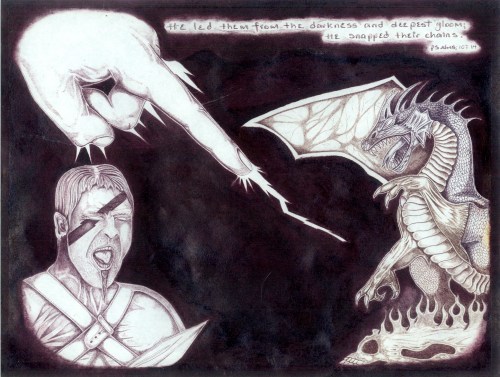
Robert Stockton. Fight (Before 2007): 8.5” x 11”. Pen, additional color.
Prisons and criminal justice reform are gaining attention in the news and public consciousness (a good thing), but just because the conversation is being had and the appetite for a show like Site Unseen might be more ready, the challenging logistics of putting together a curated show of this kind remain unchanged. Kudos to Pinkel for bringing togther artists from inside and outside prison invested in the same goal of making the U.S. a less dangerous, punitive and misunderstood place.
At first glance, the mix of ‘prison art’ on one hand and ‘art made about prisons’ on the other might appear incongruous, but that attitude is exposed as flawed very quickly. As the majority of works in Site Unseen emerge as responses to this country’s brutal, class-dividing prison system, I must conclude that they can do nothing but work together. And so must we if we’re to scale back on decades of fear, bad law and failed policy. If you need resolve and fire-in-your-belly for the task then merely look to the work of those who are subject to confinement. You’ll find it, quietly roaring, there.
ARRESTING POWER
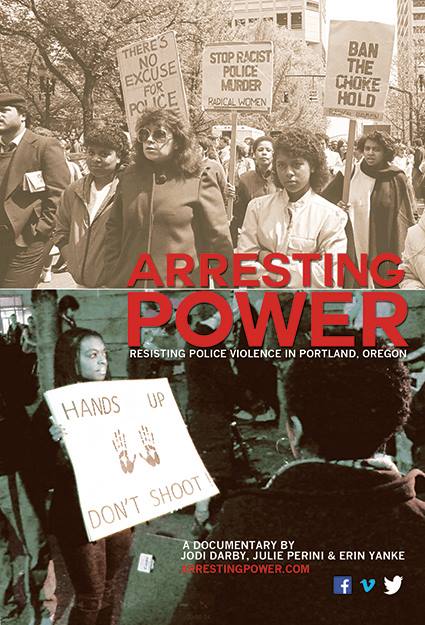
Portland’s a pretty small town. When I lived their I was a fellow panelist with Julie Perini. Jodi Darby once beat me, by mere seconds, to a killer secondhand sweater in a donation pile on the street. I’ve never met Erin Yanke. The three producers have recently completed Arresting Power, a documentary about resistance to police violence in Portland, Oregon.
I supported the Kickstarter to get the film over the finishing line, so I am happy to see it out in the world. On Friday, May 8th, Arresting Power will screen at the Kala Art Institute in Berkeley, CA.
Arresting Power – Resisting Police Violence in Portland, Oregon provides a historical and political analysis of the role of the police in contemporary society and the history of policing in the United States. It provides a framework for understanding the systems of social control in Portland with its history of exclusion laws, racial profiling, gentrification practices and policing along lines of race and class. It serves to uncover Portland’s unique history of police relations and community response.
Arresting Power features interviews with the families of people who were killed by Portland police, victims of police misconduct, local historians and community organizers. Utilizing archival newsreel from the Oregon Historical Society’s moving image archive, the film explores the history of police reform and abolition movements that have been active throughout the past 50 years.
Watch the trailer here.
——–
Friday, May 8, 7pm
Kala Art Institute
2990 San Pablo Avenue, Berkeley, CA
Sliding scale $5 – $15
Refreshments will be served
Screening followed by Q&A with the filmmakers

 Prison Photography