
You are currently browsing the category archive for the ‘Activist Art’ category.

The Big Graph (2014). Photo: Courtesy Eastern State Penitentiary.
Eastern State Penitentiary Historic Site Guidelines for Art Proposals, 2016
Eastern State Penitentiary in Philadelphia has announced some big grants for artists working to illuminate issues surrounding American mass incarceration.
READ! FULL INFO HERE
ESP is offering grants of $7,500 for a “Standard Project” and a grant of $15,000 for specialized “Prisons in the Age of Mass Incarceration Project.” In each case the chosen installations shall be in situ for one full tour season — typically May 1 – November 30 (2016).
DEADLINE: JUNE 17TH
THE NEED
ESP has, in my opinion, the best programming of any historic prison site when it comes to addressing current prison issues. Last year, they installed The Big Graph (above) so that the monumental incarceration rates could tower over visitors. Now, ESP wants to explore the emotional aspects of those same huge figures.
“Prisons in the Age of Mass Incarceration will serve as a counterpoint to The Big Graph,” says ESP. “Where The Big Graph addresses statistics and changing priorities over time, Prison in the Age will encourage reflection on the impact of recent changes to the American criminal justice system, and create a place for visitors to reflect on their personal experiences and share their thoughts with others.”
ESP says that art has “brought perspectives and approaches that would not have been possible in traditional historic site programming.” Hence, these big grant announcements And hence these big questions.
“Who goes to prison? Who gets away with it? Why? Have you gotten away with something illegal? How might your appearance, background, family connections or social status have affected your interaction with the criminal justice system? What are prisons for? Do prisons “work?” What would a successful criminal justice system look like? What are the biggest challenges facing the U.S criminal justice system today? How can visitors affect change in their communities? How can they influence evolving criminal justice policies?” asks ESP.
While no proposal must address any one or all of these questions specifically they delineate the political territory in which ESP is interested.
“If our definition of this program seems broad, it’s because we’re open to approaches that we haven’t yet imagined,” says ESP. “We want our visitors to be challenged with provocative questions, and we’re prepared to face some provocative questions ourselves. In short, we seek memorable, thought-provoking additions to our public programming, combined with true excellence in artistic practice.”
“We seek installations that will make connections between the complex history of this building and today’s criminal justice system and corrections policies,” continues ESP. “We want to humanize these difficult subjects with personal stories and distinct points of view. We want to hear new voices—voices that might emphasize the political, or humorous, or bluntly personal.”
GO TO AN ORIENTATION
ESP won’t automatically exclude you, but you seriously hamper your chances if you don’t attend one of the artist orientation tours.
They occur on March 15, April 8, April 10, April 12, May 1, May 9, May 15, June 6.
Also, be keen to read very carefully the huge document detailing the grants. It explains very well what ESP is looking for including eligibility, installation specifics, conditions on site, maintenance, breakdown of funding (ESP instructs you to take a livable artist fee!), and the language and tone of your proposal.
For example, how much more clear could ESP be?!
• Avoid interpretation of your work, and simply tell us what you plan to install.
• Avoid proposing materials that will not hold up in Eastern State’s environment. Work on paper or canvas, for example, generally cannot survive the harsh environment of Eastern State.
• Be careful not to romanticize the prison’s history, make unsupported assumptions about the lives of inmates or guards, or suggest sweeping generalizations. The prison’s history is complicated and broad. Simple statements often reduce its meaning.
• A proposal to work with prisoners or victims of violent crime by an artist who has never done so before, on the other hand, will raise likely concern.
• Do not suggest Eastern State solely as an architectural backdrop. Artist installations must deepen the experience of visitors who are touring this National Historic Landmark, addressing some aspect of the building’s significance.
• Many successful proposals, including Nick Cassway’s Portraits of Inmates in the Death Row Population Sentenced as Juveniles and Ilan Sandler’s Arrest, did not focus on Eastern State’s history at all. They did, however, address subjects central to the topic we hope our visitors will be contemplating during their visit.
• If you are going to include information about Eastern State’s history, please make sure you are accurate. Artists should be sensitive to the history of the space and only include historical information in the proposal if it is relevant to the work. Our staff is available to consult on historical accuracy.
• Overt political content can be good.
• The historic site staff has been focusing explicitly on the modern American phenomenon of mass incarceration, on questions of justice and effectiveness within the American prison system today, and on the effects of race and poverty on prison population demographics. We welcome proposals that can help engage our visitors with these complex subjects.
• When possible, the committee likes to see multiple viewpoints expressed among the artists who exhibit their work at Eastern State. Every year the committee reviews dozens of proposals for work that will express empathy for the men and women who served time at Eastern State. The committee has accepted many of these proposals, generally resulting in successful installations. These include Michael Grothusen’s midway of another day, Dayton Castleman’s The End of the Tunnel, and Judith Taylor’s My Glass House. The committee rarely sees proposals, however, that explore the impact of violence on families and society in general, or the perspective of victims of crime. Exceptions have been Ilan Sandler’s Arrest (2000 to 2003) and Sharyn O’Mara’s Victim Impact Statement (2010). We hope to see more installations on those themes in the future.
PAST GRANTEES
Check out the previous successful proposals and call ESP! Its staff are available to discuss the logistics of the proposal process and the history and significance of Eastern State Penitentiary.
DEADLINE: JUNE 17TH, 2015
Additional Resources
Sample Proposals
Past Installations
For more information contact Sean Kelley, Senior Vice President and Director of Public Programming, at sk@easternstate.org or telephone on (215) 236-5111, with extension #13.
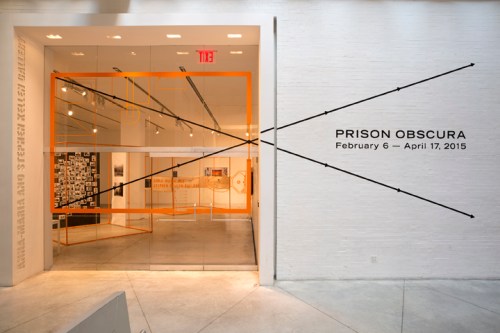
Prison Obscura is currently at the mid-point of its New York showing at Parsons The New School of Design. At this moment, I wanted to share with you a few installation shots made by Marc Tatti for Parsons.
I also took the opportunity to re-issue the Prison Obscura catalogue essay (originally published by Haverford College) on Medium. Read Can Photographs of Prisons Improve the Lives of Prisoners?
I have hi-res images of all artworks and installation shots. Should you need any, drop me a line.
Enjoy the weekend!


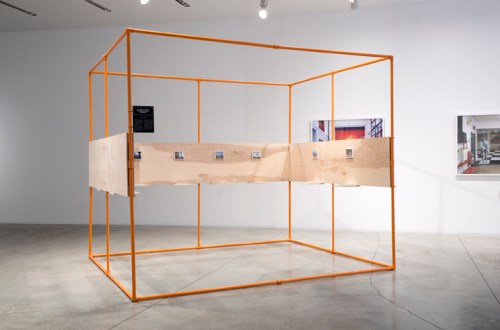
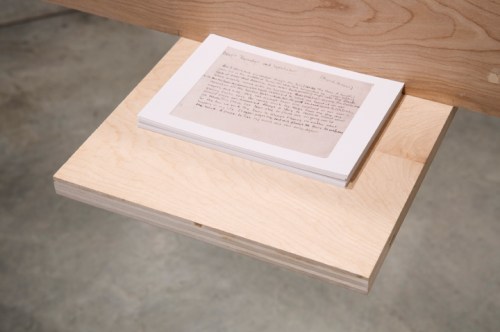

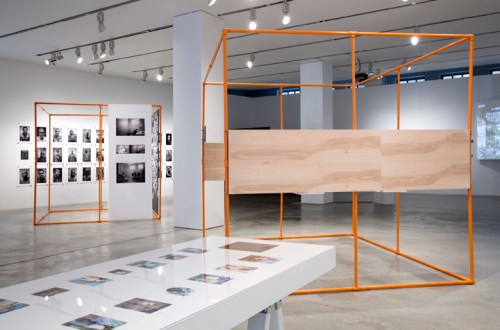


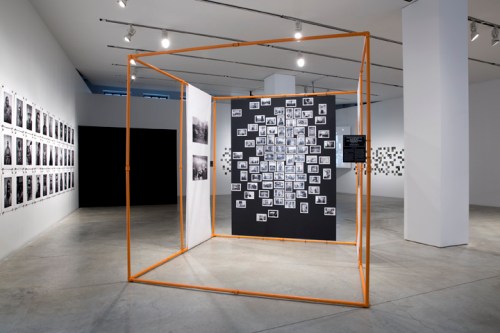

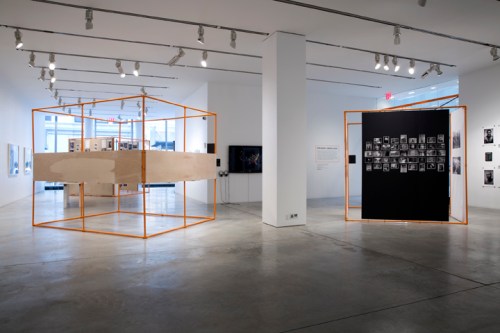
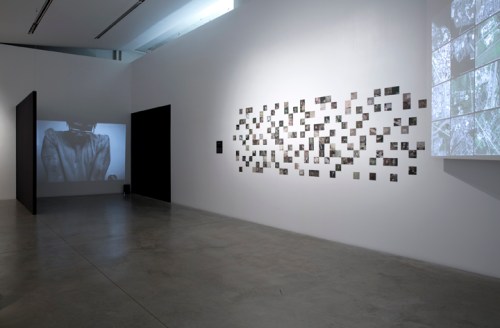

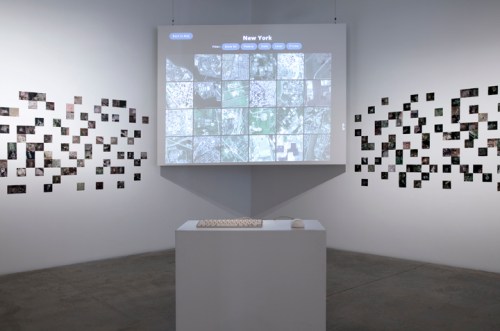
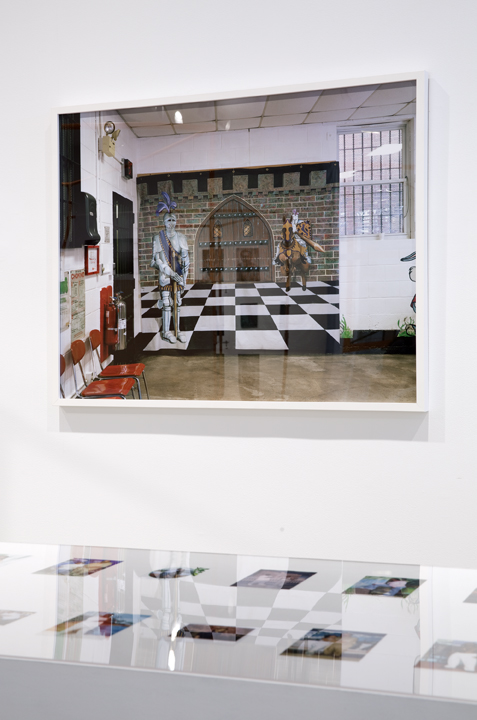
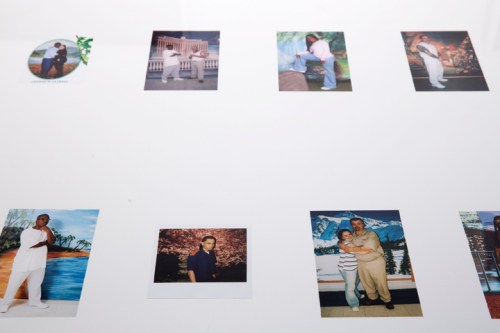
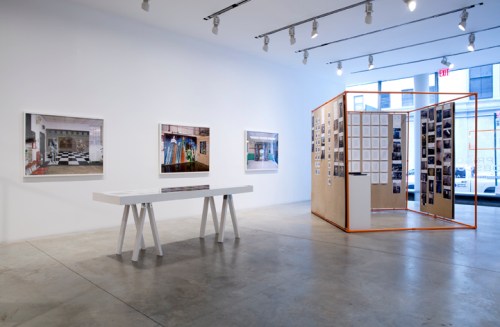
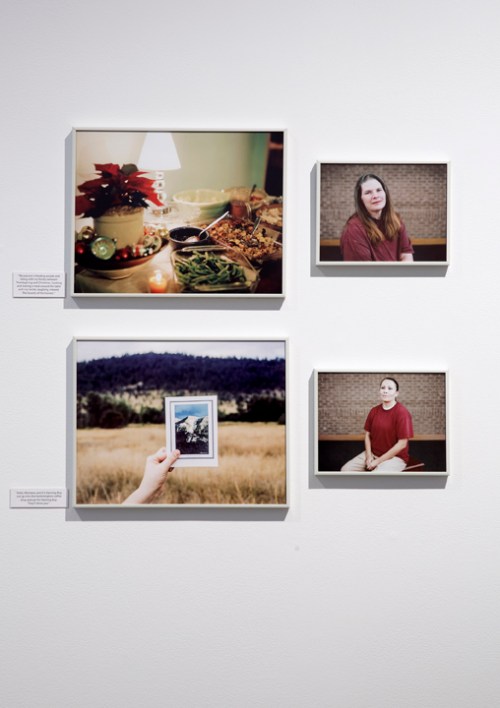


All images: Marc Tatti.

Say NO to a New Jail in SF
The discussion about the long proposed San Francisco County Jail has taken many turns. It’d have been built by now without the opposition of many California groups fighting for social justice under the umbrella organisation CURB (Californian’s United for Responsible Budget).
On Monday, March 2nd from 6-8pm, Sheriff Mirkarimi and staff from the Department of Public Works will be hosting a public meeting on the environmental impact of the $278 million dollar jail plan at the Community Assessment and Service Center (CASC).
The CASC at 564 6th Street in San Francisco — it is just around the corner from San Francisco County Jail #3, at 850 Bryant.
All info and RSVP here.
RALLY
The protest rally begins in front of the jail at 850 Bryant on Monday, March 2nd at 5:30pm and moves to the Community Assessment and Service Center (CASC).
“Come prepared to dance! We will be joined by the BLO (Brass Liberation Orchestra)” says organiser Lisa Marie Alatorre, of the San Francisco Coalition on Homelessness. “San Francisco needs real solutions to public safety, housing, jobs, education, mental health care, not more of the same failed policies that harm our community. Justice is won when we build a future of opportunity for everyone, not more jails.”
Make banners and signs that reflect the environmental impacts that jail and incarceration has on your life and your community.
All info and RSVP here.
CITY HALL MEETING
Separately to the Sheriff’s meeting, the Capitol Planning Committee is voting on the jail plan also on Monday!
Anyone who can speak out against the jail should go to San Francisco City Hall from noon to 2pm Monday, March 2nd and voice their concerns.
GET THE WORD OUT
On Facebook
#NoMoreJails
All info and RSVP here.
UPDATE: WEDS., 25TH FEB, 2:50PM. I JUST HEARD FROM PARSONS THAT THE WORKSHOP IS FULL. THAT IS GOOD NEWS FOR MARK AND THE PARTICIPANTS. LESS GOOD FOR THOSE WHO MAY HAVE GOT THEIR HOPES UP BECAUSE OF THIS POST.
__________
SPACES ARE STILL AVAILABLE FOR MARK STRANDQUIST’S TALK These Images Won’t Tell You What You Want: Collaborative Photography and Social Justice AT THE SJDC ON FRIDAY, FEBRUARY 27TH AT 6PM.
__________

Description from prisoner at Richmond County Jail, Virginia, from a workshop by Mark Strandquist.
WINDOWS FROM PRISON
Mark Strandquist will be coordinating a participatory workshop this Saturday, February 28, in New York City. Over the course of the day, artists, activists, lawyers, students, journalists, photographers, corrections officers, formerly incarcerated individuals and others will work together through dialogue to create photographs requested by prisoners in New York state.
Mark and his collaborators who include the Correctional Association of New York, the Young New Yorkers, Exalt Youth and the New York Writers Coalition have already sourced written responses from prisoners to the question:
“If you had a window in your cell, what place from your past would it look out to?”
The workshop is at the Sheila C. Johnson Design Center, at the Parsons School of Design. Those who gather at SJDC on Saturday will travel in groups to the various locations to make images, which will be sent back to the prisoners.
The workshop is part of the programming for Prison Obscura, a show of prison photography I have curated. Prison Obscura includes Strandquist’s series Some Other Places We Have Missed which was the earliest iteration of his workshops conducted in Richmond Jail, Virginia. Since then, Strandquist has partnered with local reform groups and stakeholders in the prison issue to custom-designed workshops in Washington D.C. and Philadelphia.
The ongoing program of workshops Windows from Prison is designed to open up conversation about the impacts of mass incarceration by using the medium of photography.
Images made during the workshop will be exhibited in the atrium space of the Sheila C. Johnson Design Center adjacent to the Prison Obscura exhibit.
__________
Prison Obscura is made possible with the support of the John B. Hurford ‘60 Center for the Arts and Humanities and Cantor Fitzgerald Gallery at Haverford College, Haverford, PA.
G-LAW
Fight Hate With Love, a documentary film about Philadelphia-based artists and activist Michael Tabon (a.k.a. G-Law a.k.a. OG-Law) has been shortlisted for the Tim Hetherington Trust‘s inaugural Visionary Award.
The film made by Andrew Michael Ellis, director of photography at Mediastorm is about “one man’s journey to change the world and still be the guide his family needs him to be.”
The film looks inspiring, but as with any narrative arc, the protagonist faces challenges. It seems the stresses of Tabon’s art and activism upon his family is the emotive hook, Ellis is molding.
I met Tabon and his wife Gwen this time last year as he was embarking on his third self-imposed lock up in a self-built cell on the cold February streets of Philly. They did not display the tension as they do in Ellis’ trailer. Tabon was putting his un-prison cell together and Gwen was helping with supplies, PR, food & drink, and vocal support. It was clear they rely on one another to make work and to meet the silent, unending need for Tabon’s love-filled message.
Tabon’s manipulation of visual tropes is cunning and effective. He has reclaimed the cell, the orange jumpsuit and the shackles. He has jogged 10 miles a day for seven days around Philadelphia with a 40-foot banner reading FIGHT HATE WITH LOVE. He has walked with a ball-and-chain from Selma to Montgomery.
“Tabon has been caught in the revolving door of the prison system since he was sixteen years old. Incarceration became a way of life, seen as an inherited destiny for America’s young Black poor, until he had a revelation – that he could break the cycle of the womb-to-prison pipeline gripping marginalized communities across the country,” says Mediastorm.
It’s wonderful to see Tabon on the Mediastorm platform and Hetherington Trust’s radar. His unorthodox but unmissable approach to social change needs to go national.
Youtube trailer here. Follow Tabon on Twitter and on the web.


THE VISUAL CULTURE OF PRISON RESISTANCE
Liz Pelly‘s conversation with Josh MacPhee in The Media is a wonderful read. It coincided with MacPhee and his cohort’s incredible exhibition of prisoner made protest materials going all the way back to the early seventies.
MacPhee urges us to dismantle the idea that prisons are separate from outside society. Crucially, he’s not making, in the first instance, a moral point about how we’re all the same, prisoners and all. MacPhee makes an observation of the structural characteristics of the prison system.
“It’s getting harder and harder to hold up the pretense that prison is somehow distinct from the rest of society,” says MacPhee. “When there’s this many people going in and out all of the time, there’s no way that our lives out here don’t leak into there, and that their lives in there don’t leak out into the rest of society. The idea that these are completely separate realms needs to be dismantled.”
Of course, once the structural facts of the system are revealed, the moral point that we are all one-and-the-same, prisoners and all, is indisputable.
I contacted Pelly and asked if I could republish the conversation. It originally appeared as Inside/Out: On Prison Justice, Art of the Incarcerated, and Interference Archive’s New Show in Issue #44 of The Media (October 10, 2014). It is a privilege to feature Pelly and MacPhee’s interview in full here on the blog.
A LITTLE BACKGROUND
Between September 11th and November 16, 2014, Interference Archive exhibited, Self-Determination Inside/Out: Prison Movements Reshaping Society a look back at the visual and material culture of prisoner-led political movements.
Organized by Molly Fair, Josh MacPhee, Anika Paris, Laura Whitehorn, and Ryan Wong, Self-Determination Inside/Out includes sections on the work of incarcerated AIDS educators, the experiences of women and queer prisoners, prison and control unit prisons. The exhibition features prison newsletters, pamphlets, video and audio interviews, prints, photography (!!!) and magazine covers — starting with materials created during the 1971 Attica Rebellion, a massive prisoner uprising in upstate New York, and concluding with work made by current political prisoners, the show highlights moments of self-organization within the prison industrial complex.
You can buy a booklet and a poster for the exhibition.
Interference Archive is a volunteer-run archive in Gowanus, Brooklyn, dedicated to preserving cultural ephemera related to social movements.

Inside/Out: On Prison Justice, Art of the Incarcerated, and Interference Archive’s New Show
Liz Pelly (LP): What initially inspired the creation of Interference Archive, which mostly houses ephemeral material like posters, t-shirts, and newsletters?
Josh MacPhee (JM): For the different people involved, there are different answers of course. For me, I grew up making this stuff through DIY music, cultural stuff, politics. Through the act of doing, I started collecting it. Flyers, t-shirts, buttons, the ephemera that gets produced by people who are organizing. It was a combination of wanting to understand the history of what I was doing and then at the same time, I was getting really interested in this idea of how people make art and culture in the context of trying to their lives. It’s distinct from art that’s produced purely in the realm of self expression, and the art that tends circulate within the contemporary art world.
This kind of material gets lost. It’s often not clearly authored. Institutions that deal with art don’t quite know what to do with it. Since it’s so political, places like history museums don’t know what to do with it either. It sort of falls through the cracks. But we can see during times like Occupy, or Tahrir Square in Egypt, or with the Maidan in the Ukraine, that this is the stuff of life, [created] when transformation starts to happen. When people have their arms shoulder deep into the constructions of representations of a new world, and the way they want things to be articulated.
For me, doing an archive was a way to say, “just because these moments come and go, and movements have ebbs and flows, doesn’t mean that once the peak has been reached that this material isn’t still valuable to us, to where we’ve come from and therefore where we are going.”
LP: That said, how do you think this sort of exhibit in particular shines light on the experiences of prisoners?
JM: There were five of us who organized this exhibition, and most of us have been engaged with issues around prisons in different ways, whether having been formerly incarcerated, or working with prison activism programs. As far as I know, nothing like this has ever been done before.
We live in a moment where over two million people are in prison. It’s getting harder and harder to hold up the pretense that prison is somehow distinct from the rest of society. When there’s this many people going in and out all of the time, there’s no way that our lives out here don’t leak into there, and that their lives in there don’t leak out into the rest of society. The idea that these are completely separate realms needs to be dismantled.
We thought it was important to marshal primary source material to show that people aren’t just objects of repression or study or someone else’s activism. But they have done immense amounts of organizing inside themselves. Often times that organizing takes place at the same time, or sometimes even ahead of, what people were doing on the outside. Some of the focus we have on organizing around AIDS and AIDS education in prison was really fascinating and important because it shows how people that had the least access to medical care were doing in some cases the most organizing in order to try to deal with a problem that at the time the government was not even acknowledging existed.
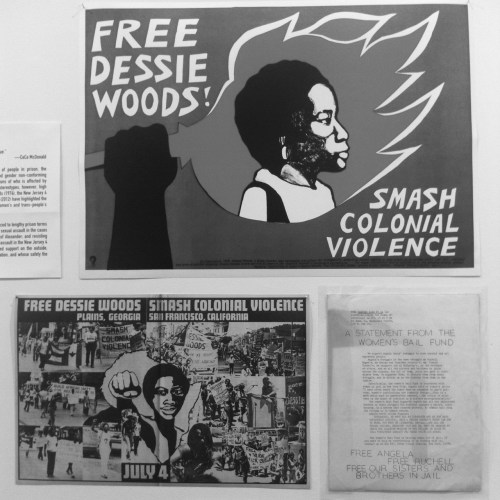
LP: Can you tell me more about your own experiences with prison reform activism?
JM: I first learned about how the prison system functions in the early 1990s. It just sort of blew my mind that there was a whole world of people who largely because of race and class were basically being warehoused. And that, at the time, it was completely absent from the radar of public In the 90s, the only thing discussed in relationship to prisons and criminal justice was this sort of “tough on crime” thing. There was no acknowledgment that a massive increase of the prison population going on, and that it wasn’t actually working. And that the system that decided who went in and out was so manifestly unjust, random often.
That sent me on a path of doing organizing around prison issues. I started in Ohio, and then did some work in Colorado, and then in Chicago. A lot of the organizing I did was around Control Unit Prisons, basically trying to stop solitary confinement. [Organizing around] these men and women who were spending twenty-three-and-a-half or twenty-four hours a day alone in their cells, and the psychological damage that causes and how it basically goes against international conventions of torture, yet it’s completely commonplace in this country.
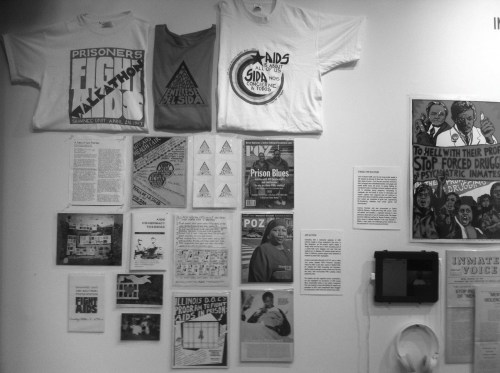
LP: Over the past year, there has been lot of in the news about the racist criminal justice system. It’s an apt time for Self-Determination Inside/Out: Prison Movements Reshaping Society. But obviously there is a lot of history of racism in the criminal justice system that this brings to light. Were you inspired to put this together because of recent events, or has this exhibit been in the works longer?
JM: We worked on the exhibition for 6 months. As a space, as an institution, one of our goals is to take this material that’s perceived as marginal and present it in ways that will allow it to be in its own context, but also to actually show that it’s not marginal. Our primary audience is not people who already necessarily agree with everything that would be in this exhibition. We are conscious of, and trying to take advantage of, a moment.
The question becomes, how do we push [the discussion] farther? If we say mass incarceration is not okay, at what point is incarceration okay? If 2 million people in cages is not acceptable, is 1.9 million people in acceptable? Or 1.8? Once you start asking those questions it opens up the space to say, “this whole system is just absolutely corrupt.”
Mass incarceration accomplishes a number of things, none of which are its stated goals. It accomplishes deeply suppressing working class communities of color. That’s never been articulated as what the prison system is supposed to do. It’s just clear that that’s what it does. It clearly is completely ineffectual at actually dealing with crime.
LP: What are some underreported sides to the prison industrial complex that you hope this exhibit brings to light?
JM: The fastest growing portion of the prison population for years now has been women.
Increasingly there is a real gendered aspect of being able to look at how the criminal justice system works. Increasingly it’s used to enforce gender binaries. It’s a brutal system for queer and trans people that get sucked up into it. People are doing a lot of organizing around it now, but until recently, it was assumed if you were gender non-conforming, they have to choose where to put you, and then once they chose a men or a women’s prison, then almost immediately you’d get sent to solitary confinement. You’d do your sentence out in solitary confinement, in complete isolation, because the system is not prepared to deal with gender non-conformity. You are being punished because your very existence challenges the bureaucratic way the system works.
It’s really clear that women who refuse to be abused, who fight back against abusers, almost always get pulled into the criminal justice system. So we have things like Trayvon Martin being shot, and Zimmerman getting off. But any woman that stops an attack from an abuser is inevitably going to do time because that’s just absolutely taboo.

LP: What were the biggest challenges to getting this exhibit together?
JM: Each exhibition has unique challenges and obstacles, and then there are ones that are sort of similar across the board. For this exhibition, was just that cultural material produced by incarcerated people is hard to access. A lot of it is made in prison and then just never leaves prison.
In general, one of the challenges for all of the exhibitions, is that unless we do something that’s very focused, inevitably there’s so much stuff it’s hard to know when to say “okay we’ve got enough” or to know when to draw the lines. It’s hard to know when to accept that you’re never going to have all of the stuff that you wish you could, that you’re never going to be able to tell the whole story, that maybe even the idea that you’re going to tell some sort of master narrative is questionable in its own right.
When you’re representing things that are so deeply underrepresented, people get attached to wanting their part of the story told, because it’s been marginal or silenced for so long. It makes it really hard to make those choices, because you don’t want anyone else to continue to feel [that way].
We are collecting material from movements that are marginal. Even though they often have extremely deep impacts, rarely is that impact known or visible when they’re most active. It’s kind of like an extra kick in the face when your ideas become commonplace 10 or 20 years later and you’re still written out of the history even though you’re the ones who came up with the ideas.
LP: What do you hope, in general, visitors learn from Self-Determination: Inside/Out?
JM: On the one hand, I hope this contributes to a shift [towards] the idea that prisons are maybe not the answer to the problems that they claim to be. And that locking people in cages is not actually accomplishing what we’re being told it is.
On another level, that incarcerated people are not just objects. They’re loved ones and family members and neighbors and community members. The thing that primarily defines someone as a human being is not whether or not they’re in prison. That people that happen to find themselves in prison, many for reasons that are and then also at the same time many for doing reprehensible things, doesn’t make them not human. It doesn’t mean they don’t have the same desires, life goals, and relationships that everyone else has. And as such, the way that they conceive themselves and their world is part of, needs to be part of, any movement for social transformation.
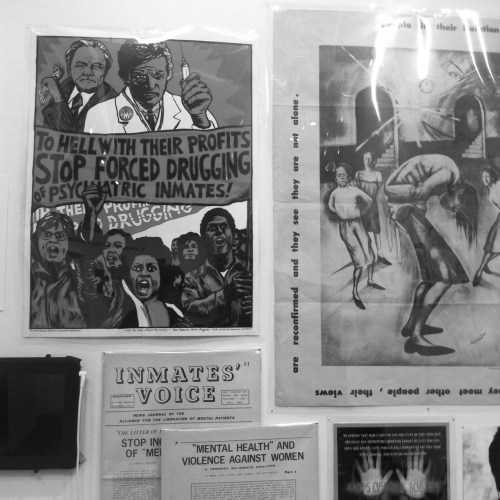
THE PEOPLE
The Interference Archive is a collection of posters, flyers, publications, photographs, books, t-shirts, buttons, moving images, audio recordings, and other materials, made by participants of social movements throughout past decades. It is an archive “from below” — collectively run space, powered by people, and with open stacks accessible to all. The Interference Archive explores the relationship between cultural production and social movements. It provides public exhibitions, a study and social center, talks, screenings, publications, workshops, and an online presence, with an aim to preserve and honor histories and material culture that are often marginalized in mainstream institutions. It is at 131 8th Street, #4 , Brooklyn, NY 11215 (2 blocks from F/G/R trains at 4th Ave/9th Street).
Josh MacPhee is an artist, curator and activist living in Brooklyn, NY. MacPhee is one of the founder of the Just Seeds Artists’ Cooperative, which organizes, creates and distributes radical art. MacPhee is the author of Stencil Pirates: A Global Study of the Street Stencil, which is dedicated to stencil street art. He co-edited Realizing the Impossible: Art Against Authority, Reproduce and Revolt and the upcoming Paper Politics: Socially Engaged Printmaking Today. In 2001 he co-organized the Department of Space and Land Reclamation in Chicago with Emily Forman and Nato Thompson. In 2008 he co-curated the exhibition Signs of Change: Social Movement Cultures 1960’s to Now with Dara Greenwald.
Liz Pelly is a freelance writer and editor based in Brooklyn, NY. I lives and works at the all-ages collectively-run art space The Silent Barn, where she books (and sometimes plays) shows. She and her friends run the ad-free bi-weekly online newspaper The Media.
The Media is a webpaper covering alternative arts, culture, music, news, and grassroots activism. With contributors often embedded in the communities they cover, The Media aims to bridge the gap between underground presses and mainstream media. Crucially, it is AD-FREE and simply designed. “At a moment marked by short attention spans, decentralized click-bait articles, and newspapers in flux, rethinking the aesthetics of our news websites feels just as crucial as re-imagining their content,” says The Media. “We want our content to resonate on its own merit, free of frivolity and flash, and grounded by a homepage that’s striking in its radical simplicity.”

After stints at Haverford College, PA; Scripps, CA; and Rutgers, NJ, my first solo-curated effort Prison Obscura is all grown up and headed to New York.
It’ll be showing at Parsons The New School of Design February 5th – April 17th:
Specifically, it’s at the Sheila C. Johnson Design Center, located at 2 West 13th Street, New York, NY 10011.
On Thursday, February 5th at 5:45 p.m, I’ll be doing a curator’s talk. The opening reception follows 6:30–8:30 p.m. It’d be great to see you there.
Here’s the Parsons blurb:
The works in Prison Obscura vary from aerial views of prison complexes to intimate portraits of incarcerated individuals. Artist Josh Begley and musician Paul Rucker use imaging technology to depict the sheer size of the prison industrial complex, which houses 2.3 million Americans in more than 6000 prisons, jails and detention facilities at a cost of $70 billion per year; Steve Davis led workshops for incarcerated juvenile in Washington State to reveal their daily lives; Kristen S. Wilkins collaborates with female prisoners on portraits with the aim to compete against the mugshots used for both news and entertainment in mainstream media; Robert Gumpert presents a nine-year project pairing portraits and audio recordings of prisoners from San Francisco jails; Mark Strandquist uses imagery to provide a window into the histories, realities and desires of some incarcerated Americans; and Alyse Emdur illuminates moments of self-representations with collected portraits of prisoners and their families taken in prison visiting rooms as well as her own photographs of murals in situ on visiting room walls, and a mural by members of the Restorative Justice and Mural Arts Programs at the State Correctional Institution in Graterford, PA. Also, included are images presented as evidence during the landmark Brown v. Plata case, a class action lawsuit that which went all the way to the Supreme Court of the United States, where it was ruled that every prisoner in the California State prison system was suffering cruel and unusual punishment due to overcrowded facilities and the failure by the state to provide adequate physical and mental healthcare.
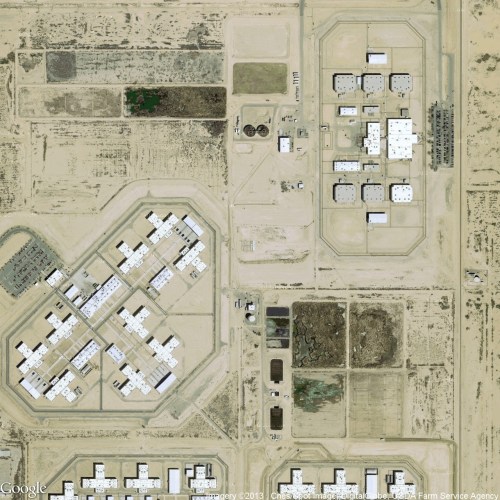
Parsons has scheduled a grip of programming while the show is on the walls:
Mid-day discussion with curator Pete Brook and Tim Raphael, Director, The Center for Migration and the Global City, Rutgers University-Newark.
Wednesday, February 4, 12:00–1:30 p.m.
Co-hosted with the Humanities Action Lab.
These Images Won’t Tell You What You Want: Collaborative Photography and Social Justice.
Friday, February 27, 6:00 p.m.
A talk by Mark Strandquist.
Windows from Prison
Saturday, February 28
A workshop led by Mark Strandquist. More information about participation will be available on the website.
Visualizing Carceral Space
Thursday, March 12, 6:00 p.m.
A talk by Josh Begley.
Please spread the word. Here’s a bunch of images for your use.
PARTNERS
At The New School, Prison Obscura connects to Humanities Action Lab (HAL) Global Dialogues on Incarceration, an interdisciplinary hub that brings together a range of university-wide, national, and global partnerships to foster public engagement on America’s prison system.
Prison Obscura is a traveling exhibition made possible with the support of the John B. Hurford ‘60 Center for the Arts and Humanities and Cantor Fitzgerald Gallery at Haverford College, Haverford, PA.


Mom Were OK, Mississippi Gulf Coast, Mid September, 2005 © Copyright of Zoe Strauss
STRAUSS AT HAVERFORD
If you’re in the Philly area and you’ve got any sense, you’ll be making your way to Haverford College tomorrow for the opening of Sea Change, by Zoe Strauss.
Strauss will be there too. Talking and everything.
Friday, January 23rd.
Do it.
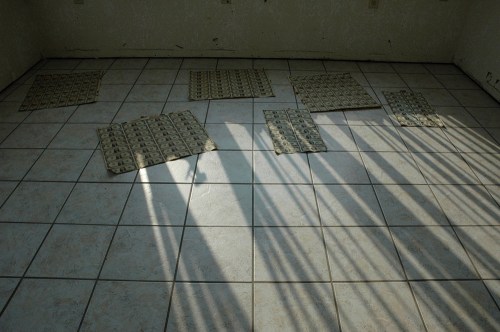
Drying Money, Mississippi Gulf Coast, Mid September, 2005 © Copyright of Zoe Strauss
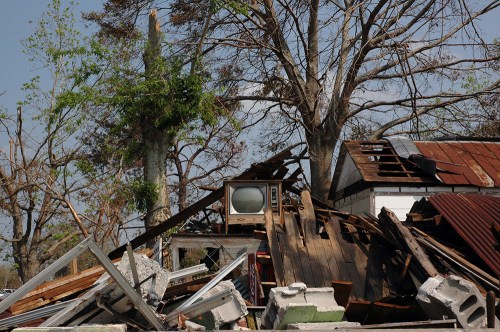
TV on Second Floor, Mississippi Gulf Coast, Mid September, 2005 © Copyright of Zoe Strauss

This is my hometown, Toms River, NJ, 2012. © Zoe Strauss.
PRESS BLURB
In Sea Change, Strauss traces the landscape of post-climate change America. In photographs, vinyl prints, and projected images, Strauss treads the extended aftermath of three ecological disasters: Hurricane Katrina in the Mississippi Gulf Coast (2005); the BP Deepwater Horizon oil spill in Southern Louisiana (2010); and Hurricane Sandy in Toms River, NJ, and Staten Island, NY (2012). Lush and leveled landscapes; graffiti pleas and words of encouragement—Strauss’s camera captures lives decimated and dusting off: the fast and slow tragedies of global warming, the damage we can repair, and the damage we can’t.
THOUGHTS
I had no idea Strauss was working on a survey of disasterscapes in America. Following her 10 years of photographing in Philadelphia and celebrating the colours and characters of her beloved home city — and then presenting her photographs annually beneath Interstate 95 — it makes sense that Strauss would gravitate to the realest of struggles for real people at a time when real (climate) change is unleashing real events.
Sandy, Katrina and the Deepwater Horizon catastrophes left millions of Americans floundering, thousands dead, communities torn from the ground. In the immediate aftermath of such events, attention focuses on the official and governmental responses, but Strauss is more interested in the long tail of disasters and of informal vernacular responses. Strauss seems hell-bent on reminding us that after the camera crews leave, there’s still generations of rebuilding to be done (especially ecologically).
In Sea Change we see Strauss’ usual dark humor and restless documentation of the frayed edges of our nation. She’s holding up a mirror to the inconvenient messiness that we like to think we can deal with quickly and efficiently, but Strauss’ world is in a state of constant entropy, and it’s the invisible, the workers, the poor, the animal kingdom and the dissenters that lose out most when the shit hits the fan.
We all know that we’ve permanently altered our planet’s climate systems; we all know we’re on the hook. But we also know we can look anywhere-else, any time we want. And we know we don’t have to live on the Gulf Coast, or in the path of hurricanes. And we know that when things go south, we can turn our heads to the news and make a distant appraisal about whether the clean-up is happening quick enough or not, or watch some talking heads, or wag our finger at some government official.
Strauss’ victory in all her work — and particularly in Sea Change — is that she marries the visuals in her inquiries and her work so that they sync with her experience of the world. She is keeping herself honest through her photography. Perhaps Strauss can keep us honest too?
Foundational to Strauss’ work too is a deep respect. Zoe is irreverent, for sure, but she is also respectful of people. Entropy is going to happen; change is constant. People are going to win and people are going to lose, amidst change. That’s life. The degree to which people’s fortunes differ … and the degree to which people win and lose … and the degrees to which those statuses are kept permanent, that’s not just “life” though. It’s for us to decide how disaster will effect our collective in the long term. It’s for us to decide on the most equitable distribution of resources when many have literally been swept away.
When people fall down, we help them up. Rebuilding is everyone’s business. In Strauss’ world, love is the response to entropy and its disruptions.
NUMBERS
Running: January 23–March 6, 2015
Reception and opening talk with the artist: Friday, January 23, 4:30–7:30pm
PAPER
The exhibition is accompanied by a publication designed by Random Embassy, Philadelphia, featuring essays by artist Zoe Strauss; The New Yorker contributing writer Mattathias Schwartz; Helen K. White, PhD, Assistant Professor of Chemistry at Haverford College; and a poem by Thomas Devaney, MFA, PEW Fellow and Visiting Assistant Professor of Poetry, Haverford College.
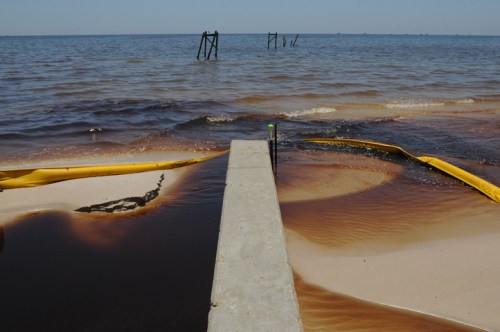
Oiled Water Coming Inland, Waveland, Mississippi, Early July, 2010 © Copyright of Zoe Strauss
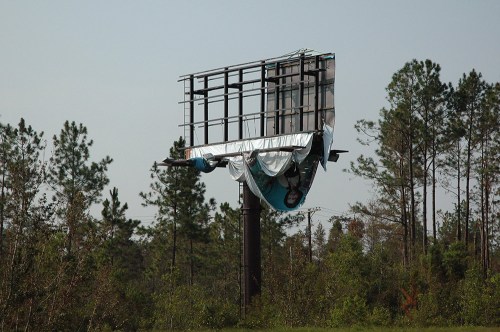
Billboard, Mississippi Gulf Coast, Mid September, 2005 © Copyright of Zoe Strauss
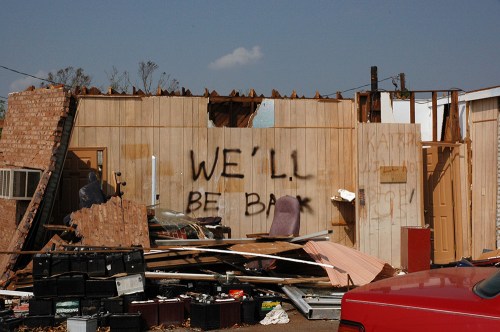
We’ll Be Back, Mississippi Gulf Coast, Mid September, 2005 © Copyright of Zoe Strauss
ANY QUESTIONS?
Contact (my mate) Matthew Seamus Callinan, Associate Director, Cantor Fitzgerald Gallery and Campus Exhibitions
mcallina@haverford.edu
Cantor Fitzgerald Gallery, Haverford College, 370 Lancaster Avenue, Haverford, PA 19041
Tel: 610 896 1287


 Prison Photography