
You are currently browsing the category archive for the ‘Activist Art’ category.
Okay, the title to this post makes it sound like I’ll be making a habit of recording these stories of abuse. I will not. That isn’t because these episodes aren’t regular (unfortunately, they are quite regular), it is because I don’t have the time most weeks to adequately collect the many stories of misconduct from across this America.
So, why this week? Well, I came across two particularly disgusting and glaring examples of abuse. In both cases, they are presented with great clarity. The first is courtroom video footage. The second is a diaristic, written account.
COURTROOM BEATING
Above, we see a video from September 2012, in which Denver Sheriff Deputy Brad Lovingier slams a handcuffed prisoner into wall. Face first. Totally unprovoked.
Following the judge’s ruling, the defendant Anthony Waller requested clarification. At which point he is grabbed, from behind, by the handcuffs secured by behind his back, spun around, and flung into the wall. Waller falls to his knees after the impact and is then dragged out of the courtroom and into a holding cell. In the video Lovingier can be heard saying, “You don’t turn on me,” as the only explanation for his actions.
Madness. Ordinarily, a citizen guilty of such an assault would face a 6-month jail term. Lovingier was suspended for 30 days. And he’s appealing that.
SOLITARY CELL FOR GOOD SAMARITAN
The story is as simple as its logic is baffling and its behaviours are brutal.
Man witnesses a bike accident. Calls 9-1-1. Is handcuffed by police for unknown reasons. Taken to jail. Asks legitimate questions. Faces retribution from deputies. Stripped. Thrown in a shit-stained solitary cell.
You just have to read it to believe it: Good Samaritan Backfire or How I Ended Up in Solitary After Calling 911 for Help.
This kid — Paretz Partensky — is a young, educated, white, computer programmer. His abuse is likely no different (it might be less egregious?) than abuse meted out to people in San Francisco far more vulnerable than he. But Partensky gets on hot-new-story-telling-platform Medium and tells the story of his 12 hours of detention.
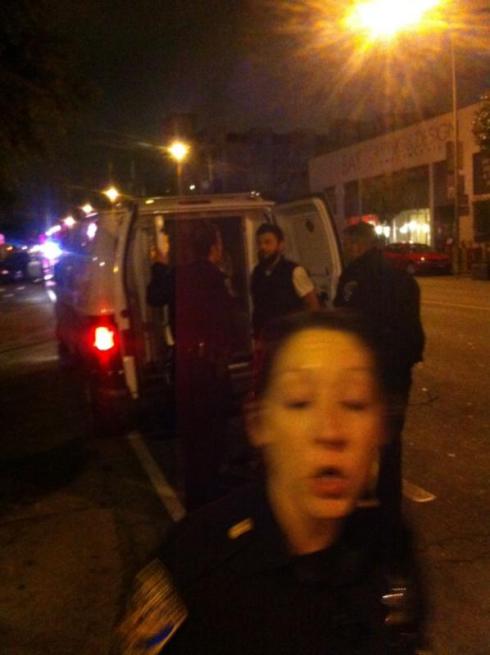
Officer Durkin, in the foreground, is telling Ben that he cannot take this photo. According to Attorney Krages, you are allowed to take photos in public places. http://www.krages.com/ThePhotographersRight.pdf Officer Durkin’s reprimand is in violation of Ben’s rights.
Partensky’s account is nuanced — he provides necessary details; he gives benefit of doubt to most of the characters involved; he tries to put himself in the position of others throughout the ordeal; he is aware of his white privilege; he ponders what different outcomes may have arisen had he and others interacted differently. In short, it is a compelling read.
Let’s not be churlish and say this is a young, comfy, SF-coder-class entrepreneur using an online platform to have a whinge. Let’s be civic and responsible and say no-one should be subject to arbitrary and vengeful treatment from law enforcement. Let us not allow our uncomfortable relationship to racial and income inequality, nor our relationship to white privilege be an excuse to dismiss Partensky’s story. Let us be shocked. Let us be angry. Let us thank Partensky for bringing his account to light.

Bearing Witness is a one-day symposium hosted by SFMOMA assessing the ways in which photography matters now more than ever. Loosely, the theme is connections. I will be presenting and I’m toying with some ideas surrounding the emergent trend in video visitation. Maybe. Possibly, I’ll retread safe ground and present the ideas that informed the recent Prison Obscura exhibition.
I’m on stage in the morning, I have been told. Bearing Witness is for one day only – Sunday 16th March. Speakers include David Guttenfelder, chief photographer in Asia for the Associated Press; Susan Meiselas, photographer, Magnum Photos; Margaret Olin, senior research scholar, Yale University; Doug Rickard, artist and founder of AMERICANSUBURBX; Kathy Ryan, director of photography, The New York Times Magazine; and Zoe Strauss, artist, Magnum Photos.
Organisers Erin O’Toole, SFMOMA associate curator of photography and Dominic Willsdon, SFMOMA Curator of Education and Public Programs, have posed these questions for the symposium:
Given the power and pervasiveness of photography in both art and everyday life, what is the significance of the rapid and fundamental changes that the field is undergoing? How have social media, digital cameras, and amateur photojournalism altered the way photographs capture the everyday, define current events, and steer social and political movements? How have photographers responded to these shifting conditions, as well as to the new ways in which images are understood, shared, and consumed? How have our expectations of photography changed?
Bearing Witness is preceded on March 14 and 15 by Visual Activism, a two-day symposium that explores relationships between visual culture and activist practices. Zanele Muholi is presenting at that, so not to be missed either.
DATE + TIME + LOCATION
10:00 a.m. – 5:00 p.m. Sunday, March 16, 2014
Yerba Buena Center for the Arts, 701 Mission Street San Francisco, CA 94103
TICKETS
Admission for both events is free, but it’s wise to register. The 500 spots for Bearing Witness have gone, but that’s always the case with over-zealous free-to-register-symposium-photo-enthusiasts isn’t it? Sign up for the waitlist and you’ll probably get in. I hope.
Image source: Toledo Blade
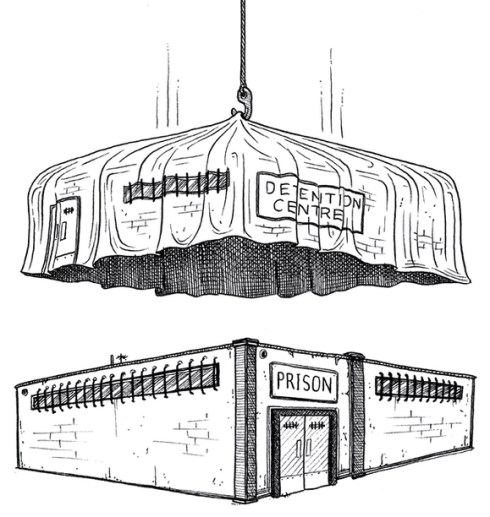
There’s a beguiling animated feature up on the website of Australia’s Global Mail. Illustrated by Sam Wallman, the piece tells the story of a former worker at an immigrant detention facility and how he — along with those locked up — slowly lost his mind. The detention center (we should all just call it a prison) was, and is, a incubator for illogic and for cruelty. An atmosphere that only rewards dehumanisation persists.
The facility is operated by the Serco Group, a British-based multinational corporation with interests and operations in logistics, security, government contracts across the world . It seems detention facilities are a boom sector for a company like Serco which operates all of Australia’s detention facilities. Serco hit the headlines late last year in Britain when it faced allegations of covering up extensive sexual predation and abuse at Yarl’s Wood, the UK’s largest immigration detention center for women.
As I’ve noted before, Australian’s are worried about Serco’s practices.
Not photography, but in this case, more powerful than a photograph. Maybe it’s the human touch within a pen stroke?
Thanks to Gemma Rose-Turnbull (an Australian) for the tip.

Memories of the Southern Civil Rights Movement
2014 is the 50th anniversary of the passage of The Civil Rights Act, the landmark legislation that prohibits discrimination on the basis of race, color, religion, sex or national origin.
Danny Lyon was the first staff photographer — between 1962 and 1964 — for the Student Non-Violent Coordinating Committee (SNCC). Lyon would go on to make some of the most important bodies of work about the American condition (The Bikeriders; Conversations With The Dead) and as such his very early work as a very young man is often overlooked.
The Etherton Gallery’s exhibition ‘Danny Lyon: Memories of the Southern Civil Rights Movement’ opened on Saturday and shows 50 silver gelatin prints from Selma, Birmingham, and Montgomery, Alabama; Albany, Georgia; and Danville, Virginia. We see images of student protests and mobilization against racism, lunch counter sit-ins, student beatings, tear gassings, the jailing of Martin Luther King Jr., and the unscheduled visit of a young Bob Dylan to SNCC headquarters in Greenwood, Mississippi. Lyon, was harassed, beaten and jailed during his two years as a staff photographer.
SOME THOUGHTS ON AZ
Where better to look back on an era in which society treated people with different coloured skin than in modern day Arizona? The passing of SB1070 in 2010 was a legislative bill that essentially permitted veiled racism and racial profiling. In activism, folks are always on the look out for new allies and for audiences who really need to hear the message. A message of anti-racism message and some historical perspective is vital for residents of Arizona currently. I’m not saying that people of Arizona are inherently racist; I am saying the services and institutions that claim to serve them have procedures that result in racist acts.
There are some fine activists in Arizona (they’ve necessarily and wonderfully organised) and this is particularly true of Tucson and some clever geographer-activist-academics. May Lyon’s photographs play their part in making Arizonans and us angry. Lyon would want nothing more than his show to leave us rageful at our society of inequality.
DETAILS
Etherton Gallery, 135 S. 6th Ave, Tucson, AZ 85701 Tel: 520.624.7370. Email: info@ethertongallery.com.
‘Danny Lyon: Memories of the Southern Civil Rights Movement’ runs through March 15, 2014.
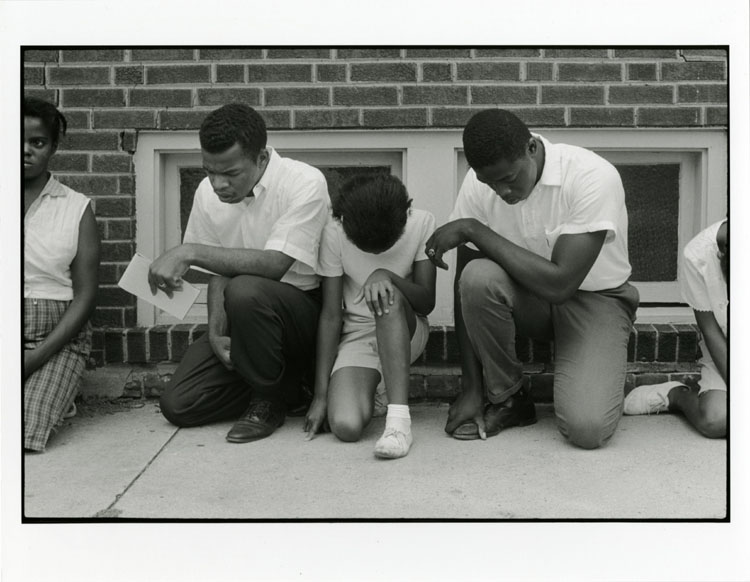

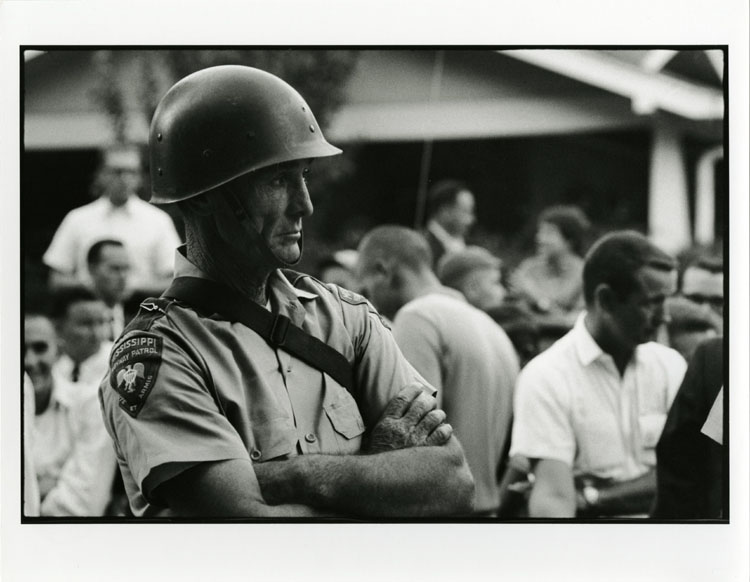

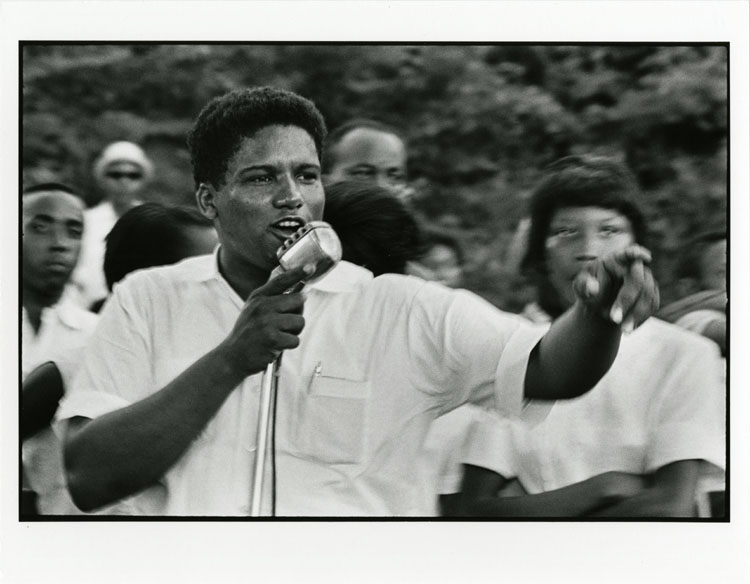
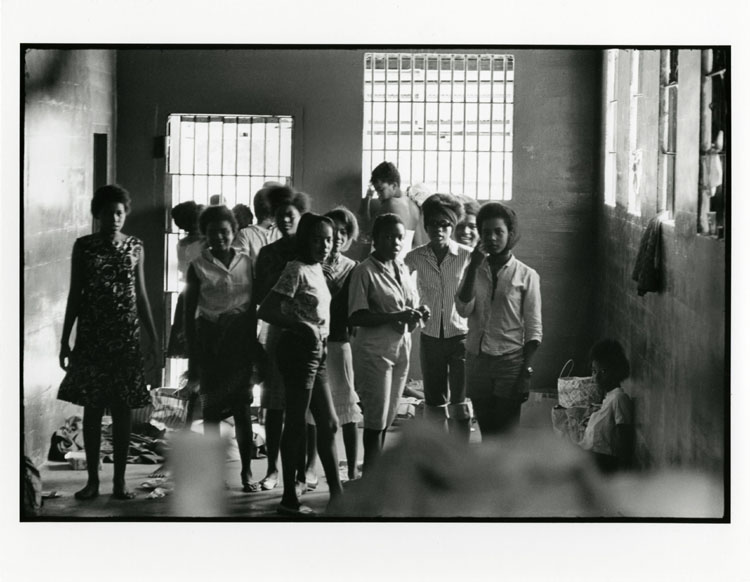

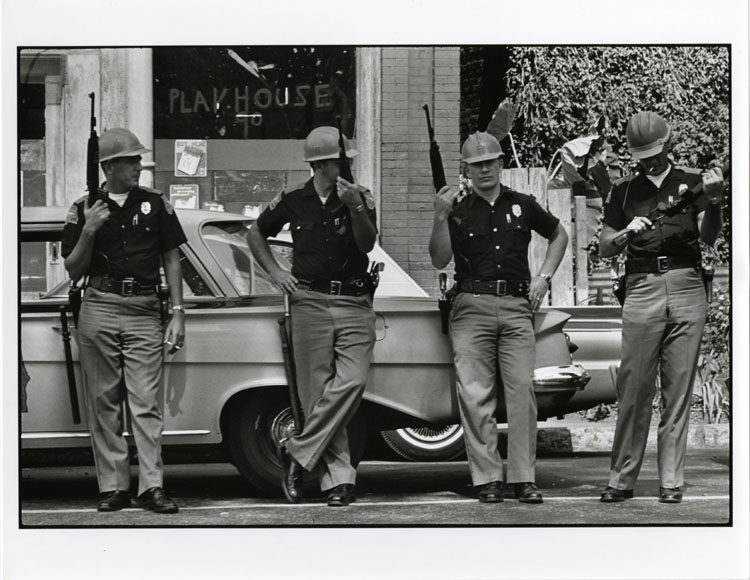

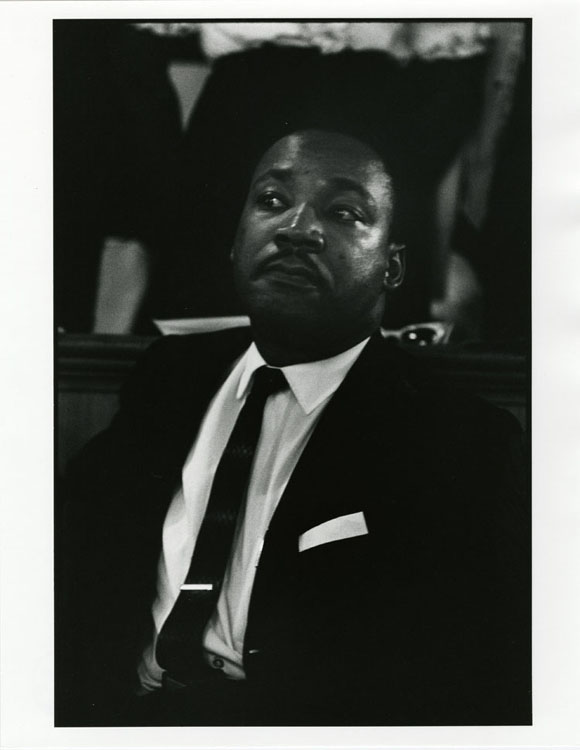

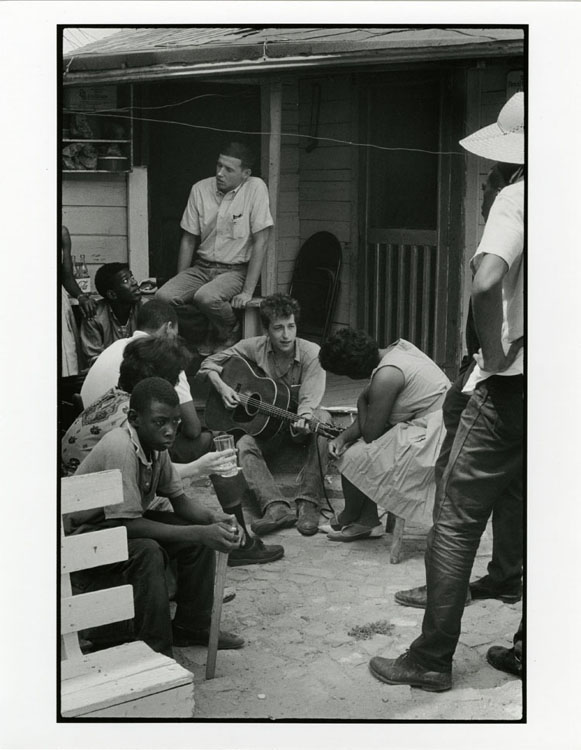


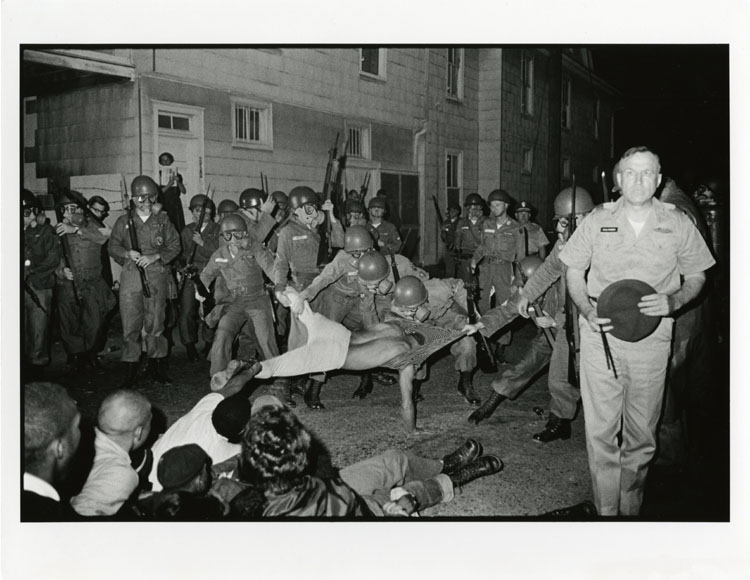
All photos: Danny Lyon © Dektol.wordpress.com. Courtesy of the Etherton Gallery
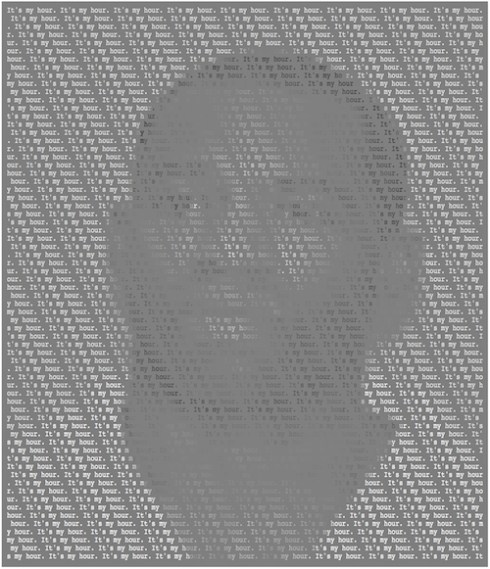
Amy Elkins‘ latest body of work Parting Words is a visual representation of every execution in the state of Texas since the ban on capital punishment was overturned in 1976.
Parting Words was just featured on the Huffington Post, for which I wrote a few hundred words. That didn’t seem enough, so I asked Amy some questions about the project to gain a fuller picture.
Q&A
Prison Photography (PP): You made Black is the Day, Black is the Night (BITDBITN). Now Parting Words. Both are about the harshest imprisonments and sentences in America. Do overlaps between the projects exist? Are the overlaps visible? If so, is the overlap in your personal politics, in the project, or in both?
Amy Elkins (AE): I started the two projects in 2009 and am still wrapping up final details with each. Black is the Day, Black is the Night came first. Through the execution of the first man I wrote with for that project, I stumbled into Parting Words.
Parting Words has taken me a few years to complete and, even now, it remains a work in progress — currently the project has 506 images but it is updated yearly, growing with each execution.
The research behind it all, especially while writing to men on death row (two of which were executed during our time of correspondence) made reading and pulling quotes from the roster of those who had been executed in the state of Texas a dark, taxing experience. Not only was I reading through all of their statements, but detouring into description after description of violent crimes that land one on death row. Honestly, it felt too heavy at times.
PP: What was the impulse then?
AE: I was intrigued that the state of Texas documented and kept such a tidy online archive for anyone to explore. As a photographer (like many, doubling as a voyeur) I already had my own connection to the subject matter through BITDBITN, and I suppose I allowed my obsessive side to surface in order to create a visual archive. It was an important story to tell.


PP: What are your thoughts on American prisons and the criminal justice system?
AE: Over several years of correspondence with five men serving death row sentences and two men serving life sentences who went in as juveniles, I have learned a great deal from the inside about what it is like to exist in the conditions of maximum security and death row units; what those units provide; and what they deny.
A system that uses long-term solitary confinement and capital punishment is broken. Housing someone in infinite isolation has been proven to be hugely damaging to one’s psychological and physical state. This type of isolation breeds behavioral and emotional imbalances that are bound to cause most to remain in a perpetual state of anxiety, depression and anger. Which means they are set up for failure. There is absolutely no way to rehabilitate in such conditions. But clearly rehabilitation isn’t what they have in mind.
I have written with one man in particular who has served 20 years in solitary confinement as part of a Life Without Parole (LWOP) sentence for a non-murder related crime he committed aged 16. He has written about going years talking through concrete walls without ever seeing the men he holds daily conversations with. He spends nearly 23 hours a day in a small cell by himself and when he is let out, he is shackled and permitted to exercise in a slightly larger room by himself for an hour. How he’s gone 20 years in these conditions and not gone completely mad is mind blowing.
That said, most men that I wrote with serving death row sentences were in fairly similar conditions, some having served onward of 16 years in solitary confinement while waiting for their execution. Two of the men I have written with have been executed and through the experience of writing letters to them and in some cases reaching out to family members leading up to such events, I have seen how capital punishment seems to create a continuous cycle of violence, pain and loss within our society. It leaves not one open wound, but several. If there’s closure for anyone, it’s temporary. And unfortunately the loss that the victims family originally endured remains. But now there is a new set of mourners in the mix. The system seems so incredibly flawed and barbaric.
PP: Do archives for last words exist for those killed in other states?
AE: I have yet to come across an archive as in-depth and publicly accessible as the one compiled by the state of Texas.


PP: Are you afraid of death?
AE: I think I’m more afraid of the physical pain associated with dying.
PP: Where do we go when our time is up?
AE: Sounds cheesy, but I think we stick around and linger in some capacity with those who love us the most.
PP: Given the images “read” very differently if the viewer is close or far away, what’s the ideal size for these works?
AE: Ideally I would like to show these images on a smaller scale but include all of them. This forces an intimacy that I want, where the viewer has to get close to each image in order to experience the depth of the project.
PP: Anything else you’d like to add?
AE: In both projects, I always remained neutral. I refrained from projecting my own feelings into whether I felt those I worked with or made work about were guilty of the crimes for which they had been convicted. Making BITDBITN, I was more interested in hearing stories from those within prison systems in America, about the psychological state they might be in while in such conditions, while potentially facing their own death. I was interested in discussing with them what it was like to be removed from the world most of us take for granted, to lose memory by being removed from the source of memory, to not always have a strong sense of self-identity. I felt I hadn’t enough information to warrant my own judgment, and so, if I had projected any, neither project would have manifested.
PP: Thanks, Amy.
AE: Thank you, Pete.

ELKINS ELSEWHERE
In December 2013, Daylight Digital published a presentation of Black Is The Day, Black Is The Night with an accompanying essay by yours truly. The 1,500 words were built upon a conversation Elkins and I began in late 2011.
REST IN PEACE, PETE
Musician, folklorist and champion of the vernacular Pete Seeger died Monday. His legacy is formidable. The New York Times wrote:
His agenda paralleled the concerns of the American left: He sang for the labor movement in the 1940s and 1950s, for civil rights marches and anti-Vietnam War rallies in the 1960s, and for environmental and antiwar causes in the 1970s and beyond. “We Shall Overcome,” which Mr. Seeger adapted from old spirituals, became a civil rights anthem.
Part of Seeger’s widespread collection of folk songs took him, in March 1966, to the Ellis Unit of Huntsville Prison in Texas.
He traveled south with his wife and constant ally Toshi and their son Daniel. Bruce Jackson also joined them.
Afro-American Work Songs In a Texas Prison (30 mins.) documents the music African American prisoners used to survive the grueling work demanded of them. The prison work songs derive directly from those used by slaves and plantations and those directly from West African agricultural models.
Bruce Jackson wrote in his notes about the film:
“Black slaves used work songs in the plantations exactly as they had used them before they had been taken prisoner and sold to the white men. The difference was this: in Africa the songs were used to time body movements and to give poetic voice to things of interest because people wanted to do their work that way; in the plantations there was added a component of survival. If a man were singled out as working too slowly, he would often be brutally punished. The songs kept everyone together, so no one could be singled out as working more slowly than everyone else.”
Mechanization and integration of farming and forestry methods would soon lead to the disappearance of the work songs. There was an urgency to record them.
I spoke with Jackson in late 2011, when he said, “It is, to my knowledge, the only treatment (of that genre and era) that had ever been done. It was Pete’s idea and Pete paid for it.”
Seeger understood the contradiction. A significant type of folk music — a music that reflected the very survival of an oppressed group — was soon to be consigned to the history books, and yet that loss signified an improvement in their circumstances. As the film’s narration notes:
“The songs are still there but sometimes something is missing. The urgency is eased. Gone is that tension born of the original pain and irony of the situation that a man who could not sing and keep rhythm might die. The prison is the only place left in the country where the work songs survives. And it’s days are numbered. Another generation or two and its only source will be the archives. But given the conditions that produced the songs and maintained them for so long one can hardly regret their passing.”
Seeger understood people’s stories are wrapped up in their art. And with it their dignity. His curiosity was a rare and beautiful thing.
Watch: Afro-American Work Songs In a Texas Prison
A NOTE ON JACKSON
Bruce Jackson is a prolific prison photographer. Most of his work was made in the sixties and seventies in the South, from his Widelux images at Cummins Prison, his collected mugshots from Arkansas, his 1977 book Killing Time: Life in the Arkansas Penitentiary (Cornell) and his very recent 2013 book Inside The Wire (University of Texas Press) about Texas and Southern prison farms. Bruce Jackson’s book Wake Up Dead Man (University of Georgia Press) is a highly recommended study of work songs in Texas prisons.

If you’re in NYC make like a bandit down to the Queens Museum which is hosting the first ever East Coast performance of State of Incarceration (2010-ongoing) by the activist collective Los Angeles Poverty Department (LAPD).
I’ve been thinking a lot about how gallery spaces can work to induct audiences into a topic as fraught as prisons. Partly because talking about prisons is a two-part process. First, one must explain clearly what problems exist, how deep they run and from where they originated. Second — and usually because the first part is so overwhelming — you need to provide audiences an immediate stimulus to care. (I don’t worry about action at this early stage; if you succeed in getting someone to care, then action will follow later if it is to at all).
Normally, for the second part, a description of deplorable conditions will offend audiences and have them ready to care. But, for me, that’s not enough. It presumes the answer might be the eradication of bad conditions. I don’t want better prisons. I want fewer prisons.
State of Incarceration does an excellent job in jolting people because it describes the tortuous power relations and the dire psychological conditions within prisons. Shouting, noise and continual face-offs between characters amp up the negative energy. There’s no escape and audiences are put literally inside and on top of it all from among the “prison” bunks, and confronted by the illogic of the prison system in the form of maddening cacophony and maneuver.

I’m not usually one for understanding theatre but this direct performance makes sense. It’s made in California, which runs a prison system that makes less sense.
State of Incarceration is a performance space filled wall-to-wall with 60 triple-bunked beds, performers and audience share overcrowded conditions akin to a California state prison. One-third of the state’s parolees settle in the 55 square blocks of Los Angeles known as Skid Row, and State of Incarceration—developed collaboratively by LAPD’s Skid Row artists and in dialogue with organizers and recent parolees—powerfully examines the consequences of California’s penal system on individuals, families and communities. Outlining a ritual of incarceration from entry to release and re-integration, State of Incarceration constructs a complex challenge to the societal perceptions and fear-based policies of a nation with the highest rate of incarceration in the world.
It’s FREE with no reservations necessary!
Performances:
Friday, January 31st, 7:30pm
Saturday, February 1, 7:30pm
Sunday, February 2, 5pm
Curator and artists’ gallery talk:
Sunday, February 2, 3pm
A free shuttlebus will be making loops between under the 7train CitiField/Willets Point stop and the museum from 2-8pm.
State of Incarceration is staged as part of Do You Want the Cosmetic Version or the Real Deal?: Los Angeles Poverty Department, 1985 – 2014, an exhibition on view at the Queens Museum through May 11.
Just a quick post to say …
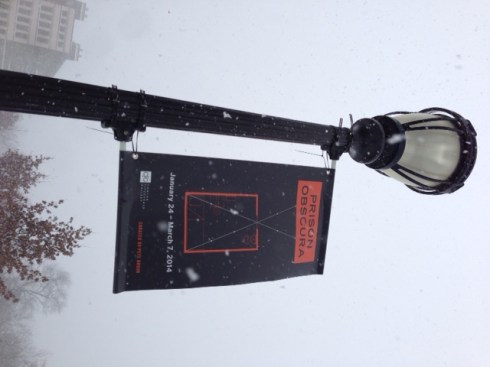
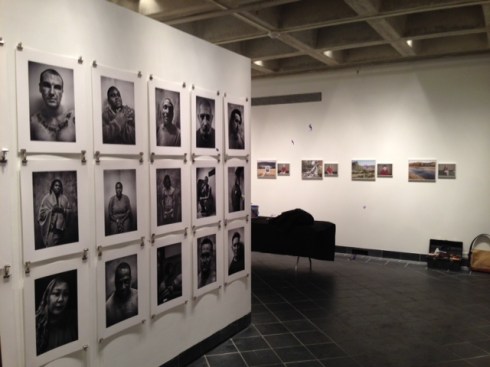
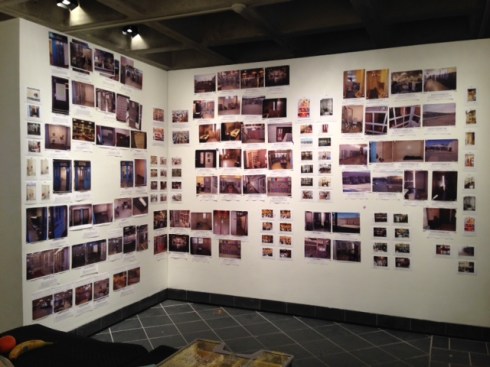
It happened. Prison Obscura opened. With a fantastic turnout. Gallery was crammed for the curator’s talk and people said many nice things. I pulled my usual trick, clocking silly hours until the early hours most of last week during install. Matthew Seamus Callinan, the Associate Director of Cantor Fitzgerald Gallery and Campus Exhibitions at Haverford College did the same. I cannot thank Matthew enough for his support throughout the creation of the show. Legend. More thanks to so many people.
I haven’t any pictures of the opening because my head was spinning. There’s some on Facebook. I’m sure others have some too (send ‘em over!) but I wanted to do a quick post with some installation shots. Taken at different points during the week during install and may not reflect exactly the final layout. (Buckets and hardware not part of the show).
Prison Obscura is up until March 7th at the Cantor Fitzgerald Gallery at Haverford College, just outside Philadelphia, PA. All you need to know about the exhibit is here.






 Prison Photography