
You are currently browsing the category archive for the ‘Fine Art’ category.

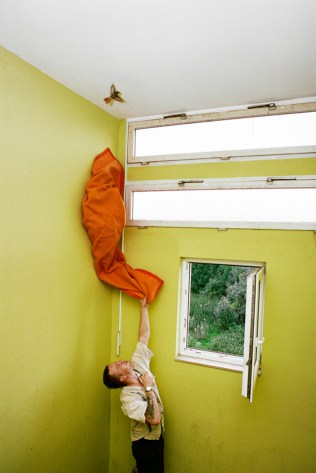
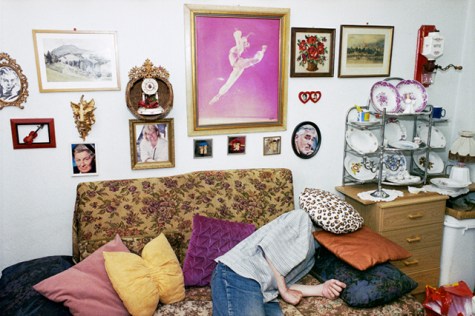
I’m intrigued by Nathalie Mohadjer‘s project Zwei Bier Für Haiti. I hope you will be too. First, you’ll need to get past the idea that Zwei Bier Für Haiti is about, or in benefit for, Haiti. It is, in fact, a body of work about the residents of a homeless shelter in Weimar, Germany. Mohadjer made the images between 2006 and 2010. She explains the title:
“When an earthquake shook Haiti in January 2010, Margitta, one of the inhabitants, started a fund-raising campaign among her neighbors in the homeless shelter, which she called “Two Beers for Haiti.” The idea was for every resident to drink two beers less a day. She collected a total of 15 euros.”
I’m always intrigued by long-term photo studies of institutions on the margins and those within them – Peter Hoffman’s Bryan House and Maja Daniel’s Into Oblivion are two top-notch examples. Mohadjer’s Zwei Bier Für Haiti/Two Beers For Haiti fires the same visual intrigues. Good stuff.
Mohadjer has nine days left on her crowdfunding effort for the book. It’ll be published by Kehrer Verlag regardless but every penny donated will be a penny less out of her pocket. See the crowdfunding page here and the video-pitch on vimeo here.

EXHIBITIONS
Works by Nathalie go on show today at the Museum Sala Galatea, Cordoba, Spain (January 16 – February 24, 2013) and works from Zwei Bier Für Haiti go on show at the Heussenstamm Gallery Frankfurt, Germany for the Abisag Tüllmann Prize Exhibition (February 19 -Mars 15, 2013).
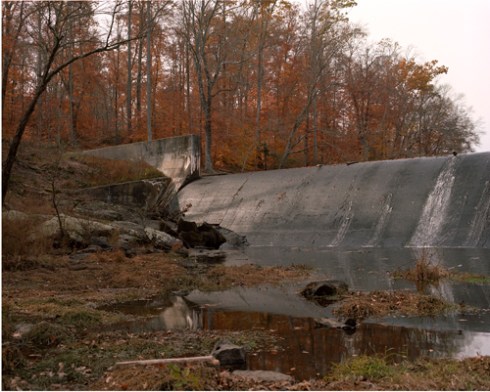
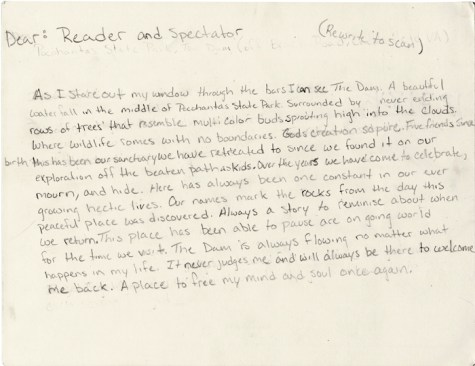
“I see a dam. […] For five friends since birth this has been our sanctuary we have retreated to since we found it on our explorations off the beaten path as kids. We have come to celebrate, mourn and hide.”
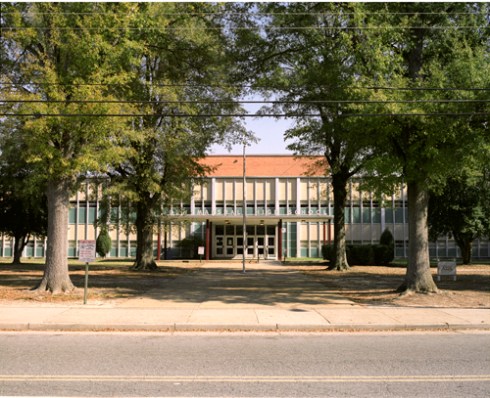
For his participatory project, Some Other Places We’ve Missed artist and photographer Mark Strandquist held workshops in various jails and prisons, and asked prisoners, “If you had a window in your cell, what place from your past would it look out to?”
Along with the written descriptions, individuals provided a detailed memory from the chosen location, and described how they wanted the photograph composed.
Strandquist then photographed and an image is handed or mailed back to the incarcerated participants. The size of photographs he made and later exhibited were/are consistent with the restrictions imposed on pictures sent into prisons.
It’s a strong project that involves many different groups. It attempts to build connections where none exist. If one artist can achieve this, think what a whole posse could accomplish?
NOTE
The scanned letters are difficult to read at this size; I recommend using you COMMAND + keys to enlarge the page and jpegs.
[Keep reading below]
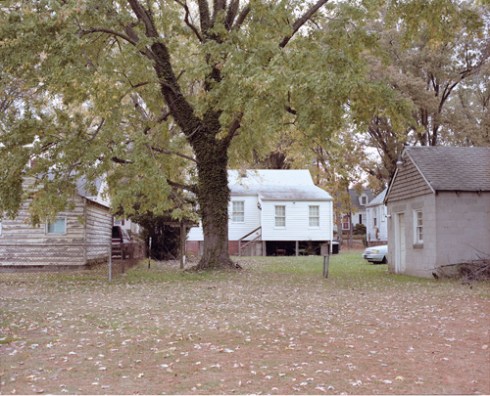
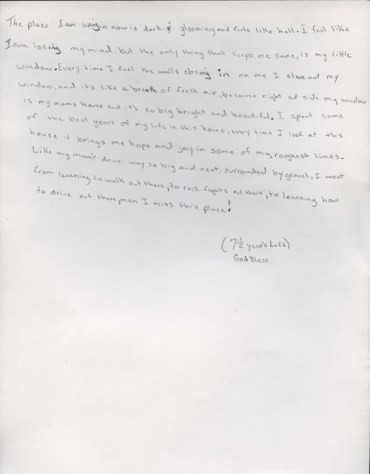
“Right outside my window is my mom’s house.”
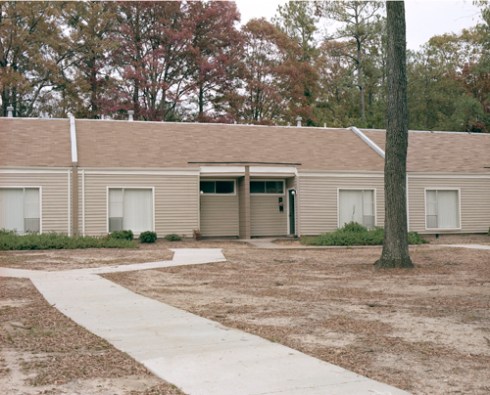
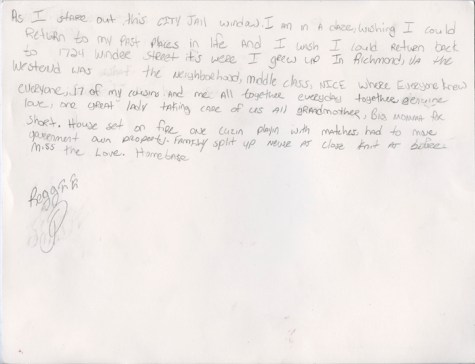
“The neighborhood was middle class, nice, where everyone knew everyone. One great lady taking care of us all – grandmother; Big Momma for short. The house set on fire when one cousin playing with matches. Had to move into government owned property. Family split up. Never as close as before. Miss the love. Home base.”

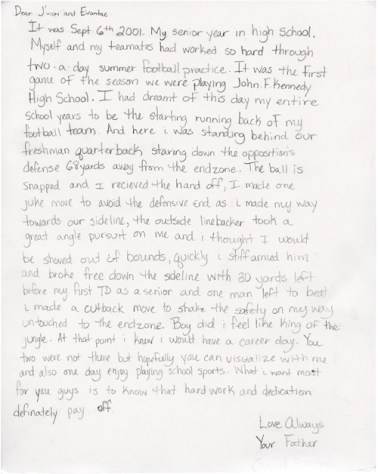
“Here I was standing behind our freshman quarterback staring down the opposition’s defense, 68 yards from the end zone. […] The outside linebacker took a great angle and I thought I’d be shoved out of bounds. Quickly I stiff-arms shim and broke free down the sideline … before my first touchdown as a senior. What I want most is for you guys to know is that hard work and dedication definitely pay off.”
In some ways the work is similar to the Tamms Year Ten Photography Project that asked Illinois prisoners in solitary confinement to describe one image they would like on their cell wall (and which I featured a couple of weeks ago).
Upon encountering the Tamms Year Ten Photography Project, Strandquist was “blown away”, yet he identifies differences between methodolgies.
“The Tamms Year Ten Photography Project is a really challenging project, but there’s so much to love – its diffusion of authorship; its performative aspects of individuals seeking out public spaces to make these images; and its deconstruction of fine art aesthetics,” says Strandquist.
“I believe the form and function of Some Other Places We’ve Missed moves in different, hopefully equally powerful ways. My project is as much about creating a window for the incarcerated participants as it is about creating a window for the public, a meeting ground where each participant’s challenging memories and realities mix with images shot intentionally to facilitate open associations. Part of me wants to hear the stories behind the Tamms requests … but maybe that’s the voyeur in me?” adds Strandquist.
In this case, a will toward voyeurism (to use Strandquist’s term) would indicate that the Tamms Year Ten Photography Project succeeded; it draws audience members in, to then go ahead under their own steam to learn more about the issue, the systems and the people within.
[Keep reading below]

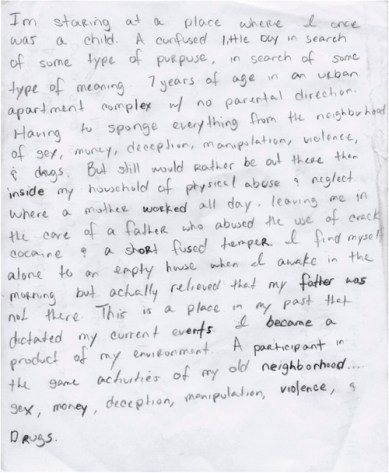
“I’m staring at a place where I once was a child. A confused little boy in search of some meaning. 7 years of age in an urban apartment complex with no parental direction.”
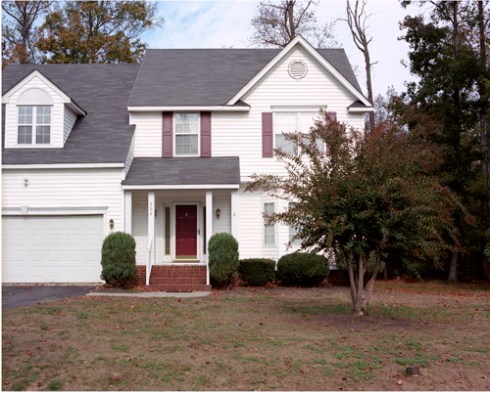
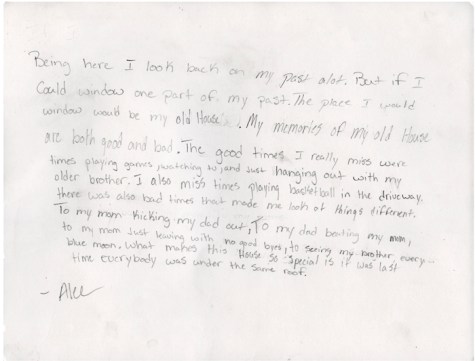
“My memories of my old house are both good and bad. Playing games, watching TV and just hanging out with my older brother. There were bad times that made me see things different – My mom kicking my dad out, my dad beating my mom, my mom leaving with no goodbyes, to seeing my brother every blue moon. What makes this house so special is it’s the last time everyone was under one roof.”
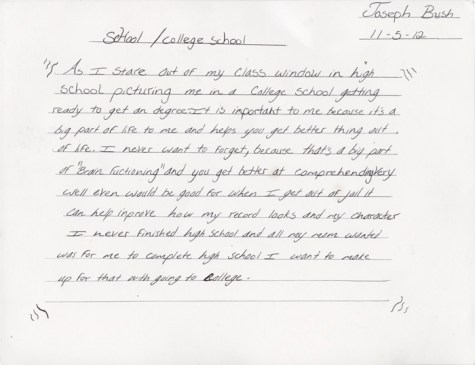
“… all my mom wanted was for my to finish high school. I want to make that up for that with going to college.”


“I miss the feeling of waking up early in the morning to the TV still being on and hearing my little sisters and brothers tearing the house down […] Sometimes it’s the little things that you never pay attention to that can effect you the most in the future.”
GET INVOLVED!
If you, or someone you know is incarcerated, and would be interested in participating in the project, you can email Mark at markaloysious@gmail.com
INSTALLATION
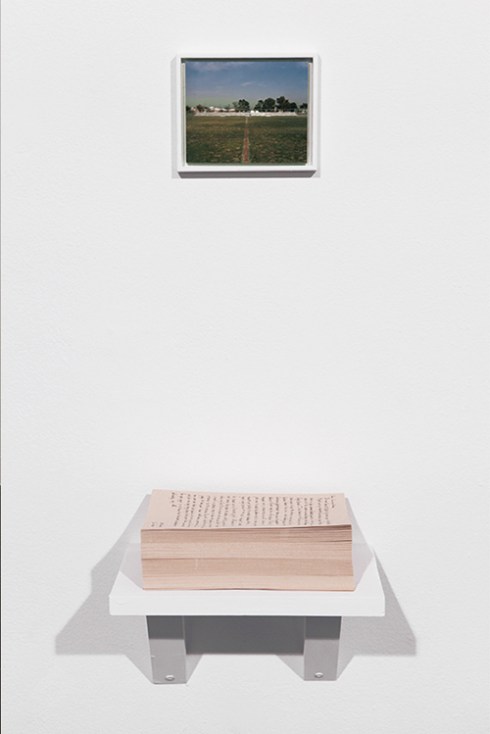
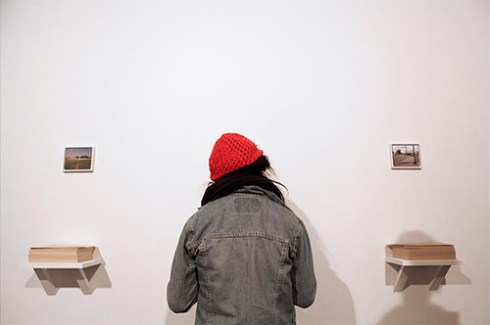
Strandquist recently exhibited Some Other Places We’ve Missed at Anderson Gallery in Richmond, VA. His interactive installation featured weekly prison letter writing workshops and a space to donate books to the local chapter of Books to Prisoners.
Visitors were given the opportunity to take with them copies of written statements by the incarcerated participant about the space to which they wish they had a window.

BIOGRAPHY
Mark Strandquist is a multi-media artist and curator based in Richmond, VA, who creates work that incorporates viewers as direct participants, features histories that are typically distorted or ignored, and blurs the boundary between artistic practice and social engagement. His work has been featured in various film festivals and independent galleries as well as a current exhibit at the Art Museum of Americas in Washington, DC. He is currently working on a BFA at Virginia Commonwealth University. He has a Tumblr.
What’s the difference between us and them? What distinguishes those labelled as criminals from those without the label? The law has it’s definitions; sentences – in the sense of legal scripts and prison terms – can give us details and legally defined facts, but other factors are at play. What role do images, particularly publicly available images, play? What about portraits? What about mugshots?
UK photographer and artist, Jenny Wicks – working as an artist in residence at The Scottish Centre for Crime and Justice Research (SCCJR) at Glasgow University, the largest centre for criminological research in Scotland – spent nine months trying to answer these questions through her photography. And she challenged the mugshot.
Wicks’ research broadly titled Working Spaces, Punishing Spaces: The Meaning and Construction of Place through Criminological Research includes site (prison) visits, audio interviews, documentation, portraiture, a book (in process) and an exhibition (ongoing). I’ll write more about her documentary work in the coming weeks, but I wanted to introduce her work with her Polaroid-backing portraits, which I feel are the most nuanced approach to the critical framework she takes on.
(For a fuller view of the series, titled They Are Us And We Are Them, read Wicks’ blog posts from June here, here, here and here, and from August here.)
Keep reading below.
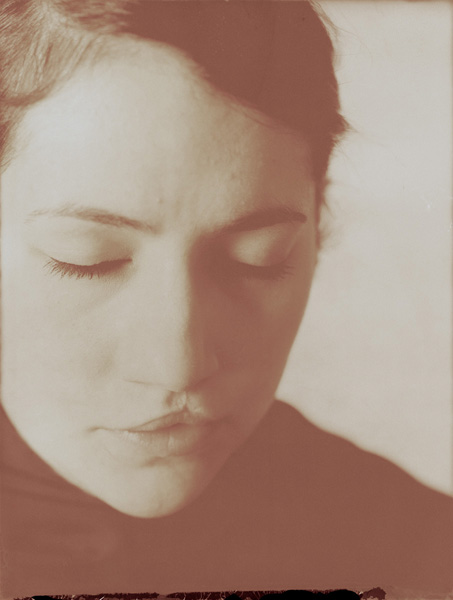
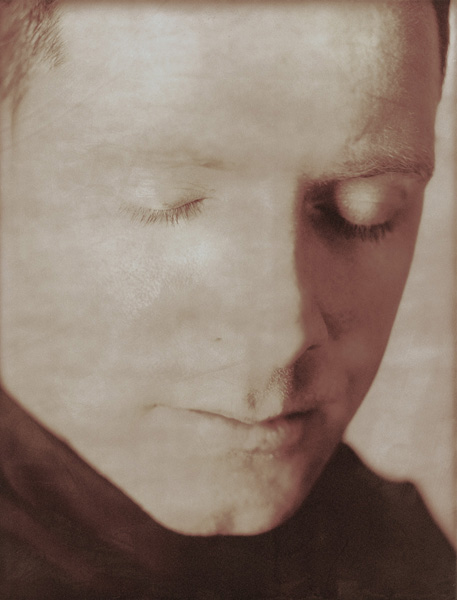
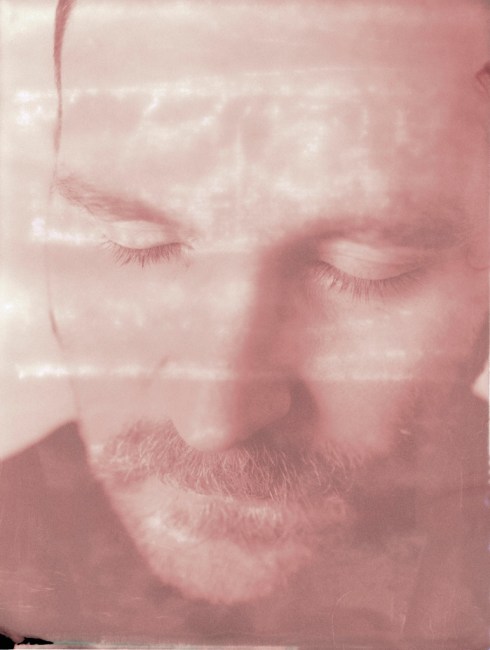
Reading through Wicks’ insightful blog Punishing Photography where she has traced her efforts this year, it is clear Wicks is troubled by the mugshot. The mugshot is a space in which the power dynamic between subject and camera-operator is drastically unequal; it could be argued that the mugshot even plays its role in “condemning” the individual. “The mugshot is an image that is taken to indicate criminality,” writes Jonathan Finn in his book Capturing the Criminal Image.
“My portraits are an attempt to challenge the boundaries between them and us […] The mugshot is the first significant, visual display of power where judgment is cast on that person and [it is where subjects] re-cast themselves,” writes Wicks. And, “my portraits attend to the internal spaces within each of us which harbour many unresolved emotions.”
Q: How does Wicks challenge boundaries exactly?
A: She puts her subjects – regardless of their status as prisoners, prison officers or criminologists – under the same gaze and into the same process.
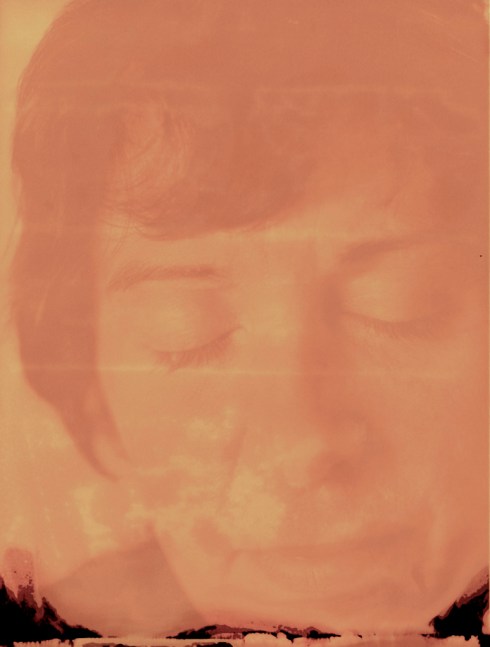
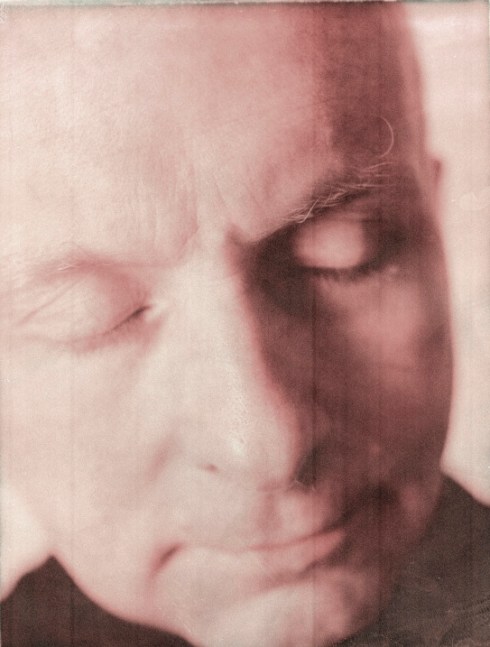
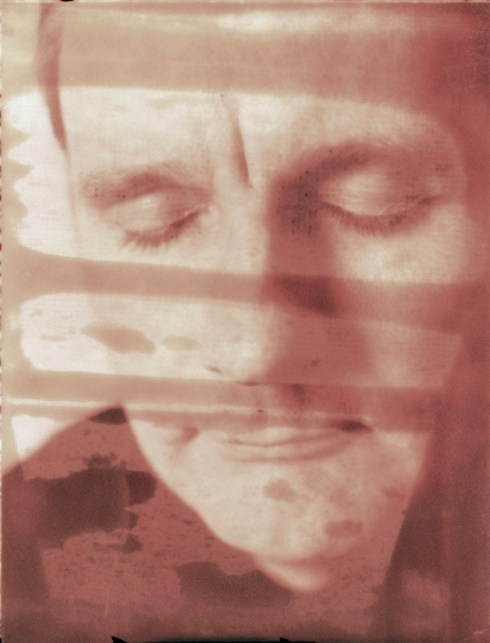
They Are Us And We Are Them has no captions. We are left to guess who and what these people are. Which side of the law are they? We must bring our discriminations and our own judgements to They Are Us And We Are Them. This is a fraught starting point for the viewer; the portraits raise instant questions that are all self-created by the viewer. “Unresolved emotions” indeed.
Brilliantly, Wicks’ aesthetic proposal contrasts with the techno-fetishism of the predominant surveillance culture that is creeping toward widespread use of facial recognition, retinal scanning, iris prints, biometrics and DNA coding.
The closed-eyes motif “is a leveller” says Wicks. In short-shrift, her subjects that appear to be sleeping evoke 19th century photography, of pictoralism and of a reverence attendant in photography (think memento mori photography) before its morph into a medium used increasingly in the 21st century for control and discipline.
“I didn’t want to accept the objectification of the traditional mugshot; the concept was to challenge it. But, nor did I want to deliberately “humanize” the subject, as they would tend to become too meretricious. I did want to present sensitive portraits,” writes Wicks, whose interest spans mugshot aesthetics, history, meaning and the theories of the ate 19th century criminologists Cesare Lombroso and Alphonse Bertillon.
Keep reading below.
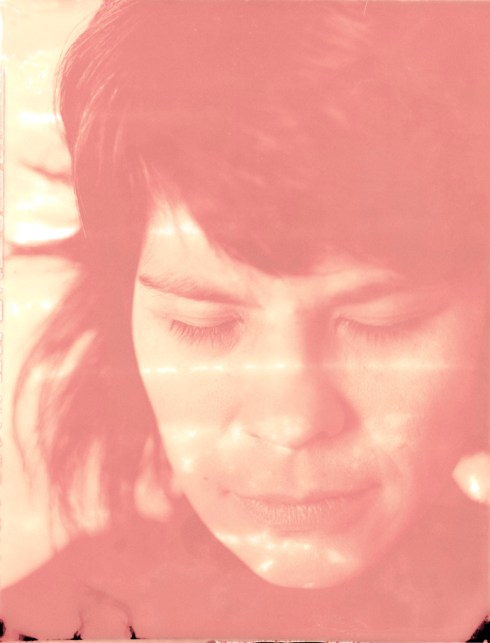
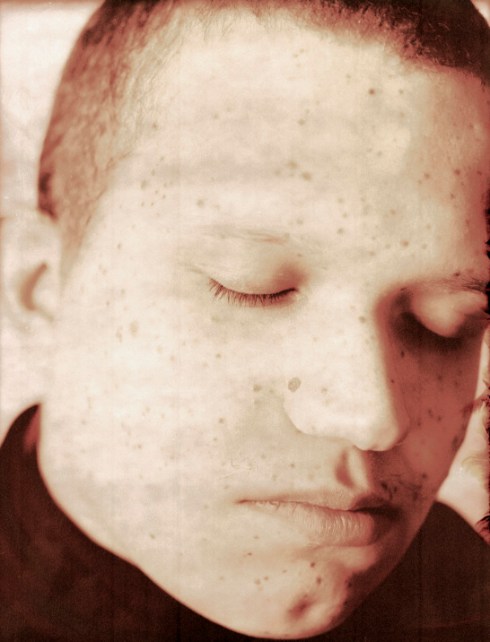
Visually, They Are Us And We Are Them riffs on – and works within – Wicks’ historical considerations. The sepia tones of the retrieved and scanned Polaroid backing sheets help frame each of her subjects in a space free of the mugshot associations of contemporary crime and of contemporary time.
Wicks used Polaroids to sure-up composition and to use as reference for developing. Even though she made her *proper* portraits on rolls of film, Wicks kept hold of the Polaroid-backing byproducts and extracted negative images from them.
She describes the extraction of the negative image as “unstable, messy and laborious” but feels the visual counterpoints of Polaroid negative images add “an ethereal element” to her body of work. “I have essentially produced two quite different pieces of work at the same time,” Wicks says.
All in all, They Are Us And We Are Them is about exposing the positives and the negatives and about challenging binaries. Between definitions of good and bad, between criminal and non-criminal, between now and them, between us and them, between black and white, there are many shades of grey.
Wicks appreciated a viewer’s description of these negative images as “womb-like.” I’ve offered my thoughts, but what do you think? Wicks is eager for feedback.


MORE?
For a fuller view of the series, titled They Are Us And We Are Them, read Wicks’ blog posts from June here, here, here and here, and from August here.
WHAT’S IN A NAME?
Interestingly, the title They Are Us And We Are Them comes from a quote by John Laub, renowned Professor fo Criminology and the current Director of the National Institute of Justice appointed in 2010 by President Obama. Laub spoke to Fergus McNeill in the excellent documentary film The Road From Crime, about learning about breaking recidivism from the behaviours of Scottish ex-cons who’ve left the life of crime, who’ve “gone straight.”
EXHIBITION
Working Spaces, Punishing Spaces: The Meaning and Construction of Place through Criminological Research, a multi-media installation of audio, fine art photography and object sculpture/environmental art was on show at HMP Barlinnie in November 2012. It is a pioneering exhibition given the rarity art shows are mounted within prisons. Very special. In early 2013, Working Spaces, Punishing Spaces will be exhibited in three other Scottish prisons. The show will go on public view at The Briggait gallery, Glasgow in February 2013.

A prisoner at the Estrella Jail, Phoenix, Arizona makes a face before he is photographed. © Scott Houston
Friend of the blog, Scott Houston, has a spangly new website featuring not one but four portfolios of his work from Maricopa County, “Tent City” and the show that is Sheriff Arpaio’s chain gangs.
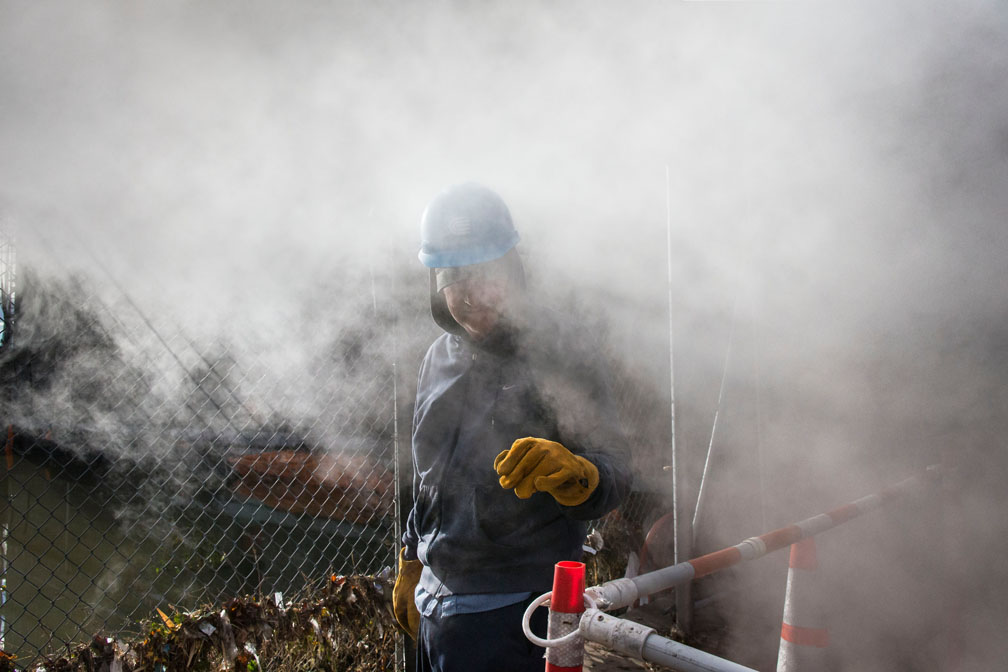
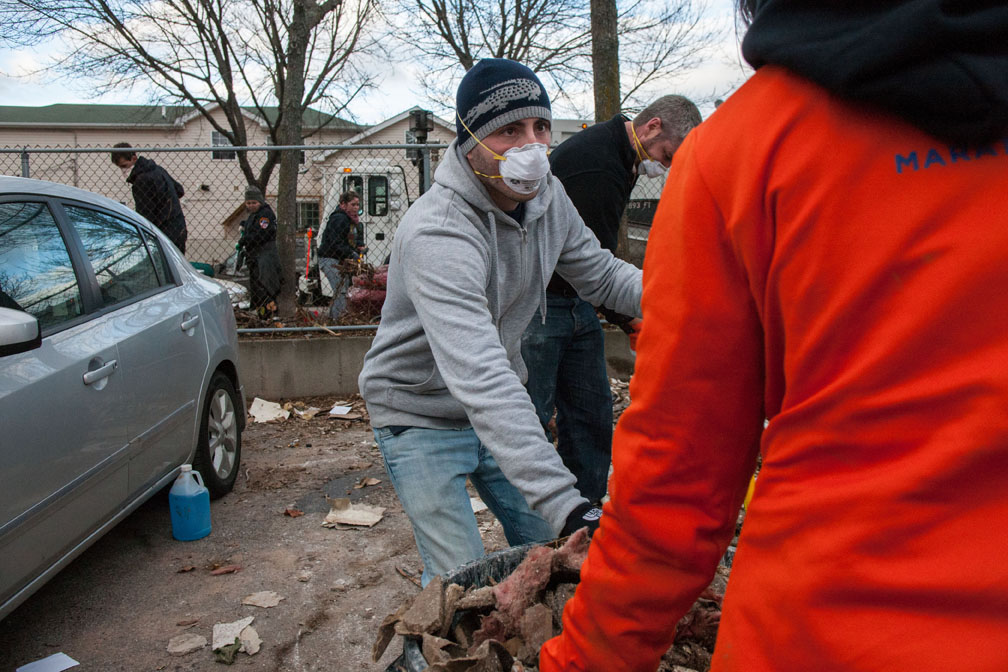
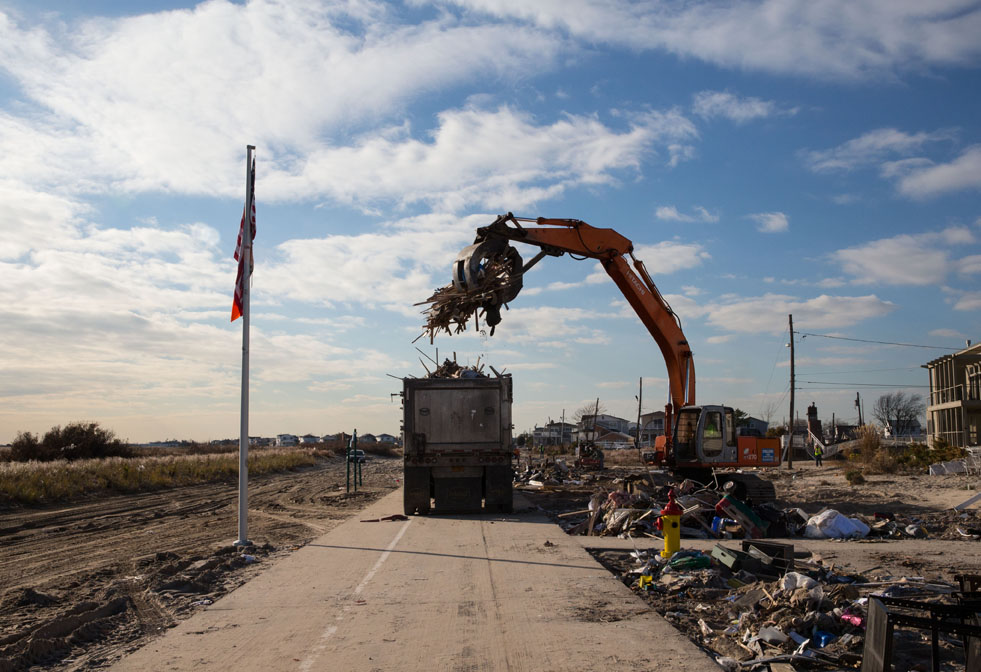
Scott is a New York resident and like most with a camera got out to photograph the aftermath of Hurricane Sandy. He sent me some images. I’ve had my own thoughts on the photo coverage of Sandy, so I’ve tried to select an edit here that shows some things other photographs have not – namely Con Ed workers, different-enough compositions and laughter (click any image to see it larger.)
CON ED, MANHATTAN

NEW DORP BEACH, STATEN ISLAND



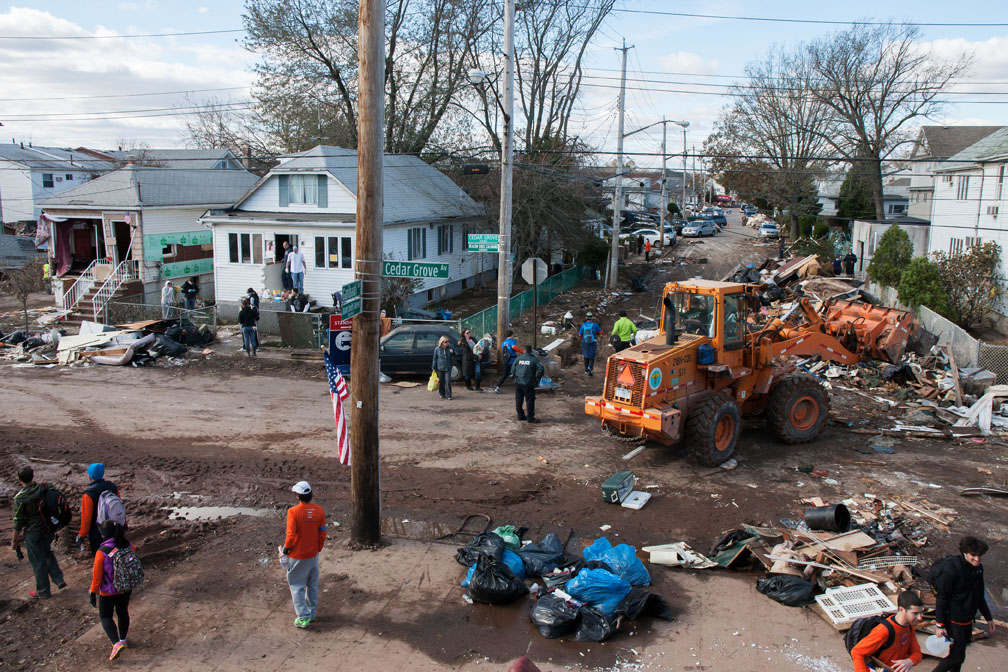
BREEZY POINT, QUEENS


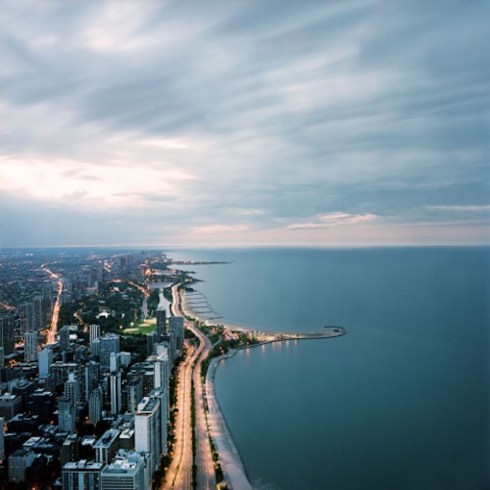
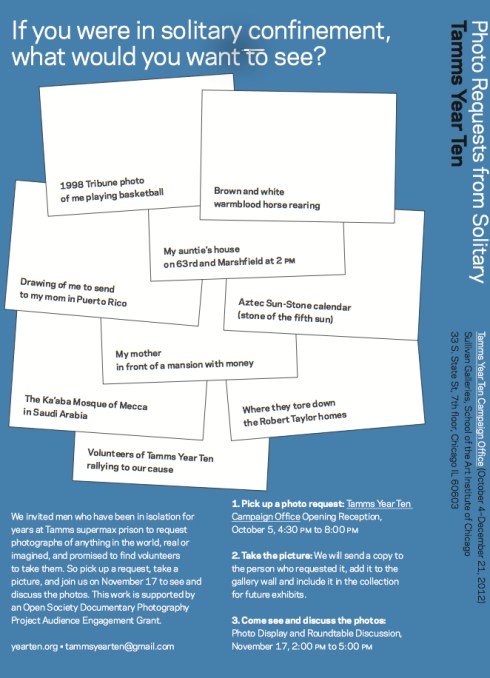
Request: “I would like to see the downtown Chicago or the lake of Chicago it will bring me happiness to see a real nice picture of the downtown. Please! A good place to eat! Nice cars! I been locked up for 17 long years!”
Last week, I asked Where Are All The Photographs Of Solitary Confinement? In terms of evidential imagery, the question still stands. A very different but equally interesting angle to take in the inquiry into images from within solitary is to consider the imagined and idealised images that persist within the minds of prisoners.
FROM LOCKED DOWN MINDS TO TANGIBLE PRINTS
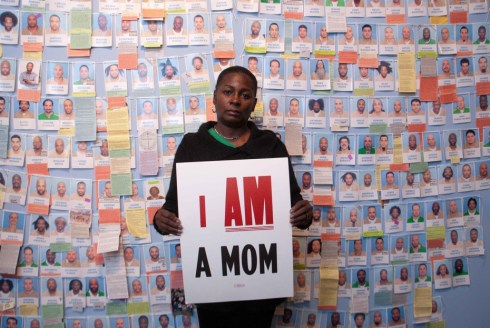
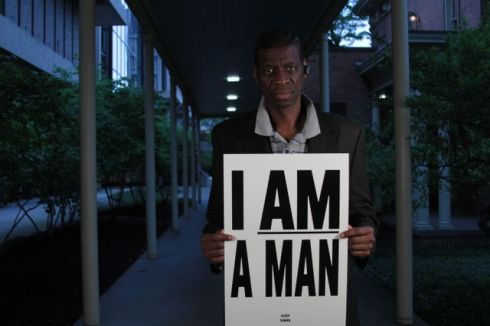
Tamms Year Ten (TY10), a Chicago-based activist group campaigning to close down the controversial Tamms Supemax in Illinois, is not only finding out what the precious images are in the minds of men in solitary, they are going out into the world and making those images a reality – making files, prints to be mailed to each man, and prints for awareness-raising exhibitions.
TY10 asked scores of men in solitary, “If you could have one picture, what would it be?” The requests can be anything in worlds real or imagined. Once made, the images are opportunities for prisoners to see what they want to, what they used to, or perhaps what they may never see again.
Tamms prisoners never leave their cells except to shower or exercise alone in a concrete pen. Meals are pushed through a slot in the cell door. There are no jobs, communal activities or contact visits. Suicide attempts, self-mutilation, psychosis and serious mental disorders are common at Tamms, and are an expected consequence of long-term isolation.
The U.N. Committee Against Torture considers such conditions to be cruel, inhuman and degrading, and when the isolation is indefinite – as at Tamms – to be form of torture. Last year, the U.N. Special Rapporteur on torture Juan E. Méndez called for a global ban on solitary confinement in excess of 15 days.
This year, Governor Pat Quinn announced his plans to shut down the prison but closure has been halted because of lawsuits by the prison guards’ union, AFSCME.
FRAMEWORK FOR CONSIDERING THESE IMAGES
Below are a selection of the requests and resulting images. They are a hodge-podge collection of styles and approaches and clearly many of the images do not meet the standards of fine art aesthetics. But, those standards are not by which these images should be judged.
The images originate from the minds of men who exist in environments of severe sensory deprivation. Each image is conjured from the absence of imagery.
Process trumps product in the TY10 Photo Requests From Solitary project. These images connect and educate people across supermax divides – the most opaque divides of prison regulation. The Photos From Solitary Project – one of the many TY10 efforts to engage the public on the issue of cruel and unusual detention – was conceived of to capture the eyes and ears of people and draw them in to protest and resistance.
The processes in making these images buttress, and spread, committed social justice activism; that is their worth.
Active in the project are artists and photographers Greg Ruffing, Oli Rodriguez, Jeanine Oleson, Rachel Herman, Claire Pentecost, Colleen Plumb, Tracy Sefcik, Harry Bos, Chris Murphy, Billy Dee, Lindsay Blair Brown, Karen Rodriguez, Sue Coe, Danny Orendorff, Lloyd Degrane and others.
Requests remain open and you can get involved too. Contact tammsyearten@gmail.com
IMAGE GALLERY
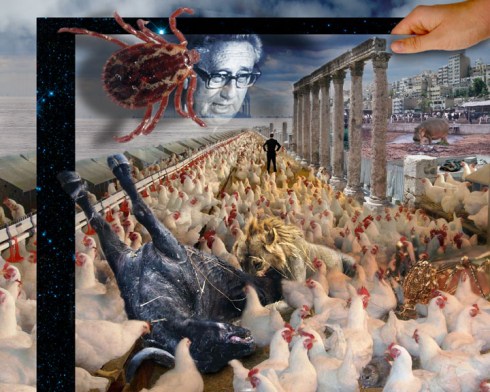
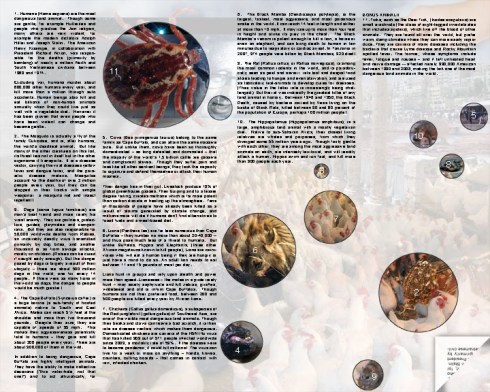
Request: “If you please, send me photographs of laser-printed image on white paper or the 10 most-dangerous land animals in the world. If you do not find it onerous and unreasonable, send me pictures of the land animals too, with a description of each animal.”
Photo montage by Mark Cooley; research and text by Stephen F. Eisenman.
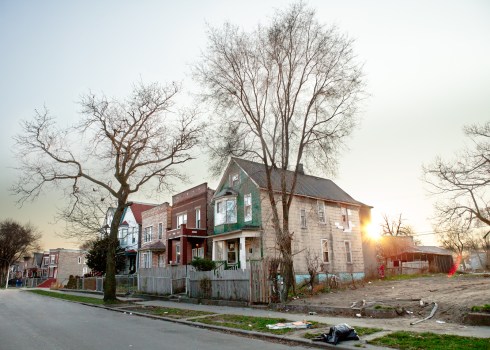
Request: “I want a photo of the whole block of 63rd and Marshfield, on the south-side in the Englewood community – the 6300 block of south Marshfield is where I’m from. I would like it taken in the day time, between two and four o’clock p.m. It’s a green and white duplex-like house – the only green and while house on the block – that my Auntie “Gibby” lives in. I want the picture taken from the sidewalk (that leads to the T-shape alley going towards Ashland and 63rd) in front of the alley, facing slightly towards 64th Marshfield. But, make sure majority of the west-side of the block gets pictured.”
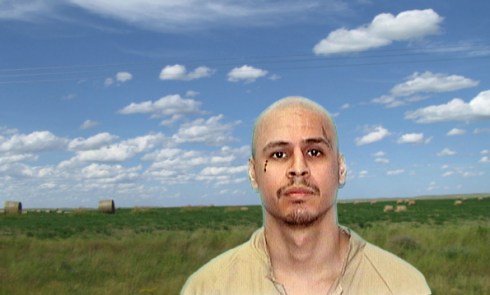
Request: “I would like my own picture done with an alternate background from the IDOC picture. I have no pictures of myself to give my friends and family. This would mean a great deal to me. If this is not able to be done. Then I’ll leave the picture for you to decide. If you can place my picture on another background. Nothing too much please. Something simple like a blue sky with clouds or a sunset in the distance would be fine.”
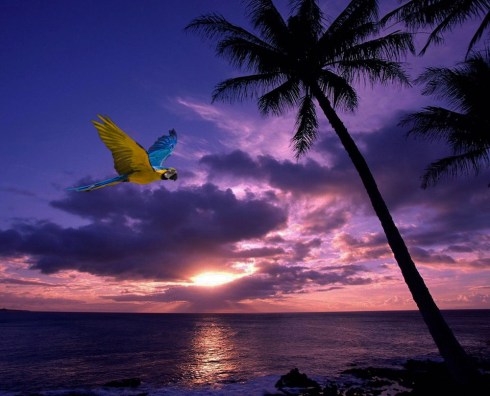
Request: “I would like to see a picture of a beach with the clearest water, and palm trees and birds with colorful plume, and maybe with the sun setting low on the horizon. The only instruction I have would be for you to create this photo with imagination and serenity.”
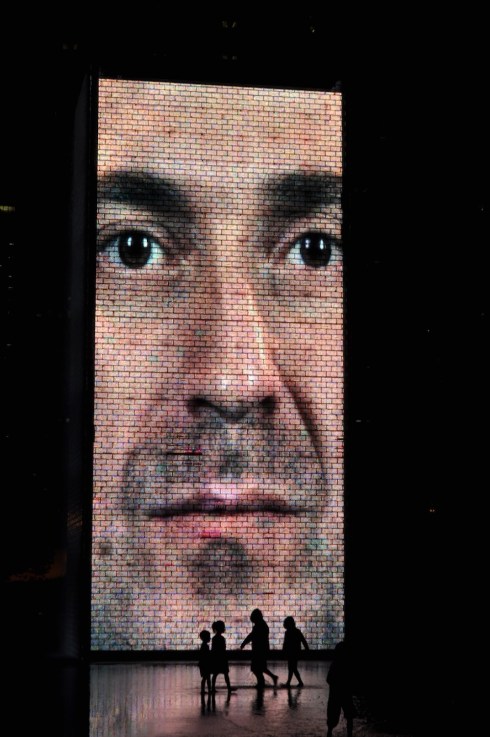
Request: “It’ll be great to get a picture of the chicago skyline at night, with all the big buildings (Willis Tower, etc) and lakefront. really I would just like pictures of the city, the x-mas tree down town, mag-mile, Mill park the places people come to chicago to see. Hey, you’re the photographer, just do what you do!”

Request: “Jennifer Lopez music videos with her ex Ben Affleck on the boat with her butt showing. I will like to see her butt.”
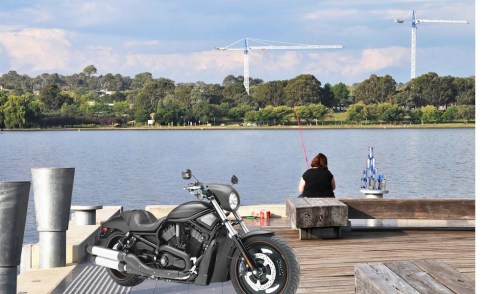
Request: “I would love a photograph of a woman setting by a lake fishing, with an empty chair next to her, with a cooler of beer. And in the empty chair have a sign with FreeBird on it! And have a Harley Davidson motorcycle in the background! I’d prefer the photographer take the photo from a boat out in the lake! Also, I’d prefer a woman that’s over 40!”
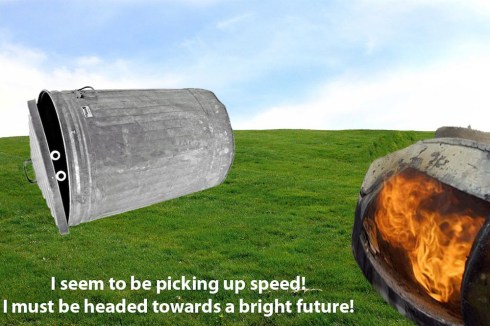
Request: “At 66 yrs. of age I try to use a little humor. I want a picture of a trash-can with the lid half off, with two eyes peeking out of the half-open lid. The trash can is rolling down the hill toward an incinerator with the caption: ‘I seem to be picking up speed I must be headed towards a bright future.’ I was in Florence, CO. So if you could get a picture of me in the Feds and in the state Max joints you could caption both: ‘From Max to Max and no end in sight’.”
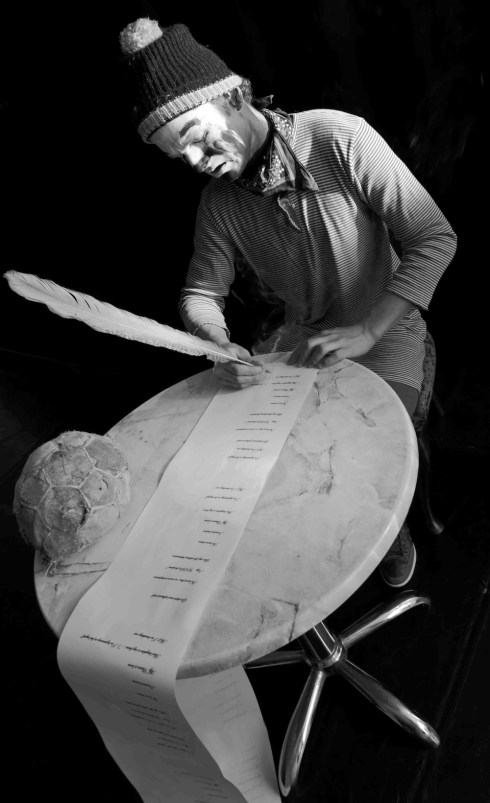
Request: “A lovesick clown, holding a old fashioned feathered pen, as if writing a letter. From the waist up, in black and white. As close up as possible with as much detail as possible, and with the face about four inches big.”
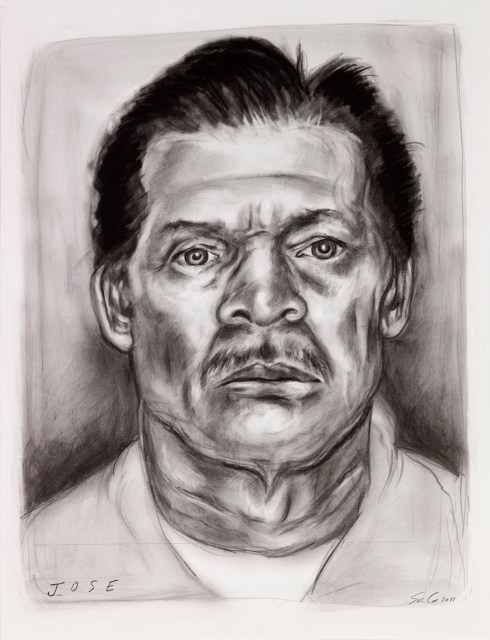
Request: “I would like this picture drawn my ID as is. Don’t add a thing. Just the face will do. Thank you for this blessing. I don’t have any pictures of myself; they all were confiscated, years back, when I was at Pontiac. So I would like to know if you could get a picture of me off the internet or the ID photo that I believe you have. Don’t worry I still don’t smile or laugh it’s been years since I smiled, but thanks to your offer I will be smiling if I get the picture your offering. I believe you could get my mug shot off the internet. The picture is to be sent to my mother in Puerto Rico.”
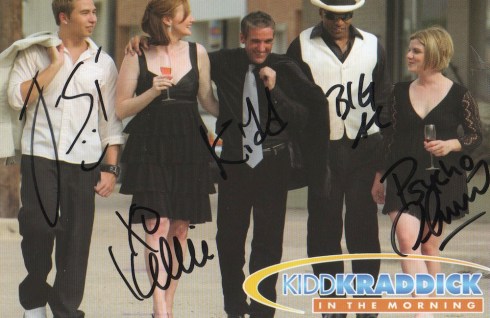
Request: “Cast of the Kidd Kraddick in the Morning Show: Kelly Rasberry; Big Al Mack; Jenna; Psycho Shannon; Kidd Kraddick; JS.” [This is the cast of the radio show he listens to every day. He has been in isolation for 12 years.]
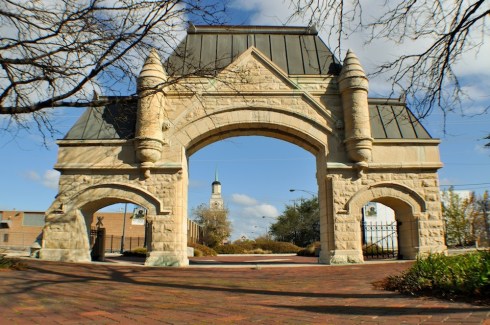
Request: “A picture of the stone archway in the back of the yard’s neighborhood located at 40th and Exchange St; between Halsted and Racine Streets on the South Side. It’s the last remaining thing from the Union Stockyards. I used to climb up on this structure as a kid; a few angle’s of it taken from different directions. I am not limited to any photo amounts.”
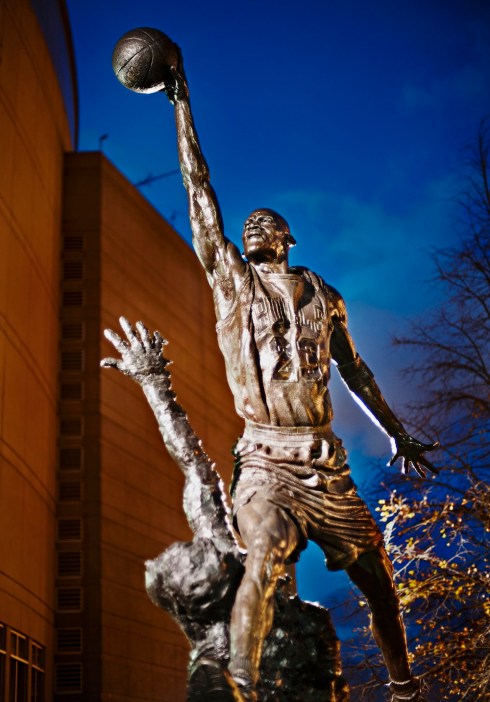
Request: “I would like a photograph of Madison and Ashland looking West towards the United Center, and if you could, I would like a full frontal view of the Michael Jordan statue in front of the United Center. THANK YOU!”
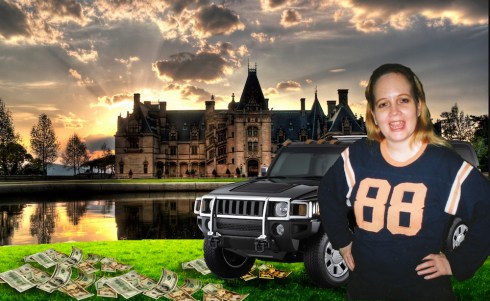
Request: “A photo of my deceased mother standing in front of a mansion, or big castle with a bunch of money on the ground and a black Hummer parked in front of it. I truly appreciate this a lot. I have been trying to get a picture of this, for a long time now. Please send the picture back when you are finished. We can’t receive Polaroids, just regular pictures that is 15 pictures, but 10 per envelope. I’m sending you two poems I wrote. I would truly appreciate it a lot from you helping me out, especially as I don’t have nobody out there. Now I know somebody out there in the world cares about us in here.”
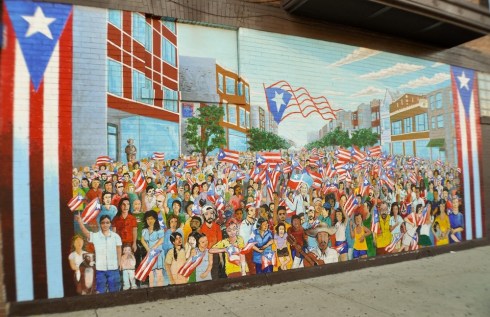
Request: “I would like to receive a photograph of a “8×10″ Puerto Rican Flag. Thank you in advance! This could be taken in the Humboldt Park neighborhood in Chicago.”
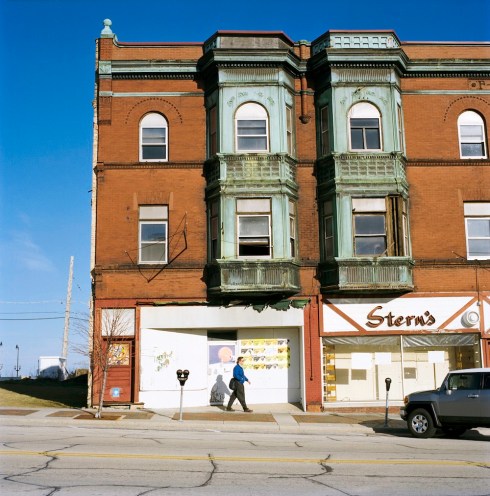
Request: “I would like a picture of downtown Waukegan, IL located in Lake County, IL. The best place to photograph would be Genesse St.”
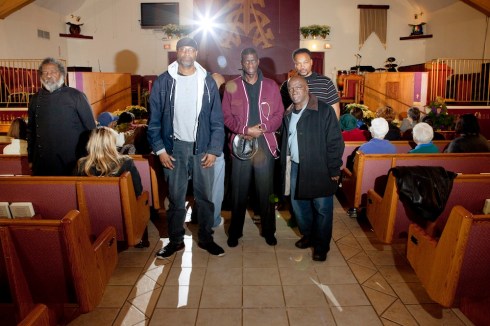
Request: “Photographs of Tamms Year Ten – that is, if they are not prohibited. :< I’d just like to be able to put the faces to the names we’ve seen over the years so the humanity of each can shine forth – a name on paper at the end of the day is still just a name on paper!”
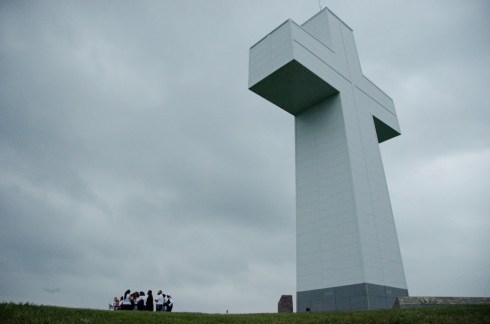
Request: “The Bald Knob Cross in the Southern area of Illinois with someone of the Christian faith going there praying for me with the Grand Cross in the picture praying that I am released from Tamms and that I make parole. I’ve been locked up 36 long years, and time in Tamms is hindering my chances of making parole. I am asking for intercession prayers for my release from Tamms by this personal Bald Knob Cross and the chain will cause my family and others to go there too. Be sure to include the Bald Knob Cross in the picture and to pray for my release from Tamms and to make parole. My family and church will also finish linking the chain of this event. Persistently offering prayers combined with solemn earnest efforts and devoted work to change things. God + Tamms Year Ten + dynamic team!”
TY10 note: We coordinated with the management at Bald Knob Cross, gathered his family members and others, drove six hours to Bald Knob Cross and held a beautiful litany with prayer, song and verse and every family member speaking. The next day we took family members to visit Tamms. Willie was transferred from Tamms the day before the prayer vigil! This summer – after 37 years in prison – he got parole. Willie was put on a Greyhound bus and was back in Chicago the next day. We had a Welcome Home party for him and he talked about this photograph.
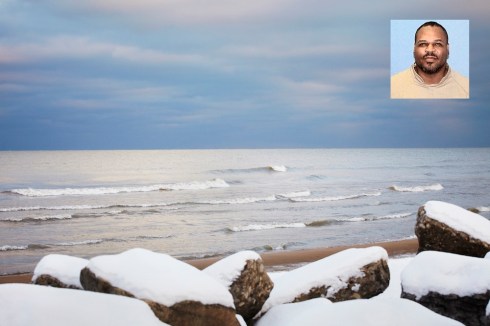
Request: “A photograph within a photo of me + the lake front. A photograph within a photo of me + Navy Pier. A photograph within a photo of me + wild lions. A photograph within a photo of me + wild wolves. A photograph within a photo of me + Chinese Dragon. For next Christmas mailing of cards. Please place me in the right, upper corner of the photo within a photo and make copies of them 5 each. Thank you very much and many blessings. Get my photo off the Tamms, prison profile website.”
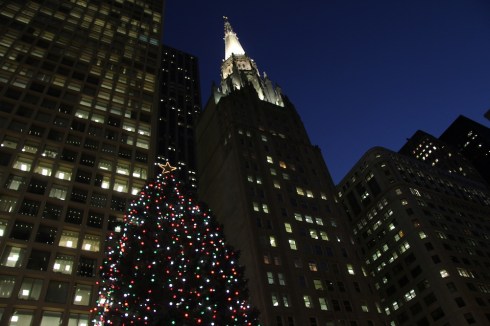
Request: “A photo of the Christmas tree downtown.”
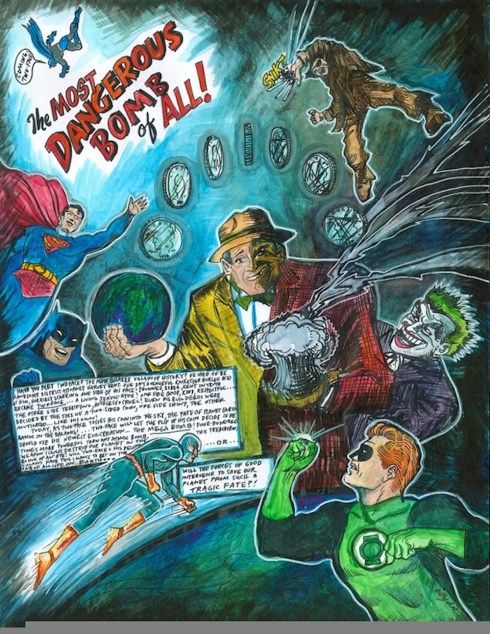
Request: “I don’t know if this like an artist drawing a picture if so I got into the whole superhero thing and I had this idea where two major comic Marvel/DC. It’s a mural with Thor, Captain America, Wolverine, Venom, Iron Man, Hulk teamed up with Superman, Green Arrow, Flash, and Batman against Two Face, Joker, Magneto, Dr Doom, Saber Tooth, Kingpin, and Green Goblin. A battle of good-vs-evil theme.”
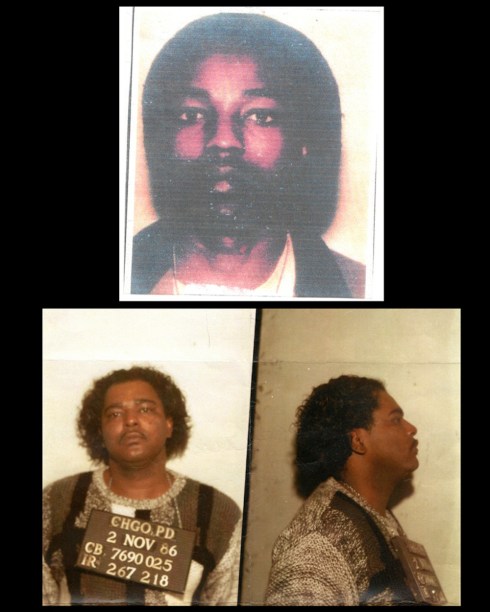
Request: “I would like to receive an image laser-printed on regular white paper photograph a myself off the internet without my criminal convictions or other information attached to the photo. I would like the three photographs I am sending to you copied onto digital paper that can be used in a computer enhancement. If someone can do this for me, I will appreciate it very much and thank you. If you can not do it send my photos back, please. “
TY10 Note: We completed this one and the IDOC censored it and returned it to us.
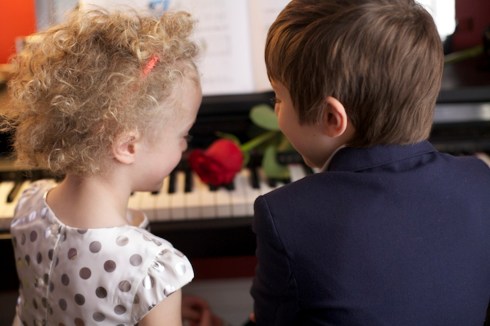
Request: “I would like a photographer to capture the image of a little boy and girl, sitting side by side, on a piano bench, the two of them playing together, with a single bright red rose on the piano keys. If possible, make sure the kids are anywhere from 3-7 years old, dressed in sunday best. It shall be a romantic photo, which I hope to give to my wife. 8×10 copy of the completed photo.”
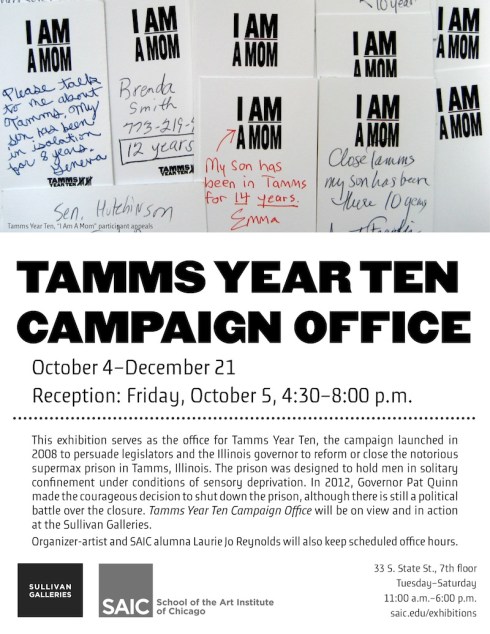
TAMMS YEAR TEN & PHOTO REQUESTS FROM SOLITARY
The exhibition Photo Requests From Solitary is on show until the 21st December, at the Tamms Year Ten Campaign Office, Sullivan Galleries, School of the Art Institute of Chicago, 33 S. State St., 7th Floor, Chicago IL 60603.
The Tamms Year Ten Photos Requests From Solitary is supported by an Open Society Documentary Photography Audience Engagement Grant. In partnership with the National Religious Campaign Against Torture, the project is to expand to supermaxes in California and Virginia.
Tamms Year Ten is a grassroots coalition formed in 2008 to persuade Illinois legislators and the governor to reform or close Tamms supermax prison. Follow them on Facebook.

Through a website, positive networks, karma in the plus column, and not a small amount of effort, Kevin Miyazaki‘s Collect.Give has steadily been making the world a better place. It’s ridiculous that I’ve not sung the praises of Collect.Give‘s work here on PP before.
In just a few years, Collect.Give has raised tens of thousands of dollars through print sales for worthy charities hand-picked by the photographers themselves.
The latest offering is Love You by Nate Larson and Marni Shindelman. It is from their project Geolocation that, according to Larson, “tracks geotag coordinates associated with Twitter tweets and pairs the text with a photograph of the originating site to mark the virtual information in the real world.”
I’m still undecided about the merits of Geolocation. I saw it at Blue Sky Gallery recently. The images are well made and the concept is stronger than most, but I’m still not sure. Then again, I recently, I big-upped the work of Dan Gluibizzi because he has managed to find a constructive use of – and end point to – Tumblr, so I should be big-upping Larson and Shindelman’s Geolocation because they have managed to step back, find a constructive use of – and an end point to – Twitter.
What really gets me excited, right now though, is the fact that all profits from the sales of Love You go to the Southern Poverty Law Center (SPLC).
The SPLC is an incredibly effective and committed advocacy group of lawyers, researchers and paralegals based in Atlanta, Georgia. The SPLC “fights hate and bigotry and seeks justice for the most vulnerable members of our society.” Often this means providing legal assistance and representation to poor prisoners denied basic human rights during their incarceration, trial hearings and appeals.
I met with several staffers at the SPLC last year and was deeply impressed by SPLC’s work and deeply, deeply effected when I learnt about the inequalities of Southern states’ criminal justice systems. The SPLC mounts lawsuits within the states of Georgia and Alabama (two of the poorest states in the union) against inadequate medical care, prosecutorial misconduct and institutional abuse. Never before have I seen so clearly the link between the prison system and the social inequalities that feed it.
SPLC gives the voiceless the possibility of a voice, despite the obstacles.
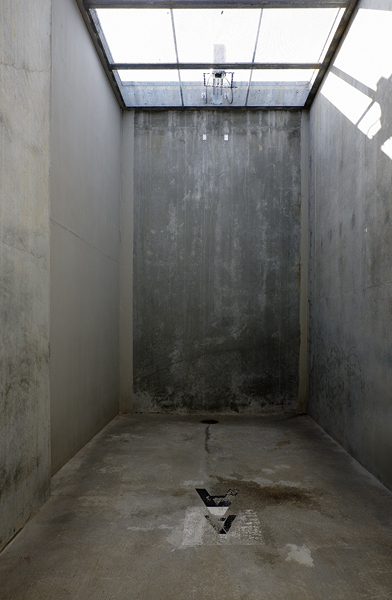
Isolation exercise yard, Security Housing Unit, Pelican Bay, Crescent City, California, a supermax-type control, high security facility said to house California’s most dangerous prisoners. © Richard Ross
Solitary confinement is in the news … for lots of reasons – a lawsuit brought by prisoners against the Federal Bureau of Prisons; a lawsuit brought by 10 prisoners in solitary against the state of California; a June Senate hearing on the psychological and human rights implications of solitary confinement in U.S. prisons (which included the fabrication of a replica sized AdSeg cell in the courtroom); an ACLU report pegging solitary as human rights abuse; a NYCLU report showing arbitrary use of solitary, a NYT Op-Ed by Lisa Guenther; the rising use of solitary at immigration detention centres; and the United Nations’ announcement that solitary is torture.
Recently, journalists from across America have contacted me looking for photographs of solitary confinement to accompany their article. I could only think of three photographers – one of whom wishes to remain anonymous; another, Stefan Ruiz is not releasing his images yet; which leaves Richard Ross‘ work which is well known.
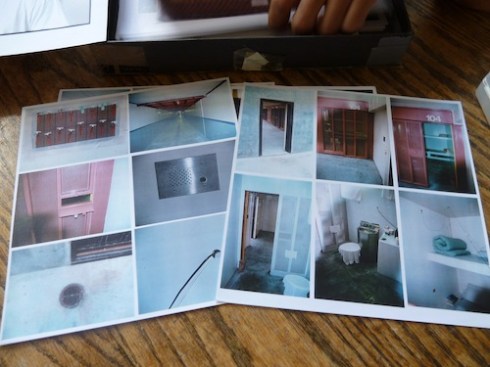
Stefan Ruiz’ photographs of Pelican Bay State Prison, CA made in 1995 for use as court evidence. (See full Prison Photography interview with Ruiz here.)
With a seeming paucity, I went in search of other images. I found an image of a “therapy session” by Lucy Nicholson from her Reuters photo essay Inside San Quentin. A scene that has been taken to task by psychologist and political image blogger Michael Shaw.
Shane Bauer took a camera inside Pelican Bay for his recent Mother Jones report on solitary confinement.
Rich Pedroncelli for the San Francisco Chronicle.
Pelican Bay has been hosting media tours and welcoming journalists in the past year – partly due to public pressure and partly through a strategic shift by the CDCR to appear to be responding to public outcry. Maybe the courts have had a say, too?

© Lucy Nicholson / Reuters. Prisoners of San Quentin’s AdSeg unit in group therapy. (Source)
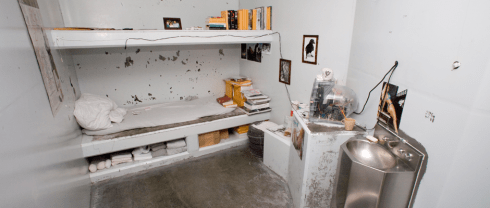
© Shane Bauer. Pelican Bay SHU cell. (Source)

© Shane Bauer. CA CDCR employees show investigative journalist Shane Bauer the Pelcian Bay SHU “Dog run.” (Source)

Correctional Officer Lt. Christopher Acosta is seen in the exercise area in the Secure Housing Unit at the Pelican Bay State Prison near Crescent City, Calif., Wednesday, Aug. 17, 2011. State prison officials allowed the media to tour Pelican’ Bay’s secure housing unit, known as the SHU, where inmates are isolated for 22 1/2 hours a day in windowless, soundproofed cells to counter allegations of mistreatment made during an inmate hunger strike last month. Photo: Rich Pedroncelli, AP/SF (Source)
The amount of visual evidence still seems limited. It’s not that reporting on solitary confinement is lax or missing. To the contrary, I’ve listed at the foot of this piece some excellent recent journalism on the issue form the past year. We lack images.
Look Inside A Supermax a piece done with text and not images is typical of the invisibility of these sites. National Geographic tried a couple of years to bring solitary confinement to a screen near you. ABC News journalist Dan Harris spent the “two worst days of his life” in solitary to report the issue.
Why do we need to see these super-locked facilities? Well, depending on your sources there are between 15,000 and 80,000 people held in isolation daily (definitions of isolation differ). My conservative estimate is that 20,000 men, women and children are held in single occupancy cells 23 hours a day.
Gabriel Reyes, prisoner at Pelican Bay SHU writes about his experience for the San Francisco Chronicle:
“For the past 16 years, I have spent at least 22 1/2 hours of every day completely isolated within a tiny, windowless cell. […] The circumstances of my case are not unique; in fact, about a third of Pelican Bay’s 3,400 prisoners are in solitary confinement; more than 500 have been there for 10 years, including 78 who have been here for more than 20 years.”
Solitary confinement is a “living death”; an isolating “gray box” and “life in a black hole.” Imagine locking yourself in a space the size of your bathroom for 23 hours a day. As James Ridgeway, currently the most prolific and reliable reporter on American solitary confinement, writes:
“A growing body of academic research suggests that solitary confinement can cause severe psychological damage, and may in fact increase both violent behavior and suicide rates among prisoners. In recent years, criminal justice reformers and human rights and civil liberties advocates have increasingly questioned the widespread and routine use of solitary confinement in America’s prisons and jails, and states from Maine to Mississippi have taken steps to reduce the number of inmates they hold in isolation.”
The over zealous and under regulated use of solitary confinement to control risk and populations within U.S. prisons is a cancer within already broken corrections systems. I’m posting a few more image that Google images afforded me – but I urge caution – these are just a glimpse and may not be indicative of solitary/SHU conditions. Windows are a rarity in solitary despite three images below showing them.
The main reason I’m posting here is to ask for your help in sourcing all the photography of U.S. solitary confinement we can. Please post links in the comments section and I’ll add them to the article as time goes on.
SELECT IMAGES

© Alice Lynd. Front view of cell D1-119. Todd Ashker has been in a Security Housing Unit (SHU) for more than 25 years, since August 1986, and in the Pelican Bay SHU nearly 22 years, since May 2, 1990. “The locked tray slot is where I get my food trays, mail.” (Source)
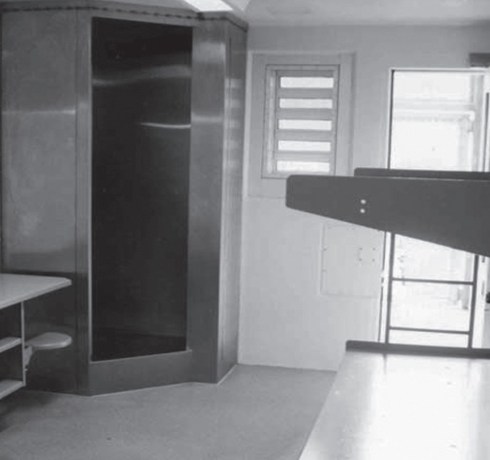
A typical special housing unit (SHU) cell for two prisoners, in use at Upstate Correctional Facility and SHU 20.0.s in New York. Photo: Unknown. (Source)

Bunk in Secure Housing Unit cell, Pelican Bay, California © Rina Palta/KALW. (Source)

Solitary Confinement at the Carter Youth Facility. Since the arrival of the girls’ program at Carter, the administration has created a new seclusion cell. This cell contains no pillow, sheet, pillow case or blanket. In fact, there is nothing in the cell other than a mattress, which was added after numerous requests from the monitor. Girls are routinely placed in this room for “time out.” Photo: Maryland Juvenile Justice Monitoring Unit. (Source)

© Rina Palta, KALW. “More than 3,000 prisoners in California endure inhuman conditions in solitary confinement.” This photo, taken in August 2011 of a corridor inside the Security Housing Unit (SHU) at Pelican Bay State Prison, illustrated Amnesty’s report. (Source)

© National Geographic. In Colorado State Penitentiary 756 inmates are held in “administrative segregation” alone in their cells for 23 hours a day. 5 times a week they are allowed into the rec room where they can exercise and breath fresh air through a grated window. (Source)
FURTHER READING
Eddie Griffin, prisoner in s Supermax prison in Marion, IL writes about “Breaking Men’s Minds” [PDF.]
Boxed In NYCLU campaign and report with resources and video against use of solitary confinement. HIGHLY RECOMMENDED
The Gray Box, an investigative journalism series and film about solitary across the U.S., by Susan Greene. (Dart Society) HIGHLY RECOMMENDED
ACLU – Stop Solitary Confinement – Resources – HIGHLY RECOMMENDED
ACLU _ State specific reports on solitary confinement
Andrew Cohen’s three part series on “The American Gulag” (Atlantic)
Atul Gawande’s take on the psychological impacts of solitary confinement (New Yorker)
Sharon Shalev, author of Supermax: Controlling Risk Through Solitary Confinement, here writes about conditions. (New Humanist)
The shocking abuse of solitary confinement in U.S. prisons (Amnesty)
SOLITARY ELSEWHERE ON PRISON PHOTOGRAPHY
Interview with Isaac Ontiveros, Director of Communications with Critical Resistance, about Pelican Bay solitary and community activism.
The invention of solitary confinement.
RIGO 23, Michelle Vignes, the Black Panthers and Leonard Peltier
Chilean Miners, Russian Cosmonauts and 20,000 American Prisoners
Robert King, of the Angola 3, writes for the Guardian

Click images for full 2000-pixel wide view.
Kirk Jones is, like many, a photographer with a wandering path. Jones has worked with newspapers, assisted at a large commercial studios, and custom printed Pulitzer Prize winning photographer David Hume Kennerly‘s photographs.
Between 1994 and 1999, Jones freelanced in South East Asia, mainly in Vietnam and Cambodia. Upon returning to the U.S., he concentrated on web design and now manipulates Gigapixel imagery as a Senior Computer Scientist at Adobe. Three years ago, he made a return as a practicing photographer.
“I have slowly been easing myself back into the photographic world,” says Jones. His independent work has been published on CNN.com and NYTimes.com, his images featured in a documentary on Jesse Bernstein. He exhibits locally.
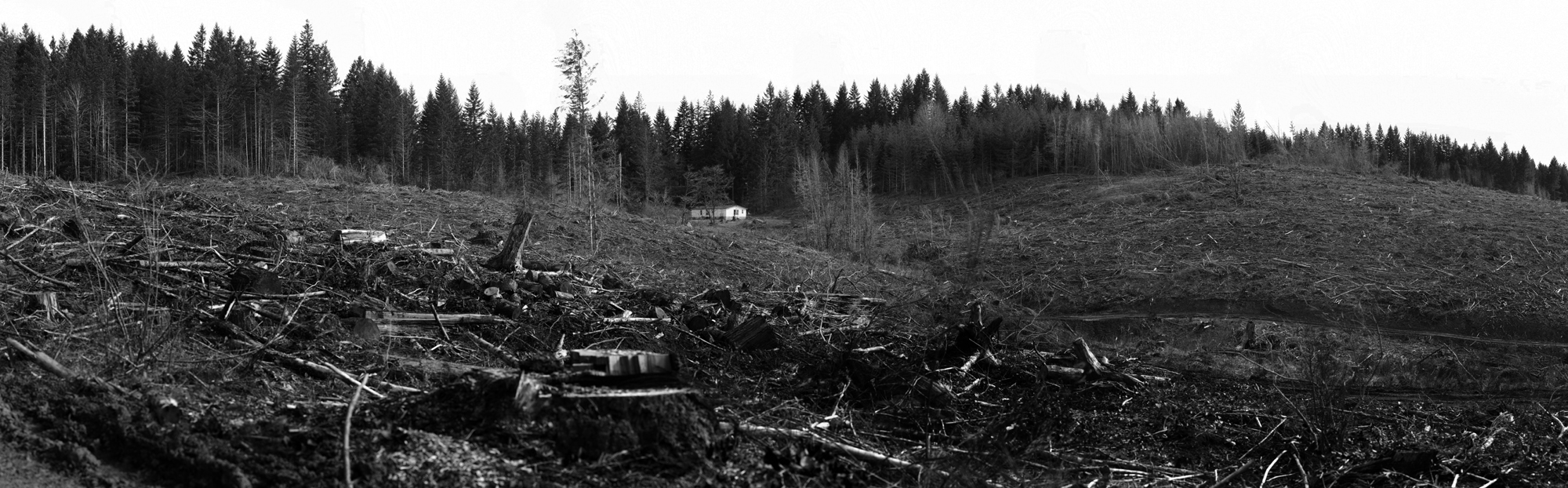
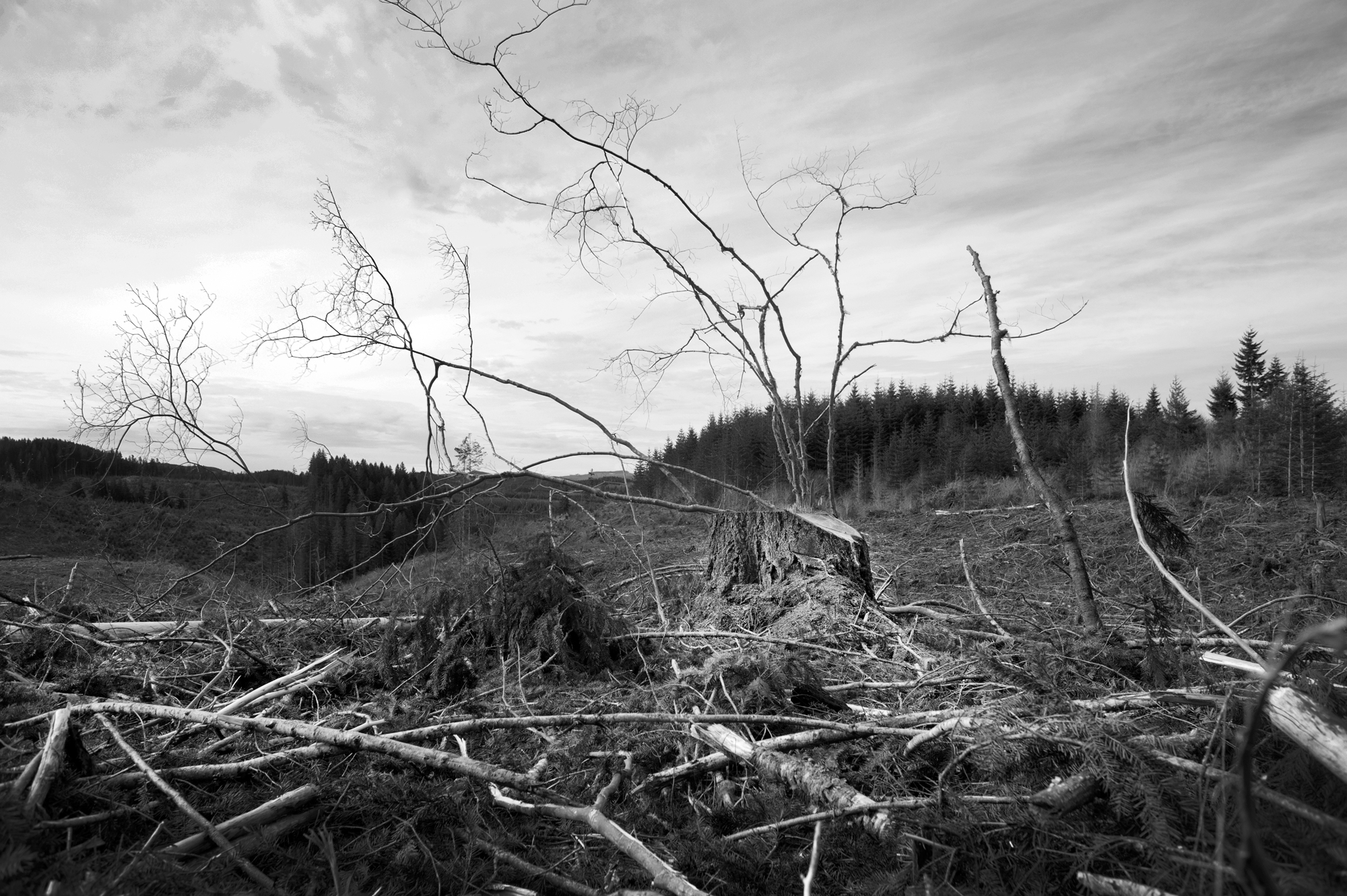
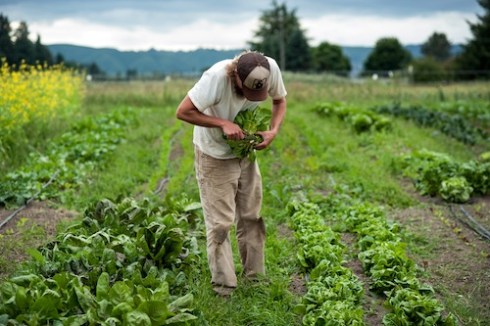
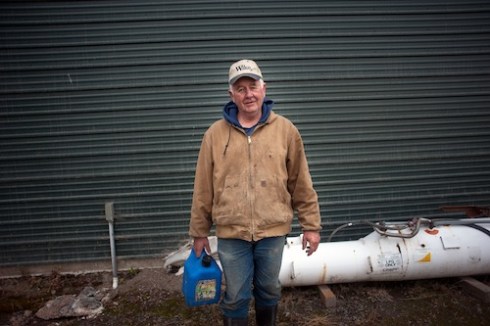
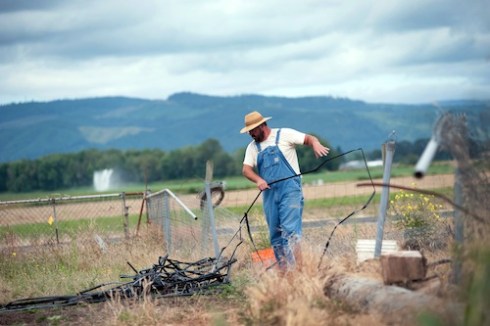
Over the past year, Jones has photographed clearcut logging, the urban growth boundaries that exists near Portland, OR, and the migrant work force that caters to the Oregon wine industry.
Black & White images from Jones’ Clearcut series and colour images from his Farm To Table series.
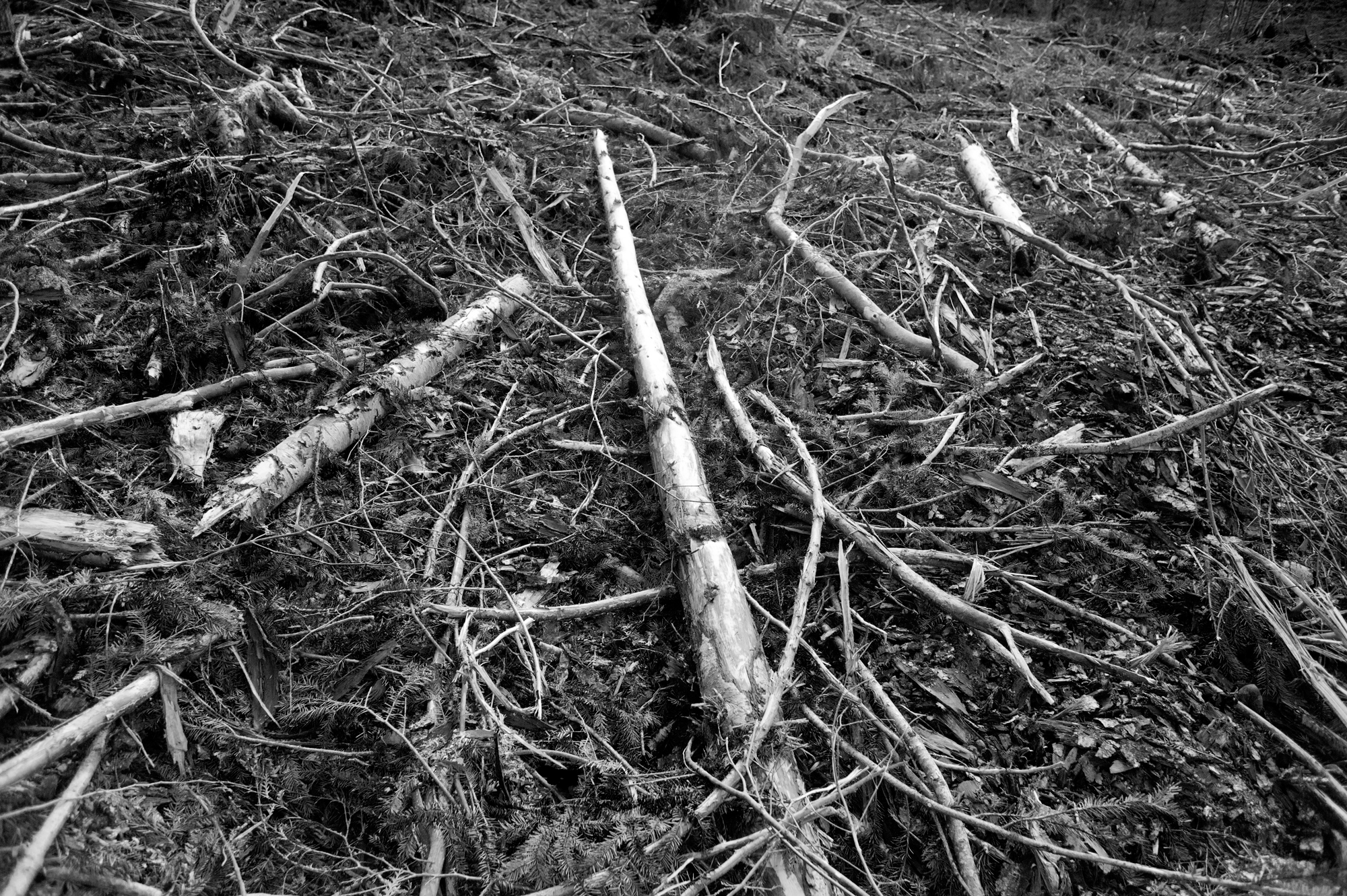
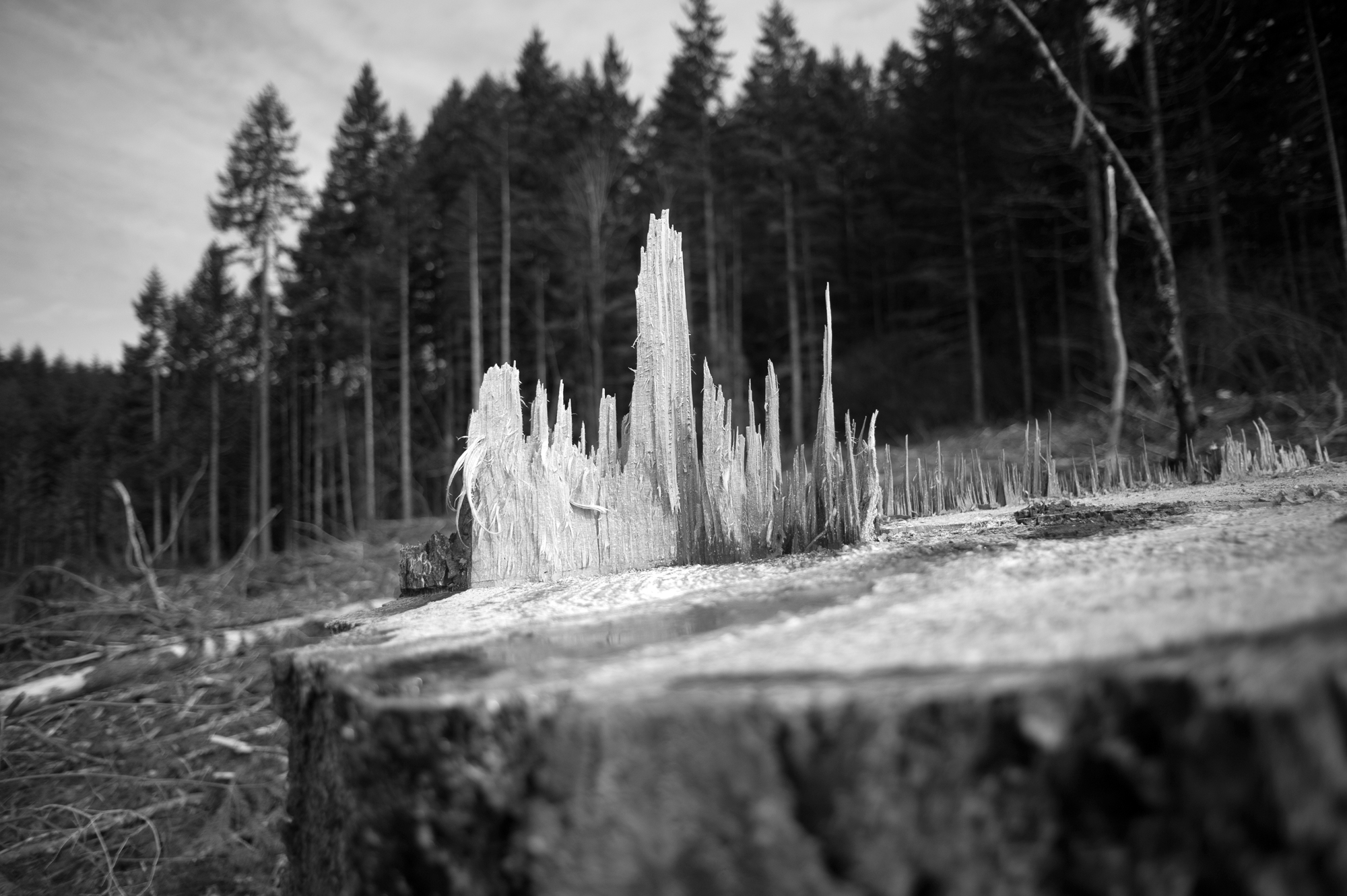
Prison Photography (PP): You’ve photographed a lot of different places, but I picked these because they were recent, close to our city of Portland and about economics, industry, nature, and the region’s culture. Why the interest in clearcut logging?
Kirk Jones (KJ): Witnessing the clearcuts along the Western Oregon highways recently, I experienced the same emotions as it did when I was young and gazing from the car window. Most of us that live here, and those that visit, at some point witness these open landscapes – often behind the veil of trees left standing along the roadside.
Photography is a medium to express what I observe happening close to home. Logging is an multi-faceted issue and something that contributes to our economy here in Oregon.
I have a long history of considering nature and my place within it. I grew up in the Midwest and lived in Northern Minnesota until my junior year of high school. The area is known for lakes and forests and natural beauty, but it is also an area known for timber and for massive strip mining.
Attending college at Evergreen in Olympia, WA – around the time of the spotted owl movement – sparked my affinity with the environment. Evergreen College was, and remains, a magnet for environmentalists and environmental theory.
I recall during trips to the coast that the lumber companies left a thick row of trees along the highway to mask the reality of what was going on behind; I felt like they were trying to hide something.

Click images for full 2000-pixel wide view.
PP: This work is in the legacy of Robert Adams, Eirik Johnson, Christopher Lamarca and many others who look at the Pacific Northwest landscape with wry, open eyes. How should we be relating to our natural resources, in life and in photography?
KJ: Without a connection to your natural surroundings it is difficult to connect to feelings of being alive. We are fortunate to live not only in an area of amazing natural beauty, but in a country that (hopefully) will continue to pursue the protection and respect for nature. It’s a fight.
I’m not advocating that natural resources shouldn’t be consumed around us, but I believe there are right ways to do this and wrong ways. I don’t think strip mining and clear cutting are responsible short or long term.
If photography can help illustrate, change or illuminate crisis, then I have faith that imagery can be a catalyst for crisis management.
PP: How do you characterize the Portland photography scene?
KJ: It has been quite a while since I was more entrenched in the photo scene. During the early 1990’s I worked at a large commercial studio in Portland as well as at The Film Lab located on the NW Park (gone now).
At that time there was a lot going on and you could feel Portland growing. I traveled and worked abroad before returning to the region a few years ago so I am just now reconnecting with photography in Portland.
I’ve gone to strobist shoots, stay active on a few mailing lists for local photographers, and test equipment for the teams at Gigapan. I look at local work when I can. The Portland photography scene appears to be healthy and there are a ton of cool things happening. I’ve been working on individual projects over the last few years and look forward to connecting with others.






 Prison Photography