
You are currently browsing the category archive for the ‘Fine Art’ category.
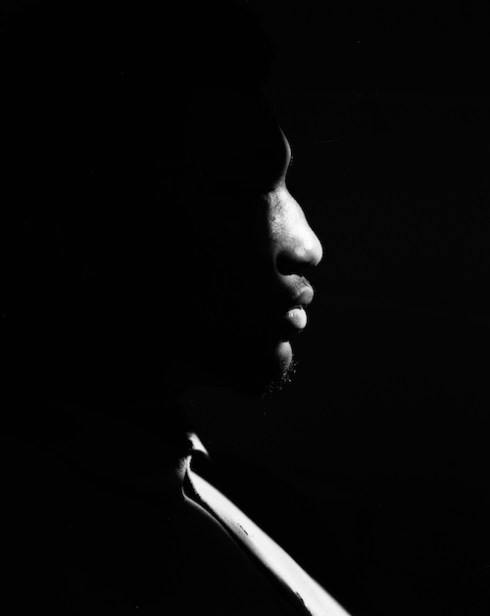
AS220 Youth
There are very few organizations like AS220 Youth.
Sure, there’s lots of teen-focused arts organizations across the country but few have achieved the long-lasting and diverse roster of programming and results that AS220 boasts. AS220, similarly to many orgs use arts to connect and empower youth. Very few organizations, however, go into juvenile prisons to deliver photography education. AS220 does.

Very few organisations go into juvenile lock-ups to begin programming in order that they may continue it upon release of the teen with whom they work . AS220 does.
Such continuum is practical AND hopeful. It says ‘We are with you, wherever you are. We share your goal to live free once more.’
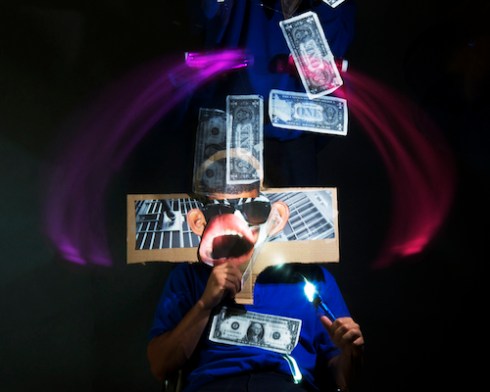

AS220 Youth, based in Providence, Rhode Island, gave me the warmest welcome a few years ago. They opened the door so that I could do a workshop with their incarcerated students. I gave a public lecture on my developing ideas about prison imagery. I interviewed the staff and helped students with portfolio reviews. My eyes were open to what a community can be.
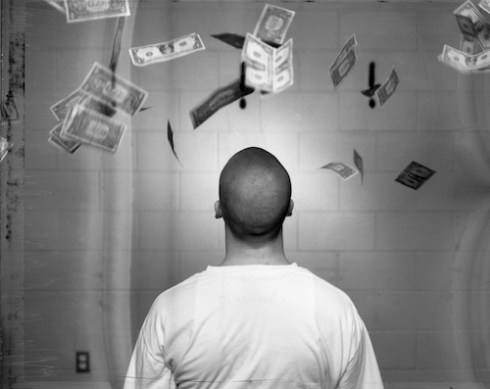
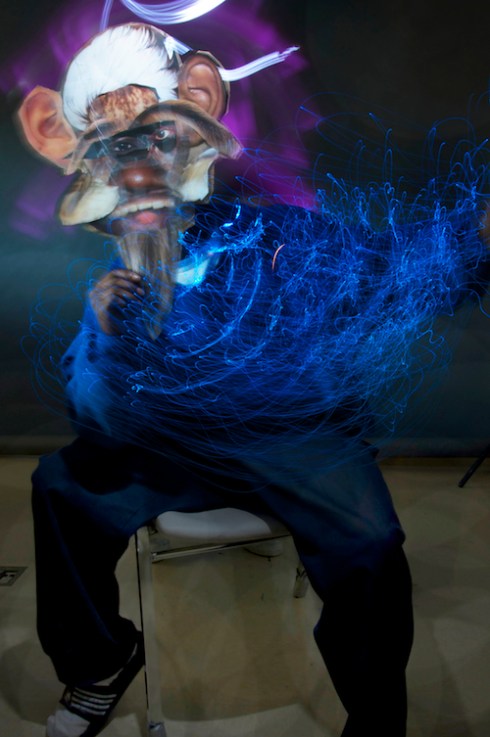
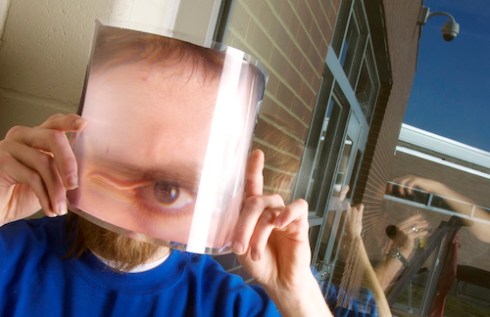
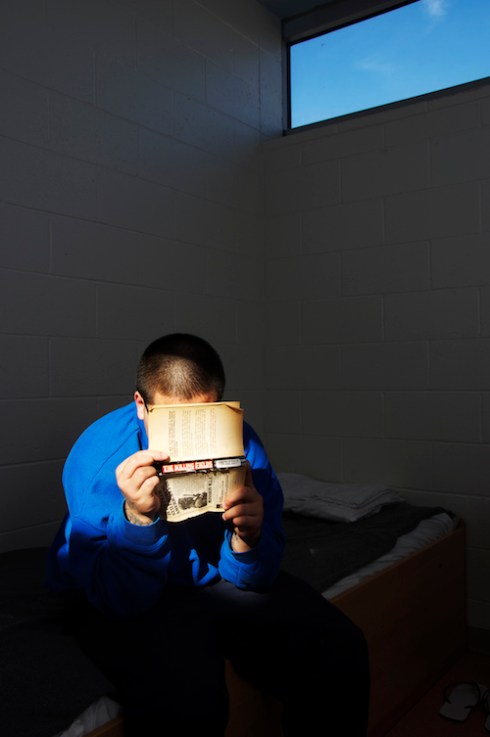
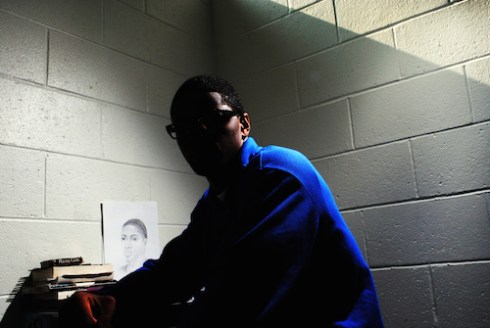
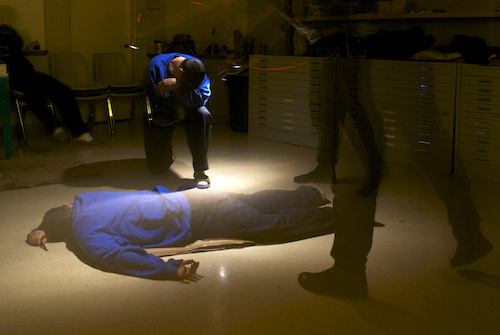
Not only did the people stay in my thoughts, the work did too. In late 2013, I included light-paintings made by youth incarcerated at the Rhode Island Training School in Seen But Not Heard (Belgrade, Serbia) a photography exhibition about U.S. juvenile detention. If AS220 Youth did not exist we wouldn’t see these views of the world created by kids who are locked up.


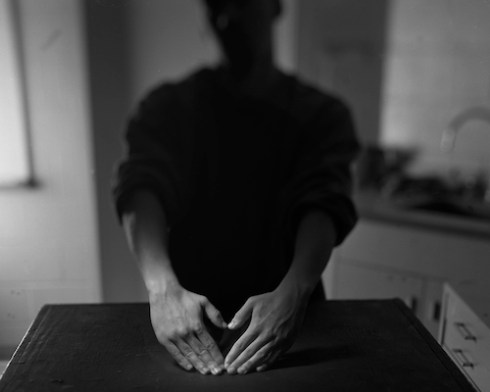

I’ve written about AS220’s youth programs before. I have noted how rare it is that photo programs are inside juvenile detention facilities. AS220 is doing things no-one else can do, or have the imagination to do. You’ve no reason not to help them out.
For the first time in AS220 Youth’s 15-year history, it is conducting a individual giving campaign. They’ve turned to IndieGoGo to push alternative revenue streams having seen public money dry up. AS220 Youth has about half the staff this time last year, and yet it is serving more students than this time last year.
“Since I have been working at AS220 Youth,” says Youth Photography Coordinator, Scott Lapham, “five of my students have been accepted and have gone to or are going to RISD, one to Hampshire, one to the School of Visual Arts, one to Savannah College of Art and Design and one to Mass Art. All of these students are from poor/poverty backgrounds and all but one are students of color. While I couldn’t be prouder of those stats an equally ambitious and important accomplishment is working with students from what we have termed Post Risk backgrounds to achieve emotional and economic stability as adults.”
Bravo to Lapham, his colleagues and the AS220 students.

MONEY, MOVIES, PHOTOS
Help them continue their valuable work: visit the AS220 Youth Futureworlds IndieGoGo page.
Check out more about AS220 Youth program Photo Mem. See the students’ portfolios.
Above is a video about a public art project AS220 Youth made. Throughout this post are images made by youth incarcerated at the Rhode Island Training School.
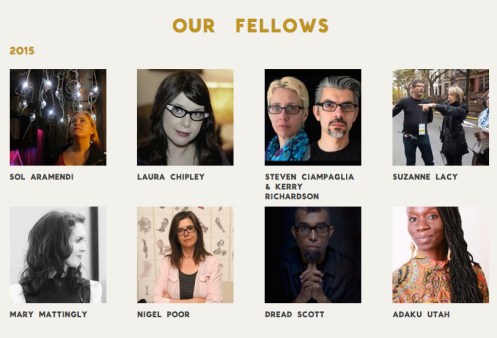
I wanted to congratulate three artists who were recently named as 2015 Fellows at A Blade Of Grass.
Sol Aramendi, Nigel Poor and Dread Scott are three of eight fellows who’ve received $20,000 each to pursue ongoing art projects that better the social, economic and cultural capital of the people with whom they collaborate. I have spoken to the three of them at different points in the past and applaud ABOG on its selection.
This is also a good moment to get A Blade Of Grass on your radar. ABOG has emerged as a thoughtfully-networked, well-advised, organisation with intent to put large amounts of money into the hands of responsible artists who work directly with communities, for dialogue and for change. The fellowships come with fewer strings attached than other funds, thus entrusting artists with the scope and freedom needed for socially engaged projects.
WORKS
Sol Aramendi will use the fellowship to develop Apps for Power — a smartphone-based app to help workers fight wage theft and restore power to the worker by allowing him or her to safely share worksite experiences, report wage-theft and flag abusive employers. The idea for the app emerged from Aramendi’s discussions with immigrant day laborers. Aramendi has brought in artists, organizers, developers, and lawyers to realise the app which makes transparent a previously exploitative and alienating system.
I interviewed Sol recently: Tapping NYC Migrants’ Creative Energies Through Street & Studio Photography
–
Nigel Poor‘s ongoing San Quentin Prison Report Radio Project will benefit greatly from committed funds. Poor started her work in California’s most famous prison, co-teaching a photo history class inside, with Sacramento State University colleague Doug Dertinger. Later, Poor conducted workshops in which she asked prisoners to annotate San Quentin Prison’s own archive of photos.
Working with incarcerated students changed Poor; she wanted others outside the prison walls to meet these articulate, curious and intelligent man. With a longtime interest in audio, Poor reasoned that radio was the best option. Existing broadcast equipment existed in San Quentin and a local public radio was keen to broadcast Poor’s collaborative efforts. She works with Brian Acey, Greg Eskridge, Jun Hamamoto, David Jassy, Jason Jones, Adnan Khan, Harold Meeks, Tommy Shakur Ross, Louis A. Scott, Shadeed Wallace Stepter and Earlonne Woods. Participants are trained in all aspects of audio and radio production to make stories that are complex and challenge reductive stereotypes, while also providing meaningful work for men who are serving life sentences.
I interviewed Nigel and Doug Dertinger in 2011. (Later this week, I’ll be publishing the full edited text.)
–
Dread Scott is making Slave Rebellion Reenactment (SRR), a reenactment of the largest rebellion of enslaved people in American history. SRR will re-stage and reinterpret Louisiana’s German Coast Uprising of 1811, involving hundreds of re-enactors on the outskirts of New Orleans, in the same locations where the 1811 rebellion occurred.
In the past, I’ve featured Dread’s Lockdown and Stop, about Stop & Frisk in NYC and Liverpool, England. And, by chance, I stumbled upon his well-received, one-time-only performance On the Impossibility of Freedom in a Country Founded on Slavery and Genocide under the Manhattan Bridge in October 2014. Me and hundreds of school-kids and scores of bemused office workers on lunch-break.
–
BIOGRAPHIES
Sol Aramendi is an artist and educator. A vocal agent for social change, she founded Project Luz, a nomadic physical and conceptual space for immigrant communities to learn, create, and communicate, allowing for the greatest agency and collaborative opportunity for all of the participants. Photography is the main tool of engagement. She holds an MFA in Social Practice from Queens College, an Arte Util Residency at Immigrant Movement International, a fellowship from the Smithsonian Latino Museum Studies and has just completed a CORO Immigrant Civic Leadership program from the Mayor’s Office of Immigrant Affairs.
Nigel Poor is a San Francisco-based artist and photographer and member of the San Quentin Prison Report collective. She is a Professor of Photography at California State University, Sacramento.
Dread Scott makes revolutionary art to propel history forward, working in a range of media including performance, photography, screen-printing, video, installation and painting. He has exhibited and performed at numerous institutions, including the Whitney Museum of American Art, the Contemporary Art Museum Houston, the Walker Art Center and BAM (Brooklyn Academy of Music) and has been written about in numerous publications including The New York Times, Art In America, ArtNews, ArtForum, Art21 Magazine, The Guardian, and Time.
A Blade Of Grass provides resources to artists who demonstrate artistic excellence and serve as innovative conduits for social change. ABOG evaluates the quality of work in this evolving field by fostering an inclusive, practical discourse about the aesthetics, function, ethics and meaning of socially engaged art that resonates within and outside the contemporary art dialogue.

For the past 18 months, the Philadelphia Lawyers for Social Equity (PLSE) and the People’s Paper Co-op (PPC) have partnered in creating client art as part of the PLSE’s Criminal Record Expungement Project (CREP) clinics. While CREP lawyers, grads and volunteers are pulling up criminal records, assessing eligibility and triggering first steps of expungement, the PPC has been taking physical copies of those records and with clients, shredding and pulping them.
New paper is made from old records, upon which clients write what they are and what their future is without the millstone of a record and its associated barriers to entry into work, housing and education. A Polaroid or digital snap of the client accompanies the testimony. Fantastic artistic strategy.
The result is a massive “quilt” of such testimonies — a detail is shown above and the collection is shown below hanging behind a speaker addressing a PPC event.

NEW YORK, TOMORROW
The People’s Paper Co-op has been selected to be part of the New Museum’s Ideas City Festival this weekend. It’ll be displaying the quilt and talking about the project. Representatives of PPC and PLSE will be in the PPC Mobile Studio parked in front of the New Museum tomorrow, Saturday May 30th, from 12-6pm.
If you are interested in the intersection of art and legal advocacy on behalf of those with criminal records stop by!PPC and PLSE’s collaboration was one of 110 projects chosen to represent how artists are responding to changing urban spaces.
I’ve sung the praises of PLSE before. PPC was co-founded by friends of the blog Courtney Bowles and Mark Strandquist. Below is a small selection of images from the workshops and PPC events that Bowles and Strandquist have carried out during their SPACES residency at the Village of Arts & Humanities in Philadelphia.
PLSE and PPC’s work has been featured in Philadelphia Inquirer, Wall Street Journal, NBC and City Paper, to name a few.


WHERE IS THE REFUGE IN A PRISON?
Where is our greatest refuge? A hideaway? Our home? The bedroom? The bed? Artist Dani Gherca reasoned that for women imprisoned in her home country of Romania, the greatest refuge was the bed.
“The bed is no only an object used for the body’s physiological and physical rest, but it’s also an intimate space for the women during the detention. The two square meters around the bed, is the only perimeter she can keep for herself,” says Gherca. “After I talked with some prisoners, I found that, in the evening, when the lights go out in the detention room … that is the only moment when each one of them can afford a really intimate moment.”
As such, Gherca made portraits of women on their beds and asked each to provide context by asking them about their thoughts during those quiet, solitary minutes. The resulting series is called Intime (2012).
I asked Gherca a few questions to provide background to Intime. We publish the female prisoners’ responses in full.
Please continue scrolling.
–
Alina

The night-my thoughts. The night for me, as well for the people around, represents the most quiet period, in which the soul and the mind can meditate and can realize what they’ we done bad or good during the day. The night behind bars is both sweet and bitter. The loneliness oppresses me, the distance from my family struggles me. Every night I am thinking about my child that I love and respect with all my heart; at the beautiful moments that I lost because of my mistakes. I am thinking at the moment when I will step over the threshold to freedom; at my little’s girl innocent smile and sweet hug. Every night I pray to be strong to carry out the punishment and to can be next to my child and to make it up to the period in which she stayed without me.
–
Q&A WITH DANI GHERCA
Prison Photography (PP): I understand the method, the aim and the outcomes of Intime, but why did you want to photograph inside a prison in the first place?
Dani Gherca (DG): The idea of intimacy is very important for me. I think that us, as human beings, we need freedom of mobility, but have also the bigger need to be able to decide when we want to be alone. The prison is an institution that hides people’s need of intimacy, an institution that limits the woman’s need for mobility.
PP: Targsor has been photographed before – in a photo workshop format by Cosmin Bumbut and by photographer Ioana Carlig. Were you aware of these projects?
DG: Yes, I know Cosmin and Ioana’s projects. However, I am interested to document the prison only on the conflict between privacy and this space that compels people to live together 24 hours a day.
PP: Has Targsor been photographed so much because it is relatively relaxed?
DG: Targsor Prison has a more permissive status in this kind of approach. However, I was attracted by this prison because it is the only prison for woman from Romania.
PP: What do Romanians think about prisons?
DG: In the last 3 years, the prison has become an institution that is seen as a method of revenge, mainly due to politicians who were sentenced in large numbers in this period.
PP: What do audiences think about your portraits and the prisoners’ written thoughts?
DG: The audience was more interested in the letters written by the girls. It was a new situation: to have access at the thoughts of some prisoners. Given the fact that this wasn’t an interview, the girls were more relaxed, and acted like they had written letters.
PP: Did the women talk about photography and what it gave them? Did for them? How they used it?
DG: I took them some printed photos. They send pictures home so it’s a good opportunity for them to have some portraits to send to their families. Otherwise, they cannot take pictures. Generally, I think they like to pose. It makes them feel somehow important.
PP: Thanks, Dani.
DG: Thank you, Pete.
–
WOMENS’ TESTIMONIES
Ana Maria

“Of all the moderates, the most detestable is the one of the heart.” (A. Camus)
Of how much love we gathered in my soul for you, I’d be able to build the whole world and would still remain. I could build seas and oceans, the sky with billiards of stars and would still remain because my love for you doesn’t knows limits or dimensions. That’s why, I will take a little piece from my soul and a little from your love and I will build a world JUST FOR US and a sky for OUR stars to shine and an infinite ocean of love in which we can swim after the OUR sun will burn our feet after longs wanderings though cities lost in antiquity, cities of a civilization where we have our roots and have never been known, only by angles because the holy land of our love has its foundation on the last rung of the ladder that climbs to God.
–
Ana-Maria

Before getting here I was very happy next to my children, next to my family. I regret I am sorry that I have to stay away from my family and she suffers too for me. Now I am sitting and thinking at a more beautiful and happy with my family. To find a place to work, to take walks with the children in the park, to build them a beautiful future, to teach them only nice things, to take them to school to stay away from various kinds of crimes. I have an advice for the ones outside, for all the scholars: stay away from the entourages. The entourages will make you steal, rob. They will make you commit various kinds of crimes and is it wrong to get here. Here is a big sufferance and it’s hard to abide, to stay away from your children, from your family, it is very hard. Please think well before getting in entourages and with who will hang out.
–
Claudia

My thoughts. I am thinking every night at my little boy and at my family to arrive as soon as possible next to them at home. Millions of thoughts and ideas that I want to do appear in my mind, but all are in vain, because I am here. I like very much to listen to music and to sit in quiet because I am a calm person. I am waiting forward for the day when I will be at home. This is the only thing that I am thinking about.
–
Gica Claudia
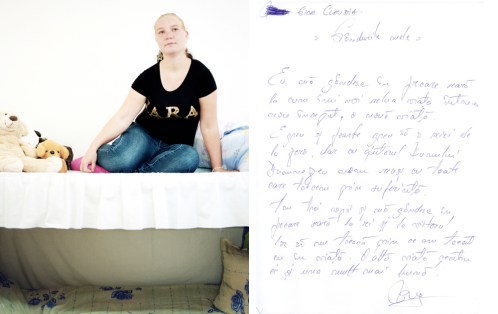
My thoughts. I am thinking every night about how I will retake my life back into a new beginning, a new life. It’s hard and very hard to retake it from the ground, but with the help of the Good God, I will succeed with everything that I passed by sufferance. I have 3 children and I am thinking every night at them and at their future, do not go through what I went through in life. Another life for them, the very best.
–
Isaura

At night I am thinking about; my family, at the liberation, at what work place to find, night by night. I regret the day when I committed this crime, and I am thinking how to build my life so I won’t get here again, because it is very difficult to think that there is nothing more valuable than freedom.
–
Marcela

What I’m thinking? Really, what I’m thinking? Only about the day that passed, and the day that will come…
Maybe nothing can be more beautiful and more good than to feel that what I’ve done today is better than what I did yesterday and tomorrow I will start something better. Any day is A BEGINNING for me!
–
Monica Luminita

My thoughts. I am thinking every night when I sit in my bed about my children and at how I will react after four years have passed day-by-day. I like listening oriental music. I like Turkish movies, the comedies.
At night, I have moments in which I can’t sleep because of the punishment and I am thinking from where I started and where I’ll finish at my day of freedom; when I will see my children after 4 years and a few months. I repent for getting in these places. Never in my life I will I commit crimes, to arrive here again. I won’t leave my children alone ever.
–
BIOGRAPHY
Dani Gherca (b.1988) lives in Bucharest and works in Romania. She holds a Bachelor of Arts degree from the Photo-Video Department, at the National University of Arts in Bucharest (2013) and a Masters of Arts from the Dynamic Image and Photography Department, at the National University of Arts in Bucharest (2015).

If you live in Portland, Oregon and you’re planning to get wed over Memorial Day weekend, why not let a Magnum Photos photographer come by and make some shots? Via.

Photo: Meghann Riepenhoff
I’m one of five jurors for this years annual juried show at SF Camerawork. Y’all should enter. Here’s the blurb …
CALL FOR ENTRIES: HEAT
This summer, SF Camerawork teams up with LensCulture to host our Annual Juried Exhibition. The theme this year is HEAT.
HEAT registers the volatility and restlessness that comes with long hot summers: violent crime rates increase, leases expire and people seek new homes, global weather changes signal an alarm, and warm summer days bring adults and children alike into the streets, parks, and beaches.
SF Camerawork invites artists to submit work that responds to HEAT: the social, political, and climatic conditions of rapidly changing environments. Following the lead of social and political advocates around the world, SF Camerawork asks artists working at all levels in photography to participate.
Art is politics. Particularly in the realistic forms of photography and filmmaking, what gets assigned, shown or sold reflects political considerations. […] Politics is in the air. All you need to do to get the message is breathe. – Danny Lyon.

Photo: David Butow
DETAILS
Deadline: Monday, June 15, 2015, 5pm PST.
Notification: Finalists will be contacted on July 1st.
Exhibition Dates: July 23 – August 22, 2015.
Opening Reception: Thursday, July 23, 6-8pm.
Application Fee: $50 application fee for up to 15 images.
ENTER NOW ON LENSCULTURE AND CREATE AN ACCOUNT TO UPLOAD YOUR APPLICATION
AWARDS/BENEFITS
EXHIBITION AT SF CAMERAWORK: 2-5 finalists will have a 4-week exhibition at SF Camerawork.
LIVE ONLINE REVIEW SESSION: Finalists will receive a one-on-one review with a juror through this innovative platform hosted by LensCulture.
20 JUROR SELECTIONS FEATURED: 20 juror selections will be exhibited on interactive screens at SF Camerawork as part of the exhibition.
FEATURE ARTICLE ON LENSCULTURE: Finalists will be featured in an article on LensCulture.
ONE YEAR MEMBERSHIP: All entrants will receive a one-year membership to SF Camerawork.
HEAT 2015 JURY
Pete Brook, Writer and Curator, Founder: Prison Photography
Jim Casper, Editor and Publisher, LensCulture
Seth Curcio, Associate Director, Pier 24 Photography
Janet Delaney, Artist and Educator
Heather Snider, Executive Director, SF Camerawork
QUESTIONS?
Please email info@sfcamerawork with “Call for Entries” in the subject line.
SF CAMERAWORK
Founded in 1974, SF Camerawork‘s mission is to encourage and support emerging artists to explore new directions and ideas in the photographic arts. Through exhibitions, publications, and educational programs, we strive to create an engaging platform for artistic exploration as well as community involvement and inquiry.
SF Camerawork is a membership-based organization.
1011 Market St., 2nd Floor
San Francisco, CA 94103
Gallery hours: 12:00 – 6:00 pm
Tuesday – Saturday (also by appointment)
415.487.1011
Photo: McNair Evans
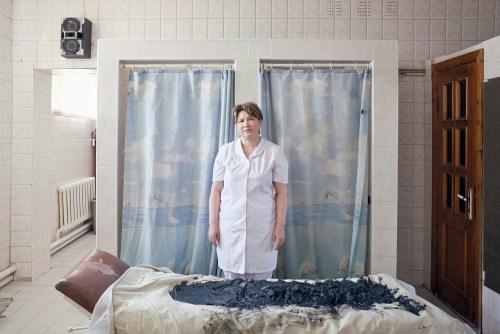
My piece For These Post-Soviet Nations, Big Oil Offers Hope and Fear
about Mila Teshaieva’s Promising Waters pubbed on WIRED this week.
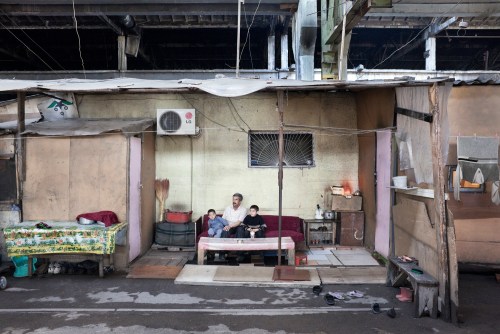
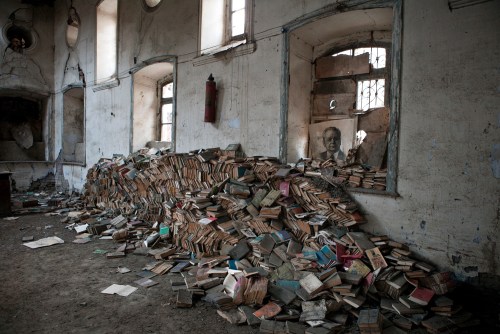
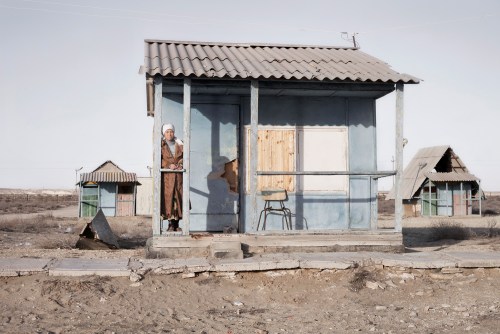
Promising Waters documents changes Kazakhstan, Turkmenistan or Azerbaijan — three countries that touch the Caspian Sea and were for 70 years part of the Soviet Union.
“They are going through total reinvention—the new world, new society, and new futures pushed to rise with the help with oil and gas resources from the Caspian Sea,” says Teshaieva. “This idea of ‘new’ gives particular promises to people.”
Read the full piece and see more here.



THE WHAT
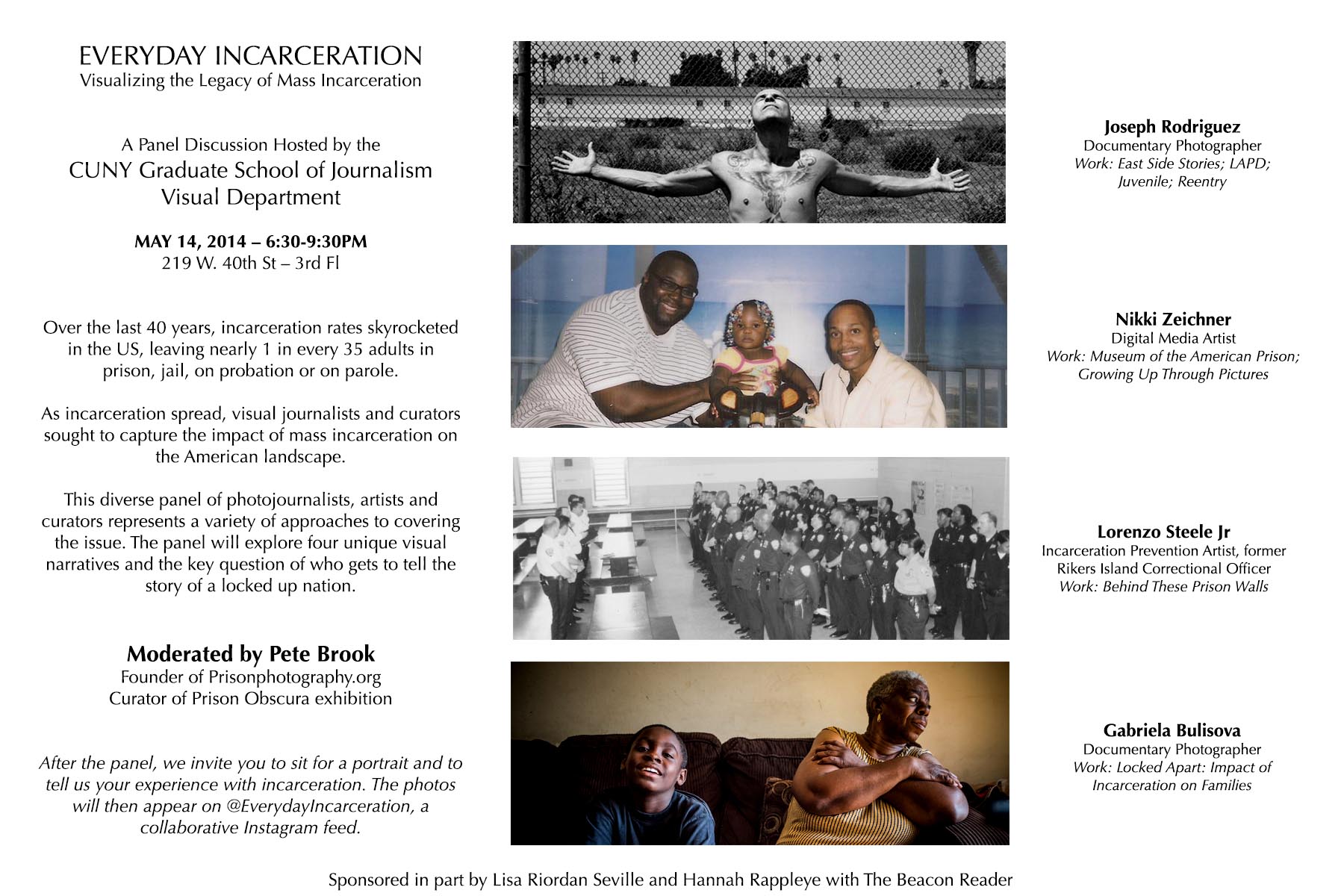
If you’re in New York this Thursday and can spare the time, please think about joining four photo practitioners and I for Everyday Incarceration – Visualizing the Legacy of Mass Incarceration, a panel discussion about images of prisons and the associated social issues. We’ll be tackling the core question: Who gets to tell the story of a locked up nation?
THE LINE UP
Zara Katz and the Department of Visual Journalism at the CUNY J-School have done a great job of putting together a panel with diverse perspectives and practices – one documentary storyteller using video; one photographer who’s eye on the issues stretches back decades; one lawyer using software code and images to engage audiences and empower prisoners; and one former correctional officer turned campaigner armed with his photos from the job. Check the bios below!
THE PORTRAIT STUDIO
After the panel, we invite you to sit for a portrait and to tell us your experience with incarceration. The photos will appear on @EverydayIncarceration, a collaborative Instagram feed.
THE DETAILS
The panel takes place in Room 308 of the CUNY Graduate School of Journalism, at 219 W. 40th Street, NY 10018.
6:30-9:30pm on Thursday, May 14th.
The event is free but an RSVP is very appreciated. Do that at – cunyphotowire@journalism.cuny.edu or at the event page on the Facebook.
THE PANELISTS
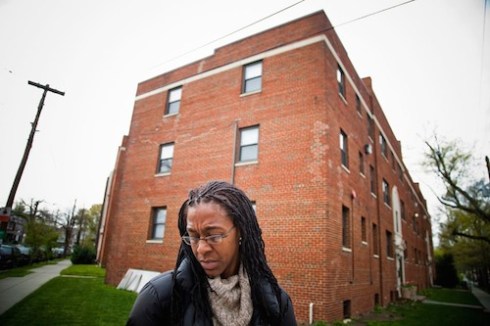
Lashonia Etheridge-Bay, a 39 year-old woman who was granted parole in 2011 after spending 18 years in prison. Bulisova’s series Time Zone follows Etheridge-Bay’s return to society. Photo: Gabriela Bulisova.
Gabriela Bulisova is a documentary photographer and multimedia artist based in Washington, D.C. Over the past five years, she focused her attention on underreported and overlooked stories regarding incarceration and reentry, especially the impact on families. Bulisova has received numerous recognitions and awards, including The National Press Photographers Association’s Short Grant and Open Society Institute’s Moving Walls 18. In 2005, she was awarded the degree of Master of Fine Arts in Photography and Digital Imaging from the Maryland Institute College of Art (MICA) in Baltimore. She teaches graduate and undergraduate courses in photojournalism at the Corcoran School of Arts and Design in Washington D.C. and is a member of Women Photojournalists of Washington.

Michael is 17 and has ADHD, Attention Deficit Hyper Activity Disorder. He is on Ritalin. He is under house arrest and wears an electronic monitoring device. He was arrested for possession of a knife and violating probation. He is living in a hotel room with the rest of his family, 7 people in total. San Jose, California 1999. Photo: Joseph Rodriguez.
Joseph Rodriguez was born and raised in Brooklyn. His four-decade photography career examines incarceration, gangs, police and reentry, as well as families, communities and cultures across the globe. After being incarcerated at Rikers Island as a minor in the late-60s, Rodriguez turned to photography as a guide in his life. In 1985 he graduated from the International Center of Photography in New York. He went on to work for Black Star photo agency, and has published work in multiple top-tier outlets including National Geographic and The New York Times Magazine. He has received numerous awards and grants including New York Foundation for the Arts, Open Society Institute, National Endowment for the Arts, to name a few. Rodriguez currently teaches at New York University and as a visiting artist at national and international universities.

Photo: Lorenzo Steele.
Lorenzo Steele Jr. is a former New York City Correction officer (1987-1999) who mostly worked in the juvenile units at Rikers Island. He was regularly the photographer at events and celebrations with his fellow officers. In 1996, Steele began bringing his camera to the prison to document his experience there. That included daily violence and abuse of inmates and correctional officers. The deep emotional and physiological impact of his experience at Rikers compelled Steele to start a visual arts education program where he shares his photographs and prison experience with middle school and high school students.

Image courtesy of Nikki Zeichner/Growing Up Through Pictures
Nikki Zeichner began exploring multimedia storytelling with the Museum of the American Prison, a project that she initiated in 2012 to offer mainstream audiences a way to understand personal and experiential details of incarceration in the U.S. Her interest in telling stories about incarceration grew out of her experiences working as a criminal defense attorney in New York City and regularly visiting with clients held in federal and state pretrial detention facilities in lower Manhattan and Brooklyn. Nikki recently completed a Master’s degree in Integrated Digital Media from NYU’s Engineering School and is spending 2015 in San Francisco designing civic tech tools for a small, post-bankrupt municipality in Northern California. She remains in regular contact with the incarcerated individuals she worked with creatively on museum projects.

 Prison Photography