
You are currently browsing the category archive for the ‘Historical’ category.

Sister Marina, Walton Prison. Copyright Liverpool Daily Post and Echo
About the photo: “I photographed Sister Marina visiting Walton Prison. Her smile and compassion were for all – she was there to comfort those who needed her faith, solace, prayers and hope.” Source.
___________________________________________________________
Stephen Shakeshaft is subject of a retrospective at the National Conservation Centre in Liverpool, England. Having photographed The Beatles, street urchins, dock-workers, Cilla Black’s mum, the Toxteth Riots, Willy Russell, Liverpool F.C. in European glory and the tragedy of the Hillsborough aftermath, Shakeshaft is knee-deep in the love, lore and history of the Merseyside region.
I’d argue Shakeshaft is to Liverpool as Anthony Friedkin is to California.
Shakeshaft started his career as a copy boy in 1962, running typed stories from the sub-editors’ desk to the print room for the Liverpool Daily Post and Echo. Later he was accepted as an apprentice, learning his trade and his art. He rose to become chief photographer and picture editor of both papers.

Kenny Daglish in bed with the European Cup. Copyright: Stephen Shakeshaft/ Liverpool Daily Post & Echo.
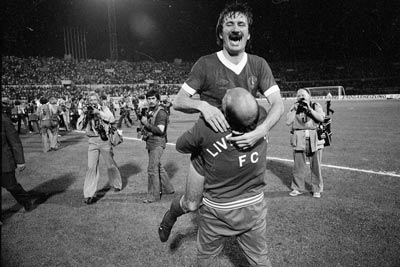
Celebrations after Liverpool won the European Cup Final in Rome, 1977. Copyright Liverpool Daily Post and Echo
All the information from the Liverpool Museum’s blog, associated videos from the exhibition and podcast.
Media articles and photos here, here, here and here.
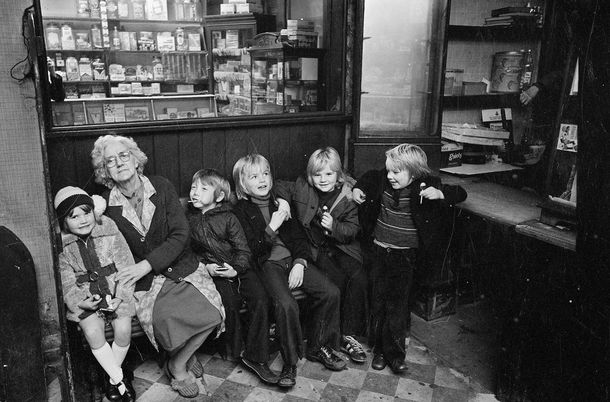
© Stephen Shakeshaft
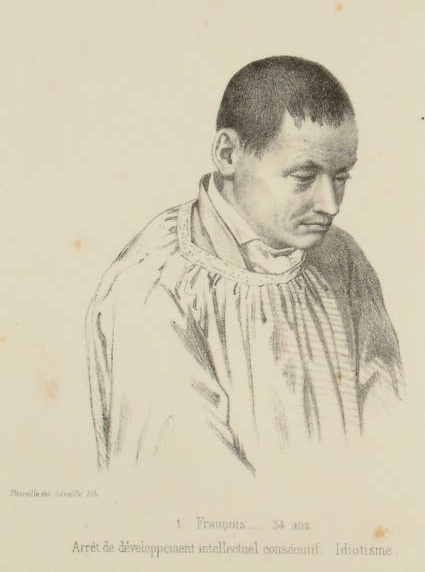
"Francois. 34 ans. Arret de Developpement intellectuel conscentif. Idiotisme." From ‘Traites des Degenerescences', by Morel (1857)

Green Hill, 2000 (C) Steve Davis
A couple of comments that have blown me away in the last 24 hours.
Convergence
From Patrick McInerney;
The similarity between Steve’s photographs and the scientific studies of psychiatric inmates the mid nineteenth century asylums is striking. (For a particularly good example see pictures of psychiatric inmates in Benedict Augustin Morel’s 1857 ‘Traites des Degenerescences: physiques, intellectuelles et morales de l’espèce Humaine’
And its interesting that they have a similar effect today as the early images did in the past, i.e. they encourage us to read the prisoner’s “true” character in their faces, with all the difficulty that incurs. It was obviously not Steve’s intent to mimic 19th c. scientists but maybe its quite understandable he feels that the style has become a bit jaded … it has after all been around for some time!
Steve was jaded not only by the limits of the portrait to communicate but also by the disconnected agendas viewer brought to his works, “People respond to these portraits for their own reasons. A lot of the reasons have nothing to do with prison justice. Some of them like pictures of handsome young boys; they like to see beautiful people, or vulnerable people, whatever. That started to blow my mind after a while.”
It is a serious issue within photography that we are all lazy viewers. The less curious and less open we are, the more likely we are to fall back on pleasing, self-affirming bias.
Memory
Three months ago I posted some images of the Prison Ship/Torture Museum, The Success

Wooden Coffin / Wooden Maiden / Iron Maiden?
Today, I received this;
I believe it was around 1944 that a prison ship, maybe it was The Success came to Cleveland Ohio at Lake Erie. I remember seeing the torture devices and one sticks in my mind to this day. I was told it was called the ‘Iron Maiden’, but your photos call it the ‘Wooden Coffin’.
Although I saw it as a child the memory stays with me to this day.
Age following age has propagated its own fascination with the macabre and majority-assigned human defect. From “scientific” research to childhood memory the will to understand difference has played out (and continues to play out) the shifting – and ultimately false – parameters of normal.
My call on Friday for more information on Civil War era prisons bore an unexpected rich harvest. A single reply but an absolutely riveting one.
Imagined Prisons responded with this:
These images are fascinating and haunting, and the idea of the modern prison as “a permanent abstraction of earlier jails” is a compelling one.
As for the carceral spaces – makeshift and otherwise – of the Civil War, some authorities have cited Lincoln’s suspension of habeas corpus rights as a precedent for the Bush Administration’s policies in today’s war prisons. E.E. Hale’s classic short novella, “The Man without a Country,” written in response to Lincoln’s controversial move, tells the story of a man sentenced to spend the rest of his life aboard U.S. Navy ships, in the extralegal zone outside the boundaries of the nation-state.
You might also be interested in this poem by Herman Melville, from the 1866 volume “Battle-Pieces, and Aspects of the War”:
In the Prison Pen
Listless he eyes the palisades
And sentries in the glare;
‘Tis barren as a pelican-beach–
But his world is ended there.
Nothing to do; and vacant hands
Bring on the idiot-pain;
He tries to think–to recollect,
But the blur is on his brain.
Around him swarm the plaining ghosts
Like those on Virgil’s shore–
A wilderness of faces dim,
And pale ones gashed and hoar.
A smiting sun. No shed, no tree;
He totters to his lair–
A den that sick hands dug in earth
Ere famine wasted there,
Or, dropping in his place, he swoons,
Walled in by throngs that press,
Till forth from the throngs they bear him dead–
Dead in his meagreness.
Imagined Prisons is the accompanying website for the book The Prison and the American Imagination, by Caleb Smith, which will appear from Yale University Press in September of 2009.

The Prison and the American Imagination, by Caleb Smith. Yale University Press, September 2009
The book examines the history of the U.S. prison system and its imaginative life in nineteenth – and twentieth – century culture. Caleb Smith argues that the dehumanization inherent in captivity has always been at the heart of American civil society.
Imagined Prisons is a forum for conversation about the book and the questions it raises;
What a significant new resource with which to reassess the prison within America’s cultural landscape. Prison Photography, too, is attempting (admittedly ham-handedly on occasion) to define the current representation/consumption of prison imagery within our society.
May I suggest that books such as Caleb Smith’s and sites such as mine exist because sites of incarceration – “dark places” – have been over-zealously operated by controlling minorities and not adequately discussed by the at-large majority?

Quick post & a request. We all know about the relentless Shorpy and the site’s daily dose of long gone photo ephemera. It is indeed a treat.
Today, two images from the 1920s went up. Shorpy’s keen to focus on the visual narratives that arrest the attention. Consider it a human interest archive if you will. It is my guess is he/she/it chose these two photographs relating to crime and punishment because they deal with women and children. If there is still one thing true today as was back then, these two groups are distinguished from, sometimes condescended to, and likely protected and abused in equal measure by, prevailing patriarchies.

Washington, D.C., circa 1920. “Jail, Women’s School.” Alternate title: “Complete this sentence.” National Photo Co. Collection glass negative.

Washington, D.C., circa 1922. “House of Detention, Ohio Avenue N.W.” Equipped with a nice playground. National Photo Company glass negative.
These came at an opportune moment because I’ve been wondering what to do with the following four images from the American Civil War. It is not an area I am well read up on. I guess the make-shift nature of jails and prisons in the vicinity of battlefields and front lines attests to the constant flux and shroud of unpredictability across a bloodied young nation.
Prison Photography blog is often concerned with inflexibility and pursuant damage it can cause as applied to institutions. But the modern prison is merely a permanent abstraction of earlier jails. ‘Transitory’ sites of incarceration, especially in times of war, are even more contested as sites than the Supermax prisons of the 21st century.
It’s got me thinking how Castle Thunder and Belle Isle relate to the the GWOT prisons – namely the early incarnation of Abu Ghraib prison, Bagram Airbase and other as yet unknown ‘Black Sites’ of detention and interrogation.

Richmond, 1865. “Castle Thunder, Cary Street. Converted tobacco warehouse for political prisoners.” Main Eastern theater of war, fallen Richmond, April-June 1865. Wet plate glass negative, photographer unknown.

Spring 1865. Belle Isle railroad bridge from the south bank of the James River after the fall of Richmond. Glass plate negative from the Civil War collection compiled by Hirst D. Milhollen and Donald H. Mugridge.
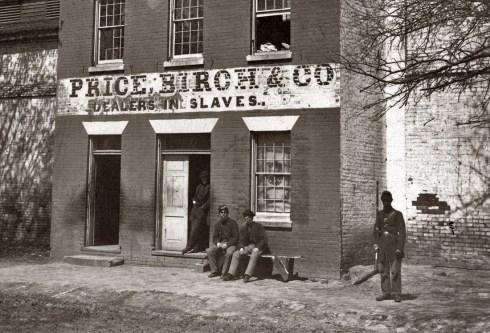
And finally, this site is described as a “slave pen”. This document of slave incarceration is gut-thumping and, however agonising the means, justifies the Civil War and its righteous ends.
Request: I am keen to know more about prisons and jails of the Civil War era. If you’ve any resources I should absolutely be aware of please drop me a note. Thanks
In photography Cornell Capa has huge renown. In prisons, Attica has a huge renown. It is therefore, expected that I’d transcribe Capa’s testimony to the McKay Commission (New York State Special Commission on Attica) Hearings.
After the text I shall offer my opinion.
TEXT
Cornell Capa: I was asked eventually by Arthur [Liman, Counsel] if I would want to look at Attica for the reasons that he mentioned, that photography and a photographer may have something to contribute …
As a human being and a photographer, my personal and professional and civic feeling was to look into it and – as my professional life is involved in understanding human condition – try to perceive what it is all about.
I think photography can serve a most useful role in an investigation and that’s exactly what I consented to do.
I [have] submitted 26 photographs which I will be showing to the commission and I have submitted equally a very short written statement and captions for the photographs.
I would like to really just read my written statement and following that as the photographs go by, I will do the captioning job for them.
At Attica: A Photographic Report.
Recently I spent three days at Attica, having been asked by the McKay commission to take a look at the institution and bring back my visual report.
During the visits to Attica I was, at all times, accompanied by a correction officer and a member of the Commission staff; all persons recognizable in these photographs consented to be photographed.
My photographs and their captions constitute my report for the commission. There is just a little more to add.
A feeling of nervous expectation seems to pervade Attica. Everybody is waiting the result of the work of the Commission’s investigations on the causes of the explosion which occurred there six months ago, and their recommendations for the future avoidance of such a tragedy in the future. Both sides, inmates and guards expect some new things to evolve from the findings – some kind of miracle which will transform the institution into a place where the Biblical lion and lamb will better live together peacefully.
The only hitch: each side has its very own view of the meaning of peaceful and better coexistence, and how to achieve it.
From the outside, Attica situated in the rolling farmland in western New York, has a Disneyland-like appearance, especially at night.
Attica’s inmates are all locked in their cells from approximately 5pm until 7am the next morning. Officers on the night shift make lonely rounds checking the count six times a night.
All movement in Attica is limited by locks. At night the duty officer must carry with him all the keys he will need on his nightly round of inspection
Confined to their 4 x 9 cells, inmates may talk to one another across the cellblocks and play music instruments until 8pm.
Locked in a cell a mirror is an inmates eyes to the rest of his gallery, and whenever something happens, the mirrors appear as if on cue.
After 8pm talking and noise are not permitted. There is little to do until lights out at 11pm except read, write letters or listen to one of the three channels of the prison radio which plays music, sports and the audio portion of TV shows.
In E Block, Attica’s medium security prison with the maximum-security walls, a small group of inmates in special programs are permitted to remain at night in the blocks day room to watch television, play cards or talk.
Corrections officers on the day shift leave homes in the town of Attica and surrounding communities and report for roll calls at 7am, 9.20am, 3pm and 11pm to receive their assignments.
These are the guns and smoke parts etc, what [sic] they keep in the armory for emergency use only.
These are the keys, which they use, the whole system is based on keys. This is just a very small selection of all the keys that open all the doors in Attica
On signal the cells open and inmates in each company line up in two’s to be escorted down one of the endless corridors to the mess hall for breakfast
In his daily movements throughout the institution, an inmate must pass through several times through ‘Times Square’ where the corridors leading from the four main cell blocks converge and gates point in four directions.
Many inmates spend up to five hours a day working in one of the prison industries, the largest of which is a large metal shop, where inmates build steel cabinets and office furniture for state institutions.
For a few hours each day, inmates are allowed to go into their cellblock’s yard for outdoor recreation
The sports facilities, always limited, have been even more curtailed since September. For most inmates the yard means walking around and around or standing around.
The only opportunity for most inmates to watch TV is outside in the yard. Due to the winter climate and the meager daytime TV schedules, few are interested.
While some are out in the yard, others return to their cellblocks. In some areas there are improvised meeting rooms where a few inmates can pursue simple hobbies and handicrafts.
For the rest it is back to the cells to pass the hours until supper. The site of disembodied hands outside the bars playing cards is not unusual here.
Some play chess but the opponent remains unseen.
There is so much idle time; one of the most common activities is preparing legal paper for appeals and writs.
9.30 to 3.30 every day are visiting hours. Those inmates whose families live nearby or who can afford the long journey to Attica may receive a visit. Visits take place in a large room, under the watch of officers and a wire screen separates the inmates from his visitor.
An inmate’s personal touch, often his own creation, is the difference between one cell and another.
One of the statewide changes since the riot is the creation of inmate liaison committees at each institution.
The committee at Attica was elected last month, has adopted a constitution and has begun the task of drawing up projected reforms.
Although life at Attica is again becoming routine, grim reminders of what happened there are everywhere.
This is the round State Shop in damaged condition beyond repair.
Two of the cells blocks were destroyed beyond repair and are still unoccupied. D Block yard on which the eyes of the world were focused for four days last September is deserted now. The trench is filled in but remains visible like a scar reminding one of the great illness which fell upon Attica seven months ago.
[END]
_____________________________________________________
Capa’s review is a rather bland description of everyday life in the prison. This comes as quite a disappointment; I had expected a rousing polemic against the unsuitable conditions of mammoth prisons and their effect on the will of man.
These words seem particularly tame when one considers the magnitude, violence and precendence Attica has in the history of prison resistance. The words are detached from the extremely graphic photographs [WARNING] documenting the riot and its bloody remnants. Capa’s words are the epitome of obsolescence.
Attica was a disaster.
Capa’s words fall short of the strength needed to describe the institution six months on from disaster.
I encourage you all to browse Attica Revisited an encyclopaedic resource of official papers, oral history video and photography.

Cornell Capa, to some extent, lived in the shadow of his older brother Robert. I guess, it is easy for complacent men to adore the still and fallen martyr than to keep apace with a passionate and piqued practitioner. Cornell’s and Robert’s legends are one; Cornell ceaselessly fought his brother’s corner authenticity debate surrounding The Falling Soldier.
Cornell’s indebtedness to his brother was fateful and self-imposed:
Disappointingly, it is only in extended surveys of Cornell Capa’s career that mention of his fifties photojournalism in Central and Southern America arises. Otherwise, Cornell is celebrated for his political journalism and particularly his campaign coverage of Adlai E. Stevenson, Jack and Bobby Kennedy. Cornell’s photographs from Latin America are often neglected, even demoted.

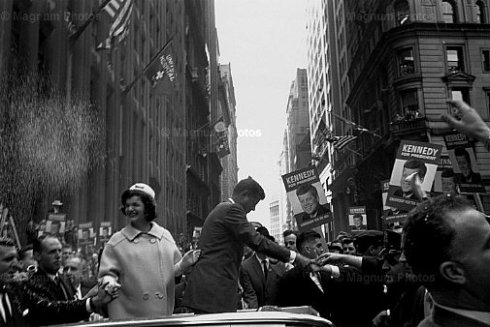
The Kennedys were the foci of American progressive attitudes, and so, in the sixties, Cornell documented the concerned politician. Cornell was (not in a negative way) passive and the sixties were not formative. It was in the fifties that he actively worked to define the persona, the ideal: ‘The Concerned Photographer’.
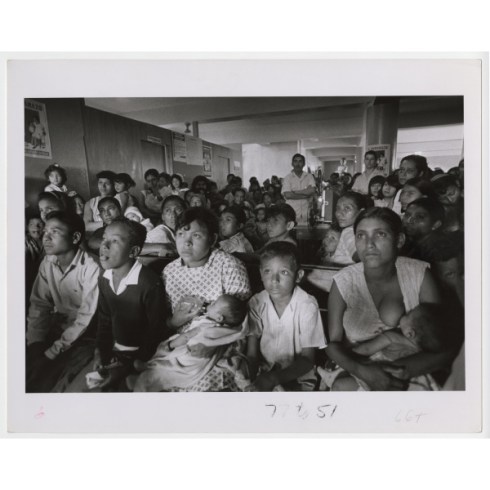
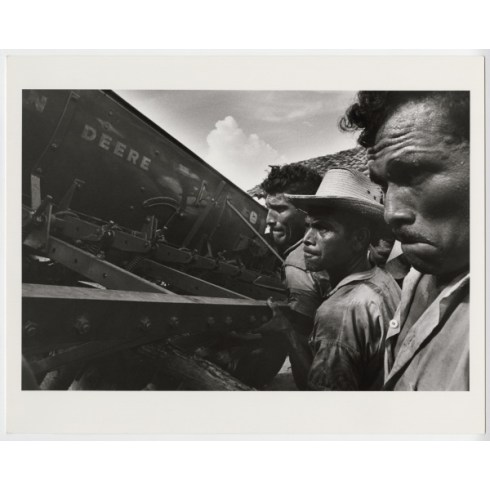
Cornell’s work in Latin America:
In 1956, Cornell was in Nicaragua reporting on the assassination of President Anastasio Somoza García. Somoza was shot by a young Nicaraguan poet; the murder only disrupting slightly the Somoza dynasty that lasted until the revolution of 1979 (that’s where Susan Meiselas picks up).
In the aftermath of the assassination over 1,000 “dissidents” were rounded up. The murder was used as an excuse and means to suppress many, despite the act being that of one man.


I have no knowledge of what happened to these men after Cornell photographed them and I am sure you haven’t the patience for speculative-art-historio-speak.
I do wonder … if having witnessed revolution, early democracies, military juntas, coups, communism, social movements, grand narratives and oppression in various forms, if Cornell picked his subjects with discernment back in the United States.
As early as 1954 Cornell was working on a story for Life about the education of developmentally disabled children and young adults. Up and to that point in time, the subject had been regarded by most American magazines as taboo. The feature was a breakthrough.
In 1966, in memorial to his brother, Robert, and out of his “professed growing anxiety about the diminishing relevance of photojournalism in light of the increasing presence of film footage on television news” Cornell founded the Fund for Concerned Photography. In 1974, this ideal found a bricks and mortar home on 5th Ave & 94th Street in New York: The International Center for Photography.

This institutional limbo that eventually gave rise to one of the world’s most important photography organisations was not a quiet period for Cornell. In 1972, he was commissioned to Attica, NY, to document visually the conditions of the prison. Capa presented his evidence to the McKay report (PDF, Part 1, pages 8-14) the body investigating the cause of the unrest. Cornell narrates his personal observations while showing his photographs to the commission.


At a time when, the photojournalist community seems to have crises of confidence and purpose at an alarming rate, it would be wise to embrace his spirit in full recognition his slow accumulation of remarkable accomplishments.
Rest In Peace, Cornell.

PHOTO CREDITS.
Robert F. Kennedy campaigning in Elmira, New York, September 1964. Accession#: CI.9685
New York City. 1960. Senator John F. KENNEDY and his wife, Jackie, campaigning for the presidency. NYC19480 (CAC1960014 W00020/XX). Copyright Cornell Capa C/Magnum Photos
Three men pushing John Deere machine, Honduras, 1970-73. Accession#: CI.3746
Watching family planning instructional film at Las Crucitas clinic, Tegucigalpa, Honduras], 1970-73. Accession#: CI.8544
Political dissidents arrested after the assassination of Nicaraguan dictator, Anastasio Somoza, Managua, Nicaragua, September 1956. The LIFE Magazine Collection. Accession#: 2009.20.13
NICARAGUA. Managua. 1956. Some of the one thousand political dissidents who were arrested after the assassination of Nicaraguan dictator Anastasio Somoza. NYC19539 (CAC1956012 W00004/09). Copyright Cornell Capa/Magnum Photos
Prisoners escorted from one area to another, Attica Correctional Facility, Attica, New York, March 1972 (printed 2008). Accession#: CI.9693
Two men walking around prison courtyard, Attica Correctional Facility, Attica, New York, March 1972. Accession#: CI.9689
Inmates playing chess from prison cells, Attica Correctional Facility, Attica, New York, March 1972. Accession#: CI.9688
Man on scooter carrying coffin, northeastern Brazil, 1962. Accession#: CI.8921
All photos courtesy of The Robert Capa and Cornell Capa Archive, Promised Gift of Cornell Capa, International Center of Photography. (Except for ‘The Concerned Photographer’ book cover; the Jack Kennedy photograph; & the second Nicaragua prison photograph.)

Granada (Amache) Relocation Camp, Foundations, Prowers, Colorado © Masumi Hayashi. Panoramic photo collage with Fuji Crystal Archive prints, 1997. Size: 23" x 31"
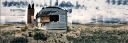
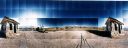
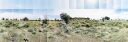
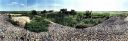
Masumi Hayashi visited every permanent site of Japanese American internment; such was her dedication to its historical truth and visual legacy. I’d like to pay tribute to Hayashi’s artistic rigour, the project and above all her life.
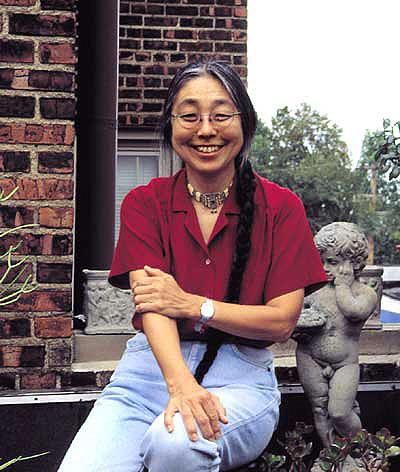
Masumi Hayashi 1945 - 2006
This post is not only a celebration of meaningful photography but also of a life cut short in tragic circumstances.
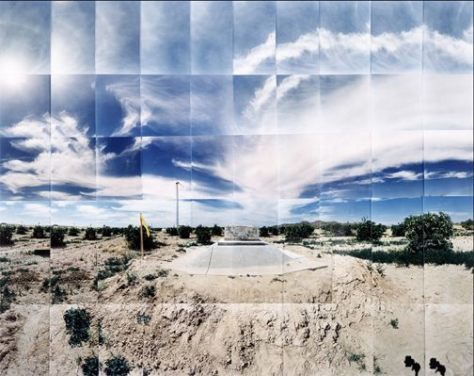
Gila River Relocation Camp, Dog Grave, Gila River, Arizona © Masumi Hayashi. Panoramic photo collage with Fuji Crystal Archive prints, 1995. Size: 38" x 31"
Prison Photography has needed to limit itself in discussion, so rich and extensive was Hayashi’s oeuvre. I recommend that you spend a long time meditating her Prison series, Salt Mine series and a spectacular EPA Superfund Sites series.
Let us focus, for now, on the issue at hand – Japanese American Internment.
Professor Hayashi photographed all 10 internment camps on American soil. She also documented the 4 Canadian internment sites. It was a subject close to her heart — she was born at the Gila River Relocation camp in Arizona in 1945.
In most cases, Hayashi photographed a full 360 degrees. The gradient of exposure in her photo montages and her extruded viewpoint lent visual richness, height and vertigo to otherwise mundane landscapes. Hayashi’s indelible presence in the works is a reminder of the former human presence in inhumane environments.

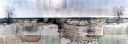
Gila River Relocation Camp, Monument, Gila River, Arizona © Masumi Hayashi. Panoramic photo collage with Fuji Crystal Archive prints, 1995. Size: 31" x 75"

Gila River Relocation Camp, Foundations, Gila River, Arizona © Masumi Hayashi. Panoramic photo collage with Fuji Crystal Archive prints, 1990. Size: 22" x 56"

Topaz Relocation Camp, Foundations, Delta, Utah © Masumi Hayashi. Panoramic photo collage with Fuji Crystal Archive prints, 1995. Size: 31" x 72"
Hayashi’s composite tactic solves the problematic banality of many of the sites. She describes here and here that many of the sites as barren and sun bleached (Manzanar, CA has been well-preserved as a memorial and state park, but it is the exception). The most common denominator among the sites was the concrete sewage system. The large peripheral tanks always remained long after the sheds and tended plots had decayed. A brick structure was a treat, and wooden barns, anomalies.
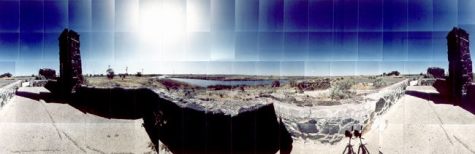
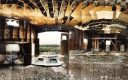
Minidoka Relocation Camp, Visitors Waiting Room, Minidoka, Idaho © Masumi Hayashi. Panoramic photo collage with Fuji Crystal Archive prints, 1992. Size: 27" x 70"
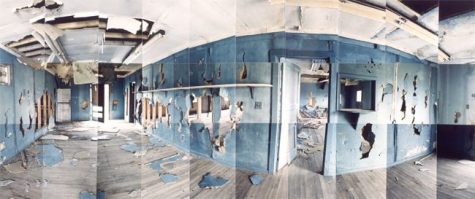
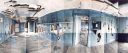
Heart Mountain Relocation Camp, Blue Room, Park, Wyoming © Masumi Hayashi. Panoramic photo collage with Fuji Crystal Archive prints, 1995. Size: 23" x 45"
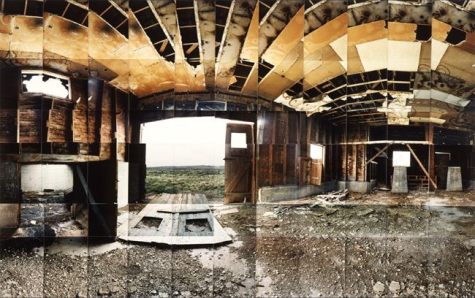
Heart Mountain Relocation Camp, Interior, Park, Wyoming © Masumi Hayashi. Panoramic photo collage with Fuji Crystal Archive prints, 1995. Size: 31" x 42"
Hayashi’s endeavours cannot be underestimated. As Candida Hofer noted;
and
For those of you sitting there thinking, “Oh, yeah, I could take a bunch of little pictures of something too.” No, you couldn’t. Not like this. Her style is built on solid conventional photographic methods (each picture must itself be a very good picture).
Extraordinary.

Heart Mountain Relocation Camp, Hospital, Park, Wyoming © Masumi Hayashi. Panoramic photo collage with Fuji Crystal Archive prints, 1995. Size: 32" x 70"
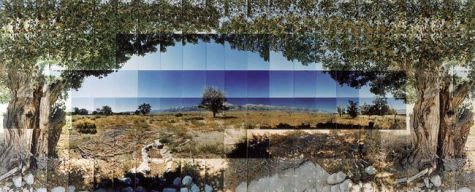
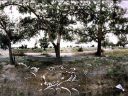
Manzanar Relocation Camp, Tree View, Inyo, California © Masumi Hayashi. Panoramic photo collage withFuji Crystal Archive prints, 1995. Size: 27" x 63"

Manzanar Relocation Camp, Monument (Version 1), Inyo, California © Masumi Hayashi. Panoramic photo collage with Fuji Crystal Archive prints, 1995. Size: 20" x 30"
In addition to her photographic work, Hayashi conducted audio interviews of former internees to develop a complete sense of experience across the American internment archipelago.

Manzanar Relocation Camp, Guard Gates, Inyo, California © Masumi Hayashi. Panoramic photo collage with Fuji Crystal Archive prints, 1992. Size: 27" x 65"

Granada (Amache) Relocation Camp, Water Tank, Prowers, Colorado © Masumi Hayashi. Panoramic photo collage with Fuji Crystal Archive prints, 1997. Size: 23" x 31"
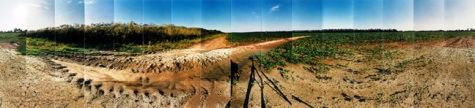
Jerome Relocation Camp, Farm, Drew & Chicot, Arkansas © Masumi Hayashi. Panoramic photo collage with Fuji Crystal Archive prints, 1995. Size: 22" x 59"
In August 2006, Hayashi along with her neighbour John Jackson, knocked at the door of the apartment of another neighbour Jacob Cifelli to complain oncemore about his high volume music. It was the last of many noise complaints. Cifelli shot them both to death in the stairwell.
The story has added tragedy as Hayashi had recently reunited with her biological daughter, Lisa Takata, after 39 years of estrangement. Hayashi gave Takata up for adoption within a few days after her birth in the midst of the Watts Riots in 1965.
Photographer, artist and fellow Cleveland resident, Norm Roulet summed up the loss of Hayashi;
Rest in peace, indeed.
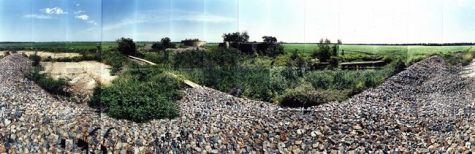
Jerome Relocation Camp, Sewer, Drew & Chicot, Arkansas © Masumi Hayashi. Panoramic photo collage with Fuji Crystal Archive prints, 1995. Size: 23" x 55"
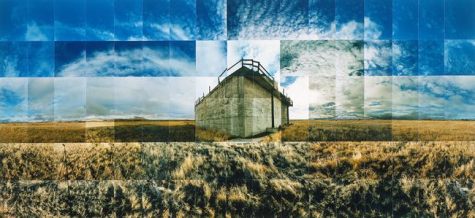
Tule Lake Relocation Camp, Sewer, Tulelake, California © Masumi Hayashi. Panoramic photo collage with Fuji Crystal Archive prints, 1996. Size: 32" x 59"

Poston lll Relocation Camp, Sewer, Yuma, Arizona © Masumi Hayashi. Panoramic photo collage with Fuji Crystal Archive prints, 1997. Size: 26" x 63"
Masumi Hayashi’s work has been exhibited in internationally respected museums and galleries, including the International Center for Photography in New York, the L.A. County Art Museum, the Japanese American National Museum (L.A.), the Tokyo Museum of Photography, the Ludwig Museum of Art in Germany, and the Victoria and Albert Museum of Photography in London, England. In 2003, she had a retrospective one-person exhibit at the Japanese American National Museum in Los Angeles. Professor Hayashi taught photography for 24 years at Cleveland State University, Ohio.
Gallery with pop-out full size images






-

- Masumi Hayashi 1945 – 2006
Thanks to Matt Kelley at Criminal Justice Change.org for alerting me to Hayashi’s work.

Guantanamo © Chris Maluszynski/Agence VU

Guantanamo Map http://www.cubafutour.de/Karte%20Guantanamo%20Provinz.jpg

Guantanamo Bay Tents. Courtesy of The Department of Defense Visual Information Center
I am very happy with the way Prison Photography is progressing. I have done interviews with some outstanding photographers and artists. I have offered opinion where I think there’s something to be said. The most satisfying work on the blog is that contributed by guest bloggers, comment-makers and interviewees. Photographers have contacted me and I have been eager to comment upon their work.
But, there is one audience I never anticipated – The Google Image Search Audience. I get many hits for searches on Guantanamo, Guantanamo video, Iraq prison, Abu Ghraib, Abu Ghraib Images of Prisoners, etc, etc – which is strange because these are topics that many people have grappled over with more proficiency and depth than I am likely to.
It is obvious that there is a need for fast access to images of America’s sites of torture and incarceration, namely Abu Ghraib and Guantanamo. I certainly don’t wish to fuse the two institutional histories so I shall deal only with Guantanamo Bay.
Louie Palu
Walrus Magazine. 8 of Palu’s photographs and accompanying article.
The Atlantic. 6 of Palu’s photographs.
Private galleries. Palu’s Photoshelter profile offers three separate galleries, but they’re password protected. Contact the photographer directly.
NPR Interview. Palu offered insight into his experience and impressions of Guantanamo.
Christopher Sims
Mother Jones. 15 images of daily life outside of the prison complex.
Civilian Arts Project. 25 images of a bizarrely serene Guantanamo Naval Base.
BBC, The Other Side of Guantanamo. Article about Sims’ series.
Daylight Magazine. 4 minute audio of Sims’ experiences on project.
Chris Maluszynski
Agence VU/Moment. Twenty-six images exhibited. Likely more on file at the agency.
Cesar Vera
Guantanamo Prison. 18 Black & White images. 3 Colour.
Joint Task Force (JTF)
Many of the photographs shown in the press over the last few years were taken by members of the Navy’s own Joint Task Force. When press photographers visited the JTF vetted all images before release.
Boston Globe. 30 Hi-Res images.
Repeat of above selection. 20 Hi-Res images selected.
JTF Photo Galleries. 22 months (July 2007 – May 2009). Hundreds of images. Official photography.
Miami Herald
Description of the 8 different camps at Guantanamo
Explanation of the Legal contexts: Key defendants, the judges, the defense and prosecution counsel.
Cursory look at Art influenced by Guantanamo
Magnum
Bruce Gilden. Guantanamo Bay. Enemy Combatant Camps, 2003
Paolo Pellegrin. Guantanamo Detainees, 2006
Stuart Franklin’s work Cuba, 2003, included images from Guantanamo and you’ll need to search the Magnum website for images.
McClatchy
An eight-month McClatchy investigation of the detention system created after the Sept. 11 terrorist attacks has found that the U.S. imprisoned innocent men, subjected them to abuse, stripped them of their legal rights and allowed Islamic militants to turn the prison camp at Guantanamo Bay, Cuba into a school for jihad.
Intro. Text and 11 minute video.
Photos. Detainees held at Guantanamo Bay
Photos. Faces of Guantanamo Detainees. Part one.
Photos. Faces of Guantanamo Detainees. Part two.
Photos. Detainees held in Afghanistan.
Eyeballing
Comprehensive overview of base using Google Maps, official photographs. Details structures, uses and topography of naval base.
Camp America, Camp Delta, Camp V and Administrative & Court building.
Camp X-ray and construction of later detention camps.
Associated Press
Images of facilities and interiors of various detention blocks and camps.
Stars & Stripes “The Independent News Source for the U.S. Military Community”
Work at Guantanamo
Education at Guantanamo
Recreation at Guantanamo
Artistic Turns
David Hicks. Virtual Guantanamo Cell
Penny Byrne. Porcelain Guantanamo Detainee Figurines
Gregor Schneider. 21 Cells, Bondi Beach, Australia
Legofesto. Guantanamo reconfigured with Lego men and Lego pieces and Wired Interview
Flickr – Protest Images
Amnesty International. Guantanamo Protests
Various Photographers. 100 Days to Close Guantanamo and End Torture.
James M. Thorne. Protest images.
Miscellaneous Media
Prisoners of War. 2004 article by the San Francisco Gray Panthers with images of US airforce transporting detainees and early 2003 images of Camp X-Ray.
BBC. Life in a Guantanamo Cell

Rendition. Photographer Unknown
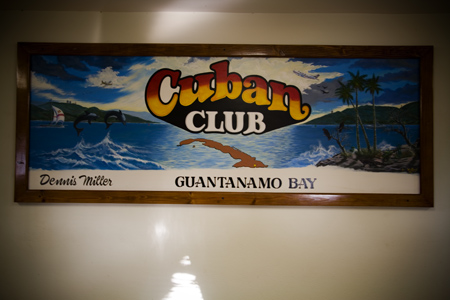
© Cesar Vera

Guantanamo Bay Navel Base with a New Commander-in-Chief. Photographer Unknown. http://www.obamalouverture.com/f39/guantanamo-bay-switch-bush-photo-obama.html
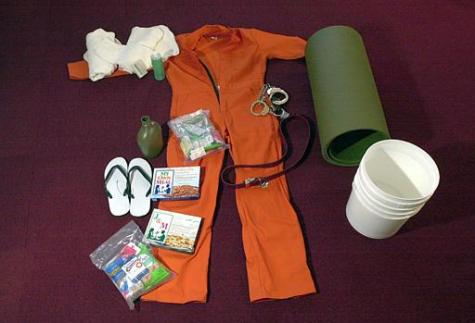
The standard issue of clothing, sleeping mat, food, sandles, canteen, soap, and buckets for detainees of Camp X-Ray is pictured in Camp X-Ray at the U.S. Navy Base at Guantanamo Bay, Cuba, on Wednesday, Feb. 20, 2002. © Tomas van Houtryve/AP Photo
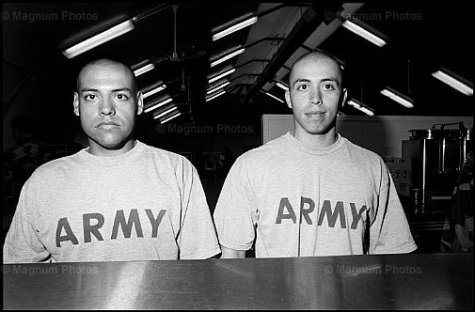
CUBA. Guantanamo Bay. 2003. Soldiers wait for their meals before a prayer breakfast at Camp America. Photo: Bruce Gilden/Magnum
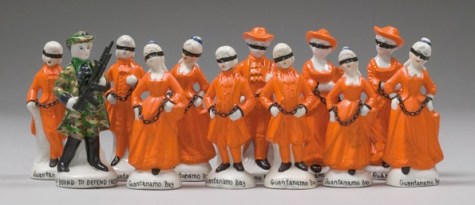
Penny Byrne Guantanamo Bay Souvenirs 2007, vintage figurines, metal chains, epoxy resin, plastic, re-touching medium, powder pigments, 14 x 32 x 10 cm.
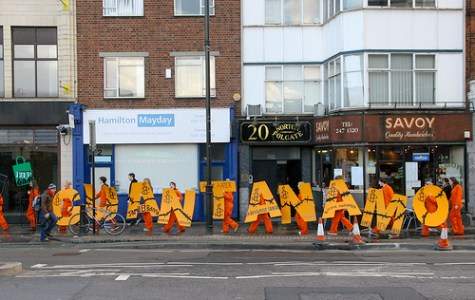
Photo: Jon McClean. http://www.flickr.com/photos/jonmclean/410055117/
IF YOU HAVE ANY RESOURCES TO SUGGEST,
PLEASE CONTACT ME AND I’LL ADD THEM TO THIS LIST.

 Prison Photography
