
You are currently browsing the category archive for the ‘Institutional’ category.

Still from Marilyn Minter’s video ‘Green Pink Caviar’
In San Francisco, Andy Pilara has opened the largest gallery space for photography in the country. It’s called Pier 24 … guess where it’s located?!
Although you can get background info from The San Francisco Chronicle or The New Yorker, I’ll point you in the direction of blogger Jin Zhu‘s debriefing for it ponders both the art and the economy of art distribution.
“If you want to see [Eggleston’s] Peaches photo, go to Pier 24 immediately! The American contemporary room is a color lover’s paradise!”
“The place left me with a bittersweet feeling as a side effect of too much exposure to $$$$. You can work at your aesthetic language and photograph for 20 years, but in the end, the people who end up bringing your work to the public in an affordable, appealing way are the super rich guys.”
The motives of arts patrons are wide and varied (exposure, public statement, benevolence, pride, market influence) (?) so I won’t speculate. I will visit when I am in San Francisco next month, though.
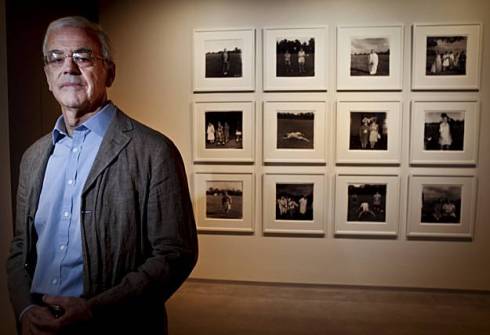
Photo: Russell Yip / The Chronicle
Last week, when Foto8 ran Katarzyna Mirczak‘s article about of the detached and preserved skin of prisoners’ tattoos, I was, of course, compelled to post about it. But, in truth, I need to do a lot more than duly note a story published elsewhere.

HOW HAVE PHOTOGRAPHERS TAKEN ON THE SUBJECT OF PRISON TATTOOING?
The simple answer is with limitations. Photography can describe tattoos very precisely, but description is not comprehension. Often, prison tattoos are a tactically guarded language.
Even if tattoo symbols are deciphered, they may carry different meanings in other cultures. Prison systems exist across the globe, within and “outside” different political regimes, thus the tattoos of each prison culture should be considered according to their own rules – and this caveat applies even at local levels.
Janine Jannsen offers a good introduction to the history of different tattooing cultures. She summarises tattooing in “total institutions” (navy, army, the penitentiary); tattoos and gender; and tattoos and the demarcation of space.
With regards to prison tattoos, maybe it helps us to think of photography as secondary to sociological research. Photography should be thought of as an illustrative tool to aid external inquiry.
That said, there are a number of photographers who have made honorable efforts to describe for a wider audience much of the significance of prison and gang tattoo cultures.
Araminta de Clermont
After their release from prison, Araminta de Clermont tracked down South African gang members and discovered their stories. Interview with Araminta and her subjects here.

© Araminta de Clermont
Donald Weber
Donald Weber mixed with former prisoners (‘zeks’) in Russia and concentrated on how their prison tattoos relate to their identity and criminal lifestyle. The relationships of these men with female criminals and prostituted women (‘Natashas’) who become their companions feature in Weber’s complex investigation.
“Some rules are simple: you can only get a tattoo while in prison.”

September 1, 2007: Vova, zek. The origins of Russia’s criminal caste lie deep in Russia’s history. Huge territories of Russia were inhabited by prisoners and prison guards. Thieves, or zeks, distinguish themselves from others by tattoos marking their rank in the criminal world: there are different tattoos for homosexuals, thieves, rapists and murderers. © Donald Weber / VII Network.
Rodrigo Abd
Rodrigo Abd‘s portraits of Mara gang members in Chimaltenango prison in Guatemala illustrate gang tattoos that are used less and less (from 2007 onwards) due to the unavoidable affiliation and violence they brought the bearer; “After anti-gang laws were approved in Honduras and El Salvador, and a string of killings in Guatemala that were committed by angry neighbors and security forces, gang members have stopped tattooing themselves and have resorted to more subtle, low profile ways of identifying themselves as members of those criminal organizations. Today, gang members with tattooed faces, are either dead, in prison or hiding.”

© Rodrigo Abd / AP
Luis Sinco
In 2005, Luis Sinco of the Los Angeles Times documented Ciudad Barrios Penitentiary in El Salvador, home to 900 gang members, many of whom have been deported from the US. Ciudad Barrios incarcerates only members of the MS-13 gang, which traces its roots to the immigrant neighborhoods west of downtown L.A.
“In the woodshop, inmates made a variety of home furnishings, most of which featured the MS-13 logo. The items sold outside the walls help supplement the prisoners’ meager food rations.”
“It was a of microcosm of L.A.’s worst nightmare transplanted. Claustrophobic, crowded tiers led to darkened, bed-less holding cells and fetid latrines overflowing with human waste.”
Multimedia here.
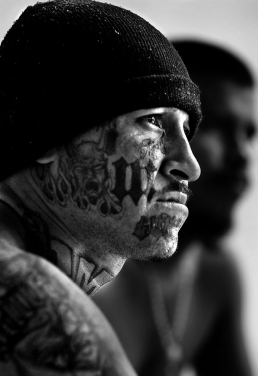
Moises Saman
In 2007, Moises Saman documented the anti-gang activities of Salvadorian Special Police and the inside of Chalatenango prison, El Salvador. At times Saman’s project focused on the tattoos but is more generally a traditional documentary project. More here and here.

© Moises Saman
Isabel Munoz
Much of Isabel Munoz‘s portraiture deals with markings of the body – what they reveal and conceal. For example, she has previously photographed Ethiopian women and their scarification markings. For her project Maras, Munoz shot sixty portraits in a Salvadorian prison of ex-gang-members. She also photographed the women in these mens’ lives. More here and here.
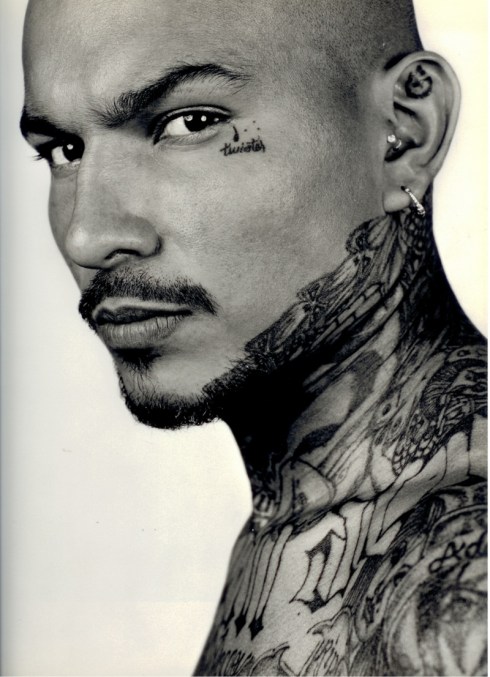
© Isabel Munoz
Christian Poveda
In El Salvador, Christian Poveda photographed and filmed Mara Salvatrucha (known as MS) and M18, the two Las Maras gangs in open conflict. Poveda wanted to describe their mutual violence and the absence of ideological or religious differences to explain their fight to the death. He described the origins of their war as “lost in the Hispanic barrios of Los Angeles” and as “an indirect effect of globalisation.”
Poveda was shot dead aged 52 as a direct consequence of his journalism. His work from El Salvador was entitled La Vida Loca. Full gallery can be seen here. B-Roll from his work can be seen here.

© Christian Poveda
More Resources
Ann T. Hathaway has collated (disturbing) information and links here about a number of prison tattoo codes.
Russian criminal tattoos have warranted their own encyclopaedia.
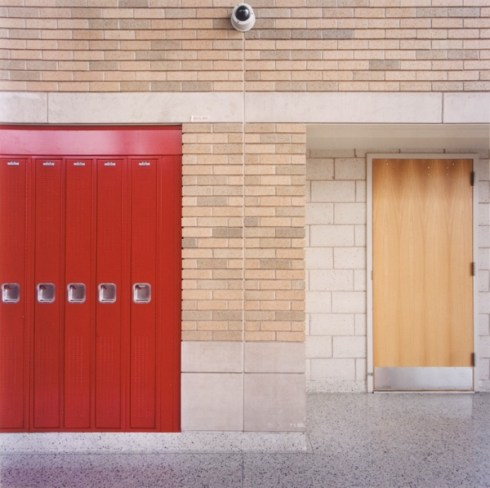
Scott Fortino‘s book Institutional: Photographs of Jails, Schools, and other Chicago Buildings (2005) is important because it hit the shelves two years prior to Richard Ross’ Architecture of Authority (2007).*
People tend to think of Richard Ross’ Architecture of Authority as being the authoritative (pun unintended) photographic statement on use of identical spatial psychologies across the breadth of contemporary institutions. Perhaps Fortino can, and should, disrupt that position.
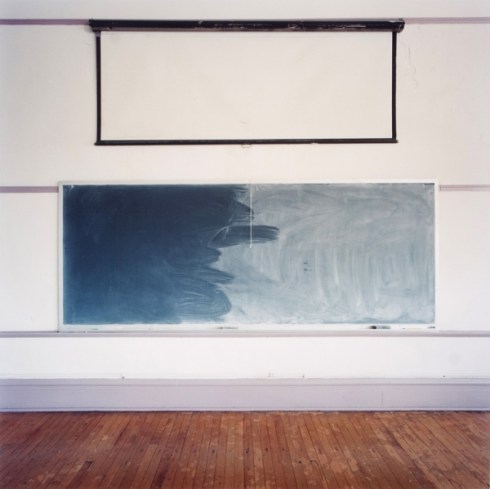

Patently, the publishing date of a book doesn’t close the argument, but I think it is apt to call these two photographers contemporaries in every sense of the word.
There are differences between Fortino and Ross’ work. Fortino’s work looks exclusively at Chicago institutions, whereas Ross – powered by a Guggenheim grant – took his survey international.
Fortino has an unusual bio, working as a photographer and police patrolman. Ross, on the other hand, is a professor in photography for the University of California, Santa Barbara. Interestingly, Ross, the son of a policeman is open about his father’s influence on his work.
I’d really like to see Fortino sat down giving a commentary on his work, just as Ross has here. Better still, I’d love to see Fortino and Ross at the same table!
– – – –
Scott Fortino’s Institutional portfolio, and more here from the Museum of Contemporary Photography Chicago.

BIO
Scott Fortino is a photographer who also works as a patrolman with the Chicago Police Department. His photographs are in the permanent collections of the LaSalle Bank of Chicago, the Museum of Contemporary Photography in Chicago, and numerous private collections.
* The synopsis provided for Institutional: Photographs of Jails, Schools, and other Chicago Buildings by UC Press, for me, misses the mark completely. Fortino’s work isn’t about the “subtle warmth and depth” of these spaces but of the disciplinary form written in the materials, demarcation and use of these spaces.

I’ve talked about biologist Nalini Nadkarni and the Sustainable Prisons Project in Washington State before here and here.
Well, Nadkarni is back at TED again, this time delivering a quick 6 minute piece on how the things we consider static – trees, perceptions, prejudices and the lives of prisoners – are all open to change … if we see the possibilities, if we allow the possibilities.
At times, Nadkarni’s implored arguments (about tree art) are a bit of a stretch, but ultimately I am focused only on the practical & repeatable efforts her team is making to engage the prison population – a population of whom most others have given up.

“The surveillance system, dubbed Sigard, has been installed in Dutch city centers, government offices and prisons, and a recent test-run of the technology in Coventry, England, has British civil rights experts worried that the right to privacy will disappear in efforts to fight street crime. The system’s manufacturer, Sound Intelligence, says it works by detecting aggression in speech patterns.” – Story
via Boogie
Image: Privacy And Control, by Michael Pickard, Creative Commons: Attribution 2.0.

This is macabre. I doubt many conservators have dealt with the technical issues of this “print” medium.
Foto8: “The tattoo collection at the Department of Forensic Medicine at Jagiellonian University in Krakow, Poland consists of 60 objects preserved in formaldehyde […] The tattoos were collected from the prisoners of the nearby state penitentiary on Montelupich Street as well as from the deceased on whom autopsies were performed.”
The tattooed skin was preserved in order to decipher the codes within the images:
In the 1970s, the CSI Department of Militia Headquarters in Warsaw published a special document only for prosecution agencies in which they analysed 2300 tattoos, including those from the collection at Jagiellonian University. For over four years, the researchers looked at prisoners, soldiers and criminals who served sentences in Czechoslovakia, Yugoslavia, Germany and the USSR. A catalogue that precisely described the meanings behind certain tattoos was created.
It should be said, figuring out what messages are involved in prison tattoos is common across all nations, systems and eras. Although, this is the first collection I know of that separated the tattoos from corpses.

ONE BIG SELF
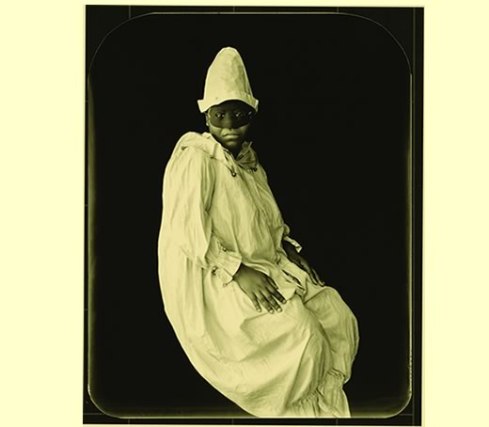
I have told many people in person that Deborah Luster’s One Big Self is the most impressive prison photography endeavour to date. I have been slow to state as such on this forum because the scope, details and inspiration of the project are so overwhelming.
Every portrait deserves an essay, but that obviously is not possible. Rather than delay any further, my aim here is to present many of Luster’s portraits, describe the bare facts, and provide some further resources to understand the work.
THE FACTS
Completed between 1998 and 2003.
Portraits taken in many different prisons – mens and womens facilities; minimum to maximum security throughout Louisiana; and with different levels of supervision.
Tens of thousands of portraits taken.
Luster estimates she gave away 25,000 portraits to prisoners over the course of the project.
Luster worked fast – 10 to 15 portraits per hour. At a point working in sheer volume became the only reasonable way to respond to the size of the prison population with which she was engaged.


BACKSTORY
Luster got involved in this longitudinal study through a chance request. Luster’s emotional standing at the time of beginning was – is – atypical and unexpected.
Luster’s mother was murdered in 1988; “Although I was interested in photography prior to that time, I didn’t study or practice it. I began photographing in response to her murder.”
Luster did not deliberately go in search of the subject. In 1998, she was driving near Lake Providence, Louisiana when she came upon East Carroll State Prison Farm. She literally knocked on the front gate. There and then Warden Dixon gave her sanction to begin the endeavour.



VIDEO & AUDIO
SFMoMA has done us a great service in recording and publishing the following video shorts.
In four videos, Luster describes the ORIGINS of the project, elements of ACCIDENTAL PERFORMANCE, printing on ALUMINIUM PLATES, and comments on INDIVIDUAL WORKS.
Remarkable tales.


RESOURCES
Deborah Luster is represented by Catherine Edelman Gallery, who present the best online selection of her portraits.
Good background information is provided by Doug McCash of the New Orleans Times Picayune; David Winton Bell Gallery at Brown; and Grace Glueck of the New York Times.
In 2000, One Big Self was exhibited at the Center for Documentary Studies at Duke, providing an overview and gallery of the project.
INTERVIEW
The best in-print interview with Luster is included in recent publication, PRISON/CULTURE (City Lights), which I reviewed two months ago.
THE BOOK: ONE BIG SELF
The book is at a premium now and you’ll struggle to find it for under a $100. It is published by Twin Palm Press.

IMAGE/WORDS
Luster collaborated with writer/poet C.D. Wright. Luster’s images and Wright’s poetry are a great complement to one another. Listen to Wright read her poetry from the project.
A PROJECT ONGOING
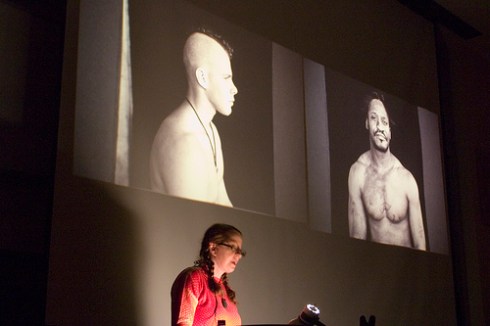
Despite the passage of seven years since the projects official closure, Luster’s career continues to be defined by her ground-breaking, genre-defining project. Her lectures are vital in that she describes the many facets of the project – from security arrangements, to gear (she generally worked with digital), to processing (she made use of tintype imitation technique printing onto small metal sheets), to the specifics of exhibition.
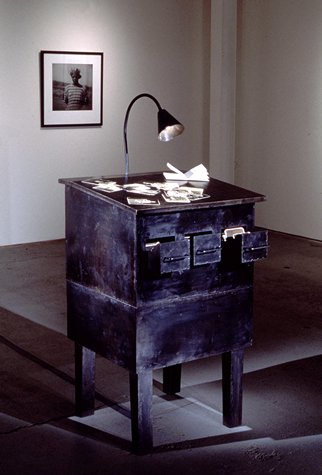
The image below shows a steel cabinet and lamp (containing 288 silver-emulsion aluminum plates) as it was displayed at the San Francisco Museum of Modern Art and other institutions. Luster wanted to create a tangible viewing experience in which the audience were required to handle the archive of human life in the same way the state of Louisiana organised and disciplined the bodies under its supervision.
In the video (below) Luster talks us through the senses and noises of the exhibit design.
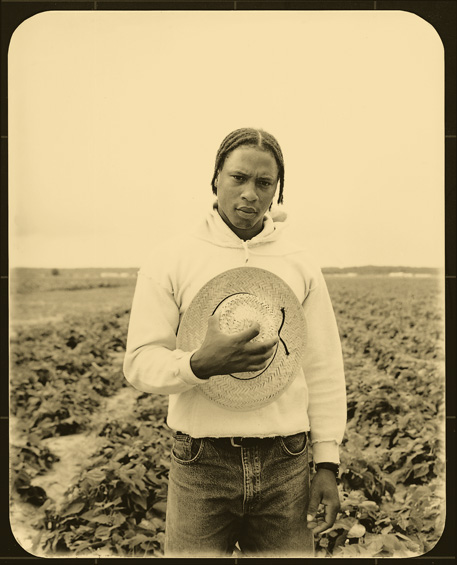
Ten years ago, Katy Grannan’s photograph of Jeff Stackhouse accompanied The Maximum Security Teenager, a Margaret Talbot article for The New York Times Magazine. Talbot’s long piece explored the growing number of teenagers serving time in adult prison facilities. Stackhouse was fifteen when the article appeared in 2000.

‘Jeff Stackhouse’, Chromogenic print, 2000. Published in New York Times Magazine, September 10, 2000. Collection of the artist, courtesy Greenberg, Van Doren Gallery, New York City; Fraenkel Gallery, San Francisco; Salon 94, New York City. © Katy Grannan
Katy Grannan is best known for her domestic and nude portraits of women (often non-models who Grannan connects with via newspaper ads), so this photograph of Stackhouse is a relative anomaly.
Grannan graduated as part of the Yale MFA grads taught by Gregory Crewdson and known affectionately and disparagingly in equal measure as ‘The Yale Girls’. The complaint has been that Crewdson engineered their early exposure on the art scene with the Another Girl, Another Planet exhibition.
THE BOY
Stackhouse’s portrait was taken on assignment but was also included in the Portraiture Now: Feature Photography exhibit (Nov. 2008-Sept.2009) at the National Portrait Gallery along with photographs by Jocelyn Lee, Ryan McGinley, Steve Pyke, Martin Schoeller, and Alec Soth. The exhibit deliberately selected photographers’ work “for publications such as the New Yorker, Esquire, and the New York Times Magazine, each bringing their distinctive “take” on contemporary portraiture to a broad audience.”
Despite lengthy internet searches, I cannot find any information on Jeff beyond the NYT Magazine piece and a 60 Minutes piece, both shortly after his incarceration. Being tried as an adult, Stackhouse potentially faced a 30 year sentence – incredible if you consider his transgression:
‘Jeff was under a kind of house arrest imposed by the juvenile court – he wasn’t supposed to leave home alone except to attend school. But on Feb. 23, 2000, he was arrested again. He and three other neighborhood kids his age had been ”play boxing,” as the police report termed it, at the school bus stop, and Jeff had given one of the boys a bloody lip. After the fight, the boy and his pals set out for Jeff’s house, where they called him out on the lawn, got him in a headlock and punched him. Jeff ran into the house, found an unloaded antique shotgun that his mother kept in her closet and brought it out to wave at the other kids, shouting, ”Get off my property!” The three boys headed home in a hurry. No one was hurt, and two of the three did not even want to press charges.’ (Source)
THE MAN
Jeff obviously had severe problems as a teenager – as Talbot’s article described – but he would be 25 years old now. The Arizona Department of Corrections returns no record of an inmate with his name. He may have been released, he may have not?
My point? I guess this is merely one of millions of images that have no (widely-distributed) follow up. The forlorn circumstances of Jeff’s experience in 2000 do not exist now; they could be better or worse, but the absence of knowing renders this decade old portrait virtually obsolete.
The portrait was taken as part of a story; as an anchor and human face to the description of changing, harsher laws for sentencing youth. These laws deal in years and so it is that Jeff’s story has unfolded over years. Only we don’t know the details.
I am curious what other events have transpired for Jeff, and mostly I am interested what Jeff thinks about his brief feature in the national media, the fact he has been on the walls of the National Portrait Gallery and if any of that ultimately mattered or changed things for him.
– – –
More of Grannan’s work at Salon 94.

 Prison Photography