
You are currently browsing the category archive for the ‘Visual Feeds’ category.
Photography in prisons and jails isn’t always edgy nor riven with fraught emotion. Sometimes it can be quite ordinary. In fact, given the utter boredom of most prison facilities it would be good to see a photo essay that communicated effectively vacuous time and psychological space.
…but, I digress. Hetherington, over at the venerable What’s The Jackanory?, indulged in some “shameless self promotion” of his magazine work at North Branch Correctional Institution. Within the Wired article, Prisoners Run Gangs, Plan Escapes and Even Order Hits With Smuggled Cellphones, Hetherington’s images include a cell-tableaux, sniffing dog and bagged phone. I am more interested in the non-published images Hetherington provides in his post; they’re crisp, pared down images of inmate and interior.
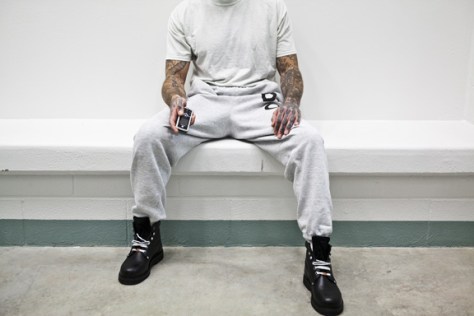
Andrew Hetherington for Wired
It got me thinking about how the environmental fabric – along with the representation – of American prisons has changed.
When (documentary) photographers first began accessing prisons – Danny Lyon, Conversations with the Dead (1971), Jacob Holdt; Taro Yamasaki, Inside Jackson Prison (1981) – the conditions were poor. And prisons were only one response to criminal behaviour and social contract.
Even latterly, Ken Light shot the black & white, in-your-face and sweaty Texas Death Row (1994) and in doing so romanticised historicised American prisons as definitively dirty sites of “the other”. By the 1990s, though, the US had implemented long term custodial sentences as the primary “solution” to crime. The phase-out of Federal parole beginning with Reagan and culminating with Clinton bloated the Federal Bureau of Prison (BOP) population, alone, from 40,000 to 200,000.
So two trends intersected: Prison populations swelled resulting in overcrowding and economically efficient facilities were rapidly being built. The mass construction of new warehouses prisons altered the spatial experience of confinement and the nature of interpersonal interaction within. Cell tiers were replaced by AdSeg wings.
The BOP has a reputation for housing the hardened criminal and specialises in high security facilities. Additionally, from the late 1980s states were building their own new high security and supermax prisons. This new penological architecture replaced 40 foot brick walls and watch towers with razor wire and motion sensors.
Prison environments are sparse. Problems with dark corners & damp have been replaced with the psychotrauma of constant fluorescent light. Problems with stashed contraband have been replaced with an absence of surfaces to set down objects. Denim uniforms have been replaced by sweat outfits. The penological management of gangs & group violence has been replaced with the pharmacological management of locked-up basket cases.
One former inmate of the Federal Supermax facility in Florence, Arizona (ADX) has described it as the “Perfection of Isolation.”

Correctional Officer Jose Sandoval inspects one of the more than 2,000 cell phones confiscated from inmates at Calfornia State Prison in Vacaville, California. Rich Pedroncelli / AP
Telephoning a way out Isolation
“Cell phones,” says James Gondles, executive director of the American Correctional Association, “are now one of our top security threats.” (Wired, July, 2009)
I posited in the past that cell phones were just one part of the prison economy and their commodity status was in direct reaction to the cost of corporate-managed prison payphone systems – in essence a racket in response to a racket. However. having read the Wired article it is clear how much of a serious security threat cell phones pose to prison authorities.
The majority of tactics for isolation, perfected over the past 30 years by prison administrations, are rendered immediately obsolete,
With a wireless handset, an inmate can slip through walls and locked doors at will and maintain a digital presence in the outside world. Prisoners are using voice calls, text messages, email, and handheld Web browsers to taunt their victims, intimidate witnesses, run gangs, and organize escapes—including at least one incident in Tennessee in which a guard was killed. An Indiana inmate doing 40 years for arson made harassing calls to a 23-year-old woman he’d never met and phoned in bomb threats to the state fair for extra laughs.
So what’s the answer? Debate exists over the value and legality of jamming all signals around prisons but a High School in Spokane, WA proved localised signal-jamming a bad idea when it interfered with the local Sheriff’s radio signals.
We should also bear in mind that ‘The 1934 Communications Act prohibits anyone except the federal government from interfering with radio transmissions, which now include cell calls.’ (Wired)
Criminalize Smuggling but Not Talking
TIME does a good job of breaking down the stats and describing the evolution of the problem. It is obvious that authorities are going to make strategic response to a growing trend but prison authorities must not compromise the already limited opportunities for inmates to talk with friends and family. Close family ties and contact are key to reducing recidivism and giving former prisoners the best means to integrate back into society.
And of course, inmates aren’t the only ones caught up in the illicit trade of cell phones in prisons. One California prison guard admittedly to making over $100,000 in a year through smuggling and selling cell phones!
On that note, I offer you a CDCR sanctioned news VT.
As so very often, the spark of thought was ignited by the Change.org Criminal Justice blog.
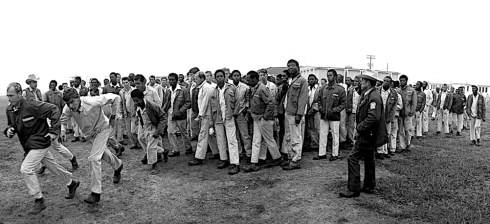
Credit: Bruce Jackson
NY Times LENS Blog
Here, there and everywhere people are celebrating the New York Times’ LENS Blog as a messianic gift for the photophile. I was therefore happy to see that less than two weeks in LENS is featuring Bruce Jackson’s wide angle documentary work from Arkansas Prison in the early 1970s
Bruce Jackson should be a familiar name as it was he that rescued, scanned and shared the enigmatic Arkansas Prison Mugshot series, Mirrors.
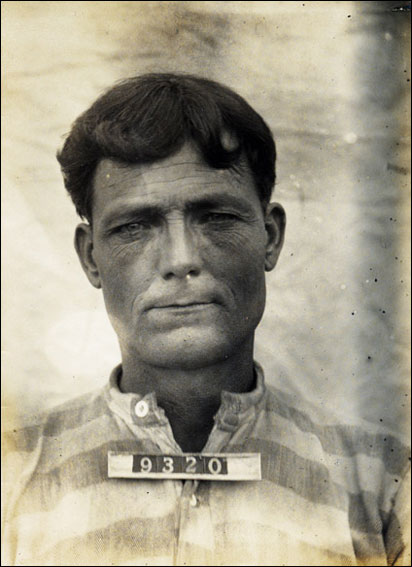
Found and presented by Bruce Jackson. Arkansas State Prisoner Portrait
June 100 Eyes Issue
Over at 100 Eyes, Andy Levin from insists that “Whatever ones perspective, be it victim, civil rights activist or cop, there is one shared idea – something needs to change.”
The June edition of 100 Eyes, titled, America Behind Bars features the work of Dominic Bracco, Jerome Brunet, Darcy Padilla, Jenn Ackerman and Tim Gruber – all very talented and committed photographers.
As editor, Andy Levin, concludes, the genre of prison photography (or to be less aggrandizing) simply the practice of photography within sites of incarceration is often a difficult and thankless task;
The photographers who have contributed to “America Behind Bars” have worked against overwhelming odds to bring back powerful images of American prisons. One can’t simply walk into a prison with a camera. This kind of photography requires long negotiations and often a warden who has the vision and concern to allow a photographer into his jail.
Wonderful exposure for the most pressing of social issues in America today.
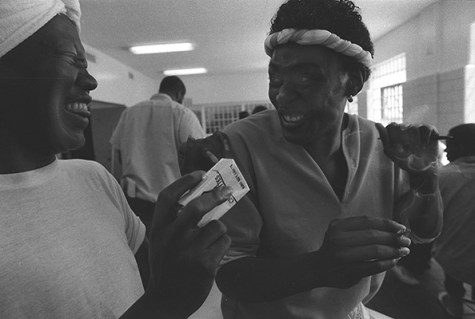
Darcy Padilla. From AIDS in Prison Series.
Prison Photography began its project in September 2008 with a celebration of Darcy Padilla’s portrait of former San Quentin Public Communications Officer, Vernell Crittendon.
In February, I was gob-smacked by Jerome Brunet’s Riding Shotgun with Texas Sheriffs.

Guantanamo © Chris Maluszynski/Agence VU

Guantanamo Map http://www.cubafutour.de/Karte%20Guantanamo%20Provinz.jpg

Guantanamo Bay Tents. Courtesy of The Department of Defense Visual Information Center
I am very happy with the way Prison Photography is progressing. I have done interviews with some outstanding photographers and artists. I have offered opinion where I think there’s something to be said. The most satisfying work on the blog is that contributed by guest bloggers, comment-makers and interviewees. Photographers have contacted me and I have been eager to comment upon their work.
But, there is one audience I never anticipated – The Google Image Search Audience. I get many hits for searches on Guantanamo, Guantanamo video, Iraq prison, Abu Ghraib, Abu Ghraib Images of Prisoners, etc, etc – which is strange because these are topics that many people have grappled over with more proficiency and depth than I am likely to.
It is obvious that there is a need for fast access to images of America’s sites of torture and incarceration, namely Abu Ghraib and Guantanamo. I certainly don’t wish to fuse the two institutional histories so I shall deal only with Guantanamo Bay.
Louie Palu
Walrus Magazine. 8 of Palu’s photographs and accompanying article.
The Atlantic. 6 of Palu’s photographs.
Private galleries. Palu’s Photoshelter profile offers three separate galleries, but they’re password protected. Contact the photographer directly.
NPR Interview. Palu offered insight into his experience and impressions of Guantanamo.
Christopher Sims
Mother Jones. 15 images of daily life outside of the prison complex.
Civilian Arts Project. 25 images of a bizarrely serene Guantanamo Naval Base.
BBC, The Other Side of Guantanamo. Article about Sims’ series.
Daylight Magazine. 4 minute audio of Sims’ experiences on project.
Chris Maluszynski
Agence VU/Moment. Twenty-six images exhibited. Likely more on file at the agency.
Cesar Vera
Guantanamo Prison. 18 Black & White images. 3 Colour.
Joint Task Force (JTF)
Many of the photographs shown in the press over the last few years were taken by members of the Navy’s own Joint Task Force. When press photographers visited the JTF vetted all images before release.
Boston Globe. 30 Hi-Res images.
Repeat of above selection. 20 Hi-Res images selected.
JTF Photo Galleries. 22 months (July 2007 – May 2009). Hundreds of images. Official photography.
Miami Herald
Description of the 8 different camps at Guantanamo
Explanation of the Legal contexts: Key defendants, the judges, the defense and prosecution counsel.
Cursory look at Art influenced by Guantanamo
Magnum
Bruce Gilden. Guantanamo Bay. Enemy Combatant Camps, 2003
Paolo Pellegrin. Guantanamo Detainees, 2006
Stuart Franklin’s work Cuba, 2003, included images from Guantanamo and you’ll need to search the Magnum website for images.
McClatchy
An eight-month McClatchy investigation of the detention system created after the Sept. 11 terrorist attacks has found that the U.S. imprisoned innocent men, subjected them to abuse, stripped them of their legal rights and allowed Islamic militants to turn the prison camp at Guantanamo Bay, Cuba into a school for jihad.
Intro. Text and 11 minute video.
Photos. Detainees held at Guantanamo Bay
Photos. Faces of Guantanamo Detainees. Part one.
Photos. Faces of Guantanamo Detainees. Part two.
Photos. Detainees held in Afghanistan.
Eyeballing
Comprehensive overview of base using Google Maps, official photographs. Details structures, uses and topography of naval base.
Camp America, Camp Delta, Camp V and Administrative & Court building.
Camp X-ray and construction of later detention camps.
Associated Press
Images of facilities and interiors of various detention blocks and camps.
Stars & Stripes “The Independent News Source for the U.S. Military Community”
Work at Guantanamo
Education at Guantanamo
Recreation at Guantanamo
Artistic Turns
David Hicks. Virtual Guantanamo Cell
Penny Byrne. Porcelain Guantanamo Detainee Figurines
Gregor Schneider. 21 Cells, Bondi Beach, Australia
Legofesto. Guantanamo reconfigured with Lego men and Lego pieces and Wired Interview
Flickr – Protest Images
Amnesty International. Guantanamo Protests
Various Photographers. 100 Days to Close Guantanamo and End Torture.
James M. Thorne. Protest images.
Miscellaneous Media
Prisoners of War. 2004 article by the San Francisco Gray Panthers with images of US airforce transporting detainees and early 2003 images of Camp X-Ray.
BBC. Life in a Guantanamo Cell

Rendition. Photographer Unknown
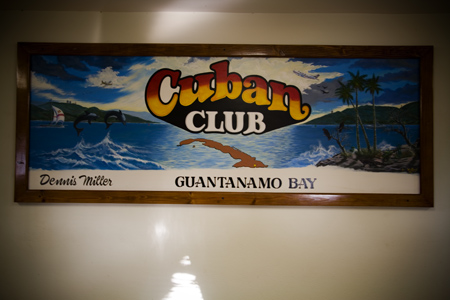
© Cesar Vera

Guantanamo Bay Navel Base with a New Commander-in-Chief. Photographer Unknown. http://www.obamalouverture.com/f39/guantanamo-bay-switch-bush-photo-obama.html
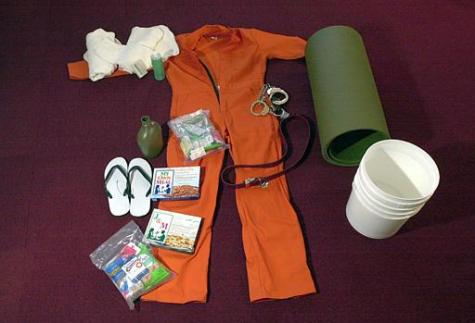
The standard issue of clothing, sleeping mat, food, sandles, canteen, soap, and buckets for detainees of Camp X-Ray is pictured in Camp X-Ray at the U.S. Navy Base at Guantanamo Bay, Cuba, on Wednesday, Feb. 20, 2002. © Tomas van Houtryve/AP Photo
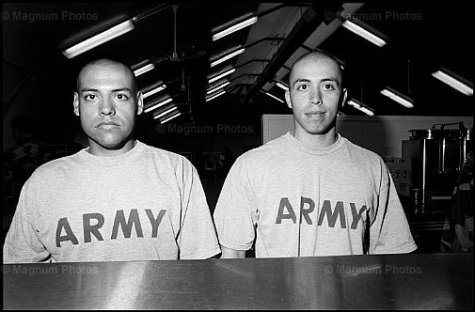
CUBA. Guantanamo Bay. 2003. Soldiers wait for their meals before a prayer breakfast at Camp America. Photo: Bruce Gilden/Magnum
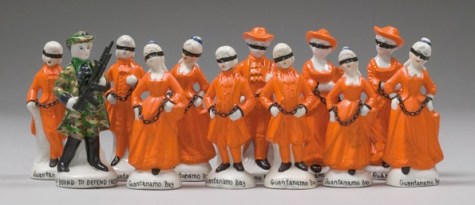
Penny Byrne Guantanamo Bay Souvenirs 2007, vintage figurines, metal chains, epoxy resin, plastic, re-touching medium, powder pigments, 14 x 32 x 10 cm.
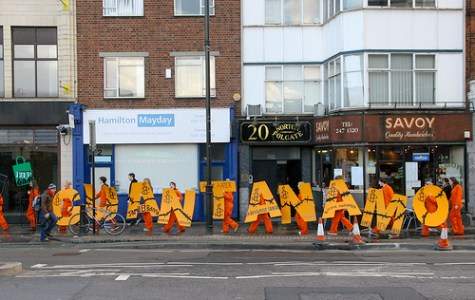
Photo: Jon McClean. http://www.flickr.com/photos/jonmclean/410055117/
IF YOU HAVE ANY RESOURCES TO SUGGEST,
PLEASE CONTACT ME AND I’LL ADD THEM TO THIS LIST.
I started Wednesday Words last week to throw out some brief and wise writings on prisons. I’ve got Winston Churchill, Charles Darrow and David Ramsbottom lying in wait. But they must all hold fire because I am taking the podium this week.
I have just unsubscribed from Getty’s Photoblog. Having it filter through my reader next to thoughtful and (in most cases) non-commercial blogs it became plainly obvious Getty are pandering to their audience. The result is a bland regurgitation of celebrity imagery. I guess this is what their audience wants. GettyBlog is watery gruel compared to the rest of the blogophotobiosphere.
My conclusion: Getty is effectively held captive by their audience.
Apparently, Getty Blog’s readership wants about 60 or 70% of Getty’s narrative to be about young, famous women and their clothing choices. Well, I don’t.
This minor alteration to my daily visual feed came a day after I read Confessions of a Former Online Producer, a candid piece by Jake Ellison;
During my last year at the Seattle Post-Intelligencer, in its last year as a newspaper, I published online thousands of pictures of half-starved, mostly naked women – celebrities and fashion models. I even became so deranged as to argue vehemently in the newsroom that those photos were necessary because we were a dying industry and people wanted to look at those women, so get on board.
The Seattle PostGlobe is an all volunteer, blog-reporting venture made up of many former Seattle Post Intelligencer journalists. The P-I went under a couple of months ago and the PostGlobe is simultaeneously a service to the now one paper Emerald City, a boredom evasion technique, experiment in new-journalism and an acknowledged unsustainable economic model. For all those reasons I love it, support it and endorse it.
I’d tweet its stories more often but the PostGlobe’s URLs are 142 characters long!
Note: This one’s off topic, but I’ll be coming back with prison related visual critique sooner than you can say “Jack Lemon”.
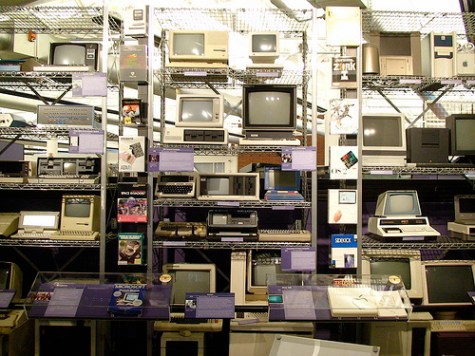
The Computer History museum in Mountain View, California. Credit: David Glover
How do museums and galleries use online media to promote themselves?
I have been required to think about “The Museum” and it’s engagement with public and web2.0 audiences recently. If you look about you’ll find really good uses and catastrophic uses of web2.0 by museums and galleries alike. I don’t want to beat up on small galleries for their ill-advised, tweeting non-personas nor criticise lackadaisical irregular blog posting; both of these activities are for the intern. I’d really complain if I thought someone was getting paid to stumble through blog posts and ideas after a full day educating outreach audiences.
I do think the MoMA and San Francisco MoMA are fair game though.
Let’s start with the good.
MoMA: A delicate, understated film-short, with good production values. Some might argue it’s over sentimental and panders to arty self obsessions, but the MoMA is the beacon of an art world, art market and art-as-brand that has Western obsessions about the object at its core. I’ll allow it to veil this truth and remould it as individual yearning.
Click on the image below to view the video at The Contact Sheet blog.

Still from MoMA's promotional video "I See"
And now, to the bad.
SFMoMA: Apparently inspired by the White House launch of Obama coverage on Flickr, the San Francisco MoMA launched its own stalking eye upon director Neal Benezra. They call it Director Cam.

Benezra at press preview, being interviewed by Don Sanchez for ABC7, in the SFMoMA rooftop sculpture garden.
Now, I am all for transparency, informality, familiarity and all that, and, to be fair, SFMoMA has done this reasonably well with its other Flickr sets (although I’d prefer less high-society party coverage and more high-school outreach coverage).
However, Director Cam just rubs me the wrong way. I don’t want to see the privileged folk of the museum-world lording over its institutions, I want to see public audiences getting knee deep in collections & archives and mixing it up a bit. I want to see Flickr used as a means to entice people into the museum not as a mirror for already existing (and exclusive) engagements.

Neal talking with Exhibitions Design Manager / Chief Preparator Kent Roberts. With Chuck Schwab, chairman of the board of trustees (center) and Catherine Kuuskraa (right). In the background on the left wall you can just slightly see the new bridge commission, by Rosana Castrillo-Diaz.
BLDGBLOG (via Twitter) this week called for an alternative narrative of the built environment.
As I understood this, it is a theoretical proposal that would include interviews and testimonies of electricians, security guards and the fixers that keep the nuts and bolts in place while arty self-obsessed types flit about amid well-maintained frameworks.
After the white-collar fraudulent dismantling of the city, there is no better time to call for an alternative version of urbanity. A blue-collar city narrative.
With these thoughts looming, it is not Benezra that interests me, rather Kent Roberts, Exhibitions Design Manager and Chief Preparator at SFMoMA. Bring on ‘Museum Preparator Cam’!
All of this throws up more unanswered questions about the role of new media in the operations of museums and galleries. Fortunately, I recently discovered Nina Simon’s Museum 2.0 blog which provides some riposte.
___________________________________________________________
Images. Computer History Museum by David Glover. As well as his Computer History Museum Set, you should check out his Byte Back Set.
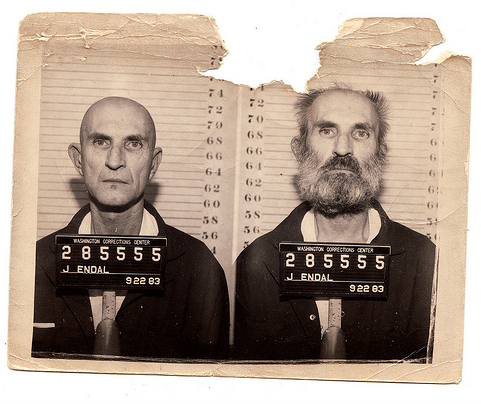
Torn Shorn, Misc. Set. Courtesy of Least Wanted aka Mark Michaelson. http://www.flickr.com/photos/leastwanted/sets/72157605201939008/
Another nod for Blake Andrews. Although not planned, it is welcome, as I think he tries keeps the blogophotosphere fresh, trying new stuff from his hideout in Portland.
Earlier this week I featured Blake’s Brief History of the U.S. Passport Photograph. An artist/collector with hundreds of Passport and ID Photographs, named Least Wanted, followed up with Blake to get the word out on his sprawling collection.
Also earlier this week, I put up a piece about the JUSTICE Art Installation in Bridewell Police Station, London. Coincidentally, one of the artists for the JUSTICE exhibition exhibition was Mark Michaelson, aka Least Wanted. It seems like a small-internet-triangle-of-providence presented itself this morning and it is up to me to draw the hypotenuese …

Head Gear, Misc. Set. Courtesy of Least Wanted aka Mark Michaelson. http://www.flickr.com/photos/leastwanted/sets/72157605201939008/
Least Wanted collects, groups and displays a huge collection of I.D. photos on Flickr. In addition to passport shots, it includes medical photographs, badge I.D. photos and other documentary ephemera. Prison Photography is interested in the majority of the collection: Mugshots.
Least Wanted’s sets are a mad enough curatorial project to keep me going for months. For now, I’ll just echo Blake’s sentiment and point you in the direction of Michaelson’s epic archive.

Austin Old Timer, Misc. Set. Courtesy of Least Wanted aka Mark Michaelson. http://www.flickr.com/photos/leastwanted/sets/72157605201939008/
The three images used in this article were drawn from Least Wanted’s misc. Set
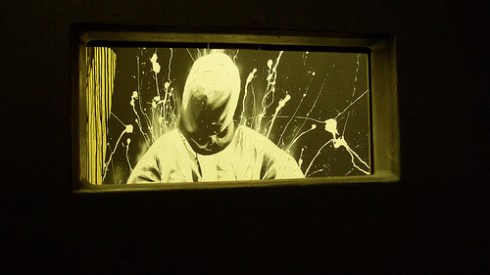
I found this via Wooster Collective who provide good daily visual feeds.
Info from the JUSTICE Flickr set. All images from JUSTICE Flickr set.
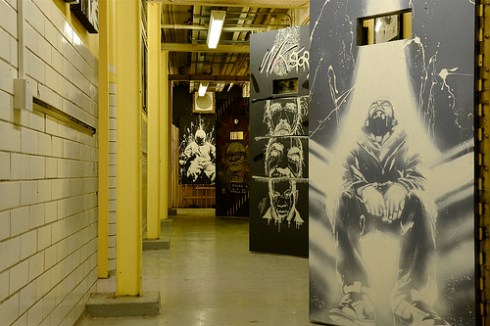
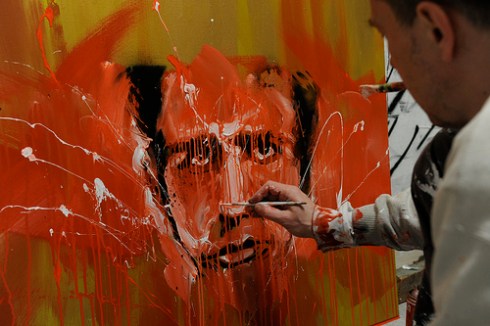
JUSTICE, a concept show based on themes of Law and Order, is the hard endeavours of 5 artists; C215, Dan23, Bruno Leyval, Least Wanted and MC1984.
Traveling to Bristol from France and New York to build JUSTICE, featuring site specific installations, photography, prints, stencils and a range of new original work.
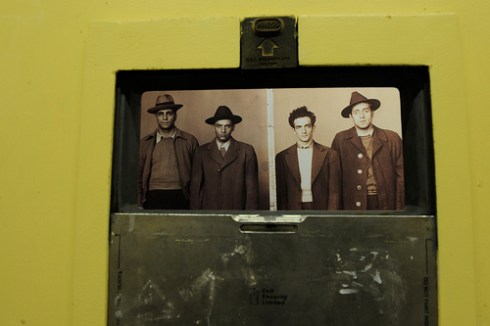
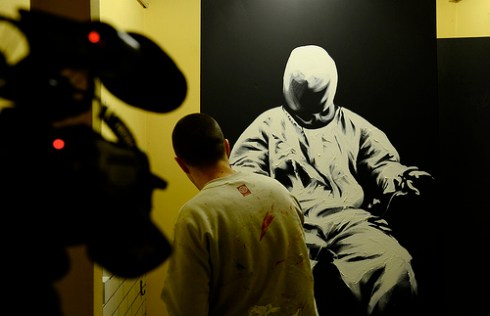
All the artists have a strong collective interest in the plights of minority cultures, human rights, freedom, homelessness and the vacuous subject of law and order, and Justice will display the combined aesthetic of these interests placed within the oppressive environment of Bridewell Police Station’s cells.

As well as the Old Bridewell Police Cells, the show was at The Long Arm Gallery, Bridewell Street, Bristol, BS1 3PY.

Blake Andrews says, “Together with the mugshot, the passport snapshot was the earliest application of photography as purely personal identifier.” It’s a good read and you should check it out. My favourite observation was the 1920s transition, “Photos were glued instead of stapled.” Also, is that Indiana Jones?…
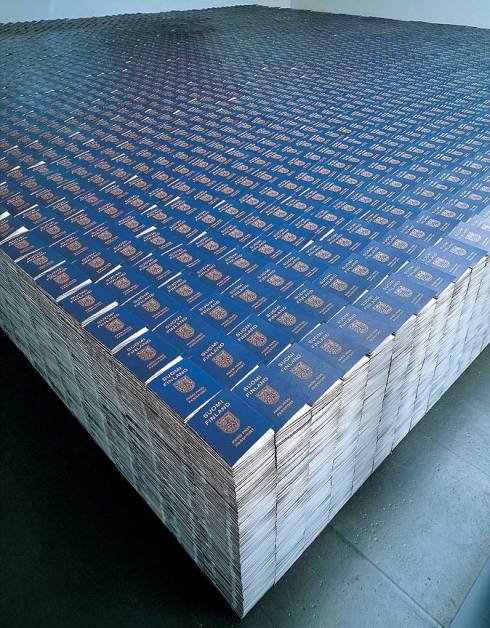
“One Million Finnish Passports”, 1995. One million replicated Finnish passports, glass, 800 x 800 x 80 cm. Installation view: Museum of Contemporary Art, Helsinki. Artist: Alfredo Jaar, courtesy Galerie Lelong, New York.
I’ve been thinking a lot about mugshots recently and how prison photography is one little orbit of many about the deathstar of dark-photography. Other orbits include Weegee, Larry Sultan & Mike Mandel (defining the cross over between documentary and fine art) forensic photography, police blotter, thanatourism, civil war hangings, Salgado’s “Beautiful Deathscapes”, lynching photography, Danny Lyon (the most appropriated of artists) and fetishism to name a few.
All of these, by method or subject, relate to the state, and thus more orbits of homeland and foreign surveillance, torture slideshows, death suites, electric chairs, driving licenses, mafia movies, Jenny Holzer and genocide.
The most everyday instance of a photographic collaboration with the state is the passport photo. No more than that. Just thoughts.

 Prison Photography
