Link

The BBC reported today that Italy was to open its first prison to serve specifically transgender prison population. In terms of its policy and service, such a move is welcome and progressive.

The US, however, doesn’t have specific institutions for its transgendered inmates, instead it employs the following policy:

Transsexual people who have not had genital surgery are generally classified according to their birth sex for purposes of prison housing, regardless of how long they may have lived as a member of the other gender, and regardless of how much other medical treatment they may have undergone.  Transsexual people who have had genital surgery are generally classified and housed according to their reassigned sex.

This rigid policy can result in housing a woman (male-to-female trans) with a male inmate in the same cell. When this occurs, violent and/or sexual assault is common. Karen Franklin PhD posits that the prison system in the US establishes for transgendered youth a track toward future incarceration;

Transgender youth who get caught up in the juvenile justice system face extreme hostility and abuse at the hands of judges, counselors, correctional staff, and even their own court-appointed attorneys. They are more likely than other youths to be given harsh punishment in maximum-security institutions. This, of course, is part of the channeling toward adult prison.

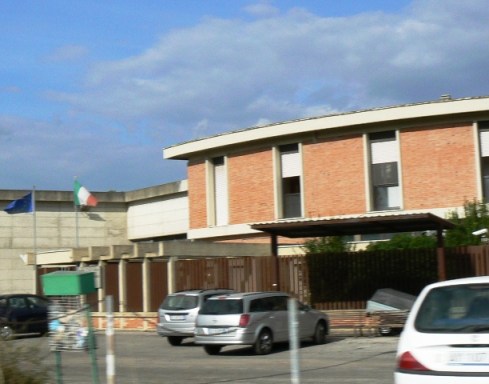
So Italy is leading by example? Well, yes and no. The prison at Pozzale (near Florence) was formerly a women’s prison subject to senior staff abuses, consequent court battles and ongoing bureaucracy ensuring mismanagement of resources.  Recently it has housed only two inmates while other prisons in the area were overcrowded. The transgender prison is the socially-responsible solution; a new start for an institution with a corrupt past.

Source

There is a total dearth of photographs of this institution, but also of trangender prisoners in the media today. I hadn’t paid it any thought until I was pressed to search for images for this post. I hope and expect that photojournalists will document activities at the prison once the new inmates arrive. It is a worthy story; there is a need. I suspect the Italian authorities would want to put a positive media spin on the story, and also on the trangender realities that are unfortunately still uncomfortable and/or controversial for some members of the public.

Further reading

Transgender Prisoner Resources

“How I Survived Men’s Prison” by Kalani Key

I’ve never quite had a holiday like that before; the snowfall you always thought your parents were making up as they described the days when “real winters” hit.

Yesterday, Manchester airport availed itself and I got out. Arrived back in Seattle last night.

So I am back on the horse and I’ve got stuff to say (so does the horse).

Image source

© Neelakshi Vidyalankara

For her Babies Behind Bars series, Neelakshi Vidyalankara visitied the Bedford Hills Correctional Facility in Westchester County, the largest maximum security women’s prison in New York state.

“The prison opened in 1901 and has hosted many infamous women prisoners (including Kathy Boudin, Jean Harris, Carolyn Warmus, Sante Kimes and Pamela Smart).  It is also one of a few women’s prisons in the USA that allow pregnant prisoners to keep their newborn babies with them for the first 12 – 18 months of their life. The Bedford Hills nursery has existed in some form since 1901 and was created to help foster a stronger attachment between mother and infant, improve parenting skills and reduce a mother’s chances of recidivism,” says Vidyalankara.

Qiana did a short interview with Neelakshi last year.

Previously, I have noted the work of Patricia Aridjis and Angela Shoemaker, both of whom have documented maternity and motherhood while incarcerated.

Last month, I gave a tip of the hat to Melinda Hawtin’s graduate work. Thereafter, Melinda’s graduate advisor Amanda Crawley Jackson dropped me a line to tell me about the exhibition L’IMPOSSIBLE PHOTOGRAPHIE, Prisons Parisiennes (1851-2010) at the Musee Carnavalet in Paris early next year. (Details via Google translate)

I have already enlisted a reporter in the field to visit and review the exhibition for Prison Photography, so there’s something to look forward to in the new year.

Amanda also pointed out the collection of over 2,500 photographs by Henri Manuel archived at the National Museum of Prisons, France.

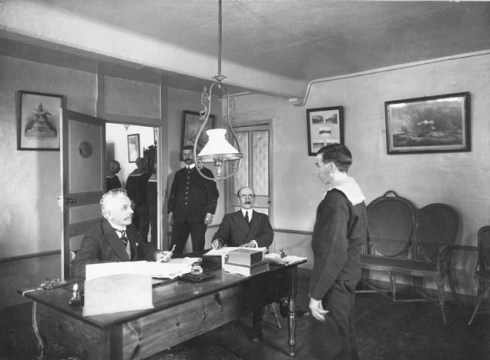
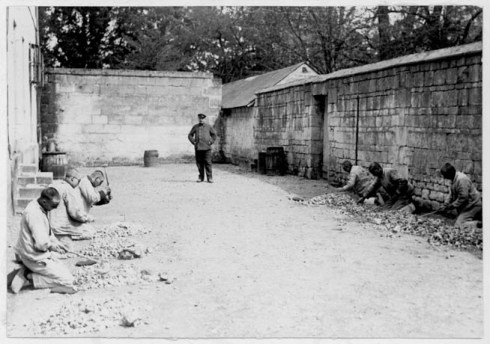
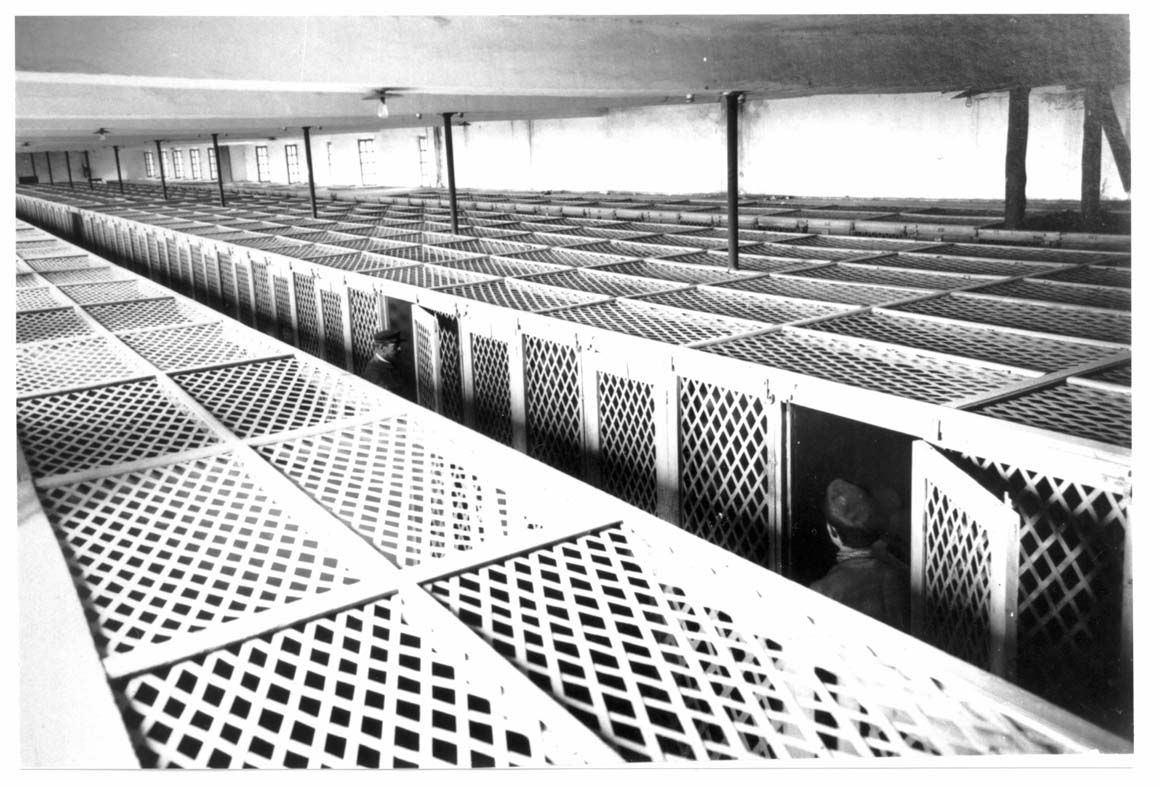
Between 1929 and 1931, the Henri Manuel studio documented prisons and juvenile institutions for the Ministry of Justice.

Manuel’s photographic survey is characterised by its scope, its exhaustiveness and its will to show that prison is not merely a place of detention and punishment but education and work also.

The survey resulted in craftsman-made albums for each prison, and several photographs were published in the press or distributed as postcards.

However, no records exist so exact reasons for the contract such as who ordered the work (and for what purpose) remain unknown. (Source)

Some of Manuel’s photographs blow my mind.

What do I want from this year? I want to continue the fun I have researching. I want a rip-roaring online symposium on race, diversity and photography. I want to be continually surprised by the things I discover. I want to deliver juxtapositions that make one pause. I want to do more interviews with photographers. I want to talk to more people in prison education. I want to change one persons view and then move on from there.

Covering Photography is the type of site I love to stumble across. Much like PhotoEphemera it is a site of tangential but significant importance to the role of photography in wider culture.

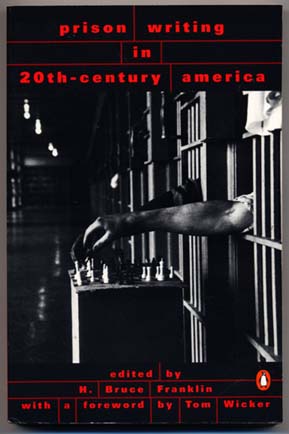
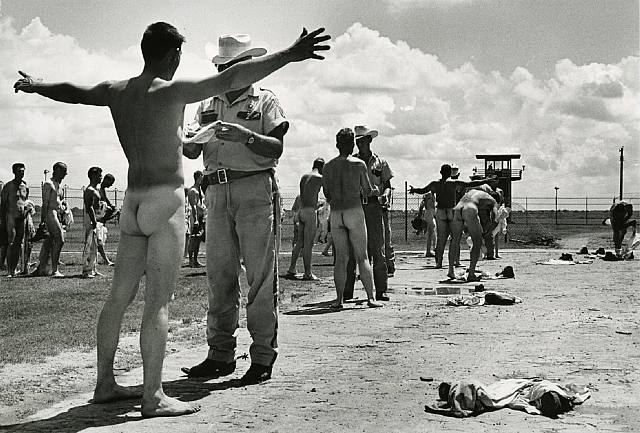
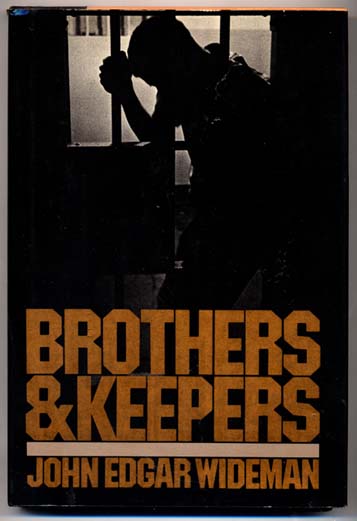
There are four books in the archive that feature prison photography. I have talked before about Cornell Capa‘s commitment to prison issues. Danny Lyon‘s career as a journalist is indelibly tied to American prisons. Arthur Tress and especially Charles Gatewood are not known for their prison photography.

I have bunched book covers with hand-picked works of each photographer as a playful convergence to kick off the new year.

ARTHUR TRESS

Halloween © Arthur Tress

Link

CORNELL CAPA

Russian and American soldiers, part of the Allied occupation forces, at a multinational party, Berlin 1945. © Cornell Capa/Magnum

Link

DANNY LYON

Texas Prison, Ramsey Unit © Danny Lyon

Link

CHARLES GATEWOOD

Wall Street © Charles Gatewood

Link

Greg Kahn documented Douglas Bolden, 52, following his release. Bolden lives in Fort Myers Florida, cares for four children and at the time of the photo-essay was struggling to find work.

I have featured stories on the difficulties and shock of reentry into society before – in one case with an elderly man following a 50 year sentence and in the other a wrongfully-convicted, consequently exonerated man.

For two and half years I worked as a master printer at a photography lab in Chicago that specialized in meeting the evidential and illustrative needs of lawyers, insurance agencies, and law enforcement – which is a fancy way of saying pictures of dead people.

Ten to twelve hours a day, five days a week, I custom printed, one by one, 80,000 unique negatives, both color and black and white, from snapshot to poster size murals, documenting in detail the unfortunate and tragic occurrences of modern life. I learned three things: never get in a car, stay away from trains, and never lean against anything.

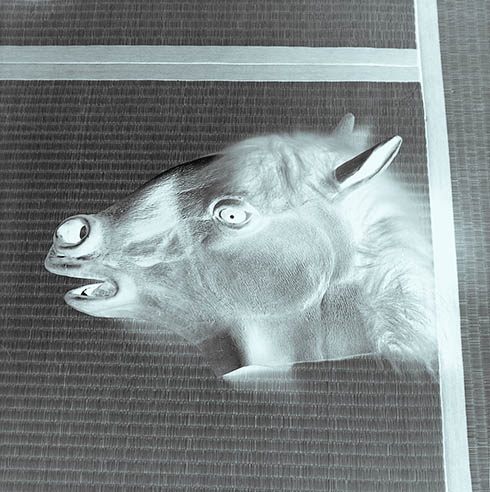
Horsehead © James Luckett

After I conveyed some fascination for the cold and unknown profession of forensic photography, friend and photographer, James Luckett contacted me to tell me that he used to work in a lab specialising in the production of prints for various legal companies and civic departments.

While not prison photography, James dealt with the photography of crimes and accidents. The negatives he worked on could eventually send people to, or spares them of, prison. Equally, his prints as evidence likely helped secure millions in lawsuit damages.

James’ writing is dry, candid and the toll that this line of work eventually took should be enough for anyone to pause for thought. Highly recommended reading.

The image above is not from the lab. It is negative version of one of James’ own.

You should follow James’ idiosyncratic blog, consumptive. It has some of the best curated links of any blog out there. He doesn’t waste your time. Here’s a great portrait of how James may have looked when he worked at the lab. He’s got shorter hair now and might not thank me for pointing this one out! James’ Flickr stream is worth a look too.

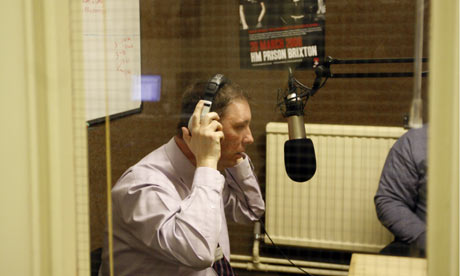
Brixton Prison governor Paul McDowell: 'We don't let them have too much fun.' Photograph: Martin Argles

THE FACTS

The UK’s most well-known prison radio station is the Sony Award winning Electric Radio Brixton. It has come in for high praise.

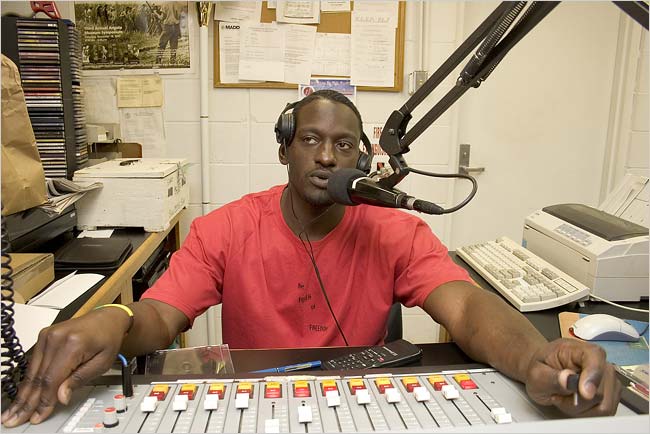
The US’s boasts KLSP which broadcasts within Louisiana State Penitentiary, the prison commonly known as Angola. Andy Levin of 100Eyes photographed this New York Times coverage.

THE MISSIONS

In both cases, the radio stations serve to provide inmates with valuable, marketable skills AND to disseminate prison specific communications.

Electric Radio Brixton is the model for fifteen other prison radio stations up and down the UK. The Prison Radio Association is currently working with over 40 prisons and hopes eventually to build a national network for the benefit of all British prisoners. It is a community action.

Unlike Brixton’s radio initiative, the scope and model of KLSP is not intended to go national. KLSP was established in 1986 as a “means of communicating with everyone in the prison at once. Angola is the country’s largest correctional facility, with 5,108 inmates, so the need to disseminate information rapidly is critical.” The KLSP station at Angola is the only FCC-licensed radio station in the US facilitated by prisoners.
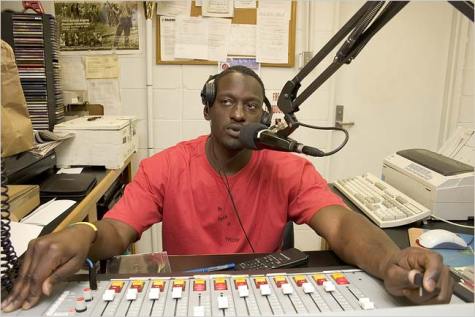
Sirvoris Sutton is a D.J. known on air as Shaq at KLSP-FM, the Louisiana State Penitentiary station where gospel wins out over gangsta rap. © Andy Levin/Contact Press Images, for The New York Times.

As with any enterprise at Angola, the radio station is implicated in Burls Cain’s philosophy of religious and moral rehabilitation. Warden Cain encourages all religious and spiritual practices, but inevitably most of Angola’s religious alliances and support are Christian:

KLSP is licensed as a religious/educational station, and, through Cain’s efforts, has formed a close alliance with Christian radio. Until recently, the station was using hand-me-down equipment courtesy of Jimmy Swaggart; last year, His Radio – Swaggart’s Greenville, S.C.-based network of stations – ‘held an on-air fundraiser for the prison, broadcast live from Angola. They quickly surpassed their $80,000 goal, raising over $120,000 within hours.

Cain used the money to update the station’s flagging equipment and train inmate DJs in using the new electronic system. In the months following their initial partnership, Cain deepened his relationship with Christian radio stations. KLSP now carries programs from His Radio and the Moody Ministry Broadcasting Network (MBN) for part of the day.

With regard the station and its remit, Brixton Prison Governor, Paul McDowell does not have the same influence as Cain. For one, the radio is operated by an independent charity, and two, the prison culture in Britain is not dictated by the personal cult/philosophies of the warden as in the US.

McDowell sees the radio station as a good way to develop critical and positive thought.

It’s not about getting people jobs in radio. There are a small number of people in the radio station talking to 800 prisoners. We want to encourage them to think more positively about their future, and encourage them to change their lives.

McDowell’s main work is to keep infamous inmates away from the airwaves and avoid unnecessary (sensationalised) criticism of the project;

I am a prison governor and half of my life is spent managing the politics of prisoners. One of the things I am not going to do is put Ian Huntley on a radio station to deliver a programme every week. That is opening us up [to attack] and if we get criticised for that then we might end up losing the whole thing.

I’d be dismayed if people in the UK could not see Electric Radio Brixton as a wellrun and sophisticated engagement of prisoners’ minds. I have personal reservations about the Christian focus at KLSP, but this focus has been the norm throughout Angola for 15 years.

Both of these enterprises deserve praise. Next, the content broadcast on their airwaves requires scrutiny.

EMAIL

prisonphotography [at] gmail [dot] com

Prison Photography Archives

Post Categories