obama el reno prison

We’ve seen Obama in a cell block before (no not those photoshop hack jobs by wingnut-conspiracy-theorists) but photos of Obama and the First Family, in 2013, touring Robben Island, the prison in which Nelson Mandela and other ANC leaders were held during South Africa’s regime of Apartheid. (BTW, Robben Island was, apparently, “a paradise by comparison” to modern U.S. prisons.)

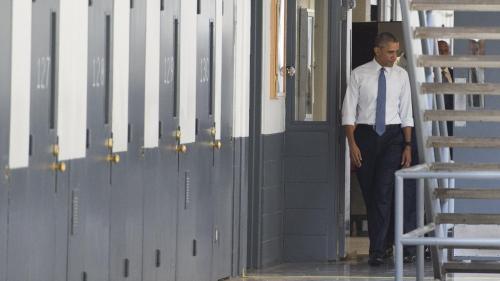
One expects to see empty cells in photos of visitors–presidents included–to defunct prisons such as Robben Island. But one might not expect to see a quiet, vacant cellblock inside a functioning, policed, inhabited, tax-funded prison. I did not. Yet, that is what we have. The government at work is not in evidence here.

But then again, this is the first time a sitting president has visited a prison, so there is no precedent. POTUS’ handlers made their own rules at El Reno Federal Correctional Institution in Oklahoma. To get an idea how lonely and echoey an experience it was, consider these two images made by White House Chief photographer Pete Souza. Both [one & two] were posted to Twitter.

9

© Pete Souza / White House

None of the other images from Obama’s visit that I’ve seen have the vantage point of the second story mezzanine. Was Souza was the only one with the privilege of this overview? That Souza patrolled the gantry, looking down upon bodies milling below, was not happenstance. It made for more riveting pictures.

Michael Shaw over at BagNewsNotes approves of Souza’s up-above-angle arguing that it puts Obama “both in the belly of the beast, and also squarely facing the larger institutional problem.”
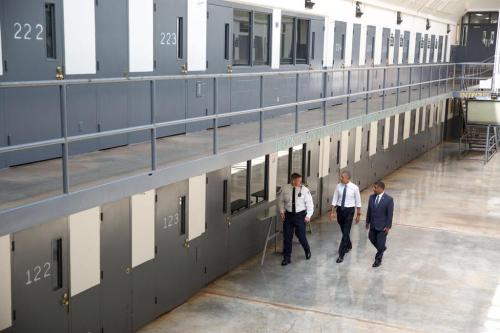
10

© Pete Souza / White House

Souza’s images are in contrast to the rest of the press pack who took shots, from a fixed position, at the end of the cellblock, with a long lens, during Obama’s brief walkabout.

During his 5-minute outline White House philosophy/policy to the press (transcript here), a couple of photographers (Saul Loeb and Doug Mills), got down on their haunches and shot images from knee-level looking upward toward POTUS (see below). These images elevate Obama, resizing him, and recasting him back into his more usual role as a leader in control; as a person in a position to rectify decades of failed policy and to reverse mass incarceration.
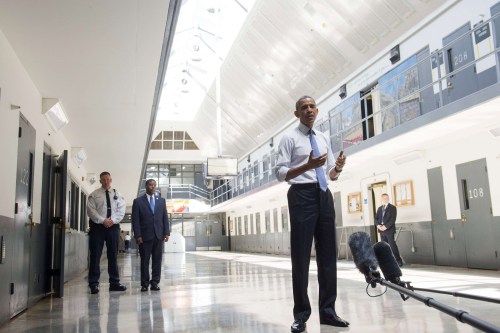
obama el reno prison

© Getty Images

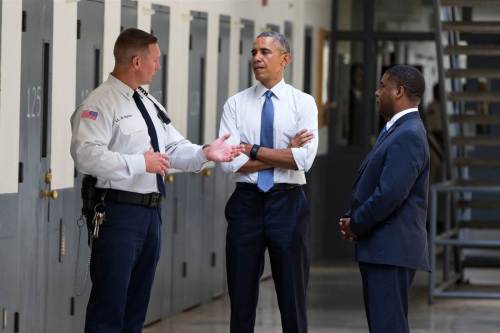
Shaw also notes that these images of a controlled Obama might reflect a significant enough change in policy that this is a teachable moment — that this is Obama instructing the nation he leads. This is Obama as educator and reasoned orator it is argued. I can’t quite get to that conclusion, for I’m still wrapped up on the fact that Obama and his prison-guard-tour-guide Ronald Warlick are dressed in virtually identical garb!

obama el reno prison
President Barack Obama, alongside Ronald Warlick (L), a correctional officer, tours a cell block at the El Reno Federal Correctional Institution in El Reno, Oklahoma, July 16, 2015. © Getty

The matching uniforms might be an unfortunate visual turn for POTUS. But then again, if the shoe fits. Obama remains a law and order man. Sure, the White House is capitalising on widespread public and bipartisan support for criminal justice reform, but the president remains walking a fine line. He calls for the absolute necessary application of common sense but he does so in a way that doesn’t alarm opponents who are ready to pounce.

For example, Obama emphasised his support of correctional staff, “I want to give a special shout-out to our prison guards. They’ve got a really tough job, and most of them are doing it in exemplary fashion.” No president can alienate law enforcement so Obama’s words are no surprise. But given how vocal and momentum-winning the Black Lives Matter movement is, and given that many communities subject to over-zealous and murderous policing make no distinction between street cops and prison guards, it gets pretty uncomfortable.

On the other hand, much of America is still unversed in the racist and classist underpinnings of the prison industrial complex and will need time to take in Obama’s message. Why do you think he is hanging his every speech on the “5% of the world’s pop; 25% of the prison pop” stat? It’s a simple, shocking stat. It points the finger, but at all of us and none of us; it is a stat that calls out the problem without calling out those who created it. Sure, in front of a Philly NAACP crowd, Obama can get into more specifics and mention slavery but that won’t be the middle-ground message that the  White House will adopt between now and January 2017.

obama el reno prison
President Obama speaks to reporters during his visit to the El Reno Federal Correctional Institution in Oklahoma. Obama is the first sitting president to visit a federal prison. Obama is the first sitting president to visit a federal prison. © Kevin Lamarque/Reuters

Obama may have just pardoned 46 people who were serving long sentences for drug related offences but that was a safe symbolic gesture that indicated the White House’s awareness of the issue without pissing too many people off. But really, what is 46 as a percentage of 2.3 million?

Furthermore, Obama’s persistent argument is that locking up drug users and low levels dealers for decades is foolish. A news report I saw today said there might be 2,500 people serving 20 years or more for non-violent drug offenses. Again, what percentage is 2,500 of 2.3 million?

We should recognise Obama for getting to the starting line but he still has a marathon to run.
obama el reno prison
President Obama toured the El Reno Federal Correctional Institution in Oklahoma on Thursday and met with six inmates. © Saul Loeb AFP/Getty Images

Another thing that bothers me about the “safe” rhetoric about emancipating non-violent, low level drug offenders, is that it immediately divides America’s massive prison population — it assumes there are those who deserve some help in the face of an admittedly failed, brutalising system and it leaves the rest for no help within the failed, brutalising system.

Reformers are playing with definitions, shifting policitcal lines and seeing what lands. We’ll soon rest upon a point where those one side of the line receive some relief, but the great number of prisoners the other side of it get none. We are, arguably, doing nothing to disassemble the system and to redirect public funds toward more sweeping programs promoting social equality (yes, that’s schools, social entrepreneurship programs, prenatal healthcare, food programs).

Just because a person is convicted of a violent crime doesn’t mean they are a violent person. And just because someone has been violent once doesn’t mean they’ll be violent again. A wife who murders her husband after decades of abuse is an easy to understand example of this.

Making policy based upon legal definitions drawn up under a system that has violated citizens for decades is wrongheaded. Making arguments for violent offenders, too, is probably a step too far for most Americans to stomach but here again we find a measure by which “free” people and those subject to prisons and jails see the criminal justice issue so massively differently, still.

“I know Obama can’t fix everything, but I really hope his sole focus isn’t just on helping drug offenders,” said Nathan Mikulak, a former federal prisoner convicted of a gun offense and tagged in the federal system as an Armed Career Criminal (ACC) a system parts of which the SCOTUS just ruled unconstitutional.

obama el reno prison
President Obama toured the El Reno Federal Correctional Institution in Oklahoma on Thursday. © Doug Mills/The New York Times

The more I look at these images the odder they become. They mimic the press photos we’ve seen of shareholders and politicians touring schools or hospitals or factories or prisons (!) before they go online. Look at that shiny floor! Look at that fresh paint! Look at how the locks work!

These images might become iconic for the wrong reasons. This historic visit was reduced to a rapid press photo op. It’s the ultimate sanitised facility tour in the well-known genre that is the “Politician Prison Tour.”

I’ve been in a prison a week after politicians tour and heard the prisoners describe how the place was cleaned up beforehand. Obama’s tour of one of the “outstanding institutions” in the system — albeit cleaned out — is an unusual case of the Politician Prison Tour genre because it was played out for the cameras and because the whole nation was watching.

In giving politicians the benefit of the doubt, I could argue that they simply have not known what has gone on in the nation’s prisons and can be forgiven for doing virtually nothing for so long. Tours have not helped to inform them. Let’s hope that’s not the case here with our president.

obama el reno prison
US President Barack Obama, Charles Samuels, right, Bureau of Prisons Director, and Ronald Warlick, left, a correctional officer, looks at a prison cell as he tours the El Reno Federal Correctional Institution, July 16, 2015, in El Reno, Oklahoma. © AFP/Getty Images

I presume Obama’s handlers didn’t make a photograph of him looking inside an empty cell because it’d undermine the “bravery” of the gesture to visit a prison … conveniently vacated of its prisoners.

The secret service knew it would be impossible to secure a cellblock full of convicts. Ironically, a prison provides levels of control over citizens that the secret service can only dream of as compared to manning presidential appearances in public! In a prison every single person undergoes the scrutiny, searches and discipline of a space designed for monitoring! And yet, the danger for the leader of the free world to wander amid a functioning cellblock with prisoners was surely too great.

Imagine, the PR nightmare should, on the slimmest of slim possibilities, a prison riot break out around the president and his entourage? Now you understand why we have these images.

obama el reno prison
President Barack Obama looks inside a cell alongside correctional officerRonald Warlick (front) and Bureau of Prisons Director Charles Samuels

Obama did meet with six prisoners and VICE + HBO made some video of the meeting for a forthcoming documentary. When it is published, that footage might assuage this continued, discomfiting knowledge. That’s the knowledge that neither Obama or we have seen prison yet. We saw a photo op in a building in a prison compound.

asenbrennerova

It’s a long list of things that makes Angola Prison aka Louisiana State Penitentiary the most photographed prison in the United States. Top of that list is the fact of the prison rodeo.

Add Jana Asenbrennerova to the list of the many photographers who’ve been there before.


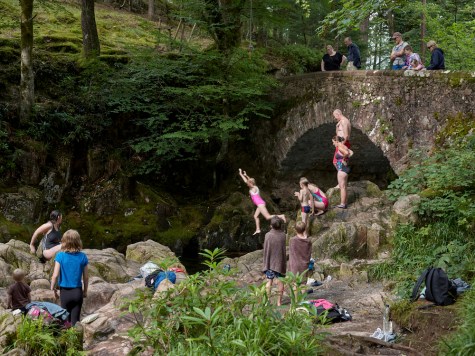
The National Arboretum, Westonbirt, Gloucestershire, 2013 150 x 122cm, Lambda print on Fuji Crystal Archive Paper. Image courtesy of Flowers Gallery.

There’s something about Simon Roberts’ photographic surveys of England that leave me feeling a little uneasy. This is not a bad thing; better to feel something than nothing at all when encountering art.

I published a piece Very English Tourism Spots are Just Intensely Managed Distractions on Medium dealing with my hesitations.

I think my unease stems from the fact that while Roberts is critiquing the quirks of the English and riffing on nostalgia (certainly) and cliche (probably) there remains space in his work for massive misunderstanding — massive under-estimation to be precise.

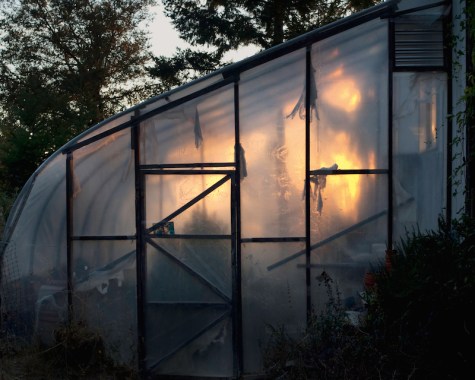
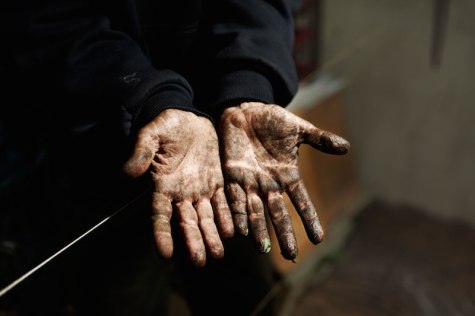
Roberts’ work could be read as uncritically nationalistic by those who are already that way inclined. Although the ironic title of his latest series National Property: The Imperfect Picturesque directs people away from simplistic and politicised readings of the photographs, the scenes he captures are nonetheless relatively bucolic. They smack of the quaint English countryside and of honest folks at leisure (which they are) but they leave so much of England and experiences of people in England out too.
Trough House Bridge, Eskdale, Cumbria, 2014, 150 x 122cm, Lambda print on Fuji Crystal Archive Paper. Image courtesy of Flowers Gallery.

I’m hesitant to frame this even as an argument. It’s hardly fair to critique something on that which it is stated not to be. And Roberts, nor any other photographer, can be held accountable for the jingositic readings of work by pockets of distant audience.

Many English photographers (Parr, Dench, Stuart) hold a mirror up to their nation with biting snark. Roberts’ mirror is little more removed, less in your face and returns images that are not immediately or obviously critical.

All of these are still forming thoughts. It is one of the luxuries of being a blogger, that with enough caveats, you can share early thoughts and canvas response. So, what do you think?

Read Very English Tourism Spots are Just Intensely Managed Distractions.

Willy Lott’s House at Flatford, East Bergholt, Suffolk, 2014. 150 x 122cm, Lambda print on Fuji Crystal Archive Paper. Image courtesy of Flowers Gallery.

Penshaw Monument, Penshaw, Tyne and Wear, 2013. 150 x 122cm, Lambda print on Fuji Crystal Archive Paper. Image courtesy of Flowers Gallery.

State Business-Chapter III

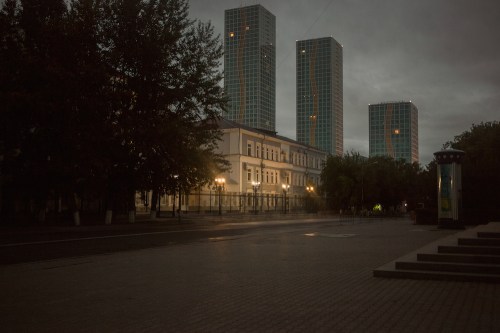
Verint Israel and NICE System Monitoring Center, Astana, Kazakhstan 2014.

Much of my weekend was spent putting a final editing-touches on the latest Vantage article Panopticon For Sale. The piece, details trade between authoritarian regimes (such as Uzbekistan, Kazakhstan, Azerbaijan, Bahrain and others) and corporations that manufacture and maintain cyber-surveillance.

The author, Mari Bastashevski, spent 12 months researching this shady industry —  trailing paper work, filing FOIA requests, interviewing and protecting sources, and corroborating statements. Many previously unreported (but commonly suspected) business relations uncovered by Bastashevski have been confirmed by information included in the July 5th hack of Hacking Team (a company that manufactures surveillance technologies) when the identities of its clients were posted online.

As Bastashevski writes in her closing statements:

Companies like NICE, Gamma Group, Verint, and Hacking Team, who sell this power to governments for which “watched a YouTube protests video” constitutes criminal behaviour become co-arbiters of what is and isn’t a “wrong act”. Yet for the companies, much like for their clients, their own secrecy remains absolute and proprietary: not something for press consumption, researchers, or advocates.

Private corporations are facilitating the unfettered surveillance of citizens by paranoid rulers.

State Business-Chapter III

NICE Systems HQ, Ra’anana, Israel 2014.

The comparatively unregulated republics in the post-Soviet region are proving grounds for the shit that the power hungry can get away with.

I’ll stop yelling now, encourage you to read Bastashevski’s #longread, and leave you with an my editor’s foreword to further convince you to take in Bastashevki’s text and images.

This is a narrative built upon information that’s incredibly difficult to verify. Outside of the community of privacy advocates and cyber-surveillance researchers, no-one really saw this story, or necessarily knew what it was or why it mattered. That’s because everything that Bastashevski was looking at — or looking for — is invisible, confidential or both.

When Hacking Team was itself hacked, Bastashevski felt vindicated. Not only did the hack confirm the presence of Hacking Team in countries she investigated, it also confirmed the presence of other companies she knew were providing surveillance to those countries. The lies and questionable dealings of a catastrophic industry were laid bare.

“To photograph or to look at what exists on the verge of catastrophe,” critic Ariella Azoulay once wrote, “the photographer must first assume she has a reason to be in the place of the nonevent or event that never was, which no one has designated as the arena of an event in any meaningful way. She, or those who dispatch her, must suspend the concerns of the owners of the mass media regarding the ratings of the finished product and with her camera begin to sketch a new outline capable of framing the nonevent. Photographing what exists the verge of catastrophe thus is an act that suspends the logic of newsworthiness.”

By virtue of hackers’ actions, and not the logic of the news industry, I find myself in a position to publish Bastashevski’s remarkable findings. A condensed version of this work was exhibited at Musee de Elysee and published in the Prix Elysee catalogue (Musee de Elysee, December 2014). It has since been expanded to include a review of targets and surveillance in Azerbaijan, and cross references of the recent evidence obtained through Hacking Team leak.

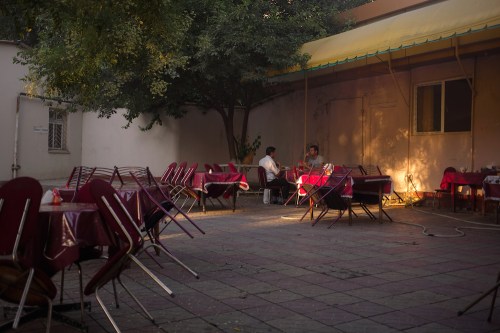
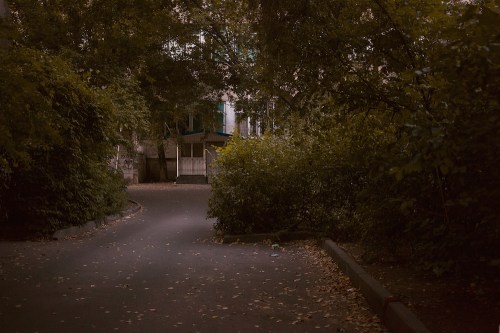
This is not a photo essay but rather an essay with photos. Bastashevki makes photographs, in many ways, to show her stories cannot be photographed. These images are way-markers along roads of discovery.

Read the full piece Panopticon For Sale and see more large images.

State Business-Chapter III

Ministry of Communication Tashkent, Uzbekistan, 2014.

State Business-Chapter III

SNB lunch spot, secure Gazalkent district, Tashkent Uzbekistan. 2014.

State Business-Chapter III

Monitoring centre (roof) -Tashkent, Uzbekistan. 2014. Location where data obtained with Hacking Team, Nice Systems, and Verint Technologies is analysed and processed.

State Business-Chapter III

PU-data collection point Kazakhtelecom-Almaty, Kazakhstan, 2014.

State Business-Chapter III

Presidential Palace and MNS HQ, Baku, Azerbaijan 2013.

State Business-Chapter III

State Business-Chapter III

Inside Verint Israel HQ, Herzliya Pituach, Israel 2014.

State Business Chapter III

Transaction — Dedeman Silk Road Radisson Blu, Tashkent ,Uzbekistan. 2014.

All images: Mari Bastashevski

abolishsolitary

Statewide Coordinated Action to End Solitary Confinement, Oakland

Critical Resistance, today, reflected back upon the California Prisoner Hunger Strike, which had several iterations beginning in 2011 and culminating in 2013.

The update:

Two years ago today, the largest prisoner hunger strike in California’s history was started by prisoners in solitary confinement at Pelican Bay State Prison. Within the first month of the strike, over 30,000 in California’s prisons had joined, raising the call for the five core demands in unified struggle. The strikers received overwhelming support, with prisoners from across the U.S., in Guantanamo Bay, and as far as Palestine sending statements of solidarity. Outside prison walls, families, loved ones, and organizers elevated the imprisoned voices to an international scale, sparking solidarity actions all over the world, and even prompting the U.N. to call on California to end the use of solitary.

However, the struggle continues. The prison regime has refused to meet the strikers’ demands in any meaningful way, opting to demonize and repress prisoners.

A class action lawsuit brought on behalf of Pelican Bay solitary prisoners in 2012 is ongoing despite numerous attempts by the state to weaken and halt it. Importantly, grassroots organizing has been reinvigorated, with the Prisoner Hunger Strike Solidarity Coalition organizing statewide coordinated actions on the 23rd of each month since March of this year to continue raising awareness and building the movement to end solitary, with the actions growing larger across the state.

In the words of Todd Ashker, one of the hunger strike leaders, “I personally believe the prisoncrats’ efforts to turn the global support we have gained for our cause against us will fail […] CDCr rhetoric indicates desperation – a very concerning desperation in the sense that it is demonstrative of CDCr’s top administrators’ intent to continue their culture of dehumanization, torture and other types of abusive policies and practices […] Our key demands remain unresolved. The primary goal is abolishing indefinite SHU and Ad Seg confinement and related torturous conditions.”

Especially in the wake of Riker’s Island scandal and Kalief Browder’s death, the nation is aware of widespread torture — by means of solitary confinement — in U.S. prisons. But, a few years ago the issue was only just beginning to register on the national conscience. It cannot be overstated how vital California prisoners’ efforts (with support from families and allies outside) led the march against this abusive and invisible practice.

Two long and short years … depending on which side of the box you are.

Also, not to be missed is this extended, #longread analysis of the situation two years on by the indubitable Vikki Law at Truthout, Two Years After Pelican Bay Hunger Strike, What’s Changed for People Inside the Prison?

Law writes:

The California Department of Corrections and Rehabilitation (CDCR) continues to claim that “there is no ‘solitary confinement’ in California’s prisons and the SHU is not ‘solitary confinement,'” but people inside the Pelican Bay State Prison’s security housing unit say they remain locked in for at least 23 hours per day. Meanwhile, in June 2015, the CDCR released proposed new regulations around its use of the security housing unit and administrative segregation – regulations that may, in part, curb participation in future strikes and other prison protests. […] The regulations are currently going through the required public comment period in which any member of the public, incarcerated or otherwise, can submit written comments. A public hearing is scheduled for August 7, 2015.

Author Todd Ashker, who was locked in the security housing unit at the Pelican Bay State Prison, disagrees with the California Department of Corrections and Rehabilitation’s assertion that its prisons do not have solitary confinement.

In a 13-page typed statement, Ashker describes how, along with over 1,000 other people, he is locked for 25 years of his life into 11-by-seven-foot cells for at least 22 hours a day. The security housing unit cells have no windows and their doors face a wall so that those inside cannot see each other through the door slot. Any time they are taken out of their cells – for a shower, a visit or an hour of recreation in an exercise cage – they are handcuffed and ankle chained.

“What would it be like to have one’s bodily contact with others reduced to the fastening and unfastening of restraints, punctuated with the most intimate probing of the surface and depths of one’s body?” Ashker writes in his statement.

Solitary still exists and for long as it does, and for as many years tick by, it must be opposed. By us. We.

a cr

ash1

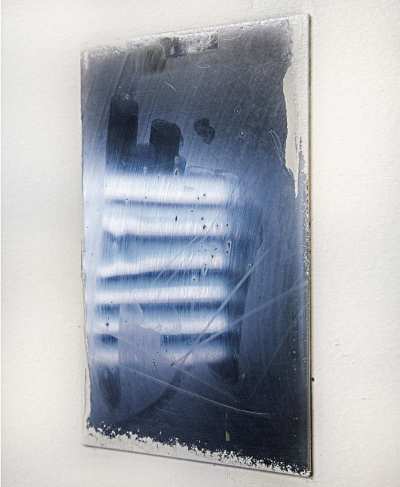
A small, unbreakable tin wall mirror in a solitary cell. Reflection is of a slatted window. Photo: Ashley Gilbertson/VII Photo for New York Magazine.

The suicide of Kalief Browder was the latest, most tragic reminder of how much of a hell hole Rikers Island is. It was the combined effects of broken bail and juvenile prison systems that killed Kalief.

Take your pick of the coverage from The Guardian and the New York Times, to New York Magazine. What has been consistent in the coverage of Rikers as information about conditions and treatment is that visuals have been limited and it has relied on the progression of lawsuits and news FOIA requests. Whistleblowers have been few and far between and prisoners’ testimonies are notoriously difficult to verify.

vid

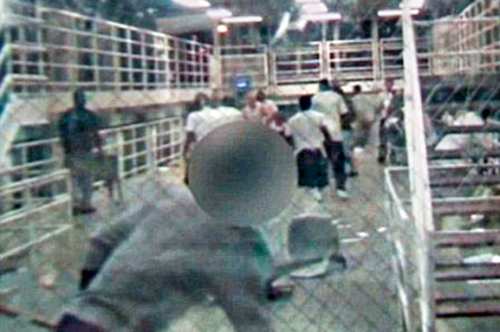
An August 2013 fight in the George R. Vierno Center, caught on surveillance tape.

That makes the recent feature Rikers Island, Population 9,790, a joint effort between The Marshall Project and New York Magazine noteworthy. In the expansive effort involving more than half a dozen journalists, we hear from a couple who both went to Rikers in the same year (she was pregnant); a teacher on Rikers; a couple of recent prisoners; an officer, the commissioner of the department of corrections; a girlfriend of a slain prisoner; a former volunteer-librarian; various visitors; a mental health professional; and others.

The selection of imagery (as well as an overview map) is one of the most diverse visual presentations of Rikers that I have seen online. It includes Ashley Gilbertson‘s straight shots from common areas, wings and solitary cells, Ruth Fremson‘s work from the kitchen, surveillance video stills, photos of prisoners by Clara Vannucci and Julie Jacobson, Instagram images found under the hashtag #Rikers, environmental studies by Librado Romero, and archival photos by my friend and former correctional officer Lorenzo Steele Jr.

Bravo to the photo editors of The Marshall Project and New York Magazine.

steele

The recreation center at the bing. Photo: Officer Lorenzo Steele Jr.

contraband

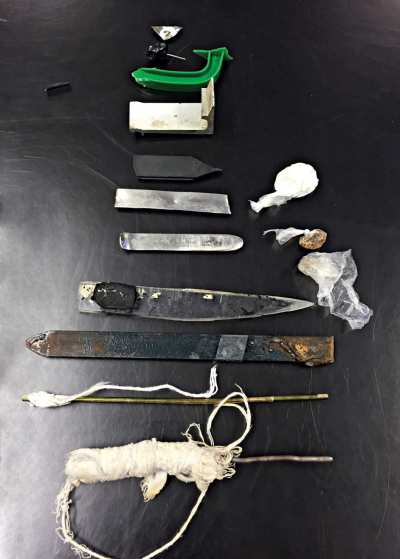
Contraband, including jail-made weapons and drugs. Photo: New York City Department of Correction via AP.

ig

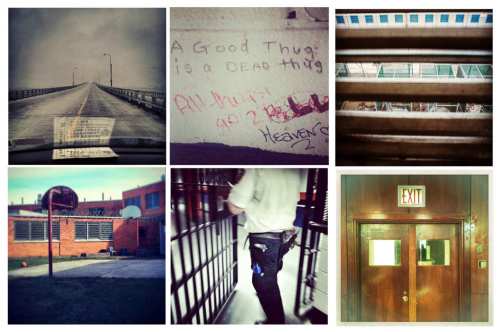
The view from Instagram, #Rikers: Clockwise from left: The bridge to Rikers; bathroom graffiti inside the vistors center; the new maximum-security wing; the entrace to a chapel; a correction officer at an adolescent unit; an exercise and recreation area. Photo: Kelsey Jorgenson/Edgar Sandoval/JB Nicholas/Bryan R. Smith/JR/Gee Force.

vannucci

Prisoners at “Rosie’s” the women’s unit. Photo: Clara Vannucci.

ash

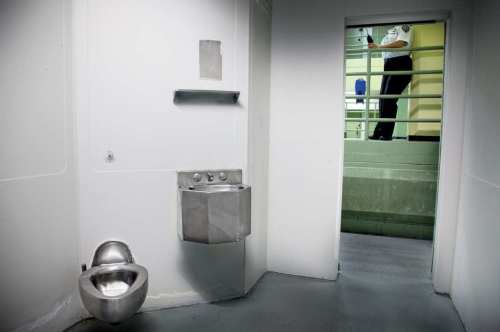
Inside a solitary-confinement cell. Photo: Ashley Gilbertson/VII Photo for New York Magazine.

Grassland21

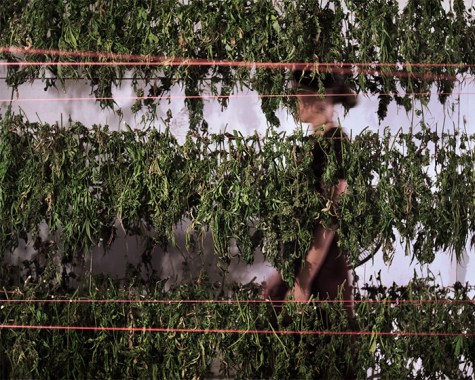
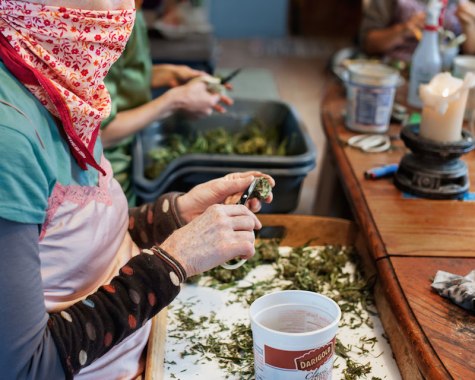
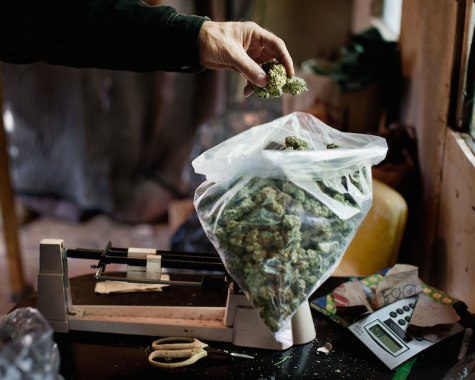
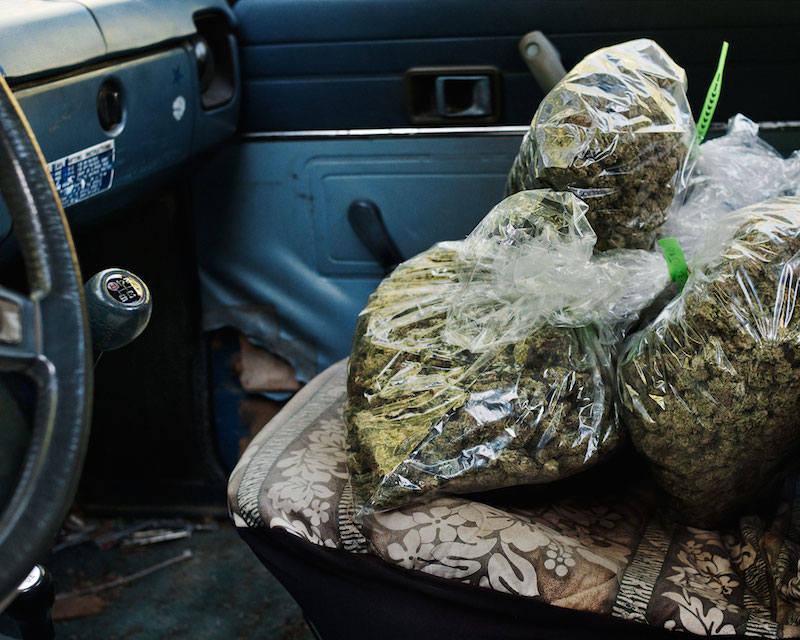
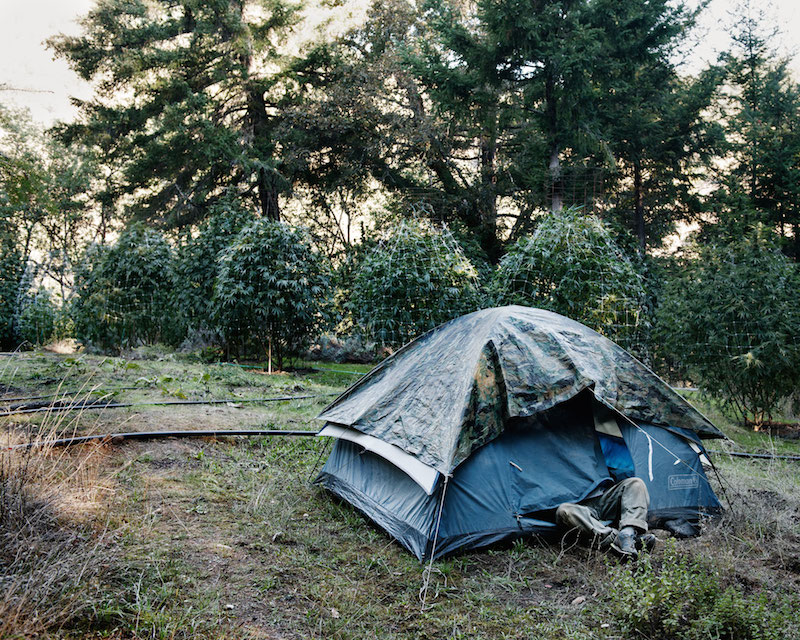
New piece over on Vantage about photographer H. Lee‘s embed on a Humboldt County weed farm.

In 2010, Lee spent a year running up to the fiercely contested Proposition 19 documenting the activities on a pot farm.

Prop. 19 was a ballot initiative that proposed regulation and taxing of the California marijuana industry. Small-holding growers feared its passage would mean the destruction of their livelihoods. Lee had been visiting the pot farm for 8 years prior but never made an image. Then, in 2010, when massive and crushing change loomed, she took up her camera.

 H. Lee is a psuedonym. Promising subjects their anonymity by proxy of her own just made things easier.

“I gave my word to the people I photographed — whether I shot their faces, body parts, plants or farms — that I would use a pseudonym when presenting the work,” says Lee. “I only photographed those who were willing to be photographed.”

Prop 19 was voted down in November 2010.

Read the full story and see photos very large at Vantage: Inside the California Weed Industry

Grassland is published by Kehrer Verlag. Follow the Grassland on Facebook and Twitter.

Follow Vantage on TwitterFacebook and Instagram.

1grassland

Grassland09

Grassland06

5Grassland

Grassland23


2grassland

Grassland05

Grassland18

Grassland14

Grassland19

Grassland11


Grassland12

Grassland07Grassland22

3Grassland

Grassland01

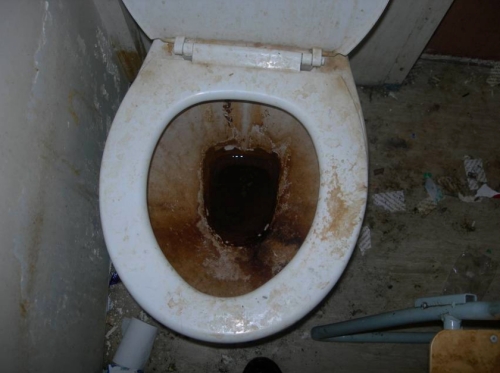
3

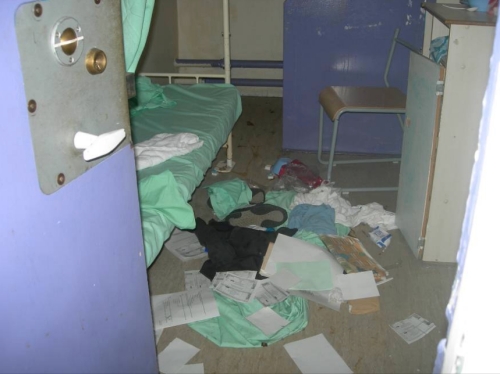
A toilet in an occupied cell on G wing.

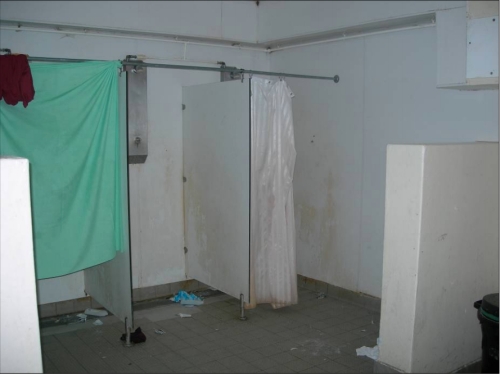
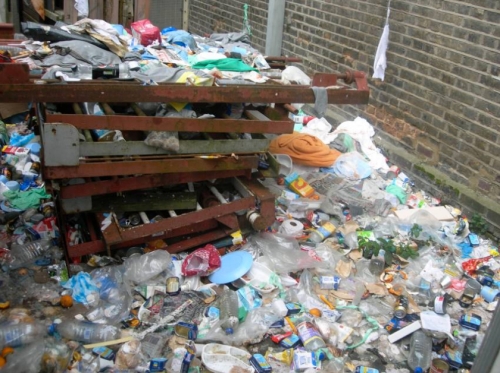
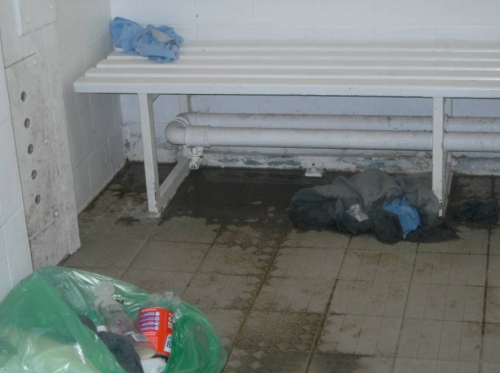
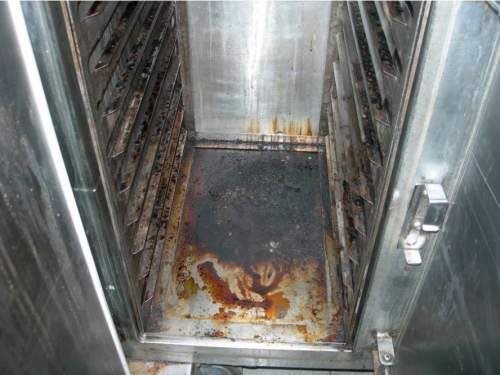
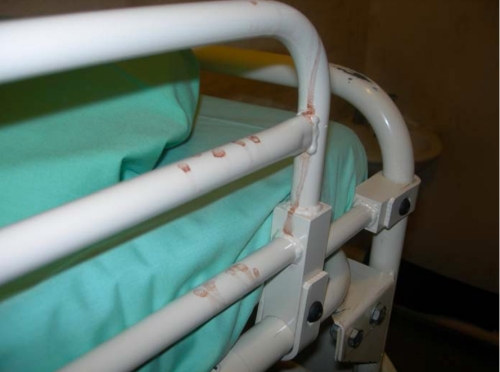
Blood stained, scum-stained, litter-strewn, dirty as all hell, hell-hole of a prison. That’s an accurate description of HMP Pentonville based upon 8 images included in a recent report on the infamous Victorian prison in North London.

I’m intrigued by evidentiary photos; I reckon they can often tell us more than an exposé-chasing photographer can. All we know is that employees of Her Majesty’s Inspectorate Of Prisons made these images. They exist for the record and I can only show them here because HMIP puts out its reports online in PDF format and I took a few grabs. Even then, I only came across them because Charlotte Bilby flagged them for me.

Bilby, Reader in Criminology and Faculty Director of Research Ethics Department at Northumbria University, says that she knows not of previous inclusions of photographs in HMIP reports. I don’t either, but UK prisons are not something I’m particularly knowledgeable about.

Let’s say for now that these photos are a new discover, if not a new departure.

6

The C wing showers.

1

Area outside J wing.

4

An empty G wing cell.

I wonder what other government-employee-made and , technically, publicly-available images exist? I wonder if a broader selection of pics would give the British public a deeper understanding of Her Majesty’s prisons and jails?

Also, I hope other prisons aren’t as bad as Pentonville.

Nick Hardwick, Chief Inspector of Prisons said his team found during an unannounced inspection that consditions at HMP Pentonville had deteriorated since its last inspection (2013) when things were bad already. With 1,200 men and young offenders, HMP Pentonville is overcrowded.

“It continues to hold some of the most demanding and needy prisoners and this, combined with a rapid turnover and over 100 new prisoners a week, presents some enormous challenges,” says a report summary. “Continuing high levels of staff sickness and ongoing recruitment problems meant the prison was running below its agreed staffing level and this was having an impact on many areas.”

5

The changing area in the C wing shower.

7

A food trolley.

8

Blood on a bunk bed.

In response, staffing levels have increased and the authorities remain confident in the warden and the leadership of the institution. While, they believe things can improve quickly, they identified many areas for vast improvement.

  • most prisoners felt unsafe as levels of violence were much higher than in similar prisons and had almost doubled since the last inspection;
  • prisoners struggled to gain daily access to showers and to obtain enough clean clothing, cleaning materials and eating utensils;
  • prisoners said drugs were easily available and the positive drug testing rate was high even though too few prisoners were tested;
  • the prison remained very overcrowded and the poor physical environment was intensified by some extremely dirty conditions;
  • some prisoners spoke about very helpful staff, but most described distant relationships with staff and were frustrated by their inability to get things done;
  • too little was being done to meet the needs of the large black and minority ethnic population, disabled prisoners and older prisoners;
  • prisoners had little time unlocked with the majority experiencing under six hours out of their cells each day and some as little as one hour;
  • the delivery of learning and skills was inadequate and there were not enough education, training or work places for the population;
  • acute staff shortages had undermined the delivery of offender management, which was very poor; and
  • the quality of resettlement services was very mixed.

The UK’s use of an independent inspectorate for prisons is a very effective check-and-balance for a hard-edged system that can easily corrupt itself behind closed doors. The fact that prisoners feel unsafe in the transportation vans and cell tiers is the biggest red flag for me here.

It’s worth noting, then, that these photos only reflect the visible messy disfunctions of HMP Pentonville. The uptick in violence and drug use was learnt through prisoner questionnaires.

Read the full report here.

2

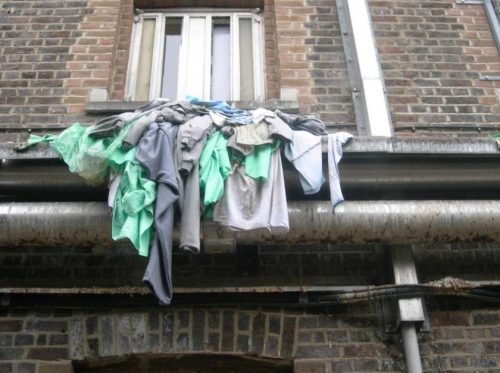
Piles of clothing on ridges outside D wing.

EMAIL

prisonphotography [at] gmail [dot] com

Prison Photography Archives

Post Categories