Two months ago, I published a conversation with Lorenzo Steele, a former NY City Correctional Officer who now gives community talks and makes pop-up street exhibitions of photographs from during his time on Rikers Island. Steele wants to impress upon communities and particularly youngsters how violent jail is.

Steele has produced a video to promote his ongoing work with Behind These Prison Walls. a group he founded to inform, educate, and empower individuals and steer at-risk youth away from the criminal justice system.

statement-of-being-1

‘Claudia. 4 years’ © Julia Schönstädt

Statement of Being by Julia Schönstädt is a series of portraits and interviews with prisoners in Germany. According to Fotografia Magazine — which is running a series of six portraits currently — Schönstädt’s aim is “to dispel the stigma of the criminal and simply make the subject human.”

Schönstädt has worked with subjects of different age, gender, race and criminal prosecution. Some are sympathetic characters, others less so. Three women in their fifties are  addicted to drugs; two see it as a problem, the other not. Harry is only 23 and doesn’t really seem to care if he goes back to prison or not. Then there’s the older guys who seem to be reforming themselves or aging out the game.

Most of the statements are insightful and honest. For example, when asked if prison helps people, Claudia (above) weighs her owns needs against those of others. There was positives for Claudia in the mere fact she was forced to come off drugs, but she accepts without that small mercy, prison is roundly a tough, tough place for most:

I know that I was in a personal situation where prison gave me space to breathe at first. If I would be torn out of my normal life now, and that can happen to anyone, that they get falsely accused, I would probably find that very traumatic. You are very helpless. You have very few possibilities to influence or shape things. You are completely dependent on the good will and concession of the officers. And part of it is also always luck, depending on what kind of people you will be put together with, and the groups that form. I think for a person who isn’t in an emergency situation as I was in, this is very dark.”

In every case, Schönstädt does a good job of revealing the interviewee. I suspect the excerpts are taken from longer conversations allowing Schönstädt to focus on the meat of the message. It’s a well-made project. But I am not without criticisms.

Schönstädt asks “Are You Ready To Listen?” but the query “Are You Ready To Look?” seems as appropriate.

Within in her presentation of both text and image, Schönstädt’s question seems to sideline the importance of the image . (This is not to say that we cannot conceive of a metaphor of “listening” to images, but for the purposes of my argument, I think it’s useful if think of listening as something related to written, read and spoken words.)

The question elevates the words of her subjects. Great. I’m all for portrait sitters having a platform to speak in their own voice. But I get the sense that here photography is used as filler and that the B&W portraits behave as illustration to the words, and as supplement. This is, of course, sad. We know photography can do many things and, I believe, it can be an activating agent in a project. In a purported photography project such as Statement of Being it absolutely must be activating.

But are we ready to look? When I do and inspect Schönstädt’s portraits I’m left wanting. They’re flat.

statement-of-being-4

‘Volkert, 13 years’ © Julia Schönstädt

Now, we all know how difficult it is to make a good portrait, but these are so tightly cropped and made monochrome, I feel like I’m looking at a really earnest effort by an artist to depict someone, as opposed to looking at that someone. Schönstädt’s politics are aligned with mine and her use of multiple media is praiseworthy, but I don’t feel she has managed to do what great photography does, which is to get out the way of itself. Proximity doesn’t always mean intimacy.

I wonder if Schönstädt made the decision to get close so that she could remove evidence of the prison environment from her pictures? To give her subjects best chance at presenting as a person first and not as a criminal as default? I understand the urge but it’s not necessarily a solution. Nor is it necessarily a problem. For example, Robert Gumpert has used B&W imagery but drawn back and made the most of sterile pods in the San Francisco jail system to make compelling portraits. In short, I’d like to see more variation in Schönstädt’s portraiture.

statement-of-being-5

‘Oliver, Life Sentence’ © Julia Schönstädt

I’m currently writing an essay “How To Photographs Prisoners Without Shaming Them.’ Most of the essay focuses on pairing photography with other media. In some bodies of prison portraiture it is either stated or obvious that the photographer collaborated with the subject over the composition and presentation. Given that Schönstädt’s portraits are identical in direction, I wonder if this was the case?

I am not saying Schönstädt doesn’t respect her subjects the opposite is clearly the case, but photography is more about the viewer than the practitioner and we must always be aware of existing stereotypes and prejudices when making photographs. The audiences’ reaction trumps the author’s intent. The audience’s reception is what defines a work ultimately.

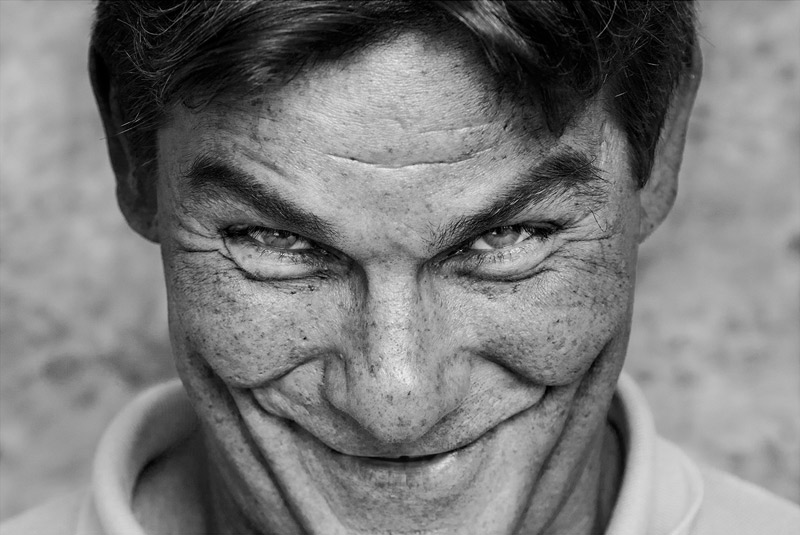
Take the above image of Oliver as an example. Some might read his face as mischievous. Others, no doubt, will read it as menacing and devilish. I don’t think the appearance of a sinister looking male helps win sympathy. This is tragic for a project which is wholly sympathetic to the prison population.

Oliver speaks frankly and sensibly:

I became violent very early on. First there were money-related crimes starting at 7 or 8 years old. Violence came a bit later, but when I was 7 or 8 years old I stole and so on. Unfortunately, it wasn’t until I was 22 that I was held responsible for the first time.

It really struck me that something wasn’t right with me or with my story when a great deal of my family passed away – my grandfather, grandmother, and father [after being imprisoned]. I was married then and my wife divorced me. She stayed with me for 5 years but then she got to a point where she couldn’t take it anymore. And all that lead me to think something isn’t quite right here. Then I went to see a psychiatrist and got even more reasons to think about everything.

I had relatively little empathy for people, that’s just the way I grew up. I was raised in a violent environment. But that doesn’t mean that I was consciously punished by being beaten, more in a way you would also train a pitbull. […] I didn’t feel like that was something that wasn’t okay. I experienced my childhood as something really nice. Only through a person from the outside, I realised that it wasn’t all that normal, the way I grew up. And through realising that, I was able to reflect much better.

Oliver is in full grasp of his antisocial behaviour and has made steps in therapy to address it. He’s locked down for life but trying to improve himself. He is not devilish. How do I know this? Again because of Schönstädt’s keen efforts. Listen to Oliver speak in the video below and ask if the mood and personality of his still portrait tallies with that of the video portrait. Are we ready to look?

Matthew Gunther

PREAMBLE

Prisons are but one step in the criminal justice machine. After the division and disciplining brought by a society of economic inequality, the next most abrupt interaction for U.S. citizens with state structures is likely to be that with police and other law enforcement officials. In 2012, just shy of 12,200,000 arrests were made nationwide.

That’s one arrest every 2 seconds. Arrests for marijuana-related offenses alone occurred at a rate of one every 42 seconds.

These figures does not include traffic citations.

At any given time, there are nearly 7 million American’s under correctional supervision — roughly about 2.3 million in prisons or jails and 4.6 million on probation or parole. In any given year 13 million individuals will be locked up for a given period.

Given that police are the sharp end of many of these fractious interactions, it makes sense for us to look at a body of work that focuses deeply on a single city’s police force.

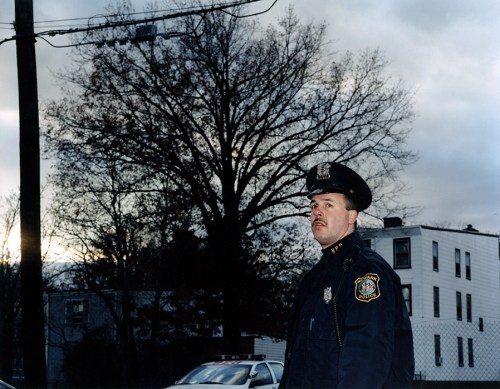
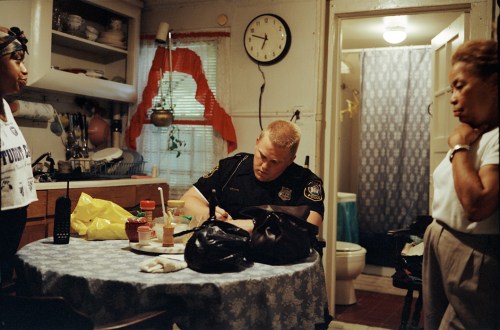
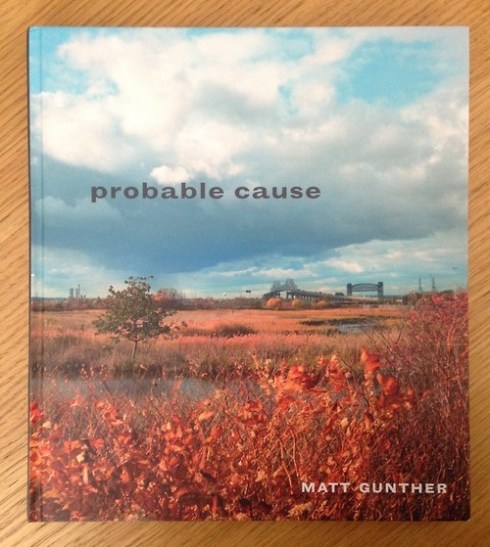
Between 2003 and 2011, Matt Gunther was — on and off — effectively embedded with the Newark Police Department in New Jersey. Gunther’s resulting book Probable Cause (Schilt Publishing, 2014) is one of the most rounded, smartly edited bodies of work on police work I’ve encountered. It is, remarkably, sympathetic to all involved. The police and citizens (particularly those photographed in the precinct) are dealt an equal hand. Within its pages, the drudgery of employment meets the complex issues of social order.

You can see a 15 page preview of Probable Cause here.

Matthew Gunther and I chat about fear, persistence, allegiances, the inside-view, where a book comes from, and boozing with cops before a vice squad bust. Scroll down for our conversation.

original_511bf225cf0b2

The following Q&A has been edited from a longer conversation.

Q & A

Prison Photography (PP): You worked in Newark a long time. Did you always intend it to be a book or did that emerge as you worked? 

Matthew Gunther (MG): My issue as a person or as a photographer is that I would not go the whole-nine-yards on a project. I’d get very deep into any project and then it would peter out. This project on Newark was on the verge of petering out many times — it was such an endless pit of imagery and I just couldn’t let go. Until this day, I could still be shooting. Joshua Lutz told me to stop shooting, to edit my images and that I had a book.

So, I did not know it was to be a book. I just started this project. It was cathartic. My projects tackle my fears, or dive into my loves.

PP: Newark is known for it’s toughness and it’s poverty. How did you come to be working so intimately with the police force?

MG: I was taking an ex-girlfriend to Newark airport and we got lost. I’m a native New Yorker, and instantly fell in love with this city so close to my hometown.

I would take my 35mm camera and spend days walking through Newark and still it took me probably about six months to figure out. It’s a pretty tough city. New York is not that tough anymore. Newark feels like New York may have done in the eighties, perhaps. I wanted to do something that is constant in this metropolitan area: cops and liquor stores.

Each project that I’ve done before or since Newark was always to tackle my fears. I grew up in New York as sort of an art-jock with other jocks and street kids, skateboarders and graffiti artists. I had the artistic gift but I didn’t have the strength to show my artistic skills against these tough kids and I guess as soon as I became an adult I was always trying to go back to that place.

Access? I almost hate to say it. My mother was the Head of the Democratic Club of the West Side of New York and I called her up and asked how I’d get into access to the cops. She gave me the number of a retired police captain in Florida. My mom is a waddling, older Jewish woman who knows everyone on the street. My father as well. Born and raised here. The captain in Florida gave me the name of the captain over at the Newark Police Department. It was 8 months of getting denied and constantly sending repeated proposals.

Then, one day out of the blue, I got a phone call, “Matt, you are accepted. What do you want to do?”

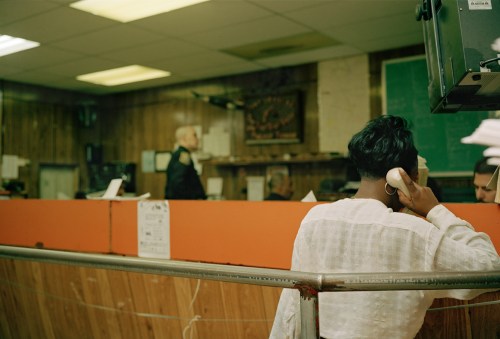
Matthew Gunther

Matthew Gunther

Matthew Gunther

PP: It seems like you almost become an artist in residence? The door had been open by this higher official. 

MG: You could say that. In the beginning, I had to tell the NPD that I wasn’t going to sell pictures to a magazine. It was strictly an art project and if it became something else I had to tell them. I was happy to promise that as I had no idea where the project might go.

I just wanted to shoot. I didn’t go looking for funding money. I’m dyslexic and so it’s hard for me to write proposals. Even to write a simple proposal takes me a while, but put a camera in my hand and I’m okay. But I wrote a proposal for the project. They didn’t really care if it was an art or not. They just didn’t want me to sue them if I got killed. I was happy to sign away.

Matthew Gunther

MG: Newark is a special place. It was truly like the wild west. Back then, it didn’t look like 2003; it looks like ’91 or ’89. It feels like there’s a gap of about 15 years between big brother New York and this, the biggest city [in the region] outside of New York which is only half-an-hour away. I was always a big Sidney Lumet fan. And films like Siegel’s The French Connection and Friedkin’s Dirty Harry. Newark brought back that sort of aesthetic sensibility.

By deciding to shoot with a large format 8×10 camera I decided I was okay to miss images. It was my way of slowing down and trying to control some of my reality. I constantly moved and I did shoot some images on a Fuji 6×9.
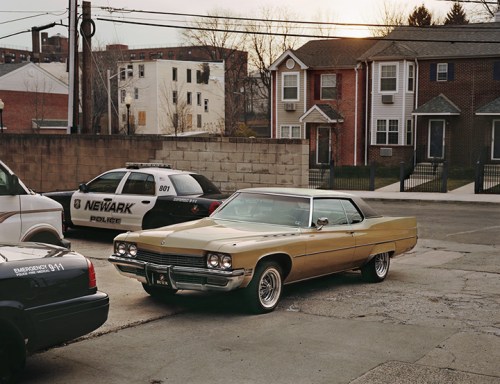
original_511bf17bc51b4

original_511bf2991777e

PP: What reactions did you get from the police officers? 

MG: The older cops loved it. Once they knew I wasn’t a reporter and that I wasn’t out to exploit them, I became a fly on the wall. Even with the 8×10 camera! The older guys loved the big camera. They loved history and they ate it up. The younger cops couldn’t care less. They just wanted me to stay out of their way. I had freedom and rarely did I get bothered. Even the non-cops seemed not to worry.

PP: I suppose they had other things to worry about?

MG: Often. There were girls doing tricks in the back of a Portuguese restaurant. I spent time with them. Then when I came out with my camera, I turned it on a girl who was in a towncar for a good 45 minutes. Just waiting on her friend. She was scared to come out because she was scared that the cops would arrest her.

PP: When you were out on the street, were you traveling with police officers and then exiting the vehicle with your camera equipment to begin shooting? Did people on the street see you arrive with the officers?

MG: I was doing drive alongs. With my 8 x 10 I wanted to set up like old imaging and see what I could get. A lot of my enjoyment was in not taking the photograph. I’ve always enjoyed these types of projects as much as I do taking the photograph. But, I just would tell them what I want to do and if they said move along I’m moving along. Maybe with my 35mm I’d be a little more aggressive.

PP: But was there a reaction from people on the streets shaped by the fact you were with police officers? 

MG: There were moments where I was definitely one of the cops … even though I didn’t look like it. I looked like a photographer.

There were times that I would take my camera into Newark gentlemen’s clubs and there were all these gang-members. The cops were vicious at some moments; it felt like Hollywood to them sometimes. And, there were moments on the street when kids wanted their pictures taken.

There were tense moments on the streets when civilians felt vulnerable but I felt I needed to get that image. I often felt really bad and grappled with those moments for many days. I was justified as an artist; I had to get these images.

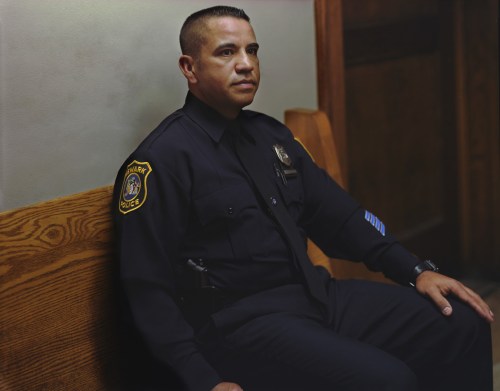
Matthew Gunther

Matthew Gunther

Matthew Gunther

MG: You know, I was a street kid and I got into many fights, but I also grew up white in Manhattan. The privileges I had. No matter how bad it was, if you come from a white educated family…

But, it’s not an even-playing field. I always had to deal with that. In Newark, cops are on one side and they took full advantage of it. Once the vice squad came out and busted these women doing tricks. Beforehand, the cops were drinking while we ate at a Portuguese restaurant right by the headquarters. We were drinking beers and doing shots and I remember saying, “Is this okay? That we’re going out there?”

“We’re doing whatever we want. I’m the captain of the vice squad,” was the attitude.

That wouldn’t have happened in the New York Police Department, there’s way too much bureaucracy there.

Matthew Gunther

PP: Some of your night time group shots (below) look like Rembrandt paintings. Two or three sets of eyeballs looking at you as the photographer. The composition of the group. The lighting. 

MG: When the cops do these weekend sweeps, you have this vice squad and you have a truckload of cops — about 6 cars full of cops. Every weekend. This is where the cat-and-mouse comes in between cops and perps. This caravan would come through all the neighborhoods that they knew had some issues or drugs problems; the same exact neighborhoods. This, basically, went on every Friday at 12 o’clock.

The kids at the school yard knew exactly what was coming, and you can just see they’re exhausted from it. If it happened to me as a kid, we’d have a politician at them, or someone would be getting into a fight with the cop with, ‘How dare you stop our night.’

The looks on especially the two kids sitting in their white T-shirts, that’s how I sort of felt shooting. Those are the moments when I truly grappled with what I was doing there, and where I almost had the same sense they had to the cops — that it’s just too much.

Matthew Gunther

Matthew Gunther

PP: Tell us mores about Joshua Lutz’s encouragement? 

MG: When I first met Josh the project needed polishing. I’d have let it peter out. Even so, I would still constantly show friends and mentors the work. They all said I had something great and those comments just kept on pushing me back to work. Lutz said all I needed to do was fill in some holes.

I liked Josh’s sensibility. He was getting into publishing and we understood New Jersey. We knew the printer had to be right. Through Dutch publisher Schilt in Amsterdam, we found a printer in Germany and we let the German’s do what they do so well.

PP: When I saw the post-industrial landscapes in Probable Cause I immediately thought of Lutz’s Meadowlands.

MG: Originally, I wanted to document the sense of place in Newark. Later, I fell in love with the cops and how they looked. I started asking them to join me outside and then I developed toward shooting landscapes so it had so many different branches.

Maybe, the 4×5 and the 6×9 sort of helped me live on in this project longer. Does that make sense? How do all these wires connect? How does this urban existence work? Can you feel the hum of it all? Might it explode at any point?

Matthew Gunther

Matthew Gunther

PP: There’s a constant precariousness to the work. There’s homage to labor, but it’s not “pure.” The work is very deliberate but it’s also uncomfortable because of your obvious privilege to be in that space. This fact is underlined when we see a photograph of a cop with a camera taking a picture of an arrested individual.

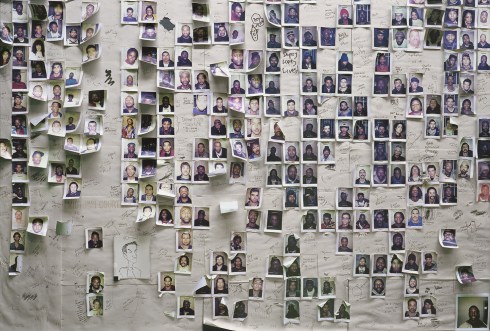
On the inside covers, front and back, there are walls of Polaroids of suspects.

MG: Matthew Sharpe talks about them very well in his introductory essay. He asks, ‘Can you tell the difference between the cops and the suspects?’

PP: There’s a very honest presence of photography and it’s many uses — it’s both art and it’s also an apparatus of power and control and policing. I think this is one of the successes of the book.

MG: I had probably over 300 negatives of large format images. Josh and I edited to a hundred pages. It was difficult.

PP: I also wanted to ask about the cover picture. It is a very different picture to all of the photographs within.

MG: I kept coming back to the image on the front of one of the editions of Truman Capote’s book, In Cold Blood. I could not get it out of my head that I needed a sky image. I needed clouds.
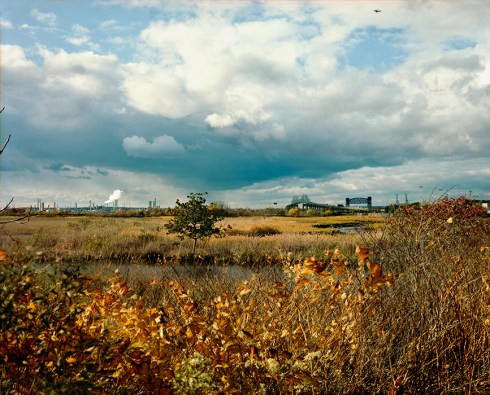
Matthew Gunther

cover

MG: I needed something that had some significance about the formation of society, or this world, or the wasteland that Newark is, or New Jersey. The cover is a shot of a beautiful sky above beautiful wetlands but it is also a site where the cops found a body.

Joel Sternfeld did Haunting Grounds, a book on hate and environmental crimes.

PP: A very powerful juxtaposition of seemingly innocuous scenes and horrifying back-stories.

MG: And that’s how I felt the book should be. At one point, it was just going to be Newark but then it became something more. The landscapes made it something more.

Matthew Gunther

original_511bf5a4b201c

PP: Can you talk about the attitudes in Newark and New Jersey toward crime. What were the relationships between the police force and citizens like? What’s the background — learned from your photographing for almost a decade — that we should know? 

MG: Newark is predominantly African American and there is a large portion of Portuguese. Then there’s Ironbound which can be a little more blue collar but it’s predominantly poor African Americans.

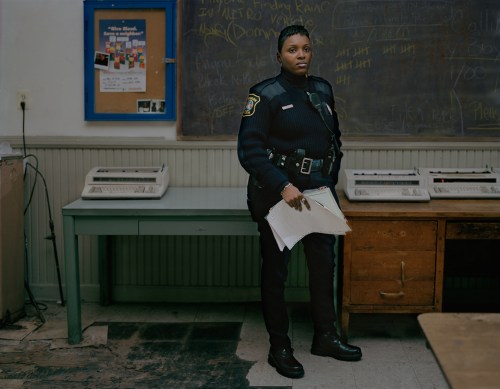
The Newark PD is one of the largest police forces, and in 2001, I think, it was 50% African American police. Now I think that it is 70% African-American. It’s a huge difference to go out with an all-white force compared to an all-black force — from the way people on the streets react which is, you know, it’s hard when you’re coming there with guns, badges and uniforms but it helps to be part of the same group. Things just get calmer. When you have a mix it tends to break down racial tensions. That’s where it has changed in a good way.
Matthew Gunther

Matthew Gunther

Matthew Gunther

PP: Your work, as foolish as it sounds, runs counter to easy conclusions. There’s cops and suspects; there’s all races; there’s Muslim cops and female cops; there’s chiefs and beat cops too. Policing is made of all stripes.

MG: I didn’t want to lose that fairness to both cop and non-cop. I truly feel romance about the images. I wanted to show a fair balance. This is how cities work and the people among them. I’m not trying to sway public opinion.

In a narcissistic way, it has been a cathartic trip.

PP: Because it was about you entering an “alien” world?

MG: Everyone’s just trying to get their job done in this capitalist system in which it’s hard to get ahead. The cop and the perp are on the same track, but there’s a moment some go one way and others the other way. I felt for both parties. They’re stuck. At 17-years-old, the options are pretty much there for cop and for criminal. It’s about fear, overtime and getting in your years. The cop has his cycle, the robber theirs. They both have their routines. It’s the balance of urban play. Social infrastructure plays its part in shaping these groups’ lives.

In Newark, as a cop, it’s 25 years in a tough environment. It’s not easy. They’re working on a word processor in 2003!?

PP: Did you get over your fear?

MG: No. But I came a long way. I’m excited to do another project like it. In some ways, I hate that it is a book, because it suggests, it feels, like it’s over.

PP: If it is, it’s a significant and successful end. Truly, it is one of my favourite photobooks of recent years. Thanks, Matthew.

MG: Thank you, Pete.

Matthew Gunther

BIOGRAPHY

Matt Gunther, a native new Yorker, is a film-maker and photographer who has been documenting a sense of place and moments of time throughout his career. His portraits endeavor to uncover and expose the vulnerability and compassion- the core of his subjects. Matt received his Bachelor’s in Fine Arts from SUNY Purchase. Matt’s work has been featured in numerous international and national publications, Including The New York Times Magazine, Newsweek, London Sunday Times and Gentlemen’s Quarterly. His work has been awarded and written about in American Photography, PDN, and Communication Arts among others. Matt’s work is in the permanent collection of the Brooklyn Museum and The Palais De Toyko in Paris. He is currently working on his first Monograph, Probable Cause, documenting daily life in Newark New Jersey, which will be published in the fall of 2012.

clarke_giles_el_salvador_vice_prison-pit

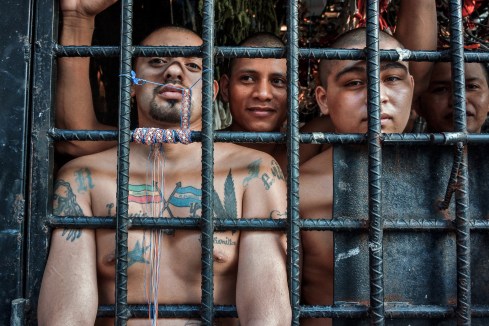
Giles Clarke is a photographer with the bit between his teeth. Last summer, he wandered into a story about squalid cages being used by El Salvadorian police to hold men accused of gang-related crimes. The pictures — published in the August 2013 issue of VICE — caused some outrage, a lot of gawking and general throwing of hands in the air.

(Click on an image to see it larger.)

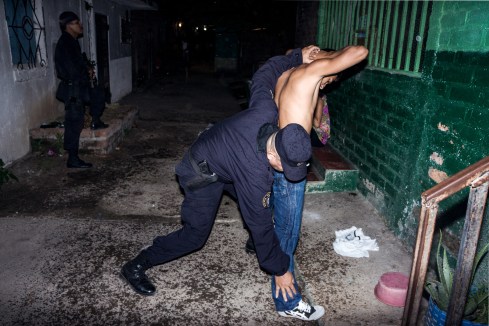
It was an unplanned chain of events that led Clarke to the stinking cages. It began on a Saturday night in February of last year when Clarke’s fixer, a local breakdancer who works with youth to divert them from crime, took him to the police station in Quezaltepeque, a town 15 outside of San Salvador.

”I told the police I wanted to ride along and went straight out into Barrio-18 territory,” says Clarke “Bare in mind these gangs are armed to the teeth and control huge swathes of the towns. Armed police units are joined by the military.”

© Giles Clarke

© Giles Clarke

© Giles Clarke

© Giles Clarke

At the time of Clarke’s visit, there was a fragile peace truce between Barrio 18 (18th Street Gang) and MS-13  in place. Mostly, the night was eerily quiet but it was later punctuated by violence.

“We responded to a shoot-out at a traffic junction. The shooter had fled and not hit anyone but units swarmed the area. I was told to lie down behind one cop till all clear given. It turned out drunk driver had got in the face of a friend and the friend had popped off a few shots to shut him up. Then we spent another couple of hours searching, pulling kids and gangers over.”

The next day, Clarke returned to the station. A new female officer responsible for caring for victims of domestic abuse asked her captain, “Have you shown him the cages, yet?” The captain of 17 years – who was a bit more enlightened than his rank and file (and also a surfer and guitar enthusiast) — liked to talk about his work and saw value in showing a foreign journalist the cages.

“The captain was very aware of what he was doing [by letting me photograph the cages]. He has a big heart for the issues he is facing,” says Clarke. “The El Salvador legal system is a disaster — with the explosion of gang violence in the last 15 years, the lack of new prisons along with the huge rise in US deportation rates — the justice system can’t handle it so these cages are springing up everywhere. 35 men in each one.”

© Giles Clarke

© Giles Clarke

© Giles Clarke

There were three cages at Quezaltepeque police station — one for Barrio 18, one for MS-13 and one for “common criminals.”

“I took the photo (top) that ended up being the VICE cover shot within 10 seconds of seeing it. I knew it was important. That visual hit me first, then came the smell,” says Clarke. “They shit in the back of the cages. It’s fucking disgusting. Stinking hot. It must have been 95 degrees in there.”

The police officers didn’t want Clarke there and were getting nervous, so he worked quickly and started gleaning as much information as he could from the prisoners.

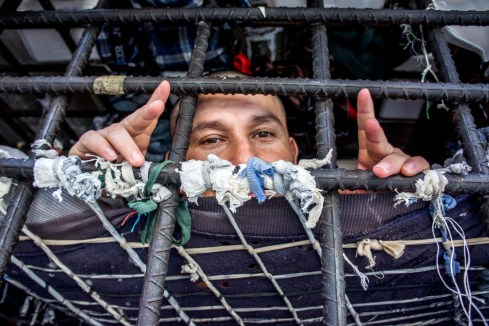
“One kid (below) had been there 17 months. He was there the longest. Waiting for sluggish El Salvador system. Some of the prisoners have not been charged,” says Clarke.

© Giles Clarke

© Giles Clarke

© Giles Clarke

Another prisoner, in the common criminals cage, was a army veteran with one leg who’d been locked up for protesting the loss of his veterans’ benefits. Most locals don’t know about the cages (CLarke’s fixer didn’t) but some must as the police do not feed the prisoners. Families and friends must bring in food for them. The prisoners spend their time shredding clothes and hand-weaving hammocks to maximize used space and make sleeping on top of one another a fraction less harrowing.

“Every Thursday, they are shackled, brought out the cages, searched, and sprayed down. The police find drugs. They get in there. You can assume guards are paid off.”

Clarke learnt that most of the gang members had been deported from Los Angeles. Many had fled civil wars, or their families had, and they’d lived in East Los Angeles, Long Beach or other parts of L.A.

© Giles Clarke

© Giles Clarke

© Giles Clarke

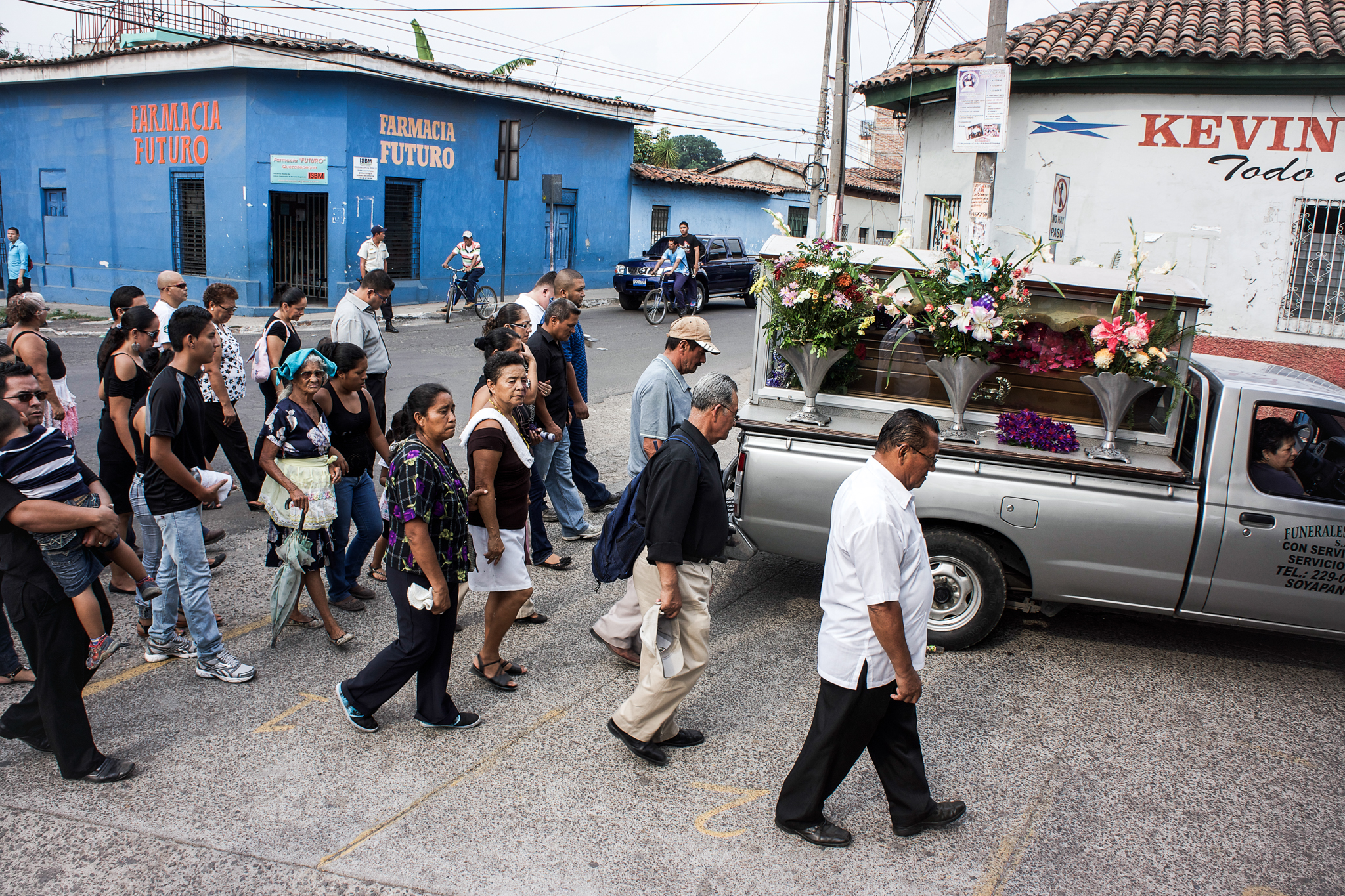
El Salvadorian gangs are an American product. After serving time in California prisons. many gang members were deported back to El Salvador along with their social tensions, survival modes and high violence. There’s no doubting that Barrio 18 and MS-13 have committed heinous crimes. So far down the rabbit hole, only truces, the reduction of poverty and societal buy-in provides a way out for many of these men. The situation is confounding.

“They all read the bible, just like reading the newspaper,” says Clarke. “I was very surprised. That mixture of high crime and fervent religion is confusing.”

© Giles Clarke

The issues are complex and transborder. Clarke shows us the worst of El Salvador but before we condemn the authorities abroad and dismiss this as someone else’s problem, it might be worth bearing in mind that America has its own cages.

FORTHCOMING GILES CLARKE SERIES ON PRISON PHOTOGRAPHY

Having lived in the U.S. since the mid-nineties, British-born Clarke has always been aware of the abuse in, and uncontrolled expansion of, American prisons but this story in El Salvador ignited an interest in cages at home. Since this story, Clarke has been photographing in prisons here and abroad.

This is the first of a series of posts featuring Clarke’s work. Prison Photography will bring publishing original images and b-roll from Clarke’s other prison stories, always alongside his biting commentary.

GILES CLARKE

Giles Clarke is a social documentary photographer based in New York City. He is a featured photographer represented by Reportage by Getty and aWHITELABELproduct. A wandering photojournalist and frequent contributor to VICE, his travels in 2014 have taken him from Guatemala to the Netherlands; from Chiapas to Columbia; and from old frontlines in Sarajevo to new frontlines in Ukraine. 

All images: Giles Clarke/Getty images

NewEarthPhotovoice.Aug.13_413 for web

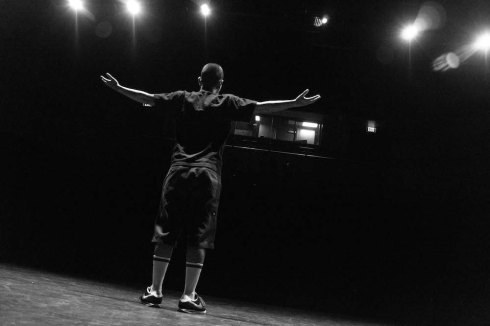
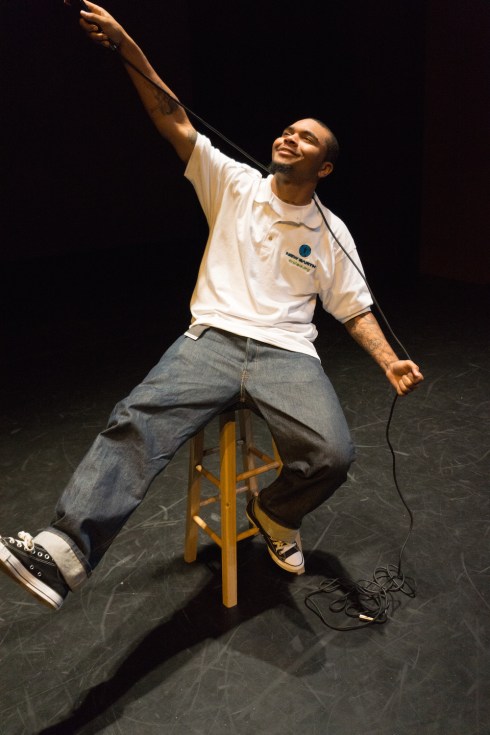
The city of Los Angeles has the highest population of incarcerated youth of any city on the planet. A new non-profit on the block, named New Earth, that offers programs for incarcerated and formerly incarcerated youth in the City of Angels is working with media, music, gardens and outward-bound programs to offer children skills, alternatives to gang life.

New Earth claims that their efforts have reduced rates recidivism from 80% to 5% among those in their program. Quite a statistic!

You can see the work of students here and below is New Earth’s latest press release.

NewEarthPhotovoice.Aug.13_214

From New Earth:

A Step to Ending the Youth-to-Prison Pipeline – New Earth’s Programs Reduce the LA County Youth Recidivism Rate From 80% to 5%

It is time to shed light on an unacceptable unspoken fact that lies in the belly beneath the surface of awareness in Los Angeles. As of July 2014, there are roughly 30,000 young people on probation or locked up in L.A. County, more than any other metropolitan area in the world. 95% of these youth face incarceration for nonviolent offenses. Once a young person meets such a fate, there is an 80% recidivism rate, which means 80% will end up incarcerated again. This system is broken and its rehabilitation depends upon the deployment of acute and revolutionary tactics.

New Earth, a non-profit started in 2004, is making significant strides in reducing the recidivism rate in Los Angeles. They provide mentor-based arts, educational and vocational programs to incarcerated and formerly incarcerated youth ages 13-22. These programs aim to reduce the recidivism rate by empowering these youth’s lives, and enable them to reach full potential as contributing members of our community.
It’s working.

New Earth’s programs have an incredible success rate. Once a youth starts a New Earth program while incarcerated and continues on with New Earth programs and services post release, his chance of getting re-incarcerated drops down from 80% to less than 5%. It costs taxpayers $125,000 per year to lock up one youth, however it takes a mere $3,500 to put one young person through the New Earth programs for an entire year. Youth remain free from gangs, crime and jail – they’re kept inspired, productive and ALIVE. Today, New Earth serves 2,500 young people per year in 9 out of the 18 juvenile probation camps in Los Angeles County. They work with more incarcerated youth in L.A. than any other non–governmental organization.

“Our goal is to reduce the recidivism rate in Los Angeles and keep these kids from coming back to the camps, going to prison or worse yet, becoming a statistic” explains Harry Grammer, Founder and CEO of New Earth.

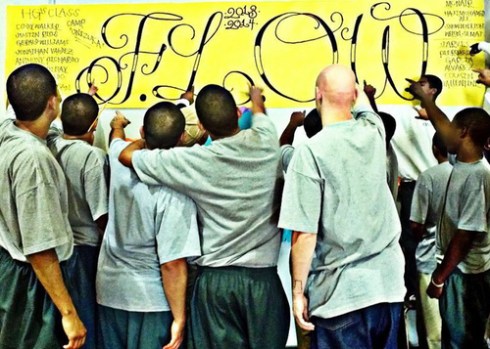
The results are inspiring. One of New Earth’s foundational programs is F.L.O.W, an acronym for Fluent Love of Words, which is a writing, poetry and music program based on the California Common Core Standards of Education. Through the discovery of their unique voice, youth begin to realize their potential as artists, creators and instruments of positive societal change. These programs have the ability to prevent violence, increase social consciousness, and expand vocabularies and reading comprehension by creating safe places for creative expression. This leads to broadening of their sense of freedom and self-esteem, and recrafting of their attitudes towards authority, their peers, and their self-perception.

“New Earth has changed my life in many ways,” says Alex Pham (21) a program alumni who now works at the New Earth offices as a camera operator. “It has changed how I view the simplest things in life. The love, care, and appreciation the viewers have for the job I do is incredibly outstanding. It made me realize that we should appreciate more and be grateful for every little thing in life.”

The road to change within the historically harsh and unjust industrial prison system is one with deep rooted complexities, but New Earth’s programs are a firm step in the direction of repair and life-changing retribution.

explorebanner

flowbanner

beyondbanner

downtoearthbanner

SOCIAL

Every other month, New Earth hosts awareness mixers to share information about the problems of youth prison systems and its own contributions to combat them.

The next mixer is on Wednesday July 30th, 5:30pm-7:30pm at the Center for Arts and Educational Justice, 3131 Olympic Blvd. 2nd Floor, Santa Monica, CA 90404.

NewEarthPhotovoice.Aug.13_54 (1)

SHUT-Down-McFarland

California used to be a private prison-free state, but as overcrowding, unconstitutional conditions and budget crises have gripped, Governor Brown and legislators have increasingly turned to the quick-fix of leasing private facilities.

“One out of 10 California inmates is serving time in a leased or private prison,” reports the Los Angeles Times. “Women’s prisons are the most cramped: the Central California Women’s Facility at Chowchilla is listed at 182% capacity in last week’s state prison census report, with 1,600 prisoners more than it was intended to hold.”

The latest addition to California’s archipelago of lockdowns is McFarland Women’s Prison operated by GEO group, one of the two largest private prison corporations in the U.S. This is a backward step, not only because it is the reopening of a prison the state doesn’t need, but because profits will be made off of the back of those imprisoned. GEO Group has a history that includes sexual abuse and poor medical care in its jails and prisons.

Grassroots organising is to protest the new prison at the end of this month. From the organisers:

RALLY AT MCFARLAND PARK, 100 FRONTAGE RD, MCFARLAND, CA, THURSDAY, JULY 31, 2014, 5 PM

Rally against McFarland Women’s Prison the GEO for-profit women’s prison recently opened in McFarland, California. Demand that the CDCR cancel its contract with GEO, release all prisoners through available alternative programs and divert the money being used to fund the prison to community-based services.

We will be linking up in McFarland with the Trail for Humanity, women and children marching across California to demand the protection of immigrant women and their families, comprehensive immigration reform and an end to racial profiling, and with members of the California Prison Moratorium Project who are joining the march.

Car caravan in the Bay Area is leaving from MacArthur BART, at 11 am, Thursday July 31, 2014. 
Information about other meeting sites to come soon.

For more campaign information and to sign up to caravan to McFarland, go to http://womenprisoners.org/ or email notomcfarlandgeo@gmail.com or call the California Coalition for Women Prisoners at 415-255-7036 ext. 4.

Women and trans people at two of California’s women’s prisons provided the following statement for our education on the matter.

STOP THE MCFARLAND GEO WOMEN’S PRISON!

We the undersigned incarcerated at Central California Women’s Facility (CCWF) and  the California Institution for Women (CIW) are outraged that CDCR has signed a contract with the GEO Group, the 2nd largest private, for-profit prison corporation in the U.S. According to the contract, GEO will open a new women’s prison in McFarland, CA by fall of 2014. We call upon California State Legislators to direct CDCR to cancel the contract with GEO and implement existing release programs instead of opening a new prison!

Once again we are shuffled around without regard for our well-being or our human rights. Since VSPW was converted to a men’s prison in January 2013, we have been subjected to overcrowding at historically high levels (CCWF is now at 185% capacity), even while the state is under court order to reduce the prison population. This is discrimination against people in women’s’ prisons!  As a result of this overcrowding, health care, mail services, food and education have greatly deteriorated. We are locked down more frequently, leading to heightened tensions, drug overdoses and suicides. The prison staff has responded by locking more people into solitary, further violating our human rights.

CDCR could easily implement existing programs to reduce overcrowding, such as: Alternative Custody Programs (ACP); Elder and Medical Parole; and Compassionate Release. Instead, on April 1, 2014 GEO announced its new contract with CDCR to open a 260 bed women’s prison with an “enhanced rehabilitation and recidivism reduction program.” This is nothing but a bad April Fool’s joke! The 260 women who are “chosen” to go to McFarland could be released through one of these other programs instead. None of us should be hauled off to showcase a so-called “gender responsive” prison and to put money in the pockets of GEO investors.

GEO is a private corporation whose business makes profit from imprisoning primarily people of color and immigrants. GEO’s press release about the new prison reports expected revenue of $9 million in McFarland’s first year. Think of how much $9 million could do for providing community-based re-entry services!

GEO has been the subject of numerous lawsuits around the country about atrocious, unconstitutional conditions. Private prisons are notorious for operating with even greater secrecy than the CDCR: assaults are 49% more frequent; racist behavior and sexual abuse by staff are widespread.

• GEO is responsible for human rights violations at many of their facilities.  In 2012 GEO was forced to close the Walnut Grove, Mississippi youth detention Center after being condemned for allowing, in the words of Fed. Judge Carlton Reeves, “a cesspool of unconstitutional and inhuman acts and conditions to germinate, the sum of which places the offenders at substantial ongoing risk..”

• In March 2014, 1200 people detained in GEO’s Northwest Detention Center in Tacoma, WA (for immigrants) went on hunger strike to protest the grossly inadequate medical care, exorbitant commissary prices and low or NO pay for work within the center.  Other GEO prisoners have since gone on hunger strike at detention facilities in Conroe, Texas and Stewart, Georgia.

• The city of McFarland is located in an area known as an environmental cancer cluster and breeding ground for Valley Fever.  Instead of opening new prisons in this area, all of them should be shut down.

• In January of 2014, Governor Jerry Brown’s reelection campaign reported $54,400 in donations from GEO Group. GEO Group has spent $7.6 million on lobbying and campaign contributions in the U.S. in the last decade.

• GEO lobbied strongly to advance laws that increased the time served for drug convictions and other non-violent crimes through mandatory minimum sentencing, three-strikes laws, and truth-in-sentencing laws. GEO was a member of the American Legislative Exchange Commission (ALEC) when the model bill that became AB 1070 (profiling immigrants in Arizona) was drafted. These legal changes resulted in significant profits for GEO.

• In McFarland, CA, GEO has signed a contract incentivizing prolonged incarceration over release by charging the California Department of Corrections and Rehabilitation less per prisoner if the facility is more than half full.

• GEO operates reentry facilities around the state, including the Taylor Street Center at in San Francisco and the Oakland Center in Oakland.  Residents experience these facilities as “re-entry prisons” that are structured to threaten and punish people rather than providing support for people to reenter community life.

It is shameful that CDCR is about to open a for-profit “boutique prison” that does nothing positive to solve the disproportionate overcrowding in the women’s prisons at this time. Assembly Members and Senators, please intervene!  Stop the GEO prison from opening. Instead use this $9 million to fully implement existing release programs immediately and fund community-based (not for-profit) reentry programs.

Thank you for listening to this urgent request,

Natalie DeMola, CCWF

Jane Dorotik, CIW

Fonda Gayden, CCWF

Anne Marie Harrison, CCWF

Valerie Juarez, CCWF

Terah Lawyer, CCWF

ChiChi Locci, CCWF

Maydee Morris, CCWF

Amy Preasmeyer, CCWF

Patrice Wallace, CCWF

If you can make it to McFarland (a typically remotely-located prison) in California’s central valley, I urge you to do so.

coaltownship

One might think the cob of corn and carrot held by a hand in a prison protest banner is an unusual inclusion, Unfortunately, access to nutritional food in prisons up and down the country is not guaranteed. This symbol is highly indicative of the very basic struggles prisoners take on in the face of slashed budgets and disregard for life’s basics. Poor food and cutbacks in food provision are not unusual.

As part of a peaceful protest at SCI Coal Township, a petition from the prisoners is now being circulated. It includes 22 demands seeking the restoration of human rights and dignity for the people being held in Pennsylvania prisons.

There are hundreds of actions each year for better conditions for prisoners, but I thought the ask for simple nutrition was a good indicator of the desperate situation in some U.S. prisons. The protest is also being supported by DecarceratePA, an abolitionist group I support and admire.

This week, I received the following letter from activist Emily Abendroth and the DecarceratePA group:

In late June, in response to dramatic food cutbacks at the State Correctional Institute at Coal Township, over 1300 men staged a week-long boycott of the prison dining hall. At the end of a week of peaceful protest, with still no commitment to change forthcoming from the prison administration, participants released a list of 22 requests/demands.

The prisoners are asking that prison officials at SCI Coal Township, and across the PA Department of Corrections, honor the basic human rights of people in prison. Among other things, these men are petitioning for: access to adequate food, the ability to hold cultural events, an effective grievance process, respectful medical care, and an end to policies that dehumanize and punish prisoners and their families.

Given the fact that more than 1,300 prisoners at Coal Township were able to stand and act in solidarity with one another in the name of changing current prison conditions, at great risk to their personal livelihood, we on the outside should be aiming not only to match but to massively amplify those numbers in our own displays of support.

Take action now:

Sign the Petition

Share on Twitter

Share on Facebook

Call PA DOC Secretary John Wetzel on 717-728-4109

 and/or SCI Coal Township Superintendent Vincent Mooney on 570-644-7890 to register your thoughts on the demands and situation at Coal Township.

Keep up with breaking news and information from participants on the inside.

BreadMonument_CathedralRock

Cathedral Rocks – 2600 feet. Yosemite Valley, Mariposa County, California. © Carleton Watkins

PV7CiurejLochman

White Bread Monument. © Lochman & Ciurej. Ingredients: Soft White Bimboo, Clear Value Round Top White Bread, Roundy’s White Enriched Bread, Roundy’s  Sandwich White Enriched, Sarah Lee White Bread.

HISTORY, NATURE AND LANDSCAPE PHOTOGRAPHY

Today, June 30th, marks the 150th anniversary of The Yosemite Grant, signed by Abraham Lincoln, putting the protection of Yosemite Valley into the hands of the state of California with ‘the express conditions that the premises shall be held for public use, resort, and recreation, for all of time. The grant was a precursor to land-use-law that later led to the establishment of the National Parks.

There can be no photographer better known for the early exploration of the American West as Carleton Watkins (1829-1916). Nor is there a mid-to-late 19th century photographer (Ansel Adams did his bit later!) who shaped public opinion about natural spaces as much as Watkins.

What would Watkins say about the RVs that roll into Yosemite and Yellowstone each year? What would Watkins say about the monoculture agribusiness that dominates large swathes of the United States’ land? What would Watkins make of the ubiquity of corn syrup in our diets?

“The series Processed Views interprets the frontier of industrial food production, the seductive and alarming intersection of nature and technology,” write Lindsay Lochman & Barbara Ciurej in their artist statement. As we move further away from the natural sources of our food, we head into uncharted territory replete with unintended consequences for the environment and for our health.”

Processed Views is a witty and painstakingly constructed project that gets at some serious issues. What were Lochman and Ciurej thinking? Exactly how did they piece together these distopic dioramas that drip with E-numbers? Scroll down for our Q&A to find out.

Flamin'HotMonolith_AgassizR

Agassiz Rock and the Yosemite Falls, from Union Point, No. 844, about 1878, Albumen silver print, 54.4 x 39.2 cm, The J. Paul Getty Museum, Los Angeles, 2004.70. © Carleton Watkins.

PV2CiurejLochman

Red Flamin’ Hot Monolith. © Lochman & Ciurej. Ingredients: Jay’s Barbecue Potato Chips, Fritos Corn Chips, O-ke-doke Cheese Flavored Popcorn, Chester’s Flamin’ Hot Puffcorn, Funyuns Onion Flavored Rings (plain and Flamin’ Hot), Jay’ Hot Stuff Potato Chips, Cheetos Puffs and Flamin’ Hot CrunchyDoritos Nacho Cheese, Mission Party Chips, Krunchers Kettle Cooked Potato Chips, Mission Chicharrones (Pork Rinds).

Q & A

Prison Photography (PP): You’re talking about industrial food production. Is this a concern to you specifically because you are Midwest based?

Lochman & Ciurej (L&C): We built these views to examine consumption, progress and the changing landscape.

As Midwesterners, we have seen the landscape transformed from family farming to agricultural industry. This is not exclusive to the heartland, however, Big Ag and food processing facilities cross the country. In Processed Views: Surveying the Industrial Landscape, we are thinking about trends in consumption, ideas of progress and the changing geography of our country.

We came to Processed Views from an earlier project which addressed the nature of nurturing. In those photographs, we were interested in picturing the emotional and physical energy that flows through the act of preparing and sharing food. We could not ignore, however, the flip-side of food consumption in America: a complex, impersonal system of industrial agriculture, food processing and marketing.

PP: Why use Watkin’s images as the conduit to these issues?

L&C: Watkins’ sublime views framed the American West as a land of endless possibilities and significantly influenced the creation of the first national parks.

However, many of Watkins’ photographs were commissioned by the corporate interests of the day; the Central Pacific Railroad, the Oregon Steam Navigation Company, North Bloomfield Mining and Gravel Company and other lumber and milling interests. His commissions served as both documentation of and advertisement for the American West. Watkins’ images upheld the popular 19th century view of Manifest Destiny – the inevitability of America’s bountiful land, justifiably utilized and consumed by its citizens.

FruitLoops_AlbionRiver

Albion River, 1863. © Carleton Watkins.

LOCKWOOD-01

Fruit Loops Landscape. © Lochman & Ciurej. Ingredients: General Mills Trix with Fruitalicious Swirls, Kellogg’s Froot Loops.

PV5CiurejLochman

Marshmallow Chasm. © Lochman & Ciurej. Ingredients: Kraft Jet-Puffed Marshmallows, Kraft Jet-Puffed Miniatures, Trust Classic Pure Mishri Sugar.

MarshmallowChasm_NevadaFalls

Nevada Falls, 700 Ft., Yosemite. © Carleton Watkins.

L&C: June 2014 marks the 150th anniversary of the Yosemite Valley Grant Act, legislation that preserved the land for public use and set a precedent for America’s National Park System.

PP: Given the anniversary, Processed Views was good timing, no?

Stanford’s Cantor Arts Center presents an exhibition Carleton Watkins: The Stanford Albums (April 23–August 17, 2014) in celebration. Tyler Greene recently interviewed curators and scholars, Alexander Nemerov, Erik Steiner and Corey Keller, associated with the exhibition.

PP: You’re fans of Watkins?

L&C: We turn to history and mythology to clarify and anchor our research.

Looking back 150 years, Carleton Watkins iconic photographs honored unsullied nature and documented human behavior on the frontier. They were a revelation at that time. His images record a critical time in the ongoing relationship between industrial development and conservation. We are at another such a moment now and the current discourse is fractured. How can the state of our health, industrial agriculture, chemistry, biological modification of plants and livestock, water and land use, finite natural resources, demographic and geographical change be included in a single conversation?

Referencing Watkins’ sublime views and sites of nascent technological activity in California and Oregon, are an invitation to viewer to consider an alternate reality in which the trajectory of our agricultural production is taken to an extreme. We fast forward to seductive, garish and static monocultures.

We allude to Watkins’ far vista in our tabletop landscapes, hinting at vastness, yet stranding the viewer in a swale of familiar processed food products. The photographer’s 18″ x 22″ Mammoth Plate Views were extraordinarily large and detailed in their time, but are now considered small. We use this format to force the viewer into an intimate encounter with the average American diet. We have oversold our technological commitment to bend the forces of nature in order to fulfill fantasies of a yummy life and heroic expectations of feeding the world. Should we rethink our fun-food utopia?

SatFatFoothills_NewAlmaden

The Town on the Hill, New Almaden. © Carleton Watkins.

PV3CiurejLochman

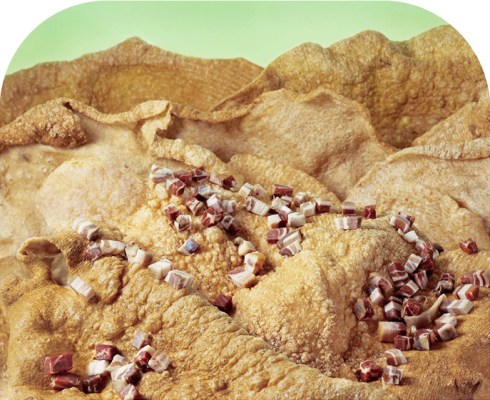
Saturated Fat Foothills. © Lochman & Ciurej. Ingredients: Full Side Pork Chicharrones, Proscuitto Ham.

FrenchFriedBluffs_Castleck

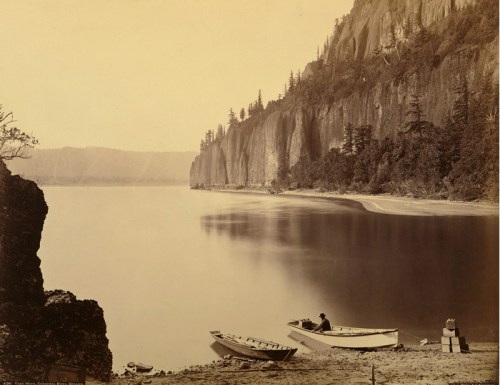
Castle Rock, Columbia River, 1867. (Alternate Title: Pacific Coast views. No. 1243). © Carleton Watkins.

PV4CiurejLochman

Deep Fried Bluffs. © Lochman & Ciurej. Ingredients: OreIda shoestrings, McCain Seasoned Crinkle Cut, Armour Lard, Oscar Meyer Bacon.

PP: Were Watkins’ landscapes pure?

L&C: An answer to this question is as vast and deep as Yosemite Valley!

Most recent thought regarding landscape is defined by scholars like Lucy Lippard in The Lure of the Local: Senses of Place in a Multicentered Society. Landscape is not just an aesthetic experience, it must be thought of in terms of community, land use, contemporary perceptions of nature, what is produced on the land and how it shapes the inhabitants through time. Rebecca Solnit’s writing projects Infinite City and Unfathomable City are exquisite examples of this approach.

Tyler Greene discusses Carleton Watkins’ photographs and the transformation of California agriculture a century-and-a-half later in a recent New York Times Lens blogpost.

In the book Print the Legend: Photography and the American West, Martha A. Sandweiss provides a great in-depth discussion of the motivation behind of 19th-century landscape photography.

SUGARMOUNTAIN

Cola Sea. © Lochman & Ciurej. Ingredients: Domino Pure Cane Granulated Sugar, Brer Rabbit Molasses, CocaCola, C&H Golden Brown Cane Sugar, C&H  Pure Cane Powdered Sugar, Trust Classic Pure Mishri Sugar, Rock Candy.

ColaSea_SugarLoaf

Sugarloaf Islands at Fisherman’s Bay, Farallon Islands, about 1869, Albumen silver print, 41 x 54.3 cm, The J. Paul Getty Museum, Los Angeles, 85.XM.11.22. © Carleton Watkins.

LOHCMAN_CORN

Monoculture Plains. © Lochman & Ciurej. Ingredients: Corn Flakes, White and Yellow Corn Meal, Corn, Cobs and Husks.

Monoculture_CapeHornOR

Cape Horn, Columbia River, Oregon, negative, 1867; print by Isaiah West Taber, about 1881-83, Albumen silver print, 40.5 x 52.3 cm, The J. Paul Getty Museum, Los Angeles, 85.XM.11.2. © Carleton Watkins.

PP: What for you are the main concerns about industrial food production?

L&CProcessed Views reflects our concern with current trends in consumption, ideas of progress and the changing geography of our country. All indications are that we are headed into an uncharted, unbalanced, unnatural territory. This terrain is garnished with unintended consequences for our health and for the environment. Why must we thoughtlessly degrade the soil by our technological-agricultural experiments? We must re-evaluate our man-made “utopias”.

PP: Where can we read more on these issues?

L&C: There are striking stories daily, many of them contradictory. We record ideas in our food-based notebook (blog). Recent posts mention books, articles and websites addressing the American diet (Nina Teicholz, Michael Moss, NPR’s The Salt blog) and industrial agriculture: corn production and marketing, meat processing (Christopher Leonard, Maureen Ogle), photography and social history.

PP: Thank you both.

L&C: Thanks, Pete.

JunkFoodWrappers

A tiled illustrated graphic of the various ingredients used to make Processed Views. © Lindsay Lochman & Barbara Ciurej.

BIOGRAPHY

Barbara Ciurej and Lindsay Lochman began collaborating when they met as students at the Institute of Design in Chicago+Illinois Institute of Technology. Through photographic projects they explore the confluence of history, myth and popular culture. Their photographs have been in numerous solo and group exhibits and are in the collections of the Art Institute of Chicago, the Walker Art Center and the Milwaukee Art Museum.

EMAIL

prisonphotography [at] gmail [dot] com

Prison Photography Archives

Post Categories