
You are currently browsing the tag archive for the ‘California’ tag.

Joseph Rodriguez‘s work is essential. If I and others can promote his photography humanity then we’ve done some good.
Last week PDN ran a post about the value of the “Digital Curator“. It was a well threaded argument about things we already know: that if an online presence (blogger) does his/her thing for long enough and with a consistent (their own) voice they’ll begin to garner readers, respect and influence.
[WARNING: link blitz, but all justified]
Thankfully, we have (I believe) a healthy photography blogosphere in which plenty of photographers present their own STUFF; megaliths go vernacular; academics question and answer; fine art specialists point us in the direction of good practice & theory; insiders offer editorial, publishing, gallery, collector, buyer or industry viewpoints; universities promote; non-profits take new angles; curmudgeons grumble; old media gets hip; young guns splash out with collective and interview projects & some hover untouchably above.
In September, duckrabbit joined the fray. You may know already, but I am a fan of duck’s blog (by Ben Chesterton). I am not a fan because I agree with everything Ben has to say, but because he says it without frills and then will spend the time necessary to engage the consequent discussions. Such commitment is a priceless commodity.
duckrabbit deals primarily with photojournalism and multimedia and so Ben’s coverage doesn’t always dovetail with the preoccupations of other photographic genres – which is fine, we all have our favourite corners.
To get to the point. I am nodding furiously toward the coverage of Joseph Rodriguez on duckrabbit for three reasons:
1) Because Rodriguez (along with Leon Borensztein) made me realise how vital the relationship between photographer and subject is in creating images. Rodriguez is worth more time than duck or I could ever commit.
2) Because this is the latest in principled stances duckrabbit has taken, AND it happens to highlight the stories of formerly incarcerated.
3) Because I am committed to writing more about Rodriguez in the next month … and need to let you know.
duckrabbit’s first feature of his new series ‘Where It’s At’ (stuff that kicks a duck’s arse) is Rodriguez’s work on Re-entry after prison. Rodriguez worked with Walden House (I remember fondly the stained glass of the San Francisco WH, Buena Vista Park). As duckrabbit puts it, “Rodriguez records lives lived and he never measures the lives of those he shoots against a photographic award, magazine spread or advertising contract. His eye is never on the future, it is always in conversation with the now.”
Go to duck’s post and watch Rodriguez’s 7 minute multimedia piece on re-entry. California is where I cut my teeth in the prison policy and prisoners’ rights fields, so for me, it is especially resonant … and vital.
Also worth noting is Benjamin Jarosch, Rodriguez’s current assistant.
While we are on the topic of different realities in urban America, keep an eye out for this film at your local cinemaplex indie-theatre.
In the next few weeks I’ll be making comment and whirring the brain cogs over Rodriguez’s photographic endeavour Juvenile Justice . Stay tuned.
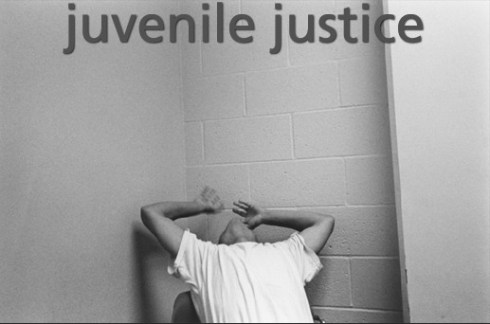
Rodriguez has won acclaim from all the important people that need to take notice, including Fifty Crows, which incidentally started up a blog recently. Everyone reading this should follow Fifty Crows because they support photographers who get in knee deep … and then some.
Peace.
“The Gay Essay is comparable in magnitude to Robert Frank’s ‘The Americans’…the exhibit in its entirety is amazingly strong. And for the most part the photographs are singularly beautiful in execution.”
San Francisco Art Week, 1973

Sun Reflections on Wave, Zuma Beach, CA, 2000. Anthony Friedkin. Photography - Silver Print. 16 x 20 inches.
This weekend is Pride and today (Sunday) the 40th anniversary of the Stonewall Riots; an event generally regarded as the beginning of the modern gay rights movement. To mark the occasion DRKRM Gallery in Los Angeles is exhibiting Anthony Friedkin’s Gay, A Photographic Essay 1969 – 1972.
Friedkin isn’t your run of the mill photographer. He’d likely balk at the top-heavy marketing necessary by the individual photographer to survive in today’s game. He doesn’t seem to have searched out publicity or reviews and never chased the recognition of the fine art world. There’s next to nothing written about him on the internet which supports my theory that he is of a different generation and different ethos.
He is a name not commonly known. This, of course, is our loss and not his.

Woman by the Pool, Beverly Hills Hotel, CA, 1975. Anthony Friedkin. Photography - Silver Gelatin Print. 16 x 20 inches

Dan, Male prostitute, San Fernando Valley. Anthony Friedkin. 1972
Friedkin is as “California” as Henry Wessel. He is as culturally vital to the West Coast gay communities as Leigh Bowery was to London’s. Friedkin’s fascination with the couture and characters of subculture in the American West is on a par with that of Richard Avedon.
Friedkin was a one man Hamburger Eyes long before the zygote of Hamburger Eyes’ uncowed lens fell down the photo community fallopian tube.
Friedkin’s projects include The Gay Essay done in San Francisco and Los Angeles in 1969 and 1970; The Beverly Hills Essay shot in 1975; The Hollywood Series began in 1978 continues to this day; and The Ocean-Surfing Essay which explores Friedkin’s intimate, intensely personal relationship with the surf and waves. For most of his life he has been photographing Los Angeles creating an unparalleled body of work informed by his love of the diverse conurbation.
Of all his major photographic series, only one documents life outside the Golden State (New York City Brothels).
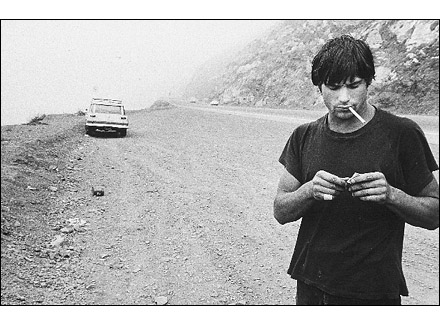
Clockwork Malibu, Rick Dano on the Highway, Malibu, CA. Anthony Friedkin. 1977. Photography - Silver Print. 16 x 20 inches

Debbie with her Head in the Sand, Venice, CA. Anthony Friedkin. 1980. Silver Print. 11 x 14 inches
Prison Photography is particularly interested in Friedkin’s photographic record of California Prisons and their inmates. The only image I have to present here is Four Convicts, Folsom Prison, CA (1991) [bottom].
California Prisons includes sensitive portrait shots of incarcerated teenagers, as well as the many typical representations of machismo and gang affiliated men.
I do not know if the series includes photographs of female prisoners, but this and many other unanswered questions now await a curious future…
I’d be very interested to hear from readers who’ve attended exhibition of the work and have any lasting impressions.

Android Sisters, Universal Studios, Hollywood, CA. Anthony Friedkin. 1978. Silver Print.

Jaws, Universal Studios, Hollywood, CA. Anthony Friedkin. 1978. Photograph. Silver Print.
It is Friedkin’s devotion to the unexpected that distinguishes his work. He disarms the extraordinary and educates his audience. Friedkin presents outlying cultures without a second thought; he surrounded himself with these people and paid them total respect.
As objective as the camera can be, it was so when in Friedkin’s hands and directed at people. Particularly, in documenting Gay culture, Friedkin was never reductive; he photographed the ‘wide-ranging composite … young hustlers, drag queens, transsexuals, San Francisco entertainers; a Gay Liberation parade in Hollywood; two lesbian women very much in love; effeminate boys growing up in an environment of machismo and the religious subculture typical of East Los Angeles.’

Four Convicts, Folsom Prison, CA. Anthony Friedkin. 1991. Silver Print. 16 x 20 inches.
Friedkin’s close tie to California, and especially Los Angeles, is conspicuous in his work as a still photographer for the movie industry. He makes the distinction himself between the circles of Hollywood and the tradition gallery circuit as evidenced by his use of ‘Tony’ Friedkin for movie credit-lines. Work on Crips and Bloods: Made in America and an appearance as himself in Dog Town & Z-Boys tie Friedkin indelibly to the California cultures of today and yesteryear.
Anthony Friedkin has over forty years experience as a professional photographer. He started out as a photojournalist working as a stringer for Magnum photos in Los Angeles. For the past twenty-five years Anthony Friedkin has lived and worked out of his apartment studio in Santa Monica. Currently, he is preparing a book of his Ocean-Wave photographs. Friedkin’s photographs are included in major Museum collections including the Museum of Modern Art, the Los Angeles County Museum of Art, San Francisco MoMA and The J. Paul Getty Museum. His work has been published in Japan, Russia, Europe, in many Fine Art publications in America and in magazines such as Rolling Stone, Newsweek, French Zoom and Malibu Magazine. For a full resume click here.
It gives me great pleasure to introduce Prison Photography‘s first guest blogger. However, it saddens me as much that he must remain anonymous.
A couple of months ago, I received an email from a California state employee who worked as a prison educator. To paraphrase that initial contact, he stated that “California prisons were places of extreme emotion and stress – due in part to their ‘invisibility’ – and photography within the walls of prisons could go some way in bringing visibility and public understanding to the realities of contemporary prisons.” This was a remarkable statement and the first of its kind that I had heard from someone in employment at a state prison. I asked if he could expand on those thoughts and I am grateful he did.
The great irony of this is that the essay is not illustrated by the images he witnesses daily. He has offered us poignant descriptions of scenes from within prison. The descriptions are a powerful device to get us thinking about what we think we know and what we potentially could know about our penal system.
He suggested I use some of CDCR’s own images. The aerial shots included are the official vision of the California prison system that disciplines and orders the different sized units that comprise the institution; cells, wings, blocks and facilities. The institutional eye of CDCR’s aerial views lies in powerful contrast to the personal narrative recorded here.

Avenal State Prison. Courtesy CDCR
I work in California prisons. Penology has become grown into avocation over the last 10 years. A past career in journalism with some practice in photojournalism informs a strong inclination to report/communicate what I see and experience. So I am daily frustrated by prison policies against recording the visual images I see. Each day I wonder if these policies are justified. If not, are they an impediment to rehabilitation, perhaps even prison reform? Do these policies protect society and the prisoners and staff persons who are a part of society? Or are these policies so much heavy furniture upon the carpeting under which we have swept our societal human detritus?
[IMAGE] There but for the grace of God go I – Close up of a hollow expression on the face of a prisoner as he watches two uniformed guards escort another prisoner across the bare, brown dirt of a prison yard. One guard holds a baton at the ready, the other menacingly waves a carafe-sized container of pepper spray, his finger on the trigger. In the background are multiple 12-foot chain-link faces topped by rounds of glistening razor wire.

North Kern State Prison. Courtesy CDCR
If you ever work with law enforcement on the street, you will hear the mantra “officer safety.” Policies, procedures, even individual officer actions have this mantra as an underlying core within their stated mission to serve public safety. In the prison, that mantra becomes “safety and security of the institution.” Everything is measured against that mantra. Nothing is approved if anyone can show that it may be a threat to institutional safety and/or security. Uncensored and uncontrolled photographic images seem to be considered an inherent threat to institutional safety and security. From a rookie guard to the departmental secretary, few things seem to frighten them quite so much as image impotence in the institutions they so wholly control. From regular staff trainings to informal reminders I have been inculcated (brainwashed?) to accept the imprudence of taking pictures on prison grounds. Simply having a camera on prison property could be cause for termination.
[IMAGE] The burden of laundry – a prisoner wearing only boxer shorts sits on the lowest metal slab of a three-high tier of bunk beds in a prison gymnasium. His hands are deep in a bright yellow, worn mop bucket on the floor in front of him. Inside, white socks and underwear mingle in lukewarm, soapy water.
Prison regulations acknowledge their public nature and the public’s right to know what goes on inside prisons, at least bureaucratically. Title 15 of California Code of Regulations, Section3260 is entitled “Public Access to Facilities and Programs.” It states:
“Correctional facilities and programs are operated at public expense for the protection of society. The public has a right and a duty to know how such facilities and programs are being conducted. It is the policy of the department to make known to the public, through the news media, through contact with public groups and individuals, and by making its public records available for review by interested persons, all relevant information pertaining to operations of the department and facilities. However, due consideration will be given to all factors which might threaten the safety of the facility in any way, or unnecessarily intrude upon the personal privacy of inmates and staff. The public must be given a true and accurate picture of department institutions and parole operations.”
Is absolute control over visual images in and around prison an unreasonable imposition on prisoners, staff, families, general public, media, etc? Does it interfere with the desirable goal of family/community connection with prisoners? Does it contribute anything to either rehabilitation or punishment, the two general goals of incarceration? I’ve catalogued the reasons I’ve been given, or even imagined, over the years and want to see how they stand up to public scrutiny.

Pleasant Valley State Prison. Courtesy CDCR
The first and foremost reason for image control would seem to be the prevention of both escapes and incursions. Photographs of prisons may provide intelligence to anyone planning escapes, contraband smuggling, perhaps even terrorist activities. This seems reasonable enough, at least until you start prowling around the Internet. The California Department of Corrections and Rehabilitation Web site has high-resolution aerial photographs of every one of its prisons. Anyone with even rudimentary analysis skills could do serious escape/incursion planning based on these photographs alone. But wait, there’s more. Google maps have more information – local maps, photographs of the prisons, even their “street view” photographs in some instances that clearly show fences, towers, gates, etc. With that level of public information available, I don’t see how you make a credible argument that I can’t take pictures on prison grounds.
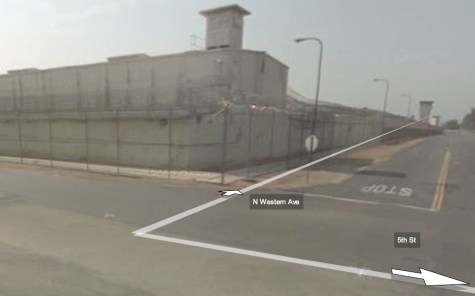
5th & Western, Norco, CA. Google Street View.
[IMAGE] The spread – four heavily tattooed prisoners in underwear standing around a dented, dingy gray metal locker. There are bowls on top of the locker and they are sharing food they cooked using hot water, instant soup noodle packets and canned meats, vegetables and seasonings. On the dirty gray concrete wall behind them is stenciled in fading red paint: NO WARNING SHOTS FIRED.
Privacy would seem to be the next strongest argument for prohibiting prison images. Given the open policies in other states, this argument seems flimsy. For prisoners, all conviction information is public. Simply go to the appropriate county court and the information is openly available to the public. Yet it is extremely difficult to get any information about prisoners in the California prisons. For the public there is one telephone number you can call. [916 445-6713] You must know either the prisoner’s CDCR Identification Number or the full name and correct date of birth. The line is perpetually busy and, if answered, the caller can expect to be put on hold for a long, long time (yes, hours). On the other hand, if you go to the Nevada Department of Corrections Web site, you can search for Orenthal Simpson and it will show not only his prison and address but all his convicted offenses, terms and release date. Oklahoma, not generally known for openness, shows the prisoner’s location, convicted offenses, release and parole dates, even pictures. The federal Bureau of Prisons will provide prisoner location and release dates for current and past prisoners. Try a search on their site for Martha Stewart.
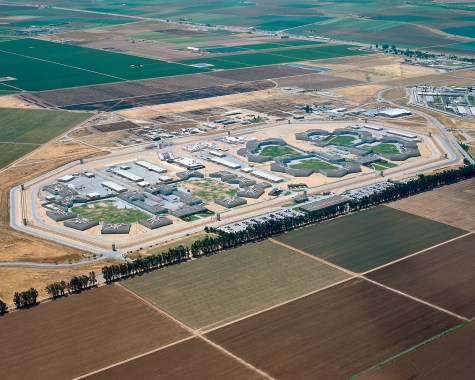
Salinas Valley State Prison. Courtesy CDCR
A major defense California prison management will make for the privacy argument is gang violence. They believe if it is easy to find a person in a particular prison, that can make it easier for gangs to use him. The gangs may use the prisoner to do their illegal work or to order him killed if he has fallen from grace, so to speak. CDCR logic is that by keeping prisoners hidden they are keeping them protected. If this is true, the magnitude of the gang problem is nothing short of monumental. Other states apparently do not have this problem. Why not?
[IMAGE] A pile of clothing, denim pants, orange coveralls, boots, etc. on a six-foot folding table. Two uniformed guards on one side of the table. Two naked inmates on the other side of the table, one bent over spreading his rear-end cheeks for officer inspection.
I categorize all other arguments against my taking prison pictures as simple totalitarian need for control. An uncontrolled image is seen as a risk – and why take a risk? The fewer images that exist, the fewer possibilities there are for something to happen that they can’t control. Statistically speaking, very few members of the public or the media ever get to see what happens inside prisons. Media representatives are escorted at all times and only see what prison management wants them to see. They are rarely given unfettered access to prisoners. Visitors are the bulk of the public that see anything of a prison, and that is a very limited view – parking lots, processing rooms and the visiting rooms. Even inmate appearance is tightly controlled in the visiting experience. The prisoner who shows up needing a shave or wearing a wrinkled shirt doesn’t get into the visiting room. And he or she will be strip-searched going in and coming out.
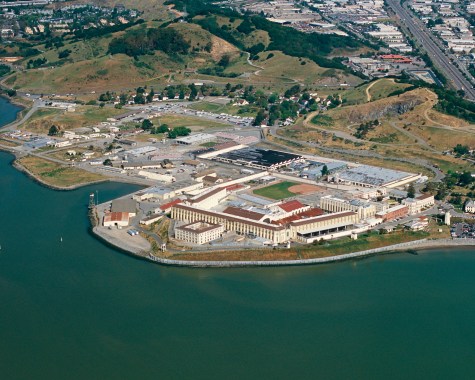
San Quentin. Courtesy CDCR
Prisons, at least in California, are reactive rather than proactive. California’s first permanent prison, San Quentin, opened for business in 1852. Since then, the prison system has been making rules and regulations based on preventing the recurrence of negative events. For example, a prisoner at R.J. Donovan prison at San Diego escaped using a fake staff identification card he had made. He walked out amid a small crowd of other staff leaving at shift change time. As was customary then, he simply held up his photo ID and was waved through with the rest of the ID card wavers. To prevent this from happening again, CDCR policy now requires the gate officer to physically touch and examine the employee ID card before letting the person through the gate. Such policy-creation has been repeated tens of thousands of times over the past 157 years of the California state prison system. It does not lend itself to the openness of unfettered prison images.
[IMAGE] The back of a prisoner’s shaved head as he sits in the audience of a GED graduation ceremony. Visible under his mortarboard are gang tattoos on his head and neck. Blurred in the background an inmate stands at the podium giving his valedictory address.
Until 1980, incarceration in California had rehabilitation as a major goal. The state legislature in that year, bowing to a Reganesque rabble-rousing changed prison law to say the purpose of incarceration is punishment. The concept of rehabilitation disappeared and so did most of the prisoner programming and policies meant to promote rehabilitation. Connection with family is known to be one of the most important factors in rehabilitation. I suggest the control of images in the prison system is one policy that discourages family connections.

Substance Abuse Treatment Facility at Corcoran. Courtesy CDCR
Prison subsumes human beings. Prisoners disappear over time. As soon as a man goes to prison, he begins to fade from his former life. Just as a photographic print will fade over the years, the place of a man in his family fades while he is in prison. Life goes on – without him. His linkages to the fabric of family and community eventually fray and break. Phone calls, letters and visits cannot fully replace the foundations of shared daily interactions, family projects, adventures, challenges and the intimacy of shared emotions. Despite our ability to love, we are creatures of habit, and over time absence can become a habit that seems a normal reality.
The absence of prison images in society supports the concept of shame in incarceration. This shame then supports an estrangement that prison system managers find useful for their purposes. The human toll of that is prisoners who simply hunker down to do their time. Some resist family contact. “I don’t want my children coming to see me in a place like this,” is a common thing I hear from prisoners who could have visits if they wanted them. Would this change if prison images were common in our society? I think so. I think it’s worth a try.
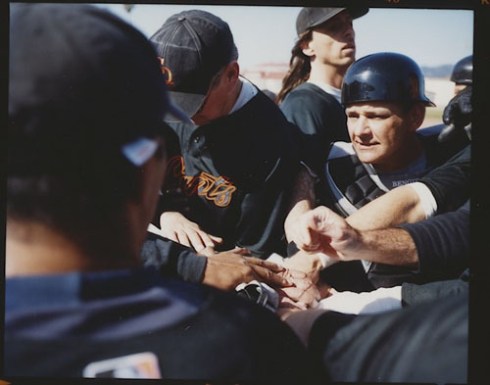
Last week, I threw up a quick post featuring Emiliano Granado’s website images of his photographs of the San Quentin Giants. Here, Granado shares previously unpublished contact sheet images, his experiences and lasting thoughts from working within one of America’s most notorious prisons.


What compelled you to travel across the US to photograph the story at San Quentin?
This was actually a magazine assignment for Mass Appeal Magazine. However, the TOTAL budget was $300, so it really turns out to be a personal project after the film, travel expenses, etc. So, the simple answer to the question is that I’m a photographer. I’m curious by nature. Part of the reason I’m a photographer is to study the world around me. I like to think of myself as a social scientist, except I don’t have any scientific method of measuring things, just a photograph as a document.
With that in mind, it would be crazy of me to NOT go to San Quentin! I’d never been in a correctional institution but I’ve always been fascinated by them. If you look through my Tivo, you’ll see shows like COPS, Locked Up, Gangland, etc. I was also a Psychology major in college and remember being blown away by Zimbardo’s prison experiment and other studies. Basically, it was an opportunity to see in real life a lot of what I’d seen on TV or read in books. And as a bonus, I was allowed to photograph.

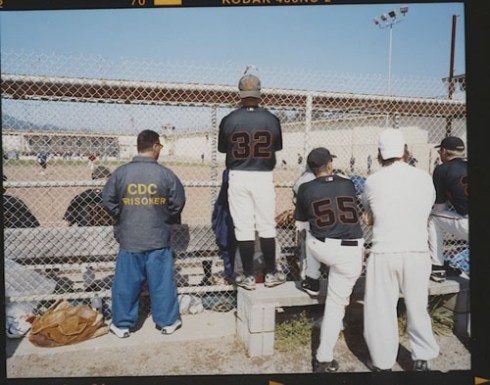
What procedures did you need to go through in order to gain access?
I was amazed at the lack of procedure. The writer for the story had been in touch with the San Quentin public relations people, but that was it. There was plenty of other media there that day. It was opening day of the season, so I guess it made for a minor local news story.
I’m pretty sure SQ prides itself in being so open and showcasing what a different approach to “reform” looks like.
It is my opinion that San Quentin is one of the best-equipped prisons in California to deal with a variety of visitors. Did you find this the case?
Definitely. Access was very easy. They barely searched my equipment! Parking was easy. I was really surprised at how easy and smooth the process was. Not to mention there were many other visitors that day (an entire baseball team, more media, local residents playing tennis with inmates, etc).
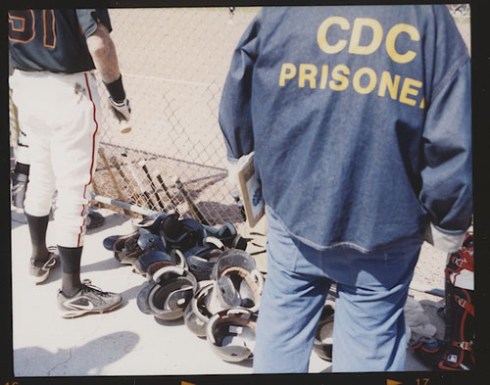

Did your preparation or process differ due to the unique location?
Definitely. I usually work with a photo assistant and that couldn’t be coordinated, so I was by myself. I packed as lightly as I could and prepared myself for a fast, chaotic shoot. Some shoots are slow and methodical, and others are pure chaos. I knew this would be the latter.
One thing I didn’t think about was my outfit. SQ inmates dress in denim, so visitors aren’t allowed to wear denim. Of course, I was wearing jeans. The officers gave me a pair of green pajama pants. I’m glad they are ready for that kind of situation.
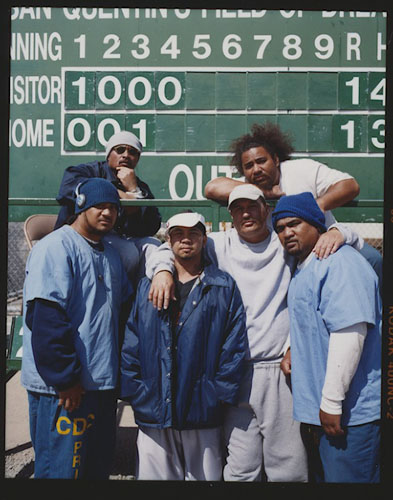
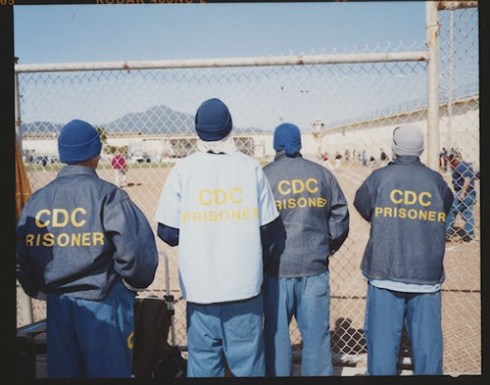
You are not a sports shooter per se. You took portraits of the players and spectators of inmate-spectators. How did you choose when to frame a shot and release the shutter?
Correct. I’m definitely not what most people would consider a sports photographer. I don’t own any of those huge, long lenses. However, I photograph lots of sporting events. I think of them as a microcosm of our society. There are lots of very interesting things happening at events like this. Fanaticism, idolatry, community, etc. Not to mention lots of alcohol and partying – see my Nascar images!
Hitting the shutter isn’t entirely a conscious decision. That decision is informed by years of looking at successful and unsuccessful images. It’s basically a gut instinct. There are times that I search for a particular image in my head, but mostly, it’s about having the camera ready and pointed in the right direction. When something interesting happens you snap.
There are photographers that come to a shoot with the shots in their head already. They produce the images – set people up, set up lighting, etc. Then there are photographers that are working with certain themes or ideas and they come to the location ready to find something that informs those ideas. I’m definitely the latter. There is a looseness and discovery process that I really enjoy when photographing like this. It’s like the scientist crunching numbers and coming to some new discovery.


A lot of photo editors say the story makes the story, not the images. Finding the story is key. Do you think there are many more stories within sites of incarceration waiting to be told?
I’m not sure I agree with that. I always say that a photograph can be made anywhere. Even if there is no story, per se. I definitely agree that a powerful image along with a powerful story is better, but a photograph can be devoid of a story, but be powerful anyway.
Every person, every place, everything has a story. So yes, there are millions of untold stories within sites of incarceration. Hopefully, I’ll be able to tell some of them.
Having had your experience at San Quentin, what other photo essays would you like to see produced that would confirm or extend your impressions of America’s prisons?
Man, there are millions of photos waiting to be made! I’m currently trying to gain access to a local NYC prison to continue my work and discover a bit more about what “Prison” means. Personally, I’d love to see long-term projects about inmates. Something like portraits as new inmates are processed, images while incarcerated, and then see what their life is like after prison. Their families, their victims, etc. And of course, if any photo editor wants to assign something like that, I’d love to shoot it!

Anything you’d like to add to help the reader as they view your San Quentin Baseball photographs?
Yes. When I walked in to the yard, I didn’t know what reaction I would get from the inmates. Everyone was super friendly and willing to be photographed. Everyone wanted to tell me their story. I’m not sure how different their reaction would have been to me if I didn’t have a camera, but I was pleasantly surprised. At first, I felt like an outsider and fearful, but after an hour or so, I felt comfortable and welcome. It was a weird experience to think the guy next to me could be a murderer (and there were, in fact, murderers on the baseball team), and not be afraid. There was this moral relativism thing going on in my head. These people were “bad,” yet they were just normal guys that had made very big mistakes. I left SQ thinking that pretty much any one of us could have ended up like them. Given a different set of circumstances or lack of access to social resources (e.g. education, money, parenting, etc) I could very easily see how my own life could have mirrored their life.
And finally, can you remember the opposition?
I don’t remember who they were playing, but I do remember that their pitcher had played in the Majors and even pitched in a World Series. I believe the article that finally ran in Death + Taxes magazine mentions the opposition.
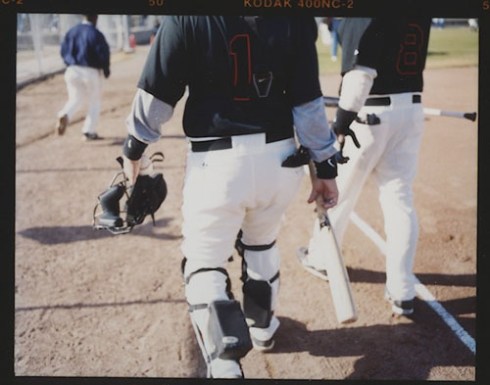
ALL IMAGES © 2009 EMILIANO GRANADO
Authors note: Huge thanks to Emiliano Granado for his thoughtful responses and honest reflections. It was a pleasure working with you E!
Housekeeping. At the end of my previous post on Emiliano’s work, I postured when San Quentin would get more sports teams for the integration of prisoners and civilians. Emiliano has answered that for me in this interview. He observed locals playing tennis and also states San Quentin also has a basketball team.
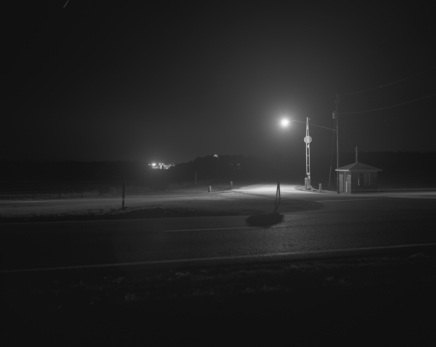
Alabama Death House Prison, Grady, AL, 2004. Silver print photograph. © 2009 Stephen Tourlentes
Stephen Tourlentes photographs prisons only at night for it is then they change the horizon. Social division and ignorance contributed to America’s rapid prison growth. Tourlentes’ lurking architectures are embodiments of our shared fears. In the world Tourlentes proposes, light haunts; it is metaphor for our psycho-social fears and denial. Prisons are our bogeyman.
These prisons encroach upon our otherwise “safe” environments. Buzzing with the constant feedback of our carceral system, these photographs are the glower of a collective and captive menace. Hard to ignore, do we hide from the beacon-like reminders of our social failures, or can we use Tourlentes’ images as guiding light to better conscience?
Designed as closed systems, prisons illuminate the night and the world that built them purposefully outside of its boundaries. “It’s a bit like sonic feedback … maybe it’s the feedback of exile,” says Tourlentes.
Stephen Tourlentes has been photographing prisons since 1996. His many series – and portfolio as a whole – has received plaudits and secured funding from organisations including the John Simon Guggenheim Foundation, the Massachusetts Cultural Council and Artadia.
Stephen was kind enough to take the time to answer Prison Photography‘s questions submitted via email.
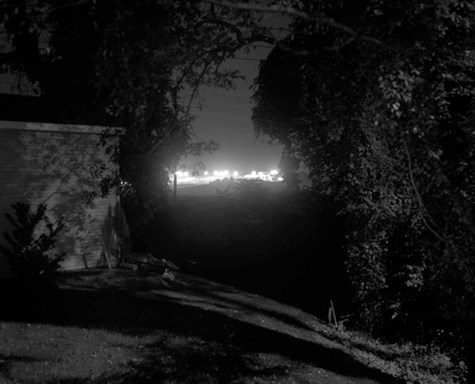
Penn State Death House Prison, Bellefonte, PA, 2003. © 2009 Stephen Tourlentes

Carson City, Nevada, Death House, 2002. Gelatin silver print. © 2009 Stephen Tourlentes

Blythe Prison, California. © 2009 Stephen Tourlentes
Pete Brook. You have traveled to many states? How many prisons have you photographed in total?
Stephen Tourlentes. I’ve photographed in 46 states. Quite the trip considering many of the places I photograph are located on dead-end roads. My best guess is I’ve photographed close to 100 prisons so far.
PB. How do you choose the prisons to photograph?
ST. Well I sort of visually stumbled onto photographing prisons when they built one in the town I grew up in Illinois. It took me awhile to recognize this as a path to explore. I noticed that the new prison visually changed the horizon at night. I began to notice them more and more when I traveled and my curiosity got the best of me.
There is lots of planning that goes into it but I rely on my instinct ultimately. The Internet has been extremely helpful. There are three main paths to follow 1. State departments of corrections 2. The Federal Bureau of Prisons and 3. Private prisons. Usually I look for the density of institutions from these sources and search for the cheapest plane ticket that would land me near them.
Structurally the newer prisons are very similar so it’s the landscape they inhabit that becomes important in differentiating them from each other. Photographing them at night has made illumination important. Usually medium and maximum-security prisons have the most perimeter lighting. An interesting sidebar to that is male institutions often tend to have more lighting than female institutions even if the security level is the same.
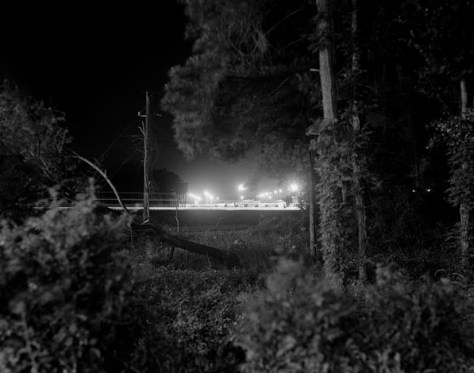
Holliday Unit, Huntsville, Texas, 2001. Gelatin silver print. © 2009 Stephen Tourlentes
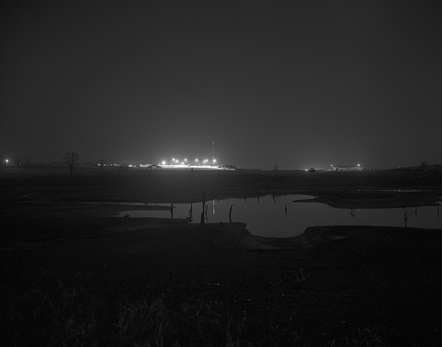
Springtown State Prison, Oklahoma, 2003. Archival pigment print. © 2009 Stephen Tourlentes
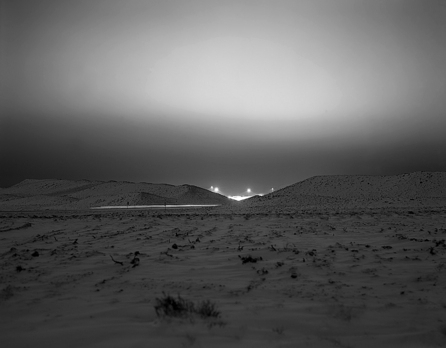
Death House Prison, Rawlins, Wyoming, 2000. Archival pigment print. © 2009 Stephen Tourlentes
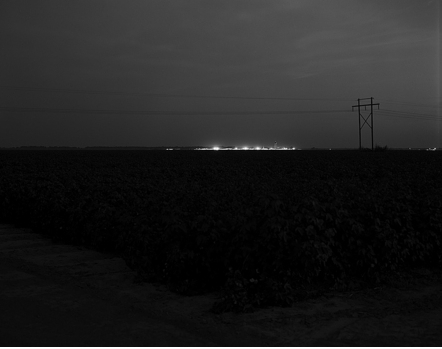
Arkansas Death House, Prison, Grady, AK, 2007. © 2009 Stephen Tourlentes
PB. Are there any notorious prisons that you want to photograph or avoid precisely because of their name?
ST. No I’m equally curious and surprised by each one I visit. There are certain ones that I would like to re-visit to try another angle or see during a different time of year. I usually go to each place with some sort of expectation that is completely wrong and requires me to really be able to shift gears on the fly.
PB. You have described the Prison as an “Important icon” and as a “General failure of our society”. Can you expand on those ideas?
ST. Well the sheer number of prisons built in this country over the last 25 years has put us in a league of our own regarding the number of people incarcerated. We have chosen to lock up people at the expense of providing services to children and schools that might have helped to prevent such a spike in prison population.
The failure is being a reactive rather than a proactive society. I feel that the prison system has become a social engineering plan that in part deals with our lack of interest in developing more humanistic support systems for society.
PB. It seems that America’s prison industrial complex is an elephant in the room. Do you agree with this point of view? Are the American public (and, dare I say it, taxpayers) in a state of denial?
ST. I don’t know if it’s denial or fear. It seems that it is easier to build a prison in most states than it is a new elementary school. Horrific crimes garner headlines and seem to monopolize attention away from other types of social services and infrastructure that might help to reduce the size of the criminal justice system. This appetite for punishment as justice often serves a political purpose rather than finding a preventative or rehabilitative response to societies ills.
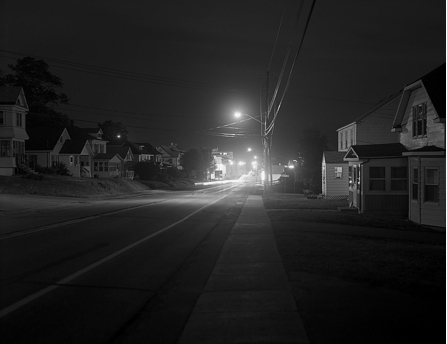
State Prison, Dannemora, NY, 2004. © 2009 Stephen Tourlentes

Prison, Castaic, CA, 2007. © 2009 Stephen Tourlentes

Federal Prison, Atwater, CA, 2007. © 2009 Stephen Tourlentes

Utah State Death House Complex, Draper, UT, 2002. © 2009 Stephen Tourlentes
PB. How do you think artistic ventures such as yours compare with political will and legal policy as means to bring the importance of an issue, such as prison expansion, into the public sphere?
ST. I think artists have always participated in bringing issues to the surface through their work. It’s a way of bearing witness to something that collectively is difficult to follow. Sometimes an artist’s interpretation touches a different nerve and if lucky the work reverberates longer than the typical news cycle.
PB. In your attempt with this work to “connect the outside world with these institutions”, what parameters define that attempt a success?
ST. I’m not sure it ever is… I guess that’s part of what drives me to respond to these places. These prisons are meant to be closed systems; so my visual intrigue comes when the landscape is illuminated back by a system (a prison) that was built by the world outside its boundaries. It’s a bit like sonic feedback… maybe it’s the feedback of exile.
PB. Are you familiar with Sandow Birk’s paintings and series, Prisonation? In terms of obscuring the subject and luring the viewer in, do you think you operate similar devices in different media?
ST. Yes I think they are related. I like his paintings quite a lot. The first time I saw them I imagined that we could have been out there at the same time and crossed paths.
PB. Many of your prints are have the moniker “Death House” in them, Explain this.
ST. I find it difficult to comprehend that in a modern civilized society that state sanctioned executions are still used by the criminal justice system. The Death House series became a subset of the overall project as I learned more about the American prison system. There are 38 states that have capital punishment laws on the books. Usually each of these 38 states has one prison where these sentences are carried out. I became interested in the idea that the law of the land differed depending on a set of geographical boundaries.

Federal Prison, Victorville, CA, 2007. © 2009 Stephen Tourlentes
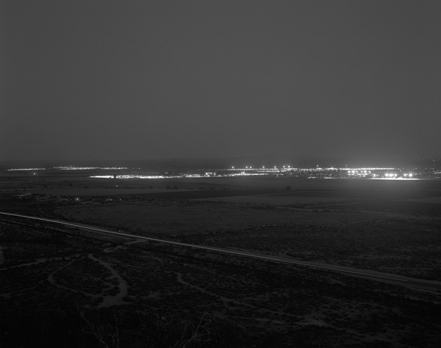
Prison Complex, Florence, AZ, 2004. © 2009 Stephen Tourlentes

Lancaster State Prison, Lancaster, CA, 2007. © 2009 Stephen Tourlentes
PB. Have you identified different reactions from different prison authorities, in different states, to your work?
ST. The guards tend not to appreciate when I am making the images unannounced. Sometimes I’m on prison property but often I’m on adjacent land that makes for interesting interactions with the people that live around these institutions. I’ve had my share of difficult moments and it makes sense why. The warden at Angola prison in Louisiana was by far the most hospitable which surprised me since I arrived unannounced.
PB. What percentage of prisons do you seek permission from before setting up your equipment?
ST. I usually only do it as a last resort. I’ve found that the administrative side of navigating the various prison and state officials was too time consuming and difficult. They like to have lots of information and exact schedules that usually don’t sync with the inherent difficulty of making an interesting photograph. I make my life harder by photographing in the middle of the night. The third shift tends to be a little less PR friendly.
PB. What would you expect the reaction to be to your work in the ‘prison-towns’ of Northern California, West Texan plains or Mississippi delta? Town’s that have come to rely on the prison for their local economy?
ST. You know it’s interesting because a community that is willing to support a prison is not looking for style points, they want jobs. Often I’m struck by how people accept this institution as neighbors.
I stumbled upon a private prison while traveling in Mississippi in 2007. I was in Tutweiler, MS and I asked a local if that was the Parchman prison on the horizon. He said no that it was the “Hawaiian” prison. All the inmates had been contracted out of the Hawaiian prison system into this private prison recently built in Mississippi. The town and region are very poor so the private prison is an economic lifeline for jobs.
The growth of the prison economy reflects the difficult economic policies in this country that have hit small rural communities particularly hard. These same economic conditions contribute to populating these prisons and creating the demand for new prisons. Unfortunately, many of these communities stake their economic survival on these places.

Kentucky State Death House, Prison, Eddyville, KY, 2003. © 2009 Stephen Tourlentes
PB. You said earlier this year (Big, Red & Shiny) that you are nearly finished with Of Lengths and Measures. Is this an aesthetic/artistic or a practical decision?
ST. I’m not sure if I will really ever be done with it. From a practical side I would like to spend some time getting the entire body of work into a book form. I think by saying that it helps me to think that I am getting near the end. I do have other things I’m interested in, but the prison photographs feel like my best way to contribute to the conversation to change the way we do things.
________________________________________
Author’s note: Sincerest thanks to Stephen Tourlentes for his assistance and time with this article.
________________________________________
Stephen Tourlentes received his BFA from Knox College and an MFA (1988) from the Massachusetts College of Art in Boston, where he is currently a professor of photography. His work is included in the collection at Princeton University, and has been exhibited at the Revolution Gallery, Michigan; Cranbook Art Museum, Michigan; and S.F. Camerawork, among others. Tourlentes has received a John Simon Guggenheim Foundation Fellowship, a Polaroid Corporation Grant, and a MacDowell Colony Fellowship.
________________________________________
This interview was designed in order to compliment the information already provided in another excellent online interview with Stephen Tourlentes by Jess T. Dugan at Big, Red & Shiny. (Highly recommended!)
Robert Walsh contacted me recently to alert me his 2007 project at Delta College, Stockton, with instructor Kirstyn Russell. I asked Mr Walsh to explain the context of the series.
The story is not complicated. I have been a moderately serious photographer since the late 60s, when I got my first real job, working in the camera department of a large discount store. I have kept at it, off and on, for 40 years.
I got a job with the Department of Corrections in 1980 and worked at Deuel Vocational Institution (DVI) for 24 years, retiring as a Lieutenant 4 years ago.
A couple of years after I retired I approached the Warden, who was about to retire himself, and asked for access to shoot a photo essay of the prison.
I promised that I would go to great lengths to ensure that there were no recognizable images of inmates (legal issues) or staff (personal/professional issues) and would give the Department veto authority over any photo with any possible security issues. It worked out, and they had no issues.
I shot about 200 frames of 35mm, 120 and large format B&W negative, and ended up with a collection of 20 prints which I put in the book Images of the Gladiator School, along with a few pages of text. The text is still evolving.
The photos were shot over two days in the fall of 2007. I was trying to convey the visual impact of the institution without showing any people, both for obvious legal reasons and as a technical/artistic “challenge” for lack of a better way of putting it.
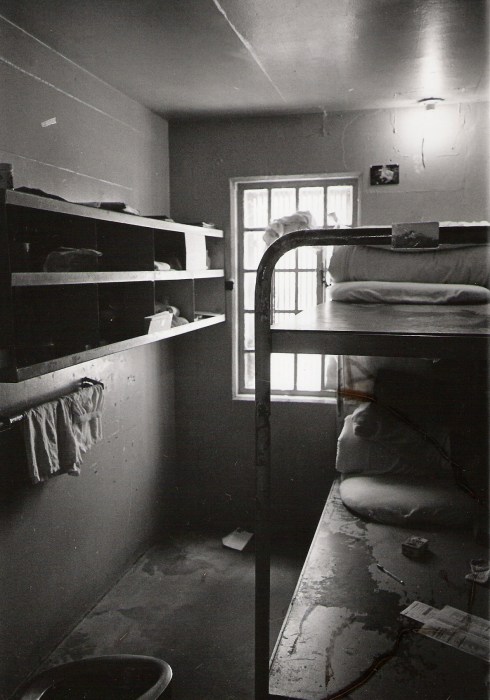
Robert Walsh
Mr Walsh sent me through the series’ twenty images, from which I selected six.
Of the remaining fourteen, two of Mr Walsh’s photographs were of receding cell tiers, so they couldn’t be included by virtue of a pledge. Two more were of receding corridors, so I extended the pledge. Three other prints that stood out were exterior shots of the yards at DVI. They depicted similar spaces to those of elementary schools – I plan to return to these in a later post.
I choose a single photograph for its own reason and five others for shared reasons.
The image of the cell (above) is musty, scuffed and miserable as cell really get. Debris that lurks on the cold surfaces.
Mr Walsh actually provided two prints of the cell image; the other being less textured, darker and crisper. The other image also didn’t exhibit the same surface damage. The reproduction (above) was preferred because of its subtle mood of disintegration.
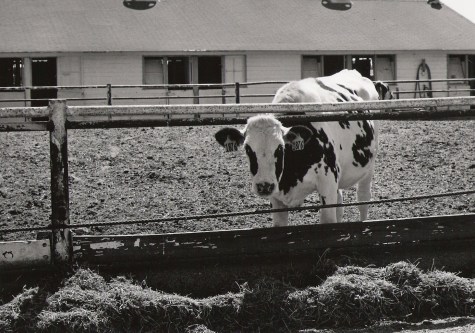
The remaining five were chosen because they express something of the action of the photographer. Away from the static buildings and fences, Mr Walsh has gone searching for anomalies amid the rigid penitentiary structures. The portrait of the cow is suitably awkward, the disturbed furrows of the field from which the owl flies are repeated in the pock-holes of the target range, repeated in the bullet-holes of the target-paper.
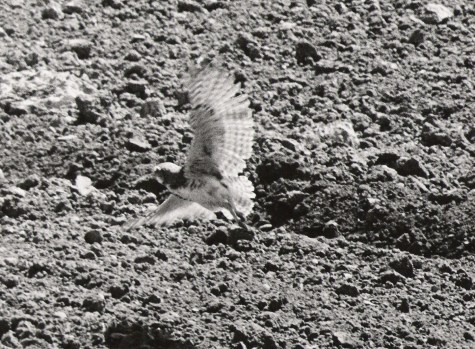
Robert Walsh

Robert Walsh
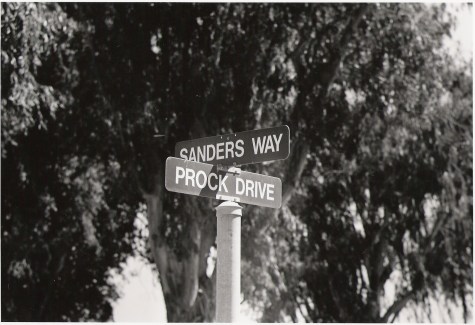
Palm trees. This is the West or Southwest, this is the land of middle distance road signs. This could be the work of John Divola‘s Correctional Officer Alter-Ego.
Robert Walsh
Robert Walsh

Robert Walsh
Mr Walsh challenged himself to “convey the visual impact of the institution” doing so with “no recognizable images of inmates or staff”. Bar two images, his compositions omit the activities of human life. Somehow, these five images specifically, give me the sense of human life recently fled or snuffed out entirely.
Whether Mr Walsh intended it, I find some of these images a little unnerving. The series is entitled Images of the Gladiator School based on DVI’s violent reputation between the 60s and early 80s. The project could as easily be called Ghosts of the Gladiator School.
Thanks to Robert Walsh for his time, words and images.
lax |laks| adjective
1 not sufficiently strict or severe : lax security arrangements at the airport | he’d been a bit lax about discipline in school lately.
2 careless : why do software developers do little more than parrot their equally lax competitors?
It is perhaps easy to forget there once was an era when the prison in society was less useful. By 1905 when this picture was taken, there were only two prisons in California (San Quentin and Folsom) and it would remain that way for another 30 years. Much of the detention and incarceration was done through an smattering of local jails and jail houses for work crews.

Alum Rock Jail. Alice Iola Hare, ca. 1905. On the back of the photograph is written, "Much of the original road into Alum Rock Park was built by County Jail prisoners who were housed - and guarded - in these shacks. The roofed structures and the open one (stockade?) behind them stood for many years after the road building job was completed."
This image of Alum Rock Jail, Santa Clara County was taken originally by Alice Iola Hare, was then part of the Arbuckle Collection and eventually went digital as part of Silicon Valley History online.
The description is right; this is a shack more than jail. The fabric of the structure did not discipline the inmates at Alum Rock, it was the guard’s rifles and the open countryside that asserted control. The physical make-up of this carceral structure is a world away from the SuperMax US society now relies upon. And for that reason, and for the indulgence of punnery, I want to refer to this example of historical jails as a “SuperLax” Prison.
What would people at the beginning of the 20th century have made of 16ft razor wire, heat sensing detection equipment, opticons and magnetic locks? I suppose the one piece of equipment they may have shared with their contemporary guards would be dogs, but they probably didn’t call them “K9 units” back then. I doubt they’d developed rubber bullets in 1905 either…
If the first post of an anthology is supposed to bear weight then I shall face this expectation head on – in fact I’ll insist upon it. San Quentin was the first American prison I visited. In the summer of 2004, I conducted research at the San Quentin Prison Museum (SQPM), analyzed the exhibits and evaluated its predominant narrative. I found, as with many small museums it suffered from the vagaries of volunteer staffing, poor marketing and unreliable access. Above all, however, the SQPM’s biggest failure was that it employed a historical narrative that ended abruptly in the early 70s and omitted contemporary issues of the California prison system. It was a particularly noticeable failure given the number of problematic issues faced by the CDCR – overcrowding, under-staffing, inadequate health services, dilapidated buildings – and especially noticeable as the named problems were severe-to-acute at San Quentin prison.

The piecemeal SQPM collection was brought together by an appeal and a spirited drive that saw former prison employees alongside local enthusiasts donating artifacts they had acquired in times past. The museum’s narrative ends in approximately 1971 – a year in San Quentin’s history widely considered as its most traumatic. Racial tensions and new variations of Marxism, both inside and outside the walls, were growing and divining credence among disparate groups. It wasn’t so much that the prison, as an apparatus of state, was being called into question; more that the militant Black Panthers, with their cohesive social critique of modern America, led the questioning.
White America didn’t know where to position itself. This was revolution in its most-feared guise and, in so being, paralysed many Americans who were unable to objectively judge the Black Panthers’ arguments.

On the 21st August, an infamous day at San Quentin, George Jackson took over his tier of the adjustment center and attempted an armed escape. The escape failed and he was one of six people who died. The only SQPM artifact to speak of this event was a rifle mounted as centerpiece in a wall-display of weaponry.
This same rifle was discharged by a former prison guard, from the hip, along a tier of cells during the insurrection. It was shot indiscriminately as the guard ran the length of the tier. Of course, the museum label beneath the semi-automatic weapon doesn’t volunteer this information.
The interim president of the San Quentin Prison Museum Association in 2004 was Vernell Crittendon. In mid 2007, Darcy Padilla, a freelance San Francisco based photographer, went to photograph Vernell on his daily duties. The images were to accompany an article by Tad Friend entitled Dean of Death Row in the July issue of The New Yorker. The article does a remarkable job of describing Vernell’s astounding work history, heavy responsibilities, personal amiability and curious (but not fallacious) role-playing. Padilla’s pictures were to accompany Friend’s article, which was and is the most thorough examination of Vernell’s personality, motives and politic. It was a timely piece of journalism as retirement for “Mr San Quentin” approached.
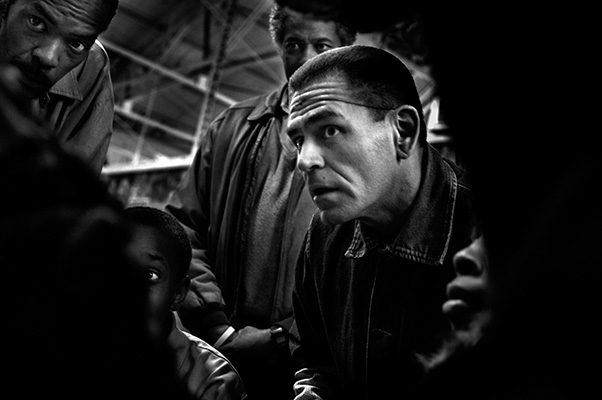
Vernell gave me access to the museum and invited me to tour the prison. He was the only staff member at San Quentin I had any meaningful interaction with, but he played out his multiple roles with aplomb. Vernell was a personal guide and shopkeeper at the museum, historian on the prison-yard, eye witness in the gas chamber, and state department mouthpiece throughout. The first 250 words of my M.A. thesis relied on Vernell as the segue into the issues at, and description of, both the museum and the prison;
Lieutenant Crittendon has thrived as the public relations officer of San Quentin Prison. He is poised, gregarious, proud of office and a great raconteur. His enthusiasm for facts, years and tales of San Quentin blur the man and employee – if a distinction was necessary – and he confesses a long-standing predilection for history.
Vernell is familiar and distant simultaneously. He can always dictate the terms of an exchange but in so doing somehow doesn’t insult his company. Tad Friend, for the New Yorker, expertly summarized how Vernell navigates discussion and parries unwelcome inquiries;
Vernell excels at dispensing just enough information to satisfy reporters, and his sonorous locutions and forbearing gravity discourage further inquiry.
I found myself comforted (never duped) by Vernell’s version of events even when I didn’t believe his words 100%. I always felt that Vernell had said much more by what he excluded and it was my privilege to have witnessed his reticence.

Tad Friend’s economical ten page summary of Lt. Crittendon’s career is, in my opinion, the best reflection of a complex man with shrouded emotions and conflicting duties you are likely to find. What then of Padilla’s task to illustrate the man and the article? She does a fine job. From the evidence of the images on her website (only one of which was used for the article) she had only one window of opportunity on one day to capture her shots. I suspect she shadowed Vernell’s work for a little over an hour for the assignment. Already the odds were stacked against Padilla. We cannot know how well she and Vernell were acquainted beforehand, but prior acquaintance doesn’t necessarily mean an easier time capturing the most faithfully depicting portrait. It is fair to say, however, if Padilla had worked within the walls at San Quentin prison before (which is likely) she certainly knew Vernell. Furthermore, in the interests of another’s professional duties, Vernell was always accommodating.
Judging from the few clues in her principled, varied and continuing series AIDS in Prison, the image below could be from San Quentin. These background hills, however, could as easily be Vacaville or Tracy’s surrounding topography.
Back to San Quentin. Padilla’s San Quentin series captures the solitude of the yard; Vernell is alone in many images. During the days at many prisons the yards are empty. If they are not empty they are more likely being used as necessary routes for groups of traversing prisoners rather than ‘free’ time. When the prisoners are at recreation in the yard (a privilege that differs facility to facility), the staff is at distance unless addressing particular inmate inquiries or directing a group of inmates to their next secure location. Any visitors in the yard at this time (which I have been in San Quentin) are usually following closely the instructions of the guards. Regardless of reasons for being in San Quentin, the slowness of movement from one area to another is characteristic of all people’s experiences. Keys, locks, keys, calls, response, keys, locks, keys.
It is likely Vernell had to hunt out some activity involving inmates to vary the picture content. There is a chronic lack of rehabilitative and counseling programs throughout the stretched CDCR, but in reality, if there is one prison that is trying to counter this trend, it is San Quentin by means of its atypically large pool of Bay Area volunteers, the committed efforts of the Prison University Project (San Quentin is the only state prison that offers a college degree program) and not least the efforts of Vernell himself, “Crittendon helped oversee inmate self-help programs like No More Tears and the Vietnam Veterans Group, and was an adviser to many others. Every other Friday, as the centerpiece of a program called Real Choices, which tries to set wayward urban kids on responsible paths, [Vernell] would escort a group of ten-to-eighteen-year-olds into the prison to meet lifers, who tried to talk some sense into them.”

When Vernell is not photographed alone on the yard (look at the reflection of only him and Padilla in the fish eye mirror) he is taking a back stage to the activities of others. Vernell would not want to interfere in these rare interactions between prisoners and visitors from the outside. Vernell’s approach was typical of a San Quentin staff member; constant observation, constant vigilance and a silent restraint. I rationalized that this was simply a sensible approach – minimize ones own noise and be best positioned to pick up on the small signals/noises around. Words and gesture is used with strict efficiency at San Quentin.
Vernell’s open hand gestures, lumbering gait, deliberate pauses and dramatic referrals to the contents of his satchel are all part of an ensemble he has developed to impose the pace of an interaction and, I believe, to reassure the inmate. He promoted from the ranks of prison guard a long time ago, and so had the benefit of a different type of relationship with the prisoners. He was no longer the enforcer – in truth, he was often the only chance a prisoner had to negotiate a desired variation from system norms. Vernell never did favours per se but he could always see any request, however small, on its own merits. Now he is retired. His formal San Quentin spokesman duties went to his successor Eric Messick. Vernell self-adopted responsibilities were diluted by other staff and may have disappeared altogether. Padilla’s photographs do well to reflect a man carrying out his most unextraordinary job tasks. I think Vernell may be happy that the world has a few images of him to counter those charged press images of him outside the East-gate on the night of an execution.


 Prison Photography