
You are currently browsing petebrook’s articles.

Everybody in Portland knows about the recent closure of Newspace Center for Photography. Those beyond the city might not, but they can imagine the damage to the photo community when one of the last accessible darkrooms for film shuttered almost overnight. A hole was left.
I was very fond of Newspace. I’m not a photographer so never used its darkroom facilities but its active lecture series and artist-in-residence program brought many great practitioners to town. It was also the final venue for Prison Obscura in Spring 2016. (Installation shots). I’ve fond memories of the staff, support, volunteers, openings and exhibitions at Newspace. A hole was left.
There’s a larger backstory to the saga, some raw emotions and accusations that better board planning could’ve averted the disaster. But instead of focusing on ‘What if’ or ‘What might have been’ a core group of photo-geeks sunk their efforts, cash and hope into creating a replacement. They showed up at Newspace’s fire-sale of equipment, snagged as much as they could and loaded it onto a flotilla of trucks. They’ve built out a brand spanking new darkroom and are ready for business. Introducing The Portland Darkroom.

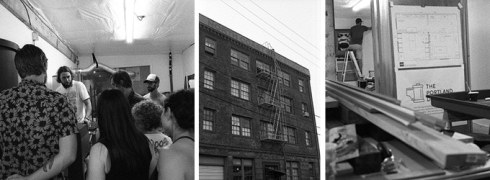
The Portland Darkroom wants to keep film photography alive and accessible. Rose City needs this resource. They’ve launched a Kickstarter campaign to help fund the first year of operations and get them off to a running start.
I can’t wait to get in the space and meet the photo-peeps who’ve made this happen. Who knows, maybe I’ll resurrect the Eye On PDX series I did with Blake Andrews 2012-2014 to celebrate, and ask questions of, our local image-makers?
Head over to The Portland Darkroom website and sign up for updates. Place some money in the pot. Go on! In return for your support, there’s prints, workshops, stickers, postcards and oodles of thanks from the founders. Head over to The Portland Darkroom Kickstarter page and check out the perks.


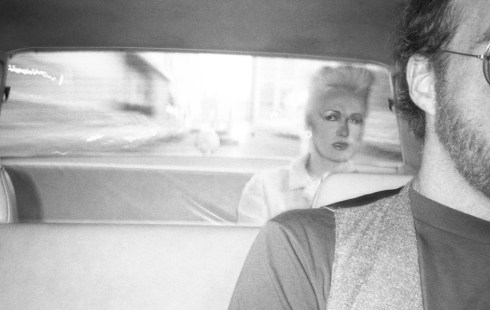
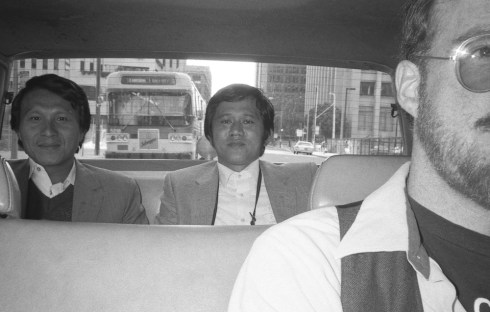
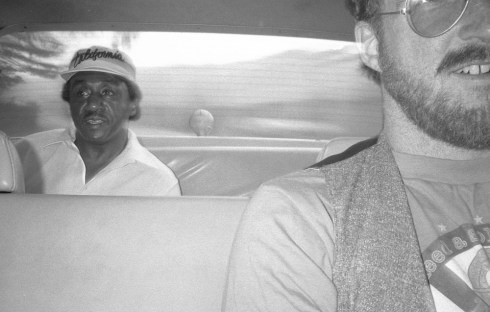
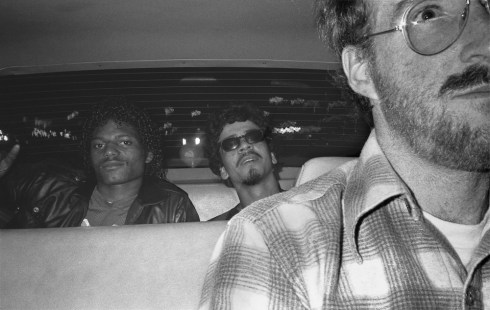
I learnt about Bill Washburn‘s series Taxi years ago (on a recommendation from Blake Andrews). The pictures stuck with me, especially during a recent two-year stint living in San Francisco. Now I’m back in Portland and Bill Washburn is my neighbour and I’m so happy to have been able to write about Taxi for Timeline: These vivid 1980s photos show gritty San Francisco cab life in the days before Uber.
“As a taxi driver, I had a very privileged viewpoint,” says Washburn who drove a cab between 1982 and 1986 to supplement his income during art school. “It was an opportunity to get to know San Francisco intensely. It was a dynamic city, I worked it all, not just downtown.”
Washburn’s unorthodox portraits are strange nostalgic triggers for a city we may not have known then but know now, through daily headlines, of a city drastically changed by decades of housing market spikes, mass displacement and gentrification. There’s loss as well as discovery in these photos.
I asked Kelly Dessaint, cab-driver, San Francisco Examiner columnist and author of I Drive SF, what he thought of Washburn’s images.
“It’s always a mystery who’s going to climb in the back of your taxi,” says Dessaint. “The uncertainty of where a ride will take you can be exhilarating and terrifying. Sometimes simultaneously. These photos really capture the randomness of taxi driving, as well as the awkward intimacy that comes from sharing an enclosed space with a stranger for a prolonged period of time.”
Dessaint, who drove for both Uber and Lyft before signing up with City Cabs, laments the loss of spontaneity and unpredictability brought on by ridesharing
“With app-based transportation,” he explains, “the pick up and drop off points, along with the route, are recorded. You know the passenger’s name before they get in the car. They know yours. It’s not a random encounter like when someone flags you on the street. And with the rating system, the passenger is always in control. Drivers know that if they step out of line, they can easily get deactivated. Which limits spontaneity and creates a passive experience for the driver. As a taxi driver, you’re always in control.”
The power of these photos may lie in the fact that they show conversation not merely transaction; that they depict a time before profiles, stars and likes. For Washburn, now in his seventies, the differences and decisions are obvious.
“I’ll never take an Uber or a Lyft. I’d feel like a traitor,” says Washburn.
See more and read more here.



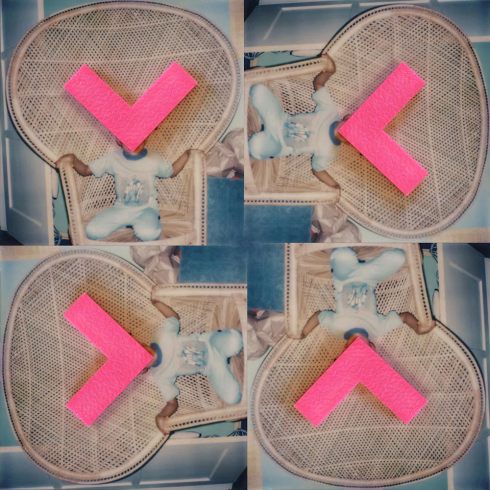
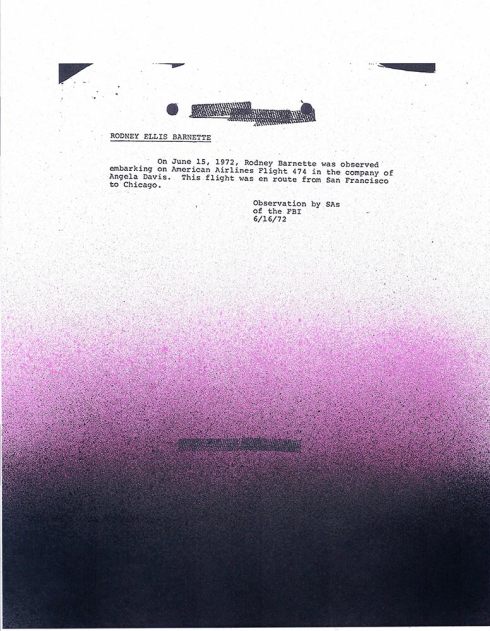
Sadie Barnette‘s exhibition Dear 1968 is an exploration of family and political history. Barnette uses sketches, family photos and selections from the 500-page FBI file on her father, Rodney Barnette, member of the Black Panther Party. Dear 1968 is an extension and reworking of her earlier show Do Not Destroy which focused exclusively on the COINTELPRO surveillance of her father Ronald over a ten year period.

“Barnette’s family story is not theirs alone,” says the press release. “Examining the fraught relationship between the personal and the political, the everyday and the otherworldly, the past and the present, she reveals that the injustices of 1968 have not yet been relegated to the pages of history, but live on in new forms today.”
Good stuff.
If you’re in or near Philly, catch the mainline out to Haverford and catch the show at the Cantor Fitzgerald Gallery at Haverford College.
Dear 1968 is in conjunction with the symposium “The Black Extra/ordinary,” which will be held on October 6th/7th at Haverford College, exploring the poles of black representation in historical archives, social media, fine arts, and other arenas.
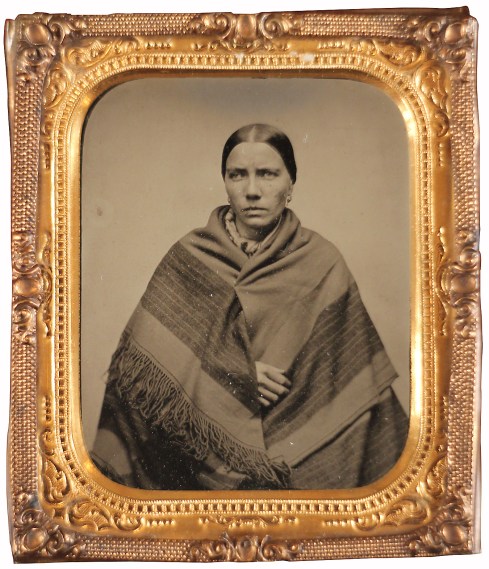
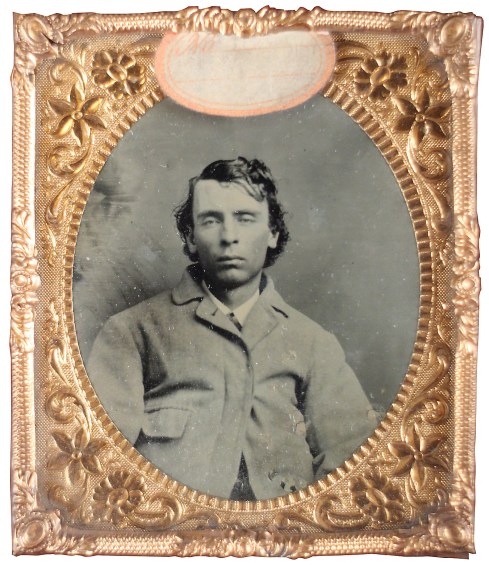
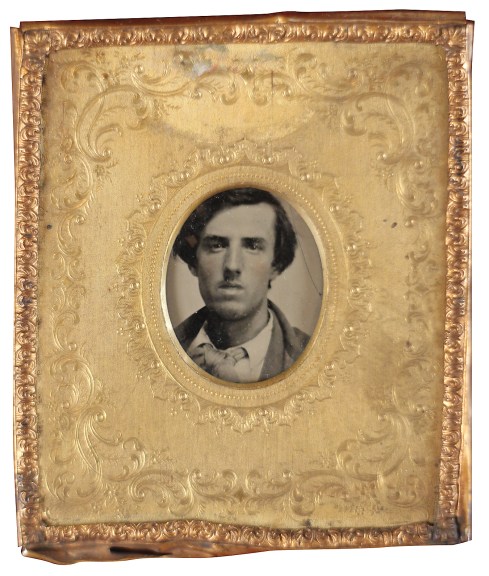
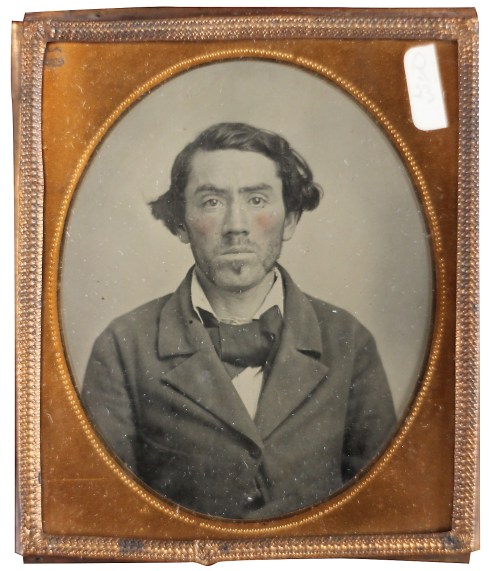
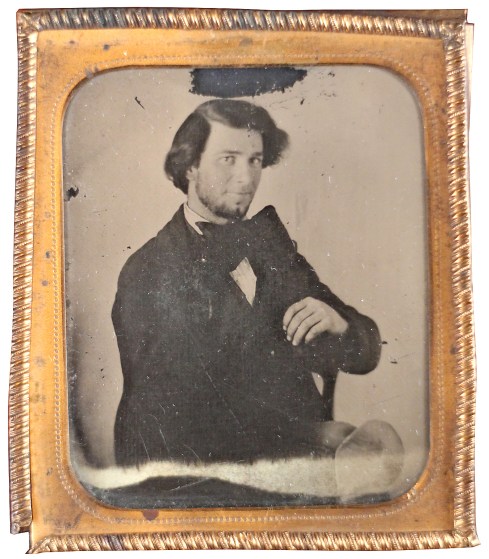
For my first piece for Timeline, I put a spotlight on a collection of mugshots, rediscovered and researched by artist Shayne Davidson. This adds to a her research of hundreds of antique mugshots depicting shoplifters, grifters, counterfeiters, “a wife murderer”, pickpockets and many more.
Made by the St. Louis Police Department between 1857 and 1867, the archive, held at the Missouri History Museum, comprises the oldest extant examples of mugshots in the U.S. Davidson has compiled many of the portraits into a new e-book Captured and Exposed (More).
Quote:
It’s hard to imagine U.S. law enforcement today without its wealth of tracking and surveillance technologies. From facial recognition to the databases being populated with drivers’ license photos of non-criminal citizens, from police scanners tracking all mobile devices in a five-block radius to lampposts that are listening in, federal investigators and police departments nationwide have never had more tools to capture images, scrape data, and monitor movements of people.
But these “smart” technologies (and the laws that allow their use) have developed only relatively recently, and incrementally. It’s not always been so sophisticated. A hundred and fifty years ago, shortly after the invention of photography, some police departments began making images of convicted criminals.
Read the full piece and see more portraits: America’s Oldest Mugshots Show the Naked Faces of the Downtrodden, Criminal and Marginalized




“I would like to receive a photo of the new world trade centre buildings, in whatever stage of rebuilding they’re in. A nice view from a nearby building would be nice. Could the photographer take the photograph from a nearby rooftop?” Terrence’s request answered by Anthony Tafuro for Photo Requests From Solitary.
–
Author’s note: A little under two years ago, I was quite rattled by a new contribution to the ongoing Photo Requests From Solitary project. At the time, I thrashed out some ideas with colleague Gemma-Rose Turnbull, wrote a pointed response, and then let the essay vanish. I return to it here.
Photo Requests From Solitary (PRFS) is a collaborative project that uses art to illuminate the issue of long-term confinement in U.S. prisons. I’m a fan, but I felt that the 2015 collaboration between PRFS and Vice Magazine missed the mark. Since 2015, PRFS has fallen under the stewardship of Jeanine Oleson who has worked on its expansion in New York and California, partly during an artist residency at UCLA’s Hammer Museum. In May 2017, a new round of images made in response to requests from men and women in New York’s state prisons was exhibited at the Legislative Office Building in Albany, NY.
As far as I can tell, the 2015 Vice partnership and article and gallery (the focus of this essay) was the first, last and only time PRFS assigned the creation of images directly through a media outlet. I feel my arguments apply as well now as two years ago (not a lot of new PRFS material has been released). I wanted to tidy up my original essay and tweak it to reflect the moment now in mid-2017. I think the key inquiries below will always be critical to the assessment of the relevance and impact of Photo Requests From Solitary.
— Pete Brook, 10th July, 2017
DOES THE IMAGE MEET THE BRIEF?
Photo Requests From Solitary is one of the most imaginative, expansive and effective political art initiatives of recent decades. Launched in 2009, Photo Requests From Solitary (PRFS) was one project of many pursued by the grassroots activists Tamms Year Ten (TYT) in the campaign for the closure of the notorious Tamms Correctional Facility, Illinois; a facility purpose-built to house prisoners in extreme isolation.
The core concept of PRFS is disarmingly simple. TYT sent forms to men in solitary in Tamms. The form explained that they would make an image—real or imagined—for the prisoner to have in his cell. A prisoner could, in writing, describe an image, offer specific instructions, and return the form. TYT would then coordinate with outside artists to make each image and send a copy to the prisoner.
Founded in 2008, TYT employed multiple tactics to mobilize diverse constituents in the fight to abolish solitary confinement. I’ve followed TYT and PRFS since late 2011 when I met some of the organizing activists in Chicago. One of the impressive things about PRFS was that it was able to move adeptly between artistic and political spaces and it convincingly occupied both; its message and art moved to where it’d have most effect. As far as I know, PRFS collaboration with Vice Magazine’s “Prison Issue” (October 2015) was the first time images were made by a publication’s staffers and freelancers for the project.
When I heard about the partnership, I was curious, a little skeptical (I’ll admit) but mostly I was excited to see PRFS’s latest iteration.
Although PRFS was only one of TYT’s initiatives, it cannot be overstated how important PRFS was to the success of the group’s work. PRFS served both the needs of the men languishing in solitary confinement AND the needs of a public kept largely in the dark about the brutal conditions at Tamms Supermax. It provided an essential, constant and intriguing visual hook to TYT’s efforts; it kept the fight in the limelight. PRFS galvanized activists, forged solidarity with prisoners and kept the issue at the forefront of the public conscience. This three-birds-with-one-stone efficiency is the effectiveness to which socially engaged art projects aspire.
TYT worked closely with then-Governor Pat Quinn who, in 2012, proposed closing the facility. Tamms was shuttered in January 2013. (It needs to be noted that people in Illinois remain in solitary confinement in other wings of other facilities, but no longer is a facility designed solely for extreme sensory deprivation in operation in the Land Of Lincoln.)
That success did not spell obsolesce for PRFS, nor it’s radical methodology. People remained in solitary confinement in states across the U.S. In 2013, Tamms Year Ten partnered with Solitary Watch, National Religious Campaign Against Torture, Parsons The New School, and the artist Jeanine Oleson to expand the project into New York and California. In September of 2013, with support from the Magnum Foundation and the Open Society Documentary Photography Project, Photo Requests From Solitary went on public view at Photoville in New York City.
Also in 2013, one of the founding artists of TYT, Laurie Jo Reynolds was awarded the Creative Time Leonore Annenberg Prize for Art and Social Change, and in 2014 Reynolds received an A Blade of Grass Fellowship for Socially Engaged Art. A new genre—Legislative Art—was defined so as to describe the artworks of TYT and those of the same ilk. Legislative Art involves unglamorous admin, spreadsheets and letter-writing as much as it does poetry, poster-making and marching. Legislative Art strategically and creatively engages with government systems, with the intent to secure concrete political change. For those who had always wondered if art could change society, TYT seemed to provide an answer. Ask the 200 men moved out of extreme isolation. Art had changed their worlds.
All this is to say, TYT and PRFS are worth constant applause. They are also worth constant attention. We should analyze closely what PRFS puts out because due to the collaborative and decentralized nature of the project, contributions and results will vary considerably. Crucial to the ongoing success of PRFS is care surrounding its core principles. All this to say, it is right to judge when and how contributing artists meet the prisoners’ requests.
In a closed call, Vice photo editor Elizabeth Renstrom invited photographers who work regularly for Vice to contribute — including Jason Altaan, Edward Cushenberry, Fryd Frydendahl, Michael Marcelle, Keisha Scarville, Molly Soda, Anthony Tafuro, Ole Tillmann, and Vice photo-editor-at-large Matt Leifheit.
“I hired a blend of new and old contributors that I felt would best carry out their assigned letters for the inmates. I did this to make sure specific requests were sure to be completed,” says Renstrom, who was largely responsible for all the photography in the 2015 Vice Prison Issue.
I think some contributors succeeded. I think some failed. I think a couple failed spectacularly. For the simple reason that they did not meet the specifics of the requests, Jason Altaan and Fryd Frydendahl failed.
Frydendahl was asked, by Sonny, to provide an image of “a woman with a smile that shines as bright as the sun. Not a model type but an ordinary woman who, perhaps, enjoys every moment of her life. Who is not biased or judgmental towards anyone but full of love and compassion for everyone and everything.”
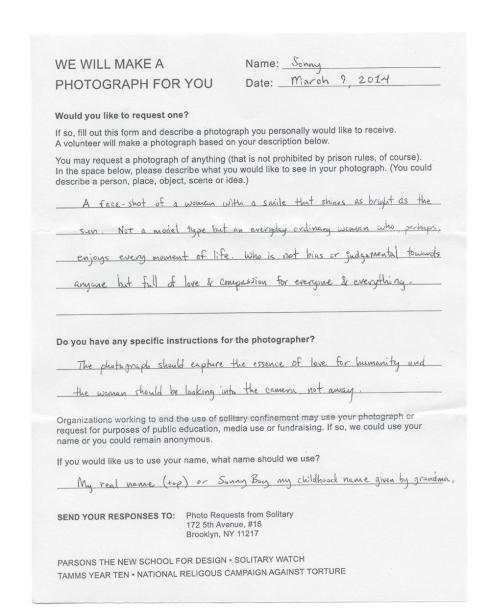

“A face-shot of a woman with a smile that shines as bright as the sun. Not a model type but an ordinary woman who, perhaps, enjoys every moment of her life. Who is not biased or judgmental towards anyone but full of love and compassion for everyone & everything.” Sonny’s request answered by Fryd Frydendahl for Photo Requests From Solitary.
Judge for yourselves, but I don’t think the girl flashes a smile, nor does it “shine as bright as the sun”. The only warmth to be found in this image is that inferred by the yellow haze of the filter. I wonder what Sonny thinks?
Altaan’s case is less cut and dry. In a literal sense, he did photograph “a female in black leather pants w/ the same material stitches but a different color like hot pink all which can define her figures [sic] w/ a setting of orange and blue in the sky posted up next to a Benz (powered blue) in a park. Black female with hazel eyes.” But it’s clear that Altaan was unable to divest of his trademark 80s, glamor sneer and style.
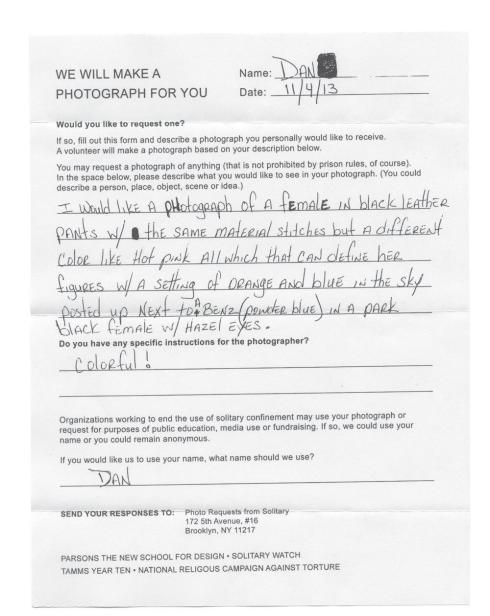

“I would like a female in black leather pants w/ the same material stitches but a different color like hot pink all which can define her figures w/ a setting of orange and blue in the sky posted up next to a Benz (powder blue) in a park. Black female w/ hazel eyes.” Dan’s request answered by Jason Altaan, for Photo Requests From Solitary.
Even temporarily, Altann could not put down his soft-focus cynicism. As with his other portraiture, Altaan has managed to match his disdain for fashion-shoot-charade with his clear infatuation with the playfulness of said charade. The skill of Altaan’s work lies in paying homage to the palette and poses of yesteryear’s beauty while simultaneously mocking the consumption, then and now, of versions of beauty. I think Altaan’s work is smart. That he is able to mock the industry as he climbs its rungs deserves applause but I just don’t think his signature look was what Dan had in mind.
“Our hope is that some of the [magazine] issue’s visuals, generated by and for inmates, offer a better understanding of the vagaries of the confined,” writes Renstrom introducing the Vice feature. All well and good, but only if we can conclude that the contributor’s image tallies with the prisoner’s intent. It’s possible that the Prison Issue’s visuals might derail understanding too. Assessing the level of understanding among audience is a difficult task but we can look closely at the images and ask if they appear to serve the prisoner or if they appear to serve the photographer.
Before I go any further, I want to make clear that I’m not interested in the cheap-and-easy dismissals of Vice we see so often. This article is not of that nature. Vice draws plenty of ire for its tone but, as I have said before, Vice looks to be shedding the snark of its fledgling years.
Regarding the Prison Issue generally: I am a fan. I was grateful to see Zora Murff’s Corrections featured because the growing use of electronic monitoring is a relatively ignored issue in criminal justice debates. I was equally pleased to see Renstrom’s interview with Mark Strandquist about his numerous projects that nurture more sympathetic views of people involved in the prison system. Indeed, Renstrom told me she actively tried to get away from images made by outsiders to the issue. She succeeded for the most part.
On the success of individual images: I admit, it’s difficult to argue with any degree of certainty that the creative output of an artist does or doesn’t meet the visual imagination of a prisoner. Especially, when the medium between them is a hundred-or-so words, a few hundred miles, and all sorts of demographic distinctions. In the cases of Altaan and Frydendahl, however, I think I can structure an argument because their images appear to be closer to their existing artistic signatures than they are to the words of Dan and Sonny.
Friend and colleague Gemma-Rose Turnbull agrees. A specialist in socially engaged methodologies, Turnbull is currently writing a PhD on co-authorship models in documentary photographic practice.
“What I think has happened here is that the artists have not always connected to the fact that the prisoner is the primary audience,” says Turnbull.
She’s right. Photo Requests From Solitary is about process as much as it is about product. PRFS prioritizes prisoners’ visual escape and the process toward realizing their escape means ego, rules and wider expectations must be actively set aside. Easy to say; not always easy to do. Artists pride themselves on individual act and independent vision. Yet, for PRFS, artists operate, effectively, as functionaries. Artists serve the prisoners and serve the politics of the project. What we have to understand is that PRFS is a communication project, not a photography project.
“Images, here,” says Turnbull, “are supposed to help prisoners transcend solitary. Help them feel like they are being heard.”
PRFS is necessarily complex in structure because it attempts to connect people who have been forcefully disconnected by institutions and discriminations. In the absence of common shared media, PRFS builds images out of, and around, the issue of solitary confinement from which we discern our social responsibility and agency. PRFS uses imagery—as a seemingly innocuous thing—so that we might rally around it. Knowing the power of images, though, we realize that this project has been anything but innocuous. It changed political course in Illinois. Described in these terms, PRFS is owned by us all. The longer PRFS exists and the wider it reaches the more shared its possession. In these terms, the insistent artist signatures of Altaan and Frydendahl are out of place.
Of course, sometimes, the artist can just miss the point entirely. Terrence asked for a photo of the new buildings replacing the World Trade Center, shot from a nearby rooftop. Instead, Anthony Tafuro made a picture of the 9/11 Memorial Pool (top image).
In the plus column, Keisha Scarville and Edward Cushenberry met their requests well, I thought.


An African American family at a Thanksgiving/Christmas Dinner, background of kids graduation, sweet sixteens, grandchildren being born, family reunion, birthdays, funerals, church attendance, aspects of a family tree. Grandparents, mother, father and sons and daughters, cousins, wives and husbands. To show/express the unity and growth of family when times are good and bad. I MISS MY FAMILY, BEING THERE FOR THEM. Keith’s request answered by Keisha Scarville, for Photo Requests From Solitary.
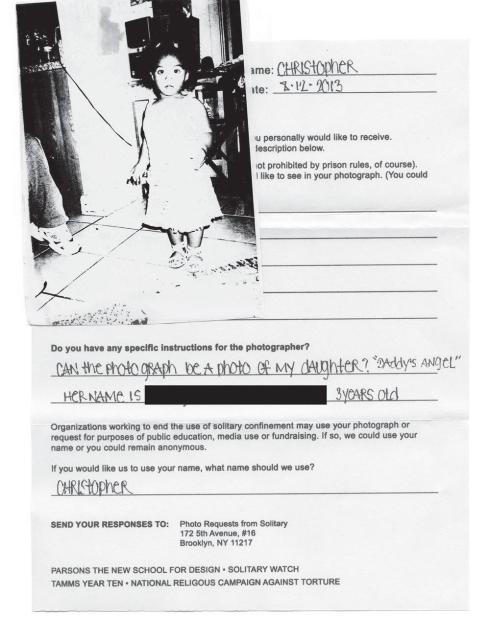
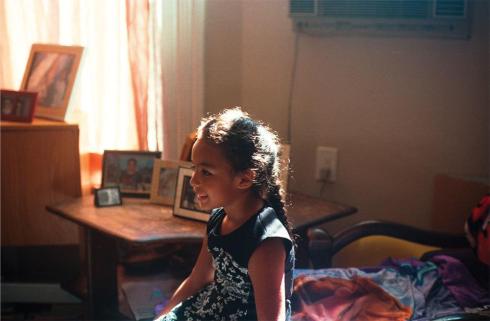
“Can the photograph be of my daughter ‘Daddy’s Angel’? Her name is ________ 3 years old.” Christopher’s request answered by Edward Cushenberry for Photo Requests From Solitary.
I’m not singling out Altaan and Frydendahl so we can all just wag our fingers. I’d like this critique to be instructive. As PRFS moves onward to California, New York and potentially other states, it will not be under the guidance of one hand. Each participant is responsible for understanding the premium placed on service that is core to PRFS. Tamms Year Ten fought against a single facility, but CA and NY have dozens of secure housing units between them. PRFS must maintain prisoners as its primary audience. Those outside prison walls are the secondary audience. Don’t forget that.
“The pictures offer a new way to think about people in isolation,” writes Renstrom. She is correct.
“We don’t see,” Renstrom continues, “what prisoners see, but what they envision. Taken together, these requests provide an archive of the hopes, interests, and memories of people in the hole.”
Think of that for a moment. It is a huge responsibility for a loose cadre of artists to collectively paint the imaginations of hundreds of prisoners. The VICE feature was picked up by The Daily Mail (a right-leaning UK newspaper with a massive online footprint) and featured by an Illinois NPR affiliate. We can presume that each time PRFS puts out new images, they’ll circulate … and they’ll speak, to some degree, for prisoners. It’s an uncomfortable responsibility for a loose cadre of artists to collectively speak for hundreds of prisoners. Uncomfortable because no set of images can stand in for the experiences and thoughts of millions of Americans passing through locked facilities each year. Uncomfortable because we know images are slippery and we know the stakes are high for incarcerated individuals, their families and for anti-prison movements. Uncomfortable because inherent to the method of PRFS is the surrender of decision-making power to the artist and, frankly, we don’t want the artists to fuck up. We like artists and we like the resistance.
To be fair to the Vice contributors, their first introduction to PRFS probably differed to most before them. Renstrom emailed Vice contributors 2 or 3 weeks before the Prison Issue went to print. That email may have been the first time they had heard of the project? By comparison, in Illinois, there was a longer familiarity with the project; word-of-mouth and IRL interactions brought most contributors to the table. Some of those that conceived of the PRFS project made images too. Furthermore, publication of their images was implicit in Vice’s ask, so this may have appeared, and felt, like a standard assignment from a national publication. Altaan, Frydendahl and co. can be forgiven for not realizing that Vice readership is the secondary audience.
Despite my call to criticism here, I don’t want to discourage future collaborations between publications and the PRFS coalition of Parsons, Solitary Watch and TYT. As much as ever before, we need both PRFS’s empowering engagement across prison walls and we need alternative visual reference points for our understanding of the prison industrial complex.
“It’s really important to highlight and promote art activism so people aren’t constantly seeing the same type of photography surrounding prisoners,” says Renstrom. Hear, hear. It is precisely because I’m a huge fan of the open dialogue, the beautiful complications, the equity, and the shared responsibility that are central to PRFS’s methodology that I pay the project such close attention. PRFS cannot become a schtick. It cannot become cultural fodder. PRFS must remain rooted to its co-authorship intent. The photographers have to know they’re making work for the prisoner first, the rest of us second.
“The litmus test must be: Does the image meet the brief?” challenges Turnbull.
Sounds so simple, doesn’t it? Hopefully not so simple as to forget.

KNIVES, BY JASON KOXVOLD
In 2004, the Schrade Knife factory in Ellenville, NY closed its doors for the last time. Operations were moved to China and, almost overnight, 500 locals lost their jobs. Suppliers and services in the area lost business too and the towns of Ellenville, Napanoch and Wawarsing where photographer Jason Koxvold lives have had to adapt to avoid massive economic injury. In 2015, Koxvold began documenting his hometown and its residents. Since the closures of factories in this pocket of the Hudson Valley, Eastern Correctional Facility in Napanoch is the biggest employer in the town.
The project Knives, says Koxvold, “serves as a microcosm of the larger issues facing the United States, grappling with the effects of automation and outsourcing, cuts in services, and the rise of identity politics.”
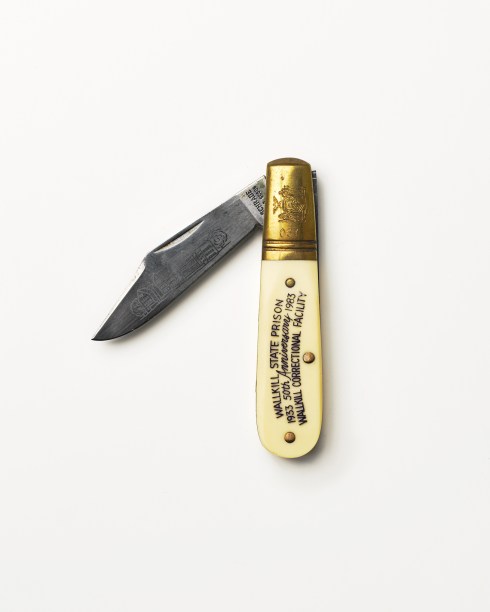
It includes portraits of prisoners, employees and former prison officers. The motif of the knife functions as a literal description of a disappeared economy and identity marker for the people of Wawarsing, but it also acts as a metaphor to the silent violence of both globalisation and incarceration. Whereas a gun mows people down in a hail of bullets, a knife cuts through and guts with a quiet, single swift action. The damage can be deep, precise. An unspectacular assault that is so often lethal.
I admire the way Koxvold has gone about peeling back the layers of his home-region. He managed to gain access into the local prison photographing prisoners. Without trying, he found many locals who had worked in the prison. He often picked up visual threads that ended up looping back to the fact of incarceration.
Koxvold is currently crowdfunding monies for the photobook Knives. We chatted about how the prison industrial complex manifests itself in his work, how it functions in the community and how exactly he got inside.

Q & A
Prison Photography (PP): Do prisons work?
Jason Koxvold (JK): As a Norwegian citizen, my answer would be yes. As a permanent resident of the United States, my answer is not as well as they should.
With that said, during the making of this project I’ve become aware of the work of the Bard Prison Initiative, and programs like that are to be applauded; but in general in this country, it’s my understanding that prisons are seen as a punishment more than an opportunity to rehabilitate. That approach is unsustainable.
PP: You’re crowdfunding to raise money for Knives book. There’s no mention of the prison in the Kickstarter video but you’ve explained to me that the prison is “woven more deeply through the work than uncaptioned photographs might suggest.” Can you flesh that out a bit?
JK: Because the prison has been a feature of the town for so long, and there weren’t many other opportunities for employment in the region, it turned out that some of the men I photographed for this project had worked as prison guards for large portions of their lives.
Specifically, one of the characters had worked in a prison for 25 years, and possessed a wealth of knowledge about the place. His is the knife with “JUSTICE” engraved into the blade, which seems perverse in some regard; he’s written comments on internet forums defending the use of the phrase “Nigger Chaser” in the name of a knife. So this history of the application of violence is etched deeply into the soul of the town, even as it now finds itself emasculated and adrift.

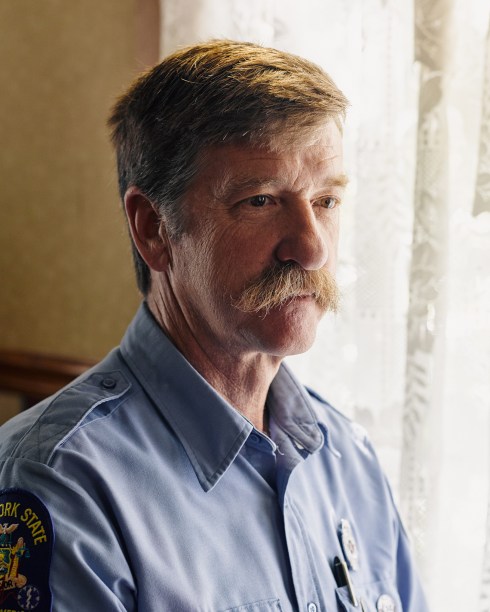
PP: At what point did Eastern Correctional Facility in Napanoch become a subject in Knives?
JK: Fairly early on in my research it became clear that it would be impossible to ignore it.
PP: Why is the prison was important?
JK: The prison looms over the town in some way; it’s an imposing, gothic style building that can be clearly seen from all approaches, despite being a secretive location. At first – not knowing much about the penal system here – I was under the impression that the prison housed inmates from the region, and assumed that would include some former Schrade employees, but primarily they are from New York City. That also changes the makeup of the town to some degree, as spouses and families move to the area to make visitation less onerous.

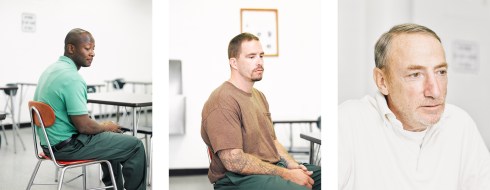
PP: What did you do to depict the prison?
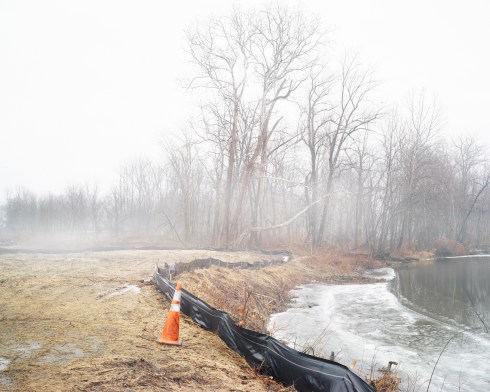
JK: I made portraits of three men inside the prison, and some exteriors of how the prison relates to the landscape and the town around it.
PP: What did you do to connect (or not) with those incarcerated and working there?
JK: My initial outreach was to the NYS Department of Corrections public affairs office, to explain my project and what I hoped to achieve. I wrote letters to a group of inmates, outlining my idea and asking if they would like to participate.

PP: You say Knives raises more questions than answers. I like it when you say you’re interested in ambition, failure, hubris. But still, it seems like the failure for us to imagine a different but improving future leads people to think that jobs might come back, and I think that accounts for Trump’s appeal in the Rust Belt. Whether he could spark an impossible resurgence or not, matters less than the fact he promises he will. As best as you can estimate, what is the future for Wawarsing?
JK: The town is working to turn things around; tourism, which was a huge business in the Catskill region in the middle of the 20th century, is what people are pinning their hopes on, and the area has seen considerable growth in that regard in recent years. There’s a great theatre, Shadowland Stages, that produces several plays a year. For some time there was talk of a new casino, but ultimately another town won the bid. In place of that, there’s now a multimillion dollar sports complex in the works.

PP: What difficulties or successes did you encounter while pursuing a narrative about Eastern Correctional Facility?
JK: My original intent included making portraits of prison guards and interiors of the prison, specifically with the intent of drawing contextual lines between this secure, sanitized inner environment and the world outside, but I was limited to the visiting area and employees were off-limits.
Even determining who was currently incarcerated at Eastern was challenging; I had to file a Freedom Of Information Act (FOIA) request, which operates under an archaic system. After some correspondence, I scheduled visits to make portraits of three inmates, not knowing what they would look like or what to expect; they were very patient and generous with their time.

JK: Interestingly, photographing the exterior of the prison was more challenging than getting inside. I tend to be quite specific about weather for my exteriors, but DOCS doesn’t necessarily have the infrastructure for rapid approvals of media visits, and certain areas that I strongly wanted to photograph were absolutely off limits.
PP: What are local attitudes toward the prison?
JK: My sense is that there’s a grudging acceptance of it. People probably wish it was elsewhere, but at the same time it provides jobs for the town.
PP: You grew up in Britain. Do you see the U.S. in a particularly different way?
JK: I grew up around Windsor and Egham, but I’ve spent the whole of my adult life in the United States. I formally arrived a few months before 9/11, and unfortunately, I think that terrible event achieved its goal. 15 years of war – which is the subject of my other major project, currently in progress – has changed the country radically for the worse, in my opinion.
PP: What next for the work?
JK: My intent is to have the book ready to go to press quite rapidly after the Kickstarter is complete; it will include some new images that haven’t been shared before; and some of the work will be shown at the Davis Orton Gallery in June and July.
PP: Good luck, Jason. Thanks for chatting.
JK: Thank you.
BIO
Jason Koxvold (b. 1977) is a fine art photographer based between Brooklyn and Upstate New York. Follow his activities through his website, Instagram, Twitter and Vimeo.
Support the Kickstarter for the Knives photobook.

Mesro Coles-El, Indian Pow Wow — 6.12.76, 2013. Courtesy of Nigel Poor and the San Quentin Prison Archive Project
–
Next week, I’ll be in Bristol with Gemma-Rose Turnbull leading the discussion Photography As A Social Practice. Together we’ll look at socially engaged art production of contemporary photographers including Phoebe Davis, Nigel Poor and the San Quentin Archive Project (above), Mark Strandquist, Anthony Luvera and others.
Thanks to IC Visual Lab for inviting us down and to Arnolfini for hosting. Gemma is pro: she’s currently co-authoring a pioneering Masters program in Photography with a focus on collaborative practice at Coventry University. We both appreciate image-makers who surrender some control in the image-making process over to others in order to discover new relationships, possibilities, empowerments and photographs. For the talk, Gemma will focus on standout projects that have successfully applied participatory design. Then I will look at the handful of projects that have attempted the same while dealing with the issue of mass incarceration.
As we say in the blurb:
“Socially engaged photographers deal with questions around justice and representation, thereby often discussing practical and historic conventions of photography. Striving to stimulate political and social change, practitioners often document recent societal happenings with compassionate observation.”
We think it’s important territory to tread.
Gemma, I and five others are the PaaSP (Photography As A Social Practice) collective, a loose group that seeks space for discussions on contemporary photography, addressing topics such as ethics and power dynamics. We like to champion practitioners who are good people, good stewards and good image-makers.
In or near Bristol?
7pm. Thursday 18th May 2017
£6/4 CONCESSIONS. Free to ICVL Members
Dark Studio, 2nd floor, Arnolfini

Homeland Security Secretary John Kelly announces the opening of the Victims of Immigration Crime Engagement office on Wednesday. Susan Walsh/AP
–
I haven’t the time to flag every callous and legally-questionable move made by the Trump administration (no-one has) but the establishment of the cynically-titled Victims of Immigration Crime Engagement (VOICE) office stands out as a deplorable act of race-baiting, even by Donald’s standards.
The office, which states its purpose as that to assist victims of crimes committed by immigrants, is a in fact a vehicle for Trump’s continued propaganda against immigrants.
Victims of all crimes need assistance. Given that there are fewer victims of crimes by undocumented persons than there are victims of crimes by citizens–because immigrants (documented and undocumented) commit crimes at a lower rate than citizens–VOICE doesn’t even make sense; it pours resources toward a small subset of post-crime law enforcement response.
Trump is demonising immigrants, casting them as dangerous and a threat. This is a lie. Data shows that immigrants are less likely to commit crime, especially violent crime.
The law should function in a way to sanction against all crimes, in all places, perpetrated by any persons against any persons in the same way. Law enforcement should not be advertising, annotating and publicising crimes by a specific group. To do so is the abandonment of impartiality, the abandonment of a key function of the law. To do so is tyranny.
A response from the Immigrant Justice Network landed in my inbox this morning. I’d like to share it.
After 100 hundred days of losing in the courts, legislature, and before the global community, the Trump administration has hit a new low in its attempt to validate an indefensible platform built on racial hatred, fear-mongering, and public deception. The administration has failed to secure credible sources to support its racist claims about immigrants and crime. While the administration has had to resort to inventing lies or “alternative facts” on other issues, with today’s formal launch of the VOICE initiative by DHS, the Trump administration has hit a new low in its exploitation of human loss to serve its own narrow interests.
Operating on the same racist logic that has fuelled the country’s discriminatory policing and mass incarceration of people of colour, VOICE is a shameful propaganda vehicle whose sole aim is to promote fear, social divisions, and the myth of *immigrant criminality*. It says as much about the President’s attitudes towards immigrants as it does about his views towards everyday Americans, whom he thinks he can frighten into passive complicity.
VOICE has no place in our society. As a network that fights for the civil, human, and legal rights of all immigrants, the IJN vehemently denounces this shameful exploitation of tragedy for political advantage.
— Signed Mizue Aizeki (Immigrant Defense Project), Angie Junck (Immigrant Legal Resource Center), and Paromita Shah (National Immigration Project of the National Lawyers Guild) on behalf of the Immigrant Justice Network (IJN)

 Prison Photography