
You are currently browsing the category archive for the ‘Activist Art’ category.
Two things today. First an important debate. Second my own reflections and housekeeping.
debate
Ben Chesterton at DuckRabbit has had ongoing discussions with MSF / Medicin Sans Frontier / Doctors Without Borders for many months (years?) about the use of media and the fine line between MSF’s promotion of aid work and fair representation of the peoples they work with. Duck has opened a worthwhile debate with Pete Masters of MSF on the duckrabbitblog with regard this new MSF advertisement.
Feel free to add your comments over on Duck’s blog. I know Ben will appreciate and we should all benefit, right?
house keeping
In absolutely no way related – AND, I encourage you not to presume the fictional scene in the MSF ad as one set in Africa – I’d like to return to an image I featured on Prison Photography in December.

The image is by Tim McKulka. The caption reads: The container which serves as a detention facility as human rights and protection officers make an inspection of the capacity of police and prison service. UNMOs from Torit team site were engaged in a long range patrol to Chukudum along with various civilian sections of UNMIS in order to assess the security and social conditions of the area.
Last night, I had the great privilege of attending a YPIN World Affairs Council presentation by Tim McKulka and his partner Anyieth D’Awol about Human Rights in Sudan. There were a few thing that I took from the talk:
1. The problems in Darfur are very serious, but Darfur is not the only conflict in Sudan
2. Things are better now than they were one, two or three years ago – if you measure better by fewer deaths.
3. The predominant source of unrest in the Sudan always stems from the growth of the capital, Khartoum, at the expense of the periphery.
4. Since independence from the British in 1955, Southern Sudan has never known stable or benevolent governance (Civil wars raged from 1956 – 1975; and then from 1982 – 2005). The first war was settled with the drawing of a new boundary between North and South and newly provided autonomy. The second war began because rich reserves of oil were found within the territory of South Sudan and consequently Khartoum and the North reneged on the agreement, grasped for the wealth and resorted to aggression.
5. There exists to this day tribal conflicts in the central areas of contested lands, particularly Aybei where much of the oil reserves lie.
Needless to say the talk was humbling – Tim and Anyieth successfully gave a summary of culture and politics across the entire country, covering the last 60odd years. No small achievement!
I wanted to finally pin down some background to the image and so I asked Tim, “What is that container assemblage exactly?” His response,
It was in a place called Chukudum in southern Sudan, East Equatoria State and it shows that there is no other place to put prisoners. There are crimes being committed but there is no justice, no security; no security sector. The police don’t have guns, or cars, or transportation. They don’t have communications. So the container is what people are left to use when they have prisoners. What else can you do with them?
Tim has followed much of the peacekeeping and reconstruction work in Sudan. This has involved shadowing the training of new prison officers and the establishment of new institutions for juvenile justice. I hope to follow up on this with more involved comments from Anyieth as she, as a human rights lawyer, has far more knowledge in the area … and Tim deferred to her experience.
Here’s Tim’s portfolio Faces of Sudan.
Tim McKulka has been working as the senior photographer for the United Nations Mission in Sudan since September 2006. Prior to that, he was based in New York covering national and international news as a freelance photojournalist for Polaris Images. He graduated with a fine arts degree in photography from the School of Visual Arts in New York. His work has been featured in numerous national and international publications including The New York Times, Christian Science Monitor, Italian Vanity Fair, The Washington Post, and Time Magazine.
Anyieth D’Awol LLB, LLM is an independent researcher working in Southern Sudan. She has worked for the United Nations Mission in Sudan (UNMIS) as a Human Rights Officer. She also worked for the Joint Donor Office as a Policy Officer. Anyieth was a Senior Researcher for the Presidential Advisor on Gender and Human Rights with the Government of Southern Sudan, focusing primarily on sexual violence and human rights issues and the military. She is the founder of a civil society organization providing underprivileged women and girls opportunities for sustainable income through arts and crafts while creating opportunities for capacity development in literacy and numeracy, and providing information on HIV, gender and human rights issues.

The Sybil Brand Institute for women, Los Angeles. Photo Credit: LA County Arts http://www.lacountyarts.org/civicart/01_First_District/1_ela_s_sbi_ppdt_davis.htm
The fixations of Prison Photography on the infrastructural order of sites can as easily be applied outside of carceral space. The Center for Land Use Interpretation has terminus container ports, petrochemicalscapes, first responder training sites, landfill waste streams, pacific coastlines, nuclear proving grounds and even the Trans-Alaska pipeline covered by roving reconnaissance.
There is even a brief field report from the Angola Prison Museum, but I’ll have to come back to that.
I’d like to present the archive for the CLUI’s 2001 exhibit, On Locations: Places as Sets in the Landscape of Los Angeles.
Have you ever questioned the fabric of prison environments in TV or film? There were plenty prison (visiting room) scenes in The Wire, but I was too engrossed in episodes to pay the backdrop any mind. Well, this should get you thinking.
Filming in active prisons is generally not permitted for obvious reasons, and as a result, prison sets are built in soundstages, back lots, and inside other locations. A few prisons in Los Angeles are currently closed, and are regular filming locations. The Sybil Brand Institute, at the County Sheriff’s complex in City Terrace, east of downtown, was the primary Los Angeles County correctional facility for women before it closed in 1997. Though still managed by the sheriff’s department, it is now used exclusively for filming.

Credit: CLUI. Sybil Brand Institute's visiting area has appeared in several films.
Built in 1963, Sybil Brand was a minimum to maximum security facility, with a design capacity of 900, and a peak occupancy of 2,800. It once housed Susan Atkins (whose confessions to a cellmate at the prison led to the arrest of Charles Manson and family), and Susan McDougall of Whitewater scandal fame. When Sybil Brand closed, inmates were transferred to the new Twin Towers complex. The County may renovate the building and open it again as a prison, but in the meantime it offers modern looking prison rooms including cafeterias, hallways, recreation areas, visiting areas, infirmaries, and cells from solitary confinement to dormitories. As it was a women’s prison, the interior walls have a pink color, which is usually painted over for filming.
Productions film here at a rate of two or three per month. The film Blow, about cocaine dealers, recently spent five weeks shooting all over the prison. Other productions include Arrest and Trial, Gangland, X-Files, and America’s Most Wanted.
Though older and more run down, the City of Los Angeles jail in Lincoln Heights is also closed, and is used regularly as a film location, appearing in NYPD Blue, Unsolved Mysteries, and other film and television projects.

Mel Melcon / Los Angeles Times. VISITING ROOM: L.A. County Sheriff's Deputy Jack McClive peers through safety glass, while standing in the visiting room, during a tour of the Sybil Brand Institute Women's Jail in Monterey Park.

No Caption Needed (NCN) is a bubbling blog-broth of visual politics and opinion that swills about their own cast-iron-think-piece cauldron. Last year, NCN (Robert Hariman & John Louis Lucaites) posted thoughts on America’s Prison Industrial Complex.
NCN began by stating, in my opinion, an irrefutable fact, “The prison system in the United States gives a hard meaning to the adage ‘out of sight, out of mind’.”

2008. Copyright: Andrew Lichtenstein
Specifically, NCN was reacting to the formidable work of Andrew Lichtenstein who has documented for many years America’s sites of incarceration. In 2006, he was a Soros Documentary Photography Grant recipient.
The words that stuck with me from NCN’s post The American Gulag were those that lamented Democrat and Republican obstinacy and mutual blindness to shared agendas. NCN suggests both major parties have ideological roots which should inform progressive positions on prison reform and thus the down-scaling of US reliance on custodial sentencing:
NCN’s brand of commentary on this type of pariah-issue is in stark comparison to the empty promises of politicians to reach across the aisle.
Scott Langley is slowly building a portfolio of portraits which feature famous folk stating their political opposition to execution in the US.


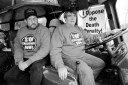


From L to R, Top to bottom: David Strathairn, actor, Boston, MA, June 2007; Ani DiFranco, folk musician, Raleigh, NC, December 2004; Steve Earle, musician, Boston College, June 2001; Eve Ensler, author, activist, Boston, MA, June 2007; Michael Moore, documentary filmmaker and author, Boston, October 2000; Bill Pelke & George White, Founders of ‘Journey of Hope … from Violence to Healing’, Somewhere along Hwy 40, Indiana, November 2000; Martin Sheen, actor, Boston, MA, March 2008; Sam Reese Sheppard, Boston College, Boston, MA June 2001; Kurt Vonnegut, author, New York, 2006; Howard Zinn, author, historian, professor, New York City, NY, June 2006.
Scott Langley has orbited the protests, prison protocols and politics of execution for over ten years. Judged by sheer coverage, his activism with the camera is without equal.
Capital punishment is one of the major failings of the US criminal justice system – it also remains one of the most divisive. Prison Photography was grateful to pick Scott’s brain about America’s current death industry, the legal landscape and his personal involvement.

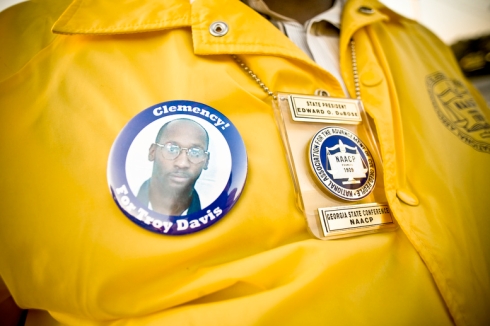
We agreed that it would be wise to focus on Scott’s coverage of Troy Davis’ stay of execution.
Troy Davis‘ case is currently the most high-profile death penalty case in America. It has become a focus for anti-death penalty activists not only because a man’s life is on the line, but also because so many doubts have been brought to bear on the original jury verdict. Through Davis’ case, society is realising that juries are fallible, eye-witness testimonies are unreliable, proceedings can be flawed and fatal errors have been made … continue to be made.
Prison Photography: What were you first, a photographer or an activist against the death penalty?
Scott Langley: I was first a photographer, working for my college newspaper and yearbook. I didn’t become active on the death penalty until a human rights class my senior year that challenged me to use photography as a tool to report on the death penalty.
PP: Your portfolio of images documenting executions, prisons, vigils, families and celebrities is the most comprehensive of any photographer currently working in the United States. Did you envisage your project would become so large, and important?
SL: I never thought it would get this far, cover so many facets, and continue for so long (over 10 years now). As I said, it started as a class project, but I quickly realized the importance of such historical documentation and the effect it could have on an important issue.
PP: This work is obviously borne of your political position, but you also work as a freelance photographer to earn a living. Are your conflicted or compromised by pressures of time and money?
SL: I am proud to say I am not compromised by pressures of time and money. I live a very non-traditional lifestyle, for the sole purpose of maintaining an emphasis on my political activism on a number of human rights issues. I do work for pay as a self employed photographer – picking up news assignments, weddings, and other photo jobs as they come up. But those take up minimal time. Of course working for pay “as it comes up” requires living a bit more simply than the average person. I run my car off of used vegetable oil. I grow much of my own food. I do all my shopping at thrift stores, yard sales, dumpsters. All these things greatly reduce the need for money, which in turn allows me to work on the death penalty photo project and my political action full time, and neither of those pays much, if anything.
PP: You are particularly well connected with the capital punishment abolitionist movements of Texas, Massachusetts and North Carolina. Describe those territories and the current legislative and cultural situations in those states.
SL: My work in North Carolina is the most in-depth and extensive. I was only there two years, but it was two years engrossed full-time in the death penalty debate. North Carolina obviously is a southern state. And it is the southern states that leads in executions and death sentencing. At the time I was there (2004-2006), North Carolina was the number two executing state, only behind Texas. And the death row was 6th largest in the United States.
But the momentum there has shifted. There hasn’t been an execution there in almost 3 years now. And more people have been found innocent on death row. And right now, as I sit here, NC is considering the Racial Justice Act, a bill that provides those on death row the ability to appeal their case due to race discrimination at the time of trial (which is a huge, huge problem in the south).
North Carolina has come close to legislatively putting a moratorium on executions. There is real hope of ending the death penalty in NC in the near future.
In Texas, where my work began, it is a whole other world. Texas executes by far the most people – more than most countries combined. There are some great organizations and activists in Texas, but there is little hopeful movement in the legislature to end or limit the death penalty. In fact, Governor Perry just oversaw his 200th execution. And to think, the media gave Bush a hard time about 152 executions back when he ran for president in 2000.
Massachusetts is in a whole different position. The Commonwealth ended the death penalty in the 1980s, and hasn’t had an execution since the 1940s. Capital punishment came close to reinstatement back in the late 1990s, but has since seen a decline in support in the Governor and legislative bodies. It will be a death penalty free state as far as I can see, although there is the real threat of federal capital prosecutions there.


PP: Explain precisely your opposition to the death penalty. Is it a religious, moral, political, ethical or philosophical stance?
SL: It started as ethical. I first learned about the death penalty through a human rights history class, where we also studied the holocaust, genocide, war… all those gruesome atrocities carried out by governments – even democratically elected governments. I learned right away the grave danger of giving the state the power to kill – to choose who lives and who dies. The class took me down many roads since then, and so my opposition covers all facets – religious, philosophical (arguments I love, but can never wrap my mind around on my own), moral, political… the whole gamut of reasons. It is now to the point where I just cannot fathom how anyone, for any reason, could justify the taking of a human life.
PP: Bill Richardson recently signed in a moratorium of the death penalty in New Mexico, joining 14 other states to ban the death penalty. How much of a victory is this?
SL: It is a huge victory. It made what happened in New Jersey the year before not just a random occurrence dependent on a liberal governor or a certain regional mentality, but part of a movement and a trend. It will cause waves of effect – and it has. Colorado, Montana, Maryland, Connecticut, North Carolina … they are all very close to drastically changing the way the death penalty will be used – or hopefully, not used.
PP: In banning the death penalty, Governor Richardson put aside his personal opinion (support) for the death penalty cited a lack of trust in the cogs of the criminal justice system to act as “the final arbiter when it comes to who lives and dies”. The death penalty is actually a procedure of criminal justice that affects a small minority of convicted criminals. What are your thoughts on the prison system as a whole.
SL: The whole prison system is a complete failure. We’ve got the majority of people locked up for harsh sentences for mere drug possession. We’ve got a system that has no policy or effort to rehabilitate. We’ve got a system that spits people back out into the exact same environments that put them in prison in the first place. And meanwhile, there is extreme racism, abuse and torture within the whole system and the walls of the prisons. Not to mention that the taxpayers are funding all of this. It is just maddening that we don’t have a better way of doing things. It is obvious that it is not working. We have a higher per capital imprisonment rate than any other country in the world, including China. Prison in the U.S., as it is, serves no positive function for the vast majority of those who go through it.
PP: Describe from personal experience the attitudes toward capital punishment in the US compared to other nations you’ve visited.
SL: During the summer of 2000, I spent six weeks backpacking through Western Europe, with camera gear in tow, to photograph sites connected with the death penalty issue in Europe’s history. This was the summer of the heated U.S. presidential race between Al Gore and George W. Bush. Because of the impending election and Bush’s history with state sanctioned killing, the Texas death penalty had become the forefront of much political conversation. When I met folks in Europe and mentioned that I was from Texas (born and raised), the first thing that always came out of their mouth was something about the death penalty. They just could not fathom how a nation, so “advanced” and “great” as the USA, could go about with a barbaric and failed practice of exterminating prisoners – at a rate of nearly 2 per week. It was a stigma that was held against me everywhere I went.
I acknowledge that not all Europeans are whole-heartedly anti-death penalty. There is ongoing talk about whether executions should resume, but it is a real minority view at this point.

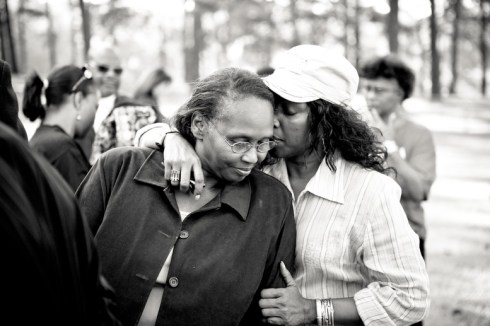

PP: Your project is over 800 pictures deep and touches upon many stories of those affected by the death penalty, but here we have focused on the case of Troy Davis. You were present to document his most recent stay of execution. Give us your thoughts on the case.
SL: Troy Davis‘ case is particularly disturbing. People who support the death penalty are starting to ask questions about this case. Even a former Georgia official publically stepped up to question why there hasn’t been a hearing of the new evidence to prove Troy’s innocence. When you have 7 out of 9 trial witnesses saying they lied, and were even coerced into lying by the police, you have to stop and say there is a problem here. It just baffles (and depresses me) that the courts just won’t hear the new evidence. The system is so caught up in judicial process that there is no humanity whatsoever. But remember, it is human life we are talking about. Real people with real family. The courts need to hear this case, desperately, because it stands for so much that is wrong with our broken system. If we, as a country, fail with the Troy Davis case, we have failed justice, failed humanity and failed all good that could possibly come out of a system designed to right wrongs and keep society safe.
PP: It seems this activism will be with you for life. Is that a fair assumption?
SL: I hope that my activism remains with me for life. There is a great need for people to always be on call to step up and do the right thing. Sometimes that might be little things like challenging the status quo by collecting used grease to run one’s car, and sometimes it might mean crossing a line to risk arrest to stop a greater harm from being done.
PP: What are your hopes for, and activities in, the future?
SL: I hope for an end to the death penalty soon. I hope to always have opportunities to educate people – through photos, through words, and through actions – about these issues of injustice. I have projects in the works to expand the death penalty documentary project and am planning for a cross-country trip in the winter 2010 to make photos in a wider variety of states.
I will continue to follow the Troy Davis case, using my camera as a tool when the opportunity arises.

View all of Scott Langley’s work here. Scott has also spoken out against sites of incarceration used in America’s global war on enemies. He has presented at the University of North Carolina, partnered with the Innocence Project, worked with Amnesty International, North Dakota Human Rights Coalition, Unitarian Universalists Against the Death Penalty and many, many more. He has also recently started working with video.
In photography Cornell Capa has huge renown. In prisons, Attica has a huge renown. It is therefore, expected that I’d transcribe Capa’s testimony to the McKay Commission (New York State Special Commission on Attica) Hearings.
After the text I shall offer my opinion.
TEXT
Cornell Capa: I was asked eventually by Arthur [Liman, Counsel] if I would want to look at Attica for the reasons that he mentioned, that photography and a photographer may have something to contribute …
As a human being and a photographer, my personal and professional and civic feeling was to look into it and – as my professional life is involved in understanding human condition – try to perceive what it is all about.
I think photography can serve a most useful role in an investigation and that’s exactly what I consented to do.
I [have] submitted 26 photographs which I will be showing to the commission and I have submitted equally a very short written statement and captions for the photographs.
I would like to really just read my written statement and following that as the photographs go by, I will do the captioning job for them.
At Attica: A Photographic Report.
Recently I spent three days at Attica, having been asked by the McKay commission to take a look at the institution and bring back my visual report.
During the visits to Attica I was, at all times, accompanied by a correction officer and a member of the Commission staff; all persons recognizable in these photographs consented to be photographed.
My photographs and their captions constitute my report for the commission. There is just a little more to add.
A feeling of nervous expectation seems to pervade Attica. Everybody is waiting the result of the work of the Commission’s investigations on the causes of the explosion which occurred there six months ago, and their recommendations for the future avoidance of such a tragedy in the future. Both sides, inmates and guards expect some new things to evolve from the findings – some kind of miracle which will transform the institution into a place where the Biblical lion and lamb will better live together peacefully.
The only hitch: each side has its very own view of the meaning of peaceful and better coexistence, and how to achieve it.
From the outside, Attica situated in the rolling farmland in western New York, has a Disneyland-like appearance, especially at night.
Attica’s inmates are all locked in their cells from approximately 5pm until 7am the next morning. Officers on the night shift make lonely rounds checking the count six times a night.
All movement in Attica is limited by locks. At night the duty officer must carry with him all the keys he will need on his nightly round of inspection
Confined to their 4 x 9 cells, inmates may talk to one another across the cellblocks and play music instruments until 8pm.
Locked in a cell a mirror is an inmates eyes to the rest of his gallery, and whenever something happens, the mirrors appear as if on cue.
After 8pm talking and noise are not permitted. There is little to do until lights out at 11pm except read, write letters or listen to one of the three channels of the prison radio which plays music, sports and the audio portion of TV shows.
In E Block, Attica’s medium security prison with the maximum-security walls, a small group of inmates in special programs are permitted to remain at night in the blocks day room to watch television, play cards or talk.
Corrections officers on the day shift leave homes in the town of Attica and surrounding communities and report for roll calls at 7am, 9.20am, 3pm and 11pm to receive their assignments.
These are the guns and smoke parts etc, what [sic] they keep in the armory for emergency use only.
These are the keys, which they use, the whole system is based on keys. This is just a very small selection of all the keys that open all the doors in Attica
On signal the cells open and inmates in each company line up in two’s to be escorted down one of the endless corridors to the mess hall for breakfast
In his daily movements throughout the institution, an inmate must pass through several times through ‘Times Square’ where the corridors leading from the four main cell blocks converge and gates point in four directions.
Many inmates spend up to five hours a day working in one of the prison industries, the largest of which is a large metal shop, where inmates build steel cabinets and office furniture for state institutions.
For a few hours each day, inmates are allowed to go into their cellblock’s yard for outdoor recreation
The sports facilities, always limited, have been even more curtailed since September. For most inmates the yard means walking around and around or standing around.
The only opportunity for most inmates to watch TV is outside in the yard. Due to the winter climate and the meager daytime TV schedules, few are interested.
While some are out in the yard, others return to their cellblocks. In some areas there are improvised meeting rooms where a few inmates can pursue simple hobbies and handicrafts.
For the rest it is back to the cells to pass the hours until supper. The site of disembodied hands outside the bars playing cards is not unusual here.
Some play chess but the opponent remains unseen.
There is so much idle time; one of the most common activities is preparing legal paper for appeals and writs.
9.30 to 3.30 every day are visiting hours. Those inmates whose families live nearby or who can afford the long journey to Attica may receive a visit. Visits take place in a large room, under the watch of officers and a wire screen separates the inmates from his visitor.
An inmate’s personal touch, often his own creation, is the difference between one cell and another.
One of the statewide changes since the riot is the creation of inmate liaison committees at each institution.
The committee at Attica was elected last month, has adopted a constitution and has begun the task of drawing up projected reforms.
Although life at Attica is again becoming routine, grim reminders of what happened there are everywhere.
This is the round State Shop in damaged condition beyond repair.
Two of the cells blocks were destroyed beyond repair and are still unoccupied. D Block yard on which the eyes of the world were focused for four days last September is deserted now. The trench is filled in but remains visible like a scar reminding one of the great illness which fell upon Attica seven months ago.
[END]
_____________________________________________________
Capa’s review is a rather bland description of everyday life in the prison. This comes as quite a disappointment; I had expected a rousing polemic against the unsuitable conditions of mammoth prisons and their effect on the will of man.
These words seem particularly tame when one considers the magnitude, violence and precendence Attica has in the history of prison resistance. The words are detached from the extremely graphic photographs [WARNING] documenting the riot and its bloody remnants. Capa’s words are the epitome of obsolescence.
Attica was a disaster.
Capa’s words fall short of the strength needed to describe the institution six months on from disaster.
I encourage you all to browse Attica Revisited an encyclopaedic resource of official papers, oral history video and photography.

Cornell Capa, to some extent, lived in the shadow of his older brother Robert. I guess, it is easy for complacent men to adore the still and fallen martyr than to keep apace with a passionate and piqued practitioner. Cornell’s and Robert’s legends are one; Cornell ceaselessly fought his brother’s corner authenticity debate surrounding The Falling Soldier.
Cornell’s indebtedness to his brother was fateful and self-imposed:
Disappointingly, it is only in extended surveys of Cornell Capa’s career that mention of his fifties photojournalism in Central and Southern America arises. Otherwise, Cornell is celebrated for his political journalism and particularly his campaign coverage of Adlai E. Stevenson, Jack and Bobby Kennedy. Cornell’s photographs from Latin America are often neglected, even demoted.

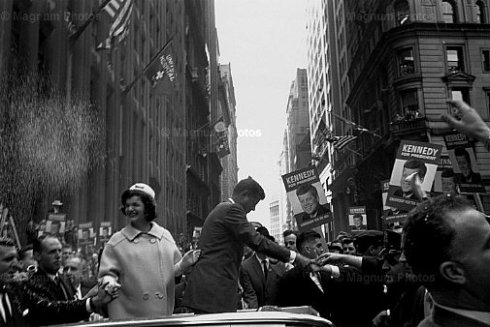
The Kennedys were the foci of American progressive attitudes, and so, in the sixties, Cornell documented the concerned politician. Cornell was (not in a negative way) passive and the sixties were not formative. It was in the fifties that he actively worked to define the persona, the ideal: ‘The Concerned Photographer’.
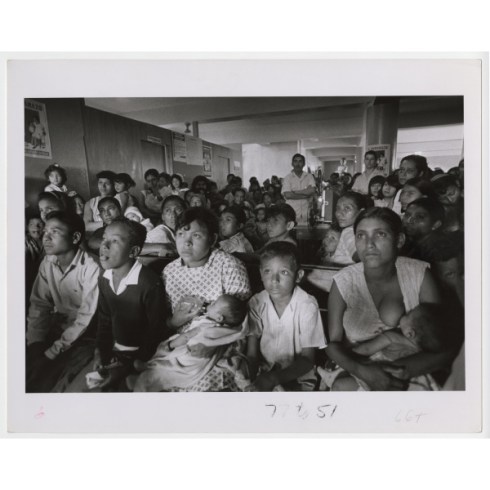
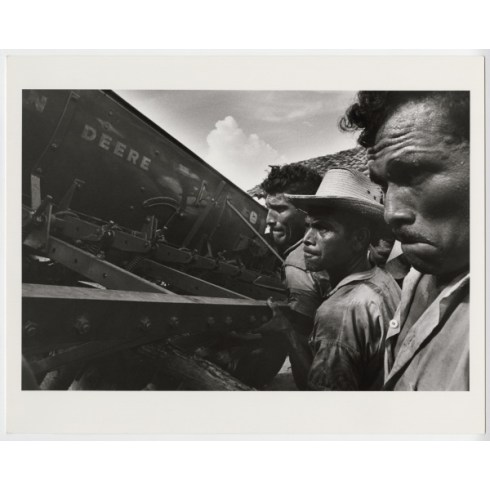
Cornell’s work in Latin America:
In 1956, Cornell was in Nicaragua reporting on the assassination of President Anastasio Somoza García. Somoza was shot by a young Nicaraguan poet; the murder only disrupting slightly the Somoza dynasty that lasted until the revolution of 1979 (that’s where Susan Meiselas picks up).
In the aftermath of the assassination over 1,000 “dissidents” were rounded up. The murder was used as an excuse and means to suppress many, despite the act being that of one man.


I have no knowledge of what happened to these men after Cornell photographed them and I am sure you haven’t the patience for speculative-art-historio-speak.
I do wonder … if having witnessed revolution, early democracies, military juntas, coups, communism, social movements, grand narratives and oppression in various forms, if Cornell picked his subjects with discernment back in the United States.
As early as 1954 Cornell was working on a story for Life about the education of developmentally disabled children and young adults. Up and to that point in time, the subject had been regarded by most American magazines as taboo. The feature was a breakthrough.
In 1966, in memorial to his brother, Robert, and out of his “professed growing anxiety about the diminishing relevance of photojournalism in light of the increasing presence of film footage on television news” Cornell founded the Fund for Concerned Photography. In 1974, this ideal found a bricks and mortar home on 5th Ave & 94th Street in New York: The International Center for Photography.

This institutional limbo that eventually gave rise to one of the world’s most important photography organisations was not a quiet period for Cornell. In 1972, he was commissioned to Attica, NY, to document visually the conditions of the prison. Capa presented his evidence to the McKay report (PDF, Part 1, pages 8-14) the body investigating the cause of the unrest. Cornell narrates his personal observations while showing his photographs to the commission.


At a time when, the photojournalist community seems to have crises of confidence and purpose at an alarming rate, it would be wise to embrace his spirit in full recognition his slow accumulation of remarkable accomplishments.
Rest In Peace, Cornell.

PHOTO CREDITS.
Robert F. Kennedy campaigning in Elmira, New York, September 1964. Accession#: CI.9685
New York City. 1960. Senator John F. KENNEDY and his wife, Jackie, campaigning for the presidency. NYC19480 (CAC1960014 W00020/XX). Copyright Cornell Capa C/Magnum Photos
Three men pushing John Deere machine, Honduras, 1970-73. Accession#: CI.3746
Watching family planning instructional film at Las Crucitas clinic, Tegucigalpa, Honduras], 1970-73. Accession#: CI.8544
Political dissidents arrested after the assassination of Nicaraguan dictator, Anastasio Somoza, Managua, Nicaragua, September 1956. The LIFE Magazine Collection. Accession#: 2009.20.13
NICARAGUA. Managua. 1956. Some of the one thousand political dissidents who were arrested after the assassination of Nicaraguan dictator Anastasio Somoza. NYC19539 (CAC1956012 W00004/09). Copyright Cornell Capa/Magnum Photos
Prisoners escorted from one area to another, Attica Correctional Facility, Attica, New York, March 1972 (printed 2008). Accession#: CI.9693
Two men walking around prison courtyard, Attica Correctional Facility, Attica, New York, March 1972. Accession#: CI.9689
Inmates playing chess from prison cells, Attica Correctional Facility, Attica, New York, March 1972. Accession#: CI.9688
Man on scooter carrying coffin, northeastern Brazil, 1962. Accession#: CI.8921
All photos courtesy of The Robert Capa and Cornell Capa Archive, Promised Gift of Cornell Capa, International Center of Photography. (Except for ‘The Concerned Photographer’ book cover; the Jack Kennedy photograph; & the second Nicaragua prison photograph.)
“The Gay Essay is comparable in magnitude to Robert Frank’s ‘The Americans’…the exhibit in its entirety is amazingly strong. And for the most part the photographs are singularly beautiful in execution.”
San Francisco Art Week, 1973

Sun Reflections on Wave, Zuma Beach, CA, 2000. Anthony Friedkin. Photography - Silver Print. 16 x 20 inches.
This weekend is Pride and today (Sunday) the 40th anniversary of the Stonewall Riots; an event generally regarded as the beginning of the modern gay rights movement. To mark the occasion DRKRM Gallery in Los Angeles is exhibiting Anthony Friedkin’s Gay, A Photographic Essay 1969 – 1972.
Friedkin isn’t your run of the mill photographer. He’d likely balk at the top-heavy marketing necessary by the individual photographer to survive in today’s game. He doesn’t seem to have searched out publicity or reviews and never chased the recognition of the fine art world. There’s next to nothing written about him on the internet which supports my theory that he is of a different generation and different ethos.
He is a name not commonly known. This, of course, is our loss and not his.

Woman by the Pool, Beverly Hills Hotel, CA, 1975. Anthony Friedkin. Photography - Silver Gelatin Print. 16 x 20 inches

Dan, Male prostitute, San Fernando Valley. Anthony Friedkin. 1972
Friedkin is as “California” as Henry Wessel. He is as culturally vital to the West Coast gay communities as Leigh Bowery was to London’s. Friedkin’s fascination with the couture and characters of subculture in the American West is on a par with that of Richard Avedon.
Friedkin was a one man Hamburger Eyes long before the zygote of Hamburger Eyes’ uncowed lens fell down the photo community fallopian tube.
Friedkin’s projects include The Gay Essay done in San Francisco and Los Angeles in 1969 and 1970; The Beverly Hills Essay shot in 1975; The Hollywood Series began in 1978 continues to this day; and The Ocean-Surfing Essay which explores Friedkin’s intimate, intensely personal relationship with the surf and waves. For most of his life he has been photographing Los Angeles creating an unparalleled body of work informed by his love of the diverse conurbation.
Of all his major photographic series, only one documents life outside the Golden State (New York City Brothels).
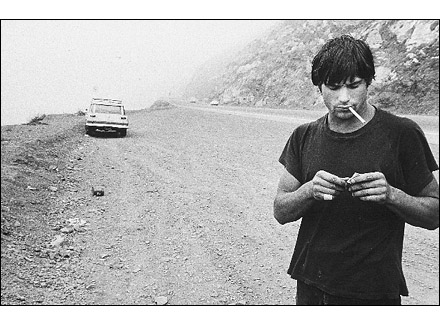
Clockwork Malibu, Rick Dano on the Highway, Malibu, CA. Anthony Friedkin. 1977. Photography - Silver Print. 16 x 20 inches

Debbie with her Head in the Sand, Venice, CA. Anthony Friedkin. 1980. Silver Print. 11 x 14 inches
Prison Photography is particularly interested in Friedkin’s photographic record of California Prisons and their inmates. The only image I have to present here is Four Convicts, Folsom Prison, CA (1991) [bottom].
California Prisons includes sensitive portrait shots of incarcerated teenagers, as well as the many typical representations of machismo and gang affiliated men.
I do not know if the series includes photographs of female prisoners, but this and many other unanswered questions now await a curious future…
I’d be very interested to hear from readers who’ve attended exhibition of the work and have any lasting impressions.

Android Sisters, Universal Studios, Hollywood, CA. Anthony Friedkin. 1978. Silver Print.

Jaws, Universal Studios, Hollywood, CA. Anthony Friedkin. 1978. Photograph. Silver Print.
It is Friedkin’s devotion to the unexpected that distinguishes his work. He disarms the extraordinary and educates his audience. Friedkin presents outlying cultures without a second thought; he surrounded himself with these people and paid them total respect.
As objective as the camera can be, it was so when in Friedkin’s hands and directed at people. Particularly, in documenting Gay culture, Friedkin was never reductive; he photographed the ‘wide-ranging composite … young hustlers, drag queens, transsexuals, San Francisco entertainers; a Gay Liberation parade in Hollywood; two lesbian women very much in love; effeminate boys growing up in an environment of machismo and the religious subculture typical of East Los Angeles.’

Four Convicts, Folsom Prison, CA. Anthony Friedkin. 1991. Silver Print. 16 x 20 inches.
Friedkin’s close tie to California, and especially Los Angeles, is conspicuous in his work as a still photographer for the movie industry. He makes the distinction himself between the circles of Hollywood and the tradition gallery circuit as evidenced by his use of ‘Tony’ Friedkin for movie credit-lines. Work on Crips and Bloods: Made in America and an appearance as himself in Dog Town & Z-Boys tie Friedkin indelibly to the California cultures of today and yesteryear.
Anthony Friedkin has over forty years experience as a professional photographer. He started out as a photojournalist working as a stringer for Magnum photos in Los Angeles. For the past twenty-five years Anthony Friedkin has lived and worked out of his apartment studio in Santa Monica. Currently, he is preparing a book of his Ocean-Wave photographs. Friedkin’s photographs are included in major Museum collections including the Museum of Modern Art, the Los Angeles County Museum of Art, San Francisco MoMA and The J. Paul Getty Museum. His work has been published in Japan, Russia, Europe, in many Fine Art publications in America and in magazines such as Rolling Stone, Newsweek, French Zoom and Malibu Magazine. For a full resume click here.

 Prison Photography