
You are currently browsing the category archive for the ‘Documentary’ category.
Scott Langley has orbited the protests, prison protocols and politics of execution for over ten years. Judged by sheer coverage, his activism with the camera is without equal.
Capital punishment is one of the major failings of the US criminal justice system – it also remains one of the most divisive. Prison Photography was grateful to pick Scott’s brain about America’s current death industry, the legal landscape and his personal involvement.

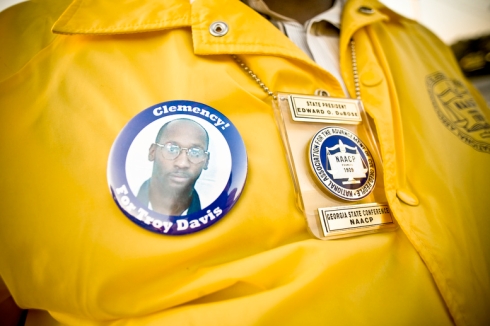
We agreed that it would be wise to focus on Scott’s coverage of Troy Davis’ stay of execution.
Troy Davis‘ case is currently the most high-profile death penalty case in America. It has become a focus for anti-death penalty activists not only because a man’s life is on the line, but also because so many doubts have been brought to bear on the original jury verdict. Through Davis’ case, society is realising that juries are fallible, eye-witness testimonies are unreliable, proceedings can be flawed and fatal errors have been made … continue to be made.
Prison Photography: What were you first, a photographer or an activist against the death penalty?
Scott Langley: I was first a photographer, working for my college newspaper and yearbook. I didn’t become active on the death penalty until a human rights class my senior year that challenged me to use photography as a tool to report on the death penalty.
PP: Your portfolio of images documenting executions, prisons, vigils, families and celebrities is the most comprehensive of any photographer currently working in the United States. Did you envisage your project would become so large, and important?
SL: I never thought it would get this far, cover so many facets, and continue for so long (over 10 years now). As I said, it started as a class project, but I quickly realized the importance of such historical documentation and the effect it could have on an important issue.
PP: This work is obviously borne of your political position, but you also work as a freelance photographer to earn a living. Are your conflicted or compromised by pressures of time and money?
SL: I am proud to say I am not compromised by pressures of time and money. I live a very non-traditional lifestyle, for the sole purpose of maintaining an emphasis on my political activism on a number of human rights issues. I do work for pay as a self employed photographer – picking up news assignments, weddings, and other photo jobs as they come up. But those take up minimal time. Of course working for pay “as it comes up” requires living a bit more simply than the average person. I run my car off of used vegetable oil. I grow much of my own food. I do all my shopping at thrift stores, yard sales, dumpsters. All these things greatly reduce the need for money, which in turn allows me to work on the death penalty photo project and my political action full time, and neither of those pays much, if anything.
PP: You are particularly well connected with the capital punishment abolitionist movements of Texas, Massachusetts and North Carolina. Describe those territories and the current legislative and cultural situations in those states.
SL: My work in North Carolina is the most in-depth and extensive. I was only there two years, but it was two years engrossed full-time in the death penalty debate. North Carolina obviously is a southern state. And it is the southern states that leads in executions and death sentencing. At the time I was there (2004-2006), North Carolina was the number two executing state, only behind Texas. And the death row was 6th largest in the United States.
But the momentum there has shifted. There hasn’t been an execution there in almost 3 years now. And more people have been found innocent on death row. And right now, as I sit here, NC is considering the Racial Justice Act, a bill that provides those on death row the ability to appeal their case due to race discrimination at the time of trial (which is a huge, huge problem in the south).
North Carolina has come close to legislatively putting a moratorium on executions. There is real hope of ending the death penalty in NC in the near future.
In Texas, where my work began, it is a whole other world. Texas executes by far the most people – more than most countries combined. There are some great organizations and activists in Texas, but there is little hopeful movement in the legislature to end or limit the death penalty. In fact, Governor Perry just oversaw his 200th execution. And to think, the media gave Bush a hard time about 152 executions back when he ran for president in 2000.
Massachusetts is in a whole different position. The Commonwealth ended the death penalty in the 1980s, and hasn’t had an execution since the 1940s. Capital punishment came close to reinstatement back in the late 1990s, but has since seen a decline in support in the Governor and legislative bodies. It will be a death penalty free state as far as I can see, although there is the real threat of federal capital prosecutions there.


PP: Explain precisely your opposition to the death penalty. Is it a religious, moral, political, ethical or philosophical stance?
SL: It started as ethical. I first learned about the death penalty through a human rights history class, where we also studied the holocaust, genocide, war… all those gruesome atrocities carried out by governments – even democratically elected governments. I learned right away the grave danger of giving the state the power to kill – to choose who lives and who dies. The class took me down many roads since then, and so my opposition covers all facets – religious, philosophical (arguments I love, but can never wrap my mind around on my own), moral, political… the whole gamut of reasons. It is now to the point where I just cannot fathom how anyone, for any reason, could justify the taking of a human life.
PP: Bill Richardson recently signed in a moratorium of the death penalty in New Mexico, joining 14 other states to ban the death penalty. How much of a victory is this?
SL: It is a huge victory. It made what happened in New Jersey the year before not just a random occurrence dependent on a liberal governor or a certain regional mentality, but part of a movement and a trend. It will cause waves of effect – and it has. Colorado, Montana, Maryland, Connecticut, North Carolina … they are all very close to drastically changing the way the death penalty will be used – or hopefully, not used.
PP: In banning the death penalty, Governor Richardson put aside his personal opinion (support) for the death penalty cited a lack of trust in the cogs of the criminal justice system to act as “the final arbiter when it comes to who lives and dies”. The death penalty is actually a procedure of criminal justice that affects a small minority of convicted criminals. What are your thoughts on the prison system as a whole.
SL: The whole prison system is a complete failure. We’ve got the majority of people locked up for harsh sentences for mere drug possession. We’ve got a system that has no policy or effort to rehabilitate. We’ve got a system that spits people back out into the exact same environments that put them in prison in the first place. And meanwhile, there is extreme racism, abuse and torture within the whole system and the walls of the prisons. Not to mention that the taxpayers are funding all of this. It is just maddening that we don’t have a better way of doing things. It is obvious that it is not working. We have a higher per capital imprisonment rate than any other country in the world, including China. Prison in the U.S., as it is, serves no positive function for the vast majority of those who go through it.
PP: Describe from personal experience the attitudes toward capital punishment in the US compared to other nations you’ve visited.
SL: During the summer of 2000, I spent six weeks backpacking through Western Europe, with camera gear in tow, to photograph sites connected with the death penalty issue in Europe’s history. This was the summer of the heated U.S. presidential race between Al Gore and George W. Bush. Because of the impending election and Bush’s history with state sanctioned killing, the Texas death penalty had become the forefront of much political conversation. When I met folks in Europe and mentioned that I was from Texas (born and raised), the first thing that always came out of their mouth was something about the death penalty. They just could not fathom how a nation, so “advanced” and “great” as the USA, could go about with a barbaric and failed practice of exterminating prisoners – at a rate of nearly 2 per week. It was a stigma that was held against me everywhere I went.
I acknowledge that not all Europeans are whole-heartedly anti-death penalty. There is ongoing talk about whether executions should resume, but it is a real minority view at this point.

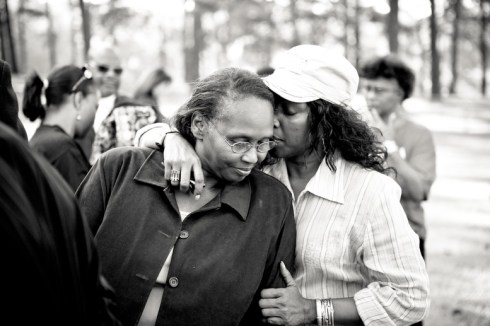

PP: Your project is over 800 pictures deep and touches upon many stories of those affected by the death penalty, but here we have focused on the case of Troy Davis. You were present to document his most recent stay of execution. Give us your thoughts on the case.
SL: Troy Davis‘ case is particularly disturbing. People who support the death penalty are starting to ask questions about this case. Even a former Georgia official publically stepped up to question why there hasn’t been a hearing of the new evidence to prove Troy’s innocence. When you have 7 out of 9 trial witnesses saying they lied, and were even coerced into lying by the police, you have to stop and say there is a problem here. It just baffles (and depresses me) that the courts just won’t hear the new evidence. The system is so caught up in judicial process that there is no humanity whatsoever. But remember, it is human life we are talking about. Real people with real family. The courts need to hear this case, desperately, because it stands for so much that is wrong with our broken system. If we, as a country, fail with the Troy Davis case, we have failed justice, failed humanity and failed all good that could possibly come out of a system designed to right wrongs and keep society safe.
PP: It seems this activism will be with you for life. Is that a fair assumption?
SL: I hope that my activism remains with me for life. There is a great need for people to always be on call to step up and do the right thing. Sometimes that might be little things like challenging the status quo by collecting used grease to run one’s car, and sometimes it might mean crossing a line to risk arrest to stop a greater harm from being done.
PP: What are your hopes for, and activities in, the future?
SL: I hope for an end to the death penalty soon. I hope to always have opportunities to educate people – through photos, through words, and through actions – about these issues of injustice. I have projects in the works to expand the death penalty documentary project and am planning for a cross-country trip in the winter 2010 to make photos in a wider variety of states.
I will continue to follow the Troy Davis case, using my camera as a tool when the opportunity arises.

View all of Scott Langley’s work here. Scott has also spoken out against sites of incarceration used in America’s global war on enemies. He has presented at the University of North Carolina, partnered with the Innocence Project, worked with Amnesty International, North Dakota Human Rights Coalition, Unitarian Universalists Against the Death Penalty and many, many more. He has also recently started working with video.
This post is to salve the disappointment of thousands of visitors to Prison Photography that are tempted by the post titled View Inside Guantanamo: Video only to find that the Guardian’s rights to the three minute “tour” video have expired.

There exists a bristling irony in the Guardian’s curt and formal explanation of circumstance: the erasure of evidence based upon ‘rights’ pertaining to the command is an insulting reminder of the powerlessness of detainees whose lives are manipulated at will.
Paradoxically, in this case, it is the denied party that is the apologist for the US military’s enforced expiration and unavailability of material. It seems the controlled release of this footage has been trumped by its controlled withdrawal.

As a worthy (and non-governmental) alternative, Magnum offers Paolo Pellegrin’s 11 minute slideshow ‘Guantanamo‘. There are a few interesting things about this piece none of which are the actual photographs. The prints are steeped in morbid detachment and the unsurprising truth that the photographer was also controlled throughout this military prison.
The slideshow’s early description of Guantanamo as a small American town is sinister; the edited audio interviews of former UK detainees, family members, detainee lawyer and psychologist are very successful. The follow-up portraits of former detainees that Pellegrin later completed in Afghanistan are very strong.


All photos copyright of Paolo Pellegrin/Magnum Photos
Please, refer to my earlier post, for a comprehensive directory of photographic resources for Guantanamo including Bruce Gilden’s subtle flash-bulb mockery of Guantanamo’s rank and file. (Search within Magnum archives as deep-linking is impossible).

Joseph Rodriguez‘s work is essential. If I and others can promote his photography humanity then we’ve done some good.
Last week PDN ran a post about the value of the “Digital Curator“. It was a well threaded argument about things we already know: that if an online presence (blogger) does his/her thing for long enough and with a consistent (their own) voice they’ll begin to garner readers, respect and influence.
[WARNING: link blitz, but all justified]
Thankfully, we have (I believe) a healthy photography blogosphere in which plenty of photographers present their own STUFF; megaliths go vernacular; academics question and answer; fine art specialists point us in the direction of good practice & theory; insiders offer editorial, publishing, gallery, collector, buyer or industry viewpoints; universities promote; non-profits take new angles; curmudgeons grumble; old media gets hip; young guns splash out with collective and interview projects & some hover untouchably above.
In September, duckrabbit joined the fray. You may know already, but I am a fan of duck’s blog (by Ben Chesterton). I am not a fan because I agree with everything Ben has to say, but because he says it without frills and then will spend the time necessary to engage the consequent discussions. Such commitment is a priceless commodity.
duckrabbit deals primarily with photojournalism and multimedia and so Ben’s coverage doesn’t always dovetail with the preoccupations of other photographic genres – which is fine, we all have our favourite corners.
To get to the point. I am nodding furiously toward the coverage of Joseph Rodriguez on duckrabbit for three reasons:
1) Because Rodriguez (along with Leon Borensztein) made me realise how vital the relationship between photographer and subject is in creating images. Rodriguez is worth more time than duck or I could ever commit.
2) Because this is the latest in principled stances duckrabbit has taken, AND it happens to highlight the stories of formerly incarcerated.
3) Because I am committed to writing more about Rodriguez in the next month … and need to let you know.
duckrabbit’s first feature of his new series ‘Where It’s At’ (stuff that kicks a duck’s arse) is Rodriguez’s work on Re-entry after prison. Rodriguez worked with Walden House (I remember fondly the stained glass of the San Francisco WH, Buena Vista Park). As duckrabbit puts it, “Rodriguez records lives lived and he never measures the lives of those he shoots against a photographic award, magazine spread or advertising contract. His eye is never on the future, it is always in conversation with the now.”
Go to duck’s post and watch Rodriguez’s 7 minute multimedia piece on re-entry. California is where I cut my teeth in the prison policy and prisoners’ rights fields, so for me, it is especially resonant … and vital.
Also worth noting is Benjamin Jarosch, Rodriguez’s current assistant.
While we are on the topic of different realities in urban America, keep an eye out for this film at your local cinemaplex indie-theatre.
In the next few weeks I’ll be making comment and whirring the brain cogs over Rodriguez’s photographic endeavour Juvenile Justice . Stay tuned.
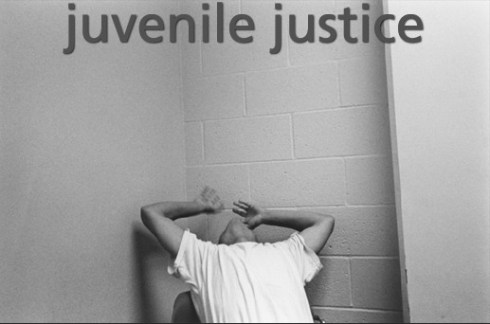
Rodriguez has won acclaim from all the important people that need to take notice, including Fifty Crows, which incidentally started up a blog recently. Everyone reading this should follow Fifty Crows because they support photographers who get in knee deep … and then some.
Peace.

Troy West, Angola Inmate
Louisiana has the highest incarceration rate per capita of all US states. over 1,100 per 100,000 – that’s more than 1 in a 100. Angola (Louisiana State Penitentiary) is the mother of all prisons, carrying a weighty reputation and weightier history.
Only Georgia has a rate above 1 in a 100, as Louisiana does. The other Southern states make up the top five (Texas, Alabama and Mississippi).
These stats are due in most the more frequent sentencing of men to life without parole. The disproportionately high rate of prisoners who die within Southern prisons as compared to other state institutions makes for a very different culture.
Many photographers including Damon Winter and Lori Waselchuk have focused on the unique aspects of Angola culture. The rodeo is well known, the hospice less so, but least well known may be the football league.
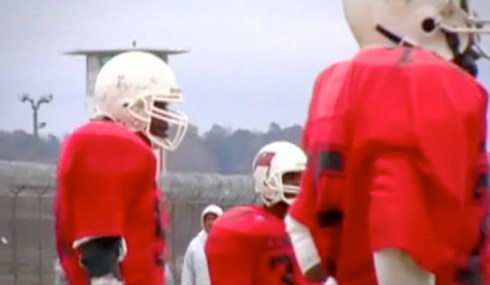

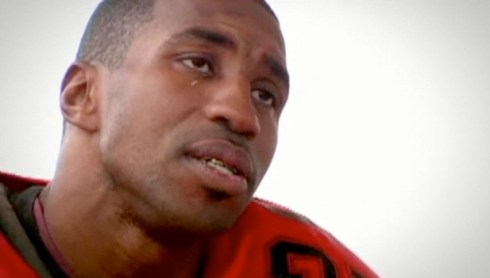
I have noted before the value of sports in prison, and Angola Prison Football a film-short by Charlie Gruet supports my position.
In it, Angola warden Burl Cain states his philosophy, “Good food, good medicine, good play and good pray. Lose any of those elements and you’ll have violence in your prison, but you would in your home. You think about it.”
The inmates back up the third point. It’s a well done documentary and to think that over 70% of the men in the film won’t ever get out just blows my mind. (Source: 2008 LSP Report).
Watch closely from 4.03 onward.

Jenn Ackerman
Larry Chandler, Warden of Kentucky State Reformatory, La Grange, KY
Jenn Ackerman

This year, more than 700,000 people will be released from prisons and jails in the U.S. and more than half of them suffer from some form of mental illness. (Source)
A few months ago I wrote to Jenn Ackerman, praised her Trapped project and of course offered to promote it. I wanted to get at her stories behind the images – namely do an interview. Jenn, however, is as good a promoter as she is a photographer.
The list of questions I wrote out while eating my chili-verde burrito on Wednesday are made largely redundant by her blog post “Trapped: Questions Answered”. Her photography and multimedia is so strong that it also speaks for itself. There is a painful truth in her work; more questions than answers.
I have plenty material to give you a thorough summary of Jenn’s work.


Firstly, allow me to give a run down of the current situation of mental health care provision in America’s prisons and jails.
A 2006 report by the U.S. Department of Justice shows that the number of Americans with mental illnesses incarcerated in the nation’s prisons and jails is disproportionately high. Almost 555,000 people with mental illness are incarcerated while fewer than 55,000 are being treated in designated mental health hospitals. That is inadequate provision.
555,000 represents, at the very least, 16% of inmate populations of state and local jails. I would contend the figure is higher – well above 20% – but this is only my personal belief.
If these numbers are not shocking enough, one must consider the pressures the prison system – in and of itself – exerts on the mental health well-being of those incarcerated by consequence of the increased reliance on solitary confinement to control populations, unqualified staff (especially in private prisons), overcrowding, institutional violence, lack of volunteer programming and engagement (in remote facilities) and the inadequate/unconstitutional general health care provided in states such as Ohio and California. California Department of Corrections has been the subject of a high profile federal lawsuit for the short comings to provide suitable care. (Incidentally, the $1.9b figure quoted in the linked article used to be $6b, until Schwarzenegger rejected it … and there is a serious threat it will be nothing if California cannot sort out its budget disaster).
In prison systems with such endemic problems, it is those who have no way to advocate for themselves who suffer most. Jails have effectively become America’s defacto mental institutions; they house a larger volume of mentally ill people than all other programs combined.
Against this backdrop, Ackerman went to work.

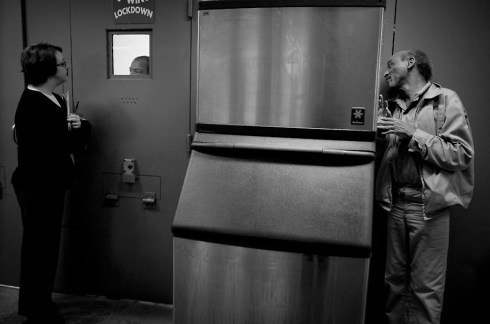
Prison Photography is keen to unveil the means by which photographers, anyone, can gain access to prisons to engage with the “invisibles” of society. In that spirit I quote Jenn;
How did you get access to this story?
I had done a lot of research and had decided on the story I wanted to tell when going to talk to the warden. I always feel that a an in-person visit is more beneficial. — I can better express my passion and excitement for this story. I had called a couple of prisons days before I called the Kentucky State Reformatory and to no surprise they didn’t respond to my messages. But then I came across a wing that was dedicated to mental illness in a prison. Warden Chandler answered on the second ring. This caught me off guard but got it together enough to tell him what I wanted to do. He said I had a lot of work to do before I could start on the project but that he might be interested. I sent a proposal days later and asked to come visit the reformatory to talk to him in person.
How did the warden and officials respond to the project?
I didn’t know how they would respond at first. But I also knew that the warden and everyone involved wanted this story to be told. I was very honest with everyone from the beginning. I told them that I knew that they were doing something to acknowledge mental illness in prisons which hasn’t happened in every state but that I also knew that the program was not perfect. I told them that was going to be my approach. So from the beginning they knew that I was not going to make them look bad but also wasn’t trying to say that they have the final answer to this issue. But I visited the warden the day before I published it on my site to get his reaction. He loved it and thanked me for creating an honest portrayal of the mental illness in prisons. I told him that was the best compliment I could ever get.
There can be no doubt that Jenn was lucky to find Warden Chandler who was so sympathetic to her objective and realised the importance of the project.


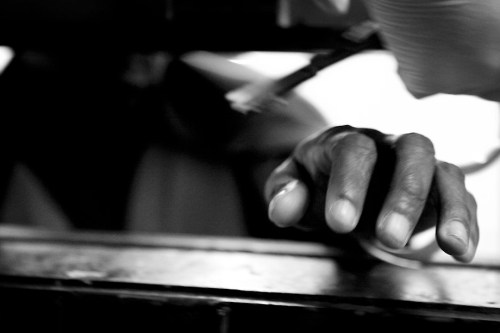
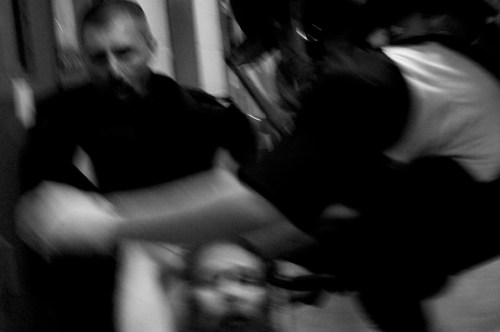
Jenn has explained that she spent a total of 10 weeks on the project, including 10 days of still and video shooting. Her time commitment is reflected in the comprehensive coverage. Trapped is a dark bubbling cloud of stories and troubling images that are weft with human emotion, the occasional reprieve but predominantly the collision of lives – lives that orbit tormented psyches that a punitive world of reinforced doors & service hatches cannot soothe.
Jenn’s commitment is epic. Besides the Trapped feature film, Jenn breaks the project into a series of presentations. Firstly, the In Their Corner short about the inmate watch. Secondly, In Their Minds a series of seven film shorts allowing individual inmates camera time to represent themselves. Trapped is segmented into six photography galleries; each one a captivating photo-essay in its own right. I cannot over-emphasise the sensitive depth with which Jenn has documented the incidents on the Correctional Psychiatric Treatment Unit (CPTU) at the Kentucky State Reformatory. Jenn also provides an extended essay about her own response to the CPTU environment.

Jenn interviews for 25 minutes at Multimedia shooter. The audio is wobbly and distorted but the information is valuable. Check out from 21 mins. onward to learn of the administration’s response.
Trapped: Mental Illness Inside America’s Prisons has deservedly received acclaim from burn magazine, 100 Eyes, Verve Photo, the White House News Photographers Association (honorable mention), Inge Morath Foundation and CPoY. Jenn recently won an internship at the New York Times.
Jenn credits her students for much of her inspiration. Check out Jenn’s class website for more details.

San Pedro Prison in Bolivia has ceased tours for foreign visitors.
I regret my one missed opportunity. I’d been mildly obsessed with the La Paz prison for a couple of years before I arrived outside its gate and got turned away. That was July, 2008. I had read in Lonely Planet it was a piece of cake to get in and get a tour. Apparently not in my case. I surmise, that I had experienced the beginning of the end for La Paz’s most bizarre tourist attraction.
It’s definitely over now. This from yesterday’s Guardian;
Tours have never been officially recognised and the vagaries of securing visiting privileges for foreigners stems from the fact that prison guards have different rules/corruptions and relationships to outside ‘tour-guides’. Basically, foreigners had to be lucky or connected to get inside.
Flickr searches prove that “wide-eyed travellers” have visited in all the months since my failed attempt.

The reason for the end of this bizarre tourist ritual? Seemingly, tourists got too cocky and too brazen. The new prison warden ended the debacle. This was a peculiar decision (on first glance) given years of international coverage and tolerance by the authorities, but basically, everyone involved had become too comfortable – objectionably so – with the institution-turned-circus.
The group most guilty for giddy spectacle was of course the tourists. In February the self-titled “Wild Rover Group” posted this video.
And it was the tipping point. The video doesn’t show anything that wasn’t commonly known, but it spells it all out with clarity and (critically) to an unrestricted worldwide audience.
This thorough dissection of the events by a Bolivian source, explains;
It is surprising that a single video should be the tipping point, especially after a decade of widely circulated photographs. Nevertheless, the circus could no longer be ignored, nor controlled.
Interest online was mirrored by interest on the ground. Tourists filled the square outside wishing to visit; such numbers could no longer be surreptitiously ghosted in the side-door.
Vicky Baker explains,
Here’s the local media shining a big spotlight on activities with long-overdue questioning and coverage of the tours. Foreigners reacting to the attentions, flipping off the camera and scampering away under jackets were only ever going to look bad!
Unrest
Governor, Jose Cabrera, is emphatic, “The prisoners have to understand that this is a penitentiary.”
The tourism, while exploitative, was a reliable source of revenue for the prisoners and their families. By shutting down the tours, incomes for over a 1,000 men, women and children was dragged out from under them.
San Pedro was/is indelibly tied to society outside. Family members come and go daily to bring goods and services to the self-made micro-economy. The decision to close the tours down was exacerbated by new restrictions on visiting privileges. Discord grew.
As the Bolivian news crews were present to film the hoards of foreign tourists in the square, they captured the three hours of unrest from start to finish. Families, including children, of the prisoners were caught in the tear gas clouds. Unfortunate scenes.

The riot was a predictable end point to the new warden’s crude (but probably) necessary shut-down of this dubious spectacle. Many Bolivians didn’t like the fact the nation’s biggest prison was a site of titillation for foreign visitors; many were understandably ashamed and angered.
Paradoxically, one of the factors that allowed mass visitation was the accommodation of family members to spend unlimited amounts of time with incarcerated husbands & fathers during daylight hours. The institution had a generous (and unAmerican) protocol for the relaxed coming and goings of non-inmates.

What Next?
Money and the necessities it brings are key to solving the tensions. According to a prisoner interviewed by La Rázon, “70% of the [250 peso] fee goes to the police and the people who organize the foreigners for the tours,” the rest being split up among prisoners. This monetary ecosystem may not have been fair but it was consistent.
The new warden has since negotiated and agreed new rules for San Pedro, presumably taking into account the stymied income for all inside. Time will tell. As an indication of how fragile authority is at the prison, the new warden has adopted a fast rotation of guards to prevent foreigners … the suggestion being, a guard needs only to get comfortable at his gate post before he can start manipulating bribes to get tourists in again.
I’ll leave you arguments for permanent closure of San Pedro to foreigners with the thoughts of two Bolivians;
and
True.

The Remains
The photographic legacy is wide and varied. Amateur snaps prevail here, here, here and here. Enthusiasts occasionally turn their skills, and professionals such as Hector Mediavilla have focused on cocaine manufacture and drug addiction in San Pedro Prison.

In photography Cornell Capa has huge renown. In prisons, Attica has a huge renown. It is therefore, expected that I’d transcribe Capa’s testimony to the McKay Commission (New York State Special Commission on Attica) Hearings.
After the text I shall offer my opinion.
TEXT
Cornell Capa: I was asked eventually by Arthur [Liman, Counsel] if I would want to look at Attica for the reasons that he mentioned, that photography and a photographer may have something to contribute …
As a human being and a photographer, my personal and professional and civic feeling was to look into it and – as my professional life is involved in understanding human condition – try to perceive what it is all about.
I think photography can serve a most useful role in an investigation and that’s exactly what I consented to do.
I [have] submitted 26 photographs which I will be showing to the commission and I have submitted equally a very short written statement and captions for the photographs.
I would like to really just read my written statement and following that as the photographs go by, I will do the captioning job for them.
At Attica: A Photographic Report.
Recently I spent three days at Attica, having been asked by the McKay commission to take a look at the institution and bring back my visual report.
During the visits to Attica I was, at all times, accompanied by a correction officer and a member of the Commission staff; all persons recognizable in these photographs consented to be photographed.
My photographs and their captions constitute my report for the commission. There is just a little more to add.
A feeling of nervous expectation seems to pervade Attica. Everybody is waiting the result of the work of the Commission’s investigations on the causes of the explosion which occurred there six months ago, and their recommendations for the future avoidance of such a tragedy in the future. Both sides, inmates and guards expect some new things to evolve from the findings – some kind of miracle which will transform the institution into a place where the Biblical lion and lamb will better live together peacefully.
The only hitch: each side has its very own view of the meaning of peaceful and better coexistence, and how to achieve it.
From the outside, Attica situated in the rolling farmland in western New York, has a Disneyland-like appearance, especially at night.
Attica’s inmates are all locked in their cells from approximately 5pm until 7am the next morning. Officers on the night shift make lonely rounds checking the count six times a night.
All movement in Attica is limited by locks. At night the duty officer must carry with him all the keys he will need on his nightly round of inspection
Confined to their 4 x 9 cells, inmates may talk to one another across the cellblocks and play music instruments until 8pm.
Locked in a cell a mirror is an inmates eyes to the rest of his gallery, and whenever something happens, the mirrors appear as if on cue.
After 8pm talking and noise are not permitted. There is little to do until lights out at 11pm except read, write letters or listen to one of the three channels of the prison radio which plays music, sports and the audio portion of TV shows.
In E Block, Attica’s medium security prison with the maximum-security walls, a small group of inmates in special programs are permitted to remain at night in the blocks day room to watch television, play cards or talk.
Corrections officers on the day shift leave homes in the town of Attica and surrounding communities and report for roll calls at 7am, 9.20am, 3pm and 11pm to receive their assignments.
These are the guns and smoke parts etc, what [sic] they keep in the armory for emergency use only.
These are the keys, which they use, the whole system is based on keys. This is just a very small selection of all the keys that open all the doors in Attica
On signal the cells open and inmates in each company line up in two’s to be escorted down one of the endless corridors to the mess hall for breakfast
In his daily movements throughout the institution, an inmate must pass through several times through ‘Times Square’ where the corridors leading from the four main cell blocks converge and gates point in four directions.
Many inmates spend up to five hours a day working in one of the prison industries, the largest of which is a large metal shop, where inmates build steel cabinets and office furniture for state institutions.
For a few hours each day, inmates are allowed to go into their cellblock’s yard for outdoor recreation
The sports facilities, always limited, have been even more curtailed since September. For most inmates the yard means walking around and around or standing around.
The only opportunity for most inmates to watch TV is outside in the yard. Due to the winter climate and the meager daytime TV schedules, few are interested.
While some are out in the yard, others return to their cellblocks. In some areas there are improvised meeting rooms where a few inmates can pursue simple hobbies and handicrafts.
For the rest it is back to the cells to pass the hours until supper. The site of disembodied hands outside the bars playing cards is not unusual here.
Some play chess but the opponent remains unseen.
There is so much idle time; one of the most common activities is preparing legal paper for appeals and writs.
9.30 to 3.30 every day are visiting hours. Those inmates whose families live nearby or who can afford the long journey to Attica may receive a visit. Visits take place in a large room, under the watch of officers and a wire screen separates the inmates from his visitor.
An inmate’s personal touch, often his own creation, is the difference between one cell and another.
One of the statewide changes since the riot is the creation of inmate liaison committees at each institution.
The committee at Attica was elected last month, has adopted a constitution and has begun the task of drawing up projected reforms.
Although life at Attica is again becoming routine, grim reminders of what happened there are everywhere.
This is the round State Shop in damaged condition beyond repair.
Two of the cells blocks were destroyed beyond repair and are still unoccupied. D Block yard on which the eyes of the world were focused for four days last September is deserted now. The trench is filled in but remains visible like a scar reminding one of the great illness which fell upon Attica seven months ago.
[END]
_____________________________________________________
Capa’s review is a rather bland description of everyday life in the prison. This comes as quite a disappointment; I had expected a rousing polemic against the unsuitable conditions of mammoth prisons and their effect on the will of man.
These words seem particularly tame when one considers the magnitude, violence and precendence Attica has in the history of prison resistance. The words are detached from the extremely graphic photographs [WARNING] documenting the riot and its bloody remnants. Capa’s words are the epitome of obsolescence.
Attica was a disaster.
Capa’s words fall short of the strength needed to describe the institution six months on from disaster.
I encourage you all to browse Attica Revisited an encyclopaedic resource of official papers, oral history video and photography.

Cornell Capa, to some extent, lived in the shadow of his older brother Robert. I guess, it is easy for complacent men to adore the still and fallen martyr than to keep apace with a passionate and piqued practitioner. Cornell’s and Robert’s legends are one; Cornell ceaselessly fought his brother’s corner authenticity debate surrounding The Falling Soldier.
Cornell’s indebtedness to his brother was fateful and self-imposed:
Disappointingly, it is only in extended surveys of Cornell Capa’s career that mention of his fifties photojournalism in Central and Southern America arises. Otherwise, Cornell is celebrated for his political journalism and particularly his campaign coverage of Adlai E. Stevenson, Jack and Bobby Kennedy. Cornell’s photographs from Latin America are often neglected, even demoted.

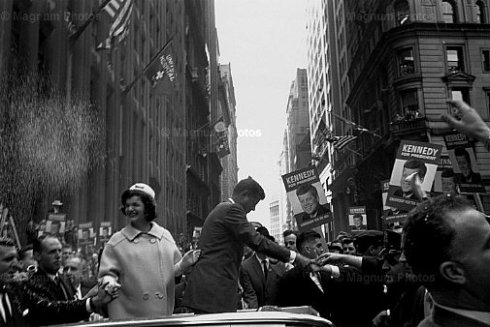
The Kennedys were the foci of American progressive attitudes, and so, in the sixties, Cornell documented the concerned politician. Cornell was (not in a negative way) passive and the sixties were not formative. It was in the fifties that he actively worked to define the persona, the ideal: ‘The Concerned Photographer’.
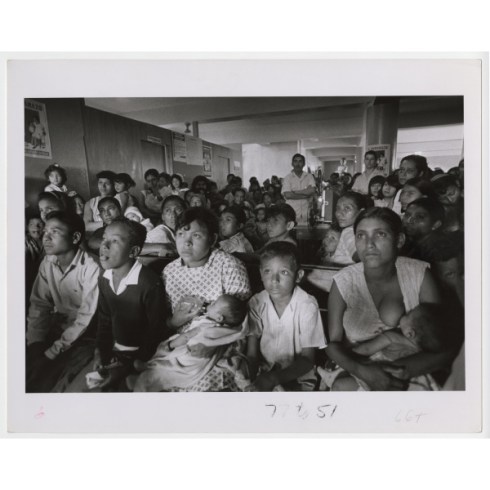
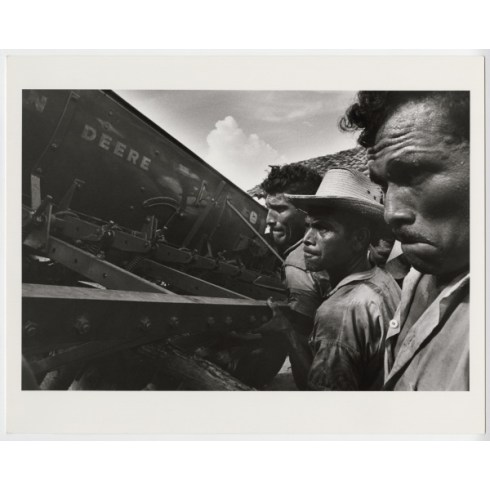
Cornell’s work in Latin America:
In 1956, Cornell was in Nicaragua reporting on the assassination of President Anastasio Somoza García. Somoza was shot by a young Nicaraguan poet; the murder only disrupting slightly the Somoza dynasty that lasted until the revolution of 1979 (that’s where Susan Meiselas picks up).
In the aftermath of the assassination over 1,000 “dissidents” were rounded up. The murder was used as an excuse and means to suppress many, despite the act being that of one man.


I have no knowledge of what happened to these men after Cornell photographed them and I am sure you haven’t the patience for speculative-art-historio-speak.
I do wonder … if having witnessed revolution, early democracies, military juntas, coups, communism, social movements, grand narratives and oppression in various forms, if Cornell picked his subjects with discernment back in the United States.
As early as 1954 Cornell was working on a story for Life about the education of developmentally disabled children and young adults. Up and to that point in time, the subject had been regarded by most American magazines as taboo. The feature was a breakthrough.
In 1966, in memorial to his brother, Robert, and out of his “professed growing anxiety about the diminishing relevance of photojournalism in light of the increasing presence of film footage on television news” Cornell founded the Fund for Concerned Photography. In 1974, this ideal found a bricks and mortar home on 5th Ave & 94th Street in New York: The International Center for Photography.

This institutional limbo that eventually gave rise to one of the world’s most important photography organisations was not a quiet period for Cornell. In 1972, he was commissioned to Attica, NY, to document visually the conditions of the prison. Capa presented his evidence to the McKay report (PDF, Part 1, pages 8-14) the body investigating the cause of the unrest. Cornell narrates his personal observations while showing his photographs to the commission.


At a time when, the photojournalist community seems to have crises of confidence and purpose at an alarming rate, it would be wise to embrace his spirit in full recognition his slow accumulation of remarkable accomplishments.
Rest In Peace, Cornell.

PHOTO CREDITS.
Robert F. Kennedy campaigning in Elmira, New York, September 1964. Accession#: CI.9685
New York City. 1960. Senator John F. KENNEDY and his wife, Jackie, campaigning for the presidency. NYC19480 (CAC1960014 W00020/XX). Copyright Cornell Capa C/Magnum Photos
Three men pushing John Deere machine, Honduras, 1970-73. Accession#: CI.3746
Watching family planning instructional film at Las Crucitas clinic, Tegucigalpa, Honduras], 1970-73. Accession#: CI.8544
Political dissidents arrested after the assassination of Nicaraguan dictator, Anastasio Somoza, Managua, Nicaragua, September 1956. The LIFE Magazine Collection. Accession#: 2009.20.13
NICARAGUA. Managua. 1956. Some of the one thousand political dissidents who were arrested after the assassination of Nicaraguan dictator Anastasio Somoza. NYC19539 (CAC1956012 W00004/09). Copyright Cornell Capa/Magnum Photos
Prisoners escorted from one area to another, Attica Correctional Facility, Attica, New York, March 1972 (printed 2008). Accession#: CI.9693
Two men walking around prison courtyard, Attica Correctional Facility, Attica, New York, March 1972. Accession#: CI.9689
Inmates playing chess from prison cells, Attica Correctional Facility, Attica, New York, March 1972. Accession#: CI.9688
Man on scooter carrying coffin, northeastern Brazil, 1962. Accession#: CI.8921
All photos courtesy of The Robert Capa and Cornell Capa Archive, Promised Gift of Cornell Capa, International Center of Photography. (Except for ‘The Concerned Photographer’ book cover; the Jack Kennedy photograph; & the second Nicaragua prison photograph.)

 Prison Photography