
You are currently browsing the category archive for the ‘Documentary’ category.
Once, as a 15 year old, I sat naked on the edge of the bath covered in piss and vomit after drinking myself silly. Apparently, I told my mum – who was wracked with worry – to “chill out”. I delivered this line with assurance proving how far gone I was; how unable I was to see my pathetic situation and how unable I was to connect with reality.
I don’t remember any of the actual episode (I was too blotto) but the shame and necessary reparations afterward meant I have constructed a memory which feels as visceral as any Proustian recall.
Sergey Maximishin‘s photograph, Sobering Up Station, puts a pit in my stomach.

Sobering-up station, St.-Petersburg, January, 2003. (c) Sergey Maximishin
Sites of incarceration are sites of tragedy. They exist because of the saddening (sometimes necessary) control of pathetic, violent, misunderstood, abusive or abused individuals.
Prisons and jails are architectures of failed human interaction and the friable psychologies of man. Where many folk are fearful of those behind bars, I am generally pitiful.
How many of you have behaved like the “classic drunk”? How many of you have even remembered your foolish confidence? How many of you have still insisted (even down to your underwear) that there’s something to do, other than sleep it off?
Sobering Up Station is a document of failed interaction, of brilliant human inadequacies and of all the unavoidable mess that exists (one way and at one time or another) in all of our lives.
Maximishin – Bio: Born in 1964. Grew up in Kerch, the Crimea. Moved to Leningrad in 1982. Served in the Soviet army as a photographer the Soviet Military Force Group on Cuba from 1985 to 1987. Graduated from Leningrad Politechnical Institute in 1991 with a B.A. in Physics. Worked in the laboratory of scientific and technical expertise in the Hermitage Museum. Graduated from St-Petersburg Faculty of photojournalism in 1998. From 1999-2003 was a staff photographer for the “Izvestia” newspaper. Since 2003, has worked for German agency “Focus”.
“The Gay Essay is comparable in magnitude to Robert Frank’s ‘The Americans’…the exhibit in its entirety is amazingly strong. And for the most part the photographs are singularly beautiful in execution.”
San Francisco Art Week, 1973

Sun Reflections on Wave, Zuma Beach, CA, 2000. Anthony Friedkin. Photography - Silver Print. 16 x 20 inches.
This weekend is Pride and today (Sunday) the 40th anniversary of the Stonewall Riots; an event generally regarded as the beginning of the modern gay rights movement. To mark the occasion DRKRM Gallery in Los Angeles is exhibiting Anthony Friedkin’s Gay, A Photographic Essay 1969 – 1972.
Friedkin isn’t your run of the mill photographer. He’d likely balk at the top-heavy marketing necessary by the individual photographer to survive in today’s game. He doesn’t seem to have searched out publicity or reviews and never chased the recognition of the fine art world. There’s next to nothing written about him on the internet which supports my theory that he is of a different generation and different ethos.
He is a name not commonly known. This, of course, is our loss and not his.

Woman by the Pool, Beverly Hills Hotel, CA, 1975. Anthony Friedkin. Photography - Silver Gelatin Print. 16 x 20 inches

Dan, Male prostitute, San Fernando Valley. Anthony Friedkin. 1972
Friedkin is as “California” as Henry Wessel. He is as culturally vital to the West Coast gay communities as Leigh Bowery was to London’s. Friedkin’s fascination with the couture and characters of subculture in the American West is on a par with that of Richard Avedon.
Friedkin was a one man Hamburger Eyes long before the zygote of Hamburger Eyes’ uncowed lens fell down the photo community fallopian tube.
Friedkin’s projects include The Gay Essay done in San Francisco and Los Angeles in 1969 and 1970; The Beverly Hills Essay shot in 1975; The Hollywood Series began in 1978 continues to this day; and The Ocean-Surfing Essay which explores Friedkin’s intimate, intensely personal relationship with the surf and waves. For most of his life he has been photographing Los Angeles creating an unparalleled body of work informed by his love of the diverse conurbation.
Of all his major photographic series, only one documents life outside the Golden State (New York City Brothels).
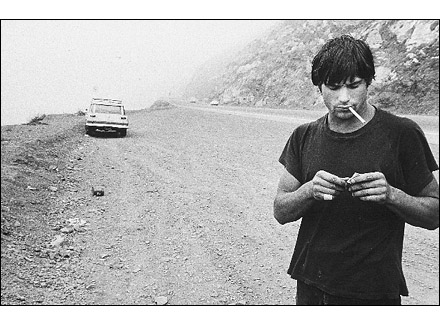
Clockwork Malibu, Rick Dano on the Highway, Malibu, CA. Anthony Friedkin. 1977. Photography - Silver Print. 16 x 20 inches

Debbie with her Head in the Sand, Venice, CA. Anthony Friedkin. 1980. Silver Print. 11 x 14 inches
Prison Photography is particularly interested in Friedkin’s photographic record of California Prisons and their inmates. The only image I have to present here is Four Convicts, Folsom Prison, CA (1991) [bottom].
California Prisons includes sensitive portrait shots of incarcerated teenagers, as well as the many typical representations of machismo and gang affiliated men.
I do not know if the series includes photographs of female prisoners, but this and many other unanswered questions now await a curious future…
I’d be very interested to hear from readers who’ve attended exhibition of the work and have any lasting impressions.

Android Sisters, Universal Studios, Hollywood, CA. Anthony Friedkin. 1978. Silver Print.

Jaws, Universal Studios, Hollywood, CA. Anthony Friedkin. 1978. Photograph. Silver Print.
It is Friedkin’s devotion to the unexpected that distinguishes his work. He disarms the extraordinary and educates his audience. Friedkin presents outlying cultures without a second thought; he surrounded himself with these people and paid them total respect.
As objective as the camera can be, it was so when in Friedkin’s hands and directed at people. Particularly, in documenting Gay culture, Friedkin was never reductive; he photographed the ‘wide-ranging composite … young hustlers, drag queens, transsexuals, San Francisco entertainers; a Gay Liberation parade in Hollywood; two lesbian women very much in love; effeminate boys growing up in an environment of machismo and the religious subculture typical of East Los Angeles.’

Four Convicts, Folsom Prison, CA. Anthony Friedkin. 1991. Silver Print. 16 x 20 inches.
Friedkin’s close tie to California, and especially Los Angeles, is conspicuous in his work as a still photographer for the movie industry. He makes the distinction himself between the circles of Hollywood and the tradition gallery circuit as evidenced by his use of ‘Tony’ Friedkin for movie credit-lines. Work on Crips and Bloods: Made in America and an appearance as himself in Dog Town & Z-Boys tie Friedkin indelibly to the California cultures of today and yesteryear.
Anthony Friedkin has over forty years experience as a professional photographer. He started out as a photojournalist working as a stringer for Magnum photos in Los Angeles. For the past twenty-five years Anthony Friedkin has lived and worked out of his apartment studio in Santa Monica. Currently, he is preparing a book of his Ocean-Wave photographs. Friedkin’s photographs are included in major Museum collections including the Museum of Modern Art, the Los Angeles County Museum of Art, San Francisco MoMA and The J. Paul Getty Museum. His work has been published in Japan, Russia, Europe, in many Fine Art publications in America and in magazines such as Rolling Stone, Newsweek, French Zoom and Malibu Magazine. For a full resume click here.

Granada (Amache) Relocation Camp, Foundations, Prowers, Colorado © Masumi Hayashi. Panoramic photo collage with Fuji Crystal Archive prints, 1997. Size: 23" x 31"
Masumi Hayashi visited every permanent site of Japanese American internment; such was her dedication to its historical truth and visual legacy. I’d like to pay tribute to Hayashi’s artistic rigour, the project and above all her life.
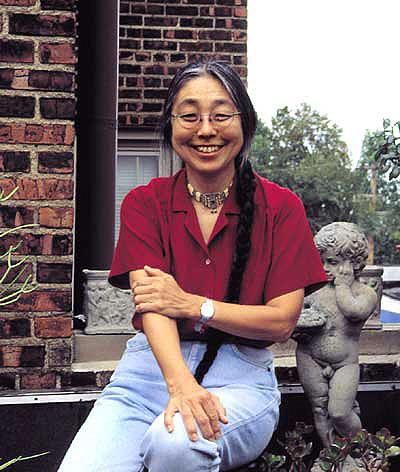
Masumi Hayashi 1945 - 2006
This post is not only a celebration of meaningful photography but also of a life cut short in tragic circumstances.
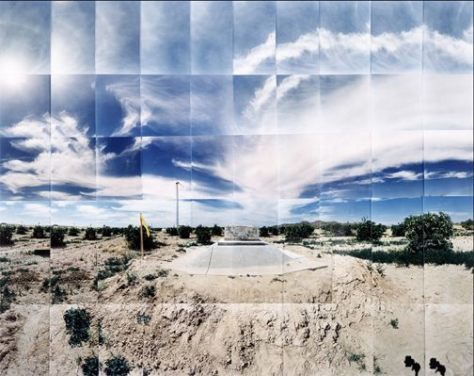
Gila River Relocation Camp, Dog Grave, Gila River, Arizona © Masumi Hayashi. Panoramic photo collage with Fuji Crystal Archive prints, 1995. Size: 38" x 31"
Prison Photography has needed to limit itself in discussion, so rich and extensive was Hayashi’s oeuvre. I recommend that you spend a long time meditating her Prison series, Salt Mine series and a spectacular EPA Superfund Sites series.
Let us focus, for now, on the issue at hand – Japanese American Internment.
Professor Hayashi photographed all 10 internment camps on American soil. She also documented the 4 Canadian internment sites. It was a subject close to her heart — she was born at the Gila River Relocation camp in Arizona in 1945.
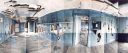
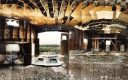
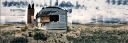
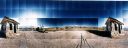
In most cases, Hayashi photographed a full 360 degrees. The gradient of exposure in her photo montages and her extruded viewpoint lent visual richness, height and vertigo to otherwise mundane landscapes. Hayashi’s indelible presence in the works is a reminder of the former human presence in inhumane environments.

Gila River Relocation Camp, Monument, Gila River, Arizona © Masumi Hayashi. Panoramic photo collage with Fuji Crystal Archive prints, 1995. Size: 31" x 75"

Gila River Relocation Camp, Foundations, Gila River, Arizona © Masumi Hayashi. Panoramic photo collage with Fuji Crystal Archive prints, 1990. Size: 22" x 56"

Topaz Relocation Camp, Foundations, Delta, Utah © Masumi Hayashi. Panoramic photo collage with Fuji Crystal Archive prints, 1995. Size: 31" x 72"
Hayashi’s composite tactic solves the problematic banality of many of the sites. She describes here and here that many of the sites as barren and sun bleached (Manzanar, CA has been well-preserved as a memorial and state park, but it is the exception). The most common denominator among the sites was the concrete sewage system. The large peripheral tanks always remained long after the sheds and tended plots had decayed. A brick structure was a treat, and wooden barns, anomalies.
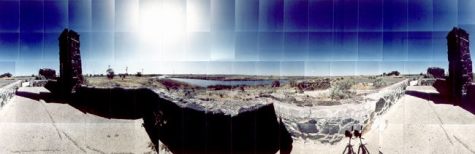
Minidoka Relocation Camp, Visitors Waiting Room, Minidoka, Idaho © Masumi Hayashi. Panoramic photo collage with Fuji Crystal Archive prints, 1992. Size: 27" x 70"
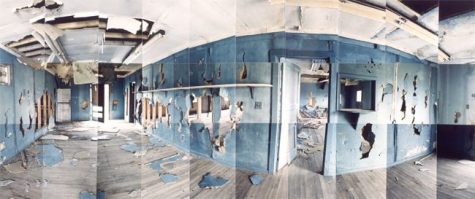
Heart Mountain Relocation Camp, Blue Room, Park, Wyoming © Masumi Hayashi. Panoramic photo collage with Fuji Crystal Archive prints, 1995. Size: 23" x 45"
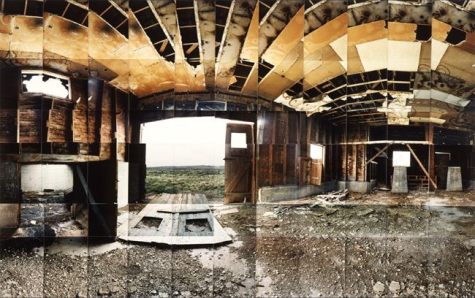
Heart Mountain Relocation Camp, Interior, Park, Wyoming © Masumi Hayashi. Panoramic photo collage with Fuji Crystal Archive prints, 1995. Size: 31" x 42"
Hayashi’s endeavours cannot be underestimated. As Candida Hofer noted;
and
For those of you sitting there thinking, “Oh, yeah, I could take a bunch of little pictures of something too.” No, you couldn’t. Not like this. Her style is built on solid conventional photographic methods (each picture must itself be a very good picture).
Extraordinary.

Heart Mountain Relocation Camp, Hospital, Park, Wyoming © Masumi Hayashi. Panoramic photo collage with Fuji Crystal Archive prints, 1995. Size: 32" x 70"
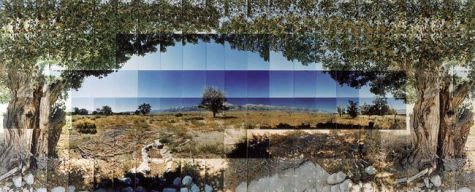
Manzanar Relocation Camp, Tree View, Inyo, California © Masumi Hayashi. Panoramic photo collage withFuji Crystal Archive prints, 1995. Size: 27" x 63"

Manzanar Relocation Camp, Monument (Version 1), Inyo, California © Masumi Hayashi. Panoramic photo collage with Fuji Crystal Archive prints, 1995. Size: 20" x 30"
In addition to her photographic work, Hayashi conducted audio interviews of former internees to develop a complete sense of experience across the American internment archipelago.

Manzanar Relocation Camp, Guard Gates, Inyo, California © Masumi Hayashi. Panoramic photo collage with Fuji Crystal Archive prints, 1992. Size: 27" x 65"

Granada (Amache) Relocation Camp, Water Tank, Prowers, Colorado © Masumi Hayashi. Panoramic photo collage with Fuji Crystal Archive prints, 1997. Size: 23" x 31"
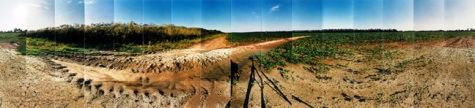
Jerome Relocation Camp, Farm, Drew & Chicot, Arkansas © Masumi Hayashi. Panoramic photo collage with Fuji Crystal Archive prints, 1995. Size: 22" x 59"
In August 2006, Hayashi along with her neighbour John Jackson, knocked at the door of the apartment of another neighbour Jacob Cifelli to complain oncemore about his high volume music. It was the last of many noise complaints. Cifelli shot them both to death in the stairwell.
The story has added tragedy as Hayashi had recently reunited with her biological daughter, Lisa Takata, after 39 years of estrangement. Hayashi gave Takata up for adoption within a few days after her birth in the midst of the Watts Riots in 1965.
Photographer, artist and fellow Cleveland resident, Norm Roulet summed up the loss of Hayashi;
Rest in peace, indeed.
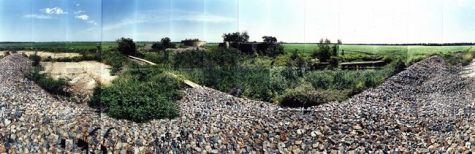
Jerome Relocation Camp, Sewer, Drew & Chicot, Arkansas © Masumi Hayashi. Panoramic photo collage with Fuji Crystal Archive prints, 1995. Size: 23" x 55"
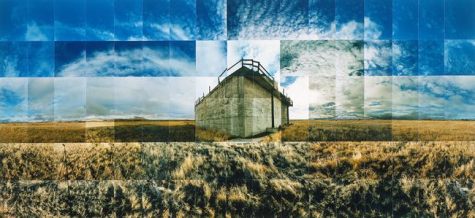
Tule Lake Relocation Camp, Sewer, Tulelake, California © Masumi Hayashi. Panoramic photo collage with Fuji Crystal Archive prints, 1996. Size: 32" x 59"

Poston lll Relocation Camp, Sewer, Yuma, Arizona © Masumi Hayashi. Panoramic photo collage with Fuji Crystal Archive prints, 1997. Size: 26" x 63"
Masumi Hayashi’s work has been exhibited in internationally respected museums and galleries, including the International Center for Photography in New York, the L.A. County Art Museum, the Japanese American National Museum (L.A.), the Tokyo Museum of Photography, the Ludwig Museum of Art in Germany, and the Victoria and Albert Museum of Photography in London, England. In 2003, she had a retrospective one-person exhibit at the Japanese American National Museum in Los Angeles. Professor Hayashi taught photography for 24 years at Cleveland State University, Ohio.
Gallery with pop-out full size images






-

- Masumi Hayashi 1945 – 2006
Thanks to Matt Kelley at Criminal Justice Change.org for alerting me to Hayashi’s work.

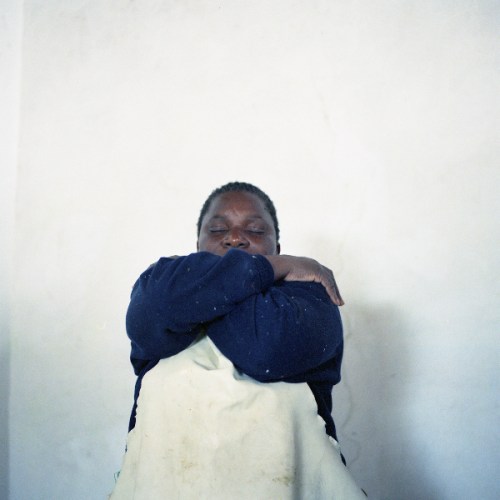
I wouldn’t describe Melania Comoretto‘s portfolio Women in Prison as portraiture; it’s bigger, it’s emotional landscape.
Comoretto’s work tinged with sadness, possibly even resignation. Their circumstance may have dulled outward looking expectancy.
This work stands out, for me personally, as one of the finest photographic documents of women prisoners, globally. Women in Prison is charming and disarming. These are women whose words would likely shock us and yet they seem to know the weight of their own stories and captive futures. The reticence of Comoretto’s subjects, paired with the arresting gaze (when given), is a triumph.
Q&A
Where is this prison?
I photographed in two Italian prisons in Rebibbia and Trapani.
Why did you do a project there?
I wanted to investigate and understand how women could express their femininity and take care of their body in a situation of extreme marginalization.
The starting idea was to reflect the mental and psychological labyrinths and internal prisons that prevent human beings from living their lives freely. I asked myself, “What could be the extreme expression of this idea?” The answer; Prison.
What were the women’s lives like? Was their prison experience positive or negative?
The way the women live in prison depend on the prison in itself and how it is organised. It also depends on the personality and psychological attitude of the woman.
Most of them fall into depression; others react in a very active way. The body is the mirror of that. The more a women fall into depression the more she forget to take care of her body, that was the reason why I decided to focus on bodies and femininity.
Where are the women now?
Most of the women are still in Rebibbia and Trapani prisons. I shot this series of photos only in the last 10 months.

Were the women good portrait subjects? Did they want to be photographed?
They were very willing to speak and to be portrayed! They liked to spent time with me. They rarely have the chance to speak with someone who wants to listen deeply their stories.
Did they see your photograph prints?
I sent them each contact sheets.
In Italy what is society’s attitude toward prisoners and, specifically, female prisoners?
Unfortunately, in every city and country of the world, the social attitude towards prisoners is not very open-minded. They [societies] focus on the fact that prisoners are guilty and rarely on the fact that (in the majority of cases) that they had no chance because their lives started in very tragic conditions. Without any help it is very difficult for prisoners to change their destiny.
What was your experience on the project?
I understand how in some situations life does not leave you many chances to change.
Can the camera be a tool for rehabilitation?
I deeply believe it is. I don’t know if photography could be a tool of rehabilitation for the women. For me it was and is … so maybe [the camera] could be for them and for many other people. It prevents me from destroying myself and I believe it could have the same advantage for many other people!

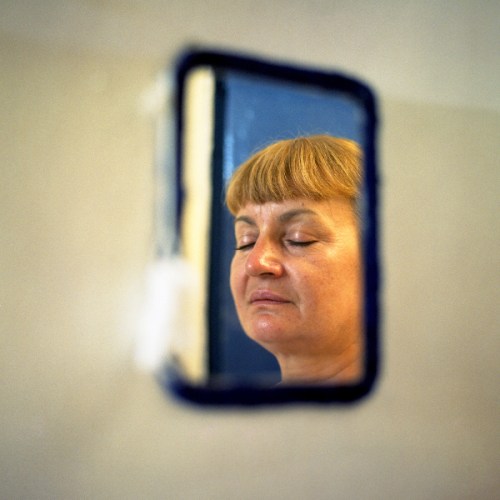

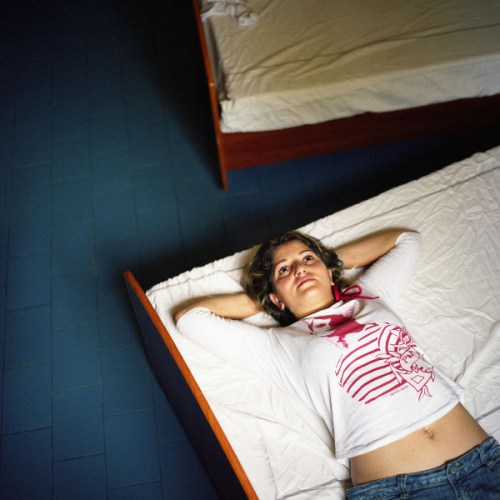


David Simonton contacted me and shared his long term project at the former Polk Youth Center in Raleigh. After thoughtful discussions David and I decided upon a pairing of articles.
In this post, Part One, David talks about the background to the project and his objectives in the work.
I also chose a selection of David’s prints to showcase and offer comment. At the bottom is a thumbnail-pop-out-gallery with all the pictures in one place.
…and, in a few weeks, Part Two will dissect the atypically rich and varied visual-history of the Polk Youth Center.
David Simonton’s Commentary (PP’s Subheaders)
Photographing Disused Architectures of Citizen Management
In the late-1980’s I was one of a number of photographers working on Ellis Island, the former Immigration Station in New York Harbor, documenting the progress of the restoration of the facility (reopened to the public in 1990).
The project was called “The Ellis Island Project: Documentation/Interpretation.” I was living in New Jersey at the time, and traveled to the island to photograph twice a week for nine months. During this period I was also pursuing my personal projects.

Opportunist Photographer
In 1989, I moved to North Carolina
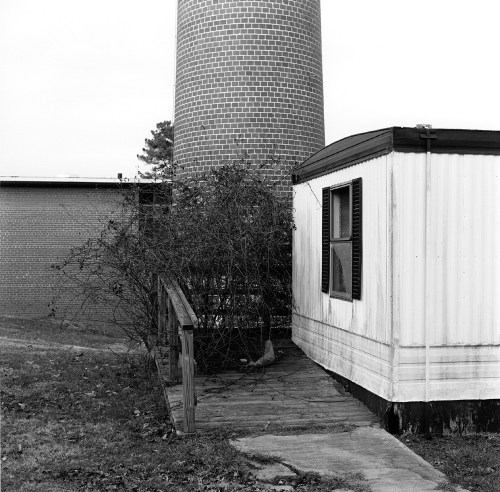
The “Old” Polk Youth Center/Prison, Raleigh which has a long and storied history, closed in 1997 when a modern facility (which the “Old Polk,” most assuredly, was NOT) opened in Butner, NC. The inmates were transferred to Butner in November of that same year.
Living nearby, I could hardly resist the opportunity to photograph there. So before any “No Trespassing” signs were posted, I went and photographed the site. The doors (cell doors, some of them) to many of the buildings were wide open!
“Old” Polk Youth Center – a euphemism if ever there was one – was located on land directly adjacent to the North Carolina Museum of Art in West Raleigh, near the State Fairgrounds.
The prison buildings were razed in 2003. But before that occurred, the prison was essentially abandoned until the land (along with the buildings on it) was transferred to the museum.
Official Photographer
During the mid-nineties, I exhibited my personal, interpretive work from Ellis Island – 90 images – at a gallery in Raleigh. Huston Paschal, a curator at the state art museum, attended the exhibition.
Unaware that I had already photographed there, Huston Paschal invited me to document the site, which was now in the museum’s hands. In late-2000 the invitation was formalized with a commission. I continued working on the project (even after the commission had lapsed) until the buildings came down, the ground leveled and grass planted.
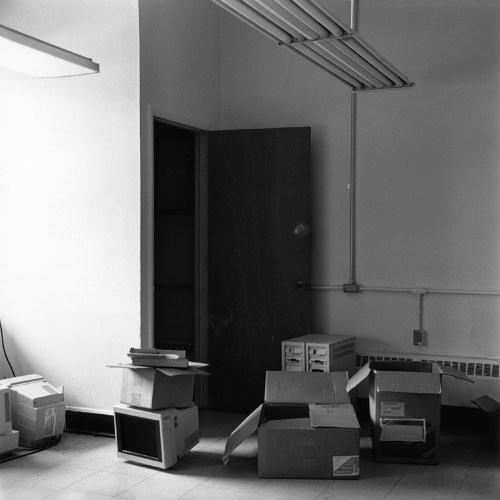
My involvement was always with an empty site, when the prison was closed and inmates transferred. I photographed a long-abandoned facility: empty buildings, empty cellblocks and overgrown grounds.

Simonton: “Art for art’s sake”
As an art photographer (an unfortunate, nearly pretentious-sounding term, even if it’s the category my work falls into), my goal is to make interesting pictures; interesting in-and-of themselves, so that THEY are worth looking at, repeatedly.
What’s depicted is not unimportant, but it’s of secondary importance; this is my approach to my own picture making. The fact that my “subject” was a prison is happenstance – I photograph all kinds of abandoned structures. I also photograph the smalls town North Carolina (day and night) and photograph landscapes. An interesting photograph is always my intent, even when what it depicts is not itself inherently interesting … or beautiful.

Art and Documentary converge.
The Polk project was a “documentary” project, but not in the strict sense of it being wholly objective. My pictures describe the place I saw, and, if not the place I “saw”, then the place I thought and felt.
The project is not a comprehensive cataloging of the site either; rather, the pictures reflect my response to it during the passage of several years. They inform history by showing the place as it was in those waning years, after being – at long last – set aside as a relic; finally to be torn down and planted over and – with still more time – forgotten.
Polk Youth Center was located in a heavily populated area, which was not the case when it was built. Improvements were rarely made because, why spend money on any improvements if the facility was about to be moved or closed? – as were the recurrent promises for decades.
Institutional Narratives
I was not aware of the prison or the prison sites history until after I had completed my work; which may be just as well, since it was difficult enough to find beauty in such a physically “unbeautiful” place.
Had I been mindful of the ugly history of the old Polk Youth Center – riots, rape and other forms of violence in its final years, – I may have had a harder time photographing.

Prison Photography’s Commentary
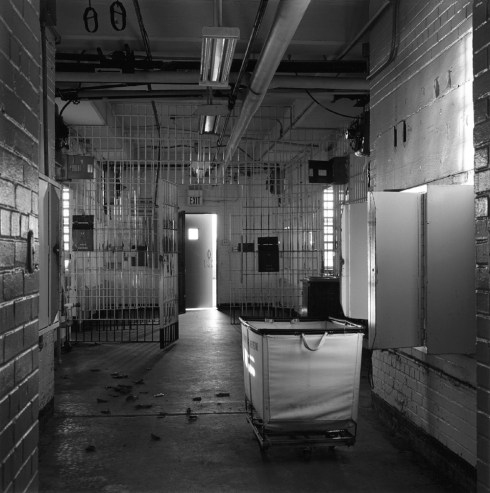
Simonton’s three years at Polk yielded a varied portfolio. In editing the selection (from 100+ images to these 16) images distinguished themselves for very different reasons. If the lens wasn’t pointed at something crumbling, it was pointing at something overgrown and grown over.
Some images (Steep Steps) are flattened and exposed matter-of-factly, whereas others (Laundry Bin) luxuriate in silvery sheen.
I choose one pairing here of the same view in different season; Simonton took many pairings so to secure the evidence of time in his series. Apparently, the chimney was a signature of Raleigh’s landscape.


It is in the different states of dilapidation that one finds a visual allusions. Simonton’s photograph of the teeth counterpoise the dental ephemera in Edmund Clark’s photography of a functioning geriatric UK prison wing. When given the opportunity, Simonton ties the fragility of the body to the decay of the site.
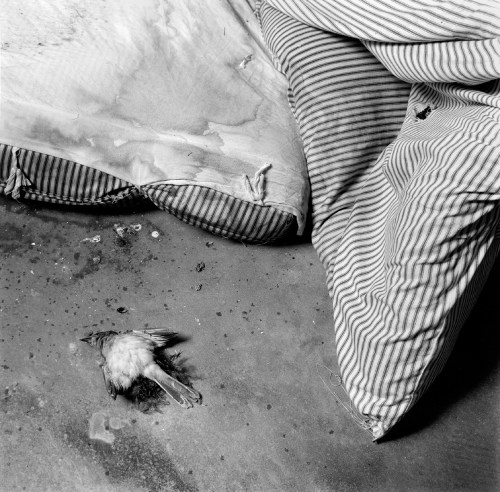
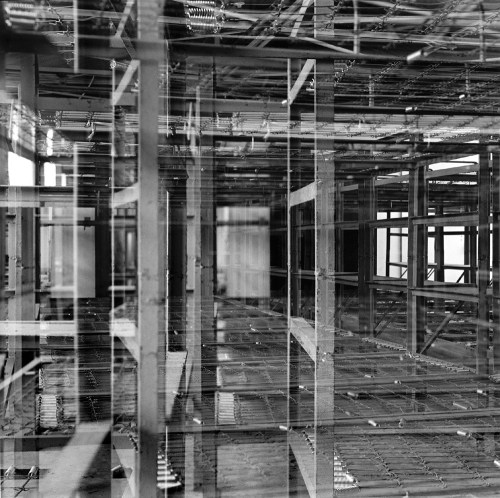
Other recalls. Simonton’s cavernous grimed up cells, the expired bird, the textural friction between hard concrete and friable life are not too dissimilar to Roger Ballen. The reflected dormitory of cacophonous bed frames is a Moholy-Nagy-informed dark-fantasia march of welded steel.
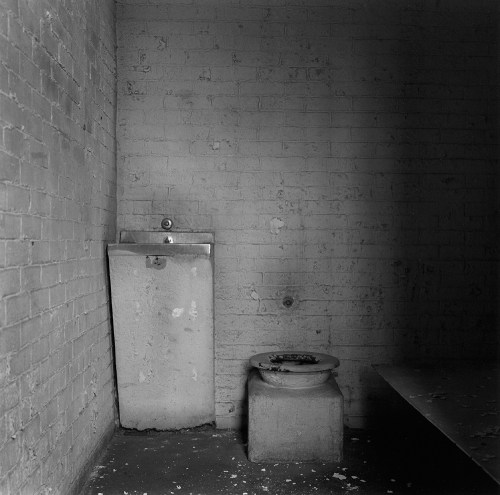
Only a few of Simonton’s images describe the site as one of incarceration. Few of the normal visual clues are available; no visible bars on windows, no holding cages. This could as easily be a disused YMCA or summer camp.
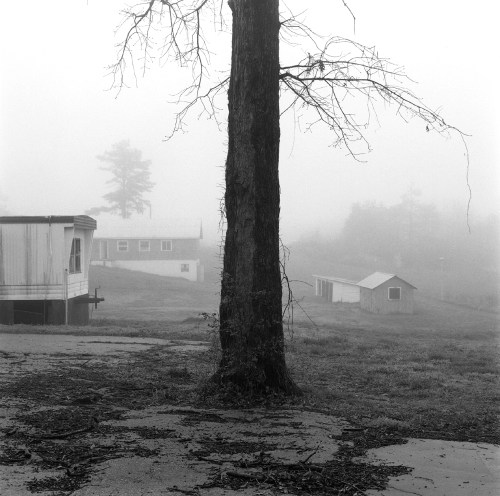
For Prison Photography, the real interest in Simonton’s work comes when it is positioned in a wider context of the site. David provided me with background info and some press clippings which whetted my appetite. Further research was rewarded with an unusual series of photographic manoeuvers sequentially on this site through its various guises. All of this I will cover in Part Two.
Closure & Erasure
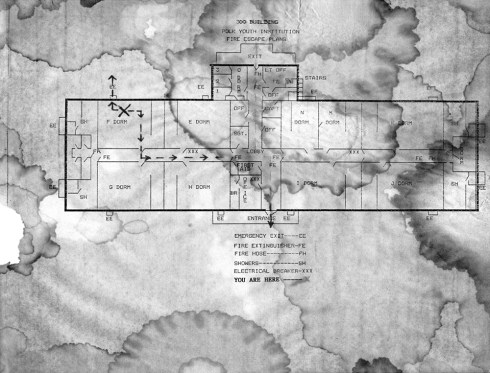
The photo of the evacuation plan below touches upon that procedural rigour that has cycled at the site of the former Youth Polk Center. The image at the very bottom (as well as being Simonton’s favourite) is a fine accompaniment to the evacuation plan.
Both images bear evidence of water blistering, bubbling and staining its way through materials. These evocations are “Art for Art’s sake” but they are also poetic closures, historical records and proof that in the absence of human interference erasure sets in rapidly.

David Simonton has been a photographer for 40 years and has been photographing North Carolina for the past 20 years. An adjunct instructor of photography at Peace College in Raleigh, David often chooses to focus on the more rural parts of the state. His series “Photographs from North Carolina” features black-and-white photographs from the 345 North Carolina towns he has visited. He has completed commissions for the North Carolina Museum of Art and the United Arts Council of Raleigh and Wake County. He has had work in solo and group exhibitions throughout the United States, and his photographs are in the permanent collection of the North Carolina Museum of Art. David was awarded a visual artist fellowship from the North Carolina Arts Council in 2001. (via)


View other images at David Simonton’s website. Indyweek have written on his work previously.
Thank you to David Simonton for reaching out. Thanks for the time spent over questions and for your collaboration. Pleasure working with you.

Prison Chess Portrait #14. Oliver Fluck
Oliver Fluck’s series of Prisoner Chess Portraits is an interesting counterpoint to other prisoner portraiture. It is unfussy, neutral, quiet. Fluck is experimenting with the figure and I would like to see him in the future settle with a preferred vantage point in relation to his sitter. For example, I like the portraits of the Prison Chess Champ and of Christopher Serrone. Fluck is headed in the right direction.
Prison Chess Portrait #14 (above) is a very strong shot also taking advantage of particularly high contrast light conditions.
Is photographing stationary silent chess-playing sitters simple or difficult? On the one hand, the sitter is still for you, but on the other, it’s difficult to spark rapport with a man concentrating on the game.
Text with Image
An integral part of the project is Fluck’s drafted questionnaire which secured answers to standard questions from as many competitors as possible.
Inmate quotes such as, “Having been incarcerated since age 15 and never getting out, it is helpful and healthy to know that not all of society lacks interest or willingness to become productively involved” keep reality checked. As do sobering statistics such as 50+ years or 66-year prison-terms.
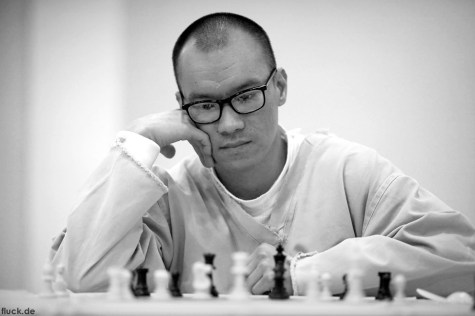
J. Zhu. Oliver Fluck

Christopher Serrone. Oliver Fluck
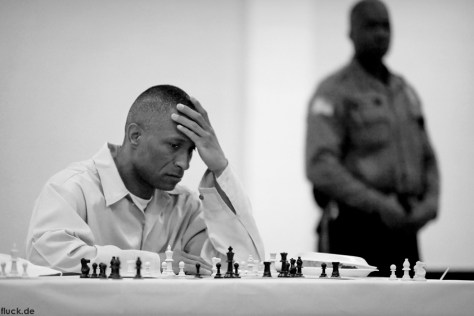
Prison Chess Champ. Oliver Fluck
Q&A with Oliver Fluck
How and why you came to this topic?
I enjoy playing chess, which is why I’m in touch with the local university chess club here in Princeton. The students got the opportunity to play against inmates of a maximum security prison, and when I heard about it, I proposed to photograph the event and volunteer as a driver for the students.
What are your hopes for the project as a whole?
Very frankly, from a photographer’s point of view, I would like to see it exhibited, and provoke some thought.
What is your message with the portraits?
I can talk about one thing that I am not trying to do: I’m not trying to propagate any kind of standpoint about how one should deal with criminals, and whether or not they should have the right to enjoy chess. I’m like most other viewers, I stumbled upon this project and got curious … Curious on an unprejudiced level from human to human. Start from there if you are looking for a message.
Anything else that you’d like to add and feel is important.
I would like to thank John Marshall for this experience, and David Wang for constructive feedback regarding the prisoner questionnaire.
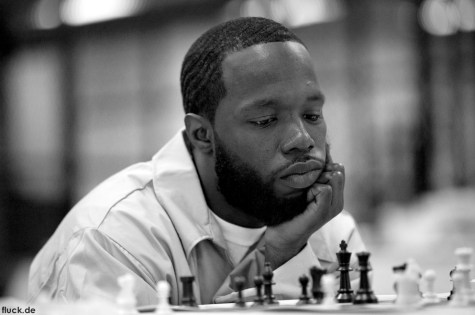
Competitor with Unknown Name. Oliver Fluck

Prison Chess Portrait #4. Oliver Fluck
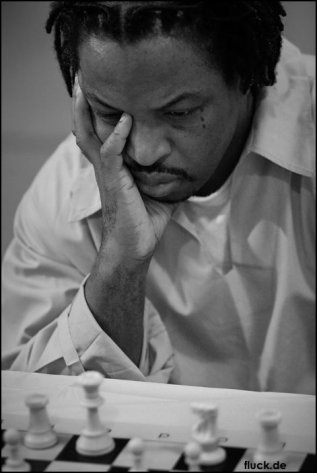
Prison Chess Portrait # 21. Oliver Fluck
Original Links to portraits 1, 2, 3, 4, 5, 6 and 7.
Oliver Fluck’s Flickr
Watch this youtube clip of a local news report from the prison during the tournament.
A few things emerging today to which I’d like to doff my cap.
Lenscratch
Aline Smithson at Lenscratch, rumoured to be in Santa Fe (Good Luck, Aline), celebrated all Lori Waselchuk’s documentary work; Waterlines, one project of many projects wrapped up in Louisiana, and Grace Before Dying community portrait of the Prison Hospice at the Louisiana State Penitentiary (Angola).

Lock Down Visit. Lori Waselchuk
Lori, a member of the New Orleans Photo Alliance, launched her project Grace Before Dying April 3rd at the Louisiana State Prison Museum in conjunction with the Louisiana-Mississippi Hospice and Palliative Care Organization (LMHPCO), the Louisiana State Prison Museum, and helped along with a Distribution Grant from the Documentary Photography Project of the Open Society Institute and Moonshine Studio.
The issues of age and health in prisons – together and in isolation – have been reasonably well covered. But, Waselchuk succeeds where so many others fail (with the exception of Edmund Clark) in really communicating the infirmity and vulnerability of the inmates
Fraction offered a good summary, as does Waselchuk’s Alma Mater. Critical Mass has the best gallery of Grace Before Dying
Bint PhotoBooks on Internet
Bint PhotoBooks on Internet got to grips with Martin Roemers‘ Relics of the Cold War which includes a Valencia orange room within a Stasi Prison. Roemers goes tête-à-tête with the Fuchs brothers in the communist-archaeology-photo genre.

Germany, East Berlin. Visitor-room in former Stasi prison Hohenschoenhausen. Political prisoners were held in this prison. Martin Roemers
Unrelated to prisons, I am also a fan of Roemers’ Lourdes Pilgrims series.
Subjectify
Subjectify grapples with the latent appropriation of images since the 2004 release of Abu Ghraib photographs.
much has been written about the ways in which war photography often echoes iconic religious imagery. but i have been wondering how, in turn, the iconography of the new war and torture photography is also influencing fine art photographers today?
Subjectify offers Jessica Somer‘s work ‘Origin’ from the Bend So Not to Break series as a case in point. I drew some interest along with disbelief and derision when I skirted the issue regarding Ballen and the torture aesthetic.

Origin. Jessica Somers
I believe artists biggest problem is to work away from viewers natural tendency to superimpose meaning so easily. I think Somers is safe. She’s got a style that stands on its own – it doesn’t get drowned out by media noise or green gloves.
AN Other
Yusuf Sayman‘s work on individuals going through Re-entry programs after long term prison sentences presented itself in the Independent‘s bizarre and confused “Britain’s Best Crime Photography” competition.
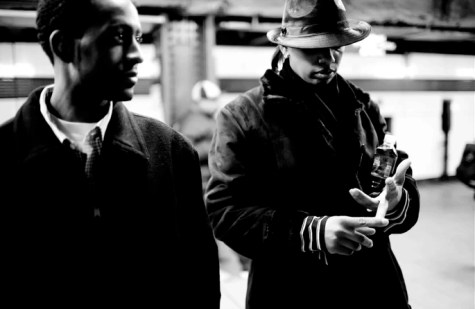
Starlene from the Free Again: Starlene series. Yusuf Sayman
Starlene Patterson is one of three former prisoners, Sayman has collaborated with after prison release for the Free Again series. Starlene is at college to qualify as a Social worker. “People need help.”
Starlene has written a book, Up Against the Wall. She says, “My book has a message. There’s a lot of young people who need guidance and they my not have that. If my book can help one [of those children] than I’ve achieved.”
Non-prison related I like Sayman’s Henry’s World series.
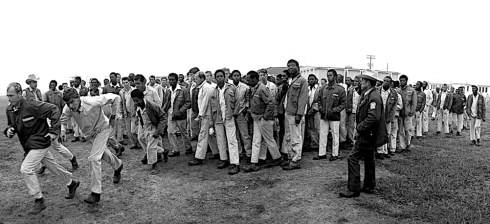
Credit: Bruce Jackson
NY Times LENS Blog
Here, there and everywhere people are celebrating the New York Times’ LENS Blog as a messianic gift for the photophile. I was therefore happy to see that less than two weeks in LENS is featuring Bruce Jackson’s wide angle documentary work from Arkansas Prison in the early 1970s
Bruce Jackson should be a familiar name as it was he that rescued, scanned and shared the enigmatic Arkansas Prison Mugshot series, Mirrors.
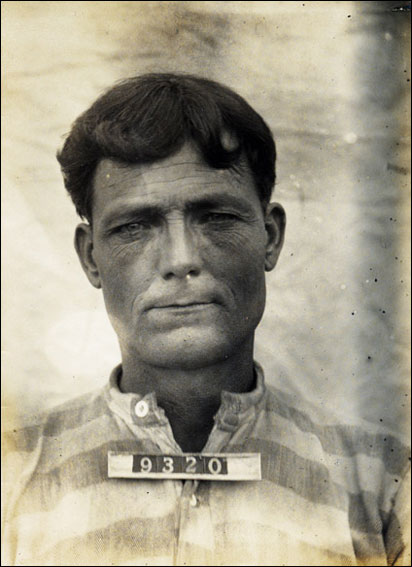
Found and presented by Bruce Jackson. Arkansas State Prisoner Portrait
June 100 Eyes Issue
Over at 100 Eyes, Andy Levin from insists that “Whatever ones perspective, be it victim, civil rights activist or cop, there is one shared idea – something needs to change.”
The June edition of 100 Eyes, titled, America Behind Bars features the work of Dominic Bracco, Jerome Brunet, Darcy Padilla, Jenn Ackerman and Tim Gruber – all very talented and committed photographers.
As editor, Andy Levin, concludes, the genre of prison photography (or to be less aggrandizing) simply the practice of photography within sites of incarceration is often a difficult and thankless task;
The photographers who have contributed to “America Behind Bars” have worked against overwhelming odds to bring back powerful images of American prisons. One can’t simply walk into a prison with a camera. This kind of photography requires long negotiations and often a warden who has the vision and concern to allow a photographer into his jail.
Wonderful exposure for the most pressing of social issues in America today.
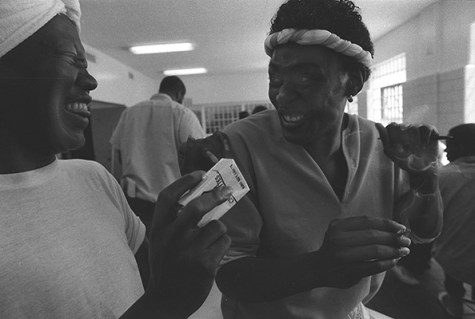
Darcy Padilla. From AIDS in Prison Series.
Prison Photography began its project in September 2008 with a celebration of Darcy Padilla’s portrait of former San Quentin Public Communications Officer, Vernell Crittendon.
In February, I was gob-smacked by Jerome Brunet’s Riding Shotgun with Texas Sheriffs.

 Prison Photography