
You are currently browsing the category archive for the ‘Fine Art’ category.
In recent months, there’s been a number of interesting — and in some cases, urgent — photo stories coming out of prisons worldwide, that I’d like to draw you attention to.
ANDREW BURTON

Anthony Alvarez, left, 82, eats breakfast with Phillip Burdick, a fellow prisoner and member of the Gold Coats program at California Men’s Colony prison in December. Mr. Alvarez said he has been incarcerated for 42 years for a series of burglaries, possession of illegal firearms and escapes from county jail. He eventually got a life sentence due to three-strikes laws. Shown is Mr. Alvarez’s first day being assisted by the Gold Coats; he largely needs help with mobility. Mr. Alvarez tries to work out for a few minutes every other day. Mr. Burdick, 62, has been volunteering with the Gold Coats for more than 18 years and is the longest-serving member of the program. Mr. Burdick has served 37 years on a 7-years-to-life sentence for first-degree murder.
Andrew Burton‘s photographs of aging prisoners for the Wall Street Journal have been well-received. With one of the largest state prison populations, a history of long sentencing laws and inadequate healthcare, the old men and women have the odds stacked against them for a comfortable day-to-day living.
The percentage of prisoners 55 or older in the U.S. increased by more than 500% between 1990 and 2009.
Burton’s photos focus on the Gold Coats program at California Men’s Colony, in San Luis Obispo, which pairs younger, willing prisoners with older prisoners suffering dementia and terminal illness. In 1991, California Medical Facility created the first prison hospice program in the nation to deal with the AIDS crisis, and the hospice is now used for elderly prisoners who are terminally ill.
Great photos. Burton is realistic about the situation but seems clearly impressed with efforts there.
However, here’s some context. Ever since California’s medical prison system was deemed cruel and unusual and it was brought under federal receivership, the state has been making efforts to deliver specific facilities for health care. The largest was to open the California Health Care Facility in Stockton, CA. It is the largest medical prison in the world. At a cost of $840M it was supposed to solve many issues and provide care for 1,800 prisoners. Nothing is so straightforward. Since opening in July, 2013, it has been beset by waste, mismanagement and miscommunication between the prison and medical staffs.
Watch this space. Hopefully vast, vast improvements will ensue.
[Todd Heisler has photographed at the California Men’s Colony too.]
ANDREA WISE

Erika Roberts, 26, of Hartford is a factory worker, a dancer, a teaching artist, a worshiper, a mother of three, and a felon.
Photographer Andrea Wise soon realised that when lives are intertwined with the criminal justice system nothing is straightforward. From the millions of effected formerly-incarcerated millions, Wise’s Freedom Bound manages to tell the story of Erika Roberts on very humanising terms. And with touching photographs.
“Her story is both a simpler one – a quiet story of a young family just trying to do the best they can – and a more complex and nuanced story about life in poor urban communities where people grow up in and around trauma, where criminal activity and incarceration are commonplace, and where Erika’s story isn’t all that uncommon,” says Wise.
Freedom Bound explores Erika’s quiet determination and struggle to break the cycle of incarceration.
“Erika strives for more from life, for her children, and for her community,” writes Wise.
ANIBAL MARTEL

In 2012, Anibal Martel photographed inside Lurigancho Prison, the largest and most overcrowded prison in Peru.
“According to the National Penitentiary Institute of Peru (January 2012) Lurigancho has a capacity limit of 3,204 prisoners but it actually holds 6,713 with a ratio of one police officer to 100 inmates,” says Martel.
“With corruption, tuberculosis and drug dependency together with its appalling management by the state, the prison gained a reputation as one of the most dangerous prisons in the world,” Martel continues. “Today, Lurigancho is fighting to survive thanks to the internal organization of some prisoners and their work. These prisoners have managed to create a small, internal infrastructure that allows them to feed themselves and live a more dignified life.”
ERIC GOURLAN
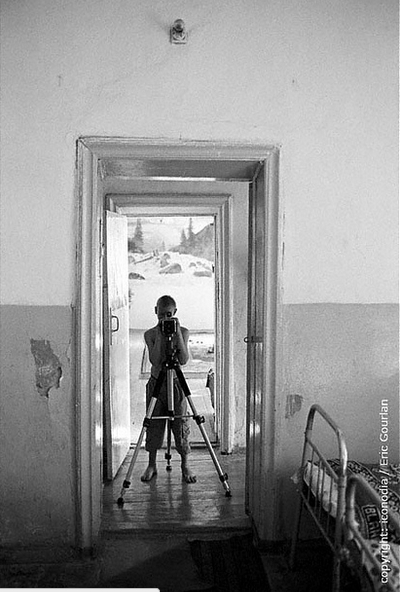
French photographer Eric Gourlan voluntarily spent a month inside Kyrgyrzstan’s prison and documented life in two men’s prisons, one women’s jail, and a juvenile detention centre — all in the capital Bishkek.
Gourlan has published on Flickr photographs from the juvenile facility in Bishkek, Kyrgryzstan.
There’s a great interview with Gourlan on the Institute for War and Peace Reporting website. Gourlan explains that he gained access through valuable partnerships with State Service for Execution of Punishment (GSIN), the United States Agency for International Development, Freedom House, the OSCE Center in Bishkek, the GSIN Public Oversight Council and the Kyrgyz NGO Egel — a long list which gives us an idea of the importance of partners for this type of work.
“I would really like to commend the openness of [prison] officials in Kyrgyzstan – I could go almost everywhere I wanted,” says Gourlan. “The only thing was that in the first two days, I was accompanied by guards until everyone got used to me. But then I was given more freedom and practically could move around on my own. On some occasions, I ate with prisoners.”
Gourlan met some hardened criminals but also met people who’ve been victims of overly-punitive sentences.
“One woman told me that she had been in a very difficult financial situation and somebody asked her to transport 30 grams of heroin from point A to point B for 100 [US] dollars. She was caught and given 12 years in prison. She had never used drugs before, never sold them, and never got her 100 dollars, but she has been locked up for 12 years,” explains Gourlan. “Obviously I do not know if those stories I was told were true or not. But that was not why I embarked on this project.”
Eric Gourlan’s project was backed by Freedom House, the OSCE Centre in Bishkek, a local NGO called Egl, and the prison service in Kyrgyzstan.
More photos on l’Oeil de la Photographie and this video on Freedom House, a group in support of human rights in Kyrgyzstan.
ISABELLE SEROUART
Isabelle Serouart‘s rare photographs from within a prison in Madagascar were published by SoPhot. The images are small and embedded, but I also found this footage Serouart made of female prisoners singing.
“In a very confidential way record of women song in a jail in Madagascar,” says Serouart. “To sing is a way for her to survive together.”
DAVID RYDER
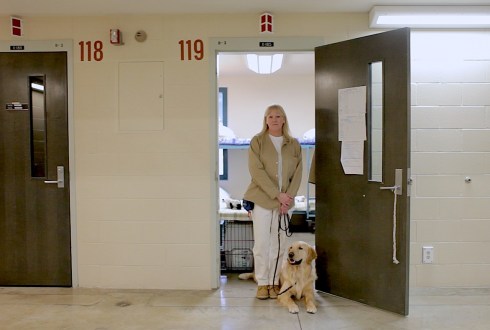
David Ryder, for The Wall Street Journal, made a video about the Prison Pet Partnership at the Washington Corrections Center for Women in Gig Harbor, Washington is an interesting watch.
“The program allows inmates to learn job and life skills while providing kennel and grooming services to clients from the surrounding community,” says Ryder. “In addition, unruly dogs from other programs (who might otherwise be put to sleep) are able to have a second chance by entering the prison’s training program.”
This is a win-win for the women, the dogs, the prison administrators and the media. Despite prisons being a continual source of distress and latent abuse, the press always needs new angles — depressing stories don’t have the readership coming back. A human interest story about (wo)man’s best friend and redemption plays well, and we’ve seen them before. Here’s a couple more similar project in Florida and Colorado.
Another thing that makes me slightly uncomfortable with the story is that simultaneously, just over an hour south, detained immigrants were on hunger strike for their confinement in solitary and slow progress of their cases. Now I know, the state prison system and U.S. Immigration & Customs Enforcement are different authorities, but if we’re to look at lock-up in Washington State, I’d suggest we factor in ALL types of prisons and prisoners. ICE facilities remain the most inviisble.
The full WSJ story, to accompany Ryder’s video, by Joel Millman and with photos by Stuart Isett, you can see here (behind a paywall).
As an aside, the most interesting photography project on prison dog’s programs remains Jeff Barnett-Winsby’s Mark West & Molly Rose. After Barnett-Winsby had photographed the prisoner (Manard) and the program administrator absconded from the Safe Harbor Program and escaped from Lansing Prison, KS and went on the lam for 11 days. A weird tale of fact and fiction, manipulation and unsaid knowns. The investigating police acquired Barnett-Winsby’s photos because he had made the most recent images of Manard’s tattoos. Yet Manard had drawn false tattoos for the shoot predicting their use later following his escape. Twists and turns. No photographer can ever plan or predict such a bizarre story, or implication in it.
MAE RYAN
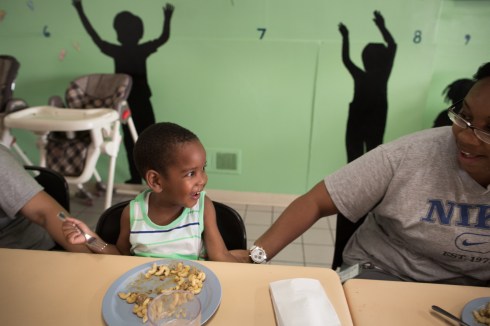
A child plays with his mother at the cafeteria inside The Community Prisoner Mother Program in Pomona, California. Mothers and their children live in open barracks shared with two other mother-child family pairs.
Mae Ryan‘s series on the Community Prisoner Mother Program in Pomona, California was one of the last assignment’s she made before moving from KPCC to The Guardian. And it is stand out.
Pregnant in Prison offers a look at a select group of minimum security prisoners who may live with their young children until the child turns seven years old. Mothers live with their children in rooms shared with other prisoners. During the day, children are enrolled in the on-site preschool and Kindergarten and mothers take rehabilitation and other classes.
In 2011 and 2012, 233 female prisoners gave birth while serving time in the California prison system. So, this program applies to only a tiny fraction of women suffering California’s prison system. It is a welcome, forward-thinking program. Psychological studies are unanimous that close bonds between mother and baby, from the earliest hours, are vital in sparking healthy cognitive and social behaviours. Why wouldn’t we allow incarcerated mothers the ability to raise their own children?
In terms of such residential programs, most (and there are only a handful) allow mothers and babies to be together until the baby is 2 or 3 years of age. Pomona is exceptional.
Let me be clear though, I don’t want to see more prisons with this type of program; I want to see less prisons with lesser need for these types of programs. I want to see community supervision instead of incarceration and if prisons must be used, then for them to be bursting with positive programs designed around the women’s needs. That said, the Community Prisoner Mother Program has many elements to inform better care.
ANONYMOUS GREEK PRISONER
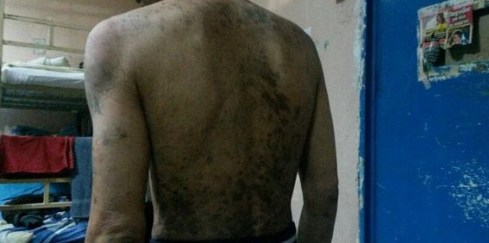
An expose by a Greek Prisoner registered on American news consumers’ radar when Medium published the piece Greece’s Biggest Prison Is Boiling by Yiannis Baboulias. The photographs accompanying the piece were taken by a prisoner and were then published repeatedly through the Twitter account @kolastirio.
He also got his footage out:
The expose caused outrage.
Baboulias writes, “People suffering from HIV, tuberculosis, psoriasis, cancer and other serious diseases, are discarded like trash in common rooms where hygiene is an unknown term. Spaces designed to hold 60 people, now hold more than 200. Reports say that some of these diseases have already started spreading amongst the inmates, making the prison a threat to public health in the general area. As inmates report, when the staff realises someone is close to death, he is quickly transported to a hospital, so his death won’t be recorded in the prison’s logs.”
Given that the infrastructure of Greece is collapsing in the wake of it economic meltdown, how surprising is this neglect? Hospitals are having budgets cut by 25% so what chance have the prisons and prisoners in the grapple for resources?
In an update, Baboulias says that the prisoner that leaked the photos and video has been prosecuted and faced trial.
VALERIO BISPURI

Valerio Bispuri has photographed in 74 prisons in South America, over a period of a decade. I was grateful to find a short interview with him as part of Fotografia’s ‘Prison Week‘
“It was clear to me that would have required a great time commitment when I realized that permissions to photograph in the prison were going to take months to obtain,” says Bispuri. “In a few cases I’ve had to wait for years.”
Women’s prisons are rarely any better.
“There certainly is anger in female prisons as well, which sometimes turns into violent attacks. Moreover, in most prisons, female inmates are denied the “intimate visit”, that is the possibility to have sexual intercourse with their husband or partner, which is instead granted to those male inmates who behave properly,” explains Bispuri.
The work has had some effect. Following an exhibition of Bispuri’s photographs, in Buenos Aires in 2009, in collaboration with Amnesty International and the Argentine Government, Mendoza Prison’s Pavilion N5 was closed down.
“Life conditions there were tragic,” says Bispuri.
Bispuri’s series Encerrados describes how hellish many of the facilities. He has had a knife held to his neck and infected fluids thrown at him as protest to being photographed. Still, Bispuri is sympathetic to the resolve of many prisoners.
Also, featured during prison week were photographers Stephen Tourlentes, Sergei Vasiliev and Amy Elkins.
AMY ELKINS
Amy Elkins recently won the Aperture Portfolio Prize for her projects Parting Words and Black Is The Day, Black Is The Night. Congratulations to her. I’ve written and thought extensively about both projects (for Huffington Post and for Daylight Digital, respectively) and in the wider context of Elkins’ approach.
Hope you appreciate these works and find something you like. Sorry this post is effectively an illustrated barrage of links, but we should be grateful there’s so much work being published! Let me know what you think of it all.
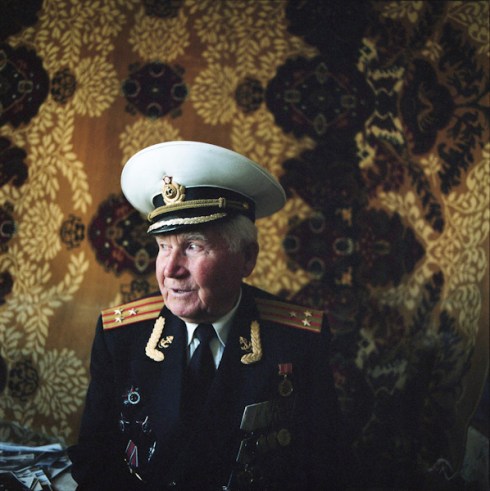
Colonel Matcegor Ivan Gregorevitch
Throughout the ongoing events in Crimea, eastern Ukraine and Russia, we’ve seen many images. Some good, some bad, but most briefly (tomorrow’s chip-wrap, and all that). Has photography adequately described the unfolding turmoil? For me, the jury is still out, but I’m in a combative mood this evening.
Of the news photography coverage I was impressed with those by Brendan Hoffman and Sergei Ponomarev (who’s been shooting in the region for years) and as a scene setter, I liked Maxim Dondyuk’s old work from a Russian kids military training camp. Of the amateurs, Dima Tolkachov showed us just how ripe for image-making Maidan Square was.
Knowing that armchair critics such as myself would be decrying the fact that photojournalism was doing exactly as it was supposed to do — capture wrought images of struggle with smoke, barricades and actions — a few photographers aimed to make series that were descriptive of the people and the struggle, but forged new typologies. Stationary typologies of weapons and fighters from within the front lines. Anastasia Taylor Lind and the duo Jean-Marc Caimi and Valentina Piccinni both made portraits and (sometimes within arms reach) Tom Jamieson and Donald Weber made studies of DIY weapons and molotov cocktails respectively. Of Jamieson and Weber’s work I’m ambivalent, even if critics I respect are all for it.
If I am being imprecise here, it is because I feel I can afford to be. I mention these photographers’ works as context for Julie David de Lossy‘s work which was made long before events erupted in Kiev. De Lossy’s series Black Sea Fleet Cadets and Black Sea Fleet Veterans are not reactive as the above-mentioned bodies of work are. Maybe, as a consumer of images, I am just more comfortable seeing formal portraits made in times of peace as opposed to times of shells and bullets falling all around?
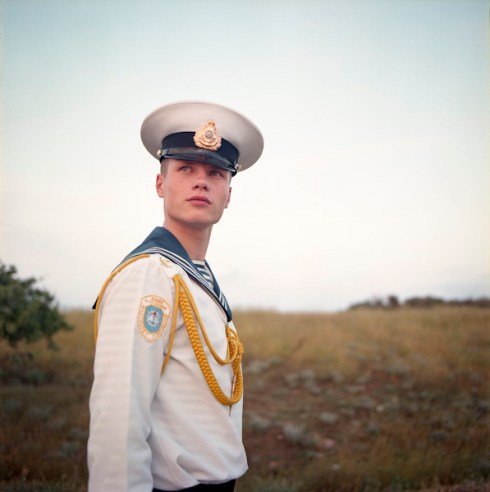
Kolia, 20, Cadet at Nakhimova Institute
The Black Sea Fleet was an aging institution that was under threat of closure for decades. Somewhat ironically, the 2010 election of the now-ousted pro-Russian Yanukovitch as Ukraine president brought with it a new extended lease of the Black Sea Fleet facilities beyond 2042 (presumably now defunct). The Russians provided discounts on natural gas in exchange. Quite why the facilities to this old military group were part of negotiations between the Russians and Ukrainians is not entirely clear, yet de Lossy explains that it recruited both Russian and Ukrainian cadets and that both Russians and Ukrainians honoured the veterans. De Lossy adds that in Sevastopol — where the Black Sea Fleet was based — is considered by the locals as a Russian territory.
It is within the experience of the ranks young and old that we might begin to discover the historic and complex ties between Russia and Ukraine. De Lossy’s work requires us to do more than identify the good guy and the bad guy from afar; indeed it instructs us that as history collides with current affairs our labels may shift. Whereas the work of many photographers is literally made on one side of the barricades or the other, and whereas such work has buy-in from one side or the other, archive work such as de Lossy’s takes us back to a time before people were forced to stand one side of the line or the other. It takes us to a time that explains the now.
Images of violence are images of loss; loss of stability, loss of choice (to a degree) and loss of self. In mainstream (news) images of ongoing revolution and violence, loss is an abstraction — the parameters and extent of loss are still being determined. Made in times of non-violence, de Lossy’s photographs depict the absence of violence. Her quiet portraits of cadets and veterans are a requiem for times not shaped by nationalism and conflict.
Quietness replaced by conflict is a grave loss. For all. However they identify.
JULIE DAVID DE LOSSY
Julie David de Lossy studied political sciences and international relations. She worked for two years at the Ministry of Foreign Affairs in Brussels, before receiving a Masters degree in Conflict, Security and Development from King’s College London. For many years, she has photographed in Central Asia, working on the security and environmental issues in Tajikistan, Kyrgyzstan and Kazakhstan. She has an ongoing project called ’20 Years After: Soviet Legacy in Central Asia.’ She lives in Brussels.
It is, unfortunately, rare that we see photography about mental illness in which the protagonist is also the creator. Christina Riley’s Back To Me bucks the trend.
Back To Me is a visual dip into a disorienting episode Riley experienced when she briefly absconded from her medication routine. She was without anchor and the photographs trace her imperiled, but thankfully not fatal, journey before returning to a mental state she could claim as her own; before she found a way back to herself.
Simultaneously, Riley experienced euphoria and suicidal thoughts. Freewheeling brain chemistry forced her into an escape and explore mode, but the exhilaration was not something she could control. She describes being outside of herself and of living another person’s experience.
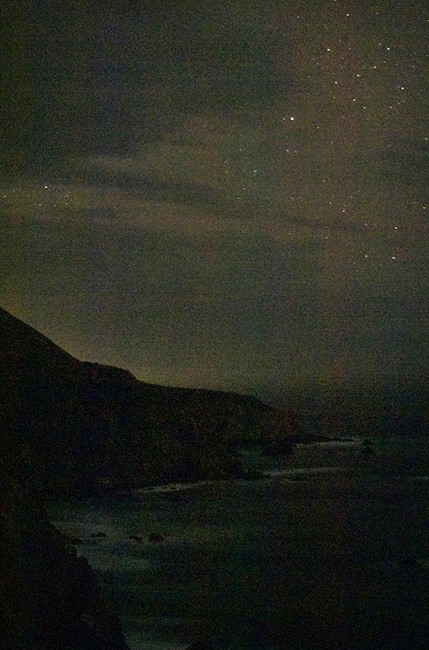
The facts of the episode are not immediately apparent from the grainy images alone. There’s a looming threat but as the images vacillate between self-portraits and landscapes of unidentified places, it’s difficult to figure out the source of the threat. Perhaps the two are one and the same?
Clearly something is not right, but it is only a brief text on the book’s penultimate page that contextualises Riley’s solitary portraits amid the dark, between the light snow and at the side of unknown roads.
Riley writes:
I remember driving down Highway 1 south feeling almost certain I wouldn’t return. The bottle of wine I planned to drink before jumping was sitting in the cup-holder alongside a bottle of Ativan and my camera. I cried the whole way to the bridge feeling guilt already for what I hadn’t yet done. I stepped out of my car to a cold, foggy blowing sky. But through all that, stars. I stood there in the darkness and they spoke to me. They were just for me and their message was clear.
It would kill him.
Riley somehow in the swirl of illogic and depression Riley saw the effect her suicide would have on a loved one. She didn’t jump, she turned back. What part did photographs play in the decision? Any at all? Are these photographs saving therapy? Or are they mere documentation? That this remains unclear is one of the strengths of this unique book.
Tony Fouhse, publisher at Straylight Press, says, “One way she grounded herself during this period of madness was by taking photos of herself and the strange world of mania and depression, euphoria and delusion, she found herself in.”
So, Back To Me is part memoir, part self-warning but mostly self-love. Riley came through it and a significant part of understanding and healing has been the sequencing and production of the book. She has found use — a secondary audience, if you will — for images and moments that at the time of making were only for her.
I wanted to ask Riley about that time and the times since, so I emailed a few questions.
Scroll down for the Q&A

Q&A
Prison Photography (PP): Describe your life and thoughts leading up to this episode of instability.
Christina Riley (CR): Throughout my life I have struggled with a mood disorder. At ten-years-old I started behaving extremely unpredictably. It came out of nowhere. My parents had no idea what was going on, until after attempting suicide twice, I was hospitalized for a year. I walked out of there at age 14 with a diagnosis of bipolar disorder.
Leading up to the most recent episode shown in Back To Me I was feeling pretty level (so I thought). It lead me to believe I was misdiagnosed, so I took it upon myself to go off of my medication. I remember my mind racing with ideas. I had endless energy. The world revolved around me. My self-confidence and sexuality was inflated. Things couldn’t get better. Then suddenly I was convinced I was in love with someone else. Then there was no stopping me. I thought my behavior was coming from a genuine place. I didn’t know I was sick.
I was launched into the world you see in Back To Me.
PP: Between which dates do you identify the episode? And between which dates were you making photographs.
CR: It’s all such a haze but I think the episode began in November 2011 and got very serious pretty quick. It feels like it was an eternity and somehow a dream. Time did not exist. I would say that the entire episode — including the slow transition into my “normal” self — lasted a year-and-a-half or something.
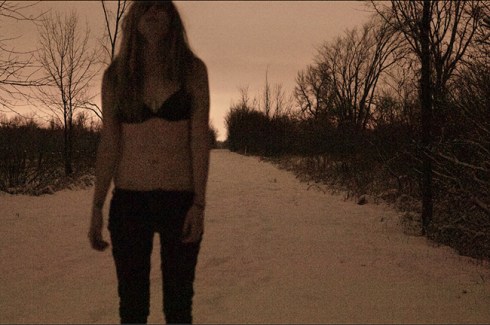
I began taking the pictures around December 2011 as things were becoming more intense and I was losing control. I really had an overwhelming feeling that it had to be photographed, like it felt somehow crucial to my existence. I would be in those moments of living in that other world, and there was no question. I stopped photographing it pretty much when I came around to seeing that I was better – that things were better. I could see it in the pictures and knew it was done.
PP: How, with what, and/or why did you come out the other side of the episode?
CR: It took a lot of will power, medication, therapy and support from family and friends to get here. Everything comes to an end, so it was inevitable one way or another. I’m just happy I didn’t kill myself. I came out of this a better, more secure person.
PP: You’ve said it was like someone else taking photographs.
CR: It’s so hard to explain. It was kind of a compulsion, so I guess it sort of feels like the illness took the pictures. But at the same time, looking back, I know it was part of me too, which makes sense considering the illness will always be a part of me, healthy or not. I just wasn’t with it enough to know what was really happening or to make logical decisions which makes me feel like it was completely out of my control.
PP: Do words (in this interview) or images (in the book) manage to reflect the emotion and psychology of the time?
CR: I don’t think it would be possible for me to convey what it felt like any better than with the photographs in the book.
The photographs in Back To Me are a true moment captured in an unreal time. I’ve never expressed myself or the illness in such a pure way. Even though there was stuff you don’t see happening in the time surrounding the pictures, I believe that each one encompasses how it felt as a whole.
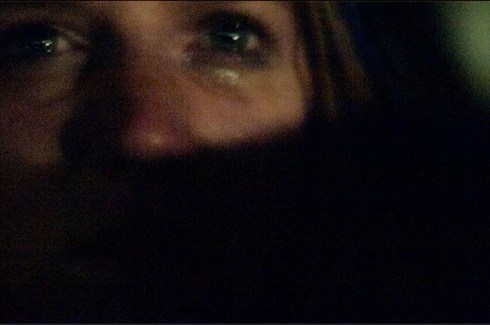
PP: You say you’re grateful for the episode. It seems like it was a learning experience. Is this a fair characterization? Are the photographs key to that? In other words, are the photographs a valuable product from a less than ideal time? Would your view of that time be different if you had made no photographs and you had no book?
CR: Photographing this time in my life helped me more than anything else. I can’t imagine living through that without visual proof of it. It all felt so unreal that I wouldn’t know what to believe without them. I would feel so lost. It’s hard sometimes for me to look at the book because I can feel everything again. But it’s good for me. I know I don’t want to go there again because of it. I’m thankful because in the end, the pictures really have brought me to a better, more stable and aware place.
The book Back To Me is one of the most important things I have ever done. It is proof that I have an illness that I have to take care of. It is proof that I can get through it. It is a definite end to a crazy chapter in my life.
PP: Anything else you’d like to add?
CR: Many people think mental illness is a relentless hard slog against challenges that are unrewarding. But to the contrary, I feel that bipolar disorder has brought more positivity to my life than negativity. It has been hard, but it has made me a stronger, more accepting and maybe a more interesting person.
Without Straylight Press / Tony Fouhse, I feel my voice – my experience, which I believe so many people can relate to, would be lost.
PP: Thanks Christina.
CR: Thank you, Pete.
REVIEWS ELSEWHERE
Colin Pantall says, “Straylight, a publisher which makes direct books with direct themes. Straylight is kind of rough and ready but it hits the spot and is much more than a decorative publisher. It makes books about things that matter. And it publishes people who don’t get published elsewhere.”
Timothy Archibald says, “A quiet story, told in your ear. Not sad, not tragic at first glance. No high drama. It feels like introspection. Just the data, shared by the storyteller as if it happened to someone else. Rich with color, rich with grain, warm and tangible- not like you are drugged, but just like you are very tired, but your senses are working overtime.”
GO HERE!
Christina Riley is a Canadian photographer living in California. She makes music with Burnt Palms.
Back To Me is available through Straylight Press.
Update 05.11.2014: The Eventbrite registration page has been closed after 80 sign-ups. But, there’s space for walk-ins and allcomers. We don’t want to turn anyone away!
Email info@asocialpractice.com to extend your interest. Thanks.
A BIG PUBLIC CHAT
Next Friday, May 16th, as part of the Open Engagement conference, I’ll be part of a conversation about photography based art and social practice.

The Photo-Based Social Practice panel and group brainstorming is at the Aperture Gallery in New York, 10am – 12 noon.
Moderator Eliza Gregory along with panelists Gemma-Rose Turnbull, Mark Strandquist, Wendy Ewald and I will be discussing socially engaged, transdisciplinary, and expanded practices in contemporary photography.
Highfalutin, huh? Not really. The language is big, but the query is simple. Can photography build community and empower subjects? How can photography be nice?
It’s free, but preregistration is required. Do that HERE (6th option on the list).
We’re only going to do the briefest of introductions to our work before breaking into groups to tackle a host of questions that deal with audience, relevance and good design. It only makes sense that we collaborate to tackle answers to these issues.

We hope that the panel will follow nicely on from December’s Collaboration: Revisiting the History of Photography event that crowdsourced a new timeline of photo-history by focusing on projects with communities and groups as creators. I love the ideas involved in that.
While the Collaboration: Revisiting the History of Photography event gave new recognition to old projects and while it presented a new timeline and framework, it didn’t tackle best practices. From the projects it unearthed we can surmise the nature of some socially responsible projects, methodologies and motivations. In our discussion next week we hope to extend the conversation further and start to define common language, and potentially best practices, for socially engaged photography projects.
Please join us and help us along!
LOCATION, DATE, TIME
Aperture Gallery and Bookstore
547 West 27th Street, New York
10:00 am – 12:00 pm, Friday, May 16th.
FREE WITH REGISTRATION
NEW VENTURE! ‘PHOTOGRAPHY AS A SOCIAL PRACTICE’
Now is a good time to mention a joint venture recently started by my fellow panelists, Eliza Gregory, Gemma-Rose Turnbull and Mark Strandquist.
Photography As A Social Practice is a website for reference tools, teaching tools, and conversation about the intersection of social practice and photography. I’ll be contributing every so often and chatting on the phone about content. You can suggest resources by emailing info[at]asocialpractice[dot]com
SPONSORS
The panel is offered in conjunction with the Magnum Foundation and the Aperture Foundation who combined to publish Documentary, Expanded, the Spring Issue (#214) of Aperture Magazine as part of the Photography, Expanded initiative. Support also comes from the Open Society Documentary Photography Project, The School of Journalism and Communication (University of Queensland) and Portland State University‘s Art and Social Practice Program.
OPEN ENGAGEMENT, 2014
The Photo-Based Social Practice panel is part of Open Engagement, an international conference that sets out to explore various perspectives on art and social practice, and expand the dialogue around socially engaged art-making. This year, the conference addresses the theme of Life/Work. It is 2 days of programming (Sat, May 17 – Sun, May 18) at the Queens Museum, plus 1 day of pre-conference events on Fri 16th at different locations around the New York boroughs.
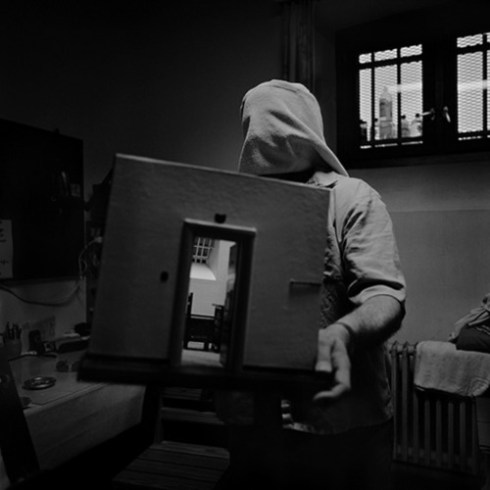
It’s rare one gets such a fine art look at incarceration. Lieven Nollet‘s images of Belgian prisons are contemplative set ups. The majority of his 50+ strong portfolio focuses on the fabric, wall textures, light and shadow of prison. Here I’ve selected three of his portraits, which I think hold attention the longest.
The same disquiet and still of Nollet’s interior studies continues in his shots of people. This isn’t quite Roger Ballen or David Lynch territory but Nollet’s photographs edge toward dark-chamber otherworldliness.
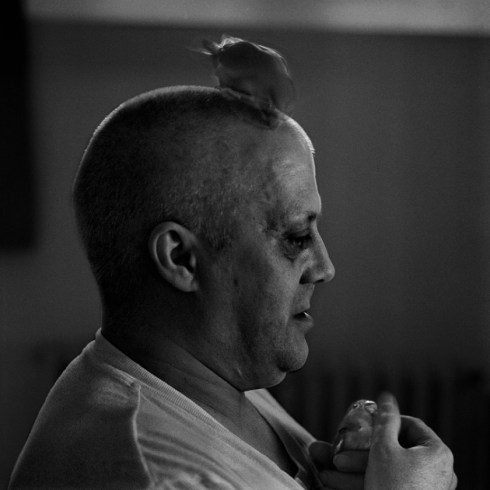
Generally, anonymity reigns too, so I’m being a contrarian by selecting Nollet’s portraits. Crafted to seem outside of our reality and certainly outside of time, Nollet’s photography doesn’t give us a social justice narrative to latch on to, but they may provide an emotional response that has us decrying shady, forgotten corners of prisons. Some of Nollet’s frames resemble hospital and morgue interiors and I’m certainly left with a feeling that these spots off the map are reserved for quarantine and/or civil death.
For the sake of positioning the work, I’d say it has elements of Jean Gaumy‘s tight European jail photographs, the spiritual element of Danilo Murru‘s photographs of Sicilian prisons and, to a degree, the cool observances of Donovan Wylie.
One of the few humanising components of the work is the presence of birds. A few years back, I was speaking with a prisoner in Washington State who spoke of a sparrow that had lived in the rafters of his old cell block for months. The sparrow had not gone unnoticed by any prisoner and all were concerned for its wellbeing. At once anthropomorphised, the sparrow was seen as another victim of lockdown. The bird brought a slice of life to the cell tier, but no prisoner didn’t wish for its eventual escape.
When we see animals behind bars these days, it is usually down to a dog-training program news story. Such stories are gold for a local paper, but the dogs and the photographers are groomed for a neatly packaged tale. Before the economics of the prison industrial complex took a grip, many prisons operated their own farms and many with pasture, cows and milking parlors. Prisoners in Louisiana’s Angola Prison still today breed horses for the New Orleans Police Department. In dank and crumbling prisons, complaints about rodents are common; mice and rats about the ankles are a reminder of the hole prisoners are in, whereas birds becomes a symbols of, and connection to, the great beyond.
With phrases such as jailbird and “the caged bird sings,” avifauna metaphors may seem cliche to us on the outside, but I understand why a lot of prisoners’ creative writing turns to freedom as embodied by flight and birds. And I understand why they nurture them.
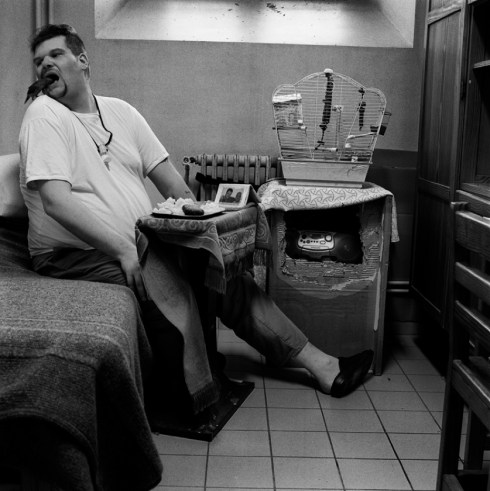
All images: Lieven Nollet. See more at De Zwarte Panter

Jane Lindsay‘s exhibition From the Outside In: Sustenance and Time closes at the Northlight Gallery on the Arizona State University’s Tempe campus, this coming Saturday, the 29th. Try to make it if you can.
Lindsay has transformed the space with a multimedia installation of photographs and video within and around a modified jail cell and a dinner table. It’s intended to be an environment in which the discussion of complex and emotionally charged issues of safety, justice, civil liberties and social responsibility is supported.
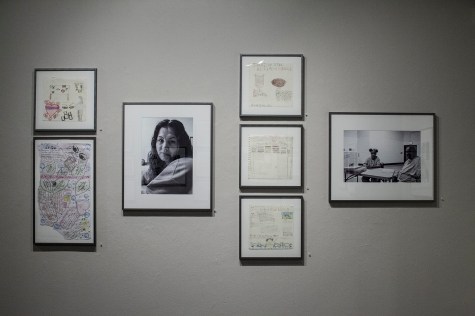
The meditative space includes framed and light-box portraits, prison art and letters as well as the products from light painting and art workshops as well as extended discussion with prisoners at the Pinal County Adult Detention Center about food security, nutrition and agribusiness.
‘Why are they talking about food?’ you might ask. Well apart form the fact that nutritious food is not guaranteed in many U.S. prisons, food is a foundational part of Maslow’s hierarchy of needs. Lindsay believes a person’s ability to fulfill his or her basic needs of food, shelter and a sense of belonging directly influences their potential. Furthermore, if and when these needs are uncertain, teachable skills and coping mechanisms will either support positive development toward self-actualization or distort such development.
Lindsay is calling for balanced lives and balanced views.
(More of the project on Lindsay’s website here.)
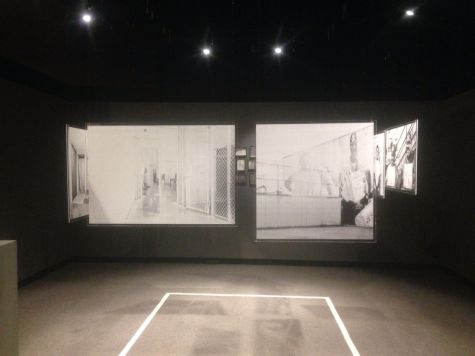

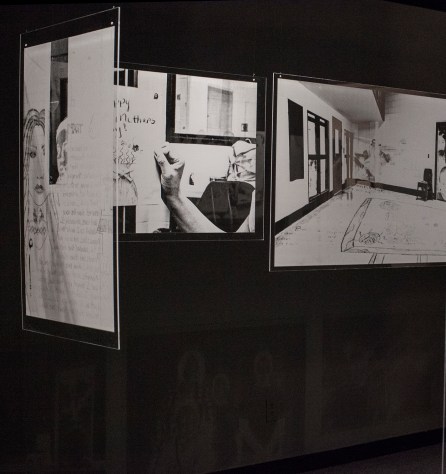

Lindsay’s work is replete with compassion. I had the pleasure to meet and speak with her in 2011. Out of that meeting, I invited her to exhibit her work Gems in my co-curated show Cruel and Unusual at Noordelricht Photo Gallery in Groningen, Netherlands. Lindsay is no bleeding heart liberal, though. She has a strong moral compass and her work ties issues of transgression and social ills to poverty and inequality. We need such complex appreciation of complex issues. She also has every excuse to be angry, afraid and vengeful. Some years ago, a close member of her family was brutally assaulted and the recovery for all was tortuous. It is likely still ongoing.
For Lindsay, the the judicial process that purports to hand down justice, was more trauma. The perpetrator was convicted, but the sentence gave Lindsay no peace. She saw that prison — in most cases — rarely addresses the underlying issues of poverty, mentorship, security and social inequity she identifies to be at the core of criminal behavior.

To quote the press release, From the Outside In: Sustenance and Time employs the theme of the family meal to represent the sustenance both literally in the form of food and figuratively in the sense of belonging created within the community and within the home around the dinner table. Lindsay urges audiences to reconsider the roll of the family and civil society as well as definitions of victim and perpetrator.
Lindsay worked as a Licensed Professional Counselor for 15 years in Texas. Her clients included victims and people who were on parole and probation. Since returning to college as a mature grad, Lindsay has pursued art that tackles education, mutual respect and responsibility. Crucially her work directly involves prisoners, families and even detention officers.


“By involving prisoners and their families in self-actualization through creativity, society is directly influenced, the outside world becoming a safer place for everyone,” explains Lindsay. “The inclusive nature of the project promotes agency of the prisoners, presenting them not just as subjects, but also as direct contributors to the telling of their story.
With the aid of Detention Officer Sandra Price, Lindsay developed the program to include 25 prisoners, both female and male, who were serving time accused of drug offenses, theft or violent crimes.
“A vast majority of our inmates behind bars have the skills and talents needed to succeed in life and pursue their dreams. Unfortunately, because they have committed a crime, their dreams were temporarily put on hold,” says Sheriff Paul Babeu in the Northlight Gallery press release. “When they are successful in society it greatly reduces their likeliness of reoffending.”


JANE LINDSAY
Lindsay received an MFA in photography from Arizona State University. She moved to Arizona from rural West Texas where she worked as a counselor, social worker and investigator. She has shown her work in several venues including, Texas Photograph Society, Buddy Holly Center in Lubbock Texas, Cooper Grand Hall in New York, Photoville in New York, Noorderlicht Photography Gallery, and North Light Gallery in Tempe, Arizona. Her short film “Dan’s Big Find” recently won the Arizona award in the Arizona International Film Festival. Jane teaches photography at Mesa Community College and she is a TA at ASU.
PHOTO TAPAS
From the Outside In: Sustenance and Time is exhibited as part of PhotoTapas, a statewide Arizona celebration of photography that involves the Center for Creative Photography in Tucson, alternative art spaces such as the Ice House in Phoenix, as well as ASU’s Northlight Gallery.
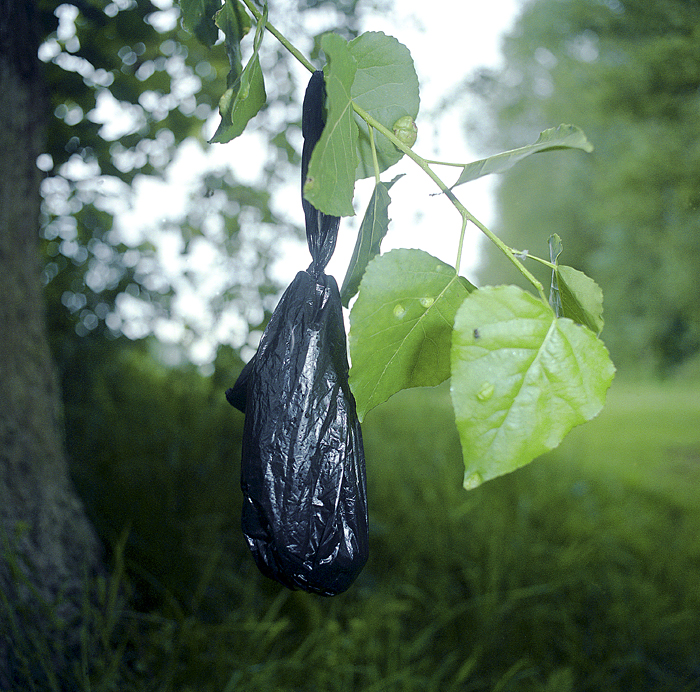
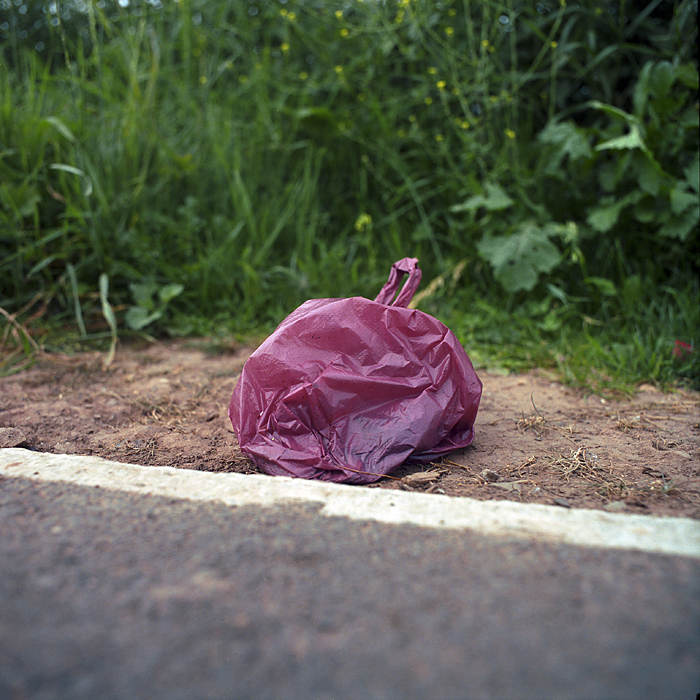
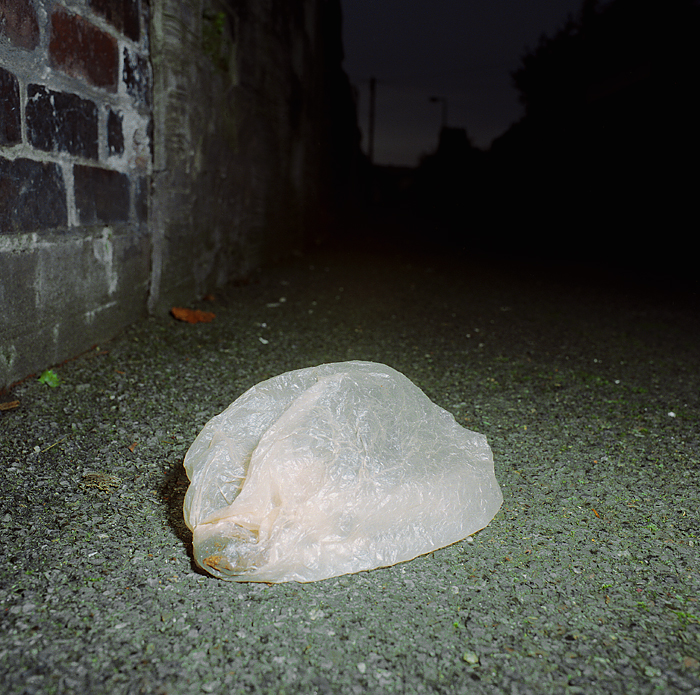
I’ve celebrated John Darwell‘s project Discarded Dog Shit Bags (DDSB) once before. Happy to note that the work is now available as a photo book.
DDSB is just about bonkers enough; it is left-field (in all fields, actually, and steaming) and DDSB proves there is a photo project for absolutely everything.
“I began to notice the appearance of dog shit bags,” explains Darwell, whose 2011 project chronicles the growing epidemic. “At first I spotted them tucked away in dry stone walls or behind said wall. But then they began to appear everywhere, hanging on fences and thrown into bushes. Anywhere they could be found they would be.”

While seemingly silly and scatalogical, the project points to a real issue that many city-dwellers feel is out of control. Americans own 83.3 million pet dogs. In Europe, the figure is 60 million, including 8.5 million in Britain. Those big stats mean it only takes a small proportion of irresponsible owners to make an unsightly mess.
Darwell’s not showing anything that the vast majority of people haven’t seen before — and it’s the familiarity with the images that calls attention to the problem. In the past, Darwell has documented other environmental issues, including various nuclear sites, like Chernobyl, but when he’s not been working on long-term projects he’s been at home in rural Cumbria, England, walking his dogs.
“The local parks became particularly troublesome but even beauty spots were not immune,” says Darwell. “Why go to the trouble of bagging your pooch’s poop to then simply chuck into a bush or hang on a railing?”


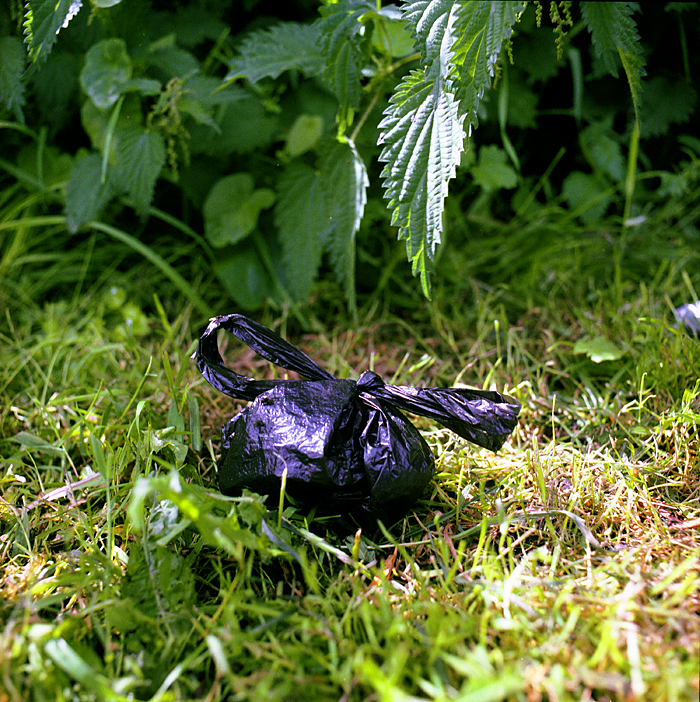
For Darwell, the whole affair has descended into a turdy farce with no behavioral logic.
“I photographed the same dog shit bag twice, a year apart and it still hangs in exactly the same place! There is a move to encourage people to use biodegradable poop bags. So the owner bags the poop then hangs it in the tree, the bag biodegrades and the poop falls to the ground where it was originally. Do you then re-bag the poop? The more you think about it the more insane it becomes.”
Even “dog wardens” in Darwell’s local park haven’t been able to curb the madness.
“They watch dog walkers through binoculars to make sure they bag the poop … but they don’t watch what then happens to the bag.”
Flinging bags of poo tends to be something dog owners try to do unobserved. For all his poop stalking, Darwell has only once witnessed a dog owner chuck a bag away, and it wasn’t the type of person you’d expect. “It was a little old lady,” says Darwell. “She chucked it in the river! I was gobsmacked.”
On that occasion the log floated out of sight and out of mind, but another time Darwell spotted a bobbing bagged doo-doo and chased it down. It was like that plastic bag scene from American Beauty but instead of airborne, Darwell’s polyethylene muse was half-submerged and struggling to keep its turtle head above the surface. “I was amazed it floated,” he says.


UK citizens aren’t the only ones walking alongside their four-legged friends straight into a canine-gut-stew-terror. On an Australian beach, Darwell found himself surrounded with yellow dog poo bags. In Germany, the bags are red, but you see fewer of them, as the Germans provide more bins, says Darwell, who has extended his stool survey internationally.
The British are, on available evidence, a resourceful bunch using any plastic sheaths they have at hand — nappy bags, shopping bags, etc. But for Darwell, all of this is just doubling the problem, not containing it. He wonders if leaving it to biodegrade might be a better solution. “Yes, I know there are, or can be, serious health implications, but then the poo would disappear in a matter of days,” he says.
This universality of bagging and discarding hit home when a magazine editor in Seattle asked Darwell to stop by his office to discuss his pictures. The editor was amazed to find out Darwell was from England — he thought he recognized the bags from his local park.
Home or away, DDSB has clearly struck a chord with folk. Laughably, often it is a conversation starter for Darwell.
“It’s amazing how many people now say, ‘John, I saw a dog shit bag yesterday and immediately thought of you.’”
Darwell has pinched this particular series off but his fecal fascination has not entirely run its course. He may follow through with a different angle.
“I notice a lot of people walking along with the tell-tale bag hanging from their hands vainly looking for a bin to dispose of the offending item,” says Darwell. “I’ve toyed with the idea of developing a new body of work of portraits of people carrying bags.”
The book DDSBs is now available through mynewtpress in signed and numbered limited editions.
John Darwell was part of the group show Confined (2011) at Bluecoats Gallery in Liverpool, the catalogue for which I wrote the foreword.
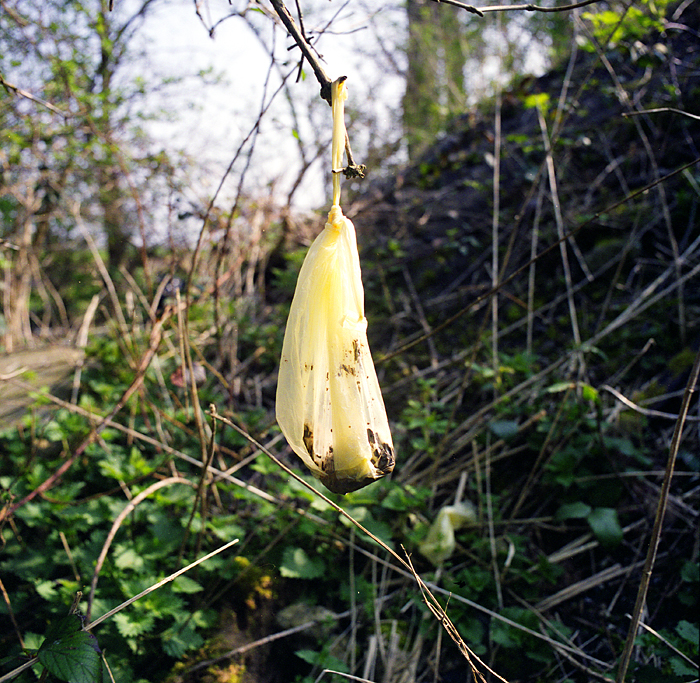
All images: John Darwell
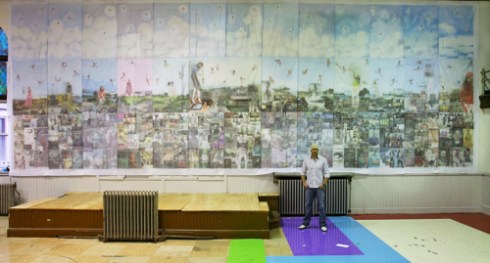
Artist Jesse Krimes stands in front of his 39-panel mural Apokaluptein:16389067 (federal prison bed sheets, transferred New York Times images, color pencil) installed, here, at the Olivet Church Artist Studios, Philadelphia. January, 2014.
The New York Times has a track record for high quality visual journalism. From experiments in multimedia, to its magazine’s double-truck features; from its backstage reportage at the swankiest fashion gigs, to their man in town Bill Cunningham. Big reputation.
NYT photographs are viewed and used in an myriad of ways. Even so, I doubt the editors ever thought their choices would be burnished from the news-pages onto prison bed-sheets with a plastic spoon. Nor that the transfer agent would be prison-issue hair gel.
In 2009, Jesse Krimes (yep, that’s his real surname) was sentenced to 70 months in a federal penitentiary for cocaine possession and intent to distribute. He was caught with 140 grams. The charges brought were those of 50-150 kilos. Somewhere in the bargaining it was knocked down to 500 grams, and Krimes plead guilty to conspiracy. The judge recommended that Jesse be sent to a minimum security prison in New Jersey, close to support network of friends and family, but the Federal Bureau of Prisons (BOP) opted to send him to a medium security facility in Butner, North Carolina — as far away as permitted under BOP regulations. That was the first punitive step of many in a system that Krimes says is meant first and foremost to dehumanise.
“Doing this was a way to fight back,” says Krimes who believes ardently that art humanises. “The system is designed to make you into a criminal and make you conform. I beat the system.”
Last month, I had the pleasure of hearing Krimes speak about his mammoth artwork Apokaluptein:16389067 during an evening hosted at the the Eastern State Penitentiary and Olivet Church Artist Studios in Philadelphia.
The mural took three years to make and it is a meditation on heaven, hell, sin, redemption, celebrity worship, deprivation and the nature of perceived reality. Krimes says his “entire experience” of prison is tied up in the artwork.
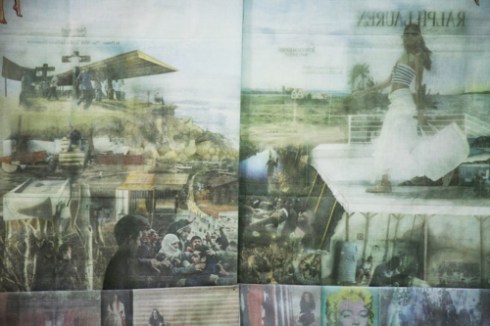
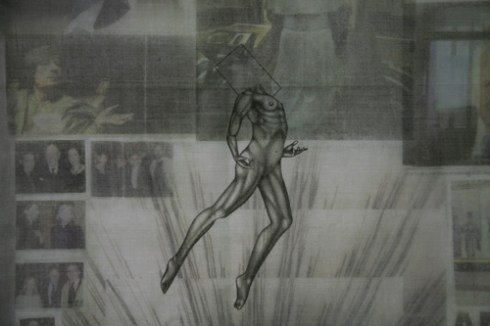
In the top-left is a transferred photo of a rehearsal of the Passion play at Angola Prison, Louisiana.
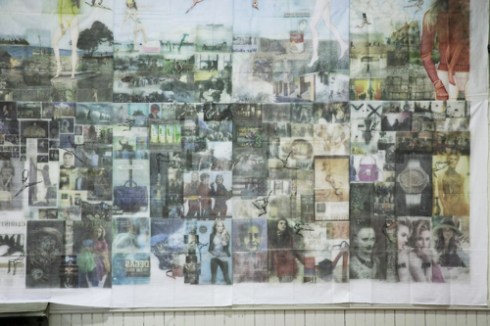
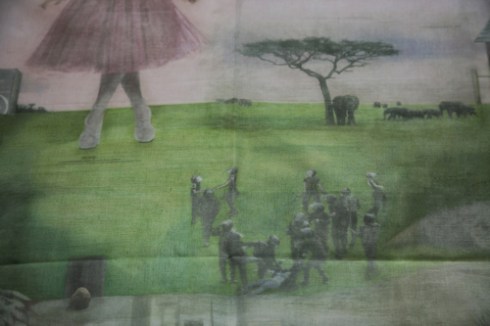
Through trial and error, Krimes discovered that he could transfer images from New York Times newspapers on to prison bedsheets. At first he used water, but the colours bled. Hair gel had the requisite viscosity. As a result, all imagery is reversed, upturned. Apokaluptein:16389067 is both destruction and creation.
“It’s a depiction of represented reality as it exists in its mediated form, within the fabric of the prison,” says Krimes. “It was my attempt to transfer [outside] reality into prison and then later became my escape when I sent a piece home with the hopes that it could be my voice on the outside in the event that anything bad ever happened and I never made it home.”
ART AS SURVIVAL
Krimes says this long term project kept him sane, focused and disciplined.
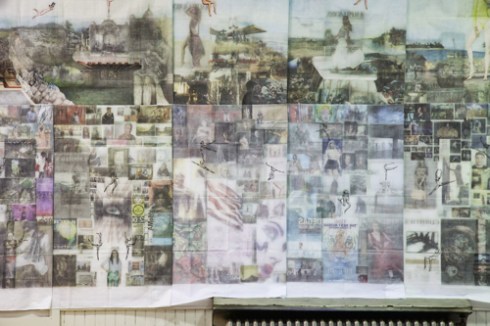
Each transfer took 30-minutes. Thousands make up the mural. Krimes only worked on one sheet at a time, each of them matching the size of the tabletop he worked on. A notch in the table marked the horizon line for the 13 panels making up the center horizontal. He shipped them home. Not until his release did he see them together.
The enterprise was not without its risks, but Krimes found favour being a man with artistic talent. He established art classes for fellow prisoners in an institution that was devoid of meaningful programs.
“Prisoners did all the work to set up the class,” says Krimes.
Once the class was in place, guards appreciated the initiative. It even changed for the better some of the relationships he had with staff.
“Some helped mail out sections,” he says of the bedsheets which were, strictly-speaking, contraband.
Krimes would cut sections from the New York Times and its supplements, sometimes paying other prisoners for the privilege.
“In prison, the only experience of the outside world is through the media.”
The horizon is made of images from the travel section. Beneath the horizon are transferred images of war, and man-made and natural disasters. Krimes noticed that often coverage of disasters and idealised travel destinations came from the same coasts and continents. Influenced by Dante’s Inferno and by Giorgio Agamben’s The Kingdom and the Glory, Krimes reinvigorates notions of the Trinity within modern politics and economics. The three tiers of the mural reflect, he says heaven, earth and hell, or intellect, mind and body.
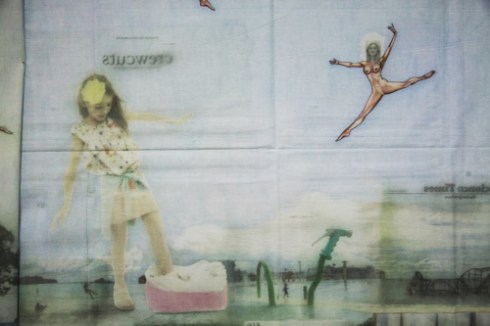
One can identify the largest victories, struggles and crimes of the contemporary world. All in perverse reverse. All in washed out collage. There’s images of the passion play being rehearsed at Angola Prison from an NYT feature, of Tahrir Square and the Egyptian revolution, of children in the aftermath of the Sandy Hook School massacre, and of a submerged rollercoaster in the wake of Hurricane Sandy.
The women’s rights panel includes news images from reporting on the India bus rape and images of Aesha Mohammadzai who was the victim of a brutal attack by her then husband who cut off her nose. Krimes’ compression of images is vertiginous and disorienting. We’re reminded that the world as it appears through our newspapers sometimes is.
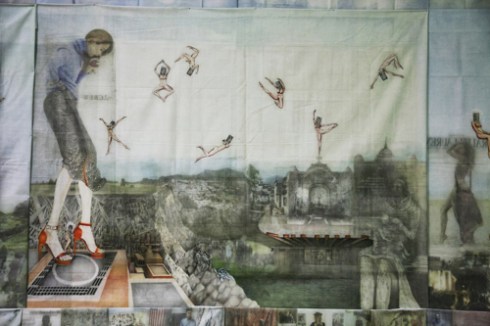
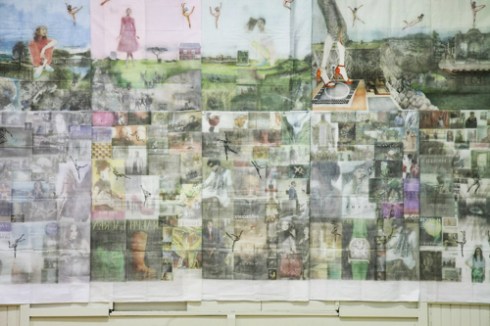
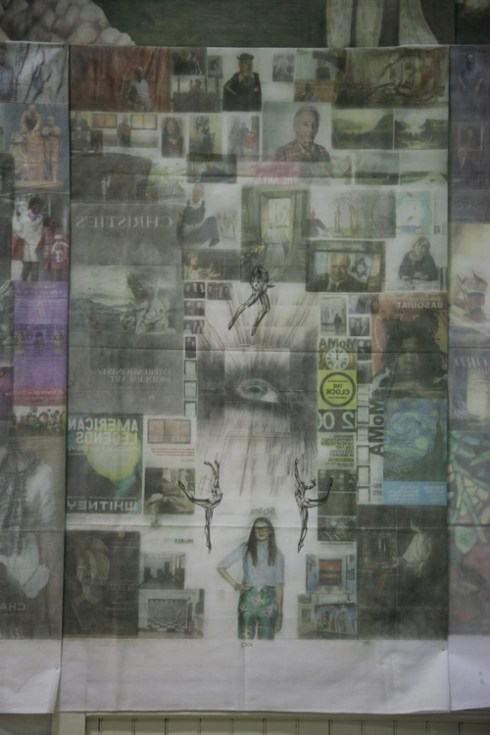
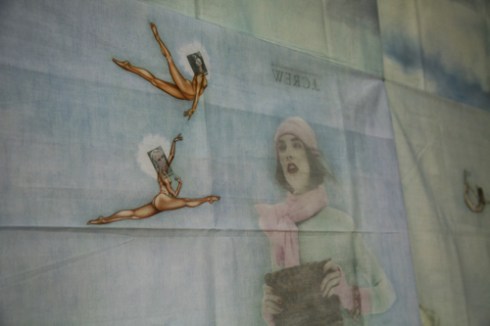
The large pictures are almost exclusively J.Crew adverts which often fill the entire rear page of the NYT. Jenna Lyons, the creative director at J.Crew is cast as a non-too-playful devil imp in the center-bottom panel.
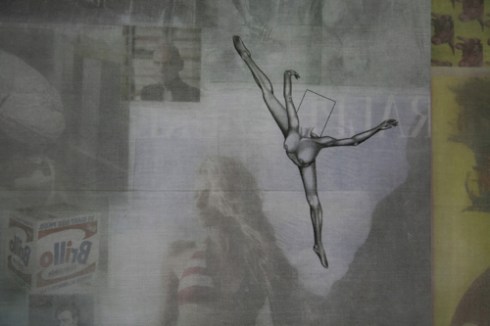
Throughout, fairies transferred straight from ballerinas bodies as depicted in the Arts Section dance and weave. Depending on where they exist in relation to heaven and earth they are afforded heads or not — blank geometries replace faces as to comment on the treatment of women in mainstream media.
The title Apokaluptein:16389067 derives from the Greek root ‘apokalupsis.’ Apokaluptein means to uncover, or reveal. 16389067 was Krimes’ Federal Bureau of Prisons identification number.
“The origin [of the word] speaks to the material choice of the prison sheet as the skin of the prison, that is literally used to cover and hide the body of the prisoner. Apokaluptein:16389067 reverses the sheet’s use and opens up the ability to have a conversation about the sheet as a material which, here, serves to uncover and reveal the prison system,” says Krimes who also read into the word personal meaning.
“The contemporary translation speaks to a type of personal apocalypse — the process of incarceration and the dehumanizing deterioration of ones personal identity, […] The number itself, representing the replacement of ones name.”
PRISON ECONOMICS: THE HAVES & HAVE NOTS
One of the most interesting things to hear about at Krimes’ presentation was the particular details about how he went about acquiring materials. In federal prison, just as on the outside, money rules. Except inside BOP facilities the currency is stamps not dollars (something we’ve heard before). A $7 book of stamps on the outside, sets a prisoner back $9.
Access to money makes a huge difference in how one experiences imprisonment.
“People who have money have a much easier time living in prison but that is usually rare except for the white collar guys or the large organized crime figures,” says Krimes.
“Prisoners who have money in prison gain automatic respect and power because you are able to have influence over anything really — most people without money will depend on those with cash to be the buyers of whatever products or services they need.”
Without cash to hand, a rare skill comes in handy. Krimes could make art. In prison artists are afforded much respect. Ironically, free society doesn’t treat artists with the same respect, but I guess we’ve already established that we’re dealing in reversals here?!
“We had to provide some kind of skill or service in order to receive money or books of stamps. Some people cook for others, do laundry, do legal work, or artwork.”
In FCI Butner, a high-quality photorealistic portrait would go for as much as $150. Or, 20 books of stamps. Krimes did portraits and tattoo designs, spending proceeds almost exclusively on hair gel and coloured pencils.
“The majority of portraits I did were for the guys who had money or else I did them for free, for friends or those going through hard times.”
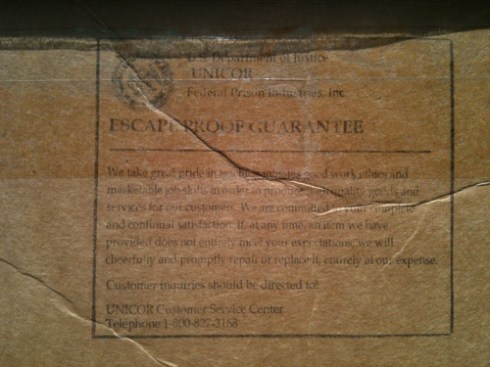
The prison sheets came for free. Krimes smiles at the irony that these sheets are made by UNICOR, the Federal Bureau of Prisons’ factory and industries arm. UNICOR makes everything from steel frame beds to bedsheets; from U.S. military boots and helmets to plastic utensils. In 2005, UNICOR generated $765 million in sales — 74% of revenues went toward the purchase of raw material and equipment; 20% toward staff salaries; and 6% went toward inmate salaries.
I’d liken Krimes’ acquisition of bed sheets to liberation more than to theft. His image transfers are appropriation more than homage. The scope of the project reflects the sheer size of American prison system. The ambition reflects that of the individual to survive, not the system to improve its wards.
That such a large statement came out of the prison sytem (in one piece!) is a feat in itself. That Apokaluptein:16389067 is so layered and so plugged into contemporary culture is an absolute marvel. That the photographs of international media are the vehicle for that statement should be no surprise at all.
More here.
All images: Sarah Kaufman

 Prison Photography