
You are currently browsing the category archive for the ‘Fine Art’ category.
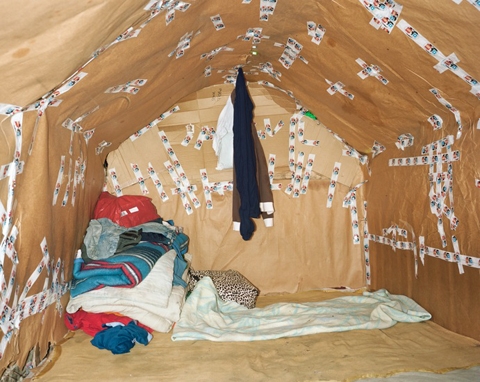
From the series Shelter by Henk Wildschut. From a shortlist of six photographers’ projects, Wildschut won the 20,000 Euro DUTCH DOC AWARD.
Last weekend was the Dutch Doc Festival.
The theme for this years Dutch Doc Festival is the slow type of journalism, which “focuses on long-term projects that frequently involve a strong personal commitment and steer clear of passing fashions. Projects that revisit a (pre-documented) subject in a sequel or to create a new sequence in follow-ups after set periods of time.”
Photoblogging duo Mrs. Deane were involved in the festivities and asked other bloggers and I to pitch in. They emailed:
To underline the relevance of the online community in shaping the contemporary debate, we would like to invite a number of what we consider ‘distinct voices’ to contribute to the festival via our presence. We would tremendously appreciate it, if you could select three photographic projects that you feel should be considered when discussing what’s needed right now, what people should be looking at, what has been forgotten, or what new projects are leading the way in the field of documentary photography (especially the kind that is also moving within the confines of the fine art galleries).
Ignoring the last criteria, I unapologetically picked three very political projects. Mrs. Deane posted my response over there, and I cross-post here for good measure.
THREE NEEDED PROJECTS
At a time when images rifle across our screens and retinas usually serving the purpose of illustration or corporate propaganda, the resolve of photographers to create bodies of work that deal with politics — and often large narratives too — can be read as either foolhardy or enlightened. I’ll pick the latter.
Kevin Kunishi’s work in Nicaragua, Joao Pina’s documentary in South America and Mari Bastashevski’s documents from Chechnya explore to varying degrees, “what has been forgotten.” Photography is art and art should be political. If we considered remembering and memory the first act in resistance against injustice then these three projects are high art.

From los restos de la revolucion © Kevin Kunishi
Kunishi’s Los Restos de la Revolution is a poignant look at the remains and the survivors of the Nicaraguan civil war. The portraits feature both former Sandanista rebels and former US-sponsored Contras. The mundane everyday details alongside deep psychological scars following conflict can be easy to turn ones back on when the bombs stop lighting up the skies. And it is easy to forget the US’s imperial policy and meddling in this conflict. One wonders if Afghanistan will ever have a cushion of a similar period of peaceful time to be part of a similar look back at the experiences and actions of its citizenry amid conflict.

From File 126 © Mari Bastashevski
Mari Bastashevski’s File 126 documents spaces previously inhabited by abductees who were “disappeared” during the Russian/Chechen conflict. Bastashevski says, “the abducted are incorporeal, as if they never were. They are no longer with the living, but they are not listed among the dead.” This is a particularly brave project given the state forces complicit in the departures are still in power and their reactions to Bastashevski’s inconvenient conscience are unknown.

From Operation Condor © Joao Pina
Joao Pina’s Operation Condor expansive work across South America, wants to both document and “provide evidence” for ongoing memory and trials into cases of of extrajudicial torture, kidnap and murder by the various Right-wing Military Juntas in South America during the 1970s and 80s. Like Nicaragua [and Kunishi’s work] the US had a strong influencing hand in either establishing or propping up many of these hardline governments. The crimes of thirty years ago are barely on the radar of the Western world however. How quick we forget! Pina is currently raising money for the next phase of his project at Emphas.is.
Colin and Joerg’s Selections
Mrs. Deane got a couple of other expert opinions.
Colin Pantall selected Third Floor Gallery, Timothy Archibald and Joseph Rock.
Joerg Colberg plumped for Brian Ulrich, Milton Rogovin and Reiner Gerritsen.
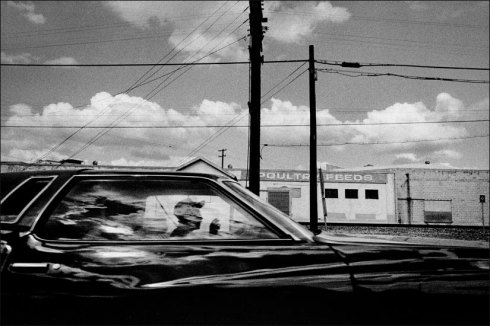
Warehouse District, Fresno, California © Matt Black
Last week, Stan blew the cover on my long held admiration of Matt Black. In the past couple of months, and on three different occasions, when conversation has moved toward photographers’ work that really turns us on I’ve begun explaining Matt’s work only to have the other person blurt out his name. You know that excitement when you’re on the same wavelength? Repeated.
Matt Black also has a great name. What else could he be but a photographer?
Matt’s documentary photography focuses on the social and environmental realities of southern and Central California, and the span of Mexico. Man-made borders need not apply. He’s knee-deep in the regions.
Each of Matt’s portfolios eddies of the last. It’s an admirable body of work. For his latest project, The People of Clouds, Matt has teamed up with Orion Magazine and Daylight Online for a cohesive distribution plan. He has also, for the first time, made use of Kickstarter for a very well-stated funding pitch.
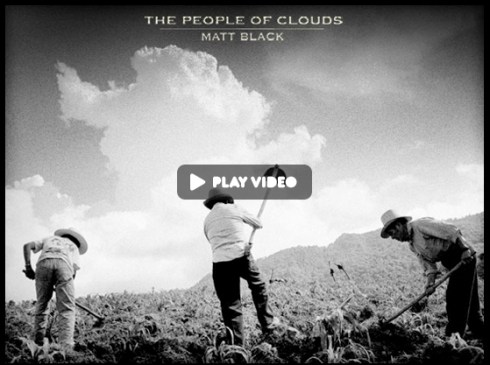
Matt explains:
High in the Mixteca mountains of southern Mexico, an exodus is unfolding. In the birthplace of corn cultivation, where farmers first coaxed maize from the earth nearly 9,000 years ago, an ancient way of life is crumbling as land degradation and erosion cripple the soil and as migration tears families apart.
Named the “Place of the Cloud People” by the Aztecs, the Mixteca is home to one of the oldest and largest indigenous cultures in the Americas. Rugged and remote, the isolated region sheltered a pre-Colombian way of life that largely vanished from the rest of Mexico in the aftermath of the conquest. At its heart, it’s a culture of the land, and corn. Along the region’s hillsides, it is still possible to glimpse ancient terraces, canals, and runoff channels that protected the Mixteca’s rich but fragile soil, and nourished its inhabitants, for thousands of years.
But today, these ancient farming traditions have been lost, replaced by chemical fertilizers, hybrid seeds, and herbicides, the trifecta of modern agriculture heavily promoted in indigenous communities by the Mexican government and international charities as part of the “Green Revolution” of the 1960s. When combined with slash and burn farming, the Mixteca’s steep terrain, and the loss of other indigenous soil-preserving traditions like multi-cropping, these imported industrial agricultural techniques have turned Mixtec corn farming, one of the world’s oldest and most perfectly integrated agricultural systems, into a soil-eating machine.
Today, much of the Mixteca has been declared an “Ecological Disaster Zone,” the result of unchecked erosion, deforestation, and soil exhaustion. Per capita maize consumption is less than ten ounces per day, 90% below US rates, and fewer than a third of children under the age of five show normal growth by weight and height. Ranked on the UN’s Human Development Index (HDI), the Mixteca’s poverty is deeper than nearly all of Latin America’s, comparable only to areas of Africa, India, and the Gaza Strip. Far from sparking a Green Revolution, the industrial farming techniques prescribed to the Mixtecs have resulted in their becoming unable to even keep themselves fed.
Nearly a quarter million Mixtecs have emigrated to the US. Some villages have lost as much as 80% of their population and have become little more than ghost towns. “I only think about dying,” one elderly man told me. “My only worry is how my funeral will be.”
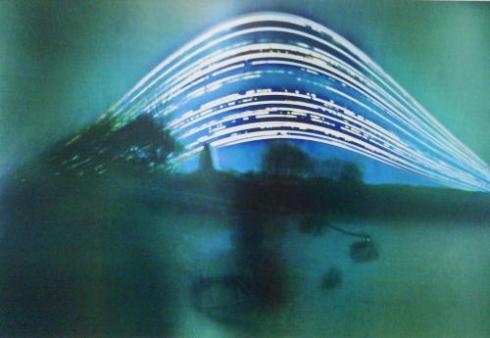
Photographer Mark Woods-Nunn and FLACK, a charitable social enterprise which works with homeless people in Cambridge, UK have put together an intriguing project.
Varsity Mag says, “the attachment of beer-cans to assorted lamp-posts is not another example of misguided modern art. A thin sheet of photographic paper was placed in each can, exposed to the world by only a tiny pin-hole, silently and vulnerably capturing an image.”
Good stuff.
Found via British Photographic History Blog.

Scar © Sye Williams
Sye Wiliams photographed in Valley State Prison for Women, Chowchilla, California. His portfolio was included in the June 2002 COLORS Magazine.
Williams’ entire Women’s Prison portfolio can be seen on his website.
It is a bit of a time machine without a specific destination. The images are prior to 2002, we know that much. But it is anyone’s guess which particular year. (I have asked Sye and will update with the answer.)
Williams’ choice of film-stock, the era-less prison issue coats and baseball t-shirts, all amount to a almost “date-less” space and time. Even the hairstyles span any number of decades. Yet, this is what prison is for many inmates; prison is a time of stasis, if not reversal. When time is not your own, how should it matter? And when one’s time is detached (in an experiential way) from that of dominant society, then it stands to reason that very different rules of judging the days, measuring value, gauging worth, choosing behaviour, and – dare I say it – opting for styles, would shift significantly.

Officer © Sye Williams
It is not often prison photographers take portraits of correctional officers (mostly down to legal reasons).
Williams’ Officer (above) is a slippery image. The officer maintains the same steeled look as some of the inmates. The fact that she wears a helmet with visor, and that this particular portrait exists within a portfolio of weapon-still-lifes and an photograph depicting model-hairdresser-heads all unnerves me a little.
It is not that women’s prisons are uncontrollably violent. To the contrary, they’re more likely sites of boredom. However, as a viewer to Williams’ work, I find myself adopting the same caution as the staff and administration. Prisons are places where daily activities are shaped by the need to always prepare for the worst case scenario.
Williams manages to subtly suggest the latent violence of prison, and given recent reports (California Women Prisons: Inmates Face Sexual Abuse, Lack Of Medical Care And Unsanitary Conditions) he is probably close to the truth. Apparently, Valley State Prison for Women in Chowchilla is less dangerous than it once was, but it remains a notorious prison for women.
In the deviant milieu of prison, even when time ceases to exist, vigilance necessarily remains a constant.
View Sye Williams’ entire Women’s Prison portfolio.
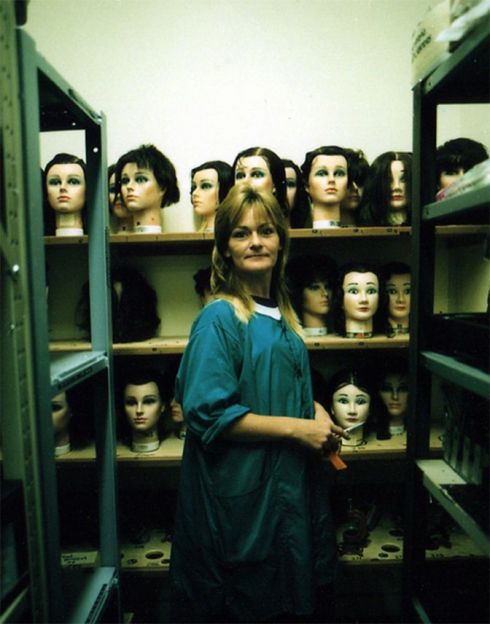
Beauty School © Sye Williams
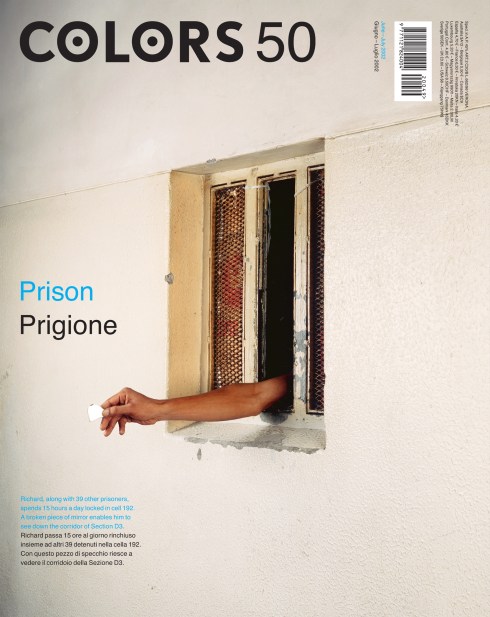
Front cover
COLORS magazine first fell onto my radar last year when reviewing Broomberg & Chanarin’s work. It cropped up again in March when I delved into Stefan Ruiz’s early career. All three were creative directors in COLORS continually rotating roster of aesthetic leadership.
Based in the north Italian town of Treviso, COLORS is part of the publishing activity of Fabrica, Benetton’s communication research centre. Benetton’s searing brand-making hit my young retinas with its controversial United Colours of Benetton (billboard) ad campaign of the early nineties.
Besides Saatchi and Saatchi, Benetton was the only time in my childhood I was aware of the names behind billboard products. That is an assumed level of cultural penetration, but I’m working from precious memory too much to determine its significance.
[As an aside, Enrico Bossan Head of Photography at Fabrica and Director of COLORS Magazine was co-curator for the 2011 New York Photo Festival. He also founded e-photoreview.com in 2010, which delivers without no-nonsense video interviews with photographers.]
The 50th edition of COLORS (June 2002) focused specifically on prisons. From the introduction:
With over eight million people held in penal institutions the prison population is one of the fastest growing communities in the world. In the United States, a country which holds 25% of the world’s prison population but only 5% of the world population, prisons are now the fastest growing category of housing in the country.
For COLORS 50 we have visited 14 prisons in 14 countries and asked a difficult question: Is it possible to rehabilitate a person back into society by excluding them from it? We spoke to murders, rapists, pedophiles, armed robbers, thieves, frauds, drug dealers, pick pockets, high-jackers and prison wardens. In most cases the stories we heard confirm one thing. That prison does not work. In COLORS 50 we ask the inmates themselves to suggest alternatives.
The magazine is 90 pages of portraits and interior landscapes. I came to this collection of work late (in my research here at Prison Photography) and in many ways it challenges many of my former presumptions. This edition is a precursor to the “VICE-aesthetic” celebrating the battered and broken, and I’d be happy to dismiss it if it weren’t for the long-form statements made by the prisoners, which are printed with care and without censorship.
The issue includes bodies of work by photographers I was previously unaware of including Juliana Stein, Vesselina Nikolaeva, James Mollison, Charlotte Oestervang, Suhaib Salem, Federica Palmarin, Mattia Zoppellaro, Ingvar Kenne, Kat Palasi, Dave Southwood, Gunnar Knechtel, Pieter van der Howen and Sye Williams. I will be featuring selections of these photographers over the next few weeks.
I bought the paper edition, but you don’t have to as the entire Prison/Prigione Issue 50 can be viewed online.
Above all, while browsing the images and stories of the magazine, I am really pressed into thinking about the ease with which a commentator can politicise and argue against the prison system in America, but be flummoxed when asked to appreciate prison systems elsewhere. Benetton uses the common theme of incarceration to raise questions, but I am at a loss to think of common answers to tackle the pain, blood and damage done to individuals in their lives before, during and after imprisonment.
At a surface level this is car-crash photography; a look inside worlds we’ll never know, but at its heart it is a call to think about the nature of humanity and to think about the capacity for humans to kill, to survive, to get addicted and to repair and to forgive.
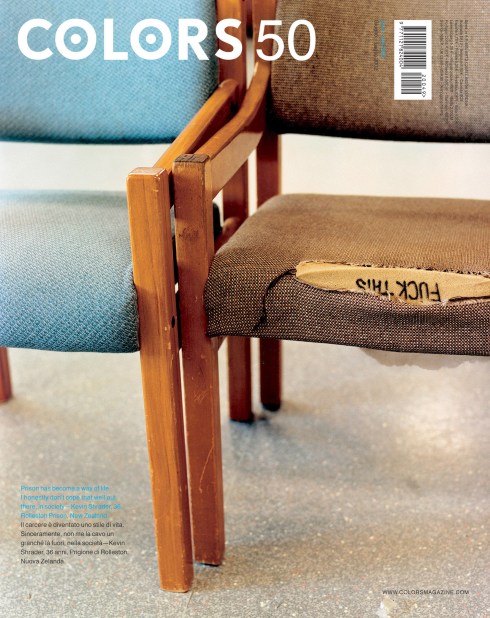
Back cover
If you are in Liverpool over the next couple of months, then you should drop in to any number of the exhibits put by LOOK2011 the inaugural Liverpool Photography Festival.
The theme for the festival is “Is Seeing Believing?” Of particular interest is Confined at the Bluecoat.
Confined is an exploration of the idea of confinement in contemporary life by photographers Juergen Chill, Edmund Clark, John Darwell, Dornith Doherty, Ben Graville, David Maisel and David Moore. Subjects range from imprisonment and detention, the ethical treatment of animals, ecological conservation and the history of psychiatric care.

I have a personal involvement in the show. Exhibitions curator Sara-Jayne Parsons asked me to pen some words for the Confined catalogue. And, after interviewing David Moore about his Paddington Green Police Station series I encouraged him to contact Parsons and together they decided to exhibit the prints. It will be the first time Moore has publicly shown his Paddington Green Police Station photographs.
Unfortunately, I won’t be making it over to the UK soon, but I hope those of you who are in Blighty make it to the exhibition, not to mention all the other LOOK2011 exhibits, lectures and workshops.
Confined is on show at the Bluecoat, School Lane, Liverpool L1 3BX, from Fri, 13 May 2011 – Sun, 10 Jul 2011, 10.00 AM – 6.00 PM, Tickets: Free. (Visitor info)
As I have mentioned here, NON-SUFFICIENT FUNDS, an exhibition of prison art by my students is ongoing in Seattle.
Prior to the show, the gallery asked that I try to make some portraits of the artists. I am not a photographer, so I was fortunate enough to secure the expertise of friend and Seattle Times photojournalist Erika Schultz.
The wall on which the portraits and their accompanying bios hung have been incredibly popular among the audience. Erika’s portraits are phenomenally unexpected. In this instance, text and image combine and challenge the damaging stereotypes of prisoners that usually hamper prison reform.
The non-existent genre of “prison photography” just expanded by one project.
PHOTOS AS EMOTIONAL CURRENCY
Not surprisingly, Erika’s portraiture has gripped the attention of the students too. For a US prisoner, sitting for a professional portrait is very, very, very rare. Photographs play a crucial part in the unorthodox family relationships that persist despite prison walls. The students are aware of this and incredibly eager for prints, which I will provide.
You should see more of this project on Erika’s blog.
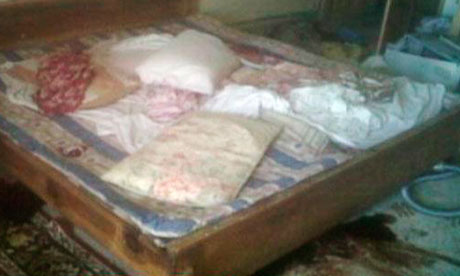
Screen-grab from ABC newsreel footage, as featured in the Guardian‘s front-page slide show.
Osama bin Laden wasn’t in mountain caves. He was in a mansion in Abbottabad, a major Pakistan city two hours north of the country’s capitol, Islamabad. Bin Laden had been there for more than six months.
Part evil-lair, part self-imposed prison, part luxury – the mansion is a major part of the story and questions about “who protected Osama bin Laden over the past decade” will no doubt follow.
There’s a few things going on here, so let’s start with the most simple. “You made you bed, now you must lie in it die in it.” Anyone? No? (To be clear, I don’t know if this was OBL’s bed, or even if he was killed in this room).
Nonetheless, the blood on the floor tells us this bedroom is a site of ambush; the bed is an object of a stormed house. Yet, this image is not distinguishable in any meaningful way from all the other images of house raids in America’s 21st century wars.
THE VISUAL CULTURE OF BEDS
Contemporary concerns have been about sex (the discarded condoms of Tracey Emin’s My Bed proved her as honest as she is crass) and violence (or maybe Rauschenberg was just about disorder?)
Historically, the image of the bed has been co-opted for highly political purposes. And interestingly, the bed played a central role in the dissemination of images of Arabic regions round Europe in the 17th and 18th centuries.
Artists under patronage painted aristocracies, noble beasts, mythologies, and Christian narratives. The boudoir was rarely mentioned; acts of the bedroom hidden. For titillation, commissioned artists were sent abroad. Orientalist Art has little to do with the distant lands it “depicts” but most to do with the obsessions of artists and patrons with harems and the sexual behaviours of people of colour.*
Without wanting to over-simplify, Orientalist Art is – at both conscious and subconscious levels – the projection of suppressed sexual desire upon an “Other” group. The subject has little or no means to correct the misrepresentations. Furthermore, any corrections by the subject would disrupt the self-serving narratives of the distant audience.
Centuries of visual manipulations and stubborn visual usury between the West and the rest, with the bed as the visual anchor to the lazy indifference, are wrapped up in the unorthodox war photograph above. If the image does indeed depict the bed of Osama bin Laden (the personification of cultural antagonism, violent opposition, the most distant of “Others”) then, I at least, identify some irony therein.
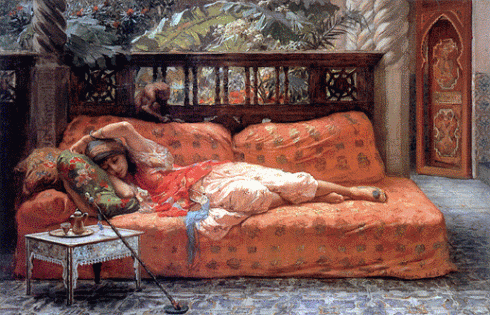
“The Siesta,” by Frederick Arthur Bridgman (1847-1928), oil on canvas, 11 ¼ by 17 inches, 1878, private collection, courtesy of the Spanierman Gallery, New York
One final thing. A bed is a place of rest, a grave is a final resting place. Western allies worried any grave would become an extremists’ pilgrimage site, so Osama bin Laden’s body was buried at sea. But have they avoided the problem? Might this Abbottabad mansion and this bedroom not become places of pilgrimage?

 Prison Photography