
You are currently browsing the category archive for the ‘Historical’ category.

Hospital lobby. © Kim Rushing
–
Long before I started writing about prison imagery and before I even set foot in the United States, photographer and educator Kim Rushing was making images of the men at the infamous Parchman Farm, known officially as Mississippi State Penitentiary. Rushing made these photographs and others over a four year period (1994-1998). They recently been published by University Press of Mississippi as a book simply titled Parchman.
After a first glance at the photographs I was surprised to hear they were made in the nineties. Many images appear as if they could have been captured in much earlier decades, but such is the nature of prisons which either change at glacial pace or remain in a temporal stasis–uniforms replace identifiable fashion; hardware is from eras past; conditions can appear mid-century; and the vats of the kitchens and gas chamber seem permanently footed to the concrete foundations.

Spaghetti, central kitchen. © Kim Rushing
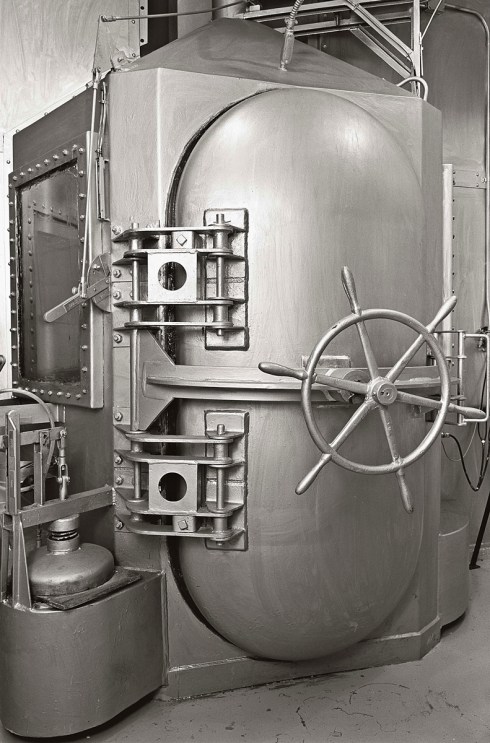
Gas chamber. © Kim Rushing
Rushing’s photographs are a welcome view to a past era and a brief step back in time. My overriding takeaway from the project is that time, as in all prisons, operates by its own rules.
Rushing’s contribution to the emerging visual history of American incarceration is valuable, not least because it contains some hope. Whether the absence of violence is a fair reflection of Parchman would be a worthwhile discussion but for broader research some other time. Take the images at their face value and we can identify other prevalent characteristics of prisons, namely boredom, containment, some programming, and certain longing. (I’d hazard to guess the programming such as gardening have been scaled back.)
To insist that an almost predictable perspective on prisons exists in Rushing’s work is borne out in close comparison of the work of other photographers. Rushing’s portraits are very similar to those of Adam Shemper’s made at Angola Prison, Louisiana in 2000.

Cornelius Carroll © Kim Rushing
There are also quiet echoes of David Simonton’s 4×5 photographs of Polk Youth Facility in North Carolina made in the nineties. Except in Rushing’s images prisoners inhabit the scratched, peeling interiors. Interestingly, both bodies of work remind me of Roger Ballen‘s dark worlds, but that might be a leap too far given the specific psychological manipulations by Ballen in his native South Africa.
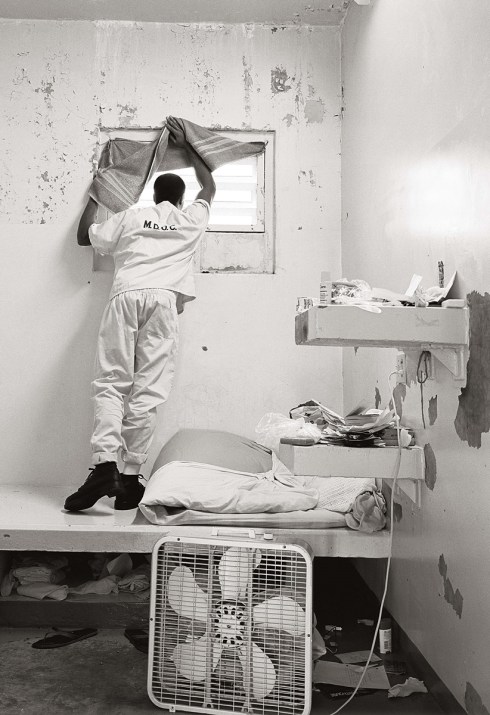
Gregory Applewhite at window © Kim Rushing
In terms of touchstone and stated portraiture projects, I see fair comparisons with the incredible work of Ruth Morgan in San Quentin Prison, California made in the early eighties.
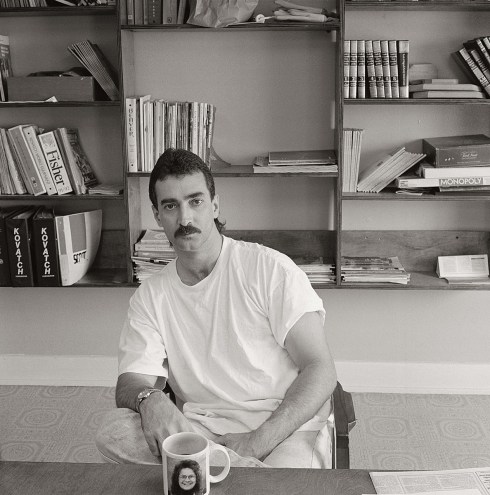
Billy Wallace. © Kim Rushing
And in terms of predictable moments, I cannot help but think of Ken Light’s portrait of Cameron Todd Willingham in Texas from 1994, when I view Rushing’s photo of Kevin Pack (below).

Kevin Pack watching TV. © Kim Rushing
In the book Parchman, alongside Rushing’s images are the handwritten letters of 18 prisoners–ranging in custody level from trustee to death row–who volunteered to be photographed. “What does it feel like when two people from completely different worlds look at each other over the top of a camera?” asks University Press of Mississippi. In this case, I’d argue, the successful insertion of humanity into an institution that has historically crushed the spirits of those inside. Clearly adept in his art, Rushing has made a stark and sometimes touching portrait of an invisible population.

Feeding the spider © Kim Rushing
–
Parchman (cloth-bound; 10 x 10 inches; 208 pages; 125 B&W photographs) is now available for $50.00 from University Press of Mississippi.

Photo: Mimi Plumb. Anonymous man. Do you know this man?
–
During the summer of 1975, Mimi Plumb spent months in the Salinas Valley, watching farmworkers make history.
“I traveled up and down the valleys of California photographing the young men living in farm labor camps, in chicken coops and under the sky, the children and adults working together in the fields, and the United Farm Workers Union (UFW) organizers and volunteers listening and talking with farmworkers about how elections in the fields might change their lives,” says Plumb.
Plumb shot dozens of rolls of film, which she developed at the time and made prints. But she didn’t show them much except for in the UFW field office and in an SFAI (San Francisco Art Institute) exhibition. A few images appeared in newspapers at the time.
Almost 40 years later, after her retirement from teaching, Plumb pulled the negatives and old prints from their boxes and started to put together the pieces. (An edit Pictures From The Valley is on her website).
It is an exhilarating re-emergence.

Camp Roberts. The weather had turned warm, and by noon the temperature topped 100 degrees. The marchers stopped for a rest at Camp Roberts, a former Army training center just off Highway 101. Chavez was always using his time to organize – whether he was in motion or sitting still. He posed for photos with groups of workers from each of the ranches — the hand sewn banners forming a good backdrop. Photo: Mimi Plumb. Caption: Miriam Pawel.
The photos are rich and pregnant; they deserve so much attention. And they get it. The California Humanities, a non-profit partner of the National Endowment for the Humanities, with help from the Center for Community Advocacy and the National Steinbeck Center, produced and funded efforts to identify the people in Plumb’s photographs and to seek out their stories.
The result is Democracy In The Fields, a visual record paired with oral histories. It’s the history of popular movements mixed with anthropology mixed with the history of labor. I love the way photographs have been leveraged here to shape a collective story that would otherwise have been dissipated and drowned out.

Among the subjects are Rosa Saucedo, Jose Renteria, Mario Bustamante, Alberto Magallon, Sabino Lopez, Celestino Rivas, Ricardo Villalpando, Cesar Chavez and the Amezcua Family.
Many of the people in Plumb’s photographs were identified by journalist Miriam Pawel who has written extensively about Chavez and the history of the United Farm Workers union. Together, Plumb and Pawel met with groups of former farmworkers who had been in Salinas in 1975.
“Children saw pictures of their parents as young adults for the first time. Grown men who had no photos of their fathers found them in Plumb’s images,” says the Democracy In The Fields website.
The faces in the images are luminous. Time and time again, there’s huge joy among the workers. Did they know they were marching to victory? Despite the grave consequences at stake, the workers and protesters seem unencumbered by the repsonsibility. The marchers particularly look as if they’re relishing ever purpose-defined moment.

The Teatro Campesino performed skits at the Potter Road Labor Camp. Photo: Mimi Plumb.

UFW Field Office. Photo: Mimi Plumb.
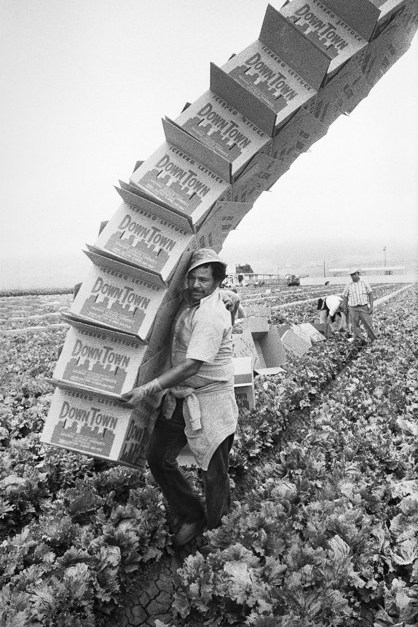
Photo: Mimi Plumb.

In the summer of 1975, with only months to prepare for the first elections in the fields, dozens of farmworkers who had demonstrated leadership were tapped by the UFW to leave their jobs in the fields and work for the union for ten weeks. Rosa Saucedo, a 21-year-old in the lettuce fields, was one of 40 hired in Salinas. Each was assigned specific companies. Rosa’s job was to win over workers at D’Arrigo, a large vegetable grower where the UFW was fighting the Teamsters. She was interviewed in Spanish by journalist Bob Barber in the midst of the campaign. Photo: Mimi Plumb. Caption: Miriam Pawel.

Photo: Mimi Plumb.

Jose Renteria mans one of the election booths. When the votes were counted, the UFW won a big victory – 188 votes to 84 for the Teamsters and 4 for No Union. Photo: Mimi Plumb. Caption: Miriam Pawel.
Journalist Bob Barber was conducting interviews in 1975 in the fields. Tapes from his archives provide audio on the website. Plumb and Pawel also conducted their own interviews in recent years. Wendy Vissar finessed the workers’ stories into a digital form.
“Celestino, Ricardo, Rosa and Chuy often included me in their daily rounds, from the fields and camps to Maria’s kitchen table,” writes Plumb. “The UFW field offices were a hub of activity, of nightly meetings, and frequent visits from the union president, Cesar Chavez.”

Farmworkers listen to Ricardo Villalpando, who worked tirelessly to persuade others that supporting the UFW was the path to a better life. He went wherever he had to in order to talk to workers in small groups—buses, the fields, labor camps, apartments. Photo: Mimi Plumb. Caption: Miriam Pawel.

‘With the Virgen of Guadalupe Leading the Way’. Every day, Chavez walked between ten and twenty miles. On July 28, the marchers reached San Lucas, where Chavez held the first evening rally in the Salinas Valley, in a small wooded grove on a makeshift stage. The next morning, the marchers set off again, heading for King City. Photo: Mimi Plumb. Caption: Miriam Pawel.
“On June 5th, 1975, the California Agricultural Labor Relations Act (CALRA) became law,” explains Plumb. “In July and August of 1975, Chavez led a 1,000 mile march, to help bring attention to the landmark statute recognizing the right of farmworkers to vote for union representation. The first farmworker election was held on September 5th, 1975 with a vote of 15-0 for the UFW.”
What an incredible project.
It takes a while to meander through the history and the people involved in the movement, but it’s a rewarding wander.

Photo: Mimi Plumb.
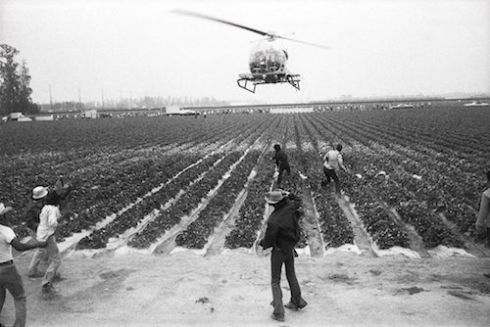
Photo: Mimi Plumb.
–
For more images and info visit Mimi Plumb‘s website and the Democracy In The Fields website.
The project is ongoing. You can help identify people in Plumb’s pictures!
Connect on Facebook too.
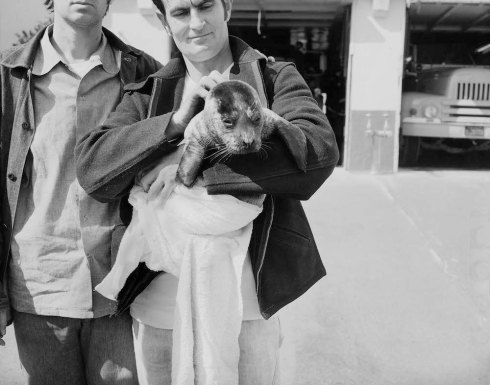
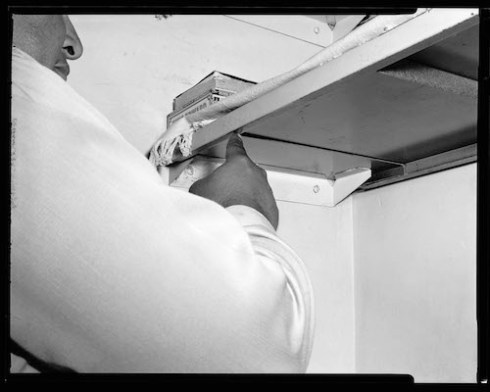
It is every artist, collector or photographer’s dream; the discovery of an archive of thousands of negatives. For artist and professor Nigel Poor, it became a reality. In late 2012, she was making a routine visit to Lt. Sam Robinson’s office in San Quentin State Prison. She’d just finished teaching her class in photo-history and collaborating on image interpretation project with her incarcerated students. Knowing her life in the medium, Robinson pulled out a bankers box.
“He lifted the lid,” recalls Poor. “Inside were hundreds of yellow envelopes that I recognized instantly as those which hold 4×5 photo negatives.”
Poor’s heart “exploded.” More than three years on, Poor has only just finished going through all the negs: she estimates there’s more than 10,000.

In the weeks, after the discovery, Poor took some negatives and scanned them. She showed the prints to Robinson to prove what she could do and he gave her permission to take the entire box. So far, she’s scanned about 600 of the 4×5 negs. There’s four or five other boxes still to scan and categorize.
I anticipate that there’s hundreds of similar archives gathering dust inside cupboards and administration buildings in prisons across the United States. Kudos to the San Quentin authority for empowering Poor to share the finds with a wider public. The archive ultimately belongs, in my opinion in a California State-run Museum.
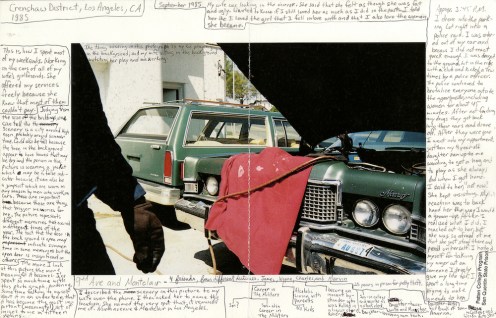


The other wonderful thing that has come out of this is that Poor is using the images as teaching aids. Just as she had done with iconic images from art history (see the William Eggleston, Lee Friedlander and David Hilliard images above), Poor asked her students to deconstruct, examine and interpret the newly-found images from the San Quentin archive. After she had scanned and printed them on card-stock with large white borders, Poor gave them to the men to interpret.
She has given the prisoners first go at interpreting San Quentin’s history. They are writing the latest stories of a very-storied institution.
Read my article about the archive discovery Rarely Seen Images of the Real San Quentin on the Marshall Project. The article was also cross-posted to The Atlantic — Unearthing San Quentin: Resurrected photos capture moments of daily life at the California prison.


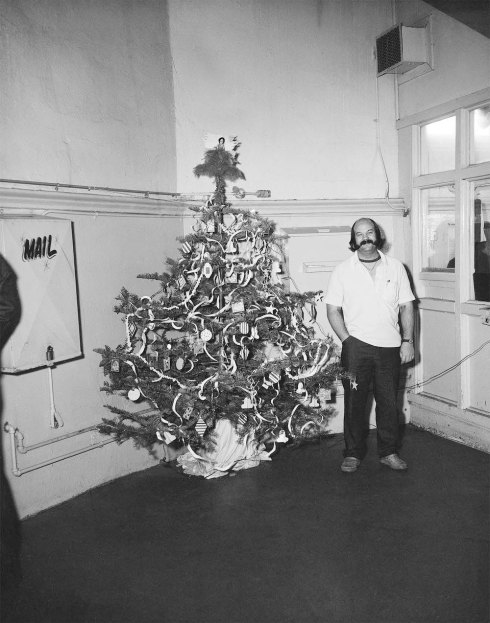


A 1916 American Mug Shot
For anyone who thinks photography has only recently been abducted by state and corporate power for the purposes of control, think again. For anyone who thinks that high-tech-surveillance was the birth of photography being used to discipline and order humans, think again. Cyborgology recently had a great piece by Liam French lecturer in the Journalism and Media Department at the University of St. Mark & St. John, about the historical connects between image-making and criminal justice. French writes:
The relationship between visual technologies and the criminal justice system can be traced back to the emergence of photography and the invention of the camera as a tool for documenting ‘reality’ in the nineteenth century. The camera was widely believed, even more so than today, to be able to objectively and truthfully record social reality. A photograph was perceived to be like a window on the world – a mechanically produced, impartial and literal representation of the real world.
One such photographic taxonomy was produced by the Italian physician Cesare Lombroso who drew ink portraits depicting ‘criminal types’. Lombroso’s work is an exemplary case of the rise of positivist criminology in the nineteenth century. He argued that criminals possessed more ‘atavistic’ features and shared more characteristics with our evolutionary ancestors than more law-abiding citizens.
Most Wanted: Cameras, Criminal Justice and the Persistence of Vision argues that the breadth of surveilling techniques and technologies has extended to the Internet.
Still and moving ‘visual evidence’ is stored in state archives, used in courtrooms as evidence, and disseminated across almost every major media platform: from the printed press to the World Wide Web.
French references both a 2006 article about Mark Michaelson’s book and collection of mugshots and last years viral pic of Jeremy Meeks‘ mugshot to raise the idea that law enforcement photography (mugshots included) have transcended their forensic roots.
Take, for example, the posting of the police mug-shot of criminal Jeremy Meeks on Stockton Police Force Facebook page resulted in his image going viral and concluding with the offer of a quite lucrative modelling contract. What is interesting about the Jeremy Meeks mug-shot story is that once his photograph was displayed outside of the authoritative domain of the police archive and publicly circulated across different social media platforms and networks it accrued different sets of meanings (sexy, hot, good-looking) along the way despite the attempt to officially encode (or fix) the meaning (criminal, dangerous, wanted by the police) of the photograph.
Furthermore, French argues, that John Fiske’s theory that dominant power uses system to segregate and dominate apply here. Fiske says that authority will rely upon systems and “improve” them all the while facing resistance from the lesser power. Crucially, the lesser power uses the same systems to subvert and counter dominate. Sometimes the lesser power is successful and sometimes the larger power replaces old systems with new ones of greater efficiency or new tactics. In any case there is always a push and pull.

Booking photo of Jeremy Meeks, 30. (June 18, 2014). Credit: Stockton Police Department
So in the case of mugshots, there has always been inherent control attached to state-dominate manufacture and exchange of mugshots. Until social media found a way to interrupt that exchange.
Even Sheriff Joe Arpaio’s mugshot of the day website and the countless mugshot magazines like Busted were examples of larger authorities using the mugshot to their own ends. Arpaio’s use served not the general fraternity of law enforcement but his own ego. Busted wanted to bend the use of mugshots to its own profitable ends but interestingly did so without inconveniencing the state’s power; to the contrary dollar-mugshot magazines enhance the states criminalisation of individuals.
Fiske’s theory was formulated in the late 1980s and so pre-dates the emergence of web 2.0 and social media but his model of culture (and popular culture) does have a resonance with the ways in which social media tools and platforms further open up the terrain of culture for struggles over meaning, semiotic productivity and popular resistance. Imposing official (or dominant) meanings is now much more difficult because there are so many opportunities for contestation.
It would be naïve to cite the Jeremy Meeks example as some kind of paradigm changing moment or as the empowerment of the masses but it does offer an insight into the ways in which the potential for popular resistance is always possible and can surface in the most unlikely of places.
From dusty archives, to venerable vernacular objects, to art-world comedy-fetish, to online consumable, we need to consider deeply our relationship to mugshots. And to the criminal justice systems from which they emerge. Especially as one week we’re approaching them as shallow entertainment and the next we’re demanding a right to them in order to confirm or dispel controversy and conspiracy surrounding in-custody death.
–
Read French’s full piece Most Wanted: Cameras, Criminal Justice and the Persistence of Vision here

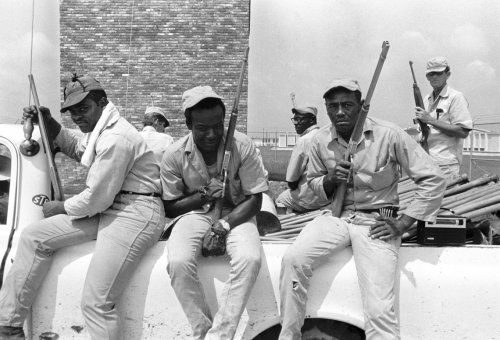
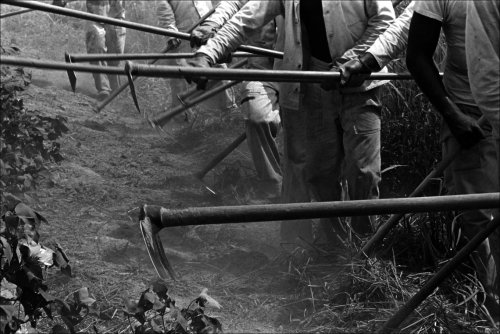
This week, The Marshall Project published an illuminating piece Prison Plantations about Bruce Jackson‘s work from inside Texas and Arkansas in the 60s and 70s. As far as I am aware, it is the best presentation of Jackson’s work on the web. 27 images.
Jackson a professor in history, writer and photographer, focused on the work songs of prisoners to trace the progression of arable land in the South from plantation to prison. For a century, between the outlaw of slavery and the era of mass incarceration (approx. 1865-1975), the Texas Department of Justice bought up old family plantations on which to house and work inmates.
Maurice Chammah writes for TMP:
For the black men who had once been slaves and now were convicts, arrested often for minor crimes, the experience was not drastically different. As Jackson writes in his introduction to the 2012 photo collection Inside the Wire:
“…Everyone in the Texas prisons in the years I worked there used a definite article when referring to the units: it was always “Down on the Ramsey,” not “Down on Ramsey,” and “Up on the Ellis,” not “Up on Ellis.” It made no sense to me until I realized that nearly all of those prison farms had been plantations at one time, so it was like an abbreviated way of saying “I’m going to the Smith family’s plantation,” or “I’m going to the Smiths’.”
This was the end of an era. Right after these photos were taken, in 1980, William Wayne Justice, a federal judge, issued a sweeping decision in the prisoner rights case Ruiz v. Estelle. Justice forced Texas prisons to modernize in all sorts of ways, from adding staff to improving working conditions to stopping the policy of allowing prisoners to guard one another with weapons. Jackson photographed prisoners with rifles, an image unthinkable today.
It’s a great little piece putting into stark perspective our very recent history. And Jackson’s pictures take us straight back there. Read Prison Plantations.


THE VISUAL CULTURE OF PRISON RESISTANCE
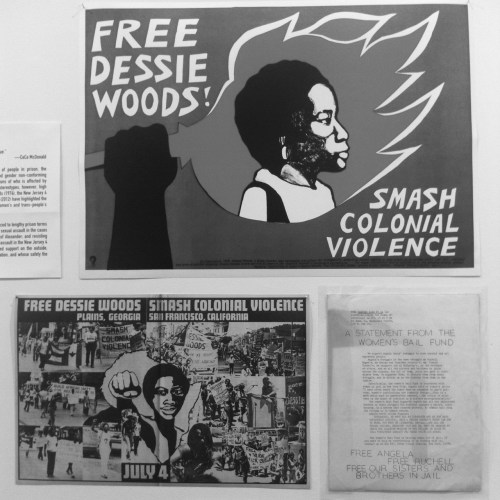
Liz Pelly‘s conversation with Josh MacPhee in The Media is a wonderful read. It coincided with MacPhee and his cohort’s incredible exhibition of prisoner made protest materials going all the way back to the early seventies.
MacPhee urges us to dismantle the idea that prisons are separate from outside society. Crucially, he’s not making, in the first instance, a moral point about how we’re all the same, prisoners and all. MacPhee makes an observation of the structural characteristics of the prison system.
“It’s getting harder and harder to hold up the pretense that prison is somehow distinct from the rest of society,” says MacPhee. “When there’s this many people going in and out all of the time, there’s no way that our lives out here don’t leak into there, and that their lives in there don’t leak out into the rest of society. The idea that these are completely separate realms needs to be dismantled.”
Of course, once the structural facts of the system are revealed, the moral point that we are all one-and-the-same, prisoners and all, is indisputable.
I contacted Pelly and asked if I could republish the conversation. It originally appeared as Inside/Out: On Prison Justice, Art of the Incarcerated, and Interference Archive’s New Show in Issue #44 of The Media (October 10, 2014). It is a privilege to feature Pelly and MacPhee’s interview in full here on the blog.
A LITTLE BACKGROUND
Between September 11th and November 16, 2014, Interference Archive exhibited, Self-Determination Inside/Out: Prison Movements Reshaping Society a look back at the visual and material culture of prisoner-led political movements.
Organized by Molly Fair, Josh MacPhee, Anika Paris, Laura Whitehorn, and Ryan Wong, Self-Determination Inside/Out includes sections on the work of incarcerated AIDS educators, the experiences of women and queer prisoners, prison and control unit prisons. The exhibition features prison newsletters, pamphlets, video and audio interviews, prints, photography (!!!) and magazine covers — starting with materials created during the 1971 Attica Rebellion, a massive prisoner uprising in upstate New York, and concluding with work made by current political prisoners, the show highlights moments of self-organization within the prison industrial complex.
You can buy a booklet and a poster for the exhibition.
Interference Archive is a volunteer-run archive in Gowanus, Brooklyn, dedicated to preserving cultural ephemera related to social movements.

Inside/Out: On Prison Justice, Art of the Incarcerated, and Interference Archive’s New Show
Liz Pelly (LP): What initially inspired the creation of Interference Archive, which mostly houses ephemeral material like posters, t-shirts, and newsletters?
Josh MacPhee (JM): For the different people involved, there are different answers of course. For me, I grew up making this stuff through DIY music, cultural stuff, politics. Through the act of doing, I started collecting it. Flyers, t-shirts, buttons, the ephemera that gets produced by people who are organizing. It was a combination of wanting to understand the history of what I was doing and then at the same time, I was getting really interested in this idea of how people make art and culture in the context of trying to their lives. It’s distinct from art that’s produced purely in the realm of self expression, and the art that tends circulate within the contemporary art world.
This kind of material gets lost. It’s often not clearly authored. Institutions that deal with art don’t quite know what to do with it. Since it’s so political, places like history museums don’t know what to do with it either. It sort of falls through the cracks. But we can see during times like Occupy, or Tahrir Square in Egypt, or with the Maidan in the Ukraine, that this is the stuff of life, [created] when transformation starts to happen. When people have their arms shoulder deep into the constructions of representations of a new world, and the way they want things to be articulated.
For me, doing an archive was a way to say, “just because these moments come and go, and movements have ebbs and flows, doesn’t mean that once the peak has been reached that this material isn’t still valuable to us, to where we’ve come from and therefore where we are going.”
LP: That said, how do you think this sort of exhibit in particular shines light on the experiences of prisoners?
JM: There were five of us who organized this exhibition, and most of us have been engaged with issues around prisons in different ways, whether having been formerly incarcerated, or working with prison activism programs. As far as I know, nothing like this has ever been done before.
We live in a moment where over two million people are in prison. It’s getting harder and harder to hold up the pretense that prison is somehow distinct from the rest of society. When there’s this many people going in and out all of the time, there’s no way that our lives out here don’t leak into there, and that their lives in there don’t leak out into the rest of society. The idea that these are completely separate realms needs to be dismantled.
We thought it was important to marshal primary source material to show that people aren’t just objects of repression or study or someone else’s activism. But they have done immense amounts of organizing inside themselves. Often times that organizing takes place at the same time, or sometimes even ahead of, what people were doing on the outside. Some of the focus we have on organizing around AIDS and AIDS education in prison was really fascinating and important because it shows how people that had the least access to medical care were doing in some cases the most organizing in order to try to deal with a problem that at the time the government was not even acknowledging existed.
LP: Can you tell me more about your own experiences with prison reform activism?
JM: I first learned about how the prison system functions in the early 1990s. It just sort of blew my mind that there was a whole world of people who largely because of race and class were basically being warehoused. And that, at the time, it was completely absent from the radar of public In the 90s, the only thing discussed in relationship to prisons and criminal justice was this sort of “tough on crime” thing. There was no acknowledgment that a massive increase of the prison population going on, and that it wasn’t actually working. And that the system that decided who went in and out was so manifestly unjust, random often.
That sent me on a path of doing organizing around prison issues. I started in Ohio, and then did some work in Colorado, and then in Chicago. A lot of the organizing I did was around Control Unit Prisons, basically trying to stop solitary confinement. [Organizing around] these men and women who were spending twenty-three-and-a-half or twenty-four hours a day alone in their cells, and the psychological damage that causes and how it basically goes against international conventions of torture, yet it’s completely commonplace in this country.
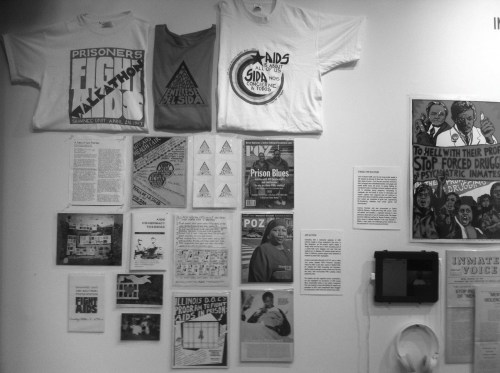
LP: Over the past year, there has been lot of in the news about the racist criminal justice system. It’s an apt time for Self-Determination Inside/Out: Prison Movements Reshaping Society. But obviously there is a lot of history of racism in the criminal justice system that this brings to light. Were you inspired to put this together because of recent events, or has this exhibit been in the works longer?
JM: We worked on the exhibition for 6 months. As a space, as an institution, one of our goals is to take this material that’s perceived as marginal and present it in ways that will allow it to be in its own context, but also to actually show that it’s not marginal. Our primary audience is not people who already necessarily agree with everything that would be in this exhibition. We are conscious of, and trying to take advantage of, a moment.
The question becomes, how do we push [the discussion] farther? If we say mass incarceration is not okay, at what point is incarceration okay? If 2 million people in cages is not acceptable, is 1.9 million people in acceptable? Or 1.8? Once you start asking those questions it opens up the space to say, “this whole system is just absolutely corrupt.”
Mass incarceration accomplishes a number of things, none of which are its stated goals. It accomplishes deeply suppressing working class communities of color. That’s never been articulated as what the prison system is supposed to do. It’s just clear that that’s what it does. It clearly is completely ineffectual at actually dealing with crime.
LP: What are some underreported sides to the prison industrial complex that you hope this exhibit brings to light?
JM: The fastest growing portion of the prison population for years now has been women.
Increasingly there is a real gendered aspect of being able to look at how the criminal justice system works. Increasingly it’s used to enforce gender binaries. It’s a brutal system for queer and trans people that get sucked up into it. People are doing a lot of organizing around it now, but until recently, it was assumed if you were gender non-conforming, they have to choose where to put you, and then once they chose a men or a women’s prison, then almost immediately you’d get sent to solitary confinement. You’d do your sentence out in solitary confinement, in complete isolation, because the system is not prepared to deal with gender non-conformity. You are being punished because your very existence challenges the bureaucratic way the system works.
It’s really clear that women who refuse to be abused, who fight back against abusers, almost always get pulled into the criminal justice system. So we have things like Trayvon Martin being shot, and Zimmerman getting off. But any woman that stops an attack from an abuser is inevitably going to do time because that’s just absolutely taboo.

LP: What were the biggest challenges to getting this exhibit together?
JM: Each exhibition has unique challenges and obstacles, and then there are ones that are sort of similar across the board. For this exhibition, was just that cultural material produced by incarcerated people is hard to access. A lot of it is made in prison and then just never leaves prison.
In general, one of the challenges for all of the exhibitions, is that unless we do something that’s very focused, inevitably there’s so much stuff it’s hard to know when to say “okay we’ve got enough” or to know when to draw the lines. It’s hard to know when to accept that you’re never going to have all of the stuff that you wish you could, that you’re never going to be able to tell the whole story, that maybe even the idea that you’re going to tell some sort of master narrative is questionable in its own right.
When you’re representing things that are so deeply underrepresented, people get attached to wanting their part of the story told, because it’s been marginal or silenced for so long. It makes it really hard to make those choices, because you don’t want anyone else to continue to feel [that way].
We are collecting material from movements that are marginal. Even though they often have extremely deep impacts, rarely is that impact known or visible when they’re most active. It’s kind of like an extra kick in the face when your ideas become commonplace 10 or 20 years later and you’re still written out of the history even though you’re the ones who came up with the ideas.
LP: What do you hope, in general, visitors learn from Self-Determination: Inside/Out?
JM: On the one hand, I hope this contributes to a shift [towards] the idea that prisons are maybe not the answer to the problems that they claim to be. And that locking people in cages is not actually accomplishing what we’re being told it is.
On another level, that incarcerated people are not just objects. They’re loved ones and family members and neighbors and community members. The thing that primarily defines someone as a human being is not whether or not they’re in prison. That people that happen to find themselves in prison, many for reasons that are and then also at the same time many for doing reprehensible things, doesn’t make them not human. It doesn’t mean they don’t have the same desires, life goals, and relationships that everyone else has. And as such, the way that they conceive themselves and their world is part of, needs to be part of, any movement for social transformation.
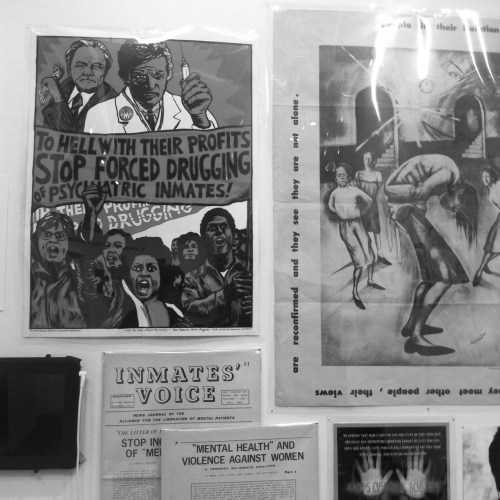
THE PEOPLE
The Interference Archive is a collection of posters, flyers, publications, photographs, books, t-shirts, buttons, moving images, audio recordings, and other materials, made by participants of social movements throughout past decades. It is an archive “from below” — collectively run space, powered by people, and with open stacks accessible to all. The Interference Archive explores the relationship between cultural production and social movements. It provides public exhibitions, a study and social center, talks, screenings, publications, workshops, and an online presence, with an aim to preserve and honor histories and material culture that are often marginalized in mainstream institutions. It is at 131 8th Street, #4 , Brooklyn, NY 11215 (2 blocks from F/G/R trains at 4th Ave/9th Street).
Josh MacPhee is an artist, curator and activist living in Brooklyn, NY. MacPhee is one of the founder of the Just Seeds Artists’ Cooperative, which organizes, creates and distributes radical art. MacPhee is the author of Stencil Pirates: A Global Study of the Street Stencil, which is dedicated to stencil street art. He co-edited Realizing the Impossible: Art Against Authority, Reproduce and Revolt and the upcoming Paper Politics: Socially Engaged Printmaking Today. In 2001 he co-organized the Department of Space and Land Reclamation in Chicago with Emily Forman and Nato Thompson. In 2008 he co-curated the exhibition Signs of Change: Social Movement Cultures 1960’s to Now with Dara Greenwald.
Liz Pelly is a freelance writer and editor based in Brooklyn, NY. I lives and works at the all-ages collectively-run art space The Silent Barn, where she books (and sometimes plays) shows. She and her friends run the ad-free bi-weekly online newspaper The Media.
The Media is a webpaper covering alternative arts, culture, music, news, and grassroots activism. With contributors often embedded in the communities they cover, The Media aims to bridge the gap between underground presses and mainstream media. Crucially, it is AD-FREE and simply designed. “At a moment marked by short attention spans, decentralized click-bait articles, and newspapers in flux, rethinking the aesthetics of our news websites feels just as crucial as re-imagining their content,” says The Media. “We want our content to resonate on its own merit, free of frivolity and flash, and grounded by a homepage that’s striking in its radical simplicity.”
THE PREAMBLE
As some of you might be aware, I recently moved down the west coast from Portland to San Francisco. Just as I focused on local artists back then, so too I’ll be peppering Prison Photography with features of local Bay Area photographers.
Kirk Crippens is a long time friend. I saw his latest show on opening night and I thought it was responsible and heartfelt. I have never been to Bayview Hunters Point which is the focus of Crippens’ series The Point. I am curious but as with many of the outlying SF neighbourhoods, I’ve never had a reason arise to visit. Which says a lot in itself of boundaries within even the same city. Bayview is home to one of my favourite newspapers. The SF Bayview reports on prison issues when virtually no one else is seeing the abuses occurring in our prison system. That’s an aside; on to the article proper
THE POINT
While reflecting on the African-American community of San Francisco, James Baldwin once said, “This is the San Francisco that Americans pretend does not exist.” The Bayview-Hunters Point district is a predominantly Black neighbourhood and, for years, has been isolated from the rest of the city and cited as a significant example of urban marginalization.
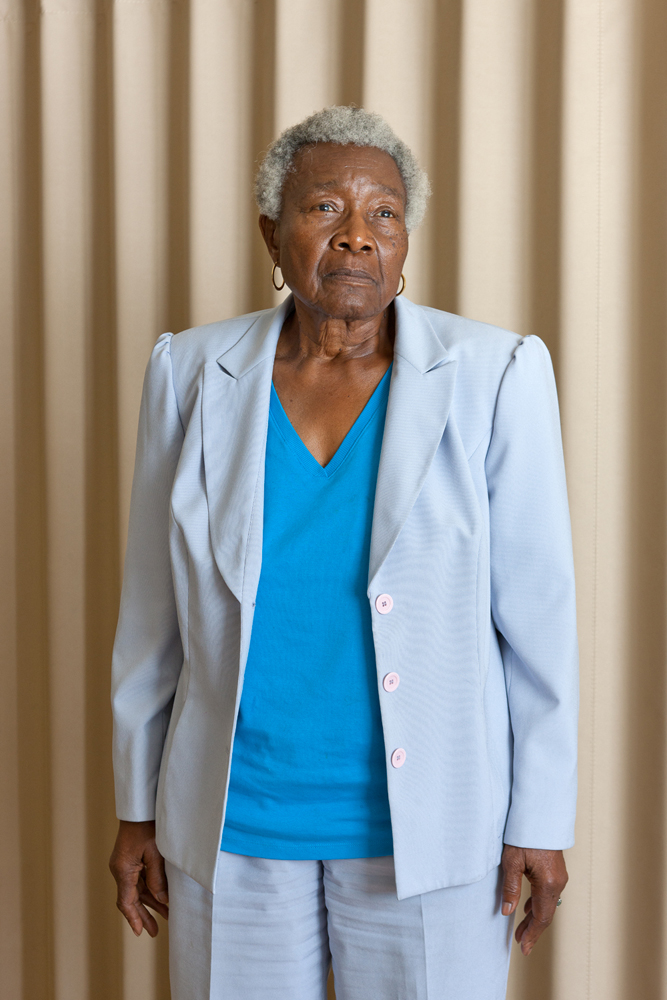
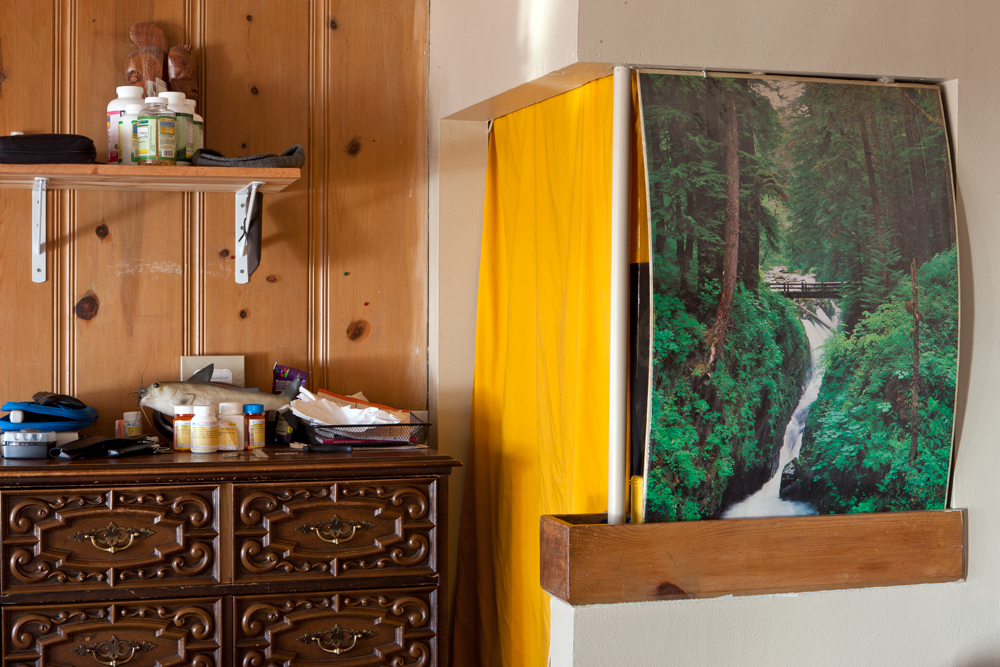
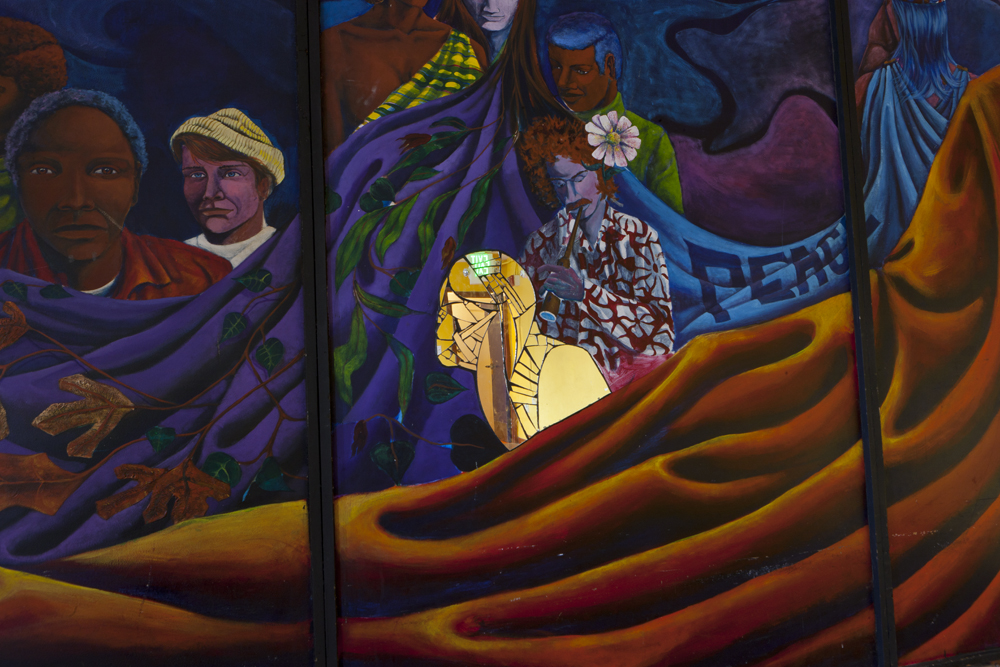
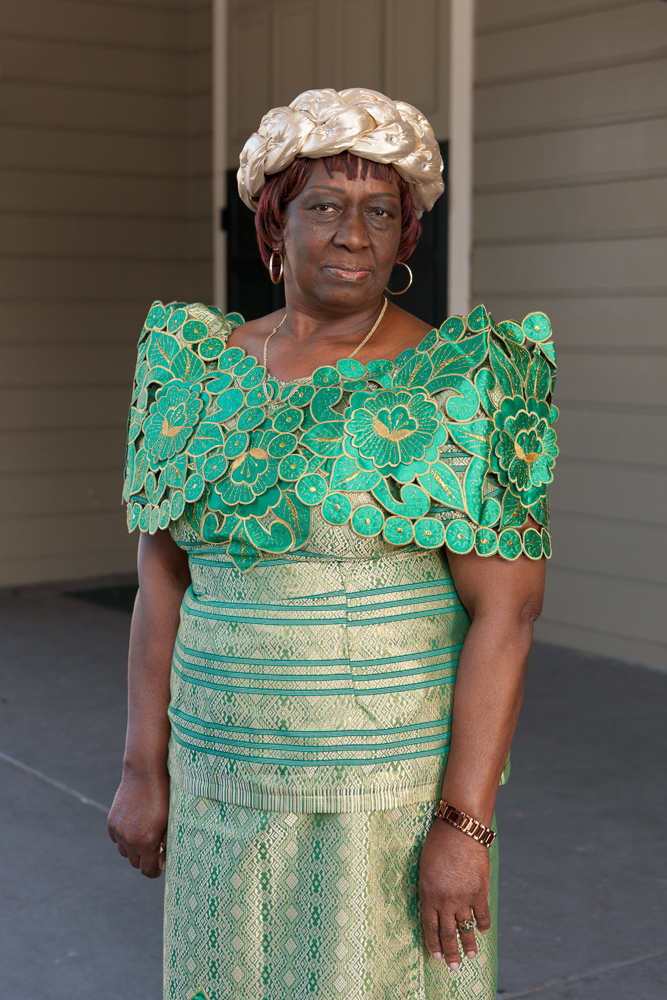
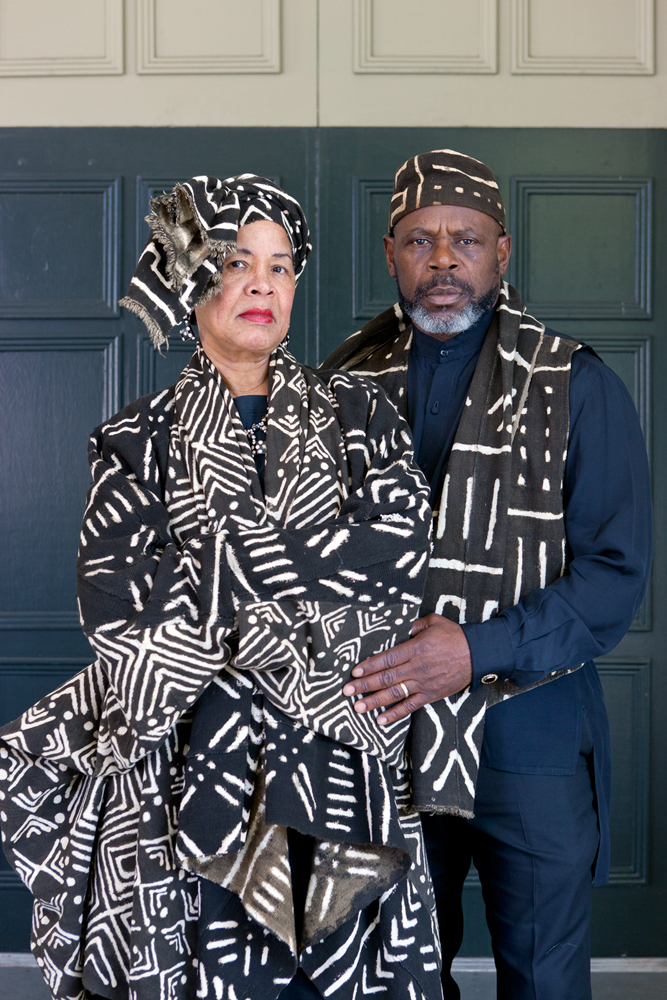
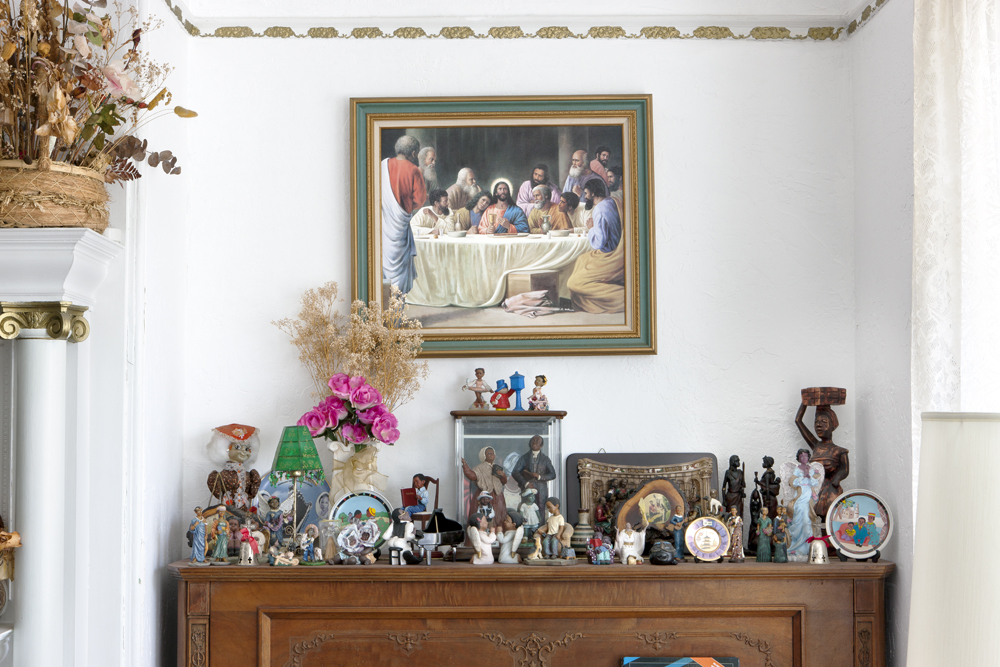
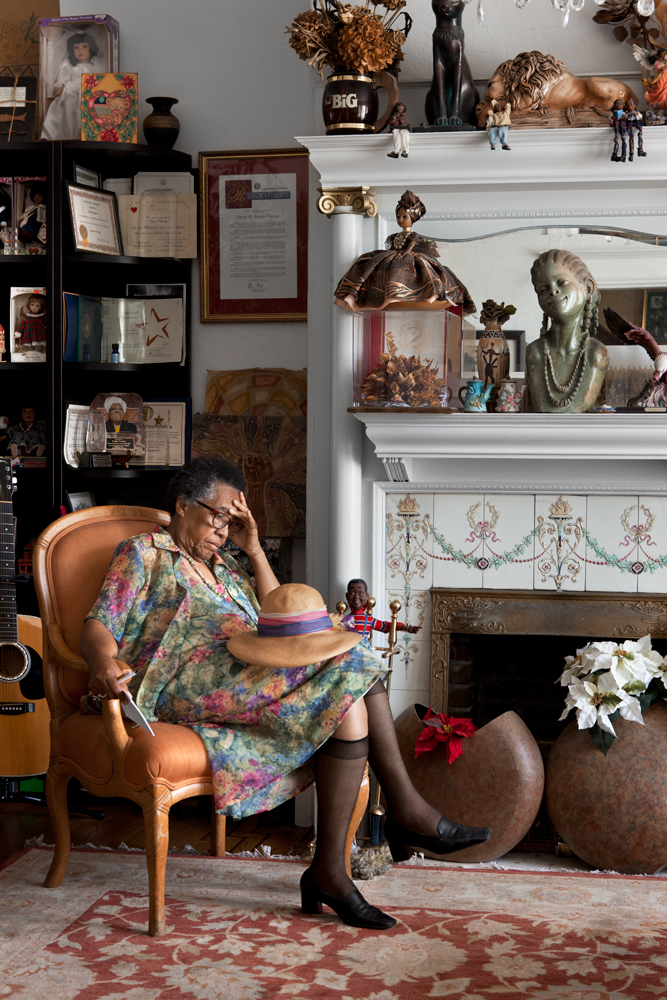
While other photography projects focus on the tougher, negative aspects of Bayview-Hunters Point, photographer Kirk Crippens took a slower and more reflexive approach to his interactions with a neighbourhood he admittedly knew next-to-nothing about prior to working on The Point which is a collection of portraits and interior domestic scenes.
The Point is currently on show at San Francisco City Hall. It includes not only dozens of portraits and interior shots made by Crippens but also family photographs to those in his portraits. It’s a lovely balance and a special production for this exhibition The Point: Kirk Crippens in collaboration with the Bayview-Hunters Point Community (Nov 15th – Feb 27th, 2015).
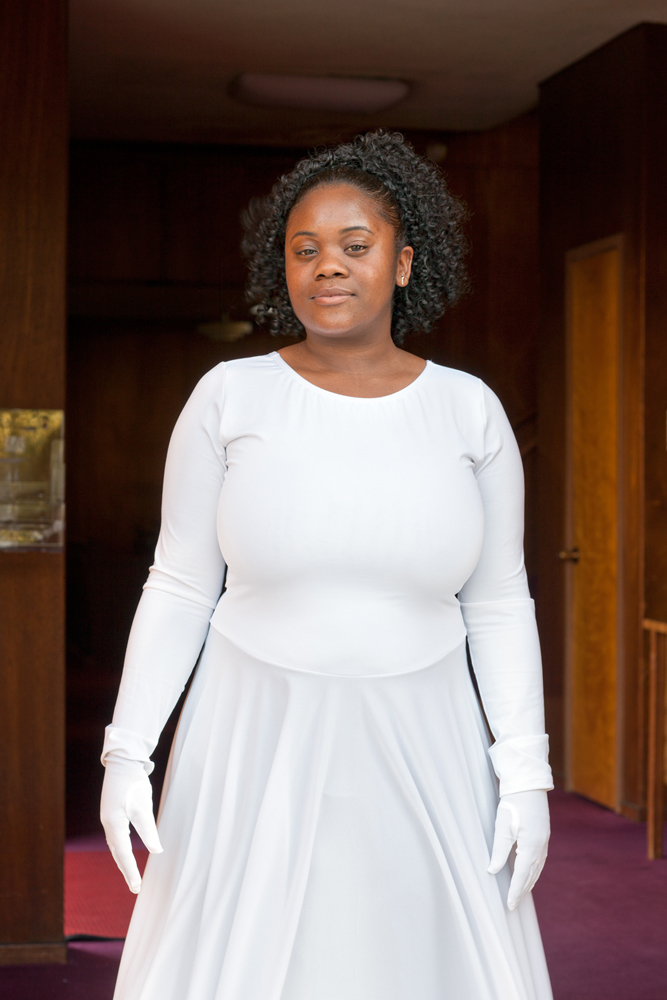
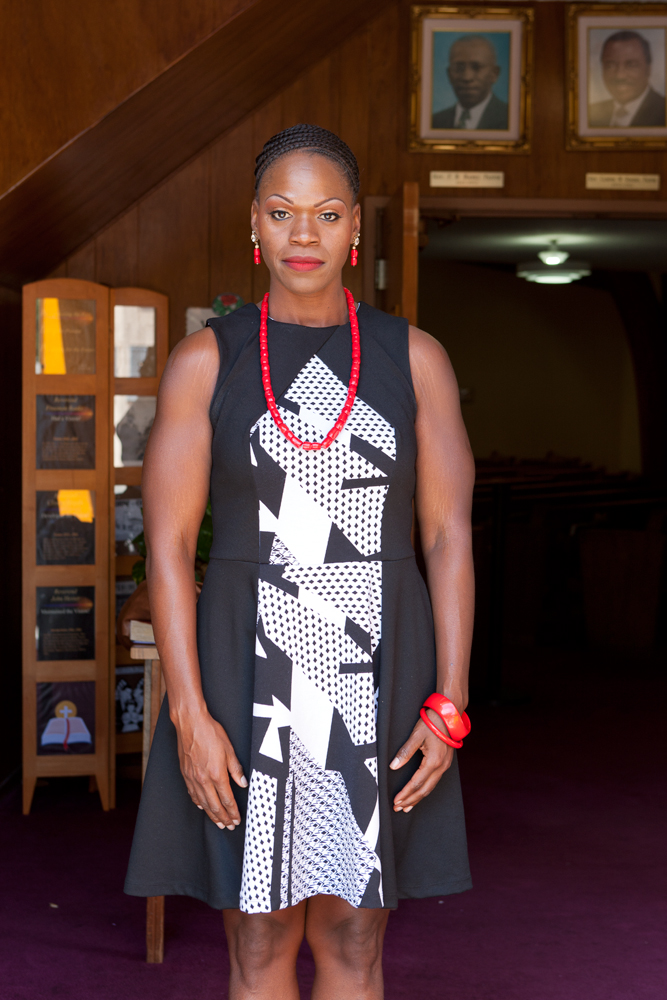
The Point celebrates the generations who have called Bayview home — “the kings and queens of Bayview-Hunters Point” as Crippens describes them.

THE BEGINNINGS
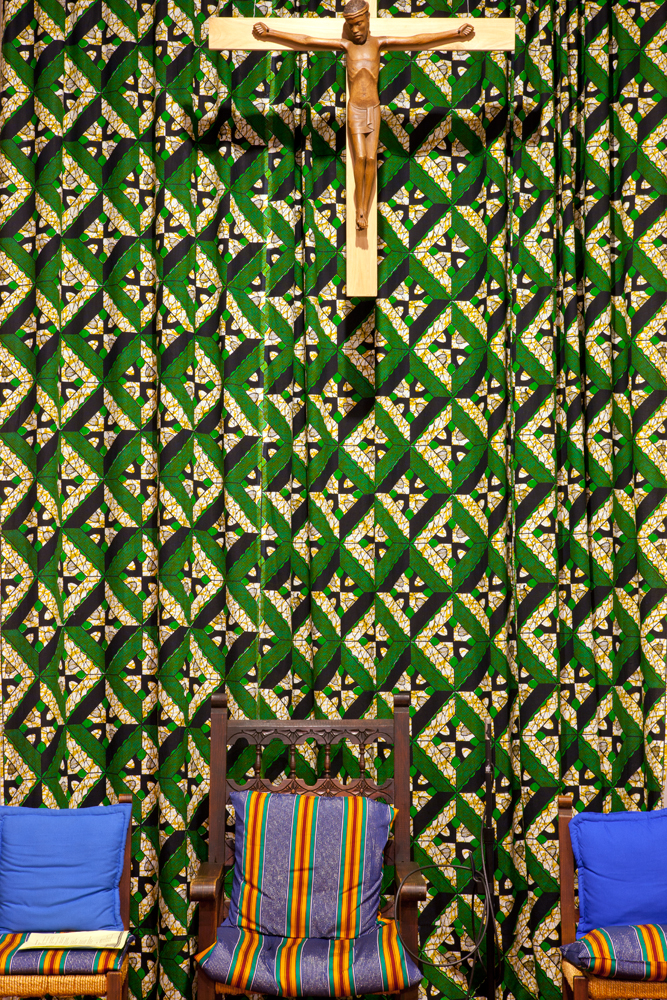
In early 2011, Crippens walked into the Providence Baptist Church, established in Bayview in the early 1940s. The congregation welcomed him, shook his hand, remembered his name. Crippens described his task of photographing the community to the pastor. Subsequently, meetings were set up with respected individuals of the community who worked with Crippens to realise a shared vision.
“At a time when San Francisco continues to grapple with the distressing trend of the out-migration of the African-American community, it’s more important than ever that we bring this exhibit to City Hall,” says Tom DeCaigny, San Francisco Director of Cultural Affairs.
THE CONTEXT
Located at the southeastern corner of San Francisco, the Bayview-Hunters Point neighborhood was considered to be one of the last remaining San Francisco neighborhood left untouched by developers. However, with the completion of the Muni Metro T Third Street line in 2007, the first new light-rail line in San Francisco in more than half a century, and other plans on the horizon, Bayview-Hunters Point has recently become a focal point for recent redevelopment projects.
“Gentrification” is the word on everyone’s lips.
I wanted to find out a bit more, so I asked Kirk a few questions.
Scroll down for our Q&A.


THE QUESTIONS
Prison Photography (PP): What did you know of Bayview-Hunters Point before photographing?
Kirk Crippens (KC): Not much. Not until late 2010, when an email invitation to work on a project in the community arrived. I had an intuition I should accept the project. I began exploring the neighborhood, but my first photographs reflected my perspective of an outsider. I was wandering the perimeter of a community.
PP: What do you know now?
KC: I know ways to connect with a community. I needed to connect in a significant way in order for the project to assume some power and relevance. In early 2011, I walked into Providence Baptist Church. My life changed that Sunday morning; the Church became the lens through which I learned about and connected with the community.
I know about the beauty and solidity of the multi-generational bonds that run through the neighborhood.
Bayview-Hunters Point is the focus of redevelopment projects. The Hunters Point Naval Shipyard, a superfund site requiring years of radioactive pollution cleanup, is being targeted for 10,500 new homes and close to 4 million square feet of commercial and retail space. The Point is on its way to becoming another coveted San Francisco zip code. While the African-American community watches its neighborhood transform, gentrification threatens to undermine its way of life. Displacement is underway in this historic African-American district.
PP: The church was your entry point into the community. Do you think the people and homes that access point provided allowed you to make a representative portrait of the neighborhood?
KC: It would be hard for someone to make a representative portrait of any neighborhood, so I’ll answer no. What I have done is reflect a vibrant segment of the community. Is it representative, probably not? Is it significant, yes — this aspect of the Bayview-Hunters Point neighborhood is not often celebrated or recognized.
Other photography projects focus on the gritty, troubled aspects that come from oppression and economic struggle, The Point is a collaboration with the Bayview-Hunters Point community.

PP: How has the work been received in San Francisco?
KC: I’m honored to say well. The exhibition opened at RayKo Gallery in September and was immediately booked by the San Francisco Arts Commission for a 3-and-a-half month exhibition at San Francisco City Hall.
PP: Your current exhibit at San Francisco City Hall features (beautifully framed) family pictures form the albums of the folks in your formal portraits. Why did you decide to pair the two types of image?
KC: A desire to connect further with the community. The director of the San Francisco Arts Commission Galleries, Meg Shiffler and I had a meeting to discuss ways to enlarge the exhibition. We took inspiration from a previous exhibition at the SF Library that featured family photographs from Bayview. We then asked my friends and contacts if they had historic and family photos for the exhibition.
We were overwhelmed by the generosity and interest that came from the community. In the end we added 60+ historic and family photos and interspersed them with large 36 pieces from my work. It changed the project into a collaboration.
PP: Change is afoot in Bayview Hunters Point, as it is in all of San Francisco. What do you think the future has in store for the community there?
KC: The future of The Point is being created during these transformative years of redevelopment. I suspect the community will look quite different in 20-30 years, and not all for the best. I don’t want to speculate on what will or might be, and I certainly don’t want the friends and adopted family I’ve found in Bayview to see their community displaced, but I see mighty changes underway and everyone is bracing for them.
PP: Thanks, Kirk.
KC: Thank you, Pete.

KIRK CRIPPENS
Kirk Crippens is an American artist living in the San Francisco Bay Area. He had an early start with photography, inspired by his grandfather who kept a darkroom in his closet. Based in San Francisco since 2000, he began exhibiting in 2008. He was named a Top 50 Photographer in Critical Mass in 2010 and 2011, nominated for the Eureka Fellowship Program, invited to speak during PhotoAlliance’s Spring Lecture series at the San Francisco Art Institute, and was a finalist for Photolucida’s book prize.
Crippens has been an artist-in-residence at both RayKo Photo Center in San Francisco and Newspace Center for Photography in Portland, Oregon. His portfolio Foreclosure, USA was recently acquired by the Crystal Bridges Museum of American Art in Bentonville, Arkansas and can be seen in their current exhibition State of the Art, Discovering American Art Now.
He currently serves on an arts board in Bayview Hunters Point. Providence Baptist Church has become his home away from home.

The banality of the design is on full display. The windowed room is where lethal chemicals are stored and used. Courtesy of the California Department of Rehabilitation and Corrections.
In 2006, the State of California approved a plan to construct a new execution chamber at San Quentin Prison. This week, The Avery Review published an article by Raphael Sperry titled Death by Design: An Execution Chamber at San Quentin State Prison which breaks down the budgeting, the politics and the design wrapped up in the contentious project. Not to mention the secrecy surrounding many details. Just as we’ve learnt about supply chains of chemicals for new drug “cocktails” being used by States to murder people, so too Sperry takes an in-depth look at the manufacturers behind the apparatus of death. It’s a wonderful, informed and terrifying breakdown of what we do to deliver “justice.” It’s a lovely foil to my past lyrics on the aqua green aesthetics of murder at San Quentin and it reveals the absurdity of the death penalty, the most vicious and foolishly symbolic of punishments.
“The Lethal Injection Chamber is a project that teeters on the edge of visibility and invisibility,” writes Sperry. It’s a project all about sight — political oversight, design based upon sight-lines for both executioner and witnesses. Sperry’s insights are chilling and revelatory. Below, I’ve selected the parts that intrigued me most, but you really should head over to The Avery Review to read the piece in full.
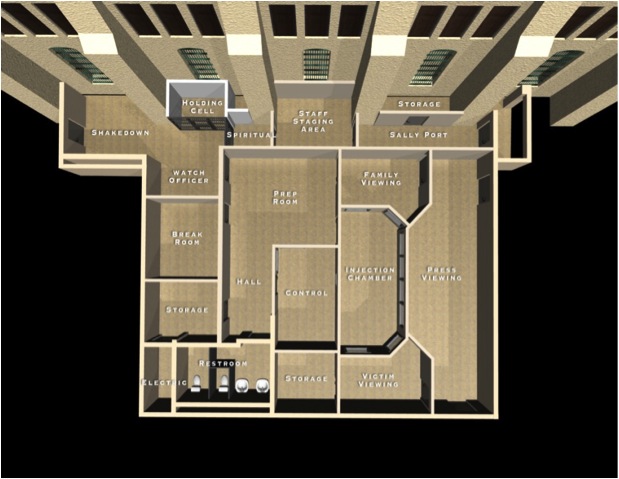
CAD Model for San Quentin Lethal Injection Facility. Courtesy of the California Department of Rehabilitation and Corrections.
DEATH BY DESIGN
Painted sheetrock walls, resilient flooring, vinyl cove base, and fluorescent lighting are used in a thoroughly predictable and pedestrian manner, much like a dentist’s office in a strip mall. The buttresses of the adjacent prison housing block, which a more creative designer might have incorporated, are instead covered by new framing; a storage room is used to occupy one of these irregular alcoves. But there is more to this design than meets the eye. Sometimes the banal is not ordinary.
The all-new facility for lethal injection provides more workspace around the body of the condemned man, an adjacent secure workspace and chemical storage room, and separated viewing areas for the various categories of observers. […] Bureaucratic skullduggery initially led to an unrealistically low project budget of $399,000: just under the $400,000 requirement to request legislative authorization of the project.7 Perhaps some secret executive-branch projects stay secret; in this case the state legislature found out about the project, causing further delays (they weren’t happy about having been hoodwinked) and an eventual approved budget increase to over $850,000. This included the use of inmate labor provided by the California Department of Rehabilitation and Corrections (CDCR) vocational training program.
The general layout of the suite of rooms was borrowed from previously completed projects in other states. Unlike in other states, where death chamber design materials are generally only available when they have been released in response to lawsuits, the final project was presented on a tour that included the federal judge presiding in the case, reporters, and a press release that included output of the CAD model used to design the project (now no longer available). Still, when I made a public request for the identity of the architect(s) and engineer(s) responsible for the project, CDCR would not provide an answer.
The Lethal Injection Chamber is a project that teeters on the edge of visibility and invisibility. CDCR exercised unusual control of the project budget in order to try to keep the project invisible. Yet a floor plan of the design proposal eventually became part of the court record submitted by CDCR to prove the constitutionality of the new facility, making it permanently available to the public. Newspapers published photos of the competed chamber and ancillary spaces and developed infographics of the layout. Nevertheless, today it is an incredibly difficult space for members of the public to visit unless they are part of the highly specified group of participants in or observers of an execution.
Perhaps in the same spirit, or perhaps because of the general obsession with the control of sight lines in prison environments, visibility within the Lethal Injection Room itself is carefully controlled. Witnessing the death of the condemned man is a central component of the execution ritual, with prescribed access for family members of the condemned man, family members of the victim, prison staff, and witnesses to verify that vengeance has been earned for the aggrieved public. Accordingly, the execution room is something of a fishbowl, surrounded on all sides by windows, including a band of wall-to-wall glazing for the public witness and media viewing room. However, mirrored glass is used along the line where the victim’s family might see the inmate’s family: a line that crosses the body of the condemned man, as the two families are positioned at opposite ends of the room just as they are presumed to be of opposite sympathies regarding the murder. Although it is not uncommon for the family of the victim in capital cases to object to the execution of the perpetrator, either out of a generalized objection to killing or after personal reconciliation, the plan denies the opportunity for this kind of potentially healing contact between families. Just as positions of state-driven authority are fixed in a courtroom, with a jury one level up and the judge above them, the dichotomous relations of innocent and guilty inherent in the finality of the death penalty are fixed around the body of the condemned man.
[…]
The death penalty debate, especially in California, now hangs on a tenuous balance between the desire for revenge (an “eye for an eye”) and revulsion at the spectacle of suffering driven by our own blood lust (with a subtext of racism). CDCR—the department charged with conducting executions, and the owner of the chamber in architectural parlance—would clearly prefer to go about its business and has a long history of avoiding public oversight (unsuccessfully in this case), but continuing the death penalty is subject to judgment by a California electorate that is trending toward abolition. Part of the design’s banality (and its low-budget, medical undertones) may be intended to visually deescalate the death penalty debate in order to perpetuate the status quo. But perhaps even the CDCR embodies the same unresolved questions about execution that continue to reverberate in ballot referendums, courtrooms, and public debates. The bland nature of the execution chamber may also indicate a lack of investment in the procedure’s future, a realization that this is no permanent edifice but rather a set of rooms that may be demolished or at least renovated for some other purpose before long.
RAPHAEL SPERRY
Raphael Sperry is an architect and green building consultant, President of Architects, Designers, Planners for Social Responsibility, and Adjunct Professor at California College of the Arts where he teaches the course “Rights, Power, and Design.” He is writing a book on architecture and human rights.
THE AVERY REVIEW
The Avery Review is a new online journal dedicated to thinking about books, buildings, and other architectural media. It’s aim is to explore the broader implications of a given object of discourse (whether text, film, exhibition, building, project, or urban environment) and to test and expand the reviewer’s own intellectual commitments.

The Lethal Injection Facility is the windowless box adjacent to the older, still functional cell block. The CMU exterior walls predate the interior renovations for the new death chamber.
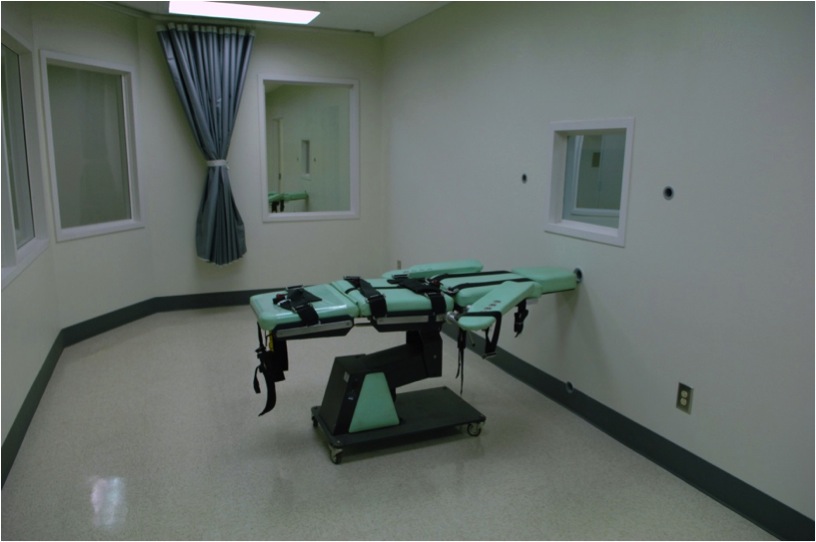
Injection Room. Window and hose ports to Infusion Control Room at right, mirrored window for victim family viewing in center, public witness / media gallery on extreme left. Courtesy of the California Department of Rehabilitation and Corrections.
ADPSR
This is the last week you have to catch the ADPSR-created exhibition Sentenced: Architecture & Human Rights at UC Berkeley’s College of Environmental Design.

 Prison Photography